Retail News CRM

Tag: currency

  • Google Pay continues to expand in the US, nearly 90 new banks now supported

    Google Pay continues to expand in the US, nearly 90 new banks now supported

    Google Pay is pretty big in the US, and starting this week it will get even bigger. Currently, thousands of banks and financial institutions offer customers support for Google Pay, so the 89 names added this week will probably feel like a grain in the sand.

    The list of 89 banks that now support Google Pay is below, so if you didn’t find yours among the 3,000 supported banks listed on Google’s support site, you can look for it here. The list is ordered alphabetically for easier reading

    1st Trust Bank, Inc. (KY), Algonquin State Bank, Alliance Bank Central Texas (TX), Bank of Advance (MO), Bank of Herscher (IL), Bank of Newington (GA), Bank of Old Monroe (MO), Bossier Federal Credit Union (LA), Buckeye State Bank (OH), Central Valley Community Bank, Clean Energy Federal Credit Union (CO), Clearwater Credit Union, Community Partners Savings Bank (IL), Dover Federal Credit Union (DE), E-Central Credit Union, Exchange Bank of Northeast Missouri (MO), Families and Schools Together Federal Credit Union, Farmers – Merchants Bank of Illinois (IL), Farmers and Drovers Bank, Financial Horizons Credit Union, First Century Bank (TN), First Federal Savings Bank (IN), First Financial Bank, NA.

    First Nebraska Bank, FirstCapital Bank of Texas, Fort Davis State Bank Franklin Mint Federal Credit Union, Gateway Metro Federal Credit Union, Genoa Community Bank, Gowanda Area Federal Credit Union, GreenState Credit Union (IA), Greenville Heritage Federal Credit Union, Gulf Capital Bank (TX), HNB First Bank (AL), Hardin County Savings Bank (IA), Harris County Federal Credit Union (TX), Heartland Credit Union (IL), Heartland Credit Union (MI), Honolulu Fire Department FCU (HI), Hurricane Creek Federal Credit Union (AR)

    Jersey State Bank (IL), Jolt Credit Union (MI), KSW Federal Credit Union, Lakeview Federal Credit Union, Latrobe Area Hospital FCU (PA), Live Life Federal Credit Union, Magnolia Bank (KY), Martha’s Vineyard Savings Bank (MA), Millyard Bank (NH), Minnwest Bank (MN), Mountain Credit Union (NC), Mt. McKinley Bank, Needham Bank (MA), Northwest Christian Credit Union, One Community Bank (WI), One Source Federal Credit Union (TX), Partners Bank of California, Pawtucket Credit Union, People’s United Bank, National Association (CT).

    Peoples Bank & Trust Co (MO), Plains Commerce Bank Raritan Bay Federal Credit Union Rio Grande Valley Credit Union, Rollstone Bank & Trust (MA), SPE Federal Credit Union (PA), Sabine Federal Credit Union, Saco Valley Credit Union, Safra National Bank of New York (NY), San Luis Valley Federal Bank, Savings Bank of Walpole (NH), Secured Advantage, Federal Credit Union, Sentry Credit Union (WI), Southbridge Credit Union (MA).
    Springfield First Community Bank, St. Louis Bank, Susquehanna Valley Federal Credit Union, Taunton Federal Credit Union, Telcomm Credit Union (MO), Texas Regional Bank, The Bank of Salem (MO), The New Orleans Firemen’s Federal Credit Union, Treasury Department Federal Credit Union (DC), TruStar Federal Credit Union (MN), United Credit Union, Varo Bank, National Association, WESLA Federal Credit Union, WESTcoasin Credit Union (WI), Wells River Savings Bank (VT), and WestStar Bank (TX).

    Ok, 3,000 is a big number, but there’s a chance that many Google Pay users won’t find their banks on this huge list. Well, judging by the constant wave of banks and financial institutions that are getting Google Pay support each month, sooner or later we’ll be able to use the mobile payment service across all America.

  • DBS Mulls Crypto Exchange Launch

    DBS Mulls Crypto Exchange Launch

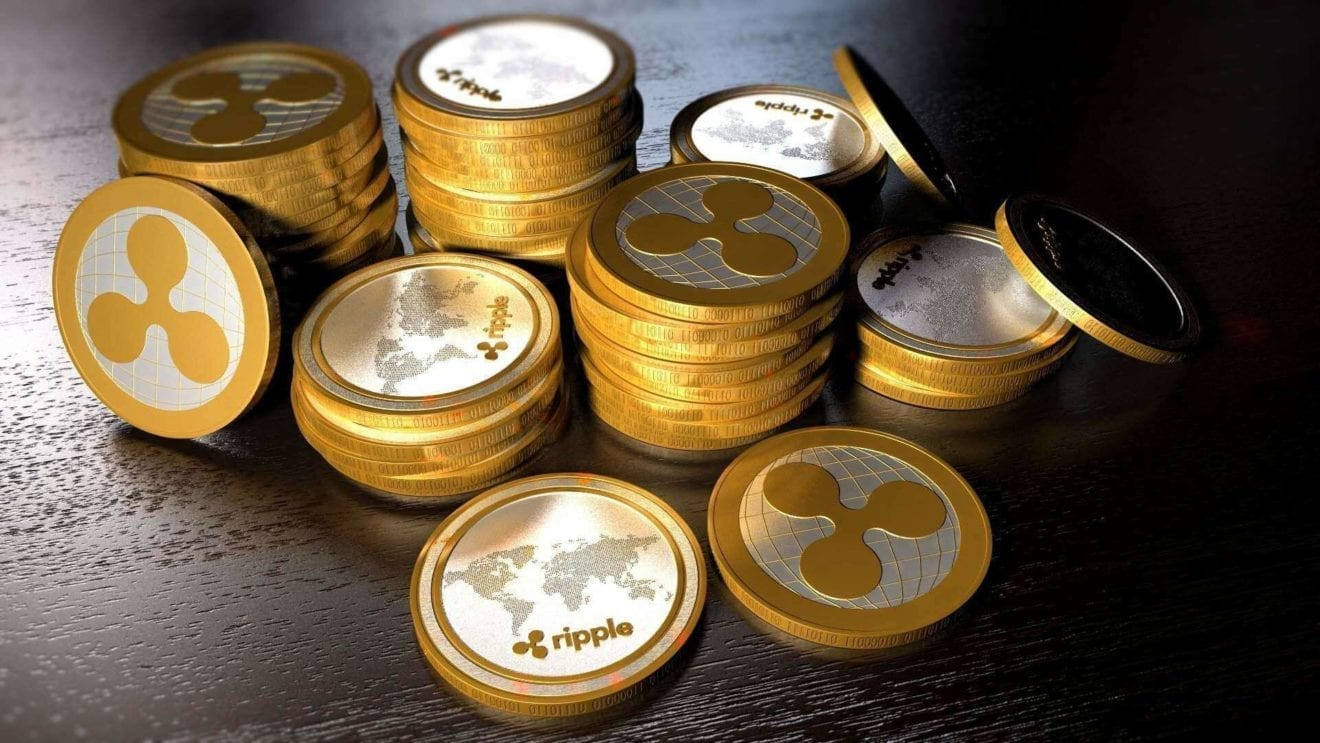
    DBS’ plans for a digital exchange are still work in process, and have not received regulatory approvals. Until such time as approvals are in place, no further announcements will be made. DBS is planning to launch a crypto exchange that will allow four digital currencies – Bitcoin, Bitcoin Cash, Etheerum, and Ripple – to trade against the Singapore dollar, Hong Kong dollar, Japanese yen or U.S. dollar, according to a report by digital asset media firm The Block. 

    Dubbed DBS Digital Exchange, the initiative was first unveiled through a website seen by The Block which cached the now removed website.

    Regulated by the Monetary Authority of Singapore, the crypt exchange will be made accessible to institutional investors, including financial institutions and market makers. Retail investors will have access via DBS entities like their securities or private banking arm.

    While most exchanges can execute orders at any time and any day, DBS will similarly follow the same trading hours as stock exchanges, allowing for less than seven hours per day, according to the report.

    In addition to standard trading, the bank will also provide institutional-grade custody solutions for safekeeping digital assets and, in due time, conduct security token offerings to help small and medium-sized firms raise funds.

    Digital assets are poised to be the future of tomorrow’s digital economy, the website originally read.

    With DBS Digital Exchange, a bank-backed digital exchange, companies, and investors can now leverage an integrated ecosystem of solutions to tap the vast potential of private markets and digital currencies.

  • Crypto Finance Opens Singapore Branch

    Crypto Finance Opens Singapore Branch

    Swiss digital investment specialist Crypto Finance has opened a branch in the Lion City. The company sees itself as a provider of services to the banking industry.

    Crypto Finance’s representative office in Singapore opens this month and will be led by the head of Asia, Alisher Tashpulatov, according to a media release on Wednesday.

    Tashpulatov previously worked in the crypto fund business of the firm and was involved in getting a license from the Swiss regulator as a crypto wealth manager. He then opened its Hong Kong office. He is being backed up by the crypto finance team, which has several team members with Asian experience, for instance, CEO and founder Jan Brzezek.

    The Zurich-based group will serve the demand for digital asset products and services, and attempt to bridge the gap between traditional banks and the crypto market.

    I believe that the Singaporean and Swiss business environment and orientation share many characteristics, including respect for diverse cultures and a work ethic that values merit, excellence, self-reliance, and hard work. The two countries share a great rapport, and it is almost intuitive for us as a Swiss business to establish ourselves in a like-minded and innovative country like Singapore, Tashpulatov said.

    Having spent years conquering new frontiers and climbing new peaks within the Swiss market, I am now happy to make a transition into a new, yet familiar, land, he added.

    Crypto Finance’s current activities in Singapore are focused on the areas of business that do not require regulatory supervision, and the firm plans to launch best-fit models of its offering in other Asian business hubs in the near future.

  • Vietnam currency to remain stable throughout the year

    Vietnam currency to remain stable throughout the year

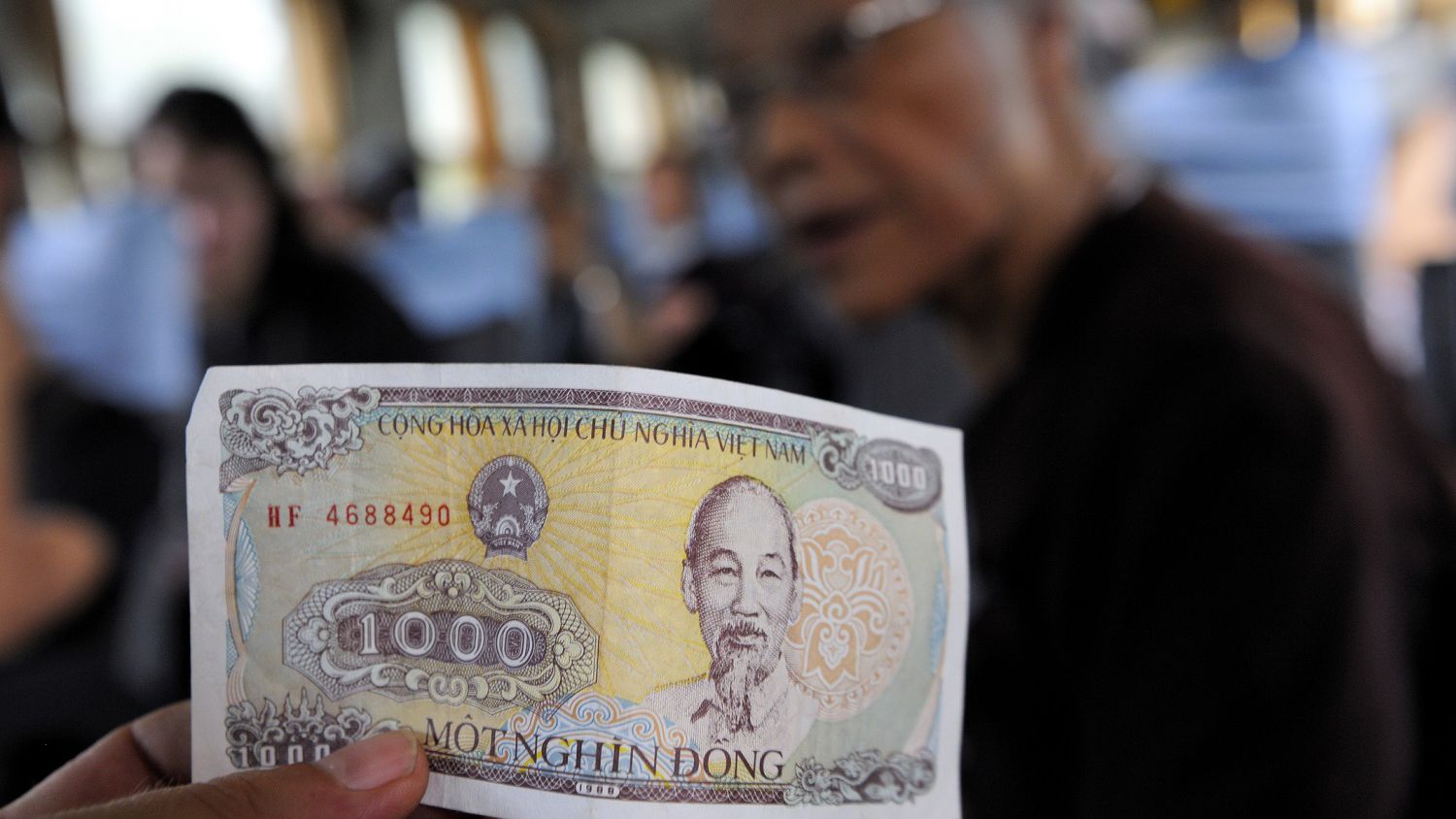
    Vietnam’s currency will likely remain stable this year as the greenback weakens and foreign exchange reserves rise, experts say. The reference rate set by the State Bank of Vietnam (SBV) has remained mostly stable this year and was at VND23,205 Tuesday.

    Rates at commercial banks for the last two months have also been stable. Vietcombank was selling the dollar for VND23,270 Tuesday morning. Ngo Dang Khoa, head of global markets at HSBC Vietnam, said that the VND/USD exchange rate will remain stable for the last four months thanks to a weakened dollar, Vietnam’s record-high trade surplus in the first eight months, and the record-high currency exchange reserves of the SBV.

    A poll of 75 foreign exchange strategists showed that 45 of them, or 60 percent, said the dollar would weaken slightly over the coming year. Analysts said the U.S. Federal Reserve’s policies have been the main reason for the dollar weakening sharply over the last four or five months. The Fed announced last week that it would tolerate periods of higher inflation and focus on employment.

    “So they’ve basically slashed rates to zero, that yield differential in America over the rest of the world is compressed and that obviously helped keep the dollar at such strong levels in previous years, which is no longer the case,”  quoted currency economist Lee Hardman as saying.

    Vietnam’s trade surplus climbed to a new peak of $11.9 billion in the first eight months as imports declined due to the fallout of the novel coronavirus pandemic, according to the General Statistics Office. A trade surplus increases the country’s supply of foreign currency.

    Prime Minister Nguyen Xuan Phuc on September 4 said that Vietnam’s foreign exchange reserves were at nearly $92 billion and could reach $100 billion by the end of the year.

    However, analysts from brokerage Bao Viet Securities said the SBV could slightly weaken the dong in the upcoming months amid the U.S. watching several countries, including Vietnam, for currency manipulation, or the use of unfair currency practices to gain trade advantages.

    A Vietnamese currency expert who asked not to be identified said that although Vietnam’s currency reserves have been increasing, it was still lower than other countries.

    The government has also been working closely with American authorities to prove that Vietnam is not intentionally using currency as a tool to boost exports, he added.

    Vietnamese authorities have repeatedly affirmed that the country does not use monetary policies to unfairly compete with trading partners.

  • Libra Poaches Top Credit Suisse Crime-Fighter

    Libra Poaches Top Credit Suisse Crime-Fighter

    The bank’s top anti-money laundering executive is leaving for Facebook-backed payments project Libra.

    Sterling Daines is leaving Credit Suisse for Libra, a source familiar with the matter said on Tuesday. The bank had poached Daines three years ago from Goldman Sachs to run its financial crime compliance, or FCC, activities under top compliance boss Lydie Hudson.

    He is the latest representative from traditional finance to head for Libra, an upstart payments system governed by a Swiss-based association. Last month, Libra said it is hiring HSBC’s top lawyer Stuart Levey as its CEO, and also tapped the weighty support of Singapore’s sovereign wealth fund.

    Neither Daines nor Libra responded to a request for comment. A 2018 sanction from Swiss watchdog Finma for several money-laundering scandals fell in the early days of Daines’ tenure at Credit Suisse.

    The Swiss bank is poised to replace him with Tam Ludford, a 12-year Credit Suisse veteran who will add the job to his current role as global head of core compliance, surveillance, and investigations.

  • Binance Unveils Singapore Crypto License Ambitions

    Binance Unveils Singapore Crypto License Ambitions

    Cryptocurrency exchange giant, Binance, has applied for an operating license in Singapore which continues to lure new players following the recent progressive developments in its regulatory regime.

    Founded in 2017, Binance experienced extremely rapid growth before achieving an estimated market cap of $1.3 billion by early January 2018. The Malta-headquartered exchange now has offices located globally including in Singapore where it is backed by Temasek’s venture capital arm Vertex Venture.

    Whilst initially focused only on crypto-to-crypto trading platforms, which allowed Binance to grow without dealing with banks and regulators, the firm began to focus on the development of formal exchanges in jurisdictions with a relevant regulatory regime like Singapore.

    We have already applied,» said Binance co-founder and CEO Zhao Changpeng. «We submitted the application pretty fast. Binance’s Singapore entity has been in close touch with the local regulators, and they have always been open-minded.

    Last month, Singapore introduced the Payment Services Act which will formally regulate companies engaging in activities ranging from digital payments to the trading of tokens like Bitcoin or Ether. In addition to an expanded regime, the Monetary Authority of Singapore’s supervisory powers were also enlarged to cover cybersecurity risks and controls on money laundering and terrorism financing from such activities.

    Greater clarity for businesses through explicit regulation was expected to be a key driver for new entrants. Other reported applicants thus far include Tokyo-based crypto exchange operator Liquid Group Inc and London-based Luno.

  • Cambodia Readies Digital Currency

    Cambodia Readies Digital Currency

    Cambodia is set to roll out Project Bakong, the country’s blockchain-based payment network that features a central bank digital currency (CBDC) payment system.

    The platform, trialed in July 2019 and set to go live this quarter, already has the backing of 11 banks, with others to join soon, Serey Chea, National Bank of Cambodia (NBC) assistant governor and director-general of central banking said.

    NBC will maintain centralized control of the proposed CBDC with a closed system that will include participants like banks and other financial institutions in the country, the report said.

    Serey called the currency the national payment gateway for Cambodia. Bakong will play a central role in bringing all players in the payment space in Cambodia under the same platform, making it easy for end-users to pay each other regardless of the institutions they bank with.

    Cambodia’s launch of the CBDC comes amid the launch of other state-backed digital currency projects, as central banks come under pressure from private digital currency projects like Facebook’s Libra.

  • Stack Launches Asia’s First Bitcoin Index Fund

    Stack Launches Asia’s First Bitcoin Index Fund

    Stack, an Asia-based provider of cryptocurrency trackers and index funds, has launched the single-asset index fund in response to investor demand. It expects to capture $750 million in assets under management within 2020, Matthew Dibb, co-founder of Stack said.

    The firm hopes to surpass $2 billion in assets under management next year by tapping into the unmet demand from traditional investment vehicles in Asia’s digital asset space. Stack’s list of partners includes financial services providers, BitGo, Silvergate Bank, and Coin Metrics for a custodian, banking, and index solutions, respectively.

    We’ve seen a dramatic increase in the number of investors seeking to diversify their portfolios using bitcoin. Fears of a global recession, combined with deteriorating trade relations globally, are accelerating this process considerably. Bitcoin is one of the best-performing assets in history—with 19x returns since 2014—and is uncorrelated with traditional markets, making it an attractive prospective investment for both individuals and institutions, said Matthew Dibb, co-founder of Stack.

    The launch of Stack comes as the number of long positions being taken within the bitcoin market and demand from institutional investors for access to the digital asset economy increase. In Asia, however, there are virtually no risk-adjusted investment portals for the bitcoin market, leaving investors in Asia with no opportunity to access the potential returns, said Dibb.

    Currently, investors purchasing and custody bitcoin through digital asset management portals or traditionally structured funds pay premiums of 20 to 40 percent over the underlying asset. Wealth management firms have also been capable of charging exorbitant management and performance fees, even for passively-managed single asset portfolios.

    In contrast, Stack’s flagship Bitcoin Index fund (BTCX100) gives investors in Asia a flexible and cost-effective means of gaining exposure to bitcoin which complies with the financial industry’s standards while mitigating the risks inherent to purchasing, transacting, and storing digital assets. With a minimum investment of S$100,000 at 2.25 percent management fee, Stack provides an institutional-grade alternative to the high premiums and barriers to entry which come with current digital asset hedge funds.

    Those who wish to purchase BTC and other digital assets through other available exchanges and portals are often forced to bear the risks of poor security in custody these assets. With the launch of Stack’s Bitcoin Index Fund, investors now have an alternative to these channels, and can now enjoy secure custody with insurance coverage, weekly contributions, redemptions, and reporting, mitigating the risks that come with buying and holding digital assets through other means, said Dibb said.

  • Hong Kong-Thailand Digital Currency Underway

    Hong Kong-Thailand Digital Currency Underway

    The central banks of Hong Kong and Thailand are working to launch a digital currency to facilitate cross-border trade.

    Following a signed agreement to bolster financial technology collaboration, the Hong Kong Monetary Authority (HKMA) and the Bank of Thailand (BOT) will jointly launch a digital currency to enhance cross-border trade, valued at $19.6 billion in 2018.

    HKMA’a cross-border payment platform leverages blockchain and the «depositary receipt corridor network» to enable companies in both markets to settle wholesale payments with one another directly, as opposed to the current conventional method of using multiple intermediaries that often cause delays.

    The roll-out will include a two-tier digital token with one focused on the issuance of tokens to Hong Kong banks participating in the pilot program (called «Project LionRock-Inthanon»); and another for banks to distribute to their corporate customers to settle wholesale payments with other banks or companies, according to an SCMP report.

    HKMA is currently working with HSBC and ZhongAn Technologies International while BOT is working with HSBC, Standard Chartered, and a handful of local lenders such as Kasikorn Bank and Krungthai Bank to further research and develop the project. More details on a proof-of-concept study are expected to be unveiled in the first quarter of 2020.

  • China’s Crypto Crackdown Hits Five Exchanges

    China’s Crypto Crackdown Hits Five Exchanges

    China’s crackdown on cryptocurrencies has led at least five local exchanges to halt servicing of domestic users or their whole operations altogether.

    Last week, Chinese exchange operators Bitsoda and Akdex announced that it would cease its operations. Btuex and Idax said they would close domestic operations and focus on overseas users. Biss said it had halted ops while it cooperates in investigations with local authorities.

    The exchanges account for the five known exchanges that have suspended or shut down their operations. Other players that are believed to be affected include Binance and Tron whose Webio accounts have reportedly been suspended.

    Weeks after Beijing declared support for blockchain technology, the market has been rushing to capitalize on perceived opportunities from digital currencies. This subsequently led regulators in Shanghai, Shenzhen, and Beijing to ramp up efforts to probe or shut down exchanges.

    Concurrently, China is readying to realize part of its blockchain ambitions with the launch of its own central bank-backed digital currency. It is already making accelerated efforts to ready the regulatory grounds for the launch including the introduction of new standards in 17 areas of emerging technologies which include not only blockchain but also cloud services and artificial intelligence.

  • ICE Bitcoin Futures Slated for December Launch

    ICE Bitcoin Futures Slated for December Launch

    Atlanta-based Intercontinental Exchange (ICE) is planning to launch bitcoin futures on December 9 in Singapore, following regulator’s new papers permitting the trading of derivatives tracking certain cryptocurrencies.

    The Bakkt bitcoin cash-settled monthly futures contract, denominated in U.S. dollars, will be settled against data from physically delivered Bakkt bitcoin monthly futures contract. The new contract will be listed on ICE Futures Singapore and cleared by ICE Clear Singapore.

    «Our new cash-settled futures contract will offer investors in Asia and around the world a convenient, capital-efficient way to gain or hedge exposure in bitcoin markets,» said Lucas Schmeddes, president and chief operating officer of ICE Futures and Clear Singapore.

    ICE Futures is the first of four exchanges approved by the Monetary Authority of Singapore to launch regulated futures contracts for payment tokens like bitcoin. This follows a recent MAS consultation paper green lighting crypto-linked derivatives driven in part by observed intuitional demand for a regulated product.

  • Vietnam reduces penalties for illegal currency exchange

    Vietnam reduces penalties for illegal currency exchange

    Vietnam has significantly lowered penalties for illegal currency exchanges following outrage over a man being fined VND90 million ($3,900) for exchanging $100 last year.

    The fine was revoked after a public outcry erupted over disproportionate punishment.

    An individual or a shop illegally exchanging up to $1,000 will receive a warning instead of a fine of up to VND100 million ($4,300), according to a new government decree set to take effect December 31.

    The fine will increase progressively, with a maximum penalty of VND100 million levied for illegally exchanging more than $100,000, the decree says.

    Illegal exports and imports of currency will be fined up to VND250 million ($10,800).

    The legal amendments come after a resident of the southern city of Can Tho was fined VND90 million ($3,900) in October 2018 for exchanging a $100 note at a gold shop.

    It is a common practice for Vietnamese citizens to exchange currencies at local gold shops that offer better prices than banks, even though very few of the shops are licensed exchangers.

    Can Tho authorities revoked the punishment after Deputy Prime Minister Truong Hoa Binh said such a heavy fine should be reviewed, and lawyers and lawmakers also said it was unreasonable?

    However, the province confiscated the $100 note from the man, an electrician who makes VND4 million ($171) a month.

  • Ripple Launches Academic Lab to Groom Talents

    Ripple Launches Academic Lab to Groom Talents

    The partnership with the National University of Singapore will bring together industry players, government agencies, regulatory bodies and educational institutions to develop and apply emerging technologies in the field.

    The School of Computing at the National University of Singapore and blockchain payments firm Ripple have come together to establish the NUS FinTech Lab, which aims to deepen knowledge and groom talent in the sector in Singapore, the two parties announced in a media statement on Wednesday.

    The academic lab is led by an industry liaison group comprising representatives from the private sector, government agencies and faculty members of NUS Computing.

    It plans to expose 1,000 students and industry professionals to fintech within one year through courses and programs open to NUS faculty and students, and those working in the field.

    NUS FinTech Lab is part of Ripple’s $50 million University Blockchain Research Initiative (UBRI) that supports academic research, technical development and innovation in blockchain, cryptocurrency and digital payments. The firm is working with six universities in Asia, including NUS, under UBRI.

    It will be a neutral space for dialogue and innovation that connects academia and industry, translating education into practice and generating tangible results, the statement said.

    The launch of the NUS FinTech Lab is a significant step toward recognizing the full potential of blockchain technology in finance and the real-world benefits of collaboration between academia and industry. Perhaps most importantly, the FinTech Lab will prepare students for the career opportunities brought about by continued technological advancements in finance, said Eric van Miltenburg, Ripple’s SVP of global operations.

  • Singapore’s Multi-Currency War Heats Up With Revolut Launch

    Singapore’s Multi-Currency War Heats Up With Revolut Launch

    After amassing more than 8 million customers, the tech unicorn has landed in Singapore, its second market outside Europe.

    After much anticipation, U.K. challenger bank Revolut has rolled out its services in Singapore. Customers can now open an account from their mobile phones and start spending worldwide in over 150 currencies at the real exchange rate without hidden fees.

    The digital-only bank had already been beta-testing its services over the past year and amassed 30,000 customers on its waiting list when it launched in the city-state on Wednesday.

    Revolut’s introduction promises to heat up the already competitive multi-currency war, which includes competitors YouTrip and in the near future, InstaReM and TransferWise.

    Revolut account holders get a multi-currency travel debit card and an account that supports the Singapore dollar and 13 other currencies, with another 14 more including, Indian rupees, Malaysian ringgit and Philippine pesos, to be added in the coming months, a press release said.

    Customers also get free worldwide ATM withdrawals, peer-to-peer money transfers, and foreign exchange, and its app integrates budgeting and savings management functionalities. Accounts are free, but the Premium account ($9.99 per month) and Metal account ($19.99) offer additional features and limits.

    At its launch event on Wednesday, the firm said it is working on bringing features that are already available in other markets, like cryptocurrency trading and commission-free stock market trading, to customers in Singapore.

    Revolut was founded by former Credit Suisse trader Nik Storonsky and former Deutsche Bank systems engineer Vlad Yatsenko in London in 2015 as a digital alternative to traditional banks. It has raised more than $336 million in funding from venture capital firms, and is valued at $1.7 billion.

    The firm opened its Asia-Pacific hub in Singapore office in 2018, where it employs 20 people. It plans to triple its headcount in the coming months.

    It plans to launch in the U.S. and Canada later this year.

  • Crypto Bank Sygnum Eyes License in Singapore

    Crypto Bank Sygnum Eyes License in Singapore

    Just days after clinching a banking license in Switzerland, cryptocurrency-focused financier Sygnum will look to do the same in Singapore.

    Sygnum is currently pushing for a capital markets services license in Singapore to offer asset management solutions but will look to apply to become a fully-fledged bank this year.

    In order for us to provide a full suite of services, we need to operate as a bank in Singapore, said Gerald Goh co-founder and chief strategy officer at Sygnum.

    After the company becomes a full bank in Switzerland, a transition expected this year, it will be able to apply for a traditional banking license in the city-state.

    Sygnum is pioneering the crypto-based banking industry and potentially gaining first-mover status in multiple major financial centers. It was one of the first two crypto players to recently be granted banking licenses by Swiss regulator Finma. Successful application in Singapore could make it the first crypto bank in Singapore as well.

    And Singapore’s financial sector is no unfamiliar territory to Sygnum’s leadership which boasts a prominent list of members in its board and advisory council such as Chua Kim Leng, former assistant managing director (banking & insurance) of MAS, Hsieh Fu Hua, director of Grab Holdings and former chairman of UOB, and Ang Kong Hua, chair of GIC investment board.

    Once it officially becomes a bank in Switzerland, Synum will be able to issue, store, trade and manage Bitcoin and Ethereum, converting them into various hard currencies. It will also offer custody, brokerage and tokenization services for digital assets to qualified clients.