Retail News CRM

Tag: data

  • Singtel launches triple mobile data add-on

    Singtel launches triple mobile data add-on

    Singtel has announced a new mobile data add-on allowing customers to triple their mobile data allocations for a flat fee.

    The new DataX3 addon will be available to Singtel’s Combo Plan customers for S$9.90 per month. Combo Plans offer base data allocations ranging from 2GB to 12GB.

    It joins the ComboX2 addon, which launched earlier this year and allows customers to double their allocations for S$5.90 per month.

    Singtel has also launched WiFi calling for all Singtel mobile postpaid customers. The service is available without the use of an app, and offers seamless WiFi to 4G handover.

    The service is being made available at no additional cost. At launch, the service is available on compatible iPhone, Samsung Galaxy and Sony Xperia smartphone models.

    “WiFi Calling is a network innovation which offers added convenience and an enhanced mobile experience to customers. Our customers can now have mobile coverage even in difficult to reach places such as basements and windowless rooms, as long as there is a WiFi signal,” Singtel CEO consumer Singapore Yuen Kuan Moon said.

    “This service extends our extensive mobile network to cover a wider footprint and complements our ongoing efforts in delivering the fastest and widest 4G service in Singapore.”

  • 5G connections tipped to reach 690m by 2025

    5G connections tipped to reach 690m by 2025

    There will be around 690 million 5G connections by 2025, five years after the standard is expected to be approved, Strategy Analytics predicts.

    The research firm expects 5G to account for 7% of mobile connections by this time, driven by early adopters in the US, South Korea and Japan.

    China has also laid out a 2020 5G launch plan, Strategy Analytics notes, which will help accelerate adoption.

    Operators including NTT DoCoMo, SK Telecom, Verizon and AT&T are leading the charge

    Commercial 5G handset sales are meanwhile expected to exceed 300 million by 2025, according to Strategy Analytics director Ken Hyers.

    “While the first commercial 5G handsets will appear in small numbers in 2020 in South Korea and Japan, from 2021 more countries including the US, UK, Sweden, UAE and China will see their own launches,” he said.

    “By 2022 tens of millions of 5G handsets will be sold, and as a proportion of total handset sales will reach low single digit percentages.”

    The first trial 5G handsets expected to emerge in 2018 are expected to have issues including short battery life, no 4G handover or unstable connectivity, Strategy Analytics said. But these teething problems are expected to have been largely resolved once commercial handsets reach the market.

  • StarHub brings back 12GB+ mobile data bundles

    StarHub brings back 12GB+ mobile data bundles

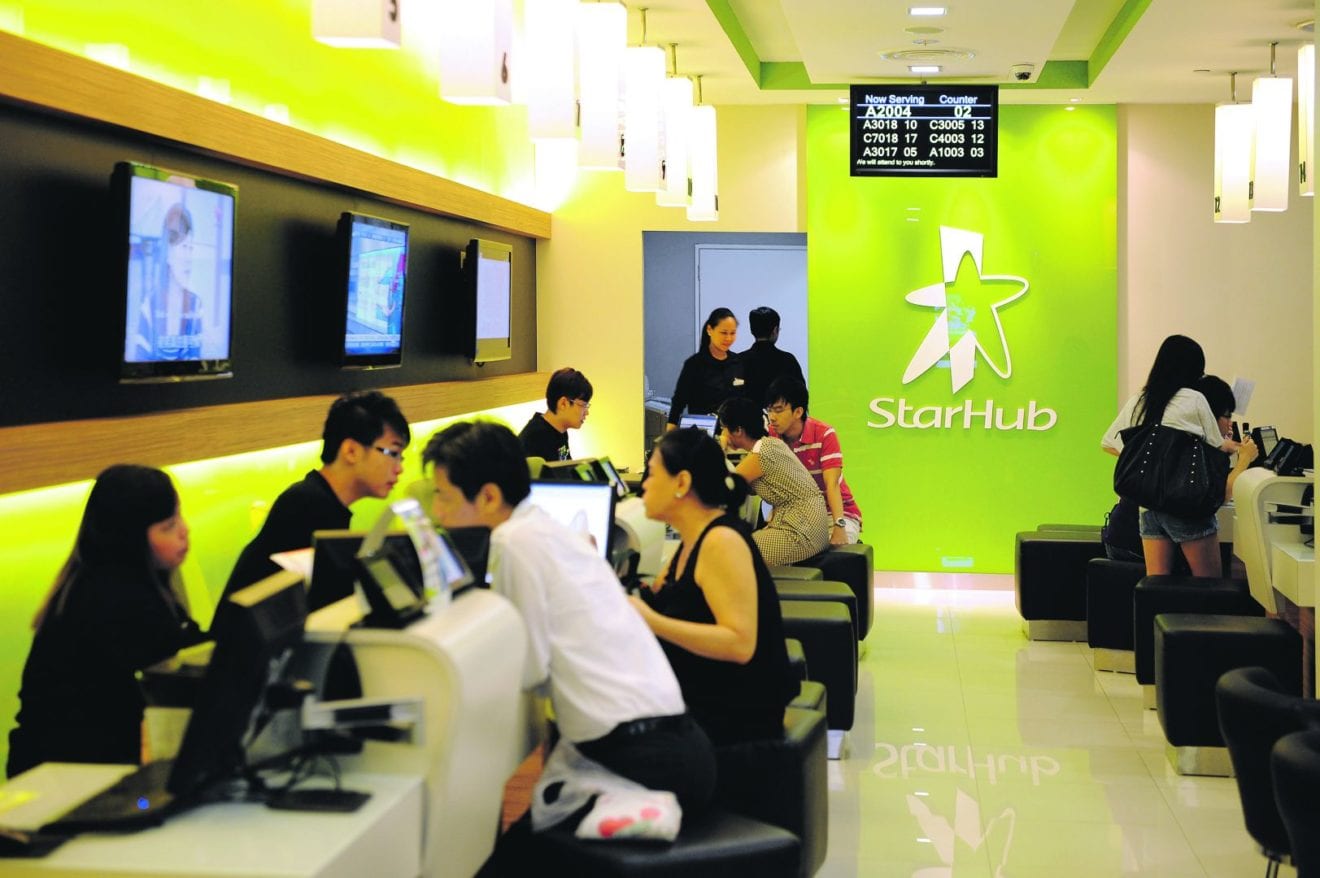
    Singapore’s StarHub has launched a new range of plans bundling large volumes of mobile data with 1Gbps fiber broadband subscriptions.

    The operator’s new SurfHub plans include between 12GB and 24GB of 4G data as well as the 1Gbps home broadband plan.

    Prices start at under S$100, which is about half the cost of a standalone 12GB mobile plan, StarHub head of product and marketing Wang Li-Na said.

    “We know customers miss the freedom that huge data bundles offer and wish they were as affordable as before. Faster 4G technologies have catalysed the adoption of data-intensive services, and our customers are now sharing more and watching for longer on their smartphones, she said.

    “With SurfHub, we want to continue giving our Hubbing customers the best value, which is what StarHub is known for.”

    The plans also come with between 150 minutes and 700 minutes of talk time and 1000 to 1500 SMS, and offers for 50% off value-added services including international roaming, multiSIM and the StarHub Go Select online streaming service.

    StarHub has also increased the mobile data allocation for its five-services-in-one pack HomeHub Go – which combines 3G and 4G mobile broadband, fiber home broadband, fiber TV and home phone services – to 15GB.

  • Only four Asian nations safe for data storage

    Only four Asian nations safe for data storage

    Only four Asian nations are considered truly secure for data storage, according to a new report by secure data center operator Artmotion.

    Combining independent data from the United Nations, World Economic Forum, Transparency International and several other leading privacy groups, the report titled “Data Danger Zones” ranks over 170 nations on their abilities to keep digital information safe, private and secure.

    Globally, the benchmark identified Switzerland as the safest nation for data storage, receiving a “potential risk score” of only 1.6%. Singapore was ranked as the the safest Asian nation, with a risk score of 1.9% as a result of the island state’s independent privacy legislation and political stability.

    Hong Kong (5th place), Taiwan (6th place) and South Korea (15th place) also join Singapore in the top 15 safest nations globally, ahead of the United Kingdom and the United States of America which ranked 23rd and 38th respectively.

    Despite Asia’s growing role as a market for data storage, the new benchmark suggests that it is falling behind other regions when it comes to data security and privacy. While only a few IT managers have chosen to store data in Afghanistan or Yemen, rapidly expanding data center markets such as China did not even qualify for the top 50 safest nations.

    More surprisingly, India, one of Asia’s key technology hubs and home to the largest data center in the world, ranked only 107th on the list, falling below Russia and Turkey.

    Commenting on the new study, data privacy expert Mateo Meier said: “It’s very easy for businesses and individuals to forget the importance of physical location when selecting a cloud hosting service or data hosting provider.

    “Especially in today’s volatile world, businesses need to not only consider data privacy regulations, but also take into account other risk factors such as political environments, geographic locations and physical infrastructure.

    “In support of this point, the Data Danger Zones report examines over 3.5 trillion IP addresses in 170 assessing countries, providing one of the most comprehensive guides ever created for data safety. Through this analysis, we want businesses to be able to make a more informed decision of how and where to store their data, and have a better understanding whether or not it is truly safe.”

  • CSL to offer free unlimited data for Pokemon GO

    CSL to offer free unlimited data for Pokemon GO

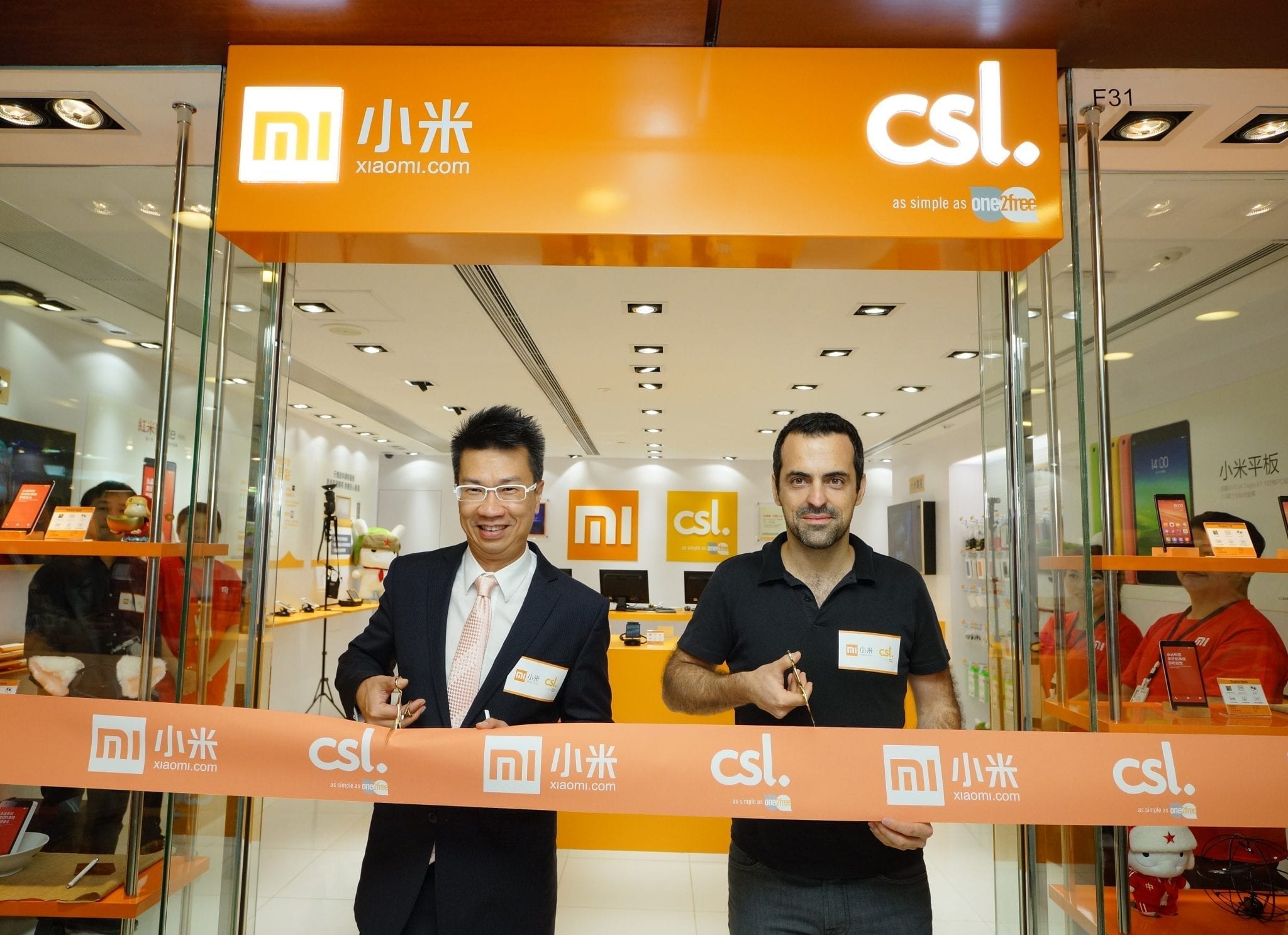
    Hong Kong’s CSL aims to take advantage of the global buzz around the augmented reality game Pokemon GO by offering free unlimited mobile data for the app as a promotional exercise.

    Once the game launches in Hong Kong, customers of both the CSL and 1O1O mobile brands will be able to use the game without incurring data charges.

    The offer appears to be an attempt to attract or retain customers from the younger segment. In line with this, the offer is applicable to CSL’s student plans, which are tailored for users aged between 11 and 17.

    Mobile customers in Hong Kong will also be able to use the Tap & Go mobile payment service to purchase Pokecoins from Google Play and the Apple App Store.

    “As the leading mobile operator in Hong Kong, we foresee that Pokemon GO popularity would take off once this new sensation is launched in Hong Kong,” CSL chief marketing officer Bruce Lam commented.

    “ And we are making this offer available so our customers can play the game for hours on end without having to worry about mobile data consumption.”

  • IIJ to sell prepaid data roaming SIMs in Taiwan

    IIJ to sell prepaid data roaming SIMs in Taiwan

    ISP and MVNO Internet Initiative Japan (IIJ) has arranged to sell a prepaid SIM card for Taiwanese visitors planning to visit Japan at all Taiwan 7-Eleven locations.

    The ready-to-use, data only Japan Travel SIM offers 1GB of data for 30 days for TW$780 ($24), with additional data packs purchasable at select locations in Japan.

    The service is being offered over NTT DoCoMo’s LTE and 3G networks, which offers download speeds of up to 375Mbps and upload speeds of up to 50Mbps in certain coverage areas.

    IIJ said Taiwan ranks third after China and South Korea in terms of the number of visitors to Japan. Total Taiwanese travelers to Japan increased 30% in 2015 to a record 3.67 million.

    Meanwhile 7-Eleven is the largest convenience store chain in Taiwan, with 5,045 locations as of April.

    Japan Travel SIMs will go on sale at Taiwanese 7-Eleven stores from July 18.

  • 9 in 10 telcos go Hadoop to fight revenue fraud

    9 in 10 telcos go Hadoop to fight revenue fraud

    Telecoms revenue fraud is a primary driver for increased Apache Hadoop adoption, according to a recent poll of telco and enterprise users by Cloudera and Argyle Data.

    Communication service providers lose around $38 billion to fraud every year.

    Conducted during a recent webinar to introduce Cloudera and Argyle Data’s joint fraud prevention platform, the survey indicated that over 90% of attending organizations already use or intend to use Hadoop for fraud prevention.

    About one-third (34%) of attendees said they already have Hadoop in place and may use the platform in their fraud prevention efforts.

    “Fraud prevention is a textbook use case for Hadoop-based analytics because the ROI is immediately visible,” said Vijay Raja, solutions marketing manager at Cloudera. “Real-time machine learning relies on large amounts of data to detect sophisticated revenue threats, making Cloudera the ideal platform on which to run Argyle Data’s threat analytics.”

    The platform enables mobile operators to reduce loss by detecting previously undiscoverable revenue threats, promising to deliver up to 350% improvement over rules-based offerings. The platform uses a native Hadoop architecture, combined with real-time data ingestion, analytics, and machine learning.

    “Unsupervised machine learning delivers everything telco fraud analysts need to be efficient at and deliver immediate ROI,” said Arshak Navruzyan, vice president of product management at Argyle Data.  “The Cloudera-Argyle Data solution interoperates seamlessly with all participants in the Hadoop cluster.

  • gen-E launches OpsCenter InfiniView BI platform

    gen-E launches OpsCenter InfiniView BI platform

    gen-E launched its business intelligence platform OpsCenter InfiniView, which “goes deeper and broader than current advanced analytics software” by combining and analyzing data across an entire business and comparing it against thousands of industry best practice KPIs.

    The automated results and recommendations are presented via a real-time dashboard view to help leaders make better decisions, improve efficiency, and gain full insight into the health and performance of their business.

    OpsCenter InfiniView analyzes aggregated data and adds context to the data streams on how it impacts each other. This provides a top-down business perspective on what is happening in the environment and the reasons behind it to see how and what needs to be done to adjust the KPI.

    “Though advanced analytics has certainly accelerated digital transformation initiatives of some companies, current market solutions stop at providing visual representations of data, leaving much of the heavy lifting of analysis to department heads and business leaders,” said Marc Hayden, gen-E CEO. “OpsCenter InfiniView provides decision making support through actual insights – it’s more intelligent business analytics.”

  • ClearStory jazzes up data wrangling solution

    ClearStory jazzes up data wrangling solution

    ClearStory Data has updated its Spark-based Data Inference and Intelligent Data Harmonization capabilities through further machine-based discovery and scoring of data sources and their contents.

    This is meant to drive fine-tuned recommendations to users who otherwise struggle in wrestling data and combining disparate sources to answer new questions.

    This innovation computes and keeps track of alternate and even richer data blending and harmonization strategies so users can quickly identify and pick the data sources and elements that serve to accurately and quickly answer business questions.

    The benefit to organizations is up to 20 times faster data discovery when determining the optimal overlap between large, disparate data sets and the ability to scale data discovery and preparation across more data complex sources and more users.

    ClearStory provides the speed and flexibility that businesses need to ask and answer questions quickly based on data that is constantly evolving and in flux.

    ClearStory’s business-optimized usability, coupled with an intelligent, machine-based approach to discovering and combining data even on large, complex sources, ensures a fast, consistent and simple experience so anyone can be self-sufficient in combining data and answering questions.

    ClearStory Data’s new capabilities are offered as a core part of the ClearStory solution and customers can experience it starting in two weeks as part of their standard offering.

  • Use Data To Show Customers They’re More Than Just A Number

    Use Data To Show Customers They’re More Than Just A Number

    Companies claim that customers aren’t “just a number to us,” but that’s more than a catchphrase for number-crunching analytics firm 84.51°.

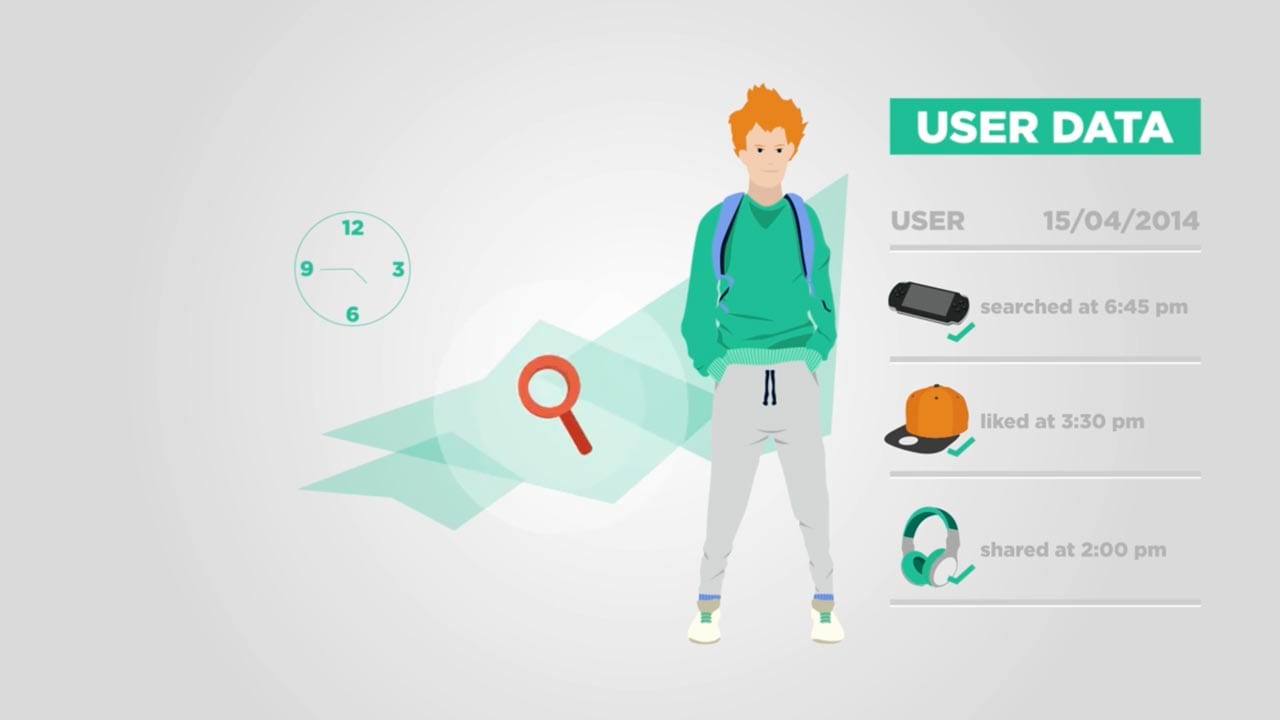
    The company is the recent spinoff of former Kroger-Tesco analytics joint venture dunnhumby, now wholly owned by US supermarket giant The Kroger Co. Renamed for the longitude of its Cincinnati headquarters and rebuilt from the ground up in 2015, 84.51° now focuses much of its activities on Kroger customers and partners, such as global consumer packaged goods companies. It believes that its core competitive differentiator is not technology, but rather its focus on helping customers build long-term relationships with their consumers and other customers.  (The company says its new name also represents the “longitudinal view” it takes on understanding customer behavior.)

    Most retailers rely on segmentation analysis to determine which promotions to send consumers, creating blocks of homogenous groups of people (such as single-parent households in middle-class neighborhoods). But 84.51° uses analytics differently, eschewing what CIO Yael Cosset calls an “archaic” approach in favor of a much more relevant, personalized one.

    “We think of it as a snowflake, because we believe no two individuals are the same, and hence we should not engage them the same way, send them the same promotions,” he says.

    So, for example, you might send a promotion for a particular kind of bottled water to consumers who have already demonstrated an affinity for that kind of product, but you wouldn’t send them a promotion for a cola drink just because the supplier is offering one. This is the kind of commitment necessary to develop long-term relationships with consumers, Cosset says.

    The company goes beyond knowing which consumers like to buy bottled water or condiments; it tries to identify which ones prefer sparkling water to flat, or Dijon mustard to steak sauce. “You can’t do that with segmentation,” Cosset says.

    That approach requires investing in the development of sophisticated algorithms that enables 84.51° to analyze millions of data points about each individual consumer, including their reactions to previous promotions.

    Using Oracle Exadata and Oracle Big Data Appliance, teams of analysts and data scientists at 84.51° leverage a combination of conventional statistical packages and more advanced machine learning algorithms to generate the analytics foundation required to deliver personalization at scale.

    A single campaign uses dozens of targeting models in combination with complex optimization algorithms to send the right offers to the right people. Often, offers are based on contextual cues gathered in real time and are specifically targeted for each customer.

    “We spend a huge amount of time, money, and resources to really get solid sustainable data assets,” Cosset says. “Our data asset is a competitive advantage.”

    Retailers cannot expect to build long-term, sustainable relationships with customers if they base the terms of those relationships on financial incentives alone, Cosset says. “They’re transactional, not relationship-based,” he says. “The real differentiator is what you do with the data—how do you provide real and relevant value to every single customer, how do you engage them the way that matters most to them, how do you create this personal relationship.”

  • Virgin Mobile Australia launches unused data ‘auction’

    Virgin Mobile Australia launches unused data ‘auction’

    Australian MVNO Virgin Mobile has launched a publicity stunt to promote its new data rollover postpaid plans by hosting an auction allowing local consumers to ‘bid’ for items using unused data allocations.

    The company will auction off 30 items over 30 days, with the top prize being an A$43,000 ($33,000) vacation package to the private Wadigi Island in Fiji.

    Consumers can place ‘bids’ on Virgin Mobile’s Facebook page by posting their most recent mobile bill showing how much unused data was left over. The person with the highest amount of unused data wins the prize for that day, or in the event of a tie whoever placed a bid first will win.

    Virgin Mobile Australia head of brand and consumer marketing Philippa Duant commented that the stunt aims to raise awareness of the company’s data rollover plans, that are designed to give subscribers a second chance at using their allocation.

    “Terabytes upon terabytes of unused mobile data are being taken back from consumers every month by other telcos,” she said.

    “At Virgin Mobile we don’t think it’s fair that something they’ve paid for is snatched away – they should get a second chance to use it and what better way than through a unique auction that offers the opportunity to live like [Virgin Group co-founder] Sir Richard Branson on your own private island.”

  • Equinix launches data hub service

    Equinix launches data hub service

    The ways in which enterprises assemble their network infrastructure have been evolving rapidly as the industry-wide shift to the cloud accelerates. This week Equinix offered another piece of its ongoing response to that shift, unveiling a new Data Hub service that lets enterprises store their data next to the clouds they use but keep control over it.

    Equinix already has Cloud Exchange, providing connectivity to an ecosystem of cloud providers, as well as Performance Hub, which gets the enterprise WAN into the data center.

    This new offering simply bundles the space and power needed to house big data in a pre-configured package and with partners lined up to help with the particular storage technology.

    The idea is to let folks put their data as close as possible to the cloud services that use it, while at the same time not ceding control or access to it.

    That might be for compliance reasons, it might be to leverage a common data store from multiple cloud providers, it might be simply for data protection or replication, or simply to keep latency as low as possible for things like IOT.

    It’s all part of the industry shift toward caring where data actually is on the internet. From low latency trading, to sovereignty issues, to the caching of content at the edge, to small cells, to proximity to renewable energy, the recurring theme in this era of internet infrastructure has been the old real estate saying, ‘location, location, location’. It’s a quite different theme from the prior decade, in which everything was about achieving scale.

  • 3 Hong Kong offers free 5GB data SIM cards

    3 Hong Kong offers free 5GB data SIM cards

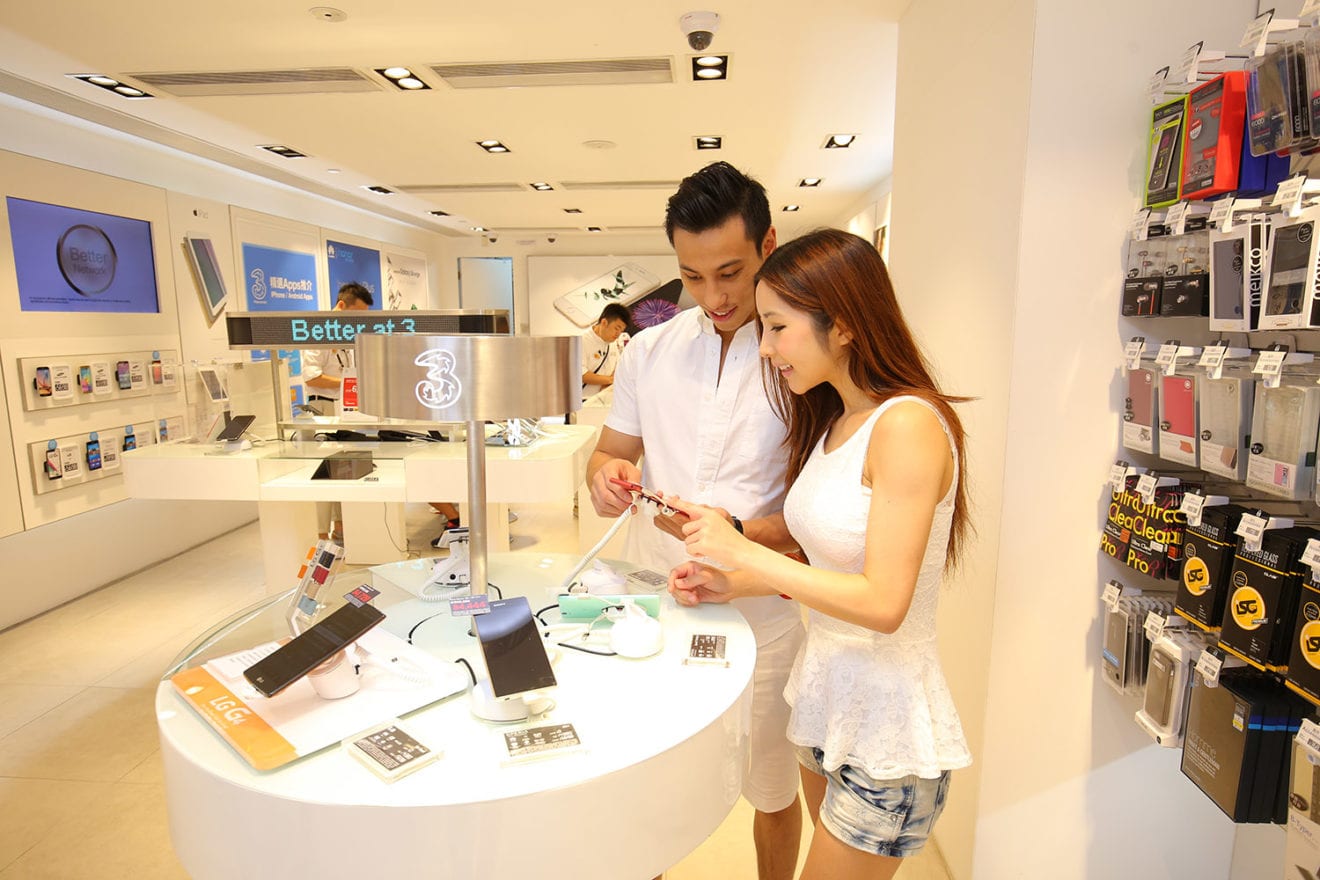
    3 Hong Kong will offer free “myTV Super” 5GB data SIM cards at 3Shops and other designated outlets starting mid-March.

    The card enables mobile users to watch Television Broadcasts (TVB) programs from 30 thematic TV channels for 30 days via the new “myTV Super” paid mobile app.

    3 Hong Kong’s ultra-fast 4G LTE network makes popular Hong Kong, Japanese and Korean dramas – along with classic Cantonese movies, animation, variety shows and children’s programmes – available to mobile users on the move. Offer available while stocks last.

    Customers must register online to activate an account, before inserting the data SIM card and downloading the “myTV Super” app.

    This will allow them to enjoy 5GB of free data usage to access TVB’s 30 thematic channels for 30 days. 3 Hong Kong customers can use the “myTV Super” app for 30 days free of charge without changing SIM card.

    “We provide an open and neutral platform for various OTT content providers via our high-speed, high-capacity content delivery network, along with world-class data center services,” HTHKH COO Jennifer Tan.

    “Handing out free data SIM cards is an unprecedented way for us to promote 3 Hong Kong’s advanced network alongside compelling content from TVB,” said Tan. “We aim to enable users to be the first to experience free TV programs and enjoy the best ‘videotainment’ while on the move through use of the ‘myTV SUPER’ app on mobile devices. We believe this represents a new trend in mobile entertainment.”

  • Mobile apps collecting alarming amounts of data

    Mobile apps collecting alarming amounts of data

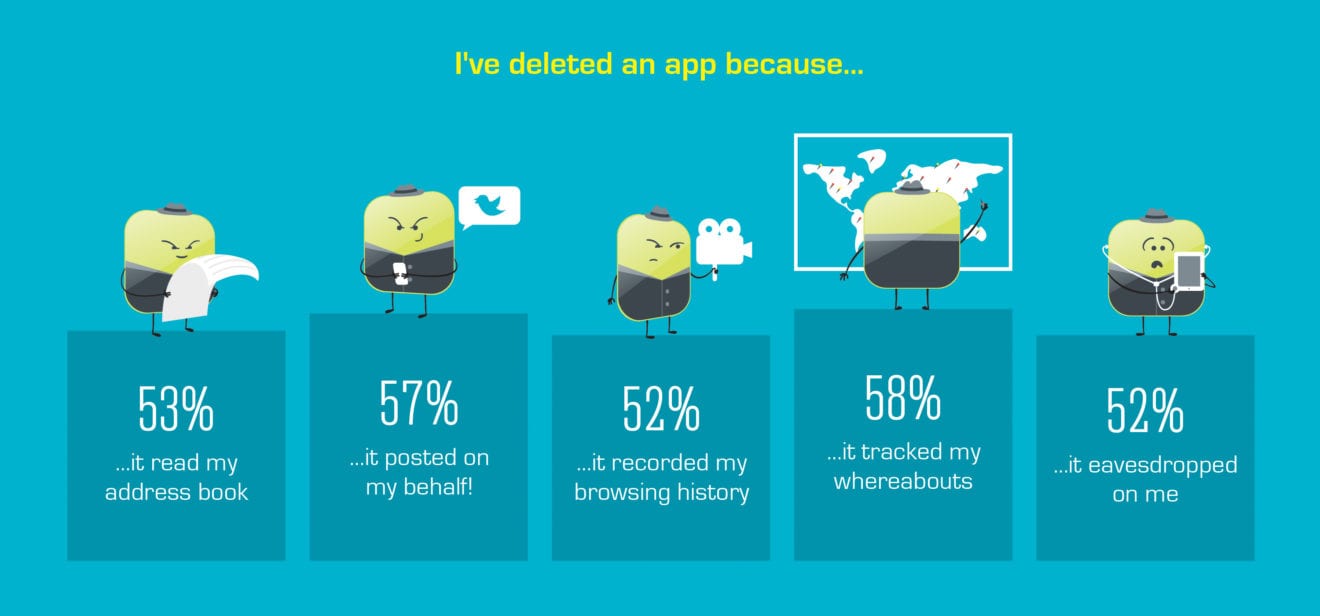
    More than half of mobile applications are collecting “alarming” quantities of data, a new study indicates.

    Hewlett Packard Enterprise’s HPE mobile application security report 2016 analyzes scans of more than 36,000 iOS and Android mobile apps, and reveals the impact of increasing data collection.

    As mobile applications become more prevalent in the work environment, it’s essential that organizations understand the security vulnerabilities of mobile applications and implement mobile security best practices and policies required to protect today’s digital enterprise. Adversaries are shifting their focus to mobile platforms, with more than 10,000 new Android threats discovered per day in 2015, and an iOS malware growth rate of more than 230%.

    “Modern mobile applications are collecting, transmitting and storing a wide range of data that often is not necessary to the application’s function, and can cause significant financial and reputational damage if a vulnerability is exploited,” said Jason Schmitt, vice president and general manager, HPE Security Fortify at Hewlett Packard Enterprise.

    “With attackers’ growing interest in mobile, it’s critical that developers build security into applications from the onset, and organizations take a proactive approach to data security to better protect both personal and corporate data.”

    Not all apps need to track your location

    A majority mobile applications track your location, but not all of them need to. More than 50% of the scanned applications accessed geolocation data. This can create serious privacy implications in the event of an attack, as an attacker can gain access to the physical location of otherwise anonymous, unsuspecting users.

    While it makes sense for a traffic application to track location, the study found that more than 70% of education applications on iOS did as well. This is disturbing as education applications are often marketed towards children.

    The report also found that calendar data was accessed by more than 40% of the iOS games and more than 50% of the iOS weather apps scanned. Calendar data can be particularly sensitive, detailing not just when business meetings take place, but also the topics and invitees.

    Ad and analytics frameworks are commonplace in application development, with more than 60% of applications scanned using these frameworks. A framework that is misconfigured – or insecure to begin with – could be storing or transmitting a significant amount of highly specific and potentially sensitive data about users.

  • Airtel to allow prepaid data top-ups for postpaid plans

    Airtel to allow prepaid data top-ups for postpaid plans

    India’s Bharti Airtel has introduced an innovative new service allowing post-paid business customers to top up their data allocations with prepaid credit.

    The operator will allow customers to recharge their accounts through retail or online credit purchases or mobile wallets.

    The new Prepaid on Postpaid feature has been introduced to give business customers more flexibility in how they use their mobile plans while simplifying the data experience.

    Users of corporate plans that lack mobile data, for example, could pay for their own allocations rather than needing to swap SIMs or devices every time they want to use their data allocations.

    Standard prepaid data recharges start at 99 rupees ($1.48), the company said. Airtel has asserted that allowing prepaid top-ups for postpaid plans is an industry first.

    Bharti Airtel is India’s largest mobile operator with an estimated 245.8 million customers as of the end of January.