Retail News CRM

Tag: data

  • Indonesia Uses Big Data Digital Technology To Boost Tourism Performance

    Indonesia Uses Big Data Digital Technology To Boost Tourism Performance

    Indonesia is now using big data Mobile Positioning Data (MPD) digital system in a bid to boost up performance of the nation’s core business sector, tourism, China’s Xinhua news agency reported.

    The MPD to support the tourism activities is operated by Indonesia’s central statistic agency of BPS by detecting the cellular phones used by visitors entering Indonesian territory from several gates, including from land borders with neighboring countries.

    Besides in big cities’ airports, the system is also applied in 19 regencies and 46 subdistricts which host Indonesia’s border areas to neighboring countries as well.

    The MPD digital system have been operated since October last year and is scheduled to serve until 2019.

    Indonesian marketing guru from University of Indonesia (UI) Rhenald Kasali said that option to ultimately use the MDP digital system is a correct move to respond the ongoing digital lifestyle adhered by people globally with smart phone.

    “The official data provided by the BPS would not only be useful in analyzing tour markets and outlining policies in the sector. The data is also essential for those indulging in tourism business to expand their businesses,” Kasali said.

    The tourism ministry would breaking the data down into more specific information about the visitors, including their length of stay, frequency of their visits, spending and even their tour activity preferences during their holiday in Indonesia.

    Head of ASITA (Association of Indonesian Tours & Travel Agencies) Asnawi Bahar said that with processed information resulted from data, travel agents and hotels would be able to prepare resources and proper accommodations for the visitors.

    “It would be very useful for us as we can digitally learn plans of the visitors’ movements since their departures,” Bahar said recently.

    He added that most of foreign visitors have now booked their travel packages in Indonesia through digital applications in advance, including the payments, through their gadgets.

    Indonesia has been taking herculean efforts to develop its tourism sector, replacing the previous oil and gas, coal and palm oil sectors.

    The current government expects to see 20 million foreign visitors with earnings gained from the sector at over US$24 billion the time its service term ends in 2019.

  • Firms cash in on big data benefits

    Firms cash in on big data benefits

    Firms that capitalize and analyze all relevant data and deliver actionable information could achieve an extra $430 billion worldwide in productivity benefits over their less analytically oriented peers by 2020, according to IDC.

    The research firm predicts big data analytics technology investments will increase across Asia Pacific at 34% year over year in the next few years. This rapid growth in investment is creating a divide between the organizations that “know” and the ones that do not.

    “The measure of information in our reality has been blasting, and investigating substantial information sets — supposed enormous information will turn into a key premise of competition, supporting new influxes of efficiency development, advancement, and customer surplus,” says Chwee Kan Chua, AVP for big data and analytics and cognitive computing at IDC Asia Pacific.

    The increasing volume and detail of information captured by enterprises, the rise of multimedia, social media, and the Internet of Things (IoT) is expected to fuel exponential growth in data for the foreseeable future.

    Another dimension that we are entering is a new period of computing history — the Cognitive Computing era. IDC predicts by 2020, 50% of all business analytics software will incorporate prescriptive analytics built into cognitive systems functionality.

    “Cognitive Systems offer fundamental differences in how systems are built and interact with humans,” says Alon Anthony Rejano, associate market analyst at IT services research in IDC Philippines. “Cognitive-based systems are able to build knowledge and learn, understand natural language, and interact more naturally with human beings than traditional systems

    Rejano said Cognitive Systems can quickly identify new patterns and insights and, over time, they will simulate even more closely how the brain actually works.

    “In doing so, they could help us solve the world’s most perplexing problems by penetrating the complexity of big data and exploiting the power of natural language processing and machine learning,” he added.

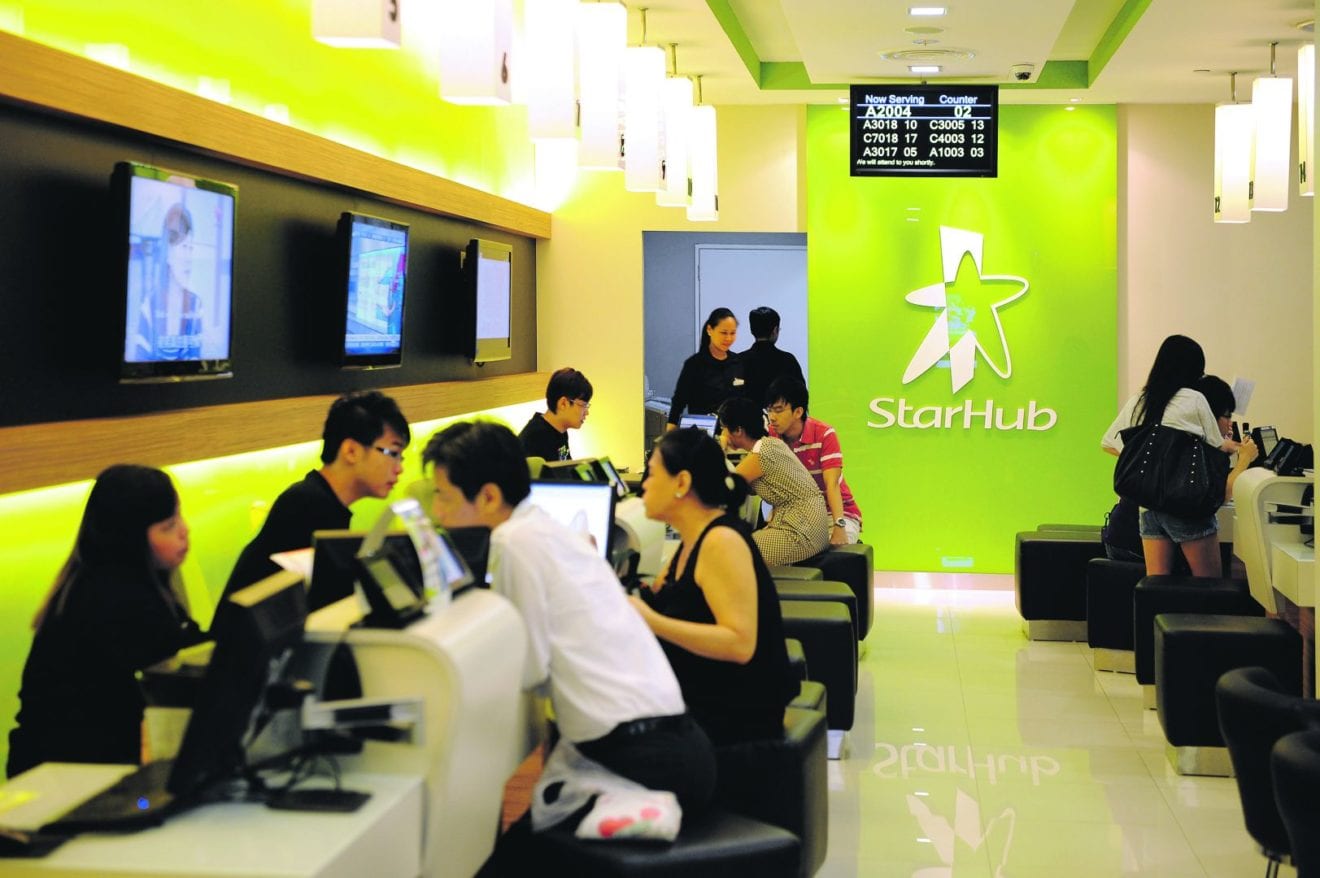
  • StarHub launches data roaming to 9 APAC markets

    StarHub launches data roaming to 9 APAC markets

    Singapore’s StarHub has launched a new flat rate multi-destination monthly mobile data roaming plan covering all mobile networks in nine APAC markets.

    The DataTravel plan offers 2GB of data for 30 days when roaming to Australia, Hong Kong, Indonesia, Malaysia, New Zealand, South Korea, Taiwan, Thailand and The Philippines for a flat S$15 ($10.50), or 3GB for S$20.

    While roaming, customers will not need to manually search for specific networks and can instead leave their phones to connect to the strongest available signals.

    “With DataTravel, we are happy to free our customers from the common constraints of overseas data usage, that are cost and accessibility,” StarHub head of product and marketing Wang Li-Na said.

    StarHub will also send SMS notifications before a plan expires and depletes, and customers will be able to top up with additional 2GB or 3GB DataTravel plans. Any unused data will be carried forward for another 30 days when a new plan is activated.

    The operator’s move comes shortly after rival Singtel expanded its ReadyRoam mobile data roaming service to cover multi-destination roaming across 26 countries, including 11 Asian markets.

    In comparison to StarHub, Singtel’s base ReadyRoam service provides 1GB of data for 30 days’ roaming in the 11 Asian markets for S20.

  • Optus offers bonus data for viewing ads

    Optus offers bonus data for viewing ads

    Australia’s second largest mobile operator Optus has introduced a new ad-supported offer allowing customers to be allocated extra data or credit by agreeing to have marketing messages displayed on their device’s lock screen.

    The Singtel subsidiary has announced Optus Xtra, which gives prepaid customers the option to earn 1GB of bonus data on eligible monthly plans or $2 of extra credit on daily plans every 28 days.

    Optus has developed the service in partnership with New Zealand based mobile advertising start-up Postr. The company has developed a technical platform for lock screen advertising and has similar operator partnerships in New Zealand and Southeast Asia.

    As well as static ads, the platform can give customers the option of viewing a video version of the ad or visiting an advertiser’s website. Users can nominate interests across eight categories – beauty, employment, fashion, government and politics, health, money, technology and travel.

    Singtel’s digital marketing subsidiary Amobee manages advertising for the service.

    “Optus Xtra is a mobile advertising solution that puts mobile first and allows advertisers to reach audiences who have opted-in to see ads that are highly relevant to their interests and preferences,” Amobee managing director for Australia and New Zealand Liam Walsh said.

    “The Optus Xtra lock screen format lets brand advertisers target highly engaged audiences, where they are guaranteed a full screen creative canvas and 100% viewability.”

  • Malaysia’s MMU, Teradata ink pact on big data analytics skills

    Malaysia’s MMU, Teradata ink pact on big data analytics skills

    Multimedia University, Malaysia (MMU) and Teradata have announced a strategic partnership to collaborate on education and research in an effort to cultivate the next generation of data science professionals and experts in Malaysia.

    Through this co-operation, MMU will gain access to the Teradata University Network (TUN), a web-based portal that provides complementary teaching and learning tools used by more than 45,000 students around the world to share expertise, access knowledge as well as information on how to enhance both curriculum and align research to the current industry needs.

    Teradata University Network currently has over 5,500 registered faculty members, from over 2,400 universities, in 115 countries, with thousands of student users.

    A key to the success of Teradata University Network is that it is led by academics to ensure the content will meet the needs of today’s classrooms.

    Leveraging the partnership, MMU’s Faculty of Computing and Informatics will offer a Data Science Specialization as part of its Bachelor of Computer Science degree.

    This step was taken following the formalization of a Data Science Institute (DSI) at MMU last month designed to cater to both research and industry engagement of MMU’s expertise in this area.

    “This MoU facilitates greater input from a leading industry player, and Teradata has committed to provide experts to support exposure to our students and staff alike to its services and solutions,” said MMU president Ahmad Rafi Mohamed Eshaq.

  • YTL launches 4G LTE data, VoLTE services

    YTL launches 4G LTE data, VoLTE services

    YTL Communications in Malaysia has deployed Elitecore’s Revenue and Customer Management (RCM) Platform to roll out its 4G LTE high speed data & VoLTE services.

    The platform will enable the operator to roll out new business models like, HD Voice (VoLTE), Enterprise LTE and LTE Roaming, in addition to the Double Double buckets, one for wireless broadband and another for mobile internet, VoLTE and data services bundled with devices.

    YTL Communications said it is the only operator in Asia Pacific to commercially launch nationwide Voice over LTE (VoLTE) services.

    Elitecore’s NFV ready and Virtualized platform comprises of integrated policy and charging, 3GPP AAA, convergent billing, fulfillment, mobile self-care catering to voice, data and VAS services supporting multiple networks such as LTE, Wi-Fi and Wimax.

    “Elitecore’s product roadmap alignment with YTL’s business vision and proven experience in convergent billing and integrated policy and charging supports our growth strategy and helped us migrate from our legacy billing and operational support systems,” said Ali Tabassi, COO of YTL Communications. “The platform offers high agility for faster time-to-market and feature rich functionalities.”

    Elitecore said its RCM is a modular and feature ready platform that offers operators the speed and flexibility to roll out, new monetization and personalization use cases needed to innovate in next-generation data services. The platform promises significant contribution to capex and AMC cost reduction.

  • Singtel expands ReadyRoam to 26 countries

    Singtel expands ReadyRoam to 26 countries

    Singtel has expanded its ReadyRoam mobile data roaming service to cover multi-destination roaming across 26 countries in Asia, Europe and North America.

    The ReadyRoam 1GB for 30 days service will allow customers to use the same pool of data while traveling between any of the supported countries.

    The base service supports roaming between 11 Asian markets – China, Hong Kong, India, Indonesia, Japan, Macau, New Zealand, the Philippines, South Korea, Taiwan and Thailand – for S$20 ($14).

    For customers traveling further afield, ReadyRoam USA and Europe supports roaming to the above countries, as well as Canada, Denmark, France, Finland, Germany, Ireland, Italy, the Netherlands, Norway, Portugal, Spain, Sweden, Switzerland, the UK and the USA.

    Excess usage will be charged at S$0.019 per MB or S$0.034 per MB depending on a customer’s plan.

    “It’s the holiday season and many of our customers and their families will be traveling,” Singtel VP of mobile marketing consumer Singapore Diana Chen said.

    “Our enhanced ReadyRoam 1GB for 30 days will allow them the convenience of remaining contactable via their Singtel SIM card number while roaming seamlessly across multiple destinations.”

  • Qlik and Esri Singapore join forces to redefine visual analytics

    Qlik and Esri Singapore join forces to redefine visual analytics

    Qlik, a leader in visual analytics, today announced its technology partnership with Esri Singapore, the country’s leading Geographic Information System (GIS) technology provider.

    The collaboration will see Esri Singapore and Qlik working together to educate industries on the benefits of synergising geographic and spatial analytics.

    Smart mapping: making intelligent decisions with geographic information

    Esri’s ArcGIS Online is a collaborative, cloud-based technology platform that allows users to easily create, share and access content rich maps, applications and data. The technology collects location information contained within an organisation’s data and translates static data into useful, intelligent maps. Different locations have unique characteristics, and organisations need to identify, qualify and understand the connections between people, places and events. When mapping analytics is combined with a powerful visual analytics platform, organisations can add a new dimension to the practice of analysing information by translating complex datasets into the universal language of smart maps.

    Additionally, by integrating location information with data in real-time, businesses can unearth relationships, patterns and trends that would otherwise remain hidden. Esri’s ArcGIS Online maps are compatible with both QlikView and Qlik Sense. The Qlik Sense extension is available on Qlik Branch – a collaborative workspace and open exchange that provides customers, developers and partners simplified access to the open and powerful APIs of Qlik solutions. “More than 80 per cent of our business data is location related. From understanding your customer information and their behaviours to managing chronic illness, pandemic patterns, and even business impact due to accessibility of transport networks – location essentially links different sets of business information together to provide executives with better informed decision making.

    Through our partnership with Qlik, we aim to help organisations understand the value of letting users see their data in new and provoking ways, allowing them to develop actionable plans to address real-world challenges, said Thomas Pramotedham, Chief Executive Officer, Esri Singapore. “From retail sales performance to urban planning, being able to seamlessly merge intelligent mapping with visual analytics is critical to smart, data-driven decision-making. Qlik is proud to partner with Esri Singapore to promote the benefits of combining mapping technology and visual analytics for organisations to drive better decision making. We look forward to pursuing more innovative projects together in the future,” said CK Tan, Product Marketing, Qlik Asia Pacific.

  • Aussie mobile customers’ private data up for sale

    Aussie mobile customers’ private data up for sale

    Private information on Australian mobile subscribers are being sold off by unscrupulous members of offshore call centers, according to an investigative report.

    The private details of customers from the market’s three operators – Optus, Telstra and Vodafone – are being offered for sale by a call center business named AI Solutions, run by Indian businesman Imran Khan.

    Information including home addresses, dates of birth, alternative numbers, billing statements and call history are being offered for between A$350 ($260) and A$1,000, the report states. Prices are higher for VIPs , politicians, police and celebrities.

    Security industry sources spoken to for the report say the practice of call center workers selling off Australian customer details has been long-standing, and potentially involves more than one company.

    In a press statement, a Vodafone Hutchison Australia spokesperson said the company is “aware there are individuals who do attempt to illegally access data through various channels from companies and organisations which hold customer information,” and has “invested millions of dollars over recent years in security systems and processes, and have a number of safeguards in place to prevent unlawful access of customer information.”

    For offshore call centers, security safeguards include paperless offices, a no mobile phone policy, no access to third party websites, email monitoring, role based systems access, continuous agent training and disciplinary process.

    An Optus spokesperson said the company has referred the matter to federal police, and Telstra said the company does everything it can to protect customer data.

  • PCCW Global connects to Djibouti Data Center

    PCCW Global connects to Djibouti Data Center

    PCCW Global, the international operating division of Richard Li-owned HKT, has selected Djibouti Data Center (DDC) to facilitate network expansion and the provision of colocation and undersea fiber cable access services in East Africa.

    The Djibouti Data Center has been built to Tier III data center standards and serves as a major meeting point for undersea fiber cable systems including the new Asia-Africa-Europe-1 (AAE-1) submarine cable designed to connect Asia, the Middle East, Africa and Europe.

    The AAE-1 system, of which PCCW Global is a founder consortium member, will employ 100Gbps technology, with a capacity of more than 40 terabits to provide customers with low-latency and direct connectivity around the world.

    The 25,000km-long submarine cable is expected to be ready for service by early 2017, connecting Djibouti with Hong Kong, Vietnam, Cambodia, Malaysia, Singapore, Thailand, Myanmar, India, Pakistan, Oman, UAE, Qatar, Yemen, Saudi Arabia, Egypt, Greece, Italy and France.

    “The addition of AAE-1 to PCCW Global’s existing undersea fiber cable assets in the region will enable us to provide even more robust services, along with lower latency and increased diversity, boosting services levels for our customers,” said Jordick Wong, senior vice president of product and vendor management at PCCW Global.

    Wong said the partnership with DDC is an important element of its wider pan-African development and expansion plans.

    It enables PCCW Global to establish cross-connect and colocation facilities directly adjacent to Djibouti Telecom’s cable landing stations. In addition to supporting AAE-1 in the near future, the DDC provides access to fiber-cable systems such as EIG, EASSy, Aden-Djibouti, and Ethiopia-Djibouti, Wong added.

  • AsiaInfo strengthens cloud computing portfolio

    AsiaInfo strengthens cloud computing portfolio

    Chinese telecoms IT software company AsiaInfo has signed a strategic co-operation agreement with Alibaba Cloud, the cloud computing arm of Alibaba Group.

    The two companies said they will work together on projects and jointly promote China as a center of excellence for cloud computing services and innovation.

    The partnership will also see the pair share a wide range of resources and jointly build a more open cloud ecosystem to form the basis of a comprehensive portfolio of cloud-based services.

    AsiaInfo said the company is stepping up its transition from a supplier of IT solutions to telco service providers, to a specialist in enabling digital business transformation for operators, their partners and other enterprises.

    Cloud-based delivery platforms and exchanges play a key role in the company’s vision of the industrial and business-led Internet, and the partnership with Alibaba Cloud will enable the company to continue to develop and deliver advanced operator and business solutions, the company added.

    “We are entering a new era of the internet. An era where people and things become customers, where service providers and businesses become operators, and where cloud-based business technology platforms will form both the backbone and the brains of the digital network,” said AsiaInfo CEO Michael Wu.

    “Our partnership with Alibaba Cloud will ensure we stay at the forefront of developments and provide innovative and ground-breaking solutions to our customers.”

  • CenturyLink to sell data centers for $2.15b

    CenturyLink to sell data centers for $2.15b

    US-based global operator CenturyLink has arranged to sell its data centers and colocation business to a consortium led by BC Partners and Medina for $2.15 billion.

    CenturyLink plans to use the net proceeds from this sale to partly fund its acquisition of Level 3 Communications announced last week

    Under terms of the agreement, the consortium will assume ownership of CenturyLink’s portfolio of 57 data centers at closing. The data center portfolio includes approximately 195 megawatts of power across 2.6 million square feet of raised floor capacity.

    Post-sale, the company will continue to focus on offering customers a wide range of IT services and solutions, including network, managed hosting and cloud.

    Though it will no longer own the data centers, CenturyLink will continue to offer colocation services as part of its product portfolio through its commercial relationships to be entered into at closing with the BC Partners/Medina-led consortium.

    “After conducting a thorough review process, we are pleased to have reached an agreement with BC Partners,”  CenturyLink CEO Glen F. Post III said.

    “We believe this transaction will benefit customers, employees and investors. Both CenturyLink and BC Partners have a strong customer focus and are committed to ensuring a seamless transition of the customers and their colocation environments.”

  • Orange Business launches IoT and analytics suite globally

    Orange Business launches IoT and analytics suite globally

    Orange Business Services has announced the worldwide launch of Datavenue, its IoT and data analytics modular suite.

    Datavenue will help multinational and large national corporations seize the endless opportunities offered by the IoT revolution, the operator said.

    Already 56% of decision makers consider IoT as strategic. Use cases include improving safety and user experience within smart cities by connecting street lights or parking meters, as well as improving quality of life by connecting medical devices to monitor a person’s health remotely.

    Datavenue is supported by Orange Business Services’ 700 IoT and analytics experts worldwide, as well as data scientists, developers, consultants, statisticians and IoT security experts.

    Datavenue includes four modules:

    1. Select relevant objects and sources of data. Orange offers a range of certified and tested connected objects, such as sensors, cameras or modules to connect existing assets. Datavenue has a catalog of data that includes population movement analytics using anonymized data from mobile networks.
    2. Connect objects reliably with the most suitable and secured networks. A truck travelling cross borders or an agricultural sensor in a field would require different networks. To address the wide diversity of needs, Orange provides a range of connectivity options. These include future-proof global cellular networks and innovative capabilities, such as eUiCC, worldwide fixed and satellite networks, as well as low-power solutions, such as LoRa.
    3. Manage data to improve efficiencies and create enhanced services. For example, a construction company can monitor cranes worldwide to prevent problems and reduce maintenance costs. Managing data in real-time enables technicians to solve issues remotely or to arrive on site with the right material, reducing service interruptions. Orange offers both cloud-based and on-premises software solutions, encompassing remote device management, processing and visualization.
    4. Control key elements of enterprise transformation projects. Orange experts aim to provide end-to-end security and data protection, integration with information systems and service scalability. Throughout the entire project and beyond, customers can rely on Orange to ensure the solutions are future-proof and adapted to market evolutions.

    “We have developed extensive vertical expertise around IoT and data analytics in several sectors, including automotive, industry, smart cities, healthcare and smart homes,” Orange Business Services VP of IoT and analytics Olivier Ondet said.

    “Our solutions have already improved performance and employee safety through industrial machinery monitoring, enhanced patient care with remote assistance, and enriched citizen well-being with smart city services. This is now all being brought together to support the international launch of Orange Datavenue.”

    Datavenue was first launched in France in 2015. Orange today operates more than 10 million active B2B objects and processes 65 million items of technical data per minute – all fully compliant with data protection regulations.

  • Hangzhou to harness Alibaba Cloud’s AI, analytics tools

    Hangzhou to harness Alibaba Cloud’s AI, analytics tools

    Alibaba Cloud announced at its recent Computing Conference that it will provide its AI, deep learning and data analytics capabilities for two new cutting-edge developments in China.

    Initiated by the Hangzhou government, the “Hangzhou City Brain” is set to address the city’s urban living challenges. As the hub to consolidate data and provide real-time analysis, the “Hangzhou City Brain” will rely on Alibaba Cloud’s AI program ET and big data analytics capabilities to perform real-time traffic prediction with its video and image recognition technologies.

    The project will support transportation departments’ efforts to ease traffic congestion and provide users with real-time traffic recommendations and travel routes.

    “By establishing the Hangzhou City Brain, Hangzhou is taking the lead in harnessing artificial intelligence and deep learning technologies to promote greater sustainability and improve the quality of urban living for Chinese citizens. Alibaba Cloud is proud to support and be part of this important development, “said Dr Jian Wang, chairman of Alibaba Group’s technology steering committee.

    With automated traffic system capabilities, intelligent adjustments of traffic lights will be performed on the spot; when a vehicle changes direction, the green light will automatically be extended. The pilot of world’s most advanced smart traffic management system in the Hangzhou’s Xiaoshan District, which started in September this year, has since seen an increase in traffic speed by 11%.

    The project is being led by the Hangzhou government in coordination with 13 firms including Alibaba Cloud. As part of the project, a research and development team of scientists from various companies has been formed.

    Forming the backbone of the “Hangzhou City Brain” data processing and analysis capabilities is Apsara, Alibaba Cloud’s large scale computing operating system, which is able to cluster millions of servers into a super computer and to support a multitude of cloud-based services by analyzing terabytes of data points. This computational engine is one of the largest of its kind in the world and uses propriety algorithms.

    Paving the way for astronomical data storage and analytics

    Aiming to leverage its technologies for astronomical data collection and analysis, Alibaba Cloud also announced at the Computing Conference its research collaboration with the National Astronomical Observatory of China (NAOC) on deep space exploration.

    The plans are to set up a data and research centre for astronomy, as well as a virtual solar observatory which will be supported by Apsara’s massive scalability and advanced capabilities to process astronomical data.

  • Trifacta extends enterprise data wrangling

    Trifacta extends enterprise data wrangling

    Trifacta has released Trifacta v4, which has capabilities specifically designed to work for more users, more diverse data sources and within more cloud environments.

    Trifacta v4 features the general availability of Builder, a new menu-driven workflow to guide users through data wrangling steps. The latest release includes the general availability of the Photon Compute Engine, improving the scale of data that users are able to wrangle on-the-fly, directly within the Trifacta application.

    Photon provides an optimized engine for datasets that do not require parallel processing within Trifacta’s Intelligent Execution architecture. The v4 release also expands support for customers deploying Trifacta in cloud environments such as Amazon Web Services, Google Cloud Platform and Microsoft Azure, while extending the ability of users to directly connect to a variety of enterprise data sources, including Microsoft SQL Server, MySQL, Oracle, PostgreSQL and Teradata.

    A core focus area of the v4 release is to enrich Trifacta’s unique data wrangling user experience by offering a new workflow for building data preparation steps. The addition of Builder to the Trifacta interface augments the ability of users to wrangle data without the need to utilize scripts.

    The v4 release also expands upon Trifacta’s blend of data visualization and machine learning to guide users through common data wrangling tasks. With pattern profiling, users visualize common and anomalous text patterns that are automatically detected within each column.