Retail News CRM

Tag: data

  • AirAsia rides on big data analytics

    AirAsia rides on big data analytics

    The airline that made flying more affordable for Malaysians since 2001 is now looking to up its game by using big data analytics to mine data on 80 million unique passengers at its disposal, to personalise and anticipate travelling patterns for marketing purposes.

    “We have a database of about 80 million unique individuals. We know where they like to fly to, or when they like to fly during the year, or how many holidays they take maybe during the year.

    “Now, the marketing side has already started employing data analytics there, to actually start targeting certain portions of passengers on specific dates or specific periods of the year that they go on holiday,” AirAsia Bhd CEO Riad Asmat told last week.

    “We can be more specific and will go further, not now but at one point, where maybe we can offer you as an individual, your preferred destination on the right date … and say we will give you a nice package at a discounted rate and all that,” he added.

    On data protection, Riad gave an assurance that the data trove is one of its most important assets which, as a “very responsible organisation”, the company is very protective of at all times and use responsibly.

    “We don’t share our information with any other parties but ourselves. If you notice what we are doing is we bring expertise inhouse. We employ people and bring in expertise,” he explained.

    Riad said while the airline is utilising its current resources, it is also on a continuous lookout for expertise and new technology.

    Besides marketing and ticket purchases, digitalisation has enabled AirAsia to improve operational efficiency, through the use of data in features such as live reporting and operations review from the previous day, made available to the team on a daily basis.

    This, according to Riad, enables the team to identify and tackle challenges and come up with preventive measures.

    “The airline bit is the traditional bit but it will be 100 times enhanced with digitalisation,” he quipped.

  • True Move told to consider compensation over data leak

    True Move told to consider compensation over data leak

    Thai telecoms regulator NBTC has instructed mobile operator True Move H to assess the impact of its recent personal data leak and offer compensation to any affected customers.

    The regulator also plans to conduct a formal investigation into the incident and consider imposing punishments, and issue a letter demanding that mobile operators take appropriate steps to prevent similar breaches in the future.

    A security researcher recently revealed that the identity documents of up to 45,736 customers of True subsidiary iTrueMart had been exposed by being stored in a publicly-accessible Amazon S3 data bucket. The company also took more than a month to finally make the cache of files private.

    Researcher Niall Merrigan discovered the cache by scanning certificate transparency logs created when someone creates a new security certificate.

    Yet True Move H and parent True Corp are continuing to characterize the action as a data breach. A True Corp executive told that the company is considering taking legal action for hacking the data from the system, stating that he used “special tools to access data which he has no right to get into.”

    But a cloud expert noted that because the default setting for the AWS S3 service is private, True had to have intentionally set the data to public.

  • Priceza Indonesia data shows Ramadan boom

    Priceza Indonesia data shows Ramadan boom

    Ramadan month is the most popular time for online shopping in Indonesia, data from shopping search engine and price comparison platform Priceza Indonesia shows.

    Click rates increased by 26 per cent compared to the previous month, its figures show, while transaction values rose by as much as 16 per cent.

    Priceza Indonesia says this is in line with conventional shopping, where the turnover of traditional traders can double and even triple in some cases as Lebaran (Eid Al Fitr) approaches.

    During the Ramadan period to its peak on Lebaran day there was a “significant transaction boom”, says Priceza Indonesia co-founder/country head Bayu Irawan.

    “This means the traditional month of Ramadan is still going to be effective for e-commerce promotional programs.”

    Indonesian consumers tend to spend their time shopping online during the holiday, says Priceza Indonesia. Its data shows the top three categories during the month are fashion, electronics and smartphones.

    Priceza was established in Thailand in 2010, with the Indonesian offshoot starting in 2013 with nearly 4.5 million users a month. The platform is also active in Malaysia, Singapore, Philippines and Vietnam.

  • How to action data from your business

    How to action data from your business

    E-commerce websites have the ability to collect a ridiculous amount of information.

    With access to such large data sets it’s no wonder so many e-commerce businesses are touting about how “big data” and “business intelligence” (“BI”) sets them apart from the pack.

    We certainly agree that the insights that can be generated from data represent a significant opportunity for a business of any size, but for all the focus on the systems, tools, and resources, the other side of BI needs just as much consideration – that is, what are you doing with the information?

    The ability to answer this question is what turns the data from numbers into actionable insights. While there is no shortage to the questions and solutions that data can provide, BI gets discussed in such general terms that it’s not always clear how one takes data and uses it to make actionable recommendations. So, how do you turn data into actionable insights?

    First you need to find patterns in your data.

    A year has a lot of data points, so start with peak sales period(s). Look at your data, including the age and gender shopping on your website during that key period, it can offer meaningful insights that can be actioned to improve performance over that period. We’ve found that there are patterns to indicate when certain customers tend to shop over others.

    For instance, we found that on certain key dates male customers aged 18-24 were more likely to go online and shop than other days. We also found that during other key dates in the period, woman aged above 35 years were shopping on certain dates but what they were purchasing on those dates were largely for younger males, suggesting that they were purchasing on behalf of their children.

    With this data in hand, we then determined what our key objectives were for this period to best identify how to tailor a marketing plan to achieve them; looking to grow revenue so we used the data to launch specific marketing campaigns aimed at increasing conversion rates, capturing new customers and recovering customers who had not purchased for over 360 days. With these goals in hand, we identified specific products that were likely to resonate by customer type before creating multiple creative assets with the product, tone of voice, message/visuals all geared towards each specific customer type. Using these assets to place them in emails and media where each of these customer sets were most likely to view it in order to maximise the exposure, click through rate and conversion. And finally, we launched look-a-like campaigns across social media to capture new customers.

    While this data was used to find ways to enhance key sales periods from a marketing perspective, the insights can be used to make decisions from as early on as setting the season’s buying plan. Setting a buying plan that considers what cross-sell opportunities exist to the shopper at hand – without compromising the brand proposition – would provide an even stronger opportunity to maximise sales. Simply knowing who you are buying for and what dates they are likely to buy let you both target your messaging and curate what you’re selling to meet that customers’ needs.

    The specific implementation is an important component – what, when and where you are advertising needs to be aligned with the insights you’ve found and the assortment aligned to your customer, but these serve as examples into how you can use your data to action meaningful change to your marketing and buying initiatives.

  • Alibaba Throws $486 Million Behind Big Data

    With plans to expand its offline presence, Alibaba Group Holding Ltd. will be investing $486 million in a China-based big-data firm centered on the hotel, catering and retail industries.

    A filing to the Shenzhen stock exchange today shows that the company is set to buy a 38 percent stake in Beijing Shiji Information Technology Co. Ltd. through its subsidiary Alibaba Investment Ltd. The e-commerce giant is shifting into what it calls a “New Retail” strategic cooperation and intends to leverage big data as part of a bigger push to restructure the domestic retail market, which has seen troubling times over the past few years.

    Led by Chinese billionaire Jack Ma, Alibaba reported 61 percent growth in quarterly revenue last November, beating retail and financial analysts’ expectations. “We are seeing the early results from our efforts to integrate online and offline with our New Retail strategy, and consumers have benefited from access to high-quality products, improved customer experience and the tremendous convenience of shopping anytime, anywhere,” CEO Daniel Zhang said at the time.

    Already dominating the country’s online shopping market, the e-commerce and technology giant has been experimenting with brick-and-mortar retail, reportedly investing billions in physical stores as it faces growing competition with rival company Tencent Holdings Ltd. Ma also announced a plan last fall to spend $15 billion on research and development within three years, with the goal of serving 2 billion customers and creating 100 million job opportunities over the next two decades.

  • Singtel debuts unlimited mobile data plan

    Singtel debuts unlimited mobile data plan

    Singtel has launched what it says are Singapore’s first mobile plans with unlimited data, talktime and SMS, following a nationwide network upgrade to 500Mbps on compatible handsets.

    The operator’s new Singtel Combo 3, 6 and 12 mobile plans will be upgraded with unlimited talktime and SMS, will come with an optional add-on providing unlimited local data for S$39.90 ($29.68) per month. The price for the entry-level Combo 3 plan is S$68.90.

    The DATA X INFINITY add-on is subject to a fair use cap of 50GB above the data bundle allocated in the base plan (3GB, 6GB and 12GB respectively), after which data speeds will be capped at 1Mbps until the next billing cycle.

    Singtel also reserves the right to implement a daily fair use policy that prioritizes network data allocations away from heavy users.

    At launch, customers subscribing to the Combo 6 (S$95.90) and 12 plans will also be provided with a monthly free data roaming plan and will be able to bundle additional data roaming options to stay connected while overseas.

    “We recognise that our customers want flexibility and control over their mobile plans… With our nationwide network upgrade to 500Mbps supporting the latest iPhone 8 and iPhone X, as well as Samsung Note8, our customers can now enjoy the full potential of their devices at blazing speeds,” Singtel CEO consumer Singapore Yuen Kuan Moon said.

  • Singapore consumers need mobile data

    Singapore consumers need mobile data

    Half of Singapore consumers would only be able to only last one day without using mobile data, according to a survey commissioned by MVNO Circles.Life

    The survey of over 900 respondents also discovered that many Singapore consumers are data deprived, with 2 in 3 saying that they need at least 6GB of mobile data per month to not worry about busting their mobile data limits. The industry average is between 3.5GB to 4GB of mobile data usage a month.

    “Findings of the survey are consistent with our internal market research, where we have discovered that consumers in Singapore needed more data, but did not have affordable access to it,” commented Rameez Ansar, co-founder and director of Circles.Life.

    “After we launched our 20GB for S$20 data Data Plus option in March, we saw a huge spike in the data usage of our subscribers to the current average of 8GB per month, more than double of the current industry usage. Singapore consumers are hungry for more mobile data and we expect that demand to grow as a nation.”

    The Circles.Life Annual Mobile Data Usage Survey 2017 was conducted by survey research firm, Survey Sampling International (SSI) of Singaporeans between 16 to 54 years old.

    The survey also revealed that many users were frustrated with their current mobile data limits and 9 in 10 felt frustrated when they reached their month data limits.

    In addition, 1 in 2 Singapore consumers have exceeded their monthly mobile data limits at least once in the last six months and of these, 24% exceeded their mobile data limits by at least 3GB.

    Survey respondents indicated that their most frequently used mobile app used each day was Whatsapp, followed by Facebook and YouTube. Dating apps were the least frequently used mobile apps.

    In conjunction with National Day 2017, Circles.Life is offering a free upgrade to its no-contract mobile plan for new subscribers. New subscribers joining in August will enjoy the 20GB for S$20 Data Plus option for free for the month of August.

  • Tech giants all-out to secure more data for AI leadership

    Tech giants all-out to secure more data for AI leadership

    Big data is all the rage as the key building block to prop up the emerging artificial intelligence (AI) industry. For this reason, tech giants here and abroad have gone all-out to become more data-rich to embrace the next AI era.

    This is true for almost all the tech industries including smartphones, internet and e-commerce as shown in the latest steps taken by leaders of these tech platforms.

    Apple and Samsung, for example, are turning their eyes to the autonomous vehicles market as their next growth area, which requires massive datasets for full-fledged services. Google and its Korean counterpart, Naver, are intensifying their rivalry for language translation service. This is also cited as a war of data, as those with enough datasets can offer more accurate and natural translation outcomes.

    One thing they have in common is that they have their own voice recognition platforms combined with big data. The smartphone leaders are equipping their flagship devices with voice assistant services, while Naver and Google are seeking leadership in the AI speaker industry.

    The AI home speaker is particularly drawing keen attention from the global tech sector, with industry-leading IT giants such as Google, Amazon and even Alibaba tapping into the data-driven hardware market.

    Observers point out that the AI speaker is not serving as a key revenue generator for those leading tech titans, but plays an important role in collecting datasets.

    Amazon and Google are two leading players in the industry, with the former launching its wireless speaker, Echo, in 2015. The latter followed suit with Google Home in 2016.

    Amazon’s Chinese e-commerce counterpart, Alibaba, is also set to unveil its own AI speaker this week.

    In Korea, Naver is cited as the most influential AI player, backed by its unmatched amount of datasets from its internet search portal that has more than a 70 percent market share here.

    The internet giant is boosting its AI presence in Asia where Google and Amazon have yet to achieve notable success.

    Naver plans to launch its AI speaker called Wave this year. Its AI voice assistant app, Clova, will operate the device.

    “Wave is targeting Japan at the initial stage, as no AI speaker competes in the market seriously as of now,” a Naver spokesman said. “After securing a sizable market there, we are going to expand the business into other Asian countries.”

    The company said it is seeking to take advantage of its AI expertise and massive language-related datasets.

    “The language-learning process may come as a hurdle for overseas AI firms like Amazon and Google in tapping into Asian markets,” he said. “But we have strong footholds in both brand value and language datasets in major Asian markets.”

    The company, teaming up with its Tokyo-based subsidiary LINE, is also planning to launch its Champ portable AI speaker in Japan and other Asian nations. It vies to take advantage of its presence as a dominant messaging app player especially in Southeast Asia.

  • The age of self service data

    The age of self service data

    A recent EY– Forbes Insights research report  clearly shows the value organisations get from the strategic use of data; the most mature respondents of its survey were found to be considerably more likely to enjoy growth in revenues and operating margins of 15% or more, along with significant improvement in their risk profile.  No wonder all areas of the business are looking to data to support their drive for modernisation and transformation.

    A challenge is that across the organisation there are many different requirements being placed on a company’s data – and until now access to analytics was reserved for either the data scientist or business users needed significant IT support, just to get a limited set of standardised set of reports run at set times.

    So how can an enterprise make sure all these demands are met with the right data at the right time and in the right format, giving each department and job function the ability to use data they need – in short, how can we facilitate the age of self service?

    Let’s take two examples of how requirements can differ, and why opening up an organisation’s data to self service should be a priority.

    It is often the Marketing department that is the first to harness data driven technologies and tools.  Those that are the most mature and comprehensive in their use of analytics, as compared to their peers, have been shown to gain a 56% greater return on marketing investments, and 10 times greater year on year increase in annual revenue. Common initiatives focus on seeking cross channel insights, better targeting of customers in real time with the next best offer, improved customer engagement and ultimately demonstrating how their actions contribute to the bottom-line.

    Other areas of the business are also turning to data for help; take HR, for example. Similar to Marketing, companies advanced in employing workforce analytics consistently outperform competition, increasing revenue per employee by up to 26% and being 2.5 times more likely to improve their leadership pipeline. They are looking for analytics to help them identify the employee skills and strengths that will help make an impact on business performance, understand workforce challenges, and better align people strategies with business strategies, so that they can more easily attract, nurture, and retain top talent.

    While the business roles, goals and use of data are different, there are common themes: the need to use multiple data sources, present data visually in a simple and easily understandable way, and demonstrate business impact. To deliver on these business goals, enterprises must empower staff to self service data so that they can be met without the need for expensive, time consuming and sometimes restrictive technical or IT support.

    What does this mean in terms of how data should be handled and distributed in an organisation? How can the age of self service data be made a reality?

    A driving force for democratising data in the workplace is the cloud.  Making enterprise class analytics available to all and from anywhere, quickly and cost-effectively, it is also bringing new and powerful visualisation technologies into the hands of the business user.

    Able to be deployed as a hybrid solution, new cloud-based analytics capabilities can be linked to data sources which can remain either in place, on-premises, in the cloud or a mixture of on-premises and the cloud, giving massive flexibility.  It helps organisations quickly and easily dip a toe in the water and test out the cloud or undertake a managed transition, thereby avoiding a “big bang” approach. Given that most companies have multiple legacy systems at different stages of their lifecycle, it enables them to gain maximum value from past investments.

    Gaining maximum value from these new investments is also key.  With cloud, it can be all too easy for the different departments to go out and buy in a SaaS solution.  This can lead to there being different solutions in place across the company that do not work together and as a result create new data silos.  As the true value of data is gained, when it can be pooled so that everyone can access it and unexpected correlations made, it is essential that IT has a part in the implementation of these new solutions. That way the entire organization’s analytics needs can be catered for and underpinned by a platform for success.

    The age of self service data is a business need today. The key is to look across the business at each job role or line of business and seek to understand their different requirements will evolve for the future, not just today. This approach will also lead IT to be an enabler for an organisation that maximises value from data in unique and impactful ways.

  • Australia’s TPG to enter local mobile market

    Australia’s TPG to enter local mobile market

    Fast-growing Australian fixed line operator TPG Telecom has bid A$1.26 billion ($944.8 million) to acquire 2×10 MHz of valuable 700-MHz spectrum, and plans to build its own mobile network using the bandwidth.

    TPG has revealed plans to spend A$600 million over three years to deploy a mobile network that covers 80% of the Australian population.

    As well as its imminent 700-MHz holdings, TPG also holds spectrum in the 1.8-GHz and 2.5-GHz bands. The operator plans to deploy a network consisting of around 2,000 to 2,500 sites, and use its extensive 21,000km fiber network as backhaul.

    TPG currently operates as an MVNO over Vodafone Australia’s network, but now plans to invest in deploying its own network. The company estimates it can break even with around 500,000 subscribers.

    CEO David Teoh said TPG expects to have several advantages over incumbent operators Telstra, Optus and Vodafone due to the ability to operate fewer mobile towers and deploy advanced mobile technology on its network, without the requirement to support legacy equipment and networking standards.

    “We believe that our mobile strategy will be complementary to our ongoing fixed line business, with the ability to bundle mobile and fixed services expected to have a beneficial effect on our already low fixed services customer churn,” he said.

    TPG was also recently selected to become Singapore’s fourth mobile operator after bidding S$105 million ($74.8 million) for a license and spectrum, and last week successfully bid S$23.8 million for 10 MHz of 2500-MHz spectrum.

    The Australian 700-MHz auction raised more than A$1.5 billion – significantly higher than the A$857 million reserve price – with Vodafone Australia also securing 2x5MHz of spectrum for A$285.9 million.

    The licenses will commence in April 2018 and expire at the end of 2029.

  • Total data created to grow tenfold by 2025

    Total data created to grow tenfold by 2025

    In response to a new study forecasting a tenfold rise in worldwide data by 2025, Seagate is advising business leaders and entrepreneurs to amplify their focus on the mega trends driving data growth over the next several years, and examine their business’ course for the future value of data from creation, collection, utilization and management.

    The IDC white paper, Data Age 2025, sponsored by Seagate, predicts data creation will swell to a total of 163 zettabytes (ZB) by 2025; indicating that the decade centered around the conversion of analog data to digital is being replaced by an era focused on the value of data; creating, utilizing, and managing ‘life critical’ data necessary for the smooth running of daily life for consumers, governments and businesses alike. Consumers and businesses creating, sharing and accessing data between any device and the cloud will continue to grow well beyond previous expectations.

    Further, whereas once consumers were the primary creators of the bulk of the world’s data, Data Age 2025 predicts this will shift, with enterprises creating 60% of the world’s data in 2025. Business leaders will have the opportunity to embrace new and unique business opportunities powered by this wealth of data and the insight it provides but will also need to make strategic choices on data collection, utilization and location.

    Virtually every enterprise, the white paper indicates, is being affected by the major data-driving trends. Notable drivers of the shift from primarily consumer-led to enterprise-driven data include:

    • The evolution of data from business background to life-critical –By 2025, nearly 20% of the data in the global datasphere will be critical to our daily lives and nearly 10% of that will be hypercritical.
    • Embedded systems and the Internet of Things (IoT) – By 2025, an average connected person anywhere in the world will interact with connected devices nearly 4,800 times per day – basically one interaction every 18 seconds.
    • Machine learning changing the landscape –IDC estimates that the amount of the global datasphere subject to data analysis will grow by a factor of 50 to 5.2 ZB in 2025.
    • True mobile and real-time data –By 2025, more than a quarter of data created will be real-time in nature, and IoT real-time data will constitute over 95% of it.
    • Automation and machine-to-machine technologies shifting the bulk of data creation away from traditional sources – While data creation in the previous 10 years has been characterized primarily by an increase in entertainment content, the coming decade will reflect the shift to productivity-driven and embedded data, as well as non-entertainment images and video such as surveillance and advertising.
  • APEJ consumers more wary of sharing personal data

    APEJ consumers more wary of sharing personal data

    Almost four in five (78%) of consumers in the APEJ region will not choose to purchase from a brand again if their data had been used without knowledge, according to the latest SAP Hybris Consumer Insight survey

    Despite that fact that more than 83% of respondents are willing to share at least some form of personal information with brands, APEJ consumers (67%) expect brands to protect their interest when using their personal data.

    Consumers also want transparency in data usage (52%) and want brands to ensure customer privacy in the event of criminal investigations (47%).

    Nicholas Kontopoulos, Global Vice President of Fast Growth Markets Marketing at SAP Hybris, said APAC accounts for half of the world’s total 3.6 billion internet users and the fastest growing region, accounting for 70 percent of total growth in global internet users in 2016.

    “This rapid growth of the internet, mobile phones, and other digital technologies has created opportunities and challenges for millions of consumers and brands in the region,” he said.

    The SAP Hybris survey found that APAC consumers are most comfortable with sharing the email addresses (58%), shopping history and preferences (49%), and mobile numbers (36%) with brands. However, while these allow brands to create personalized customer experience for the consumers, usage of consumer data has to be approached with extra caution.

    APAC consumers also have higher expectations. Over 80% of respondents in APAC indicated that they expect brands to respond to their queries within 24 hours, and 56% expect responses within three hours, setting that as the baseline expectations on the speed of response.

    Thailand and China are the most demanding markets in the region, with almost 1 in 2 (48%) expecting brands to respond to their queries within the hour. More than half (56%) of consumers from these two countries also indicated that there will not use of brand again if it makes a mistake twice.

    “With customer expectations higher than ever due with digitization, the pressure is on for marketers to keep up with tech-savvy, always-on consumers—or risk getting trampled by the competition,” Kontopoulos said.

    “In addition to speed and timeliness, relevance and personalisation of content served to consumers have also become key measures of success for brands attempting to connect with customers.”

  • Snapcart raises US$3million in quest for Southeast Asian offline retail data

    Snapcart raises US$3million in quest for Southeast Asian offline retail data

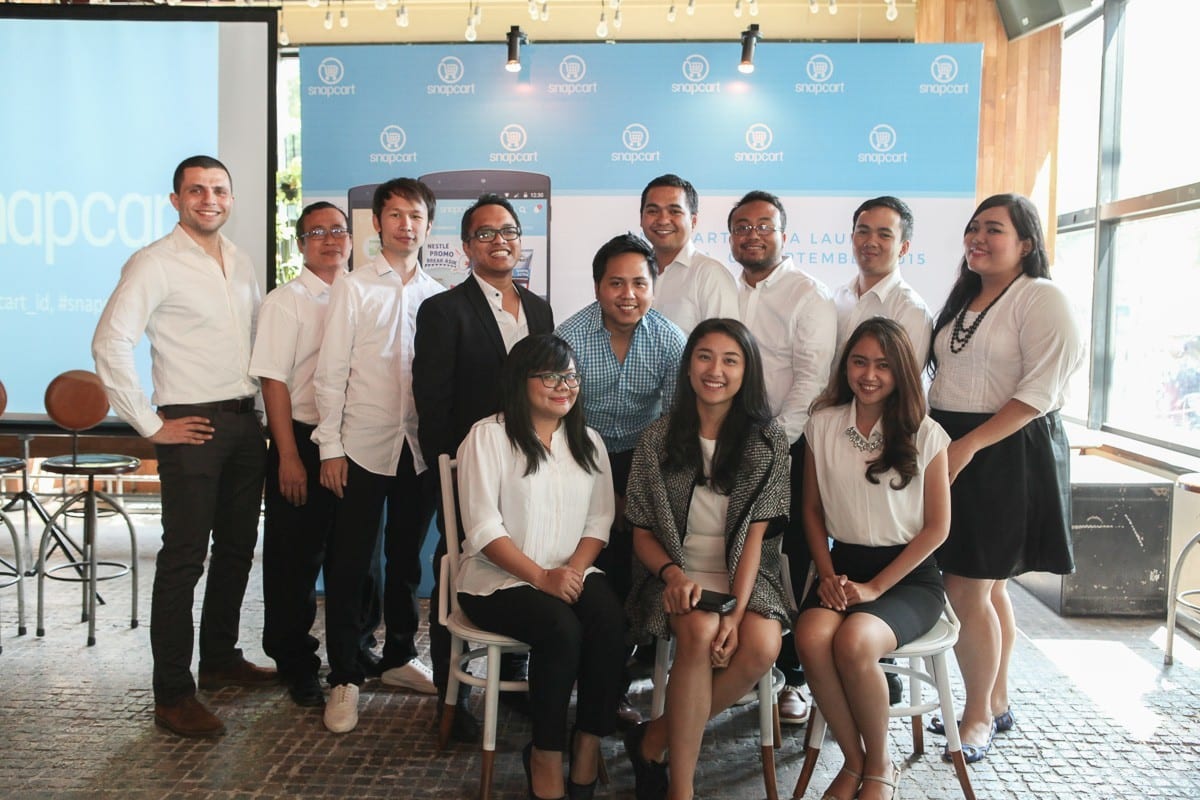
    In a bid to shed light on the offline retail market of Southeast Asia, startup Snapcart has raised US$3 million in pre-Series A funding,

    “Southeast Asia is a black hole and brands don’t know what is happening,” explains Snapcart CEO Reynazran Royono.

    The new funding round comes after Snapcart raised US$1.7 million in January of 2016. Since then Snapcart has expanded from Indonesia to the Philippines.

  • Equinix expands Hong Kong footprint to meet demand

    Equinix expands Hong Kong footprint to meet demand

    Equinix is expanding its Hong Kong footprint to accommodate local interconnection needs and increasing numbers of inbound cloud service providers.

    This latest expansion of Equinix’s Hong Kong footprint adds over 1,400 new cabinets and brings the company’s total investment in the city to over $250 million.

    The expansion in Hong Kong includes 515 new cabinets in HK1 and represents an incremental investment of $16 million and adds 900 new cabinets in HK2 and represents an incremental investment of $39 million. It is the latest in a series of expansions across Asia-Pacific to meet the rising demand for interconnection services, with other recent expansions including Melbourne, Tokyo and Sydney.

    The new development will enable Equinix to support the growing needs of an increasing variety of enterprises – such as FSI and FinTech, e-payments and logistics – to interconnect with cloud and technology providers.

    Equinix’s cloud and IT ecosystem has continued to gain momentum in Hong Kong. Its cloud customer-base has grown significantly since 2014, as local and international internet security and CSPs are increasingly choosing to deploy with Equinix Hong Kong as their initial entry point or hub location for the Asia-Pacific region.

    Major cloud service providers in Equinix Hong Kong now include Alibaba Cloud, the cloud computing arm of Alibaba Group, Microsoft Azure & Office 365 and Google Cloud. According to Cisco, global cloud IP traffic will almost quadruple in over the next 5 years, this expansion will enable Equinix to meet the needs of Hong Kong customers looking to take advantage of this growth.

    One Hong Kong customer taking advantage of Equinix’s increased capability is ClusterTech Limited, which specializes in using cloud, high performance computing and big data technologies to solve challenging technical problems and improve operational efficiency for their customers. The company is in the process of adding more resources within Equinix’s IBX data centers to launch a new solution that will enable environmental engineering companies to run complex simulation applications.

    In addition to supporting the core cloud needs of customers, Equinix is now also in an excellent position to accommodate the growing trend towards multi-cloud convergence and “interconnected commerce” that Equinix experts predict will be a key feature of the IT landscape over the coming year.

    The additional capacity comes online at a time when Equinix is predicting IoT will become a concrete reality – evolving from independent, single-vendor solutions to those that talk to each other and rely on the same data.

    With the Hong Kong expansion, Equinix will relieve the growing pressure on corporate-centric networks by distributing the traffic more broadly, as well as better control the performance of the streaming IoT information for more real-time business and operational insight.

  • Smart’s 2016 revenue grows 26% on mobile data growth

    Smart’s 2016 revenue grows 26% on mobile data growth

    The Philippines’ Smart Communications has reported a 26% increase in revenues for 2016 to 25.5 billion pesos ($509 million), in a result attributed to sustained growth in the company’s mobile data business.

    Smart, the wireless subsidiary of incumbent operator PLDT, said mobile data revenues for the year grew a strong 42% to 17 billion pesos.

    During the year, data revenues edged out voice calls and text messages as the operator’s largest wireless revenue source for the first time. Total usage reached 148,000 terabytes, up 49% from 2015.

    “The shift to data and digital services continues to gain momentum. With access to PLDT’s extensive fixed line network, Smart is rolling out the country’s fastest mobile internet network to address the growing demand of our subscribers for data services at home, their schools and offices and while on the go,” PLDT chief revenue officer Eric R. Alberto said.

    To help meet the steep rise in demand for mobile data, Smart has accelerated its rollout of LTE and 3G data networks and is incorporating the use of low-brand frequencies such as 700-MHz. The upgrade has now been completed in Metro Davao and is now underway in Metro Manila and Metro Cebu.

    Smart is also adopting LTE-A technology in selected areas, and recently entered a 5G partnership  with Huawei aimed at preparing its network for an evolution to the standard.