Retail News CRM

Tag: deal

  • Property deal set to save Le Saunda’s bottom line

    Property deal set to save Le Saunda’s bottom line

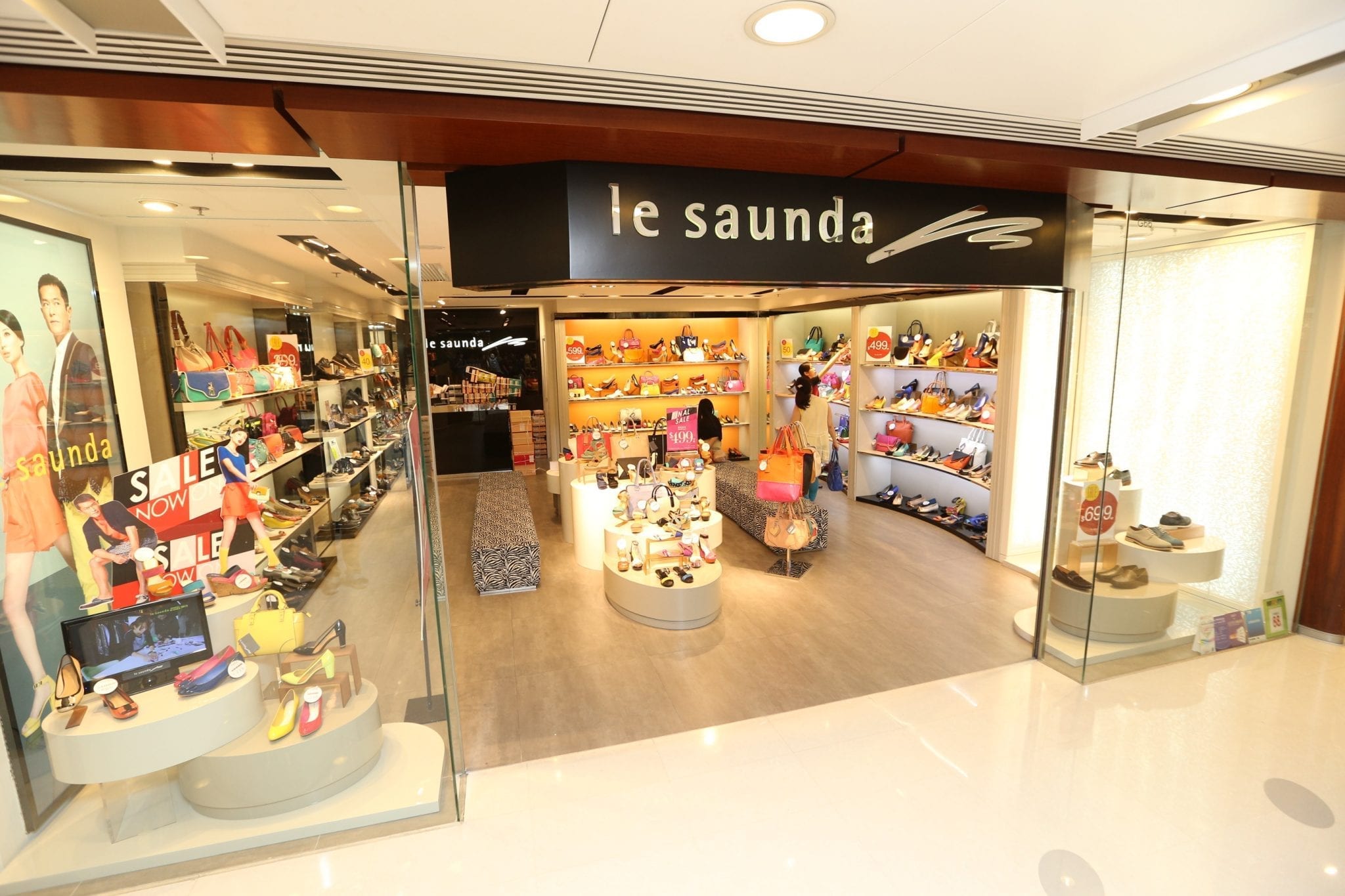
    Hong Kong-listed shoe retailer Le Saunda says same-store offline sales rose by 13.8 percent in the February quarter after it rationalized its store network.

    In a positive profit alert issued to the Hong Kong Stock Exchange, chairman James Ngai said group sales rose 5.2 percent year on year after a net 52 stores closed in Mainland China, Hong Kong, and Macau. As at February 28, the company had 389 outlets remaining, 347 of them self-owned across the three markets, and 42 franchised on the mainland.

    The company said a preliminary review of its full-year accounts shows the company “may” have recorded a profit, which would mark a significant turnaround from a US$4.7 million loss in the prior year.

    However, that was mainly attributable to the completion of the effective sale of its former factory in Shunde, Guangdong which it closed last May, and reached an agreement with the local government to hand back for $30 million. Le Saunda made a strategic decision to discontinue manufacturing and to contract production out to third parties.

    While in-store sales are on the rise after several years of decline, Le Saunda’s e-commerce business continues to underperform, with sales down 8.4 percent year on year in the fourth quarter.

  • UBS Poised for Indian Fintech Deal

    UBS Poised for Indian Fintech Deal

    Swiss bank UBS is reportedly poised to pour several hundred million into a payments start-up in India. The investment is alongside some of the Swiss wealth manager’s ultra-rich clients.

    Zurich-based UBS is negotiating a $400 million investment in Paytm, an Indian e-commerce payment system Bloomberg reported on Thursday, citing people close to the talks. The bank’s asset management arm wants to co-invest with UBS’ wealthy clients, the outlet reported – which would mark one of the largest such deals.

    The ten-year-old fintech was valued at $16 billion in its last round of financing two years ago. It competes with services like Google Pay or WhatsApp’s payment service, as well as regional start-ups.

    UBS is attempting to buy shares from Paytm employees, the news service reported. It doesn’t appear to be a done deal yet: UBS aims to finalize an agreement as soon as this month, though talks could still be delayed or fall apart.

    Paytm counts Softbank, Ant Financial, Berkshire Hathaway, and asset manager T. Rowe Price, among its investors. Its CEO, Vijay Shekhar Sharma, said this week Paytm could turn a profit as soon as this year.

  • Samsung refreshes Black Friday offers with TV discounts

    Samsung refreshes Black Friday offers with TV discounts

    The 20th might be behind us, but that doesn’t mean that the Black Friday offers are over! Samsung has refreshed its store with a new slew of offers, bringing the prices of many TV models down.

    You can save up to $3,000 on a nice new QLED or browse through the many offers on smartphones, smartwatches, washers, and other electronics — many of these are still live!Samsung is slashing the prices of its wide portfolio of TVs. From small UHD sets to gargantuan QLED beasts that can transform your living room into a cinema. Head over to the link below to view all Samsung Black Friday TV deals:

    Samsung’s S20 line starts with the budget-friendly Galaxy S20 FE 5G and tops off with the behemoth Galaxy S20 Ultra 5G. All of them have exquisite displays with 120 Hz refresh rates, the perfect camera to help you capture the moment, and the processing power to play all your favorite games.

    The Note line has always been the productive person’s phone — “For those who do”. Huge, beautiful screens, powerful hardware, and the best stylus you can find bundled up with a smartphone — the S Pen.

  • Trump claims to have a deal in concept with Oracle, Walmart, and TikTok

    Trump claims to have a deal in concept with Oracle, Walmart, and TikTok

    U.S. President Donald Trump told reporters gathering to see him off to a campaign rally, that he has approved “in concept” Oracle’s bid for the U.S. operations of TikTok. The short-form video app, owned by China’s ByteDance, has been accused by the Trump administration of being a national security threat because it could pass along personal data from U.S. customers to the Communist Chinese government in Beijing. Trump signed an executive order that forced ByteDance to divest itself of TikTok’s U.S. operations this coming Monday, September 21st

    Last week, after several U.S. companies had expressed interest in TikTok such as Microsoft, Oracle, and Walmart, Oracle’s plan was given the nod by ByteDance. However, the administration felt that the plan didn’t go far enough to protect them better than 50 million active U.S. TikTok users. As a result, the U.S. said that it would ban downloads of TikTok in the states starting on Monday morning. Those who have already downloaded the app before Monday would be allowed to continue using it until November 12th unless a deal was approved by the U.S. But everything might have changed following this afternoon’s announcement. What isn’t clear at this point is what the president means when he says that a deal has been approved “in concept.”

    While things are still up in the air at this hour, Trump says that the deal will also include Walmart and hinted that TikTok would be “totally controlled” by Oracle and Walmart, something that he repeated several times this afternoon. “I have given the deal my blessing,” the president said. “If they get it done, that’s great. If they don’t, that’s okay, too.” Previously, the president wanted the companies involved in acquiring TikTok’s U.S. operations to make a payment to the U.S. Treasury. But such a deal would be illegal, something that Trump was not aware of. Still, the president spoke with Oracle Chairman Larry Ellison and Walmart Inc. Chief Executive Officer Doug McMillon on Friday, telling both executives that he still wanted a cash payout for the U.S. government.

    A new company called TikTok Global will be created, according to those in the know, and it will help create a $5 billion fund for U.S. education. Discussing this contribution, Trump stated that “They’re going to be setting up a very large fund. That’s their contribution that I’ve been asking for.” The new TikTok Global will probably be headquartered in Texas and 25,000 people will be hired according to the president. But that figure could not be independently verified. Facebook had 45,000 employees last year while Twitter had 4,900 employees. There is speculation that TikTok Global will hold an IPO and go public within the next year. The president said about TikTok Global, “It will have nothing to do with China, it’ll be totally secure, that’ll be part of the deal. All of the control is WalMart and Oracle, two great American companies.”

    ByteDance will retain TikTok’s algorithm which is used to decide which videos are available to certain TikTok users. China recently announced a regulation that prevents other countries from using any algorithm created in the country. Oracle will get full access to review TikTok’s source code and any updates to make sure that there are no backdoors involved that could be used to steal U.S. subscribers’ personal data.

    TikTok has been a popular destination for teens and others looking to pass time during the pandemic. Users can create 15 or 60-second videos showing lip-synching, dancing, pranks, protests, and more. The app has been installed over two billion times from the App Store and the Google Play Store.

  • Apple signs multiple year supply agreements with a major chipmaker

    Apple signs multiple year supply agreements with a major chipmaker

    A filing made by Broadcom with the SEC revealed that Apple has signed two multi-year deals with chipmaker Broadcom that are separate from current agreements with the latter that supply Apple with radio frequency components and modules. Altogether, Apple’s business could generate $15 billion in revenue for Broadcom. In December, Broadcom said that business from Apple represented 25% of its gross in 2018 and 20% last year. In 2019, Apple and Broadcom settled a patent suit which led the two firms to sign a 2019 “statement of work” (SOW) and the just-announced 2020 SOW.
    According to the SEC filing, the parts being purchased by Apple will be used in new products over a three and a half year period. While the SEC 8-K submission did not specify exactly which components Broadcom will supply to Apple, the chipmaker’s Bluetooth and Wi-Fi chips and its Avago branded RF front-end chip are all found inside Apple’s iPhone 11 series.
    With Apple looking to launch 5G enabled iPhone models later this year, it is quite possible that the deals with Broadcom may supply it with 5G components. One analyst, Patrick Moorhead from Moor Insights, says that it is also possible that the deals announced today are for parts related to 4G LTE connectivity. Broadcom is one of Apple’s largest American parts suppliers with J.P. Morgan computing in 2018 that each iPhone contained $10 worth of Broadcom components.
    Broadcom investors fell over each other throwing money at the stock today. During the regular trading session, the shares rose $6.77 or 2.16% to close at $319.65. In after-hours trading, after the news broke, Broadcom soared another $8.33 or 2.61% to
    You might recall that in November 2017, Broadcom offered to buy chipmaker Qualcomm; among other things, the firm designs the Snapdragon line of wireless chipsets and wireless modems. The merger proposal was rejected by Qualcomm and Broadcom then rose the price it was willing to pay for the San Diego based company. But Qualcomm said it still wouldn’t be interested unless the price was hiked to $160 billion.
    Eventually, President Donald Trump put the kibosh on the takeover talk by claiming that a Broadcom acquisition of Qualcomm would put national security at risk. Trump signed an executive order immediately blocking the merger from moving forward. This came about after a March 2018 letter from the U.S. Treasury’s Committee on Foreign Investment in the United States (CFIUS) was sent to two Broadcom lawyers. The letter pointed out that since Broadcom was headquartered in a foreign country, Qualcomm’s assets could be exploited by “third party foreign entities.”
    Looking to keep the deal alive, Broadcom moved up its previous plans to establish itself as a U.S. company registered in Delaware. But before this could ever happen, Trump put the blocked the deal. At the time, an official statement from the president read, “There is credible evidence that leads me to believe that Broadcom Limited, a limited company organized under the laws of Singapore (Broadcom)…through exercising control of Qualcomm Incorporated (Qualcomm), a Delaware corporation, might take action that threatens to impair the national security of the United States.”
    As with many things wireless these days, the scare over national security revolves around the next generation of wireless connectivity, 5G. Qualcomm’s 5G modem chips will be found in the vast majority of 5G handsets in the states and the Trump administration was concerned, like it is with Huawei, about a foreign country gaining access to private information from U.S. citizens and corporations.
    While the president prevented Broadcom from purchasing Qualcomm, it is interesting that nothing is done to prevent Apple from using the company’s components for its 5G phones.
  • LVMH-Tiffany deal signed

    LVMH-Tiffany deal signed

    Subject to regulatory approvals, the LVMH-Tiffany deal is sealed: the French luxury fashion powerhouse will take over the iconic New York City-headquartered jeweler.

    But it may be mid next year before the transaction is completed after shareholder and regulatory processes are complete.

    LVMH will pay US$135 per share in cash for Tiffany, giving the jeweler an equity value of €14.7 billion or $16.2 billion.

    The LVMH-Tiffany deal provides “an exciting path forward,” said Tiffany chairman Roger N Farah, describing LVMH as “a group that appreciates and will invest in Tiffany’s unique assets and strong human capital, while delivering a compelling price with value certainty to our shareholders”.

    Bernard Arnault, chairman, and CEO of LVMH and now within striking distance of becoming the world’s richest man when this deal is settled, described Tiffany as “a company with an unparalleled heritage and unique position in the global jewelry world”.

    “We have immense respect and admiration for Tiffany and intend to develop this jewel with the same dedication and commitment that we have applied to each and every one of our Maisons. We will be proud to have Tiffany sit alongside our iconic brands and look forward to ensuring that Tiffany continues to thrive for centuries to come.”

    It was a quick deal, coming little more than one month after the rumors of negotiations broke and will mark the beginning of a new chapter in the 180-year-old company’s history.  But the two spokesmen said completing regulatory filings and the formalities of shareholder approval might take until “mid-2020”.

    With more than 300 stores worldwide, Tiffany will give LVMH a strong position in the jewelry sector in which it is underrepresented compared to luxury-goods rival Richemont. The French company says the LVMH-Tiffany deal will strengthen its watches and jewelry division and complement its huge portfolio of 75 brands. Most significantly, it gives the luxury retail group a strong presence in the key US market.

    Farah said Tiffany undertook “a thoughtful internal process” and sought expert external advice before agreeing to terms with LVMH.

  • Metcash shares hit by lost 7-Eleven deal

    Metcash shares hit by lost 7-Eleven deal

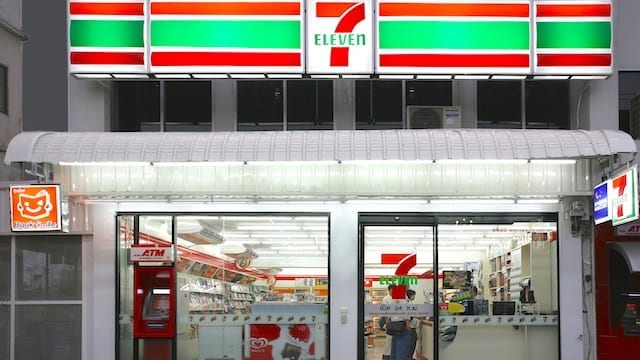
    Metcash shares have dropped more than 10 percent to a four-month low after 7-Eleven chose not to renew its contract with the wholesale food and beverage supplier when it expires in August.

    Metcash on Friday said its annual sales to 7-Eleven total about $800 million a year, mostly in lower-margin tobacco products.

    “Metcash was unable to reach an agreement with 7-Eleven on its supply requirements for the east coast, including delivery routes and scheduling,” the ASX-listed firm said.

    However, Metcash said it was still in talks to continue to supply 7-Eleven stores in WA.

    The blow is just the latest for Metcash, which in 2018 posted an impairment-driven loss of $149.5 million when Drakes Supermarkets declined to extend its SA contract after Metcash had announced plans to open a new purpose-built distribution center.

    At 1306 AEDT, Metcash shares were down 10.5 percent to $2.72.

  • Miniso signs six new partnerships to fuel expansion

    Miniso signs six new partnerships to fuel expansion

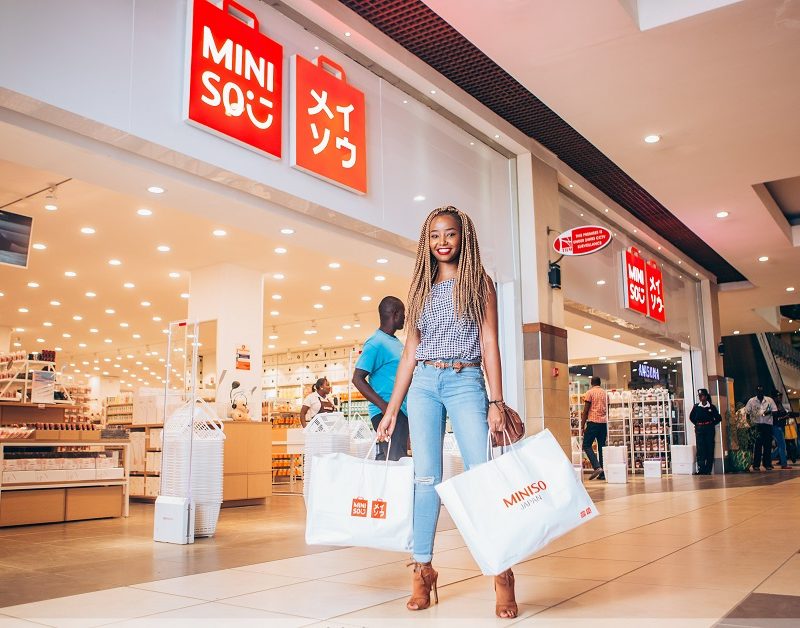
    Chinese discount merchandise chain Miniso has signed cooperation agreements with partners from six new countries and regions – the UK, France, Maldives, Reunion Island, Aruba and Curacao.

    Miniso now operates in more than 90 countries and regions, taking it closer to its target of opening “10,000 stores in 100 countries with 100 billion sales volume” by 2022.

    Miniso has been moving into the European market since last year, opening physical stores in Spain, Germany and Ireland.

    In overseas markets, Miniso has adopted a differentiation strategy with its products, setting up an international commodity department to develop diversified international products ranging from food to kitchen supplies, travel supplies, perfume, dolls, toys and makeup lines.

    The firm also set up a “Europe pavilion” in the exhibition area at its recently held Miniso 2020 Global Spring and Summer New Product Ordering Fair. Nearly 1000 SKUs more in line with European consumption habits and design aesthetics have been developed by the commodity centre team for the European market over the past six months.

    Miniso says it aims to simultaneously promote the upgrading of branding, products and stores across all its markets.

  • Nissan’s Position In Alliance Might Be Weakened

    Nissan’s Position In Alliance Might Be Weakened

    Nissan found out about Renault’s merger talks with Fiat Chrysler just days before they became public, four sources told Reuters, stoking fears at the Japanese carmaker that a deal could further weaken its position in a 20-year alliance with Renault. Nissan Motor Co Chief Executive Hiroto Saikawa likely first caught wind of the merger plan through his own chief operating officer, Yasuhiro Yamauchi, who also serves on Renault’s board, one of the sources said, speaking on condition of anonymity due to the sensitivity of the matter.

    Saikawa’s actual notification from Renault most likely came a day ahead of a report over the weekend that the French company was in tie-up talks with Italian-American rival Fiat Chrysler Automobiles (FCA), the source said.

    The plan, which would create the world’s third-largest automaker, raises difficult questions about how Nissan would fit into a radically changed alliance. Renault Chairman Jean-Dominique Senard arrived in Japan on Tuesday to discuss the proposed tie-up – and presumably to try to smooth over ties.

    But the deal poses an additional challenge for Saikawa, already grappling with poor financial performance and an uneasy relationship with Renault after Nissan led the ousting last year of long-standing alliance chairman Carlos Ghosn.

    “All this put Saikawa under massive pressure,” a second source said, referring to the fact that negotiations caught the CEO and senior management off guard.

    Renault, which owns a 43.4% stake in Nissan, had previously angled for a merger with Nissan, but Saikawa has long opposed a full integration. New vehicle and powertrain platforms developed by FCA-Renault could also pose a dilemma to Nissan, challenging its jealously guarded independence in some areas of engineering, research and development.

    Nissan could find itself forced to choose between technology developed elsewhere or going it alone – between scale without autonomy and autonomy without scale, a source close to the Renault board said.

    FCA has said a deal would embrace Nissan and another alliance member, Mitsubishi Motors, as “valued and respected partners”. “I have huge respect for Nissan and Mitsubishi, and their products and businesses,” FCA Chairman John Elkann told the Nikkei. Still, there is awareness of friction between Renault and Nissan, which is perhaps why the Japanese company was not involved in talks at an earlier stage.

    “The relationship between Renault and its Japanese partners is not as constructive as probably anybody wishes,” said a source familiar with the FCA-Renault talks. “The FCA view is that Nissan has a lot on its plate … So the time is not right to consider anything other than enhanced cooperation.”

    The French government, which owns shares in Renault, said on Tuesday it wanted Nissan to be on board with the deal. But there have long been tensions between Paris and Tokyo over the imbalance of power in the carmaking alliance, with Nissan holding only a 15% non-voting stake in Renault.

    The Japanese automaker’s clear advantage is in its technology, including vehicles that meet China’s tougher emissions regulations. Renault and FCA, therefore, would need Nissan to help them meet increasingly tough fuel economy, emissions and electric vehicle (EV) quotas around the world.

    An FCA-Renault tie-up would also raise questions about how to extract synergies in some markets where Nissan and FCA compete, such as in North American trucks and SUVs.

    The Japanese firm’s line-up of Nissan and Infiniti brand SUVs competes with FCA’s Jeep models such as the Cherokee. Nissan’s Titan pickup is also competitor, albeit a weak one, to FCA’s Ram pickup line.

    The fact Renault is prepared to consider creating such challenges may be a sign of its frustration with Nissan’s reluctance over a full merger. “It sends a strong signal that Renault does not necessarily have to tie its fate to Nissan,” said Chris Richter, senior research analyst at brokerage CLSA, about the proposed FCA-Renault tie-up.

    Saikawa told reporters on Tuesday that “strengthening the alliance and constructive discussions are forward-looking, and we are open to constructive discussions,” according to Japanese broadcasters. But unless Nissan can regain the initiative, it risks being marginalized even more. “If the Renault-Fiat merger happens and the status quo continues at Nissan-Renault, Nissan’s position and influence within the alliance will fall behind Fiat,” said Takeshi Miyao, managing director of consultancy Carnorama.

    Bernstein analyst Max Warburton said there were theoretically stronger synergies for Renault with FCA than with Nissan, and a better cultural fit too. “It may be inevitable that Renault eventually exits Nissan,” he said, adding the French company’s stake in its Japanese partner was currently worth about 11 billion euros – “plenty of capital to spend on EVs and new technology.”
  • Bamboo Airways to sign deal for 10 Boeing planes during Trump-Kim summit

    Bamboo Airways to sign deal for 10 Boeing planes during Trump-Kim summit

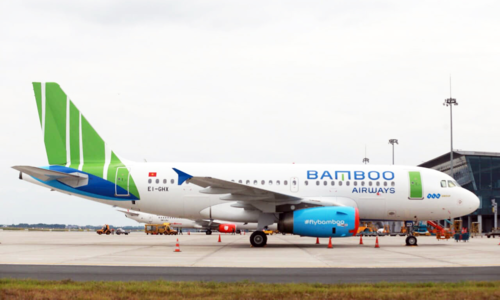
    Vietnam’s newest carrier, Bamboo Airways, which began flying last month, is set to sign a deal with Boeing to buy 10 aircraft. The signing will take place on the sidelines of the second summit between U.S. President Donald Trump and North Korean leader Kim Jong-un in Hanoi on Wednesday and Thursday, an unnamed airline executive said. In July last year the airline had signed a provisional deal to buy 20 Boeing 787-9 wide-body jets worth $5.6 billion at list prices.

    “We will sign with Boeing a deal to buy 10 Boeing 787s,” the executive said. “This is different from the deal signed earlier for 20 Boeing planes.”

    The U.S. Federal Aviation Administration (FAA) recently allowed Vietnam to operate direct flights to the U.S.

    Bamboo Airways and other Vietnamese airlines have expressed interest in operating direct flights to that country.

    Bamboo was set up by private conglomerate FLC in 2017 with a charter capital of VND700 billion ($30 million), which it recently increased to VND1.3 trillion ($55.68 million).

    Budget airline Vietjet also plans to sign on the sidelines of the summit a deal to buy 100 narrow-body Boeing aircraft.

    Vietnam’s aviation industry is booming demand. The country welcomed 12.5 million air passengers last year, up 14.4 percent from 2017, according to the General Statistics Office.

  • Vietjet to ink $13 billion Boeing deal during Trump-Kim summit

    Vietjet to ink $13 billion Boeing deal during Trump-Kim summit

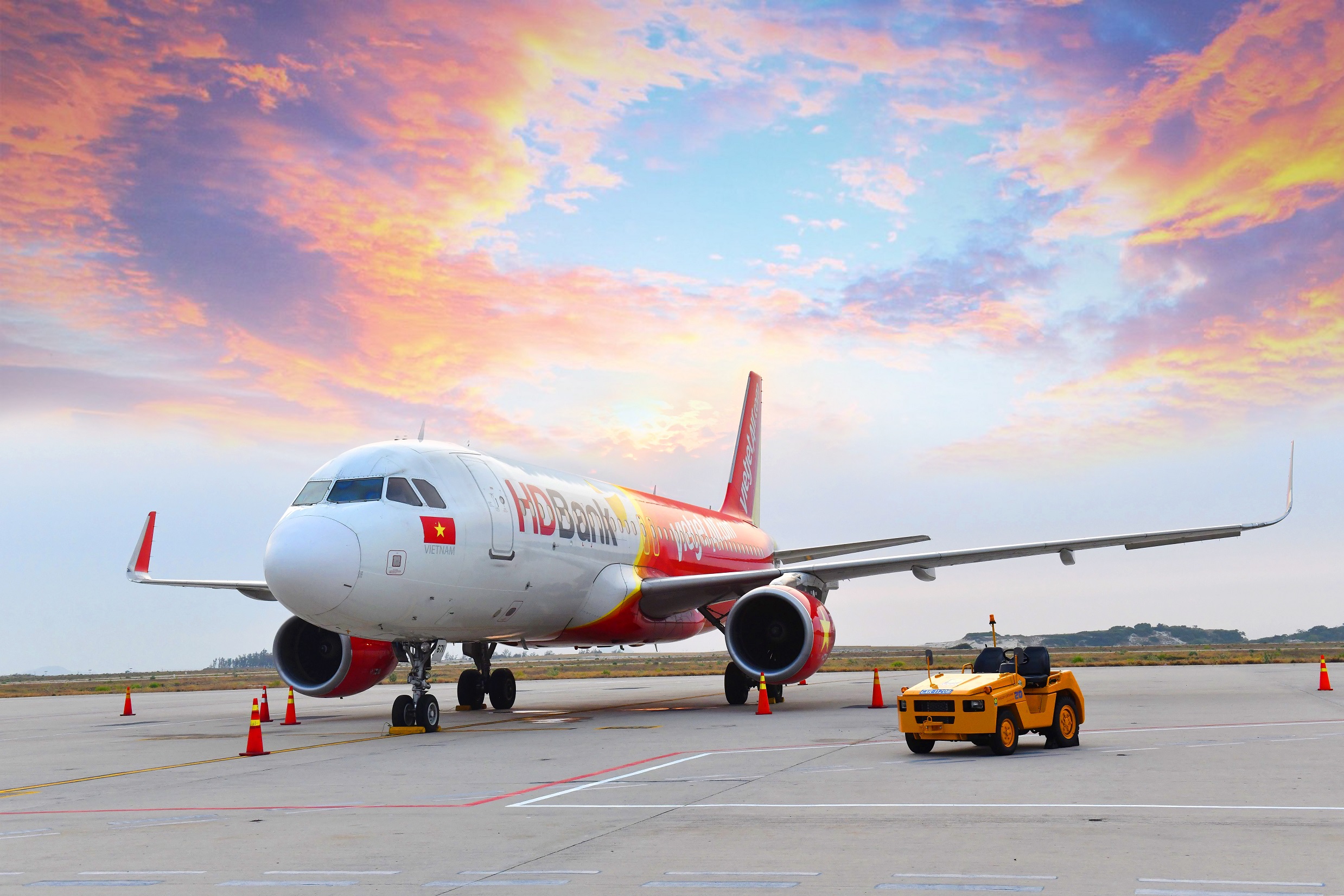
    Vietnamese budget airline Vietjet will sign next week a deal to buy 100 narrow-body Boeing aircraft. The signing will take place on the sidelines of the upcoming Trump-Kim summit, sources said. The sources also said Vietjet will finalize next week a provisional deal agreed last year to buy 100 narrow-body Boeing 737 MAX jets worth almost $13 billion at list prices.

    The U.S. Federal Aviation Administration (FAA) last week gave Vietnam a Category 1 safety rating, allowing local airlines to operate direct flights to the U.S.

    Vietjet, along with other local airlines, had previously expressed interest in operating direct flights to the U.S.

    The carrier, the largest private airline in Vietnam, had also signed a deal to buy Boeing 737 MAX narrow-body jets when former U.S. President Barack Obama visited Hanoi in 2016.

    It also finalized a deal in November last year with Airbus for 50 A321neo jets during a visit to Hanoi by French Prime Minister Edouard Philippe.

    Vietjet currently operates 40 domestic routes and 66 international routes. It has 385 flights daily within Vietnam and to places such as Japan, Hong Kong, South Korea, Taiwan, Singapore, mainland China, Thailand, Myanmar and Malaysia.

  • New integrated resort in China by Fosun

    New integrated resort in China by Fosun

    Fosun bets on integrated resorts to address the needs of Chinese travelers, who are showing interest in these types of experiences. Fresh from its Hong Kong initial public offering last month, Fosun Tourism Group is making good on its intention to use the proceeds to develop two new integrated resorts in China, announcing properties under the Thomas Cook Group brands Casa Cook and Sunwing.

    The two projects are in Lijiang, Yunnan province, famous for its UNESCO World Heritage old town, and Taicang, Jiangsu province, 30 minutes from Shanghai.

    Fosun Tourism chairman and CEO Jim Qian told Skift he is seeing different segments emerging in China’s domestic travel market. While this is already the norm in mature western markets, it’s just starting in China, and there’s a need to offer local travelers a choice of hotel brands and a variety of experiences, said Qian.

    In so doing, Fosun is turning to what’s in the family, its own Club Med and its Thomas Cook China joint venture. The Lijiang Albion International Resort will also have a Club Med, which has “a different positioning” from the boutique, design-led Casa Cook, he said.

    The whole development in Lijiang is spread over at 350,000 square meters (382,765 square yards). It is located near the Baisha old town, which lies closest to the majestic Yulong Snow Mountain, and is the only land permitted for massive development.

    How it will be sensitive to the tranquil and preserved ancient surroundings remains to be seen. For now, its website says it aims to attract mid- to high-profile guests by offering the total package, including a Club Med snow-themed resort, a guesthouses town, riverside shows, heritage towns, outdoor activities, health and wellness.

    “We will deliver a lot,” said Qian. “I believe in the future when a family goes on a holiday, they don’t just want to stay in the room.

    “Nowadays in China, we have more resort hotels in destinations such as Sanya, but most are actually business hotel brands moving from the city to the beach. I don’t think that kind of hotel is suitable for a family holiday. We will introduce the real beach or holiday resort to a destination.”

    Not much is known of Fosun’s other resort project in Taicang except that it is smaller at 145,000 square meters (158,570 square yards).

    Both are expected to be completed in stages from late 2020.

    Fosun Tourism, whose slogan is Everyday is Foliday (short for Fosun holiday), having tested destination development and management with its fully owned Atlantis Sanya, is keen to bring the experience to bear on the projects.

    “We have the experience in the construction of resort destinations, and we know how to make foreign brands suitable for the Chinese market,” said Qian.

    Fosun Tourism also believes the timing is good. It pointed out the per capita tourism expenditure in China in 2017 was about $575, which was below the global average of $741. “This implies the great potential for the growth of China’s tourism market,” it said.

    Besides, it claimed to be in a stronger position now, announcing ahead of its annual results to be released in March that it expects a net profit of at least 350 million yuan ($52 million) in 2018, compared with a net loss of 295 million yuan ($44 million) in 2017.

  • Sime Darby Plantation, Salcra ink MoU to uplift Sarawak’s palm oil industry

    Sime Darby Plantation, Salcra ink MoU to uplift Sarawak’s palm oil industry

    Sime Darby Plantation Bhd (SDP) and Sarawak Land Consolidation and Rehabilitation Authority (Salcra) have signed a memorandum of understanding (MoU) to form a collaborative framework to establish, strengthen and encourage synergistic commercial cooperation along the palm oil value chain. The collaboration aims to uplift Sarawak’s palm oil industry standards in terms of operational efficiency and productivity through best agronomic practices, SDP said in a statement yesterday.

    It is also intended to inculcate and enhance sustainability awareness for higher operational performance and bottom-line achievement.

    Under the MOU, both parties intend to combine their resources and expertise to jointly collaborate, evaluate and research on matters relating to the palm value chain and related agronomic inputs.

    These include in the areas of agricultural materials such as oil palm seedlings and saplings, management, consultancy services and training, consultancy services, as well as laboratory analytical services.

    The MoU also includes any other activities that are mutually beneficial to the parties such as logistics and activities connected to rubber plantation and other agricultural businesses.

  • Lotte’s Ministop deal falls through

    Lotte’s Ministop deal falls through

    The sale of convenience store chain Ministop fell apart as potential bidder Lotte and the Japan-based convenience franchise failed to agree on a price. The AEON Group of Japan, the largest shareholder of Ministop Korea, filed a notice on Monday that it has suspended the sale process to sell its full stake in the unit. The AEON Group owns a 76.06 percent share while Daesang Group, a Korean food conglomerate, has a 20 percent stake. Japan’s Mitsubishi holds 3.94 percent.

    Ministop Korea also notified its workers of the suspension, vowing to keep searching for a potential suitor.

    Executives from AEON and Ministop visited Seoul over the weekend to meet Shin Dong-bin, chairman of Lotte Group, which also owns 7-Eleven in Korea.

    The retail giant has been considered the likeliest buyer since it reportedly offered the highest price of around 400 billion won ($357.3 million).

    Other competitors include Shinsegae, which owns convenience store franchise Emart24, and Glenwood Private Equity, a local private equity firm.

    Ministop opened a bidding process back in November, but delayed selecting a preferred bidder.

    The introduction of a government regulation banning the opening of convenience stores within 80 meters (262 feet) of another store led to Ministop requesting a higher price, according to local media outlets.

    Ministop’s sale garnered attention from the beginning because it could impact the highly-competitive convenience store chain market in Korea.

    Ministop operates 2,500 stores across the country. If Lotte had succeeded in acquiring Ministop, it could have increased its number of stores from 9,500 to 12,000.

    CU runs the most stores, at 13,109, while the second player is GS25 with 13,018.

    Emart24 ranks fourth with 3,564 stores.

  • Facebook strikes deal with SK to pay data fees

    Facebook strikes deal with SK to pay data fees

    Facebook reportedly finally agreed to pay data traffic fees to SK Broadband after two years of negotiations. According to local media reports Sunday, the social media giant and internet provider agreed to a two-year network usage deal to set up a cache server for temporary data storage and provide fast Facebook access to SK Broadband users. While the two companies did not confirm the exact sum, Facebook will reportedly pay more than what it previously proposed during negotiations.

    SK Broadband is not the first internet provider that Facebook will be paying in the country. In 2015, it signed a contract with KT to open a cache server. The two companies are currently working on renewing the contract after it expired last July.

    The new deal with SK Broadband comes after Facebook faced negative press for inconveniencing users while trying to avoid paying network fees to SK Broadband and LG U+.

    In late 2016 and early 2017, the social media giant re-routed non-KT users to its server in Hong Kong when they tried to connect to the platform, slowing down access considerably. The Korea Communications Commission charged the company 396 million won ($353,900) in fines and ordered it to change its practices.

    Following the agreement with SK Broadband, the social media giant is expected to open up a cache server with the internet provider.

    The company is also reported to be working with LG U+ on a similar deal.

    The recent deal highlights the question of whether other foreign IT giants will follow suit and pay data traffic fees to Korea’s network providers.

    Many Korean businesses have complained that current laws and practices hurt domestic firms. Naver and Kakao, for example, pay around 70 billion won and 30 billion won every year to Korea’s three network providers to compensate for their high traffic volume, while Google and Netflix – which are thought to be responsible for half of Korea’s data traffic together with Facebook – pay none.