Tag: Drinks

  • China’s Coffee Consumption Keeps Growing

    China’s Coffee Consumption Keeps Growing

    China’s coffee craze has gained pace with the growth rate in consumption on premise 25 per cent higher last year.

    According to research from Mintel, China’s on-premise coffee market value reached RMB64.7 billion (US$9.6 billion) last year, up 7.5 per cent on the year prior, when the growth rate was 6 per cent. It is predicting growth to resume to 6 per cent annually from this year until 2023.

    However, while sales by value are thriving, Mintel estimates that the number of on-premise coffee house outlets shrank by 2 per cent as fewer new stores opened than closed. But that is half the decline of a year earlier.

    “Like many industries across China, the on-premise coffee market is not immune to the influence of New Retail,” said Belle Wang, associate food and drink research analyst at Mintel.

    “The quick expansion of New Retail coffee businesses across the country has stimulated more coffee consumption among consumers, resulting in strong sales volume. With the growing momentum of New Retail coffee shops, and an increasing number of international and domestic brands entering the market, consumers today have more options when it comes to coffee. As such, the industry will see positive growth rates over the next two years.

    “However, this growth will slow down, largely due to Chinese consumers’ traditional behaviour of drinking tea and the country’s thriving tea shops,” said Wang.

    Mintel expects positive volume growth in the next two years, at 0.6 per cent from last year to this year and a further 1.2 per cent between this year and next, to reach an estimated 74,000 coffee houses by 2020.

    Convenience versus traditional

    When it comes to choosing where to get their caffeine fix, more Chinese consumers today are purchasing coffee from convenience stores than traditional coffee house chains. Mintel’s research reveals that 52 per cent of Chinese consumers (survey sample of 3000) buy coffee at convenience stores compared to just 44 per cent who purchase it from a traditional coffee-house chain.

    About 23 per cent of consumers who drink on-premise coffee at least once a month have done so at new retail coffee houses.

    “Our research shows that more on-premise coffee users get their coffee from convenience stores than from traditional chain coffee houses. This is perhaps due to Chinese consumers associating convenience stores with a full range of breakfast options. Convenience stores are also viewed as easily accessible and more affordable. Given this upward trend, other coffee vendors could introduce unique features, like providing various food and coffee pairings, in order to compete,” said Wang.

    “While New Retail coffee is experiencing a lot of growth at the moment, consumer engagement remains low – partially because they are still relatively new. However, there is an opportunity for New Retail coffee houses to catch up in terms of popularity by offering aggressive discounts and delivery service.”

    That said, big discounts alone will not be sufficient, as discounting is neither the best nor a sustainable strategy for a long-term business plan. There needs to be other merits such as offering healthy mix-and-match meal deals,” Belle added.

    Latte the top choice

    Mintel’s research reveals the favourite coffee beverages consumed in China’s coffee craze. More than half of on-premise coffee consumers order lattes (54 per cent) or cappuccinos (52 per cent). These are followed by mocha (45 per cent), Americano (38 per cent), flavoured coffee (36 per cent), espresso (26 per cent) and cold-brew coffee (23 per cent).

    A relatively new concept in China’s coffee craze is coffee mixed with plant-protein milk, with 22 per cent of on-premise coffee consumers ordering it.

    “Lattes and cappuccinos are the most popular drinks in coffee houses as they are generally very palatable due to their creamy texture and rich dairy flavour. Furthermore, as they are usually widely available, they are often a first step into coffee appreciation,” said Wang.

    “Once consumers fully appreciate these basic beverages, they are more likely to try non-milk based drinks, like an Americano or cold brew coffee. However, only offering basic coffee selections makes it difficult to stand out in the homogenous coffee marketplace and attract more coffee consumers.

    “As such, coffee houses can take inspiration from tea shop drinks by making their offerings more visually appealing and ‘instagramable’ in order to draw attention and pique consumer interest,” Belle concluded.

  • Bubble tea, the next gold mine

    Bubble tea, the next gold mine

    Investors are flocking into the bubble tea market since demand is booming across the country. Market researchers have found the market is growing at 20 per cent a year and reached US$300 million two years ago. There are over 100 brands already and many more famous names are flocking in.

    In large cities like HCM City and Hà Nội, it is easy to find bubble tea stores belonging to major brands like Alley, Gongcha, Phúc Long, Ten Ren, and Royaltea.

    There are also smaller stores with cheaper prices run by small business people.

    Seeing the demand, many coffee chains like Highlands and The Coffee House and restaurants have added bubble tea to their menu.

    Besides bubble tea simply being a popular drink for various age groups, the shops selling it have become a haunt for youngsters because of their facilities and decor.

    A spokesperson for a famous brand name, Gong Cha, said: “Competition in bubble tea market in Việt Nam is a marathon.

    “Bubble tea has established itself on the Vietnamese food and drink scene. Bubble tea shops are no longer just places selling beverages. They are places featuring a speciality totally different from traditional places like coffee stores and restaurants.”

    Brand expert Võ Văn Quang was quoted as saying by Người Lao Động (The Labourer) newspaper that the popular drink in Hong Kong and Taiwan has undergone many changes in the Vietnamese market with many toppings to match Vietnamese tastes.

    “Milk tea is now a popular drink among Vietnamese youth.”

    Most of the milk tea brands have come to Việt Nam as franchises, he said.

    “At prices of VNĐ30,000 to over VNĐ80,000, bubble tea is brining huge profits. That is why foreign brands are keen on franchising in Việt Nam.”

    A bubble tea shop is much cheaper to set up than a coffee shop while the profits are huge, he said.

    Dr Đào Duy Khương, a retail expert, said milk tea, unlike coffee and tea, targets youths in big cities, and this demographic’s consumption behaviour is trendy meaning investors should change their offerings frequently.

    It is not surprising several brands closed in recent times, he added.

  • Cuckoo clock inspires Vietnam cafe

    Cuckoo clock inspires Vietnam cafe

    Design firm Tropical Space has built a coffee shop inspired by a cuckoo clock in Vietnamese seaside city Da Nang.

    The design, featured by Dezeen, features a brick structure with a house perched on top, with the coffee shop forming a single-storey base and the house extending out over the garden area. The local clay brick base is inset with vaulting arches surrounding a large courtyard and the glass-walled shop area.

    “Habits mean most people’s daily lives usually take place in functional spaces,” said the firm’s architects. “We have detached the walls that define these spaces to offer buffer space, urging people to leave their rooms and join together.”

    The house area, divided into three distinct blocks, feature spaces that can be closed off by small cuckoo clock-style wooden doors.

    The shells of perforated brickwork create cool, shaded spaces that admit natural light, and reflect other designs by the firm built in the region.

  • Hong Kong dessert shop Hui Lau Shan Launched in Philippines

    Hong Kong dessert shop Hui Lau Shan Launched in Philippines

    Hong Kong dessert shop Hui Lau Shan has opened in the Philippines.

    It is the first time for the franchise to open in the very region from which its special variety of mango is sourced. Its soft launch on March 17 at SM Megamall in Mandaluyong city was well-attended by local fans of the brand’s mango-based food products.

    Hui Lau Shan Megamall PH store

    Hui Lau Shan originated as a Chinese herbal tea vendor in the 1960s before blending carabao mangoes in with its other ingredients in the 90s to create a unique dessert.

    The fresh fruit drinks were well-received and the brand now has more than 260 locations globally.

    The firm’s local partner is Fat Daddy’s Group, well-known for its Smokehouse restaurants.

    “The sweet taste of our own fruit has helped propel the brand’s growth in and outside Asia,” said Fat Daddy’s president Freshnaida Versoza. “It’s about time that we bring it here to the Philippines. It’s also our way of supporting the country’s agribusiness since Hui Lau Shan is estimated to consume one ton of premium carabao mangoes per week for 10 to 15 stores.”

    More Hui Lau Shan branches are planned for other malls in the territory, including SM North Edsa, SM Fairview and SM Mall of Asia.

  • Illva Saronno brands in the spotlight in Singapore

    Illva Saronno brands in the spotlight in Singapore

    Italy’s Illva Saronno returns to this year’s TFWA Asia Pacific Exhibition & Conference with the aim of consolidating its brand presence and meeting new clients.

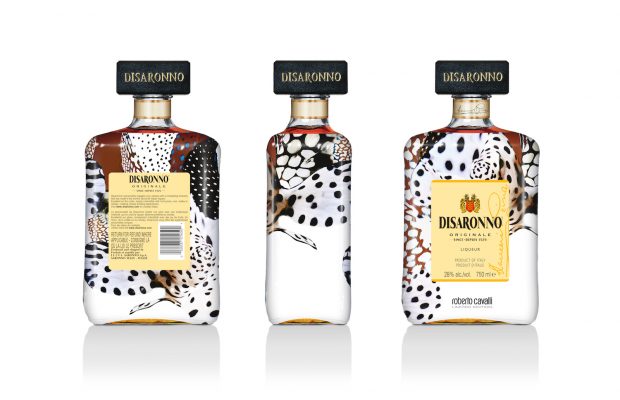
    The brand’s main focus will be on its trademark Disaronno, which is also available as a limited edition with the Disaronno wears Etro bottling.

    Each year, Disaronno forges a partnership with an Italian fashion designer to produce a bespoke bottle. This year’s upcoming collaboration remains under wraps for now, says the brand.

    Also on display will be new packaging for acclaimed coffee liqueur Tia Maria, which is backed by a cerebral marketing campaign fusing traditional marketing with neuroscience and psychology to test customers’ reactions to products and brands.

    Meanwhile, Italian aperitif Rabarbaro Zucca, which is made from an infusion of rhubarb rootstocks and a secret collection of rare herbs, will also be presented to buyers.b

    Zucca is prepared using the root of the true Chinese rhubarb, which grows in mountainous regions of the Gangsu province.

    DISARONNO RISERVA

    Furthermore, Disaronno Riserva – a blend of Disaronno Originale and blended Scotch whisky from the Highland and Speyside Islands – will be presented to buyers.

    The limited edition, which features an eye-catching bottle design, marries the fluid in oak barrels that contained Marsala wine reserves, with Illva Saronno believing the product is particularly well suited for buyers in Asia Pacific.

    Wines from Duca di Salaparuta and Florio will also be showcased, including Duca Enrico, made from Nero d’Avola grapes harvested in an area of south-western Sicily that benefits from a unique relationship between its micro-climate, vines and land.

    Domenico Toni, International Sales Director, Illva Saronno comments: “Asia Pacific is still a very new region for us, and we have been slowly introducing our brands over the past year.

    “We are planning on greatly building our business there, in both travel retail and domestic, over the next 5 years, so the TFWA Asia Pacific Exhibition & Conference is a vital resource for us to accomplish our goals.

    “We first exhibited at the show last year, and received plenty of interest from buyers. We have high hopes that this year will be even more successful for us.”

    Visitors to the TFWA Asia Pacific Exhibition & Conference can sample Disaronno’s famous Disaronno Sours cocktail at the TFWA Asia Pacific bar, situated on level 4 of the convention centre, from Monday to Wednesday at selected times.

  • Diageo rolls out small Johnnie Walker Black Label

    Diageo rolls out small Johnnie Walker Black Label

    Diageo has launched a 20cl bottle of its Johnnie Walker Black Label as it looks to make whisky more accessible to consumers in South Korea.

    The new pack, which rolled out yesterday, follows a launch for a 20cl Johnnie Walker Red Label last October, the firm said. The 20cl bottle comes with lemon syrup and a recipe for a ‘Johnnie Lemon’ cocktail.

    “Diageo Korea has worked to promote a new drinking culture that makes whisky more accessible to local consumers in various ways,” said Diageo Korea CEO Cho Kilsoo. “Following a small format of Johnnie Walker Red launched last year, the new Johnnie Walker Black Label 20cl is expected to contribute to building a new whisky culture that enables people to enjoy whisky more casually.”

    The new product will be available through convenience stores and hypermarkets, nation-wide. Diageo said the packs will be priced at about KRW16,000 (US$13.99). Red Label packs retail at around KRW8,500.

  • Lotte looks to US to boost sales of 3 drinks

    Lotte looks to US to boost sales of 3 drinks

    The Korean energy drink Hot 6 will take on Red Bull and Monster in the American market from this month.

    Lotte Chilsung Beverage said Thursday, it will start selling the caffeinated drink from this month in the U.S., starting in on the West Coast.

    The company said it has already shipped 2,000 boxes of 30 units each.

    Korea’s energy drink industry saw a boom in the early part of this decade and became a 100 billion won ($87.3 million) market. Pioneers Red Bull from Austria and California-based Monster were followed by the launch of Hot 6, which sells for a cheaper price.

    But growth has stalled in recent years with the number of health-conscious consumers rising in Korea. Health authorities have also warned the public not to drink too many caffeinated drinks.

    According to industry sources, the energy drink market in Korea has slipped to 70 billion won and Hot 6 has a 60 percent market share.

    Its U.S. marketing will begin at the Genesis Open 2017 PGA golf tournament in California, which will be held from Feb. 13 to 19.

    Lotte Chilsung Beverage said it will introduce the drink with the slogan “Brand New No. 1 Korean Energy Drink” and emphasize its natural caffeine extracted from guarana.

    Lotte’s global ambition will continue by expanding U.S. retail sales of its Milkis and Chilsung Cider soft drinks. Milkis was introduced in 1989 and has loyal customers fond of its unique, yogurt-like flavor. Chilsung Cider was a pioneer in Korea’s soft drink industry when it was launched in 1950.

    Until now, Milkis, a white opaque fizzy drink, and Chilsung Cider, a Korean version of Sprite, have been only available online or in small retailers and Korean markets in the United States.

    “There are five flavors of Milkis being sold in Korea, including strawberry and melon. If the local response is good, the possibility of launching different flavors in the U.S. also exists,” the company spokesman said.

    The company said two of its drinks will be retailed at 2,000 branches of Kroger, the No. 1 supermarket chain in the U.S., from March.

    “Lotte Chilsung Beverage aims to create a ‘Hallyu beverage’ in the U.S. by expanding retail channels to appeal not only Koreans but Americans as well. Hot 6, Chilsung Cider and Milkis will be at the forefront,” the beverage subsidiary said in a statement.

    Lotte Chilsung Beverage’s foray into the U.S. is part of the group’s effort to expand beyond Asia. To become more global, Lotte Group has been holding the LPGA Tour Lotte Championship in Hawaii since 2012 and acquired the New York Palace Hotel located in Manhattan in 2015, renaming it the Lotte New York Palace Hotel.

  • Asian Airlines May Be Forced To Cut Free In-flight Booze

    Asian Airlines May Be Forced To Cut Free In-flight Booze

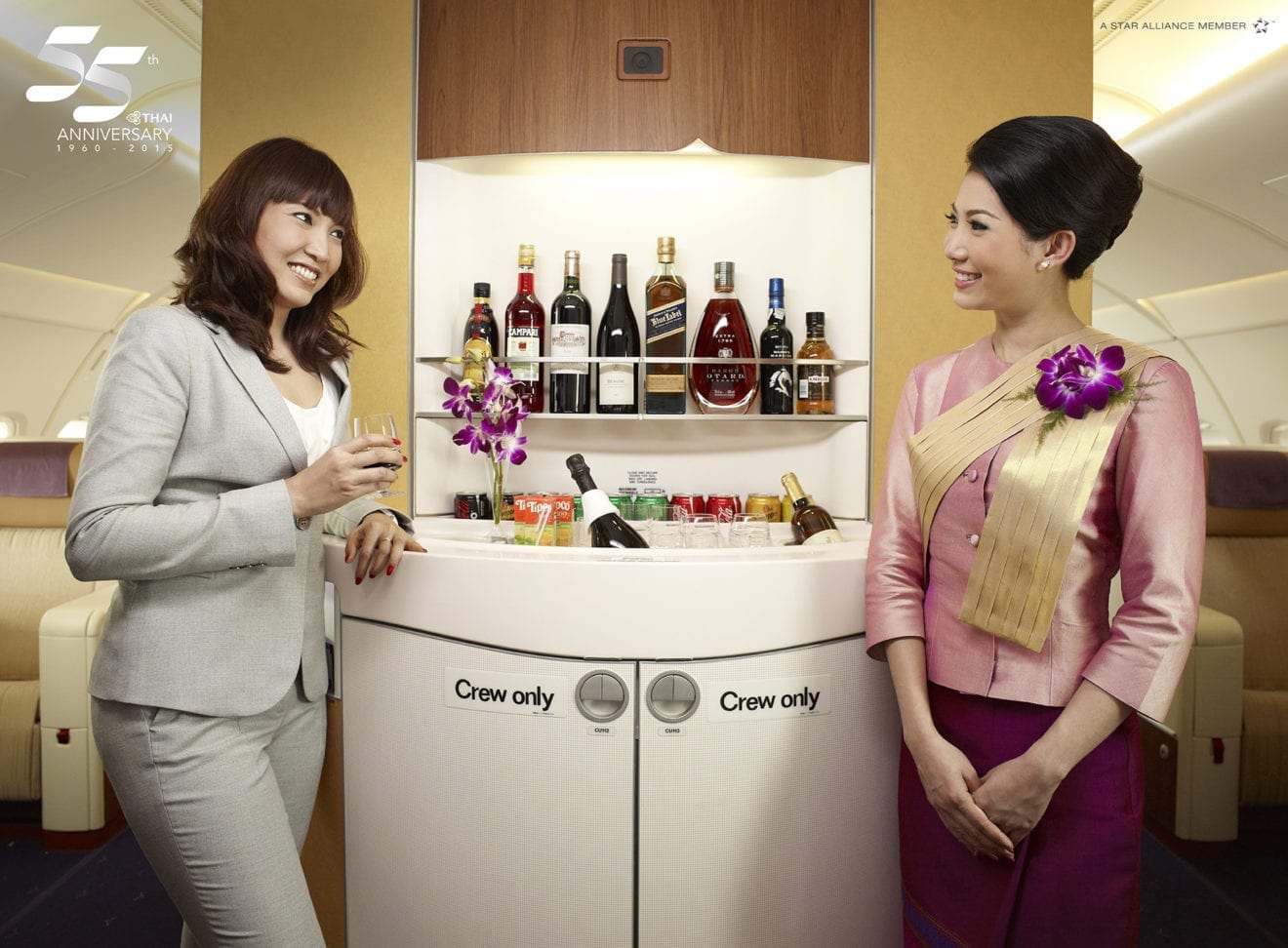
    An OPEC deal has put the squeeze on airlines’ already slim profit margins. Rising fuel prices stemming from last week’s OPEC production cuts could heap pressure on Asia’s already overburdened aviation sector and force its biggest carriers to nix the giveaways that have long been integral to their service.

    And the first ballast to be cast off might be free alcohol and in-flight entertainment, which has been standard on most of the continent’s long-haul carriers for decades.

    Asia’s marquee airlines such as Cathay Pacific and Singapore Airlines  have so far resisted the U.S. low cost model wherein carriers charge for services ranging from inflight meals to alcohol to baggage check-in.

    But this might be about to change.

    “More full-service airlines in Asia Pacific might consider doing the same,” Mathieu De Marchi, a Bangkok-based aviation consultant at Landrum & Brown told Bloomberg, referencing carriers such as Delta Air Lines that have successfully consolidated their service offering.

    Fierce competition has pushed Asian carriers’ profit margins down to about half that of their U.S. counterparts and they are already struggling against excess capacity and a fall in premium traffic.

    The Organization of Petroleum Exporting Countries (OPEC) finalized a deal to cut oil output on Nov. 30. The bid to kick some life into dreary oil prices seems to have paid off—at least in the short term. But that’s bad news for aviation sector, whose long haulers guzzle the black stuff.

    Dispensing with free services is not the only option available for airlines feeling the pinch. They could opt to raise prices, or for more environmentally progressive measures such as taking inefficient planes out of service and cutting unprofitable routes.

  • Finnish Hartwall Original Long Drink now in Hong Kong

    Finnish Hartwall Original Long Drink now in Hong Kong

    Since the summer of 2016 there is new beverage on the market in Hong Kong that originates in Finland – the legendary Hartwall Original Long Drink. This world’s first long drink was originally developed for the 1952 Helsinki Olympics, a very innovative product back then, to say the least: a cocktail in a can, easy to serve and ready to drink.

    It has been a Finnish success ever since but only as recently as in 2015 also been taking Sweden by storm.

    “Hartwall Original Long Drink was supposed to be served only for the Olympic visitors, but since Finns fell so much in love with it, the production has continued ever since. Moreover, it even created a whole new category of ’long drinks’ in Finland – better known as ’lonkero’ among the Finns”, says Eeva Ignatius, Brand Manager of the Hartwall Original Long Drink.

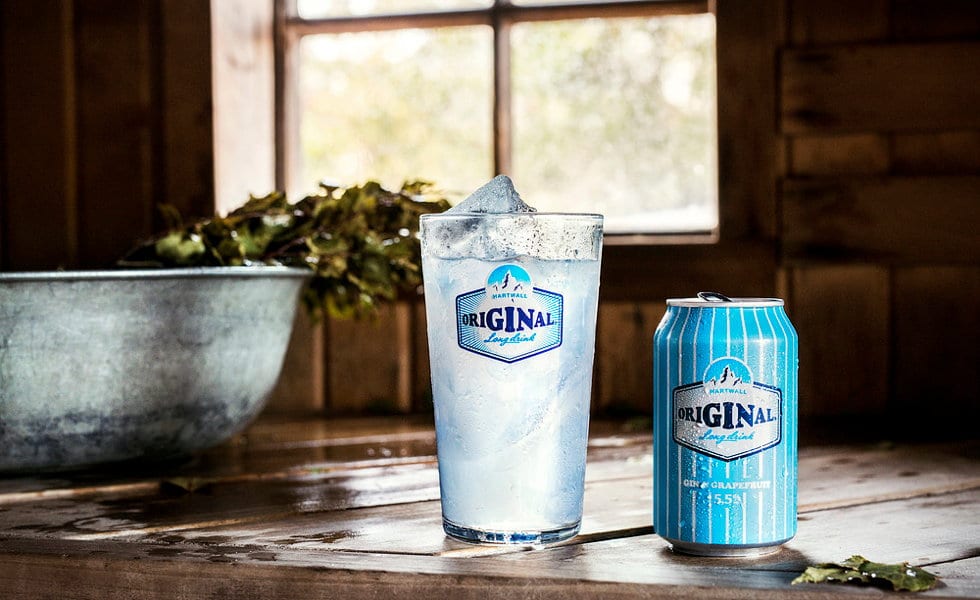
    Hartwall Original Long Drink is a mix of Finnish premium gin and grapefruit soda. “The gin manufacturing process is a carefully cherished artisan work, and the drink is still produced according to the original recipe from 1952.

    All the gin ingredients are hand-selected, and the final quality is ensured with triple filtering. The original taste, a mix of gin and grapefruit, is totally unique and cannot be found anywhere in the world.”

    Year after year, Hartwall Original Long Drink rules the sales statistic as Top 1 alcoholic beverage in Finland. “It is a true Finnish icon and many Finns consider it as our national drink. Even the package symbolizes our national heritage as the blue and white colours come from the Finnish flag. The thin white stripes on the other hand symbolize the running track of Helsinki Olympic stadium and remind us of the history.”

    Now Hartwall Original Long Drink has started to conquer the world, with the long-waited sales started in Sweden in April 2015, resulting in immediate success. At the same time, Hartwall signed a distribution contract in the Netherlands and Belgium.

    “Hartwall Original Long Drink was originally invented to be shared with the world and now it is about to happen”, Ignatius concludes.

    Now the Finnish “lonkero” is sold in 900 7-Elevens around Hong Kong, as Hartwall earlier in 2016 started cooperation with major distributors in Japan, Taiwan and Hong Kong.

    In In Taiwan, the local retail store chain Simplemart added Hartwall Original Long Drink to its selection in its 500 stores.

    “We were not expecting such huge success. In Hong Kong, for instance, many shops are struggling to meet the high demand. The sales figures of long drink are ten times higher that those of a famous international beer brand that was launched using the same retail channel,” says Matti Ristola, Director of Export at Hartwall.

    hartwall-long-drink2

    “The unique taste, great story and easy-to-identify container of Hartwall Original Long Drink have become popular across the world. Furthermore, the long history and strong success of the beverage in the Finnish market give it credibility; before winning over consumers, we must attract distributors to the product,” says Eeva Ignatius.

    “Hartwall has a fine history as a provider of Finnish products that spans 180 years. Finns love our brands, and our foothold in the Finnish market is strong. I believe that many of our high-quality brands that are successful in Finland have what it takes to succeed also abroad. The success story of Hartwall Original Long Drink is a good example of this. Exports are an important part of our growth strategy, and we will continue to investing in them in the future,” Hartwall CEO Kalle Järvinen says.

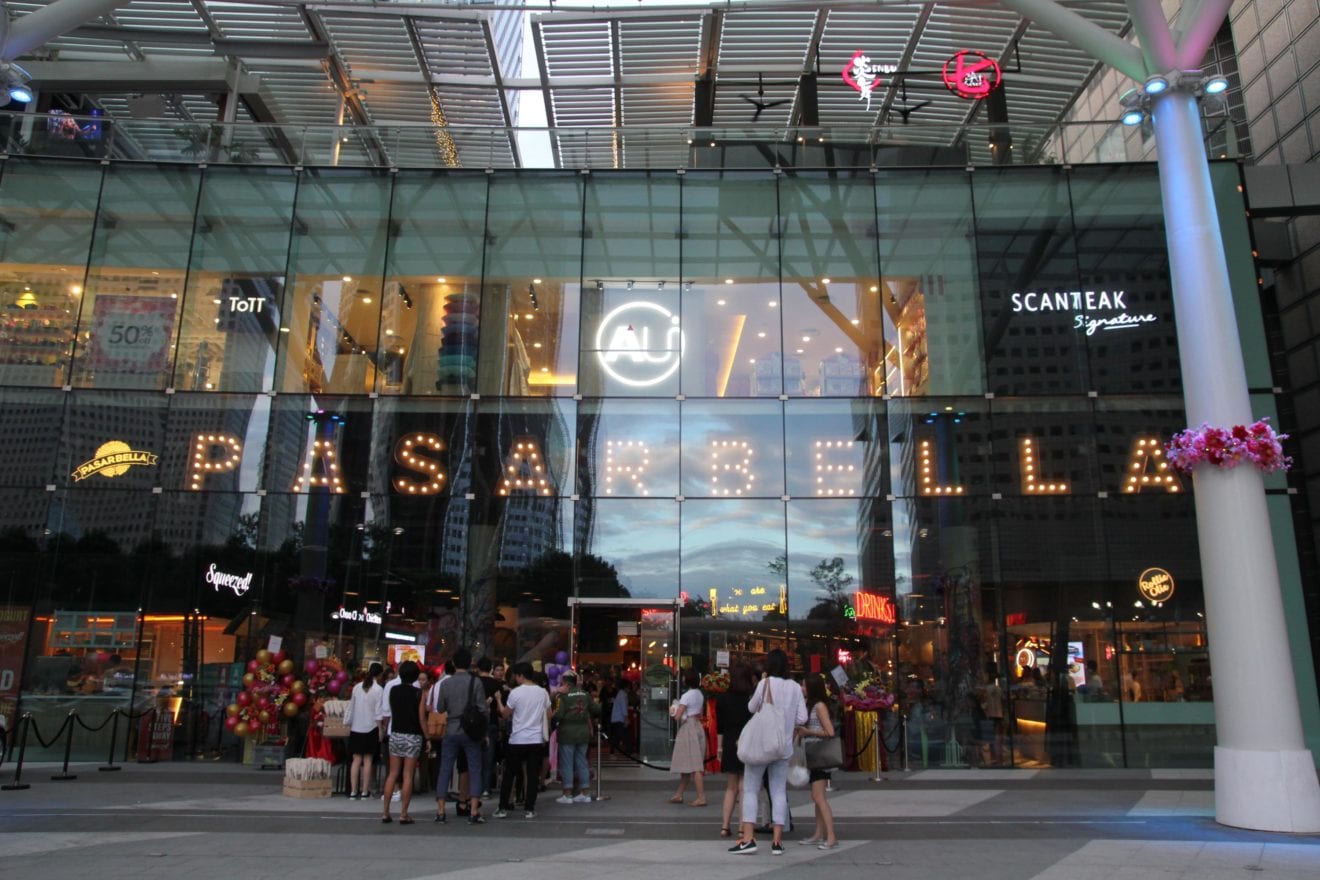
  • The New PasarBella Gourmet foodcourt, Singapore

    The New PasarBella Gourmet foodcourt, Singapore

    Singapore design firm, Greymatters recently completed the interior design for PasarBella’s second outlet, at Suntec City.

    The design has been described as “an enclave of enchantment” with diverse food and beverage and retail offerings.

    The new space houses 15 gourmet concept stalls in its 7000 sqft (650 sqm) space, each of which was designed by the boutique firm.

    PASARBELLA INTERIOR2

    Greymatters says it took inspiration for the design from the streets of Lower East Side New York City, the enchanting one-of-a-kind marketplace features, graffitied walls and street art illustrations of happy food and familiar cartoon caricatures, hanging fruit crates and urban paved walkways “that resemble a bustling streetscape littered with vibrant stalls that will send you on a captivating marketing experience”.

    “It was an extremely exciting project, not only to give PasarBella@Suntec a new identity, but also to conceptualise each trader’s store design in a manner that would complement the overall theme of the space,” explains Alan Barr, founder and MD of Greymatters.

    PASARBELLA INTERIOR

    “This is our fourth collaboration with PasarBella and truly allowed us to express our creative ideas and solutions, in order to create a dynamic space that emulated the ethos of PasarBella, yet manifesting it in a unique way.”

    The eclectic space features painted roadways and zebra crossings on the floor, directory signage inspired by NYC’s subway map allow customers to follow their favourite coloured line from the directory to the trader of choice. Cobble tiles are also used for the flooring, which is a relic of NYC street paving of the past.

    The tabletops are made of recycled hardwood timber and salvages street and construction signage, adding to the overall vibe of the space.

    PASARBELLA INTERIOR5

    Each of the vendors in the space have their own distinct identity, all of which reflect the loud, organised chaos of the bustling streets of Barr’s hometown, New York City. In the streets of New York, caffeine is a staple, and serving up its infamous coffees and sweet treats at PasarBella@Suntec is well-loved brand Sarnies, nestled in a storefront that was designed to emulate that of the takeaway coffee joints along the streets of the Big Apple.

    PASARBELLA INTERIOR DETAIL1

    Pimp My Salad is another of the star contenders at PasarBella@Suntec, focusing on healthy food-togo; the compact kiosk is designed with visual impact in mind, featuring a glass display for the different meats, fish, vegetables and grains to be displayed allowing diners a feast of the senses as they select their ingredients in customising their salads.

    Other favourites include Porsena that adopted a New York City Deli vernacular for the stall, and stands proud at one of the main entry points. Wolf Burger is nestled in a loud and proud glistening space of glossy red tile, with a seductive female wolf head pieced together in red and white mosaic tile.

    PASARBELLA INTERIOR DETAIL2.

    Drinks was designed as an interpretation of an upcycled shipping container that can be seen all over the storage lots in the Lower East Side of New York City.

    PASARBELLA INTERIOR8

    Overall 14 choices of different cuisines in an extremely unique environment make for a dining experience unlike any other in Singapore. Designed at a world-class level, with no detail left untouched, PasarBella Suntec City traverses cultures, cuisines, and design styles with its diverse offerings, providing a one-of-a-kind dining experience for all foodies in Singapore.

    Earlier in October, the hospitality design firm was ranked #68 in Interior Design magazine’s annual industry rankings under “Hospitality Giants”, making it the only Singapore-based firm to make the list this year, and one of the only two firms headquartered in Asia.

    PASARBELLA INTERIOR9

    Greymatters recently celebrated its third anniversary in August 2015. The firm is set to complete its first full hotel project, the Amari Hotel & Resort in Galle, Sri Lanka, followed by a string of other accommodation venues across the region; Elbow Room, a bespoke cocktail bar in Phnom Penh, Cambodia that will launch early 2016; and Skin+bones restaurant slated to launch in Bangkok, in March.

    Greymatters’ next project with PasarBella, which is already in design, is the PasarBella iLights 2016 venue at Marina Bay Sands.