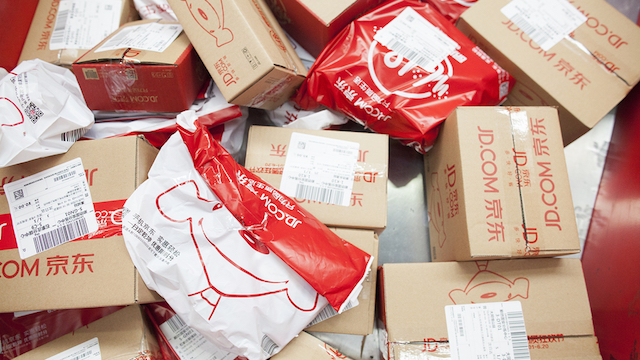
Tag: E-Commerce

  • South Korea Retail Sales Rose 6.4% in July on Summer Spending

    South Korea Retail Sales Rose 6.4% in July on Summer Spending

    South Korea’s major retailers increased combined sales by 6.4 percent year-on-year in July. Demand for vacation gear, imported fashion, and food delivery services drove the rise.

    Internet platforms handled the bulk of that growth. They captured 60.8 percent of total retail revenue during the month, according to data from the Ministry of Trade, Industry and Energy.

    Department Stores and Convenience Chains Expand

    Brick-and-mortar turnover climbed 3.2 percent from a year earlier. Both department stores and convenience chains extended their unbroken run of year-on-year growth to 13 consecutive months.

    Department stores posted the sharpest gains offline, with sales jumping 17.9 percent. Demand rose across every major category. Imported apparel, summer travel gear, and cooling appliances led the expansion.

    Convenience stores generated a 1.1 percent sales increase over the same period. Foot traffic slipped. Higher spending per transaction kept overall takings positive.

    Online Channels Take Larger Revenue Share

    Digital platforms posted an 8.5 percent revenue increase compared with July last year. Food delivery orders, packaged groceries, and home appliances recorded the fastest category gains across web storefronts.

    Consumer habits in the country continue to split. Digital channels dominate everyday replenishment, while physical stores rely on experiential shopping and premium apparel to draw spending.

    Trade ministry officials will publish the August retail index next month. That report will show whether back-to-school shopping and late-summer promotions sustained the sales momentum.
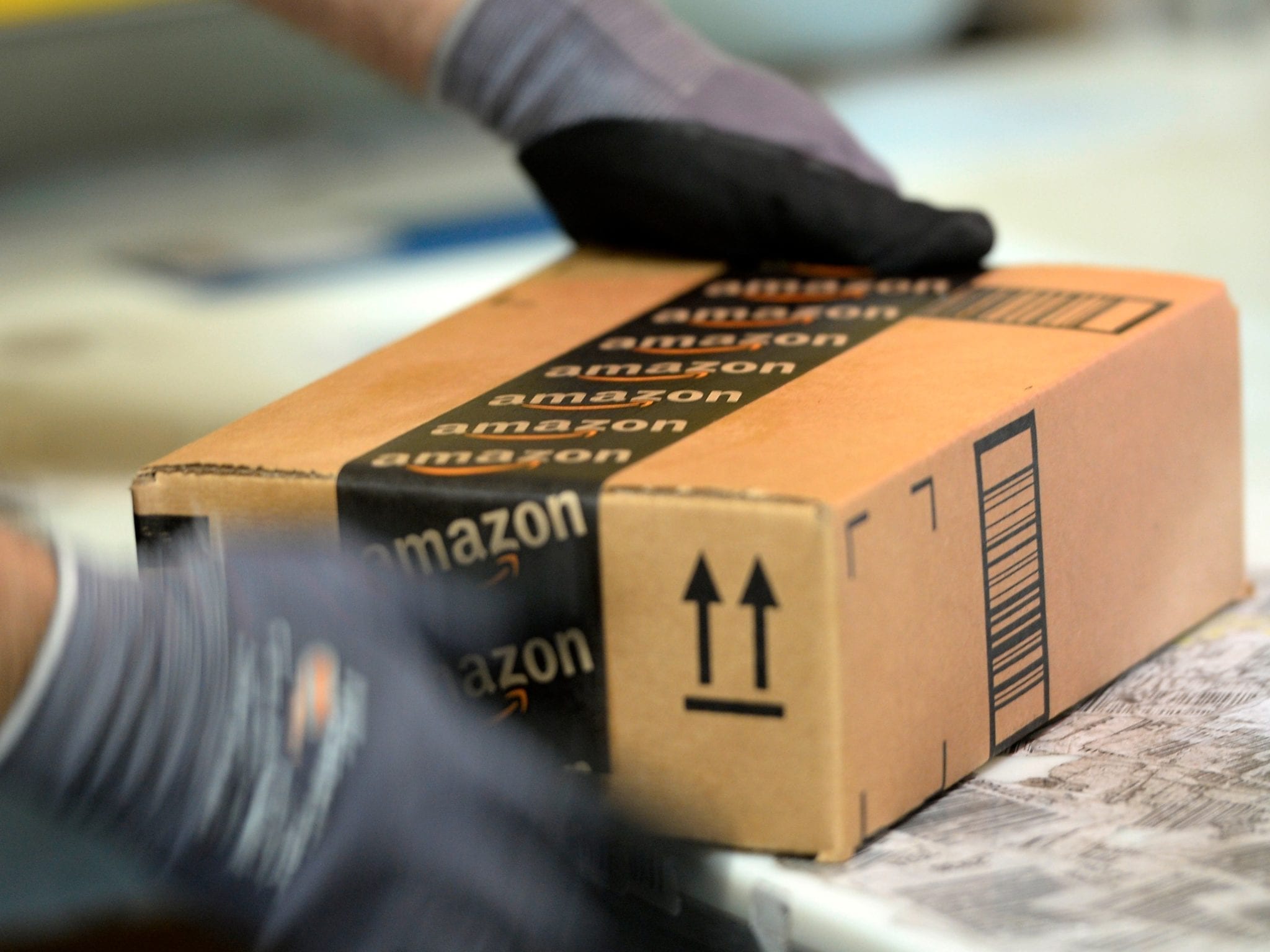

  • Amazon Expands Quick Commerce Fashion Delivery to 300 Indian Cities

    Amazon Expands Quick Commerce Fashion Delivery to 300 Indian Cities

    Amazon plans to expand its Amazon Now quick delivery service for fashion to 300 cities across India. Orders on the platform doubled every quarter since launch, while Prime members who adopt the rapid option purchase three times more frequently.

    Micro-Fulfilment and Event Demand

    The service uses compact, technology-enabled micro-fulfilment centres placed close to residential clusters. Inventory algorithms position stock according to neighbourhood demand patterns rather than broad regional forecasts.

    Amazon is directing the rapid delivery network toward sudden, occasion-led purchases instead of planned wardrobe restocking. During the T20 World Cup, cricket jersey sales rose 2.5 times before match days and spiked eightfold on match days.

    Demographic Shift Toward Gen Z

    Younger shoppers are driving the platform’s fastest gains. Gen Z consumers now account for more than half of Amazon Fashion’s customer base in India, up from 30 per cent two years ago, with order volumes in Tier 2 and Tier 3 cities expanding at double the national pace.

    Premium labels now account for nearly 20 per cent of fashion spending on the platform and are expanding at twice the broader category rate. The company channels this traffic through its Gen Z portal SERVE, an influencer network of over 100,000 creators, and digital sizing tools including virtual try-on and Rufus.

    Across India, quick commerce operators such as Blinkit, Zepto, and Instamart have pushed aggressively into apparel and lifestyle items, forcing traditional e-commerce marketplaces to compress delivery windows from days to hours. Amazon is relying on its micro-hub density and Prime ecosystem to defend fashion market share against those dedicated hyper-local rivals.

    The company has not disclosed the completion schedule for the 300-city rollout, making the pace of micro-hub deployment the key operational figure to track across the country.

  • Tech Mahindra Partners with Rezolve Ai to Scale Agentic Retail Commerce

    Tech Mahindra Partners with Rezolve Ai to Scale Agentic Retail Commerce

    Indian IT services major Tech Mahindra partnered with London-based Rezolve Ai to deploy automated agentic shopping technology across its network of more than 1,100 enterprise clients.

    The agreement gives Rezolve access to 146,000 systems professionals across 90 countries to take retail artificial intelligence beyond conversational chatbots and into live transaction processing.

    Integrating AI Checkout into Enterprise Systems

    Under the alliance, Rezolve Ai will supply its Brain Suite software, which includes Brain Commerce for conversational product discovery and Brain Checkout for autonomous transactions. The system runs on proprietary brainpowa models designed to eliminate hallucinations during commercial transactions, alongside TraceWare audit software that tracks automated agent decisions.

    Tech Mahindra will manage consulting, cloud infrastructure and systems engineering for retail, consumer goods and financial services clients. The combined setup allows AI agents to interpret consumer intent, recommend inventory and execute payments inside existing digital storefronts.

    Daniel M. Wagner, chairman and chief executive of Rezolve Ai, noted that Tech Mahindra’s existing enterprise relationships provide the distribution engine needed to deploy transactional AI at commercial scale.

    Enterprise Push for Transactional AI

    Systems integrators across Asia are racing to shift enterprise clients from experimental chatbots to revenue-generating commerce tools. While basic generative AI handled customer support across Asian retail platforms over the past two years, enterprise rollouts previously stalled at checkout where transaction security and inventory data errors create financial liability.

    Rezolve Ai plans to present its enterprise commerce deployment data during an investor presentation scheduled for October 6, 2026.

  • Shein Prices Hong Kong IPO at $26.5 Billion Valuation to Raise $1.73 Billion

    Shein Prices Hong Kong IPO at $26.5 Billion Valuation to Raise $1.73 Billion

    Shein priced its Hong Kong initial public offering at HK$48.56 a share, raising HK$13.6 billion ($1.73 billion) and valuing the fast-fashion retailer at $26.5 billion.

    The price sits near the midpoint of the marketed HK$47.60 to HK$49.50 range. That crystallises a sharp valuation reset, leaving the business worth roughly one-quarter of its $100 billion private market peak in 2022 and down from $66 billion in 2023.

    Valuation Reset and Shareholder Payouts

    Cornerstone investors committed about $383 million to the offering. Existing backers Boyu Capital, Tiger Global and General Atlantic led that group, joined by Tencent, Greenwoods, Taikang Life and UBS Asset Management. Shein plans to spend 80 per cent of the net proceeds on upgrading technology infrastructure and expanding its international market reach.

    Cash outflows will also head straight to legacy backers. The company agreed to pay up to $3.5 billion to settle obligations with investors who bought special share classes during earlier private fundraising rounds.

    The listing ends a four-year hunt for a public venue after regulatory hurdles blocked attempts to float in New York and London. For Asian equity capital markets, securing a $26.5 billion consumer tech platform provides welcome liquidity to the Hong Kong exchange, but the steep discount shows investors now demand hard profitability rather than runaway gross merchandise volume.

    Slowing Growth and Market Scrutiny

    Financial filings show operating momentum has cooled across key Western markets. Shein reported revenue growth of just 1.1 per cent in the first quarter, with management projecting first-half performance to match that pace alongside slightly weaker operating margins.

    Local retail demand in Hong Kong proved muted during the bookbuild following a broader regional equities retreat in July. Alvin Cheung, associate director at Prudential Brokerage, noted that retail investors questioned Shein’s expansion prospects as shipping expenses and competition climbed.

    Goldman Sachs, Morgan Stanley and JPMorgan served as joint sponsors on the deal. Final institutional and retail allotment figures will be published on Monday, ahead of the stock’s trading debut on the Hong Kong Stock Exchange on Tuesday.

  • Indonesia Targets 6 Percent Economic Growth Backed by E-Commerce

    Indonesia Targets 6 Percent Economic Growth Backed by E-Commerce

    Indonesia is relying on expanding e-commerce activity to push national economic growth to 6 percent by 2027, according to Coordinating Minister for the Economy Airlangga Hartarto. The country’s digital economy reached $100 billion in 2025 as consumer spending shifted increasingly online.

    Speaking at the Ministry of Trade in Jakarta, Airlangga said physical retail continues to account for the bulk of Indonesian commerce, but online transaction volumes are climbing quickly. Growth is concentrating in video commerce, which blends livestreaming and short-form video directly with checkouts.

    Video Commerce and Algorithm Shifts

    Video commerce transactions in Indonesia reached 2.6 billion, rising 90 percent year-on-year. That surge tracks a widening digital audience across the archipelago, where active social media users expanded 26 percent to 180 million.

    Airlangga called on merchants and platform operators to deploy artificial intelligence tools to refine trade algorithms. Sharper algorithmic matching helps online sellers connect products with targeted consumer segments across diverse regional markets.

    For retailers across Southeast Asia, Indonesia remains the primary testing ground for live shopping formats. Platforms operating in the country have spent two years restructuring merchant interfaces and integrating creator-led video tools to protect market share against pure-play marketplaces.

    Harbolnas Shopping Targets

    The government set a sales target of Rp40 trillion ($2.46 billion) for the upcoming National Shopping Day, known locally as Harbolnas. That goal represents a 10 percent increase over the Rp36.4 trillion generated during the event a year earlier.

    Harbolnas 2026 runs from December 10 to December 16, focusing on domestic merchandise, local services, hospitality bookings, and transport tickets.

  • China Halts Cooperation with EU Regulators over JD.com Ceconomy Bid

    China Halts Cooperation with EU Regulators over JD.com Ceconomy Bid

    Chinese authorities have halted regulatory cooperation with the European Commission over its antitrust investigation into JD.com’s proposed investment in German electronics retailer Ceconomy. The standoff complicates the Beijing-based e-commerce giant’s biggest push yet into Western Europe’s brick-and-mortar retail sector.

    European officials are scrutinising whether JD.com benefits from state-backed subsidies that distort competition under the bloc’s Foreign Subsidies Regulation. Without data from Chinese ministries, Brussels must rely on publicly available market disclosures and submissions from competing European merchants.

    Regulatory Standoff over State Subsidies

    JD.com targeted Ceconomy, the parent group of MediaMarkt and Saturn, to secure a vast logistics and physical retail footprint across Germany, Austria and southern Europe. The transaction requires regulatory clearance in Brussels before any formal share transfer or operational integration can proceed.

    Ministry officials in Beijing refused requests from European investigators seeking internal financial records, citing national data security rules and sovereignty limits. The resistance marks a sharp turn in cross-border corporate oversight, leaving transaction counsel to navigate conflicting legal mandates in both jurisdictions.

    European Ambitions Meet Cross-Border Friction

    For Chinese e-commerce operators, European expansion has shifted from direct cross-border parcel delivery to acquiring established logistics networks and physical storefronts. Alibaba pursued logistics hubs in Belgium and Spain, while PDD Holdings focused purely on discount marketplace app Temu. JD.com chose physical retail scale through Ceconomy, betting that owning store networks would shield it from rising import scrutiny.

    The European Commission will decide in its preliminary review whether to open an in-depth phase-two investigation or demand asset sales before approving the transaction.

  • Wishlink Secures $17.5 Million in Series B Led by Vertex Ventures

    Wishlink Secures $17.5 Million in Series B Led by Vertex Ventures

    Indian creator commerce platform Wishlink raised $17.5 million in a Series B round led by Vertex Ventures Southeast Asia & India.

    The fresh injection gives the business capital to expand its creator network and deepen retail brand integrations across the country.

    Creator storefronts and brand integration

    Wishlink operates an infrastructure layer connecting social media creators directly with e-commerce brands and marketplaces. Creators curate personal storefronts, share trackable product links across short-form video and social channels, and earn commissions on completed orders. The model gives direct-to-consumer labels and large e-commerce platforms measurable sales attribution rather than unverified impressions from standard influencer campaigns.

    Performance retail drives venture interest

    Venture investors in South Asia continue to back commerce models where creator payouts tie directly to retail sales volume. Traditional influencer marketing budgets in India have faced tighter scrutiny over return on spend, leading consumer brands to reallocate capital to performance-driven affiliate channels. Vertex Ventures Southeast Asia & India led the transaction, expanding its portfolio of retail technology and digital commerce infrastructure companies across the region.

    Wishlink is deploying the new funds into tech infrastructure, automated creator discovery tools, and expanded brand onboarding across major consumer categories.

  • Asia-Pacific Startups Draw $2.4 Billion as Enterprise AI and Retail Tech Expand

    Asia-Pacific Startups Draw $2.4 Billion as Enterprise AI and Retail Tech Expand

    Early-stage companies across Asia-Pacific have secured a combined $2.4 billion in funding, with nearly $1 billion raised during 2026 alone.

    India led the regional cohort with 19 companies, followed by Singapore with 15, China with 10, Japan and South Korea with nine each, and Indonesia and Australia with eight apiece.

    Enterprise software and artificial intelligence providers account for almost a quarter of the group. Robotics suppliers, green technology providers and consumer commerce platforms took up most of the remaining slots across 16 countries and territories.

    Capital flows into retail networks and distribution

    Consumer-facing operators and supply chain software vendors pulled in fresh funding rounds to expand store footprints and digital trade across Southeast Asia and India. Mumbai grab-and-go chain Abcoffee doubled its network to more than 100 locations over the past year, serving 350,000 cups monthly before securing $6.4 million in pre-series B capital led by Kliff Ventures in May.

    Singapore supply chain platform Baskit raised $4.4 million in April in a series A round led by Cento Ventures, taking its total financing to $10 million. The company provides real-time order tracking, digital payments and credit tools to distributors, expanding from Indonesia into the Philippines this year.

    Indian discount brokerage Aaritya Broking secured $33 million in April through a series B round led by Accel India for its stock trading app Sahi. The platform charges 10 rupees per trade and has recorded more than 5 million downloads.

    Automation spreads to transport and operations

    Specialized mobility and infrastructure service firms also drew institutional capital. Melbourne autonomous vehicle developer Applied Electric Vehicles raised $40 million in January from Japan Post Capital and the Australian government’s National Reconstruction Fund to deploy driverless utility vehicles in mining and freight sites.

    Malaysian roadside assistance and battery provider Bateriku built a network of 1,000 mechanics and 2,000 repair shops across 270 locations before raising $7.4 million from pension fund KWAP and state-backed investors. In Thailand, maintenance provider 24 Solution Group closed $8 million across series B and B+ rounds after expanding from handyman services into electric vehicle charging systems and commercial solar installations.

    Venture investors in the region have shifted capital toward businesses with established commercial revenue, favoring workflow software and physical distribution infrastructure over cash-burning consumer acquisition models. RetailNews Asia tracks this transition as regional store operators increasingly buy software from local business-to-business specialists rather than building internal systems from scratch.

    Attention now shifts to the trial pipelines and regional market entries scheduled before the end of 2026, including Hong Kong biotechnology firm AIM Pharmaceutical International’s phase one clinical trials in mainland China for its Parkinson’s therapy.

  • Over Half of Southeast Asian Retailers Remain Stuck in AI Pilots

    Over Half of Southeast Asian Retailers Remain Stuck in AI Pilots

    More than 56 percent of consumer goods and retail companies across Southeast Asia remain trapped in continuous testing, unable to scale artificial intelligence into commercial production.

    While 8 percent of enterprises in the region have fully deployed AI initiatives compared to a 6 percent global average, retail operators lag behind banking and technology peers.

    Why Models Fail at the Border

    Across global retail, nearly 75 percent of AI projects fail to reach production deployment. Poor data quality accounts for roughly 85 percent of those collapses, compounded by the region’s mix of modern supermarkets, social commerce platforms, and traditional corner stores.

    A demand forecasting algorithm tuned on clean transaction records in Singapore often breaks down when deployed across Indonesian point-of-sale systems or Vietnamese wholesale networks. Without standardized data definitions across borders, multi-market rollouts stall before delivering operational cost cuts.

    Another 73 percent of failed retail AI programs lacked quantifiable performance metrics before launch. Broad mandates to improve customer personalization frequently dissolve without hard targets, such as cutting category stockouts by 4.5 percent across secondary regional logistics hubs.

    Regulatory Divergence and Vendor Risks

    Multi-market operators now run AI workloads across separate cloud platforms to mitigate operational outages. More than a third of large enterprises deploy five or more models in production, driven by concerns that single-vendor disruptions could halt real-time pricing and automated purchase orders across physical storefronts.

    Singapore and Vietnam have introduced comprehensive risk-based AI regulatory frameworks, while neighboring markets develop separate data residency rules. Retailers operating across Jakarta, Bangkok, and Manila face distinct local sovereignty laws that penalize centralized data models.

    For regional retail groups that expanded through rapid store acquisitions over the past decade, technical fragmentation creates the same operational drag that previously hobbled centralized enterprise resource planning rollouts. Successful operators are shifting away from standalone software pilots, requiring field managers to redesign replenishment and supply workflows around automated tools before approving cross-border rollouts.

    Regulatory compliance deadlines in Singapore and expanding data sovereignty enforcement in Jakarta will test whether multi-market retailers can maintain cross-border automated pricing and inventory pipelines through 2027.

  • Giordano Profit Drops 9% to HK$121 Million as Middle East Sales Slump

    Giordano Profit Drops 9% to HK$121 Million as Middle East Sales Slump

    Giordano’s first-half profit after tax dropped 9 per cent to HK$121 million as revenue slipped 1 per cent to HK$1.9 billion (US$243 million). A sharp sales contraction across Gulf Cooperation Council markets dragged down the Hong Kong-listed retailer during the six months ended June 30.

    Management pinned the downturn on Middle Eastern disruptions that began hitting regional trade in March. Excluding the Gulf business, underlying revenue rose 0.4 per cent, supported by steady demand in core Asian territories and a 12.5 per cent expansion in online sales.

    Pricing Shifts and Margin Gains

    Gross margin climbed 1.6 per cent during the period. The margin improvement followed a deliberate channel shift away from lower-margin wholesale volume, tighter product pricing, and cost reductions across production.

    For Asian apparel chains running international store networks, regional diversification usually provides insulation from domestic slumps, but leaves earnings vulnerable to distant geopolitical shocks. Giordano protected its unit margins through tighter price discipline, yet lower store turnover in the Middle East quickly eroded operating profit.

    Rebranding and Western Push

    The business is currently in the second year of its five-year “Beyond Boundaries” restructuring plan. Management wants to restore top-line momentum by overhauling existing lines and entering new regions.

    Execution now turns to the rollout of the Giordano 2 brand refresh, while the company prepares digital launches in North America and Europe alongside a brand relaunch across India.

  • Over A Third of Asian Shoppers Would Let AI Switch Brands, Accenture Finds

    Over A Third of Asian Shoppers Would Let AI Switch Brands, Accenture Finds

    More than a third of consumers across Asia would let artificial intelligence switch their purchases to a competing brand if the algorithm found a better match, according to data from Accenture.

    The finding reveals that conventional customer loyalty offers little protection against automated shopping tools designed to optimize price and product fit.

    Shoppers who identify as loyal to specific labels are willing to delegate buying decisions to autonomous digital assistants. These systems evaluate alternative products in real time and execute switches without requiring consumers to compare catalogs manually.

    Automated choices challenge legacy loyalty

    Retailers across the Asia-Pacific region have invested heavily in points schemes, subscription tiers, and bespoke mobile apps to lock in repeat buyers. Autonomous software cuts through those incentives by prioritizing immediate utility over historical brand affinity.

    When an algorithm spots a cheaper alternative, faster delivery, or better specifications, consumer willingness to let the machine override personal habits leaves traditional retention strategies exposed.

    The change shifts power toward platforms that control the automated interface rather than the merchants producing the goods.

    Trust gaps determine adoption speed

    Consumer willingness to hand over purchasing authority depends directly on how much trust shoppers place in the underlying algorithms. Retailers operating in Asian markets must now compete not only on shelf presence and digital advertising, but on whether their product feeds are structured for automated evaluation by third-party AI agents.

    Brands that fail to provide clean, verifiable product specifications risk being bypassed entirely by autonomous recommendation engines.

    Enterprise retailers across the region are now reassessing product data infrastructure as agentic commerce tools move from experimental pilots into mainstream consumer applications across Asian digital storefronts.

  • Taiwan Plans Ban on Auto-Renewing Subscriptions with Fines up to NT$50 Million

    Taiwan Plans Ban on Auto-Renewing Subscriptions with Fines up to NT$50 Million

    Taiwan will ban automatic subscription renewals for digital services and require explicit user consent, the Executive Yuan announced in Taipei.

    Companies that conceal renewal terms face fines of up to NT$50 million ($1.57 million) per violation under proposed regulatory amendments. The cabinet said service providers must scrap pre-ticked consent boxes and allow customers to manually confirm any recurring payment schedule through a clearly labeled checkbox.

    Contract Rules and Cancellation Parity

    The Ministry of Digital Affairs will amend the Mandatory and Prohibited Clauses for Standard Contracts in Online Retail Transactions to enforce the ban. Under the updated framework, platforms must clearly disclose subscription durations, recurring fee structures and cancellation procedures before a customer signs up.

    Ending a recurring plan must become as simple as starting one. Regulators will require businesses to build cancellation workflows that match the ease of their sign-up funnels. Platforms must also send a separate advance notice to users before any scheduled renewal charge goes through.

    Under Article 42 of the Fair Trade Act, initial concealment of subscription terms carries fines between NT$50,000 and NT$25 million ($1,570 to $784,831). Operators that fail to fix non-compliant interfaces before a set deadline face recurring penalties ranging from NT$100,000 to NT$50 million for each infraction.

    Targeting Dark Patterns in Digital Commerce

    Scrutiny over subscription traps has sharpened across Asia-Pacific markets as streaming, software and direct-to-consumer apps shift revenue models toward recurring billing. Regulators across the region are cracking down on deceptive user interface designs, commonly known as dark patterns, that lock shoppers into recurring payments with hidden clauses and overseas corporate registrations.

    Taiwanese consumer protection rules will also void hidden terms entirely. Under Article 12 of the Enforcement Rules of the Consumer Protection Act, clauses presented in ways that are difficult to detect or understand will not legally bind the subscriber.

    The policy overhaul follows legislative questioning by Chinese Nationalist Party (KMT) lawmaker Liao Hsien-hsiang, who highlighted user financial losses tied to overseas digital providers. The cabinet is working against a one-month timeline to formalize the regulatory draft and submit the revised contract provisions.

  • Indian Digital Beauty Brands Face Margin Squeeze as Offline Push Costs Mount

    Indian Digital Beauty Brands Face Margin Squeeze as Offline Push Costs Mount

    India’s digital beauty startups face steep margin pressure as marketing costs jump past 50 per cent of revenue once annual sales cross ₹200 crore ($21 million).

    Offline retail accounts for 75 to 80 per cent of the country’s beauty and personal care market, forcing online-native brands into capital-heavy physical store networks to sustain growth.

    Mobile data costs in India dropped from roughly ₹200 ($2) to under ₹9 ($0.09) per gigabyte over recent years, bringing over 800 million consumers online and giving early direct-to-consumer operators cheap customer acquisition. That easy digital runway hits an initial wall at ₹100 crore ($10.4 million), according to an industry analysis by Kearney.

    Past the ₹200 crore mark, acquiring incremental shoppers turns expensive. Heavenly Secrets, the owner of Pilgrim, allocated 57 per cent of its revenue to advertising and promotion, while Bad Habit Mediacorp spent 55 per cent and Foxtale Consumer directed 53 per cent into marketing.

    The Omnichannel Hurdle

    Scaling past ₹600 crore ($63 million) requires building direct distribution across India’s 50 largest cities, an effort that takes 12 to 18 months before turning profitable.

    Larger operators manage to rein in promotion costs once they establish physical store footprints. Brands generating more than ₹400 crore ($42 million) typically trim marketing expenditure to between 30 and 36 per cent of sales.

    Honasa Consumer reached profitability in 2024 by generating 36 per cent of its revenue offline against 59 per cent online, keeping its marketing spend at 36 per cent. Mosaic Wellness also capped ad spending at 36 per cent, while Plum owner Pureplay Skin Sciences ran at 35 per cent and Minimalist parent Uprising Science spent 34 per cent.

    Enterprise Restructuring and Buyouts

    Operating at scale forces startups to overhaul management structures in favour of enterprise executives, including chief revenue officers who understand fragmented wholesale networks and senior supply chain directors.

    Software investments also shift away from basic ad trackers. Companies take six to nine months to deploy unified customer data platforms that combine offline point-of-sale receipts with web data, alongside algorithmic demand planning systems.

    Across Asia, online-born brands in South Korea and China faced the same reckoning when digital customer acquisition matured, eventually turning to department stores and pharmacy chains to protect volume. For Indian founders, Kearney said the organic playbook stops working once revenue approaches ₹1,000 crore ($104 million).

    Expansion at that threshold shifts toward mergers and acquisitions to buy physical retail routes and specialised research facilities outright, setting up a consolidation phase among the country’s largest personal care independents.

  • South Korea’s APR Targets W500b in Europe After First-Half Sales Surge

    South Korea’s APR Targets W500b in Europe After First-Half Sales Surge

    South Korean beauty company APR raised its full-year European sales target to 500 billion won ($358 million) after regional revenue jumped 363 per cent in the first half of 2026.

    European sales reached 228.9 billion won ($163.8 million) during the six-month period, accounting for roughly 17 per cent of the Seoul-based firm’s total revenue.

    Amazon Stores and Sephora Shelves

    Online momentum built quickly after APR launched official storefronts on Amazon in the UK, France, Germany, Italy and Spain late last year. Average monthly sales across those five country portals grew more than eightfold between January and June, lifted by demand during Amazon’s Prime Day event.

    Physical retail followed a parallel trajectory. APR secured shelf space at Sephora in March, driving its first-half offline revenue in Europe up more than ninefold compared with the same period a year earlier. To support the retail push, the company increased its available stock-keeping units in the region by more than five times.

    Korean Beauty Footprint Abroad

    The European push shows how quickly Asian beauty brands can convert digital traction into physical shelf space once regional distribution networks open up. While domestic Korean cosmetics demand remains steady, major operators in Seoul increasingly rely on Western department store chains and global e-commerce portals to absorb rising production volumes.

    APR is preparing to open dedicated Amazon storefronts in additional European countries while negotiating terms with regional department stores and specialty beauty chains to widen its physical distribution network before the end of the year.

  • Australian Retailers Face Margin Squeeze as 59% of Shoppers Shun Full Price

    Australian Retailers Face Margin Squeeze as 59% of Shoppers Shun Full Price

    Australian retailers must overhaul operational discipline as 59 per cent of shoppers now refuse to pay full price, according to Grant Thornton Australia’s 2026 Retail Dealtracker analysis.

    Data from Australia Post’s FY26 fourth-quarter e-commerce update shows 46 per cent of consumers will switch stores for a discount, while 32 per cent report increased price sensitivity.

    The advisory firm identified five interconnected capabilities required to protect margins: customer proposition, earnings quality, operating model, technology, and organizational capability. Mounting pressure on household budgets means customer retention, repeat visits, full-price sales ratios, and customer lifetime value now carry far more commercial weight than raw top-line revenue growth.

    Protecting Margins Beyond Top-Line Sales

    Converting sales into profit requires tighter control over inventory, customer acquisition costs, returns, and shrinkage. Tam Goldin, financial advisory partner at Grant Thornton Australia, noted that many merchants need to strengthen fundamental disciplines, including clearer pricing and operating models that scale without adding unnecessary overhead.

    Shrinkage remains a critical operational drain for large physical store networks, while changing wage settings require closer management of store labor deployment. Retailers must track where value is lost across working capital rather than relying solely on headline profit and loss statements.

    Restructuring Operations and Supply Chains

    Scaling businesses frequently outgrow founder-led workflows, creating operational bottlenecks across supply chains and merchandising. Kirsten Ridgway, management consulting partner and head of retail at Grant Thornton Australia, pointed out that the largest opportunities emerge when companies simplify decision-making and align capital spending with actual customer demand.

    Supply chain models require flexible sourcing and inventory visibility to handle fluctuating lead times and freight expenses. Technology investments must resolve specific operational problems, starting with foundational systems such as point-of-sale platforms, integrated inventory tracking, and clean customer data before deploying artificial intelligence for demand forecasting and pricing.

    Across Asia-Pacific markets, rising labor costs and deal-seeking consumer behavior have forced merchants to pivot away from rapid floor-space expansion toward customer lifetime value and strict loss prevention. Retailers now face the next reporting cycle with shrinkage rates, full-price sales percentages, and inventory turns serving as the decisive operational numbers to track.