Tag: E-Commerce

  • Ola Cabs merges with Foodpanda in India

    Ola Cabs merges with Foodpanda in India

    Uber rival Ola Cabs has merged with food-delivery platform Foodpanda India, taking control from Delivery Hero Group of Germany.

    Under the terms of the deal, as well as a handover of shares, Ola has committed to investing US$200 million into Foodpanda’s India business.

    With Foodpanda India CEO Saurabh Kochhar having moved on, Ola founding partner Pranay Jivrajka will be interim CEO.

    Rocket Internet-backed Delivery Hero last year pulled out of Indonesia after tough competition, while Foodpanda wound up its Vietnam business in 2015 and scaled back in India.

    “The partnership with Ola will allow us to further consolidate markets where it strategically makes sense to collaborate with local players,” says Delivery Hero CEO/co-founder Niklas Östberg.

    The acquisition comes shortly after Ola raised $1.1 billion in funding from Japanese telco SoftBank Group and Chinese internet giant Tencent.

    Uber Eats launched in India a few months ago.

  • DHL E-Commerce Launches New Service Points in Asia

    DHL E-Commerce Launches New Service Points in Asia

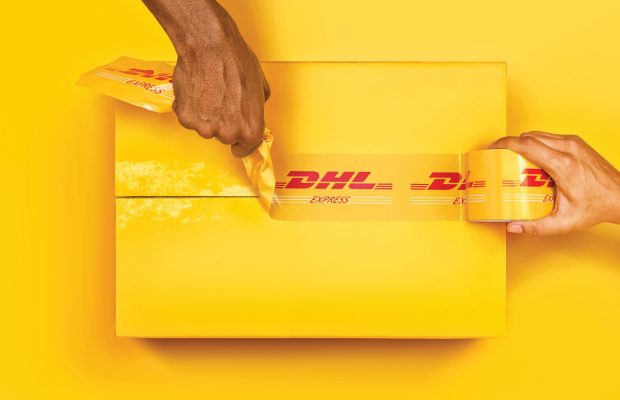
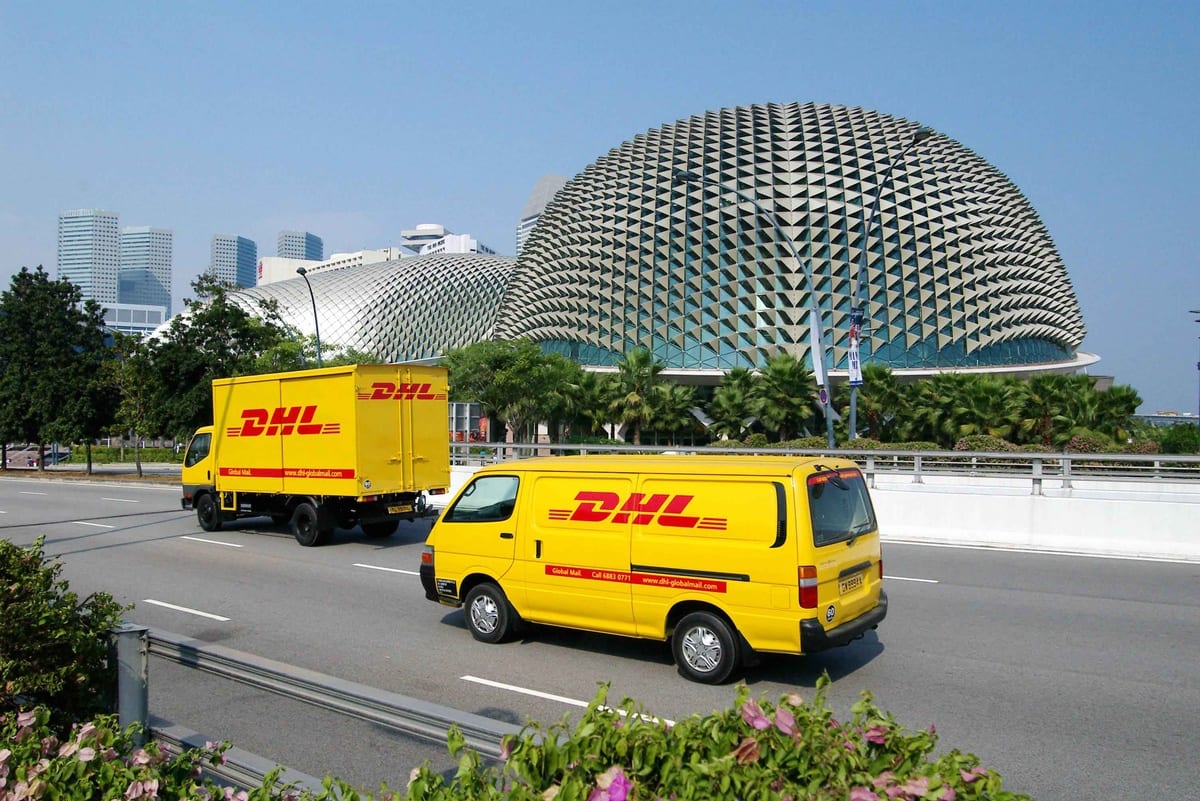
    DHL eCommerce has launched ServicePoints networks in key Asian markets.

    In a statement issued today (24 November), DHL eCommerce said that it has established a network of more than 200 ServicePoints in Thailand – which will enable commerce sellers to ship nationwide and for online shoppers to conveniently pick-up their orders. DHL added that over 1,000 ServicePoints will be launched over the coming months.

    “We are extremely positive about the e-commerce growth in Thailand, and have seen fantastic growth since we launched our domestic delivery network in Thailand in 2016. We will continue to enhance our existing solutions and launch new services to offer greater convenience and choice for sellers and shoppers across Thailand,” said Kiattichai Pitpreecha, Managing Director, DHL eCommerce Thailand.

    “We are really pleased to now be able to offer parcel drop-off and pick-up locations, all of which are easy to access, simple to use and provide a fantastic customer experience.”

    On Tuesday (21 November), DHL eCommerce also announced that it has launched a ServicePoints network in Vietnam.  The company statement said: “DHL eCommerce has already launched more than 100 ServicePoints and will continue to rapidly expand to more than 1,000 in the coming months.”

  • Victoria’s Secret Tries ‘See Now, Buy Now’ at Shanghai Show

    Victoria’s Secret Tries ‘See Now, Buy Now’ at Shanghai Show

    Victoria’s Secret, the global lingerie name known as much for its “Angel” supermodels and its “Bombshell” branded products, has brought its iconic fashion show to Shanghai, with Alibaba Group’s Tmall and Taobao marketplaces and video-streaming site Youku used as broadcast channels to reach the world’s most sought-after consumers.

    In addition to locating the event in the world’s second-largest economy—the first time it has been held outside of the U.S. or Europe—the company is leveraging the “See Now, Buy Now” format made popular in China by Alibaba. All items seen on the runway, aside from those not yet released in the market, will be available for immediate purchase as Chinese shoppers watch the show.

    Alibaba’s See Now Buy Now fashion show kicks off the 11.11 Global Shopping Festival season every year. Last month, the show mixed the latest clothes and accessories from international names such as Ralph Lauren and MAC with performances by Chinese female rap sensation VaVa and pop icon Chris Lee to create a retail-as-entertainment experience for viewers.

  • Thailand’s Pomelo raises extra $19 million capital

    Thailand’s Pomelo raises extra $19 million capital

    Thai online fast-fashion retailer Pomelo has raised an extra US$19 million in a series-B funding round.

    Led by China’s JD.com and Provident Capital Partners, joined by Lombard Investments, it was the largest series-B round by a company based in Thailand.

    Pomelo says it aims to use the cash injection to accelerate global growth.

    A year ago Pomelo raised a follow-on funding round, taking its total series-A funding to $11 million, an investment led by Singapore-based Jungle Ventures.

    Altogether, the three-year-old company has raised $32 million from investors globally.

    “We look forward to continuing the mission of building the first global fast-fashion brand out of Southeast Asia,” says Pomelo CEO David Jou.

  • China’s JD.com is keen to link with Saudis

    China’s JD.com is keen to link with Saudis

    With the Middle East in its sights, China’s JD.com is keen to team up with the Saudi government.

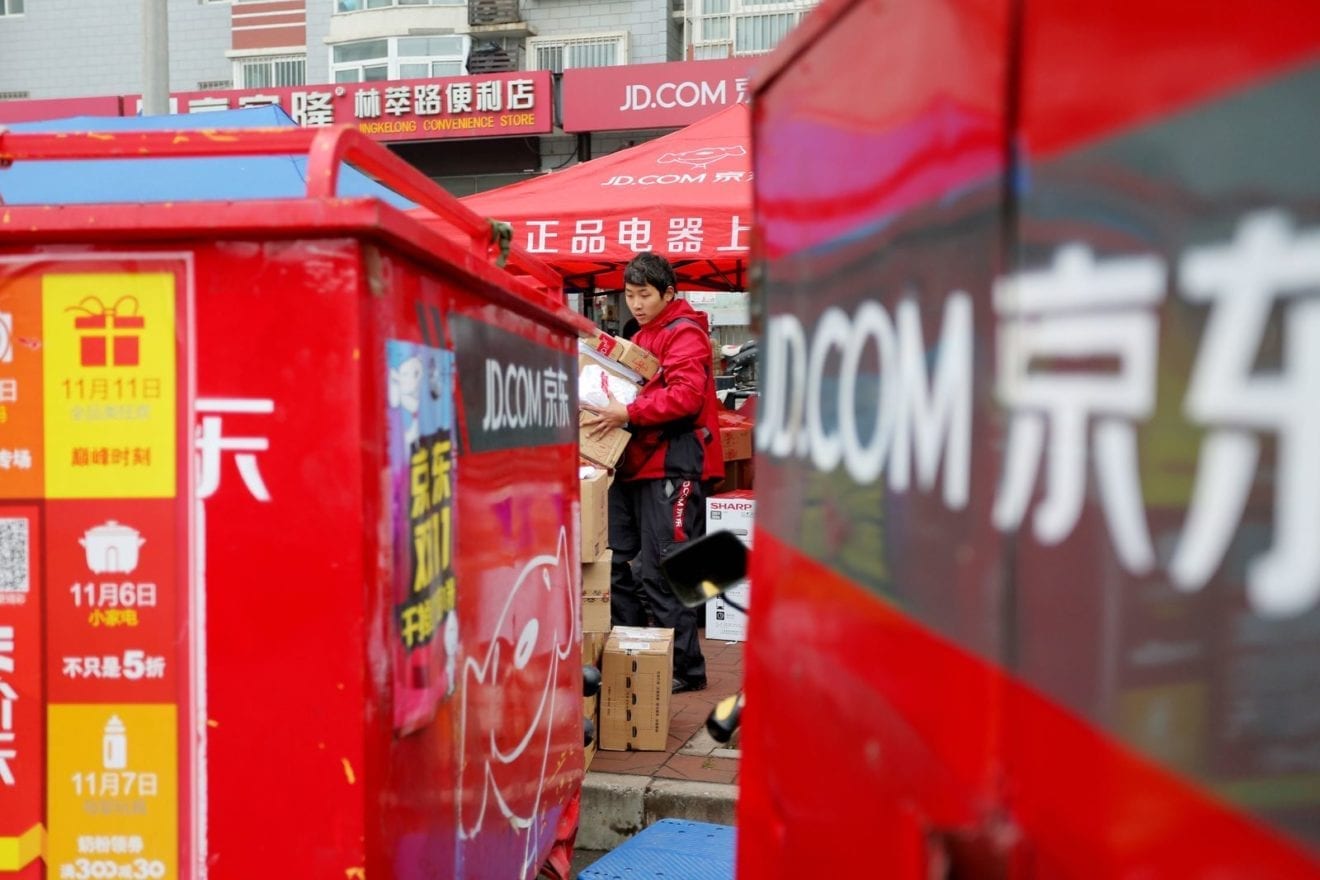
    “We want to have a partnership with the Saudi government,” says the e-commerce company’s international business president Winston Cheng.

    He describes Vision 2030, Saudi Arabia’s economic reform plan aimed at boosting private-sector growth and developing non-oil industries, as an incredible opportunity.

    “This region is the next new frontier,” says Cheng. “We’re looking to move very fast.”

  • Lazada Online Revolution offering 210 million items

    Lazada Online Revolution offering 210 million items

    In its sixth year, the Lazada Online Revolution mega-sale will be the biggest yet when it takes off on November 11 across six countries – Indonesia, Malaysia, the Philippines, Singapore, Thailand and Vietnam.

    Themed “Shop the Universe”, the sale will offer 210 million products, up sevenfold from last year, and has expanded its product categories to include fashion, luxury cosmetics, groceries, pet supplies and digital goods such as e-vouchers and prepaid mobile-phone top-ups. International brands include Huawei, Laneige, Levi’s, Mac, Ray-Ban, Shiseido and Triumph.

    There will be about 26 million deals offering discounts of up to 90 per cent, including items from the Taobao Collection, which offers kitchenware, furnishings, fashion apparel and accessories.

    Shoppers in Southeast Asia ordered about two million items within the first 24 hours of last year’s Online Revolution 2016. Among the top sellers were VR glasses, smartphones, shower gels and mascaras.

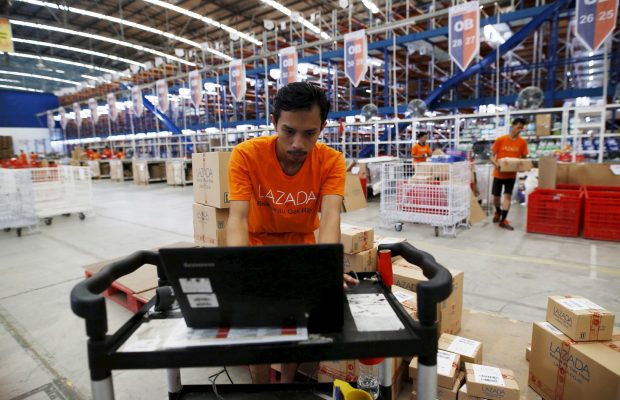
    As well as its own 130 delivery centres across the six countries, Lazada will work with more than 80 delivery companies to handle demand during the sale.

  • eBay tests the world’s first ‘subconscious shopping experience’

    eBay tests the world’s first ‘subconscious shopping experience’

    Online shopping giant eBay and specialist retailer Saatchi Art have created and tested an experimental retail experience they claim is the world’s first subconscious shopping experience.

    It merges art and technology to reveal shoppers’ subconscious desires.

    For just 48 hours, the two retailers invited select guests to their personalised shopping event, The Art of Shopping. Guests were first hooked up to headsets incorporating EEG technology to monitor electrical activity in the brain. They then entered a special art gallery where the “mind-tracking” technology, supplied by MyndPlay, was able to detect when they were inspired by particular works. This information was used to create personalised shopping carts.

    An algorithm to match customers with artworks was developed by behavioural psychologists and designed to be used with the billion items being sold on eBay’s virtual marketplace.

    The eBay team launched the project after commissioning a report on the neuroscience of what motivates buyers. The report investigated the difference between two types of buyers – “shop-y-cats” who impulse buy to fit in with trends, and “inspired shoppers” who prefer to discover non-mainstream  items. It found that inspired shoppers could browse longer and had a prolonged emotional high at checkout.

  • South Korean shoppers set new mobile spending record

    South Korean shoppers set new mobile spending record

    South Korean shoppers set a new record for the volume of purchases made through mobile devices during September.

    Government data says mobile transactions through smartphones and tablets reached a new high of 4.04 trillion won (US$3.5 billion) in August, up 29.5 per cent from a year earlier.  Statistics Korea says the trend is being fuelled by the growing amount of time consumers are spending on their handsets.

    Mobile transactions accounted for 61.9 per cent of all online purchases made during the month.

    Shopping by mobile phone in South Korea has been on a steep rise for years as smart devices are widening their presence in the world’s most-wired country. They are rapidly replacing computers as a means of conducting online transactions.

    Mobile bookings for travel and movie tickets surged 35.5 per cent in August from a year earlier to a record 755.8 billion won in the summer vacation season, while South Korean shoppers spent 344.8 billion won on cosmetics during the month, up 20.7 per cent.

    Food delivery services increased 38.2 per cent year-on-year to 610.3 billion won last month, while 381 billion won worth of electronic goods was sold through smartphones, up 18.3 per cent from a year earlier.

  • Global e-commerce expected to double in next five years

    Global e-commerce expected to double in next five years

    Global e-commerce continues to revolutionise the air cargo industry, and is forecast to increase 19 per cent a year over the next five years, from US$1.9 trillion in 2016 to US$4.5 trillion in 2021, according to the annual E-Commerce Revolution Report released recently by Air Cargo Management Group (ACMG). The 2017 E-Commerce Revolution Report provides an in-depth look at the explosive growth of global e-commerce air logistics.

    The report features fresh and insightful analysis of the major marketplaces, sellers, and logistics providers that are fuelling this revolution. It is not just the best-known participants, such as Amazon and Alibaba, driving this revolution, but also global express airlines, along with players lesser known outside their home countries, such as JD.com in China and Otto in Germany. The report tracks the companies using and providing e-commerce air logistics, and offers insights on global trends in the industry.

    “E-commerce has disrupted retail and is now revolutionising logistics,” said Alan Hedge, senior director of Air Cargo Management Group. “This, our second annual report, builds on the strengths of the first and covers new territory by offering descriptions of additional e-commerce companies and additional discussion of fulfilment networks in China, the largest e-commerce market on the planet.”

    New for the E-Commerce Revolution Report this year is a web-based companion database tool for exploring relationships between major e-commerce players and logistics providers. The tool allows users to search particular logistics providers and users to isolate logistics transactions worldwide. Additionally, the tool can be used to quantify e-commerce air logistics transactions on a global basis.

  • E-commerce wars: fashion exodus from JD.com

    E-commerce wars are in the news again in China, with reports of a mass exodus of fashion brands from the JD.com platform.

    44 fashion brands closed their flagship stores on JD last month while launching or keeping their shops on Alibaba’s Tmall. The main brands involved included millennial niche brand JNBY, billion-yuan brand Peacebird, menswear brand GXG and fast-fashion label Heilan Home.

    Following up, state-run Xinhua News Agency has published a more detailed breakdown of the brands that left: 27 womenswear brands, seven menswear brands, seven childrenswear brands and three lingerie labels.

    JD has confirmed the exodus with a statement containing a thinly veiled reference to Alibaba as “another industry player”.

    “We believe strongly in open, fair and legal competition, but not everyone in the industry agrees,” says the JD statement. “Numerous brands have told us that another industry player is inappropriately using threats to attempt to force them to sell on only one site in China.

    “We believe brands and consumers should be able to sell and shop where they want without interference, and will continue to support the ability of brands to choose to sell on however many sites they want.”

    Alibaba denies it is pressuring brands to leave any other e-commerce platform. “Brands have full autonomy to maximise their ROI in choosing their distribution platforms,” it says in a statement.

    Meanwhile, the two e-commerce giants are going head to head in preparation for Singles’ Day, the November shopping festival introduced by Alibaba. JD has its own shopping festival in June, but both platforms offer discounts during the promotions.

  • Chinese luxury e-commerce firm Secoo debuts on Nasdaq

    Chinese luxury e-commerce firm Secoo debuts on Nasdaq

    Chinese luxury e-commerce company Secoo Holding Limited on Friday rang the Nasdaq Stock Market opening bell in celebration of its Initial Public Offerings (IPO).

    Secoo’s IPO of 8,500,000 American depositary shares (ADSs) priced at 13 U.S. dollars per ADS, within the pricing range of 11.5 dollars to 13.5 dollars given by the company, for a total offering size of approximately 110.5 million dollars, assuming the underwriters do not exercise their option to purchase additional ADSs. Each two ADSs represent one Class A ordinary share.

    The company has granted the underwriters an option, exercisable within 30 days from the date of the final prospectus, to purchase up to an aggregate of 1,275,000 additional ADSs to cover over-allotments.

    Shares of Secoo, trading under the ticker symbol of “SECO,” tumbled about 19 percent to 10.52 dollars per ADS around midday Friday.

    Secoo is Asia’s largest online integrated upscale products and services platform as measured by gross merchandise volume in 2016, according to the Frost & Sullivan report.

    The company’s net revenues increased to 198.6 million dollars for the six months ended June 30 from the same period a year ago, with a net profit of 7.7 million dollars. It had net losses of 32.9 million dollars and 6.6 million dollars in 2015 and 2016, respectively.

    “China’s consumption expenditure continues to grow rapidly, with luxury spending on the upswing, which will give us tremendous development opportunities,” Secoo Founder & CEO Richard Rixue Li told.

    By 2021, China will add 1.8 trillion dollars in new consumption, according to a report by The Boston Consulting Group and AliResearch, the research arm of Chinese e-commerce giant Alibaba.

    Meanwhile, online platforms are one of the fastest growing retail channels in China. The stocks of Alibaba and JD, China’s two largest e-commerce firms, have been trading around their record highs in recent days, despite the stagnant global consumer market.

    “By listing on the Nasdaq Stock Market, Secoo will have a better international stage, which will enable us to link global brands and the Chinese consumer market more closely,” Li said.

  • DHL eCommerce gets logistics technology platform – FarEye on board

    DHL eCommerce gets logistics technology platform – FarEye on board

    FarEye, a logistics management solutions company, became a partner of choice for DHL eCommerce to enhance its customer experience, optimise its resources and deliver its brand promise ‘real-time’.

    DHL eCommerce continuously invests in technology to improve processes and have better communication across all parties. FarEye’s platform became an apt fit as it seamlessly integrated with the organisation’s existing systems and made the IT infrastructure flexible and agile. Being a Software as a Service (SaaS) platform, FarEye gave DHL eCommerce the flexibility to the scale-up and down depending on the demand levels, which gave them an edge to adapt quickly to any work environment.

    DHL eCommerce measured vendors not only by the basis of the features they offered but evaluated them holistically from a ‘process proposed’ perspective.

    Charles Brewer, CEO DHL eCommerce, expressed: “With eCommerce growing at such a rapid pace we see a fantastic opportunity for high quality solutions that will offer a great customer experience and more choice, convenience and control for online shoppers. FarEye’s platform is scalable, future-oriented and flexible. With FarEye we can deliver ‘delight’ by having complete visibility of the logistics movement and keeping customer informed at every step, ‘real-time’.”

    Kushal Nahata, co-founder & CEO FarEye, said:“FarEye is an indispensable support system for brands whose focus is enhanced customer experience and complete visibility of their logistics. Our association with DHL e-commerce has been extremely gratifying as we were competing against giants. FarEye is an enterprise grade technology platform and this win is a testimony to our platform’s capability and defined processes. We shall continue to strive towards excellence and keep our customers at the center of all our activities.”

    FarEye has proved to be a partner of choice for DHL eCommerce by optimising their resources, enhancing their customers’ experience with real-time alerts & smart analytics and making parcel shops more efficient with complete visibility.

  • Walmart online sales surge 60 per cent

    Walmart online sales surge 60 per cent

    Walmart online sales in the US soared by 60 per cent during the second quarter.

    Already the nation’s third largest e-commerce player, Walmart has been acquiring pure-play online businesses to gain range and – most importantly – experience in the online space. Companies such as Jet.com (which it paid $3.3 billion for last August), men’s apparel retailer Bonobos, (which it shelled out $310 million for in June), ShoeBuy.com, ModCloth and Moosejaw.

    CFO Brett Biggs told an earnings call last week that its e-commerce results include all web-initiated transactions including those through Walmart.com such as ship-to-home, ship-to-store, pick up today and online grocery, together with transactions through Jet.com and the other sites.

    Gross merchandise value grew by 67 per cent year-on-year in the quarter to July 31.

    “GMV represents the total US dollar volume of merchandise sold or services rendered for all transactions, including marketplace transactions, that are generally initiated through our e-commerce platforms or include our owned inventory sold on other third-party platforms,” Walmart said.

    Walmart offers more than 67 million products on Walmart.com, including its own goods and third-party lines. The number of SKUs online has grown more than 30 per cent quarter-on-quarter.

    CEO Doug McMillon said the majority of the growth was organic “as customers are finding a broader assortment and more options to receive what they want at their convenience”.

    The acquisitions were playing their part, as well, he said.

    “Our recent acquisitions, such as Moosejaw, ShoeBuy and Bonobos further improved our assortment and have provided critical category expertise in higher-margin categories like shoes and apparel.”

    Meanwhile, Walmart has begun trialling an “associate delivery service” which involves staff earning extra cash during their time off by delivering online orders to shoppers’ homes.

  • Do Local Merchants Stand A Chance In E-Commerce Wars With Amazon?

    Do Local Merchants Stand A Chance In E-Commerce Wars With Amazon?

    Grocery stores around the country – and all independent brick-and-mortar retailers, for that matter – uttered a collective gulp the day Amazon announced it had acquired Whole Foods for a whopping $13.7 billion dollars.
    Amazon, the Goliath of online shopping and the behemoth responsible for shuttering the doors of retail brick-and-mortar establishments, is getting into the grocery game.

    In the same way bookstores and clothing outlets have been asking themselves how they’re going to survive, now the question is, what does this mean for small, independent grocery stores? And more importantly, how are local companies going to be able to compete with the marketing and distribution channels Amazon has in place?
    It’s no secret that commerce is increasingly living in the digital domain, with rising shares of retail revenue taking place online over time. Businesses have had to fight tooth and nail to be competitive, stand above the crowd, and be successful.

    They need to have an online platform, social media visibility, e-commerce and multi-channel experiences in place in order to thrive in today’s market.
    Some try to build their own internal systems, and others rely on third-party software to integrate with their POS system and handle on-demand customer ordering.

    While many people seem to believe that brick-and-mortar retail will soon be a thing of the past, tech giants like Amazon are proving that is far from true.

    Physical locations will still be part of the business landscape – they just might operate with different purposes.

    For Amazon, Whole Foods won’t just be a stand-alone grocer. It will likely be a powerful distribution medium for other parts of their business, such as AmazonFresh

  • Amazon’s huge profit drop

    Amazon’s huge profit drop

    Amazon has reported a jump in retail sales but its profits took a big hit as the e-commerce giant continues investing in a number of costly areas, including video, fulfilment centers and international expansion within fast-growing economies such as India.

    The world’s largest online retailer has reported a 77 per cent slump in quarterly income and forecast a potential operating loss in the current quarter, $US300 million ($A376 million) to a loss of $400 million.

    The company posted second-quarter revenue of $38 billion, up 25 per cent from the previous corresponding period.

    Operating cash flow increased 37 per cent to $17.9 billion for the trailing twelve months, compared with $13.0 billion for the trailing twelve months ending June 30, 2016. Free cash flow increased to $9.7 billion for the trailing twelve months, compared with $7.7 billion for the trailing twelve months ended June 30, 2016.

    Operating income decreased 51 per cent to $628 million in the second quarter, compared with the operating income of $1.3 billion in second quarter 2016.

    “Our teams remain heads-down and focused on customers,” said Jeff Bezos, Amazon founder and CEO.

    “It’s energising to invent on behalf of customers, and we continue to see many high-quality opportunities to invest.”

    According to Neil Saunders, managing director of GlobalData Retail, Amazon’s breakneck growth stood in contrast to the fate of many brick-and-mortar rivals, who have struggled to find their footing as more people shop online.

    “While many other retailers are bumping along the bottom in terms of growth, Amazon increased its sales line by almost a quarter,” Saunders said. “In real terms, this means the online behemoth took some $7.5 billion more in revenue this quarter than during the same period last year. By any standards, this is an impressive performance – but it is doubly so for a company of the size and scale of Amazon.”

    “Worryingly for other retailers, Amazon shows no signs of slowing down.”

    Saunders said Amazon’s growth this quarter was sequentially better than last. Even in a mature market like North America, Amazon still managed to grow its sales line by 26.6 per cent.

    “And all of this comes before the sales benefits of Whole Foods, which will boost future growth rates by around 12 percentage points. All in all, it is clear that Amazon is not only increasing its dominance but is doing so at an ever-faster pace,” he said.

    Saunders said, however, that as good as Amazon is at generating sales, it is far less successful in turning those sales into profits.

    “To be fair, much of this is deliberate: Amazon chooses to reinvest in its business and to sacrifice profits to boost its market share and dominance,” he said. “However, such a strategy shows up in a weak set of bottom line numbers. Indeed, in its latest quarter, Walmart made more net profit in a week than Amazon did during the entire three-month period.”

    “As we predicted in our last note, Amazon’s profitability is getting worse rather than better,” Saunders said. “However, it all adds up to one thing: Amazon is buying sales at the expense of the bottom line.”

    He said in their view, this is a sustainable position both because Amazon is cash generative and is not losing money; nevertheless, it takes some of the shine off Amazon’s success.

    “The unfortunate truth for other retailers is that Amazon’s growth and success will force them to reduce margins, especially if they want to grow in e-commerce,” he said. “And While Amazon is comfortable operating with relatively low profitability, many other retailers – and their investors – are not. This is something that will create some significant pain points over the coming years.”

    Bezos’ wealth skyrockets

    Bezos also briefly became the world’s richest man in Forbes magazine’s tracking of wealth, as stock in his e-commerce company hit an all-time high.

    Microsoft founder Bill Gates reclaimed the lead by Thursday afternoon, as Amazon’s stock fell nearly 1 per cent for the day to $US1046.

    Amazon shares have been trading at a record high. They hit $US1083.31 at about noon on Thursday. According to securities filings, Bezos owns about 80 million shares, or 17 per cent; those shares were valued at more than $US87 billion ($A109 billion) at the peak. Bezos also owns The Washington Post through a holding company.

    Forbes said Bezos’ net worth was about $US90.6 billion when the market opened on Thursday. Gates had $US90.1 billion. Forbes said Gates would have been the undisputed leader had he not given billions of dollars away to various philanthropic causes. Bezos issued a request for philanthropic ideas in a tweet in June, just before Amazon announced a $US13.7 billion deal for organic grocer Whole Foods.