Tag: E-Commerce

  • Mountain Designs relaunches witch New E-commerce Platform

    Mountain Designs relaunches witch New E-commerce Platform

    Australian adventure brand Mountain Designs has officially relaunched, with a new e-commerce website sporting the brand’s full range.

    Spotlight Group chief executive of leisure brands Chris Lude said the business was committed to maintaining its 45 year heritage.

    “We are dedicated to ensuring the iconic Mountain Designs brand remains Australian owned, operated and designed,” Lude said.

    The relaunched brand also offers a renewed range, with the business having redeveloped 14 of its best sellers, as well as newly designed apparel and gear.

    “Adventure is in the Mountain Designs DNA, and the new range will continue to provide quality, technical, multi-functional gear that people know and love,” Lude said.

    Acquired in early 2018 by Spotlight Retail Group for an undisclosed sum, Mountain Designs confirmed it would offer a selection of goods, including thermals, apparel and equipment, within the Spotlight-owned Anaconda chain.

    Prior to being acquired by Spotlight Retail Group, Mountain Designs had been shuttering its bricks-and-mortar locations to focus on a purely online model to create a more sustainable platform for the business moving forward.

    During this period, the brand’s website was also closed to facilitate this shift, remaining offline until earlier this week.

    Spotlight Retail Group has recently indicated a larger push into the New Zealand market amid a larger revamp of its brands, with craft retail chain Spotlight to open a Christchurch flagship later in the year.

    It remains to be seen if this initiative extends to Anaconda or Mountain Designs – both of which operate solely in Australia.

  • Zilingo received fresh investment funding

    Zilingo received fresh investment funding

    Online marketplace Zilingo has raised US$226 million in its recent Series D funding.

    The fresh capital round brings the total amount raised by the company to $308 million. Having secured its latest investments, the company is now looking to China as well as other key Asian markets as part of its growth strategy to expand its B2B business.

    Key investors from this latest round included Sequoia Capital, Temasek Holdings, Burda Principal Investments, Sofina, Singapore investment fund EDBI as well as existing investors.

    “Sequoia’s investment in Zilingo dates back to when the company wasn’t even yet incorporated and the name wasn’t finalised,” said Sequoia Capital (India) Singapore’s MD Shailendra Singh.

    “Ankiti and team have rapidly transformed their original ideas about Zilingo into a platform company that serves fashion consumers, merchants, retailers, brands and manufacturers, collectively representing a multi-hundred-billion-dollar market size. We are amazed by the team’s ability to envision and execute against such an ambitious roadmap and are excited to continue to support them on their journey.”

    The company says it plans to invest the capital in long-term value building across the supply chain, building new and deeper relationships with manufacturing partners in Vietnam, Cambodia, Sri Lanka and China, and expanding into new markets such as the Philippines, Indonesia, Australia and the US this year.”

  • Amazon Products Now Available in Australia

    Amazon Products Now Available in Australia

    Amazon has launched another key part of its business in the Australian market – it’s advertising products.

    Amazon Advertising, the part of the company that offers display and video ads and an online tool to programmatically buy ads, launched in Australia on Friday, according to a company blog post.

    This gives businesses a way to reach the millions of unique visitors who land on Amazon’s local website each month, according to figures the company cited from SimilarWeb.

    “With Amazon Advertising, agencies and advertisers – regardless of whether or not they sell on Amazon – can deliver relevant messages to customers on and off Amazon, throughout their customer journey,” the blog post reads.

    The launch comes amid a recent revamp of the US e-commerce giant’s advertising business. In 2017, the company added a new office and 2000 jobs, mostly in advertising, in New York City. It has also introduced self-service buying tools, among other new products, and started providing deeper insights into its enormous customer database.

    These efforts seem to be paying off. Advertising was part of Amazon’s fastest growing business segment last year. Revenue from the company’s “other” category, which includes advertising, grew 115 per cent in 2018, to US$10.1 billion. Research firm Magna estimated that advertising accounted for US$6 billion of that figure.

    Most of this growth has come at the expense of rival digital advertising giant, Google, according to a report last week. 

    The report stated that WPP PLC, the world’s largest ad buyer, spent about US$300 million on Amazon search ads in 2018, and about 75 per cent of that money came from Google search. This was up from the US$100 million to US$150 million it spent on Amazon search ads in 2017, according to sources familiar with the matter.

    Advertising at the point of purchase

    One reason Amazon may be attracting more advertising dollars is that it enables businesses to reach customers much closer to the point of purchase than Google or Facebook, although both tech giants – particularly Facebook, which owns Instagram – have been working to close the gap between the discovery and purchase stages of the customer journey for some time.

    But before retailers completely upend their advertising budgets, they may want to consider the metrics they’re using to allocate budget to begin with. New research from Monash University has revealed that ‘last touchpoint attribution’, a key metric most advertisers use to measure ad effectiveness and allocate budget, is not accurate.

    “At the moment, if a consumer buys a new toy online, Google can look at the search patterns that person has had over the past few days, or whether they’ve received any emails from a department store such as Kmart,” Peter Danaher, head of the department of marketing at Monash Business School, said.

    “They use a method called ‘last touchpoint attribution’. So, if the consumer last opened an email about toys, the email gets the credit. It they last did a Google search on toys before making the purchase, Google gets the credit.

    “The advertising industry has used this method for the past five years because it’s simple and effective. The problem is, this method ignores how long consumers remember an advertisement.”

    According to Danaher, last touchpoint attribution doesn’t take into account the cumulative effect of seeing ads in different places, and allocating budget based on this metric is less effective than allocating budget to maximise profit.

  • Shiseido and Alibaba Collaborating to Please Chinese Customers

    Shiseido and Alibaba Collaborating to Please Chinese Customers

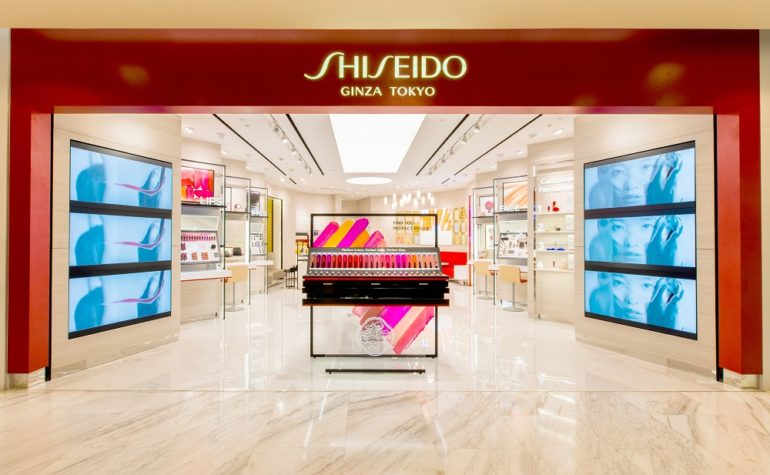
    Japanese cosmetics giant Shiseido on Sunday become the world’s first multinational cosmetic company to open a dedicated office in Hangzhou to work with Alibaba Group and co-create products specifically tailored for Chinese consumers.

    The Shiseido and Alibaba office, within walking distance of the Alibaba Xixi headquarters, will house a team of around 20 Shiseido employees by next year. The purpose is to tighten collaboration with Tmall, Alibaba’s B2C marketplace and better position Shiseido in China, said the makeup company’s China region CEO Kentaro Fujiwara.

    “China is Shiseido’s biggest and most-important market [outside of Japan]. By combining Alibaba’s strengths in digitisation and consumer engagement with Shiseido’s world-class standards in research and development, we can create products that can precisely capture the appetite of the Chinese consumer,” he said. “I hope this unprecedented collaboration will pave the way for further innovations for the entire [Shiseido] group.”

    According to Shiseido, its China business saw the fastest acceleration in 2018 with sales growth of 32.3 per cent year-on-year to RMB 11.6 billion (US$1.73 billion). China accounted for 17.4 per cent of Shiseido’s total net sales last year, making it the profitable country market, following its home market Japan. Shiseido said it expects e-commerce to generate 40 per cent of its China sales by next year.

    “Without a doubt, whether it be e-commerce or digital innovation, Alibaba is the leader. Alibaba is one of the most important strategic partners for Shiseido China as well as for the entire group,” said Fujiwara.

    Mike Hu, president of Tmall’s fast-moving consumer goods division, said Shiseido’s leadership position in the industry and its quick adaptation to digital transformation is a common value shared by Alibaba.

    “Our primary mission is to enable others, and we are always eager to work with the world’s leading companies to help them bring their best products into the China market in the most effective and efficient way. This definitely includes Shiseido, a reputable brand that is synonymous with high standard and high quality,” he added.

    “The opening of the Shiseido and Alibaba office represents an important and historical milestone of our long-term collaboration,” Hu said.

    One of Shiseido’s cosmetics brands, Za, opened a Tmall flagship store in September 2011. Since then, 12 flagship shops and 15 major brands also launched on the platform. Fujiwara said there is a plan to bring Shiseido’s mother-and-baby product brand into China later this year via Tmall.

  • Indian online grocer BigBasket raises Millions for next Phase

    Indian online grocer BigBasket raises Millions for next Phase

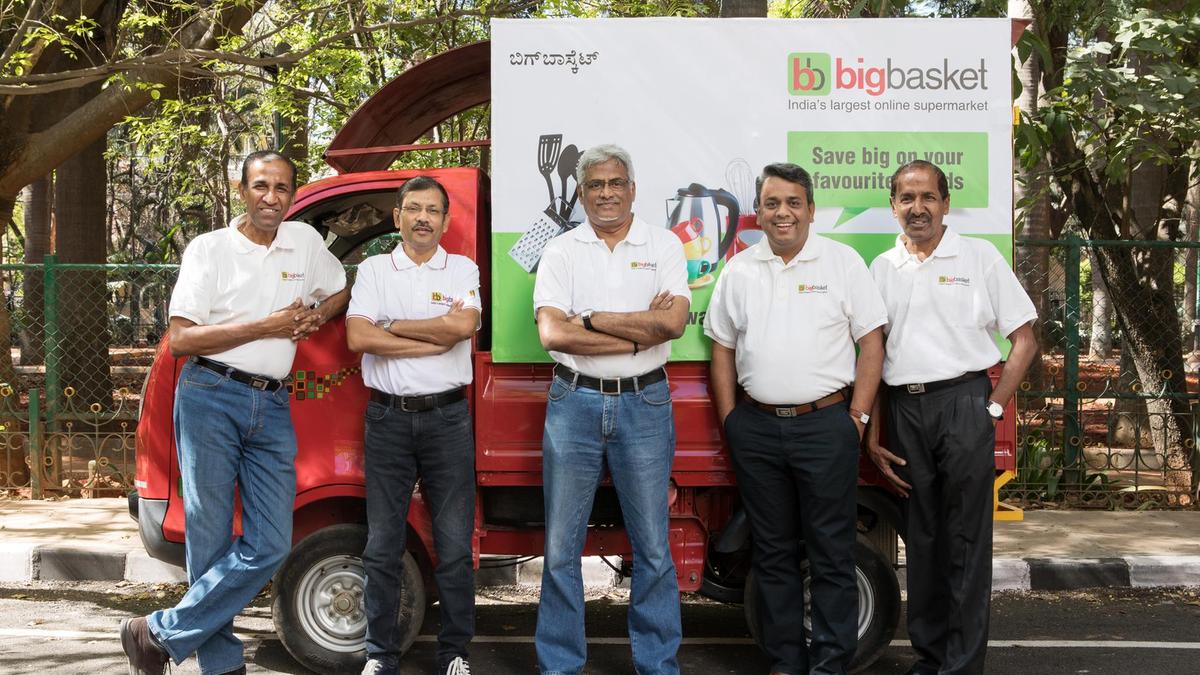
    Indian online grocery platform BigBasket has raised investment capital of about US$150 million.

    The investors include South Korean Mirae Asset Management (at about $60 million), the UK’s CDC Group (at $40 million), and existing investor Alibaba (about $50 million). The investment figures were shown in documents submitted to the Ministry of Corporate Affairs.

    BigBasket received $300 million in February last year from Alibaba and other investors and has been discussing seeking further funding since last November. The firm aims to generate revenues of the equivalent of $2.5 billion by next year.

    The online-grocery market is burgeoning in India, and accounts for a sizeable proportion of unorganised retail in the country.

  • Home-and-living brand Jiyoujia debuts in Singapore

    Home-and-living brand Jiyoujia debuts in Singapore

    Alibaba’s e-commerce platform Taobao has launched its home-and-living channel, Jiyoujia in Singapore.

    Marking the brand’s first foray into an overseas market, products are on show at Taobao Home store at NomadX store.

    “Singapore is an important market for Taobao, and we continue to witness strong and sustained demand for the home-and-living category here by shoppers,” said Mickey Xiong, country director for Southeast Asia, at Taobao.

    “In fact, the home-and-living category is our fastest-growing segment here.”

    Jiyoujia also launched its Home Lab portal, one week after its debut in China. Using the portal, curated sets of Jiyoujia products are recommended to customers, promoted through interactive digital showcases. Surfers can hover over each item for more information.

  • Vietnam’ E-commerce revenue forecast to hit $15 bn in 2020

    Vietnam’ E-commerce revenue forecast to hit $15 bn in 2020

    With 53 per cent of its population using the internet and nearly 50 million smartphone subscribers, Vietnam’s e-commerce market is expected to beat the previous revenue forecast of $10 billion in 2020 and may reach $15 billion, according to experts. The country’s e-commerce sector records annual average growth of 35 per cent; 2.5 times higher than the figure in Japan, making it one of the countries with the fastest e-commerce growth in the world.

    Mr. Dang Hoang Hai, Director of the E-Commerce and Information Technology Agency under the Ministry of Industry and Trade,  as saying that retail sales from e-commerce earned $8 billion in 2018, much higher than the forecasted figure of $7 billion.

    Therefore, revenue from e-commerce in 2020 could surpass the projected $10 billion, he said.

    A report on online shopping in 2018 conducted by market researchers Q&Me shows that Shopee accounts for the lion’s share of the domestic e-commerce market, at 35 per cent, with over 700 active brands and sellers, according to the news agency.

    It quoted Mr. Le Anh Huy, Deputy General Director of the Sen Do Technology JSC, the operator of the Sendo online commerce platform, as reporting that it recorded a threefold surge in 2018 over the previous year, serving more than 10 million consumers around the country.

    Experts have said, however, that e-commerce in Vietnam still faces various obstacles, including legal issues, skills for e-commerce development, security rights for concerned parties, and infrastructure for the sector.

    Support for e-commerce development in Vietnam’s remote and mountainous regions also remains modest.

    According to experts, Vietnam should consider the establishment of a State management agency to tackle those challenges and bolster the development of logistics in line with the digital economy, or assign such tasks to a ministry.

    Vietnam should also regularly update its legal system as well as develop synchronous infrastructure and a national payment system for e-commerce development, the experts suggested.

  • Afterpay starts cross-border payments

    Afterpay starts cross-border payments

    Buy now, pay later provider Afterpay is enabling shoppers to make cross-border payments through the service, following a successful trial.

    The feature means that businesses that offer Afterpay at checkout will now be able to offer the payment method to customers in other countries where Afterpay is active.

    The feature is initially limited to Australian and New Zealand businesses, where a combined 2.7 million people use Afterpay, but will eventually be extended to include businesses in the US and later the entire Afterpay network.

    “We are confident that [this] will add value to our retail partners, and open up the opportunity for them to seek and delight new customers from different countries,” Afterpay chief executive Nick Molnar said.

    “Customers will be able to pay directly in their currency and not be hit with any additional foreign exchange fees after the payment is processed.”

    The payment provider also will remove the complexity of foreign exchange, through a proprietary global payments solution that allows funds to be settled in their country of origin.

    Afterpay’s support for cross-border payments is expected to be a boon for online retailers looking to grow their sales outside of the domestic market.

  • How to get the right online pricing strategy in 2019

    How to get the right online pricing strategy in 2019

    More than 70 per cent of e-commerce retailers are leaving money on the table – and it all comes down to a single digit in their online pricing strategy.

    ‘Left-digit bias’, or the economic behavior where consumers use the leftmost-digit of a price tag in guiding their decision making, is an age-old observation in the brick-and-mortar world. (For example, $5 is perceived as significantly more expensive than $4.99, while $4.99 is perceived as just one cent more than $4.98.)

    While this concept isn’t new – research was conducted as early as 1936 – with consumer spending increasingly moving online, the more pressing question now is whether the same principle can be applied to online businesses.

    It turns out the answer is “yes.” In looking at more than six years of anonymised data from 100,000+ online businesses operating on Stripe, we discovered that the left-digit bias holds the same sway over consumers online, as it does offline. And this is especially acute across subscription businesses models, such as media streaming services and even software-as-a-service.

    Today, more than 70 per cent of online businesses worldwide are not taking advantage of this pricing model, potentially costing their businesses millions of dollars. Meanwhile, online merchants that have made the switch to an optimal pricing model stand to gain a potential revenue uptick of several percentage points or more.

    Here are some key takeaways for online businesses looking to tune up their pricing strategies in 2019 and take advantage of left-digit bias:

    0 is the most popular pricing strategy:

    Despite the popularity of prices ending in 9 offline, the most popular pricing strategy for online merchants is actually 0. The only exception here were items priced in euros.

    Pricing ending in 9 are only second-most popular, with 27 per cent of subscription prices ending in 9.

    Prices ending in 5 are also popular, perhaps because the number is an optically pleasing midpoint.

    While these are the patterns for pricing among merchants, it does not mean that they are optimal for consumers, as we’ll see below.

    It’s time to bring back 9:

    Cross referencing merchant pricing with merchants that received the most website traffic and those that are VC-funded revealed that more sophisticated businesses are more likely to set prices ending in 9 compared to other online businesses.

    While correlation doesn’t equal causation, it is reasonable to assume that these more ‘popular’ businesses are likely larger, more well-funded, or have made it a priority for them to analyse a different online pricing strategy.

    This could be an opportunity for smaller firms that do not have the same resources to analyse pricing strategies to take advantage of the left-digit bias identified by their larger or better funded counterparts.

    .

    Left-digit bias applies to luxury items too:

    There is a widely-held opinion that only sale items should end in 9. However, this misconception may actually be causing merchants to miss out on significant gains.

    According to the study, left-digit pricing was found to be influential with both luxury ($700, $800, $900 and greater in cost) and non-luxury items. In fact, new customers cluster at these higher-priced cutoff points, buying products whose prices end in 9.

    Implementing your pricing strategy:

    For online businesses looking to test the 9-digit pricing in the new year, there are a few considerations to keep in mind:

    • Larger online merchants with the benefit of higher volumes should consider testing 9-digit pricing on a portion of their offerings. The evidence shows that pricing items and subscriptions in such a way stimulates consumer buying behaviour for items as inexpensive as $0.99, all the way up to the hundreds of dollars.
    • Smaller, high-growth merchants should simply consider 9-digit pricing as a smart default. At lower volumes, running pricing experiments can take a much longer time and are prone to data ‘noise’. Instead, these businesses ought to consider 9-digit pricing as standard practice, helping to potentially level the playing field against larger competitors.

    Pricing is key in today’s competitive market, especially for lean online businesses. It can set a business apart from competitors and close a transaction with a fickle consumer. This is especially crucial in an industry where revenue gains of even a few percentage points can go a long way to ensuring long-term growth and success.

  • Coles starts selling food on eBay

    Coles starts selling food on eBay

    Coles on Wednesday started selling a range of ‘everyday essentials’ on eBay, in a bid to reach some of the marketplace’s 11 million unique monthly visitors. The offering includes perishable and non-perishable items in Coles’ everyday essentials range across several categories, including select pre-packaged fresh food, pantry, personal care and household items. The items at launch are available to eBay shoppers in metro Sydney, Melbourne and Brisbane. Shoppers will initially have just one delivery option, though more will be added throughout the year, according to a statement from eBay and Coles. 

    Alister Jordan, chief executive of Coles Online, described the partnership as being all about convenience.

    “By partnering with eBay, we are providing our customers another convenient way to access our products and have them delivered straight to their door,” he said in a statement.

    The idea is that consumers who are already buying fashion, homewares and electronics on eBay can also complete their food shopping on the online marketplace, rather than having to make a second – virtual – trip to Coles’ e-commerce site.

    “It really comes down to convenience and being able to choose from a great range of groceries as well as those bigger ticket items you can’t get from a supermarket,” Julie Nestor, eBay’s CMO told.

    “Think about planning for a dinner party and being able to purchase everything from the table setting to the meal ingredients on the one site – it’s a more convenient, seamless way to shop online.”

    There is also the fact that more and more brands stocked on supermarket shelves are increasing their direct-to-consumer sales through their own websites or marketplaces like Amazon, which expanded into the pantry category last October, though it doesn’t yet offer fresh food in Australia. For eBay, the partnership seems to be about growing its eBay Plus membership program, which it launched in May 2018 in what many saw as a response to Amazon Prime. The program, which costs $49 a year, includes unlimited delivery and returns on new items bought on eBay, discounts on the Stan streaming service and opportunities to earn points through Coles’ flybuys loyalty program.

    Nestor confirmed that launching Coles’ food offering on eBay has been in the works for some time.

    “After we successfully launched our partnership with flybuys last year, this is a natural extension of our relationship with Coles,” she said.

    Nestor declined to say how many members are currently signed up to the eBay Plus program, but she described the uptake so far as “really positive” and said the company expects it to continue to grow with the launch of Coles on eBay. EBay Plus members get free delivery on orders that are $49 and over, and they earn double the number of flybuys points on all orders.

  • Amazon crafts new grocery offerings

    Amazon crafts new grocery offerings

    E-commerce giant Amazon is plotting a new grocery business in the US. The online retail giant is planning to strengthen its supermarket brand by purchasing local grocery chains that operate at least a dozen stores, the report claims.

    The first store is expected to open in Los Angeles by the end of the year, with leases signed for two more locations, set to open by early 2020. The business is in talks to bring the grocery stores to shopping malls in San Francisco, Seattle, Chicago, Washington, D.C. and Philadelphia.

    Amazon, which bought the healthy supermarket chain Whole Foods for $13.7 billion in 2017, had “ambitions in this space” for a long time.

    Amazon’s big rival, Walmart has already been preparing for a battle with the retail giant, the source said. Walmart is introducing grocery pickup at 3,100 stores by next January and will also offer grocery delivery from about 800 more stores by the end of 2019.

  • E-commerce share to rise to 12pc from 2pc in 10 years: Walmart India CEO

    E-commerce share to rise to 12pc from 2pc in 10 years: Walmart India CEO

    Share of e-commerce is set to rise, despite the growth in brick and mortar or physical retail from 2 percent to 12 percent over the next 10 years, aided by pick up in Omnichannel format, said Krish Iyer, President & CEO, Walmart India and Chairman of India Food Forum, at India Food Forum 2019 on Tuesday. Gap between physical and digital needs to be bridged as the consumer is going digital in terms of experience as also his touchpoints, he said delivering the inaugural address at the two-day India Food Forum 2019.

    Sharing his insight at Walmart, Iyer said that by enriching customer experience, the consumer started buying Rs 180 over Omnichannel instead of buying Rs 100 from the store itself and later the ratio in the store was Rs 70 while digital was Rs 110. Calling for technology adoption as key to retail growth, Iyer enumerated four key challenges led by food security, safety & nutrition, food wastage and sustainability.

    “Feeding a rising world population of 10 billion from 7 billion amid rising death of infant children due to malnutrition, changing climatic conditions are key challenges. In India, phenomenal efforts are made on the regulatory front for safety and nutrition that will follow with awareness, compliance and enforcement of law. Significant investment amounting to Rs 92,000 crore in food processing in catchment areas is needed to overcome the wastage of 30 percent of all food and 40 percent of fruits and vegetables,” he said.

    Earlier, speaking at the forum, Ajay Macaden, Executive Director, Nielsen said, “Consumers have evolved now for omni-channel even for specific categories like milk and bakery. Increased internet and smartphone penetration has led to multiple shopping channels and change in consumer behaviour.”

    In markets around the world categories such as travel, entertainment (books, music, events) and durable goods (fashion, IT/mobile, electronics) are the front runners for consumers to enter the online retail sphere. Consumers are, however, also looking for e-commerce options for an increasing range of categories, as their more immediate needs for convenience and ease expands, Macaden said.

    Consumers in APAC (Asia Pacific) have even evolved to fresh grocery and packaged goods with China, India, Japan and Korea leading the market. In fact, packaged grocery food and fresh groceries are showing the highest percentage growth of all categories in 2018 in this region, he said.

    Other key speakers at the forum included Damodar Mall, CEO, Reliance Retail (Supermarketwala), Sadashiv Nayak, CEO Food business, Future Group, Mohit Kampani, CEO, Aditya Birla Retail, C. Gopalkrishnan, Founder, N. Supermarkets, Ramesh Menon, Former CEO, Hypercity, Mohit Anand, MD, Kellogg, India and South to name a few.

  • An Overview of E-commerce in South East Asian Countries

    An Overview of E-commerce in South East Asian Countries

    Electric commerce or e-commerce is the activity of buying and selling online. Typical e-commerce transaction includes purchase of online books, music purchase and purchase and sales of many other items.  Three known major areas of e-commerce include online retailing, electric market and online auction. Technologies such as mobile commerce, internet market, electronic funds transfer, and electronic data interchange (EDI), online transaction process and many others.

    The practice of e-commerce in Southeast Asia started during the dot.com era in the 90’s just like in many parts of the world. The dot.com era refers to the period where companies started using doing for most of their businesses on the internet, usually through a website that uses the popular domain “.com”. During the dot com era southeastern Asia mainly purchased items from American and European companies that would be delivered in their countries. During this era companies with electronic commerce had shown great prospect with their fast growth and promising profits. Companies’ stock prices skyrocketed and Asia was pretty happy because the rise had resulted to a bubbling economy through electronic commerce.

    Asia then began to attract nearly half of the total capital inflow from developing countries appealing them with high interest rates. Countries like Malaysia, Singapore, Thailand and Indonesia experienced an increase in their GDP rates. Around the year 2000, the e-commerce market was mainly involved in a business to business (B2B) transaction due to customers mistrust after going through the 1997’s financial crises and the bubble burst in southeast Asia – bubble burst is often identified only in retrospect once a sudden drop in price has occurred – The burst is usually profitable for buyers and not sellers. In the 90’s a lot came up as hindrances to the upspring of electronic commerce

    – In those days, aside mistrust e-companies had other issues of which Southeast Asian countries were also affected. As a result of its structural shortcomings, a much more diverse range of payment solutions have become common in the region. The average internet penetration around southeastern Asia with the exception of Singapore was 38% while leading countries have an internet penetration of 70-80%, this made cash on delivery offered by 80% of the players in both Vietnam and Philippines, though bank transfer is another very popular payment method across the SEA. With each of the countries having 94%, 86% and 79% of merchants in Indonesia, Vietnam and Thailand respectively offering it.

    – In addition to a lack of uniformity in payment methods, there is also significant market fragmentation the Southeast Asian consumers have so many platforms to choose for their daily need.

    – Culture also was an inhibiting factor –the influence of Traditions in the Asian region overtime had made people have low trust in bank system and electronic payment, for example; credit card owners and other means used in payment other than in cash is small – government in those times pushed for a cashless policy in their society by trying to implement laws to suit online transactions.

    – Fraud and high level of corruption was another setback to the growth of electronic commerce in the region.

    The prospects and thrive; the battle for supremacy

    The gold rush in the online ecommerce of the as left traditional offline retailers in the Asia region like Thailand and Indonesia scramble for an online business move.

    Over the years until this day the massive growth in e-commerce around southeastern Asian has attracted big name investors into the region. In 2016 the release of the Google Temasek SEA Economy spotlight highlighted Southeast Asia as the world’s fastest growing internet region.  With an existing internet user of 260M which was projected to grow to 480m users by 2020. In the research they predicted that southeast Asia’s internet economy will grow to 200B by 2025 and that $40 – 50bn in investment will be required over a decade to achieve that goal, fast tracking to 2017 they observed that the southeast Asia’s internet user base continues to grow rapidly. there will be 330m monthly active internet users by end of 2017 adding over 70m new users since 2015 13% CAGR.  They estimate that Southeast Asia’s internet economy will reach $50b in 2017, meaning it will Grow at a rate of 27% CAGR outpacing their 20% 10year CAGR projection.

    Asia as a continent had an increase in of around 4.5  billion in the GMV ( gross  merchandise value ) of first hand goods and has had a 41% compound annual growth rate ( CAGR ) in the past couple of years- 2015 to 2017- as given by Google –Temasek’s economy southeastern spotlight 2017 report. The Temasek report went further to predict that CAGR will rise from $5.5bn of 2015 to $88bn by 2026. 2017 witnessed events which proved high results are expected from the e-market in southeastern Asia.  The explosive growth in E commerce as lured china’s two e-commerce giants Alibaba and sd.com to the southeast online market. Amazon much awaited  recent entrance into the E-market of a southeastern nation ( Singapore to be specific) to fast track its online market expansion in southeast Asia also proved there was an attractive raw material in the cyber space of the region.

    The record breaking 1billion dollar sales of shares of Lazadas to Alibaba with alibaba also putting its grip on Tokopedia; arguably a future competitor in Indonesia. The resilience of another China based heavy weight company; Tencent. Tencent has also kicked start investments in companies like SEA (previously Garena) predominantly a gaming powerhouse that runs Shopee, Go-jek, Traveloka, Tiki.nn and Pomelo. The US based KKR  in a bid not to be left out of this massive growth phase through emerald media put US$65million into e-commerce arms dealer Acommerce. This trends of acquiring more shares and grabbing more local companies across the Asian borders by these online giants  is expected in coming years as all stated above points to the fact that the riches in online space of these Asian nations is worth risking for.

    Currently, predictions have given that the home based Asian companies will have to pick sides with either of or stand their ground against the foreign forces from both the western and eastern part of the world.  Predictions went further  to specify that  foreign based companies like Alibaba, Amazon and Tencent is  likely to have a bloodbath battle for the monopoly of the regions  electronic commerce  or share the  Asian online customers, some term this head to head of the western state and eastern state as the clash of the online titans.  It is hope that this clash will result to a much needed gold-shed To Help in the growth of the developing region

    Joe Tsai, Alibaba vice chairman, in speaking with Retail News was quoted as saying “is there a land grab right now for these kind of assets? I think in the land grab they [Tencent] are following us. They are seeing that we have positioned ourselves very well, and they are sort of playing a catch up game. So what we want to do is to work with local entrepreneurs. ”

    Experienced, grown and growing

    Marc woo, Google head of ecommerce , travel and financial services was quoted to have said “Asia pacific (APAC) accounted for 40% of global ecommerce sales in the 1st quarter in 2017, but vast majority of those sales went to larger or more mature markets in the region, particularly china, but also japan, Australia, South Korea, and India. That leaves Southeast Asia as the next frontier for ecommerce in the region.  “

    A steady increase in the advantages of electronic commerce in the region resulted to a 50% growth last year and now totals 200 million individuals across southeastern Asian’s top six economies. The southeastern Asian nation Singapore takes a top spot in Asia with an average of 14.04 sessions per person per year visiting amazon.com. It is rumored and expected that by the end of the year the ecommerce companies should erect physical stores in their resident southeastern nations. This will make a great boost in the economy of this regions.  This huge development in ecommerce have led southeast Asian governments to launch a bid to introduce taxes on ecommerce sales as they look to claim their dollar-and-cents take from one of their most promising engine towards  economic and  financial buoyancy.

    This though might increase the cost price of goods and services offered by the online companies but cannot override nor underestimate its advantage as compared to import and shipping processes. Taxing online sales will align practice with those of world leading countries. It puts online retailers on a leveled playing ground with brick-and-mortar counterpart. This growing market has also initiated an online network process between the Chinese and the Asian region as Alibaba is working to set up a digital free-trade zone in Malaysia and has signed a memorandum of understanding with the government of the Asian country and the authorities of china to simplify cross-border trade between the two regions.

    If this deal falls through under the current government of china a long term mutual profit making relationship is expected to last for a very long time between the Asian nations and the Chinese government  giving that  the china parliament are rumored to have kick started plans in keeping their president more longer in office than usual.  The critical factors responsible or observed to needed for the spontaneous growth of ecommerce in the southeastern region of the continent are

    • A growing middle class – knowing that the middle class contains the highest number of mobile phone users and also the highest number of common goods purchasing.
    • Rapidly expanding internet access are positive indicators for fast paced e commerce growth in coming years. Internet access needs to be at its best for the effective running of electric commerce in a state

    The middle class population of the Asian region is expected to reach a 400million in 2020 from its 190 million of 2012, according to Nielsen project.

    Internet access in the region as not only being expanding at a high pace but has also improved strongly over the years like stated in the research of Google Temasek SEA economy spotlight report stated above.

    The electric commerce has also shown to be of disadvantage though not significant as compared to the many fruit yielded by the online market.

    • The desire for local business owners and the nation’s mobile phone user population to switch online results to more cases of fraud because this system isn’t used to them.
    • Competition between locals and foreigners which should encourage an healthy business environment is not observed as the big guns will slowly silently phase out the local brands
    • The preference of foreign products to locally made products by locals isn’t favorable for the country’s economy.
    • Owing to the creation of a good relationship with certain world leading countries, good tides with others could be altered.
    • If not properly monitored, foreign companies might have a full grip of the southeastern nation economy.

    One major benefit that has been observed to have taken the front line in the advantage of electronic commerce in the southeastern Asian region is the quest for each nation to outperform each other. Especially between Thailand, Vietnam and Indonesia, this healthy beef has led to varying developments in these nations as none wants to be left behind in the development and modernization of their country. These alongside the introduction of big time investors, the rise in economy growth, job creation in nations, strengthening diplomatic tides and many other advantages.

    Stakeholders and experts have advised to government of these Asian nations to support the region to grow by fixing reasonable tax levies in other not to discourage foreign and local investors, encourage a competitive market, improve online network and provide adequate education to ease communication with foreign partners. With the huge wealth emanating from the electric commerce sector, if properly managed these nations can get a massive boost in their nations wealth and reputation. The potentials possessed to build a nations revenue by employing electric commerce cannot and should not be undermined.


     

  • Shopee Sellers in China to use DHL to Delivery across Thailand

    Shopee Sellers in China to use DHL to Delivery across Thailand

    DHL eCommerce, a division of logistics company, Deutsche Post DHL Group (DPDHL), has announced a partnership in China with Shopee, a leading e-commerce platform in Southeast Asia and Taiwan. The partnership enables sellers in China to access consumers nationwide in Thailand, with an expansion of the partnership to other Southeast Asian markets in the pipeline. According to Statista, the e-commerce gross merchandise revenue in Thailand will exceed US$5 billion by 2022, making it the second largest e-commerce market in Southeast Asia.

    “Direct selling to overseas consumers has never been easier and has become a key growth driver for many businesses, with e-commerce as an easy platform to enable international expansion. With logistics as a key enabler for cross-border retailing, we want to empower our customers to tap into this huge growth opportunity,” says Zhi Zheng, Managing Director, DHL eCommerce Greater China & North Asia.

    “Over the past few years, we have witnessed extremely strong growth of B2C parcels from China, mainly powered by e-commerce. We are pleased to partner Shopee to enable Chinese sellers to easily sell and deliver in Thailand, whether it’s doorstep delivery or for consumers to collect their orders from our growing network of easily accessible ServicePoints — which is set to reach over 1,000 in Thailand by end-2018.”

    With DHL eCommerce integrated on Shopee in China, sellers can easily sell and deliver on one single platform and keep track of all shipments directly on the app.

    “In recent years, we have witnessed the rapid development of Southeast Asia’s e-commerce market, and a growing number of Chinese brands and sellers are staking a claim in this e-commerce goldmine. However, the geographical complexity of this region has created some logistical challenges. As a leading e-commerce platform in Southeast Asia, Shopee has built its Shopee Logistics Servcies (SLS), a highly efficient logistics delivery network that links China with Southeast Asia. We are delighted to work with DHL, the world’s leading logistics service provider, to grow SLS from strength to strength. Our collaboration will make Shopee the e-commerce platform of choice for cross-border sellers in China who aspire to sell into Southeast Asia,” said Jianghong Liu, Head of Shopee Cross Border eCommerce.

    Currently, Shopee’s SLS is operational in seven markets in Southeast Asia and Taiwan. With shipping costs 20% to 30% lower than typical market rates and better transit times, SLS makes cross border logistics a breeze for Chinese sellers. The collaboration between Shopee and DHL eCommerce will further enhance the capabilities of SLS. DHL will provide Shopee sellers with door-to-door logistics services, ensuring products will reach consumers in Thailand safely and quickly.

  • JD.com’s green initiative for sustainable consumption

    JD.com’s green initiative for sustainable consumption

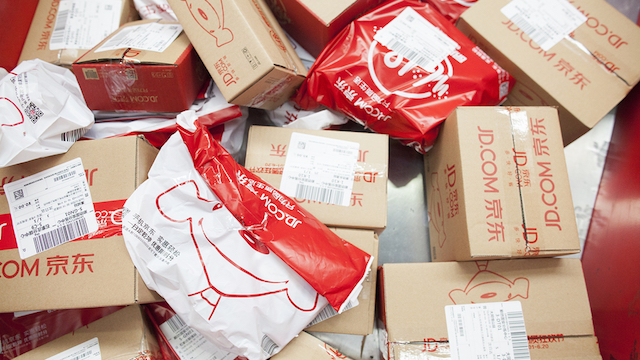
    JD.com, China’s largest retailer, the World Wide Fund for Nature (WWF) and The China Children and Teenagers’ Fund (CCTF) are partnering to launch a second annual Green Planet-Sustainable Week, raising awareness about sustainable consumption in the world’s most populous nation. The seven-day program, which kicked off this week, will reinforce JD’s commitment to help the retail industry develop more sustainably, reducing the impact of China’s booming consumption on the environment.

    For the event, JD will promote pollution reduction through the use of reusable shopping bags, created from the fabric of discarded apparel in response to a call from WWF to reduce pollution caused by plastics. The bags, which are also regularly used in JD operations, will be distributed free during the event and include RFID Chips that can be scanned as coupons in offline stores through JD’s partners.

    JD’s Green Planet-Sustainable Week also kicks off a new clothing drive for the company’s recycling program. Taking advantage of its nationwide in-house logistics network, which covers 99% of China’s population, JD will collect both used and unused clothing from customers either to be sent to recycling facilities or distributed to those in need. Proceeds will be donated to lower-income families, people with disabilities and charity groups. Last year, a similar drive led to the collection of nearly 400,000 items, or 20 tons, of clothing, from 150 million people in four cities. This year’s program will expand to cover 47 cities.

    Customers will be able to trade in major appliances for recycling as well, by third-party companies through JD’s platform. The appliances will be disassembled, after which parts will be used for repairs, helping to reduce the waste generated by household appliances as well as pollution created by their production. Working with JD’s charity affiliate, JD Foundation, the participating companies will donate a portion of any proceeds to support charitable activities on behalf of customers, while customers are eligible for payment for their used devices, plus coupons from JD in exchange for the trade-ins.

    Meanwhile, all logistics information for tracing donations and trade-ins are available through JD.com’s proprietary supply chain management technology.

    “The spectacular rise of Chinese consumption has been a major force behind the country’s incredible economic story but has also contributed to unprecedented environmental challenges,” said Zhonghao Jin, Head of Market Practice, WWF China. He believes this week’s activities will help “raise consumer awareness and accelerate the mainstreaming of sustainable consumption.”

    Libo Ma, head of the CSR department at JD.com disclosed the company is in the midst of an effort to convert its entire vehicle fleet to new energy vehicles while being involved in other efforts to reduce emissions. The company is also is developing biodegradable packaging to further reduce waste in the supply chain.