Tag: E-Commerce

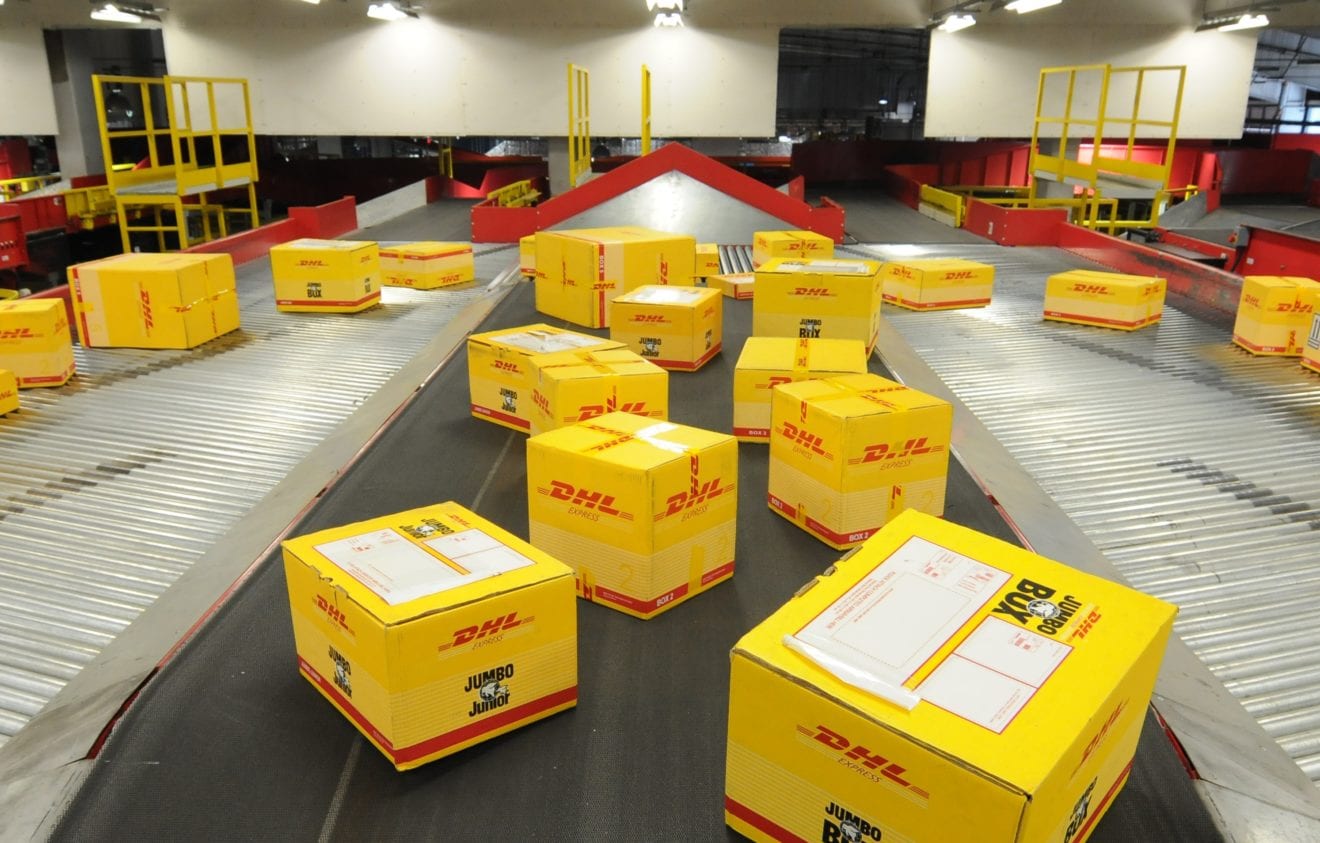
  • Sendo partners with DHL eCommerce for domestic delivery in Vietnam

    Sendo partners with DHL eCommerce for domestic delivery in Vietnam

    DHL eCommerce, a division of the world’s leading logistics company, Deutsche Post DHL Group (DPDHL), announced its partnership with Sendo, Vietnam’s #1 local e-commerce platform. The successful integration between the two companies means sellers on Sendo will now be able to access DHL’s excellent domestic delivery network, and deliver to their buyers same-day or next-day in Ho Chi Minh, Hanoi and other primary markets.

    “Being a homegrown company allows Sendo to have deep understanding of the Vietnamese local market and culture. Sendo aims to support over 300,000 individual vendors, micro-entrepreneurs, and small businesses to initiatively sell their goods online and deliver them affordably throughout Vietnam. With our collaboration with DHL eCommerce, we will provide not only the sellers but also several million buyers on our platform with an international quality delivery experience in Vietnam.” said Mr. Tran Hai Linh, CEO, Sendo.

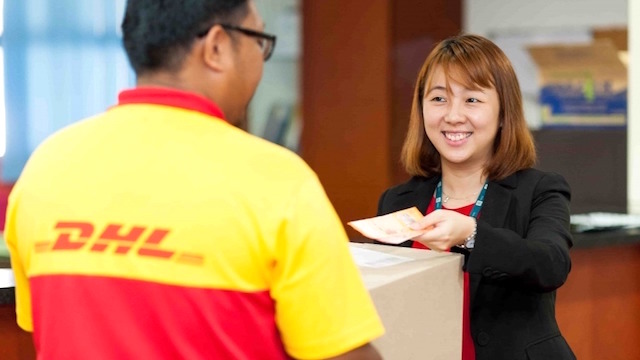
    To support small businesses, DHL eCommerce also offers market leading cash-on-delivery (COD) services with next-day remittance to sellers. With more than 300 DHL ServicePoints located conveniently across Vietnam accessible to Sendo, sellers can also choose to drop-off their parcels at these locations instead of waiting for a pick-up as well as enjoy discounts of up to 20%. Alternatively, sellers can also arrange for a pickup by DHL for direct door-to-door delivery service to their buyers.

    “Micro, small, and medium-sized enterprises continue to play a major role in Vietnam, accounting for 98 percent of all enterprises, 40 percent of GDP and 50 percent of employment.[1] However, they face unique challenges such as access to finance and international partners. DHL is passionate about supporting small businesses and we are excited to work with Sendo to support their sellers with an excellent, high quality domestic delivery network.” said Thomas Harris, Managing Director, DHL eCommerce Vietnam.

  • TIGERS to expand China and Malaysia as e-commerce booms

    TIGERS to expand China and Malaysia as e-commerce booms

    Global e-commerce fulfilment expert Tigers has opened an office in Suzhou, China, and a new fulfilment centre in Selangor, Malaysia, as part of ongoing expansion plans to serve the region’s booming e-tail market. The new e-Fulfilment Logistics Centre in Selangor is Tigers’ second Malaysian operation, after the automotive fulfilment centre in Kota Kinabalu, East Malaysia.

    The new Suzhou office is located 30 minutes from Shanghai, China, where Tigers has recently opened a new facility to meet growing e-customer demand in both the business-to-business (B2B) and business-to-customer (B2C) sectors.

    “China and South East Asia are two of the fastest growing regions in the world for online retail, and we will continue to support that growth by providing state-of-the-art facilities to meet customer demand,” said Andrew Jillings, Chief Executive Officer and Group Managing Director, Tigers.

    Tigers specialises in e-commerce fulfilment, transportation, and supply chain solutions across a wide range of industries, including automotive, fashion, outdoor and active lifestyle, health, technology, wine, and perishables.

    “Suzhou is the perfect location for Tigers, and our historic city is fast becoming a hub for international logistics organisations,” said Edison Zhang, General Manager – Sales, China, Tigers.

    “We are experiencing strong sales activity in Suzhou, and there are plans for further expansion into the Chinese market, where we already have 15 locations.”

    The 10,000 sq ft Selangor facility will operate as a headquarter for sea freight, e-commerce, and logistics, and is located 20 minutes away from Port Klang, 40 minutes from Kuala Lumpur International Airport, and one hour from Kuala Lumpur city centre.

    The automotive fulfilment centre in Kota Kinabalu is a 12,000 sq ft (1,115 sq m) facility, which supplies the entire East Malaysia region with a spare parts delivery service on a B2B basis.

    The new facilities in Asia follow the opening of a new office at Frankfurt Airport in Germany in July, which will act as a gateway to Europe by creating a trade lane between Germany and South Africa.

  • New crypto-exchange lets you convert Singapore, Malaysia, Indonesia currencies

    New crypto-exchange lets you convert Singapore, Malaysia, Indonesia currencies

    Singapore-based fiat-crypto exchange EurekaPro, led by a team consisting of Junus Eu, Douglas Gan and Lau Kin-Wai, today announced its entry into the Southeast Asian blockchain market. EurekaPro offers Asian-wide fiat-to-cryptocurrency support, allowing holders of the Singapore dollar, Malaysian ringgit, Indonesian rupiah, and other Asian fiat currencies to transact on the EurekaPro exchange.

    EurekaPro has already launched an open public beta, in which over 8,000 users have signed up in its first week.

    Eu, the exchange’s CEO, was previously the investment manager of zVentures, the venture capital arm of US- and Singapore-based gaming hardware and software firm Razer. Before that, she was an investment manager at VC firm Jafco Asia.

    On the other hand, Gan and Lau co-founded iFashion, a holding firm that invests in various fashion ecommerce sites. Gan also started beauty services marketplace Vanitee and subscription ecommerce business Vanity Trove. Lau set up FatFish Internet Group, a startup accelerator.

  • DHL partners with ChannelAdvisor to power global e-commerce for retailers and brands

    DHL partners with ChannelAdvisor to power global e-commerce for retailers and brands

    2 October, 2018 – DHL eCommerce, a division of the world’s leading logistics company Deutsche Post DHL Group (DPDHL), announced a strategic alliance with ChannelAdvisor, a leading provider of cloud-based e-commerce solutions. Through the partnership, brands and retailers can easily expand internationally by reaching foreign markets and delivering to customers around the world, with seamless connection to DHL eCommerce fulfillment and shipping.

    “We’re excited about this strategic alliance between DHL and ChannelAdvisor, which brings together two industry-leading companies to power the e-commerce opportunity for brands and retailers across the globe,” says Charles Brewer, CEO, DHL eCommerce. “By leveraging technology platforms, retailers and brands can accelerate their cross border e-commerce strategy by easily expanding to new regions and selling to anyone, anywhere. This is made even easier with a global e-commerce logistics partner like DHL to ensure a seamless order fulfillment and shipping process.”

    ChannelAdvisor enables retailers and brands to sell on marketplaces and improve their online performance by optimizing their operations. With a single product data feed, retailers and brands can sync with over 107 marketplaces. As orders and performance information flow back to the system, results are analysed and broken down to enable retailers/brands to optimize their e-commerce strategies.

    As a strategic partner, DHL eCommerce will bring their expertise in e-commerce logistics and access to a global fulfillment network for customers on the ChannelAdvisor platform. Customers can utilize the network of shared-use facilities at transactional prices to enable high-quality e-commerce order fulfillment with best-in-class operations and multiple shipping options.

    “ChannelAdvisor’s strategic alliance with DHL eCommerce gives us the opportunity to work with one of the largest global logistics providers,” says Paul Colucci, Vice President, Global Business Development, ChannelAdvisor. “By combining ChannelAdvisor’s industry-leading e-commerce platform with DHL’s leading logistics capabilities, DHL eCommerce customers will be able to reach new consumers on marketplaces, while continuing to offer the best-in-class fulfillment and shipping they expect. It’s essential that brands and retailers diversify their digital and multi-channel strategies to succeed in today’s evolving industry, and we are honored to be selected by DHL eCommerce to help its customers accelerate their sales strategies and meet demands.”

    Partnering up with ChannelAdvisor emphasizes Deutsche Post DHL Group’s objective to be the leading global provider in e-commerce logistics. DHL eCommerce is part of Deutsche Post DHL Group, established in 2014 as part of the Group’s growing focus in e-commerce logistics solutions. Along with its sister divisions DHL Express, DHL Supply Chain and DHL Global Forwarding, the Group offers end-to-end solutions for e-commerce retailers.

  • E-commerce majors see strong growth in apparel, large appliances as festive sale kicks off

    E-commerce majors see strong growth in apparel, large appliances as festive sale kicks off

    E-commerce giants Flipkart and Amazon India have seen a strong start to their festive sale with categories like apparel and large appliances driving record transactions and new customers coming on board.

    According to a PTI report: These companies have put in months of preparation in ramping up selection, setting up warehouses and strengthening delivery network ahead of the festive sale to ensure a smooth shopping experience for customers, with demand being much higher than on non-festive days.

    Players like Flipkart, Amazon India and Paytm Mall kick-started their festive sale from October 10 that will continue for the next 5-6 days. More offers are expected to be rolled out over the next many days leading up to Diwali.

    “The scale of Big Billion Days (festive sale of Flipkart) has only grown with each passing year and this year too, we expect the trend to continue. While each category sees manifold growth, we expect smartphones, large appliances and apparel to be phenomenally big categories,” Kalyan Krishnamurthy, CEO, Flipkart said.

    He, however, declined to comment on the volume of business expected to be generated, saying “its early to speculate as the growth always end up surprising us”.

    Amit Agarwal, Senior Vice President and Country Head at Amazon India, said the first day of the Great Indian Festival 2018 has been the biggest day ever with record-breaking sales across categories.

    “We are off to a great start and have seen phenomenal numbers during early access and first day that is still on. Three out of four phones sold in the country were on our platform. We saw record sales in large appliances category like TVs, washing machines and refrigerators,” he said, adding that there has been 2.7X growth in number of new customers shopping on Amazon.in compared to previous year’s Diwali.

    Agarwal said Xiaomi, on its platform, sold more than a million devices in a day, while OnePlus has seen record bookings worth Rs 400 crore.

    “More customers bought fashion products than any other, as Amazon fashion saw its biggest day ever more than doubling its growth over last year,” he further said.

    About 20 million people are expected to shop on various e-commerce platforms during the festive sale, translating into sales of around US$ 3 billion for players like Amazon and Flipkart, according to a report by research firm RedSeer.

    The report states that the share of items like electronics and furniture during the sale could be higher this year due to various affordability initiatives being undertaken by the e-commerce players. Mobile phones currently account for a lion’s share of sales on the two leading e-commerce platforms.

  • Adore Me Announces its Launch in China

    Adore Me Announces its Launch in China

    US lingerie brand Adore Me has announced its expansion into China.

    The online brand, which currently delivers throughout the US, will be offering its full range on the Chinese market via interactive livestreams and the global shopping platform ShopShops. The move follows a hundredfold growth in revenue since first launching in 2012.

    Adore Me founder and CEO Morgan Hermand-Waiche said the company has been experiencing a growing demand from Chinese shoppers, so it was exciting to be able to make its products available to them online.

    “We’re introducing innovation and affordable, fast-fashion intimates to even more women around the world.”

    Lingerie brand Adore Me retails bras, panties, lingerie, sleepwear, loungewear, and activewear.

  • DHL eCommerce launches Cash on Delivery for cross border e-commerce

    DHL eCommerce launches Cash on Delivery for cross border e-commerce

    Cash is still king in Southeast Asia, with over 73% of the population still unbanked and inaccessible to e-commerce retailers since they do not have access to credit cards or internet banking services. DHL eCommerce, a division of Deutsche Post DHL Group, today launched its Cross Border Cash-on-Delivery (COD) service to allow consumers to pay for their international purchases in cash and only upon delivery.

    COD is available as a value-added service of the DHL Parcel International Direct product, specifically for sellers based in China and Australia delivering to consumers in Malaysia, Thailand and Vietnam. Collected cash will be remitted to a local bank account at destination (Malaysia, Thailand or Vietnam) or in the billing country (China or Australia) based on the local destination currency. Remittance will be made to sellers every fortnight and tracking visibility of the status of COD is available on the DHL portal.

    “Despite growing credit card adoption in Southeast Asia, the low level of credit card penetration has forced e-commerce retailers to offer alternative modes of payment methods such as cash on delivery, digital payments and in some cases paying in-store. This opens up a huge potential by reaching out to a new group of unbanked consumers and also meeting the needs of consumers who prefer to pay in cash.” said Charles Brewer, CEO, DHL eCommerce.

    “China and Australia are huge e-commerce export markets and our DHL Parcel International Direct product provides a direct entry into high demand markets with excellent transit times of 3-5 business days with economical shipping prices. With our fully-owned domestic delivery network in Malaysia, Thailand and Vietnam, we are able to deliver on-time with secure features like cash-on-delivery.” added Brewer.

    To enable sellers in China and Australia to tap on the cross-border e-commerce opportunity, DHL eCommerce enables economical international shipping with a range of e-commerce features. This includes parcel pick-up service; easy IT integration of the seller’s inventory into the DHL shipping process, end-to-end tracking, dynamic routing and distribution, returns management, etc.

    DHL eCommerce is part of Deutsche Post DHL Group, established in 2014 as part of the Group’s growing focus in e-commerce logistics solutions. Along with its sister divisions DHL Express, DHL Supply Chain and DHL Global Forwarding, the Group offers end-to-end solutions for e-commerce retailers.

  • Inditex to sell all its brands online by 2020

    Inditex to sell all its brands online by 2020

    Zara owner Inditex announced all products from all its brands will be made available online by 2020, including in markets where it does not have any stores.

    Pablo Isla, Inditex chairman and CEO, announced they want to make all their fashion collections available to all their customers wherever they are in the world.

    “Even in those markets which do not currently have our bricks-and-mortar stores,” Isla added.

    Other than Zara, the world’s largest clothing retailer also sells the brands Pull & Bear, Massimo Dutti, Bershka, Stradivarius, Oysho and Uterque across its network of almost 7,500 physical shops. It also operates online in 49 markets.

    In FY2017, Inditex’s online sales saw a 41-per cent increase to reach 10 per cent of group net sales, although it fell short compared to rival Swedish retailer H&M’s which made close to 12 per cent on online sales.

    Isla said all of the Group’s brands will also be adopting the integrated stock management system by 2020 in all the countries in which there is a physical store presence.

    He said the system would make it possible to fulfil online customer orders with store inventory. To date, integrated stock management is in place in Zara stores in 25 markets including Spain, France, Italy, China, the US, the UK and Mexico. Inditex currently has stores in 96 markets. The technology will be completely adopted across the whole group by 2020.

  • Purchases made online with phones hit record in July

    Purchases made online with phones hit record in July

    Purchases made using the internet and mobile devices in Korea reached an all-time high in July, government data showed Wednesday, demonstrating the popularity of smartphones, fast delivery and convenient payment options offered to local shoppers.

    The total value of transactions made with computers, smartphones and tablets reached a record 9.45 trillion won ($8.45 billion) in July, up 22.7 percent, or 1.75 trillion won, from a year earlier, according to the data from Statistics Korea.

    The sharp rise was attributed to increased demand for electronics, leisure goods, daily necessities and food amid sweltering weather and the vacation season, the agency said.

    The total value of mobile transactions soared 33.5 percent to a record 5.92 trillion won, accounting for a record 62.6 percent of all online purchases in July.

    Mobile purchases in Korea have been on the rise for years as devices expand their presence in the world’s most wired country and rapidly replace computers as the means of conducting online transactions.

  • Parfois to expand in Asia and other country

    Parfois to expand in Asia and other country

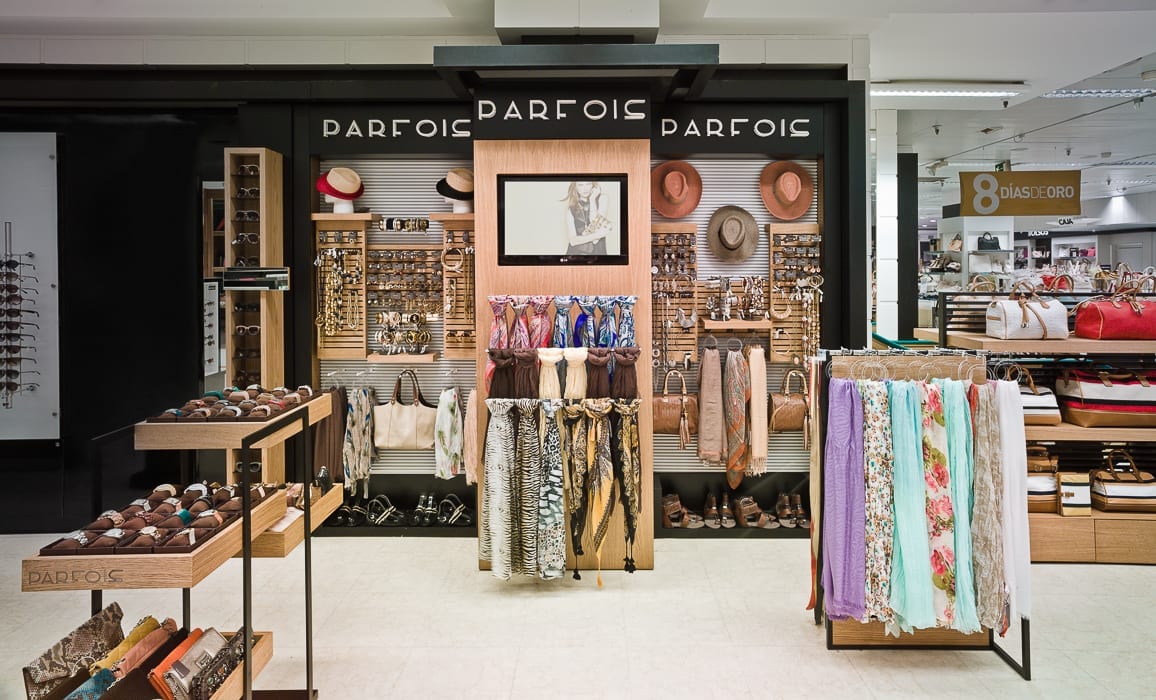
    Portuguese accessories brand Parfois is planning an expansion into Asia and Eastern Europe.

    Parfois, founded in 1994, currently operates 900 stores in 65 countries and is seeking to reach its 1000th by the end of this year. The brand opened in around 10 new markets this year – including joining Alibaba’s Tmall Global platform – and while immediate plans are focusing on building its presence in Latin America, it has already begun to explore options in Asian and Eastern European countries.

    Parfois’ director of marketing and communications Susana Coerver said sales in Portugal and Spain represent more than half of the firm’s revenue, with Spain by far the biggest market, prompting expansion into smaller municipalities within the country. The company also aims to expand its product range with a venture into apparel.

    The brand closed the 2017 financial year with €306 million in sales, with growth expectations for the current year aiming at 20 per cent.

  • Tod’s debuts a product on ‘Baoshop’

    Tod’s debuts a product on ‘Baoshop’

    Tod’s debuts a product on WeChat’s mini programme, called ‘Baoshop’. It is a limited-edition handbag co-designed by Chinese fashion blogger Tao Liang, better known as Mr. Bags.

    The dog-like handbag was available first from the ‘Baoshop’ within the WeChat ecosystem, before it is rolled out to selected Tod’s boutiques globally and the Tod’s own WeChat mini programme.

    The exclusive ‘Baoshop’ pop-up store, allows for a more personal touch and a seamless “reading-to-shopping” experience said Liang in a press release, while also allowing shoppers to learn more about the product as well as purchase directly via WeChat Pay.

    Liang is one of the most powerful influencers in China, boasting more than four million followers, and he states that the “convenience and asset-light weight of the mini programme perfectly fits with user expectations,” as it provides users with a more reliable, convenient and high-quality shopping channel.

    These mini programmes are becoming an important part of the Chinese e-commerce market in connecting luxury brands with shoppers, and they are seen as good conversion platform for the new economic model that is emerging in China, referred to as the fans economy.

    The limited-edition handbag features dog-like details in a reference to the year of the dog being celebrated in China this year. The collaboration has 500 handbags, 300 of which will be offered first on Liang’s ‘Baoshop’.

  • DHL boosts offerings for e-commerce

    DHL boosts offerings for e-commerce

    Charles Brewer, chief executive officer of DHL eCommerce, said that Thailand has huge potential for growth in the logistic and e-commerce sector.

    Brewer, who said the company also aimed to have up to 2,500 service points by the end of next year, said that e-commerce accounted for 2.4 per cent of the total retail market in Thailand, and this segment was expected to grow 22 per cent a year until 2020.

    “The country therefore has the potential for e-commerce to grow by more than three to four times. Thailand’s e-commerce market will reach 4 billion euros in 2020,” Brewer said.

    The company’s same-day service, DHL Parcel Metro, will ship parcels of up to 20 kilograms from retailers to their customers.

    The service allows customers to enjoy a late cut-off of up to 12 pm for same-day delivery within Bangkok, Pathumthani, Nonthaburi and Samut Prakan provinces. The service fee charge starts at Bt100.

    “Thailand is a fantastic country to do business in and not only e-commerce,” Brewer said. “Thailand is now the second country in which we provide same-say deliveries to the market. The firm announced same-day deliveries in Ho Chi Minh City and Hanoi in Vietnam last month and expects to provide this service in Kuala Lumpur in the next step.”

    He said that the same-day delivery service in global market in 2016 accounts for less than 1 per cent of the total and that this is expected to jump to 22 per cent by 2025. McKinsey reports that demand for same-day delivery is expected to increase by over 43 per cent a year worldwide and that retailers that offer this service see significant advantages in e-commerce.

    Brewer said that the firm would later provide new services that use drones, artificial intelligence, robotics and PostBot.

    Kiattichai Pitpreecha, managing director for Southeast Asia at DHL |e-Commerce, said the firm will have around 1,000 e-commerce shops by the end of the year.

  • Most e-commerce transactions still use ‘COD’

    Most e-commerce transactions still use ‘COD’

    THE majority or 80 percent of e-commerce transactions in the Philippines are still cash-on-delivery transactions, according to a report by the Asian Development Bank (ADB) and United Nations Economic and Social Commission for Asia and the Pacific (Unescap).

    This despite the high Internet penetration rate in the Philippines. The report, titled “Embracing the E-commerce Revolution in Asia and the Pacific,” said there are 56.75 million Filipinos who have access to the Internet.

    The report said this can be due to the lack of available e-payment options that force Filipinos to resort to cash on delivery, placing consumers at risk.

    “The lack of well-developed e-payment systems forces e-commerce firms to rely on fragile business models. For instance, COD can create friction between buyers and sellers, because it involves a high degree of uncertainty whether vendors get paid. Another is the safety of customers, who can be threatened if they refuse to pay for unsatisfactory goods,” the report stated.

    This could be one of the reasons e-commerce transactions in the country remain low. In 2015 the report said, only 0.5 percent of retail sales in the Philippines are conducted online in 2015.

    Apart from these reasons, geography concerns, particularly for island economies, prevent the increase in e-commerce transactions.

    The Philippines, being an archipelago, further complicates the delivery and return of goods bought via online or electronic transactions.

    “An underdeveloped delivery system is a major roadblock for developing e-commerce. But improving delivery systems are difficult when geographic factors are involved. For example, Indonesia has more than 17,500 islands. The Philippines has 7,641. So delivering products cost-effectively is challenging,” the report stated.

    The underdeveloped e-commerce system poses a huge disadvantage, especially to small and medium enterprises (SMEs) who stand to benefit the most from such a system.

    In a statement, the ADB said that through e-commerce systems, SMEs can “reach global markets and compete on an international scale” while “creating many jobs in the process.”

    The ADB cited the need to develop viable e-commerce ecosystem which requires a holistic approach and concerted efforts by all stakeholders in e-commerce development, including national governments and international development institutions, trade associations and industry bodies, businesses (e-commerce vendors, payment service providers, and logistics service providers, among others) and consumers.

    It added that policy priorities should be on establishing a legal and regulatory framework for e-commerce, harmonizing international laws and standards, promoting information and communications technology infrastructure development, broadening Internet access and affordability, and supporting financial and e-payment infrastructure.

    “Emerging digital technologies are transforming the e-commerce landscape and offer a new set of modern solutions and opportunities to build more inclusive growth and spur innovation,” ADB Vice President for Knowledge Management and Sustainable Development Bambang Susantono said.

    “It offers a chance to narrow development gaps—whether demographic, economic, geographic or cultural. It also helps narrow the rural-urban divide. However, realizing the full potential of e-commerce calls for coordinated regional and global efforts,” Susantono said.

    Asia and the Pacific is the world’s largest business-to-consumer e-commerce marketplace and continues to grow rapidly, the report said.

    By the end of 2015, the size of e-commerce relative to gross domestic product was 4.5 percent in Asia and the Pacific compared to 3.1 percent and 2.6 percent in North America and Europe.

    The Internet retailing market share of Asia and the Pacific is expected to reach around a half of the global total by 2020.

  • E-commerce tipped to take one third of Asia-Pacific retail spending

    E-commerce tipped to take one third of Asia-Pacific retail spending

    E-commerce will account for 31.4 per cent of total Asia-Pacific retail spending by 2020 according to fresh projections by research house Mintel.

    That’s nearly 10 times the proportion of 2010, when it accounted for a mere 3.6 per cent of sales.

    Those figures are based on countries with high populations – Australia, China, India, Indonesia, Japan, South Korea and Vietnam – and exclude markets like Singapore and Hong Kong, where e-commerce accounts for less than 5 per cent of total retail sales.

    “The future of Asia-Pacific’s retail landscape will force a fundamental change in the way Asian companies are structured, managed and do business,” the report, New Retail: The Futurenomics of Asia-Pacific, concluded.

    Its author, Matthew Crabbe, who is regional trends director, Asia-Pacific, with Mintel, said the 2020 projection is only the start.

    “E-commerce growth is fast-moving and on a massive scale. From 2015 to 2025, e-commerce will rise in value by over 290 per cent, and reach well over 37 per cent of total retail value across Asia-Pacific. This growth has created a new critical mass with the convergence of online and offline retail and services into New Retail.”

    Combining latest Mintel research to paint a picture of how the region’s future economy will be shaped, Crabbe settled on four key conclusions:

    Digitisation: Futurenomics nears critical mass

    “The online economy is a crucial part of Asia-Pacific’s current and future economic growth. It is also a major part of the continuing integration of the economies and consumer-spending patterns across the region. Meanwhile, Asia is not just innovating within New Retail, it is also a hothouse of innovation in AI, the application of augmented and virtual reality and revolutionary concepts in food production, among many technologies. And New Retail is the focus of how all these developments are agglomerating to shape the ‘futurenomics’ of Asia.”

    Integration: The value of experience

    “New Retail is a process, rather than a market, where the ‘space’ of e-commerce increasingly integrates with physical shopping spaces. It is also a part of a wider integration process into the broader digital consumer services environment, and across all consumer product sectors. Places and processes for shopping are integrating with entertainment, travel and socialising – which is great as 32 per cent of urban Thai consumers say they are spending more on leisure and entertainment this year,” said Crabbe.

    “Brands are finding that they are being drawn into their own integration across sectors. Services brands are merging with retailers; retailers are becoming hoteliers; online platforms are becoming transportation providers – everything is mixing up. This means that brands must now engage with consumers across formats, platforms, technologies, locations, nations and sectors, and find relevance across more aspects of consumer lifestyles.”

    Consolidation: More people in less space

    “Asia-Pacific’s population is rapidly urbanising into some of the world’s largest cities, creating the potential for New Retail to develop faster in the region. In India, 25 per cent of urban internet users who shop for groceries do so from online supermarkets at least once a month. Meanwhile, in Indonesia, 56 per cent of urban smartphone owners have made a purchase through an online retail site or app,” he said.

    “Urbanisation is likely to be significantly influenced in the future. To meet the needs of vast, crammed populations of tomorrow, cities will have to adapt to new technology. New Retail, with the ability to reach anyone, anywhere, via their smartphones, offers a unique solution to connecting with consumers.

    Companies in the New Retail industry are encouraged to spread their influence across the region. In fact, New Retail is already expanding rapidly across the region through the influence of China’s leading operators.”

    Migration: From brawn to ‘e-brain’

    Crabbe said as Asia-Pacific’s populations get older, there will be an increasing need for greater productivity as ‘working age’ populations shrink.

    “This will drive the need for ongoing education and long-life learning to keep up with and adapt to new technologies. Mintel research reveals that as many as 72 per cent of urban Thai consumers say they want to learn a new skill, while 59 per cent of urban Chinese mums agree that early education should start as early as possible.

    “Technology in production – manufacturing and agriculture, for example – is leading to a shift from a ‘brawn economy’ to ‘brain economy’. Already new technology has democratised the means of production.

    In an environment where ideas become currency, we see the emergence of what is now known as the ‘Fifth Estate’ where outlier, disruptor and social groupings become instigators of change in mainstream society. New Retail will be the foundation upon which new economies will be built, and Asia-Pacific is leading the first wave,” Crabbe concluded.

  • Costco Japan Launched new E-commerce Website

    Costco Japan Launched new E-commerce Website

    Costco Japan says it plans to launch an online store next year.

    The wholesale club-style retailer is still finalising plans for the site, in particular the exact launch date and the product range it will offer online. But it says it is committed to the e-commerce business given how Japanese consumers are increasingly buying goods over the internet.

    As with its physical stores, customers of the online store will have to pay an annual membership fee before they can purchase goods. That fee is currently ¥4752 (US$43).

    Meanwhile, Costco Japan plans to expand its network of hypermarkets from 26 to 50 by 2030. It is also building new distribution bases in the Chiba and Hyogo prefectures to prepare to service online customers and new stores.