Retail News CRM

Tag: E-Commerce

  • Yahoo Japan ties up with Tmall

    Yahoo Japan ties up with Tmall

    Japan’s third largest on-line retailer Yahoo Japan Co jumped probably the most in two months in Tokyo buying and selling after the corporate stated it is going to group up with Chinese language e-commerce big Alibaba Group Holding to increase footprint into the world’s second largest financial system.

    Yahoo Japan’s share surged 11.7 % to 556 yen (US$four.5) on Friday, the very best closing worth since March 31, lifting its market worth to three.2 trillion yen.

    Daniel Zhang, Alibaba’s chief government officer, stated they may launch “Japanese Pavilion” on the Tmall websiten with 100 manufacturers and plans to extend the quantity to 600 in three years.

    “The rising reputation of Japanese items in China is creating an enlargement alternative for home retailers. We see the cross-boarder e-commerce as an explosively rising market,” Yahoo Japan stated in its assertion, noting to faucet Alibaba’s large buyer base, logistics community and settlement system.

    The tie-up is predicted to start out as early as this summer time.

    These Japanese corporations can pay solely one-fifth the often preliminary prices for promoting merchandise on Tmall to benefit from the preferential coverage of the cooperation, Japan’s Nikkei Newspaper reported.

    The Chinese language e-commerce market is estimated at 50 trillion yen, or 2.5 trillion yuan (US$403 billion), 5 occasions the dimensions of the Japanese market, based on iResearch. Alibaba controls greater than 60 % of the market, boasting 350 million customers on the Tmall web site, stated iResearch, a number one market analysis agency specializing in Web business.

  • Xiu.com confirms model enlargement

    Xiu.com confirms model enlargement

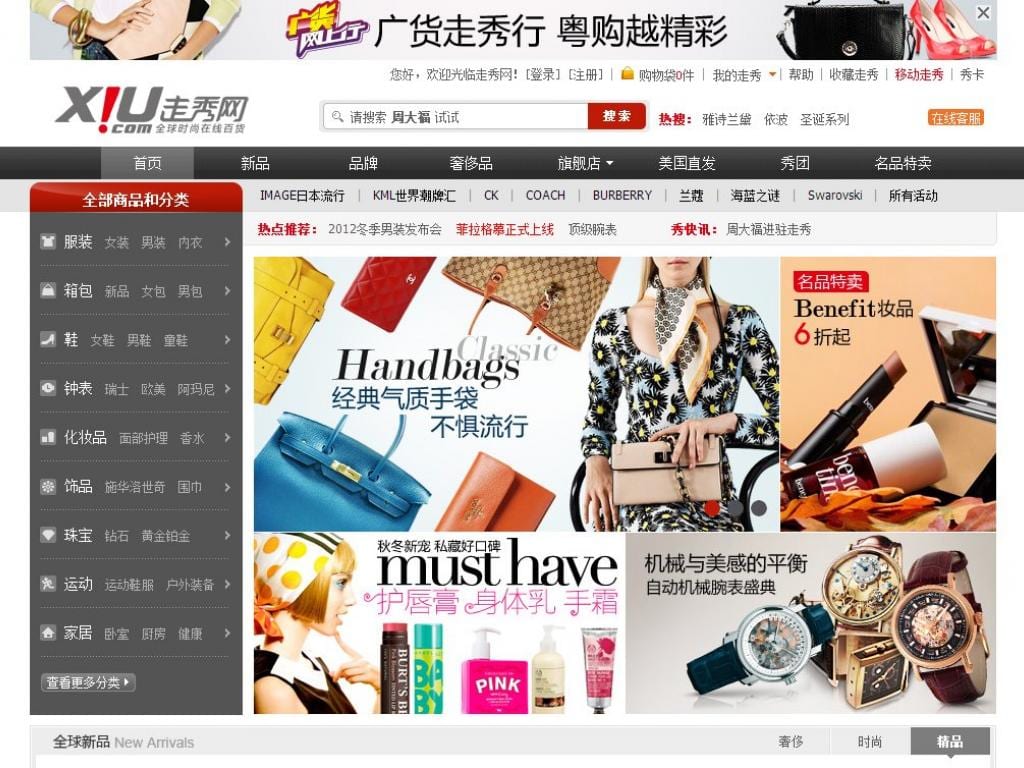
    On-line luxurious trend retailer Xiu.com says it’ll use its recent $30 million capital injection to attach extra western manufacturers with internet buyers in China.

    Xiu.com lately raised $30 million in collection C funding, led by personal fairness firm Pacific Enterprise Companions, a deal reported by Inside Retail Asia on Might 19, however solely formally introduced in the previous few days.

    Launched in 2008, Xiu.com sells worldwide branded trend merchandise, together with clothes, cosmetics, luggage, jewelry, footwear and homewares.

    “As an online-fashion main firm, Xiu.com operates superior logistic networks that cowl Europe and the US,” stated Ji Wenhong, founder and CEO.

    “Working instantly with established worldwide corporations, Xiu.com might supply quite a lot of Worldwide model merchandise and supply Chinese language shoppers in-season trend merchandise with lower cost than these in different markets.”

    “We’re very assured in Xiu.com after we studied the Chinese language eCommerce market for a very long time,” stated Tan Changwen, a associate in PVP.

    “We’ll help Xiu.com’s strategic improvement, particularly in growing its efforts of cellular e-commerce and expansions in Asia markets.”

    Regardless of Chinese language shoppers tending to buy luxurious items once they journey overseas, Xiu.com discovered that Chinese language at the moment are displaying extra willingness to buy luxurious items on-line.

    Greater than 600 abroad corporations, together with Salvatore Ferragamo, Blue Nile, and Hugo Boss, are partnering with Xiu.com, and almost 200 of them promote solely on Xiu.com to Chinese language internet buyers.

    Greater than 10 million shoppers have registered with Xiu.com and greater than 85 per cent of orders come from repeated consumers. The typical order worth is US$240.

    Xiu.com will use the funds to consolidate its worldwide provide chain community and to take a position into the venture of connecting offline shops in western nations with internet buyers.

    “We assist shops in western nations promote their inventories on Xiu.com,” Ji stated. “We might improve our product choices quickly, whereas shoppers may benefit from extra alternatives for new-arrival merchandise.”

    The Shenzhen based mostly firm additionally plans to make use of the funds to organize its forthcoming IPO.

  • 11Street Malaysia launched purchasing app

    11Street Malaysia launched purchasing app

    11street, Malaysia’s latest eCommerce participant, has launched an app to help on-line buying by way of iOS and Android smartphones.

    11street’s CEO, Hoseok Kim stated that the brand new cellular app is the corporate’s newest dedication to ship “a reliable and handy on-line purchasing expertise to Malaysian shoppers”.

    “11street is rising exponentially in Malaysia and quick turning into one of many prime three largest on-line marketplaces with greater than 350,000 product listings you could now view seamlessly utilizing Apple and Android units.

    “Malaysia leads the world in smartphone utilization and it is among the solely 5 nations worldwide to make use of their smartphones greater than computer systems as the first gadget for accessing the Web.”

    Kim stated to be ‘cellular first’ clearly an organization needed to have a user-friendly on-line buying app to raised accommodate the seemingly growing cellular consumers.

    He stated 11street’s cellular app is optimised to reinforce customers’ on-line purchasing expertise based mostly on the expertise the corporate had gained in offering eCommerce providers in Korea and different markets.

    “The important thing differentiator of 11street’s cellular app is its broadly collaborative-curated content material that permits shoppers to entry the recent promoting services a lot simpler, particularly on the ‘Surprising Offers’ part, which provides a Lowest Worth Assure.

    “General, with a nicely categorised and extra intuitive interface, shoppers can navigate and discover out what they love at 11road effortlessly at anytime, anyplace.”

    11street’s cellular app can also be constructed to simply accept bank cards and financial institution transfers upon purchases. Customers can view their membership advantages, examine their order standing, and make the most of their low cost coupons whereas buying on-the-go.

    “11street will constantly improve its cellular apps’ providers to supply higher consumer expertise as immediately greater than 50 per cent of visitors to 11road is from cellular units.”

    Kim concluded: “From the general e-commerce market perspective, it’s plain that mobile-commerce will flourish and we anticipate to see extra shoppers go browsing to 11street by way of cellular units to buy on-line.”

  • Alibaba companions with Korean authorities to launch Korea Pavilion on Tmall

    Alibaba companions with Korean authorities to launch Korea Pavilion on Tmall

    Chinese language e-commerce big Alibaba Group on Monday launched the Korea Pavilion on Tmall.com, China’s largest third-party B2C platform. The Korea Pavilion is the primary official on-line nation pavilion devoted to offering shoppers in China with one-stop store for real Korean merchandise and journey and cultural info.

    In partnership with Korea Argo-Fisheries & Meals Commerce Company and Korea Worldwide Commerce Affiliation (KITA), the Korea Pavilion provides Korean retailers a devoted on-line platform to faucet the Chinese language market. It is the results of fruitful discussions between Alibaba Group and the Korean authorities over the previous yr. These discussions have yielded different constructive initiatives akin to collaboration in logistics and the creation of internship packages aimed toward growing the cooperation between Chinese language and Korean enterprises.

    “The Korea Pavilion is Alibaba Group’s first official nation pavilion and we’ll proceed to work with governments of different nations to launch comparable pavilions sooner or later with a view to fulfill the wants of our Chinese language shoppers,” stated Jack Ma on the opening ceremony of the Korea Pavilion on Monday in Seoul. “Korean made merchandise have all the time been well-liked in China and we’re excited to convey these merchandise onto Tmall.com.”

    To additional strengthen the collaboration between Chinese language and Korean corporations, Alibaba Group is working with KITA to provoke a youth internship program that may let 100 Korean school graduates intern at Alibaba Group’s headquarters in Hangzhou. The primary session of the three-month lengthy internship program will begin in early July. The chosen interns will study concerning the Chinese language shopper market, its traits, and the operations and enterprise of Alibaba Group’s e-commerce platforms. Via this internship, Korean school graduates can study concerning the quickly rising Chinese language market and convey that have and information again to South Korea.

    With the rising demand of Korean merchandise amongst Chinese language shoppers, Cainiao, the logistics affiliate of Alibaba Group, is trying to broaden its partnerships with Korean corporations to deliver the perfect cross-border logistics options potential to the Chinese language shoppers.

  • Metro China upgrades e-commerce platform to offer seamless buyer expertise

    Metro China upgrades e-commerce platform to offer seamless buyer expertise

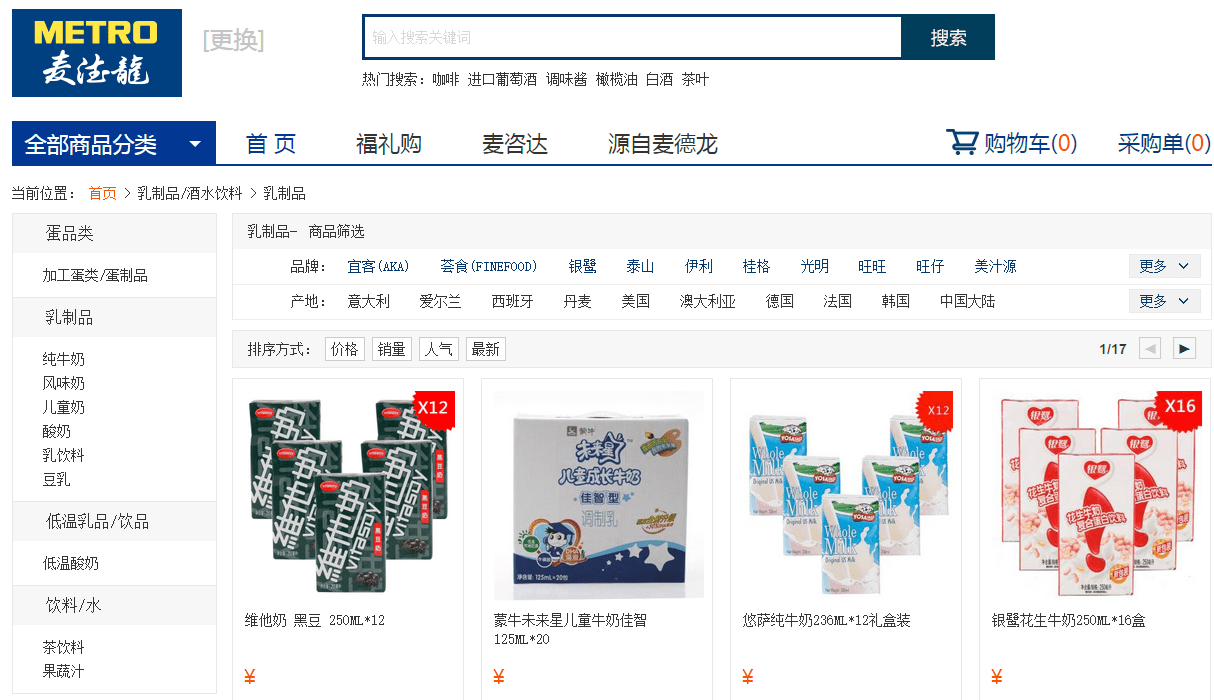
    Metro China has improve its e-commerce platform metromall.cn – which integrates on-line, offline and cellular channels for a seamless buyer expertise, the wholesaler stated on Tuesday.

    With an optimized consumer interface and location-based providers, Metromall synchronizes with the wholesaler’s offline shops, overlaying over 20,000 merchandise. Metro delivers all on-line orders instantly from native wholesale shops, not solely shortening supply time but in addition making certain product high quality. The platform gives clients handy and environment friendly decisions of products receiving, similar to residence supply or in-store pick-up.

    Ever since Metro entered China market in 1996, the wholesaler has adopted a membership system, and picked up knowledge from over four million shopping for clients with a purpose to present custom-made options and providers. By tapping into this wealthy database, the upgraded e-commerce platform will additional strengthen Metro’s buyer relationship administration.

    The Metro e-commerce platform at present covers 39 shops in 21 cities in China, and can unroll throughout all Metro shops in China by the top of 2015.

    “E-commerce is certainly one of our strategic channels to drive for progress in China market. We’re decided to reinforce buyer expertise and additional broaden enterprise by means of leveraging the facility of e-commerce,” stated Jeroen de Groot, President of METRO China.

    “Our Metromall not solely integrates online-to-offline, but in addition incorporates an revolutionary cellular perform. We’re assured this platform will allow us to offer extra thrilling options and seamless buying expertise to our core goal skilled clients, serving to them to be extra profitable out there.”

    The cellular app for Metromall permits clients to scan barcodes and determine product options, construct purchasing carts, place orders, and check-out. The app’s highly effective database consists of product barcodes of all articles in offline shops apart from recent and ultra-fresh merchandise. Clients also can comply with Metro’s WeChat to acquire promotional info of Metromall and place orders on their cell telephones.

    Leveraging its international procurement community, Metro Group is about to enter the free-trade zone this yr, partnering with China’s famend cross-border e-commerce platforms, to offer shoppers with a broader vary of high-quality imported items.

    Metro China is dedicated to offering protected and high-quality merchandise, and is the one wholesaler in China with all shops to function in accordance with Hazard Evaluation and Essential Management Factors requirements to make sure that the processes of receiving, processing, storing and promoting items are hazard-free.

    Additional illustrating the wholesaler’s dedication to meals security, Metro has developed an business main traceability system, which data all course of particulars from farm to market. Just by scanning product barcodes, clients can view the whole product lifecycle, together with the place it was grown, the way it was licensed, and the logistics concerned.

    The newly-upgraded e-commerce platform has enabled Metro to create a closed, online-to-offline loop for protected and traceable meals.

    Metro opened its first wholesale retailer in Shanghai in 1996. It was among the many first to realize permission from the China to arrange chain operations in all main cities within the nation. During the last decade, the corporate has set its foot in 56 cities with 80 retailers in operation in China. With a headcount of over 12,000 staff, the wholesaler is serving greater than three.eight million shopping for clients throughout the nation.

  • Lazada sees healthy online retail growth

    Lazada sees healthy online retail growth

    Thailand’s online retail market is expected to grow by up to eight times in the coming years, the same pace as China’s.

    The proliferation of inexpensive mobile devices and the growing number of internet users will be the main contributors.

    Riccardo Basile, chief executive of online shopping mall Lazada Thailand, said the local online retail market excluding food and travel would account for 1 percent to 1.5 percent of the country’s retail market this year.

  • Flipkart to create 2 million jobs in 2015

    Flipkart to create 2 million jobs in 2015

    Indian leading e-commerce company Flipkart on Wednesday said it would directly and indirectly create about two million jobs in 2015 through its marketplace and ancillary services.

    Among other segments, logistics and warehousing would be key employment generators, the company said. In 2014, the e-commerce industry created about half a million jobs, according to Flipkart.

    The Bengaluru-based company employs about 33,000 people. Earlier this week, Flipkart said it planned to double the size of its technology team in 2015 to 2,000.

  • New stores, eCommerce drive Gome growth

    New stores, eCommerce drive Gome growth

    China’s Gome Electrical Appliances boosted online sales by 84 per cent last year helping fuel a 43.5 per cent boost in annual profit.

    The full year surplus was 1.28 billion yuan, (US$206.2 million).

    The booming online operation is clearly still growing with a quarter on quarter sales boost of 117 per cent in the three months to December 31.

    At the same time, Gome says it continued to refurbish its bricks and mortar store network and revamp its supply chain, procurement and distribution operations.

    In annual figures released Monday, Gome said it continues to pursue its goal of becoming an ‘Open Omni-channel Retailer’ by optimising its open supply chain platform, driving further improvements in the areas of procurement, logistics, information system and financial services, and building an open omni-channel platform encompassing ‘online + offline + mobile terminal + other socialised channels’.

    “The group has managed to provide cross-regional and cross-channel full services to consumers as a whole. The launch of this strategic transformation, supported by the low-cost highly-efficient open supply chain, has enabled the group to achieve year-on-year growth in key financial indicators for eight consecutive quarters and increase its operating efficiency,” the company said in a statement.

    As well as renovating 100 existing stores, Gome continued its push into tier 2 markets, strengthened partnerships with supermarkets and department stores and promoted its eCommerce development. Last year it opened 145 new stores, 78 of them in tier 2 cities. A further 154 concessions were opened.

  • Vipshop takes stake in Ensogo

    Vipshop takes stake in Ensogo

    Chinese eCommerce company Vipshop has taken a cornerstone stake in southeast Asian online retailer Ensogo.

    The deal will open the way for Vipshop’s inventory to be offered on Ensogo and for the two parties to share commercial and business expertise to drive Ensogo’s growth.

    Australian Stock Exchange listed Ensogo has also raised US$7.5 million from the issue of nearly 60 million shares to equity fund investor Ward Ferry, through a subsidiary WF Asian Reconnaissance Fund.

    Ward Ferry will now hold a 10.6 per cent stake and Vipshop 12.2 per cent. The total capital raised in the two transactions is approximately $12 million.

    Ensogo CEO Kris Marszalek said to have an investor of the caliber of Ward Ferry was exciting.

    “The additional AU$10m of funding means we are perfectly positioned to execute on the tremendous opportunity our strategic relationship with Vipshop brings, as well as on the enormous opportunity for eCommerce in Southeast Asia.

    “As a part of the (Vipshop) strategic investment, the companies will also enter a strategic operating partnership, whereby Ensogo will have access to Vipshop’s vast volume and selection of existing inventory, all to be made available for immediate shipping. The companies also intend to cooperate in the areas of logistics, merchandising, technology, marketing and user acquisition; the very expertise, which enabled Vipshop to scale its revenues from US$32 million in 2010 to US$3.77 billion in 2014,” said Marszalek.

    “We’re excited to be in the perfect position to build the Vipshop of Southeast Asia.”

  • Bitcoin breakthrough

    Bitcoin breakthrough

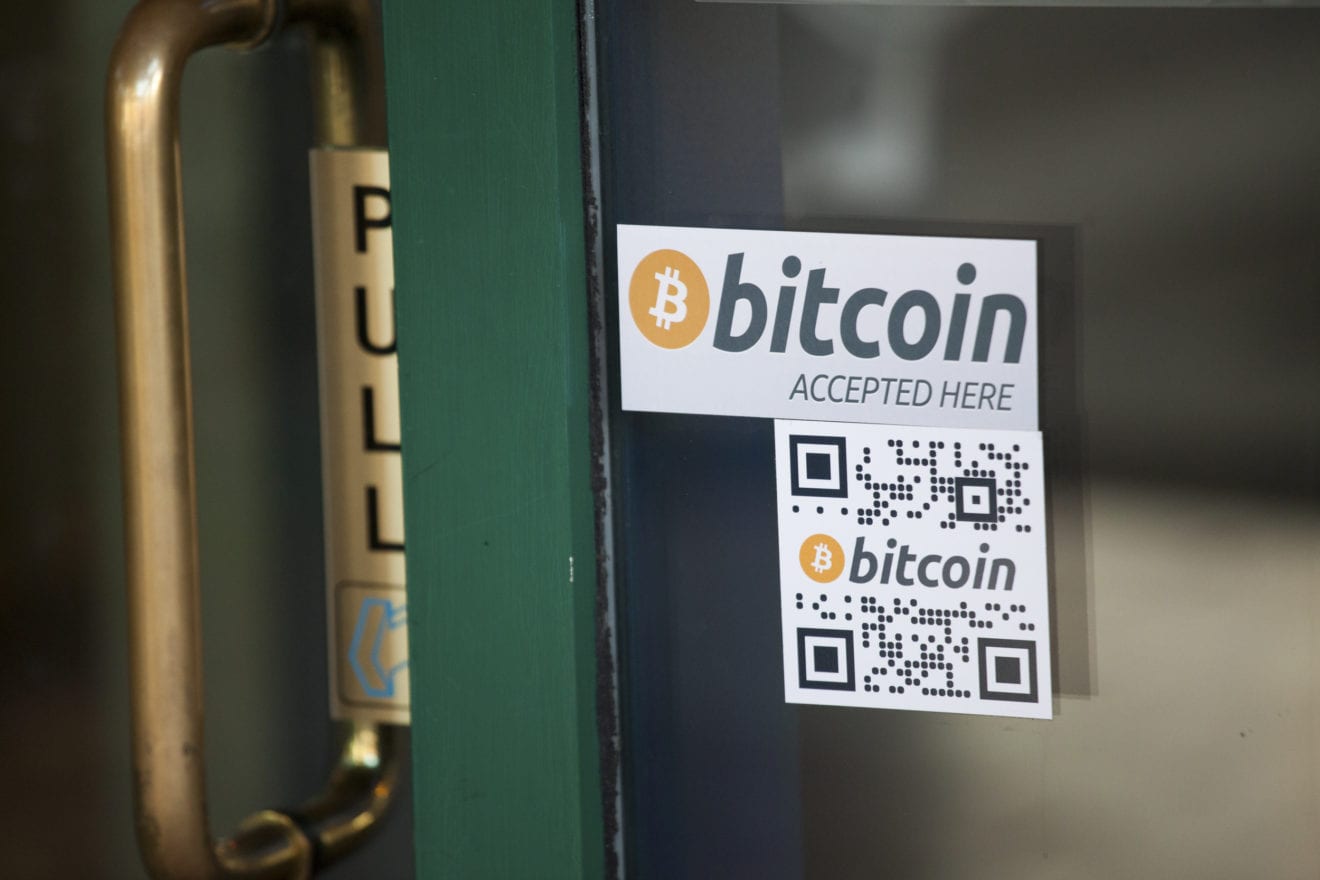
    Japanese eCommerce giant Rakuten will start to accept bitcoin, the ‘cryptocurrency’ on its global marketplaces.

    TechinAsia.com reports the payment format will begin its roll out in America and then spread to Rakuten Germany and Rakuten Austria.

    Bitnet, an enterprise-focused developer that creates bitcoin platforms, is Rakuten’s partner in the rollout. Bitnet is a young company, founded in January 2014, but it is not your average startup. The team behind the firm also created CyberSource, a payment gateway sold to Visa for US$2 billion.

    “Rakuten’s mission is to empower the world through the Internet,” commented Yaz Iida, president of Rakuten US in a statement. “Not only can Bitcoin support this vision by helping our merchants better compete globally, but it also has the potential to benefit society by enhancing the security, privacy, and convenience of financial transactions. This is one of the reasons why we invested in Bitnet last year and we look forward to working with them on our US marketplace.”

    Rakuten’s move indicates that it is moving closer and closer to accepting Bitcoin. Already, its American logistics subsidiary accepts the currency. With its core ecommerce operations now getting integrated, it could just be a matter of time before the Japan office follows suit, writes David Corbin of TechinAsia.com

    It would not be the first Japanese tech titan to accept Bitcoin. GMO Internet set that precedent last September. However, Rakuten’s integration of bitcoin domestically could be the sort of move that pushes the currency into the mainstream. Rakuten is used by almost every adult in Japan. It has over 97 million registered users while Japan itself has a population of 127 million. Those users drove US$16.5 billion worth of sales last year.

    For Japanese bitcoin enthusiasts, the march towards widespread acceptance in their country is a long slog. With Rakuten’s latest signal of support, the goal becomes less of a mirage and more of an steadily approaching reality.

  • Lazada Group aims to double freight hubs in Indonesia

    Lazada Group aims to double freight hubs in Indonesia

    E-commerce giant Lazada Group is set to spend more to develop its logistical system, planning to double its supply hubs in the country by year-end, the firm’s country representative has said.

    Lazada Indonesia CEO Magnus Ekbom said on Thursday, while marking the firm’s third anniversary, that the Lazada Group had secured a total of ¤700 million euros (US$749.4 million) since its establishment in 2012.

    Most of the investment was allocated to develop the group’s logistical system and human resources, he said.

    “In logistics, we’re expanding our capacity and we’re going to be better […]. We want to shorten our delivery period,” he told reporters.

    With more than 17,000 islands that have poor infrastructure facilities, Indonesia poses a challenge for any e-commerce players in expanding their outreach.

    “However, we see it as a massive opportunity […]. In January, we opened a 12,000-meter-square warehouse in Cakung, East Jakarta,” Lazada Indonesia chief commercial officer Rene Janssen said, claiming that it was the biggest that any e-commerce player in the country ever had.

    Ekbom said that his company currently had two warehouses in Jakarta and aimed to open new ones in the coming 12 months.

    “In addition to that, we will also double our Lazada fleet base stations or supply hubs,” he said, adding that his firm currently had around 20 hubs nationwide.

    Ryn Hermawan, Lazada Indonesia senior vice president for operations, was quoted by kontan.co.id as saying that Padang in West Sumatra, Lampung in Bengkulu, Mataram in West Nusa Tenggara and Kupang in East Nusa Tenggara would be among the intended locations for the new hubs.

    Other than adding to its warehouses and logistical hubs, Lazada Indonesia would also give a big push to bring in more international products that were not available yet, Ekbom said.

    He went on to say that his firm aimed to have millions of products this year, emphasizing that it added hundreds of thousands of products every month.

    While declining to share data on the number of merchants his firm currently had, Ekbom said that the marketplace accounted for 85 percent of Lazada Indonesia’s total transactions, a surge from only 10 percent at its commencement.

    Lazada runs its business by both becoming both an online retailer and marketplace for other online merchants.

    Ekbom said that he was optimistic that his firm would continue to grow in the country as Indonesia had one of the fastest growing e-commerce markets.

    He hinted that Indonesia contributed significantly to Lazada Group’s total gross merchandise value of more than $70 million last year. Besides being in Indonesia, the group currently operates in the Philippines, Malaysia, Singapore, Thailand and Vietnam.

    Indonesia’s e-commerce market itself is forecast to grow to $25 billion next year from only $8 billion in 2013, according to e-commerce provider Vela Asia.

    A number of e-commerce players, both online retailers and marketplaces, have planned to develop their businesses. Lippo Group has recently launched shopping website mataharimall.com and planned to invest $500 million. Existing marketplaces such as Bukalapak and Tokopedia have also secured some new funding. – See more at: https://www.thejakartapost.com/news/2015/03/20/lazada-group-aims-double-freight-hubs-indonesia.html#sthash.sXZvznBO.dpuf

  • Rakuten buys eBook business

    Rakuten buys eBook business

    Japanese eCommerce giant Rakuten is to pay US$410 million in cash to buy OverDrive, a leading eBook and audiobook content marketplace and sharing economy pioneer.

    Cleveland, US-based OverDrive was founded in 1986 and supplies the world’s largest catalog of eBooks, audiobooks, music and streaming video to 30,000 libraries, schools and retailers around the globe.

    “OverDrive’s deep content library and relationships with publishers, libraries, schools, and retailers will allow Rakuten to extend our mission of empowerment to new market segments and accelerate the growth of our digital contents businesses,” said Takahito Aiki, head of Rakuten’s global eBook business.

    “OverDrive is a widely-respected pioneer in digital content and the sharing economy. Long before even Kobo emerged onto the global stage, OverDrive had already seen the future and was working with publishers to digitise their content to share with the world, building one of the most comprehensive online digital marketplaces in the process,” he said.

    “OverDrive’s deep content library and relationships with publishers, libraries, schools, and retailers will allow Rakuten to extend our mission of empowerment to new market segments and accelerate the growth of our digital contents businesses.”

    With the top rated eBook & audiobook app for libraries and schools and OverDrive Read, the ePub and HTML5 browser-based reading experience, OverDrive supports all major computers and devices, including iOS, Android and Kindle (in the US only). OverDrive delivers all digital media on a single platform, and offers APIs to streamline a seamless user experience. Recent innovations include in-library touchscreen stations for browsing and instant sampling, multi-lingual user interface, and eReading Rooms for kids and teens..

    OverDrive Founder and CEO, Steve Potash, said Rakuten’s vision of empowerment is perfectly aligned with OverDrive.

    “Since 1986, our vision has been to advance digital publishing and content to connect readers with books and information. We’re passionate about working with publishers, libraries, schools and retailers… and we are very excited to join an innovative company that shares and supports our vision.”

    As Rakuten expands its global Internet services ecosystem, digital content represents one of Rakuten’s three key strategic pillars, alongside eCommerce and finance. Since first acquiring eReading company Kobo in 2012, Rakuten has continued to grow its digital contents businesses, adding video streaming service Wuaki.tv in 2012 and global TV and video site Viki in 2013. The acquisition of OverDrive adds a digital distribution platform, more than 2.5 million titles, and relationships with 5000 publishers and 30,000 libraries that will strengthen Rakuten’s eBook and digital contents businesses globally.

    OverDrive returned a pre-tax profit of US$25 million in 2014. With the addition of OverDrive, Rakuten expects its global eBook business will come close to breaking even in 2015.

    The deal will close in April.

  • Online shopping on the rise in Vietnam

    Online shopping on the rise in Vietnam

    Online shopping in Vietnam was continuing to increase and was well-positioned to hold the key to success for e-commerce in Vietnam, according to the MasterCard Survey on Online Shopping 2014.

    The MasterCard Survey is commissioned annually and was conducted online from October to December last year in 14 Asia-Pacific countries and 11 Middle Eastern and African countries with a minimum of 500 respondents per country.

    The number of Vietnamese people who shopped online in the last three months increased from 68.4 to 80.2 percent, recording the second highest growth rate (11.8 percent) in the Asia-Pacific region, the survey revealed.


  • Indonesia to regulate e-commerce

    Indonesia to regulate e-commerce

    The Indonesian government has begun laying the groundwork to regulate e-commerce activities in the country amid breakneck growth in online transactions, particularly among the country’s young and affluent middle class.

    Chief economics minister Sofyan Djalil called for a series of discussions between officials from the trade, finance and communications ministries, among others, to discuss a new government regulation on electronic-based commerce a week ago, according to Rudiantara, the communications minister.

    He said the various ministries had their own issues to address in terms of regulating e-commerce.

  • Line adopts secure payment service

    Line adopts secure payment service

    Social media app Line has teamed up with CyberSource to enhance the security and convenience of it mobile payment service Line Pay.

    CyberSource, a subsidiary of Visa, is one of the world’s largest providers of eCommerce payment management services. The strategic partnership with Line Corporation will add payment and fraud management services for Line Pay.

    “Via CyberSource’s global payment gateway, Line will be able to process online payments from multiple card brands and issuers, as well as certain alternative payment methods,” the company said in a statement.

    “These solutions enable Line to advance their business globally in a scalable and secure manner.”

    Since Japanese company Line’s launch in 2011, the service has grown globally across 230 countries and regions. As Line Corporation’s core business platform, the app helped the company obtain an international presence by consistently rolling out and expanding services, integrating various social elements in its app features – including Line stickers, Line family apps, Line Game and Line camera. The mobile messaging service app had 181 million monthly active users as at January 2015.

    “With global smartphone penetration per capita expected to increase more than three times by 2017 from that in 2011, we recognise that there is great opportunity for growth in the mobile industry,” said Takeshi Idezawa, Line Corporation’s COO.

    “We are constantly looking to work with partners with an established worldwide presence and vast experience so we can provide quality service to today’s digitally-savvy consumers. With our entry into the mobile payments market, we are now able to empower our customers with more choices and flexibility in online payments. On top of that, we are also able to protect their interests with CyberSource’s payment security expertise. We strongly believe this will be pivotal in helping us accelerate our global growth.”

    In addition to global payment services, Line will also have access to secure payment acceptance and fraud management services via the CyberSource payment management platform. This means Line will be able to provide payment security, with users’ sensitive payment data residing in CyberSource’s secure data centers, as well as process a wider spectrum of payment methods.