Retail News CRM

Tag: E-mart

  • Shinsegae Chairman Elevates to CEO Role, Spearheading Growth for E-Mart & Property Division

    Shinsegae Chairman Elevates to CEO Role, Spearheading Growth for E-Mart & Property Division

    Shinsegae Group’s chairman, Chung Yong-jin, is set to expand his role within the organization, assuming CEO positions at both E-mart and Shinsegae Property. This move by the South Korean retail heavyweight signals an aggressive push for growth in its primary sectors.

    Shifting Responsibility and Strategy

    Chung’s dual appointment marks a significant shift within the group, with the chairman now directly overseeing the operations of the nation’s largest retailer and its property development subsidiary. This decision comes at a crucial time when the company, faced with a challenging retail environment, is actively seeking new avenues for expansion. The decision underscores Chung’s resolve to shoulder a larger part of the company’s overall direction and performance.

    Chung appreciates the market’s expectations for clear accountability in the company’s management. As the newly appointed CEO, he is prepared to submit to the evaluation of the board of directors and shareholders.

    In his capacity at E-Mart, Chung will directly oversee the retailer’s operations and future growth strategies. The company believes this change mirrors his dedication to tackling current business hurdles and boosting shareholder value.

    Leadership Changes and Future Plans

    In his role at Shinsegae Property, Chung will supervise the group’s major development projects and support plans to secure locations for a proposed AI data centre that was announced earlier this year.

    This management shakeup follows a recent controversy at Starbucks Korea, where E-Mart is the majority shareholder. Since this incident, the retailer has committed to organizational reforms to bolster governance and operational supervision.

    Shinsegae Property executive Lee Hyung-cheon has been named as co-CEO and will continue to oversee the company’s regular operations and development activities. Shin Dong-woo has been nominated as the new CEO for Starbucks Korea. Shinsegae has stated that he will focus on reinforcing internal controls, enhancing operational systems, and restoring trust among clients and partners.

    Questions & Answers

    What new roles is Chung Yong-jin assuming at Shinsegae Group?
    Chung Yong-jin is taking on the dual roles of CEO at both E-mart and Shinsegae Property.

    What implications does this dual appointment have for the company?
    This move signals a significant shift in Shinsegae Group’s strategy, with Chung Yong-jin assuming more responsibility for the company’s overall performance and direction. It also demonstrates a commitment to tackling current business challenges and enhancing shareholder value.

    How will the roles be distributed among the leadership after these changes?
    Chung Yong-jin will oversee operations and future growth strategies at E-Mart and major development projects at Shinsegae Property. Lee Hyung-cheon will continue to oversee day-to-day operations and development activities at Shinsegae Property as co-CEO. Shin Dong-woo will focus on internal controls, operational systems and regaining trust as the CEO of Starbucks Korea.
  • E-mart set to quit Vietnam

    E-mart set to quit Vietnam

    South Korean supermarket chain E-mart is to exit its Vietnam business, with reports suggesting it will be sold to local car manufacturer Truong Hai Auto Corporation (Thaco Group).

    According to The Korea Times, E-mart announced earlier this week that it will sell E-mart Vietnam to Thaco Group. However, a spokesperson of Thaco said the group has not signed any agreements with the South Korean firm.

    E-mart has spent five years trying to establish a footprint in Southeast Asia, but in Vietnam had managed to open only one store, a second suspended due to local licensing setbacks.

    A South Korean media report said E-mart would take royalty fees from Thaco Group and its supermarket will be run as a franchise.

    “Our strategic alliance with Thaco will not only pay us royalties for using the E-mart brand in Vietnam, but also give us the opportunity to export our private-brand products,” an E-mart employee told The Korea Times.

    Predictions that the South Korean supermarket chain would exit Vietnam arose last year. However, its representative then denied the news and said it was looking into other options such as a strategic alliance or business partnership.

    Thaco Group’s commercial-services arm includes managing and operating mix-used business models including shopping malls, hotels and developing business lines such as supermarkets, food courts and cinemas.

    The group is currently operating businesses at Yangon Myanmar Center Complex in Myanmar and building its Socar Sala mixed-used complex in Ho Chi Minh City’s District 2.

  • E-Mart plans to sell several stores

    E-Mart plans to sell several stores

    South Korean big-box retailer E-mart will sell 13 store buildings and land to improve its financial situation.

    The firm will sell the properties to Mastern Investment Management for KRW952.48 billion (US$802.65 million) in the face of plummeting sales and intensifying competition from e-commerce. It will continue to operate its businesses on the properties under a lease arrangement.

    The properties constitute 5.7 percent of the Shinsegae-owned firm’s total assets.

    E-mart will use the funding to pay debt and diversify its operations into e-commerce.

    “As the current retail market is dominated by e-commerce platforms, retailers have no choice but to continue to reduce their offline business,” said Hyundai Motor Securities analyst Park Jong-ryul. “With the fresh funds, they focus on venturing into the online market.”

  • E-Mart posts first-ever loss ; restructuring lures

    E-Mart posts first-ever loss ; restructuring lures

    Korean discount chain operator E-Mart has posted its first-ever net loss, amid growing competition from online shopping rivals and e-commerce giants.

    The company’s quarterly results showed a net loss of KRW26.6 billion (US$24.7 million) between April and June, its first negative result since it was spun off from Shinsegae Group in 2011. The loss stands in comparison to a net profit of KRW94.8 billion ($77.7 million) during the same period last year.

    The company says it plans to raise 1 trillion won (US$820 million) by selling assets and will buy back stocks worth some 100 billion won to boost shareholder value.

    E-Mart says it expects its losses will to continue into the next financial period.

    “Online archrivals, such as Coupang Inc and other major e-commerce operators are forecast to expand their food category later in the year,” said Hana Financial Investment expert Park Jong-dae, “which could further weigh down E-Mart.”

  • Air purifier sales up 414 % after dust attack in Korea

    Air purifier sales up 414 % after dust attack in Korea

    As fine dust blows into Korea, demand for products that defend against pollution spike. According to an Emart study released Friday, mask sales between Jan. 10 and Jan. 16 surged 458 percent from the same period a year earlier while the sales of air purifiers are up 414 percent. Usually, the products are in high demand around late February and in March, when the yellow dust from the northern deserts descend on the Korean Peninsula. But sales this year are already 95 percent of the total usually reported in March.

    Sales of consumer appliances that clean clothing, such as LG’s Styler clothes closest, are up 186 percent compared to the same period a year ago, according to the retailer. Sales of dryers have increased 67 percent as the worsening pollution has made it difficult to dry laundry outdoors.

    Emart said it will be holding a special sale on fine-dust countering goods through Jan. 30.

    It plans to offer discounts on the bulk purchase of masks: 10 percent when buying two and 30 percent when buying three at a time.

    The Samsung Electronics air purifier with model number AX6ON5081 WDD will be sold at 379,000 won ($338), a 90,000 won discount, while Coway’s AP-1818C model will be sold at 439,000 won, a 60,000 won discount. The purchase of Coway’s air purifier also comes with 85,000 won worth of additional filters and 50,000 won in gift certificates.

    The retailer is also providing discounts on vacuum cleaners, including Dyson’s V10 Fluffy, the LG Electronics A9, which also has a mopping feature, Samsung’s VS8ON8062KKS and Tepal’s Air Force 360.

    Online shopping malls are ramping up their marketing of fine dust-related products. Coupang has been promoting 650,000 fine-dust products since Jan. 10.

    An exclusive study by the JoongAng Ilbo found that much of the recent air pollution is coming from China.

    The Korean Meteorological Administration is forecasting a return of high fine-dust readings. It said the level of concentration of pollutants started rising on Friday and will continue to increase today.

    When the concentration is at 15 micrograms per square meter or lower, the government rates the air quality as “good.” When it is between 16 and 35, it is deemed “normal.” When the figure is between 36 and 75, the government rates the air quality as “bad.”

    On Jan. 14, the fine-dust concentrations in the greater Seoul area peaked at 122 micrograms per square meter, the highest level since related data was first collected in 2015.

    That was two days after air pollution in major areas in China, including Beijing, Tianjin, Tangshan and Hubei Province, peaked.

    The Korean Meteorological Administration forecasts air pollution levels dropping from Sunday afternoon.

    Kweather, a private weather company, has advised people to stay indoors over the weekend and wear a protective mask when having to go outside.

  • Party supplies sales surge in South Korea

    Party supplies sales surge in South Korea

    Demand for party supplies from South Korean retailers is soaring as a growing number of people prefer to host end-of-year celebrations at home instead of going out. According to E-Mart, wine and cake sales at six stores in Daegu last month soared 18.9 per cent and 16.1 per cent, respectively, year on year.

    Frozen foods sales jumped 16.3 per cent compared to last year.

    More South Koreans are choosing to cook at home using a variety of home meal products, as so-called ‘meokbang’ (eating shows) and ‘cookbang’ (cooking shows) are sweeping the country.

    Lotte Department Store’s Sangin Branch in Daegu also saw its kitchenware sales increase by more than 70 per cent compared to last year.

    Suppliers are coming up with various promotions to capture the attention of end-of-year party throwers.

    Lotte Department Store’s Daegu Branch is offering discounts of up to 60 per cent on dinnerware and is showcasing a variety of props to help decorate the perfect party.

    Lotte Department Store’s Sangin Branch is also holding a promotion event for Christmas-themed tableware.

  • E-mart US buys supermarket operator

    E-mart US buys supermarket operator

    South Korean discount retail chain E-mart is acquiring US food retailer Good Food Holdings for US$270 million. A subsidiary of retail conglomerate Shinsegae, the E-mart US acquisition intends to stabilise and expand its operations in North America. It is the company’s first acquisition of an overseas firm.

    Good Food operates 24 stores across the American West under three brands: Bristol Farms, Lazy Acres and Metropolitan Market. Its original executive board will be retained by E-mart.

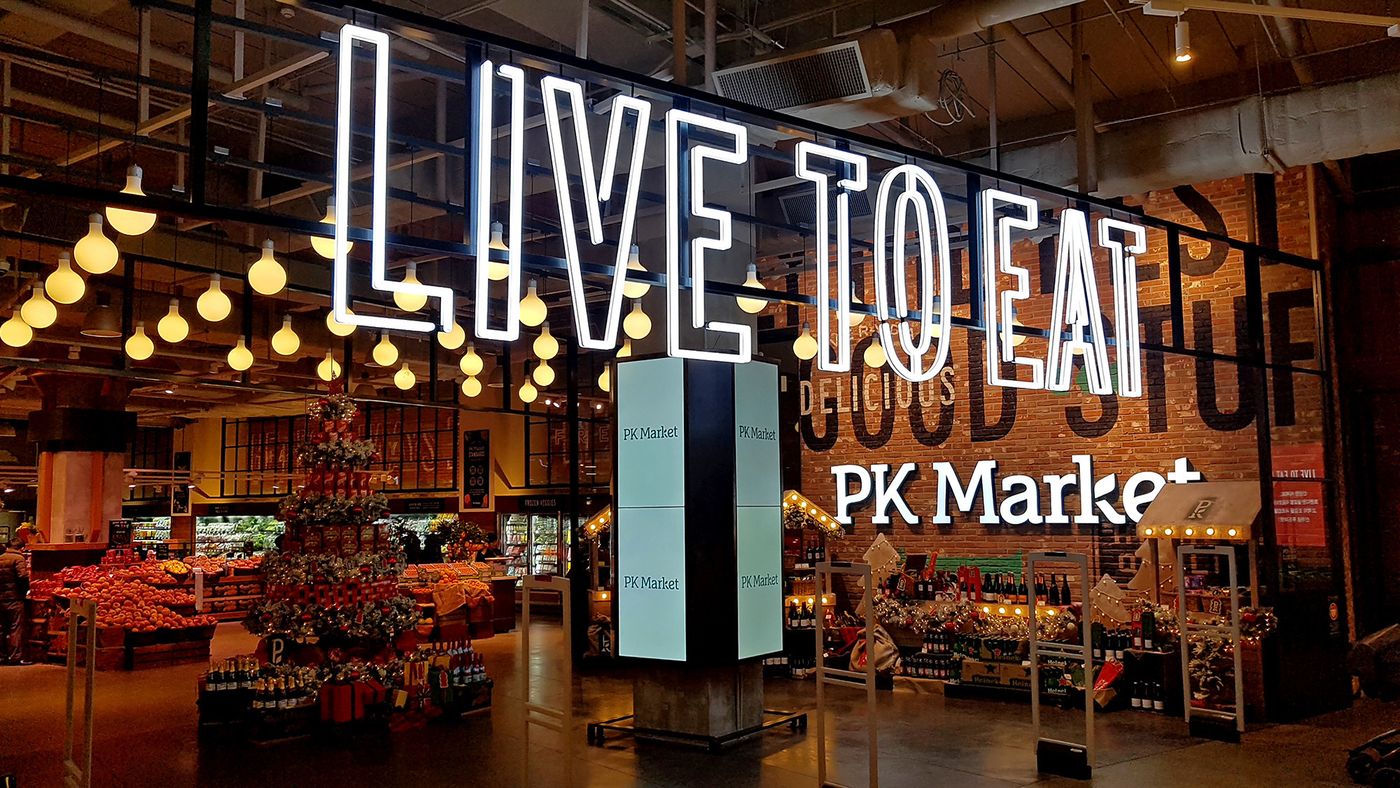
    Good Food Holdings employs 3100 people and brings in average sales of KRW 670 billion ($596.75 million) per annum. E-mart plans to open a premium store-restaurant in Los Angeles next year called PK Market.

  • Big success for Korean retailers during shopping festivals

    Big success for Korean retailers during shopping festivals

    South Korean retailers enjoyed a big sales boost from annual shopping extravaganza they launched in November to join the world’s major shopping events like Black Friday in the U.S. or Single’s Day in China. According to industry sources on December 2, Lotte Department Store, one of the country’s retail majors saw its sales from Nov. 1 to 29 grow 1.1 percent against the same period last year. Sales of its hypermarket affiliate Lotte Mart also gained 1.7 percent over the same period.

    Home appliance sold especially well during the big sales period, recording a 12.5 percent jump in revenue compared to the same period last year. High-end products were also showed sharp growth – sales of expensive hanwoo or Korean beef soared 25.8 percent on year and luxury fashion items up 9 percent.

    E-Mart., another leading big-box store chain also held a mega sales event in November, slashing prices of nearly 2,000 items worth 300 billion won (US$267.4 million). It sold 180 tons of hanwoo in just four days, doubling sales against the same period last year.

    Online retailers enjoyed even bigger growth in sales through major discount events. G Market and Auction hosted Big Smile Day sales event from Nov. 1 to 11 and their sales transaction amount more than doubled compared to the same period a month earlier.

    11st.com that runs its biggest sales event on Nov. 11 every year said its daily transaction amount on this year’s big sales day reached a record high of 102 billion won. Last year, it recorded 64 billion won through the same event.

    WeMakePrice Inc. also held bargain sales from Nov 1 to 11 this year. It said the transaction amount over the period jumped 77 percent to 230 billion won compared to the same period last year. By volume, it was up 15 percent on year. The company estimated transaction amount to hit a record high of 600 billion won in November.

  • Emart’s No Brand to open first overseas store

    Emart’s No Brand to open first overseas store

    Emart is taking its No Brand line to the Philippines, the first overseas expansion for the label. The chain announced Monday that it signed a franchise agreement with Robinsons Retail, the No. 2 retail company in the Philippines, to roll out No Brand and Scentence in the country. Both are Emart in-house lines.

    “Under the deal, 50 No Brand and 50 Scentence stores will be established in main shopping malls and department stores at the Philippines by 2020,” Emart said in a statement.

    Robinsons will be in charge of store operations, while Emart will be paid a licensing fee and profit from the export of products to the stores.

    No Brand is an Emart label that sells daily necessities and some food items. Around 70 percent of No Brand goods are manufactured by local small enterprises. Although it was started as an in-house line, No Brand has been so successful that stand-alone stores have been opened.

    Emart has established stores overseas, but this is the first time No Brand has been taken abroad. With partner Robinsons, the local retailer plans to co-develop No Brand products for the Philippine market and possibly export them for sale at Emart stores in Vietnam and Mongolia.

    For Scentence, Emart’s in-house beauty brand, the Philippine project is the brand’s second overseas move. It opened in Saudi Arabia in July. Emart says it plans to develop Scentence beauty products that fit well with the climate of the Philippines.

    No Brand and Scentence are both part of Shinsegae Vice President Chung Yong-jin’s strategy to develop “specialized stores” that focus on a particular product category instead of selling a little of everything as is done in discount chains.

    The discount chain market is saturated in Korea and is facing mounting regulations.

    “The deal to launch No Brand and Scentence in the Philippines is meaningful to us in that it diversifies our global portfolio for specialized stores,” said Lee Joo-ho, who heads Emart’s global business.

  • LG, E-mart develops smart-cart robot

    LG, E-mart develops smart-cart robot

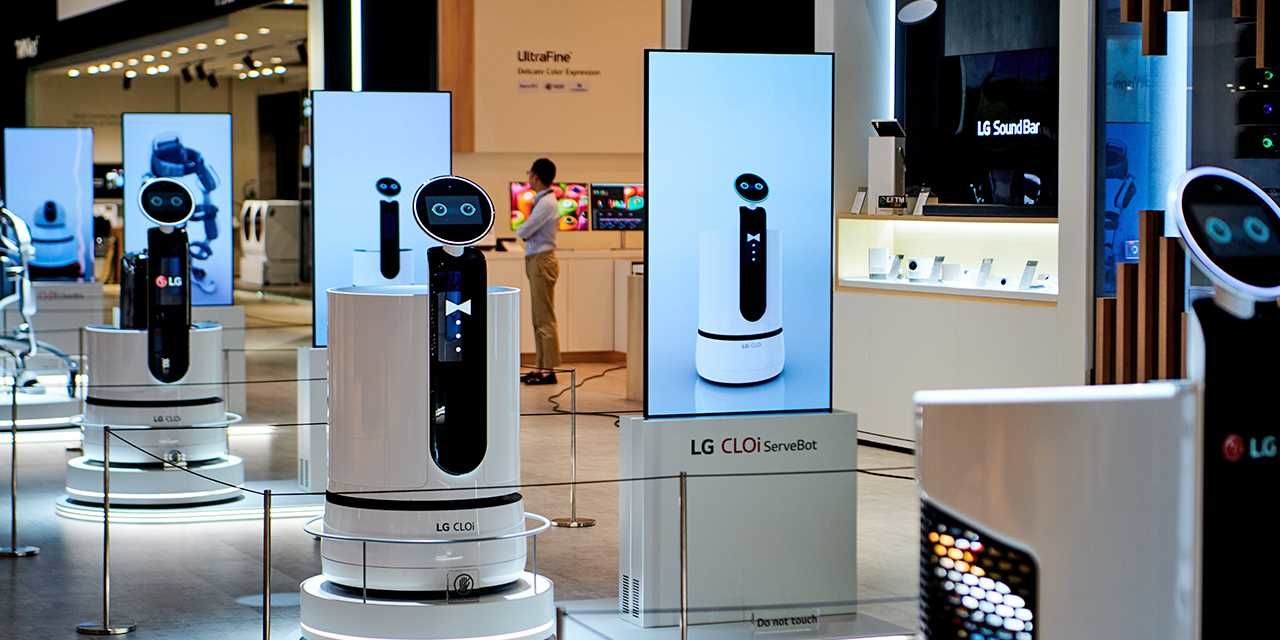
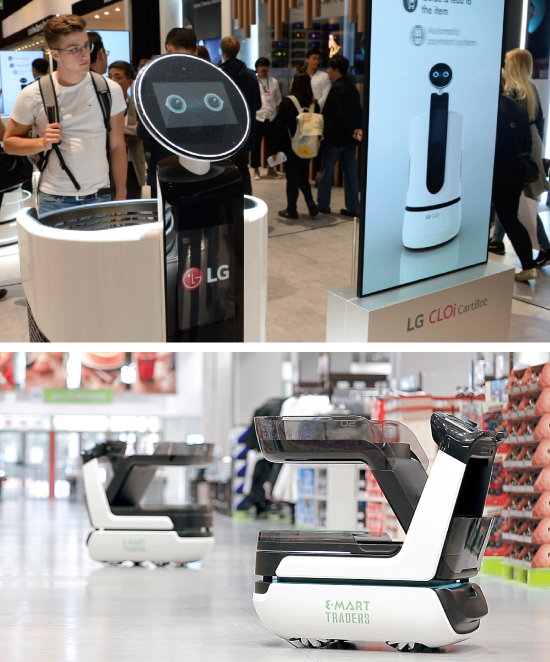
    LG Electronics has signed an agreement with E-mart to develop a new type of service robot that can assist shoppers at its South Korean supermarkets. Under the agreement, the two companies will develop what they call a smart-cart robot that can automatically identify obstacles and follow shoppers as they walk through aisles. LG said the new robot will free visitors from the hassle of pushing heavy carts by themselves.

    The South Korean tech giant said the robot will be developed by its research lab, which has been releasing various robots under the CLOi brand.

    So far, LG has released eight different products under the brand, which are suited for different tasks, including guiding, cleaning and even mowing lawns. The company unveiled the CLOi SuitBot, which can help workers lift and move heavy objects easier as well.

    LG said it has been making efforts to bolster its robot business by joining forces with different clients, including airports, bakeries and retail shops.

    CLOi stands for clever, clear, close operating intelligence, LG said.

    The company has been making investments in robotic firms, including Robotis, AI startup Acryl and US-based robot maker Bossa Nova Robotics.

  • E-Mart to open first outlet in Hanoi

    E-Mart to open first outlet in Hanoi

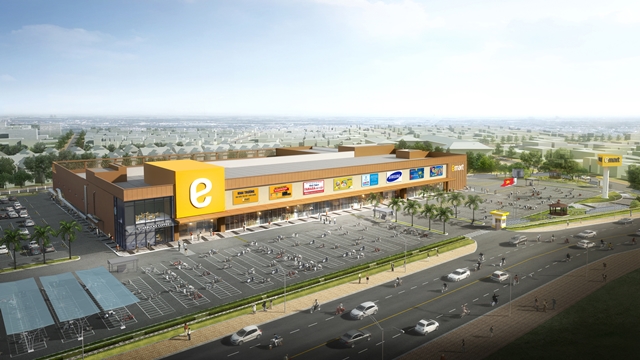
    South Korean retail group E-Mart is to build its first hypermarket in Hanoi’s StarLake urban area.

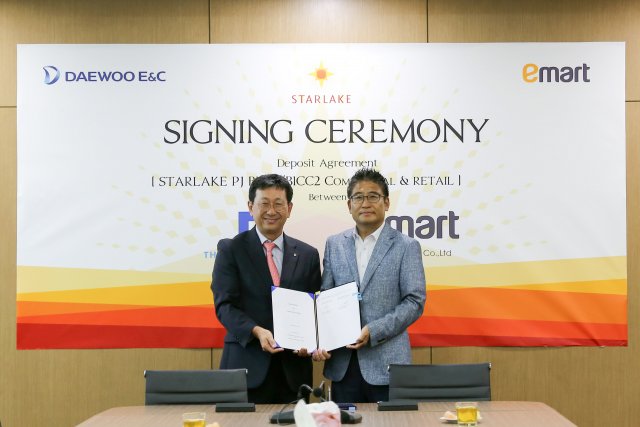
    According to StarLake, E-Mart and THT Development have signed an agreement to transfer two commercial land lots within StarLake Project, for an area of 1.86 million sqm in Hanoi’s Tay Ho (West Lake) district.

    In late 2015, E-Mart opened first location in Vietnam, on a 3ha site in Go Vap district, in Ho Chi Minh City, investing up to US$60 million.

    After exiting China, E-Mart plans to open 50 stores in Vietnam during the next five years.

    Another South Korean retail and entertainment group CJ has also deposited an agreement with THT for two land lots at StarLake Project.

    CJ plans to open CGV cinemas, a Tous les Jours bakery, and FMCG businesses there.

  • Shinsegae’s Emart to bring its fancy PK Market store to LA next year

    Shinsegae’s Emart to bring its fancy PK Market store to LA next year

    Discount chain Emart will launch its PK Market grocery store chain in downtown Los Angeles in the second half of next year.

    This is Emart’s first expansion into the U.S. market.

    The company said that it signed a 10-year contract on a 4,803-square-meter (1.18-acre) space inside LA Jewelry Mart, which is located in the Jewelry District of Downtown Los Angeles.

    “As the rent contract was signed, we’re now able to further embark on procedures to plan for our business in the United States,” Emart said in a statement.

    During the contract period, Emart will occupy three floors of the six-floor building. PK Market will take up the basement and second floors, while the third floor is planned to be used as an office for the local discount chain.

    This red-brick structure was built in 1916 and was first used to house the Ville de Paris department store. In the building’s early days, the neighborhood was the city’s commercial center and had one of the largest jewelry districts in the United States.

    Downtown Los Angeles lost its shine in recent decades compared to other areas of the city, but development projects in the area have increased lately as more people and proprietors are getting interested in the charm of the old district.

    Emart said it approved of the location, considering that there are a number of ongoing developments that will transform the area once they are completed.

    “The building itself sits inside the Historic Core where the city office is, near South Park and the Financial District – it’s a part of town that has quite a floating population,” the company said.

    Emart’s plan to take its brick-and-mortar business to the United States – a rare move for a Korean retailer – was unveiled in March by Shinsegae Vice President Chung Yong-jin. Chung said the U.S. version of PK Market will present a wide array of Asian foods, including Korean products.

    PK Market currently has branches in the Starfield malls in Hanam and Goyang, Gyeonggi. It is built around a “grocerant” concept, in which restaurants, food stalls and a high-end grocery store coexist in one space.

    Emart added that, while the concept will remain the same, the name PK Market may be changed for the U.S. market.

  • Emart’s 2nd-gen Pepper is chattier than before

    Emart’s 2nd-gen Pepper is chattier than before

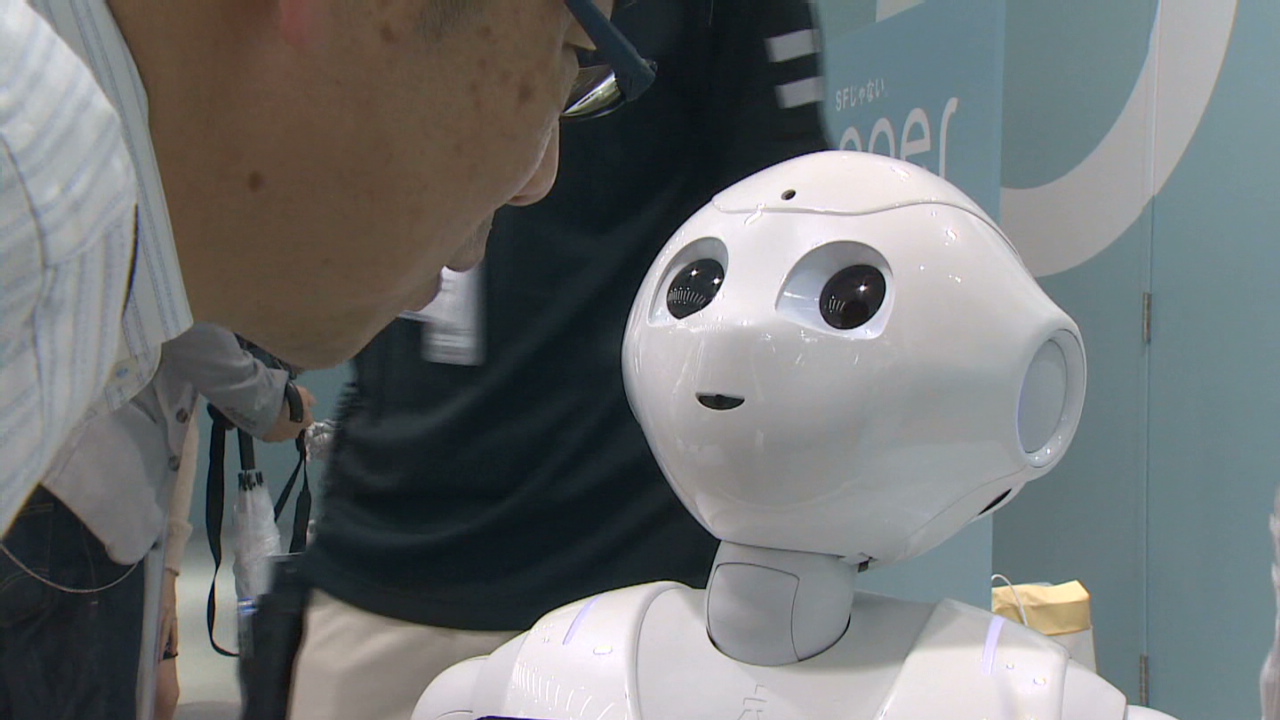
    An upgraded version of Emart’s humanoid Pepper robot will start roaming the aisles of the retailer’s Seongsu branch in eastern Seoul starting tomorrow.

    Pepper is a humanoid robot developed by Japan’s SoftBank Robotics. Its main function is emotional perception and communication with humans at stores or at home. Emart developed programs tailored to using Pepper as an assistant to customers.

    The company said Monday the robot will serve as a guide for customers at the Seongsu branch’s imported food section three times a day between tomorrow and Sept. 12.

    This is the second test run for Pepper. Emart first sent the robot to its Seongsu store in May. The difference from three months ago is that Pepper can now move by itself.

    Pepper’s conversation skills have also received an upgrade. In May, Pepper was able to respond to simple questions on promotion events and offer product information after recognizing products with its camera.

    The new Pepper is smarter. It now has an artificial intelligence-based chat function that helps it engage in longer conversations. The robot also has access to data from SSG.com, the ecommerce website of Emart’s parent company Shinsegae, so it can make suggestions from various product categories. “For example, Pepper can spot a consumer lingering around the imported food corner, step up to them to ask which dish they plan to cook and propose a sauce that would best suit their needs,” said Emart in a statement.

    Many retailers are finding ways to use technology to downsize their workforce. The most common form of automated retail is electronic kiosks. Many eateries, from chains like McDonald’s to local non-franchise eateries, have machines for taking orders.

    Service robots like Pepper are becoming increasingly popular. Delivery app Baedal Minjok launched the robot server Dilly at a Pizza Hut branch earlier this month to transfer pizza from the kitchen to tables. In January, local coffee franchise Dal.komm Coffee launched b;eat, an automated coffee-making robot, which it installed at 10 of its coffee shops across Korea.

    “The primary purpose for the service robots that are coming out nowadays is to offer an entertaining point to enhance the consumer experience at their stores,” said Ryu Han-seok, an IT columnist. “Brick-and-mortar retailers haven’t had anything attractive and differentiating to show to consumers recently.”

  • Hyundai teamed up with Amazon to plan new retail model

    Hyundai teamed up with Amazon to plan new retail model

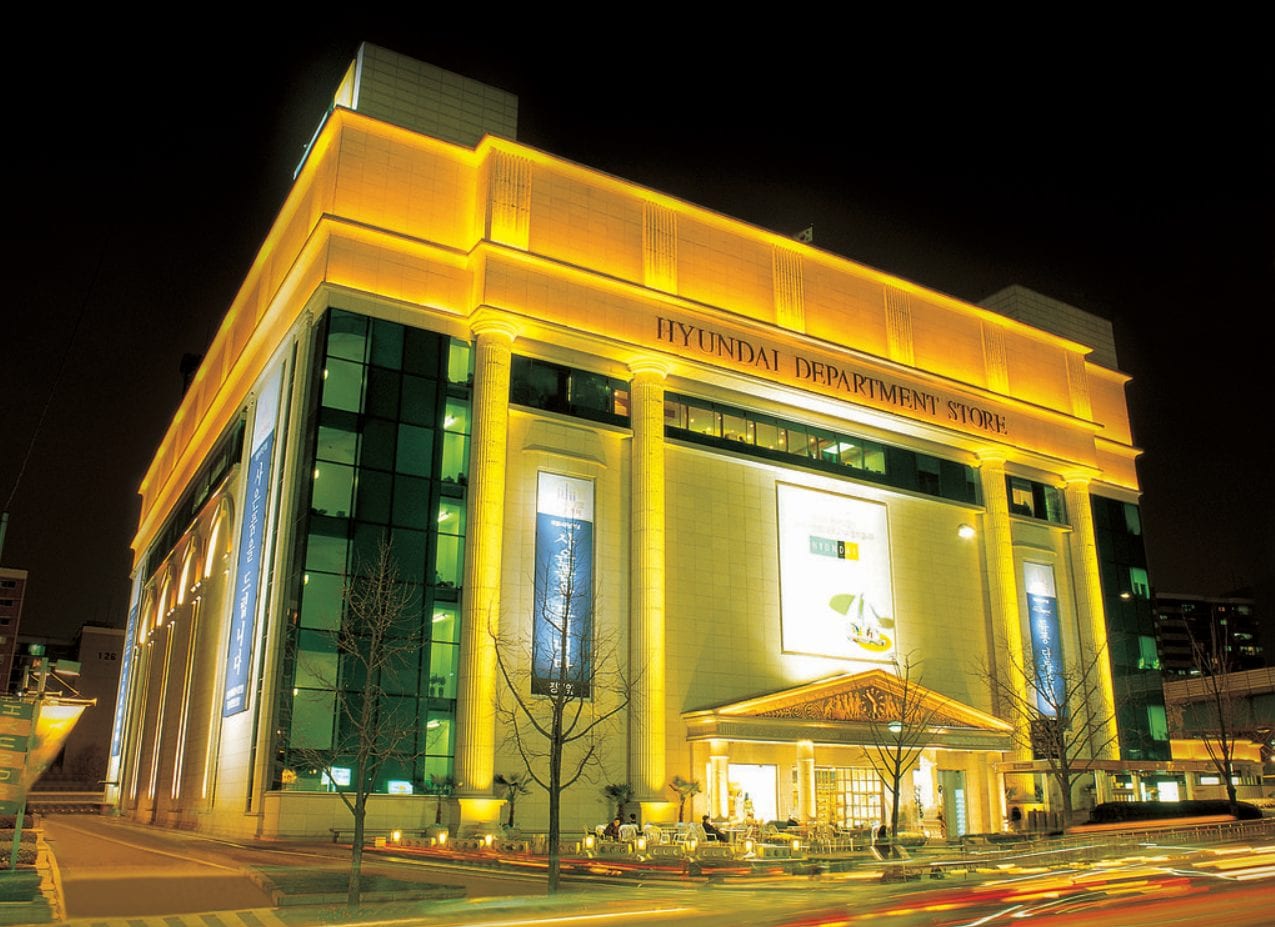
    Hyundai and Amazon plan to develop a “next-generation” retail model amid South Korean retailers’ push to adopt the latest technology to their online and offline platforms.

    Under the strategic collaboration agreement with Amazon Web Service (AWS) Korea signed on Friday, Hyundai Department Store Group said it will also establish a system to analyse customer activity and expand the partnership between its information technology arm and AWS, the US retail giant’s cloud-computing platform.

    Their joint research will focus on developing the Korean version of Amazon Go – the US e-commerce firm’s checkout-free offline mall – as well as using drones to deliver food and beverages, and applying artificial intelligence technology for automated concierge service, according to Hyundai.

    The Korean retailer’s aim is to implement Amazon’s cutting-edge technologies to its department store set to open in Yeouido, Seoul’s financial district, in 2020.

    “We will partner with Amazon to find a medium- and long-term roadmap to provide a new shopping experience to our customers,” a company official said.

    The deal was made as South Korean retailers are moving to secure competitiveness through the use of new technologies.

    Last Friday, E-Mart Everyday, another major South Korean retailer and Shinsegae’s supermarket-chain operator, opened a “cashier-less” store in Seoul where customers can pay via the firm’s mobile payment service app without going through a checkout counter.

    The 212sqm Gangnam store is expected to increase the company’s competitiveness in the market, allowing customers to use Shinsegae’s SSG Pay mobile payment system to make their purchases. It is the latest in a series of technological advances made by the company, including electronic price labeling and the use of robotic concierges and autonomous shopping carts.

    The new store will include a self-checkout counter as an alternative to using the app, and a cashier for age-verification sales of alcohol and tobacco products.

  • Scentence debuts in Saudi Arabia

    Scentence debuts in Saudi Arabia

    E-Mart, South Korea’s largest discount-chain operator, is set to open a store in Saudi Arabia this week.

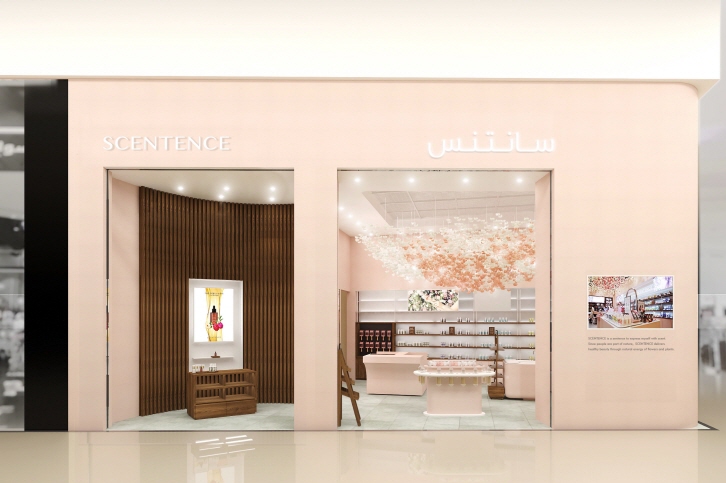
    Last November, E-Mart firm signed an agreement with the kingdom’s major retail group Fawaz Alhokair to open the beauty store Scentence at the Al Nakheel Mall operated by the Saudi company, which averages 25,000 daily visitors.

    The 66sqm store will open to the public in the Saudi capital Riyadh on Sunday, July 22.

    “Scentence is expected to post stable growth in the new market on the back of the Middle Eastern beauty market’s raid expansion and the popularity of K-beauty,” said Jung Kyung-ah, an E-Mart official in charge of the retailer’s health and beauty business.

    Saudi Arabia’s beauty market has been growing at an average of 15 per cent every year, according to E-Mart.

    The Middle Eastern foray is part of a broader plan to increase the reach of E-Mart’s brands globally.