Retail News CRM

Tag: E-mart

  • E-mart launches Marie’s Baby Circle brand and store

    E-mart launches Marie’s Baby Circle brand and store

    South Korea’s E-mart has launched Marie’s Baby Circle – a new baby brand, created by UK-headquartered Dalziel & Pow.

    The concept aims to place new and expectant parents centrestage, providing everything they need to enjoy their pregnancy and prepare for parenthood.

    Marie’s Baby Circle 1

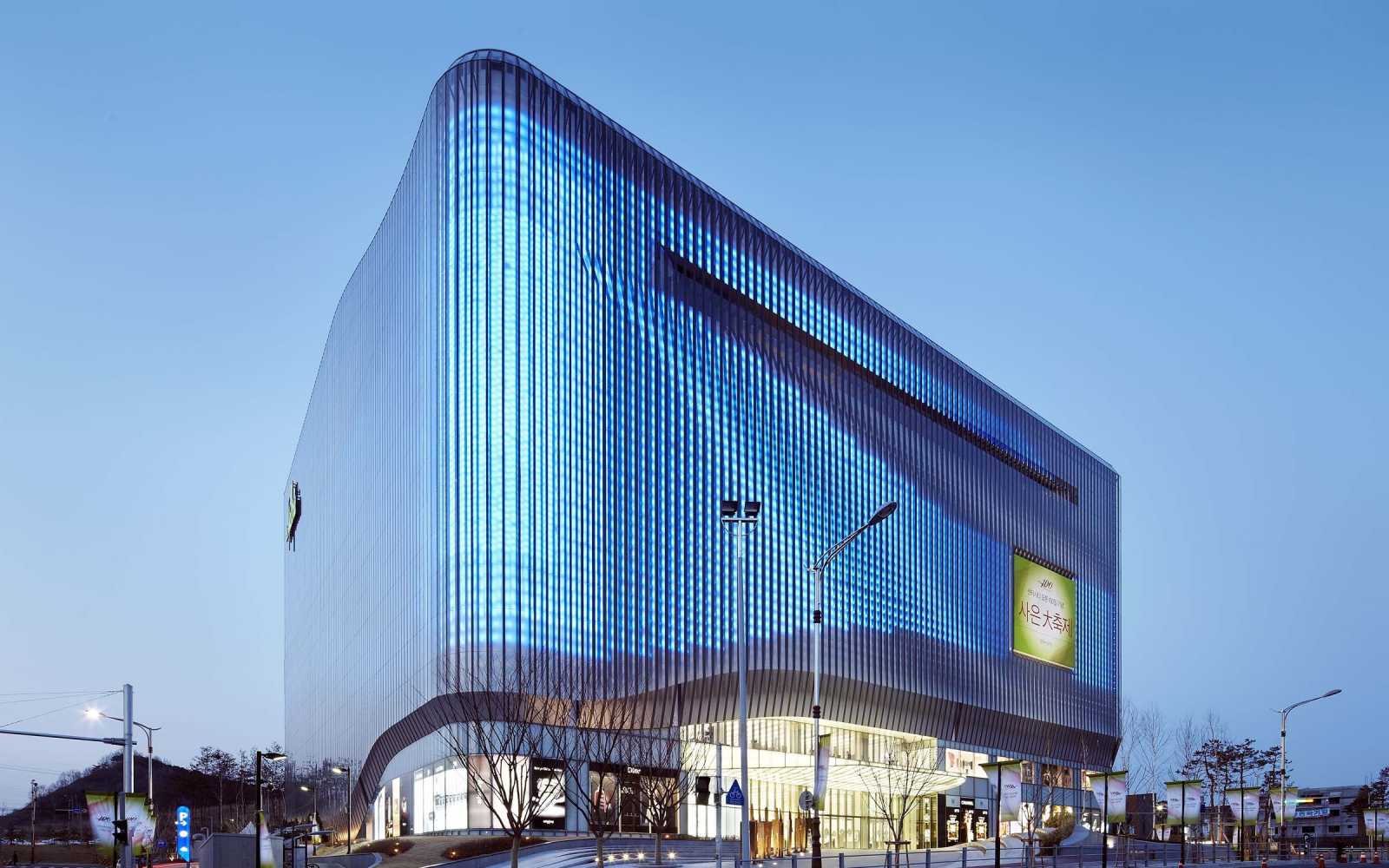
    Marie’s Baby Circle opened its doors at the launch of Starfield Hanam, Korea’s newest and largest shopping mall complex, late last year, and the brand’s first destination is far more than just a shop. In a project that spanned strategy and brand creation through to design and communications, Dalziel & Pow created an aspirational ‘home from home’, a supportive community that talks to adults about all things baby.

    Instead of the chaotic nursery feel of standard baby stores, Marie’s Baby Circle offers shoppers modern domestic furniture cues and luxurious feeding and changing facilities. At the heart of the store, pregnant women can sit back in comfort and enjoy a personal shopping experience, with products brought to them. The brand will stock a range designed ‘by mums for mums’, and works with bloggers and outside influencers – spotlighting these mothers’ recommended products in feature displays.

    Marie’s Baby Circle 6

    “This concept recognises the unique cultural and contextual needs of South Korean consumers,” said a Dalziel & Pow spokesperson.

    “The country has one of the world’s lowest birth rates at just 1.1 per woman – making the majority of modern parents first-timers who seek knowledge and reassurance. Marie’s Baby Circle answers the call as a supportive, inclusive brand that offers to hold new parents’ hands.”

    Marie’s Baby Circle 4

    Meanwhile, South Korea’s thriving mCommerce market and lightning-fast delivery can present a challenge to physical store visits. The solution? Social, interactive and supportive elements that enrich the store experience, encouraging parents to spend time with this new community of peers and credible experts.

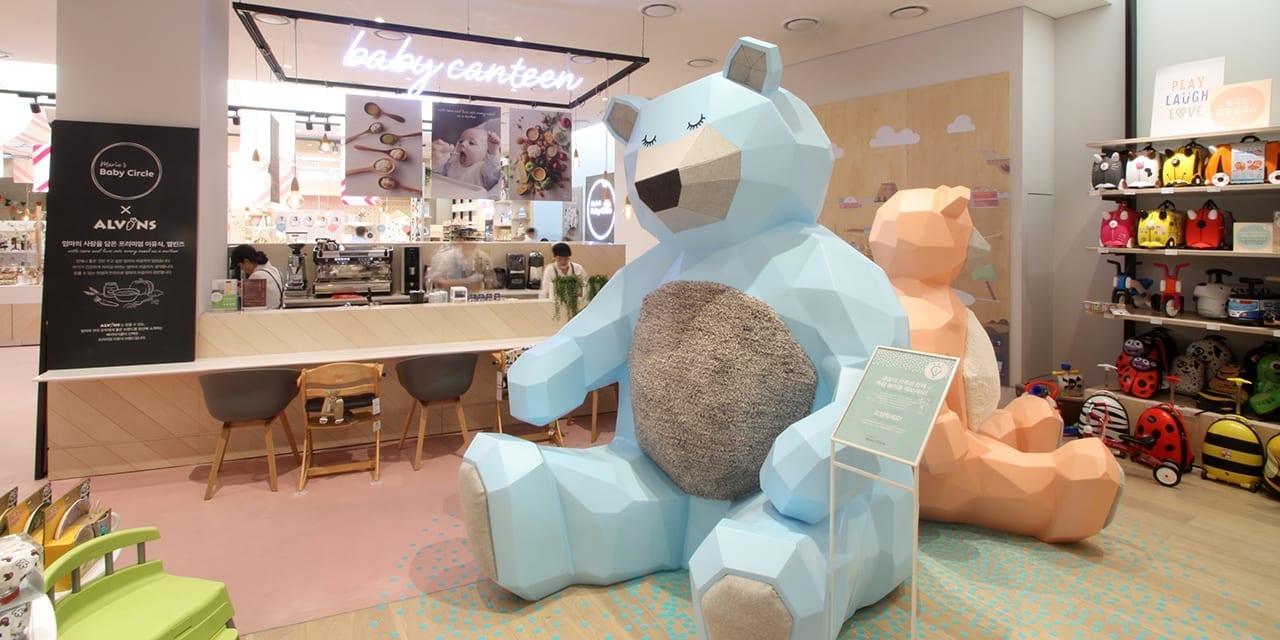
    “Marie’s Baby Circle also captures the excitement and joy of starting a family by weaving a thread of playfulness throughout the store via interactive, sharable moments. A family of snuffling and snoring giant bears in different textures form a tactile point where children can cuddle up and hear stories, while across in fashion you can see and hear a giant toy space rocket in ‘lift off’ which also doubles as an innovative unit for displaying babywear. Over in Sleep, owl and cricket sounds echo around the department as if under the night sky.”

    Marie’s Baby Circle 2

    Digital projection wall

    One key focal point is an engaging, interactive and fun wooden digital projection wall for kids and parents alike. The wall, designed using projection and conductive ink, responds to touch, triggering different animations and sounds involving a new range of bespoke animated characters. Inhabiting their own weird and wonderful world, each character is dedicated to a different part of bringing up a baby – from Ice-cream Susan for feeding, to Lord Peter for sleep.

    Marie’s Baby Circle 3


    These bespoke characters will hopefully become a key feature in the store’s communications and beyond, tapping into the hugely popular emoji and character-driven culture that is prevalent in South Korea. The wall has been designed to appeal to all different heights of children and adults; the bottom half features more robust sound design for younger children, with simpler colours and geometric shapes triggered, while further up the wall the animations become more imaginative, colourful and fantastical.

    The store is intuitively zoned to cater to different shopping missions. Entering through an open, pushchair-friendly storefront, the first section presents collections of toys and fashion, which are most accessible to the widest range of shoppers from expectant mothers to gift givers looking for that special present.

    Marie’s Baby Circle 5


    A Baby Canteen offers a nutritious menu for both adults and infants, with recipe inspiration, ample highchairs and buggy parking. Around this space customers can browse pop-up displays, gift registry and baby shower inspiration.

    The final part of the store journey is dedicated to more in-depth purchasing of essentials, broken up into three key areas of the day: feeding, bathing/changing and sleeping. Helpful conversational communications focus on breaking down what can be an often overwhelming array of product information with intuitive adult friendly need-to-know messaging; a tightly edited approach combats choice fatigue, comprising only the best and trusted products, with room sets providing ‘get the look’ ideas.

    Designed with a new generation of aspirational parents in mind, Marie’s Baby Circle is set to become synonymous with care, credibility and celebrating pregnancy.

  • Korean anti-corruption law impacts on retail sales

    Korean anti-corruption law impacts on retail sales

    The Korean anti-corruption law may be showing its desired extra effect of creating more time for family and home cooking if sales record at a leading retailer is any indication.

    October sales figures from E-mart released show an 11.5 per cent increase for the month to 1.14 trillion won (US$987.3 billion) compared to a year ago. Discount chain E-mart marked a 7.6 per cent jump while the retailer’s warehouse outlet Traders made a 43.7 percent leap. The online store E-mart Mall showed a 28.3 percent increase.

    The retailer had recorded a 6.1 per cent sales increase for the third quarter.

    Company officials said the Korean anti-corruption law that took effect on September 28 likely boosted the sales. The law sets limit to the price of gifts and paid meals that can be provided to public employees, school teachers and journalists. People who may serve one’s interests are also restricted by the price limit.

    Advocates of the law, still under controversy for restricting even gifts of good will and intent, had argued that the law will free individuals from business-related dinners and engagements, giving them personal evening time.

    “People leaving office on time and shopping for groceries, all due to the anti-corruption law, appear to have contributed largely to the double-digit growth in E-mart’s sales,” Lee Joon-ki of Mirae Asset Daewoo said.

    Food sales at E-mart rose 13.1 per cent in the month from a year ago, outdoing the average sales increase. In a breakdown, sales of fresh foods jumped 14.1 per cent while ready-made meals increased 14.5 per cent. Sales of processed foods were up 11.2 per cent.

    The number of customers coming in from 6pm had also increased, according to E-mart. The retailer had 3.5 per cent more shoppers since the day of the law’s enactment to November 8. The number of customers in the 6-9 pm period was up 5.3 percent.

    “We are focusing our marketing on foods section for our 23rd anniversary event since food sales are improving,” Choi Hoon-hak, marketing team chief at E-mart, said. “We intend to continue to introduce a variety of products that fit into the lifestyle changes of the customers.”

  • Lotte, Shinsegae address Korean gender employment issues

    Lotte, Shinsegae address Korean gender employment issues

    Korean retail giants Lotte and Shinsegae are competing to improve employment conditions for women.

    The two companies are pushing forward with efforts to provide more opportunities for women to move up in their corporate hierarchies and implementing women-friendly systems as part of their company policies. Korean gender employment issues are of growing concern in a traditionally male-dominated business culture.

    According to industry watchers, Shinsegae’s discount store franchise E-Mart instituted a shortened work-hour system for all of its pregnant employees starting in April, with employees eligible regardless of whether they apply for the benefits or not, and offering them 100 per cent of their wages. Under the arrangement, pregnant employees have their work day shortened by two hours.

    The system had been difficult for female workers to take advantage of given both the company atmosphere which tended to discourage the practice, as well as reduced wages, said a company official.

    In addition, E-Mart announced in March a new leave of absence policy for employees having difficulties with pregnancy, and it also plans to implement its own maternity leave system that allows employees to take up to a year of maternity leave, on top of the legally-guaranteed period of 20 months (eight months for maternity, 12 for childcare). The latter has already been implemented by another Shinsegae franchise, Shinsegae Department Store.

    In contrast, Lotte’s women-friendly policies focus more on employing a greater number of women as new recruits.

    Since 2006, Lotte has been increasing the number of female employees at its affiliate enterprises by hiring more women through its recruiting process. In 2015, 35 per cent of new recruits were women, a rate that the group plans to increase to 40 per cent this year.

    Furthermore, Lotte also operates a special recruiting platform specific to retired female officers from the military, an endeavor which took off in 2011 with cooperation from the defense ministry.

    As a result, the number of women at Lotte with positions as section chiefs or higher now stands at 870, an increase from 95 in 2008, and 19 of the group’s board members are also female.

    Meanwhile, Lotte established eight additional daycare centers for its employees in the first half of 2016 for working mothers, while allowing women to automatically take their year-long childcare leave right after their maternity leave, so they won’t have to face unnecessary guilt or unwelcome comments from colleagues or bosses.

    “Chairman Shin Dong-bin seems to be taking extra attention to nurture female employees and their talent,” said a Lotte official. “Our goal is to create a work environment where women can work without facing gender discrimination.”

  • South Korean retailer E-mart to invest $200m for retail chain ops in Vietnam

    South Korean retailer E-mart to invest $200m for retail chain ops in Vietnam

    A memorandum of understanding between E-mart and Vietnam’s Ho Chi Minh City was signed on September 9. Emart will make the investment over the next four years.

    The investment is expected to be used for building new supermarkets and commercial facilities, as well as local social development. E-mart opened a supermarket worth $60 million in Ho Chi Minh City last year, in addition to a toy library in the city.

    The Korean company had earlier said it planned to open 52 stores in Vietnam by 2020.

    E-mart is betting the country’s rapid growth, averaging 5.2 per cent since 2013, driven by a young and urban demographic with higher spending power.

    Vietnam’s growth was the highest among Southeast Asian peers featured in the 2016 Global Retail Development Index conducted by US management consulting firm AT Kearney. Vietnam was seen as the 11th fastest emerging retail market, up from 28th spot two years ago.

    Government data showed that retail sales in the country rose 7.4 per cent year-on-year in August 2016. Consumer spending rose to $116.2 billion, while the retail market was forecast to be worth $109 billion in 2017.

    Free trade pacts signed by Vietnam have encouraged foreign retailers to tap into this liberalizing market. Vietnam fully opened its retail industry in 2015, which is coupled with a lot of tax preferences for investors.

    Japan’s Takashimaya and Miniso have set up retail shops in Vietnam in July. Meanwhile, 7-Eleven is planning a local presence through the franchising route.

    Existing players are opening new outlets, as well as acquiring local businesses. Vingroup, the most active domestic company which launched over 90 stores in 2015, aims to introduce twice as many in 2016. It acquired Maximark and Vinatexmart, two Vietnamese operators, as part of this strategy.

    Thailand’s Central Group had acquired Big C Vietnam for $1.05 billion, along with electronics store chain Nguyen Kim and e-commerce site Zalora Vietnam. Other M&A deals include TCC Holdings buying Metro Cash&Carry Vietnam, and AEON acquiring Fivimart and Citimart.

    Central has since announced that it has halted further investment in  the country and would focus on consolidation.

  • Heat Wave Boosts Retail Sales

    Heat Wave Boosts Retail Sales

    A prolonged heat wave in South Korea is boosting sales of local retailers, cafes, hotels and theaters as people flock to those air-conditioned places to get relief, industry sources said Tuesday.

    The entire country has been hit by the scorching weather for the past two weeks, with daytime highs soaring above 35 degrees in Seoul and most other regions and the mercury staying above 25 C even at night.

    According to Lotte Department Store, its same-store sales climbed 4.1 percent between July 25 and Sunday from the corresponding period a year earlier.

    Sales of consumer electronics products rose by the highest rate of 24.5 percent, with those at food courts expanding 14.1 percent.

    “Sales of air conditioners and electric fans recorded a strong on-year increase, leading the overall gain in shipments of home appliances,” a Lotte Department Store official said.

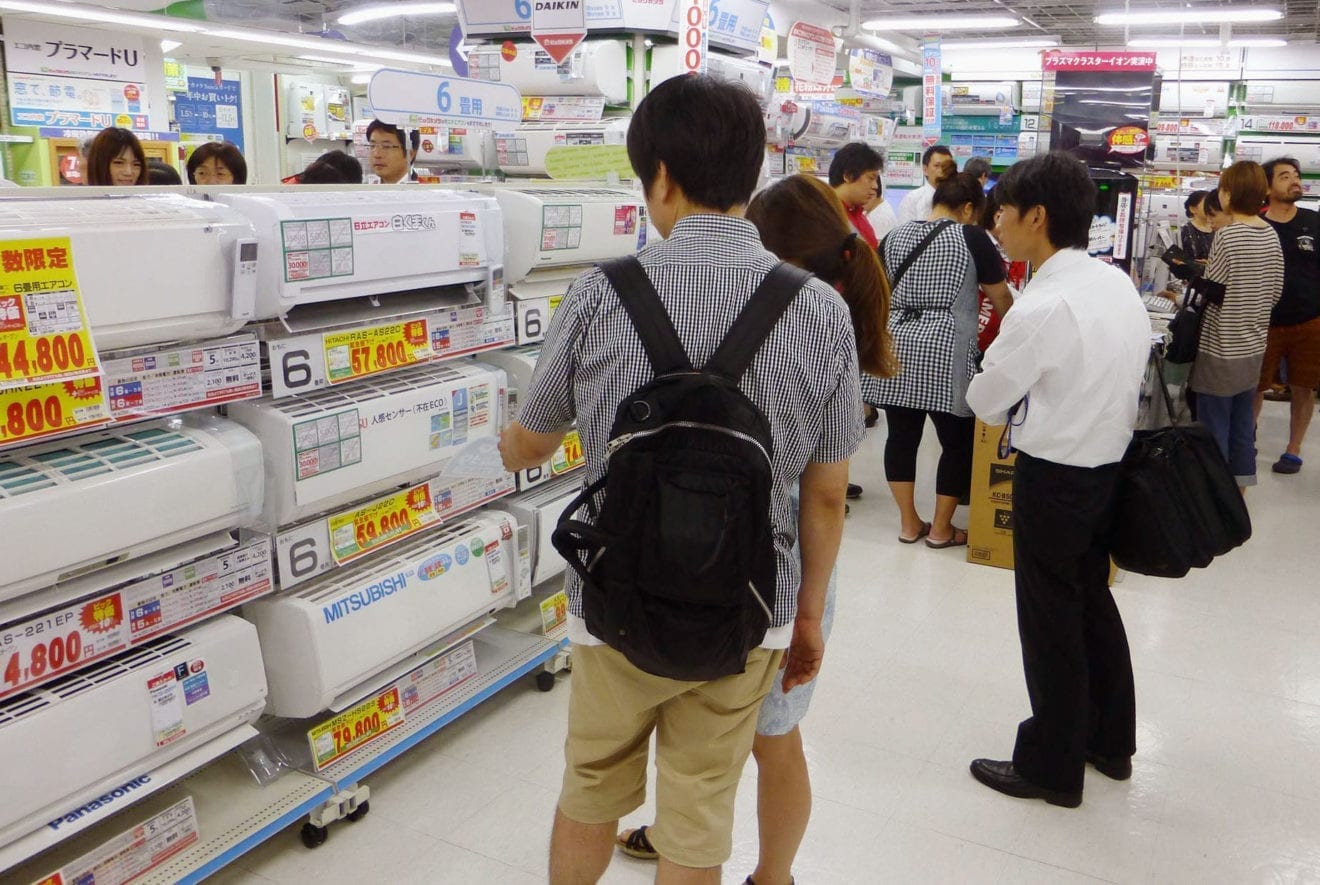
    Discount giant E-Mart estimated its July sales have gone up 8 percent from the same month a year ago. In the first seven days of this month, sales of air conditioners soared 53 percent on-year with peaches and other fruits also chalking up brisk sales.

    The heat wave also comes as a boon to Seoul’s luxury hotels with swimming pools as an increasing number of people spend their summer vacations there instead of going to the beach or other places.

    Lotte Hotel Seoul, one of the country’s best luxury hotels, said sales of its “summer package” doubled between July 25 and Sunday from the same period a year earlier. The Plaza Hotel Seoul also posted a 40 percent surge in sales of its summer package.

    In addition, coffee shops and cinemas have enjoyed booming trade for the past several weeks as more people visited them to seek relief from the searing heat, according to the sources. “More people are expected to flock to air-conditioned places to cool off as the heat wave is forecast to last for some time,” an industry official said.

    The Korea Meteorological Administration forecast the heat wave gripping the country is likely to continue till mid-August with daytime highs hovering around 35 C.

  • Retail giants seek to cash in on hallyu

    Retail giants seek to cash in on hallyu

    The leading retailers in Korea are seeking to cash in on the global popularity of hallyu by sealing strategic tie-ups with entertainment companies to sell exclusive merchandise.

    Products bearing the images of popular K-pop artists and actors have largely been available only online. However, the success of a small store at Lotte Department Store’s Young Plaza in Myeong-dong, Seoul, appears to have caught the fancy of the retailer.

    The store dedicated to K-pop stars saw sales grow fivefold this year, half of which were accounted for by Chinese customers.

    This has prompted Lotte to join hands with YG Entertainment — home to some of the biggest K-pop acts such as Psy, Big Bang and 2NE1, as well as actors and actresses — to open a larger store on Aug. 12 where fans can now touch and try the goods before they pull out their credit cards.

    Big Bang.

    Lotte will offer officially endorsed celebrities goods available in over 100 categories, ranging from the mandatory clothing and stuffed toys to scented candles and cosmetics.

    Earlier in March, Korea’s top retail chain E-mart teamed up with SM Entertainment to introduce its private brand products bearing the name and face of its artists such as EXO Sonjjajang and Shiny Sparkling Water.

    Meanwhile, the two entertainment giants are also tapping into the restaurant business. SM is running tapas restaurant SMT Seoul in Cheongdam-dong, while YG opened YG Republique in Myeong-dong and Yeouido.

    By the end of this year, both will expand out of the country: SM will branch out into Tokyo and Los Angeles while YG will branch out in LA and Bangkok.


  • Korean retail sales rise

    Korean retail sales rise

    Korea retail sales rose in June according to government data measuring major department stores and discount chains.

    The government said the year-on-year increase was fuelled by more holidays.

    The combined sales of three department stores – Hyundai, Lotte and Shinsegae – increased 11.8 per cent on-year in June, while those of major discount retailers – E-Mart, Lotte Mart and Home Plus – edged up 0.9 per cent during the same period, according to the data compiled by the Ministry of Trade, Industry and Energy.

    The ministry said sales went up as the number of holidays increased by one day from a year earlier.

    Sales at convenience stores jumped 18 per cent on-year last month, boosted by “a dramatic rise in food sales”, mostly of instant food. Convenience stores have retained double-digit growth rates since the last quarter of 2014 amid rising single-person households.

    The number of single-person households was estimated at 5.06 million in 2015, 7.7 times higher than the 661,000 households of 1985, according to the report by the state-run Korea Institute for Health and Social Affairs.

    Meanwhile, sales at hypermarkets, mostly run by large retailers, slid 7.8 per cent on-year.


  • Korean retailers ride on ‘Pokemon Go’ craze

    Korean retailers ride on ‘Pokemon Go’ craze

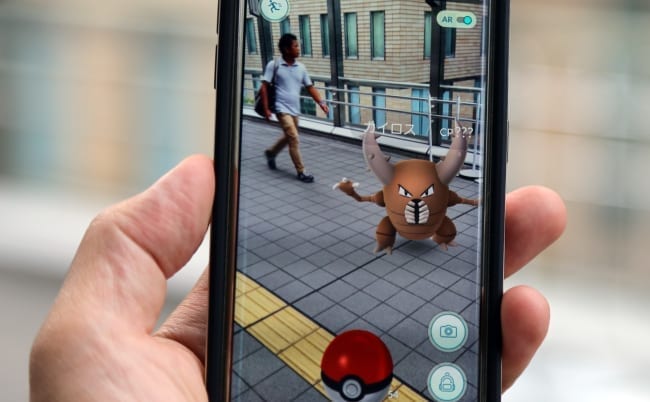
    South Korean retailers are capitalizing on the explosive popularity of Nintendo’s augmented-reality mobile game “Pokémon Go” with new products and services targeting local Pokémon game enthusiasts and fans.

    From a sudden rise in consumer spending at select Pokémon-appearing cities in Korea to the launch of Pokémon-inspired hotels, tour packages and goods, the smash-hit game appears to be leaving a notable imprint on the local retail sector.

    “Pokémon Go,” produced jointly by Nintendo and U.S.-based Google spinoff Niantic, Inc., is a GPS-based mobile game that has users running through real-life locations to discover and collect virtual monsters, such as the all-famous Pikachu, via their smartphones.

    Though the game has yet to officially launch in Korea, it has been operational in parts of the country, including Sokcho of Gangwon Province since mid-July and most recently parts of Ulsan and Busan, where the game’s GPS signal is active due to technical glitches.

    Eager to play, hundreds of avid Pokémon fans here have been flocking to such locations in the past few weeks, boosting business at local retailers in the region and prompting online retailers to introduce an array of Pokémon-inspired products.

    Among the biggest beneficiaries are convenience stores in Sokcho which have been enjoying a sudden sales boom thanks to peaking demand for cell phone battery charging services as well as portable battery chargers.

    CU, the nation’s top convenience store operated by BGF Retail, said its outlets in Sokcho saw their sales from July 11-17 almost double compared to the previous week, thanks to the legions of “Pokémon Go” players in the area.

    During the period, sales of “battery charging” services at CU stores in Sokcho rose by 388 percent from the week before while sales of small electronic devices including portable batteries and earphones rose by 82.4 percent, BGF Retail said.

    Game players to Sokcho have been frequenting convenience stores in the area to rest and stock up on necessities such as ice, ice cream and water to fight the summer heat as well, boosting their daily sales, a CU official said.

    Joining other smaller businesses, discount supermarket chain E-mart’s Sokcho branch has reportedly begun offering free ice water to “Pokémon Go” players who capture a Pokémon on its premises.

    Targeting Sokcho-bound travelers, scores of mobile-commerce companies including Ticket Monster, 11st Street, Gmarket and Auction began organizing day-trip bus services from Seoul to Sokcho starting from July 12.

    Meanwhile in Busan, the beachside Haeundae Grand Hotel has partnered with Pokémon Korea Co. to offer specialized Pokémon-themed rooms, merchandise and eateries that tug at the hearts of local fans.

    Reflecting Pokémon’s resurgent appeal, sales of Pokémon-related toys, stationary and mobile accessories have surged as well. Online retailer 11st Street saw sales of Pokémon items rise by 57 percent during July 11-17 compared to the previous week, while Ticket Monster said sales of such products rose by 211 percent during the same time frame.

    11st Street is even holding a promotional event inspired by “Pokémon Go” — dubbed the “11Mon Go,” in which users can find and collect “11Mon” character while shopping on the website. Those who collect all the characters are eligible for prizes including round-trip bus tickets from Seoul to Sokcho, according to 11st Street.

    By Sohn Ji-young

  • E-Mart and Lotte enter Vietnam

    E-Mart and Lotte enter Vietnam

    The Go Vap district near Tan Son Nhat International Airport and part of Ho Chi Minh City in Vietnam are widely known as special to the Korean retail industry. This is because despite the fact that there are not many Koreans residing in the area, Korean retail giants are competing fiercely in the region. E-Mart, Lotte Mart and Vietnam’s second largest retailer Big C all have stores competing in a four kilometer (2.5 mile) radius.

    E-Mart and Lotte Mart are competing for dominance in the young Vietnamese market. More than half of Vietnam’s population of 93 million is less than thirty years old. The large market industry is also undeveloped in Vietnam, with 75 percent of shopping being done at traditional markets, so there is great potential for growth. This potential attracts big retailers like E-Mart and Lotte Mart. Go Vap is particularly attractive because its residents are middle class, well-earning couples. Lotte Mart established itself in Vietnam in 2008 and has 12 stores, which is the third highest in Vietnam for a retailer. E-Mart leapt into the Vietnamese market last December with its store in Go Vap and it is planning to expand its operations.

    The E-Mart store in Go Vap is no different from the ones in Korea. There were the iconic yellow shopping carts as well as No Brand products displayed in the center of the store. No Brand products, modeled after the Japanese company Muji, are relatively cheap because they have no branding and packaging costs, but their quality remains unaffected. E-Mart’s membership card has the phrase “Korea’s No.1 Mart.”

    “We have set up our stores to reflect the Korean lifestyle,” Chang Yun-suk of E-Mart said. “The reasonably priced No Brand products are considered Korean luxury products in Vietnam.”

    E-Mart also operates an Electro Mart, which specializes in electronic goods, in Vietnam. Even on a weekday afternoon, there are plenty of Vietnamese customers flying drones and enjoying the action figures on show, as well as singing karaoke. E-Mart showcased the Electro Mart when it opened its E-Mart Town last June and it only has them in a few places in Korea, including in Yeongdeungpo in Seoul and in Pangyo, Gyeonggi.

    The Korean lifestyle theme is felt in the food available in the area, with Starbucks and Korean pork belly, or samgyeopsal, restaurants in the store. It is unusual to have a Starbucks in a large mart like E-Mart in Vietnam but Shinsegae Group, which operates Starbucks in Korea, persuaded the Vietnamese authorities to have a Starbucks in the store like they do in Korea. Vietnam normally only has Starbucks in hotels, department stores and luxury shopping malls.

    On the other hand, the Lotte Mart store in Go Vap, located only three kilometers from its rival E-Mart, has a Vietnamese feel. The store is filled with a thousand types of Vietnam Choice L products, which are developed and produced in Vietnam. Lotte Mart aims to offer products based on the Vietnamese lifestyle. The traditional rice noodles and cookies are all made in Vietnam. At the end of this year, Lotte Mart will release a point system for all of its subsidiaries in Vietnam known as Vietnam L. Point.

    Lotte Mart even exports Vietnamese products to Korea. Lotte Mart stores in Korea offer various Vietnamese goods including Vietnamese G7 coffee and hosts a special program onVietnam every summer. This is because Lotte Group is very well established in Vietnam with its many subsidiaries based there, including top restaurant business Lotteria, Lotte Hotel and Lotte Department Stores. Lotte wants to project a positive image of itself to the Vietnamese people.

    In fact, the Lotte Mart enjoys so much export success in the Vietnamese market that even Vietnamese politicians and media often jokingly ask their domestic companies, “Do you know how much Vietnamese products Lotte Mart export?”

    The E-Mart and Lotter Mart stores differ greatly, but their large size and strategy for entertainment are compatible. The E-Mart store is 10,579 square meters in size while the Lotte Mart store is 13,223 square meters. Both stores welcome between 10,000 and 15,000 customers every day and both have large motorbike/scooter parking lots capable of holding 1,500 such vehicles to cater to Vietnamese customers, whose main method of road transport is either motorbikes or scooters.

    Both stores also target couples with children, hence they both have large children’s cafes, each measuring 990 square meters. Lotte Mart’s entertainment stores, including its bowling arena and cinema, cover a considerable area of 6,600 square meters, while E-Mart’s occupies 4,628 square meters.

    “Vietnam does not have many amusement parks and cinemas so families often come to large marts to enjoy leisure activities,” Hong Won-sik, general director of Lotte Mart Vietnam, said. “Also, considering the business side, Vietnam has such low consumer prices that it is common to make profits through external store rents rather than from selling fresh products.”


  • End of Growth for Hypermarkets?

    End of Growth for Hypermarkets?

    Hypermarkets, which offer a wide range of products under one roof, once prospered in Korea. Recently, however, sales growth has stagnated with a rapid change in consumer behavior. 

    According to industry watchers, hypermarkets in Korea anticipated high growth this year, following poor performance in 2015 from widespread public fear of MERS in June. But their high hopes have proven to be overly optimistic. 

    Lotte Mart, one of Korea’s leading hypermarket franchises, only saw 0.2 percent year-over-year sales growth in June. Homeplus, Korea’s second largest retailer, even showed negative sales growth. 

    E-mart, a subsidiary of Shinsegae, and the largest retail hypermarket in Korea, also recorded negative growth in May (4.4 percent), but improved its performance in June, although not as much as anticipated. 

    “We can’t disclose our growth rate for June because of government regulations, but considering the base effect caused by the MERS incident, the rate is far from our expectations,” said an E-mart official. “The industry itself is at risk, and its low growth has become a fixated phenomenon.” 

    Among the three retail giants, Homeplus has been suffering most from negative growth in recent years, and starting this year the company decided not to disclose its monthly growth rate in order to avert potential negative influence that it may further pose in the industry.

    “The company policy is not to disclose monthly growth rates,” said a Homeplus official. “But it’s true that the industry is suffering.” 

    Industry experts point to changing consumer trends, with preference rapidly shifting from offline to online purchasing. 

    “There are so few customers at these hypermarkets nowadays,” said an industry official. “Department stores, on the other hand, are more crowded because they often deal with high-end products. But a rising number of consumers are shifting over to e-commerce platforms to purchase daily necessities, which are the main products offered by hypermarkets.”


  • Coupang Faces off against Retail Giant Shinsegae

    Coupang Faces off against Retail Giant Shinsegae

    “We should catch up to Coupang, accepting the risk of financial loss,” said Chung Yong-Jin, vice chairman of Shinsegae Group. “Coupang is taking away our customers in their 20s and 30s. Why are we just sitting on our hands and leisurely watching the exodus?”

    The JoongAng-Ilbo has recently reported that vice chairman Chung Yong-Jin of Shinsegae Group had harshly criticized Shinsegae executives for making a lukewarm response to Coupang eating into its customer base.

    Chung was quoted as saying: “Even if we have to incur a deficit, the entire distribution channel should come up with strategic online product offerings and sell them at rock bottom prices to lure in 20-30 something consumers who use smartphones to make purchases. To that end, we should give priority to taking E-mart’s online mall to new heights.”

    He made such a comment because E-mart, the discount store unit of Shinsegae, has lost business to social commerce operators, especially Coupang, over the past year.

    After all, Shinsegae Group waged a price war against e-commerce leader Coupang last month: it announced that it would sell baby formula, feminine hygiene products and instant coffee at the lowest possible prices. E-mart, the country’s largest discount store chain logging 13 trillion won in sales and 500 billion won in operating profit, started to fight back, accepting the risk of incurring a deficit.

    Coupang, established in 2010, has emerged as a threat to Shinsegae Group, the country’s largest retail juggernaut. Coupang’s sales grew sharply from 348.5 billion won in 2014 to 1.5 trillion won in 2015, greatly unnerving Shinsegae Group. If the growth of Coupang continued at such high speeds, Shinsegae Group fears, it could be overtaken by Coupang in 2-3 years.

    Computer-based and mobile traffic to E-mart’s online mall is languishing in the one million visitor range. Sales from its online mall account for about 5 percent (or 700 billion won) of its total sales (13 trillion won). In contrast, the number of visitors to Coupang reached over 7 million, dwarfing traffic to E-mart’s online mall.

    Coupang’s mobile app came out on top in traffic for 41 consecutive months from July 2012 to November 2015.

    Though E-mart with deep pockets is trying to take sales away from Coupang by offering products at sharply discounted prices, the majority view is that Coupang still gets the upper hand on E-mart when it comes to mobile shopping. A Coupang official said: “We are unscathed by E-mart going on the offensive. Actually, things are looking up as the mobile shopping market is on the upswing. It has become obvious that so many consumers have faith in Coupang.”

    According to Coupang, consumers, who have enjoyed convenient mobile shopping experiences since the launch of Coupang, will not easily drift away from Coupang.

    There is no doubt that Coupang is enjoying a “first-mover” advantage as sales from its mobile shopping platform surpassed 80 percent of its total sales. According to Statistics Korea, mobile shopping sales hit 2.66 trillion won in January 2016, exceeding computer-based e-commerce sales (2.54 trillion won) for the first time.

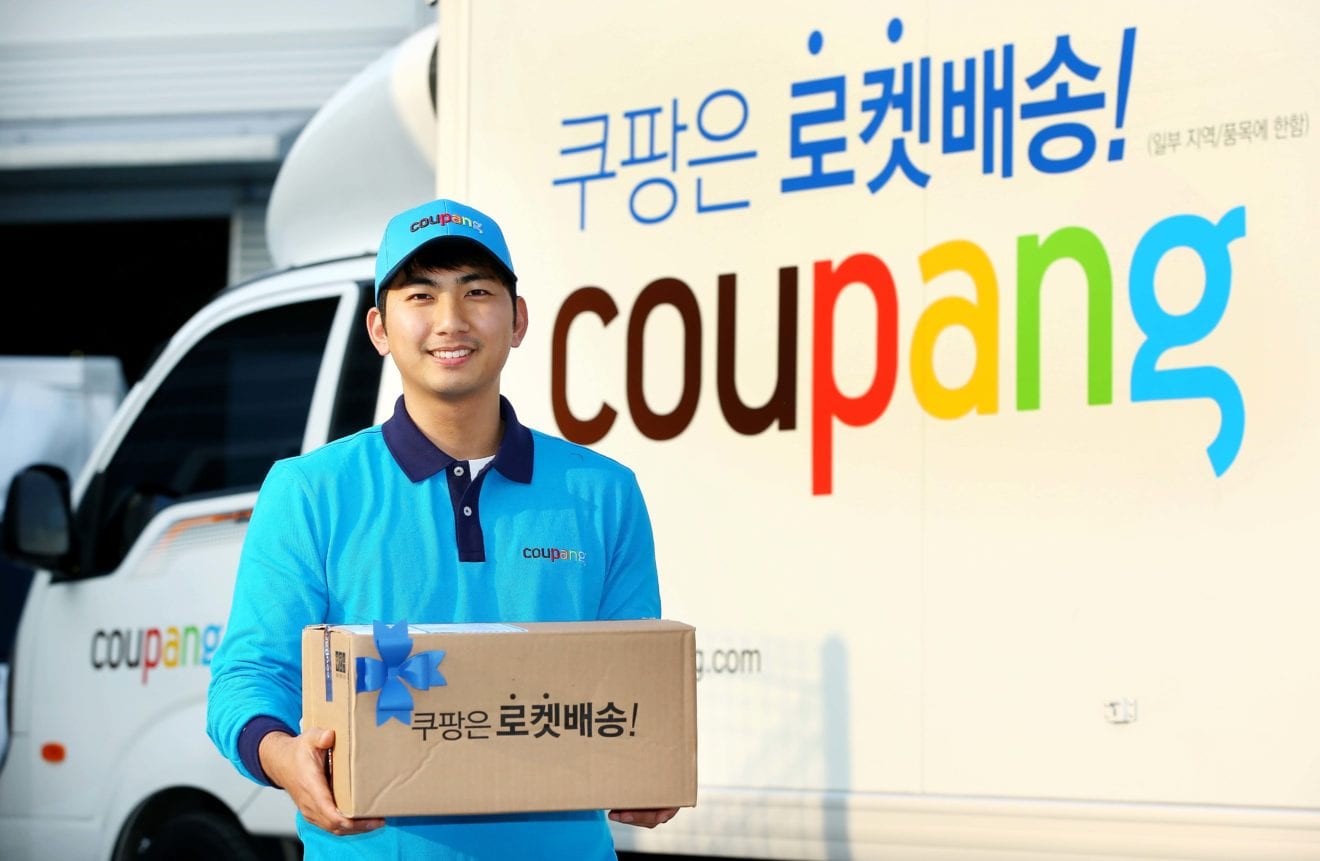
    Coupang is expanding its business realm on the back of its signature “Rocket Delivery” program, its delivery staff dubbed “Coupang men,” and its ‘direct commerce’ business model, in which Coupang takes care of all the stages of e-commerce from selling to delivery.

    Coupang plans to invest 1.5 trillion to increase the number of Coupang men to 15,000 and the number of logistics centers from 14 to 21 by 2017.

  • Shinsegae Group in massive expansion plan

    Shinsegae Group in massive expansion plan

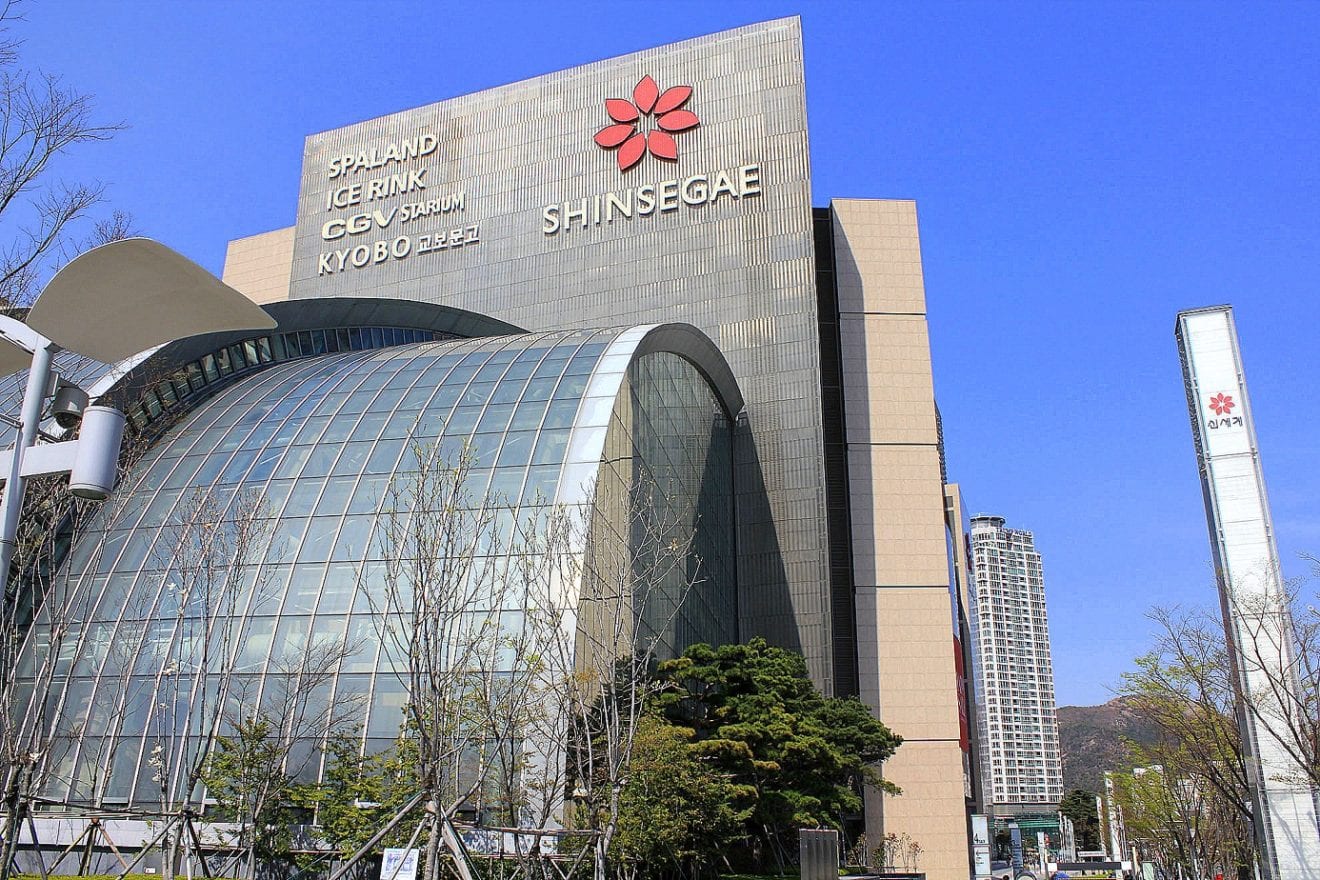
    Shinsegae Group says it will invest 4.1 trillion won ($3.4 billion) this year and hire 14,400 new staff to expand its retail business and revitalise the “sagging domestic economy”.

    “The overall retail sector has been struggling to deal with continued sluggish domestic consumption,” a Shinsegae Group official said. “But we decided to invest more and hire more workers to find new growth engines and help inject vigor into the stagnant domestic market.”

    Shinsegae, Korea’s largest retail group, will open 10 shopping centres across the country in 2016, including the massive Hanam Union Square southeast of Seoul, built on a 117,000 sqm site and employing 5000 staff. That project is worth 1 trillion won alone,  (US$832 million).

    The company’s discount arm E-Mart, is building a logistics centre in Gimpo, in the Gyeonggi province, to support an expanded online business as it ramps up competition with rivals including Coupang. It also plans to increase the size of many of its existing stores as well as opening new shops in Vietnam and other Southeast asian markets.

    Three new Shinsegae department stores will open their doors – in Hanam, Gimhae (in South Gyeongsang Province) and in Daegu. Stores in southern Seoul and downtown Busan will be expanded.

    And the company’s Shinsegae Duty Free operation is putting the finishing touches on an upmarket duty free store inside its downtown Seoul department store. That shop is scheduled to open in May.

    “Business conditions at home and abroad have largely been unfavorable for us,” said Shinsegae Group vice chairman Chung Yong-jin.

    “We expect to bear fruits this year from our investments in multipurpose shopping centers, duty free shops and department stores. We will continue to invest and hire workers as a leading retailer to help bolster the domestic economy,” he said.

  • Korea to release online price index

    Korea to release online price index

    South Korea plans to unveil a new index tracing online retail prices this year by using big data from private sector to reflect actual economic sentiment, according to Statistics Korea on Tuesday.

    The state-run agency plans to release an online price index that will complement the consumer price index by the end of this year, the agency reported in its 2016 plan to President Park Geun-hye.

    To develop the new indicator, Statistics Korea is currently collecting price data from six major online shopping malls and discount store chains — E-Mart, Homeplus, Lotte Mart, Lotte Supermarket, 11st and Interpark.

    “The online price index will be calculated based on the prices of a sample of representative items being sold online,” an official at the agency said.

    He added that the index will show the average price change on a daily basis unlike the consumer price index which shows monthly data.


  • Standard Chartered Korea puts wealth at center of vision

    Standard Chartered Korea puts wealth at center of vision

    Standard Chartered Bank Korea plans to invest 10 billion won ($8.24 million) in its wealth management, aiming to double the size of operations over the next five years, a top company executive said Thursday.

    “We have set a target of 100 percent growth in the number of clients, revenue and assets under management at our wealth business by 2020,” Chang Ho-june, head of wealth management at SC Bank Korea, said at a press conference in Seoul.

    The London-based bank has about 5 trillion won of assets under management.

    To realize the goal, the bank will invest 10 billion won to hire more specialized managers and financial experts as well as strengthen information technology infrastructure and platforms over the next two years. He said the key to this year’s wealth management business strategy lies in making strides toward greater accessibility for customers.

    The announcement comes as banks around the world are increasingly relying on wealth management as a stable revenue generator that could offset potentially volatile businesses such as trading.

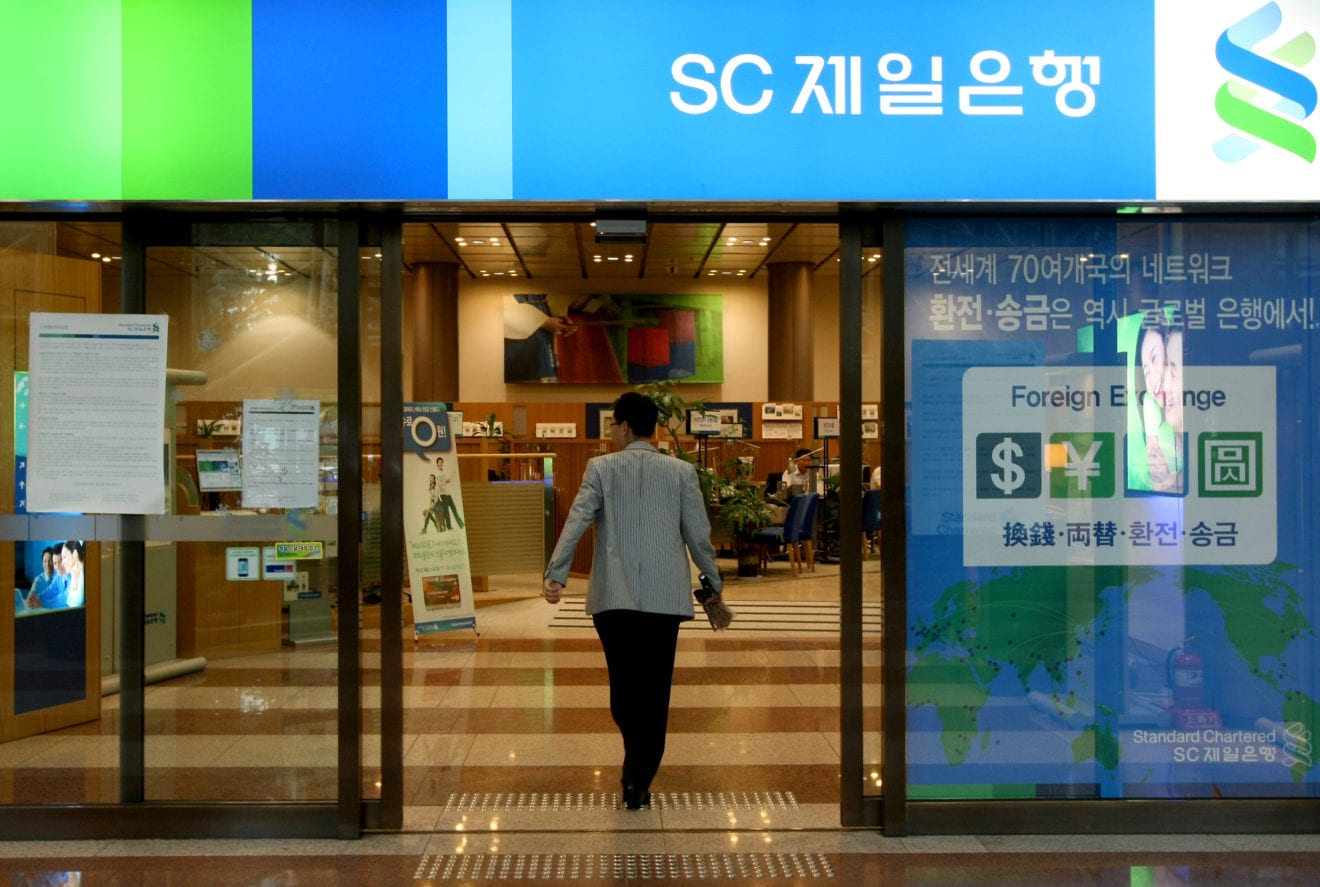
    Listing the details, Chang said the bank would expand the number of mini-branches, which offer seven-day banking services at retail stores, to 62 by the end of January from the current 52.

    Last year, the bank signed a deal with Shinsegae to implant sales and marketing channels at the retail giant’s outlets including department store and discount store E-Mart.

    The bank will adopt a video consulting service in the second half of 2016 to enable Korean customers to get advice from SC Group’s global investment experts in Singapore and Hong Kong.

  • Korea’s E-Mart Vietnam launches

    Korea’s E-Mart Vietnam launches

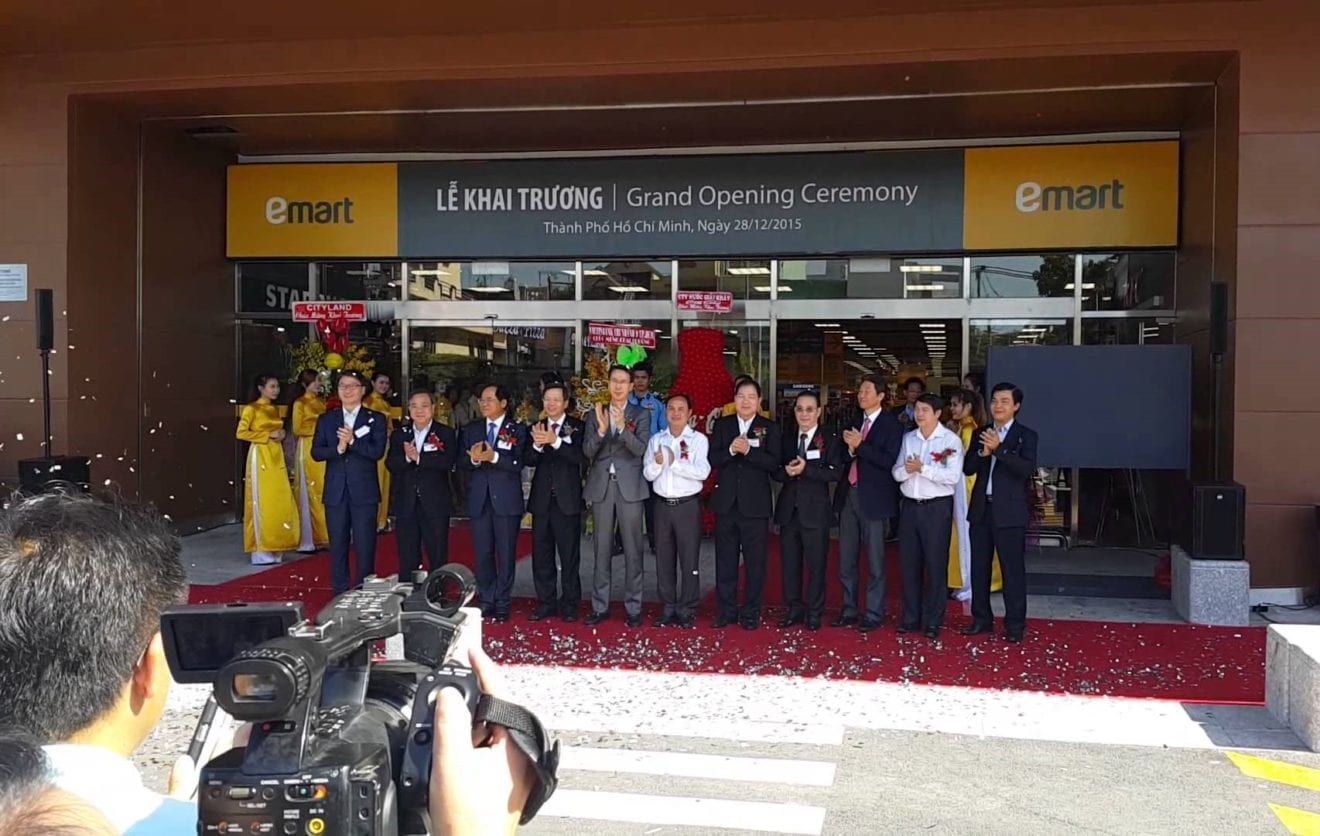
    As a first step in a Southeast Asian rollout, Korean discount store E-Mart has opened its first outlet in Vietnam.

    It goes head-to-head with rival Korean chain, Lotte Mart, which has been in Vietnam since 2011 and now has 11 stores. The E-Mart Vietnam launch follows four years of researching the Vietnamese retail market.

    Run by retail giant Shinsegae, the new two-storey E-Mart hypermarket is worth US$60 million and is on a 3ha site in the busy Go Vap District of Ho Chi Minh City, nearby the airport. It is the brand’s first overseas store since it shifted focus to Southeast Asia in 2011 after a lacklustre foray into China. The company regards the new store as a foothold for expansion throughout Vietnam and into such neighbouring countries as Indonesia, Laos and Myanmar, reports the Korea Herald.

    E-Mart’s Ho Chi Minh City store has been tailored for Vietnamese consumers, and offers several features new for Vietnam. About 95 per cent of the employees (about 300) are Vietnamese, including the manager, and the parking lot has been designed to cater for 1500 motorcycles and 150 cars to reflect the city’s vehicle preferences

    As well as featuring Korean products popular with Vietnamese tourists to Korea, the hypermarket has imported items sourced by its operator. Korean dishes such as kimbap, tongdak and grilled chicken are made in-store, as well as baked goods adapted for Vietnamese tastes. On its shelves customers can also find fast-moving consumer goods, household utensils, electronics, and clothing from about 1000 local suppliers, plus a wide range of Korean and Emart-branded products. About 95 per cent of the goods will be locally made.

    Unusual for stores in Vietnam, the new E-Mart has such concepts as a diversified food court, a children’s sports club, games centre, book store and an English club, plus its flagship customer services include immediate refund and exchange policies and compensation for checkout errors.

    Its mix of food and entertainment is aimed at turning the store into a “happy hypermarket” for Vietnamese consumers, reports VNS. E-Mart Vietnam general director Choi Kwang-Ho says it is hoped these concepts will “sweep the Vietnamese retail market”.

    “After successfully building up a sizeable presence in Ho Chi Minh, we plan to expand into the rest of the country,” he said.

    According to the Korea Herald, E-Mart has already bought land for a second branch. An E-Mart press release says the company plans to open another hypermarket in Hanoi – a first for the capital – and expand the chain to 52 stores across Vietnam by 2020.

    Meanwhile, in co-operation with the Viet Nam National Traffic Safety Committee, E-Mart has donated hundreds of helmets each to seven primary schools in Go Vap. It plans to gift 50,000 quality helmets for primary-school students by 2020.

    E-Mart is the largest retailer in South Korea with 160 stores. Founded in 1993 by department store franchise Shinsegae, E-Mart reported global sales of $13.2 billion last year.