Retail News CRM

Tag: E-mart

  • E-Mart to have electric car charging at all stores

    E-Mart to have electric car charging at all stores

    Korean hypermarket giant E-Mart plans to install electric car charging stations at all of its outlets nationwide by 2021.

    The company initiated formal service of nine electric car charging stations in four regions (Sokcho, Gangneung, Geomdan, and Gumi) this week.

    The stations can accommodate many cars at any given time. From October, E-Mart will be expanding the number of charging stations by 30 every year so that by 2021, the total number of stations within its overarching Shinsegae Group will reach 1100 including the 140-odd stations installed on the premises of its E-Mart stores.

    The multi-car charging stations will each accommodate 18 cars that can be fully charged within 40 minutes at 100kWh, making them the fastest chargers in the nation.

    A new payment system that automatically recognises the driver’s Hi Pass payment card number will make payment easy without requiring the driver to take out his or her credit card.

    E-Mart was the first retailer in the nation to build charging stations for electric cars. The company currently operates more than 110 charging stations with a total capacity of charging 200 electric cars.

  • E-Mart to introduce Korean SMEs’ products in Singapore

    E-Mart to introduce Korean SMEs’ products in Singapore

    Korean retailer E-Mart starts selling products from 16 Korean SME companies in Singapore yesterday.

    The move is a part of E-Mart’s plan to take Korean brands into new markets, starting with the winners of the giant retailer’s SME-support project.

    The products include Mpac Plus waterproof cases for smartphones and JM Green’s  containers for storing food in a refrigerator.

    E-Mart will promote the products via both online and offline sales channels across Southeast Asia.

    From yesterday until July 22, the products will be sold on Singapore’s largest online shopping mall, Qoo10.

    Korea’s Small & Medium Business Corporation has teamed with I’m Startice to sell the products through offline channels as well. A pop-up store will open at Suntec City from July 2 to 8.

    E-Mart will also provide consulting services for local buyers that want to sell Korean SME products.

    This the third time that E-Mart, a subsidiary of Shinsegae Group, has organised such a project.

  • Korean retail conglomerates eye pet business more and more

    Korean retail conglomerates eye pet business more and more

    South Korean retail conglomerates like CJ, Lotte and Shinsegae are catering more and more for pet owners as market demand grows.

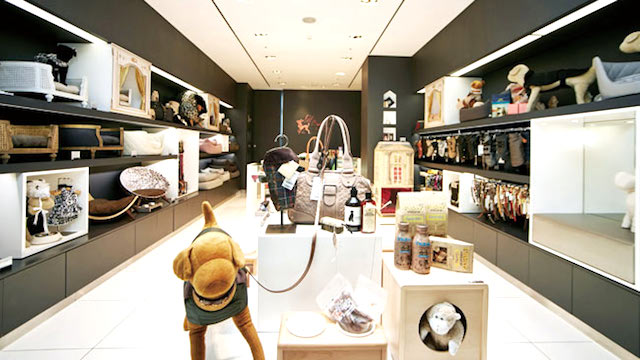
    They have opened pet shops that offer products and services ranging from food and grooming services to even lodging for pets. They are also launching their own branded product lines.

    Shinsegae International’s household goods brand Jaju has launched its pet product line Jaju Pet, which plans to sell innovative pet products such as its “slow round bowl”, designed to help pets eat their food slowly, and plastic dog-waste bags that can be connected to a dog collar.

    E-Mart, Korea’s first discount retail outlet run by Shinsegae, has opened Molly’s Pet Shop with its offering of products and grooming services. It even has its own pet hotel. Since opening at the end of 2010, E-Mart now runs 35 Molly’s stores.

    Lotte Department Store opened a pet consulting service dubbed Zipsa in Gangnam in January. The store offers such services as dog-walking or pet-food delivery.

    Online shopping malls are also trying to catch some action. GS Shop has launched a “pet zone” on its mobile platform offering services that cater to various stages of a pet’s life cycle, while CJ Mall has its All Pet Club, offering food and clothing products as well as services such as lodging and funerals.

    Food companies Binggrae, Dongwon F&B Harim, KGC and Pulmuwon are also launching pet-food brands.

    Korea’s Ministry of Agriculture, Food and Rural Affairs says the pet industry has grown by more than 14 per cent on average a year since 2014. The market size was tabulated at KRW2.3 trillion (US$ 2.1 trillion) last year and is expected to surpass the KRW3 trillion won mark this year.

    The pet-loving population is estimated to be around 10 million individuals in 4.57 million households. Analysts say that as single or two-person households increase and as the aging population grows, society will see more people raising pets in the future.

  • Department store sales benefit from holidays

    Department store sales benefit from holidays

    Department-store sales in South Korea rose this month with several family-oriented holidays and special occasions, retail industry data shows.

    Children’s Day, which falls every May 5, a substitute day off and May 8 Parents’ Day all contributed to more consumption at department stores. Plus Buddha’s Birthday, which is a national holiday and falls on a Tuesday, created a four-day break for some workers.

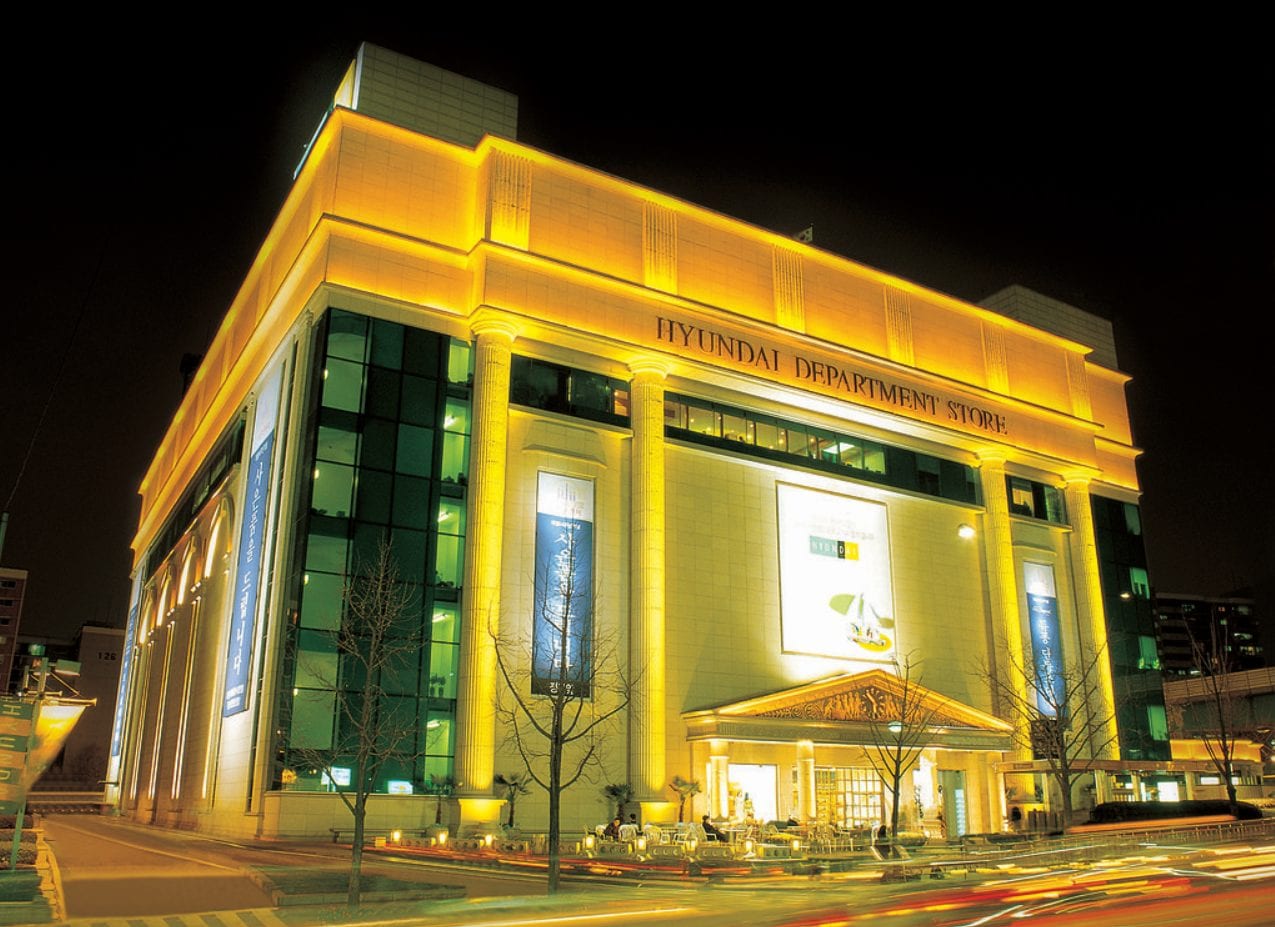
    In the first 20 days of this month, sales at upper-end department stores like Hyundai, Lotte and Shinsegae all rose, with some reporting close to double-digit gains compared with the year before.

    Shinsegae says its sales shot up 9.9 per cent, compared to a 1.5 per cent contraction for May last year. Sales of men’s and women’s clothing rose 16.1 and 12.6 per cent respectively, while demand for sports products rose 12.6 per cent. It said demand for designer goods soared 26 per cent.

    Hyundai says it sold 6.1 per cent more goods, with Lotte trailing with a gain of 5.3 per cent.

    Discount store chain E-Mart says sales for April and May were down slightly with the demand for both fresh and processed food falling last month.

  • E-Mart rolling out robot concierge

    E-Mart rolling out robot concierge

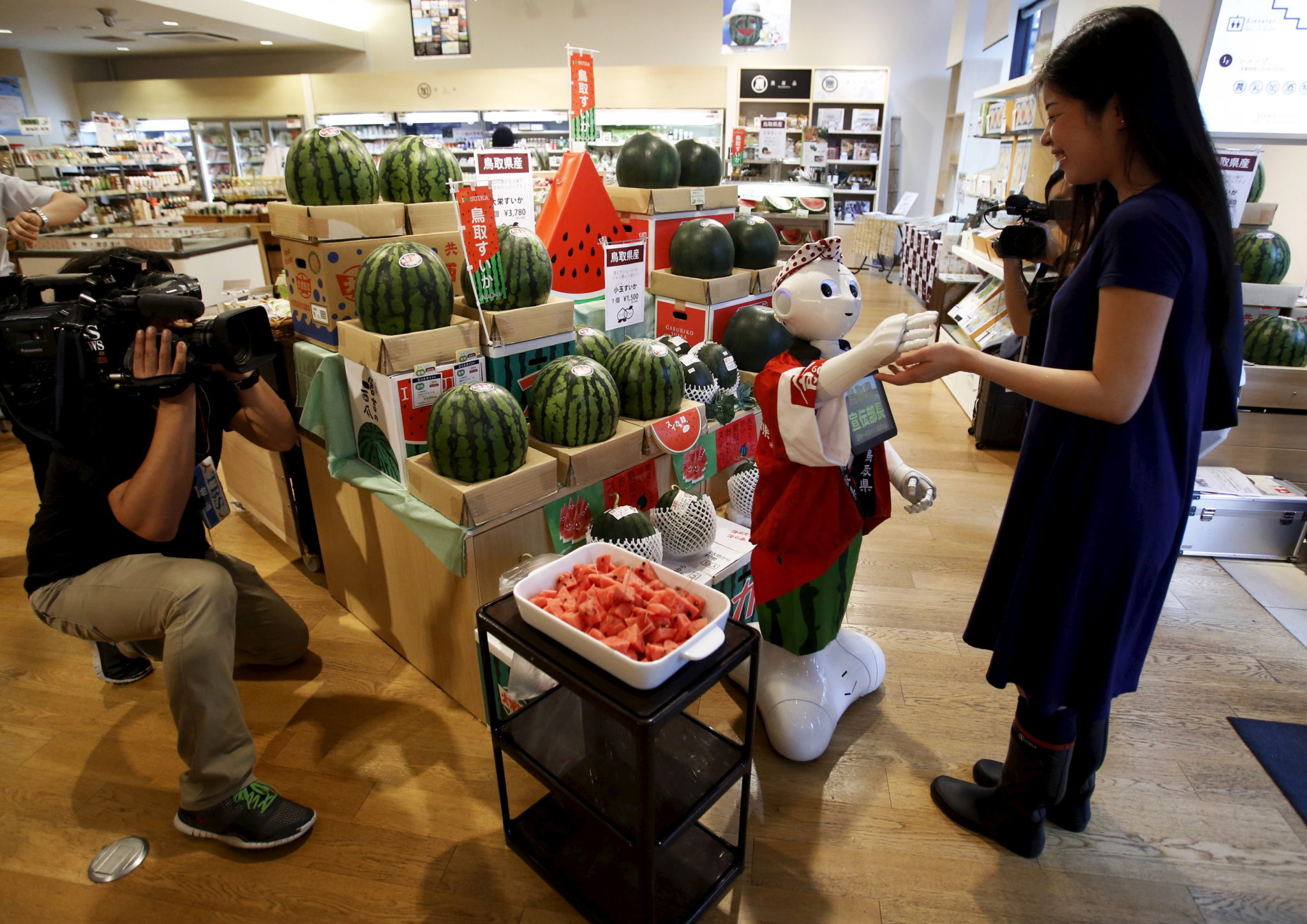
    South Korean discount store chain owner E-Mart Inc says it has started testing a robot to provide an automated concierge service to shoppers.

    Dubbed “Pepper”, the robot concierge will be stationed at an E-Mart outlet in Seoul for about three weeks, the company says.

    Developed by Japan’s Softbank Robotics Corp., the 1.2m-tall robot provides product information, introduces sale items and answers frequently asked questions, E-Mart says.

    This follows E-Mart unveiling an autonomous shopping cart, Eli, for a test run at its warehouse-style supermarket Traders in Hanam, just southeast of Seoul.

    This week, the company signed a memorandum of understanding with Seoul National University to carry out joint research on the implementation of auto-driving robots in the retail sector.

  • More stagnant E-mart store to be closed

    More stagnant E-mart store to be closed

    Shinsegae Group’s discount chain E-mart has decided to shut several more stagnant stores this year to improve the company’s efficiency.

    Shinsegae says it has also sold its Deoki-dong branch in Ilsan, Gyeonggi Province. The outlet had initially been a Walmart store in 1996, but became an E-mart in 2006 after Shinsegae acquired the US-based discount chain’s Korean affiliate.

    “We realised we needed to reform our stores for continuous growth,” says an E-mart official, “so we began closing down our stores that showed sluggish sales.”

    The company sold its store in Hakseong in Ulsan, the store in Bupyeong in Incheon and the store in Siji in Daegu last year. It also sold land in Hanam and Pyeongtaek, Gyeonggi Province.

    Following the closure of an SSG Food Market Mokdong store in Seoul in January, E-mart plans to shut down the Bupyeong and Siji branches in the first half of this year. The restructuring is regarded as a move to offset the retailer’s sluggish growth rate over the past few years.

    E-mart posted KW566.9 billion (US$524.3 million) in operating profits last year, down 0.3 per cent from the previous year.

    Disposing of its stores showing losses, the company is considering opening a couple of new stores this year, as reported.

    E-mart left the Chinese market last year because of lingering losses in the world’s most populous country. After launching E-mart store there in 1997, at one time it had 30 outlets. However, the Chinese affiliate posted KW21.6 billion in losses in 2016, and its accumulated deficit between 2013 and 2016 reached KW150 billion.

    Meanwhile, E-mart will begin building its second store in Ho Chi Minh City in May. The company is using its Vietnamese affiliate as a base for its expansion in other Southeast Asian countries, such as Cambodia, Laos and Myanmar.

  • Supermarket chains dominate offline shopping

    Supermarket chains dominate offline shopping

    Scale continues to play a major part in attracting shoppers both online and offline, a recent survey showed, with supermarket chains and large open market platforms coming top in consumers’ preferred retail outlets.

    According to a joint survey conducted by research firm Consumer Insight and Hanyang University’s retail research center, at least 80 percent of consumers said they went to supermarkets within the last month. The survey was conducted on some 15,000 Koreans from July 2017 to the end of January this year.

    Convenience stores came in second at 68 percent, followed by local grocery stores (55 percent), brand stores (45 percent) and traditional markets (39 percent).

    The report said 44 percent of the respondents said they generally tended to choose supermarket chains for offline shopping, while less than other offline shopping channels picked up shares of less than 10 percent each.

    “Some of respondents said they visit supermarket chains because it is well-located and easy to find. Some of them also cited familiarity as another reason, because its category of products and even interior provide similar ambience throughout all chains,” said Jung Kyung-sik who participated in the study.

    E-mart, discount store chain under retail giant Shinsegae, currently operates 145 stores across the country, while Homeplus and Lotte Mart have 142 stores and 123 stores, respectively.

    In terms of customer loyalty, which the report calculated based on preference and actual use, supermarket chains topped the list at 55 percent, while department stores (17 percent) and midsize grocery stores (16 percent) operated by retail giants such as Shinsegae followed. Midsized grocery stores, also known locally as “super supermarkets,” are those between 1,000 and 3,000 square meters.

    “Supermarket chains are dominating offline shopping channels, while other shopping platforms such as local grocery stores, convenience stores and traditional markets are left as secondary options,” the report read.

    Meanwhile, among online shopping channels, customers used open markets the most, with 79 percent of shoppers having used one, followed by social commerce (51 percent), home shopping (35 percent) and individual retailers’ online sites (30 percent).

    Customer loyalty was the highest, again, for open markets at 64 percent, compared to other online shopping channels such as social commerce (35 percent) and online retailers (26 percent). Home shopping, duty-free stores and multiplex shopping malls showed low customer loyalty at 10 percent, 8 percent and 7 percent, respectively.

    “Competition in both offline and online retail industries is quite obvious, as supermarket chains are dominating offline shopping channels, while open markets are taking the lead in online shopping platforms. This structure is unlikely to change at the moment,” according to the report.

    “Only the aggressive and creative online marketing strategies from social commerce and retailers’ online sites can change the situation for online shopping channels.”

  • Korean embracing the chill, retail sales number peak in low degrees

    Korean embracing the chill, retail sales number peak in low degrees

    A new study has revealed that Korean shoppers embrace the cold winter climate – but not much beyond minus 5 degrees.

    Supermarket operator E-Mart says the number of customers peaks during winter when the temperature hits minus 5 degrees Celsius, also known as the ‘golden temperature’ in the South Korean retail industry.

    Researchers learned that customers were most likely to come out and shop when the mercury fluctuated around the golden temperature, after analysing the shopping patterns of consumers from last December to early January on Wednesday, Thursdays and Fridays.

    The number of visitors to E-Mart reached the highest levels between December 20 and 22 of  last year, totaling 2.17 million shoppers. During this period, the temperature dropped to around minus 5 degrees Celsius.

    Between January 31 and February 2, 2.12 million people shopped at E-Mart stores across the country, with the temperature plunging to a low of minus 4.3 degrees Celsius on average.

    During the seven weeks when the study was conducted, the temperature stayed at a low of minus 4 to minus 7 degrees Celsius on the top four most visited days.

    The best temperature for retail sales didn’t come often, however.

    The number of customers dropped when the mercury rose to minus 0.3 degrees Celsius, with only 2.05 million people visiting E-Mart stores on Wednesday, Thursday and Friday during the third week of January.

    When it was too cold, retail sales were impacted negatively, with the number of customers plunging below 2 million during some days in January when the temperature dropped to minus 10 degrees Celsius.

    “When cold waves hit and temperatures drop below minus 10 degrees Celsius in the winter, shoppers tend to avoid offline shopping. At the same time, warm weather also doesn’t help retail sales as sales of seasonal products like heating supplies become sluggish. We believe around minus 5 degrees Celsius is best for retail sales,” an E-Mart spokesperson said.

  • Korea’s PK Market to enter the US market

    Korea’s PK Market to enter the US market

    Shinsegae’s discount chain E-mart plans to enter the US by opening its premium food outlet PK Market.

    While mostly high-end products will be sold at the South Korean group’s outlet, some of its low-tier private brands such as No Brand and Peacock will also be offered.

    E-mart is eyeing cities with significant Asian communities, such as Los Angeles and San Francisco. It may also acquire a food factory in Portland, Oregon, for producing its Peacock products for the US.

    E-mart has also joined hands with US shopping mall giant Taubman, which helped establish Starfield shopping malls in Korea.

    The Korean company has been trying to diversify its global reach, particularly after closing down stores in China over the THAAD row. Its accumulated operating loss in China has reached more than KW150 billion (US$141 million) since 2013, according to industry sources. E-mart finally exited the Chinese market last month.

    Meanwhile, the company plans to open its second outlet in Ho Chi Minh City in May.

  • Shinsegae to ramp up e-grocery business with $940 million from private equity

    Shinsegae to ramp up e-grocery business with $940 million from private equity

    South Korean retail heavyweight Shinsegae has drawn a US$938 million investment to help it build a major e-commerce business.

    Shinsegae has signed an initial funding agreement with BRV Capital and private equity company Affinity Equity Partners as it strives to make the most of a rapidly expanding Korean online shopping market.

    Shinsegae says it will carve off the online business divisions of Shinsegae Department Store and its discount store chain operator E-Mart and merge them to establish a separate affiliate dedicated to the group’s e-commerce business.

    “Our goal is to launch the new affiliate within this year,” Choi Woo-jung, head of the group’s e-commerce business, said in a press release. “Further details, including the name of the company and its structure, will be decided down the road.”

    Shinsegae plans to carry out new business projects, including mergers and acquisitions, through the spun-off company and raise it as the business group’s key distribution channel with an annual revenue of 10 trillion won by 2023.

    Shinsegae’s e-commerce business has been posting double-digit growth since the launch of an integrated online mall for its subsidiaries, SSG.com, in 2014, it said. The online platform logged 1.5 trillion won (nearly $1.4 billion) in sales in the first nine months of 2017.

    The retailer’s move to expand its e-commerce business comes in line with a steep rise of purchases made over the Internet in South Korea as the use of smartphones has fully caught on with local consumers.

    Transactions made with personal computers and other mobile devices reached 7.55 trillion won November last year, up a solid 21.7 per cent from a year earlier, according to data from Statistics Korea.

  • EMart’s M-Lounge to sell electric mini-vehicles

    EMart’s M-Lounge to sell electric mini-vehicles

    South Korea’s discount store E-Mart, a unit of retail conglomerate Shinsegae Group, has started selling electric mini-vehicles.

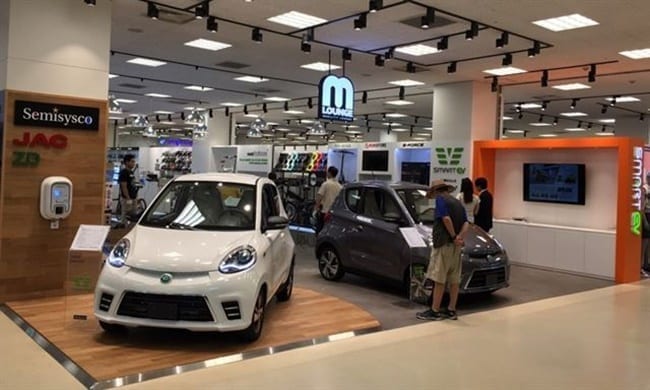
    E-Mart says it has expanded its M Lounge network to seven shops across Korea to sell electric bicycles and EVs.

    Introduced at its Yeongdeungpo store last March to introduce its e-mobility lineup, M Lounge now sells E-Mart’s private-brand e-bike Pedelec and other brands such as Mando Footloose and Maskali, as well as Air Wheel (electric wheel) and iBoat (electric kickboard). It has also started taking orders for the Zhi Dou two-seater electric car from China, which can run up to 150㎞ on a single charge.

    Cleared by regulatory authorities last month, the vehicle is expected to be priced at KW13 to 14 million (US$13,000).

    E-Mart aims to install M Lounge at up to 20 key stores across the country.

  • K-beauty eyes Middle East

    K-beauty eyes Middle East

    The political tension between Seoul and Beijing has eased after a summit between the two leaders during the APEC Summit, but K-beauty companies are diversifying their overseas operations instead of returning to the Chinese market.

    Supermarket chain E-mart said  that it has signed a franchise deal with Saudi Arabia’s largest retailer Fawaz Alhokair. Under the contract, E-mart is set to sell its cosmetic brand Sentence at Fawaz Alhokair shopping malls.

    Fawaz Alhokair operates 21 shopping malls in Saudi Arabia, and E-mart said it will open one Sentence store in the Riyadh and Jeddah malls by March. Another four more stores are expected to be opened by the end of 2018.

    The nation’s largest cosmetic company AmorePacific also plans to open its first Middle Eastern store in the United Arab Emirates in January while preparing to open others in Saudi Arabia and Kuwait.

    AmorePacific signed a partnership deal with the Middle East’s largest retailer Alshaya Group.

    LG Household & Healthcare has already entered the Middle Eastern market. It now operates more than 60 The Face Shop stores in Saudi Arabia while another K-beauty brand Tonymoly has opened five stores in the country, including two in Jeddah and one in Riyadh.

    Market researchers say their surging interest in the Middle East is attributed to the market’s growth potential.

    London-based consultancy Euro Monitor said the Middle East cosmetic market was worth 19.5 trillion won (US$18 billion) in 2015 but is expected to reach 39.1 trillion won by 2020. The figure is double the average growth rate of the world’s cosmetic market.

    Likewise, Korean cosmetic firms’ exports to the market have soared.

    According to KOTRA, Korean firms exported only 150 million won worth of cosmetic products to the Middle East in 2008. The figure, however, jumped to 40.1 billion won last year, a 265-fold increase over eight years.

    “The cosmetics market in Saudi Arabia has grown 10 percent a year on average for the last decade. This is one of the most rapidly growing cosmetic markets in the world,” an E-mart official said.

    “Korean cosmetic products are expected to enjoy good sales there thanks to booming Hallyu popularity.”

  • E-Mart to tap Saudi Arabia with beauty specialty store

    E-Mart to tap Saudi Arabia with beauty specialty store

    E-Mart Inc., South Korea’s largest discount chain operator, said Thursday its beauty brand will open a store in Saudi Arabia next year, as the retailer attempts to expand its presence in the overseas market.

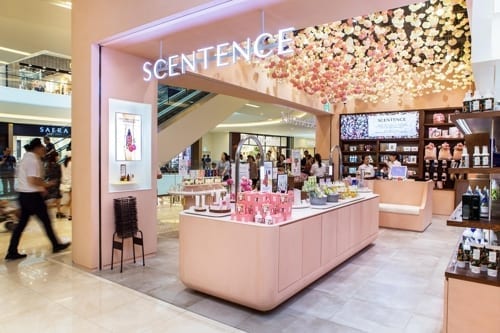
    The company said it signed an agreement with the Middle Eastern country’s major retail group Fawaz Alhokair to open its beauty store Scentence at a shopping mall operated by the Saudi firm.

    The store is likely to open in the Saudi capital city of Riyadh in March next year at the earliest, E-Mart said. It plans to open up to five more stores by 2018.

    The South Korean retailer has been pushing to tap deeper into foreign markets after withdrawing its business from China.

    This undated photo provided by E-Mart Inc., the operator of South Korea’s largest discount store chain, on Nov. 23, 2017, shows its beauty specialty store at a shopping mall in Goyang, northwest of Seoul. 


  • Korean retailers shifting to ASEAN from China

    Korean retailers shifting to ASEAN from China

    Lotte, Shinsegae and other retailers in Korea have been shifting their focus to Southeast Asia as it has become difficult to conduct business in China amid deteriorating Korea-Sino ties.

    The increasing number of middle-class consumers in Vietnam and other countries has also encouraged the retailers to establish a larger presence in the rapidly-growing region.

    The exodus from the Chinese mainland has been accelerating as the Chinese government shows no signs of easing economic retaliation against Korean firms and their products because of Seoul’s decision to deploy a Terminal High Altitude Area Defense (THAAD) battery here.

    Of the Korean retailers, Lotte Group has engaged most actively in the Southeast Asian markets, pushing ahead with its plan to carry out multi-complex construction projects in Southeast Asia as the group’s new growth engine.

    Lotte Mart, the hypermarket brand of the nation’s largest retailer, is currently operating 45 stores in Indonesia and 13 in Vietnam, industry sources said. It will also open another store in Lampung Province, Indonesia, in December 2017.

    In September 2014, Lotte built the Lotte Center in Hanoi, Vietnam. The 65-story multi-complex offers the group’s various shopping and accommodation brands, including Lotte Department Store, Lotte Mart and Lotte Hotel.

    Lotte is building a large-size shopping mall with a gross floor area of 200,000 square meters in Hanoi, with completion scheduled for 2020. It is also reviewing its plans to invest about 2 trillion won (US$1.74 billion) to build another 100,000-square meter multi-complex in Ho Chi Minh City.

    Lotte Duty Free, the group’s duty free store affiliate, has also recently entered Vietnam. It partnered with a local retailer to establish the Phu Khanh Duty Free at the Da Nang International Airport, and the company official said it has a similar plan to open business in other major cities in Vietnam.

    Shinsegae Group’s discount chain brand E-Mart is also shifting to Southeast Asian markets.

    It has officially announced its exit from the Chinese market, and chose Vietnam as its new overseas growth engine. E-Mart opened its first store in the Go Bap area of Ho Chi Minh City, in December 2015, and is planning to open its second store in the city soon.

    The E-Mart Go Bap store recorded 41.9 billion sales the previous year to exceed its sales target by 20 percent. Its sales performance also marked 25.8 billion won during the first half of this year, up 27.5 percent from the same period the previous year.

    It signed an MOU deal with Ho Chi Minh City last year to invest $200 million in September, and an E-Mart official said it will enter Laos, Indonesia and Cambodia soon.

    GS Retail, the nation’s convenience store brand is also entering Southeast Asian markets.

    GS Retail, which operates the GS25 convenience store chain, has recently established a joint venture with Vietnamese SonKim Group. Taking 30 percent in shares, GS Retail plans to open its first store in Ho Chi Minh City.

    GS Retail opened its first GS Supermarket in Indonesia in October 2017.

  • E-Mart China exit confirmed

    E-Mart China exit confirmed

    Thailand’s CP Group has agreed to buy five of the six remaining E-Mart China stores, ending a 20-year presence for the Korean firm.

    Sources in the retail investment banking sector said E-Mart inked an agreement with CP Group to hand over the stores in Shanghai pending approval from Chinese regulators.

    Reports emerged earlier this month that the two parties were in negotiations. Yonhap news agency’s sources said E-mart is in the process of selling off its sole outlet in Xishan by the end of the year.

    Exact details of the sale have not been released, but market watchers said E-Mart will not be able to get the full market value for the stores and will have to settle for much less.

    The net book value of the stores to be sold to the Thai food and agribusiness stands at around 68 billion won (US$59.9 million), with CP Group expected to benefit from economy of scale with the takeover. The company already operates a supermarket chain under its CP Lotus subsidiary.

    “Getting approval from Chinese authorities takes time, and the company cannot reveal details about the contract before then, but internally the goal is to exit China by the end of 2017,” said an E-Mart insider, who declined to be identified.

    E-Mart first entered the Chinese market in 1997, with the total store number rising to 30 at one point yet it had to scale back operations in the face of tough conditions and weak sales.

    Last year the retailer reported losses hitting 21.6 billion won, while total losses in the last four years reached 150 billion won.

    The company, meanwhile, said that it is moving into new Asian markets to compensate for China, where the diplomatic row over Seoul’s decision to deploy a US anti-missile defense system on its soil has hurt sales of South Korean-made products and services.

    E-Mart said that it is making a determined push to expand into the Mongolian, Vietnamese, Laotian and Cambodian markets that offer good growth potential.

    It said a second store in Mongolia will be opened Friday following the first that started operations in July 2016.