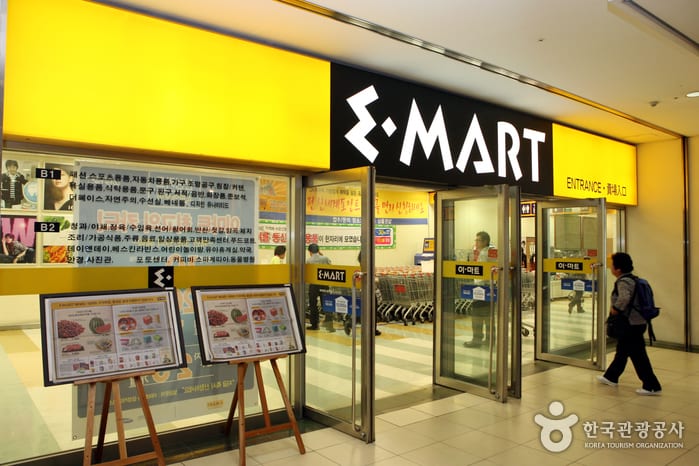
Tag: E-mart

  • Korea’s E-Mart Vietnam launches

    Korea’s E-Mart Vietnam launches

    As a first step in a Southeast Asian rollout, Korean discount store E-Mart has opened its first outlet in Vietnam.

    It goes head-to-head with rival Korean chain, Lotte Mart, which has been in Vietnam since 2011 and now has 11 stores. The E-Mart Vietnam launch follows four years of researching the Vietnamese retail market.

    Run by retail giant Shinsegae, the new two-storey E-Mart hypermarket is worth US$60 million and is on a 3ha site in the busy Go Vap District of Ho Chi Minh City, nearby the airport. It is the brand’s first overseas store since it shifted focus to Southeast Asia in 2011 after a lacklustre foray into China. The company regards the new store as a foothold for expansion throughout Vietnam and into such neighbouring countries as Indonesia, Laos and Myanmar, reports the Korea Herald.

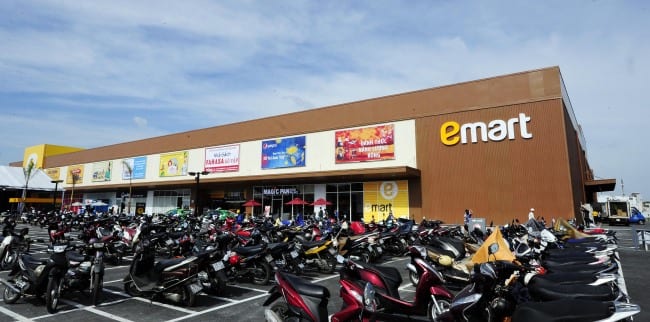
    E-Mart’s Ho Chi Minh City store has been tailored for Vietnamese consumers, and offers several features new for Vietnam. About 95 per cent of the employees (about 300) are Vietnamese, including the manager, and the parking lot has been designed to cater for 1500 motorcycles and 150 cars to reflect the city’s vehicle preferences

    As well as featuring Korean products popular with Vietnamese tourists to Korea, the hypermarket has imported items sourced by its operator. Korean dishes such as kimbap, tongdak and grilled chicken are made in-store, as well as baked goods adapted for Vietnamese tastes. On its shelves customers can also find fast-moving consumer goods, household utensils, electronics, and clothing from about 1000 local suppliers, plus a wide range of Korean and Emart-branded products. About 95 per cent of the goods will be locally made.

    Unusual for stores in Vietnam, the new E-Mart has such concepts as a diversified food court, a children’s sports club, games centre, book store and an English club, plus its flagship customer services include immediate refund and exchange policies and compensation for checkout errors.

    Its mix of food and entertainment is aimed at turning the store into a “happy hypermarket” for Vietnamese consumers, reports VNS. E-Mart Vietnam general director Choi Kwang-Ho says it is hoped these concepts will “sweep the Vietnamese retail market”.

    “After successfully building up a sizeable presence in Ho Chi Minh, we plan to expand into the rest of the country,” he said.

    According to the Korea Herald, E-Mart has already bought land for a second branch. An E-Mart press release says the company plans to open another hypermarket in Hanoi – a first for the capital – and expand the chain to 52 stores across Vietnam by 2020.

    Meanwhile, in co-operation with the Viet Nam National Traffic Safety Committee, E-Mart has donated hundreds of helmets each to seven primary schools in Go Vap. It plans to gift 50,000 quality helmets for primary-school students by 2020.

    E-Mart is the largest retailer in South Korea with 160 stores. Founded in 1993 by department store franchise Shinsegae, E-Mart reported global sales of $13.2 billion last year.
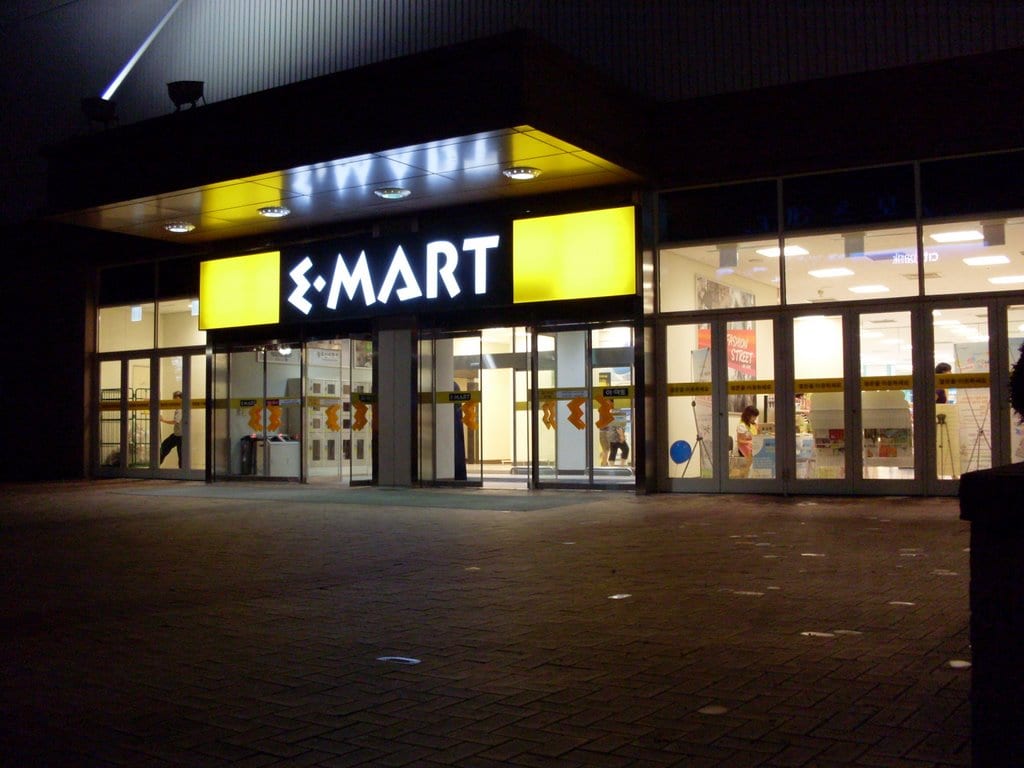
  • E-Mart opens first outlet in Vietnam

    E-Mart opens first outlet in Vietnam

    E-Mart said Monday it has opened its first outlet in Vietnam, with aims to expand its presence across the Southeast Asian region in the years to come.

    The discount store chain operated by Korea’s retail giant Shinsegae will be competing with Lotte Mart, which has been operating 11 stores in Vietnam since 2011.

    E-Mart’s new store located in the Go Vap District in Ho Chin Minh City, Vietnam. (E-Mart)

    The new E-Mart store — two stories tall and about 30,000 square meters wide — is located in the heart of Ho Chi Minh City at Go Vap District, one of the most developed and densely populated areas in the capital.

    The Go Vap branch marks E-Mart’s first overseas store since the brand redirected its focus to the Southeast Asian market in 2011 amid sluggish performance of its Chinese operations.

    The firm has set its sights on using the new store as a foothold to expand into other regions in Vietnam as well as neighboring countries like Laos, Indonesia and Myanmar.

    E-Mart said it has taken care to localize its services as much as possible to meet the needs and lifestyle of Vietnamese consumers while introducing a number of new services and facilities unfamiliar to locals.

    For one, 95 percent of some 300 store employees, including the store head, are Vietnamese. In line with the high motorcycle ownership (80 percent) in the country, the parking lot has been designed to accommodate 1,500 motorcycles and 150 cars.

    In terms of its product lineup, E-Mart is featuring Korean goods that are popular among Vietnamese tourists to Korea as well as imported items sourced directly by the store operator.

    Popular Korean food such as kimbap and tongdak, grilled chicken, as well as fresh baked goods catered to Vietnamese tastes will be freshly made and sold inside the store as well.

    The venue also includes a number of new dining and entertainment facilities scarce in the country including a diversified food court, a sports club for children as well as an English Club.

    At the same time, E-Mart plans to implement its flagship customer services system, including immediate refund and exchange policies and compensation for miscalculations at the checkout counter.

    “By offering items, services and facilities popular among the Vietnamese E-Mart’s Go Vap branch will seek to sweep the Vietnamese retail market,” said general director of E-Mart Vietnam Choi Kwang-ho.

    “After successfully building up a sizeable presence in downtown Ho Chi Minh, we plan to expand into the rest of the country,” he said.

    E-Mart has reportedly purchased land near Ho Chi Minh’s Tan Son Nhat International Airport, with plans to open its second branch there in the near future.

  • Store’s e-receipts pay off with cash-saving extras

    Store’s e-receipts pay off with cash-saving extras

    Shinsegae Department Store is set to launch a new smartphone app that offers online and offline shoppers e-receipts with extras.

    While the electronic receipt app avoids the hassle of scraps of paper receipts, it can also provide discount coupons and make it easier for customers to park cars.

    Scheduled to launch on Friday, the retailer said the app will help it engage with customers and potentially learn consumer shopping habits from the digital records, and make exchanges or returns easier.

    Retailers outside of Korea have already adopted e-receipts, but local shops have been slow to utilize the system.

    Global marketing company Epsilon International said the e-receipt is “an innovative communications vehicle for retailers that offer limitless marketing possibilities, providing deeper insight into consumer shopping habits, which can lead to more targeted advertising mailers, promotions and emails.”

    On top of offering e-receipts, the platform will provide information about different sales events and discount coupons, the department store chain said.

    The Shinsegae app will also help the store’s parking service. If a customer registers a car number, they can check the length of time they have spent in the parking lot.

    In the Gangnam and Incheon branch, customers can confirm their parking locations on the app and also get their parking ticket validated for free parking.

    The company said that users are allowed to log in with cell phone numbers instead of having to create IDs and passwords.

    Starting in September, users of the app can also receive a list of bestselling products. In addition to the new features – an upgrade to the old app which gave basic store information – Shinsegae said it will add other services to the platform.

    The retailer also unveiled a pickup service that allows online users to pick up their orders at Shinsegae Department Store.

    The new service is part of “omni-channel retailing” which is used by retail giant Amazon, which is a marketing strategy aimed at bridging the gap between online and offline stores.

    “The boundary between online and offline shopping is getting blurry,” said Hong Jeong-pyo, director at the marketing strategy division at Shinsegae. “Shinsegae launched the services that combine the advantages of online and offline shopping.”

    The release is the latest digital service offered by Shinsegae. The group introduced a new mobile payment system called SSG Pay, where consumers can pay with the app at Shinsegae affiliates, including Shinsegae Department Store and E-Mart, WithMe convenience stores, Starbucks, Premium Outlet and SSG.com.


  • E-Mart calls time on closures

    E-Mart calls time on closures

    South Korea’s largest discount supermarket operator E-mart says it is recommitting to the China market and will stop closing stores there.

    E-Mart once operated 27 discount grocery stores in the mainland, but for the last five years has been constantly returning its model and shutting down underperforming outlets.

    However this week, an E-mart executive signalled a change of course.

    “After the August 3 closure of a branch in Shanghai, there will be no additional shutdowns of the remaining eight branches in east China,” a media spokesperson said.

    E-Mart, part of the Shinsegae corporation, says the restructuring and closures will reduce its net loss by 35 per cent this year and a greater focus on eCommerce will help it approach a hitherto elusive profitability.

    “The region continues to be one of the most profitable regions and some of our branches there are even posting a profit. China is a market that we cannot give up,” the spokesperson said.

    In 2011, E-Mart lost US$95 million on its China operations. It has not made a profit there since and in the first three months of 2015 it reported a $10.4 million loss.

    Despite the company’s poor fortunes in China, E-Mart is planning to open its first store in Vietnam in December and is also targeting Mongolia.

  • Brutal retail market awaits buyer of Tesco South Korea business

    Brutal retail market awaits buyer of Tesco South Korea business

    Any buyer of Tesco’s $6 billion South Korea unit will need a strategy to boost returns in a lethargic and saturated market for traditional retailers, likely involving real estate sales and a greater focus on Internet shopping.

    Britain’s Tesco has hired HSBC to advise on a potential sale of its South Korean unit, Homeplus, Reuters reported this month, in what could be Asia-Pacific’s largest private equity deal and the No. 2 merger in the Asian consumer sector.

    Given the scarcity of big buyout targets in Asia, the sale is generating strong interest among buyout firms including KKR & Co and Carlyle Group CG.N, sources with knowledge of the sale process said. That’s despite difficulties posed by South Korea’s crowded retail sector, a sluggish and fast-aging economy, plus regulatory and labor challenges.

    “Anyone going with the view of closing unprofitable shops, cutting work force, will be in for a surprise,” a senior Hong Kong-based investment banker familiar with the process said, citing likely opposition from labor unions.

    “It’s a tough market but there are some low-hanging fruits in terms of stripping property assets,” said the banker, who declined to be identified as the discussions are confidential.

    Homeplus Co Ltd’s property holdings, consisting mainly of stores, had a book value of 3.09 trillion won ($2.77 billion) as of the end of February, according to a regulatory filing.

    With about 400 stores including 140 hypermarkets, 88 of which it owns, Homeplus has raised about 1.2 trillion won since 2012 by selling and leasing back eight of its biggest-selling stores, according to South Korean deal website Invest Chosun.

    Its prime real estate holdings include a hypermarket in densely populated Seoul suburb Euijeongbu, which frequently ranks among its top 5 stores by sales.

    But it’s a crowded field. South Korea has nearly 500 hypermarkets for a population of 50 million, or twice what the industry considers optimal. The difficulties prompted Carrefour and Wal-Mart to quit the country in 2006.

    In a nod to a fiercely competitive market, Homeplus earlier this year sacrificed an equivalent of about 100 billion won in annual profit, or almost half of last year’s earnings, by cutting prices on some 500 kinds of fresh produce.

    “Competing by undercutting price has become the norm and is expected to continue in future,” said Lee Kyoung-hee, principal researcher at Shinsegae Research Institute.

    ONLINE GROWTH

    As the population ages faster than in any other developed economy and households shrink, retail sales in South Korea grew just 1.4 percent in each of the past two years, lagging broader economic growth.

    E-commerce, however, jumped 17 percent last year to 45.2 trillion won, or 14 percent of total retail sales, and hypermarkets have been scrambling to build share in a fragmented online segment where most players lose money.

    Homeplus’ share of South Korea’s online retail market has risen steadily but was still just 645 billion won last year, according to Euromonitor data in a CLSA report, for market share of just 2 percent, in line with larger rival E-Mart.

    “Hypermarket chains like Homeplus have been bolstering online sales as a possible growth solution, among admittedly few options,” said Kim Tae-hong, analyst at Yuanta Securities Korea.

    Lower priced warehouses have been another bright spot for Korean retailers, but while both E-Mart and Lotte Shopping’s (023530.KS) third-placed Lotte Mart have warehouse brands, Homeplus does not.

    Meanwhile total revenues for existing hypermarket stores have declined since 2012 when new rules required them to close for two Sundays a month to protect traditional markets. Homeplus saw a drop in same-store sales for two straight years.

  • Shinsegae opens big mall

    Shinsegae opens big mall

    Korea’s Shinsegae Group is about to open an enormous purchasing centre northwest of Seoul which it hopes will take the battle to Ikea for homewares buying.

    Shinsegae, one of many nation’s largest division retailer operators, will open E-Mart City on June 18, on a website adjoining to the Kintex conference centre in Ilsan, within the Gyeonggi province.

    The corporate is banking on Seoul residents heading out to the centre for a day’s buying, eating and leisure – a serious drawcard being carparking, which shoppers should queue for in downtown locations.

    E-Mart City, stated to be the dimensions of about 10 soccer fields, will inventory furnishings, house home equipment, homewares, groceries and meals. It can function an E-Mart grocery store and a wholesale warehouse.

    Shinsegae believes three branded retail areas will create some extent of distinction from its rivals: an upmarket foodcourt referred to as Peacock Kitchen that includes 14 meals manufacturers and seating for 300 individuals; residence furnishing retailer The Life providing some 5000 merchandise; and multi-brand equipment retailer Electro Mart.

    “We’ve got put all our assets into the mall as a way to set a brand new development in retail enterprise,” stated Shinsegae vice chairman Chung Yong-jin in a press release.

    “The E-Mart City is a cluster of trend-setting shops and good eating places. Individuals will be capable of have a high-quality one-stop purchasing expertise within the city.”

    Ilan is about to be a battlefield for main retailers, with Ikea planning to open its second Korea retailer there in 2017, and Shinsegae’s rivals Lotte, Tesco Residence Plus, Lotte Massive Market, Costco and Hyundai Division Retailer all inside a brief drive.

  • MERS fears drive Koreans on-line

    MERS fears drive Koreans on-line

    South Koreans are more and more turning to on-line channels for grocery purchasing as they eschew their traditional visits to grocers amid the continued unfold of Center East Respiratory Syndrome (MERS), business knowledge exhibits.

    South Korea has reported 150 MERS infections because the first case was confirmed on Might 20, the most important outbreak outdoors of Saudi Arabia the place the respiratory sickness was first reported in 2012. As of Monday morning (June 15) 16 individuals have died from the illness.

    Knowledge by the nation’s three largest grocers — E-mart, Residence Plus and Lotte Mart – exhibits well being considerations are driving Koreans on-line, with eCommerce orders and order quantities rising within the double digits as MERS infections and MERS-related deaths rise.

    Market chief E-mart noticed its on-line gross sales soar 63.1 per cent between June 1 and June 11, in contrast with the identical interval a yr earlier. The variety of orders additionally jumped 51.9 per cent.

    By product class, ready-to-cook house meals gross sales shot up 90.1 per cent adopted by a 83 per cent rise in recent meals and 69.9 per cent improve in processed meals.

    Tesco’s House Plus reported a 48.1 per cent improve in on-line gross sales and a 37.5 per cent rise when it comes to order worth. Lotte Mart noticed its on-line gross sales develop 26.eight per cent in contrast with a 10 per cent gross sales stoop at its brick-and-mortar branches.

    The unprecedented unfold of the doubtless lethal virus has emerged as a bugbear for Asia’s fourth-largest financial system that’s already grappling with limping exports.

    Final week, the central financial institution slashed the coverage price to a brand new low of 1.5 per cent as a part of “pre-emptive” efforts to stop MERS from adversely affecting sentiment and consumption.

  • Korea’s E-mart tackles China – again

    Korea’s E-mart tackles China – again

    South Korea’s largest discount chain, E-mart, is to start selling on Alibaba’s T-mall in a fresh attempt to break into China’s seemingly impenetrable online market.

    The Korean company believes the Alibaba-powered online shopping mall is the key to success after previous attempts to crack the China market flopped.

    From mid-March, E-mart will sell about 100 food and electronic products, including rice cookers and soybean paste on Tmall Global.

    E-mart would be joining other South Korean retailers including Interpark and G-market.

    E-mart said in a release that it plans to broaden its product offer to about 500 lines by June 30, focusing on products which have proven popular among Chinese tourists visiting Korea.

    It will use sales figures from its Jeju and Incheon stores – both popular destinations for Chinese tourists – to build its Tmall product offer.

    “We believe the move will enhance access to a new segment of customers, besides tourists, that are interested in Korean products,” said Kim Nam-gon, a PR executive with E-mart’s parent Shinsegae.

    E-mart will sell goods in China at a slightly higher price than in Korean stores, reflecting the distribution cost of getting the products to Chinese consumers.

    The retailer has struggled to gain any momentum in the China market to date through physical stores. Last December it closed five stores in Tianjin province, reducing its bricks and mortar network to just 10 from a peak of 27 at one time.