Tag: E-tailing

  • Honestbee, NTUC FairPrice partner online

    Honestbee, NTUC FairPrice partner online

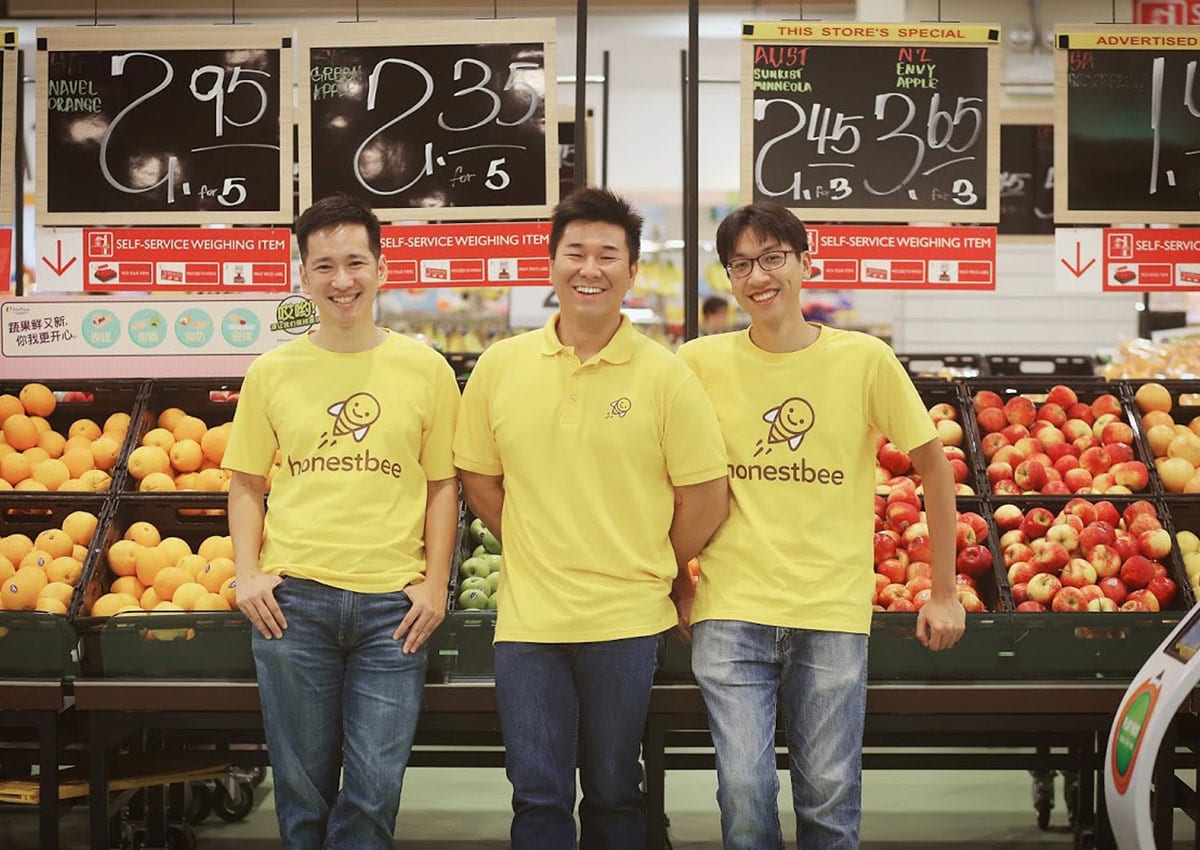
    Singapore-based Honestbee and NTUC FairPrice have partnered to enable customers to have FairPrice products delivered to them within the next hour.

    This enables customers to carry out their grocery shopping from their favorite stores – in the comfort of their homes – via the honestbee online portal and receive their delivery in the next hour.

    Honestbee started just eight months ago and is already planning imminent expansion into Hong Kong and Taiwan and with further Asian markets on the radar.

    It is the first ‘concierge grocery delivery service’ in Singapore.

    “Through this partnership, we look to enhance the overall retail experience for customers and elevate the online supermarket retail industry to even higher heights,” said Honestbee co-founder and CEO Joel Sng.

    “With honestbee, we are now able to provide an on demand level of convenience for NTUC FairPrice and all customers.”

    “Through this partnership, we look to enhance the overall retail experience for customers and elevate the online supermarket retail industry to even higher heights,” said Dominic Ng, deputy GM (FairPrice Online) NTUC FairPrice.

  • Online fashion rental store Yeechoo re-launches

    Online fashion rental store Yeechoo re-launches

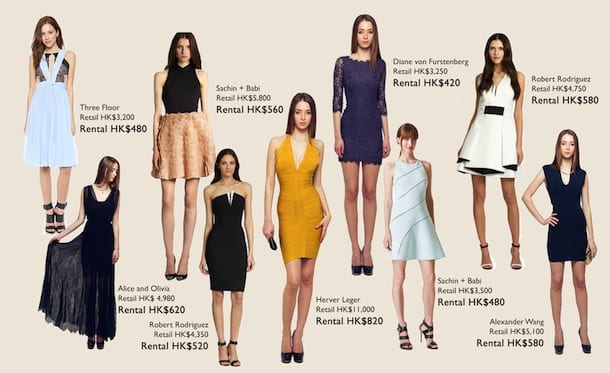
    Online fashion rental store Yeechoo has relaunched, expanding its service outside Hong Kong for the first time.

    The new website was officially released on Monday and from this week the company will ship to customers in Macau, Mainland China, Taiwan and Indonesia.

    The site features new branding and an expanded range of designer and dress collections. It also offers free consultations and trials and makeup demonstrations online.

    “At Yeechoo, what you are choosing is not just a dress, but a set of beautiful experiences,” the company said, revealing its new image.

    “We are Hong Kong/ Greater China’s first online high-end designer dress and accessory rental destination. At only a fraction of the retail price, you get to experience thousands of styles from over 60 luxury brands.”

    It also offers StyleShare, a new initiative it describes as “a pioneer social fashion experience”, allowing customers to borrow ‘pre-loved designer pieces’ and lend  their own, with a community of fashion lovers.

  • Alibaba launches sports company

    Alibaba Group’s expansion into non-eCommerce businesses such as movies and music took another step today as the group announced the establishment of a sports company, aiming to “transform China’s sports industry through Internet-enabled technologies.”

    The company, named Alibaba Sports Group, will be majority owned by Alibaba Group but has backing from Sina Corp., owner of China’s popular microblogging site Sina Weibo, and Yunfeng Capital, a private equity company founded by Alibaba Executive Chairman Jack Ma.

    Alibaba Sports Group will engage in sports media, events, ticketing and other aspects of the industry, leveraging Alibaba Group’s extensive e-commerce, digital entertainment, marketing, cloud computing and other Internet properties, according to an Alibaba press release.

    Alibaba’s Group CEO Daniel Zhang was named chairman of Alibaba Sports. Zhang Dazhong, a veteran of China’s new media and sports industry and a former vice president of Shanghai Media Group, will serve as CEO.

    “Sports has the enduring ability to create shared happiness and encourage healthy lifestyles,” said Zhang in the release. “Alibaba Sports Group aims to transform the China sports industry through the use of Internet-based technologies to bring greater and better products and services to consumers, sports participants and sports fans alike.”

    Alibaba Group’s online shopping site Tmall.com already hosts storefronts for merchandise sold by European football clubs Bayern Munich and Real Madrid. Last month, a documentary of NBA superstar Kobe Bryant was released through Alibaba’s Tmall Set-top Box. Alibaba also has a stake in China’s leading football club Guangzhou Evergrande.

  • Rocket Internet promises major Asian roll out

    Rocket Internet promises major Asian roll out

    Fast-expanding German startup Rocket Internet is promising its new joint venture spinoff will launch one new company per quarter in Asia.

    Rocket has partnered with Qatari telco Ooreedo to launch an Asia-Pacific spinoff venture APACIG to launch new companies. This despite it already operating some 20 companies, including online food delivery business Foodpanda and eCommerce portal Zalora.

    The fast-paced roll-out has already begun with the launch of Vaniday, an online marketplace for beauty and wellness professionals, to Australia. Vaniday was already operating in five nations outside of Asia after first starting in Brazil.

    Vaniday will soon expand across Southeast Asia, the company said today. It’s similar to Vanitee and Lookbooker in Singapore.

    The news comes as some of Rocket Internet’s other ventures, such as Easy Taxi, are struggling badly in Asia. The ride-hailing app, which focuses on licensed city cabs rather than Uber-esque regular cars, pulled out of Hong Kong, Indonesia, and India at the end of last year and seems to be having a rough ride in other Asian markets up against fast-growing homegrown challenger GrabTaxi.

    Easy Taxi is also a part of APACIG. Other APACIG ventures include Carmudi, Lamudi, Everjobs, and Helpling.

    “We are operating in highly diverse markets – from very developed ones such as Singapore and Australia to rising stars such as Myanmar and Pakistan,” said Hanno Stegmann, CEO of APACIG, in a statement.

    “Our portfolio of companies fits the macroeconomic trends of different regions and the demand for new online businesses.”

  • JD.com partners with Korean shopping site Lotte.com

    JD.com partners with Korean shopping site Lotte.com

    China’s online direct sales company JD.com has partnered with South Korea’s online shopping site Lotte.com.

    Under the deal, JD.com customers will be able to purchase products from Lotte through JD Worldwide, the company’s cross-border platform.

    Products will cover categories including baby and maternity, cosmetics, fashion, everyday household products, home appliances, food and Lotte-branded products.

    “The demand for products through Korean Mall has been strong and partnering with Lotte will help us meet the growing needs of our users,” said JD Mall CEO Haoyu Shen.

    The announcement follows the successful launch in late March of Korean Mall, which sells authentic imported Korean products on JD Worldwide. Since its launch, dozens of Korean brands started to sell their products to Chinese consumers through Korean Mall. The best-selling product categories include personal care products and cosmetics.

    Lotte.com CEO Hyeong Jun Kim said JD.com’s users are the ideal audience for the company as they look to develop their business in China.

  • Zara’s online store opens in Hong Kong and Taiwan

    Zara’s online store opens in Hong Kong and Taiwan

    Zara’s online store opens today, September 9, in Hong Kong. The brand also offers online shopping in Taiwan since last week.

    Zara’s online store opens today, September 9, in Hong Kong. The brand also offers online shopping in Taiwan since last week. Both websites, www.zara.com/hk and www.zara.com/tw offer online shoppers the same full range of ladies, men and kids wear as the brick and mortar stores, supplied twice a week with new merchandise.

    In both markets, items sold online display the same price as they do in Zara’s brick and mortar stores. Customers of the online platform can choose between home delivery and the pick up at the ZARA store.

    Zara launched its ecommerce service in 2010 in several European markets, following the footsteps of Zara Home, which began its online platform in 2007. Other major markets followed, such as the US, Japan, China or South Korea. Zara’s customers can currently shop online in 27 markets.

  • Starbucks execs optimistic on mobile ordering and China

    Starbucks execs optimistic on mobile ordering and China

    Starbucks is investing heavily in ‘mobile order and pay’, with plans to roll out the feature across the US by the end of this month, CFO Scott Maw said at the Goldman Sachs retailing conference on Thursday.

    Previously, the coffee giant had set itself the end of the year as a deadline to finish implementing the service nationwide, with the Android version poised for release a little earlier.

    “We have a winner, and it’s running ahead of our expectations,” Maw told analysts and investors at an investment conference in New York.

    The mobile ordering and pay feature was introduced last year and is gaining traction. In June Starbucks announced it will spend £30m on a technological revamp of its UK business and Starbucks’ UK MD Mark Fox told Retail Gazette that mobile has played a valuable role in the retailer’s success. Last year, the Seattle based chain process over $2bn in mobile transactions.

    Next year, the app will add suggestions for orders based on consumer data.

    Starbucks has recognised the power of e-commerce and is wielding it to allow for its next revolution: delivery.

    Supposedly, the hazelnut latte maker hasn’t been hampered by the economic stagnancy in China,

    the company “is not seeing any material impact on profitability or revenue,” Maw said. “The number of transactions that we’re seeing is good,” and this quarter’s results are “going to stack up really well in China,” he added.

  • Germany’s Metro, China’s Alibaba in e-commerce tie-up

    Germany’s Metro, China’s Alibaba in e-commerce tie-up

    German retail giant Metro said today it is teaming up with Chinese online retailer Alibaba to tap the potential of the booming e-commerce market in China.

    Metro, which operates more than 80 Cash and Carry wholesale stores in China “is now expanding its channels” by opening an online shop in China offering Metro’s own brands, as well as supplier brands from Germany, it said in a statement.

    “In the first phase, over 100 products in the categories of dairy, canned foods, coffee, and chocolate from Metro Cash & Carry Germany as well as cosmetics goods from Real are to be offered online,” the statement said.

    The product assortment would subsequently be expanded to include more food items from Metro Cash & Carry and non-food from its Real supermarket brand.

    “E-commerce is one of our strategic growth drivers in China,” said chief executive Olaf Koch.

    “Opening the flagship store again shows our clear confidence in the Chinese market. This platform enables us to deliver more quality imported goods and German brands to the Chinese customers,” he said.

    Metro and Alibaba said they would also explore possible cooperation in other areas, such as supply chain and market data.

  • Japan’s Kakaku.com launches Priceprice.com in India

    Japan’s Kakaku.com launches Priceprice.com in India

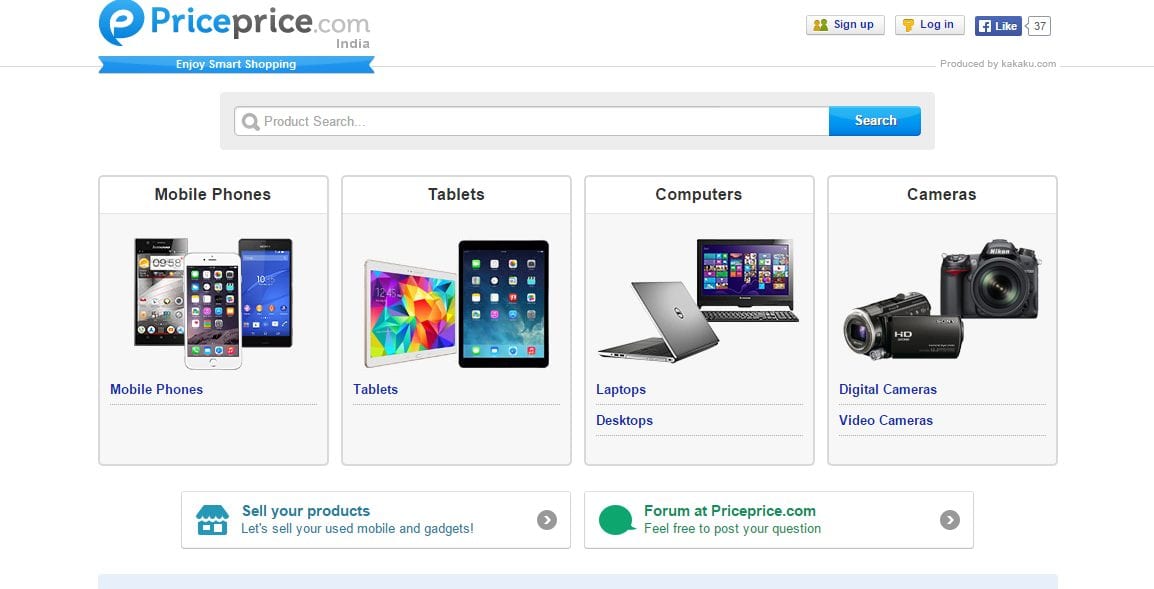
    Japan’s Kakaku.com has launched the Indian version of Priceprice.com, a price comparison site for mobile phones, tablets, computers and household appliances.

    Priceprice.com shows online shoppers a list of products from various sites, sorting the results from lowest to highest price, to easily show the best available price for that product.

    Kakaku.com is the largest price comparison site in Japan with approximately 50 million monthly users. Eighteen years after its founding, Kakaku.com has strengthened its management expertise and in recent years, the company has expanded its service globally. Following the launch in the Philippines, Thailand and Indonesia, Priceprice.com has established its position as the largest price comparison site in Southeast Asia with approximately 5.3 million unique users in all three countries.

    “We have now launched a new site in one of the fast-growing eCommerce market, India, where we dedicate ourselves continuously to offer pleasurable shopping experience for consumers,” the company said in a statement.

    The site not only compares prices. Users can access forums for each product allowing a place for people to ask questions about a product or for users to exchange opinions with other users. Shoppers can also see the ratings and reviews written by users who have actually used the products.

    “As we continue to improve product search and comparison functions, we also hope to include price information from offline retailers to further expand our services,” the company said.

  • Online security ‘paramount’ for shoppers

    Online security ‘paramount’ for shoppers

    A sense of security is paramount for nearly one quarter of shoppers when evaluating whether to purchase goods from a retailer online, according to a new survey from Worldpay, a payments provider.

    Assuring customers they are in safe hands throughout the entire payment experience should be a priority for retailers, according to 3500 online shoppers polled globally.

    Similarly, for one in four online shoppers, seeing payment authentication and digital certificate logos displayed prominently on a retail site’s homepage is the single most reassuring element in the purchasing process. Forty-six per cent of consumers globally admit this would help address their concerns.

    Transparency around online security is particularly important in China, where 70 per cent of shoppers said they feel more secure shopping when payment authentication and certificate logos are clearly displayed, indicating that this simple measure will go a long way in addressing the misgivings of online customers.

    Shoppers also want security transparency when retailers store personal and payment details. Thirty-one per cent of shoppers worldwide say they don’t want a retail website to store their payment details, and South Koreans and Australians are most averse to the idea with over 50 per cent saying they don’t want this information stored online. In China and Japan, 65 per cent of shoppers expect reassurance that their details will be kept safe by the retailer and want a clear explanation of how this will be done.

    Stuart Thornton, VP of business development in APAC with Worldpay, said: “Nagging doubts about the security of their payment details can add up over the multiple stages of the purchasing journey for shoppers and stop them from ever clicking ‘buy’, even if they really want a product. When selling online, retailers need to step in and reassure customers that their information is in safe hands, from the second they start browsing a site to the moment they receive an email confirming their purchase”.

    At checkout, shoppers expect the ability to use their preferred payment method and want the process to be simple and intuitive. Sixty-five per cent globally have abandoned their purchase at the checkout stage as a result of not being able to pay how they wish.

    Nearly 60 per cent of shoppers worldwide would drop out of a purchase if their preferred payment method was displayed on a retail site’s homepage but wasn’t available at checkout. Forty per cent of shoppers globally admit they would not take the time to look for their preferred payment method at checkout if it was not easy to find. This figure is even higher in Japan, where 62 per cent of shoppers say they wouldn’t search for their preferred payment method if it wasn’t already clearly indicated on the website.

    Retailers must also manage consumer expectations by clearly indicating what they can expect at each stage of the payments journey, particularly when redirecting them to a third-party website. Ninety-four per cent of shoppers globally say this is important, and one-fifth would instantly drop a transaction if ushered to a third-party site without warning. In Japan, nearly 30 per cent of shoppers would drop out if unexpectedly redirected to a third-party site to enter additional details.

    “Purchasing products online demands a certain level of trust between retailers and shoppers, and making the process simple and transparent is absolutely essential,” said Thornton.

    “Retailers will struggle to inspire confidence in their customers if they cannot deliver on shoppers’ expectations and give them peace of mind throughout the online shopping journey”.

    The need for retailers to act as a source of reassurance for shoppers is equally strong when it comes to handling errors or providing customer support. Nearly two-thirds of online shoppers (64 per cent) want a clear and immediate explanation of exactly what went wrong. When it comes to additional support, 27 per cent want to be able to call customer support, while 24 per cent want the option to email a support representative.

    Clear error messages also head off any potential confusion as to whether a transaction has been processed. Ninety-six per cent of shoppers say it is important they receive an email confirming that their order has been processed and their payment accepted.

    Adds Thornton: “If there is one thing to take away from these findings it is that the online payments journey is inextricably linked to the user experience. If retailers cannot reassure customers that their transaction will be quick, secure, and managed to the highest standard of professionalism throughout the payment journey they will struggle to keep shoppers engaged”.

    The research was carried out in partnership with KAE Marketing Intelligence, which conducted a desktop analysis of 350 top retail sites and surveyed 3500 online shoppers in 14 countries across North America, South America, EMEA, and APAC.
  • SSI hunts ASEAN retail brands

    SSI hunts ASEAN retail brands

    Leading Philippines retail group SSI says it is actively seeking to acquire brands and suppliers in the region that can help it build its ASEAN retail portfolio.

    “We continue to seek brands and suppliers that manufacture within the Asean region that would allow us to make the most of Asean free trade agreement. That is a key to our expansion and success in the recent past – to expand our retail concepts in new geographic areas,” SSI president Anthony T. Huang told the Manila Times.

    ASEAN, which comes into effect later this year, groups 10 economies in Southeast Asia, creating a free trade zone with less restricted borders. Participating countries are Indonesia, Malaysia, the Philippines, Singapore, Thailand, Brunei, Cambodia, Laos, Myanmar and Vietnam.

    “We’re hopeful because we have ongoing discussions [with potential acquisitions and partners] but nothing final at this time,” Huang said.

    “We’ve really been focused on the new acquisitions that we have to roll out next year and on the existing brand portfolio that we’re continuously rolling out and the continued expansion of FamilyMart,” he said.

    SSI is also in talks with other foreign brands outside the ASEAN group as it builds a portfolio of lifestyle and fashion brands. Its most recent deal was to partner with Canadian fashion label Joe Fresh.

    Huang says foreign brands find the Philippines appealing because the culture is westernised, it has a young population, strong growth and rising middle class with discretionary income.

    “We have the youngest population in the region. ‘Youngest market’, that’s the magic formula.

    “We’re seeing continued interest that many of the international retail concepts that should be in the market are in fact already in the market. But interests from new concepts are coming in to expand in the region,” he said in the interview.

    SSI’s portfolio already includes 115 brands.

  • Blackmores, Sanger to open stores on JD.com

    Blackmores, Sanger to open stores on JD.com

    JD.com says it has secured partnerships with Australian brands Blackmores, a leading Australian natural health company, and Sanger Australia, the Australian meat sales and marketing business of the Bindaree Beef Group.

    Both brands will open stores on JD.com’s direct sales channel and will use the company’s same-day delivery services. Sanger Australia will also leverage JD.com’s cold chain logistics network to ensure that its meat products are delivered fresh to Chinese customers from Australia.

    The announcements follow the successful launch in late June of a dedicated Australian Mall for authentic imported Australian products on JD.com’s cross-border platform, JD Worldwide. Since its launch, dozens of Australian brands have successfully sold their products to Chinese consumers through Australian Mall. The most popular product categories in the first two months of the program include health  care, baby care products and fresh food.

    “We’re pleased to be working with leading Australian brands to build winning eCommerce strategies for this market and help them take advantage of our large and growing base of upwardly mobile Chinese consumers,” said Carol Fung, VP of JD.comand president of JD.com’s FMCG Business Unit.

    “Blackmores is a long-time partner, and we are very excited to be expanding the range of their outstanding healthcare products available to our rapidly growing user base. With demand for Australian fresh produce growing exponentially, the addition of Sanger Australia’s world-class beef to our platform is an outstanding development for our customers.”

    Blackmores Asia MD Peter Osborne said his company has been working with JD.com since 2013.

    “Our increased engagement is testament to our strong relationship and commitment to growing our China business. Working with JD.com not only ensures we get our products to consumers quickly, but will also enable us to initiate targeted and specialised marketing campaigns leveraging JD’s data analytics capabilities.”

  • Capillary Technologies raises $45m for expansion

    Capillary Technologies raises $45m for expansion

    Singapore-based Capillary Technologies has secured $45 million in new funding to expand its back end services to multichannel retailers.

    Capillary Technologies offers a cloud-based platform which powers end-to-end customer engagement, loyalty and social CRM solutions for more than 170 major brands across 20,000 stores, serving over 150 million consumers primarily in Asia, including India, South East Asia, China and the Middle East.

    Customers include industry leaders such as Pizza Hut, KFC, Puma, United Colors of Benetton, Pantaloons, Arvind Brands, Madura Garments, Red Tag, Bata, Courts, Lee and Timberland.

    The company says it has raised $45 million in a series C funding round led by an affiliate of private equity firm Warburg Pincus. Existing investors Sequoia Capital and Norwest Venture Partners also participated.

    Capillary will use the capital infusion to expand its offerings to enable clients to develop an omni-channel view of their customers, both organically by broadening its product suite, as well as inorganically via the acquisition of MartJack, Asia’s leading multi-channel commerce provider.

    Capillary’s cloud-based platform, which can integrate into virtually any point-of-sale device, offers a one-stop solution for retail marketers to engage with their customers, by capturing and analysing customer data, and enabling targeted customer communications to increase loyalty and engagement. By combining big data with a robust analytics engine, Capillary optimises the relevance and profitability of personalized offers to consumers in real-time, significantly increasing both loyalty and sales.

    “Warburg Pincus needs no introduction for the kind of strategic direction and commitment they bring to the table, in addition to the investment. This funding round validates our model and vision of enabling retailers to harness the power of the cloud and to provide a deeper connect for consumers across channels. It also puts us on the path to being one of Asia’s true product bellwethers, which will establish us as a strong contender on the global map of Enterprise SaaS solutions,” said Aneesh Reddy, co-founder and CEO of Capillary Technologies.

    “The retail sector in Asia is undergoing a significant transformation, as organised retail develops in tandem with eCommerce, and as retailers invest in tools to drive consumer loyalty and retention across online and offline channels,” said Nitin Nayar, MD of Warburg Pincus.

    Concurrent with the capital raising, Capillary has also expanded its portfolio in areas of multi-channel commerce enablement, online-to-offline, predictive analytics and customer experience to expand its product and customer service capabilities.

    MartJack is Asia’s leading multi-channel commerce platform serving over 250 companies, including major global brands such as Walmart, Unilever, Future Group, Lulu, Clarks, Body Shop and Aramex, who use its cloud platform to develop online storefronts enabling digital commerce with shoppers.

    Its ready-to-use software platform provides a one-shop digital commerce solution to brands across Asia, featuring 30+ payment partners, 10+ logistics partners and 70+ service partners (e.g. digital marketing, web development, catalog management, design services).

  • US wine giant Robert Mondavi to launch online in China

    US wine giant Robert Mondavi to launch online in China

    Famed Californian winery Robert Mondavi is to join Alibaba Group’s Tmall.com online shopping marketplace to reach more consumers in China, the world’s largest wine-consuming market.

    Robert Mondavi says its exclusive Tmall flagship store will be the California company’s first and only online sales channel in China. The outlet will sell US-bottled labels such as Robert Mondavi Winery, Robert Mondavi Private Selection, Woodbridge by Robert Mondavi, and Twin Oaks by Robert Mondavi. The Robert Mondavi brand is owned by alcoholic beverage maker Constellation Brands, which bills itself on its website as the world’s top premium wine producer.

    Philip Kingston, senior vice president of international for Constellation Brands, said the company in recent years has “seen a very encouraging uptake in Chinese tourists visiting our wineries in California, as well as wine sales in China.”

    Opening a store on Tmall – China’s largest B2C online marketplace and part of Alibaba Group, whose retail shopping sites in the PRC have 367 million annual active buyers – “allows us to sell our wines to Chinese consumers in a marketplace which we believe will build our brand,” Kingston said in a statement.

    “It also strengthens our presence in China as we expect to benefit from Alibaba’s sophisticated data-analytics capabilities and extensive customer insights.”

    The growth and sheer size of China’s consumer class in recent years has made the country a top market for the world’s vintners. China’s wine consumption in 2014 was more than double that of second placed US, according to data from research firm IWSR.

    Tmall said with the opening of the Robert Mondavi Wines flagship store, it was launching a  “Tmall Vineyard Direct” program, promising to connect with more wineries around the world to allow them to sell directly to Chinese consumers through Tmall. Gary Clubb, head of Tmall international business development, said  “working directly with the winery itself is key to a robust supply chain and allows us to leverage the power of the Alibaba ecosystem to pioneer innovative sales and marketing campaigns to the 367 million buyers on our platforms”.

    Tmall has been aggressively recruiting Western retailers and brands selling products in a range of categories, from fast-moving consumer goods to apparel, to build up Alibaba’s cross-border online sales.

  • Amazon lures investors back from Alibaba

    Amazon lures investors back from Alibaba

    China is no longer in vogue with e-commerce investors, as money returns to the US and Amazon.com following a brief fling with Alibaba Group Holding and its 367 million customers.

    With a market value of more than US$240 billion, Amazon is once again the world’s most valuable e-commerce company, a spot it lost after Alibaba’s record-setting US$25 billion initial public offering in September. Alibaba’s current market capitalisation is at about US$180 billion, down more than 30 per cent from its peak in November.

    Alibaba reported earnings on Wednesday showing that quarterly sales grew at their slowest pace in three years, with transaction volume falling short of estimates.

    Investors viewed Alibaba as a profitable alternative to the free-spending ways of Jeff Bezos, Amazon’s chief executive officer. Now, concerns are focused on China’s cooling economy and slower consumer spending, as well as Alibaba’s reluctance to aggressively pursue business in the US. Meanwhile, Amazon impressed investors last month when it reported a surprise second-quarter profit, thanks to its fast-growing cloud-computing business and spending discipline.

    “You can’t overlook the China slowdown,” said RJ Hottovy, an analyst at Morningstar Inc. in Chicago. “Chinese consumer spending trends are in a slowdown.”  Among investors, JPMorgan Chase & Co, Wellington Management Group and TIAA-CREF Investment Management reduced their share holdings in Alibaba by an average of 42 per cent in the past three quarters, while increasing their holdings in Amazon by 65 per cent, according to data compiled by Bloomberg.

    For now, the e-commerce giants are mostly steering clear of each other’s home turf. Amazon is focusing its overseas growth ambitions on India after investments in China failed to gain traction. Alibaba in June announced plans to sell its US website 11 Main, and is looking to Russia and Brazil to expand. Rather than sell Chinese goods in the US, Alibaba is focused on encouraging American businesses to sell into China.

    While Alibaba initially benefited from interest in a new investment opportunity at its market debut, Amazon has the advantage of being publicly traded for almost two decades, said Kirthi Kalyanam, director of the Retail Management Institute at Santa Clara University.

    “Familiarity creates a big advantage for Amazon,” Mr Kalyanam said. “This is Wall Street saying, ‘If you think Alibaba is going to come into the US and take on Amazon, think again.’”