Tag: E-tailing

  • Belstaff counterfeit sites shut down

    Belstaff counterfeit sites shut down

    Luxury fashion brand Belstaff has won a court battle against online counterfeiters, winning $42 million in damages and leading up an unprecedented 676 copycat websites being shut down.

    The win was announced by MarkMonitor, a specialist in enterprise brand protection, which worked with Belstaff to identify and pursue the copycats.

    MarkMonitor used technology to identify some 3000 websites selling counterfeits products – more than 800 of them managed by one individual based in China.

    After the evidence was collected, a civil lawsuit was lodged in the US, with counterfeiters ordered to pay the $42 million and nearly 700 websites handed over to the brand.

    “There are other high profile luxury brands that have taken advantage of the US counterfeiting law, however we believe that our case has set the bar even higher due to the unprecedented number of sites that were taken down in one go,” said Elena Mauri, head of legal with Belstaff.

    “The whole legal process took less than four months and none of the single top 20 websites that were cited in the case are still in operation today. We certainly wouldn’t hesitate to take this legal route in the future, and we will continue to take a zero tolerance approach to any further illicit counterfeiting behaviour.”

    The legal result follows the company’s decision to embark on a major protection program for all of its IP – from registering of trademarks to individual products, including seeking external help from MarkMonitor.

    The program was put in place to monitor the full range of the different marketplaces and individual websites selling counterfeit products. The search also focused on any websites using the Belstaff name in their domain name, as well as generic sites listing counterfeit products.

    Gavin Haig, Belstaff CEO, said eCommerce has been a major driver of the brand’s growth.

    “However, alongside the clear benefits of venturing into the online retail market, we were aware of the potential negative impact from counterfeiters. Right from the outset, we have been determined to stop our customers falling prey to counterfeiters. We want to do everything in our power to protect our loyal customer base and our hard-earned 91 year old heritage.”

    The majority of the counterfeit products were jackets and outerwear, particularly counterfeit copies of Belstaff’s best-selling leather jackets. The copies were many seasons old; designs no longer in production.

    MarkMonitor’s technology is capable of exploring an entire network of sites, including both the index and non-index results, as well as examine fundamental criteria such as the website’s design and the payment processes.

    Jerome Sicard, regional manager, Southern Europe, said the court decision sends a stark warning to online counterfeiters and underlines the increasing importance of online brand protection.

    “This is not the first case of its kind, however the Belstaff ruling is unusual due to the substantial number of websites being handed over to the brand.”

  • Customer service in the Retail Revolution

    Customer service in the Retail Revolution

    Traditionally, the retail sector has taken the lead in customer service excellence.

    This is because when retail managers walked about their stores, they interacted with customers and received direct feedback as part of their daily duties. However, technology is revolutionising the retail sector – online stores, social media, mobile shopping and shopping apps are changing customer expectations and the way retailers engage with their customers.

    This has led to new challenges and opportunities for today’s retailers. Through eCommerce, retailers can now reach more customers from all over the world. The fact that someone can order an item one day and have it delivered the next, sets a high bar in terms of expectations. While this can lead to a greater number of complaints that are spread through social media, it also means positive experiences are similarly shared. One thing is certain – in today’s crowded landscape, delivering excellent customer service has become a key differentiator to help retailers maintain their competitiveness.

    The retail revolution is here and retailers need to pay attention to specific issues when it comes to delivering good customer service. These include managing social media, dealing with the holiday spike, representing the customer’s voice, and having the proper tools to scale effectively.

    Social media – the customer megaphone

    Today, no business can cover up bad customer service due to the growing popularity of social media platforms, such as Facebook, Twitter, Instagram and online blogs. Every customer has a megaphone for sharing positive and negative experiences. Savvy retailers can take steps to capitalise on the positive aspects by encouraging the viral nature of social media. They should also mitigate any negative effects, by quickly responding to complaints and addressing concerns.

    Another advantage of social media is that retailers can get more accurate feedback from the customer. Some individuals may be hesitant to giving direct criticism. This means if they are unhappy with a particular product or service, instead of letting the retail manager know, they simply never return. By monitoring the right social media platforms, retailers are given an additional opportunity to discover and fix any problems.

    To leverage on social media, the retail business needs to work out who within the organisations is responsible for managing the different social media platforms. Depending on the size and type of organisation, as well as expertise of employees, this could be the marketing department, customer service teams or even just one employee. The most important thing is that every customer request made over social media needs to be responded to in a timely manner, even if it’s just to say “Thank you!”

    The holiday spike – high sales and high stress levels

    The US-based National Retail Federation revealed that some retailers can bring in 20 to 40 per cent of their annual sales in the period leading up to Christmas. And while this is fantastic news, it brings with it a whole host of problems for the company. In addition to dealing with the sudden, temporary increase in sales volume, retailers must appropriately handle customers that may be more difficult than during other periods of the year. This is because people tend to be more stressed or agitated due to the holiday rush, requiring customer service staff to calm them down. Customers also tend to make purchase decisions less thoughtfully or are less familiar with the product, resulting in more purchase regrets and returns – which also requires additional support from the customer service team.

    Zendesk’s research shows that customer satisfaction with service interactions consistently drops during the holiday season. The main reason for this “dip” in satisfaction is because the increase in shopping means that the number of customer requests per agent also increases, resulting in less time spent per customer.

    Retail businesses can prepare for the holiday spike by temporarily hiring more employees, re-distributing staff responsibilities beyond the regular customer service team, outsourcing to a partner, or investing in a customer service platform that boosts self-service capabilities and streamlines workflow. It is a good idea to have the necessary measures in place at least one month before the rush commences, to reduce likelihood of any hiccups.

    Customer advocacy – become the ‘voice’ of the customer

    Since retail companies are interacting less with their customers face-to-face, it is advisable that a team (typically the customer service department) becomes the customer advocate. This team can proactively push data to senior management on customer satisfaction surveys, reports on interactions with positive or negative ratings and other information captured by the customer service system that will help the company understand the customer better.

    For direct-to-customer retailers, the business can typically manage the customer experience easily, since they manage the entire process – from developing product features to manufacturing, marketing and distribution. For example, if many customers make enquiries about a how certain product feature works, the business can choose to simplify the product, or provide better instructions on how to use the feature.

    For retailers with a more complex distribution process, customer advocacy becomes challenging, as the retailer does not have control over the end-to-end customer experience. In these situations, customers may buy the same product from the retailers’ own outlet, online websites, or at other locations, such as department stores. However, when a problem crops up, customers do not care about the business arrangements with other partners, they just want the issue sorted out. As such, it may make sense to have a central platform (such as the retailer’s website) that deals with all customer inquiries. It also involves good communications with the various partners, to quickly make the referral and ensure the customer’s problem is dealt with.

    Scaling without spending

    As a retail business grows, high volumes of transactions can make customer service challenging. The customer service team must be able to scale to support these increasing transactions, preferably without increasing headcount. This is where good customer service solutions are required – processes that are simple so non tech-savvy customers and agents can use them. These include self service capabilities (like customer FAQs), templates so agents can respond quickly to standard inquiries and the ability to check agent performance, in particular with new employees or during the holiday season.

    Customers should receive a consistent experience, whether they contact the business via email, phone, website or social media. As companies scale, it is also important to have the right reporting tools. These can gather metrics such as top contact reason, contacts per week, average wait time, time to close the request and customer satisfaction. Such information can support key business decisions.

    The retail industry has gone through significant changes in recent years, operating with heightened customer expectations in an environment that is more global and public than ever before. Without doubt, there are likely to be more changing trends in the near future. By continuing to deliver excellent customer service, retailers can leverage on these dynamic trends for positive business outcomes.


  • Karl Lagerfeld to go online in 97 markets

    Karl Lagerfeld to go online in 97 markets

    Fashion designer Karl Lagerfeld is to enter 97 international markets online.

    The move marks a dramatic expansion of the company’s current online strategy which is to partner with leading department store brands, such as Harvey Nichols and Harrods, and selected online-only retailers Stylebob.com, Luisviaroma.com and Zalando.com.

    Now, Karl Lagerfeld is opening online stores under its own name in a raft of countries yet to be listed, but definitely including Japan.

    The brand, founded by the 82 year old French-based German designer and photographer, just two years ago commenced a physical store rollout and now has 20 directly operated and another 20 franchised in markets as diverse as China (eight stores), the Middle East (six) and, of course, Europe. Over the next few years it aims to expand that network to about 100 globally.

    Karl Lagerfeld Group CEO Pier Paolo Righi says online sales already represent “a significant part of the business” and he expects the new program with Italy’s Yoox Net-a-porter Group to soon account for a double digit share of the fashion group’s total revenues.

    The new websites will launch in early November offering broader ranges than its pages on existing partner websites – a broad collection of womenswear along with licensed products including watches, fragrances and eyewear.

  • Line Thailand to launch mobile payments

    Line Thailand to launch mobile payments

    Visa subsidiary CyberSource has sealed a partnership with mobile messaging app Line Thailand, to allow Thai users to make mobile payments using its Line Pay service.

    CyberSource, one of the world’s largest providers of eCommerce payment management services,  will offer its full suite of payment, fraud management and tokenisation services for Line Thailand, which will work with acquirer Krungsri (Bank of Ayudhya), Thailand’s fifth largest bank.

    Line and Cybersource will be able to process a wider spectrum of mobile payments from multiple card brands and issuers, as well as “certain alternative payment methods”.

    “The solution is designed to provide their customers with secure mobile payment options at affiliated online and brick-and-mortar stores without requiring an additional app,” explains CyberSource.

    Line has grown globally across 230 countries and regions since 2011, with its mobile messaging service app registering 205 million monthly active users as of April 2015. Some 33 million Thais use Line Thailand.

    Prapakorn Lipikorn, Head of Line Pay business development, with Line Thailand, said:. “This partnership is a key component in our strategy to cater to an ever-growing user base in Southeast Asia. We are able to streamline payment acceptance and create new growth opportunities for our merchants, while providing our users with a fuss-free mobile payment option.”

  • A Chinese online retail giant has Australia in its sights

    A Chinese online retail giant has Australia in its sights

    The possibility that China’s second-largest online retail giant will enter the Australian market poses a huge potential threat not just to bricks-and-mortar shops but to the slow-growing domestic online retail sector as well.

    That is the conclusion of Invast’s chief market analyst Peter Esho, who has just returned from a trip to China and was gobsmacked by the pace and scale of the digital revolution taking place there.

    He says the slowdown in overall Chinese GDP doesn’t capture the explosive growth in the tech space and widespread acceptance of online shopping, especially on mobiles.

    Nasdaq-listed JD.com is the Chinese equivalent of Amazon, second in size only to Alibaba. It started out selling electronics and has since moved into fashion, cosmetics, food and virtually every other consumer category (25 million SKUs in 2013 and it seems to have stopped counting since then.)

    With its own logistics infrastructure, its promise of same-day delivery has whacked physical shopping in parts of China.

    Esho believes that JD.com is eyeing the Australian market as part of its expansion plans in a push that could disrupt global competitors.

    “JD.com is considering an expansion into Australia which will see the Chinese online retailer potentially pipping Amazon.com to become the first truly global online retailer with an Australian operation,” he says.

    This could not only disrupt traditional stores, but many online retailers whose business model has been based on importing from Chinese manufacturers and selling to Australian consumers.

    “JD.com removes that middle-market opportunity,” Esho says, because it would link Chinese manufacturers directly with Australian consumers with same-day delivery.

    Despite years of speculation, Amazon has yet to set up a local operation in Australia, with rumours about warehouse space amounting to nothing. Its prices and shipping have also steadily risen in recent years, making it less attractive to local consumers.

    JD.com however has already established relationships in Australia including a logistics agreement with Australia Post after it set up its own Australian online mall earlier this year, which sells goods from Australian producers directly to Chinese consumers.

    It has signed up firms including Treasury Wine Estates, Blackmores and meat business Sanger to tap swelling demand from middle-class Chinese for well-regulated Australian food and health products. The company also bought a small stake in Murray Goulburn, and now sells its milk powder at about a 100 per cent mark-up.

    The Australian mall joined similar stores from the United States, Japan, France and South Korea selling authentic international brands on JD.com into a country flooded with cheap knock-offs.

    JD.com is one of the world’s largest e-commerce firms, with a market capitalisation on the Nasdaq of $US38 billion. It has 118 million active customer accounts and filled 689 million orders last year, according to its most recent results. Annual revenue growth is 61 per cent and the shares gained 4 per cent in 12 months, while Alibaba slumped 25 per cent.

    Within China, JD.com has 166 warehouses in 44 cities and delivers many products within one hour of the order being placed. Compare that with some online Australian retailers where one or two days can go by before even a confirmation email is sent to the shopper.

    Online shopping has slowed in Australia in recent months, growing at an annual rate of 7 per cent in August, according to NAB’s monthly online retail sales index. That is slightly faster than the comparable growth at retailers (excluding cafes and restaurants) of 4.7 per cent.

    Overall, online retail makes up about 7.1 per cent of retail spending, a similar proportion to the e-commerce market in the United States although annual growth in the US is a much faster at 14.1 per cent, according to the Commerce Department. In China, online retail grew 50 per cent last year.

    If a new global entrant with an established logistics model and massive buying power takes aim at the Australian market, it will not only undercut existing players but could also expand the market for an efficient, reliable everything store.

    “We are a large, unserviced market,” says Esho. “A lot of the problem with online is the delay in delivery, and that’s JD’s competitive advantage.”

  • Tie-up between Alibaba and Tencent a wake-up call for ‘bricks and mortar’ retailers

    Tie-up between Alibaba and Tencent a wake-up call for ‘bricks and mortar’ retailers

    Last week’s proposed merger between two of China’s leading consumer lifestyle sites was a wake-up call for firms that have yet to start an e-commerce platform in an economy where online transactions are tipped to total half of all consumer sales within seven years , experts say.

    Consolidation is raising barriers to entry in China’s highly competitive and rapidly growing online-to-offline (O2O) sector, where cab-hailing mobile application Uber and other firms try to draw customers to physical services via the internet. That means new entrants better have deep pockets and a smart business plan.

    Unless you have something special to offer, “a bricks and mortar strategy is basically dead in China”, said Shaun Rein, the Shanghai-based founder of China Market Research Group. And even then, O2O companies were still in cash-burning mode, “building market share but not generating revenues”, by subsidising services like a restaurant meal or cinema ticket to attract hits, Rein said.

    Last Thursday’s deal was a case in point. Valued at US$15 billion or more, the tie-up unites Alibaba-backed Meituan.com with Tencent-funded Dianping.com to create a dominant O2O player in services such as finding online deals, as well as in the group buying of coupons and accessing of ratings.

    The combined firm will now overshadow the sector’s third major player, the Baidu-owned Nuomi, which itself only recently unveiled plans to invest US$3.2 billion over the next three years, as it bids for a slice of an e-commerce market expected to grow from US$672 billion this year to US$1.97 trillion by 2019, according to eMarketer.

    Unfavourable demographics and competition from e-commerce create worse than expected headwinds to conventional consumer bands/products and distribution channels

    Jefferies analysts

    The speed at which China’s e-commerce market has grown has not surprised onlookers who say consumers savour the convenience of online shopping and home delivery rather than having to deal with gridlocked streets and polluted air.

    Chinese consumers bought 12.4 per cent of their retail products online last year. That number should rise to 33.6 per cent in 2019, forecasts eMarketer, and Rein predicts it may hit 50 per cent by 2022. By comparison, online retails sales in the United States, where retail space per capita is four times higher than in China, are expected to total just 9.8 per cent of total sales by 2019, barely budging from 6.5 per cent last year, eMarketer data shows.

    Those numbers are translating into a lot of deal making. There have been US$58.4 billion of internet deals involving Chinese companies this year, already almost double the amount for the whole of last year, Bloomberg data shows.

    China’s offline retailers have “to embrace e-commerce or fade away”, said Duncan Clark, chairman of BDA, a Beijing-based tech sector consultancy, while adding that managers must be mindful of the costs involved.

    Referencing the recent tie-up, Clark said: “Alibaba and Tencent are pragmatic when it comes to combining their proxies if it means ending ‘subsidy wars’ which get out of control. Its okay to toss in a few tens of millions of dollars into supporting a proxy, perhaps even a few hundred million, but beyond that logic kicks in and the temptation of combining forces to create a dominant player is too hard to resist.”

    The competition would only increase, Clark said, given improvement in logistics allowing same-day delivery of even refrigerated items.

    The lack of an e-commerce strategy is already weighing on investor sentiment, with a recent Chinese consumer report by investment bank Jefferies ranking a swathe of retailer and department store stocks “neutral” in part because of competition from online platforms.

    “Unfavourable demographics and competition from e-commerce create worse than expected headwinds to conventional consumer bands/products and distribution channels,” Jefferies analysts wrote.

    Challenges still exist for established retailers wanting to make the switch.

    “A lot of executives used to bricks and mortar can’t make the transition,” Rein said.

    Understanding the product range and service level expected by digital consumers was tough for people used to doing business in a different way, he said.

    “The competition is fierce and a lot will go out of business,” Rein said.

  • Foodora Hong Kong launches with 100 restaurants

    Foodora Hong Kong launches with 100 restaurants

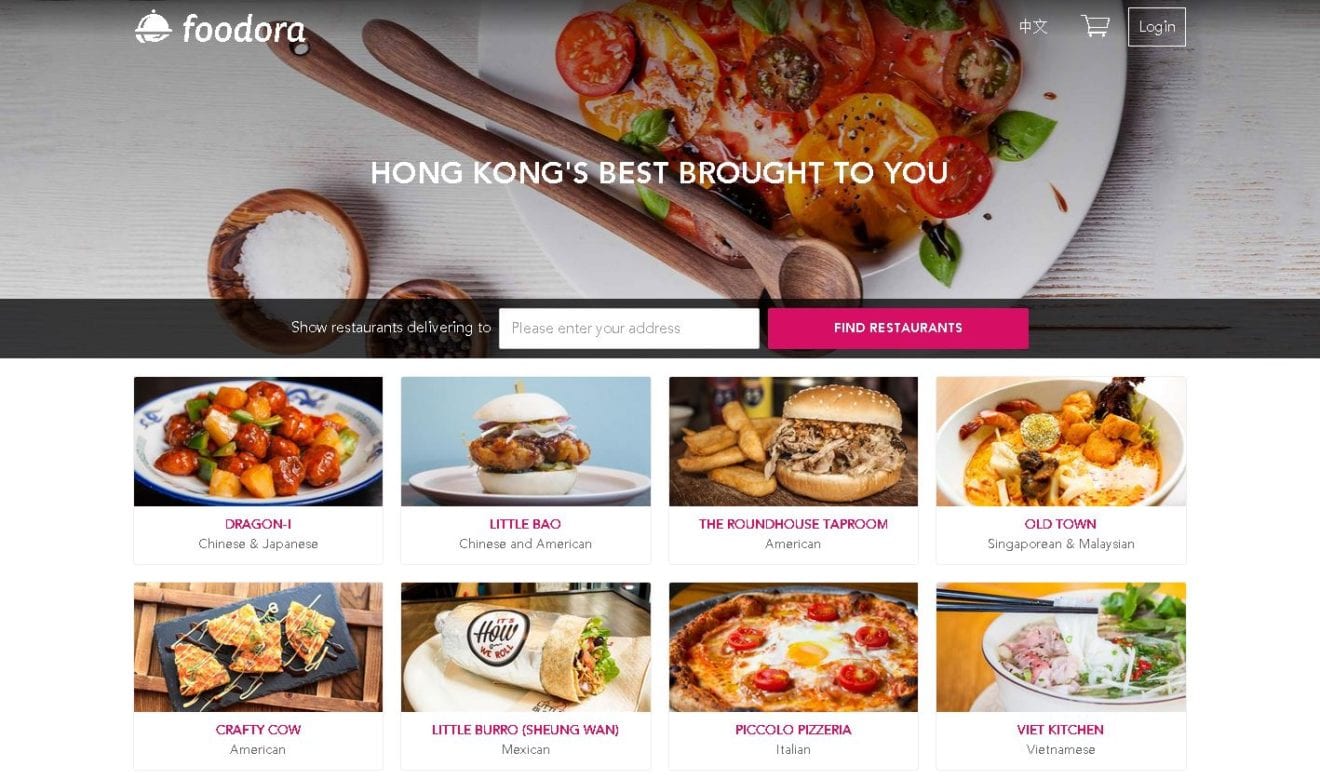
    Foodora Hong Kong – the expensive little sister of Foodpanda – claims it already has 100 restaurants and cafes on its books as it formally launches its service.

    Foodora – whose imminent launch was reported by Inside Retail Hong Kong on September 29 – has today formally announced its creation after a trial in two suburbs: Central and Sheung Wan.

    A key plank of its marketing message is “Hong Kong’s first 30-minute food delivery service” which Hong Kong locals may well greet with a degree of skepticism.

    But Foodora, which was founded in Germany last October, says its proprietary logistics system “determines the optimal route between restaurants and customers to help drivers navigate the dense traffic of Hong Kong”.

    “The company’s dedicated, uniformed and friendly delivery team ensures maximum food quality and transportation standards by not stacking orders and knowing their terrain extremely well,” it says in a statement.

    The Foodora app sends updates along the order process, allowing customers to monitor progress of their food’s preparation and despatch.

    Meanwhile, Foodora says it has more than 100 local restaurants on board for its Hong Kong launch.

    “The company has set itself apart from traditional delivery services by working with big names in the restaurant scene, including the likes of Dragon-i, Iberico, Check-In Taipei,The Boss and Social Place. Restaurants such as Little Bao will for the first time offer hungry Hong Kongers an alternative to waiting in a queue for superior eats.”

    “Few realise Dragon-I has very talented chefs serving some of Hong Kong’s best Chinese and Japanese food,” said Raymond Young, GM of Dragon-I.

    “With Foodora we can now extend the Dragon-I experience into homes and offices.”

    Foodora Hong Kong CEO Mat Podesta says Hong Kong is one of the world’s great global cities and as such should have access to world-class food delivery services.

    “Foodora wants to introduce a new benchmark of reliability, speed, and quality, bringing Hong Kongers what other markets already enjoy.”

    While the brand is still restricting delivery to just Central and Sheung Wan, Podesta says Tsim Sha Tsui, Wan Chai and Causeway Bay will be added, along with an expanded list of 400 restaurants, by the end of the year.

    New customers can receive HK$50 off their first order with code: HELLOHONGKONG.

  • Asia mCommerce shopping soars

    Asia mCommerce shopping soars

    Asia Pacific consumers are increasingly likely to make their online purchases and bill payments through mobile devices (mobile phone or tablet), rather than via desktops, according to Visa’s 2015 Regional eCommerce Monitor Survey.

    The survey, which polled 11,760 respondents from 13 markets in Asia Pacific, found respondents reported an average 22 per cent increase from 2014 in Asia mCommerce shopping.

    Respondents from Indonesia (36 per cent), Mainland China (34 per cent) and Taiwan (28 per cent) reported the greatest growth in mCommerce during the year.

    The rising popularity of mCommerce among Asia Pacific consumers is narrowing the gap with traditional eCommerce channels such as laptops or desktop computers across the region. In Thailand, consumers are as likely to purchase using their mobile devices as through desktops, while the mCommerce-eCommerce gap in markets such as Mainland China (eight per cent), Korea (nine per cent) and Indonesia (nine per cent) is decreasing.

    Visa’s regional director for eCommerce, Conor Lynch said the results show that making purchases on the go through mobile devices is becoming the norm in Asia Pacific.

    “As consumers get more comfortable using their smart devices to research, browse and purchase, mCommerce should soon overtake traditional eCommerce habits, strengthening this channel of engagement between consumers and retailers.”

    The survey also found travel, bill payments and movies were the top spending categories for eCommerce in general across Asia.

    For mCommerce, the top three categories are also fashion, bills and movies at 27 per cent each.

    “Across Asia Pacific, we are seeing that ticket-size, as well as the nature of the purchase, impacts how consumers purchase goods and services online. Consumers in this part of the world, are already comfortable purchasing smaller ticket-sized, everyday items by clicking the purchase button on an app or checkout button on a mobile device,” Lynch said.

    Another continuing trend revealed by the survey is the tendency for consumers to engage in cross-border online shopping. In particular, consumers from Singapore (77 per cent), Australia and Hong Kong (75 per cent) and New Zealand (74 per cent), are the most likely to make online purchases from retailers abroad, well above the regional average of 55 per cent. On the other hand, consumers from Japan (81 per cent), Taiwan (61 per cent) and Vietnam (57 per cent) are more likely to shop at domestic online stores.

    When shopping online with an overseas retailer, price (68 per cent), access to products (60 per cent), paying and delivery processes (40 per cent) and reputation of products (29 per cent) are key motivations for Asia Pacific consumers.

    The Visa eCommerce Monitor Survey 2015 was conducted by ORC International Singapore with 11,760 consumers, aged 15 to 55 years and across 13 countries and markets – Australia, Mainland China, Hong Kong, India, Indonesia, Japan, Malaysia, New Zealand, Singapore, South Korea, Taiwan, Thailand and Vietnam in May and June 2015.

  • Origami launches payment service

    Origami launches payment service

    Origami, a social eCommerce startup for fashion and lifestyle products, is entering the offline payments fold.

    The startup, one of Japan’s most-funded, has announced the beta release of ‘Pay with Origami’ and ‘Shop Reward Program’. The new services allow existing users to pay for items at bricks-and-mortar retailers with credentials stored in the Origami app. They will also help retailers connect the dots between their customer’s online and offline purchases, data that can be used to provide special perks and incentives for repeat shoppers.

    Founded in February 2012, Origami unveiled its online-to-offline (O2O) mobile shopping app in April 2013. Users can follow their favorite brands within the app and receive updates when new items are introduced. It also recommends lesser-known brands and boutiques based on existing likes and purchase history. Users can share their likes and follows on social media, creating free advertising for the startup’s partner merchants.

    Approximately 100 influential brands – including Hankyu Men’s Tokyo, Urban Research, Head Porter, Toms, and MoMA Design Store – are scheduled to join Origami’s payments beta.

    “I created Origami to become a fintech company, but we decided to start with fashion- and lifestyle-focused mobile commerce” Origami founder and CEO Yoshiki Yasui told Tech in Asia.

    “They already have the followers on Facebook and Twitter, they have the best retail locations, and they set the benchmarks for other brands to look up to.”

    With its focus on O2O from the outset, it makes sense for Origami to offer an offline payments solution that keeps users and merchants within a single ecosystem. But becoming a force in Japan’s crowded offline payments space will be easier said than done.

    When you step up to a cash register in Japan, you’re often met by one or more contactless payment terminals for a seemingly endless variety of RFID-compatible cards and mobile phones (though NFC options remain slim to none). You can use your subway pass to buy a bottled water or your flip phone to buy a Big Mac, for example, but these options are largely limited to convenience stores and fast-food chains.

    Fashion retail is almost entirely cash or credit, and nearly 40 per cent of all consumer transactions in Japan are done with cash.

    ‘Origami for Business’ will use an iPad-based payment terminal without replacing the merchant’s existing POS systems. When an Origami user wants to make an in-store purchase, they simply scan a QR code with their smartphone or enter a six-digit pin code. Since Origami was born as an eCommerce platform, Yoshiki says that many users’ credit card details are already registered with the app.

    Pay with Origami and the startup’s new reward program are currently available in beta for iOS, with an Android version in the works. Origami accepts Visa and MasterCard for in-store payments, with more credit card options coming soon. They charge partner shops 3.25 per cent per transaction.

    The startup’s two biggest advantages over existing offline payment options will be that captive app audience and its founder’s connections in the financial world – Yoshiki was an investment banker and venture capitalist before becoming an entrepreneur.

    “Payments and eCommerce are the same, the only difference is online versus offline,” Yoshiki said.

    “If you buy three items from a retailer’s online store, then the fourth purchase is made in-store, you get treated like a first-time customer. That’s just wrong.”

    According to Techlist data, Origami is among Japan’s top-10 most highly-funded startups.

  • Sa Sa opens JD.com flagship

    Sa Sa opens JD.com flagship

    Sa Sa International says its online arm sasa.com will launch a Sa Sa flagship store on JD.com’s eCommerce platform, JD Worldwide .

    The move opens the way for more than 100 million JD shoppers to access Sa Sa products in the Mainland as well as in Hong Kong.

    “As a leading cosmetics retailing group in Asia, Sa Sa has been striving its best to provide quality products, best value and professional service to its customers,” said the company in a statement.

    “To flexibly respond to the huge demand from Mainland Chinese customers for cosmetics products and the increasing popularity of eCommerce in the mainland, the group proactively expands its eCommerce business in China through sasa.com and continues to improve its service, making every effort to offer a better shopping experience for more consumers.”

    JD.com is China’s largest online direct sales company with over 100 million active users. Its online shopping mall is content-rich, user-friendly and trustworthy and has an efficient delivery service.

    Sa Sa and JD.com say they share a common mission to provide consumers with the best shopping experience, which put the two parties together in forming this partnership.

    Dr Guy Look, CFO & executive director of Sa Sa, said: “By launching a flagship store on JD Worldwide, sasa.com will expand its customer reach in China, while over a hundred million JD users will be able to enjoy direct access to Sa Sa’s wide selection of globally renowned cosmetic and skincare brands.

    “We believe that the strengths of Sa Sa and JD will complement each other to realise synergies in this win-win partnership. We are looking forward to working with them to deliver a premium online shopping experience to customers throughout China.”

  • How to cope with the eCommerce fever

    How to cope with the eCommerce fever

    Familiarity breeds consent. Merchants who use transaction data in a secure and intelligent way will unlock the trust of the consumer in the fast growing eCommerce world, according to a new white paper researched by MasterCard.

    “People will be able to choose to only receive offers that are relevant and of value to them, and companies that get the equation right will be given permission to access more touch-points in people’s’ lives,” the report concludes.

    That’s one of 10 concepts identified in the report which aims to help fill what MasterCard describes as a “knowledge gap” among retailers keen to adapt to the changing buying preferences of customers but unsure of the safety and security of new payment and shopping technology.

    “As the world continues to be swept in an ‘eCommerce fever’, increasing numbers of people are beginning to swap notes and coins for taps and swipes. It is imperative that merchants possess the information and know-how required to harness the onslaught of ever-evolving consumer demands and technological advancements presented to them,” says MasterCard.

    The white paper on the “10 Industry-Wide Transformations Impacting eCommerce in Asia Pacific and Implications for Growth” was developed following conversations with various eCommerce players across Asia Pacific, and examines perspectives from industry leaders on the varied state of eCommerce in these markets.

    MasterCard has identified a knowledge gap in three key areas:

    • The transformation of the eCommerce consumer journey in Asia Pacific as a result of technology;
    • The change in consumer purchase behaviour in Asia Pacific, and clear best practices of how to drive transaction velocity; and
    • The implications for growth for both merchants and issuers within the eCommerce industry.

    As such the white paper also identifies growth challenges and marketing opportunities, as well as provides an overview of the future of eCommerce in Asia Pacific, the largest eCommerce region in the world.

    “Asia Pacific’s eCommerce trajectory has been nothing short of explosive, and with a growing consumer base that is twice as likely, to buy online than any other group in the world, the opportunities are endless,” explains Sam Ahmed, group head of marketing, Asia Pacific at MasterCard.

    “As consumers transact more online, the importance of digital payment options that give consumers a seamless check-out experience is on the rise. And along with that, the need for payment security.”

    In a world proliferated by smartphones, it is perhaps unsurprising that these mobile devices have become the shop fronts of today. From air tickets to Air Jordans, consumers are spoilt for choice, equipped with the ability to browse through billions of brands and products at the swipe of a fingertip.

    “Unfortunately, such advanced technology also presents a catch-22 for merchants. Whilst retailers benefit from the conveniences and wide-reach enabled by the internet, many are faced with the issue of retaining customers’ attentions.

    “With this paper, we explore the opportunities and issues facing the industry, and share successful case studies for growth from MasterCard’s own innovations with the digital & eCommerce engine. Using the engine operating model, we have collaborated with merchants, issuers and technology partners like Facebook to drive transaction velocity and achieve unprecedented results,” Ahmed said.

    Some more of the 10 transformations MasterCard has identified are:

    • You’ll never shop alone. Consumers will browse, rate and recommend products and services with friends and followers at all times. We already see an increase in partnerships between merchants and social platforms like Instagram, Facebook and Pinterest that make each shopping moment shareable with one-click. This taps into the growing dominance of influencer and peer marketing that consumers are growing accustomed to.
    • Data will drive intent. We will be prompted to shop for things even before we knew we needed it. Fridges will generate shopping lists based on consumption patterns and preferences, and your location will serve up the best deal for dinner. Shopping will be one component of a much larger digital ecosystem. Data gathered from operating systems and mobile devices will inform what we buy, when we buy and who we buy from.
    • Service and rewards will be the killer-apps. Comparison shopping will make the price table stakes. The merchants who deliver on their brand promise in a personalized and emotionally engaging way will earn the dollars and loyalty of consumers. Reward systems and CRM programs will become critical for sustainable success.
  • JD.com launches Italian Fashion Mall

    JD.com launches Italian Fashion Mall

    The best of Italian fashion will soon feature on a new fashion mall being created by JD.com.

    JD.com, China’s largest online direct sales company, says the Italian Fashion Mall is dedicated to introducing Italian fashion brands and products to consumers in China. JD.com and Europe Design Center also jointly announced the participation of three renowned Chinese fashion designers – Lin Gu, Ali Tan and Xiaoyan Xu – in Milan Fashion Week. The three designers were selected through a competitive program run by JD.com and Europe Design Center, and their participation marks the first time Chinese designers will participate in Milan Fashion Week.

    The announcement was made at an event during the Milan Fashion Week.

    President of JD Mall’s Apparel and Home Furnishing Business Unit, Lijun Xin said the online mall will offer China’s “increasingly sophisticated and fashion-conscious consumers a fantastic range of choices,” while offering Italian brands and designers a powerful sales platform in China.

    “Fashion has been an important part of JD.com’s development into a comprehensive eCommerce platform, and we look forward to bringing products from the world’s most exciting designers to our 118 million customers.”

    JD.com’s JD Apparel platform features top international brands such as Lacoste and GAP and introduces the latest fashion trends to consumers through JD fashion shows held twice annually in China. Currently there are over 40,000 merchants featured on the JD Apparel platform.

    As part of the JD Apparel platform, JD.com recently launched its “JD Wardrobe” app for mobile devices. The app allows consumers to mix-and-match fashion items in a virtual wardrobe, share selected items with friends and receive fashion advice from virtual fashion experts.

    The Europe Design Center is created by the Director of Design Institute of Politecnico di Milano Arturo Dell’Acqua Bellavitis, and Alan Zhong, director of Future Master project of Italian design cultivation plan, also with the support of Honarary President of Italian National Fashion Association Mario Boselli, and in collaboration with experts from fashion and design sectors, to strengthen the talents and commercial exchange between Italy and China in field of fashion, industrial design, high tech and architecture.

  • Foodpanda’s sister Foodora Singapore bound

    Foodpanda’s sister Foodora Singapore bound

    Foodora – an upmarket little sister of mass market food delivery monopoly Foodpanda – is destined for Singapore.

    Foodora Singapore is best described as an “upscale Foodpanda”, a high-end food delivery service targeting cashed-up Millennials who want a higher standard of meal than quick service restaurant fare and faster delivery – and who parent Rocket Internet expects are happy to pay a premium for it.

    Rocket launched Foodora in Hong Kong earlier this year and a trial continues in two suburbs with more postcodes to be added later this year.

    A quick look at the Hong Kong website shows a clear family resemblance to the Foodpanda site, just a different coloured search button and a silver service platter logo in place of the smiling panda.

    But behind the scenes it is all different, we are assured.

    Chris Parrott, marketing MD with Foodora, said in an interview with e27 about the Hong Kong site that the two brands are targeting different clientele, albeit meeting the same need: food delivered to the door as quickly as possible.

    “Foodpanda is a sister company, so there is scope for knowledge-sharing. We have different target clientele, as our minimum basket size is US$25.8 (HK$200) and Foodpanda’s is variable,” Parrott explained.

    A key difference is the delivery time: Foodora promises within 30 minutes, which seems an overly ambitious promise; Foodpanda can take an hour or more, depending on the customer’s location.

    Foodora is now active in 14 countries and early this month took over Delivery Hero which is in 34 countries. Singapore will be next, with a website page already visible announcing “Coming soon”.

    The Hong Kong business is initially being promoted through blogs, food critics and Instagram.

  • Tag Heuer teams with JD.com

    Tag Heuer teams with JD.com

    Tag Heuer, the Swiss luxury watchmaker, has chosen to partner with JD.com to open its first online store in China.

    The exclusive partnership will see Tag Heuer open an online flagship on JD.com’s Marketplace platform.

    The store will offer product lines specially selected for China’s increasingly sophisticated online consumers, featuring cutting-edge designs across multiple price points. The store will also feature a 360-degree “virtual” product display where consumers can experience products prior to purchasing.

    JD.com says its support in brand marketing, logistics, payment and after-sales service will help ensure customers enjoy a first-rate online shopping experience.

    “JD.com’s reputation for product authenticity and unparalleled customer experience make it the ideal eCommerce partner in China for Tag Heuer, one of Switzerland’s most iconic and trusted brands,” said Tag Heuer’s GM of Greater China, Leo Poon.

    “The coming of age of China’s young consumers, combined with the explosive development of e-commerce, present an enormously exciting opportunity for innovation and growth. By deepening our access to our key target customer market in China through JD.com’s huge upwardly mobile user base, I am confident that this partnership will ignite unprecedented consumer interest in Tag Heuer’s premier luxury timepieces.”

    To mark the opening, Tag Heuer will launch sales of its “Tag Heuer Formula One Women GEM special edition” wristwatch in the Chinese market for a limited time exclusively on the JD.com platform.

  • Asia travel spending trends revealed

    Asia travel spending trends revealed

    Hong Kong consumers continue to be the most well-travelled tourists in Asia Pacific, with 84 per cent of respondents having travelled internationally for leisure during the past 12 months.

    That’s well above the regional average (41 per cent) and ahead of Singapore (80 per cent) and China (74 per cent).

    According to the latest MasterCard survey on Consumer Purchasing Priorities, during international leisure travel, Hongkongers spent an average of around HK$12,895 per person per trip, compared to $13,412 in the second half of 2014. The biggest share of travel expenditure remains transportation (26 per cent), followed by accommodation (23 per cent) and eating out (17 per cent). Despite a drop in travel spending, more than eight in 10 international travellers (86 per cent) planned to travel more or the same level in the next 12 months, second only to China (92 per cent) in the region.

    Dining out is a common habit among local consumers in Hong Kong. Almost all respondents (99 per cent) ate out in the past six months, while 94 per cent  intended to dine out the same or more in the next six months, ranking number one in the region together with China (94 per cent). Before dining, they tended to seek credit card promotions (44 per cent), feedbacks from acquaintances (44 per cent) and online reviews of dining outlets (43 per cent) while more than two-thirds of respondents (69 per cent) asked if there was any credit card promotion when paying the bill.

    Hong Kong consumers are big fans of luxury shopping, with 75 per cent of respondents planning to spend more or the same on luxury goods in the coming year, ranking number two in Asia following China (77 per cent). While China ($38,126) remains the biggest spender on luxury goods, Hong Kong secures its fourth place in the regional chart with an average intended spending of $23,845 in the next 12 months, after Japan ($32,253) and Korea ($25,771). While designer clothes and leather goods (29 per cent) are the most desirable items among local consumers, there is also significant preference for jewelry (23 per cent) as well as designer accessories and footwear (23 per cent).

    The survey also studied the saving behavior of Hongkongers, among whom 91 per cent intended to save the same or more in the next six months. Although spending on overseas holidays (48 per cent) was claimed to be the first item cut back in the event of a loss of household income, it is also the top spending priority of local households if they receive additional monthly income. Compared to Taiwan (86 per cent) and Singapore (83 per cent), only 74 per cent of local parents in Hong Kong regularly saved for their children’s education while the average proportion of monthly household income saved to serve this purpose was 12 per cent, slightly below the regional average (13 per cent).

    Other findings about Asian travel spending include:

    • Japan (67 per cent), South Korea and Taiwan (both 44 per cent) remain the top three travel destinations in the next 12 months.
    • Airline websites (54 per cent), travel agents (52 per cent) and coupon sites or applications (40 per cent) are the most preferred sources of travel information and deals among local travellers.
    • The most visited dining places among local consumers are fast food restaurants (79 per cent), mid-range family restaurants (76 per cent) and food courts (73 per cent).
    • Cash is generally used for purchases at fast food restaurants and food courts where meals tend to cost less than $300.
    • Millennials (18-29 years old) from China intend to spend on average $34,024 on luxury goods over the next year, significantly more than the Asia Pacific average of $20,155.
    • Promotions play a significant role among online shoppers in Hong Kong, with 74 per cent of respondents claiming to buy luxury goods on websites that offer discounts.
    • Hongkongers (32 per cent) are less interested in attending education courses in the next 12 months than those in China (42 per cent) and Taiwan (36 per cent).