Tag: E-tailing

  • Lotte Signs Five-year Exclusive O2O Deal In China

    Lotte Signs Five-year Exclusive O2O Deal In China

    Chinese B2C e-commerce website JD.com and South Korean retail giant Lotte.com have signed a strategic cooperation agreement and an exclusive agreement under which JD.com will become the sole strategic partner of Lotte.com in the Chinese mainland for five years.

    JD said that with the strategic cooperation agreement, Lotte Group’s products and services will enter the Chinese market via JD’s global shopping platform. In the future, the two parties will implement cooperation in tourism and service O2O.

    Global strategy is currently an important reason for Chinese e-commerce providers to team with international retailers. Lotte.com is responsible for the online sales of products and services of all subsidiaries of Lotte Group. Lotte.com will integrate Lotte Group’s branches to establish a “Lotte hall” on JD.com, covering Lotte Department Store, Lotte Mart, Hi-Mart, Lotte Duty Free, Lotte Hotel, and Lotte World.

    The “Lotte hall” will not only sell infant products, cosmetics, and fashion products, but also will offer household products and home appliances. Over the next three years, the two parties aim to expand their cooperation range to about 200,000 kinds of products.

  • Fung Group tests future retail concepts

    Fung Group tests future retail concepts

    Hong Kong’s Fung Group has unveiled a large-scale ‘lab’ in Shanghai where it is testing a raft of high tech concepts which could shape the future of retailing.

    Named Explorium, the laboratory is an omnichannel platform and exhibition operated by the Fung Group in partnership with data and analytics technology leader IBM, and brand activation company Pico. It is located within more than 23,000 sqm of trade exhibition space at LiFung Plaza, where it provides a controlled setting for businesses to observe and explore in real time how consumers interact with new technologies, products and environments.

    Among technologies in the laboratory, which has been functioning on a soft-opening basis for three months, are virtual-reality fitting rooms, magic mirrors that bring images to life and 3D printing for creating customised products. Brands are also using Explorium to understand opportunities in China for their products and services, based on consumer feedback collected and analysed at the laboratory. Retailers are using it to test different store concepts.

    Unveiling Explorium, Fung Group chairman Dr Victor K Fung said the initiative was sparked by challenges occurring in retail across the world, especially in China.

    “Everything we thought we knew about how consumers decide upon what they buy, where they buy, when they buy, how they buy and how they pay is changing,” he said.

    “Technology is the catalyst empowering consumers. The internet and mobile communications are disrupting the way consumers behave and, in so doing, providing unique opportunities for retailing to come up with new business models. Nowhere is this more evident than in China, one of the world’s most exciting, challenging retail markets.”

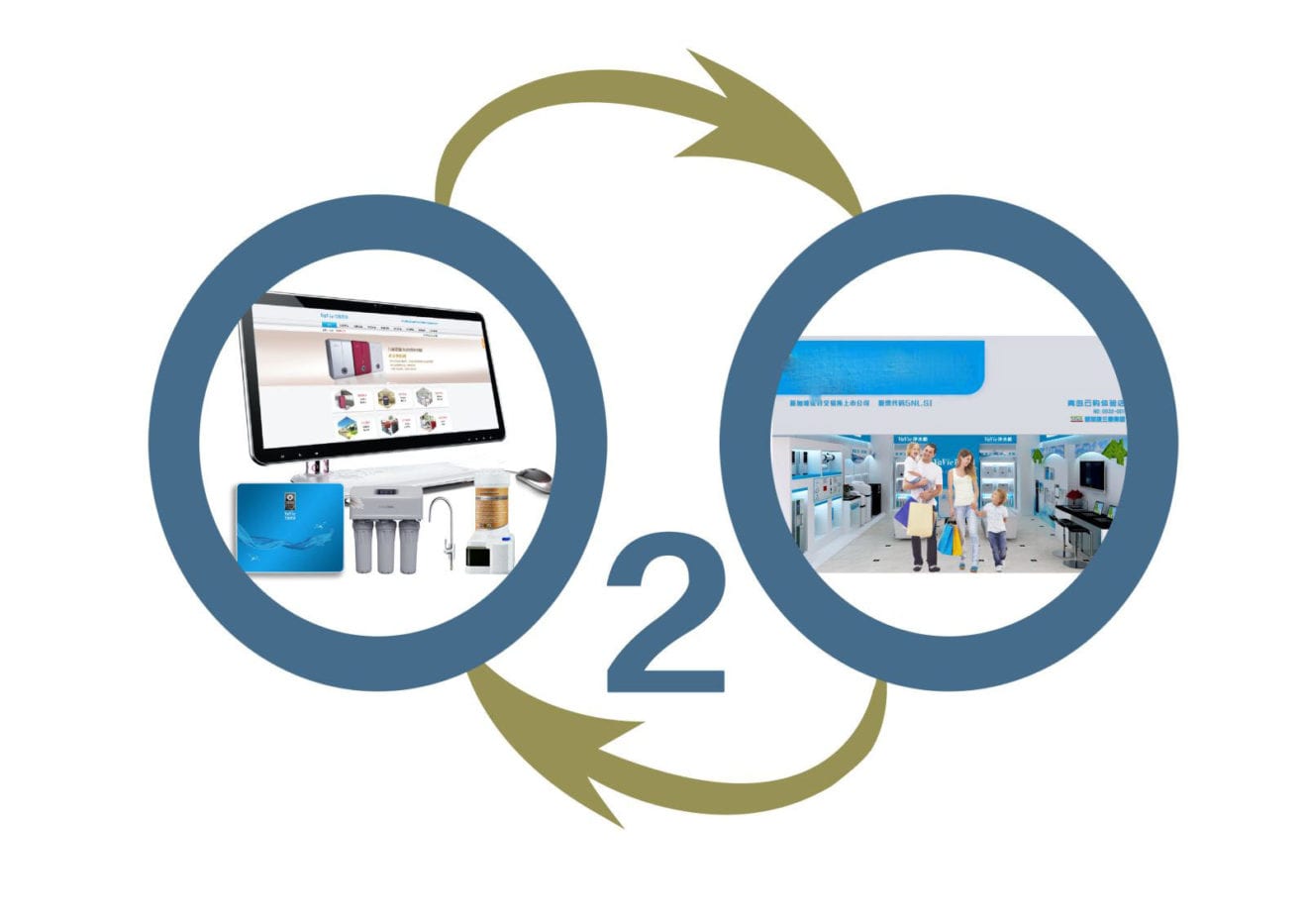
    Fung added that he believed the future for retail in China and globally is omnichannel, which is, online-to-offline (O2O) or a combination of “bricks and clicks”.

    “Chinese consumers are setting shopping trends globally, especially with their avid use of social media. And Shanghai is home, arguably, to China’s most vibrant, tech-savvy consumers. That is why we chose Shanghai as the launch pad for this major Fung Group initiative.”

    Fung added that there were no preconceived ideas about which omnichannel business models would emerge from Explorium.

    “As with most experiments of any lasting value, the greatest measure of success may simply be how much we learn from the results,” he said. “A key advantage for participating brands and retailers is that, with Explorium, they can experiment, incubate and iterate at high speed while minimising their cost and risk.”

    IBM global retail industry leader Stephen Laughlin said IBM is gathering data in the Explorium and analysing it for insights.

    “With analytics, IBM can help retailers in the Explorium deliver personalised, relevant marketing interactions to consumers in real-time, delighting them and differentiating the retailer from the competition. Consumers will be able to opt-in to receive offers and rewards from their favorite brands via social media and their mobile device – all tailored to their location and unique preferences.”

    Lawrence Chia, group chairman of Pico Far East Holdings added: “As a state-of-the art omnichannel marketing research laboratory, Explorium delivers substantial value within the omnichannel universe. We are extremely pleased that our unique 360-degree integrated marketing capabilities have played a significant role throughout the planning and implementation of Explorium.

    “Working with leaders from the retail and data technology industries, our strong project team has played a vital part in the strategy, planning and execution of Explorium in areas related to branding, experiential marketing and digital media.”

    Explorium’s Shanghai-based director, Simeon Piasecki, said it is a laboratory for rapidly testing omnichannel business strategies in a realistic environment.

    “We identify and systematically track the changing preferences of consumers. Based on what we learn from each experiment, we move quickly to the next iteration. Explorium is doing all this on a scale and intensity that we believe is unmatched.”

    Already, Explorium, which is membership based, has close to 12,000 active participants registered from among employees and family members of the Fung Group and its business partners IBM and Pico. Typically, members spend over three hours there per visit.

    “Children are among Explorium’s biggest fans,” said Piasecki. “We believe that creating a space where parents and children can bond through learning together and teaching each other will help drive purchases of higher-margin electronic toys, such as drones.”

    He added that while children’s products are a special focus during Explorium’s first phase, it will go on to feature women’s and men’s apparel, and home products.

    “Explorium’s priority in coming months is to design, build, run and measure a greater number and variety of experiments to produce a pool of data that will enable participating brands and retailers to obtain unique insights for their individual businesses,” said Piasecki.

  • Seven & I to launch online store

    Seven & I to launch online store

    Japan’s Seven & I Holdings says it will open a giant online store in November, offering products sourced from across its retail store brands.

    By February 2019, Seven & I anticipates a range of 6 million SKUs will be available on the new store, including goods specifically created for the channel in partnership with name brands, including apparel chain Uniqlo.

    It targets ¥1 trillion in annual turnover, or US$8.3 billion when fully operational.

    Seven & I is the global parent of the 7-Eleven convenience store brand, owns the Ito-Yokado chain of hybrid supermarkets and general merchandise stores and the high end department stores Seibu and Sogo.

    The new online store ‘Omni7’ will open on November 11 with a stock of 1.8 million items.

    Shoppers will be able to request delivery to their home or two any Seven & I outlets for convenient collection – such as 7-Elevens.

    Returns will be permitted over the counter at any group store.

  • Samsung Pay hits $30m in first month

    Samsung Pay hits $30m in first month

    Samsung Electronics said Thursday its mobile payment solution has processed tractions totaling US$30 million in the month after its debut in South Korea.

    The company officially released Samsung Pay in South Korea on August 20.

    The platform, available for Samsung’s high-end smartphones, including the Galaxy S6 and the Galaxy Note 5, supports magnetic secure transmission (MST) technology that works on traditional credit card machines.

    Like rivals Apple Pay and Android Pay, it also supports near field communication (NFC) that requires a separate transaction device.

    Over the one-month period, Samsung said around 1.5 million transactions have been made, with 60 per cent of them being from the Galaxy Note 5 phablet, a cross between a smartphone and a tablet PC showcased in August. Samsung Pay is also accepted at some 1000 ATMs operated by local bank Woori Bank across the nation.

    “Although the details on Samsung Pay usage are constantly being updated, the response we’ve received so far has been beyond our expectations,” said Rhee In-jong, Samsung Electronics VP.

    “We knew Samsung Pay would be a game changer in the mobile payment industry, and now with the user data, we are seeing the greater impact it is having on consumer behavior and on the lifestyles of our customers,” Rhee added.

    Samsung Pay is set to officially launch in the United States on Monday. Samsung added it will also reach Britain, Spain and China soon.

  • Daraz targets frontier Asian markets

    Daraz targets frontier Asian markets

    Online retailer Daraz is investing $56 million into creating beachheads on so-called ‘frontier markets’ in Asia: Myanmar, Pakistan and Bangladesh.

    Daraz is the leader in online retail in all three markets, selling apparel, accessories, shoes and beauty products for men and women, as well as a wide variety of electronics and general merchandise.

    The company is part of the Rocket Internet group which also owns Zalora and Foodpanda.

    It is planning a ‘mega sale’ on November 27, something like Amazon’s Black Friday in the US, offering a slew of special deals in the three Asian nations.

    Bangladesh, where it is putting most of its focus currently, will get the majority of the marketing spend, where it is partnering with local apparel brands such as Bata, Yellow and Ecstasy, as well as tech partners.

    Daraz Bangladesh chairman Sumeet Singh says the local site is attracting around 2 million visitors a month.

  • Foodpanda Malaysia expands

    Foodpanda Malaysia expands

    Foodpanda, Malaysia’s monopoly food delivery business, has relaunched its operations in Johor Bahru, in the nation’s south.

    Foodpanda Malaysia says it is “already a household name” in other major Malaysian cities – Kuala Lumpur, Ipoh, Melaka and Penang.

    “We are happy to be back in Johor Bahru. I think this service would add convenience to the residents in Johor Bahru,” said Uffe Jordan, MD of Foodpanda Malaysia.

    The relaunched service will start by offering online ordering and delivery of wellknown quick service restaurant brands such as Kenny Rogers Roasters, Nando’s, and Sakae Sushi.

    “We will be launching in the city centre and are looking forward to expand our delivery areas soon. We are also working on bringing in more local favorite restaurants in Johor Bahru,” said Uffe.

    Rocket Internet owned Foodpanda Group operates in 39 countries on five continents under its own name and the additional brand hellofood.

  • Bellabox expands to China

    Bellabox expands to China

    Australian beauty subscription service and e-commerce platform, Bellabox, has confirmed its expansion into China in partnership with Australia Post’s Tmall store-front platform.

    The move is part of the beauty company’s growth strategy to become the dominant beauty e-commerce platform across Asia.

    Supporting its push into China, Bellabox will be moving away from its subscription-based model and introducing limited edition themed beauty boxes exclusively for the Chinese market.

    According to the company these will feature “the best of Australian beauty and cosmetic brands” to provide discerning and brand aware Chinese shoppers with more choice and variety.

    “Chinese consumers are sophisticated shoppers who are selective about the brands they use and buy. We are seeing strong demand for Australian brands as they are perceived to be higher quality and environmentally friendly, for this reason the market represents a huge opportunity for our business,” said Bellabox, CEO and co-founder, Sarah Hamilton.

    Hamilton adds that China is a key market in the company’s continued expansion across the region.

    “The market potential is huge with analysts[1] predicting the cosmetic market will become a US$113.9 billion industry by 2017, of which 25 per cent coming from online sales fuelled by tech savvy millennial. China has a high adoption rate of smartphones and online shopping, it provides the perfect platform for growth and we look forward to working with Australia Post to build our position in the market. ”

    Australia Post’s Tmall service opens the door for local e-commerce players to access China’s traditionally challenging market by crossing language and cultural barriers, and cutting through red tape to sell on a unique marketplace.

    With an audience of more than 300 million estimated Chinese consumers who, in 2014, spent more than half a trillion US dollars online, Tmall presents a strong opportunity for Australian e-commerce businesses.

    Ben Franzi, GM global e-commerce platforms and digital at Australia Post said, “We’re focused on delivering e-commerce solutions that make it easier for Australian retailers to grow, compete and succeed online.

    “Australia Post’s Tmall storefront (auspost.tmall.hk) is helping home grown businesses, like bellabox, sell into China – one of the world’s largest consumer markets.”

    “Bellabox has a tremendous opportunity to benefit from the trust, broad reach and revenue opportunities that comes with Tmall’s reputation and high visitor traffic. We’re excited to partner with bellabox to launch this exclusive offer that ticks the boxes against China’s growing consumer demand for authentic, quality, Australian-made beauty products,” said Ben.

    Bellabox is now one of 36 Australian brands with a virtual storefront on Australia Post’s Tmall store, which this month celebrated its first birthday.

    Bellabox is headquartered Melbourne and works with more than 900 beauty brands to create monthly-customised boxes for 40,000 subscribers.

  • China’s shopping mall operators struggle against e-commerce

    China’s shopping mall operators struggle against e-commerce

    “The supply of mall space in China is outpacing demand, as growth in retail sales slows because of the country’s lower GDP growth, and in cities where mall space is abundant, vacancy rates have risen substantially,” Marie Lam, an associate managing director with ratings agency Moody’s, said in a report.

    A raft of figures pointed to waning demand at home. China’s retail sales for the first half of the year grew by just 10.4 per cent from a year earlier, the lowest rate since 2004, data released by the National Bureau of Statistics showed.

    Although acknowledging that the outlook will continue to be murky for China’s traditional retailers, Bank of China International analysts led by Tang Jiarui noted consolidation may sweep across some of the major players in the sector, discarding the weak players and leaving the stronger ones as the survivors. “The distress, on the other hand, may give birth to a mergers-and-acquisitions boom. We see some of the leading regional shopping mall operators, including Wuhan-based Zhongbai Holdings, the potential buying targets of industrial powerhouses eyeing expansion,” she said.

    Unfazed by a flagging economy, Chinese developers’ headlong rush to branch out and build more shopping malls show no signs of dying down.

    China made up of 44 per cent of total global shopping mall completions in 2014, data from real estate consultancy CBRE said. The amount of mall-space in the pipeline is even more massive, representing 60 per cent of the total worldwide.

    In 2014, the retail space under construction in China soared by more than 50 per cent year-on-year, compared with a 21.8 per cent rise of the global total for the same period.

    “Demand for mall space from retailers in China is not catching up with supply,” Lam said.

    Adding to the burden on those brick and mortar retailers are their e-commerce rivals that managed to post robust results even as the economy grew at its slowest pace in a quarter century. Online retail sales registered a 48.7 per cent jump in the first six months of 2015 from a year earlier, according to the China e-Business Research Centre.

    A study by Fung Business Intelligence Centre found department stores in China were the worst performers among all retail formats last year with many forced to close shop.

    “Fragile global and domestic economies …competition from speciality stores and online retailers were major reasons for stores’ weak performances,” the Fung report said.

    Many of traditional retailers have been shifting to asset-light business models or exploring the online-to-offline business mode to get by.

    But a transformation can be painful for any company with more uncertainty the rule going forward.

    “Success also depends on whether the changed mall can differentiate itself from other malls that have also undergone facelifts,” said Lam, who saw rising difficulty for some shopping mall property developers in refinancing the loans they took out to shift gears.

  • YepMe raised $75 million for expansion

    YepMe raised $75 million for expansion

    Indian online fashion retailer YepMe has raised US$75 million for expansion in a funding round led by Malaysia’s Khazanah Nasional Berhad state fund.

    YepMe, based in the city of Gurgaon in the National Capital Region, was launched in 2011 by three entrepreneurs. It has so far attracted investment from the US and India, and in this latest round from Jabong, Myntra, Fashion and You, among others.

    The company says it plans to use the fund to develop and launch an ethnic India range of clothes, and to boost brand awareness.

    With an estimated 500,000 items sold every month, YepMe makes its own brand clothes, focusing on menswear and accessories featuring formal, casual, outdoor and party wear. It also sells apparel, watches, glasses, footwear and other goods from other brands, targeting men and women in the 20 to 29 year age group.

    It targets tier 2 and tier 3 cities in India where name apparel brands have few physical retail stores.

    Last year, it enterd the US market with a different website brand, Yepmeworld.com and it also sells on Amazon.com.

  • India eCommerce to lead BRICs

    India eCommerce to lead BRICs

    India – not China – is set to become the fastest growing B2C eCommerce market of the BRIC countries in the next five years.

    A new publication by Germany-based secondary market research expert yStats.com India B2C eCommerce Market 2015 also reveals the main challenges faced by online retail in this country, including underdeveloped logistics and low credit card penetration.

    The rapid growth of B2C eCommerce in India is driven by a combination of its vast population, increasing internet penetration and the scarcity of organised retail – especially in small towns and rural areas.

    “Next year, India is predicted to top the USA to become the second largest country worldwide in terms of the number of Internet users, behind China. While China has been the leader among the BRIC markets in terms of online retail growth in the five years to 2014, during the next five-year period India is predicted to take over this position,” says the report.

    Online retail in India has much room for growth. B2C eCommerce share of total retail sales was estimated at less than one per cent in 2014, while the share of internet users making purchases online was below one quarter. Another sign of immaturity is the high share of online travel in total eCommerce sales, reaching close to two-thirds according to some estimates. Furthermore, Internet penetration on the 1.3 billion population in India was relatively low in 2014, although showing an improvement from a single digit figure in 2010.

    “The spread of mobile Internet is expected to especially benefit the state of connectivity in this country, while also driving mCommerce sales up,” said the report.

    Apart from low Internet penetration, some major challenges faced by B2C eCommerce in India include underdeveloped logistics infrastructure and low credit card penetration. Online merchants’ profitability suffers from the necessity of accepting cash on delivery and offering free shipping.

    The top three eCommerce companies in the country – Flipkart, Snapdeal and Amazon India – developed their own logistics capabilities using recently obtained investment. Other eCommerce players that benefited from investment pouring into the Indian market include marketplace operator ShopClues, online classifieds website Quikr and online accommodation booking website Oyo Rooms.

  • Alibaba promises faster deliveries to US

    Alibaba promises faster deliveries to US

    Cainiao, Alibaba Group’s logistics affiliate, has agreed to work with the US Postal Service to speed delivery of merchandise ordered by US consumers on Alibaba’s international online shopping platforms.

    Under a Memorandum of Understanding (MoU), Cainiao and the US’s national mail carrier agreed to collaborate on the development of enhanced shipping solutions for cross-border eCommerce. In addition to helping provide more efficient shipping channels into the US for Chinese merchants and manufacturers selling on Alibaba’s AliExpress global-shopping website, the USPS will also work with Cainiao to expand its worldwide shipping capabilities, especially in South America, according to a press release.

    The global B2C cross-border eCommerce market is expected to grow from $230 billion in 2014 to $1 trillion in 2020, according to a report from global consulting firm Accenture and AliResearch, Alibaba Group’s research arm. To reduce barriers to shipping small parcels quickly on a global scale, Alibaba and related companies have been working with several national mail carriers including Singapore Post and Spanish Post.

    Cainiao VP Wan Lin cited the agreement with the USPS as “a key part of Alibaba’s globalisation strategy and our vision to enable consumers around the world to enjoy the convenience and benefits of e-commerce”.

    With more than 600,000 employees, the USPS is the leading postal and shipping service provider in the US, the world’s biggest consumer market.

    Cainiao and the USPS said by working together they are aiming to make it easier and more efficient for Chinese companies to sell and deliver goods directly to the homes of US consumers by improving the way goods purchased from China are processed and handled during international shipping.

    “As cross-border eCommerce grows rapidly, it is critical that we evolve shipping services to the next level, with shorter delivery times and easier methods to track a shipment,” said Wan in a statement.

    “The collaboration between Cainiao and USPS will enable us to create new solutions and ultimately improve the overall customer experience.”

  • Grana opens first permanent store

    Grana opens first permanent store

    Online fashion startup Grana has opened its first permanent physical store as it tries a new way of ensuring clothes fit the customers who order them.

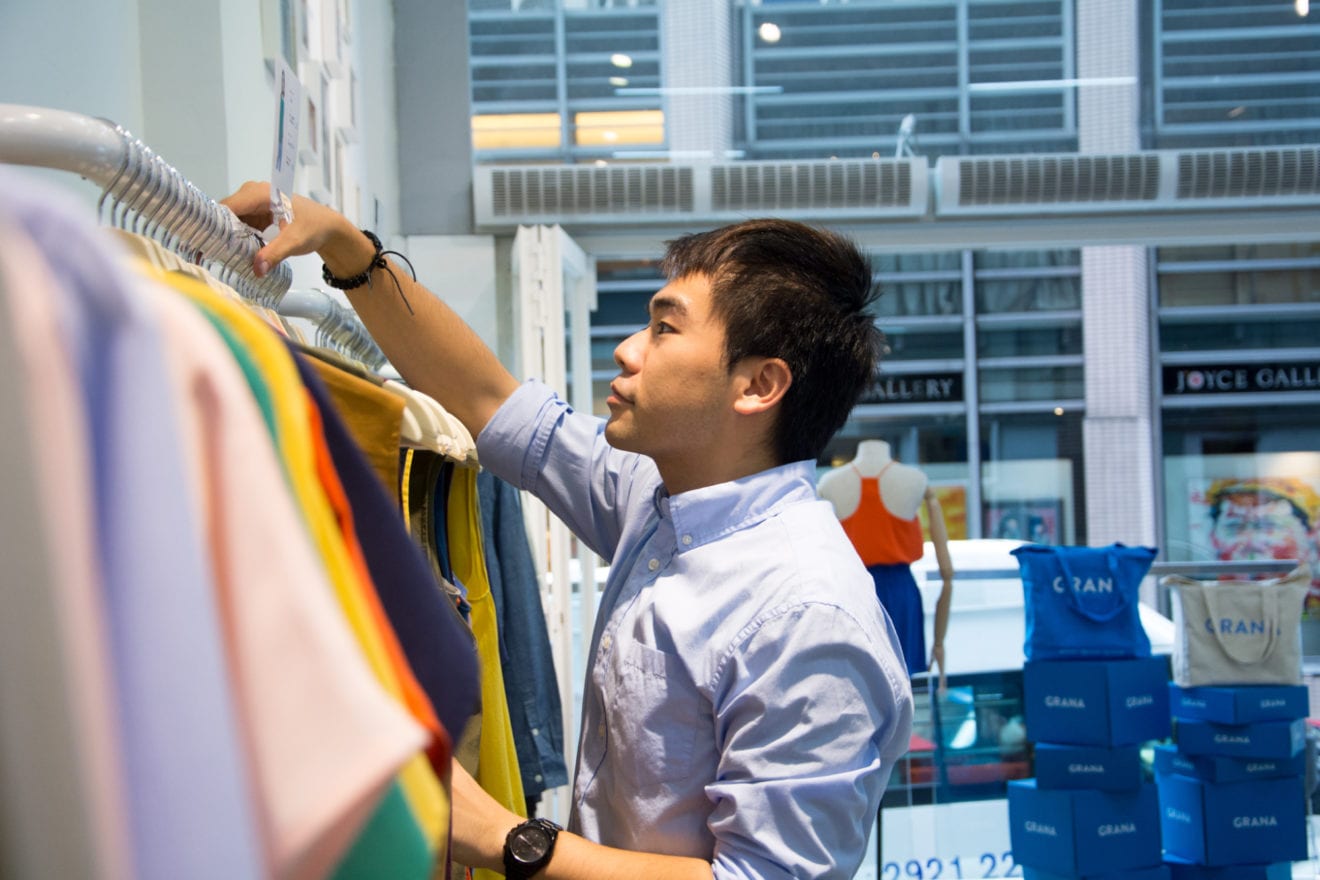
    The new 1300 sqft store in Sheung Wan is branded The Fitting Room. It’s a unique hybrid retail concept, allowing customers to try a garment on, then buy clothes online instore for delivery to home or collection later in-store.

    While customers can try clothes on and see the styles first hand, they cannot purchase clothes from the store and take them home immediately.

    It aims to address the problem of online shoppers returning goods because they don’t fit, or because they don’t consider their purchase matches the colour or style of what they saw online.

    Grana is the creation of Australian Luke Grana, who was inspired by the high quality of t-shirts he came across during a trip to Peru. The site was developed with a unique business model in mind – in Grana’s own words “high-quality fashion at disruptive prices”.

    “Our business model is a little bit different; we deal directly with fabric mills instead of going through distributors or agents. Also, by operating online, we don’t have to pay rent. So when fashion retailers put in mark-ups along the way, our pricing is really simple: each of our shirts cost US$6, we retail that for US$12; jeans are US$20, we sell that for US$40. It’s a really honest and transparent pricing model and I think that’s what our, Generation Y customers prefer.”

    Of the new Sheung Wan store, Grana observes: “We bring together the best of two shopping worlds for a unique hybrid experience. Our customers can receive the tailored customer service and interaction that only a bricks-and-mortar location can provide, but with the ease of online purchasing.”

    Grana says similar hybrid stores are now being considered for Australia and the US.

    The new store is located at 108 Hollywood Rd, Sheung Wan, Hong Kong.

    Grana Hong Kong store inside

  • Apple to launch online payment in China

    Apple to launch online payment in China

    Apple will launch an online payment service in China, as the tech giant seeks to expand in its largest market outside of the US despite fierce competition from local rivals.

    An Apple Company offering online payment has launched in the Shanghai Free Trade Zone (FTZ), an area set up as a testbed for financial reforms, China News Service reported late Thursday.

    Apple didn’t give a date for the launch, but the company told AFP that CEO Tim Cook hopes to set-up Apple Pay in China “as quickly as possible”.

    Cook previously said that he expects China one day to surpass the United States to become Apple’s largest market.

    But China’s e-commerce giant Alibaba dominates the country’s online payment sector, with the Paypal-like Alipay taking around 80 percent of the market.

    Internet firm Tencent is also catching up with a similar service provided via its popular messaging application WeChat.

  • Omni-channel to be the next big play in retail

    Omni-channel to be the next big play in retail

    “I haven’t seen such a behaviour in other South East Asian markets. While businesses in countries like Taiwan, Thailand and Philippineshave adopted e-commerce in a big way, there is a clear focus on bottomline. Money is being made on every transaction and majority of the companies there are gross margin positive,” said Iyer at the inaugural session of the two-day IRF summit in Mumbai on Tuesday.The fast emerging e-commerce sector in India has been talked about in the business world as the next big thing to be in. However, according to Krish Iyer, president and CEO, Walmart India and chairman of India Retail Forum (IRF) 2015, one thing that has hit him in the last year and half isthe whole craze about building valuations while not really looking at the bottomline.

    “I haven’t seen such a behaviour in other South East Asian markets. While businesses in countries like Taiwan, Thailand and Philippines have adopted e-commerce in a big way, there is a clear focus on bottomline. Money is being made on every transaction and majority of the companies there are gross margin positive,” said Iyer at the inaugural session of the two-day IRF summit in Mumbai on Tuesday.

    Defending the valuations game being played in the e-commerce sector in India, Alok Goel, managing director, SAIF Partners, said that India is the only country that offers an opportunity for growth investment in the global scheme of things. “Lot of money is flowing into India looking for opportunities and return on investment. And when lot of money is chasing fewer products out therein the market, the price of that product increases. This roughly explains the rapid price-valuation situation that’s come up in the market,” said Goel, adding that from a valuations point of view, businesses need to be looked at in terms of growth they will register over the next five to 10-year horizon.

    Stressing on the need for Indian retail (online / offline) players to seek profitable growth, Anurag Mathur, retail and consumer goods practice leader, PricewaterhouseCoopers India, said, currently mom-n-pop stores are enjoying operating margins of between 6% and 8%over gross margins of 16% and 18%, while the organised retailers had high gross margins of 20% and 22% though operating margins were as low as 2% and 4%. “The online / e-commerce players are still ages away from getting into the positive space with gross margins anywhere between -3% and -8% and operating margins between -15% and -22%,” he said.

    While the recent past has seen the Indian retail fraternity debate aggressively about retail and omni-channel, Iyer pointed out that a few years ago, it was about retail and e-commerce. “And from what I see on the ground, I can tell you that omni-channel will be the key focus of discussion next year. The brick-n-mortar players will continue to learn from the pure-play e-commerce players and then will be able to drive profitable growth while providing omni-channel experience to the customers. And that to my mind, is the only way to go,” he said adding that retail players, particularly those in the brick-n-mortar space, are clearly focused on profitable growth.

    Iyer stressed that ongoing economic adjustments around the world offered businesses in India a brilliant opportunity to lead global growth. And the fact that India has been a domestic consumption-driven economy has come handy. “We are not an export-driven economy and that’s one of the primary reasons why the economic turmoil and global events haven’t had as much impact on India as we have seen in other BRIC countries viz. Brazil, Russia and China,” he said.

    The next phase of retail revolution, retailers and experts said, will be driven by India and China unlike the past phases that were driven by the West. However, Indian retailers lagged in retaining a black bottomline when compared with their foreign counterparts.

    “Operating margins (ebitda) of Indian retailers have dropped to 2% in 2014 from8% in 2011. During the same period, ebitda of select international retail chains like Walmart, Target, Tesco and Home Depot have maintained 7-11% during the same period,” said Mathur.

    In fact, according to a survey conducted by PricewaterhouseCoopers India, over 65% of Indian retailers are focusing on improving profitability through improvement in revenue throughput as fast-changing consumer behaviour is driving many retailers to rethink their business model. As per the survey, 53% retailers are considering a change in their operating model driven by changing consumer behaviour.

    With the emergence of new formats, distinct paths to sustainable profitability will need to be crafted as retailers in India face a herculean task of reaching out to the customer through a combination of mobile, social and human connect, experts said.

    According to Abheek Singhi, senior partner and director, Asia Pacific leader –consumer and retail practice, The Boston Consulting Group, online and e-commerce with varying digital density along with omni-channel are straining traditional business models in retailing. “Moreover, with consumer companies selling directly via offline and online tools, value chains are also getting disrupted,” he said.

  • Shop from a magazine page

    Read, snap buy: See something you like in a magazine? Now you can shop from a magazine with new Singapore technology being trialled in Thailand.

    iQNect is a Singapore company described by Enterprise Innovation as a “visual search startup”. It has partnered with a Thai creative agency C True to merge image recognition technology with an mCommerce application to allow readers of two Thai magazines to literally shop from a photo.

    Two popular Thai magazines are involved in the trial – fashion publication Image and IN – along with four international titles, Her World, Maxim, Madame Figaro and Attitude.

    As Enterprise Innovation explains “iQNect’s visual search app enables magazine readers to access interactive digital content simply by taking a picture of any page’s images with their smartphone. This instantly brings up content like videos, invitations, exclusive digital offers or coupons and the option to  buy the item photographed without having to go to a website or store.”

    “We challenge the belief that print is a dying medium,” Niamh Byrne, iQNect COO told the website.

    “Visual search acts as a bridge between the sumptuous tactility of print media and the instant responsiveness of mCommerce.”

    iQNect’s full mCommerce platform will be publicly available from mid-November.

    Read more about the technology on Enterprise Innovation.