
Tag: ecommerce

  • Cross-border e-commerce Vietnam’s next big thing in exports

    Cross-border e-commerce Vietnam’s next big thing in exports

    According to U.S. e-commerce giant Amazon, cross-border e-commerce is expected to be the fifth-highest value export of Vietnam by 2027, with a value of US$12 billion.

    “2023 Performance Report: Empowering Small and Medium-sized Enterprises in Vietnam” published by the firm’s Amazon Global Selling Vietnam, a unit that supports sellers, said by 2027 cross-border e-commerce exports could reach $5 billion under “normal” circumstances and $12 billion in the best-case scenario if small, medium- and micro-sized businesses get support from the government.

    In the latter case, cross-border e-commerce will account for the country’s fifth biggest exports.

    Amazon Global Selling said online exports of Vietnamese goods could thrive since more and more global consumers are shifting from offline.

    Last year Vietnam’s exports were worth nearly $356 billion, according to the General Statistics Office.

    The top exports items, all exceeding $20 billion, are electronics – computers, phones and components, machinery – equipment, textiles, and agriculture – forestry – fisheries.

    Vietnamese retailers sold over 17 million products on Amazon last year, up 50% from 2022, according to the e-commerce platform.

    The number of sellers increased by 40% and those with revenues exceeding $100,000 increased by 70%.

    The top five product categories were household appliances, kitchen tools, health-personal care, clothing, and beauty products.

    These reflect Vietnam’s long experience in manufacturing and exporting products such as furniture, home decor and apparel.

    “The growth of emerging sectors such as health and personal care and beauty products contributes to the increasing diversity of Vietnam’s online exports,” the report said.

    According to a study by the technology advisory firm Access Partnership, the main export markets were Southeast Asia and China.

    In the next five years the U.S. and Europe are likely be priority markets as consumers in those regions are growing increasingly fond of Vietnamese goods on online platforms, the study said.

    “E-commerce is one of the next major trends for businesses who are looking to expand globally,” Gijae Seong, head of Amazon Global Selling Vietnam, said.

    The challenge for these businesses is whether they could quickly leverage this trend, grasp global consumer demand and build long-term development plans, he said.

    Access Partnership said Vietnamese businesses face challenges in online transactions like high customs duties and post-clearance costs.

    It said businesses need more legal and financial support to capitalize on the opportunities for e-commerce exports.

    So measures like establishing cross-border e-commerce zones and providing grants for exports and e-commerce businesses would play a crucial role, it added.

  • Shopify has your back if you want to try the AI magic with a new image editor

    Shopify has your back if you want to try the AI magic with a new image editor

    Back in ancient times, supermarkets used to hand out paper brochures with the week’s top offers. Naturally, you didn’t pay much attention to the product image – you focused on the price.

    It’s only after you try to sell something online – and you need a cool product photo – that you realize there’s a thing called “product photography” and the eggs, ham or pineapple images didn’t just materialize out of thin air on the brochure’s pages.

    See, the better photo an offer has, the higher the chances for a successful deal.

    That’s why Shopify introduces a new tool to help out all who are selling products online. It’s an AI image editor that should aid users in creating more appealing and attractive images for their offers.

    Moving beyond the product-on-a-rug aesthetic can be challenging, and you’ll be surprised to see just how much money big companies spend on setting up dedicated product photography studios with expensive backdrops. Not to mention the cameras, lenses and manpower a brand has to invest in.

    Most people don’t have anything close to that, most people just have their iPhones and their bedrooms.

    The way Shopify’s AI editor will operate is you’ll upload an image of your product, and suggest certain edits that can be made to it. For example, if you have a picture of a pair of headphones, and you want to look like they are in the sky, you can upload the image and ask the AI to generate a background of the sky. Just like other image generators, this tool has different visual styles.

  • JD.com partners with parcel company Evri in the UK

    JD.com partners with parcel company Evri in the UK

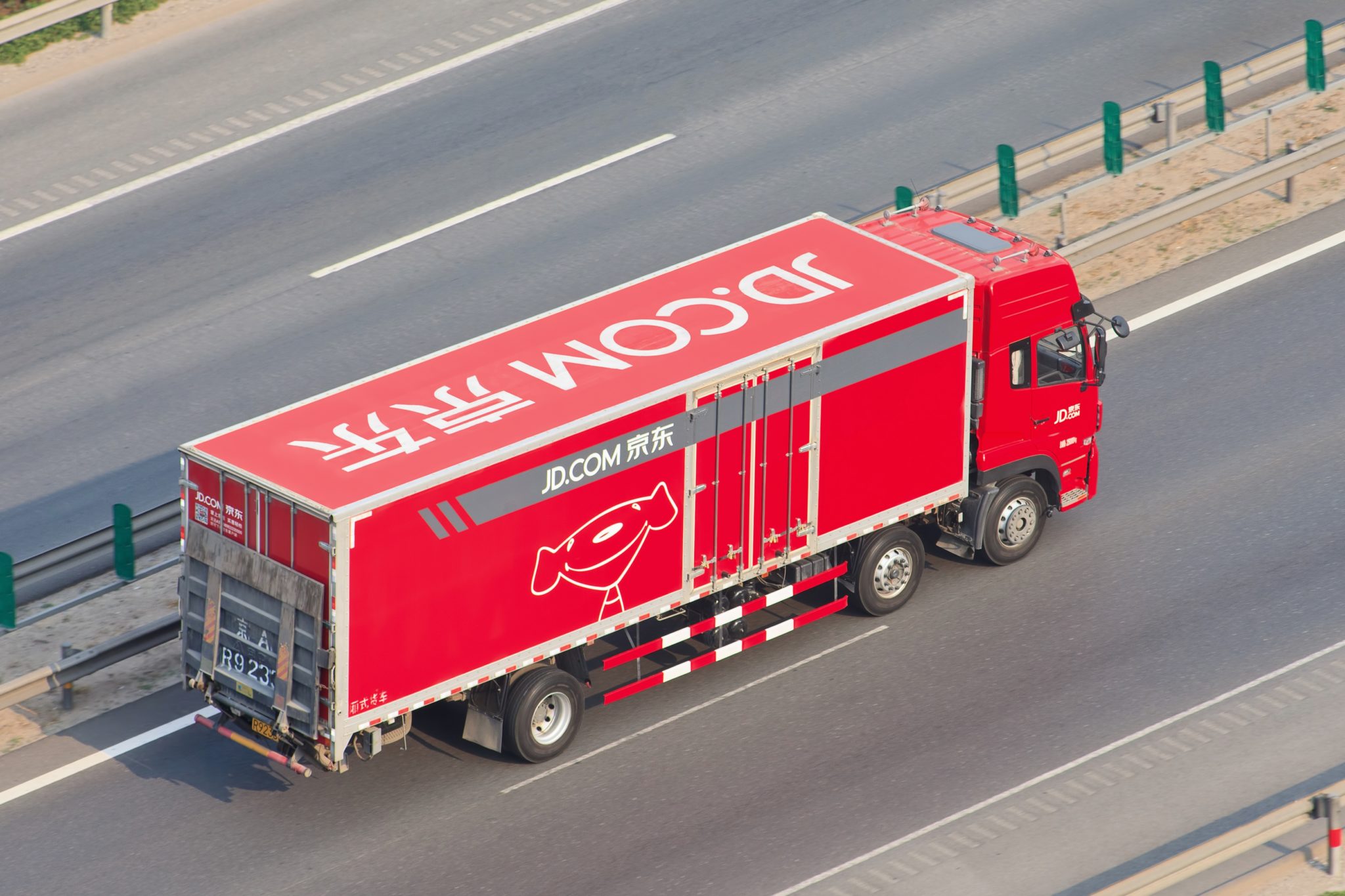
    JD.com is supporting the growth of British businesses in the Chinese market as it partnered with parcel delivery company Evri to combine their expertise and resources in e-commerce and logistics.

    The partnership will combine JD.com’s advanced e-commerce capabilities with Evri’s extensive delivery network across Europe. The services will include local pickup, warehousing, international transportation, access to Chinese bonded warehouses, customs clearance, and comprehensive delivery across China.

    The team-up will initially focus on the beauty and apparel sectors, where JD.com has substantial insights, including consumer behaviour, marketing and pricing strategies, product selection advice, and online operational strategies specific to the Chinese market.

    The collaboration will also enable JD Logistics to offer integrated warehousing and comprehensive delivery solutions to European clients by leveraging its self-operated overseas warehouses and Evri’s local distribution network.

    Qun Xue, Vice President of JD.com and Head of JD Logistics International said: “This partnership underscores our dedication to building a robust global logistics network and our commitment to the success of international brands.”

  • eBay fined $3M for harassment involving sending live cockroaches to Massachusetts couple

    eBay fined $3M for harassment involving sending live cockroaches to Massachusetts couple

    eBay has agreed to pay a $3 million penalty following a harassment campaign conducted by its employees involving the sending of live cockroaches to a Massachusetts couple.

    The U.S. Justice Department announced the fine last Thursday, attributing responsibility to eBay for the harassment campaign its employees executed against David and Ina Steiner, in 2019.

    This involved stalking the Steiners and sending them various disturbing items, including live cockroaches, a pig mask covered in fake blood, and a funeral wreath.

    It started with Ina Steiner publishing an article about eBay suing Amazon for poaching their sellers in 2019, which prompted Devin Wenig, then CEO of eBay, to express his desire to “take down” Ina Steiner in text messages to some company executives.

    Subsequently, Jim Baugh, who was eBay’s Senior Director of Safety and Security at the time, together with six other security employees, initiated a campaign of harassment against the couple.

    In addition to the $3 million fine, eBay must organize staff training and improve its corporate culture to prevent similar incidents.

  • Indonesia’s GoTo in talks with TikTok over potential e-commerce partnership

    Indonesia’s GoTo in talks with TikTok over potential e-commerce partnership

    Indonesia’s biggest tech firm GoTo Gojek Tokopedia said on Friday it was in talks with short video app TikTok over a potential e-commerce partnership in the Southeast Asian country.

    No final deal has been reached, GoTo added in a statement. The company also said the discussions did not include a takeover plan or any sale of more than 50 per cent of its shares to any party.

    Indonesia in October banned online shopping on social media platforms to protect smaller merchants and users’ data, after which TikTok had to close its e-commerce service TikTok Shop. TikTok has 125 million users in the country.

    Indonesia’s small and medium enterprises minister Teten Masduki told Reuters in November that TikTok had spoken to five companies including GoTo, Bukalapak.com and Blibli about possible partnership.

    Bloomberg earlier this week said TikTok had struck an agreement to invest in a unit of GoTo, citing people familiar with the matter.

    Indonesia’s e-commerce market is expected to grow to around $160 billion by 2030 from $62 billion this year, according to a report on Southeast Asia’s internet economy by Google, Singapore state investor Temasek Holdings and consultancy Bain & Co.

  • Lenskart builds SE Asia expansion

    Lenskart builds SE Asia expansion

    India-based eyewear retailer Lenskart plans to open stores in Thailand and the Philippines to expand in Southeast Asia.

    “We’re looking at opening 300 to 400 stores in southeast Asia in the next two years. Initially, we go slow, but we like to go deep,” Peyush Bansal, Lenskart cofounder and CEO said.

    “We’ve been in Singapore for the last three years, and we are going to Thailand this year. After a year in Thailand, we’ll go to the Philippines.”

    “There’s a lot to do in Asia now,” said Bansal. “In Singapore, we now have 70 stores. One in three people wear Lenskart glasses. It’s a smaller geography but the impact is bigger.”

    He noted that the brand is considering opening stores in Indonesia and Malaysia.

    In addition, the company is considering inorganic expansion opportunities as part of its regional expansion plans, following its acquisition of a majority stake in Japanese eyewear label Owndays last year.

  • TikTok obtaining Indonesia e-commerce permit – state media

    TikTok obtaining Indonesia e-commerce permit – state media

    Short video app TikTok is in the process of obtaining an e-commerce permit from Indonesia’s government, state news agency Antara reported, citing the deputy trade minister.

    In September, Indonesia banned e-commerce transactions on social media, a major blow for TikTok, which had pledged to invest billions of dollars in Southeast Asia, including Indonesia, the region’s biggest economy.

    “Before, they (TikTok) were not compliant, they didn’t have the permit. Now they are taking care of it,” Deputy Trade Minister Jerry Sambuaga was quoted saying by Antara on Tuesday.

    He said a partnership with a local firm could be done providing it was in accordance with regulations.

    TikTok, owned by China’s ByteDance, has 125 million active monthly users in Indonesia, a country of more than 270 million people. It has been looking to translate the large user base into a major e-commerce revenue source.

    TikTok did not immediately respond to request for comment regarding the deputy minister’s remarks.

    Reuters reported earlier this month that TikTok was in talks on possible partnerships with several Indonesian e-commerce companies, including GoTo’s e-commerce unit Tokopedia, Bukalapak.com and Blibli.

  • Half of Vietnamese population shops online

    Half of Vietnamese population shops online

    More than half of Vietnam’s population shopped online last year as both supply and demand in the e-commerce sector continue to boom.

    Dang Anh Dung, deputy CEO of Lazada Vietnam, told the forum on e-commerce on Tuesday that a report by Google and Temaske & Bain said around 57 million Vietnamese made online purchases last year, most of them in Hanoi, Ho Chi Minh City and Da Nang City.

    The report also asserted that Vietnam’s young population is playing an important role in the digital economy.

    Around 43% of Lazada shoppers are Gen-Zers born in 1997 or later, said the deputy CEO of the digital shopping channel that has been called “The Amazon of Southeast Asia.”

    According to Dung, this demographic in Vietnam accesses the app every day.

    On average, each individual in this young Vietnamese population bracket buys products from seven different categories, Dung told the conference. “Young people are becoming more particular with their products. They seek values and will change brands if they receive low-quality items.”

    Tran Van Trong, general secretary of the Vietnam E-commerce Association (VECOM), said Vietnam is seeing a boom in e-commerce as the number of online shopper surges with improving shopping skills and increasing purchase value.

    The rise in demand has also prompted supply surges, he said. “Millions of people are now online sellers, and the majority of them do not even own a brick-and-mortar store.”

    Businesses are evolving fast to adapt to new ways of selling products, Tand said, adding that many retail firms are responding to the changing times by issuing new policies on online shopping.

    The government has also tightened e-commerce tax collection and is punishing those who sell counterfeit products, he pointed out.

    The Ministry of Industry and Trade recently reported that Vietnam’s e-commerce gross merchandise value is growing by 16-30% a year and could reach $20.5 billion this year.

    The Google report said that Vietnam’s digital economy could reach a total value of $30 billion this year, and $45 billion by 2025.

  • Alibaba records “solid quarter” with revenue growing across segments

    Alibaba records “solid quarter” with revenue growing across segments

    Alibaba Group saw its revenue increase 9 percent year over year to US$30.81 billion for the quarter ended September 30.

    The company’s operating income soared 34 percent to $4.603 billion, with adjusted EBITA up 18 percent to $5.872 billion.

    Taobao and Tmall Group’s revenue was up 4 percent to $13.385 billion, as content and price-competitive strategy drove organic growth of users and order volume increased.

    Alibaba International Digital Commerce Group (AIDC), which operates Lazada, AliExpress, Trendyol, Daraz, Miravia and Alibaba.com, posted a 53 percent increase in revenue to $3.360 billion. AIDC recorded order growth of 28 percent thanks to a solid performance from all major retail platforms.

    Lazada recorded double-digit order growth, with losses per order narrowing both quarter over quarter and year over year.

    Other segments, namely Local Services Group, Cainiao Smart Logistics Network, Cloud Intelligence Group, and Digital Media and Entertainment Group, also saw revenue growths of between 2 and 25 percent.

    For the quarter, the company logged a net income of $3.659 billion, compared to net loss of $3.1 billion in the same quarter of 2022.

    Eddie Wu, CEO of Alibaba Group, said the group delivered a “solid quarter” due to its strategic reorganization.

    “Through a more flexible organizational governance mechanism, we aim to capture brand new opportunities from the ongoing AI technological transformation and create more value for our customers.”

  • TikTok in talks with Indonesian e-commerce firms about partnerships

    TikTok in talks with Indonesian e-commerce firms about partnerships

    TikTok has been talking with Indonesian e-commerce companies about possible partnerships, an Indonesian minister said on Monday, a month after Southeast Asia’s largest economy banned online shopping on social media platforms.

    TikTok has spoken with five companies including GoTo’s e-commerce unit Tokopedia, Bukalapak.com and Blibli, according to Teten Masduki, minister for small-medium enterprises (SMEs).

    “Some e-commerce companies in Indonesia have talked to TikTok,” he said in an interview, citing what the companies’ executives told him.

    Indonesia’s trade ministry implemented the ban last month, aiming to protect smaller brick-and-mortar merchants and protect users’ data.

    It was a particular blow to TikTok, which was forced to close its e-commerce service TikTok Shop. TikTok has 125 million users in Indonesia.

    Tokopedia declined to comment. A representative for Bukalapak said the company was unaware of such talks. Blibli did not immediately respond to a request for comment.

    TikTok and YouTube are considering joining Meta in applying for e-commerce licenses in Indonesia after Southeast Asia’s largest economy banned online shopping on social media platforms, people familiar with the discussions have said.

    The app, owned by Chinese technology giant Bytedance, was also pursuing talks with local e-commerce players, they added.

    Teten, one of the staunchest critics of TikTok Shop prior to the ban, said President Joko Widodo has tasked him to formulate rules on e-commerce.

    He plans to meet TikTok Chief Executive Shou Zi Chew later this month.

    “I want them to commit to have a sustainable business that does not harm domestic SME products,” he said.

    Teten also said he has proposed further regulations for the flow of imported goods into the country but did not provide details.

    Until it stopped operations, TikTok Shop delivered about 3 million parcels daily in Indonesia, sources have said.

    Indonesia’s e-commerce market is expected to grow to around $160 billion by 2030 from $62 billion this year, according to a report on Southeast Asia’s internet economy by Google, Singapore state investor Temasek Holdings and consultancy Bain & Co.

    Other major e-commerce players in Indonesia include SEA’s Shopee and Alibaba’s Lazada.

  • Vietnam plans to extend VAT cut until end-June 2024

    Vietnam plans to extend VAT cut until end-June 2024

    The Vietnamese government said on Tuesday it plans to extend a reduction in value added tax (VAT) until the end of June next year to boost domestic consumption and production as the global economy remains sluggish.

    The cut in VAT to 8% from 10%, which still needs parliament’s approval, has been in place since July and is set to expire by the end of this year. The next session of parliament is scheduled to begin next week.

    The 8% VAT rate is not applicable to services and products like banking, finance, telecommunications and real estate, the government said in a statement.

    The tax cut, which is expected to boost domestic consumption, would reduce the government’s budget revenue by 25 trillion dong ($1.02 billion), the statement added.

    Vietnam’s economic growth rose 5.33% in the third quarter, higher than 4.05% in the previous one, official data showed.

    Headline inflation continued the sharp upward increase that started in June, official data showed. September’s consumer price index rose 3.7% in September against the same period last year.

    While economic growth picked up in the July-September period thanks to a gradual recovery in exports, domestic consumption remained subdued and credit growth continued to be slow reflecting weak private domestic investment and investor confidence, the World Bank said in its latest report.

    Retail sales in the domestic market with a population of nearly 100 million, rose 9.7% in the first nine months of this year from a year earlier, according to the General Statistics Office.

  • Lazada Group and Seoul Business Agency sign strategic partnership

    Lazada Group and Seoul Business Agency sign strategic partnership

    Lazada Group and the Seoul Business Agency (SBA) have signed a Memorandum of Understanding to allow South Korean SMEs to expand into the Southeast Asia market.

    The SBA will take the lead in promoting Lazada as a prominent Southeast Asian e-commerce marketplace destination among SMEs in Seoul under the terms of this partnership. The collaboration will begin in Singapore, where the SBA and Lazada will collaborate to onboard and nurture chosen new cross-border sellers from Seoul onto the Lazada Singapore platform.

    “This collaboration not only strengthens our commitment to offering buyers an extensive variety of products but also reinforces our dedication to fostering cross-border shopping and welcoming brands and sellers from across the globe to our e-commerce ecosystem,” said Jason Chen, chief business officer, Lazada Group and CEO, Lazada Singapore

    “South Korean SMEs have much to offer, and together with Seoul Business Agency, we aim to unlock their potential in Southeast Asia.”

    This agreement intends to expand chances for South Korean businesses and empower them to grow the Southeast Asian digital commerce arena by utilising Lazada’s technology, resources, and solutions. This will also broaden the selection of items and brand alternatives available to Lazada customers.

    According to Bloomberg, e-commerce behemoth Alibaba Group Holding spent an additional US$845 million on its Southeast Asia affiliate Lazada in July, despite the region’s tough competition.

  • Indonesia bans e-commerce transactions on social media

    Indonesia bans e-commerce transactions on social media

    Indonesia has banned e-commerce transactions on social media platforms, the trade minister said on Wednesday, in a blow to short video app TikTok, which is doubling down on Southeast Asia’s biggest economy to boost its e-commerce business.

    The government said the move, which takes effect immediately, is aimed at protecting offline merchants and marketplaces, adding that predatory pricing on social media platforms is threatening small and medium-sized enterprises.

    The move comes just three months after TikTok pledged to invest billion of dollars in Southeast Asia, mainly in Indonesia, over the next few years in a major push to build its e-commerce platform TikTok Shop.

    TikTok, owned by China’s ByteDance, has US$125 million active monthly users in Indonesia and has been looking to translate the large user base into a major e-commerce revenue source.

    A TikTok Indonesia spokesperson said it would pursue a constructive path forward and was “deeply concerned” with the announcement, “particularly how it would impact the livelihoods of the 6 million” local sellers active on TikTok Shop.

    Indonesia Trade Minister Zulkifli Hasan on Wednesday told reporters that the regulation is intended to ensure “fair and just” business competition, adding that it was also intended to ensure data protection of users.

    He warned of letting social media become an e-commerce platform, shop, and bank all at the same time.

    The new regulation also requires e-commerce platforms in Indonesia to set a minimum price of $100 for certain items that are directly purchased from abroad, according to the regulation document reviewed by Reuters, and that all products offered should meet local standards.

    Zulkifli said TikTok had one week to comply with the regulation or face the threat of closure. Indonesia Deputy Trade Minister Jerry Sambuaga earlier this month named TikTok’s live streaming features as an example of people selling goods on social media.

    Research firm BMI said TikTok would be the only business affected by the transaction ban and the move was unlikely to harm the digital marketplace industry’s growth.

    Indonesia’s e-commerce market is dominated by the likes of homegrown tech firm GoTo’s Tokopedia, Sea’s Shopee and Chinese e-commerce giant Alibaba’s Lazada.

    E-commerce transactions in Indonesia amounted to nearly $52 billion last year and of that, 5 per cent took place on TikTok, according to data from consultancy Momentum Works.

    Indonesia is among the few markets where TikTok has launched TikTok Shop, as it seeks to leverage its large user base in the country.

    Its 125 million active monthly users in Indonesia is almost on par with its user figures for Europe and behind US users of more than 150 million. TikTok launched an online shopping service in the United States earlier this month.

    Reactions from retailers were mixed.

    Fahmi Ridho, a vendor selling clothes on TikTok, said the platform was a way for stores to recover from the blow dealt by the Covid-19 pandemic.

    “Sales don’t have to be necessarily through (brick and mortar) shops, you can do it online or wherever. … Everything will still have a portion,” he said.

    But Edri, who goes by one name only and sells clothes at a major wholesale market in Jakarta, agreed with the regulation and stressed that there should be limits on items sold online.

  • Indonesia proceeds with ban on e-commerce transactions via social media

    Indonesia proceeds with ban on e-commerce transactions via social media

    Indonesia has banned e-commerce transactions on social media platforms, the trade minister said on Wednesday, in a move intended to protect traditional retail and which will mostly impact short video platform TikTok and its shopping platform.

    The government says the move is aimed at protecting offline merchants and marketplaces in Southeast Asia’s biggest economy, adding that predatory pricing on social media platforms is threatening small and medium-sized enterprises.

    Trade Minister Zulkifli Hasan told reporters the regulation, which takes effect immediately, is intended to ensure “fair and just” business competition, adding it was intended also to ensure data protection of users.

    He warned of letting social media become an e-commerce platform, shop, and bank simultaneously.

    The regulation also requires e-commerce platforms in Indonesia to set a minimum price of $100 for certain items directly purchased from abroad, according to the regulation document reviewed by Reuters, and all products offered should meet local standards.

    Zulfikli did not mention TikTok, although his deputy Jerry Sambuaga named TikTok’s “live” features as an example of people selling goods on social media.

    BMI, a unit of Fitch Solutions, said earlier on Wednesday that TikTok will be the only business affected by the transaction ban because its model relies on social e-commerce, although “it will not harm the digital marketplace industry’s growth.”

    A TikTok Indonesia spokesperson did not immediately respond to a request for comment on Wednesday. On Monday the spokesperson said the government should consider “the livelihood of more than six million” local sellers active on TikTok Shop.

    The company said its app had 325 million Southeast Asian users that were active every month, and 125 million of them were in Indonesia – on a par with its user figures for Europe and not too far behind the US, where it has 150 million.

    According to data from consultancy Momentum Works, Indonesia, with a population of more than 270 million, accounted for nearly $52 billion worth of e-commerce transactions last year. Of that, 5 percent took place on TikTok, principally through live-streaming, it said.

    Chinese tech company ByteDance owns TikTok.

  • Mike Ashley in talks to sell Missguided to Shein

    Mike Ashley in talks to sell Missguided to Shein

    Chinese fashion giant Shein has reportedly been in talks with Mike Ashley’s Frasers Group to acquire the UK-based fashion platform Missguided.

    Sky News said the two companies have been negotiating for several weeks. The move came about a year after Missguided was brought out of administration by Frasers Group for £20 million. The deal, if it happens, will mark Shein’s first acquisition of a UK label.

    The source said the acquisition will likely include Missguided’s brand and its intellectual property, while Frasers Group will retain its head office.

    Missguided was founded in 2009 by Nitin Passi, the daughter of an Indian immigrant who set up the high street supplier By Design in the 1960s. The company grew its presence in the UK and overseas markets, including the Middle East and Asia. Investment company Alteri acquired a 50 percent stake in Missguided in 2021 before the fashion company went into administration last year as it failed to pay its debts.

    Shein has recently announced it will bring the company’s ESG roadmap pledge to $155 million, following the $70 million committed last April.