Tag: ecommerce

  • Global giants eye Vietnam e-commerce logistics market

    Global giants eye Vietnam e-commerce logistics market

    The world’s largest container shipping line Maersk and U.S. express delivery company FedEx are seeking to enter Vietnam’s e-commerce logistics market. Ditlev Blicher, regional managing director for Asia-Pacific, A.P. Moller – Maersk (Maersk), was in the country this week, three months after the Danish company spent US$3.6 billion on acquiring Hong Kong firm LF Logistics.

    He said with LF Logistics’ expertise in omnichannel orders, Maersk would have a better position in the global e-commerce market, including Vietnam. He said that his company plans to offer business-to-business (B2B) and business-to-consumer (B2C) delivery services.

    Hoan Dang, head of omnichannel order fulfillment at Maersk Vietnam and Cambodia, said with the acquisition of LF Logistics, his company could join hands with e-commerce platforms to handle goods orders in the Vietnamese market.

    FedEx is integrating its services with e-commerce platforms to enable online retailers to use them without leaving them. Hardy Diec, managing director of FedEx Express Indochina, said e-commerce would continue to flourish in Vietnam.

    Earlier this month, his company opened a new $2-million operations center in Hanoi’s Bac Tu Liem District. Vietnam will be one of the top 10 countries for FedEx in terms of trade volume growth over the next five years.

    Vietnam will achieve the highest growth in the digital economy in Southeast Asia between 2022 and 2025, a report by Google, Temasek, and Bain & Company have forecast. Its digital gross merchandise volume will likely reach $23 billion in 2022 and $32 billion by 2025.

    According to global firm Allied Market Research, Vietnam’s express delivery market is expected to be worth $4.88 billion by 2030 after growing at 24.1% annually, with the growth of e-commerce being one of the main drivers.

    Logistics firms are expanding their services and lowering prices.

    This month Lazada Logistics announced it would start offering omnichannel deliveries for online shops.

  • JD.com to slash top exec salaries amid China’s ‘common prosperity’ push

    JD.com to slash top exec salaries amid China’s ‘common prosperity’ push

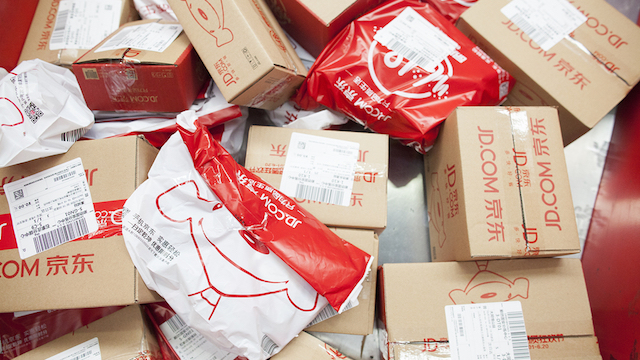
    China’s JD.com said on Tuesday it would cut the salaries of more than 2,000 senior managers by 10% to 20% next year to help pay for improved benefits for other staff amid the government’s “common prosperity” drive to reduce income inequality.

    Liu also plans to personally donate 100 million yuan to a fund that help children of JD employees should anything happen to their parents, said the letter circulated online and later confirmed by JD.com as authentic.

    “The employee benefits plan is currently being improved, with a focus on front-line staff,” a JD representative told Reuters. The company has 540,000 employees.

    Alibaba Group 9988.HK and Tencent Holdings 0700.HK last year pledged to spend billions to support the effort, while state-owned investment banks have implemented pay cuts and delayed bonus payments this year.

    JD has been hit by a slowing economy and flagging consumer spending this year, though it last week posted an 11.4% rise in third-quarter revenue and said it was seeing signs of a demand recovery as China adjusted it zero-COVID policy.

  • Alibaba quarterly revenue misses expectations as spending slows

    Alibaba quarterly revenue misses expectations as spending slows

    Chinese e-commerce giant Alibaba Group Holding Ltd 9988.HK posted a smaller-than-expected rise in quarterly revenue on Thursday as COVID-19 curbs and a worsening economic outlook stifled consumer spending.

    Retail spending in China has sagged this year with consumers frustrated by the government’s strict zero-COVID policies that have led to frequent snap lockdowns and hurt economic activity.

    Alibaba has also had to contend with stiff competition from the likes of Pinduoduo PDD.O and ByteDance’s Douyin – the Chinese version of Tiktok – which have expanded their e-commerce offerings and taken more market share.

    The company has also yet to fully recover from a regulatory crackdown on the tech sector that has curtailed growth opportunities.

    Revenue grew 3% to 207.18 billion yuan ($28.96 billion) in the three months ended Sept. 30, compared with a Refinitiv consensus estimate of 208.62 billion yuan drawn from 25 analysts.

    Alibaba, which runs China’s largest online marketplaces Tmall and Taobao and owns a wide range of businesses from logistics to cloud services, reported net loss attributable to shareholders of 20.56 billion yuan in the quarter.

    Excluding one-off items, Alibaba earned 12.92 yuan per American Depository Share.

  • Double Day e-commerce sales likely to be muted this quarter

    Double Day e-commerce sales likely to be muted this quarter

    Double Day sales this quarter will not match those of past years since inflation remains a worry for consumers, businesses have said.

    Sales on days such as November 11 and December 12 are the year’s highest as many firms and e-commerce companies run massive promotion programs.

    According to data from French online display advertisements provider Criteo, online retail sales on November 11, December 12 and Black Friday last year were 128%, 143% and 92% higher than on normal days.

    However, on October 10 sales in Vietnam increased by only 48% compared with 125% last year.

    Sales on November 11 and December 12 would not rise by as big rates as before, Mark Gubbels, Criteo’s commercial head for Southeast Asia, said, noting that consumers would be more cautious in spending.

    Retail sales increased only 17.1% year-on-year in October compared with more than 36% the previous month.

    Inflation accelerated after the end of the third quarter, surging by 4.3% year-on-year in October.

    Nguyen Chanh Chung, owner of cosmetics brand Lagivado, said demand would not be as strong this year as in the past, while e-commerce platforms would not offer as big promotions in the last quarter as they normally do.

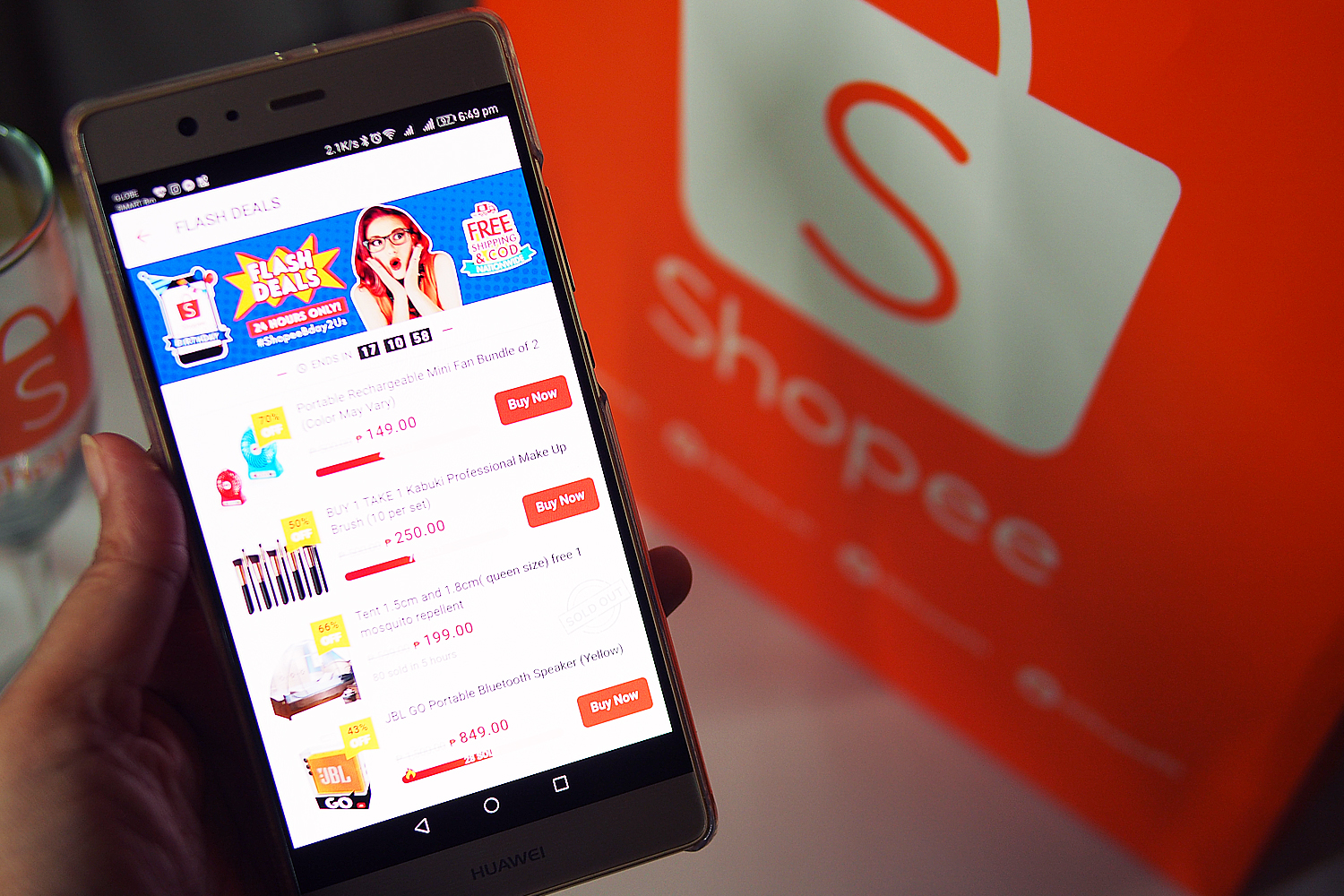
    To attract customers, Shopee and Lazada are organizing live online music shows, while the former is also offering vouchers and discounts.

    Nguyen Manh Tan, marketing director of Haravan Technology Corporation, said consumers currently like omnichannel (combining online and offline sales), the direct-to-consumer model, conversational commerce, and livestreams on social networks.

    “E-commerce businesses should apply these four business models to approach and attract customers, increase revenues and cut costs and build their brand reputation.”

    There are around 100 e-commerce platforms in Vietnam with hundreds of thousands of vendors.

    In 2020 Shopee had 210,000 vendors and Tiki had 8,800, according to tax authorities.

    The e-Conomy Southeast Asia 2021 report by Google, Temasek and Bain & Co. forecast Vietnam to surpass Thailand by 2025 to become the second biggest Internet economy in Southeast Asia at US$57 billion after Indonesia ($146 billion).

  • Coupang Swings to Profit in Q3, the First Since 2014

    Coupang Swings to Profit in Q3, the First Since 2014

    E-commerce giant Coupang said Thursday it swung to the black in the third quarter for the first time since 2014, when it introduced its ultra-fast delivery service, Rocket Delivery.

    Net income came to $90.7 million in the July-September period, compared with a net loss of $324 million during the same period of last year, the New York-listed e-commerce titan said in a regulatory filing.

    Coupang’s operating profit came to $77.4 million, marking the first positive figure since 2014. The e-commerce giant logged an operating loss of $67.14 million in the previous quarter.

    Sales grew 10 percent on-year to $5.1 billion in the third quarter.

    Coupang said sales of its product commerce division, which includes its Rocket Delivery service, also advanced 10 percent from a year earlier to $49.5 billion.

    The number of active customers inched up on-year by 7 percent, though the increase in spending per customer was slightly lower at 3 percent.

    The top line of its new business areas, including the food delivery service Coupang Eats and video streaming service Coupang Play, inched down 6 percent from a year earlier to $154.2 million.

    The company attributed its first net profit and operating income since 2014 to improved profitability, stemming from its continued investments in tech and efforts to optimize supply chain and business processes.

    The e-commerce behemoth said its adjusted earnings before interest, tax, depreciation and amortization (EBITDA) came to $195 million, compared with a deficit of $207.4 million last year.

    Coupang made its landmark debut on the New York stock market last year in an effort to expand its global presence.

  • E-commerce platforms free from filing tax on vendor behalf

    E-commerce platforms free from filing tax on vendor behalf

    E-commerce platforms like Shopee, Tiki or Lazada will not have to file tax on vendors’ behalf and instead only provide authorities with their revenue and other details.

    Every quarter the platforms will need to submit vendor details including name, tax ID, personal ID, address, phone number and revenue, according to a new decree.

    This means a previous proposal by tax authorities to make these platforms pay tax on behalf of their vendors was not approved, with vendors instead responsible for their own tax payments.

    Insiders since last year have voiced concern over the proposal, saying that taxing vendors’ behalf will increase costs, and that they do not have enough resources to fulfill this task.

    Around 100 e-commerce platforms are operating in Vietnam with hundreds of thousands of vendors. In 2020, Shopee had 210,000 vendors and Tiki 8,800, according to tax authorities.

  • E-Commerce Trends to Watch in 2022

    E-Commerce Trends to Watch in 2022

    Not only does e-commerce represent the largest single commercial retail sector, but also one of the fastest evolving. With new technologies, modalities and platforms emerging constantly, it can be challenging to stay ahead of the curve.

    If you’re a business looking to keep up with the latest movements in e-commerce in 2022 and beyond, take a look at these prevailing trends below and explore ways of integrating them into your operations.

    Let Customers Have Their Say

    The standards for accountability and customer feedback have developed significantly over the past decade. Now, more than ever, consumers are turning to third party review platforms to assess the quality of service and support provided by your organization.

    In line with the maxim that “if you can’t beat them, join them”, a beneficial strategy is to assist your customers in leaving reviews on these platforms. Not only does this cast your store in a beneficial light by demonstrating that you’re open to criticism and accountability, but it enables users to more quickly vet your brand for customer satisfaction.

    While some many argue this can be a double-edged sword, particularly if your business has struggled with achieving satisfactory ratings in the past, the reality is that the likes of Trustpilot and Yelp are now part of the ecosystem of modern e-commerce and any steps you can make to facilitate that process are going to beneficial to your brand identity and impact in the long run.

    Online Comparison Platforms (OCPs)

    OCPs have been among the fastest growing e-commerce sectors in the 21st century, and for good reason. With so much choice now available to consumers, an entire industry has grown up around pairing down the options and providing targeted recommendations for customers accosted with information overload.

    Online comparison platforms are mostly closely associated in people’s minds with securities and investments, and it’s true that, to date, the largest and most recognisable platforms belonging to this sector have been focused on connecting people with good rates on financing.

    Yet if one looks further afield, it becomes easy to see that online comparison platforms exist, and are operating, within diverse market sectors around the world. One of the most popular applications for these platforms is in retail, with companies like Amazon Marketplace and Pricerunner vying to connect online shoppers with the best deals and offers on thousands of products, from consumer electronics to apparel.

    Elsewhere, online comparison platforms have emerged as a leading means by which iGaming aficionados select providers to patronize. For example, Emiratis looking for recommendations on the best online casinos in the UAE have come to rely on ArabianBetting as a leading resource of this information.

    This is because this platform not only collates the best casinos available in their market, but, like other comparison platforms, aims to connect them with the most competitive deal – in this respect in the form of special promotions and sign-up bonuses.

    Give Patrons Payment Options

    The emergence of e-wallets, Fintech banks, and cryptocurrencies have all contributed to impacting people’s spending habits online. While, in the past, it was reasonable to simply provide a secure card payment processor for your customers to use when paying at check-out, increasingly nowadays people have to expect a wider array of options.

    While we wouldn’t recommend a brand offer payments in crypto unless it makes up a key part of their marketing strategy, offering alternative payment providers like PayPal, Venmo and CashApp can go a long way in decreasing friction for customers shopping from their smartphones.

    Additionally, the rise of Buy Now, Pay Later platforms like Klarna mean that such financing options have come to be expected as the norm in certain sectors such as apparel.

    Failing to match features like these if they’re offered by your rivals is a sure-fire way to drive business away from your brand.

    Sustainable Focus

    Any e-commerce brand worth their salt in 2022 must be doing more than paying lip service to sustainability and green values.

    There are many ways that brands can decrease their carbon footprint and environmental impact, from substituting wasteful packaging for recycled cardboard, to offering bundled deliveries or store pick-ups to decrease emissions.

    Consumers are coming to expect these measures, and signaling your commitment to improving sustainability can be a determining factor in attracting new customers to your platform.


    Words: 721

  • Vietnam digital economy growth expected to be highest in Southeast Asia

    Vietnam digital economy growth expected to be highest in Southeast Asia

    Vietnam will achieve the highest growth in the digital economy in Southeast Asia between 2022 and 2025, a report by Google, Temasek and Bain & Company has forecast.

    It will grow at 31% followed by the Philippines with 20% and Indonesia with 19%, according to e-Conomy SEA 2022.

    Vietnam’s digital gross merchandise volume is likely to reach US$23 billion this year, third highest in the region behind Indonesia’s $77 billion and Thailand’s $33 billion.

    But with the rapid growth projected, it is expected to double by 2025 to $49 billion.

    The main contributors to Vietnam’s digital economy this year are e-commerce ($14 billion) online media ($4.3 billion) and transport and food ($3 billion).

    Vietnam’s high-quality workforce in the technology sector and the increasing penetration of digital services in urban and rural areas promise a strong foundation for the digital growth of the country, Stephanie Davis, vice president of Google Southeast Asia, said.

    billion USDVietnam’s digital economy size1313181823234949Gross merchandise value2019202120222025102030405060

    Vietnam is likely to attract the most investors in the 2025-30 period, according to a survey of venture capital investors in the third quarter by Bain & Company, with 83% of them expecting an increase in deal activity compared to now.

    In a report earlier Meta said eight out of 10 of Vietnamese are digital consumers.

    Vietnam is also among the top countries in future technology adoption such as fintech and metaverse.

    Virtual reality adoption in Vietnam is 29%, the highest in Southeast Asia, it said.

  • Malaysian e-commerce market to grow by 19.9 per cent this year

    Malaysian e-commerce market to grow by 19.9 per cent this year

    Analytics company GlobalData predicts the Malaysian e-commerce market will expand by 19.9 per cent this year, reaching US$9.2 billion in value.

    GlobalData further projects that e-commerce sales in Malaysia will increase at a compound annual growth rate (CAGR) of 16.1 percent between this year and 2026 to reach $16.6 billion by then, supported by the fast-expanding shift from offline to online purchasing.

    “Malaysia is among the fastest-growing e-commerce markets in Southeast Asia,” said Ravi Sharma, lead banking and payments analyst at GlobalData.

    “The growth is supported by the rapid adoption of smartphones, growing internet penetration, and the availability of secure online payment systems.”

    Despite the reopening of physical establishments after the epidemic, many Malaysian customers still favor online shopping. Less than 6 percent of Malaysian customers claimed they had never purchased online, while nearly 90 percent said they had done so within the previous six months.

    “The pandemic has brought a shift in consumer buying behavior, pushing them towards online, a trend that is expected to continue,” added Sharma.

    Alternative payment methods, including ShopeePay, GrabPay, and Boost are gaining in popularity and collectively account for 41 percent of payments.

  • Indonesia’s e-commerce platform Blibli plans $528 million IPO

    Indonesia’s e-commerce platform Blibli plans $528 million IPO

    Indonesia’s e-commerce firm Blibli is looking to raise US$528 million during its IPO debut next month, the company said in its prospectus.

    The company said it plans to sell 17.7 billion shares through the listing at a price range between $0.027 and $0.03, which is expected to bring the company’s value to as much as $3.5 billion.

    The company said the fund raised will be used to pay its debt to banks before allocating the remains to working capital.

    Operated by PT Global Digital Niaga, the e-commerce company will be Indonesia’s third unicorn going public on the local stock market after GoTo Group and Bukapak, which raised $1 billion and $1.5 billion respectively.

    Blibli was founded in 2010 and is backed by the regional conglomerate Djarum Group.

  • Vietnam collects $231 mln in taxes from online platforms

    Vietnam collects $231 mln in taxes from online platforms

    The Finance Ministry said online platforms including Facebook and Google have paid VND5.59 trillion (US$231.6 million) in taxes from 2018 to August this year.

    In a report sent to the National Assembly, the ministry said the tax was paid by cross-border and e-commerce platforms, with Facebook and Google contributing the most, at VND2.099 trillion and VND2.115 trillion, respectively.

    They were followed by Microsoft with VND714 billion.

    Last year’s collection of VND1.591 trillion was 39% more than in 2020.

    From the beginning of 2018 until the end of this August, tax authorities collected VND1.082 trillion in taxes from organizations and individuals earning income from doing business online, including VND261 billion collected last year and almost VND521 billion in the first eight months of this year.

    The ministry launched an electronic portal and a mobile application (eTax Mobile) in March for foreign suppliers to declare, register and pay taxes.

    So far, there have been nearly 70,000 transactions made through the portal and app, with more than VND308 billion of tax collected.

    Of this, $22.2 million was paid by 30 major foreign suppliers including Microsoft, Facebook, Netflix, Samsung, TikTok and eBay.

    In order to manage and avoid tax revenue losses in the digital platform business, the finance ministry is working to complete relevant legislation.

    At the end of August, the ministry submitted amendments to Decree 126 issued in 2020, stipulating that e-commerce platforms have to provide information, declare and paying taxes on behalf of sellers.

    The ministry also proposed amending a number of special regulations to ensure a consistent legal basis for the management of e-commerce platforms.

  • Thai food delivery app Lineman Wongnai bags $265 million

    Thai food delivery app Lineman Wongnai bags $265 million

    hai food delivery app Lineman Wongnai on Monday said it has raised US$265 million from Singapore’s GIC, PTT Oil and Retail Business, Taiwan Mobile, and other investors.

    The startup said the investment round puts the company’s value at over US$1 billion, making it a ‘unicorn’ firm.

    The announcement comes as competition heats up among food delivery apps in Thailand, including the homegrown Robinhood, which is backed by Thai lender Siam Commercial Bank Pcl, and AirAsia Superapp.

    The capital injection will help Lineman grow from “a local Thai start-up to a regional tech platform,” said chief financial officer, In Young Chung.

    He added the company plans to have an initial public offer (IPO) but did not provide a timeframe.

    The company was formed last year after Lineman and restaurant aggregator Wongnai formed a joint venture and raised US$110 million from BRV Capital.

  • Tech workers left hanging as Shopee rescinds job offers

    Tech workers left hanging as Shopee rescinds job offers

    Southeast Asia’s largest e-commerce firm Shopee has rescinded dozens of job offers in the past two weeks, sources said, a move that began shortly after parent company Sea Ltd reported widening losses and sharply slower revenue growth.

    Four people interviewed by Reuters who have participated in a WeChat group of some 60 people that was set up to discuss Shopee’s withdrawal of offers said their offers were pulled just days before they were due to begin work.

    One 27-year-old engineer who asked that only his first name Wang be used said his call came a week after arriving in Singapore, having quit a job in Shanghai with TikTok owner Bytedance.

    “I thought it was a scam call … until I realised it was a widespread rescinding of offers by Shopee,” said Wang, who had by then paid an advance to rent a house.

    Singapore-based Sea said it had recently cancelled some offers at Shopee but declined to say how many.

    “Due to adjustments to hiring plans on some tech teams, a number of roles at Shopee are no longer available. We are working closely to support those affected,” a company representative said.

    The move follows other recent job cuts at Sea. Staff at Booyah!, a gaming livestream app, which is part of Sea’s gaming unit Garena, were told they would be let go and the app would no longer be updated, separate sources have told Reuters, adding that projects at Sea’s development unit were also shut down.

    Earlier this year, media reports also said Shopee had shed headcount in Southeast Asia, Mexico and Latin America. Shopee declined to comment on those reports.

    Pessimistic Tone

    As recently as March, Sea said it would continue to invest in Shopee, which competes with Alibaba Group Holding’s Southeast Asian arm Lazada, and that growth for the unit remained at the top of its mind.

    But last month, Sea withdrew its e-commerce forecast for the year. Founder and CEO Forrest Li noted an increasingly uncertain market environment and stressed the need to prioritise profitability and efficiency. Sea reported a net loss of $931 million in the second quarter, more than double the loss it made in the same period a year earlier.

    “Their tone has never been more pessimistic,” said Ke Yan, lead analyst at Singapore-based DZT Research, who added that Sea’s strategy of using Garena’s cash flow to compensate for Shopee’s cash burn was unsustainable.

    Sea’s handling of the layoffs was “ugly and embarrassing” and likely to hurt its reputation, he said.

    Sea saw its market value soar to more than $200 billion last October as its Garena unit surged in popularity during the pandemic but its shares have tumbled since then and are now worth just $27 billion.

    Singapore’s Ministry of Manpower said relevant authorities were aware of complaints about Shopee and it was in touch with the company to find out more, but it also said in such situations the parties should work out an amicable solution in good faith.

    The four people interviewed by Reuters said that as compensation Shopee has offered a month’s salary and in cases where people have flown from abroad, it will reimburse the cost of flight tickets and temporary accommodation.

    While the potential for legal action has been discussed in the WeChat Group, those left hanging by Shopee are most concerned with finding new work.

    “The cost of taking legal action is too high. I just want to move on and find a new job,” said one of the four people interviewed by Reuters who declined to be identified.

    For his part, Wang wants to continue his job search in Singapore.

    “The cost of returning to China is too huge, it is very hard to find a new job given the economic situation there,” he said.

  • Invest Hong Kong highlights e-commerce advantages for growing businesses

    Invest Hong Kong highlights e-commerce advantages for growing businesses

    Hong Kong has been great place to set up an eCommerce business long before the demand for online shopping increased due to the pandemic.

    E-Commerce sales in Hong Kong are expected to grow at an annual growth rate of 8.3% between 2021 and 2024.

    The Hong Kong e-Commerce market has been rapidly growing in the past five years and is expected to grow even more.

    This growth is attributable to the favourable economic environment and advanced technological infrastructure, increasing consumer confidence in online transactions.

    This article outlines the many reasons Hong Kong is a great palace for e-Commerce businesses and why the business-friendly environment in Hong Kong makes such businesses thrive.

    What is an e-Commerce Business?

    E-commerce businesses are those that operate completely online.

    The business model operates by trading goods online through the internet.

    There is no physical store that customers can visit, so there is a huge focus on digital marketing to gain an edge over your competitors.

    You can sell almost anything through an e-Commerce business, such as books, clothes, groceries, furniture or even provide professional services such as legal and accountancy advice.

    Through e-Commerce, business owners no longer have to worry about the costs of maintaining a physical store and simply focus on managing orders and shipping the products to the customer.

    1. Leading eCommerce Market & Business Growth Potential

    Hong Kong has a thriving online market where the market volume for eCommerce businesses stands at nearly US 11 million by 2025.

    This highlights the level of potential growth in eCommerce businesses in Hong Kong. Compared to other countries, Hong Kong is one of the best markets to run an eCommerce business.

    Moreover, if you open up an e-Commerce business in Hong Kong, there is significant potential for your business to rapidly grow as you are not just limited to trading in Hong Kong.

    You can easily carry out your business activities in Mainland China and beyond.

    This is a huge opportunity to grow your business as China currently represents almost X% of the entire global eCommerce market.

    2. Technology Driven / Advanced Technology Infrastructure 

    Hong Kong is one of the world’s leading digital cities where computers, smartphones, and internet usage are consistently higher than anywhere else in the world.

    Hong Kong has been facing a rapid increase in internet usage as nearly 5.9 million people aged ten and above had smartphones in 2019.

    Alongside personal use of technology, businesses are also heavily dependent on technology.

    nother government study highlighted that nearly 38% of companies in Hong Kong had their websites.

    As most businesses and consumers are familiar with technology and use the internet to complete their day to day activities, they are more reliant on doing things online, especially shopping.

    This can be by ordering groceries, clothing, office equipment, school supplies and home furniture.

    This increased demand and reliance on using technology provides a great market for e-Commerce businesses.

    3. Favourable Tax System

    If you are running an offshore eCommerce business, Hong Kong is the best option for you as you can relieve a huge financial burden in terms of taxes.

    Being a highly popular low-tax jurisdiction, Hong Kong has been interesting for many entrepreneurs looking to set up an eCommerce company.

    Incorporating your eCommerce as a company in Hong Kong will allow you to benefit from the following tax requirements:

    • Corporate income tax of only 8.25% for the first HKD 2 million
    • No capital gains tax
    • No tax on dividends
    • No sales tax or value-added tax
    • No tax on any profits derived from outside Hong Kong

    According to the international tax standard set by the Organisation for Economic Co-operation and Development, Hong Kong is a ‘’white list’ country.

    All white list countries have implemented the internationally agreed tax standard, which ensures transparency and security when running your eCommerce business.

    4. Innovative Digital Banking

    Hong Kong is one of the world’s financial hubs, has more than 70 of the world’s leading international banks present in the country.

    Moreover, Hong Kong banks can easily approve applications relating to e-Commerce businesses.

    While you can always open a local bank account, there are more convenient alternative fintech platforms in Hong Kong which you can use as a business bank account.

    Consumers are also increasingly opting for more innovative digital banking means when shopping online such as paying through digital wallets and mobile banking applications.

    Merchant Solutions highlights that more and more consumers prefer to shop on their mobile phones due to the ease that comes with online banking.

    This trend is expected to grow, and e-Commerce businesses that take advantage of this and offer digital wallets that their customers use will gain popularity and continue to grow.

    This is a huge benefit as it is expected that nearly one-third of all e-Commerce purchases in Hong Kong will be digital wallet transactions within the next five years.

    Hong Kong is a country that is already taking the lead with digital banking and offering innovative alternative banking solutions which increase the demand and preference for online transactions and purchasing from e-Commerce businesses.

    5. Strong Logistic Infrastructure

    Hong Kong has a strong logistic infrastructure set up to meet the increasing demand for online transactions.

    The surge in e-Commerce businesses can only be successful if logistics support such businesses.

    Hong Kong can meet such demands as it currently ranks high in the World Bank’s global ranking of logistics capabilities and quality.

    Moreover, Hong Kong has a well-developed transportation system and infrastructure, ensuring that shipments can be easily made when orders are made from an e-Commerce business.

    These seamless supply chains have allowed Hong Kong to develop a great reputation within the eCommerce industry.

    6. Easy Company Formation

    The process of incorporating a company for your e-Commerce business in Hong Kong is extremely simple, easy and affordable.

    All you need to do is gather the necessary documents and make an online application.

    As long as you complete your application correctly, you should be able to incorporate your company in no time!

    7. Easy Investment Opportunities 

    Due to Hong Kong’s strong business reputation due to its transparent regulations and tax system, investors are more confident to invest in e-Commerce businesses incorporated within the country.

    Having easy access to such investment opportunities is a major reason why e-Commerce businesses thrive in Hong Kong.

    Funding your business, especially in its early stages, is one of the hardest struggles for businesses.

    Hong Kong provides a great business-friendly environment that gives investors the confidence that they will get a return on their investment.


  • China’s JD beats quarterly revenue estimates

    China’s JD beats quarterly revenue estimates

    JD.com, beat Wall Street estimates for quarterly revenue on Tuesday (Aug 23) as lockdowns in China to control the spread of the coronavirus boosted online shopping and the company’s “618” shopping event.

    US-listed shares of the Beijing-based company rose nearly 7 per cent in premarket trading.

    The company reported second-quarter revenue of 267.6 billion yuan (US$39.07 billion), topping analysts’ average estimate of 262.31 billion yuan, according to IBES data from Refinitiv.

    Sales in its product segment, which includes online retail sales, rose 2.9 per cent in the quarter, while those from services such as logistics and marketing jumped 21.9 per cent.

    JD.com said net income attributable to ordinary shareholders rose to 4.38 billion yuan, or 1.37 yuan per American Depository Share (ADS) for the three months ended June 30, from 794 million yuan, or 0.25 yuan per ADS, a year earlier.

    Peer Alibaba, beat expectations earlier this month even as it reported flat quarterly revenue growth for the first time in its history.