Tag: ecommerce

  • Lazada to highlight 5000 eco-friendly products in LazEarth campaign

    Lazada to highlight 5000 eco-friendly products in LazEarth campaign

    E-commerce platform Lazada has grouped 5000 products with sustainability credentials in a new section of its LazMall to encourage shoppers to buy items that are friendly to the planet.

    The goods, from some 70 brands, mainly span the fashion and FMCG categories and are made, packed, or shipped with reduced plastics, or materials better for Earth.

    Unveiling its LazEarth campaign, Lazada says it wants to encourage a reduction in plastic waste in both products and packaging, given Southeast Asia consumes an estimated 31 million tonnes or more of plastic waste each year. Recognising that consumers in the region are becoming concerned about plastic waste, Lazada believes the campaign will make it easier for people to identify and source environmentally friendly products.

    Lazada will also work with LazMall brands and partners to expand their offer of eco-friendly products.

    “As digital commerce continues to be one of the key growth drivers in Southeast Asia, it is crucial for companies to place sustainability at the core of their strategies to build stronger and greener economies,” said Magnus Ekbom, chief strategy officer at Lazada Group.

    “The LazEarth campaign is part of Lazada’s ongoing efforts to address plastic waste and help our buyers make informed decisions about sustainable products.”

    Lazada has offered greener packaging through its Fulfilment by Lazada (FBL) service for the partnering brands since 2011. The brand also partners and makes social initiatives to build a sustainable digital commerce ecosystem in Southeast Asia.

    “As part of our commitment to build a lasting digital commerce business in Southeast Asia, we recognise that sustainability and value creation will become increasingly important to our long-term success,” said James Chang, chief business officer of Lazada Group

    “With the launch of LazEarth, we look forward to forging more collaborative partnerships and green initiatives that will empower our brands, partners and consumers to collectively create responsible and sustainable shopping and consumption habits.”

  • India’s Tata launches “super app” in challenge to Amazon, Walmart

    India’s Tata launches “super app” in challenge to Amazon, Walmart

    India’s Tata Group on Thursday launched its much-awaited e-commerce “super app” offering everything from apparel to air tickets in a renewed push for a slice of a fast growing market dominated by Amazon.com and Walmart’s Flipkart.

    Tata Neu, which has been in the works for about two years, is a single platform for the group’s brands, including Westside fashion, Air Asia tickets, Croma electronics, the Taj group of hotels, BigBasket online grocery and 1mg online pharmacy.

    “Our aim is to make the lives of Indian consumers simpler and easier,” Tata’s Chairman N Chandrasekaran said on LinkedIn, adding that its joint venture airline Vistara and recently acquired Air India, as well as watch brand Titan will be available on the app soon.

    The 154-year-old group, which raked in $103 billion in revenue in 2020-21, is a leading player in steelmaking, IT outsourcing and utilities but arguably best known internationally as the owner of British luxury car brand Jaguar Land Rover. It also makes cars at home under its own brand.

    Tata also has an expansive offline retail portfolio, including a joint venture with Starbucks Corp. Its fashion and watch stores are ubiquitous on Indian high streets and it operates stores for Inditex fashion brand Zara.

    Despite launching the Tata CliQ online marketplace in 2016, the group has been a minnow in an e-commerce market widely projected to be worth $200 billion by 2026. With Tata Neu the group is determined to change that, sources told Reuters last year.

    Tata Neu will offer a membership program and a cross-brand loyalty scheme where customers can earn and redeem rewards while making purchases on the app.

  • Sephora makes Vietnam debut

    Sephora makes Vietnam debut

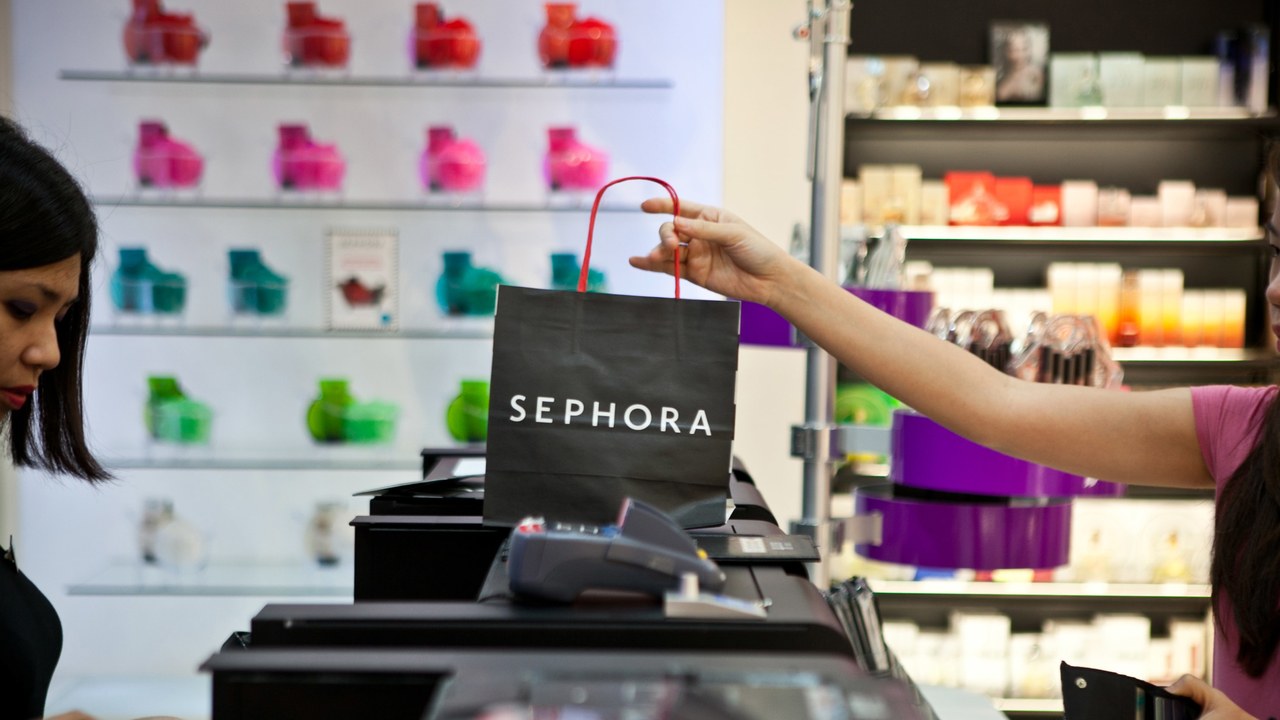
    Beauty retailer Sephora has entered the Vietnamese market with a dedicated ecommerce store after an initial trial period of five months.

    Local customers can now buy directly from Sephora online, but there is no word yet on whether the global brand will open a physical store.

    About 90% of Vietnam’s cosmetics market is filled with foreign brands, led by South Korean products and followed by European and Japanese names. Market revenue, on the other hand, is pegged at US$514 million.

    Sephora enhanced its Asian presence in 2019 with debuts in South Korea, Hong Kong, and New Zealand. It now has 200 stores in 16 Asian countries.

  • Shopee to shut down India operations

    Shopee to shut down India operations

    E-commerce and gaming firm Sea said on Monday it is withdrawing from India’s retail market just months after starting operations there, the second pullback this month in an overseas expansion drive, as the loss-making firm faces a weak growth outlook.

    The withdrawal, effective beginning March 29, comes weeks after its e-commerce arm Shopee said it was pulling out of France and after India banned Sea’s popular gaming app “Free Fire”.

    After the ban, the market value of New York-listed Sea dropped by $16 billion in a single day, leading some investors to cut holdings in the Singapore-headquartered company.

    Shopee said in a statement its withdrawal came “in view of global market uncertainties” and that the company would make “the process as smooth as possible”.

    Sea earlier this month said revenue growth of its e-commerce business was expected to halve to around 76 percent this year from a blistering 157 percent in 2021, amid fewer online purchases and engagements as more countries emerge from the pandemic.

    “Due to a drastic shift in the market sentiment towards growth stocks, all these e-commerce companies are under real pressure to at least break even as soon as possible,” said LightStream Research equity analyst Oshadhi Kumarasiri, who publishes on the Smartkarma platform.

    Sea’s U.S.-listed shares fell 3.2 percent to $112.35 in afternoon trading.

    The company’s shares had already dropped 11 percent in January after Chinese tech giant Tencent announced it was selling 14.5 million shares in the group.

    There is no clear evidence that the decision to withdraw from India is based on government pressure or other operational decisions, Citi analyst Alicia Yap said.

    Reuters was the first to report Sea’s decision on its Indian operations.

    Shopee’s India business began in October 2021 as part of an aggressive international push that saw it expand into Europe. Sea’s market cap at the time was as much as $200 billion. It has since dropped to $64.76 billion in March 2022.

    The local unit, Shopee India, recruited local sellers and launched a shopping website and app. India’s fast-growing e-commerce market was already dominated by such players as Amazon.com Inc and Walmart’s Flipkart.

    One person with direct knowledge of the company’s thinking said Shopee’s decision to exit from India was sparked in part by stricter regulatory scrutiny that saw Sea’s gaming app Free Fire banned as part of a crackdown on companies allegedly sending data to servers in China.

    Sea said earlier in March it does not transfer or store data of Indian users in China.

    The person said Shopee had been planning to invest up to $1 billion in India, and that the pullback would hurt Indian logistics firms with whom it had signed lucrative contracts.

    The company, asked to comment on the figure, disputed the number as “not accurate”, without giving details, saying “the decision regarding Shopee India has nothing to do with regulatory matters”.

    “We continue to work on addressing the situation with Free Fire in India,” the firm added.

    Reuters reported in February, citing sources, that Singapore authorities had raised concerns to India over the ban, asking why Sea had been targeted.

    E-commerce players face a strict regulatory environment in India. New Delhi has for years imposed restrictions to protect smaller brick-and-mortar retailers.

    Offline retailers in India have often alleged foreign companies bypass regulations and offer deep discounts that hurt their business, allegations the companies deny. Shopee had in recent months faced boycott calls from such traders in India.

  • Amazon Singapore offers staff mental health support

    Amazon Singapore offers staff mental health support

    Amazon Singapore has today launched a new mental health benefits package that provides its employees and their families with personalised, convenient, and confidential mental health and well-being support. The new service provides holistic mental well-being support with services such as life coaching, legal and financial support, and mindfulness resources available in addition to the traditional Employee Assistance Program services such as counselling sessions.

    Access to mental health care has become increasingly important as we all continue to navigate different everyday challenges,” says Henry Low, Country Manager, Amazon Singapore. “Our intent is to remove barriers and unnecessary stigma around getting help and ensure our employees and their families feel safe and supportedIn providing a range of services, as well as regular dialogue with employees about mental health, we hope to help in every way we can.”

    Through the new Employee Assistance Program, Amazon employees and their families have access to several free resources:

    • Life coaching sessions with a certified wellness coach to help navigate life transitions and maximise personal and professional growth.
    • Access to webinars, personalised advise and resources on topics including career development, travel and leisure, parenting, healthy living, consumer tips, personal growth and coping following a natural disaster.
    • Interactive self-care programs, including computerised Cognitive Behavior Therapy, mindfulness resources, and courses that guide individuals through self-paced, evidence-based treatment for anxiety, stress, depression, substance use, sleep troubles, and more.
    • Free one-on-one counselling sessions for employees and their families, with access to three sessions per person, per topic with the option to be in-person, via phone, video, or text.
    • Crisis and suicide-prevention support and access to a licensed mental health clinician any time of day or night.
    • Work-life assistance for everyday needs, including help with referrals for child and elder care, movers, and other personal services.

    Amazon works closely with health and safety experts and scientists, and conducts thousands of safety inspections each day in the company’s buildings across the world. The company has also made hundreds of changes globally as a result of feedback from employees on how to improve their well-being at work.

    All Amazon permanent employees receive the same core benefits, regardless of their role, level, or position—from the company’s executives to front-line employees in fulfilment centres preparing orders for customers.

    For Amazon employee, Carissa Seah, having a single point of contact for mental health support for not only herself, but her loved ones too, gives her great reassurance.

    “It’s very comforting to know that I have a range of mental health resources available not just for me but for my entire family. I’m glad its not a one-size-fits-all solution and offers a genuine range of services for all of us,” says Carissa.

    This new mental health offering complements Amazon’s range of benefits that support employees and eligible family members, including domestic partners and their children. These comprehensive benefits include health care coverage, time-off, and other resources to improve health and well-being. Amazon offers medical, prescription drug, dental, and vision coverage to all full-time and part-time employees, regardless of their level, tenure, or position. When employees want to take time away from work, they have paid time-off for holidays, in addition to other leave benefits that are available for various life events.

  • Vietnam launches national pavilion on Alibaba

    Vietnam launches national pavilion on Alibaba

    The Vietnam Pavilion was launched on Chinese e-commerce platform Alibaba.com Friday to globally promote the country’s products and success stories.

    The Vietnam Trade Promotion Agency and the tech giant signed a deal for the purpose. Deputy Minister of Industry and Trade Do Thang Hai said the site would be used for advertising and taking Vietnamese products to customers around the world.

    The pavilion allows visitors to search for Vietnamese suppliers of agricultural and seafood products, furniture, packaging, and home and garden items.

    Vietnam has gained a reputation with global customers thanks to its production capacity, quality of products and competitive pricing, Alibaba deputy director Andrew Zhang said.

    The Trade Promotion Agency said it would coordinate with the platform to organize online advice sessions on exporting via e-commerce sites for over 2,500 Vietnamese small and medium-sized enterprises.

    A similar program was held last year also in partnership with Alibaba for around 2,000 businesses, it added.

    Tran Thi Yen Phi, CEO of Hanoi agribusiness DSW, said her firm’s revenues in the first year after joining Alibaba were US$260,000.

    The business was unaffected by the congestion at the Vietnam-China border thanks to expansion of its market to Japan, the EU and Southeast Asia. “This year we are boosting exports to China under the official quota. Deliveries are delayed by China’s ‘Zero Covid’ policy, but we still be able to operate there,” she said.

    Proline Vietnam, a packaging supplier, said its sales grew by 200 percent last year as it carried out all exports through e-commerce platforms.

  • Flipkart Enters Strategic Alliance with Google Cloud to  Advance Innovation in a Digital-first Future

    Flipkart Enters Strategic Alliance with Google Cloud to Advance Innovation in a Digital-first Future

    Google Cloud and Flipkart, India’s homegrown consumer internet ecosystem, have entered into a multi-year strategic partnership to help fast-track Flipkart’s innovation and cloud strategy. This partnership will propel Flipkart into its next phase of growth and advance its vision of onboarding India’s next 200 million shoppers and lakhs of sellers.

    Working together, Google Cloud will help Flipkart:

    • Scale on Google Cloud’s infrastructure to reach more Flipkart customers — By leveraging Google Cloud’s secure and scalable global infrastructure and advanced networking technologies, Flipkart will be able to deliver robust app access and performance even during peak purchase seasons with heightened traffic. Flipkart will also continue to advance the pace of new product development by building on Google Cloud, furthering its expansion into Tier 2 and Tier 3 markets in India.

    • Accelerate data-led innovation to unlock customer insights — Flipkart will make its data platform more efficient by deploying Google Cloud’s advanced data analytics and machine learning technologies. This will enable the company to better analyze traffic and transactional data, unlock rich real-time insights into customer purchasing and shopping behavior,  identify trends and patterns with increased demand and create more personalized recommendations to enrich customer experience.

    • Advancing productivity and collaboration globally with Google Workspace — As a long time Google Workspace customer, Flipkart will expand its use of the flexible, innovative solution across its rapidly growing workforce to create innovative human-centered employee experiences and deepen connections in this new hybrid work environment.

    Jeyandran Venugopal, Chief Product and Technology Officer, Flipkart said, “Our strategic alliance with Google Cloud will enable us to accelerate our digital transformation, power productivity and advance our innovation agenda. We are excited by Google Cloud’s unique strengths and experience in AI/ML and its proven scalability and security, all of which will be critical in our next phase of growth.”

    “Flipkart’s growth in India has been powered by its digital-first strategy and forward thinking approach to cloud technology. As the company continues to scale and grow its ecommerce platform, we will work together to drive technological innovations and help Flipkart drive breakthrough businesses in the future,” said Bikram Singh Bedi, Managing Director,  Google Cloud India.

  • E-commerce startup raises $7 mln

    E-commerce startup raises $7 mln

    Vietnam e-commerce startup OpenCommerce Group has raised $7 million in a Series A funding round led by internet company VNG and venture capital firm Do Ventures.

    The Hanoi-based company, which provides tech solutions for sellers to create and manage their online stores with no inventory costs required, said it has supported 86,700 small and medium enterprises in 195 economies after two years of establishment.

    The company, which also offers print-on-demand services for sellers to create and distribute unique clothing designs, has recorded a gross merchandise value of $670 million to date.

    Quan Truong, co-founder, and CEO, said the company would use the funding to reach new sellers, with a focus on Europe, the U.S., China, and Southeast Asia this year.

    Vietnamese startups attracted investments of over $1.3 billion in 2021, four times the previous year’s figure, according to the National Agency for Technology Entrepreneurship and Commercialization Development.

    The country is set to exceed Thailand by 2025 to become the second-biggest internet economy in Southeast Asia with a scale of $57 billion, behind Indonesia at $146 billion, according to the e-Conomy Southeast Asia 2021 report by Google, Temasek, and Bain & Co.

  • Amazon sues alleged fake review brokers AppSally and Rebatest

    Amazon sues alleged fake review brokers AppSally and Rebatest

    Amazon is suing two websites that allegedly used their networks of more than 900,000 users to post fake reviews to e-commerce marketplaces.

    AppSally and Rebatest operate as “fake review brokers,” Amazon said in an announcement. In AppSally’s case, the website allows merchants to buy Amazon reviews for as little as $20. Rebatest, on the other hand, asks interested users to first buy a product from Amazon; it’ll then refund the cost in exchange for a review.

    “The lawsuits aim to shut down two major fake review brokers, AppSally and Rebatest, who helped mislead shoppers by having their members try to post fake reviews in stores such as Amazon, eBay, Walmart, and Etsy,” according the Amazon.

    Together, the claim “to have more than 900,000 members willing to write fake reviews,” Amazaon said. Rebatest’s own homepage says over 818,000 members have used the site to save $11 million.

    In investigating Rebatest, Amazon allegedly found the site “will only pay people writing 5-star reviews after their fake reviews are approved by the bad actors attempting to sell those items.”

    Meanwhile on AppSally, merchants were allegedly shipping empty boxes to users willing to write fake reviews, likely as a way to fool Amazon systems into thinking the same users were verified buyers of the actual products. To make the fake reviews seem even more authentic, AppSally would also upload pictures that could be posted alongside the reviews.

    “While we prevent millions of suspicious reviews from ever appearing in our store, these lawsuits target the source,” Amazon VP for Customer Trust Dharmesh Mehta said in the announcement.

    AppSally and Rebatest did not immediately respond to a request for comment. AppSally is based in New Zealand. It’s unclear where Rebatest is located.

    Amazon didn’t say where it’s suing AppSally and Rebatest. But the lawsuits are part of an ongoing effort to stop inauthentic reviews from circulating on the company’s website and app. “Amazon receives more than 30 million reviews each week, and uses a combination of machine learning technology and skilled investigators to analyze each review before it is displayed,” the company added.

  • Amazon Luna subscribers can now start games directly from Twitch

    Amazon Luna subscribers can now start games directly from Twitch

    Amazon has done something that Google either couldn’t or subsequently decided not to do. That is to increase the integration between its cloud gaming service and its video platform by making the games on the gaming service directly accessible from the company’s video platform. As first spotted by Vet Cloud Gaming, then shared in a tweet by Bryant Chappel, Amazon has added a new “Play on Luna” button to Twitch.

    The “Play on Luna” button on Twitch will only appear if you have an active subscription to Amazon’s cloud gaming service, Luna. If you do have a Luna subscription, as demonstrated by Vet Cloud Gaming, you can go to Twitch and search for a game. If the game is accessible on Luna, you will notice a new “Play on Luna” button next to the Follow button when you open the searched game’s page on Twitch.

    When you click the “Play on Luna” button, you will see that Twitch will directly open the Luna app and start the game for you without the need to take any further action. You simply click on the “Play on Luna” button and play the game.

    Luna subscribers can already watch Twitch streams in Luna, and with the new “Play on Luna” button, Amazon fully fulfilled a promise that it made back in 2020 when it announced its Luna cloud gaming service. In 2020, Amazon stated, “Inside the Luna experience, players will see Twitch streams for games in the service, and from Twitch, they’ll be able to instantly start playing Luna games.”

    Google wanted to do the same thing that Amazon did with its “Play on Luna” button. When Google announced Stadia, its cloud gaming service, Google stated that it planned to introduce a way to start playing a game on Stadia directly from the game’s trailer on YouTube only by pressing a button on the video platform.

    Google also wanted to enable Stadia subscribers to join a multiplayer game via a streamer’s YouTube channel—but for Google, none of that ever happened, and now Amazon seems to have started picking up the slack.

  • B2B e-commerce platform Buy2Sell reaches 1 mln hits

    B2B e-commerce platform Buy2Sell reaches 1 mln hits

    According to statistics for Buy2Sell’s Google Analytics in 2021, the platform recorded over half a million visits and 140,000 registered users.

    In 2020, the platform reached about 400,000 visits and 56,000 registered users. In two years, it has recorded one million hits and more than 200,000 registered users.

    According to Buy2Sell’s importation data for the second semester of 2021, Buy2Sell Vietnam imported more than $22 million of goods through their global network of suppliers. These goods are destined for large local buyers using the platform. The most popular items are wine, nutritional food and cosmetics.

    “We are in a growth phase. Our revenue stream provides Buy2Sell steady capital. Currently, we have received interesting offers from large investors. However, we are very humble right now in speaking about evaluation. Our focus is to deliver value, quality of service, brand influence in the community and efficiency. E-commerce is our primary goal,” Harry Morant, Buy2Sell CEO, shared.

    While most people use Google and other search engines to locate products, businesses did not have the same capabilities in the past. However, this is changing thanks to the increasing number of B2B eCommerce marketplace platforms. Now more than ever most businesses, large or small, heavily rely on B2B E-commerce marketplaces.Buy2Sell was established in 2015 and belongs to the group LLHP PTE LTD, Singapore.

    Vietnam stands to benefit as the B2B E-commerce market with the highest growth rate in Southeast Asia, reaching $13.2 billion in 2020, and is expected to grow at a CAGR of 43 percent by 2025. Buy2Sell plans to build a faster and more user-friendly platform and expand its sales, marketing, and technology teams to drive rapid growth.

  • AliExpress Unveils New Winter Sports Gear Trends

    AliExpress Unveils New Winter Sports Gear Trends

    The global winter sports gear market continues to boom in 2022 thanks to the thrilling Beijing 2022 Winter Olympics and the rising popularity of winter sports around the world. Sales data from AliExpress, a global retail online marketplace under the Alibaba Group, shows a growing demand for winter sports products particularly for the winter sports equipment and gear categories.

    Strong Demand for Fashionable and Tech Infused Winter Sports Products

    According to sales data, 2022 is set to be a milestone for the winter sports gear market. AliExpress recorded a 60% increase in sales of winter sports gear in Q4 2021 year-over-year, with a growing number of customers looking for trendier and more fashionable ski outfits, goggles and helmets.

    Ski products with tech features such as heated ski gloves have been catching AliExpress customer interest since they create a more enjoyable experience for winter sports lovers. The sales of heated ski gloves on AliExpress in Q4 2021 increased by 780 times year-over-year.

    Best-selling winter sports gear on AliExpress include ski helmets, snowboard sets, ski pants, ski gloves and ski goggles. In particular, the sales of ski helmets on AliExpress in Q4 2021 saw a 1500% increase year-over-year.

    Russia, US, South Korea, France, and Spain Markets Lead Winter Sports Gear Sales 

    The top five markets purchasing winter sports gear on AliExpress include Russia, US, South Korea, France and Spain. In addition, with AliExpress operating in over 200 countries and regions around the globe, customers in Iceland, Chile and other remote areas are able to get their winter sports gear on AliExpress thanks to its well-established logistics ecosystem.

    Cost-performance of ski equipment has particularly been advantageous for French and Spanish customers. In particular, the sales volume of ski goggles and ski gloves in Spain increased 100% and 53% year-over-year respectively. In France, customers are opting for a two-layer ski jacket, resulting in a 72% growth year-over-year for this item.

    In Asia, an increasing number of South Korea customers are purchasing ski gloves and two-layer ski jackets on AliExpress for their ski adventures.

    Elevated E-commerce Experience with Upgraded Logistics Infrastructure

    AliExpress is committed to providing a faster and more efficient cross-border delivery experience with its robust cross-border e-commerce ecosystem consisting of seven domestic selection warehouses in China, nine automated sorting centers in China, overseas warehouses and a weekly average of over 80 chartered flights.

    In partnership with Cainiao, AliExpress currently offers delivery in 10 working days for selected cross-border orders made in Spain and France, 12 working days for Brazil and five working days for South Korea.

    Since 2020, AliExpress and Cainiao have also actively developed overseas warehouses to enhance the capacity and efficiency of cross-border logistics networks. Local shipping in Spain and France can be delivered in three days and seven days for the rest of Europe.

    A network of over 20,000 self-pickup service points has been launched in Spain, France, Poland and Russia, combining AliExpress-branded lockers powered and operated by Cainiao, as well as collection points powered by local partners.

  • E-commerce saved fashion designer Tadashi Shoji during pandemic

    E-commerce saved fashion designer Tadashi Shoji during pandemic

    After closing all his stores, veteran fashion designer Tadashi Shoji said he has been able to keep his business afloat during the Covid-19 pandemic thanks to the success of e-commerce and custom sales.

    The Los Angeles, California-based brand released its digital runway show online on Saturday during New York Fashion Week.

    Keeping costs low, the video was filmed in the company’s cafeteria with creative lighting and editing.

    “Logistically it’s very hard, but it’s very fortunate for us because of Covid our e-com is increasing tremendously. That’s helping me to survive in this Covid time,” Shoji said.

    “If we didn’t have this strong e-com infrastructure for us I think, I think our business went down,” he said.

    Shoji said this season was inspired by “boundless expression” and has added different silhouettes to his normal body-con repertoire.

    Menswear was the inspiration for many looks with stretch velvet, shimmer and slits providing femininity.

    The designer’s signature draped tulle, lace and hand beading made the collection look familiar to his long-time fans.

    New York Fashion Week will end on Feb 16 with over 150 designers having presented their collections live or online.

  • Cettire leaps into China, partnering with JD

    Cettire leaps into China, partnering with JD

    Online luxury fashion platform Cettire said it has penned a new deal to enter mainland China through a partnership with e-commerce giant JD.com, sending its shares up by more than 21 percent.

    Mainland China is expected to be the world’s largest market for personal luxury goods by 2025, representing around 25 percent of the $600 billion global markets.

    Cettire believes this is a $150 billion potential market opportunity for the group that sells luxury bags, clothing, and shoes for adults and children, and is making a push into the beauty segment.

    On Monday, Cettire shares jumped 21.79 percent to $2.85 each, clawing back nearly all of last week’s major slide lower, and pushing its market capitalization up over $1.1 billion.

    Chief executive and founder Dean Mintz said China represented a “vast” opportunity given the market size for personal luxury goods and the importance of e-commerce.

    Cettire’s brands ranging from Balenciaga to Burberry will be available to mainland Chinese consumers during the second half of the calendar year 2022.

    “Our entry into China is a significant milestone towards our goal of being the world’s largest luxury destination,” Mr Mintz said.

    “China represents a vast market opportunity, and it is core to our strategy to make our world-class proposition available to additional markets. Today’s announcement is another step in our strategic journey to achieve this goal.”

    E-commerce platform JD.com has 550 million active customers and is China’s largest online retail platform, with 745.8 billion yuan ($1.66 billion) in revenue in fiscal 2020. JD.com is a supply chain-based technology and service provider to help brands and partners drive sales.

    Through the Cettire partnership, Chinese consumers will have access to 1700 luxury brands and post-sales support, the company said.

    JD.com will help to drive traffic, brand awareness and accelerate growth for Cettire in China, with scope for Cettire to leverage JD.com’s extensive local logistics capability, which provides one of the largest fulfillment infrastructures globally.

    In late 2021, Cettire hired local Chinese engineers in mainland China to support the development of website features specific to China and Chinese speakers globally – including launching Chinese language websites to all Cettire’s existing markets.

    Cettire holds no inventory of its own, with products ordered via its website, and sent from third-party suppliers. Cettire’s fulfilment is fully automated.

    Unlike larger rival Farfetch, Cettire has only flagged one direct brand relationship with Italy’s Staff International. Brands like Gucci (owned by French-based multinational Kering) have no say on the pricing of its products on Cettire’s marketplace. Cettire has also geoblocked French and Italian IP addresses, making it more difficult for such fashion houses to see where product is coming from.

    Cettire was advised by Highbury Partnership on the deal.

  • Behind e-commerce giant Lazada’s success in pandemic-hit year

    Behind e-commerce giant Lazada’s success in pandemic-hit year

    In light of its proud achievements in 2021, Lazada Vietnam expects more breakthroughs in 2022 to bring more value for their customers and partners.
    Lazada hit impressive milestones in 2021, with remarkable profits, site traffic and record number of orders and new sellers on the platform, and step-by-step attracted consumers and partners across the country.

    Looking back on a breakthrough year, Lazada Vietnam’s leaders shared their experiences in surviving the pandemic, thereby continuously creating more value for customers, users as well as business partners.

    An amazing digital migration

    The pandemic has posed many challenges, but it has also pushed businesses to adapt the digital transformation. Ladaza Vietnam’s CEO described this amazing “digital migration” of Vietnamese businesses as an “astonishing wave”.

    Since October 2021, the number of new sellers joining the platform has increased by about 30 percent per month. According to the recent report: “E-commerce in 2021: Adapting and quickly overcoming obstacles from Covid-19”, in the first 11 months of the year, sellers from non-urban areas accounted for 40 percent of all new merchants on Lazada.

    The percentage of new sellers from Hanoi and Ho Chi Minh City also increased by 29 percent and 31 percent, respectively. Fast-moving consumer goods (FMCG) recorded the highest increase, followed by fashion, home furniture and electronics. James Dong, CEO of Lazada Vietnam and Thailand, believes this is a good sign for Vietnam’s fastest growing momentum.

    James Dong, general director of Lazada Vietnam and Thailand. Photo by Lazada Vietnam
    James Dong, CEO of Lazada Vietnam and Thailand. Photo by Lazada Vietnam

    To support sellers, Lazada has shortened the listing process, and integrated business management solutions with real-time charts. The platform has also implemented marketing, promoting transportation process, ensuring on-time, non-contact, non-cash delivery to reduce risks of Covid-19 contamination for buyers and sellers.

    During the peak of the pandemic in HCMC, Lazada shortened the sales registration process to three hours for fresh food suppliers, and reduced the delivery time. These solutions helped reduce the risk of spreading infections, stabilizing food prices, and meeting urgent consumption needs.

    Moreover, Lazada’s “three Easy” (3Es) strategy including “Easy to buy – Easy to sell – Easy to deliver” has yielded achievements. “The benefit and safety of customers and business partners are always the top priority of the platform,” according to the CEO.

    “The practical test” for the supply chain

    Vu Duc Thinh, Chief Logistics Officer of Lazada Vietnam, described the supply chain situation during the epidemic as “terrible”. For more than four months, transportation, sales, and trading activities were almost frozen. The flow of raw materials, goods production, distribution and transportation were all interrupted.

    “Without goods, sellers fail to conduct business. Without duct tape, sellers can’t pack their goods. Even after tackling those difficulties, if shipping units shut down, buyers won’t receive the goods,” Thinh explained.

    Overcoming obstacles, Thinh and the Lazada Vietnam logistics team made several efforts to adapt in order to maintain operations and maintain item flow. Epidemic-prevention solutions at working sites were quickly deployed to ensure the safety of employees and customers.

    Vu Duc Thinh, logistics director of Lazada Vietnam,
    Vu Duc Thinh, Chief Logistics Officer of Lazada Vietnam. Photo by Lazada Vietnam

    “We all work from 5 a.m. to 11 p.m. every day. At the end of the day, we usually evaluated the effectiveness of our work and make adjustment for the next day,” said Thinh.

    Looking back at 2021, Thinh is proud that Lazada is one of the few e-Commerce platforms in Vietnam to maintain its supply chain during the pandemic. The logistics system completed the target from the beginning of the year. Some indicators exceeded expectations. Efforts to ensure smooth operations not only helped business remain stable, but also meet the increasing demand of consumers. That contributed to maintaining growth for Lazada, ensuring jobs and stable income for all staff.

    “The ability to adapt with a long-term vision for sustainable development is Lazada’s strength. Lazada has focused on technology and logistics since the early days of development and the importance of this strategy is proved,” Thinh stated.

    Besides logistics, Lazada has carried out many marketing activities to help the community overcome the challenges in the past year.

    Nguyen Thi Thuy Hang, Chief Marketing Officer of Lazada Vietnam, said the marketing team always set their KPIs as the peace of mind, optimism and comfort of users and the community. Lazada has flexibly approached and interacted with customers via many activities.

    By offering discount vouchers, Lazada has encouraged shopping. For loyal customers, the platform has provided the “Voucher club” package with many benefits like collecting vouchers with a total value of up to VND850,000 and VND50,000 a month.

    Nguyen Thi Thuy Hang, marketing director of Lazada Vietnam
    Nguyen Thi Thuy Hang, Chief Marketing Officer of Lazada Vietnam. Photo by Lazada Vietnam

    “Incentives can solve cost-related problems, but it needs more factors to really share with the community,” said Hang. That is why in 2021, Lazada’s shoppertainment (shopping and entertainment) activities were heavily invested. Hundreds of livestream episodes were performed every day with diverse content, meeting entertainment needs via LazCook, LazMusic, LazGetfit, LazLearn, LazHome, LazPlay…

    According to statistics from Lazada Vietnam, during the peak days of its Shopping Festivals, the platform created more than 400 livestream episodes per day, attracting a 5-6 times increase in viewership compared to weekdays. SuperShow, a music festival, also reached tens of millions of views on its platforms.

    Total orders during the Nov. 11 shopping festival nearly doubled. Customer numbers increased 1.5 times over the same period last year. On the 12.12 Super sale day, sales from LazLive increased seven times. The SuperShow hit 26 million views, contributing to a 20-fold increase in sales.

    “Technology is expected to be the key to enhancing the user experience. This year, we will apply more modern technologies, accompanying users in the shopping experience on the Lazada platform,” Hang shared.

    “The best person is not necessarily the most suitable one”

    In terms of recruitment and training human resources, Van Thi Hong Hanh, Chief People Officer of Lazada Vietnam, said the success of Lazada last year was thanks to its young, adaptive, proactive and creative staff.

    This platform set out a competency framework consisting of seven criteria as the foundation for personnel, recruitment, training and career development decisions and plans. The criteria include problem-solving ability; creativity and improvisation; communication – coordination; business knowledge; management capacity – group leadership; corporate culture creation; awareness – change management.

    Van Thi Hong Hanh, human resources director of Lazada Vietnam
    Van Thi Hong Hanh, Chief People Officer of Lazada Vietnam. Photo by Lazada Vietnam

    During the pandemic, Lazada has implemented the “Covid Care 2.0” program, ensuring the health of both employees and the community. Working from home, getting fully vaccinated, providing protection kits, and supporting Covid-19 infected employees were quickly implemented. Many programs were also implemented to motivate, connect and honor outstanding individuals and groups.

    In 2021, Lazada’s workforce rose by 20 percent in comparison to 2020. According to HR Asia magazine, Lazada was named “Asia’s Best Place to Work” for three years in a row due to a range of policies and initiatives with a people-centric strategy. In addition, at Best Choice Awards 2021, the platform was named “eCommerce platform of the year”.

    “What makes Lazada so outstanding is that we don’t get distracted by short-term financial goals or transient statistics. Instead, we always strive for long-term, more sustainable growth by constantly improving the customer experience and extending our brand partners and sellers,” James Dong emphasizes.