Tag: ecommerce

  • TikTok launches online shopping in the US

    TikTok launches online shopping in the US

    With over 150 million users in the United States, social media juggernaut TikTok, is embarking on a groundbreaking journey that could redefine the way we shop online.

    After months of testing, the platform officially integrates e-commerce into its social media ecosystem, offering users a unique blend of entertainment and shopping. The strategic move comes as TikTok aims to capitalize on the platform’s immense popularity and expand its business.

    Users will now discover videos and live streams in their feeds featuring clickable links that lead to product purchases, effectively transforming TikTok into a thriving shopping destination.

    The TikTok app also introduced a dedicated “shop” tab feature where businesses can showcase their products, complete with logistics and payment solutions, all integrated within TikTok.

    This strategic addition is expected to boost user engagement and drive sales as consumers can seamlessly discover and purchase products within the TikTok ecosystem in hopes of replicating the success of other Asian platforms like Shein and Temu in the US.

    As a way to create a versatile e-commerce ecosystem, the social media giant has strategically integrated its shopping services with several third-party platforms, including Shopify, Salesforce, and Zendesk.

    Overall, TikTok’s goal is clear: to empower content creators, brands, and merchants with the tools they need to create engaging and interactive shopping experiences and ease how customers make purchases on the platform.

    TikTok’s retail expansion comes amid scrutiny from governments and regulators due to concerns over data privacy and an alleged political affiliation with the Chinese state.

    With over 1 billion monthly active users (MAUs) worldwide, TikTok isn’t only focused on the U.S. and has since expanded its reach to multiple countries, including Thailand, Vietnam, Malaysia, the Philippines, Singapore, and the United Kingdom, with plans to reach $20 billion merchandise sales by the end of the year. This underscores its determination to leave a mark on the international e-commerce landscape.

  • Indonesia to ban online shopping via social media

    Indonesia to ban online shopping via social media

    Indonesia’s government is preparing to introduce a series of new business regulations that will prohibit the sale of products via social media. During a parliamentary hearing, the Indonesian Deputy Trade Minister, Jerry Sambuaga, announced this.

    “Social media and social commerce cannot be combined,” the official said, reiterating the government’s intention to crack down on “predatory” practices of sellers on social media, which would threaten offline markets in Southeast Asia’s largest economy. The deputy minister cited as an example the use of the “live” function for the sale of goods via the social media platform TikTok: “The revisions to the trade regulations currently underway will prohibit these practices firmly and explicitly,” said Sambuaga.

    The representative of TikTok Indonesia, Anggini Setiawan, he responded this morning, saying that separating social media and e-commerce into separate platforms would impede competition. TikTok has 2 million sellers in Indonesia, and has previously reported that it has no plans for a dedicated platform for cross-border trade of Chines

  • China’s JD beats revenue estimates despite slowing economy

    China’s JD beats revenue estimates despite slowing economy

    Chinese e-commerce firm JD.com beat Wall Street estimates for second-quarter revenue on Wednesday, as its focus on lower-priced products to attract customers amid an economic slowdown paid off.

    JD.com saw increased traffic on the back of purchases ahead of the holiday season and as people attending offices and social functions continued to upgrade their wardrobes.

    Revenue grew 7.6 percent to 287.9 billion yuan (US$39.7 billion), compared with analysts’ average estimate of 278.85 billion yuan, Refinitiv Eikon data showed.

    After China abandoned its stringent COVID-19 lockdown policies, consumption failed to rebound immediately amid a slowdown in the country’s overall economy.

    Recent official economic data has also been gloomy, with the consumer price index tipping into deflation in July.

    Retail sales rose just 2.5 percent, slowing from a 3.1 percent increase in June, despite the summer travel season.

    Analysts had expected retail sales to grow 4.5 percent.

  • Gucci launches flagship store on JD platform

    Gucci launches flagship store on JD platform

    Gucci and JD.com are delighted to announce a digital partnership and the highly anticipated launch of the official Gucci digital flagship store on the e-commerce leader’s platform. This marks the first time the Italian luxury brand will bring its unique fashion authority and 102-year-old legacy of Italian craftsmanship to the JD.com community.

    Users searching for “Gucci” within the JD.com app will be invited to explore the House’s official flagship store and shop for their favorite items. This will also include a full range experience of Gucci brand services, all within a seamless and secure digital ecosystem. An exceptional customer experience is at the heart of this new collaboration, where customers can browse the store’s extensive range of timeless icons and new-season ready-to-wear, handbags, travel, shoes, jewelry, watches, and accessories for men and women. They will also have special access to Gucci’s online client advisor service before ordering their desired products.

    The opening of the new digital flagship store marks a milestone in the partnership between Gucci and JD.com and underscores their commitment to digital innovation. In response to the evolving digital ecosystem, JD.com continuously delivers cutting-edge digital solutions to fulfill diverse needs. This includes the development of diversified models tailored for the luxury industry, leveraging its state-of-the-art supply chain capabilities and open ecosystem. With the launch of its new online environment on JD.com, Gucci will elevate shopping experiences that are tailored to the tastes of JD.com’s customer base and further explore the unique digital landscape of China using both brands’ respective technological strengths to set a new standard in online luxury shopping, expand their market reach, and pioneer original approaches to digital marketing.

    In celebration of the upcoming Chinese Valentine’s Day on August 22, Gucci’s official flagship store on JD.com will offer a selection of gifts that showcase the House’s exquisite craftsmanship and romantic aesthetic. Featuring floral motifs symbolizing the blossoming of love and emotions, the collection will also present a purse designed exclusively for JD.com customers to celebrate this special occasion. To enhance the moment, customers will also be abl

  • Cart Abandonment: Reducing Friction at the Point of Conversion

    Cart Abandonment: Reducing Friction at the Point of Conversion

    In the fast-paced world of ecommerce, cart abandonment has become a significant challenge for retailers. With the rise of omnichannel fulfillment and the increasing demand for fast and convenient delivery options, the complexity of the fulfillment process has escalated. As consumers’ expectations continue to soar, the importance of delivery and pickup experiences has transitioned from afterthoughts to critical factors influencing buying decisions.

    Shoppers now expect immediate access to delivery and pickup options while browsing for products, making collection convenience as crucial as other product attributes. Unfortunately, traditional order management and ecommerce systems were not designed to handle the intricacies of omnichannel fulfillment across multiple locations. Relying on dependable yet slow relational databases, retailers are limited to offering generic fulfillment timeframes, which lack accurate information during the checkout process.

    This unfortunate reality leads to poor customer experiences, resulting in approximately 7 out of every 10 online shoppers abandoning their cart. To address this pressing problem, retailers must reevaluate their fulfillment strategies and invest in technologies capable of providing real-time, accurate information. There are three key areas retailers should focus efforts to reduce friction at the point of conversion and start making successful transitions.

    Establish a unified basket

    The biggest point of friction in today’s retail customer experience is due to the loss of context when transiting between the physical and the digital. A unified cart or basket is a foundational capability that bridges this gap, providing critical connectivity across channels. Shoppers don’t see “channels” the way retailers do – they simply shop. Therefore, retailers are increasingly under pressure to ensure seamless continuity, particularly during transitions between carts and wish lists, alleviating customers from the burden of starting afresh. For brands, embracing a digital first ethos doesn’t mean giving up on physical retail, but amplifying the two, fusing them together seamlessly.

    Manhattan Associates’ 2023 Unified Benchmark for Speciality Retail report found that retailers making the most progress in minimising cart abandonment through connecting in-store and online experiences are offering increased visibility of the following in their cart view:

    1. Inventory visibility: Visibility of real-time available stock across all channels, providing product status by store. If a particular item is unavailable, customers can opt for alternative options or be notified when it becomes available again.
    2. Available promo codes: Automatically applying available promotional codes to the cart view or ensuring applicable promotions visible for shoppers to easily ‘opt in’ when viewing their cart.
    3. Integration with loyalty programs: Displaying the customer’s loyalty points and rewards within the cart provides them with the easily accessible option to redeem rewards directly at the cart stage.

    The report also found that while the majority of retailers are offering basic capabilities such as inventory visibility on a product detail page (PDP), many are yet to extend this offering to across the board, lacking visibility across the entire shopping journey.

    Add value with flexibility

    A truly frictionless shopping experience is not just about the convenience of prefilling a customer’s payment details for future transactions, but it’s also about providing customers with a variety of payment options. More often than not, customers have a preferred payment method. By offering a wide range of payment types, both online and in store, retailers are providing that extra bit of flexibility, making a consumer’s purchase decision easier. This process should be simple and convenient for shoppers to pay however they prefer, including through gift cards, loyalty points, store credit, mobile wallets, pay-later apps, store credit cards, and any combination therein. The report also revealed that 40% of shoppers prefer payment flexibility, including the ability to use a combination of modes to make a purchase.

    However, offering additional payment options has the potential to make things more complicated, therefore it’s important that retailers have the right technology in place to support a seamless checkout experience. Shoppers look for fast and convenient checkout options, with a majority of cart abandonment occurring due to less-than-ideal shopper experiences at checkout, like a multi-step process. If shoppers can quickly and easily buy what they need, when they need it, and do so using their preferred payment method, not only are they more likely to complete the purchase, but they’re more likely to keep coming back.

    Offer fast, accurate delivery promises

    If retailers can assist shoppers with important ordering and delivery-related information across the shopping journey, they increase their probability of conversion. What is the earliest I could get this item, and how? Can I order an item for in-store pick-up and another for delivery as part of the same order? Leading retailers offer shoppers a comprehensive set of delivery and pick-up options, focusing not just on speed but on flexibility to fit busy lifestyles, with 77% of shoppers reporting they prefer to have options when selecting their delivery method. They accommodate ordering complexity without compromising checkout convenience, allowing shoppers to select different delivery options for products within the same order.

    While only 15% of retailers provide the option to change fulfillment method post order confirmation, Sephora is one retailer who is enabling shoppers to get Buy Online, Pick Up in Store (BOPIS) purchases shipped home in case they are unable to pick it up from the store. With 45% of shoppers prepared to abandon a cart if they’re unhappy with the delivery methods on offer, it’s crucial for retailers to ensure the product pick-up or delivery experience is as good as their shopping journey.

    Deliver exceptional experiences

    While consumer expectations of purchasing and delivery expand, customer service and experience are arguably the most important elements to get right. Retailers must invest in technologies capable of providing real-time, accurate information to offer a seamless and efficient fulfillment process. By embracing innovation and prioritising customer-centric approaches, retailers can position themselves for long-term success in this rapidly evolving industry.

    For more information on how your retail business can reduce instances of cart abandonment, please visit: www.manh.com/en-sg

    Written by Richard Wright, Managing Director, SEA, at Manhattan Associates

  • South Korea e-commerce market to surpass $160 billion mark in 2027

    South Korea e-commerce market to surpass $160 billion mark in 2027

    South Korea continues to evolve as a major e-commerce market and is expected to register a strong compound annual growth rate (CAGR) of 7.7% between 2023 and 2027 to reach KRW202.6 trillion ($160.4 billion) in 2027, forecasts GlobalData, a leading data and analytics company.

    GlobalData’s E-Commerce Analytics reveals that South Korea e-commerce market has been on growth trajectory, registering a CAGR of 17.4% between 2018 and 2022 to reach KRW136.6 trillion ($108.2 billion) in 2022. This trend is expected to continue in 2023, with e-commerce sales expected to grow by 10.0%.

    Shivani Gupta, Senior Analyst Banking and Payments at GlobalData, comments: “South Korea has a well-developed e-commerce market supported by high-speed internet, rising smartphone penetration, availability of secure online payment systems and increasing consumer confidence in online shopping.”

    South Koreans are frequent online shoppers with over 80% of the consumers reported to have shopped online in the past six months, while only 10% indicated that they never shopped online, according to GlobalData’s 2023 Financial Services Consumer Survey*.

    The availability of new and innovative mode of online shopping such as video live streaming is also encouraging shoppers to go online. South Korean e-commerce giant Naver leads this space by enabling merchants to live stream their products on its “Naver Shopping Live” platform. Customers can view the product details, interact with the seller and buy from the platform on real-time.

    International brands are also venturing into this space, contributing to the e-commerce growth in the country. In June 2023, YouTube launched its first official online shopping channel in South Korea, live-streaming products in Korean language.

    Gupta adds: “Koreans increasingly prefer shopping online even for day-to-day products, a trend that continued post COVID-19. GlobalData’s survey revealed that everyday essentials such as food and drinks account for nearly one fourth of the e-commerce purchases by value in 2023, while clothing and footwear account for 12.2%.

    Gupta concludes: “South Korea’s e-commerce market registered sustainable growth during the last five years. The uptrend in e-commerce sales is likely to continue over the next few years supported by the growing consumer preference, improving payment infrastructure, and growing popularity of innovative online shopping modes.”

    *GlobalData’s 2023 Financial Services Consumer Survey was carried out in Q2 2023. Approximately 50,000 respondents aged 18+ were surveyed across 40 countries.

  • Alibaba to double investment in Vietnam

    Alibaba to double investment in Vietnam

    Alibaba.com, the global business-to-business e-commerce platform of Chinese tech giant Alibaba, will double its investment in emerging manufacturing centers in Vietnam and additionally hire hundreds of employees.

    In the next three years, Alibaba.com will complete the establishment of specialized teams to operate in Vietnam’s emerging manufacturing hubs, including Binh Duong, Bac Ninh, Long An, Da Nang and Hai Phong, in addition to the teams already operating in Hanoi and Ho Chi Minh City, Roger Luo, director of Alibaba in Asia-Pacific, announced recently in Ho Chi Minh City.

    “Vietnam is a very important part of our e-commerce development map,” Luo said, pointing out three advantages of this market.

    First, Vietnam has favorable foreign trade policies with many free trade agreements being signs. “Compared to China, Vietnamese-made goods have an advantage. Moreover, the U.S.-China trade war has big influence on Chinese goods, while Vietnamese goods are not affected,” he said.

    Second, labor costs are still low. Third, there are many Vietnamese specialty products.

    “Vietnamese suppliers on our platform are gradually building a reputation with a large number of global buyers, especially in such areas as agricultural products, food, fashion and home garden products,” he said.

    The number of Vietnamese sellers on Alibaba’s e-commerce platform has increased to thousands.

    The number of Vietnamese products available on this platform in March surged by 24% against the same period last year.

    In the first half of this year, Vietnam’s export turnovers stood at US$164 billion, down 12% against the same period last year.

    The situation would be better in the second half of the year because inventory in the U.S. is decreasing.

    “Small and medium-sized businesses need to quickly seize this opportunity by reviving their human resources and strengthening their digital capabilities,” he recommended.

  • Online platforms pay $166M in tax in Vietnam

    Online platforms pay $166M in tax in Vietnam

    Vietnam collected VND3.94 trillion (US$166.5 million) in taxes from 57 foreign online platforms including Google, Apple, Facebook, Netflix, and TikTok in the first half of this year.

    Of the sum, VND3.4 trillion was paid directly via the portal of the General Department of Taxation (GDT), which was established last March to make it easier for cross-border giants to pay their taxes in Vietnam.

    Their representatives in Vietnam paid the remaining sum.

    The GDT also said that tax revenue from e-commerce platforms in the first five months of this year reached VND246 billion, equal to 34% of 2022’s revenue.

    It said the tax revenue collected from e-commerce providers in 2022 and 2021 was VND716 billion and VND261 billion, respectively.

    The tax authority has recorded data from over 330 e-commerce platforms through the e-commerce portal operating since the end of last year.

    Particularly in the first quarter of this year, 64,300 individuals and 22,840 organizations traded on those platforms with 9 billion transactions registering a total value of VND11.5 trillion.

    The GDT said it is working on setting up rules on exploiting information from e-commerce platforms’ databases to manage taxes more effectively.

    This agency is checking and comparing information of several taxpayers who are e-commerce platform owners, payment intermediaries, partners of foreign companies in Vietnam, and foreign suppliers that do not have a fixed business establishment in Vietnam.

    So far, it has inspected 15 enterprises and handled, fined, or collected tax arrears of VND129 billion, reducing tax loss by VND986 billion and reducing VAT deduction by VND114 billion.

  • Pattern’s Ecommerce Acceleration Platform Now Helps Brands Identify Unauthorised Marketplace Sellers

    Pattern’s Ecommerce Acceleration Platform Now Helps Brands Identify Unauthorised Marketplace Sellers

    Global ecommerce and marketplace accelerator Pattern has announced the release of new functionality in its ecommerce acceleration platform in Australia, designed to help retail brands identify unauthorised resellers of its products on marketplaces including Amazon and eBay.

    The new protection layer allows brands to stay abreast of how many marketplace sellers are selling its products, and who they are – the brand itself, authorised resellers or unauthorised resellers.

    “As marketplaces continue to grow in popularity, global and local Australian brands could potentially stand to lose millions of dollars if they don’t have a strategy for identifying and taking action against unauthorised sellers of their products on marketplaces,” said Merline McGregor, General Manager, Pattern Australia. “However, tracking down unauthorised resellers can be a complex and time-consuming task for already stretched brands, especially if done manually. That’s why Pattern has developed automated software that can help identify unauthorised sellers in real time and this feature is now available to Australian brands selling on Amazon.”

    With the retail market share of marketplaces rapidly growing in Australia – Pattern’s ‘Marketplace Consumer Trends Report – 2023,’ revealing 88% of shoppers bought from a marketplace in the previous year, and 92% of consumers plan to shop on marketplaces in the year ahead – the threat to brands of unauthorised resellers is only likely to increase.

    An unauthorised seller can be any third-party reseller who does not have an official link with a brand, or a global seller selling from overseas, who lists and sells the brand’s products on a range of online marketplaces. Not only do they sell a brand’s products without authorisation, but they also often pose a challenge to a brand’s reputation and value by listing incorrect product or brand information.

    This confuses and undermines the consumer’s perception of the brand’s products, which results in a poor customer experience.

    “The new protection layer within Pattern’s ecommerce acceleration platform delivers brands an enhanced understanding of those selling its product on Amazon Australia. It allows brands to not only identify unauthorised resellers but also drill down to how much inventory each seller has, giving brands greater visibility, and therefore knowledge on how big their unauthorised reseller issue is,” said McGregor.

    “Importantly, the new protection feature is already making its mark in the Australian market, having traced an estimated AUD$2.5 million worth of potential unauthorised marketplace sales within or into Australia for one of our global footwear brand customers.”

    About Pattern Inc

    Pattern is the category leader in global ecommerce and marketplace acceleration. Since 2013, Pattern has profitably grown to more than 1,400 employees operating from 24 global locations – including Melbourne, Sydney and the Gold Coast – to help leading brands achieve accelerated growth on D2C websites and global marketplaces. As well as being one of the largest Amazon sellers in the world, we are also present on Tmall, JD.com, eBay and other marketplaces. We act as the authorised Amazon seller to more than 200 brands globally, buying their stock to sell on the marketplace and taking care of every aspect of their Amazon presence. For more information, visit https://au.pattern.com/

  • Coupang launches luxury beauty shopping service Rocket Luxury

    Coupang launches luxury beauty shopping service Rocket Luxury

    South Korea’s top e-commerce retailer Coupang said Monday it has launched a new service allowing customers to buy luxury beauty brands’ products at its platform.

    At Rocket Luxury, customers will be able to purchase products of 16 high-end beauty brands from home and abroad, including Estee Lauder, MAC, Bobby Brown, and Hera, directly bought by Coupang.

    The products will be delivered through the “rocket delivery” service, which offers delivery service within 24 hours upon order.

    For members of Coupang’s paid subscription service, Wow, the company will provide free delivery and free return service.

    “Customers who use luxury beauty brands will be able to buy at Rocket Luxury with trust as it only provides genuine products certified by Coupang,” Lee Byeong-hee, the head of Coupang’s retail division, said.

  • Daniel Zhang steps down from top Alibaba Group

    Daniel Zhang steps down from top Alibaba Group

    Alibaba Group has appointed Joseph C Tsai and Eddie Yongming Wu as the company’s new chairman and CEO respectively, marking the group’s one of the most significant organisational changes.

    The appointments will take effect on September 10. Tsai and Wu will succeed Daniel Zhang, who will continue to lead Alibaba Cloud Intelligence Group as chairman and CEO.

    “This is the right time for me to make a transition, given the importance of Alibaba Cloud Intelligence Group as it progresses towards a full spin-off,” said Daniel Zhang, chairman and CEO of Alibaba Group. “The emergence of generative AI has also opened up exciting new opportunities that Alibaba Cloud Intelligence Group is well-positioned to capture.”

    “Daniel has made exceptional contributions to the development of Alibaba Group since joining the company in 2007,” said Tsai, executive vice chairman of Alibaba Group. “He demonstrated extraordinary leadership in navigating unprecedented uncertainties affecting our business over the past few years.”

    Alibaba Group’s newly appointed CEO Yongming Wu, one of the group’s co-founders aside from Jack Ma and Tsai, will continue to concurrently serve as chairman of Taobao and Tmall Group. Wu was the technology director of Alibaba at the company’s inception in 1999. He founded Vision Plus Capital, a venture capital firm focused on investing in advanced technologies, enterprise services and digital healthcare in 2015.

    “Eddie was instrumental in architecting our technology platforms and guiding our strategic direction,” Tsai said. “He led the creation of our proprietary monetization platform on Taobao and Tmall, and drove the launch of the Mobile Taobao App to propel our company to the mobile-first era.”

    The group said last Thursday it is shifting its focus to building local businesses and online platforms outside of China with Europe as the top priority.

  • Alibaba aims to expand local business in Europe

    Alibaba aims to expand local business in Europe

    Alibaba Group will make Europe top priority as it focuses on building local businesses and online platforms outside China, the president of the e-commerce giant said on Thursday.

    “What we will focus more for the future is to build local businesses, so you will see something called TMall which we have in China become TMall in Europe, which means we will serve local brands and local customers in local markets,” J. Michael Evans told a technology conference in Paris.

    “We have started with a pilot project in Spain which we will expand across Europe,” he said.

    Alibaba announced in March it would split into six units and explore fundraising or listings for most of them, following a two-year regulatory crackdown on China’s tech sector.

    Its e-commerce business is to be split, with one side covering Alibaba’s domestic-facing e-commerce marketplaces and the other its overseas e-commerce marketplaces such as Lazada, which serves Southeast Asia, and AliExpress.

    Taobao and TMall are China’s dominant e-commerce marketplaces in China.

    Asked about Alibaba founder Jack Ma, China’s best known entrepreneur who withdrew from public view in late 2020 after giving a speech criticising China’s regulatory system, he said Ma remained Alibaba’s biggest shareholder and still cared very much about the company.

    Ma left mainland China in late 2021 for stints in Japan, Spain, Australia and Thailand, according to photographs, but returned in March a day before Alibaba announced its restructuring. He has not made any public comments during that period.

    “Jack is alive, he is well, he is happy. He is teaching at a university in Tokyo and spending more time in China,” Evans said.

    “He is the largest shareholder at Alibaba. This is his company, he cares as much about this company today as he did when he started it and I expect this to continue for as long as Alibaba and Jack Ma are here.”

  • Online exports expected to be economic growth driver

    Online exports expected to be economic growth driver

    Online exports are seen as a “launchpad” that helps businesses maintain sustainable revenue and increase exports in the context of rising inflation and consumers tightening their spending, according to insiders.

    Tran Thi Yen Phi, CEO of DSW Services and Trading Company Ltd, said the operation of online stores on cross-border e-commerce platforms has helped the firm improve its revenue.

    Vice Director of Proline Vietnam Production and Trading Co., Ltd Nguyen Xuan Hai Yen said online export is the most efficient and cost-effective way for small- and medium-sized enterprises (SMEs) to quickly reach customers.

    Meanwhile, Roger Lou, National Director of Alibaba.com in Vietnam, said despite significant challenges and obstacles, a number of sectors of Vietnam such as agriculture and food and beverage have achieved record-breaking export figures.

    The official expressed the belief that global e-commerce can help Vietnamese SMEs increase their production scale, and effectively exploit international markets towards further expanding their exports.

    Amazon Global Selling’s report in 2022 showed that Vietnam’s retail revenue from cross-border goods reached VND80 trillion ($3.4 billion) in 2022, and can hit VND250 trillion by 2026.

    Amazon Head of Global Selling Vietnam Gijae Seong said Vietnam boasts advantages to promote exports through online platforms.

    Last year, nearly 10 million Vietnamese items were offered on this e-commerce platform, up 35% compared to the same period of 2021.

    In its latest survey, Access Partnership stated that Vietnam’s export revenue through e-commerce platforms is likely to reach nearly VND300 trillion by 2027 if domestic firms are supported to promote online exports.

    Addressing a recent workshop, Lai Viet Anh, Vietnam e-Commerce and Digital Economy Agency under the Ministry of Industry and Trade, said with an annual retail e-commerce growth rate of over 20%, Vietnam is being classified among the countries with the sharpest e-commerce growth rate in the world.

    This is a potential industry and coming in line with the Government’s digital economic policy, she stressed, adding that the MoIT has been deploying programs to support SMEs in enhancing cross-border selling skills, and exploiting features of global e-commerce platforms.

    According to a report on the Vietnam E-Business Index (EBI) 2023 conducted by the Vietnam E-commerce Association (Vecom), Vietnam’s e-commerce market is expected to grow by 25% by the end of 2023.

    The booming e-commerce sector in 2023 and development in the subsequent years is aided by a series of growth drivers such as the wave of digital transformation, consumers’ trust, technological infrastructure, and favorable mechanisms and policies issued by the Vietnamese Government, the report said.

  • Walmart refuses to admit it might be better off accepting Apple Pay

    Walmart refuses to admit it might be better off accepting Apple Pay

    If you use Apple Pay or Google Pay when you checkout at the supermarket. the pharmacy, or other retail stores, you see how convenient the whole thing is even if you have to use your fingerprint or face to verify your identity. Apple and Google take such a small slice of your purchase that the big money is made on volume. For example, Apple is believed to earn .15% (not 15% but .15%) of the value of a transaction paid for with Apple Pay. So a $10 purchase gives a penny and a half to Apple while a $100 purchase puts 15 cents in its pocket.
    When you think about how many times a day an iPhone is whipped out to cover a purchase, you can see that even while getting crumbs from your transaction cake, it adds up to plenty of money for the company over a single 24-hour day. Apple would probably be collecting more money from Apple Pay if the nation’s largest retailer was onboard. Yes, that’s right. You cannot use Apple Pay at Walmart.
    Considering that every day the discount retailer brings in almost $1.6 billion in revenue, certainly a small percentage of that money would have ended up in Apple’s coffers thanks to Apple Pay. Walmart does have its own Walmart Pay system that works with QR codes. We first told you about Walmart Pay when the retailer was expanding it back in 2016 and it just has not caught on the way Walmart thought it would.
    Walmart’s former Senior VP Daniel Eckert told Bloomberg in 2017 that Walmart Pay would soon surpass Apple Pay in the number of shoppers who use the service in eligible stores. At the time, Eckert said, “If daily enrollments don’t slow down, I think that’s pretty well in the cards shortly. I would have to imagine we are getting pretty close.” Those words go right up there with former Microsoft CEO Steve Ballmer’s initial response to the iPhone when he said about Windows Mobile, “I like our strategy. I like it a lot…right now we’re selling millions and millions and millions of phones a year. Apple is selling zero phones a year.”
    Looking at Walmart, it’s hard to believe that giving up .15% of the value of a transaction is going to do damage to the company’s profit margin dramatically. And it could more than make up the difference by getting back some of the business that has gone to Target and other retailers that support Apple Pay. Perhaps the company is too invested in Walmart Pay to admit it has made a mistake.
    With that in mind, kudos to Kroger for realizing that not allowing the use of Apple Pay at the cash register was not a good strategy. Now we’ll see whether Walmart can make its own admission. We should also point out that Walmart does not accept Google Pay or any other mobile or digital wallet.
  • What Are People Buying on Amazon Right Now?

    What Are People Buying on Amazon Right Now?

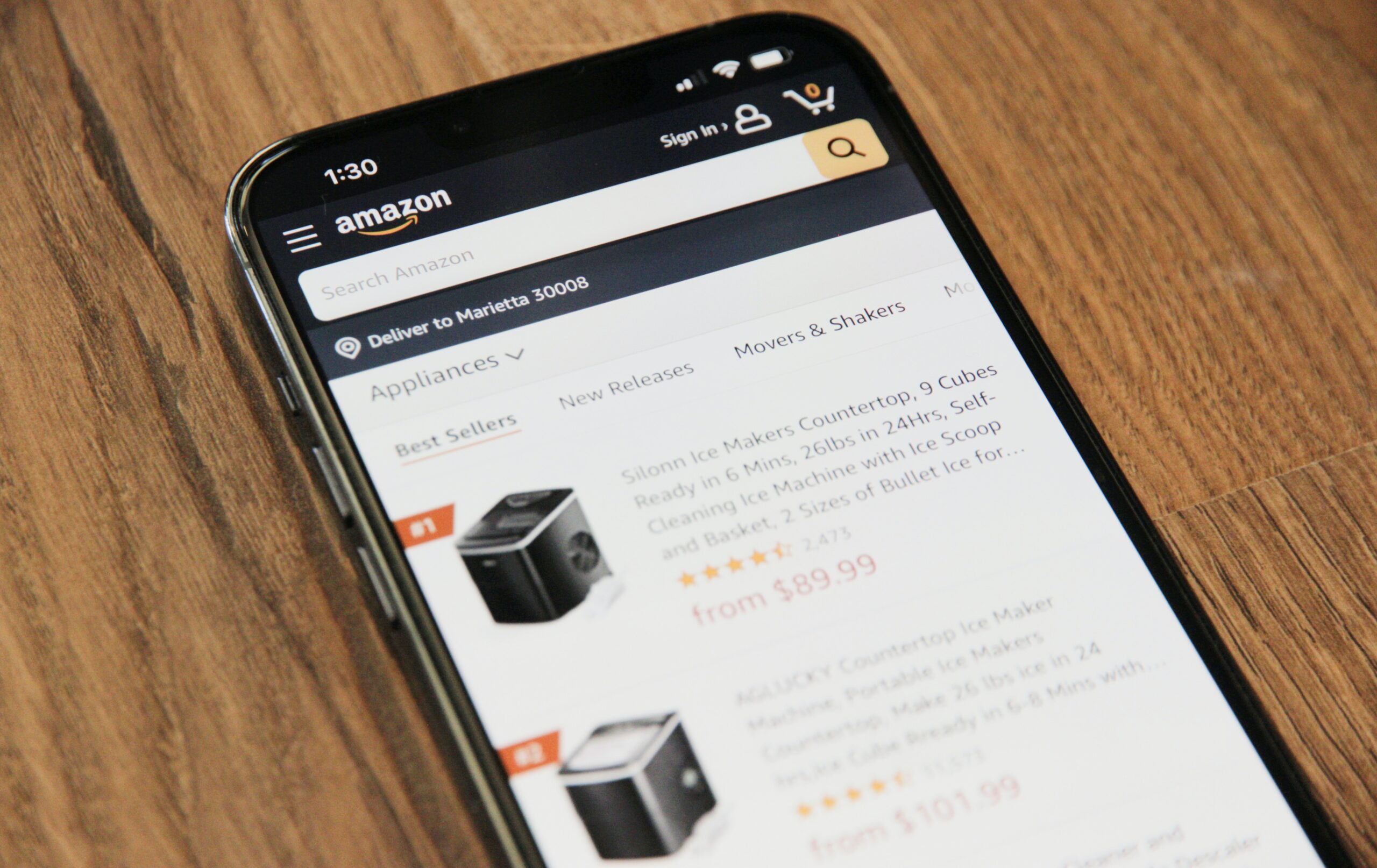
    Amazon is the world’s largest retailer – online, offline, or otherwise. That means by studying the popular site’s revenue and sales statistics, you can get a pretty good feel for the larger global shopping trends. And here’s what’s most interesting: The hot product categories and trends tend to change on a yearly basis.

    In this article, we’ll take a deep dive into the biggest shopping trends on Amazon, focusing on the most popular product categories and what experts predict will be the next hot items.

    Amazon Shopping Statistics and Trends

    Did you know that shoppers spent a collective $513 billion on Amazon in 2022? That amounts to a jaw-dropping $977,898 per minute.

    Overall, Amazon’s revenue grew by 9.4 percent year-over-year in 2022, while 59.3 percent of Americans now have a Prime membership.

    In total, Amazon is believed to own 7.34 percent of the total U.S. retail market (and a whopping 37.8 percent of the total ecommerce market).

    To get an idea of how much product Amazon is moving, consider that net sales surpassed the $149 billion mark for Q4 2022 alone. 

    Unbeknownst to most people, 15.6 percent of Amazon’s sales revenue actually comes from Amazon Web Services, the company’s B2B service platform. 

    Beauty and Grooming

    The beauty and grooming category has always been popular, and it remains a top seller on Amazon. Consumers are increasingly interested in natural and organic products, with the demand for sustainable and ethical options growing. Skincare products, especially anti-aging products, are a significant trend, and hair care products are also in demand.

    According to Amazon’s 2021 Beauty Trends Report, top products in this category include collagen peptides, hyaluronic acid serums, and retinol creams. Korean skincare products, including sheet masks and essences, continue to be popular, with sales increasing by 85 percent.

    Sport and Fitness

    The COVID-19 pandemic has caused a surge in demand for home fitness equipment and products that can help individuals maintain an active lifestyle while practicing social distancing. As a result, the sport and fitness category has seen significant growth on Amazon.

    Yoga mats, resistance bands, and dumbbells have all seen an increase in sales, and fitness trackers and smartwatches remain popular. Health supplements, including vitamins and protein powders, are also in demand.

    Home and Kitchen

    As more people spend time at home, the home and kitchen category has seen significant growth on Amazon. Consumers are investing in products that make their homes more comfortable and functional, such as air purifiers and smart home devices.

    Cookware and kitchen gadgets are also in demand, with sales of instant pots and air fryers increasing. Sustainable home products, including reusable food wraps and bamboo utensils, are also popular.

    Toys

    The toy category is always a popular one on Amazon, especially during the holiday season. Electronic toys, including drones and remote-control cars, remain a significant trend, and board games and puzzles have also seen an increase in sales.

    STEM toys, which help children develop skills in science, technology, engineering, and math, are also in demand. Educational toys, such as science kits and building sets, have seen significant growth in sales.

    Electronics

    The electronics category is vast and includes everything from smartphones to headphones. Wireless earbuds, smartwatches, and laptops are all in demand, and gaming laptops have seen a significant increase in sales.

    Smart home devices, including voice-controlled speakers and security cameras, remain popular, and sales of 4K televisions continue to increase. As remote work and online learning become more prevalent, sales of webcams and monitors have also seen a surge.

    Fashion

    Amazon has made significant strides in the fashion industry, and the category is now a top seller on the site. Consumers are increasingly interested in sustainable and ethical fashion, and the demand for eco-friendly clothing is growing.

    Athletic wear and comfortable loungewear have seen significant growth, as more people work from home. Accessories, including jewelry and handbags, remain popular, and sales of face masks have also seen a surge.

    Tap Into the Power of Amazon

    The beauty of Amazon is that it’s set up for third-party sellers to thrive. In fact, third-party sellers account for 350 million of the nearly 362 million items listed on the site. So if you’re looking to take advantage of these trends, there’s never been a better time!