Tag: ecommerce

  • JD.com cashes in on steady online demand, beats market expectations

    JD.com cashes in on steady online demand, beats market expectations

    JD.com Inc’s fourth-quarter revenue beat expectations on Thursday as more shoppers flocked to its website on the back of a broader shift to online shopping triggered by the COVID-19 pandemic.

    While China has largely emerged from coronavirus lockdowns with most businesses resuming production, JD.com’s domestic consumers continue to shop online for everything from daily groceries to luxury products.

    The Beijing-based company posted revenue of 745.8 billion yuan ($114.97 billion) for the year, beating analysts’ estimate of 740.81 billion yuan.

    In a pandemic-struck year, during which retail sales fell 3.9% in China, JD.com’s strategy of ramping up its in-house delivery network enabled faster deliveries.

    The company has also been working to expand into price-sensitive lower-tier cities through its shopping platform Jingxi in a bid to stave off stiff competition from rivals like Alibaba and Pinduoduo that are equally popular.

    As a result, JD.com raked in 110 million new active customer accounts during the year. Meanwhile, Jack Ma’s Alibaba added about 68 million active buyers in the same period.

    U.S.-listed shares of the company, which have been volatile as China looks to tighten scrutiny on its tech giants, were up 3% at $91.98 in early trading.

    The world’s second-largest economy has vowed to strengthen oversight of its big tech firms, which rank among the world’s largest and most valuable, citing concerns they have built market power that stifles competition, misused consumer data, and violated consumer rights.

    The long-term impact of this on JD.com’s business, though unclear, remains a threat. In late December, regulators fined the company, along with Alibaba and other e-commerce sites, 500,000 yuan for engaging in irregular pricing.

    The company’s net revenue rose 31.4% to 224.3 billion yuan in the quarter ended Dec. 31, beating analysts’ estimate of 219.73 billion yuan, according to IBES data from Refinitiv.

  • SoftBank-backed Coupang raises $4.2 billion in US IPO

    SoftBank-backed Coupang raises $4.2 billion in US IPO

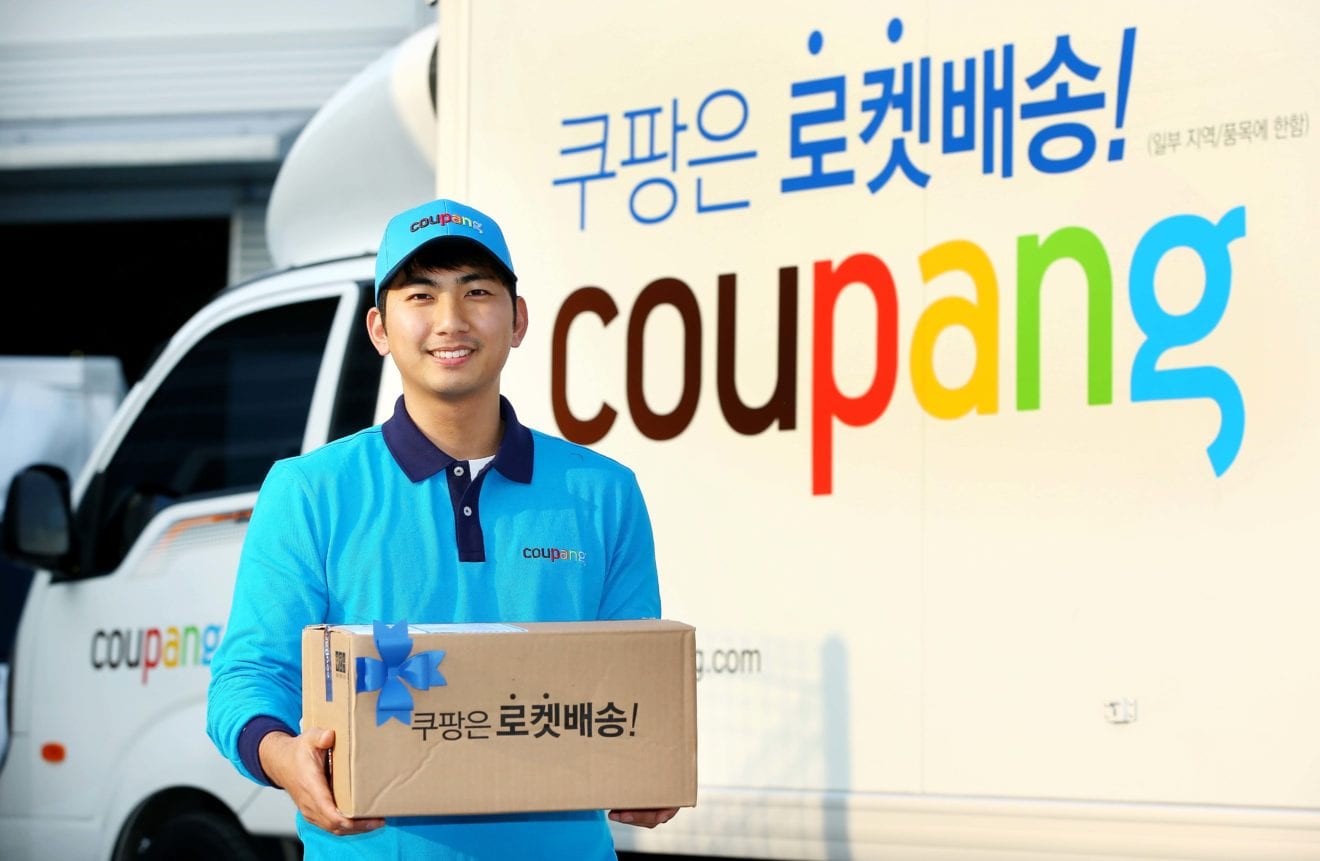
    Coupang LLC, South Korea’s largest e-commerce company, raised $4.2 billion in the biggest share offering in the United States this year after selling stocks in the IPO above its deal target range, people familiar with the matter said.

    The initial public offering price of $35 apiece, higher than the marketing range $32-$34 per share, gives Seoul-headquartered Coupang, which is backed by Japan’s SoftBank Group Corp, a market value of $60 billion.

    Coupang’s successful share offering comes as the U.S. IPO market is at its strongest in more than two decades and investors are flocking to buy shares in technology companies that have benefited during the COVID-19 pandemic.

    The IPO is the biggest in the United States this year, surpassing the $2.15 billion raised by dating app Bumble Inc. It also marks a jump in Coupang’s valuation, which was pegged at $9 billion in a fundraising round in 2018, according to Pitchbook.

    Analysts in South Korea said the strong response to Coupang’s offering was a result of its market-leader position in the country at a time when, like many other e-commerce firms, its sales have grown due to the COVID-19 pandemic.

    “Considering the high level of valuation inherent in the pricing, the market is giving a generous assessment of the company’s achieving the top spot in market share,” said Park Sang-joon, analyst at Kiwoom Securities.

    Coupang was the top-ranked South Korean e-commerce firm in 2020 with 19.2% market share, according to Euromonitor, compared to Naver Corp’s 13.6% and eBay Korea’s 12.8%. It was the 10th largest e-commerce firm in the world, based on retail value excluding sales tax.

    In 2020, Coupang’s net sales jumped 91% year-on-year to $11 billion. Net losses narrowed to $567.6 million from $770.2 million posted in the prior year.

    Founded in 2010 by Korean-American billionaire Bom Suk Kim, Coupang rose to prominence after launching its guaranteed same-day or next-day delivery service in the East Asian country. SoftBank’s $100 billion Vision Fund owns 35.1% of Coupang.

    Achieving a $60 billion valuation would add to good news for the Vision Fund, which is bouncing back from an annual loss in March. Last month, it announced record quarterly profit.

    The company’s shares will begin trading on the New York Stock Exchange on Thursday under the symbol “CPNG.”

    Goldman Sachs, Allen & Co, JPMorgan and Citigroup are the lead underwriters for the offering.

  • Ferragamo flags China-driven sales rise after massive loss last year

    Ferragamo flags China-driven sales rise after massive loss last year

    Italian luxury goods group Salvatore Ferragamo said on Tuesday that China and e-commerce had boosted sales in the year so far after the COVID-19 pandemic pushed the firm to its first full-year operating loss since it listed in Milan 10 years ago.

    Deputy Executive Chairman Michele Norsa, a long-time executive brought back by the Ferragamo family last year to steer the group through the pandemic and a brand revamp, told analysts in a call that he expected sales in China to keep growing by a double-digit percentage.

    The coronavirus emergency has hit Ferragamo hard because it is geared towards traveler spending, with many shops in airports. It has also compounded the challenge of rejuvenating a brand famous for shoes worn by Hollywood stars such as Audrey Hepburn.

    Overall sales fell 33% in 2020, one of the worst performances in an industry grappling with shop closures intended to curb the pandemic as well as a lack of tourists and travelers in general.

    Several sources told Reuters late last year that the majority owners had held informal talks with investors about selling a minority stake in their holding firm. The company denied at the time that the family planned to sell a stake or had met investors.

    Asia accounting for more than half of group revenues in 2020, when turnover in the region fell 25.5%.

    The Florence-based firm said the first nine weeks of 2021 had seen a positive trend in its retail network and an 86% jump in digital sales. China and Korea are both performing strongly, it said.

    Earnings before interests and taxes (EBIT) slumped to a 62 million euro ($74 million) loss in 2020, due also to impairment charges on assets and broadly in line with analysts’ expectations. In 2019, Ferragamo made a 150 million euro profit.

    Chief Executive Micaela Le Divelec’s term expires in April, and there is speculation that management may be overhauled.

    Two sources close to the matter said on Tuesday the situation was still uncertain in that respect.

    Norsa told analysts he could not comment on possible management changes, and that a “normal process” was taking place “in continuity and harmony” ahead of the annual meeting to appoint a new board of directors.

  • Starbucks opens online with a JD flagship store

    Starbucks opens online with a JD flagship store

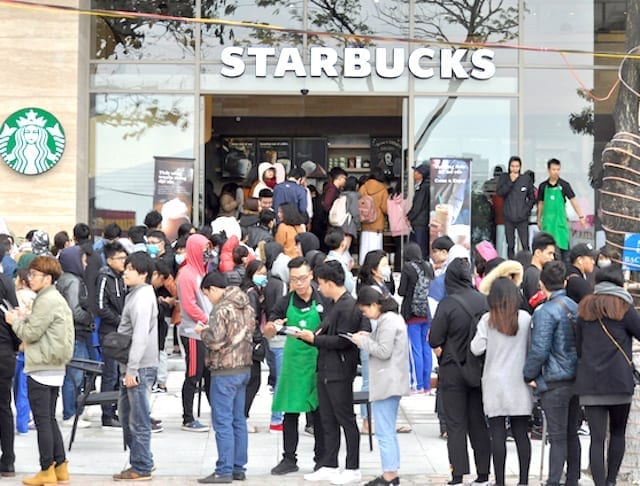
    Starbucks, the world’s largest coffeehouse chain, launched a flagship store on JD.com on March 3.

    The online store is bringing Chinese consumers the brand’s new spring mugs, such as the Sakura Blossom Collection, together with its classic series, including the core classic series, and Starbucks Heritage. In addition to physical products such as mugs, the store also sells physical gift cards, seasonal foods (such as rice dumplings and mooncakes), and their corresponding gift certificates, bringing more quality choices to JD’s customers. A Super Brand Day will kick off on the store’s opening day to help promote sales for the newly opened Starbucks store.

    JD’s consumers are a strong match with Starbucks’ target consumers, and JD’s nationwide logistics network will ensure high efficiency and speed of deliveries for consumers who purchase Starbucks products on JD.

    “JD’s years of experience and good reputation in authentic products, logistics, and after-sales services will also

  • India’s Flipkart mulls US listing

    India’s Flipkart mulls US listing

    Walmart Inc.’s Flipkart is exploring going public in the U.S. through a merger with a blank-check company as it seeks to quicken its listing process, according to people familiar with the matter.

    The Bengaluru-based online retailer has been weighing a U.S. initial public offering and it’s now also looking at other options, the people said. Flipkart’s advisers have approached several SPACs, said one of the people, who asked not to be identified as the information is not public. Flipkart could seek a valuation of at least $35 billion in a blank-check transaction, the people said.

    Deliberations are at an early stage and Flipkart could still explore other options, the people said. A representative for Flipkart had no immediate comment.

    The e-commerce firm is joining other Indian firms like online grocer Grofers in exploring a U.S. listing through SPAC deals. ReNew Power last week agreed to merge with a U.S.-listed special purpose acquisition company in a deal that will give India’s biggest renewable power producer an enterprise value of $8 billion.

    Merging with SPACs, which are shell companies that raise money from public investors intending to acquire a business within two years, will allow Walmart to take its India unit to market at a faster pace than the usual IPO route. As many as 10 Indian companies could go public through SPAC deals before the end of the year, Utpal Oza, head of investment banking for India at Nomura Holdings Inc., said in an interview.

    Flipkart, which is battling with e-commerce arch-rival Amazon.com Inc. and Mukesh Ambani’s retail venture for market share in India, started operations in 2007 and now sells 80 million products on its platforms. Walmart acquired a majority stake in Flipkart in a $16 billion deal in 2018.

  • Vietnam women’s e-commerce leadership ratio second highest in Southeast Asia

    Vietnam women’s e-commerce leadership ratio second highest in Southeast Asia

    Forty-six percent of e-commerce business leaders in Vietnam are women, the second-highest in Southeast Asia, according to a survey.

    The survey has been conducted in Hong Kong and six Southeast Asia countries by market research company iPrice Group.

    This figure was lower than that of Hong Kong (55 percent) but higher than that of Thailand (44 percent), the Philippines (39 percent) and three other Southeast Asian countries, showed the survey.

    Vietnam’s figure has improved from 37 percent in 2018.

    In Southeast Asia, however, there is still a gender gap in top positions. Only 31 percent of women have C-level roles – executive levels such as CEO or chief financial officer (CFO).

    In the vice president position, just 38 percent are women.

    Overall, there is a 40-60 disparity between women and men when it comes to being in positions of power.

    “Given centuries of gender inequality and women taking time off for child-rearing, the disparity isn’t as wide as we may have assumed,” the iPrice report said.

  • Disney closing North American stores to focus on e-commerce

    Disney closing North American stores to focus on e-commerce

    Walt Disney Co will close at least 60 Disney retail stores in North America this year, about 20 per cent of its worldwide total, as it revamps its digital shopping platforms to focus on e-commerce.

    The media and entertainment company also is evaluating a significant reduction of stores in Europe, a spokesperson said, adding that locations in Japan and China will not be affected. Disney currently operates roughly 300 Disney stores around the globe.

    In November, Disney launched digital marketplaces in Australia, New Zealand and India.

    The company did not say how many people would lose their jobs as a result of the closures.

    Consumers have been moving to digital shopping over physical locations, and chains including Walmart and Macy’s have shuttered brick-and-mortar stores. The global coronavirus pandemic accelerated that change when people were forced to stay home.

    “While consumer behaviour has shifted toward online shopping, the global pandemic has changed what consumers expect from a retailer,” said Stephanie Young, president of Disney’s consumer products, games and publishing.

    Over the past few years, Disney has expanded its shops inside other retailers such as Target in the US and Alshaya Group stores in the Middle East. Those locations will continue to operate, as well as stores inside Disney parks. Disney-licensed products also will remain widely available through third-party retailers.

    Disney will overhaul its shopDisney apps and websites over the next year.

    “We now plan to create a more flexible, interconnected ecommerce experience that gives consumers easy access to unique, high-quality products across all our franchises,” Young said.

    Digital shopping gives Disney a chance to offer a much broader selection and include higher-end products from all of its Disney, Pixar, Marvel and Star Wars brands.

    New products will include adult apparel, artist collaborations, premium home products and collectibles, the company said. It recently unveiled streetwear featuring Grogu, the “Star Wars” character popularly known as Baby Yoda.

  • Jack Ma no longer China’s richest man after coming under Beijing’s scrutiny

    Jack Ma no longer China’s richest man after coming under Beijing’s scrutiny

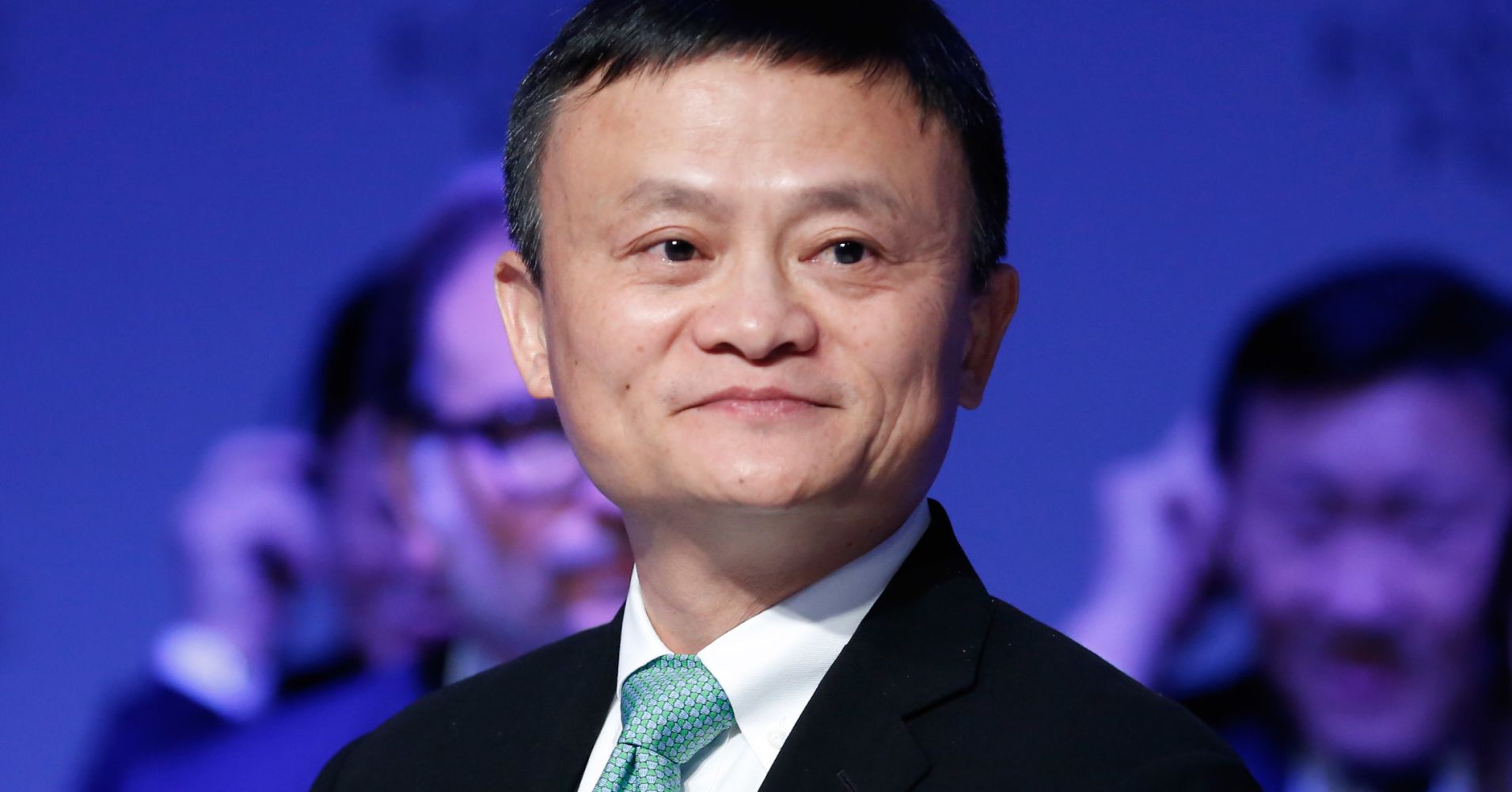
    Alibaba and Ant Group founder Jack Ma has lost the title of China’s richest man, a list published on Tuesday showed, as his peers prospered while his empire was put under heavy scrutiny by Chinese regulators.

    Ma and his family had held the top spot for China’s richest in the Hurun Global Rich List in 2020 and 2019 but now trail in fourth place behind bottled water maker Nongfu Spring’s Zhong Shanshan, Tencent Holding’s Pony Ma and e-commerce upstart Pinduoduo’s Collin Huang, the latest list showed.

    His fall out of the top three comes “after China’s regulators reined in Ant Group and Alibaba on anti-trust issues,” the Hurun report said.

    Ma’s recent woes were triggered by an October 24 speech in which he blasted China’s regulatory system, leading to the suspension of his Ant Group’s $37 billion IPO just days before the fintech giant’s public listing.

    Regulators have since tightened anti-trust scrutiny on the country’s tech sector, with Alibaba taking much of the heat; the market regulator launched an official anti-trust probe into Alibaba in December.

    Chinese regulators also began to tighten their grip on the fintech sector and have asked Ant to fold some of its businesses into a financial holding company to be regulated like traditional financial firms.

    Ma, who is not known for shying away from the limelight, then disappeared from the public eye for about three months, triggering frenzied speculation about his whereabouts. He re-emerged in January with a 50-second video appearance.

    China’s current richest man, Zhong, made his first appearance at the top spot with a fortune of 550 billion yuan (US$85 billion), largely thanks to the share price performances of Nongfu Spring and vaccine maker Beijing Wantai Biological Pharmacy Enterprise, which he also controls.

    Tencent’s Ma saw his wealth swell 70 percent over the year to 480 billion while Pinduoduo’s Huang’s fortune grew 283 percent to 450 billion yuan, the list said. In comparison, the wealth of Ma and his family grew 22 percent, to 360 billion yuan.

    Zhang Yiming, founder of TikTok owner ByteDance, broke into the top five rankings among Chinese billionaires in Hurun’s Global Rich List for the first time, with an estimated personal wealth of $54 billion.

  • Bulgari enters Vietnam with a comeback

    Bulgari enters Vietnam with a comeback

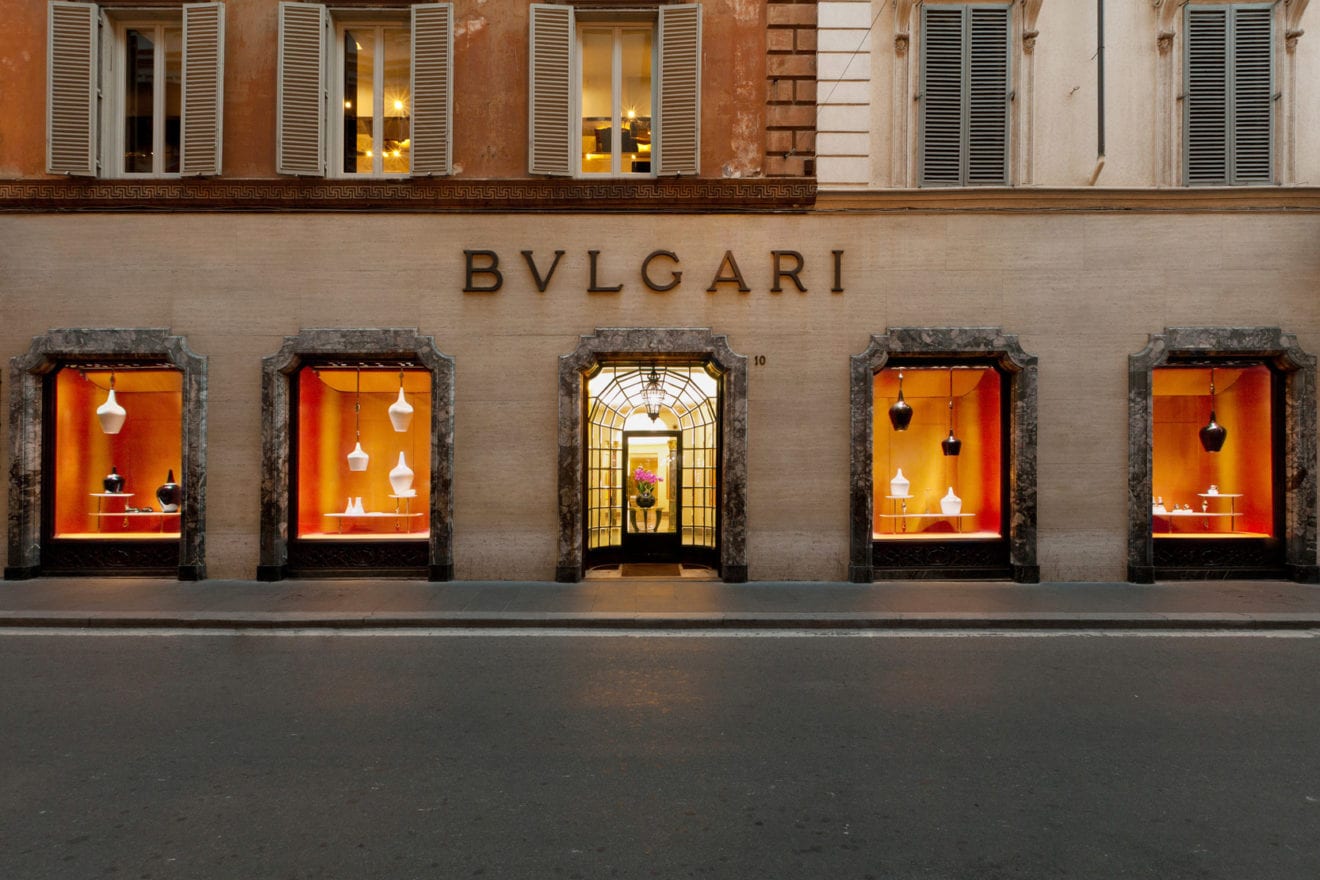
    Italian luxury house Bulgari has opened its first brick-and-mortar store in Ho Chi Minh City, marking its comeback in the country.

    Spanning 194sqm, the Bulgari Vietnam store is located at Union Square shopping centre, featuring the brand’s full range of jewelry, including its famous Serpenti rings, bracelets and necklaces.

    Bulgari first entered Vietnam in 2014 via local distributor Imex Pan Pacific Group and operated until March 2019. In this comeback, the brand set up a member company named Bulgari Vietnam in the country for direct import and distribution.

    According to the brand’s spokesperson, Vietnam is considered as a potential market for the luxury sector due to stable economy and rapid growth. According to data company Statista, Vietnam’s luxury goods market is estimated to reach US$1.14 billion this year and achieve 7.17 per cent growth annually until 2025.

    “We believe this is a good time to bring the brand back to Vietnam,” said the spokesperson. “Overcoming current obstacles will help us to reach a potential customer base that in normal circumstances, they would shop our products overseas.”

    Due to the on-going Covid-19 situation in the country, the brand operated without any launching event.

  • Walmart’s Flipkart expands grocery sales to more Indian cities

    Walmart’s Flipkart expands grocery sales to more Indian cities

    Walmart-owned Flipkart will sell groceries online in more Indian cities, as it seeks to compete better with Amazon and Reliance in an e-commerce market that has grown rapidly during the COVID-19 pandemic.

    Flipkart has already expanded online grocery sales to more than 50 Indian cities and intends to reach over 70 locations in the next six months, the company said in a statement on Tuesday.

    The Bengaluru-based firm said its grocery service had grown “exponentially” in the past year when many Indians began buying essential supplies online due to the health crisis.

    “Grocery continues to be one of the fastest-growing categories,” said Manish Kumar, senior vice president at Flipkart, adding that the company had seen increased demand for the service from smaller cities in 2020.

    Reliance Industries-owned JioMart last year became the latest big entrant to India’s e-grocery market, a sector that also includes Amazon.com Inc, BigBasket and several smaller players. Indian conglomerate Tata is reported to be buying a majority stake in Alibaba-backed BigBasket.

    Reliance, backed by India’s richest man, Mukesh Ambani, raised over $20 billion last year from global investors including Facebook and Alphabet’s Google for its digital arm, which is expected to support JioMart.

    India’s broader retail industry is also witnessing a high-stakes legal battle between Reliance and Jeff Bezos-led Amazon on the Future Group’s $3.4 billion sale of its retail assets to Reliance, which Future’s partner Amazon is contesting.

    Flipkart’s recent expansion has taken its grocery services to big cities including Kolkata, Pune and Ahmedabad, it said.

    “Grocery is the next big frontier for online shopping and is a key focus area for Flipkart to bring new customers online,” the company added.

  • FJ Benjamin and Lazada Singapore Sign MOU for Strategic Partnership to Boost Online-Offline Sales

    FJ Benjamin and Lazada Singapore Sign MOU for Strategic Partnership to Boost Online-Offline Sales

    FJ Benjamin Holdings (FJB) and leading eCommerce platform, Lazada Singapore, today signed a Memorandum of Understanding (MOU) to forge a strategic partnership that aims to deliver the ultimate retail experience to customers across all channels and devices.

    The proposed partnership will tap Lazada’s technical and online capabilities, and eCommerce platform management expertise, and leverage FJB’s experience in fashion brand management and physical store operation, to boost the eCommerce performance of FJB’s stable of brands in Singapore, Malaysia and Indonesia, as well as to expand and incubate new FJB brands to eventually integrate brick-and-mortar and virtual stores.

    FJB will also discuss with brand principals opportunities for eCommerce in markets Lazada has a presence but where FJB does not, such as Vietnam, Thailand and the Philippines. Powered by Alibaba’s advanced eCommerce tools and systems, Lazada will develop new tailor-made solutions to deliver a truly omnichannel customer experience in managing the full online ecosystem of FJB brands across the markets.

    Group CEO Nash Benjamin said: “FJ Benjamin has been strategising and planning our omnichannel business model for some time now and this partnership with Lazada is intended to get us to where we want to be much faster and in a more cost-efficient manner. This will combine our respective capabilities to strengthen customer experience across brick and mortar and virtual channels.”

    Besides operating principal branded sites, it is also intended to host certain brands on LazMall as well as other regional sites, subject to principal approvals.

    “We are thrilled to be part of this new chapter with FJ Benjamin and value their trust in us,” said James Chang, CEO of Lazada Singapore. “Lifestyle, fashion and beauty are important pillars in our eCommerce plans and shoppers can now look forward to seeing more well-known brands and labels on our platform, for an integrated shopping experience. In the last year, Lazada has supported many businesses that adopted a multichannel approach to set up stores online and we know that our expertise in the eCommerce space will benefit and contribute to the success of a renowned brand like FJ Benjamin, and look forward to seeing positive results with them.”

    While some of the brands managed by FJB, including La Senza, Pretty Ballerinas and Petunia Pickle Bottom, are currently available on Lazada’s premiere shopping platform, LazMall, this is the first time both parties –  one, a traditional brick-and-mortar operator, and the other, the region’s leading eCommerce player – have come together to envision and execute a truly omnichannel model under which customers can control the buying process and enjoy a seamless shopping experience across multiple channels – brick-and-mortar, desktop, and mobile.

    Since the pandemic lockdowns last year forced FJB stores in Southeast Asia to shutter, the Group had secured principals’ approvals to pivot to eCommerce. It has ramped up its online presence from one brand, the cult British fashion label Superdry, to almost all its brands including Guess, La Senza, Casio, Rebecca Minkoff, Pretty Ballerinas, Airfree and Dr Barbara Sturm.

    The MOU states that  “the parties agree both physical stores and online stores are part of the retail ecosystem. With Lazada’s technical and online abilities and FJB’s experience in fashion and lifestyle brand management and physical store operations, this brings together a strong strategic partnership which leverages each other’s expertise to deliver an ultimate consumer experience.”

    Under the terms of the MOU, both FJB and Lazada will, within 90 days, work on a detailed action plan and a definitive agreement to move the partnership forward.

    Mr Benjamin said FJB will continue to take charge of all aspects of product assortment, brand management, pricing, promotions as well as key parts of logistics such as inventory and supply chain. The parties will jointly undertake online marketing and campaign strategies while Lazada will operate the online stores.

  • Apple is discovered fighting Arizona antitrust bill

    Apple is discovered fighting Arizona antitrust bill

    Recently, Apple thanked its lucky stars when North Dakota voted down a proposed bill that would have forced the company to allow 3rd-party payment processes for apps in the App Store. The bill’s objective is to let companies bypass Apple’s 15%-30% commission fee (like Epic Games did back in August, unsanctioned) on all applications and transactions on the platform. Apple has always stringently filtered the apps allowed in its store, on top of the commission which developers are calling “highway robbery.” The approval of this bill would give small businesses a much greater chance of survival, especially during the pandemic. However, the victory in North Dakota was only one small battle, and Apple’s fight is far from over.

    Not long after that, Minnesota introduced a similar bill, which Apple is currently lobbying against as well. And now, Apple has extended its efforts to Arizona—which hadn’t even introduced the proposed legislation officially yet before Apple came at them, torches and pitchforks waving. Apple and Google know well that if these bills are passed, they will lose billions of dollars which their duopoly has guaranteed them up until this point. According to them, these bills are “unconstitutional,” and Regina Cobb (the Arizona State Representative who introduced the bill) claims she is facing a nonstop onslaught from Apple and Google’s plethora of hired lobbyists over the past two weeks, as well as free-market groups and the Arizona Chamber of Commerce.

    Apple might be putting everything into fighting these small battles now, bill by proposed bill, state by state, but the deciding battle comes in May when the case between Epic Games and Apple goes to trial. If Minnesota and Arizona end up passing the bill, there’s a chance this (and consequent reactions) may affect the court’s decision, but it is not certain for now. Although much of the world is rooting for a future with a freer market, the North Dakota Senate voted off their proposed bill at a one-sided 36-11 ratio—so nothing is certain, and Apple certainly won’t stop fighting tooth and nail to keep its multi-billion-dollar app revenue from declining.

  • Amazon acquires e-commerce platform Selz

    Amazon acquires e-commerce platform Selz

    Global e-commerce marketplace Amazon has bought up Sydney-based e-commerce platform Selz.

    The platform works in much the way as Shopify, providing an e-commerce-ready backend for small businesses to utilize when creating their websites.

    “We have signed an agreement to be acquired by Amazon and are looking forward to working with them as we continue to build easy-to-use tools for entrepreneurs,” said Selz chief executive Martin Rushe.

    The acquisition could signal a shift in how Amazon seeks to grow its position in the e-commerce industry – no longer aiming to get all sellers on its marketplace, and instead of working with them behind the scenes to provide a white-label shopping experience powered by Amazon’s platform.

    The option could be attractive for businesses looking to eschew Amazon’s commission and delivery fees, though the difference between the two options are currently unknown.

    An Amazon spokesperson confirmed the acquisition but didn’t disclose any terms.

  • Indian officials to examine Amazon after Reuters probe

    Indian officials to examine Amazon after Reuters probe

    India’s federal financial crime-fighting agency will examine findings in a Reuters report, which revealed that Amazon.com Inc has for years given preferential treatment to a small group of sellers on its India platform and used them to circumvent the country’s foreign investment rules, a senior agency source told Reuters on Thursday.

    It provided an inside look at the cat-and-mouse game Amazon has played with India’s government, adjusting its corporate structures each time the government imposed new restrictions aimed at protecting small traders.

    On Thursday, a senior Enforcement Directorate source told Reuters that “we will be examining findings” of the story. The subject matter “is not entirely new for us,” said the source, without elaborating. The source asked not to be identified.

    Amazon didn’t immediately respond to a request for comment.

    Amazon is already under investigation by India’s Enforcement Directorate for possible violation of foreign investment rules. Such probes typically take years in India, and in most cases, details aren’t made public. In the Reuters report published Wednesday, Amazon said it was confident of its compliance when asked about the agency’s probe.

    In tweets issued on Wednesday, Amazon criticized the Reuters report as “unsubstantiated, incomplete, factually incorrect,” without going into specifics. “In last several years, there have been (a) number of changes in regulations; Amazon has on each occasion taken rapid action to ensure compliance,” the company said.

    In an e-mail to employees on Thursday, Amazon’s India head Amit Agarwal addressed the Reuters story, saying he understood “such instances can be distracting.”

    The company was on “the threshold of creating a legacy,” he wrote in the e-mail, which was reviewed by Reuters. “It will require significant innovation, it will push our abilities, we will be misunderstood, but it will be fulfilling.”

    Indian retailers, who are a crucial part of Prime Minister Narendra Modi’s support base, have long alleged that e-commerce giants like Amazon and Walmart’s Flipkart flout federal regulations and that their business practices hurt small traders. The companies deny the allegations.

    The documents reviewed by Reuters revealed that Amazon helped a small number of sellers prosper on its India platform, giving them discounted fees and helping one cut special deals with big tech manufacturers such as Apple Inc. The company has also exercised significant control over the inventory of some of the biggest sellers on Amazon.in, the documents show, even though it says publicly that all sellers operate independently on its platform.

    Government rules announced in 2016 required that an e-commerce platform should “not exercise ownership” over sellers’ inventory.

    Gopal Krishna Agarwal, a national spokesman for Modi’s ruling party, said the findings in the Reuters story were “serious” and that “any predatory policy, deep discounting … will not be tolerated by the government. The party will take a stand on that.”

    Small businesses are “very important” for the party, he said. “Their concerns will be taken care of.”

    In a written response to the Reuters report published on Wednesday, Amazon said it “does not give preferential treatment to any seller on its marketplace,” and that it “treats all sellers in a fair, transparent, and non-discriminatory manner.”

    A leading group of Indian retailers urged the government to ban the local operations of Amazon and said it was considering taking legal action, after the Reuters story was published.

    The Confederation of All India Traders, which says it represents 80 million retail stores, said “the shocking revelations” are “sufficient enough to immediately ban operations of Amazon in India.”

    Amazon did not respond to a request for comment on the trader group’s statement.

  • Vietnam moves up in e-commerce readiness

    Vietnam moves up in e-commerce readiness

    Vietnam has jumped three places to 63rd in the latest global e-commerce readiness ranking, faring better than several regional peers, a UN report says.

    With a score of 61.6 points on a scale of 100, Vietnam did much better than Indonesia (83rd), the Philippines (96th), Laos (101st), Cambodia (117th) and Myanmar (130th), according to the B2C (business-to-consumer) E-commerce Index report released this week by the United Nations Conference on Trade and Development.

    The ranking measured 152 economies around the world on their readiness to engage in online commerce based on four indicators with a high correlation to online shopping: internet server access; postal service reliability; share of the population who use the internet; and share of the population aged above 15 who have an account with a financial institution or mobile-money-service provider.

    According to the report, nearly 70 percent of Vietnamese people use the internet and 31 percent of individuals aged 15 and above have bank accounts or mobile bank accounts.

    In terms of internet server access and postal reliability, Vietnam scored 64 and 83 percent respectively.

    The report also showed online shoppers in Vietnam account for 36 percent of internet users and 18.7 percent of the 96-million population.

    Switzerland was on top of the index, followed by the Netherlands and Denmark.

    “The Covid-19 pandemic has made it more urgent to ensure countries trailing behind are able to catch up and strengthen their e-trade readiness,” said Shamika Sirimanne, director of UNCTAD’s technology and logistics division, adding that the index underscores the need for governments to do more to ensure more people can avail of e-commerce opportunities.

    “Otherwise, their businesses and people will miss out on the opportunities offered by the digital economy, and they will be less prepared to deal with various challenges,” she said.

    According to an e-commerce development plan approved by the Vietnamese government last year, the sector’s revenues should reach $35 billion by 2025 and account for 10 percent of the total. The government also targets 55 percent of the population shopping online by 2025.

    Vietnam’s e-commerce market expanded by 18 percent last year to $11.8 billion, the only country in Southeast Asia to record double-digit growth in the sector amid the Covid-19 pandemic.