Tag: ecommerce

  • Tesla Cuts Prices Of Base Variants Of Model 3, Model Y On Its Website

    Tesla Cuts Prices Of Base Variants Of Model 3, Model Y On Its Website

    Tesla Inc has reduced the price of its cheaper variants of the Model 3 sedan and the Model Y sports utility vehicle (SUV), while raising prices for their performance variants, the electric-car maker’s website showed. The price of its Model 3 Standard Range Plus has been lowered to $36,990 from $37,990, while the Model Y Standard Range’s price came down to $39,990 from $41,990, according to the website.

    The carmaker has been making various models in its lineup more affordable at a time when legacy automakers are trying to make inroads in the electric vehicle market.

    The standard range of the Model Y was launched in January, bringing its SUV’s price closer to that of the Model 3 sedan, the electric-car maker’s least expensive car.

    The prices for the Performance variant of the Model 3 rose to $55,990 from $54,990 and Model Y to $60,990 from $59,990, the website showed.

    The price cuts come as Tesla looks to ramp up its deliveries. Overall, the company delivered 499,550 vehicles during 2020, above Wall Street estimates of 481,261 vehicles.

  • L’Oreal predicts ‘Roaring 20s’ retail resurgence post Covid

    L’Oreal predicts ‘Roaring 20s’ retail resurgence post Covid

    Beauty giant L’Oréal, besides posting financial results that beat expectations, is offering high-level optimism, promising a resurgence in sales and a new “Roaring ’20s.”

    “Like a flower after winter, beauty is ready to blossom after COVID goes away,” says Nicolas Hieronimus, the Paris-based conglomerate’s incoming chief executive officer, in a webcast for investors.

    Adding that the company is already seeing fiesta-like gains in China, “we are confident that, like in the roaring ’20s, there will be a big beauty party. Beauty is and always will be essential.”

    Those upbeat remarks are likely to cheer up many in the industry. Between working from home, wearing masks and keeping six feet away from anyone, consumers felt little reason to buy makeup or spritz on fragrances, depressing sales.

    The NPD Group, a market research company that tracks beauty sales, reports that prestige cosmetics tanked 19% for the full year, falling to $16.1 billion. Makeup dropped the most, down 34%.

    L’Oreal’s Hieronimus made his remarks as the company presented solid quarterly results. Even as industrywide sales tumbled, L’Oréal bucked the trend. Comparable sales rose 4.1% in its fourth quarter, and the company says it is winning significant market share gains in many categories.

    The company’s ecommerce revenues soared 62%, with gains in all geographic regions. It now accounts for a record 26.6% of the total sales for the year. “The huge surge is helping to democratize beauty,” he says. “And consumers of beauty remain strong. We saw rapid recovery everywhere when stores reopened.”

    Hieronimus also says he expects the company to continue to benefit from skincare’s growing importance, which now accounts for 40% of sales.

    In terms of marketing, he says digital spending now accounts for 60% of its budget.

    Describing beauty as “both a need and an aspiration,” Hieronimus says he believes the company will continue to outperform competitors because of its focus on data, AI, research and innovation. “We are ahead of the curve in digitalization.”

    And he says consumers will continue to reward companies with a strong brand purpose, a commitment to social values and “acting for the greater good. We create the beauty that moves the world.”

  • Amazon’s Vietnamese partner reports surge in profit

    Amazon’s Vietnamese partner reports surge in profit

    Textile company Gilimex said its net profits almost doubled in 2020 thanks to a number of high-value contracts with international retailers.

    It reported record revenues of VND3.45 trillion ($150 million), up 36 percent from 2019, and net profits of VND308 billion for the year.

    Gilimex’s main products are handbags and backpacks.

    It tied up with Amazon, the world’s largest online retailer, in 2016 and seen average revenues grow at 20 percent a year since then.

    Its other large foreign partner is Swedish furniture retail giant IKEA with whom it has eight long-term contracts worth $16.2 million.

    The firm also develops new products for Dutch baby products maker Bugaboo and Puma, the German multinational that manufactures athletic and casual footwear, apparel and accessories.

  • Baozun buys Full Jet to boost luxury e-commerce offer

    Baozun buys Full Jet to boost luxury e-commerce offer

    Baozun, the leading brand e-commerce service partner that helps brands execute their e-commerce strategies in China, today announced that it has entered into a share purchase agreement with all the shareholders of Full Jet Limited (“Full Jet”), to acquire a 100% equity interest in Full Jet. The acquisition is subject to customary closing conditions and is expected to be completed on or around February 10, 2021.

    The final enterprise value of Full Jet represents a 12.5x multiple of Full Jet’s 2020 EBITDA, with total consideration consisting of a 50% initial cash payment and deferred payments in cash or equity over the following three years, subject to an annual performance target completion result. In addition, an incentive program is granted to key members of Full Jet’s management team, which is also subject to the annual performance target completion result during the same period.

    Full Jet is a strategic and brand-focused industry expert that specializes in developing go-to-market strategies for high-end and luxury brands entering the Chinese market. Its key business coverage includes brand development, strategic consulting, e-commerce operations, and marketing. Full Jet has successfully leveraged its in-depth knowledge of China’s e-commerce market to support many leading international premium and luxury brand partners and groups. Full Jet has global offices in Paris, Hong Kong, and Shanghai, China.

    According to a recent report issued by independent third parties, China’s personal luxury market was estimated to grow by over 45% in 2020, within which online e-commerce has grown tremendously. In September 2020, Baozun upgraded its luxury group to a tier-1 business unit to better leverage its analytic data, insights, and resources to capture the emerging demand. The Company believes that this strategic acquisition of Full Jet strengthens the Company’s expertise in business development, strategic consulting, and brand management, and expands its geographic touchpoints with premium and luxury brands globally.

    Mr. Vincent Qiu, Chairman and Chief Executive Officer of Baozun commented, “We are excited about the acquisition of Full Jet. Baozun and Full Jet share the ambition of helping international luxury and premium brand partners enter China’s fast-growing e-commerce sector. We are confident that our proven track record of capabilities with deep luxury insights and solid infrastructure, combined with Full Jet’s expertise in brand and business development, will provide a compelling value proposition for international labels looking for more strategic and empowered services like us. By capitalizing on the strengths of both parties, we expect to unlock the potential for the future growth of premium and luxury sectors, and we believe such initiatives will become strong growth drivers for Baozun in generating RMB20 billion in annual GMV within the next three to five years.”

    Ms. Sandrine Zerbib, Founder and Managing Partner of Full Jet added, “We are looking forward to beginning a new journey with Baozun. This acquisition opens doors to tremendous new opportunities for both of us. We are impressed with the vision and execution of Vincent and his team that has made Baozun the undisputable leader in China’s rapidly growing market for e-commerce operations and services.

  • Amazon brings Dark and Light modes to Alexa app on iOS devices

    Amazon brings Dark and Light modes to Alexa app on iOS devices

    An important update is now rolling out to Alexa app users on iOS devices. The update adds support for both Light and Dark modes, allowing users to switch between them on the fly, as well as Dynamic Type support.

    The update is meant to further improve Alexa’s accessibility features. Thanks to the newly added Dynamic Type support, iOS users will no longer have to choose the size of the text within the Alexa app. Instead, the app will now automatically choose the text-size set at a system level.

    As far as the new Dark/Light modes go, the new feature lets Alexa app users switch between them or let the app handle usage of the modes automatically. By default, the Alexa app will switch appearance at sunrise and sunset, but users can permanently set the app to either Light or Dark Mode from the iOS’s Settings menu.

    Previously, the Alexa app did have a dark mode, but it didn’t display a completely black background whereas the new one added in the update does a better job at mimicking the black color. The updated Alexa app has already been uploaded to the App Store, so feel free to download it to benefit from the recent changes.

  • China fines Vipshop almost $500,000 for unfair competition acts

    China fines Vipshop almost $500,000 for unfair competition acts

    Chinese regulators have hit online discount retailer Vipshop Holdings Ltd with a 3 million yuan ($464,000) fine, the biggest to date in a recent clampdown on anti-competitive behavior among internet firms.

    In a sign that regulators are increasingly willing to use more tools in a newfound zeal to rein in monopolistic behavior in the tech sector, Vipshop was punished for violations of a law prohibiting unfair competition, which allows for fines of up to 5 million yuan.

    By comparison, other firms that have been hit with penalties since late last year was fined under China’s 2008 anti-monopoly law, which allows for a much lower maximum fine of 500,000 yuan.

    The Vipshop fine comes on the heels of State Administration for Market Regulation (SAMR) publishing updated guidelines on how the anti-monopoly law affects internet firms, which said regulators were keen to prevent price fixing as well as the use of data and algorithms to manipulate the market.

    SAMR said on Monday that from August through December last year, Vipshop had developed a system to obtain information on brands that gave Vipshop a competitive advantage. It added that Vipshop used its system to influence user choices, transaction opportunities and to block sales of particular brands.

    New York-listed Vipshop, which has a market value of about $22 billion, said on Monday that it accepted SAMR’s findings and would strengthen compliance.

    The heightened scrutiny by Chinese regulators since December has included the announcement of a probe into e-commerce giant Alibaba, penalizing Alibaba-backed and Tencent-backed firms for not seeking anti-trust reviews for deals, while other firms have also been fined for irregular pricing.

  • Singapore retail sales slide overall while E-commerce goes up

    Singapore retail sales slide overall while E-commerce goes up

    Singapore retail sales – excluding motor vehicles – fell 4.5 percent y-o-y last Dec, a slightly higher decline than Nov’s 2.8 percent. M-o-m sales were down 0.7 percent. DOS estimates total retail sales value at SGD3.5 billion (US$2.62 billion) and that online retail sales accounted for 12.6 percent of that. The strongest categories online were computer and telecommunications equipment, accounting for 35.2 percent of the category’s overall turnover, furniture and homewares (23.4 percent) and supermarkets (11.8 percent).

    Most retail industry categories posted declines in sales in Dec on a y-o-y basis. However, supermarkets and hypermarkets, computer and telecommunications equipment, and furniture and homewares recorded growth rates of between 20.8 percent and 25.3 percent, due mainly to higher sales of groceries, mobile phones and household appliances respectively.

    Sales of recreational goods rose 10.3 percent, largely driven by strong demand for sporting goods. Sales of F&B services fell 16.5 percent in Dec, y-o-y, which was a lesser rate than Nov’s 22.4 percent decline. Online orders made up 19.9 percent of the estimated total spend of $800 million.

  • Fighting Amazon over retail deal, India’s Future says staring at insolvency, hit to bank loans

    Fighting Amazon over retail deal, India’s Future says staring at insolvency, hit to bank loans

    If India’s Future Group cannot sell assets, $4 billion in bank loans and debentures will be at risk, pushing its retail unit into insolvency, the company said in a court filing on Wednesday against Amazon.com Inc, which wants to block the sale.

    A court in New Delhi blocked Future Group’s sale of retail assets to Reliance Industries on Tuesday after Amazon raised objections to the deal.

    The corporate battle has embroiled sprawling businesses led by two of the world’s richest men: Amazon’s Jeff Bezos and Reliance’s Mukesh Ambani.

    Amazon had argued that Future breached contracts by selling retail assets to Reliance. The court sided with the U.S. firm, saying an earlier order from an arbitrator that put the Future-Reliance deal on hold was valid.

    Future – which had argued the arbitrator’s order was not binding – on Wednesday filed a challenge against the court’s ruling, saying the company’s creditors would be at “significant risk” if the Reliance deal fails.

    Other than an estimated 300 billion rupees ($4.1 billion) hit to bank loans and debentures, the deal’s failure would also impact livelihoods of 50,000 employees and 6,000 small- and medium-sized vendors, it said.

    “It is inevitable that FRL (Future Retail) will go into liquidation … The magnitude of damage that may be caused to the public at large is unimaginable,” Future said the court filing, seen by Reuters.

    The appeal is set to be heard on Thursday before a bigger two-judge bench in New Delhi.

    Future, India’s second-largest retailer with more than 1,700 stores, and Amazon did not respond to a request for comment.

    Shares of Future Retail dropped 5% in early trading on Wednesday. Reliance Industries fell as much as 1.2%, but recovered later.

    The Delhi court on Tuesday asked Indian authorities to maintain status quo on the transaction, effectively putting the Future-Reliance deal on hold.

    Indian stock exchanges and the country’s antitrust watchdog had already cleared the deal, though it was awaiting approval from a law tribunal.

    Future in its appeal said Tuesday’s Delhi court order “rendered stillborn” the approvals.

    “The sole and sheer intent” of Amazon was to prevent Reliance – which is also venturing into e-commerce – from acquiring Future’s assets, the Indian firm argued in the filing.

    Amazon, which had its sights set on ultimately owning part of Future’s retail assets itself, has argued a 2019 deal it had with a unit of Future contained clauses prohibiting the Indian group from selling them to anyone on a “restricted persons” list, including Reliance.

  • Amazon’s Bezos to step down as CEO; quarterly revenue tops $100 billion

    Amazon’s Bezos to step down as CEO; quarterly revenue tops $100 billion

    Amazon.com on Tuesday (Feb 2) said founder Jeff Bezos will step down as CEO and become executive chairman, as the company reported a third consecutive record profit and quarterly sales above US$100 billion for the first time.

    This summer, Bezos, 57, will hand the keys of the world’s largest online retailer to Andy Jassy, head of its cloud computing division. The announcement ends a long-running question about who would succeed the world’s second-richest person at the company’s helm.

    Jassy, 53, joined Amazon in 1997 after Harvard Business School, founding Amazon Web Services (AWS) and growing it to a cloud platform used by millions, the company’s website said. He had been a clear contender for the top job since Amazon created two CEO roles reporting to Bezos, the other held by recently retired consumer CEO Jeff Wilke.

    Tom Johnson, chief transformation officer at Mindshare Worldwide, said Jassy’s promotion underscored the importance of web services to Amazon’s future.

    “Jassy’s background in steering AWS shows just how the top of mind those services are to Amazon’s business strategy. It’ll be interesting to see how that affects their strategy and balancing that priority with a growing ad business and the commerce behemoth,” he said.

    Jassy is known for understanding technical details, and he has regularly taken jabs at legacy player Oracle and cloud rival Microsoft, which AWS continues to exceed in sales.

    Under Jassy’s leadership, Amazon’s cloud business has signed major customers including Verizon, McDonald’s and Honeywell. The division’s quarterly revenue consistently rose by double digits, helping cement its position as the market leader.

    One contract AWS failed to win was the US$10 billion “JEDI” contract from the Pentagon, which was awarded to Microsoft.

    Jassy has bestowed a rock-star aura to keynotes at AWS’s annual Las Vegas conference, speaking before more than 60,000 attendees in 2019 after upbeat music preceded his talk.

    Bezos, who started the company 27 years ago as an Internet bookseller, said in a note to employees posted on Amazon’s website, “As Exec Chair I will stay engaged in important Amazon initiatives but also have the time and energy I need to focus on the Day 1 Fund, the Bezos Earth Fund, Blue Origin, The Washington Post, and my other passions.” Blue Origin is Bezos’ space company, and the Post is his private newspaper holding.

    Amazon’s net sales rose to US$125.56 billion as consumers turned to the world’s largest online retailer for their holiday shopping, beating analyst estimates of US$119.7 billion, according to IBES data from Refinitiv. Amazon shares were up less than 1 percent in after-hours trading.

    Jassy’s AWS, traditionally a bright spot, fell slightly short of expectations in the fourth quarter. While the cloud computing division announced deals in the quarter with ViacomCBS, the BMW Group, and others, it posted revenue of US$12.7 billion, short of the US$12.8 billion analysts had estimated.

    Amazon said it was not announcing an AWS replacement for Jassy at this time.

    Meanwhile, Amazon’s e-commerce business has never been as big. Since the start of the US coronavirus outbreak, consumers have turned to Amazon for delivery of home staples and medical supplies. While brick-and-mortar shops closed their doors, Amazon, recruited another 400,000 workers to keep up with demand.

    That has placed the Seattle-based company at the center of workplace tumult. More than 19,000 have contracted COVID-19 as of September, and some staff have protested and demanded facility closures. Others, at Amazon’s Bessemer, Alabama, warehouse, are seeking to be the first at the company to unionize in the United States, with an election to begin next week.

    Chief financial officer Brian Olsavsky told reporters on a conference call that costs associated with the pandemic in the first quarter are expected to total US$2 billion, down from US$4 billion in the fourth quarter as shopping volumes decrease. The company has taken an array of COVID-19 precautions and written government officials – including US President Joe Biden – saying it is eager to offer vaccine shots to staff.

    A boost in revenue came from moving Amazon’s marketing event Prime Day – usually in July – to October, lengthening the holiday shopping season.

    Net sales for the current quarter are expected to be between US$100 billion and US$106 billion.

  • Alibaba beats revenue forecast as Chinese regulators hover

    Alibaba beats revenue forecast as Chinese regulators hover

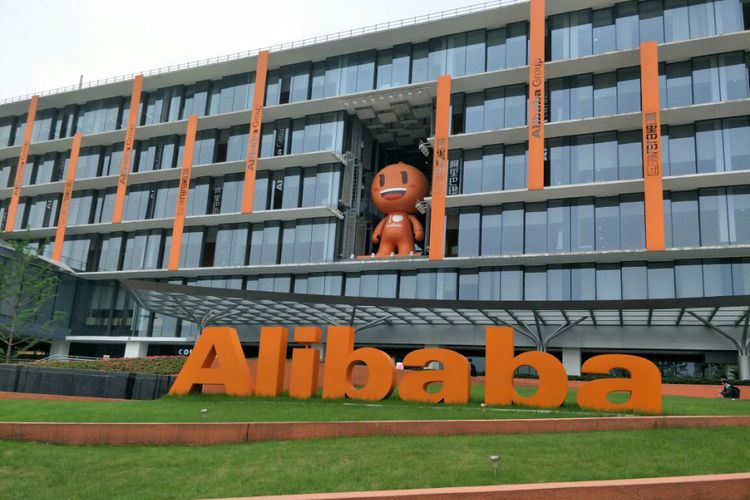
    China’s Alibaba Group Holding Ltd beat estimates for third-quarter revenue on a pandemic-driven jump in e-commerce, but its shares dropped amid regulatory heat for founder Jack Ma’s business empire.

    It also announced a bond sale worth as much as $5 billion through sources have said plans for the fundraising were in the works before the regulatory clampdown.

    Ma’s current woes stem from an Oct. 24 speech in which he blasted China’s regulatory system, leading to the suspension of his Ant Group’s $37 billion IPO just days before the fintech giant’s listing.

    Regulators have since launched an anti-trust probe into the tech sector, while tighter regulations for Ant are also being considered.

    Ma, who has been keeping an uncharacteristically low profile these past three months, was also conspicuously snubbed this week by his omission in a state media list of entrepreneurial leaders.

    Alibaba CEO Daniel Zhang said changing regulations for internet and fintech firms in China presented a near-term challenge.

    “We regard this as important opportunities for re-assessing and improving business practices,” he told an earnings call.

    Alibaba also said it was “unable to complete a fair assessment” of the impact that Ant’s stalled IPO will have on the company. Zhang said, however, that any potential reduction in consumer credit offerings from Ant would not have an impact on Alibaba’s e-commerce business.

    Shares in Alibaba dropped 4% in Hong Kong on Wednesday, having closed down nearly as much on the New York Stock Exchange.

    Alibaba’s total revenue rose 37% to 221.1 billion yuan ($34.2 billion) in the three months ended Dec. 31, above analysts’ estimates of 214.4 billion yuan, according IBES data from Refinitiv.

  • Amazon, Enterprise Singapore to help small businesses venture offshore

    Amazon, Enterprise Singapore to help small businesses venture offshore

    Amazon announced today at the inaugural Amazon Southeast Asia Online Seller Summit 2021 additional resources and support for small and medium-sized businesses (SMBs) in Singapore to start selling online and expand globally through its stores. Amazon announced that it is extending the waiver of professional selling account subscription fees for new and existing sellers, until 30 June 2021. This support builds on Amazon’s current initiatives such as the online seller education series, Seller University, and over 225 free tools and services to help sellers grow their sales in Amazon’s stores in Singapore and worldwide.

    In addition, Amazon is teaming up with Enterprise Singapore (ESG) to help local retailers scale globally. Enterprise Singapore will support these efforts through the Market Readiness Assistance (MRA) scheme. Support will be capped at S$100,000 per new country, includes support for up to 70% of eligible costs for overseas promotion, overseas business development, and overseas country set-up, and gives SMBs the flexibility to expand across new countries at their preferred pace. This is one of several measures that local enterprises can tap on through ESG to grow and diversify their businesses.  More details can be found in ANNEX.

    “We will double-down on efforts to support our local businesses in gaining e-commerce capabilities and maximizing their growth opportunities from the digital economy. To help companies access customers in new countries, ESG has also been working with Amazon to onboard Singapore sellers to Amazon as a channel for international sales, such as in the US, Canada, and India. Support is available for Singapore companies that are looking to expand to these countries,” said Minister for Trade and Industry, Mr Chan Chun Sing.

    “Small businesses are an essential part of Amazon’s DNA. Through the Amazon Southeast Asia Online Seller Summit 2021, we aim to enable more local sellers to reach a global audience through our 20 stores worldwide. Whether they are just getting started or are an experienced seller, Amazon’s comprehensive programs and network will help SMBs overcome operational challenges to maximize growth opportunities globally,” said Henry Low, Country Manager, Amazon Singapore.

    The Southeast Asia Online Seller Summit, being held today and tomorrow, has drawn over 3,000 participants who are interested to understand how they can sell with Amazon, scale their businesses, and seize cross-border opportunities. Guest-of-Honour, Minister for Trade and Industry, Mr Chan Chun Sing, leaders of Amazon Singapore, industry experts, and local business owners selling on Amazon.sg came together on Day 1 to discuss local and regional retail trends and offer insights on how SMBs can ‘Start Local, Go Global’ with Amazon.

    Connecting sellers to exchange best practices.

    As part of the Summit, Amazon hosted a panel of SMB founders to share experiences of growing their business online and their journey with Amazon. Through the support of Amazon’s global network and its logistics and inventory solutions such as Fulfilment by Amazon (FBA), each of them has expanded to serve customers globally – all from the comfort and safety of their homes.

    “When I started Rui Smiths in 2014, selecting Amazon as the e-commerce store for my business was a no brainer. Amazon has been offering an unparalleled service that perfectly fits my needs, since my initial days as a new business owner, allowing me to expand internationally from the get-go. In just 4 years, with Amazon, we had hit S$200,000 in sales and were already selling in the US, UK, and Australia,” said Debbie Cai, founder, Rui Smiths. “I hope the insights and resources shared at the Summit will help many local sellers like myself grow their business not only in Singapore but also beyond shores for customers everywhere.”

    Local resources for sellers in Singapore to unleash and maximize global growth opportunities

    To date, Amazon has provided support to thousands of SMBs keen to sell online with Amazon.sg and its stores globally and continues to help many of them go digital and build thriving businesses. To shine the spotlight on more local retailers, Amazon continues to promote a dedicated “Shop Local” storefront on Amazon.sg, featuring local brands’ founding stories and a plethora of products in categories such as home and home improvement, electronics, kitchen and dining, health and personal care, toys and games, groceries and more.

    Other resources introduced include the Amazon Seller App for local sellers with accounts on Amazon.sg to track sales and manage their business via mobile, the Marketplace Appstore, a one-stop shop to discover third-party applications and services for automating tedious business aspects, and the Seller Forum, a resource for first-hand advice from fellow business owners on selling with Amazon. Sellers can also join the Sell on Amazon Singapore Facebook page to connect with the community of sellers on Amazon.sg.

    These initiatives are furthered by Amazon.sg’s ongoing collaboration with Infocomm Media Development Authority (IMDA) for the Digital Resilience Bonus, offering eligible SMBs a bonus of up to S$2,500 for selling on e-commerce channels like Amazon. The bonus is available to eligible local retailers until 30 June 2021.

  • E-commerce market grows in Vietnam

    E-commerce market grows in Vietnam

    Vietnam’s e-commerce market expanded by 18 percent last year to $11.8 billion, the only country in Southeast Asia to record double-digit growth amid the Covid-19 pandemic.

    Besides, payment services were strengthened and the largest companies in the manufacturing sector incorporated e-commerce into their long-term strategies, according to a recent report by the Vietnam e-Commerce and Digital Economy Agency.

    The country’s Online Friday e-commerce event in early December last year saw the number of transactions rise by 267 percent from the previous year to 3.7 million, it said.

    However, though the number of transactions rose last year, revenues fell because most Covid-19 related items were of low value and people’s incomes were hit, it said.

    A report last month by market research company GlobalData’s E-Commerce Analytics said Vietnam’s e-commerce is set to see compounded annual growth of 18.8 percent between 2020 and 2024 to reach $26.1 billion.

  • Amazon tries to block Future’s retail asset sale, seeks CEO’s detention-filing

    Amazon tries to block Future’s retail asset sale, seeks CEO’s detention-filing

    Amazon.com Inc has requested an Indian court to block partner Future Group’s $3.4 billion deal to sell its retail assets and called for the Indian group’s CEO to be detained, a court filing seen by Reuters showed.

    In the U.S. giant’s latest effort to derail Future’s asset sale to Reliance Industries, it asked the High Court in New Delhi to enforce the decision of a Singapore arbitrator, which Amazon and Future had agreed to use in case of disputes, the filing showed.

    In October, the arbitrator issued an interim order saying Future’s deal with Reliance should be put on hold.

    Future has “deliberately” disobeyed the arbitrator’s order without challenging it, Amazon argued in its court filing, which is likely to be heard by the court in New Delhi later this week.

    Any violation of the arbitrator order invites the “same consequences” as a violation of an Indian court order would, Amazon argued, urging the court to also detain Future Group CEO Kishore Biyani, and some other respondents in the case, in a civil prison.

    Future, in a statement to India’s BSE and NSE stock exchanges, said it had been informed by Amazon lawyers about the court filing, and that it would defend the case.

    Future and a spokesman for Biyani, as well as Reliance, did not respond to Reuters’ requests for comment. Amazon declined to comment.

    Amazon has also asked the court to attach assets of Biyani to the case so they can’t be disposed of. Biyani is often dubbed India’s retail king for transforming the country’s retailing in recent decades.

    Amazon argues Future breached some pre-existing clauses by entering into a deal with Reliance, but the Indian group has maintained the arbitrator’s order is not binding and needs to be ratified by an Indian court.

    The U.S. group’s latest court move comes after Indian stock exchanges last week gave the go-ahead to the Future deal, after communicating with India’s markets regulator, the Securities and Exchange Board of India (SEBI).

    The Amazon filing also argued that Future should not rely on any regulatory approval it has received, in light of the arbitrator’s injunction.

    The dispute centers around Future’s decision in August to sell its retail, wholesale, logistics, and some other businesses to Reliance for $3.38 billion, including debt.

    Amazon argues that a 2019 deal it had with a Future unit had clauses saying the Indian group couldn’t sell its retail assets to anyone on a “restricted persons” list including Reliance.

    The outcome of the dispute embroiling Future, Reliance, and Amazon is seen shaping India’s retail landscape, especially in deciding who will occupy the top spot in the grocery market which could be worth around $740 billion a year by 2024, according to a forecast by Forrester Research.

  • E-commerce market grows

    E-commerce market grows

    Vietnam’s e-commerce market expanded by 18 percent last year to $11.8 billion, the only country in Southeast Asia to record double-digit growth amid the Covid-19 pandemic.

    Besides, payment services were strengthened and the largest companies in the manufacturing sector incorporated e-commerce into their long-term strategies, according to a recent report by the Vietnam e-Commerce and Digital Economy Agency.

    The country’s Online Friday e-commerce event in early December last year saw the number of transactions rise by 267 percent from the previous year to 3.7 million, it said.

    However, though the number of transactions rose last year, revenues fell because most Covid-19 related items were of low value and people’s incomes were hit, it said.

    A report last month by market research company GlobalData’s E-Commerce Analytics said Vietnam’s e-commerce is set to see compounded annual growth of 18.8 percent between 2020 and 2024 to reach $26.1 billion.

  • South Korean online platforms face scrutiny over unfair business practices

    South Korean online platforms face scrutiny over unfair business practices

    South Korea has launched an antitrust investigation into Google over its plans to enforce commission fees for in-app purchases made through its mobile application store, a top official said Thursday.

    The U.S. tech giant has come under intense scrutiny from South Korean regulators after it updated its global policy late last month to make all apps on its Play store use its proprietary billing system.

    Under the new policy set to take effect in October next year, Google will take a 30 percent commission on all digital purchases by consumers.

    South Korean app developers have >voiced strong opposition against the move, arguing that it could be in violation of local fair trade and telecommunications laws.

    Joh Sung-wook, chairperson of the Korea Fair Trade Commission (KFTC), told lawmakers during a parliamentary audit that Google’s plan is currently being reviewed.

    “I believe that competition isn’t working properly in this industry,” she said. “In order to restore competition, we are currently investigating for anti-competitive actions.”

    Google holds a tight grip over local app store sales, with a 63.4 percent share of the total last year at 6 trillion won (US$5 billion), according to the Korea Mobile Internet Business Association.

    Han Sang-hyuk, head of the Korea Communications Commission, echoed Joh’s concerns, and called for inter-agency cooperation over the issue.

    “We need to monitor the response from other countries and also create a structure for cooperation between local agencies,” Han told lawmakers in a separate audit.

    The country’s telecommunications regulator is conducting a separate investigation into Google over its in-app payment policy.

    Google has argued that it is committed to an open system by offering other app stores on its Android platform and that it will comply with local laws.

    In response to growing frustration, Google has established a support fund worth $100 million for local app developers and users.

    On Wednesday, ICT Minister Choi Ki-young brushed off the fund, telling lawmakers that it is not enough in the long run.

    Choi said the ICT ministry will wrap up its review of fees imposed by online platform operators, primarily directed at Google, by the end of this month.

    Amid growing scrutiny over Google’s app store fees, local rival One Store, under the country’s top mobile carrier SK Telecom Co., said it would exempt in-app payment fees by 50 percent for app developers with monthly transactions of less than 5 million won until the end of next year.

    One Store already undercuts Google’s Play store, taking up to 20 percent in commission for in-app purchases.