
Tag: ecommerce

  • Amazon doubles Quarterly Profit

    Amazon doubles Quarterly Profit

    Global online marketplace Amazon has grown its net income 118 per cent during the first quarter of 2019, from US$1.6 billion to US$3.56 billion ($2.28 billion to $5.07 billion).

    The three months to March 31 2019 also delivered operating income of US$4.4 billion ($6.27 billion), compared to US$1.9 billion ($2.7 billion) the year prior. These increases come off the back of a 17 per cent growth in sales to US$59.7 billion ($85.09 billion).

    However, while the company grew its North American operating income over the period to US$2.28 billion ($3.25 billion), its international performance led to a US$90 million loss ($128.2 million) – though this can be positively compared to the same period last year, during which Amazon’s international business lost US$622 million ($886.5 million).

    Research firm eMarketer estimates that Amazon holds almost half of the US e-commerce market, which is set to grow 20 per cent to US$282.5 billion ($402.6 billion).

    EMarketer principal analyst Andrew Lipsman said the quarter was fuelled by the strength of Amazon’s cloud and advertising business, which continues to inflate the company’s margins.

    “While AWS’s momentum continues unabated and is clearly the bigger driver of this profit story at the moment, the advertising flywheel now appears to be in full effect for Amazon and will only be a bigger part of the growth story over the near term,” Lipsman said.

    Amazon’s AWS segment saw net sales grow 40 per cent year-on-year, from $5.4 billion to almost US$7.7 billion ($7.7 billion to $10.97 billion), contributing US$2.2 billion ($3.14 billion) in income to the business’ quarterly results.

    Looking ahead, Amazon notes it expects second quarter sales to land between US$59.5 and US$63.5 billion ($84.8 and $90.5 billion) – an annual growth of between 13 and 20 per cent.

    The business is leaving room for its operating income to decline over the period, however, expecting between US$2.6 and US$3.6 billion ($3.7 and $5.1 billion) – compared to the US$3 billion ($4.28 billion) earned in the second quarter of 2018.

  • Forever 21 China Closes Down Online Stores

    Forever 21 China Closes Down Online Stores

    Fashion retailer Forever 21 will close its Chinese e-commerce website amist indications of possible physical store closures to come.

    While an April 25 notice on the brand’s home page confirms the e-commerce shutdown, the retailer has declined to issue any official comments, despite the confirmed shuttering of one physical outlet and major discount sales reportedly underway in other stores. It has been operating in the territory since 2011.

    Tmall and JD have released statements indicating that the fashion retailer will cease trading on their platforms from today onward.

    The brand’s last remaining store in Taiwan closed last month, while stores in other markets have reportedly been closing down as well, including France. Forever 21’s multi-storey flagship in Hong Kong closed in 2016, with the space being taken over by Victoria’s Secret. It opened a smaller store on Mong Kok in its place.

    A report in Retail Dive suggested that the possible withdrawal accords with a slowing retail environment within China for international goods, pointing to the withdrawal of Amazon from the territory after investing in the market for 15 years.

    “Overall this is a big and tough market to compete for non-Chinese brands, given strong domestic competition and unique consumer demands,” said China practice lead at global public policy consultancy Access Partnership Xiaomeng Lu. “Domestic e-commerce giants such as Alibaba, JD.com, and Pinduoduo compete fiercely against each other as well as edge out smaller brands.

    “Chinese customers are used to shopping on apps, expect low-cost same-day shipping, and tend to have little brand loyalty.”

    The report also quotes Euromonitor International analyst Arianna Zhai as commenting “Alibaba and JD alone have taken about 70 per cent market share. The strong presence and different strategic positions of both e-commerce retailers leave limited room for others.”

    “The reasons for the shutdown of operations are unclear, but it is likely that Forever 21 has struggled to cut through in what is an increasingly competitive market,” said GlobalData Retail MD Neil Saunders. “Although the Chinese retail market is still growing strongly and offers enormous potential, the proliferation of Western and indigenous brands means it can be hard to stand out from the crowd. There are also concerns that activity is slowing down, although growth remains well above that available in Western markets.”

  • eBay and Singapore Institute of Retail Studies come together to deliver eCommerce training

    eBay and Singapore Institute of Retail Studies come together to deliver eCommerce training

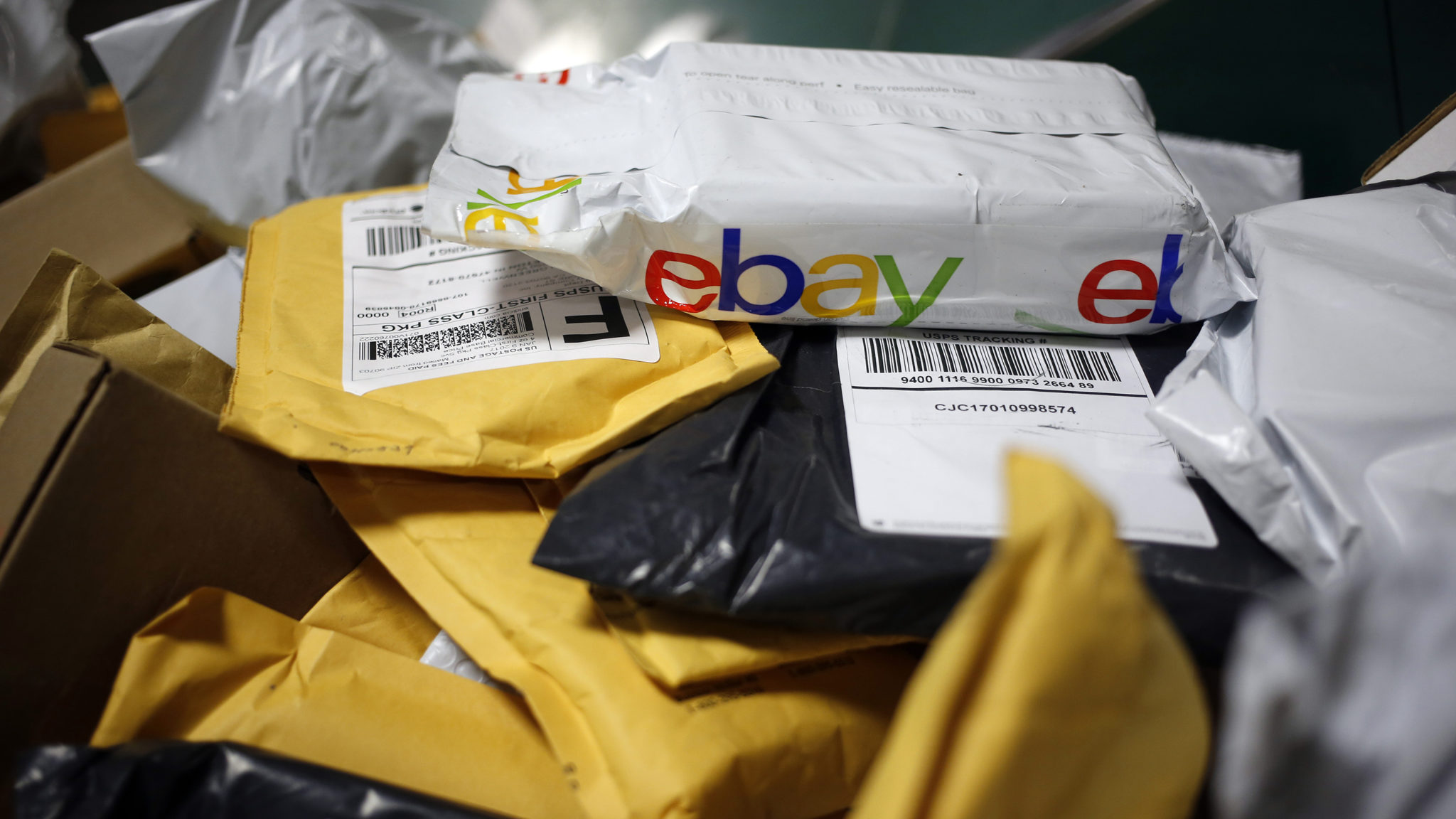
    eBay and the Singapore Institute of Retail Studies (SIRS) joined forces to deliver training to small businesses and entrepreneurs seeking new and global sales channels in the fast-growing eCommerce sector. Titled “Let’s eBay with SIRS”, the full-day workshop was held at the Lifelong Learning Institute, one of two Continuing Education and Training (CET) campuses by SkillsFuture Singapore. To offer SMEs in Singapore a holistic support system to grow their businesses globally and sustainably, eBay and SIRS signed a memorandum of understanding (MOU) focused on Global e-Commerce Onboarding & Education Programs.

    Singapore’s eCommerce market is expected to grow by 48% to S$10.04 billion by 2022, and a rising number of entrepreneurial Singaporeans are capitalising on the opportunity to sell their products directly to customers all around the world on eBay.

    According to eBay Head of Southeast Asia Seller Growth Wong Mei Inn, “Singapore’s cross border trade (CBT) exports continue to grow and there is huge opportunity for more small businesses to join the ranks of eBay sellers. By listing their products on eBay’s global marketplace, Singaporean businesses can reach 180 million active buyers all around the world.”

    “Let’s eBay with SIRS was designed for the small business and entrepreneur who has little or no ecommerce experience but wants to learn directly from the source,” said Wong.

    “eBay has thousands of sellers here in Singapore and over 80% of them sell to customers overseas. eBay’s focus in Singapore this year is to enable even more SMEs to sell worldwide”, said Jenny Hui, General Manager, Cross Border Trade, eBay Hong Kong, Taiwan and Southeast Asia.

    “eCommerce has been recognised as one of the key growth opportunities under the 2020 vision of the Retail Industry Transformation Map launched by SPRING Singapore (now Enterprise Singapore),” said Nanyang Polytechnic’s Singapore Institute of Retail Studies Director Megan Ong. “By partnering eBay, we will be able to encourage retailers in Singapore to adopt eCommerce and omni-channel strategies to succeed in today’s digital context.”

    Small medium enterprises (SMEs) contribute to 72% of Singapore’s employment, and in 2018, added a nominal value of S$213.6 billion, or 48% to the economy. The government has acknowledged the importance of SMEs plugging into the digital economy as it would make a noticeable impact on Singapore’s economic growth.

    During the workshop, Let’s eBay with SIRS featured speakers from eBay, SIRS, WorldFirst, Watcheszon International, JTBC Global and DHL Express Singapore. The speakers shared case studies, advice on getting started, and introductions to payments and logistics service providers to help small businesses begin their global ecommerce journey.

    Following the workshop, eBay has launched the “eBay Onboarding Program”, a series of courses with SIRS to further enable SMEs to optimise cross-border selling and manage operations. Each course will be charged at $160, and subsidies range from 70-95%. For more information on the courses and available subsidies, visit https://www.sirsdigitalcommerce.com/ebay.html or email SIRS at [email protected]

  • Alibaba Celebrates its 15th Ali Day

    Alibaba Celebrates its 15th Ali Day

    Alibaba employees across the world joined together to celebrate Ali Day, an annual event honoring the tenacity and fighting spirit of their colleagues and their families during the Severe Acute Respiratory Syndrome crisis in China 16 years ago.
    During the height of the outbreak in May 2003 in China, one employee was thought to have contracted the deadly virus. The entire staff was ordered to self-quarantine at home. But instead of putting the business on hold, everyone, including family members, pulled together to keep the operation afloat.
    Such determination and dedication prompted Alibaba Group founder Jack Ma in 2005 to declare May 10 as “Ali Day.” More than just a day of merriment, Ali Day is about paying tribute to employees and their family members, whom Ma often calls the company’s “biggest pillar.” It also underscores Alibaba’s values, placing “customers first, employees second and shareholders third.”
    This year, offices across all time zones held their own celebrations. Our main Xixi Campus in Hangzhou was transformed into a giant carnival, with musical and dance performances by employees throughout the day. There was a playground for children, arts-and-crafts corners and magic shows.
    The highlight of each Ali Day is the “wedding,” or a celebration of Alibaba couples who married over the previous year. This year was no exception, with 102 pairs of newlyweds, dressed in crimson traditional Chinese attire, receiving sage advice from Ma, himself, who presided over the ceremony. The number 102 symbolizes the minimum number of years Ma has said he wants Alibaba to last, spanning three centuries.
    On Ali Day, executives personally extend their gratitude to family members of Alibaba employees. This year, Alibaba Group Vice Chairman Joe Tsai invited the entire New York staff and guests to a New York Liberty WNBA basketball game. In Hangzhou, Alibaba CEO Daniel Zhang and Chief People Officer Judy Tong answered questions from employees’ family members.
  • South Korean E-Commerce Under Pressure

    South Korean E-Commerce Under Pressure

    Mounting losses in the South Korean e-commerce industry are calling local business models into question. Competitive pricing and fast delivery capacities have made the industry an ascendant phenomenon in the territory, with the purchase of a whole spectrum of consumables now possible via mobile phone. The industry hit a record high of KRW111.8 trillion (US$98.4 billion) in transactions last year, putting the economy among the top five e-commerce markets worldwide.

    But gigantic operational losses have emerged out of stiff competition on price and logistics set-up costs. Korea’s top e-commerce firm Coupang shattered its own records with KRW4.42 trillion ($3.8 billion) in sales last year, but made a staggering KRW1.1 trillion ($950 million) operational loss.

    While Coupang’s deficits have been widening for nine years, CEO Kim Beom-seok stubbornly insists the losses are planned and says investment will continue.

    “We have pushed for massive investment to impress our customers,” said Kim, “and will continue to aggressively invest in technology and infrastructure.”

    The firm has single-handedly changed the outlook for South Korean retail and put brick-and-mortar operators on red alert – but has yet to prove profitable.

    Rival operator Tmon faces a similar issue, with its KRW492 billion ($425 million) sales last year sad-tromboned by KRW125.5 billion (108.4 million) in operating losses that have been accumulating since the year 2000, now standing at KRW770 billion (665.5 million) in total. The firm’s latest nose dive was attributed to “investment in core technologies”.

    “Customers frequently visited our app on expectations for new products and promotions changing every hour, which raised their royalty and created a virtuous cycle,” said Tmon CEO Lee Jae-hu. “We will continue efforts to strengthen the market position and seek ways to improve profitability this year.”

  • Ebay Buying in India’s Paytm Mall

    Ebay Buying in India’s Paytm Mall

    International e-commerce platform Ebay is preparing to head a US$160–170 million investment in e-tailer Paytm Mall.

    In a report last Monday, the move was interpreted as a grab at O2O commerce and payments opportunities in India. It will be the third major e-commerce investment in the territory for the firm following its minors stakes in Flipkart and Snapdeal.

    Paytm Mall raised about US$215 million from Japan’s SoftBank and existing investor Alibaba mid last year, at a valuation of $1.6–2 billion. It has raised roughly $645 million in funding to date.

    The firm has a minority segment of the Indian market, which is largely dominated by its two biggest competitors Amazon and Flipkart.

  • JD takes major stake in Five Star Appliances

    JD takes major stake in Five Star Appliances

    Chinese online retailer JD is to buy nearly half the shares in electrical goods retailer Jiangsu Five Star Appliance, for US$189 million. Jiayuan Chuangsheng currently holds 93 per cent of the Five Star business and after divesting a 46 per cent stake to JD will remain its largest shareholder with 47 per cent.

    Analysts say the investment will allow JD to boost its online profile and provide consumers with a network of about 300 Five Star Appliance storefronts, in much the same way as archrival Alibaba is building physical retail networks in Mainland China, blurring the boundaries between online and offline retailing.

    With stores primarily located in central and southern China, Five Star Appliances has annual sales of about US$2.7 billion.

    Last year, JD accounted for nearly 40 per cent of China’s home appliance sales, making it the largest retail in the space. Partnering with a brick-and-mortar retail network is likely to boost sales for both parties and protect JD from fast-growing Suniung.com which now accounts for 30 per cent of the market. Tmall is also building a share of the appliance sector, its sales now nudging 25 per cent.

  • Amazon to close China mainland store

    Amazon to close China mainland store

    Amazon China is about to stop selling local goods to local shoppers. According to multiple financial-news services, the global e-commerce giant is about to announce the closure of its dedicated Mainland China store, however Chinese consumers will still be able to order goods from Amazon’s global store.

    The dedicated Amazon China platform will close in July, meaning shoppers will no longer be able to buy goods listed by third-party local suppliers.

    According to “people familiar with the matter” quoted by Bloomberg, exiting the intensively competitive Mainland China market will allow Amazon to shift its focus to more lucrative businesses selling imported goods to Chinese and developing its successful cloud services operation.

    The withdrawal comes 15 years after Amazon entered China, purchasing local online store Joyo.com for US$75 million. Seven years later it rebranded the site under its own banner.

    The company estimates it will take about three months to close down its mainland fulfilment centres and delist local vendors as appropriate.

    With Alibaba and rival JD accounting for a combined 82 per cent of the Mainland China online market, there was little room for Amazon to eke out a commercially viable market share within a reasonable time frame.

    Michael Pachter, an analyst at Wedbush Securities, said Amazon was pulling out of the Chinese domestic market, “because it’s not profitable and not growing”.

    “The domestic Chinese online retailers just have huge advantages that Amazon can’t compete with.”

    Amazon has yet to officially confirm the China plan.

  • Walmart launched subscription service With Kidbox

    Walmart launched subscription service With Kidbox

    International retailer Walmart and Kidbox, the curated childrenswear subscription service, are teaming up to offer Walmart.com customers an exclusive, curated stylebox for kids.

    The service features an option to receive a seasonal selection, without a styling fee.

    The new stylebox will offer Walmart.com customers personalised styles selected from more than 120 premium kids’ brands. The stylebox will include four to five fashion items for US$48 – about 50 per cent off the suggested retail price for the group of bundled items.

    Clothing will include items from premium brands including BCBG, Butter Super Soft, C&C California and Puma.
    Walmart customers can order a stylebox by visiting the store’s website and completing a short style quiz for their child. Kidbox stylists use the quiz to tailor each box based on the child’s style preferences, the season and where the child lives.
    “We are thrilled to partner with Kidbox to introduce our first kids’ subscription apparel service offering premium fashion brands at a substantial savings,” said Walmart US e-commerce head of fashion Denise Incandela.

    “Over the last year, we have significantly expanded our portfolio of kids’ fashion brands as part of our broader effort to establish Walmart.com as a destination for fashion. Our partnership with Kidbox enables us to round out our offering with additional national and premium kids’ brands.”

    The Walmart and Kidbox collaboration has a charitable aspect as well. For every stylebox purchased on Walmart.com, Kidbox will clothe a child in need through its partnership with Delivering Good.

    “Walmart has done a lot over the past year to establish itself as a go-to retailer for all things fashion, and we’re honored to partner with the retailer to expand its kids’ assortment online, while also saving parents time and offering them the value and convenience of a stylebox,” said Kidbox CEO Miki Berardelli. “At Kidbox, we pride ourselves on understanding kids’ fashion preferences while also creating moments for them to learn about the importance of giving back.”

    Walmart.com has an expanding kids’ fashion assortment, which features more than 100 new brands that have been added over the last year, including Betsey Johnson, Kapital K, Levi’s, Limited Too and The Children’s Place. The retailer has also launched new shopping destinations for dance essentials and gymnastics, and licensed children’s clothing, making it easier for customers to shop for fashion featuring top movie, TV and gaming characters.

  • Jack Ma calls 12-hour work days a “blessing”

    Jack Ma calls 12-hour work days a “blessing”

    In the middle of stress awareness month, Alibaba founder Jack Ma has told his company’s workers they should be working a “996” work schedule – that is from 9am to 9pm, six days a week.

    According to a speech made this week by Ma, working 12 hours a day for Alibaba was a “blessing” to staff, and necessary for the business to achieve success.

    Ma’s comments caused a stir in China, where a conversation about work-life balance has spring-boarded off of a slowing tech industry.

    “With the pressure of economic downturn, many enterprises are facing challenges to survive… but the way to relieve anxiety is not to let employees work overtime as much as possible,” an editorial wrote.

    Ma later backtracked on his comments, calling such a work regime inhumane, unhealthy and unsustainable.

    The comments come as LinkedIn revealed work-life balance is the top cause of stress at work for Australians, with 72 per cent of survey respondents struggling to keep a balance between the two.

    The report also found that executive-level professionals are the most stressed, more so than middle management and individual contributors.

    In terms of age demographic, Generation X is the most stressed generation with over half (54 per cent) claiming to struggle with confidence in the future of their work.

  • A Short Review Guide On Jared Goetz Shopify Ecom Hacks Academy 

    A Short Review Guide On Jared Goetz Shopify Ecom Hacks Academy 

    eCom Hacks Academy is an in-depth course for building your online business in Shopify. CNBC and Entrepreneur, Inc. featured its founder, Jared Goetz, in 2017 as he was able to earn 2 million USD in 60 days from his store. A lot of people are enticed by how Jared worked for only 30 minutes a day, which is included in the eCom Hacks Academy training. If it sounds too good to be true, check out this Jared Goetz review for a rundown of what you can learn in the eCom Hacks Academy.

    If you’re considering to avail of the training included in eCom Hacks Academy, take note that the price is 1,999 USD. Before enrolling, it’s best to know what to expect, which are the following:

    1. Training Course

    Jared teaches what he called dropsurfing, which is different from the more commonly known dropshipping. Here are some differences between the two:

    • Accordingly, dropsurfing only sells viral products while dropshipping sells what seems like a profitable product of your own choice.
    • With dropsurfing, you can travel the world without worrying for your inventory, unlike in dropshipping where you need to buy products in bulk, which could pile up in your garage.
    • Dropsurfing uses Shopify as its store while dropshipping uses both Shopify or Amazon. However, the difference is controlling traffic sources for dropsurfing, and it only hopes to make a sale on Amazon.
    • The profit dropsurfing promises for using Shopify ranges from 30-40%, which is higher from dropshipping earnings that range from only 5-10%.

    The dropsurfing concept is what Jared offers through his course: a dream business where you can work at home and travel any time. In the course, he shows you how it’s done from his own formula, which consist of the following:

    • Structure of the store
    • Techniques to convert leads
    • Effective ways to find products
    • Partnering with suppliers
    • Ads creation and scaling
    • Customer service

    Moreover, the content of the course that incorporates videos are as follows:

    • Module 1 – Overview of the structure, which has ten lessons, such as how to register with Shopify’s free 21-day trial, creating a store, establishing your domain name, phone setup, your store’s mode of payment, and basic search engine optimization (SEO) meta descriptions. Although helpful, almost all of these are available online.
    • Module 2 – Talks about setting up your store, which comes in 16 lessons. It focuses on conversion rate methods, email setup, and maximizing sales through upsells and free shipping.
    • Module 3 – Includes four lessons focusing on the products, from finding products and suppliers, to the fulfillment of orders through Oberlo.
    • Module 4 – Has 16 lessons that discuss strategies to keep your store running. Marketing campaigns such as Facebook Ads and using it like a pro, testing methods, and your budget are included in this module.
    • Module 5 – A bonus lesson that talks about conversion hacks, customer services, customer audience, and templates for abandoned cart email, which are in PDF form.
    1. Pros

    The best part of the eCom Hacks Academy is that it is legitimate, unlike many online training courses being offered on the internet these days.

    Moreover, the following are pros that make the eCom Hacks Academy beneficial:

    • Proven Method – Since the structure and formula are personally tested by its founder, eCom Hacks Academy’s strategies can give you financial freedom, similar to what happened to Jared.
    • Suitable for Beginners – Since lessons are understandable, a zero-knowledge Shopify wannabe can learn a lot from the training.
    • Teaches, Not Feeds – Unlike other courses that offer a website they’re affiliated to, Jared’s academy only guides you on how to create and operate your own site. You may even learn how to increase your sales through a new website, akin to what happened to Walmart.
    1. Drawbacks

    The training program may teach you a lot, but like any other program, there are also drawbacks to the eCom Hacks Academy. Here are some of them:

    • Expensive – A lot of online training courses come way cheaper than what Jared offers, and with the content of the program, it has a high price.
    • Not suitable for Shopify experts – Because the content is not new for existing Shopify users, the structure may only be beneficial for beginners. When it comes to setting up an account and website, which existing users may already know, it may not be worth the price for them.
    • Unrealistic Expected Sales – A promise of 5 million USD as your income may be too much. Moreover, the highlight that attracts people, which is working for four hours each week while earning 5 million USD, is a high expectation. Especially if you’re a beginner, this may not be reachable.

    Conclusion

    This review guide may help you balance your expectations regarding the eCom Hacks Academy training program. What is guaranteed is the legitimacy of Jared’s academy, but his claims may not be realistic, as his working style may not be applicable when starting up. Reaching a large amount of income may mean working hard and working smart, but it may take some time for most people. Nevertheless, feel free to try out the training program if you think this will suit and benefit you.


  • Tmall Reinforces Go-to Platform Status for Product Debuts

    Tmall Reinforces Go-to Platform Status for Product Debuts

    Alibaba Group’s Tmall today announced it will launch a dedicated gateway for customers to discover new products through the Taobao mobile app, looking to cement its position as the “go-to” platform for such launches.

    From Wednesday, customers clicking on the “Tmall” icon in their Taobao app will be directed to the “Tmall New Products” channel, which includes a full array of new features, such as Tmall’s “Most Sought-after New Items,” “The Next New Things,” “Limited Editions” and “New Flagships.” Working with brands and key opinion leaders, the channel will provide customers with in-depth information and recommendations on new products.

    Tmall has long been an effective platform for showcasing new products, a one-stop shop for consumers to find the hottest new items online, and a creative, experiential channel to interact with and learn more about new products.

    The new channel for product launches is powered by Tmall’s already impressive suite of marketing tools, such as “Hey Box” and the Tmall Innovation Center (TMIC). In the past year, 82% of new products tailored by TMIC became a top-three “hot” item in its category within 30 days of launch. TMIC has also reduced the product development cycle by half, to an average of nine months.

  • Online sales not sufficient to save Oxfam

    Online sales not sufficient to save Oxfam

    Oxfam Australia will start the process of shutting down its retail, wholesale and e-commerce operations in June due to commercial pressures and the difficult retail environment in Australia.

    The decision affects nearly 100 staff, made up of approximately 40 permanent and 60 casual positions.

    “We know this will be very difficult news for our staff and volunteers – and our customers,” Tony McKimmie, Oxfam Australia chief operating officer, said in a statement.

    “We sincerely thank them all for their dedication and significant contribution to our core mission of tackling poverty.”

    The closure will see eight physical stores around Australia shuttered, as well as Oxfam’s online store and wholesale division, which supplies coffee, tea and chocolate products to supermarkets.

    “The business shifted last year to placing a stronger emphasis on its online trading business and reduced emphasis on its shops, with an assessment of each store’s financial viability as shop leases became due for renewal,” McKimmie explained.

    “This resulted in the closure of five stores, howeverdeclining revenue and profitability – including flat online sales growth – meant the financially responsible decision was to close all of Oxfam Australia Trading oper ations.”

    Goods sold through these stores are sourced from a global community of ethical artisans and farmers, which helps “communities to learn and living and lift themselves out of poverty”.

    “Oxfam Australia will continue its work empowering communities to tackle poverty through long-term development programs, emergency response and advocacy,” McKimmie said.

  • Mountain Designs relaunches witch New E-commerce Platform

    Mountain Designs relaunches witch New E-commerce Platform

    Australian adventure brand Mountain Designs has officially relaunched, with a new e-commerce website sporting the brand’s full range.

    Spotlight Group chief executive of leisure brands Chris Lude said the business was committed to maintaining its 45 year heritage.

    “We are dedicated to ensuring the iconic Mountain Designs brand remains Australian owned, operated and designed,” Lude said.

    The relaunched brand also offers a renewed range, with the business having redeveloped 14 of its best sellers, as well as newly designed apparel and gear.

    “Adventure is in the Mountain Designs DNA, and the new range will continue to provide quality, technical, multi-functional gear that people know and love,” Lude said.

    Acquired in early 2018 by Spotlight Retail Group for an undisclosed sum, Mountain Designs confirmed it would offer a selection of goods, including thermals, apparel and equipment, within the Spotlight-owned Anaconda chain.

    Prior to being acquired by Spotlight Retail Group, Mountain Designs had been shuttering its bricks-and-mortar locations to focus on a purely online model to create a more sustainable platform for the business moving forward.

    During this period, the brand’s website was also closed to facilitate this shift, remaining offline until earlier this week.

    Spotlight Retail Group has recently indicated a larger push into the New Zealand market amid a larger revamp of its brands, with craft retail chain Spotlight to open a Christchurch flagship later in the year.

    It remains to be seen if this initiative extends to Anaconda or Mountain Designs – both of which operate solely in Australia.

  • Walmart Hires robots to handle cleaning and unboxing

    Walmart Hires robots to handle cleaning and unboxing

    US retailer Walmart is adding thousands of robots to its stores to handle cleaning tasks, allowing workers more time to help customers.

    Walmart said by February 2019, it will have introduced the 920-pound autonomous floor scrubbers at 1,860 of its 4,700 US stores.

    The robots will clean the floors and unload boxes in its stockrooms. The “smart assistants” can scan shelf inventory at 350 stores and bots will be placed at 1,700 stores to automatically scan boxes as delivery trucks drop them off and they are sorted onto conveyor belts.

    “The overall trend we’re seeing is that automating certain tasks gives associates more time to do work they find fulfilling and to interact with our customers,” CEO Doug McMillon told of the new technology last year.

    Walmart is hoping that the bot army will increase sales and in-store efficiency. The retailer said it’s quite difficult to find workers to work overnight to receive the supplies from trucks.

    “We’re seeing increases in sales and reductions in turnover in what had been a very difficult job to fill,” CEO McMillon told.

    Walmart goes high tech

    Last year Walmart invested over US$2 billion to remodel stores around the country and improve online shopping services for its new in-store pickup feature. Walmart said on Tuesday that it would bring 16-foot-tall automated vending machines to 900 new stores this year to quickly fetch customers’ online orders.

    “There is a labor shortage in retail. It will not be easy for Walmart to add labor to perform these functions. So a high level of automation is required,” said Kirthi Kalyanam, director of the Retail Management Institute at Santa Clara University told.

    Earlier this month the retailer announced a partnership with Google on the new Walmart Voice Order which allows shoppers to order groceries through Google Assistant.