Tag: ecommerce

  • Uniqlo shoppers Details Leaked Online

    Uniqlo shoppers Details Leaked Online

    Uniqlo parent Fast Retailing announced hackers may have gained access to personal information of 461,091 accounts registered on the company’s Japanese shopping websites.

    The retailer said in a statement Monday the hackers may have accessed customers’ personal information, purchase history and partial credit card numbers of some of the users of its Uniqlo Japan and GU Japan online stores from April 23 to May 10 by means of list type account hacking.

    List type account hacking is when user IDs and passwords are potentially leaked from other services or sites.

    The company said it is still investigating the breach and added the number of incidents and circumstances may change during the course of the investigation.

    In the meantime, the Japanese retailer advised its online store’s customers, the number of which the company has not disclosed, to use unique passwords and to avoid using passwords used from other websites to lower the chances of hackers accessing their accounts.

    “Fast Retailing sincerely apologizes for the trouble and concern this has caused to its customers and all others involved,” the company said.

    “Going forward, the company will further strengthen its security measures and take steps to ensure safety, in order to prevent similar incidents in the future.”

    The retailer said information that was potentially accessed includes:

    • Customer name (last name and first name)
    • The customer address (postal code, address, and apartment number)
    • Customer phone number, mobile phone number, email address, gender, date of birth, purchase history, and clothing measurements
    • Receiver name (last name and first name), address, and phone number
    • Customer partial credit card information (cardholder name, expiration date, and a portion of credit card number). The credit card numbers potentially accessed are hidden, other than the first four and last four digits. In addition, the CVV number (credit card security code) is not displayed or stored.

    In its announcement, Fast Retailing said it has identified the origin of the communication from which the unauthorized logins were attempted and has blocked access. The company added it is strengthening monitoring of other access points.

    The Japanese retailer said it has already disabled the passwords for the 461,091 user IDs that were compromised and is sending individual e-mails to each person affected, requesting that they reset their password.

    Fast Retailing has also filed a report of damages regarding the unauthorized logins with the Tokyo Metropolitan Police.

    Online sales made up 9.9 percent of Uniqlo sales in Japan and 20 percent in China in the company’s first-half report. The company said overall online sales rose 30.3 percent in that report.

  • AllGoods marketplace reaches 1 million listings

    AllGoods marketplace reaches 1 million listings

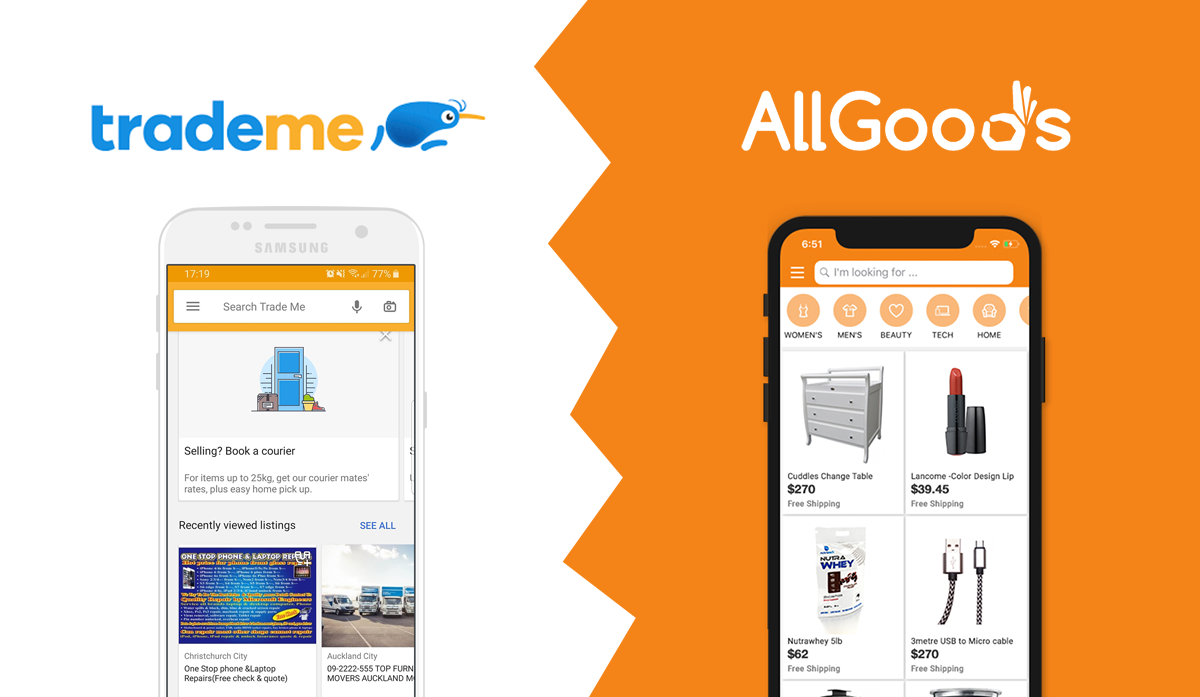
    AllGoods, a free marketplace for Kiwi buyers and sellers, has announced it has reached its one-millionth listing, 12 months after launching.

    The TradeMe competitor said it has maintained steady growth over the past few months. Its app has also become the top New Zealand shopping app since it was released late last year, it said.

    “We’ve worked extremely hard over the past year to get where we are today,” said Levi Fawcett, AllGoods CEO. “We’ve talked with thousands of our users to make sure the platform provides a truly amazing buying and selling experience. Plus, it’s free.”

    The Christchurch-based startup said it already supports over 700 New Zealand businesses who sell through the online website and app. The company said it is their vision to use e-commerce as a sustainable means to support local businesses and give back to the community.

    “We’re offering a fresh spin on the classic online marketplace and while we have only just begun this journey, we look forward to the years to come,” Fawcett said.

    With Trade Me’s recent sale to British equity firm Apax Partners, AllGoods is now considered the largest Kiwi-owned marketplace in New Zealand.

    In October last year, AllGoods launched a new app for iOS and Android mobile devices.

    Features of the new app include easy listings and browsing, allowing users to post items in less than 30 seconds, and a built-in chat tab to get faster answers to questions on the site.

    “The team has tried to keep the platform as easy to use as possible, for both the everyday Kiwi and the average New Zealand business,” Fawcett said. “I think this has been fundamental to our success.”

  • Two million Shoppers to receive first eBay catalogue

    Two million Shoppers to receive first eBay catalogue

    EBay Australia is mailing its first-ever printed catalog to two million Australian households on Tuesday to remind customers that 90 percent of the products on its platform is brand new.

    The 16-page catalog contains over 100 items from the 40,000 Australian retailers that sell on the online marketplace, which is by far the most visited e-commerce site in the country.

    It features items from a range of categories, including electronics and technology, men’s and women’s fashion, heating, bedding, kitchen and cleaning, appliances, liquor, glassware, toys and gaming, entertainment, backyard, and garage.

    EBay selected items to reflect the range and value it offers compared to bricks-and-mortar retailers.

    “We partnered with our sellers to get the best deals on a variety of items including brands like Dyson, KitchenAid, and Apple – reflecting the unbeatable range and value on eBay,” Julie Nestor, chief marketing officer at eBay Australia said.

    “The product selection is also seasonal, showcasing our top picks for the winter months,” she said, hinting at the possibility of more seasonal catalogs to come.

    The catalog provides a way for eBay to reach customers offline. It’s another example of the growing trend of pure-play retailers branching out into the physical world, as they come to understand that shoppers don’t stick to a single channel.

    “We’re adopting a similar strategy many traditional bricks-and-mortar retailers have – by having both a physical and online presence,” Nestor said in an email announcing the catalog.

    EBay is also launching a shoppable digital catalog from May 21.

    Nestor declined to say whether the printed catalog is a precursor to other offline initiatives, such as a pop-up or bricks-and-mortar store, in future.

    “As Australia’s number one online shopping destination, eBay is always looking for new ways to engage with buyers and empower its seller community,” she said.

    “Both online and physical channels will continue to be important. “

    The two million households receiving the catalog are located across metro Sydney, Melbourne, Brisbane, and Perth and include existing buyers as well as those who may not have considered eBay before, Nestor said.

  • Boomtime ahead for chatbots in E-commerce

    Boomtime ahead for chatbots in E-commerce

    New data from Juniper Research predicts consumer interaction with chatbots in retail will reach 22 billion by 2023.

    The figure represents a sharp increase over an estimated 2.6 billion interactions this year.

    According to the new research report “AI in Retail: Segment Analysis, Vendor Positioning & Market Forecasts 2019-2023”, chatbots in retail will enable effectively automated customer interactions for both online and offline vendors.

    A crucial enabler of this development will be improvements in NLP (Natural Language Processing), which will dramatically reduce the failure rate of chatbot interactions, by making them more natural and valuable for customers.

    Juniper anticipates that retailers who do not adopt chatbots will face strong challenges from more technologically-adept disruptors, who will use chatbots as an extension to the crucial omnichannel retail experience.

    The research also found that chatbots used for customer service have a strong potential to reduce costs; with deployments realizing annual savings for retailers of US$439 million globally by 2023, up from just $7 million this year.

    These potential savings will act as a key “pull” factor, given the margin pressure that many retailers are presently feeling.

    “By embracing automated customer service with chatbots, retailers can act in a more flexible and efficient way,” explained research author Nick Maynard. “The wider retail market means that chatbots are no longer a luxury, they are essential.”

    Meanwhile, sales resulting from interaction with chatbots in retail will reach $112 billion by 2023, up from $7.3 billion this year; representing an annual growth rate of 98 percent.

    The research found these sales will largely be a result of migration from other channels, rather than a new revenue stream. Accordingly, the research emphasized that while retailers must adopt chatbots for ease of use (and to reduce consumer churn), their return on investment will come from efficiencies, rather than new income.

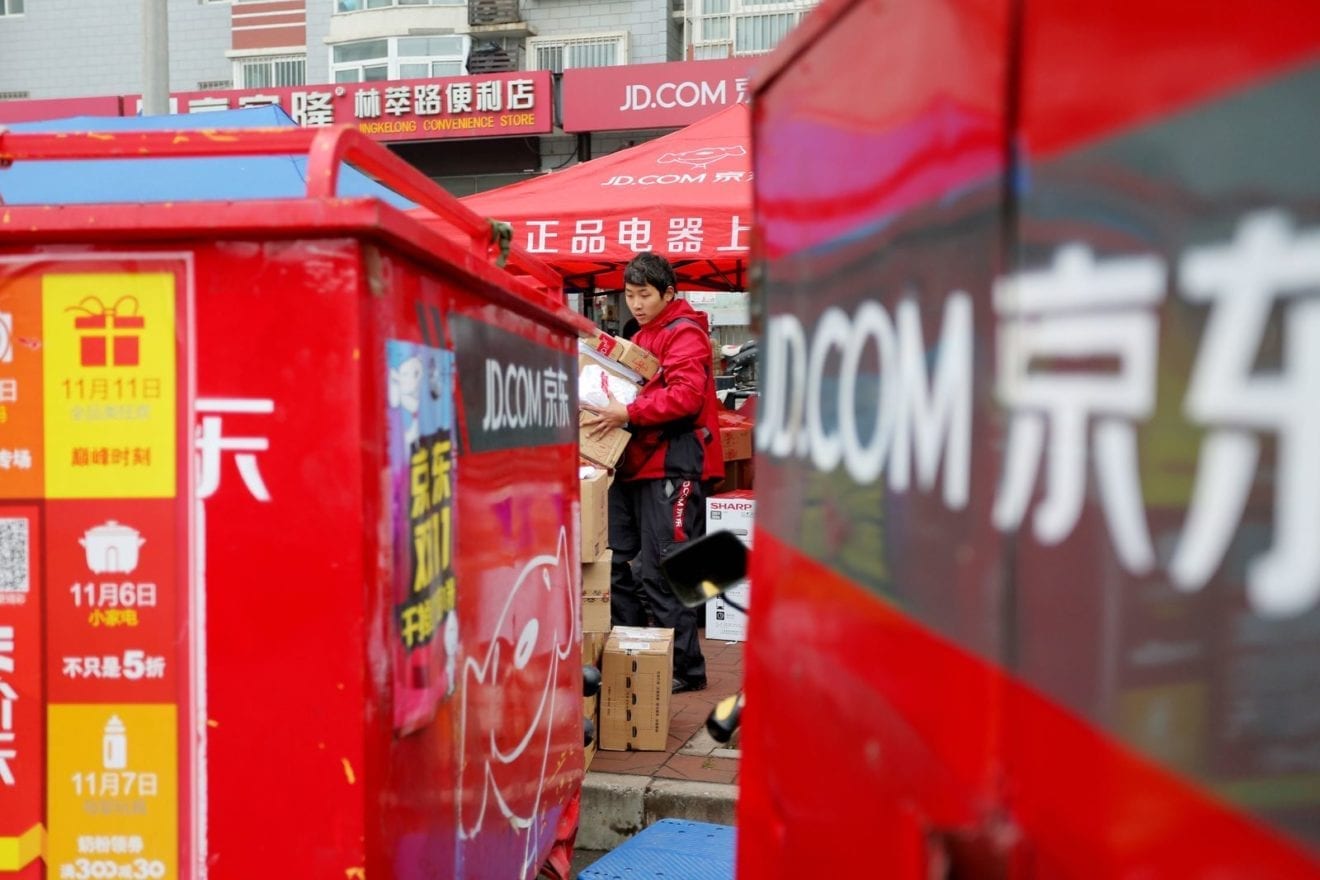
  • JD.com Closes Australian branch Store

    JD.com Closes Australian branch Store

    Chinese online marketplace JD.com has closed its local branch after only 15 months in the market.

    The e-commerce giant launched its Australian office in Melbourne in February 2018, after its competitor Alibaba opened an office in Melbourne in 2017.

    At the time, the opening was seen as a way for JD.com to work more closely with the Australian and New Zealand brands on its platform, and to pitch its business to new brands looking to expand into China.

    A JD.com spokesperson confirmed that the online marketplace is integrating its Australian office into the business in China. The spokesperson said the move didn’t reflect the business’s performance in Australia, nor the region’s importance.

    The retailer’s head of Australian operations Patrick Nestrel is no longer with the business, likely in an effort to ensure management in China is able to fully integrate Australian operations.

    The online retailer is set to report its first-quarter sales results on May 10. It has had a difficult few months recently after founder Richard Liu was arrested in September 2018 in the US for sexual misconduct. He was not charged.

    In April, the Chinese university student who accused Liu of misconduct filed a civil lawsuit against him.

  • Tigerlily launches local e-commerce Platform

    Tigerlily launches local e-commerce Platform

    Resortwear brand Tigerlily is expanding further into New Zealand. It has just unveiled a New Zealand-specific e-commerce site, and will soon open a new store at the upmarket Newmarket precinct, which is currently undergoing redevelopment.

    The Newmarket Tigerlily physical store will feature the brand’s new store design, which came into play around six months ago.

    “Our stores used to be a real habitat, almost like lifestyle stores in that they were created to look like a bazaar – there was lots of furniture and loads of things on the walls,” explained Gareth Connolly, merchandise and supply chain director at Tigerlily.

    “Now we’ve done some decluttering – we wanted the product to be a hero. The Sydney Westfield store is a lot cleaner than what you may have seen before. Now, we embellish stores with just a beautiful living palm tree, instead of a bird cage and map of the world. It’s got a cleaner atmosphere … you’re not distracted by the rug, cushions and maps. It’s just about telling people that this is what we sell – not furniture.”

    Capturing the customer

    Meanwhile, the brand is also working on increasing its omnichannel presence in Australia, with plans to introduce several new services to customers, including click-and-collect, ship-from-store, endless aisles and floor-to-door.

    According to Connelly, floor-to-door is available for customers who enter a Tigerlily shop but find that the item they want is not available in-store in their size. It can be sent to them instead.

    “I don’t think Australians have done click-and-collect that well yet, but that’s the next thing we’re working on. We want to make sure there’s no reason for a customer to not get a product tomorrow,” he said.

    “If there’s not a particular item in our Bondi store for our customer, we’ll get it to her somehow. That’s an expectation created internationally and we’re not that good at it because we’re such a big country. Getting something from Sydney to someone to Perth is hard, but doing floor-to-door or ship-from-store will make things easier for us.”

  • E-commerce to reach tipping point by 2030

    E-commerce to reach tipping point by 2030

    Almost half (49 percent) of Australian businesses expect online operations to reach parity with bricks-and-mortar retail sales by 2030, according to new research by Australia Post. Rebecca Burrows, Australia Post general manager of segment development and marketing, noted that consumer habits have changed significantly over the past few years.

    “People want an in-store experience, but in the comfort of their own living room – they want to see, touch and try,” she said.

    “Leading retailers are also embracing mobile commerce and voice-activated shopping. It is those in tune with customers and willing to embrace the latest online technology trends that will have the winning strategy.”

    Burrow noted that technology trends, such as augmented reality, artificial intelligence-driven personalization, and biometric payments, are beginning to bridge the gap between online and offline retail, and are shaping the way customers shop.

    Changing consumer trends are not simply relegated to the use of technology, however, with the rise of subscription service also having made a significant impact on the way a retailer offers its service to customers.

    According to a recent survey by Harris Poll, on behalf of subscription management platform provider Zuora, Australians now average 2. 5 subscription services – with Zuora vice-president Iman Ghosdosi calling it the “end of ownership.”

    Fashion-tech company GlamCorner tapped into this phenomenon last year, with the launch of a monthly subscription box that gives customers access to three pieces of designer clothing each month for formal occasions, workwear or everyday wear.

    “The service is growing at an exponential rate,” GlamCorner co-founder and CEO Dean Jones said, “contributing significantly to the 30 tonnes of clothing we process each month.”

    “As a result, our customers are telling us their wardrobes are shrinking, while they still have a fresh new look every day.”

    Australia Post surveyed almost 1000 small to medium sized Australian business across retail, manufacturing, logistics, financial services, education, health, and utilities.

  • Carousell Strengthens Executive Leadership Team With Appointment of CCO

    Carousell Strengthens Executive Leadership Team With Appointment of CCO

     Carousell, one of the world’s largest and fastest growing classifieds, today announced the appointment of Lewis Ng as Chief Commercial Officer. Lewis will be responsible for all commercial relationships, including high-value verticals, advertising sales and go-to-market partnerships. Lewis will also oversee the transformation of Carousell into a premium publisher by bolstering value-added services and premium products for clients.

    “We are at a stage with strong potential to scale. Currently, 1 in 4 Singaporeans use Carousell monthly, and with rapid growth regionally, it is imperative that we continue to attract top talents that would elevate our positioning and growth. With his extensive understanding of the classified space and business verticals, Lewis has displayed a solid record of growing robust revenue streams and executing high-impact business solutions,” said Siu Rui Quek, Carousell Co-founder and CEO. “There is a significant and growing market for high-value verticals such as Cars and Property, and we look forward to leveraging Lewis’ experience in these areas that pave way to achieve greater success across Southeast Asia.”

    Lewis’ role has been added in response to the increasing demand for business solutions and growth within the company and follows further high profile hires, including the addition of Su Lin Tan as Vice President of Operations.

    Previously Chief Business Officer at PropertyGuru and Commercial Director, APAC at TripAdvisor, Lewis brings over eighteen years of commercial and leadership experience in driving revenue growth across regional markets. Lewis was said to be instrumental in the leading property site’s continued double-digit revenue growth for three consecutive years, spanning roles in Marketing and Client Retention. At TripAdvisor, he was the Commercial Director for the APAC region and one of the first employees in Singapore, where he drove the brand’s revenue growth by triple digits in a period of three and a half years.

    Lewis has led key regional and in-market functions to deliver value to customers and partners and will be leading the overall commercial strategy at Carousell as Chief Commercial Officer. Lewis will be overseeing the Sales and Business Development functions in Carousell and he reports to Co-founder and CEO, Siu Rui Quek.

    “I am excited to join one of the biggest and fastest growing start-ups in Singapore. I really admire how fast and steadily the visionary founding team has grown the business in such a short amount of time, and I’m delighted to be able to contribute to the ongoing success of Carousell. With my experience and expertise, I am looking forward to creating efficient operations and models to help Carousell reach its fullest potential,” said Lewis.

  • DHL eCommerce Solutions names Samuel Conroy as MD in Vietnam

    DHL eCommerce Solutions names Samuel Conroy as MD in Vietnam

    DHL eCommerce Solutions, a division of Deutsche Post DHL Group, has named Samuel Conroy as managing director for Vietnam. Prior to joining DHL, Conroy held senior general management roles in various Southeast Asian countries and was most recently the CEO of the Middle East Cluster for Damco Logistics.

    “Samuel brings with him a wealth of knowledge in the logistics business as well as general management experience gained from working across different markets in both country and regional capacities,” said Kiattichai Pitpreecha, CEO, DHL eCommerce Solutions Southeast Asia. “His enthusiasm and strategic hands-on leadership approach will be crucial to exceeding customer expectations and delivering profitable growth.”

    Conroy’s extensive general management experience has been supplemented with previous project management and functional implementation successes across a broad logistics environment. He previously also served as the director of the Australian Chamber of Commerce in Vietnam.

    “Vietnam currently has one of the fastest growing e-commerce markets in the world,” said Conroy. “With more than half of Vietnam’s population already using the internet and more than 50 million smartphone subscribers, we must fully utilize our e-commerce capabilities across the DHL divisions to help our customers create a strong base of operations and overcome infrastructure challenges to capitalize on that speed of growth.”

  • Alibaba ranked China’s most valuable brand by BrandZT

    Alibaba ranked China’s most valuable brand by BrandZT

    Alibaba’s rise to the top resulted from growing its brand value by 59%, year-on-year, to $141 million. In the past five years, Alibaba has outperformed the WPP/Kantar Top 100 overall, with its brand value climbing 136%, compared to the Top 100’s 92% rise.

    Alibaba’s number-one spot for 2019 “reflects the growth of a brand which has contributed to transformational changes in the Chinese market,” the Top 100 publishers said.  In BrandZ’s “Brand Power” metric of brand equity, Alibaba’s score was particularly strong “for being ‘Meaningful,’ suggesting the brand known for coining the term ‘New Retail’ has successfully created closer connections with its consumers.”

    The Top 100 results show how digitization and the growing sophistication of Chinese consumers is creating a unique marketplace of products and services available with unprecedented speed and convenience – long a sweet spot for Alibaba. Innovators in AI, e-commerce, New Retail performed strongly.

  • Grab may be categorized as e-charter transport operator

    Grab may be categorized as e-charter transport operator

    The Ministry of Transport organized the meeting with other ministries, transport operators and associations to collect feedback for the eighth version of the draft decree before presenting it to the prime minister prior to April 15 as scheduled. Many participants at the meeting proposed Grab be listed as an e-charter transport operator.

    A representative from the Ministry of Public Security (MPS) noted that Grab was a new transport service provider that applies technology to its operations. Its services are widely used by the local people thanks to its convenient features.

    The MPS representative suggested the relevant agencies clarify Grab’s business structure and categorize it in accordance with prevailing regulations while imposing stringent management policies on the firm in terms of safety requirements for vehicles and drivers, service costs and tax and financial obligations to the State.

    Representing Grab Vietnam, Nguyen Ngoc Trang asserted that Grab functions as an e-commerce trading floor as it was previously registered with the Ministry of Industry and Trade. He also pointed out that some terms stipulated on the draft decree were redundant and illogical.

    Meanwhile, some participants at the meeting voiced their opposition to the suggestion to list Grab as an e-charter transport service provider.

    Nguyen Cong Hung, chairman of the Hanoi Taxi Association, was quoted by Nguoi Lao Dong Online as saying that the application of electronic features to operations is merely a transport connection method. It is illogical to name a new transport service type based on the connection method, Hung said.

    Also, Khuat Viet Hung, vice chairman of the National Traffic Safety Committee, stated that the five types of transport services regulated in the Law on Road Traffic were enough and creating a new service type was not needed.

    Wrapping up the meeting, Deputy Minister of Transport Le Dinh Tho remarked that the unit compiling the draft decree will take the feedback into consideration. He suggested the relevant parties continue to work on the draft decree before sending it to the prime minister.

  • CX is Critical to Cuccessful for Etailers

    CX is Critical to Cuccessful for Etailers

    Why a personalised and convenient engagement with shoppers is critical in online stores. Consumers are expecting more personalised and convenient experiences from retailers and brands in the B2B space.

    Research shows 58 per cent of online shoppers expect retailers to provide a more personalised user experience while 64 per cent of consumers have purchased online because of free shipping.

    That’s one of the key conclusions shared at a recent seminar in Hong Kong jointly organised by digital retail-experience agency Moni and e-commerce platform Magento, to share best practices in the industry and guide retailers on successful strategies for rolling out an e-commerce platform in Asia.

    Ensuring a superior customer experience cannot be achieved by adopting a one-size-fits-all prospect. It is critical to deliver consumers an excellent experience across every channel, including e-commerce.

    “Experience-driven commerce provides a comprehensive and flexible platform to make every moment personal and every experience shoppable,” says Mel Lim, enterprise sales manager – APAC at Adobe Magento.

    Delivering a personalised, customised experience of providing product recommendations based on a customer’s browsing history, presenting a dynamic call to action and saving abandoned carts, for example, are just some of the prime goals for online retailers in today’s multi-channel environment.

    Today, 77 per cent of consumers expect retailers to provide an end-to-end, connected experience which is consistent and integrates in-store and online.

    “Designing a true omnichannel experience is to provide customers what they want, when they want and where they want it – by delivering seamless experiences across all channels,” says David Francois, MD at Moni.

    The success of an omnichannel initiative depends on a combination of the brand’s presence – not only through an e-commerce store, but also on marketplaces, by initiating social commerce and by how well the online and offline experience is in sync, he says.

    Marketing automation can boost sales

    Cart abandonment is a constant challenge for e-commerce companies worldwide, with US$4.6 trillion worth of merchandise left unpurchased in online carts every year. The 77-per-cent cart-abandonment rate can be minimised by optimising an online store, taking steps such as simplifying the check-out processes and implementing marketing-automation tools to capture the lost sales.

    Magento has more than 4400 extensions to empower the platform, including an abandoned-cart automation tool powered by Dotmailer that produces professional, personalised email communications and reports user data from a company’s Magento store.

  • Online fashion retailers Starting to Limit Free Deliveries

    Online fashion retailers Starting to Limit Free Deliveries

    Zalando, Europe’s largest online-only fashion retailer, has said it will begin to charge delivery for smaller orders across more markets in response to shrinking order size.

    The e-commerce business initially enjoyed rapid growth due to its free delivery and returns, but the rise of mobile commerce has changed customer behaviour, with the size of orders getting smaller, driving up logistics costs.

    Zalando has already introduced a minimum order value to qualify for free delivery in Italy, Spain, Britain and Ireland, which has had no effect on customer satisfaction, according to the company’s finance chief David Schroeder.

    The initiative now will be extended to Denmark, Sweden, Finland and Norway at the end of May.

    The move echoes H&M’s announcement last month that it would reintroduce delivery fees for its loyalty club members to cut down on similar logistics costs and restore profitability.

    “We have a lot of logistics around the customers that shop online,” H&M head of customer loyalty Samuel Holst told.

    “For the plus level, deliveries will remain free for all purchases, but for the base level there will be a cap. You will need to shop for a certain amount to get free delivery.”

    While many retailers have invested significant sums in designing their websites and ad campaigns for mobile, these changes suggest that more work is needed to adapt retail businesses to the smartphone era.

  • Ebay launches e-commerce training program in Singapore

    Ebay launches e-commerce training program in Singapore

    Ebay Singapore and the Institute of Retail Studies have partnered in an e-commerce training program.

    Called “Let’s Ebay with SIRS”, the full-day workshop aims to help aspiring entrepreneurs kickstart their e-commerce business and connect with the global marketplace of active buyers.

    The program was designed for small businesses and entrepreneurs who have little or no e-commerce experience but want to learn directly from the source.

    Singapore’s e-commerce market is expected to grow by 48 per cent to S$10.04 billion by 2022.

    “Singapore’s cross-border trade continues to grow and there is a huge opportunity for more small businesses to join the ranks of Ebay sellers,” said Wong Mei Inn, Ebay‘s head of Southeast Asia seller growth.

    “By listing their products on Ebay’s global marketplace, Singaporean businesses can reach 180 million active buyers all around the world.”

    SMEs contribute to 72 per cent of Singapore’s employment, and added a nominal value of $213.6 billion, or 48 per cent to the economy last year.

    “E-commerce has been recognised as one of the key growth opportunities under the 2020 vision of the Retail Industry Transformation Map launched by Spring Singapore (now Enterprise Singapore),” said Megan Ong, Nanyang Polytechnic’s Singapore Institute of Retail Studies director.

    “By partnering with Ebay, we will be able to encourage retailers in Singapore to adopt e-commerce and omnichannel strategies to succeed in today’s digital context.”

    Following the workshop, the two parties launched an Ebay onboarding program which further enables SMEs to optimise cross-border selling and manage operations.

  • Suning.com’s Online Sales Soars

    Suning.com’s Online Sales Soars

    Suning.com’s first-quarter online sales soared 40.87 per cent as the company’s smart-retail strategy continues to drive the rapid growth.

    Operating income of RMB 62.2 billion (US$9.2 billion), represented a 25.44 per cent increase on the same period last year. First-quarter net profit was RMB 136 million.

    In a statement, Suning.com said during the first quarter of this year, the overall domestic consumer market in Mainland China still exhibited potential for growth.

    “Despite the softer market environment, Suning’s online and offline businesses maintained relatively rapid growth.”

    Off-line, Suning continued its large-scale expansion, its network comprising 9758 self-owned stores and 2571 franchise stores as at March 31. A standout was the Redbaby store, whose sales increased by 15.7 per cent year on year.

    “In the online market, with the enhanced industrial synergy and the improved efficiency brought by resource integration, the growth rate of Suning’s sales clearly outpaced the industry average,” the company said.

    During the quarter, the company set up five major product groups including household appliances, consumer electronics, FMCG, clothes and accessories, and international items to streamline product management.

    In the FMCG sector, Suning strengthened its brand and achieved dual online-offline growth through centralised procurement, purchasing directly from the manufacturer and strategic cooperation, which helped grow its network of offline stores.

    “In the same period, Suning has further optimised the supply chain management of online and offline stores through the acquisition of 37 Wanda stores, marking a significant success for Suning’s all-categories product portfolio operational strategy.”