Tag: ecommerce

  • Amazon to soon deliver packages right in customer’s garage

    Amazon to soon deliver packages right in customer’s garage

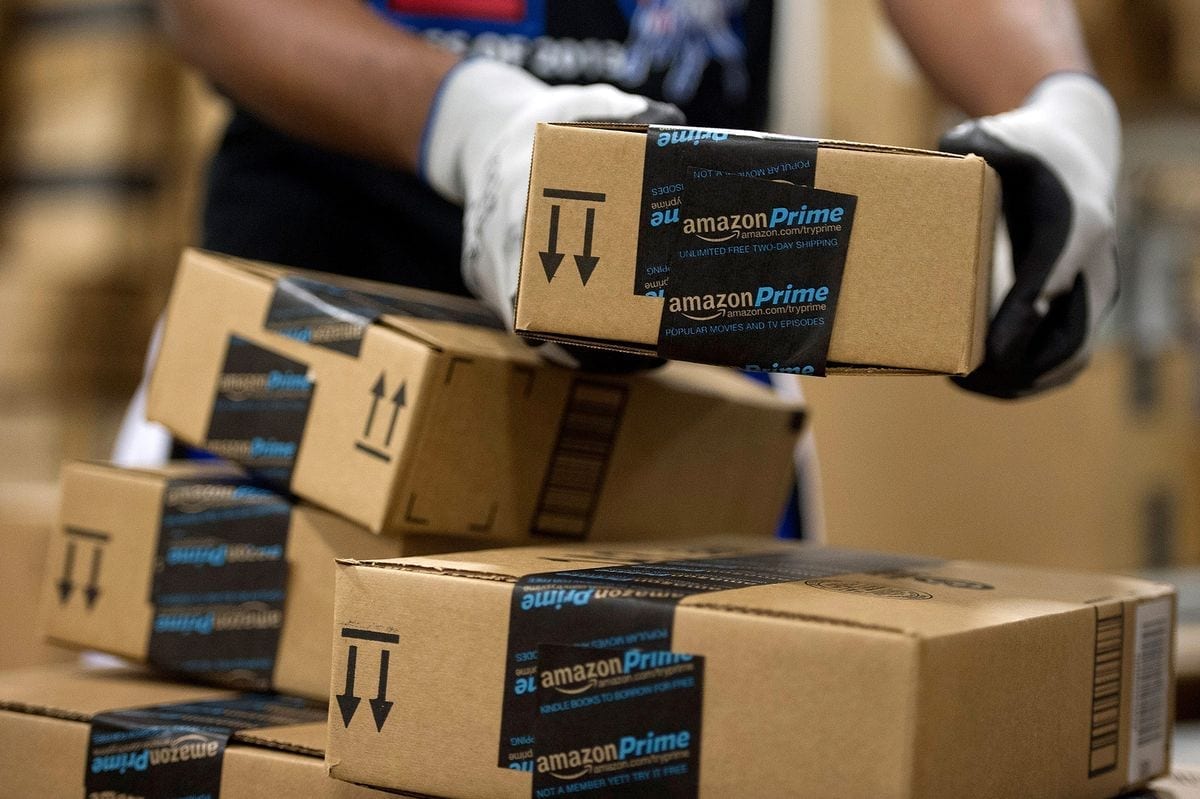
    To enhance its in-home delivery service, Amazon has launched new products and tools within its ‘Key by Amazon’ offering for Prime members, beginning with the US. The online retail giant unveiled ‘Key for Garage’ that will allow customers to monitor and control their garage door via the Key app. “In addition to receiving deliveries at home and in your car, eligible Amazon Prime members will soon be able to get deliveries in their garage,” Amazon said in a statement on Tuesday.

    ‘Key for Garage’ is made possible by integrating Key with CGI’s proprietary ‘myQ-connected’ technology.

    “We started with the idea of in-home package delivery and quickly learned that our customers found peace of mind from the control Key gives them over their most important place – their homes – even when they aren’t there themselves,” said Rohit Shrivastava, GM of Key by Amazon.

    The online retail giant unveiled ‘Key for Garage’ that will allow customers to monitor and control their garage door via the Key app

    Amazon launched ‘Key’ in 2017 and the in-car delivery facility later. The new delivery services are available to Prime customers in some markets at no additional cost.

    Other offerings include the new Schlage Encode Smart Wi-Fi Deadbolt — the first WiFi-enabled smart lock for Key.

    The smart lock offers an innovative option for any customer who wants to experience the magic of a keyless life without any additional hub or hardware.

    “Even with all the advancements in the category, we recognized there was still a gap in simple, secure, high performance and cost-effective, all-in-one access solutions,” said Lee Odess, Vice President, Solutions Providers Business at Allegion, maker of Schlage locks.

    ‘Key for Business’ is a smart fob for drivers delivering Amazon packages to commercial and residential properties.

    “The technology allows building owners and managers to give controlled access to delivery drivers to drop off Amazon packages to their residents, and eliminate the need for building staff to manually give access each time deliveries are made,” said amazon.

    The Schlage Encode Smart Wi-Fi Deadbolt is available for pre-order for US$ 249.99 or US$ 299.99 when bundled with an Amazon Cloud Cam. It will begin shipping to the US customers on March 5.

    Key for Garage will be available in the US in the second quarter.

  • Online Marketplaces India: Delivering fashion to the discerning masses

    Online Marketplaces India: Delivering fashion to the discerning masses

    The online fashion space in India is positively buzzing with private labels or brand partnerships. Recently, heritage American denim brand, Wrangler collaborated with Indian e-commerce giant, Flipkart to launch an exclusive sub-brand called Wrangler 20X. Myntra also launched its in-house plus size apparel brand, Sztori as well as House of Pataudi, an ethnic wear brand co-owned by Myntra, Exceed Entertainment and Bollywood actor Saif Ali Khan.

    Addressing Consumer Demand

    Wrangler 20X is targeted at the digitally-savvy youth who increasingly shop for fashion online and are seeking the perfect mix of trend and value. Gen Z are increasingly brand-aware and aspire to own brands with flaunt appeal. The denim brand aims to give them a brand that they would be proud to wear at prices they can afford.

    Known for democratising fashion across segments, the launch of both Sztori and House of Pataudi enables Myntra to go a step further and include profiles into the ambit of ‘fashion for all’. It champions inclusivity in fashion, evaluating and emphasising greater attention to styles, trends, designs, fit and fabric for plus sized apparel and fashion conscious consumers, in order to bring out the personality of the person wearing it.

    Sztori has been especially designed to suit a larger range of body shapes and sizes. It is essentially a designer wear in the plus size category, offering consumers the perfect fit and multiple style options. The apparel is made to suit plus size body types rather than prove to be a mere extension in size on existing profiles, thus breaking the existing age-old norm in the Indian market.

    Manohar Kamath, CXO and Head, Myntra Fashion Brands, says, “We are extremely delighted to announce the addition of Sztori to our portfolio of private brands. Plus size clothing is in great demand and it was time we offered something substantial in the category, opening up more avenues and possibilities for our customers.”

    The brand offers a range of products for men and women, including, tees, denims, tops, dresses and more in L to XXXXL (Large to 4 times Large) sizes. Shoppers can choose from over 225 styles and designs at prices ranging from Rs 799-Rs 1,999.

    Myntra identified a space opportunity in this segment and set out to design and develop merchandise under a new brand to cater to the category and make wearers look fashionable with multiple style options at affordable prices and opening new avenues in the industry.

    ‘House of Pataudi’ is a lifestyle brand for men and women that delivers fine taste and refinement to the discerning and the fashion conscious. Each piece not only exudes style but also narrates the rich story and history of the Pataudi heritage. The collection comprises traditional Indian wear, conceptualised inthe form of Rozana, every day wear with a contemporary ethnic touch; Jashn, festive finery with a regal charm; Riwayat, bespoke splendour for the classic Indian wedding; and a Special Edition, comprising collections inspired by the Pataudi trousseau.

    The range includes kurtas, sherwanis and Nehru jackets for men and kurta sets, lehengas and dresses for women. Products from House of Pataudi will be available exclusively on Myntra and Jabong, across a price range of Rs 1,500-Rs 15,000 for men and Rs ,000-Rs 20,000 for women. The brand’s design team has worked closely with Saif Ali Khan; inspired by his own personal style statement and has designed and perfected the line, modelling it on the Pataudi lineage and contemporary fashion preferences, to make it relatable for the modern fashion shopper. House of Pataudi is focused on changing the perception about ethnic dressing being limited only to festivals and occasions and bringing it back to everyday wear.

    Tapping the Market

    “Research estimates that the plus size segment will account for US$ 5 to 6 billion in the US$40 billion Indian online fashion apparel market, by 2020, which is approximately 10 to 12 percent of the overall market, making it an important proposition,” shares Manohar Kamath.

    Flipkart’s has aggressive plans to grow the fashion business and this maps well with Wrangler’s vision of meeting the needs of the young, online shopper. “We are delighted to partner with

    Flipkart on the launch of Wrangler 20X. The brand will be available exclusively on Flipkart and is designed for young, trend-aware digital citizens who aspire to buy Wrangler but are also looking for a more affordable value proposition. We look forward to working with Flipkart to make this a successful sub-brand of Wrangler,” comments Krishna Dorai, General Manager, Wrangler.

    Rishi Vasudev, Vice President, Flipkart Fashion says, “Men’s fashion is one of our fastest growing categories, where we have witnessed a 75 percent Y-o-Y growth, within which denims is one of the most successful categories. Crafted basis an understanding of what fashion shoppers are looking for, we are excited to launch Wrangler 20X, a denim-wear brand, from the house of Wrangler, exclusively on Flipkart Fashion. The range is specifically designed to off er the latest in fashion to the style conscious young men looking for the best in the value branded segment and we are sure, this range will be a massive hit, while it strengthens our men’s portfolio.”

    The Wrangler 20X collection features attractive style elements such as PU detailing on the pockets and belt loops, the shirts embrace printed designs with yarn-dyed fabrics and the tees receive a fresh colourful graphic spin. The sub-brand is currently available only for men.

    Ananth Narayanan, Ex-CEO, Myntra- Jabong, said, “We are clearly focused on a strong customer proposition and currently there is a huge gap in brand offerings in the ethnic wear space, especially for men. House of Pataudi is an ideal fit, being rich on tradition, heritage, design, and offers customers a slice of the world that we believe is lost, at price points that are highly affordable.”

  • eTailAsia, Thriving in the eCommerce Revolution in 2019

    eTailAsia, Thriving in the eCommerce Revolution in 2019

    Year after year, eTail Asia has been a sell-out success story! And it’s back for the 7th edition at Sheraton Towers, Singapore from 5-7th March 2019.

    What is it about you might ask? Simply put its ‘THE’ only destination event for Asia’s leading retail innovators to meet, collaborate and learn about what’s disrupting the industry today and what’ll change tomorrow. eTail Asia is designed to build up the participant’s business and profit by cutting out the fluff and providing content from retail innovators in the trenches.

    Some hot topics which have been cast in to the spotlight include:

    1. Entering and succeeding in China’s $800 billion eCommerce market

    In the notoriously cut throat retail industry, China’s cross-border eCommerce has been growing at an unprecedented rate, poised to top US$1.64 trillion in sales by 2020. eTail Asia addresses the exciting opportunities awaiting brands who want to tap into the Chinese  market, win over Chinese consumers, adapt to local nuances and create a multifaceted digital ecosystem to drive eCommerce sales.

    1. Driving customer engagement and fostering loyalty with blockchain, AR and VR

    Digital transformation is crucial, but focusing on establishing a relationship which is authentic, functional and relatable should be of paramount importance. At eTail Asia, businesses discuss cutting edge technologies which boost connectivity and interaction between brands and customers to optimise the quality of CX.

    1. Achieving a 360-degree customer view thorough AI and Machine Learning

    Achieving a holistic customer report is a trend that will continue to explode in all directions. Brands have to build affinity through personalisation and customisation where communication strategies have to be adapted accordingly to each individual based on their preference. Businesses have to wield marketing efforts around individual customers which helps them resonate with a brand.

    1. m-Commerce and a seamless, simple and intuitive payment channel

    Millennial shoppers are gravitating towards speedy transactions and on-the-go online shopping. Capitalising on this momentum, businesses are streamlining an omni-channel payment method for customers, enduring the relationship across all channels. A flexible experience without hassle will ultimately increase a customer’s satisfaction, to future-proof a customer’s checkout experience.

    The 2-day conference has a curated pipeline of compelling discussions, case studies and presentation anchored around the ‘millennial mind-set’, ‘succeeding as an eCommerce brand in an era of dominant e-tailers’ and ‘embracing globalisation’.

    To view the full agenda or to learn more about speaking/sponsorship/exhibition opportunities at eTail Asia, please visit https://etailasia.wbresearch.com/.

    first appeared on: https://edubirdie.com

  • Storefront opens in Korea

    Storefront opens in Korea

    Storefront, the world’s largest online marketplace for short-term retail space, has officially launched in Seoul. Retail vacancy rates in Korea are on the rise due to a prolonged recession, and more brands are diverting their interests from traditional retail to offer a quality experience to customers in the form of pop-up stores and short-term leases. Storefront has partnered with the Korean marketing and retail firm Kcent to register qualified spaces, sign up leading and emerging brands and give them tools to successfully market their short-term space. The Storefront site will now offer thousands of spaces across Seoul available for pop-up stores, showrooms, and event spaces.

    Storefront maintains a global presence with thousands of quality retail spaces across the world’s largest cities from Paris to London, New York and Hong Kong. This advantage allows any brand to pop-up in any location, test new markets and even launch simultaneously in more than one location worldwide.

    Retail sales in Korea totaled $343 billion in 2016, and this latest partnership in Seoul signals Storefront’s break into the East Asian market with their brand, technology and insights combined with local talent and market expertise.

    “Korea is APAC’s 3rd largest retail market, and most of it is based in Seoul. Pop-up stores and other forms of short-term rentals are already creating a buzz in the trend-savvy Korean market.

    All we needed was a transparent and efficient marketplace like Storefront to leverage this trend.” said Jin Yong Kim, Kcent’s CTO.

    “Korea has a unique culture and language barrier that make it hard for foreign brands to expand their business here. But if they have the right partner and know how to tell their story to Korean consumers, it can be a matter of a few days before they go viral.” adds Kim.

    “Storefront is redefining how companies can locate and activate temporary retail space with its global marketplace for connecting tenants and property owners in an efficient, flexible and transparent way. We are excited to partner with Kcent to bring our expertise to this fast-growing retail capital and introduce the benefits of pop-up stores to thousands of merchants looking to expand into Korea.” said Benoît Clément-Bollée, General Manager, Storefront Asia .

  • India’s Rocking Deals plans 500 stores

    India’s Rocking Deals plans 500 stores

    India’s Rocking Deals is planning to launch 500 retail stores within next five years. The move by the online retail electronics marketplace follows the opening of the brand’s first offline store in Agra (Uttar Pradesh) last month, with up to 20 stores planned for the state in the near future. “We have chalked out an all round growth plan, be it online or offline,” said founder & CEO Yuvraj Aman Singh. “With our new retail stores, the company plans to weed out inefficiencies, lack of certified products in the market, and under or overvaluation of pre-owned products.

    “We would like to tap all major markets of smaller towns and cities through our offline market strategy.”

    The company has already signed with 27 retail franchises in various states, including Uttar Pradesh, Jharkhand, Odisha, Punjab and others.

    “The refurbished market is to rise by a compounded 27 per cent over 2019-20, as large players are joining through their existing online marketplaces such as Amazon and Flipkart, which posted surging growth in annual sales, and we too wanted to significantly capture the market through our organised channel,” added Singh.

    Rocking Deals was founded in 2012 and to date has sold close to 4 million refurbished and pre-owned units in 18 categories to end customers.

  • Amazon Kicks Off the New Year with Head Start on Chinese New Year Festivities

    Amazon Kicks Off the New Year with Head Start on Chinese New Year Festivities

    Amazon announced the kick-off of the Chinese New Year season for Amazon Prime members in Singapore, offering new expanded local selection and great deals and free samplings to help usher in the Year of the Pig with ease. Amazon Prime Now will offer customers a one-stop shop for everything Chinese New Year related — from eight-pack red packets to traditional pineapple tarts and barbequed pork slices (bak kwa).  Anyone in Singapore can join Amazon Prime for S$2.99 a month or start a 30-day free trial at www.amazon.com.sg and download the Prime Now App.

    “We’re excited to jump into the Chinese New Year season, helping Prime members in Singapore get ready for the Year of the Pig with our expanded selection of popular holiday goodies–abalone, traditional pineapple tarts and handmade BBQ pork slice,” said Kourosh Kaghazian, Country Manager, Amazon Singapore. “From cleaning supplies to groceries, we’ve got Prime members covered this new year with the convenience of tens of thousands of items, including a variety of local favorites, and ultra-fast two-hour delivery right to their door.”

    New this season, Amazon is offering some must-have Chinese New Year goodies, including:

    • Kele: Traditional Pineapple Tarts and other festive cookies
    • Kim Joo Guan: Traditional Handmade BBQ Pork Slice
    • Crystal Jade: Almond Puff Cookies and Bo Lo Pineapple Tarts
    • New Moon: Abalone

    Amazon has also expanded its Reunion and steamboat selection for customers in time for their holiday dinner preparations with frozen and fresh sliced meats, noodles and tofu and a wide variety of fresh and frozen seafood, including pomfret, grouper, threadfin, scallops, crabmeat, mussels, squid as well as seasonal fresh vegetables and fruits.

    Amazon has also created specially curated selections according to Chinese New Year themes, such as Readying the House, Spring Cleaning and Organization, Stocking Up on Groceries, Shop Fresh Food/Reunion and Last-Minute Shopping. Prime members will be able to take advantage of the free two-hour delivery on orders of S$40 or more, especially helpful for heavy and bulky items like soft drinks. In addition, Prime members will also be able to shop millions of items on the international selection via the Prime Now App with free delivery in 7-9 business days on orders of S$60 or more.

    Prime Now will offer delivery from 10:00 a.m. to 6:00 p.m. on 4 February, Chinese New Year Eve as well as both public holidays 5 February and 6 February. Leading up to Chinese New Year, Amazon Prime Now will offer regular delivery from 10:00 a.m. to 10:00 p.m.

    Prime members in Singapore have access to millions of items via the Prime Now App. Amazon Prime in Singapore is currently available for S$2.99 per month. Prime membership benefits in Singapore include:

    • Free Two-Hour Delivery on Tens of Thousands of Items: Ultra-fast delivery on tens of thousands of items with free two-hour delivery on orders over S$40, between 10am and 10pm daily.  Items range from groceries to electronics, including a variety of new brands added to Prime Now since the launch such as Yakult, Dell, Tefal, Sambucol, Bausch & Lomb and Pinkfong, as well as new categories including fresh flowers, organic fruits and international foods.
    • Free International Shipping on more than 7 Million of Items: Unlimited free shipping in 7 to 9 business days on orders over S$60 from International Selection via the Prime Now App on more than 7 million international products shipped directly to you from Amazon US. Products include a wide selection of top brands such as Leap Frog, Calvin Klein, Rubbermaid, Zojirushi, BCB Generation, The Children’s Space, Pet Safe, Rebecca Minkoff, and Melissa and Doug.
    • Amazon Prime Video: Prime members can stream or download popular and award-winning Prime Original series like The Grand Tour, Golden Globe and Emmy award winner The Marvelous Mrs. Maisel, Tom Clancy’s Jack Ryan starring John Krasinski, Homecoming starring Julia Roberts, and many more. Prime members can watch anytime, anywhere via the Prime Video App on Android and iOS phones and tablets, smart TVs, game consoles or online at www.primevideo.com.
    • Twitch Prime: Prime members enjoy a selection of free games every month, free in-game loot for the world’s most popular games, a free broadcaster subscription every 30 days, exclusive chat emotes, and more at https://www.twitch.tv.
  • Domestic, foreign e-commerce players should be treated alike: CUTS India

    Domestic, foreign e-commerce players should be treated alike: CUTS India

    The Government needs to create a level-playing field for both domestic and foreign e-commerce platforms through a comprehensive e-commerce policy, said Pradeep S. Mehta, Secretary General, CUTS International on Sunday. He noted that the current norms for the segment are applicable to foreign online retailers and this might create a discriminatory environment towards the domestic players.

    “The Government may not be wrong in its clarificatory policy on Foreign Direct Investment (FDI) in e-commerce, as it was a case of backdoor entry in multi-brand retail trade. But vital issues remain to be resolved to promote healthy economic democracy”, said Pradeep S Mehta, Secretary General, CUTS International.

    “However, the issue of creating a level-playing field between domestic and foreign players in retail sector is yet to be resolved, for which a comprehensive National E-Commerce Policy is need of the hour”, he said.

    The Department of Industrial Policy and Promotion (DIPP) recently had said that 100 percent FDI is permitted in the market place model of e-commerce and not in the inventory-based model or the multi-brand retail segment.

    The Commerce Ministry in December revised the FDI policy for e-commerce players whereby it barred online retail firms such as Amazon and Flipkart from selling products of companies in which they have stakes. It also prohibited e-tailers from mandating any company to sell its products exclusively on its platform only.

    Mehta said: “The new guidelines are stricter for e-commerce companies with FDI providing marketplace, but there are no such restrictions for companies without FDI.”

    He also observed that there is no need for a separate regulator for the e-commerce segment.

    “India does not need a separate regulator for e-commerce, which would be yet another parking place for retired babus who are generalists and turn into controllers.

    Most of the malpractices adopted by e-commerce platforms, for instance, discrimination among its vendors, deep discounts etc, can be dealt by the Competition Commission of India. If need be, the Competition Act, 2002 can be tweaked for which the process is going on,” he said.

    The Consumer Protection Bill, 2018, which is likely to be passed soon by the Rajya Sabha, also has specific provisions on e-commerce, he added.

  • JD driverless delivery vehicles up for test

    JD driverless delivery vehicles up for test

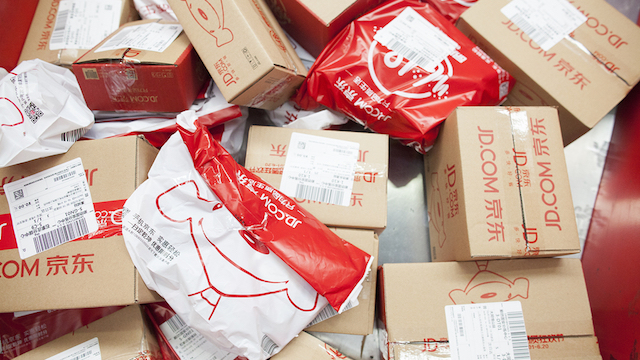
    JD driverless delivery vehicles have been deployed in live testing in two Mainland China cities. The technology-cum-e-commerce company has opened two smart-delivery stations in the cities of Changsha and Hohhot, strengthening its autonomous logistics capabilities. The stations are carrying out research and development testing and personnel training to solve issues related to last mile delivery.

    The JD driverless delivery vehicles can be loaded with up to 30 parcels before autonomously delivering them within a 5km radius. The vehicles can plan routes, avoid obstacles and recognise traffic lights.

    The vehicles have locked boxes so each customer’s purchases are kept separate. Once the robots reach their destination, facial recognition technology enables customers to easily and securely collect their parcels from the correct locker.

    When running at full capacity, the two delivery stations, operating with a half-half split between robots and human couriers, can deliver up to 2000 packages a day.

    The JD driverless delivery vehicles are part of the company’s Boundaryless Retail vision, in which consumers can buy whatever they want, wherever and whenever they want it.

    “As China’s largest retailer, JD is in the unique position of being able to research and develop, and commercially deploy, innovative new technology that is shaping the future of shopping worldwide,” said Chen Zhang, JD’s chief technology officer.

    “As JD opens its technology up to other companies and industries, the features that we’ve already rolled out in China from automated warehouses to virtual shopping are going to be enjoyed by consumers everywhere,” he said, referring to the company’s Retail as a Service strategy.

    CES debut

    The opening of the smart delivery stations comes days before JD attends its first Consumer Electronics Show in Las Vegas, Nevada – the world’s largest event for the latest technology, innovation and creative thinking.

    The company will showcase cutting-edge technology which is changing the way consumers shop in China, and which it says will revolutionise global commerce. Visitors will be able to see how JD uses its drones to deliver consumer goods and medical supplies to remote areas in China, and catch a glimpse of the world’s first fully-automated fulfillment centre. They will also see how underground urban logistics will make shopping more convenient than ever, and fundamentally alter how cities work.

    This year, CES attendees will be able to see JD’s futuristic technology up close and even try some of it for themselves at the company’s interactive booth.

    Aside from drones and delivery robots, visitors will be able to experience drone flights in virtual reality, as well as JD’s augmented-reality fitting and styling software. They will also see how JD is developing Internet of Things technology that enables consumers to remotely control the smart devices in their homes, even from their cars.

    JD will also give people the chance to try a special exoskeleton worn by staff in JD warehouses that makes lifting heavy objects easier.

  • South Korean retail sales rise strongly in November

    South Korean retail sales rise strongly in November

    Online shopping during the month of November has driven a 4.6 per cent increase in South Korean retail sales compared to the same period in the previous year, according to government data. Ministry of Trade, Industry and Energy figures showed a 12.7 per cent year-on-year growth in online sales alongside a 0.5 per cent drop in offline retail during the month.

    Convenience stores, chain supermarkets and super supermarket sales showed positive growth, while large discount outlets and department stores saw declines of 2.8 per cent and 3.9 per cent respectively.

    Online sales in November were largely propped up by e-commerce shopping festivals in China and the US during the period.

  • Coupang to become an authorized Apple retailer

    Coupang to become an authorized Apple retailer

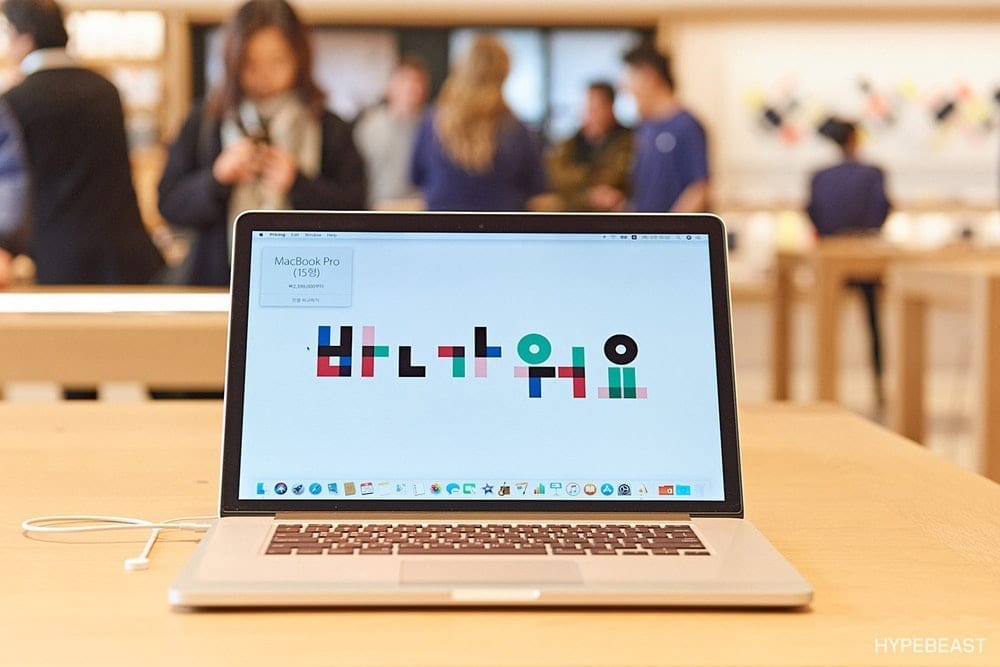
    Coupang, Korea’s top e-commerce platform, has been selected as an authorized retailer to sell Apple products, the company announced Friday. It said that the e-commerce giant was selected to become an authorized reseller of Apple products, and the service will begin sometime this month. The products that will be offered include iPad Pros, MacBooks and Apple Watches, as well as related accessories.

    Coupang said that its shoppers can get access to Apple products that carry a full Apple warranty and come with after-sales customer services from Apple.

    “Coupang will be an attractive purchase channel for customers who love or want to experience Apple products,” said Navid Veiseh, Coupang’s senior vice president of global e-commerce. “We will continue to expand the range of premium electronics brands like Apple, which, when combined with our Rocket delivery and RocketPay services, make Coupang the first place for customers to turn when shopping for premium electronics.”

    Coupang is known for its fast Rocket delivery service that sends items purchased the following day.

  • Hong Kong November retail sales almost stagnant

    Hong Kong November retail sales almost stagnant

    The growth of Hong Kong retail sales in November slowed to a crawl according to Census and Statistics Department figures just released. After a 6 per cent year-on-year increase in October, the value of sales in November rose just 1.4 per cent to an estimated HK$39.2 billion. That is well below the 9.7 per cent year-to-date rise for the first 11 months of the year.

    And after netting out the effect of price changes over the same period, Hong Kong retail sales in November rose by just 1.2 per cent year on year.

    A spokesman for the C&SD said the “generally moderated growth in retail sales in recent months” reflected more cautious consumption sentiment in the face of various external uncertainties such as the US-Mainland trade tensions and volatilities in the global financial markets.

    “Looking forward, while the favourable local job and income conditions and continued expansion in inbound tourism should still provide some support to the retail sector in the near term, consumer sentiment could be affected by weaker asset prices and the external uncertainties.”

    The overall figure was affected by soft sales of the key jewellery and watches category, down by 3.9 per cent, and of electronics, down by 4.9 per cent. Clothing sales fell by 3.6 per cent.

    Countering those falls were department store turnover, up 3.9 per cent; medicines and cosmetics up 10.1 per cent; food, alcoholic drinks and tobacco up 1.9 per cent; and other consumer goods, not elsewhere classified by 14.3 per cent. Optical store sales rose by 5.4 per cent and books and stationery by 6. 2 per cent.

    Quarter on quarter, Hong Kong retail sales receded during the three months to November by 2.7 per cent, compared with the preceding three months, with the volume of sales (after factoring in inflation) falling 1.8 per cent.

    For the first 11 months of last year, the volume of retail sales increased by 8.4 per cent.

  • Indian shop fit industry poised for sustainable growth in 2019

    Indian shop fit industry poised for sustainable growth in 2019

    The Indian retail sector is growing faster than ever before and is one of the fastest growing in the world. According to a Deloitte Report, the Indian retail industry is expected to grow to US $1.1 trillion by 2020, registering a CAGR of 8.79 percent between 2000 and 2020. This growth can be attributed to the growing young population of the country, rise in disposable income, change in lifestyle and most importantly, digitization and connectivity.

    Though brands are investing heavily in online retail, traditional retail continues to be their core focus and hence, demand for shop fit designers and manufacturers only continues to grow.

    Changing retail landscape and role of retail shop fitting

    2018 was a redefining period for Indian retail industry. From huge investments by international players to M&A, downsizing of physical stores from traditional players to investing in physical stores by ecommerce players, the retail industry witnessed significant changes.

    As the debate around relevance and profitability of brick-and-mortar stores continues, retailers continue to invest in physical stores and thrive to provide the best shopping experience for customers. The traditional, one-size-fits-all store formats are slowly decreasing and brands are now continuously working towards exploring creative concepts to rejuvenate the look and feel of the store to stay relevant and attract their respective consumer targets.

    Every brand has a different approach in designing retail outlets and so are their shop fit requirements. For example, a sportswear brand store will have a spacious interiors, relaxed furniture for seating, minimum product placement on shelves to create clutter free picking up of products and eye-catching digital display of celebrated sports personalities on the walls to influence customer’s shopping. Whereas, a clothing brand store for infants and children has shop fittings and fixtures of lower height making it easy for kids to select what they want and have popular animated characters all over the store. This is where the expertise of shop fitters come into the picture. Shop fitters play a very important role in building successful retail brands by planning, designing and manufacturing shop fit and fixtures that reflect a brand’s ethos. They closely work with the brands to execute their designs and ideas for Visual Merchandising.

    Growth opportunities for shop fit industry

    A study by JLL suggests that the country is expected to see the highest mall supply in the next three years (2018 – 2020) touching 19.4 million square feet. Due to the radical shifts in the consumption pattern of new-age consumers, brands see tremendous untapped potential in small towns and cities (Tier II and III) they will expand their footprints in these geographies and continue to invest in physical stores.

    Brands continue to focus on integrating online and off-line shopping and the concept of ‘Experiential shopping centers’ will gain importance. Physical stores will double as fulfillment centers to help process online orders. Like in other markets, the concept of BOPIS, i.e. “Buy Online, Pickup In-Store”, which gives customer the flexibility to shop (order) online and visit the nearest store to try the product and collect it may become popular among people. As customer shopping experience, engagement and purpose of the physical store becomes more crucial, brands will regularly invest in store design, interiors, shop fits and new concepts in order to differentiate themselves from competitors. A good fit-out raises a brand’s profile, efficacy and creates a positive perception about the brand. Hence, there is a growth opportunity for shop fitting industry.

    Adding to this, the trend of solo entrepreneurs entering the market and small scale traditional retailers who wish to revamp their business rely on professional shop fitters for retail store design, floor planning, shop fits, etc. which will also give a boost to the shop fit industry.

    Conclusion:

    As organized retail industry continues to grow in the country, it possesses a great opportunity for the shop fit industry. Decisions by brands to downsize the store formats may hurt the shop fit industry’s business and profitability, but there will definitely be significant growth as more brands are now looking to establish their offline presence and also increase their physical presence across markets. In addition to this, with the new rules regarding single brand retail ownership, many new foreign brands will look to enter the Indian market.

    Being an allied industry of the retail sector, the shop fit industry grows hand-in-hand with the retail industry. As brands continue to invest in visual merchandising and store design, they rely on experienced and quality focused shop-fit manufacturers to partner with them. The role of shop fitters cannot be understated in helping the retail brands build their identity, differentiate them from competitors and attract footfall in the store by their innovative designs and store concepts. Shop fitting is an important investment for retail brands and when done right can translate to improved business and performance. Overall, the outlook for the shop fit industry is positive.

  • Grofers eyes $2.5 billion in revenue by 2020

    Grofers eyes $2.5 billion in revenue by 2020

    SoftBank-backed Grofers aims to garner $2.5 billion (approximately Rs 17,500 crore) in revenue by 2020 as it scales up its private label offerings in the country and focusses on expanding repeat purchases in its platform. The company, which has recently completed five years of its operations, has a revenue run rate of $360 million (about Rs 2,500 crore) currently.

    Grofers Co-Founder and CEO Albinder Dhindsa said Grofers has been witnessing over 30 percent month-on-month growth.

    “While we do not sell gourmet products that usually offer higher margins, we have been able to create a set of dedicated customers that usually promote our brand as well… We will continue to ramp up our business and we aim to clock $2.5 billion revenue by 2020,” he said.

    Outlining the expansion strategy, Dhindsa said about 40 percent of the selection on its platform now comprises of private label products.

    “There are a number of local manufacturers, who have great products but can’t compete with the FMCG giants and therefore, their products often don’t find shelf space in retail stores…we continue to grow the number of manufacturers that we work with,” he said.

    He further explained that putting these private labels on its own platform has helped the company provide aspirational products like muesli, peanut butter at more affordable prices.

    These private labelled products are also making their way on retail shelves at Grofers’ over 1,500 partner stores, which the company aims to ramp up to one million in the next two years.

    Asked about competition, especially with Walmart-backed Flipkart and Amazon expanding their presence aggressively in the online grocery segment, Dhindsa said the company is not worried.

    “Grocery is not the same as books and electronics. We may carry a smaller selection but the focus for us is on affordability. Consumers are very conscious when it comes to the grocery buying and that is what we want to ensure for our customers,” he said adding that Grofers is focussing on further enhancing its coverage of the cities it operates in.

    In March 2018, Grofers had announced raising Rs 400 crore in funding led by SoftBank, Tiger Global and Apoletto Asia. It has raised funding of $226.5 million till now. Its average daily order volumes were over 35,000 per day in June this year.

    Grocery segment accounts for a significant portion of the unorganised retail segment in the country. With people becoming comfortable buying even milk and bread online, the online grocery segment is projected to witness a strong growth over the next few years in India.

    As per the estimates, e-tail is just 0.5 percent of the total grocery market in India, which is pegged at $400 billion or 70 percent of all retail.

    In a recent interview, Flipkart CEO Kalyan Krishnamurthy had said grocery is one of the key focus areas for the company currently and, the segment will play an important role in getting access to the next 200 million customers.

    Amazon India, too, has been aggressively ramping up selection and focussing on speedier delivery to consolidate its position in the segment. In February this year, Grofers’ competitor Bigbasket had raised USD 300 million led by Chinese e-tailer giant Alibaba and others.

  • Amazon sees ‘record breaking’ holiday season

    Amazon sees ‘record breaking’ holiday season

    Global online marketplace Amazon has announced a record-breaking holiday season, with customers shopping en-masse across both the Christmas and Boxing Day sales events on the storefront. “This season was our best yet… we are thrilled that in the U.S. alone, more than one billion items shipped for free this holiday with Prime,” Amazon chief executive of worldwide consumer Jeff Wilke said.

    While the online store didn’t provide sales figures, Australian purchases saw a love of gaming push sales of the Nintendo Switch and New 3DS XL consoles dominate the holiday period, as well as Sandisk memory cards and various video games compatible with the systems themselves.

    Fashion brands Birkenstocks, Bonds, Champion, Nike, Tommy Hilfiger and Puma were also noted as being “particularly popular” through the period.

    “We were delighted to see so many Australian consumers shopping across all categories on Amazon.com.au in the run up to Christmas [and] during our Boxing Day Sale Event,” Amazon Australia country manager Rocco Braeuniger said.

    “Our first year in Australia saw us increase selection five-fold to over 100 million products and introduce many new products and services for customers to enjoy, [and] we look forward to bringing much more to Australian consumers in 2019.”

    In the lead up to the event, research from PayPal noted that it expected a quarter of Australian shoppers to head online on Boxing Day, with 70 per cent of those surveyed stating that online shopping is less stressful.

    “Australians are looking for the best deals, not the stress that’s traditionally associated with heading out to the shops for the Boxing Day sales,” PayPal shopping expert Liz Lefort said.

    “Increasingly those deals, or better deals can be found online, and Aussie shoppers are taking heed of that.”

  • Korea e-commerce hits high of 10.62 trillion won in November

    Korea e-commerce hits high of 10.62 trillion won in November

    The total value of online shopping in Korea reached a record high in November, government data showed Wednesday, in the latest sign that a growing number of Koreans are using computers or mobile devices to buy things ranging from clothes to electronic goods. Total online transactions reached 10.62 trillion won ($9.5 billion) in November, up 22.1 percent from a year earlier, according to the data compiled by Statistics Korea.

    The reading marked the highest amount since January 2001 when the statistics office started collecting data on online shopping.

    Sales of electronic goods and computers rose 22.7 percent on year to 1.68 trillion won, and demand for clothes jumped 10.4 percent to 1.45 trillion won in November, while online sales of food and beverages surged 32.3 percent to 911.4 billion won.

    Purchases made through smartphones, tablets and other mobile gadgets soared 28 percent on year to a record 6.59 trillion won, accounting for 62.1 percent of all online sales in November.

    Korea is one of the most wired countries in the world, with one of the highest smartphone penetration rates.

    The number of smartphones in Korea came to 50.5 million as of October, compared with 48.3 million a year earlier, according to separate government data.