Tag: ecommerce

  • Ebay expands authentication platform to luxury jewelry

    Ebay expands authentication platform to luxury jewelry

    U.S. e-commerce giant Ebay announced plans to extend its product authentication program to cover luxury jewelry, in a bid to stem the resale of counterfeit jewels across its global marketplace. Dubbed “EbayAuthenticate”, the luxury jewelry category is the newest addition to Ebay’s new verification platform, which first launched in 2017 with the resale of luxury handbags. Following its success, Ebay went on to add luxury watches to the authentication service in early 2018.

    This month, Ebay confirmed it wants to offer “holiday shoppers more than 45,000 high-end diamond and other gemstone jewelry, verified by professional authenticators,” according to press release.

    Ahead of the busy Christmas period, Ebay customers can browse for high-end necklaces, earrings, rings, and bracelets, which are now all marked with an “Authenticity Verified” label.

    That’s in addition to engagement and wedding bands, loose diamonds and gemstones, and fine, vintage and fashion jewelry.

    Much like the verification its luxury handbags and watches already go through, all jewelry items will be approved by third-party authentication experts and sourced from more than two dozen of Ebay’s top-rated sellers.

    “Ebay is home to the largest selection of luxury goods, which includes tens of thousands of jewelry items, fine watches, and rare and designer handbags,” said James Hendy, Senior Director of Ebay Authenticate.

    “Expanding the Ebay Authenticate service provides customers an added layer of trust and confidence as they shop for fine jewelry this holiday and beyond.”

    The popularity of Ebay’s jewellery, and an industry-wide crackdown on fake goods across online marketplaces, means the authentication of goods is fast-becoming a perquisite for customer satisfaction and therefore, sales growth.

    Some 50,000 jewelry items are sold per day on Ebay (approx. 2,000 item sold per hour), with one diamond ring sold every minute, according to figures released by Ebay.

    Ebay said its most popular jewelry stone is diamonds, followed by sapphires, acquamarine, amethysts and onyx rounding out the top five precious stones sold online.

  • Lazada Group appointed new CEO

    Lazada Group appointed new CEO

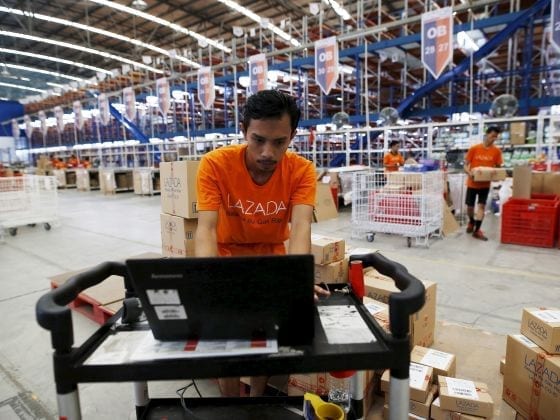
    Lazada Group has announced its second new CEO this year, with group executive president Pierre Poignant taking the role immediately. Incumbent Lucy Peng, who took over the role nine months ago after moving from major investor Alibaba, will remain with the business, assuming the title executive chairwoman.

    In a media statement, Lazada described the change as “succession planning”.

    Poignant, who was appointed president in August, will lead the company’s strategic development into new growth pillars, while continuing to manage Lazada’s operations in Indonesia, Malaysia, the Philippines, Singapore, Thailand and Vietnam, working closely with country CEOs and regional functional team leaders.

    “Pierre is a well-respected Lazada co-founder, who has contributed tirelessly to the company for the past six years,” said Peng. “He and the team of other co-founders had the vision to build our logistics network from the ground up back in the days when no one in Southeast Asia believed in e-commerce – this valuable asset has now set us apart from the competition. Over the years, Pierre has consistently delivered beyond his call of duty and excelled in every role he has taken up.”

    Poignant said Lazada has benefitted from the Alibaba ecosystem, from the technological prowess to the logistics network.

    “This year is a turning point for Lazada. We have improved and evolved and now come out stronger, more efficient, and more agile than the start of the year. Our transformation has just begun and I am confident next year will be another watershed year,” said Poignant.

  • Shopee wraps up a record-breaking 2018 on 12.12 Birthday Sale

    Shopee wraps up a record-breaking 2018 on 12.12 Birthday Sale

    Shopee, the leading e-commerce platform in Southeast Asia and Taiwan, wraps up a record-breaking year with its highly successful Shopee 12.12 Birthday Sale. On 12 December, Shopee saw ​over 12 million orders across the region, surpassing all past records including the recent Shopee 11.11 Big Sale.

    Supported by ​more than 450,000 brands and merchants​​, Shopee recorded ​48million visits as users shopped ​60 million deals across all categories, and the highest number of items sold in 1 minute was ​73,519​​. Shopee’s highly popular in-app game Shopee Shake was played 46 million times​​ throughout the campaign.

    In Singapore, Beauty & Personal Care, Home & Living and Mobile & Gadgets were the top three most popular categories. Leading brands including Laneige, Kao and JBL emerged as favourites amongst users.

    Zhou Junjie, Chief Commercial Officer, Shopee​​, said, “Shopee 12.12 Birthday Sale marks another significant milestone as Shopee celebrate a year of exponential growth. Following the success of Shopee 11.11 Big Sale in November and Shopee 9.9 Super Shopping Day in September, it has been an exciting and fulfilling quarter as past records are surpassed and set new benchmarks to reach next year.

    Since launching in 2015, Shopee has seen tremendous growth across its seven markets, achieving over 195 million downloads across Southeast Asia and Taiwan.

  • Asia is leading the global digital retail market

    Asia is leading the global digital retail market

    Retail executives looking to understand the future of retail should take a close look at Asia, where retail is booming as Asia is leading in terms of retail growth. The growth rates are twice the rate of the rest of the world, and e-retail growing at three times the rate.

    Asia is followed by Europe and the US, with China, Korea, and India at the forefront.

    In 2017, China’s online retail penetration was 20 per cent and its CAGR (13-17) was 33 per cent. In comparison, the US achieved an online retail penetration rate of 12 per cent in 2017 and a CAGR (13-17) of only 11 percent. Most dramatic is India, which had a CAGR (13-17) of 53 percent, highlighting the rapid growth seen in the market.

    Market conditions have allowed for swifter digital penetration than any other region worldwide and have led to the creation of ecosystems for retailer and consumer ease, revealed Bain & Company’s latest Asia retail report.

    According to the report, retail ecosystems comprise vast communities of consumers, retailers and partners that are rapidly reshaping the retail landscape. Alibaba and Tencentlead the best-known Asian ecosystems; however this phenomenon is not limited to China.

    Ecosystems deliver a very sticky consumer proposition by combining services like e-commerce, chat, streaming, gaming or payments in a single platform or app, which is becoming almost universally adopted by shoppers, according to the report.

    A large customer base is incredibly attractive to retailers as a channel to a critical mass of customers. But more importantly, the ecosystem also provides retailers with access to hard-to-replicate capabilities, such as last mile fulfillment, data analytics and cloud services, through their platforms. Increasingly, these ecosystems are deploying their capabilities into bricks and mortar retailers as well as online, meaning they can exert significant influence over the retail sector.

    “What we are seeing is the emergence of scale open retail ecosystem platforms across the Asia Pacific region, that offer retailers a compelling alternative to building and scaling their own capabilities,” said report author Melanie Sanders, Bain & Company partner. “The scale of these ecosystems means that we are seeing a battle emerge between ecosystem platforms in key markets, with the potential for a winner-takes-all situation.

    However, the extent and pace of ecosystem development will not be uniform across geographic markets. The report has outlined ten market factors, which has explained why ecosystems have developed so rapidly for some Asian countries, including social factors such as urban density and age structure through to retail market conditions such as the scale/maturity of physical retailers in the country.

    “The emergence of retail ecosystems is raising a new set of choices for retailers about how to participate in this new retail landscape. The emergence of these ecosystems presents huge opportunities for those playing to win in these markets, but at the same time has the potential to completely change the rules of the game and may mean a loss of control,” the report said.

    “Retailers face a confronting set of choices around how to respond the rise of retail ecosystems. At the heart of the decision will be whether the retailer has the capabilities, capital and customer franchise to compete against an ecosystem,” said Jonathan Cheng, report author and principal at Bain & Company.

    As digitisation of the retail sector continues to expand in Asian and global markets, ecosystems will continue to evolve based on the needs of both the consumers and retailers, the report added.

  • Le Eco Auctioning Beijing Mall on Taobao for RMB2.3B

    Le Eco Auctioning Beijing Mall on Taobao for RMB2.3B

    Chinese tech firm LeEco has put a Beijing shopping centre up for auction on Chinese e-commerce platform Taobao. Experiencing financial difficulties, yet determined to uphold its online trading practices, the firm has listed the 50,000sqm Beijing Shimao Gongsan Plaza at a reserve of RMB2.3 billion (US$334 million). The move follows legal action by mortgagor China Citic Bank against LeEco for failing to meet repayment obligations.

    The auction opens on Taobao’s distressed asset channel, which saw an 88 per cent rise in listings in October against the backdrop of China’s enormous bad debt market. Under supervision of the courts, the auction will start on January 7 at 10 am and run for 24 hours.

    The property was expected to sell last year to leading Chinese developer China Vanke, but was not traded due to unmatched expectations in price.

  • What to learn from China’s Singles’ Day?

    What to learn from China’s Singles’ Day?

    Ever since the first Singles’ Day or 11.11 sale began in China in 2009, every year, there would be plenty of commentary explaining the phenomenon to an international audience. This doesn’t appear to be necessary any more.

    In its tenth edition, the event has grown into the world’s largest shopping festival where 180,000 brands participate and consumers take less than two hours to spend a phenomenal 100 billion yuan ($14.5 billion).

    It is an event in its own right. Not an imitation, but something that that consistently pushes the boundaries in terms of content, tie-ins and consumption. In 2012, sales for Singles’ Day first surpassed Cyber Monday and Black Friday in the US.

    And so effectively targeting buying power has been a focus for many international marketers. Given the volume of purchases and the willingness of Chinese consumers to embrace new technologies, it is also a true testing ground for brand owners.

    Three major changes are to take our from this year’s 11.11.

    Mini-programs take centre stage

    For brands and retailers, mini-programs have become a core marketing channel.

    Considering WeChat’s active user traffic of one billion, this comes as no surprise.

    Within WeChat’s ecosystem, mini-programs provide connectivity between social, content and payment. For example, retailers in a shopping mall can distribute free parking vouchers using mini-programs and they will be able to generate information on the arrival time and spending habits, as well as which customers own a car.

    According to official figures from WeChat, as of July 2018, it had over one million mini-programs with users opening them four times per day on average.

    A survey by China’s big data service provider QuestMobile has identified the most important functions of a mini-program: effectively combining online and offline activities; sharing customer information; serving as a standalone e-commerce platform; and the ability to combine the physical aspects of a promotional campaign with social marketing.

    Growth in short videos

    Data reveals companies using short video sharing platforms, such as TikTok and Kuaishou, received the majority of the 11.11 targeted advertising traffic.

    Community is king

    In China there are Social+ platforms that present a lucrative opportunity for both content and word-of-mouth marketing. Xiaohongshu, which is backed by Alibaba, has 150 million users consisting of the social media generation born in the 90s. They use the platform like Facebook and are highly influenced by shopping tips and insight from celebrities.

    A completely different interest group is Babytree, an online parenting platform that uses a similar vertical marketing model and presents another attractive opportunity for advertisers.

    These platforms provide an engaging forum for like-minded people and are realising the tangible benefits of teaming up with major e-commerce operators.

    All the above changes highlight how brands and consumers are moving away from purely a transactional shopping experience. Instead, it’s more collaborative and relationship-based, changing the dynamics of e-commerce. There is ample evidence of this phenomenon developing in other markets.

    Lessons from the East

    At $30.8 billion, the online sales of 11.11 surpassed this year’s figures for Black Friday ($6.22 billion) and Cyber Monday ($7.9 billion) in the US. But both these figures for the US represent a 24% and 20% respective increase on last year.

    While the results illustrate a gap in retail ecosystems between the two largest economies, there is clearly a growing preference by US consumers for digital channels rather than elbowing through crowded stores the day after their Thanksgiving dinner.

    In a poll by Periscope By McKinsey in October 2018, roughly a month before the sales, nearly half of the respondents (48%) said that they plan to shop more online while fewer (28%) said they plan to do so in-store.

    China’s highly sophisticated online shopping behaviour has leapfrogged the development of retail that has been commonplace in most Western countries. In doing so, it now sets the world standard in e-commerce.

    Any marketers who want to successfully compete in this huge and attractive market need to be digital and mobile led in their strategies. But 11.11 does not just represent an opportunity for sales in China. The trends and habits should be understood as they will provide the inspiration for other markets where online spending is also growing.

    Brands that can adapt these successful models may well be able to transfer success.

  • JD.com and Intel launch new research lab for smart retail

    JD.com and Intel launch new research lab for smart retail

    Chinese online retail platform JD has launched a joint lab with Intel that will explore the use of IoT in smart retail solutions. The Digitised Retail Joint Lab will develop next-generation vending machines, media and advertising solutions, and technologies to be used in the stores of the future, based on Intel architecture.

    Scientists at the new lab have so far integrated Intel’s technologies with JD’s computer vision algorithms to analyse customer traffic and in-store purchasing habits, working on solutions designed to help store owners provide a more personalised and convenient experience to their customers.

    Zhi Weng, VP of JD and head of JD Big Data Platform said: “This lab will combine our collective strengths to develop cutting-edge solutions to bring the precision of online shopping to offline players. We look forward to expanding our cooperation with Intel to deliver a best-in-class, personalised shopping experience wherever consumers shop.”

    Wei Chen, VP of Intel & GM of Intel IOTG China added: “As China’s most influential retailer and a leader in data-driven offline retail innovation, JD is an important partner for us to continue to develop a wide range of use cases for our latest technology developments. We are happy to take our partnership to the next level.”

    The new lab adds to JD’s “Retail as a Service” conceptual framework in a bid to share its technology and infrastructure with other retailers and industries. Other efforts include a suite of technology upgrades for brick-and-mortar store owners, including smart shelving, smart price tags, checkout solutions, and more.

  • AuMake enters into agreement with JD Worldwide

    AuMake enters into agreement with JD Worldwide

    AuMake International Limited has joined forces with JD Worldwide, a division of Chinese e-commerce giant JD.com, to create a new omnichannel platform for Australian and New Zealand brands to reach Chinese customers. The strategic agreement, which was signed in Sydney on Tuesday, will see JD combine its online and logistics capability in China with AuMake’s retail store and brand building capabilities in Australia.

    The partnership mirrors a similar agreement between Alibaba’s Tmall and Chemist Warehouse, the companies noted in a statement.

    The agreement builds on the booming daigou industry in Australia and New Zealand, where personal shoppers, often Chinese students or tourists, buy and ship products on behalf of family, friends and other clients in China.

    AuMake over the past two years has expanded its chain of retail stores catering to daigou shoppers with relevant products and services.

    Under the agreement, AuMake will become JD’s exclusive retail store partner in Australia and New Zealand and connect existing and future store customers to its online flagship on JD’s cross-border platform, JD Worldwide.

    JD, under the agreement, will fully support AuMake’s online flagship, with an initial sales target of 10 million RMB ($2 million) per month, and provide access to its warehouse and dispatch logistics network in China.

    The companies will also work together to incubate and develop new brands to be exclusively sold on the JD Worldwide platform and in AuMake retail stores.

    AuMake executive chairman Keong Chan called the agreement a “company-changing event”.

    “This is a company changing event for AuMake and confirms the value that we have created so far via our retail store distribution network in Sydney,” he said.

    “Under this collaboration with JD Worldwide, AuMake will now be able to reach hundreds of millions of customers in China with new brands and products, including brands and products owned by AuMake.”

    Keong added that he believes AuMake and JD together can fundamentally change the way in which Australian and New Zealand products reach the Chinese market.

  • South Koreans spending more on Chinese online stores

    South Koreans spending more on Chinese online stores

    South Koreans are spending more at Chinese online stores, according to credit-card spending data. Purchase records from November 1-26, compiled by the big data centre at Shinhan Card, showed a 9.8 per cent increase from last year in the value of goods bought from overseas internet sites. The number of transactions was up 16.6 per cent year on year.

    Chinese online stores outperformed rivals from other countries. AliExpress took 9.5 per cent of the purchases, up from 6 per cent in 2016 and 6.1 per cent last year. It ranked second after Amazon’s 16.3 per cent.

    Taobao, another Chinese Internet shopping site, grew from 2.3 per cent in 2016 to 3.3 per cent last year and to 4.4 per cent this year, raising it to the third most-used overseas online marketplace. Alibaba made it to the top 10 for the first time this year with 1 per cent.

    The shift is stark when comparing the purchases during Black Friday in the US and Singles Day in China. This year, overseas shopping during Singles Day rose 35 per cent. Black Friday purchases stopped at a 9 per cent gain.

    Data showed 70.8 per cent of purchases during Singles’ Day were for goods priced up to 50,000 won (US$44.32). Shoppers in their 30s and 40s remained the biggest clients, but the number of those in their 20s increased 1.9 percentage points from last year.

  • ShoppRe online portal targets Indians living abroad

    ShoppRe online portal targets Indians living abroad

    International shipping and consolidation company ShoppRe.com is setting up in Dubai with a series of marketing campaigns. The shopping portal optimises cross-border e-commerce from India, acting as a bridge between people living abroad and Indian shopping sites such as Flipkart and Myntra.

    According to the site’s founders, most Indian sellers do not offer international shipping and several Indian websites do not accept international card payments.

    ShoppRe’s brand ambassadors, actress Priyamani and her husband Mustufa Raj, kick-started the official launch in Dubai by releasing the new ad campaign.

    “I can totally relate to people who have just shifted abroad and badly miss shopping from India. ShoppRe makes it possible to have your favorite Indian goods delivered right to your doorsteps,” said Priyamani.

    The firm’s major investor V A Hassan said: “I have been in Dubai for more than four decades. I have seen the huge demand for Indian products like fashion, food, etc, which are popular everywhere, but not easily accessible or are extremely overpriced”.

    ShoppRe was founded in October 2016 and has fulfilled orders worth INR 40 million (US$565,200) for more than 15,000 customers, including both Indian and non-Indian consumers. It has shipped products to more than 80 countries.

  • Alibaba to open e-commerce hub in Belgium

    Alibaba to open e-commerce hub in Belgium

    Alibaba Group Holding Ltd has signed an agreement with the Belgium government to launch an e-commerce trade hub, which will include investments in logistics infrastructure. The project is part of Alibaba’s Electronic World Trade Platform (eWTP), and Belgium is the first European country to join the project following similar agreements in Malaysia and Rwanda.

    Alibaba’s logistics arm, Cainiao, will lease a 220,000 square meter logistics port at Belgium’s Liege airport as part of the deal and invest an initial 75 million euros ($85 million) in the project set to begin operations in 2021, it said.

    “We strongly believe that under the eWTP, we will open up the huge potential for European businesses to reap the benefits of global cross-border trade, especially into the China market,” Alibaba CEO Daniel Zhang said in a statement.

    Alibaba’s eWTP is designed to help countries reduce trade barriers for e-commerce trade, including lowering or eliminating tariffs and speeding up customs clearance.

    The company has previously said the project is designed to “compliment” the World Trade Organization (WTO).

    Alibaba is expanding the project to Europe amid wider trade tensions, which have forced the firm to back down from efforts to tap U.S. sellers.

    Recently, Alibaba Chairman Jack Ma said previous plans to create a million jobs in the United States had been put on ice due to trade tensions, according to Chinese state media.

  • What is Amazon’s Japan bestseller fashion?

    What is Amazon’s Japan bestseller fashion?

    Amazon Japan has revealed its most popular items sold on the online retailer’s platform in the last twelve months, with basics and sportswear taking the top spot in both fashion and accessories, and footwear categories. According to the ‘Amazon Ranking Grand Prize 2018’, the United Athle 5.6 Ounce High Quality T-shirt took first place in the clothing and accessories category. In a classic design, the affordable fashion item was followed in popularity by the brand’s crew neck t-shirt, which came in second place.

    Looking at the top 20 apparel brands, Champion gained five spots in the report, while in the womenswear section, casual tops by And It_ sat high in the rankings.

    Asics’ running shoes won both first and second place in footwear, while Anello’s poly-canvas mini bag proved popular in the bag category.

    In watches, Casio’s G-Shock shock-resistant smart-watch continued to gain popularity, with the Casio brand featuring 11 times in the Amazon Japan top 20. In the jewellery ranking, products by Tiffany & Co. gained in popularity too, said the report.

    The “Amazon Ranking Grand Prize 2018” ranked the U.S. e-commerce giant site’s most popular products by category for the period beginning in November 13, 2017, and ending on October 31, 2018.

    In the last twelve months, retail expenditure has continued to grow in Japan.

    In September, the archipelago nation recorded its 11th consecutive month of retail revenue growth, with sales up 2.1% on the same period last year, according to data by the Japanese trade ministry.

    Specifically, online shopping is at the forefront of this drive with the Japanese love for online shopping helped by the trend to online shop using mobile phones.

    In the latest Criteo survey, mobile devices accounted for 55% of all EC transactions in Japan, up 4 points on the year.

    Transactions through smartphones increased 9%, and tablets 3%, but purchases by PC were down 9%, said the report.

  • Millennials Dominate Indonesia’s Online Shopping Scene

    Millennials Dominate Indonesia’s Online Shopping Scene

    Millennials are driving growth in Indonesia’s e-commerce industry as they buy a wide range of items, from clothes and gadgets to phone credit and electricity tokens, from online outlets with increasing frequency, according to a recent report from market research and consulting firm Ipsos Indonesia. The E-Commerce Outlook 2018 report released on Monday looked at the profiles of 32 million online shoppers in the country.

    The study drew results from an online survey in August. Ipsos Indonesia said the study served as an exploratory stage to be followed up by a more extensive survey planned for next year.

    The study found that 64 percent of online shopping is dominated and driven by millennials, both in terms of product categories and revenue, Ipsos research director Andi Sukma said, referring to the 25-30 age group.

    “They are made up of young families that have a minimum income of Rp 4 million [$280] per month,” said Indah Tanip, an associate director at Ipsos Observer.

    Most millennials are drawn to e-commerce for its convenience and competitive prices, the rise of financial technology and online payment platforms, such as OVO and Go-Pay, which have also encouraged more millennials to purchase their phone credit and pay bills through e-commerce apps, the Ipsos report said.

    The report also identified the five most-visited e-commerce sites: Tokopedia, Shopee, Lazada, Bukalapak and Blibli.com.

    Citing data from the Indonesian Internet Service Providers Association (APJII), Ipsos said the wider availability of broadband internet in the country has helped fuel e-commerce growth. About 72 percent of Indonesians living in urban areas and nearly 50 percent in rural-urban areas have internet access.

    The E-Commerce Outlook 2018 report also looked at community habits, online service accessibility, popular e-commerce sites and consumers’ preferred payment methods.

  • Bukalapak Joins Hands With Tanamduit to Sell Mutual Funds Online

    Bukalapak Joins Hands With Tanamduit to Sell Mutual Funds Online

    E-commerce platform Bukalapak has partnered with online investment platform Tanamduit to introduce mutual fund products to first-time retail investors. The partnership will see local asset management firms Bahana TCW Investment Management, Batavia Prosperindo Asset Management and Sucorinvest Asset Management offer five new investment products, ranging from equity to fixed-income funds, on Bukalapak’s mutual funds platform BukaReksa.

    At its launch in January 2017, BukaReksa only featured money market fund products offered by CIMB Principal Asset Management and Mandiri Manajemen Investasi.

    But to capture a larger market, Bukalapak joined hands with finance marketplace Bareksa in December 2017, adding four more asset management firms, Kresna Asset Management, Syailendra Capital, Ciptadana Asset Management and BNP Paribas Investment Partners, to the platform

    BukaReksa now features nine asset management firms offering 21 investment products, compared with Bareksa, which has 31 asset management firms offering 160 investment products.

    “We hope our partnership with Tanamduit can boost financial literacy and investment in the country,” said Destya Danang Pradityo, head of payment and financial services at Bukalapak.

    Through the BukaReksa platform, customers can invest from as little as Rp 100,000 to Rp 1.5 million ($7-$104) in mutual funds.

    Destya said BukaReksa has at least 120,000 registered customers, with around half of them active investors from across the archipelago.

    “We believe online investment will become part of our lifestyles. Our collaboration with Bukalapak forms part of our mission to educate people on the benefits of investing,” said Muhammad Hanif, business development director at Tanamduit.

    With rapid technological development and the growth in online transactions, e-commerce players see opportunities to provide various services, including financial and investment products. This has seen the emergence of fintech startups offering mutual fund investment has been a trend over the past three years.

    Aside from Bukalapak, other online marketplaces also joined hands with Bareksa, such as Tokopedia, which in April this year launched Tokopedia Reksadana, offering mutual funds through local asset management firm Syailendra Capital.

    Another fintech startup, Invisee, has also been offering mutual fund products online in partnership with various asset management firms since last year.

    According to Halim Haryono, deputy director of investment supervision and development at the Financial Services Authority (OJK), the number of people investing in mutual funds increased 16.25 percent year-on-year to about 930,000 by October this year, due to the rise of online mutual fund marketplaces.

    Only about 400,000 people invested in mutual funds in 2016, Halim said.

  • Shinsegae International Opens Select Shop for S. Korean Designer

    Shinsegae International Opens Select Shop for S. Korean Designer

    South Korean retailer Shinsegae International aims to promote South Korean designer brands through a new online store. The company says ‘Select Shop’ will specialise in South Korean designer brands, on its S.I.Village online shopping portal. Select Shop accommodates 30 designer brands for clothing, bags, and footwear.

    “Select Shop will serve as a new channel for South Korean designers as well as for young and sensational new brands, which will also boost the competitiveness of our online shopping mall,” said a Shinsegae International spokesperson.

    Shinsegae International said S.I.Village’s high-end reputation is what encouraged many of the designers to join Select Shop.

    To mark the grand opening, Select Shop will provide discounts of 5 to 20 per cent on all member products and will give away movie tickets to the first 300 customers to make a purchase on Select Shop.

    The website will also be the exclusive distributor for 99 T-shirts designed in collaboration with 99%IS by Bajowoo.