Tag: ecommerce

  • Safilo appoints new executive to head e-commerce

    Safilo appoints new executive to head e-commerce

    Eyewear firm Safilo has appointed Andrea Bulgarelli to the newly created role of digital transformation director, as the Dutch-owned Italian company sets its sights on renovating its e-commerce infrastructure by 2020. An e-commerce fashion veteran, Bulgarelli comes from fellow Italian firm Benetton, which he joined in 2015 as group digital business director.

    Prior to his two year stint at Benetton, Bulgarelli was pivotal in the creation of e-commerce sites at luxury fashion Max Mara from 2007 to 2015, serving as the group global digital and e-commerce director for eight years. He came to Max Mara as operations and innovation director, after two year’s experience in sales.

    He is a graduate in telecommunications engineering and has an MBA in business administration.

    In his new role at Safilo, Bulgarelli will oversee the management of all consumer-facing touchpoints including merchandising planning, direct e-commerce, digital marketing, content production and CRM – all functions that he performed, among others, at Benetton.

    His appointment underpins Safilo’s direct-to-consumer strategy currently being executed, within its industrial plan for 2020.

    “Digital initiatives are at the heart of our growth and development strategy […] thanks to Andrea Bulgarelli’s leadership, we will finally be able to accelerate our e-commerce activities and our digital transformation,” explained Safilo CEO Angelo Trocchia.

    However, Safilo’s most recent financials were far from rosy. On November 3, the group reported third-quarter revenues of €221.5 million, down 9% at current exchange rates compared to the same period in 2017.

    The situation was similar over the first nine months of the year, with revenue down 9.7% to €713.7 million, compared to €790.5 million in 2017.

    Founded in 1934 by Guglielmo Tabacchi in Pieve di Cador, Safilo Group today designs, produces and distributes prescription frames, sunglasses, sports eyewear and helmets under its own five house brands and 32 licensed brands including Dior, Fendi, Givenchy, Moschinoand Tommy Hilfiger and is owned by Hal Holdings since 2008, the Dutch investment firm which holds 37.23% of the company.


     

  • Real human call centres still preferred : research

    Real human call centres still preferred : research

    New research reveals 75 per cent of shoppers prefer live-agent support for customer service verses 25 per cent support for self service and chatbots.

    The research, from cloud contact-centre operator NewVoiceMedia, identified consumer concerns about sharing sensitive information, a lack of understanding of bots and their inability to resolve issues.

    “Chatbots can provide customers with quick answers to frequently asked questions or issues, and the survey notes the benefit of chatbots for certain interactions, such as 24-seven service,” the survey’s authors concluded.

    But when it comes to handling sensitive financial and personal information, most customers are more comfortable with a live agent, and just 13 per cent say they would be happy if all service interactions are replaced by bots in the future.

    Foremost among consumer concerns about using chatbots include:

    • A lack of understanding of the issue (65 per cent).
    • The inability to solve complex issues (63 per cent).
    • The inability of chatbots to provide answers to simple questions (49 per cent).
    • The lack of a personal service experience (45 per cent).

    While less than half of the people surveyed (48 per cent) said they would be willing to use chat bots for service – versus the 38 per cent who wouldn’t – 46 per cent also felt that bots kept them from reaching a live person.

    Banks (82 per cent) and medical services (75 per cent) were the businesses that people were least likely to want to deal with bots.

    Customers prefer live agents for technical support (91 per cent); getting a quick response in an emergency (89 per cent); making a complaint (86 per cent); buying an expensive item (82 per cent); purchase inquiries (79 per cent); returns and cancellations (73 per cent); booking appointments and reservations (59 per cent); and paying a bill (54 per cent). However, when asked about buying”a basic item”, 56 per cent would choose a chatbot over a live interaction.

    The top benefit cited for dealing with chat bots was 24-hour service.

    “When a situation becomes emotional or complex, people want to engage with people”, says Dennis Fois, president of NewVoiceMedia. “As businesses add more customer service channels, conversations are becoming more complex and higher value, and personal, emotive customer interactions play a critical role in bridging the gap for what digital innovation alone cannot solve,” he said.

    “For this reason, companies must find the right balance between automation and human support to deliver the service that customers demand. Frontline contact centre teams will continue to be the difference makers on the battlefield to win the hearts and minds of customers, and organisations deploying self-service solutions should ensure that there is always an option to reach a live agent”.

    There is a sense consumers may warm to chatbots in the future, however, given that younger respondents (aged 18-44) were more open to using chatbots overall and across the individual scenarios compared to older consumers (45-60+).

  • Macy’s, Tmall contract completely over

    Macy’s, Tmall contract completely over

    Macy’s China stopped taking orders on Tmall this week and will close its operations by the end of the month. The US department store business said it chose not to renew the contract with Alibaba’s Tmall which ends on December 31. “We sincerely thank you for your support and love of Macy’s, and we will continue to provide services to you through the American website Macys.com,” the US retailer said in a statement.

    Just two years ago, in an interview, Macy’s China president Dustin Jones assured customers that the company would not leave China. “We will become [a] Chinese Macy’s,” he said.

    That comment followed the closure of the company’s brick-and-mortar stores in Mainland China. Macy’s subsequently closed its own China website last June.

    Since 2015, the Macy’s China business has been operated in partnership with Hong Kong-based Fung Retailing.

    Beijing-based retail analyst Liu Dingding said that Macy’s China failed because it could not keep up with the fast-changing and diversified demands of Chinese consumers.

    “The market in China is changing much faster than those in the US and Europe. These Western giants seem to react a bit slower than their Chinese counterparts,” said Liu.

    Securing a local partner was one way of ensuring success in the market – as WalMart and Carrefour’s partnerships with Tencent have shown, said Liu. That way they can localise their offer and learn from Chinese experience.

    “[Western retailers] have built up operating experience with years of success back home. But before applying this experience in their Chinese operations [they should] respect Chinese culture, hire more Chinese executives and try to adjust the way that they have operated for years back home.

    “That’s the first step to gaining a foothold in the Chinese market,” Liu said.

  • Order now, deliver later by GU fashion

    Order now, deliver later by GU fashion

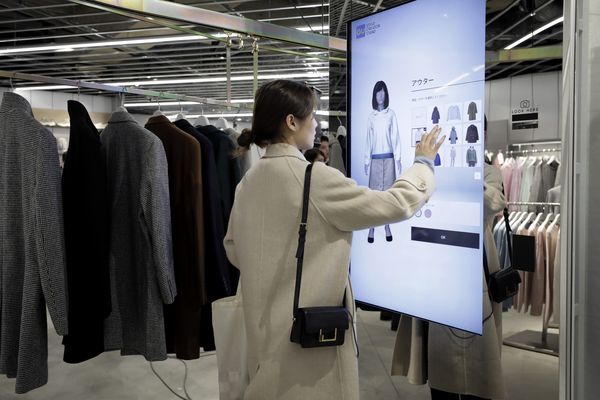
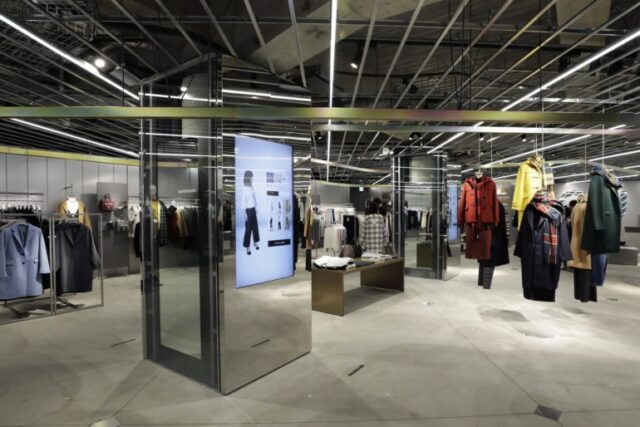
    A brand-new store opened last week in Tokyo’s Harajuku fashion district but it has a twist: shoppers are meant to walk away empty-handed. The GU Style Studio store, opened by Asia’s largest clothier and Uniqlo operator Fast Retailing Co., is for customers to try apparel and place orders online for later delivery.

    They can also try out extra services, such as playing with clothing combinations on a virtual mannequin and creating a digital avatar.

    Although the notion of showcase shopping has been around for a while, and remains somewhat popular in Europe, such stores have usually been reserved for electronics, household items and knick-knacks.

    Seldom has the idea been ported over to the clothing sector. But, as the rise of e-commercethreatens to upend the global retail industry, apparel makers are experimenting with new ways of selling clothes.

    “Among large specialty chain retailers, Fast Retailing has one of the most developed digital strategies,” said Dairo Murata, an analyst at JP Morgan Securities. “They are doing it all in-house, and it allows them to be more competitive.”

    The line separating online and offline storefronts is becoming blurrier as e-commerce moves into physical locations and brick-and-mortar retailers shift online.

    That’s resulted in new shopping experiences such as Amazon’s Prime Wardrobe, which sends boxes of clothing to customers to try on, letting them send back what they don’t like.

    GU isn’t the first to open a try-on store; Inditex SA’s Zara also temporarily opened a look-and-buy outlet in Tokyo’s Roppongi district this year.

    GU has steadily grown into a key pillar of Fast Retailing’s business, accounting for about 10 percent of revenue in the latest fiscal year. It has almost 400 stores across Asia, mainly in Japan, Taiwan and mainland China, and is known for being more affordable and more fashion forward than its bigger sibling, Uniqlo.

    The GU brand has also historically been more experimental with technology, being the first in Fast Retailing’s portfolio to introduce RFID tags and self-checkout.

    In 2017, a futuristic digital store popped up in the city of Yokohama with screens on shopping carts recommending various clothing combinations as people walked through the store.

    JP Morgan’s Murata said GU’s new Harajuku outlet could be a template for rolling out smaller shops in cities that don’t have space to store inventory. He said it could be applied to Uniqlo as well. But Osamu Yunoki, GU’s chief executive officer, said the company hasn’t decided whether to adopt the concept for Fast Retailing’s other brands, or other conventional GU stores carrying inventory.

    Shoppers at the new GU store can scan QR codes attached to clothes to bring up purchase links on their phones, and are also encouraged to test clothing combinations on a virtual mannequin on a separate app. Cameras placed in the store capture can also be used to create a virtual avatar of shoppers, although the resemblance was unconvincing.

    The store is able to collect and use data on how customers are shopping, such as what items customers are scanning into their phone, which clothing they try on and whether they purchase it or not. That could serve an important function for Fast Retailing’s efforts to automate its entire supply chain.

    “That kind of data from customers can be connected immediately to product development and manufacturing plans,” Yunoki said.

    At the same time, he said, the company is trying to offer something new for shoppers.

    “We’re fusing the in-store experience and e-commerce to offer a fun and convenient experience,” Yunoki said. “Harajuku isn’t just for shopping, it’s also a place where fashion is created. We’d like to use our customer’s creations as a stimulus for developing new types of fashion.”

  • JD to grow its own vegetables for sale on and offline

    JD to grow its own vegetables for sale on and offline

    JD has partnered with Japanese chemical manufacturing giant Mitsubishi Chemical to open the largest hydroponic “plant factory” in China. The omnichannel retailer says the premium-quality, fresh produce produced at the new facility will provide its customers with new options for safe, nutritious and environmentally friendly food, online as well as offline at its 7Fresh supermarkets.

    The factory spans 11,040sqm and incorporates a hydroponic culturing system with solar light and a closed seedling production environment using artificial light. Currently it can produce spinach, cabbage, red and green lettuce, coriander, among others.

    All crops produced at the site are tracked from the time they are planted to when they are delivered, a step toward the future of food production and retail as consumers worldwide increasingly demand transparency. In China, in particular, consumers place high importance on food safety while the overuse of fertiliser, environmental deterioration, and rapid population increase have caused soil problems.

    In the new facility, temperature, humidity, light, and liquid fertiliser are automatically controlled by the factory’s management system, enabling more standardised production of high-quality vegetables without the challenge of seasonal changes. For example, spinach produced in the facility contains 80 per cent more folate, 32 per cent more vitamin C, 25 per cent more potassium and 37 per cent more phosphorus than if grown in the field. Meanwhile, the technology makes pesticides and agrochemicals unnecessary, reducing the need for washing.

    The factory can produce a higher output of vegetables than traditional agriculture systems; it can grow 19 batches of spinach in a year, compared to just four batches per year in a field or six per year in a greenhouse. It only requires half a litre of water to grow any of the factory’s vegetables. The factory is integrated with JD’s cold-chain logistics network, so vegetables can be delivered to consumers’ tables as soon as the same day they are harvested.

    “The JD Plant Factory in Tongzhou marks JD’s entry into the very beginning of the fresh-food production chain, allowing us to guarantee that the fresh goods we sell have been treated with the care JD applies to everything we do,” said Xiaosong Wang, president of JD FMCG and food businesses.

    “JD’s supply chain technology, logistics network and e-commerce expertise combined with Mitsubishi Chemical’s sophisticated growing technology puts us in an ideal position to create an entirely new model for agriculture, and cultivates a fresh and healthy lifestyle in China.”

    Fresh vegetables from the plant factory will be available on JD.com and at 7Fresh stores from this month. JD and Mitsubishi Chemical will cooperate to introduce more fruits and vegetables in the future.

  • Visa Thailand to strengthen security in payment

    Visa Thailand to strengthen security in payment

    Visa, the world’s leader in digital payments, has today launched its Future of Security Roadmap for Thailand, outlining a robust approach for strengthening payments security in the country over the next 3 years. Visa’s Roadmap focuses on a number of key initiatives which will enable security to evolve at the same pace as the technologies changing the way we pay. These security initiatives include:

    • Devalue data by removing the sensitive data from the ecosystem and making stolen account details useless.
    • Protect data by implementing safeguards to protect personal data as well as account details.
    • Harness data by identifying potential fraud before it occurs and increase confidence in approving good transactions.
    • Empower everyone, including accountholders, 3rd party providers and merchants, to play an active role in securing payments.

    Suripong Tantiyanon, Country Manager, Visa Thailand said: “We are proud to be launching our Thailand Future of Security Roadmap. Securing the commerce ecosystem is our highest priority and one we view as a shared responsibility between payment networks, consumers, banks, and the government. Technology has enabled new innovative ways to pay and be paid, but it has also brought unique risks. To stay ahead of fraud, we need to work together and give security the same attention and investment as we do the innovations driving new commerce experiences.”

    The release of Visa’s Roadmap comes at a time of rapid change for payments in Thailand with innovations such as mobile payments set to enhance the payment experience for consumers. According to Visa’s Consumer Payment Attitudes Study, security remains a key consideration for consumers across Southeast Asia with two-thirds (67 percent) concerned about the safety of their personal information when using their mobile phone to make payments.

    When asked specifically about what their top three concerns were when using their mobile phones to make payments, consumers in Thailand said losing my phone or having my phone stolen, my phone getting hacked or someone intercepting my data, and malware or viruses being installed on my phone.

    Visa works with industry stakeholders including financial institutions, merchants, policy makers, law enforcement and accountholders to secure payments. The Visa Future of Security Roadmap is the product of comprehensive consultations and collaboration, making it an authoritative document on Thailand payments security.

    Visa is delivering roadmaps around the world to ensure the security of the global commerce ecosystem, as well as working with Thai industry bodies to align security initiatives.


  • ShopBack Partners Petron to Launch Petrol Redemption Programme

    ShopBack Partners Petron to Launch Petrol Redemption Programme

    Malaysians can now utilise cashback from ShopBack every time they refuel at petrol stations. The No.1 Cashback portal in the country recently inked a partnership with Petron Malaysia, becoming the first in the country to allow users to convert cashback to Petron Miles (PMiles) Points and vice versa.

    “Previously, after our users get cashback from their online purchases, they can choose to transfer the cash to their bank accounts or use it to offset Maxis phone bills. The collaboration with Petron is a first for both parties – the first long-term online to offline redemption for ShopBack, and the first offline to online redemption (PMiles Points to cashback) for Petron as well,” says Alvin Gill, Country General Manager of ShopBack Malaysia.

    He mentions that the number of users who accumulated five figures cashback savings through ShopBack is on the rise. Malaysians are getting more familiar with cashback benefits and the company has been exploring opportunities to continue shaping a smarter consumer spending habit offline, of which it feels the priority should be on ways that meet the practical needs of Malaysians’ daily life.

    “It is reported that about 23.9 per cent of Malaysians’ disposable income was spent on petrol, housing and utilities in 2016. Hence we decided to pursue petrol redemption as the second non-cash withdrawal option. ShopBack is excited to launch this with Petron and we definitely look forward to similar collaborations in the future.”

    The PMiles Points redemption option is now available on all ShopBack platforms (web, mobile web, and app).

    To convert cashback to PMiles points, users just need to log onto their accounts, select withdraw – points redemption and thereafter fill in the required information. For every RM10 cashback, users can convert it to 600 PMiles points.

    According to Choong Kum Choy, Head of Retail Business for Petron Malaysia, the collaboration with ShopBack underscores Petron’s commitment to provide the best customer experience for PMiles members. “We are committed to giving our customers the best products, the best service, and the best rewards. Our collaboration with ShopBack gives our PMiles holders more value with the cashback option, while significantly enhancing their shopping experience.”

    Currently, Petron Malaysia has more than 620 service stations in the country. PMiles members can also convert their points at Petron Service Stations Nationwide or download the form from PMiles Website. Every 1000 PMiles points can be converted to RM10 Cashback, which will be credited into the user’s ShopBack account.

  • Lazada to tackle counterfeit Korean products more seriously

    Lazada to tackle counterfeit Korean products more seriously

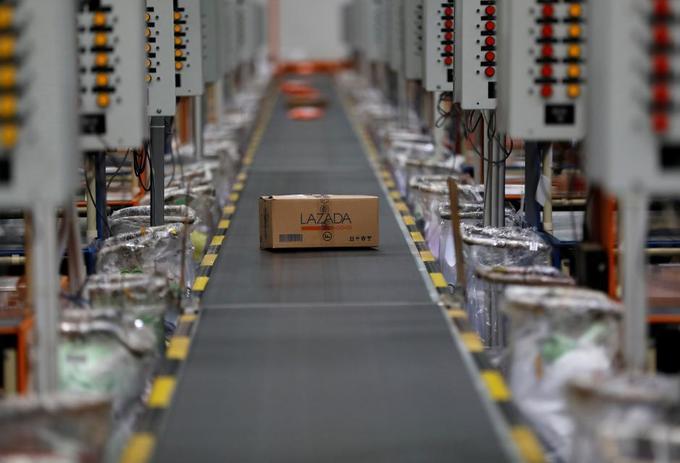
    Lazada has pledged to remove any counterfeit South Korean goods from its platform in a Memorandum of Understanding signed with the Korea Intellectual Property Protection Agency (KOIPA). It is reportedly the first time a Southeast Asian e-commerce company has reached an agreement with the Korean IP regulator and reflects the growing popularity of Korean beauty and fashion products online across Asia.

    Korean brands online and considered at risk from counterfeit products include Etude House, Innisfree, Laneige, Mamonde and 3CE.

    “The combined followers for [those brands’] Lazada flagship stores are more than 200,000,” Gladys Chun, general counsel and head of government affairs at Lazada Group said.

    “Laneige, Mamonde, Innisfree and 3CE were top search terms in Malaysia, Singapore, Thailand, and Vietnam during the recent Lazada 11.11 Shopping Festival.”

    Lazada has undertaken to remove any counterfeit goods from sale on its platform when alerted by brand owners, once it has confirmed authenticity. Sellers caught trying to sell copy goods on its site face blacklisting.

    “Such measures to curb illicit trading of goods on Lazada are aimed at boosting the confidence and preserving the trust of shoppers on our platform,” Chun said.

    “At Lazada, we respect and collaborate with rights holders in safeguarding their IP through a combination of proactive and reactive measures. It is incumbent on us to create that trusted space for shoppers and brands, giving them the peace-of-mind that we will always be acting in their best interests.”

  • Zara lipstick launched online

    Zara lipstick launched online

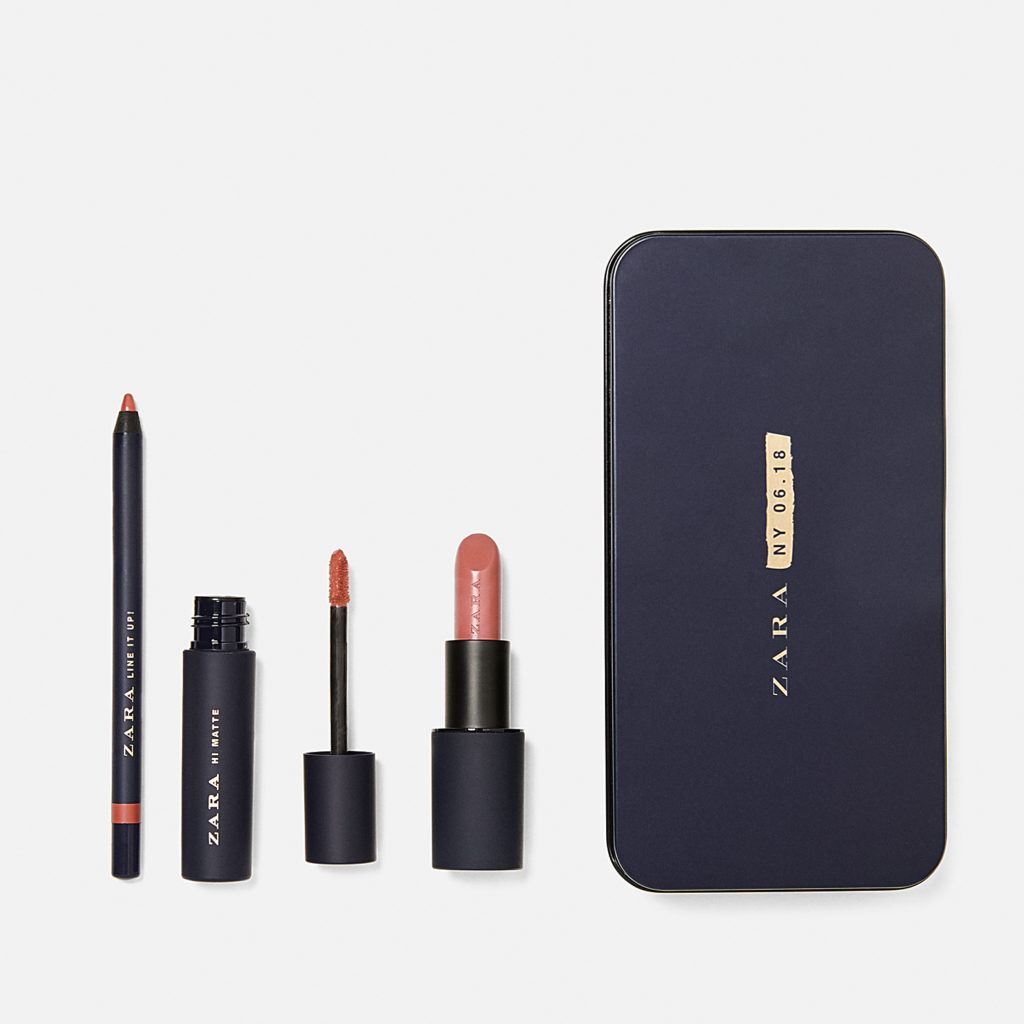
    Zara lipstick goes on sale this week – but only online. The fast-fashion brand’s first lipstick collection – called Zara Ultimatte – marks a continuing expansion of its beauty and cosmetics offer. Sister brands Bershka and Pull&Bear already have makeup lines, targeting younger consumers.

    Parent company Inditex says the collection was “inspired by the kind of makeup needed to create ad campaigns”. It is based on a colour palette created by British make-up artist Pat McGrath, (famous for working with Christian Dior and Armani Beauty, among others).

    The French-made Zara lipstick collection was designed in Los Angeles, featuring 12 high-pigment lipsticks, eight liquid-matte lipsticks, a box kit with three red colours and a limited-edition, behind-the-scenes kit. Prices range from €7.95 to €19.95. While available only on the Zara website, the company will ship worldwide.

  • India’s Shop101 in talks for funding boost

    India’s Shop101 in talks for funding boost

    Indian online marketplace Shop101 is seeking to raise $11-12 million in a Series B funding round. Talks concerning the investment are being led by Kalaari Capital and Unilever Ventures, with participation expected by current backer Stellaris Venture Partners, which invested $5 million several months ago. Investment capital is likely to assist the firm in technological development and expansion into new business categories.

    Shop101 uses Whatsapp, Facebook and Instagram functionality to support online entrepreneurs. WhatsApp and Facebook each have more than 200 million users in India. The Shop101 app has been downloaded about 1 million times and has experienced growth of 50 per cent month on month since its launch.

    A joint report by Google and KPMG last year indicated online SMEs could boost Indian economic growth by 10 per cent by 2020.

  • Malaysia’s e-commerce on growth estimation

    Malaysia’s e-commerce on growth estimation

    The government is targeting for e-commerce to achieve an annual growth rate of 20%, from a 14.3% growth posted in 2017, via its various initiatives. Deputy International Trade and Industry Minister Dr Ong Kian Ming said e-commerce registered a continuous increase for the period of seven years to RM85.8 billion in 2017.

    He said the government, through the National E-commerce Council, will continue to chart the growth and development of e-commerce in the country through the implementation of the National E-commerce Strategic Roadmap.

    Malaysia also signed the Asean Agreement on Electronic Commerce on Nov 12, 2018, a concerted effort between 10 countries to smoothen cross border e-commerce transactions by reducing barriers and lowering entry costs.

  • Lazada Malaysia to sell houses soon

    Lazada Malaysia to sell houses soon

    Southeast Asian e-commerce platform Lazada will begin selling houses in time for its planned 12.12 shopping festival. The move, in partnership with Malaysian property developer Mah Sing Group, constitutes part of Lazada’s plans to grow the variety of items on its platform.

    Lazada Malaysia CEO Christophe Lejeune said it plans to increase the number of Malaysian sellers from the platform’s current 50,000 to hundreds more, as well as provide support for 8 million Southeast Asian SMEs by 2030.

    Lazada operates in Thailand, Indonesia, Vietnam, Singapore and the Philippines, beyond the Malaysian market.

  • Blackpink is now Shopee brand ambassador

    Blackpink is now Shopee brand ambassador

    Popular all-girl K-pop group Blackpink has been appointed Shopee’s first regional brand ambassador. The appointment is timed to coincide with Shopee’s 12.12 birthday sale, which has embarked on a two week promotional campaign. The planned deals include discounts of up to 80 per cent for the one-day-only promotion.

    To draw attention to the sale day, Blackpink have released a dedicated shopee commercial currently available for viewing on YouTube.

    The promotion coincides with the launch of Korean entertainment firm YG Group’s official shop on the platform across five Shopee markets, including Singapore.

    K-pop group Blackpink was founded in 2016 and within just two years has built a strong reputation for its unique vocals and the group members’ personalities. Hailed by Billboard as the best-charting female Korean act in history, Blackpink has established prominence with record-breaking releases, including the single Ddu-Du Ddu-Du and albums Square One, Square Two and their most recent mini-album, Square Up.

  • Vietnam’s peer-to-peer shopping and delivery platform gets South Korea license

    Vietnam’s peer-to-peer shopping and delivery platform gets South Korea license

    Vietnamese peer-to-peer delivery service XTayPro has been licensed in South Korea and expects this to be a stepping stone into East Asia. The app is a platform connecting people travelling by air with those who wish to buy or send products overseas.

    It creates a community of travelers who can make a little extra cash by buying and carrying stuff for others.

    Less than four months ago XTayPro had participated in the K-Startup Grand Challenge, a start-up accelerator program supported by the South Korean government.

    It has since signed 10 memoranda of understanding and letters of intent with funds and technology investment companies in South Korea.

    The K-Startup Grand Challenge has been held annually since 2016 to help start-ups grow and expand into Asian markets. It has so far supported 40 startups and solicited $26 million for them.

    At this year’s event Vietnam had 8 representatives who overcame 1,700 other start-ups from 100 countries to join a group of 80 in the 4-month Acceleration Program.

  • Retail sector Korea in future

    Retail sector Korea in future

    Technology and e-commerce trends are reshaping the global retail industry in profound ways, as the rise of online channels threatens to displace more traditional shopping experiences. However, Korea’s retail sector seems to be thriving in the face of this upheaval, with a 6% year-over-year increase in retail sales by Q3 2018. What are the factors fuelling this encouraging retail growth?

    Firstly, improved relations with China and North Korea have energised the retail sector, with duty-free sales registering an impressive 34% year-over-year growth by Q3 2018. While this retail boost can primarily be attributed to the recent surge of Chinese tourists in Korea, it also reflects the growing international popularity of Korean beauty and lifestyle brands.

    E-commerce is also emerging as a key driver of Korea’s retail sector. Online channels have experienced rapid growth since 2010, and will only keep expanding their foothold as Korean consumers start shifting away from brick-and-mortar stores. With Korea’s e-commerce market predicted to grow by 21% this year, traditional retailers will need to find new ways of adapting to this rapidly evolving landscape.

    Some retailers are already turning to artificial intelligence and other Industry 4.0 technologies in an effort to provide consumers with more innovative shopping experiences. For instance, Hyundai Department Store is using Naver’s virtual assistant Clova to answer customer inquiries – whether they relate to store locations or specific purchases.

    Another interesting example is retail giant Lotte Home Shopping, which has developed its own augmented reality system so that customers can visualize how products would look in their home. As these new technologies get ushered into the mainstream, we can expect to see more and more retailers jumping on the AI bandwagon in the next few years.

    However, this doesn’t mean that we should write off the traditional brick-and-mortar experience just yet. Major brands are still banking on attracting consumers with the enduring prestige of high street locations – such as Maison Kitsuné, which recently opened its flagship store in Seoul’s trendy Garosugil district.

    Many global retailers continue to view Seoul, one of the world’s most famous shopping destinations, as a test bed in Asia. With cosmetics brands like Givenchy Beauty and Armani Beauty making their debut in Seoul this year, and renowned F&B brand Blue Bottle Coffee preparing to enter the Korean market in 2019, it’s clear that leasing demand from foreign retailers is still going strong.

    If we look to other segments of the retail industry that are experiencing growth, it’s worth highlighting the surge of fresh food delivery services across the country. With double-income families emerging as a major consumer force, demand for overnight fresh food delivery has also been rising – and major retailers as well as food startups are turning their attention towards this potentially profitable market.

    The rapid expansion of the food delivery market – and of the e-commerce sector in general – is proving to be a windfall for Korea’s logistics industry. Logistics developers are recognizing the need for large-scale modern logistics centers capable of storing and delivering goods nationwide, with faster delivery remaining the market’s key competitive measure. The growing demand for cold chain facilities is expected to fuel a mass redevelopment of older warehouses, especially in the Greater Seoul area.

    So far, Korea’s retail industry has shown remarkable resilience against a backdrop of technological disruption. More brick-and-mortar retailers are offering F&B, AI and entertainment options to differentiate themselves from their e-commerce counterparts; and this trend will only grow as consumers seek out unique shopping experiences. The question is, will Korea’s retail market keep thriving in the long term?  As long as technology continues to enhance – and not supplant – existing retail experiences, we can venture to hope that a bright future is in store for this challenging and dynamic sector.

    -CBRE-