Tag: ecommerce

  • Amazon ‘here in 60 days’

    Amazon ‘here in 60 days’

    Amazon could launch across Australia within the next 60 days, according to Citi Australia.

    Based on supplier feedback across many categories, Citi said a pre-Christmas Amazon launch date is likely.

    “Launch timing remains uncertain and subject to website and logistics testing, but we would expect a formal launch to occur sometime in October 2017, ahead of Black Friday on 24 November,” Citi analysts said in a note.

    “We expect Amazon to offer free delivery over a value threshold, with the Prime service to be offered later, potentially coinciding with Prime Day in July 2018.”

    Citi said Amazon will be buying directly from leading suppliers, holding inventory and setting retail prices, adding that buying terms have been set and first orders have been placed with suppliers in recent weeks.

    “This increases near term gross margin risks for retailers as price will be Amazon’s key lever.”

    Contrary to initial press releases and market expectations, Citi said that Amazon Marketplace is a secondary focus, although several retailers and Ebay sellers have been targeted.

    “In our view, lower pricing will likely be the result of Amazon’s lower margin and ROI expectations, particularly in the short term. A lower cost-to-serve could provide support for favourable buying terms relative to bricks and mortar retailers.”

    Citi suggested Amazon has targeted a full product range with key suppliers.

    “Based on our estimates, the incremental 2Q18e sales impact could be ~$200 million or ~0.2 per cent of total Australian retail sales,” said Citi analysts.

    Meanwhile, Amazon is searching for a location to build its second headquarters in North America that would cost more than $US5 billion ($A6.2 billion) and house up to 50,000 staff.

    The e-commerce company, which is headquartered in Seattle, said on Thursday it was seeking proposals from local and state government leaders and would select the location next year.

    Amazon’s workforce has exploded to more than 380,000 from under 25,000 since it moved to Seattle in 2010, as it rapidly expanded to become a global retailer – selling everything from groceries to appliances.

    The company’s total revenue has grown to $US136 billion at the end of last year from $US34 billion in 2010. Amazon recently snatched up Whole Foods Market for $US13.7 billion.

    Amazon said the new headquarters should ideally be located in a metropolitan area with more than one million people, potentially giving the company a shopping list of more than 50 cities to choose from.

    The project would initially need more than 500,000 square feet and up to 8 million square feet beyond 2027, Amazon said.

    “We want to find a city that is excited to work with us and where our customers, employees, and the community can all benefit,” Amazon said.


  • ShopBack Thailand launches Cashback Day

    ShopBack Thailand launches Cashback Day

    ShopBack Thailand, the cashback platform that rewards consumers for shopping online, has declared next Saturday as the nation’s first Cashback Day.

    Five days of savings kick off today with sneak-preview deals between 9pm and midnight. Until Friday, shoppers are offered up to 49 per cent cashback from such platforms as Aliexpress, Apple Store, Expedia, Lazada, Sephora and Uber. Then all day Saturday shoppers can receive up to 99 per cent cashback on purchases, plus discounts and promotional codes from travel, food, lifestyle and entertainment businesses.

    “To thank our customers for the overwhelming response we’ve received since ShopBack’s launch in Thailand in July, this inaugural Cashback Day will bring them more savings than usual” says ShopBack co-founder/country head Kawin Prachanukul.

  • Saudi Arabian ‘honesty’ app takes internet by storm

    Saudi Arabian ‘honesty’ app takes internet by storm

    Its mass appeal stems from the appetite in the Arab world — notorious for online censorship — for unfiltered platforms for expression.

    Fizzing with boyish exuberance, Saudi programmer Zainalabdin Tawfiq could be mistaken for a college freshman, but the popularity of his “honesty” app has shone a spotlight on the conservative kingdom’s nascent tech scene.

    Tawfiq catapulted to fame when he took time out of his day job as a business analyst last year to develop an anonymous messaging tool called Sarahah — honesty in Arabic — that subsequently topped the charts for app downloads.

    Initially conceived as a tool for soliciting bluntly frank workplace feedback, Sarahah has found its way into the smartphones of millennials worldwide, even as critics have raised alarm about trolling and privacy issues.

    “Sarahah is the digital equivalent of an old-school suggestion box,” 29-year-old Tawfiq told AFP, adding that it is built on the premise that stripping users of their identity promotes ruthless honesty.

    “Feedback is the goal — anonymous feedback.”

    The app has a frugal design and a simple prompt that encourages users to “leave a constructive message :)”, with the recipient not allowed to reply but only share it on social media or block the sender.

    Its mass appeal stems from the appetite in the Arab world — notorious for online censorship — for unfiltered platforms for expression, though Tawfiq said it has also gained a strong popularity in Western countries.

    Such has been its power to knock down social barriers that obstruct free speech that one user described it as an app where you can “hit enter on comments you would have otherwise backspaced”.

    Sarahah has so far drawn 85 million registered users, and rocketed to the top of the Apple app store in some countries, ahead of heavyweights such as Snapchat and Instagram.

    ‘Oil’s decline, entrepreneurship’s rise’

    “The success story of Sarahah really proves that Saudi startups can achieve spectacular gains when properly supported,” said Nawaf Alsahhaf, CEO of Badir, a government-backed technology incubator that helped Tawfiq.That a Saudi app could gain such success spotlights hidden potential for tech innovation and entrepreneurship at a time of economic transformation in an ultra-conservative country.

    “There truly is undeniable potential behind Saudi startups we currently incubate,” he told.

    Saudi Arabia is promoting private enterprise as part of its ambitious reform program to move the kingdom away from its dependence on oil revenues.

    “It is clear oil’s decline and entrepreneurship’s rise are necessarily intertwined,” the Beirut-based venture capital firm Leap Ventures wrote on its website last year, noting a new growth in disruptive tech innovations in the region.

    A new breed of Saudi startups — from an on-demand roadside assistance app called Morni to Hunger Station, a food ordering portal — have recently drawn the attention of venture capitalists.

    Minimising abuse

    Tawfiq said he is in negotiations with venture capitalists from the United States, China and the Arab world, without disclosing details, in response to critics who question whether his app can be effectively monetised.

    In some gender-segregated Arab societies, men have used Sarahah for secret love confessions, but it has also been used by service delivery companies to harvest constructive feedback and psychiatrists in far-away Mumbai to engage openly on subjects such as sexual health.

    Sarahah has come under fire for being a troll magnet — but Tawfiq said that problem was common to all major social media platforms.

    It has also recently been accused of secretly harvesting the address books of users. Tawfiq rejected that claim and said he plans to remove Sarahah’s address upload feature with the next update.

    He currently runs a tight ship with another business partner and three customer support executives, but is considering leaving his day job to focus on Sarahah full time.

    “I believe that even one case (of abuse) is actually too many,” Tawfiq said. “I won’t tell you how, but my aim is to make the job of misusers as difficult as possible.

  • Boom time for Thailand internet shopping

    Boom time for Thailand internet shopping

    As consumers become more tech savvy, Thailand internet shopping has boomed.

    Online retail sales in Thailand are more than doubling annually, whereas traditional stores are seeing only about 10 per cent growth.

    This is attributed to a combination of stronger and faster internet speeds in Thailand plus the success of online merchants such as Lazada.

    Thailand mobile-phone company Total Access Communication estimates Thais spend up to six hours a day on social media websites like Facebook and Youtube.

    Corporate financial services company Maybank Kim Eng Holdings says Thailand is the only Southeast Asian country that includes an online category for retail sales data.

    While online sales in Southeast Asia have been growing strongly, they still account for less than 4 per cent of overall retail purchases, according to a Maybank report by economists Chua Hak Bin and Lee Ju Ye.

    Larger markets, like China and South Korea, already have higher penetration rates of online retailing at 16 and 18 per cent respectively. They say this shows the potential for Southeast Asia, where e-commerce sales could reach 5 to 10 per cent of overall retail purchases over the next five years.

    Meanwhile, Alibaba Group Holding founder Jack Ma has joined a government panel in Indonesia that has the task of steering the e-commerce industry in Southeast Asia’s most-populous nation. Macquarie Research estimates online retailing in the country could reach $65 billion by 2020.

  • Korean online mall sales lose traction

    Korean online mall sales lose traction

    South Korean online mall sales growth has decelerated as competition grows more fierce, government data shows.

    There was a 3.6 per cent increase in the combined revenue of 26 offline and online retailers to 10.22 trillion won (US$9 billion) in July, according to the Ministry of Trade, Industry and Energy. This gain marks a deceleration from 7.2, 6.3 and 7.2 per cent growth posted in April, May and June respectively.

    The slowdown is attributed largely to fewer sales on online open markets such as eBay and 11st.

    Sales at 13 major online shopping malls rose 4.4 per cent last month, following double-digit growth for five straight months since February. Meanwhile, the sales of the 13 offline retailers, including department stores, discount chains and convenience stores, rose 3.2 per cent on-year on the back of strong performance by convenience stores.

    Convenience stores saw their sales rise 11.1 per cent last month, with hypermarket chains posting 1.7 per cent growth and department stores having a 1.3 per cent revenue slide.

  • WeChat goes to ground with WeStore test

    WeChat goes to ground with WeStore test

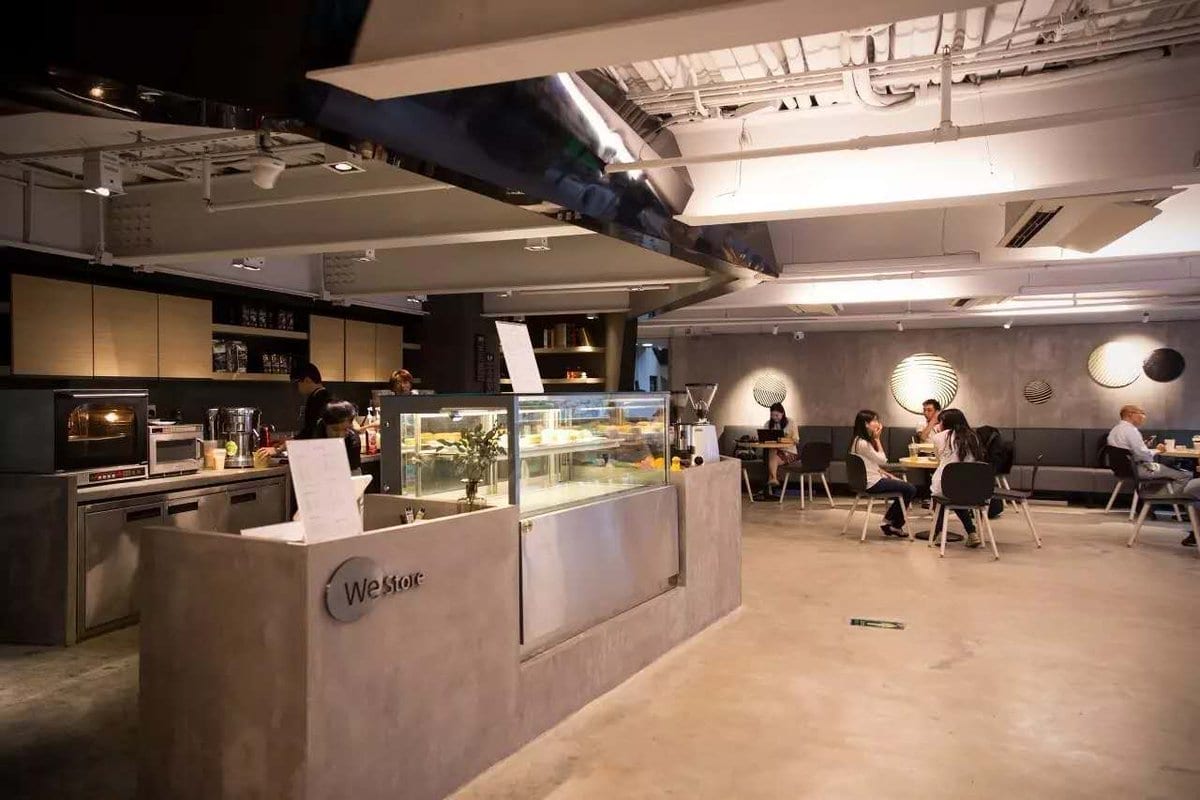
    As Chinese chat app WeChat moves into merchandising, it has opened an on-ground “test” WeStore in Guangzhou.

    This follows its announcement that it is partnering with apparel retailer Gap to launch a range of WeChat-branded clothing, its first major foray into branded merchandise.

    This was foreshadowed at December’s annual WeChat conference in Guangzhou, where are limited-edition range of branded merchandise was released, including pillows, notebooks, stickers and pins.

    A few months ago, WeChat-themed merchandise such as pillows, bags and light jackets was used as prizes for an online competition.

  • E-commerce leap for Gome Retail

    E-commerce leap for Gome Retail

    A 54.24 per cent leap in e-commerce sales has been recorded by Gome Retail Holdings, formerly known as Gome Electrical Appliances Holding, for its first half.

    The company’s online-offline total gross merchandise volume grew by 22.87 per cent year on year, while sales revenue rose 7.82 per cent to about RMB38 billion (US$5.7 billion).

    Sales from the comparable stores increased by about 2.34 per cent and the consolidated gross profit margin went up by 1.46 points to 17.83 per cent.

    As a result, the profit attributable to the owners of the parent eased by 1.61 per cent to about RMB122 million.

    The weighted average sales area of the group’s stores was about 5.2 million sqm, with revenue per sqm about RMB7273, up by 12.41 per cent on the first half last year.

    Sales revenue from the 1000 comparable stores was about RMB22.9 billion, up 2.34 per cent.

  • JD.Com In Talks For A Joint Venture In Thailand

    JD.Com In Talks For A Joint Venture In Thailand

    Chinese online retailer JD.com is considering starting an e-commerce joint venture whose planned total investment would be half a billion dollars. The joint venture talks with the Central Group of Thailand would help the second biggest online retail company in China get a foothold in Southeast Asia and further diversify its business beyond its domestic market.

    Currently the only other foreign country that JD.com has a presence in is Indonesia where the Chinese online retailer runs Traveloka, a travel startup, and an e-commerce platform. A presence in Southeast Asia would also assist JD.com catch up with bigger rivals Amazon and Alibaba who already have a presence. At the moment the two are fighting for market share by introducing new services with the most recent being quick deliveries in the city state of Singapore.

    Regional hub

    According to the chief executive officer of JD.com, Richard Liu, the Chinese online retailer intends to launch in Thailand later in the year. It will use the country as a hub for servicing the region and this includes countries such as Malaysia and Vietnam.

    Besides e-commerce, JD’s joint venture in Thailand will concentrate on the financial sector. An agreement on ownership terms is holding back the conclusion of the deal. The control of Central Group is in the hands of the Chirathivat family.

    Fast-growing sector

    This will not be the first time that Central Group is eyeing e-commerce which is a fast growing sector in Thailand. Last year the firm acquired the Thai unit of Zalora, an online fashion retailer. The value of e-commerce market in Thailand is currently estimated to be $900 million and in the next decade it is projected to grow by 29%. This is as per a report published last year by Temasek and Google. Currently the major players in the Thai e-commerce sector include Lazada, an outfit backed by Alibaba; Ascend, a unit of Thailand’s CP Group and 11 Street from South Korea.

    The report prepared by Google and Temasek expects Southeast Asia’s e-commerce market to grow 16-fold by 2025 and reach a figure of $88 billion. The population of the region currently stands at about 600 million people.

    JD’s planned joint venture in Thailand comes a little more than a week after the online retailer slipped back into loss territory in the second quarter results. The retailer reported a net loss of $42.3 million despite revenues increasing by 44%.

  • DHL eCommerce gets logistics technology platform – FarEye on board

    DHL eCommerce gets logistics technology platform – FarEye on board

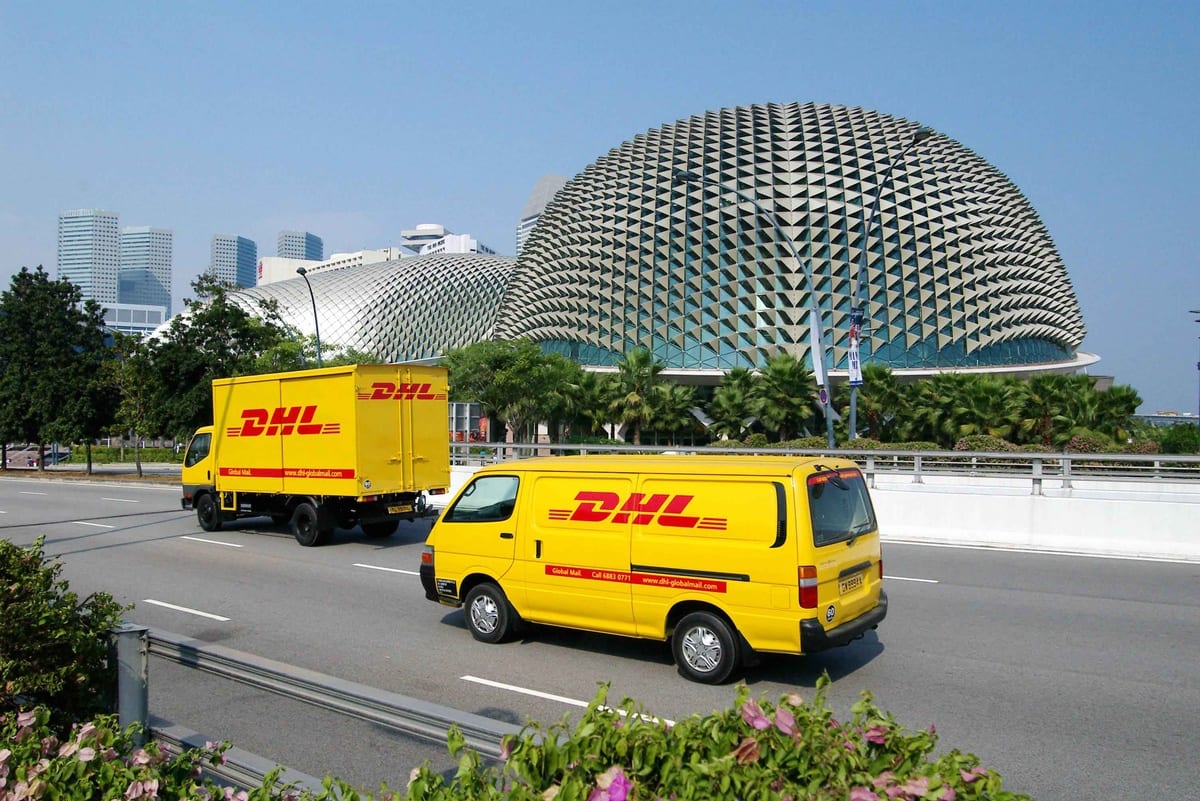
    FarEye, a logistics management solutions company, became a partner of choice for DHL eCommerce to enhance its customer experience, optimise its resources and deliver its brand promise ‘real-time’.

    DHL eCommerce continuously invests in technology to improve processes and have better communication across all parties. FarEye’s platform became an apt fit as it seamlessly integrated with the organisation’s existing systems and made the IT infrastructure flexible and agile. Being a Software as a Service (SaaS) platform, FarEye gave DHL eCommerce the flexibility to the scale-up and down depending on the demand levels, which gave them an edge to adapt quickly to any work environment.

    DHL eCommerce measured vendors not only by the basis of the features they offered but evaluated them holistically from a ‘process proposed’ perspective.

    Charles Brewer, CEO DHL eCommerce, expressed: “With eCommerce growing at such a rapid pace we see a fantastic opportunity for high quality solutions that will offer a great customer experience and more choice, convenience and control for online shoppers. FarEye’s platform is scalable, future-oriented and flexible. With FarEye we can deliver ‘delight’ by having complete visibility of the logistics movement and keeping customer informed at every step, ‘real-time’.”

    Kushal Nahata, co-founder & CEO FarEye, said:“FarEye is an indispensable support system for brands whose focus is enhanced customer experience and complete visibility of their logistics. Our association with DHL e-commerce has been extremely gratifying as we were competing against giants. FarEye is an enterprise grade technology platform and this win is a testimony to our platform’s capability and defined processes. We shall continue to strive towards excellence and keep our customers at the center of all our activities.”

    FarEye has proved to be a partner of choice for DHL eCommerce by optimising their resources, enhancing their customers’ experience with real-time alerts & smart analytics and making parcel shops more efficient with complete visibility.

  • Ebay names new leads for 3 regional teams

    Ebay names new leads for 3 regional teams

    Ebay announced it has promoted Scott Cutler, Jay Lee and Jooman Park to lead Ebay’s regional teams. Cutler will lead the Americas, Park will lead APAC and Lee will lead EMEA. Cutler has been with Ebay since 2015. Prior to Ebay he was the Executive Vice President of the New York Stock Exchange for nine years.

    He got his law degree from the University of California Hastings College of Law and began his career as a securities attorney.

    Cutler’s new title will be Senior Vice President of the Americas. He will lead both the Ebay Marketplace in the region as well as continue to lead StubHub until a new leader is found for that role.

    Lee has been with Ebay for fifteen years. His work with the company focused on building market share in Korea. He did that through developing the company’s Gmarket and Auction platforms in Asia. He also helped open up international exporting opportunities for Chinese sellers.

    Lee received his MBA from Harvard’s Graduate School of Business Administration. He will become the Senior Vice President for EMEA.

    Park has also been with Ebay for fifteen years. He spent eight years leading Ebay’s Korean business. He then transitioned to Australia where he focused on growing partnerships with the local retail industry.

    Park has an MBA from the Wharton School of Business. In his new role as Senior Vice President for APAC, Park will lead Ebay’s Marketplace.

    Devin Wenig, President and CEO of Ebay Inc. said the new appointees will “focus on accelerating core business and driving Ebay’s competitive advantages as a global commerce leader.”

    Ebay is based in San Jose, CA. Its main commerce platforms are the Marketplace, StubHub and Classifieds. It enabled $84 billion of gross merchandise volume in 2016.

  • Walmart online sales surge 60 per cent

    Walmart online sales surge 60 per cent

    Walmart online sales in the US soared by 60 per cent during the second quarter.

    Already the nation’s third largest e-commerce player, Walmart has been acquiring pure-play online businesses to gain range and – most importantly – experience in the online space. Companies such as Jet.com (which it paid $3.3 billion for last August), men’s apparel retailer Bonobos, (which it shelled out $310 million for in June), ShoeBuy.com, ModCloth and Moosejaw.

    CFO Brett Biggs told an earnings call last week that its e-commerce results include all web-initiated transactions including those through Walmart.com such as ship-to-home, ship-to-store, pick up today and online grocery, together with transactions through Jet.com and the other sites.

    Gross merchandise value grew by 67 per cent year-on-year in the quarter to July 31.

    “GMV represents the total US dollar volume of merchandise sold or services rendered for all transactions, including marketplace transactions, that are generally initiated through our e-commerce platforms or include our owned inventory sold on other third-party platforms,” Walmart said.

    Walmart offers more than 67 million products on Walmart.com, including its own goods and third-party lines. The number of SKUs online has grown more than 30 per cent quarter-on-quarter.

    CEO Doug McMillon said the majority of the growth was organic “as customers are finding a broader assortment and more options to receive what they want at their convenience”.

    The acquisitions were playing their part, as well, he said.

    “Our recent acquisitions, such as Moosejaw, ShoeBuy and Bonobos further improved our assortment and have provided critical category expertise in higher-margin categories like shoes and apparel.”

    Meanwhile, Walmart has begun trialling an “associate delivery service” which involves staff earning extra cash during their time off by delivering online orders to shoppers’ homes.

  • SoftBank invests $2.5b in Flipkart to stop Amazon

    SoftBank invests $2.5b in Flipkart to stop Amazon

    SoftBank has just announced its biggest investment in India: a whopping US$2.5 billion in Indian ecommerce company Flipkart.

    With this latest funding round, Flipkart boasts of over US$4 billion in cash on its balance sheet and SoftBank has become its largest shareholder.
    It’s the biggest ever private investment in an Indian technology company. “This is a monumental deal for Flipkart and India,” said Binny Bansal and Sachin Bansal, co-founders of Flipkart in an announcement made today.

    Neither SoftBank nor Flipkart disclosed the exact amount of funding which came from SoftBank Vision Fund, but sources said it is a little over US$2.5 billion.
    Last week, Tech in Asia reported that SoftBank was in talks with Flipkart for an investment after rival company Snapdeal, whose biggest investor is SoftBank, walked out of a distress sale to Flipkart. The deal was being negotiated for months.
    SoftBank is the largest investor in Snapdeal and Paytm, India’s two other homegrown ecommerce leaders. It made a solo investment of US$1.4 billion into Paytm earlier this year. “India is a land of vast opportunity.

    We want to support innovative companies that are clear winners in India because they are best positioned to leverage technology and help people lead better lives,” said Masayoshi Son, founder, chairman, and CEO of SoftBank.
    Last year, Jeff Bezos announced an additional investment of US$3 billion in Amazon India, on top of an initial US$2 billion back in 2014.

    The investment by SoftBank is part of the April funding round in which Flipkart had raised US$1.4 billion in capital from Tencent, Ebay, and Microsoft.

    The latest capital infusion by SoftBank – a mix of primary and secondary capital – will give Flipkart enough ammunition to fight the giant Amazon further.

    Launched in October 2007, Flipkart is India’s biggest homegrown ecommerce marketplace and has raised nearly US$5 billion in capital.

  • Online marketplace Pinkoi Thailand launches

    Online marketplace Pinkoi Thailand launches

    Pinkoi Thailand, a cross-border curated online marketplace for original design products, has been officially launched.

    Founded in Taiwan in 2011, Pinkoi individually selects its items, which include original handmade or small-scale produced clothes, shoes, bags, accessories and stationery.

    By curating products, Pinkoi appeals to specific demographics, reaching e-commerce consumers in Asia who want to make quick purchases because of limited browsing time.

    In Asia, says the company, the rise of the disposable incomes of millennials has seen a growing trend toward experiential spending, which includes a greater interest in one-off designs by local artisans.

    Inspired by the weekend markets and artistic fair in Taipei, the Pinkoi team seeks out up-and- coming and established niche designers throughout Asia. It supports its network of designers through workshops covering such topics as photography and packaging, webinars and online marketing.

    Pinkoi CEO Peter Yen says the latest launch is positive news for Thai designers, with 500 already signed up and accepted. “There is an incredible art and design scene in Thailand, and these numbers are expected to grow.”

    Through Pinkoi Chatbox, consumers can chat directly with designers, and even request customised items. Through the Pinkoi Window, designers can set up their own personal web page, while the Pinkoi Zine features news about designers. The Pinkoi Wall offers gift ideas and design inspirations.

    Opal Mahavana and Koranis Nettayanuwat, who co-own WhiteOakFactory, a Thai company that creates faux-leather bags, say they have sold 4000 items through Pinkoi since joining it two years ago. “We’ve been able to reach an international market that values individuality and smaller brands, giving us a presence outside of our localised community.”

    While Pinkoi is focussed on China, Hong Kong, Japan and the US, and now Thailand, it has a presence in 88 countries. It has 1.6 million members and has sold 3.7 million items.

    Today, 8000 shops on its website and app platforms offer about 860,000 products, retailing in five languages and 12 currencies.

    Designers reap 90 per cent of sales revenues.

  • Do Local Merchants Stand A Chance In E-Commerce Wars With Amazon?

    Do Local Merchants Stand A Chance In E-Commerce Wars With Amazon?

    Grocery stores around the country – and all independent brick-and-mortar retailers, for that matter – uttered a collective gulp the day Amazon announced it had acquired Whole Foods for a whopping $13.7 billion dollars.
    Amazon, the Goliath of online shopping and the behemoth responsible for shuttering the doors of retail brick-and-mortar establishments, is getting into the grocery game.

    In the same way bookstores and clothing outlets have been asking themselves how they’re going to survive, now the question is, what does this mean for small, independent grocery stores? And more importantly, how are local companies going to be able to compete with the marketing and distribution channels Amazon has in place?
    It’s no secret that commerce is increasingly living in the digital domain, with rising shares of retail revenue taking place online over time. Businesses have had to fight tooth and nail to be competitive, stand above the crowd, and be successful.

    They need to have an online platform, social media visibility, e-commerce and multi-channel experiences in place in order to thrive in today’s market.
    Some try to build their own internal systems, and others rely on third-party software to integrate with their POS system and handle on-demand customer ordering.

    While many people seem to believe that brick-and-mortar retail will soon be a thing of the past, tech giants like Amazon are proving that is far from true.

    Physical locations will still be part of the business landscape – they just might operate with different purposes.

    For Amazon, Whole Foods won’t just be a stand-alone grocer. It will likely be a powerful distribution medium for other parts of their business, such as AmazonFresh

  • Eric Zhao on leveraging technology for JD.com

    Eric Zhao on leveraging technology for JD.com

    Chinese e-commerce giant JD.com keeps racing its competitor Alibaba by evolving and being innovative. Both players are likely to increase their revenues for the next quarter. JD.com is today the largest retailer in China, counting US$37.5 billion net revenues in 2016, more than 122,000 employees and 7 fulfilment centres and 263 warehouses covering 2,672 counties and districts across China by March 31, 2017.

    Eric Zhao explains that JD.com is using big data and Artificial Intelligence (AI) algorithms to better understand its customers, to improve its systems and apply personalized search. Indeed, the customer’s online search is unique. Almost every page on their website is personalized depending on the user’s interests.

    JD.com is also leveraging the technology in other areas. First, with the supply chain management, they combine AI algorithms and big data in order to decide how to price the products.

    Then, with the logistics networks, they have started a drone program and are in the middle of building a complete solution to reach their goal of improving the efficiency of the company’s logistics network. Light, short-range drones are already being used to make deliveries in rural areas, and the company is now working on developing larger, heavy-load drones that can carry more than a ton. These would be used to transport high-quality products to remote areas and agricultural produce to cities.

    Artificial Intelligence technologies are used by JD.com to optimize its network efficiency. Using predictive logistics, for example, the company can anticipate what consumers want before they even place their orders and can dispatch goods to the nearest delivery station so that when consumers do place their order they can get their products soon afterwards.

    The consumer habits and needs are actually the biggest challenge for JD.com because they keep changing. JD.com needs to predict the user behaviour and the shifting demand to face the competition as well as to stand as the leader of the e-commerce industry.