Tag: ecommerce

  • Indonesia-based HappyFresh announces Series B round, leaves Philippines and Taiwan

    Indonesia-based HappyFresh announces Series B round, leaves Philippines and Taiwan

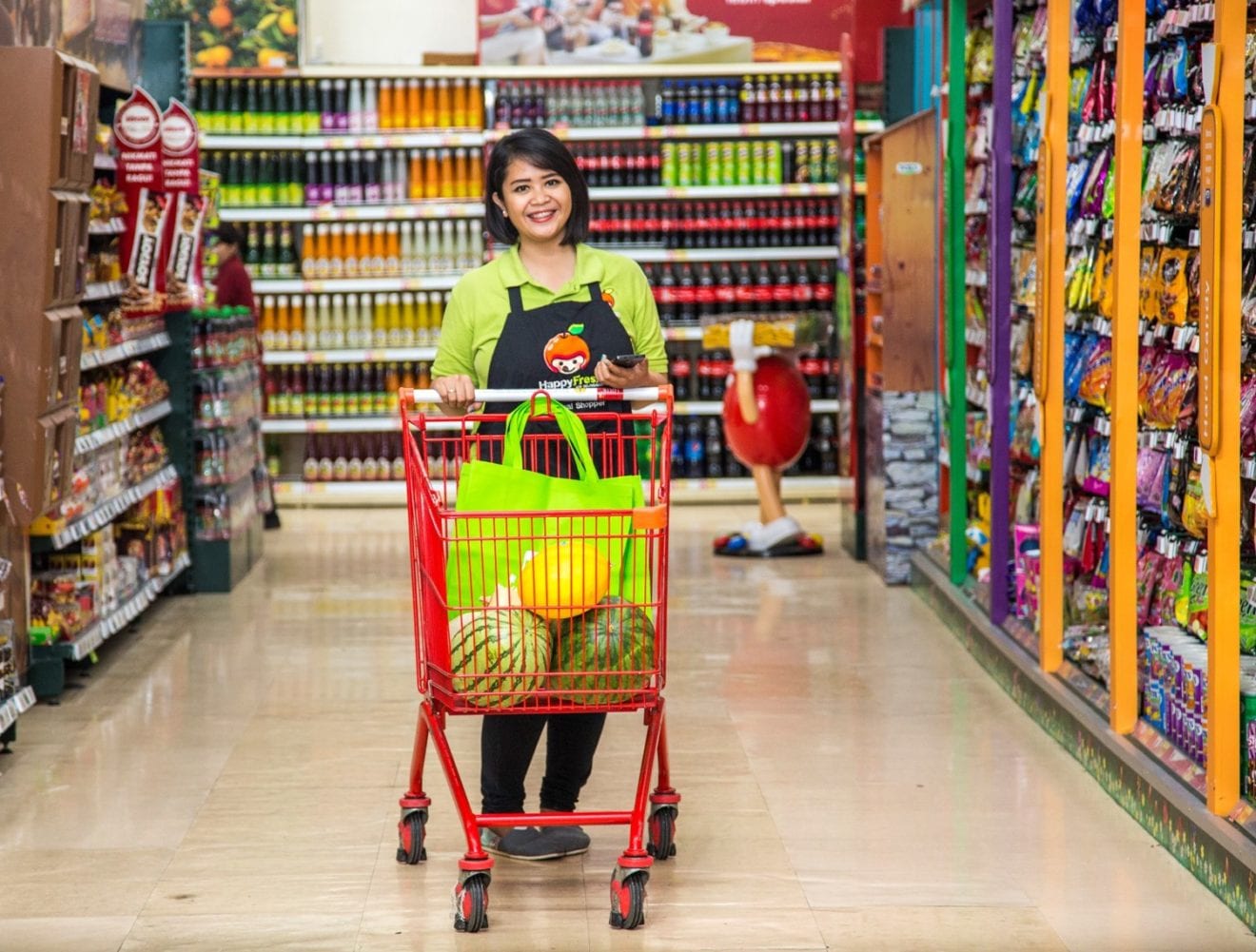
    HappyFresh, the Jakarta-based grocery delivery platform, announced yesterday it has raised an undisclosed Series B round while also revealing it will be consolidating operations and pulling out of the Philippines and Taiwan.

    The round was led Dubai-based private equity firm Samena Capital, with HappyFresh CEO Markus Bihler said a major reason for the partnership was Samena’s status as a leading investment firm for logistics.

    “Number one, given that our business is, to a significant extent, a logistics business, we feel the support on logistics is very value-add,” said Bihler.

    “And number two, they are a classic large-cap private equity firm with significant ties to offline retail, which is the second arm of the HappyFresh business,” he said.

    Other participants in the round were Vertex Ventures, the venture-arm of Singapore’s Temasek Holdings, Sinar Mas Digital Ventures of Indonesia’s Sinarmas Group and Endeavor Catalyst, a New York-based venture arm of Endeavor Capital.

    The fundraising, which was larger than the US$12 million Series A the company raised in September 2015, remains undisclosed in large part because Bihler said it brought unnecessary attention to the number.

    In regards to the decision to pull out of the Philippines and Taiwan, Bihler said a crucial goal for HappyFresh is to focus on its core markets.

    “I believe that companies who are profitable and independently sustainable are companies that last, and therefore can continue to serve, in our case, the end customers and offline retail partners,” he said.

    The decision to consolidate the company to Indonesia, Thailand and Malaysia was a fast decision. It comes six months after the company entered the Philippines back in March and less than a year since it launched in Taiwan.

    “What we have decided is we will focus our effort on the three core markets that we have chosen to operate in, which is Indonesia, Malaysia and Thailand,” said Bihler.

    Because HappyFresh puts emphasis on the role of logistics in the decision to go with Samena Capital, e27 asked Bihler to provide some details as to how that looks on-the-ground.

    “I think if I go back and look at what HappyFresh is, we are a digital marketplace for offline retailers on the front end. And on the backend we are a digitally enabled fulfillment operation. So the largest efficiency gains that we have seen historically, and I am very sure that we will see in the future, is driven by technology,” said Bihler.

    This means intelligent use of routing, the increase of prediction software, and more efficient usage of resources (the time and availability of the shopper and drivers in the company).

    HappyFresh was founded in October 2014 and began operating in March of 2015.

    Its operating model is similar to that of competitor honestbee — in which shoppers visit specific grocery stores and shop for the consumer before the food is delivered. As a comparison, another grocery delivery player, RedMart, has its own warehouses and thus does not ‘shop’ for customers.


  • Prada Asia heads online as sales slip

    Prada Asia heads online as sales slip

    The Italian-headquartered, Hong Kong-listed luxury brand says its Asia Pacific sales slumped  18 per cent on a constant currency basis in the first half of this year.

    “The negative economic backdrop continued to impact performance in both Hong Kong and Macau, but signs of improvement have been visible since July across Greater China,” the company noted in its results.

    And after a period of consistent growth since 2010, sales in Japan fell 9 per cent, mainly due to lower tourist flows from China caused by a less favourable exchange rate.

    CEO Patrizio Bertelli says the company will now make China, Hong Kong and Singapore its priorities in roll out its new eCommerce platform, which is expected to be global within to years.

    “At the same time there will be a constant enhancement of the online shopping experience,” he said. “Our eCommerce offer will also leverage new partnerships with international leaders in the sector.”

    Globally, Prada achieved net revenues of €1.6 billion, down 13 per cent on a constant currency basis. The decline was largely in the retail channel while Prada’s wholesale business remained stable thanks to an initial positive contribution from recent partnerships with international e-tailers and its licensing division, where good progress from royalties driven by the success of the new fragrances and eyewear.

    Net profit margin was down from 24 per cent of revenues in the first half of last year to 21 per cent. Net income amounted to €142 million, representing 9 per cent of consolidated revenues (10 per cent in 2015).

    Bertelli is upbeat about the remainder of 2016.

    “With the implementation of the first phase of rationalisation of various management and operating processes and with the launch of a series of new initiatives that will allow the group to respond quickly to the requirements of a rapidly evolving market, I see 2016 as a turning point.”

    He said the company’s retail network is subject to rigorous review including closure of non- strategic locations and selective openings in high potential markets.

    “Part of this process will also include the launch of new concepts such as the recent restyling of the Prada stores at Plaza 66 in Shanghai and GUM in Moscow, redesigned to offer a new and exclusive shopping experience for increasingly demanding clients.”

  • CBRE Research urges landlords to engage

    CBRE Research urges landlords to engage

    Online and offline retailing in Southeast Asia is expected to merge further, according to a new study by CBRE Research Singapore.

    Its report It’s All About Place-making urges landlords to play their part to stay ahead in a fast-changing retail landscape where consumers transit seamlessly from physical to digital platforms.

    CBRE Research projects that nearly 4 million sqm of city retail stock across Malaysia, Singapore, Thailand and Vietnam will be completed in the next three to five years. CBRE studied retail stock in Bangkok, Hanoi, Ho Chi Minh City, Jakarta, Kuala Lumpur and Singapore.

    “Some retail developments across these six cities have had to shut down in the face of high vacancy rates and low footfall as they failed to capture consumers and retain tenants,” says the report. “One suggestion is for landlords to acquire eCommerce platforms or set up logistics networks to give consumers the fully integrated omnichannel experience.”

    Established shopping centres with online platforms that provide “click-and-collect” or “store-to-door” services give consumers a higher sense of reliability and earn trust as well, says the report.

    “Both physical and online-only retailers are also more inclined to expand their footprint in these shopping centres in their bid to incorporate an omnichannel strategy.”

    Wave of change

    Combining both online and offline channels is one of five strategies CBRE Research recommends to landlords as Southeast Asian economies cope with structural shifts in the face of disruptive technologies.

    This wave of change has affected retail sales across the markets, with CBRE Research using the PLACE acronym…

    Place-making: Conceptualising shopping developments with the consumer’s experience at the forefront. A good social experience makes a strong positive association on the consumer and is tougher to replicate on the digital platform, says the company.

    Leveraging technology: Landlords should take advantage of the high internet and smartphone penetration among SEA consumers to improve the offline shopping experience. Technology can provide consumer insights and interaction while helping boost foot traffic and sales.

    Actively engaging: Forging personal connections with consumers is imperative for landlords to stand out from the competition and gain loyalty. Tenant engagement, and landlords need to find ways to show support.

    Combining channels: Landlords can break down the silos between online and offline by helping tenants incorporate an omnichannel strategy through vertical and horizontal integration, such as acquiring an eCommerce platform or setting up a logistics network to fulfil delivery needs.

    Engaging digital tenants: Landlords should seek to lease space to up-and-coming eCommerce retailers as they are likely to be more savvy about digital marketing and in tune with modern consumer needs.

    New needs

    “The onus of ensuring that stores in shopping centres remain an important and relevant touch point for consumers should not lie with retailers solely,” says CBRE Research Singapore/Southeast Asia head Desmond Sim. “The roles of the asset manager, landlord and shopping centre need to evolve to cater to the new needs of retailers and consumers amid stiff competition.

    “This task is all the more urgent as the market is anticipating a surge in internet use among developing countries, particularly Indonesia and Vietnam where mobile phone use has the greatest potential to increase.”

    Store-based retailing will stay the key point of purchase among SEA consumers in the next five to 10 years and account for at least 90 per cent of total sales value, says CBRE Research. However, landlords will face increasing pressure to make every visit to the shopping mall a memorable experience.

    With its headquarters in Los Angeles, CBRE Group is a commercial real-estate services and investment firm with more than 400 offices worldwide.

  • New Arrival app helps Chinese shop abroad

    New Arrival app helps Chinese shop abroad

    A new fashion app, New Arrival, aims to introduce Chinese travellers abroad to lesser-known boutiques abroad.

    The New Arrival app serves as a platform and guide for brick-and-mortar stores Chinese shoppers might otherwise miss in their travels.

    Founded by Howell Hu, the app has two sections. One part focusses on “new arrivals” from on-ground stores, letting users browse products with a swiping feature. Shoppers swipe right to like a product and see more like it, swipe left to “pass” on the product, and swipe down to add it to their shopping cart.

    From there, they can either access more information about the store or arrange to make the purchase directly on the app via Alipay. Users can also browse using a navigation system to shop by category.

    The other section of the New Arrival app lets users tour shops by city. A “nearby” option lets travellers find stores on the go, or they can search by city (destinations include Beijing, Shanghai, New York, Paris and Hong Kong).

    More than 200 stores are presently collaborating with the app, all of them either multi-brand stores or individual designers. While most of the countries included are major tourist destinations, China is also represented as well as several destinations in Asia, such as Johor Bahru in Malaysia.

    The New Arrival app allows returns within one week, and the stores themselves handle shipping.
    Available for iPhone, the app will have an Android version next month.

  • Ikea Group China launching eCommerce trial

    Swedish home furnishings retailer Ikea Group China will launch into eCommerce in Shanghai and start selling its products online within the next couple of weeks.

    As it is a pilot program, delivery services will be limited to Shanghai initially. All its ready-to-assemble furniture, appliances and home accessories, except for food and green plants, will be available.

    If the trial is successful, Ikea plans to roll out its eCommerce services across China as part of its multi-channel retailing strategy. It does not have any stores in China’s third- and fourth-tier cities, but in May Ikea established a pickup and order point in Wenzhou, Zhejiang province. The stores in nearby Ningbo will provide goods for that service.

    In its latest financial year, Ikea China had sales revenues of 11.7 billion yuan (US$1.76 billion), jumping 19.4 per cent year-on-year. About 83 million customers visited its stores, up 20 per cent from the previous year. Ikea’s websites also had more than 67 million individual visits, a 25 per cent increase.

    Ikea opened three new stores in China this year, in Chengdu and Suzhou in Jiangsu province, and Foshan in Guangdong province. It says it will keep to its plan of opening three new stores in China every year.

  • Tokopedia Tops Indonesia`s E-Commerce Website List

    Tokopedia Tops Indonesia`s E-Commerce Website List

    Seven years after its establishment, start-up company Tokopedia continues to strengthen its foothold in Indonesia’s e-commerce market. Tokopedia CEO William Tanuwijaya said that there are currently one million registered sellers in Tokopedia.

    “Over 16.5 million items are delivered monthly to buyers in Tokopedia,” William told Tempo, Wednesday, August 17, 2016. “The items are sent [to various regions] from Sabang to Merauke. The volume reaches trillions of rupiah per month,” William said during Tokopedia’s 7th birthday party at Pullman Hotel Central Park, Jakarta.

    William said Tokopedia has successfully become Indonesia’s most popular e-commerce website. Per SimilarWeb data, Tokopedia (9th in Indonesia) ranks above Twitter and Wikipedia. Data from Appnie also show that Tokopedia app is used most often compared to other e-commerce websites, such as Lazada (16), Bukalapak (17), Blibli (22), Elevenia (18), or Mataharimall.com (20). Its total active users are twice of other e-commerce website users.

    William said Tokopedia was started with a dream of providing an equal opportunity for all Indonesians. “Today is Tokopedia’s seventh year in realizing the dream,” William said.

    Willian said consumer behaviour has changed in the past few years. “Two years ago, mobile visitors were 56 percent and contributed to 29 percent of purchase. Yet, in the first half of 2016, 79.55 percent of visit were mobile and the transaction volume hit 73.5 percent,” he said. Today, a total of 1.3 billion pages are opened monthly in Tokopedia.

    Tokopedia is currently making efforts to help vendors by establishing cooperation with banks to distribute loans of up to Rp18 billion per vendor.

    “Our mission is to ensure all Indonesia a digital access to economic equality,” William said.

  • ‘Super-shoppers’ dominating online retail

    ‘Super-shoppers’ dominating online retail

    A Worldpay global survey of 20,000 consumers has discovered that buying power in the internet age is concentrated within a group of high-spending, high-frequency “super-shoppers”.

    While these shoppers make up just 5 per cent of the population in China, they account for 92 per cent of all money spent buying physical goods online in China each month.

    Worldpay’s research into three Asia Pacific markets further reveals that APAC super-shoppers are most likely to shop online via a mobile device, and are demanding when it comes to payment method. The international payments company polled 2000 consumers in each of the 10 countries covered by the Why Do They Pay That Way? Study, including China and Japan.

    Key findings include…

    • Chinese super-shoppers are more likely than the average Chinese shopper to use a credit or debit card.
    • More than 60 per cent of Japan’s online shoppers will switch to another retailer if they cannot use their preferred payment option at checkout.
    • Australian super-shoppers were the world’s second-biggest buyers, spending on average more than £200 (US$260) on their latest online transaction.
    • The Chinese are the biggest mobile shoppers in the world, with 33 per cent of super-shoppers making their latest online purchase by mobile phone.

    “With eCommerce markets developing at lightning speed across the Asia Pacific region, it’s no surprise elite shoppers are taking their spending power online,” says Worldpay GM Asia Pacific Phil Ponford. “The super-shopper trend is driven by a growing middle class, high mobile penetration and advancements in consumer technology.

    “APAC super-shoppers are passionate about what they buy and sophisticated in how they shop. They do research to find the most competitive prices, and will turn elsewhere if they discover they can’t use their preferred payment method at checkout.”

    Unable to pay

    Internationally, 36 per cent of super-shoppers said they had experienced the situation of reaching checkout and being unable to pay with any of the listed options. This was particularly the case in China, where 44 per cent of Super-Shoppers said they could not use their preferred payment method.

    When faced with not being able to use their preferred payment option, super-shoppers may buy the same item from another website or abandon their purchase all together. In Japan, 61 per cent of super-shoppers said they would switch to another retailer if unable to use their preferred payment option at checkout. Worldpay estimates that for each lost sale globally, retailers are missing out on as much as £100.

    Super-shoppers in APAC overwhelmingly prefer credit cards. While 41 per cent of the general population in China prefers to pay online with Alipay, only 18 per cent of China’s super-shoppers said they were likely to use their nation’s most popular eWallet. Instead, 54 said they preferred to use a credit card.

    “Retailers should be looking at super-shoppers as a distinct group that often behaves very differently from other customers,” says Pomford. Retailers who do not support the right range of payment methods could actually lose major revenue without noticing.

    He describes super-shoppers as an audience that thinks of online shopping as a daily task, not just an occasional treat.

  • China Jo-Jo Drugstores Reports Fiscal 2017 First Quarter Results

    China Jo-Jo Drugstores Reports Fiscal 2017 First Quarter Results

    China Jo-Jo Drugstores, Inc. (CJJD) yesterday announced financial results for its first fiscal quarter ended June 30, 2016.

    FY 2017 First Quarter Highlights:

    • Revenue was $20.9 million compared to $21.3 million a year ago
    • Gross profit increased 2.4% year-over-year to $4.5 million
    • Gross margin increased 90bps year-over-year to 21.4%, retail pharmacy gross margin increased 280 bps to 28.5% from a year ago
    • GAAP net income was $131,153 or $0.01 per diluted share compared to net income of $110,611 or $0.01 per diluted share a year ago
    • Adjusted net income was $754,000 or $0.04 per diluted share compared to adjusted net income of $277,481 or $0.02 per diluted share a year ago

    China Jo-Jo’s Chairman and CEO, Mr. Liu Lei commented, “Our results in the first quarter were temporarily impacted by lower pharmacy traffic due to preparation for the G20 summit in Hangzhou, and the unexpected disruption in the Yikatong referral business. We are proactively seeking referral arrangement with alternative providers of Pharmacy Benefit Management. We remain focused on increasing our gross margin and expanding the online and offline integration of our wellness offerings.”

    Net revenues for the quarter were $20.9 million compared to $21.3 million in the same quarter a year ago, a decrease of $375, 377 or 1.8%. Retail drugstores sales were $12.7 million and increased 4.4% compared to the prior year period. The Company continues to launch in-pharmacy virtual doctor clinics, provide access to mobile payment and implement other operational strategies to promote same store growth. The pharmacy store count increased to 61 as of June 30, 2016, compared to 59 stores a year ago.

    Online pharmacy sales for the quarter were $5.1 million compared to $6.0 million in the same quarter a year ago, a decrease of $894,689 or 15.0%. The decrease was mainly due to the decline in referral transactions from Yikatong on the Company’s own online pharmacy website. Excluding the RMB depreciation, sales via e-commerce platforms increased by 6.0% year over year. The Company is proactively seeking referral arrangements with alternative providers of Pharmacy Benefit Management.

    Net income was $131,153 or $0.01 per diluted share compared to last year’s first quarter net income of $110,611 or $0.01 per diluted share.

    Adjusted net income was $754,000 or $0.04 per diluted share compared to last year’s first quarter adjusted net income of $277,481 million or $0.02 per diluted share.

  • Kantar Worldpanel partners with Facebook to expand advertising measurement service

    Kantar Worldpanel partners with Facebook to expand advertising measurement service

    Kantar Worldpanel has formed a global partnership with Facebook that brings Facebook mobile ad exposure data into Kantar Worldpanel’s Consumer Mix Model (CMM) service.  In Asia, the service has launched in South Korea, Taiwan, Thailand, Philippines, and Vietnam, and will soon be available in Indonesia and Malaysia as well.

    The enhanced CMM tool combines Facebook’s mobile ad exposure data (in addition to desktop) with Kantar Worldpanel’s continuous consumer packaged goods (CPG) purchase data to provide brands with an accurate assessment of the effectiveness of their cross-media advertising campaigns. 

    The advertising landscape has witnessed rapid change in recent years as brands increasingly turn to digital formats.  In April Facebook announced that its advertising revenue had grown by 57 percent to $5.2 billion in the first quarter of 2016 alone, with advertisers drawn to its increasingly large user base. 

    The tool allows brands and advertisers to understand the real impact of individual advertising campaigns on actual sales and the contribution Facebook and other media have on their return on investment.  This in turn will help them to optimise their media planning and ultimately improve the efficiency of their media investment.

    Josep Montserrat, chief executive of Kantar Worldpanel, commented: “The partnership allows our experts to build a solid understanding of how advertising works and the role that Facebook plays in a wider campaign context.  Working with Facebook will allow us to inspire even better decisions to optimise advertising budgets and maximise advertisers’ return on investment.”

    Marcy Kou, chief executive of Kantar Worldpanel Asia, said: “It brings tremendous potential for advertisers on Facebook as the number of smartphone users continues to grow in Asia Pacific. Retail ecommerce in this region is going stronger than the rest of the world, and is still considered the “it” market. Yet there hasn’t been a reliable method to measure the effectiveness of mobile ads, and with this partnership, we will finally be able to.”

    Patrick Harris, director of Global Agency Development at Facebook, said: “We believe that strong partnerships with our agency partners are key to providing advertisers with the tools they need to measure true business value on Facebook.  We are excited to help inform Kantar Worldpanel’s Consumer Mix Model solution by bringing in our mobile ad exposure data in a privacy-safe way.”

    Kantar Worldpanel’s continuous CPG purchase panels are already widely used by the advertising community worldwide to understand the effect of cross-media advertising.  Its measures take into account in-store promotions and consumer loyalty to determine the full picture behind consumer purchase behaviour. 

    This partnership with Facebook is part of a wider alliance between WPP and Facebook to activate WPP’s data proprietary assets within Facebook, which was announced in April 2015.

  • For Indonesia, assisted e-commerce may just be the next big thing

    For Indonesia, assisted e-commerce may just be the next big thing

    In the case of Indonesia, only a small portion of the population can enjoy such benefits despite the rapid growth of smartphone sales. Over the past few years, the boom of e-commerce has opened up many possibilities for Indonesians. From the rise of young entrepreneurs to a chance to purchase rare goods from overseas, we have seen how the internet drives the interactions between marketers and buyers onto the next level.

    Among the litany of advantages, it is evident that consumers would benefit the most from the thriving e-commerce through price competition. The availability of e-commerce platforms allows buyers to browse varieties of products and pick those that are offered at the most reasonable price.

    Putting aside the argument that blames e-commerce for promoting consumerism, the new shopping platform has undoubtedly helped customers make informed decisions and ensure prudent spending of their money.

    In the case of Indonesia, only a small portion of the population can enjoy such benefits despite the rapid growth of smartphone sales. That is because, in part, only 20 per cent of the country’s population of 250 million own bank accounts, a prerequisite for making payments on many e-commerce platforms. Meanwhile, only about 5 million of Indonesia’s 125 million-strong workforce have credit cards and hence more convenient access to e-commerce.

    Apart from the technical barriers, lack of trust has halted potential customers from shopping online. Futhermore, while many Indonesian e-commerce players have been focusing on attracting tech-savvy end users, these unbanked, technology illiterate segments have remained untouched in the business. With such a huge gap, there are a number of reasons why assisted e-commerce — in which online purchases are made with assistance from a third party — serves as an alternative model to help more people access e-commerce and relish its benefits.

    Filling the Gap

    The first and foremost factor is, of course, the huge room for expansion in the local e-commerce market. Although they have been enjoying continuous growth in the number of registered sellers and transactions, major players such as online marketplaces Bukalapak and Tokopedia have been mainly relying on purchases made by end users who browse and buy products for their own use. The abundant parts of the society who have neither means nor knowledge to make online purchases, meanwhile, will remain at a distance in the absence of efforts or innovations that can help them understand and, therefore, access online shopping platforms.

    And this is where the assisted e-commerce providers start to fill the gap. Jakarta-based Kudo, for instance, claims that it has managed, as of last week, to recruit more than 100,000 marketers, or agents, across the archipelago within just a few months after the launching of its application early this year. Running on the Android operating system only, the Kudo application serves as a mobile online store for its agents, who receive a certain commission for every product they manage to sell to people around them.

  • Alibaba sales soar on international expansion

    Alibaba sales soar on international expansion

    Alibaba sales have soared in the first quarter of its new fiscal year, with overall revenue growth pushing even higher than last quarter’s stellar result.

    Streaming entertainment and cloud computing boosted the business, driving revenue up 59 per cent in the June quarter to 32.15 billion yuan (US$4.8 billion).

    In a contrast to the last reporting period, it is international that has shown the most growth, with revenues rising by 123 per cent. Although this figure is aided by the consolidation of the Lazada business, it is also the result of some good numbers from AliExpress.

    That said, China retail remains the largest part of the group, accounting for just over 73 per cent of revenues. Here performance was strong, with revenues rising by 49 per cent – partly thanks to a combination of the addition of 11 million more active buyers and higher average transaction values over the prior quarter. A sharp increase in marketing spend by those brands and merchants using Alibaba’s various sites also made a significant contribution to the hike in revenues.

    Alibaba’s role as a facilitator for Western brands wanting to sell into China continues to be the company’s main commercial advantage. Its ability to work closely with those merchants to improve performance will benefit the revenue streams of both parties, as well as creating a more attractive and compelling offer for consumers.

    Despite its success at home, Alibaba has struggled to gain traction in already established markets like the US. While this was once a stated ambition, and perhaps remains a long term goal, it is off the agenda for the short term. This is the correct strategy: chasing lower margin, profit eroding international gains for the sake of vanity makes little sense.

    That said, this does not mean that Alibaba’s international ambitions are entirely on hold – as the latest results show. Tactically, Alibaba has decided to focus on high growth markets where commerce is more embryonic. The acquisition of a controlling interest in Lazada, the Southeast Asian eCommerce group, is testament to this.

    While Lazada has grown into a sizeable business, it has a number of challenges including on the delivery, payment and fulfilment front, where it has struggled to optimise the offering. Alibaba, through its expertise and financial muscle, should be able to remedy this. It will also, over the medium term, strengthen the international brands available making the site more compelling and interesting for shoppers.

    The Lazada model represents the approach Alibaba is likely to take to international growth and expansion, and this will yield good long term results.

    With both international and domestic sales forging ahead, and with new areas like cloud computing making a better contribution, Alibaba is firmly on an upward trajectory.

  • South Korean e-commerce site ‘Ticket Monster’ starts luxury car sales

    South Korean e-commerce site ‘Ticket Monster’ starts luxury car sales

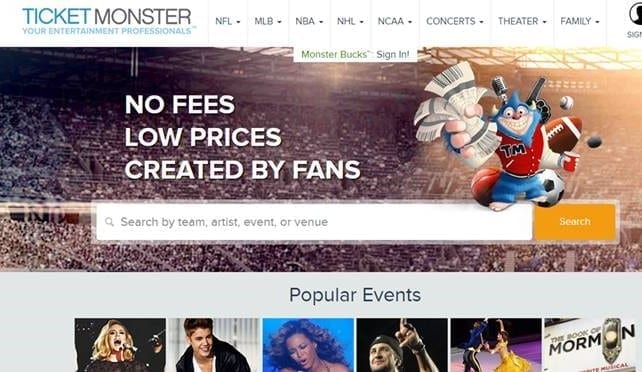
    South Korea’s major e-commerce site, Ticket Monster on Monday said it has started sales of British luxury car brand Jaguar. Ticket Monster put on sales of 20 Jaguar XE Portfolios and R-Sports on Monday morning, marking them down 7 million won (US$6,317) from the regular retail prices to 48.1 million won and 46 million won, respectively. The two models were sold out in three hours, the company said.

    Ticket Monster said it could sell all of the vehicles on the first day because it offered the best available price and even promised a refund if it was not the cheapest.

    “Although new cars have been sold by overseas online shopping malls, it is the first time that a Korean e-commerce site sells new cars online,” a company official said. Consumers made a one-time payment on the website and will take over the vehicles from designated dealers or visit dealer shops, officials said. Ticket Monster said the latest move was aimed at changing customers’ expectations and leading the new trend in the highly competitive market.

    “The sales of imported cars is part of Ticket Monster’s efforts to change the retail paradigm,” Ha Sung-won, the chief operating officer of Ticket Monster, said.

  • Sainsbury’s taps into China’s love of British products through Tmall

    Sainsbury’s taps into China’s love of British products through Tmall

    The move comes after the British retailer trialled the web marketplace for less than a year and claimed the test was a success. It will now sell over 100 own-label products across four categories—British breakfast, drinks, organic and baby—on Tmall, and has plans to add further ranges later this year.

    With online Chinese sales dominated by key promotional sales events, Sainsbury’s was the only international retailer to be given a “Super Brand Day” on Tmall during the annual 8.8 Tmall Global Shopping Festival on August 8.

    “Many customers want to replicate tastes and occasions that they have enjoyed or heard about through international travel. Products to make a British breakfast and English afternoon tea have therefore proved hits,” said John Rogers, chief financial officer of Sainsbury’s,

    Rogers added that granola, tea, shortbread and UHT milk have been among the sales channel’s top-selling lines to date.

    “Our trial with Tmall has enabled us to learn a lot about China’s huge digital market, including the importance of sales events such as Singles’ Day and 8.8,” he added..

    “Alibaba’s expertise in the rapidly growing Chinese digital consumer market will be a huge asset to us as we grow and develop our business in China.”

    Amee Chande, Alibaba’s managing director in Britain and Ireland, said that a famous British brand like Sainsbury’s was “a key addition to our ecosystem” as it built brand awareness, directly engaged a new audience and met the evolving food demands of Chinese consumers.

    “Our collaboration is introducing the large and growing Chinese consumer class to a new range of products to enhance their daily lives,” said Chande.


  • New way to sell bags for Christian Dior

    New way to sell bags for Christian Dior

    Christian Dior China has become the first luxury brand to sell top-end bags on messaging and social network WeChat.

    With an eye on Chinese Valentine’s Day (Qixi) on August 9, it offered its limited-edition Lady Dior bag on the platform this week. It was to be available until today, but sold out on Tuesday.

    As a special extra, consumers were able to drag online pictures of decorations on to the bag, so it could be tailored for their preferences.

    Buyers could pay through WeChat for the bag, priced at 28,000 yuan (US$4210).

    Other luxury brands, including Cartier, Longchamp and Montblanc have already launched online sales platforms on WeChat, providing special services and discounts.

    For the first half of this year, Dior’s net profits fell 30.2 per cent to €74 million ($82.8 million).

  • Indonesia joins Malaysian halal e-commerce

    Indonesia joins Malaysian halal e-commerce

    The Indonesian Chamber of Commerce and Industry (Kadin) has joined Malaysia’s halal e-commerce website to tap into a larger international consumer base for local products, while at the same time giving local consumers easier access to imported halal products.

    The halal business sees a large market of 1.8 billion Muslims worldwide with a variety of products ranging from food, cosmetics, to pharmaceuticals. Markets for the halal business include the ASEAN region — led by countries such as Indonesia, Malaysia and Thailand, which have a large Muslim population — as well as the Middle East and North Africa.

    Now that Indonesian businesses have joined Malaysia’s e-Halal, a commerce directory portal of halal products not only from Malaysia but other countries such as China and India, Kadin chairman Roslan P. Roeslani said the country should not only be a market for halal products but also a producer and supplier.

    E-commerce platforms are becoming increasingly popular to showcase Indonesia’s potential, from big players to smaller enterprises, he added.

    Current trends show that the halal business and market will continue to grow. In 2014, the global halal market value reached US$2.3 trillion.

    “As long as there are Muslims in this world, the halal market will continue to thrive. We must see the business opportunity in this, while still upholding Islamic values,” Rosan said during an event to introduce e-Halal in Jakarta on Monday, adding that Indonesian products can be accessed through the official portal, kadin.ehalal.com.

    Malaysia’s halal industry is more developed and advanced than Indonesia’s, but the latter could still
    work to catch up and learn from Malaysia’s experiences. Indonesia’s potential is not only in food and beverage, Roslan explained, but also cosmetics, such as the popular Wardah, and fashion.

    E-Halal director Michael Teh said although most of its suppliers were Malaysian, it hoped to add Indonesian suppliers to its list from the cooperation with Kadin. E-Halal was launched in Malaysia in May and now has hundreds of products, from prawn crackers and baby food to fresh vegetables and bath salts.

    Michael said suppliers may join e-Halal for free, so long as their products are certified halal from the local issuing authority. From Indonesia, for example, products must receive halal certification from the Indonesian Ulema Council (MUI).

    “All our suppliers must be certified, and we will verify the certifications they upload. Our concept is to enable and safeguard halal suppliers to reach the world of e-commerce,” he said during the same occasion.

    Malaysian International Trade and Industry Ministry’s Halal Industry Development Corporation (HDC) CEO Dato Seri Jamil Bidin said Malaysia and Indonesia must cooperate in developing the halal industry, which holds large economic potential.

    “Amid the increasingly borderless global trade, it is important to seize opportunities and develop with sophisticated technology like e-halal,” Jamil said.