Tag: Economy

  • Startups blooms in Vietnam, liked by youngster

    Startups blooms in Vietnam, liked by youngster

    An increasing number of young Vietnamese are taking the startup route, willing to take risks and wait for rewards. Pham Khanh Linh seemed to be all set on a rewarding career, finding a job at global financial firm Goldman Sachs after graduating from the Cambridge University. But she quit the job in less than a year. Instead of pursuing a corporate employee path, the 25-year-old decided to return to Vietnam and start her own business, which she did last year.

    She said her ambition is to make a difference in her country.

    “I didn’t feel like I could make a difference with a corporate job. I wanted to influence more people,” she said.

    Linh is the founder and CEO of Logivan, a logistics service which optimizes trucks’ routes and reduces their empty load return rates. She came up with the idea after observing that about 60-70 percent of truck drivers in Vietnam go back to their base with empty trunks, because they cannot be connected with potential customers.

    “I saw a big problem for the logistics sector in Vietnam, but also an opportunity to make an impact.”

    Linh is one among an increasing number of aspiring entrepreneurs in Vietnam who are seeking to make a difference with startups in a country that is encouraging young people to start their own businesses.

    Le Anh Tien is another. While many of Tien’s friends at the University of Science and Technology in the central city of Da Nang began a quest for a stable corporate career immediately after graduation, he demurred.

    Tien joined with two other partners to found Chatbot Vietnam last year, a startup which provides solutions for businesses on Facebook Messenger to answer customers’ questions and help them order a product without the need for a customer service officer.

    With 13 employees, the 28-year-old plans to expand the service to Indonesia and the Philippines next year. “There are investors who are interested, but I haven’t said yes to them. I’m waiting for someone who could offer me a million-dollar investment.”

    About 75 percent of fresh graduates in Vietnam are interested in starting their own business, according to a recent survey by Navigos Search, a leading provider of executive search services in Vietnam.

    Fifty-two percent of them have never attempted a startup before but want to in the near future, while 22 percent of them have attempted at least once, said the survey, which polled 1,600 graduates with less than two years working experience.

    Nguyen Phuong Mai, managing director of Navigos Search, said that Vietnam is seeing a young generation of entrepreneurs who are determined to pursue the startup path.

    “These young people have a strong entrepreneurship spirit. We can observe this spirit in large companies, and even in our own,” she said.

    Supporting environment

    What motivates these people to start up is the support from the government and local companies in recent years, Mai added.

    At the Youth Startups Forum 2018 in Hanoi last November, Prime Minister Nguyen Xuan Phuc said that the Vietnamese government is willing to make changes in regulations to facilitate timely funding for startups.

    “We need a breakthrough innovation in policies from government bodies to help startups succeed with their ideas,” he told the forum, which attracted 300 entrepreneurs from across the country.

    Investment funds are also ready to pour cash and back aspiring young entrepreneurs. In August, Linh’s Logivan, dubbed “Uber for trucks,” received an investment from the Vietnamese fund VinaCapital Ventures, which has set aside $100 million to invest in technology startups.

    Singapore-based Ethos Partners and Singapore-based Insignia Venture Partners have also invested in the startup, bringing the total investment that Logivan has raised in the second round to $1.75 million, after raising $600,000 for the first round in March.

    In early December, Logivan became one of four winners of Pitch@Palace Global 3.0, a platform hosted by the Duke of York to accelerate the work of international entrepreneurs.

    Linh became the only Vietnamese representative to win the Entrepreneur of the Year title in a competition of 23 entrepreneurs from countries like Australia, China, Hungary and Singapore and the U.K.

    Tien’s startup, Chatbot Vietnam, also received financial support of $30,000 last year from Amazon and Facebook in the FbStart program, which is designed to assist mobile startups in their early stage.

    Another reason why more young people, aging from 26 to 35 years old, want to open startups is a desire to make an impact in their own country, said Mai of Navigos Search.

    Although there are a high number of young people who found a startup because they want to be successful and rich, Navigos surveys show that other popular reasons are “wanting to be a boss” and “wanting to have a personal value on the market,” she said.

    Inevitable failures

    The number of Vietnamese startups successful in attracting investment has been increasing in recent years, reaching 92 in 2017, a 45 percent increase over 2016, according to the Topica Founder Institute, which organizes an annual program that trains and connects startups with potential investors.

    The total value of the deals was $291 million in 2017, up 42 percent from 2016, the institute said.

    However, challenges are unavoidable for the new companies. Mai said that with a large number of people attempting startups, venture funds can only select a small number, leaving the rest to their own devices.

    The lack of funds is a vital challenge to startups. “80-90 percent of startups fail in the early stages because they don’t have enough funding to move on to the expansion stage,” Phan Hoang Lan, head of the Financial Planning Division under the Ministry of Science and Technology’s Market Development Department, said at a forum earlier.

    Mai added that most startups also fail because young leaders, no matter how passionate, lack the skills to manage a new company as well as the capability to create a complete product that is well-received by the market.

    Tien’s knows this struggle too well. His previous startup, a service which connects laborers with potential workplaces, could not continue due to a lack of funds. Other projects have also failed because the team members weren’t on the same page.

    But the failures are not in vain.

    Tien’s goal to pursue his own dream seems to have been partly achieved when Chatbot Vietnam became one of the top five companies in the Startup Viet 2018 competition in November. It also received a prize from Grab Venture, an innovation arm of ride-hailing firm aimed at supporting Southeast Asia’s startups.

    “Every time my startup fails, I learn something which I could never have known without the failures. Starting a business helps me become more versatile and complete.”

    “If this startup fails, I’ll do another. I still have a couple of ideas left,” he said.
  • China Slowdown, Trade Disputes Weigh on Asia Factory Activity

    China Slowdown, Trade Disputes Weigh on Asia Factory Activity

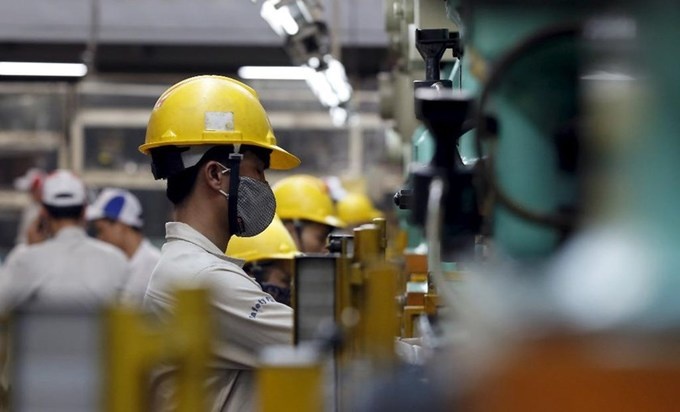
    Factory activity weakened across Asia in December as the Sino-US trade war and a slowdown in Chinese demand hit production in most economies, strengthening the case for a pause in interest rate hikes in the region in 2019. A series of purchasing managers’ indexes (PMI) for December released on Wednesday mostly showed declines or slowdowns in manufacturing factory activity across the region. In China, the Caixin/Markit PMI slipped into contraction territory for the first time in 19 months, broadly tracking an official survey released on Monday.

    China’s weakness spilled over to other Asian economies, with Malaysia’s manufacturing activity shrinking to its weakest pace of expansion since it launched the survey in 2012 and Taiwan contracting to its lowest since September 2015.

    Meanwhile, official economic data out of Singapore showed its gross domestic product grew more slowly than forecast in the fourth quarter as the city-state’s manufacturing sector contracted on a quarterly basis.

    In other regions, the eurozone was expected to post steady manufacturing activity growth, while US activity was seen a tad slower, but firmly in expansion territory, in a sign that so far China has suffered more bruises from its trade frictions than the United States.

    With growth slowing and inflation below or barely within the target in most countries, Asian central banks are unlikely to continue their tightening cycle this year, barring any shocks in currency markets.

    “We are really seeing a global slowdown into this year, and in Asia, particularly export-oriented countries are hurting,” said Irene Cheung, Asia strategist at ANZ.

    “Our expectation for central banks is that most of them won’t change policy in 2019 and these numbers coming out on the weak side won’t change that outlook.”

    The world’s two largest economies agreed at the start of December to a 90-day truce following tit-for-tat tariffs that have disrupted the flow of hundreds of billions of dollars of goods between the two countries.

    The two sides have pledged to hold frequent talks in the next two months, but uncertainty over whether they can bridge massive differences over commercial practices and intellectual property rights remains very high, despite US President Donald Trump noting “big progress” in a tweet.

    Tariffs are not the only drag on China’s economy. Beijing’s sustained drive to reduce debt risks in the economy has cooled the property market and curbed credit flows to the private sector. Meanwhile, the government’s intensified crackdown on pollution has dented industrial activity.

    In a key annual conference last month, China’s top leaders said they will boost support for the economy in 2019 by cutting taxes and keeping liquidity ample while promising to continue negotiations with Washington.

    “The People’s Bank of China may have to ease further to offset the impact of tariffs,” said Robert Michele, chief investment officer and head of fixed income, J.P. Morgan Asset Management.

    China’s economic growth slowed to 6.5 percent in the third quarter of last year, the weakest since the global financial crisis. As reported, government advisers had recommended a growth target of 6.0-6.5 percent for this year at the annual meeting, though the final figure won’t be made public until the annual parliament meeting in early March.

    Oil Drive

    A sharp drop in the crude price at the end of last year has helped sentiment in Asia’s oil-importing economies, where trade deficits are a key vulnerability.

    Indonesia’s PMI index, although still weak historically, rose to 51.2 from November’s 50.4, a four-month high. India’s declined to 53.2 from 54.0 but capped the strongest quarter for the country’s manufacturing sector since late 2012. Philippines PMI was also 53.2.

    But Malaysia, which relies heavily on oil revenues, saw its weakest reading ever at 46.8.

    Taiwan and South Korea, which are heavily focused on tech production, also saw their activity shrink. The US-China trade war affects chip orders and coincides with a slowdown in demand for smartphones globally.

    The contraction in South Korean manufacturing activity continued last month albeit at a slower pace, its PMI showed, with new export orders declining for a fifth consecutive month. Taiwan’s PMI, meanwhile, fell to its lowest since September 2015. Japan publishes PMIs on Jan. 4.

    Vietnam’s PMI fell to 53.8 from November’s 56.5, but the index’s 2018 average was the highest since the survey’s debut in 2011.

    The Southeast Asian economy is widely seen as benefiting from the US-China trade war as companies look to establish operations in the country to avoid the tariff crossfire.

  • Indonesia Posts Narrowest Budget Deficit in 6 Years in 2018: Finance Minister

    Indonesia Posts Narrowest Budget Deficit in 6 Years in 2018: Finance Minister

    Indonesia posted the smallest fiscal deficit in six years in 2018 and less than initially projected, despite turbulence in its financial markets due to capital outflows, Finance Minister Sri Mulyani Indrawati said in a Facebook post. The estimated budget deficit last year was equal to 1.72 percent of gross domestic product, narrower than both the government’s original plan of 2.19 percent and the latest estimate of 1.83 percent, Sri Mulyani said in a message posted late on New Year’s Eve.

    As a percentage of GDP, that was the smallest since 2012, the former World Bank managing director said.

    The 2018 budget also has a Rp 4.1 trillion ($283 million) surplus in its primary balance, or budget balance before interest payments, which Indrawati said was the first surplus since 2011.

    “We have done our duty to manage government finances well. The year 2018 was not an easy year with fluctuations in the global economy, commodity prices, capital flows and exchange rate,” she said, while also noting higher interest rates at home and globally.

    The rupiah plunged to its weakest in 20 years in 2018 due to capital outflows linked to worries about its twin deficits, US interest rate increases and concerns about the fallout for Asia from the US-China trade war.

    However, inflows towards the end of the year bounced it back and the currency closed the year 6 percent weaker compared with end-2017.

    Sri Mulyani said 2018 income from taxes and other revenue sources grew “high and healthy.” She previously said higher oil prices and a weaker rupiah had resulted in higher government revenues.

    The minister is expected to hold a news conference on budget realization on Wednesday.

  • Indonesia December Inflation Cools, Stays Within Bank Indonesia Target

    Indonesia December Inflation Cools, Stays Within Bank Indonesia Target

    Indonesia’s December annual inflation rate eased, but the pace was quicker than expected, data from the Central Statistics Agency, or BPS, showed on Wednesday. The annual inflation rate in December was 3.13 percent, the agency said, lower than November’s 3.23 percent, but quicker than the median forecast of 2.98 percent. The December rate was well within Bank Indonesia’s target range of 2.5 percent to 4.5 percent for 2018.

    On a monthly basis, the consumer price index rose 0.62 percent due to rising food prices and transportation fares.

    The annual core inflation rate, which excludes government-controlled and volatile prices, was 3.07 percent, matching the poll’s prediction and representing a slight acceleration from November’s 3.03 percent.

    The central bank raised interest rates six times last year to defend the rupiah, which hit its lowest in 20 years in October. However, the currency pared some losses closer to the end of the year due to capital inflows

  • Indonesian Stock Exchange ends 2018 in the red

    Indonesian Stock Exchange ends 2018 in the red

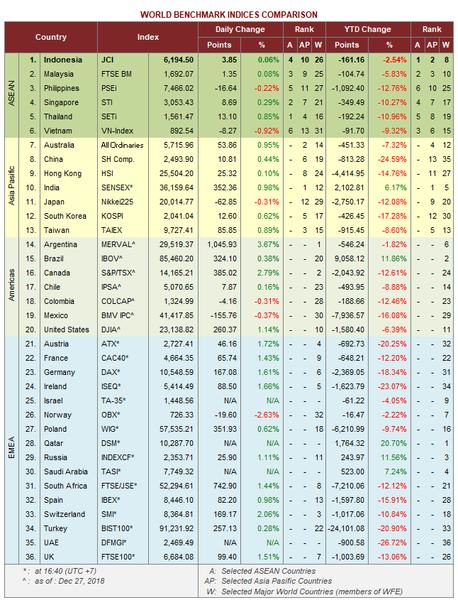
    Indonesia’s benchmark stock index declined 2.54 percent overall in 2018 amid a rough year for equities globally. Foreign investors sold a net Rp 50.75 trillion ($3.52 billion) in Indonesian stocks for the whole of 2018, compared with Rp 39.6 trillion in 2017. The market capitalization of Indonesia’s stock market meanwhile stood at Rp 7,023 trillion, compared with Rp 7,052 trillion a year earlier.

    The last trading day of 2018 on Friday last week saw the Jakarta Composite Index (JCI) closing 0.06 percent higher at 6,194.5.

    Inarno Djajadi, the new chief of the Indonesia Stock Exchange (IDX), said during Friday’s closing ceremony in South Jakarta, attended by President Joko “Jokowi” Widodo, that 57 companies listed their shares in 2018. This is a record high.

    Wimboh Santoso, chairman of the Financial Services Authority (OJK), expressed optimism during the event that the JCI would hit a level of between 6,500 and 7,000 next year.

    “We are still upbeat that the JCI has a chance to gain further. The OJK will provide stimulus to encourage more companies to list by offering various instruments,” he said.

    Wimboh said despite negative sentiment from external factors, such as the ongoing trade war between the United States and China, the business community remains optimistic about the Indonesian economy.

    Not Too Bad?

    President Jokowi also expressed optimism that the JCI may perform better next year. Citing IDX data, he said despite the 2.54 percent decline, the JCI was the second-best performer in Asia after India, which saw its benchmark stock index gain 6.17 percent this year overall.

    Jokowi said 2018 was not an easy year for the country’s economy, which was impacted by both external and internal factors.

    He said Indonesia’s large current-account deficit put pressure on the rupiah, which ultimately also affected the financial performance of listed companies. Meanwhile, normalization of US monetary policy, which caused capital outflows from emerging markets such as Indonesia, the US-China trade war and weak commodity prices also impacted Indonesian companies.

    “All of these have caused volatility in the JCI’s performance and dragged down the performance of listed companies,” he said.

    Jokowi said the government was fully committed to strengthening Indonesia’s stock market, as it should not only serve investors’ interests, but also function as a source of long-term funding for local companies to expand their business and help boost the country’s economy.

    According to Inarno, the number of registered investors on the IDX increased by roughly 222,000 to about 851,000, with 29 percent of them actively trading every day.

    The average daily trade for the whole year stood at Rp 8.5 trillion with an average frequency of 386,968. This is the biggest in Asia.

    Fundraising Down

    Fakhri Hilmi, deputy commissioner for capital market supervision at the OJK, said fundraising by Indonesian companies from capital markets in 2018 is estimated at Rp 163 trillion, which is 35.9 percent lower than last year.This figure includes initial public offerings, rights issuances and bond sales.

    “This year’s isn’t as much as last year; the value of IPOs were smaller,” he said.

    More Stocks Booking Losses

    More stocks booked losses in 2018 compared with last year. Of the 619 companies listed on the local bourse, 252 saw gains in their stock prices, while 327 booked losses. The remainder were stagnant.Of the shares that increased in value, 41 booked gains of more than 100 percent, while four increased by more than 1,000 percent.

    They are Super Energy, a company engaged in oil, gas and mining and petroleum transportation services, which saw its stock price rise by 1,450 percent this year, and financial services provider Pool Advista Finance, which saw its stock price jump 1,529 percent.

    The stock price of Prima Cakrawala Abadi, an exporter of fishing products, jumped 2,006 percent and Transcoal Pacific, a sea transportation and logistics service provider, saw its stock price skyrocket by a massive 3,714 percent.

    However, these are penny stocks. Indonesia’s shallow capital markets allow traders and brokers to trick the price of stocks that have low market values.

    Meanwhile, only 11 companies of Indonesia’s top 45 listed companies by market value, known as LQ45, booked gains in 2018.

  • Vietnamese banks deposit rates rise as usual at year end

    Vietnamese banks deposit rates rise as usual at year end

    Banks usually hike deposit interest rates and even offer promotions at the year end, and this year has been no different. On December 19 Sacombank announced a rise in interest rates on deposits of three months from 5.2-5.3 percent to 5.5 percent, and on deposits of 12 months from 6.9 percent to 7.7 percent. VPBank has increased its rates by 0.1-0.7 percentage points, with deposits of 18 months and more carrying the highest rate of 7.8 percent.

    State-owned banks such as BIDV and Vietinbank have hiked rates by 0.1 to 0.5 percentage points.

    The management of a joint-stock bank headquartered in the south said lending usually rises in the last quarter of the year to meet the rising demand for short-term credit to serve the working capital needs of companies.

    As a result, many banks increase their deposit rates, especially for short terms, it said.

    Besides, experts said lenders are running out of time to use 45 percent of short-term capital for medium- and long-term loans, with the ratio to be reduced to 40 percent on January 1.

    The National Financial Supervisory Commission has recently estimated that credit growth to have slowed significantly to 15 percent this year from 18 percent in 2017.

  • India eyes $100 billion FDI in next two years

    India eyes $100 billion FDI in next two years

    India will aim to receive $100 billion in foreign direct investments in the next two years and special industrial clusters are being created for countries like Japan, South Korea, China and Russia where their companies can invest and operate, Union minister Suresh Prabhu said. The commerce and industry minister said his ministry has also identified sectors and countries which holds huge potential for investments in India.

    “I have given a target. $100 billion of FDI should come from different sectors into India. It will not happen in one year. We have identified companies, sectors and countries and now we are going for road shows to attract investors,” Prabhu said.

    He said India would remain a top destination for foreign investors in 2019 and the ministry would look at all sectoral issues that may come come in the way to attracting overseas investments.

    “For countries like Japan, South Korea, China and Russia, we are creating industrial clusters where they can invest and operate,” Prabhu said.

    The minister said China has agreed to set up industrial parks in India and the Chinese authorities have been asked to give a list of companies that are willing to set up factories in India.

    Similarly, India would be happy to welcome firms from Europe and the US who want to move out of other countries and set up manufacturing bases in India, Prabhu said.

  • VN-Index ends year 10 percent lower

    VN-Index ends year 10 percent lower

    The VN-Index closed the last trading day of 2018 at 892.54 points, down almost 10 percent from the year’s outset. This was a drop of 93 points from January 2, the first trading day of the year. The benchmark closed below the 900-point mark on Friday, a drop of over 25 percent from its peak at over 1,200 points in April. The VN30-Index, representing the 30 largest tocks in terms of capitalization, closed at 854.99 points, dropping 10.46 from Thursday, or 1.21 percent lower.

    Many stocks in the VN30-Index also ended in the red. Diary giant Vinamilk closed at VND120,000 ($5.2), 2.6 percent lower.

    Vietnam’s top petro importer and distributor Petrolimex fell 5.69 percent to VND53,000 ($2.3), while food company Masan dropped 1.9 percent to VND77,500 ($3.36).

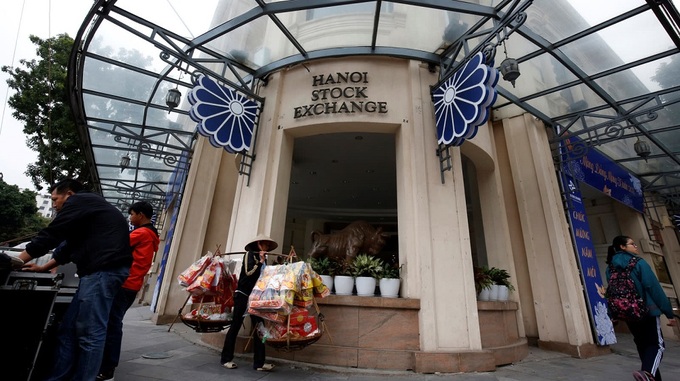
    However, the HNX-Index on the Hanoi Stock Exchange and the UPCoM-Index for unlisted public companies ended in the green, up 0.24 percent and 0.46 percent respectively.

    Vietnam’s largest private firm Vingroup (VIC) ended the day at VND95,300 ($4.13), 6.93 percent lower. Vincom Retail’s VRE stock dropped almost five percent to VND27,000 ($1.17).

    Total market capitalization of all three stock markets, the Ho Chi Minh City Stock Exchange (HOSE), HNX and UPCoM, was VND4 trillion ($173.25 million).

    2018 has proved the most turbulent year for VN-Index since the 2008 crisis, ending an increasing run since 2016.

  • Petronas buys 10% of Block 61 onshore Oman

    Petronas buys 10% of Block 61 onshore Oman

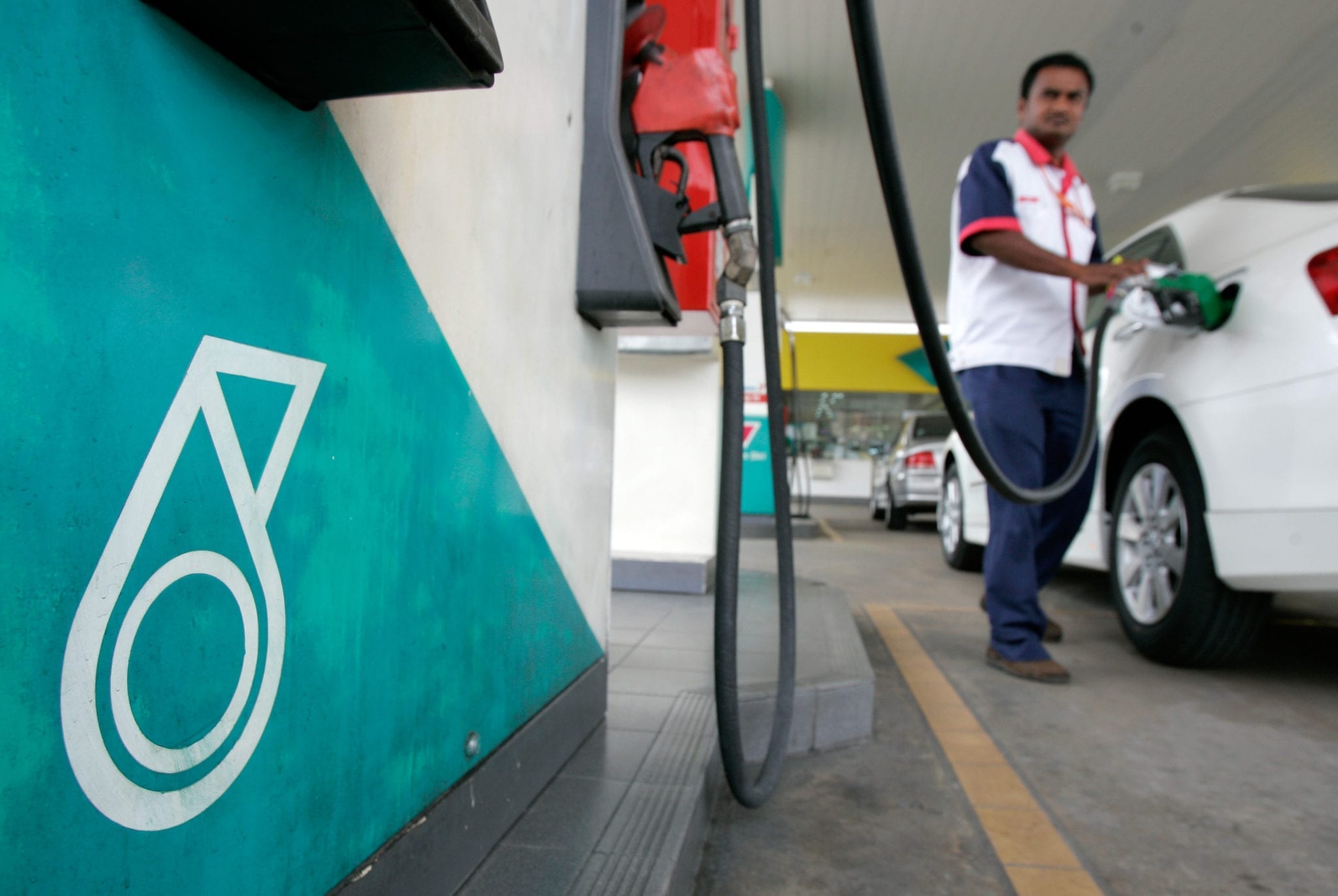
    Petroliam Nasional Bhd (Petronas), through its subsidiary, PC Oman Ventures Ltd (PCOVL) has acquired a 10% stake in Block 61, onshore Oman from Makarim Gas Development LLC (MGD), after the conditions for the completion of the transaction were fulfilled. MGD is a subsidiary of Oman Oil Company Exploration & Production LLC. Petronas said the completion of the transaction was formalised at an event held in Muscat, Oman on Dec 27.

    Following the deal, MGD’s stake in Block 61 will be reduced to 30%, while P Exploration (Epsilon) Ltd as the operator holds the remaining 60% stake.

    Petronas noted that the acquisition of Block 61 marks an important step in realising the group’s growth strategy in the upstream sector in the region and globally, as it aligns its activities to ensure sustainable energy supply.

  • Vietnam GDP growth tops 7 pct, highest in a decade

    Vietnam GDP growth tops 7 pct, highest in a decade

    Vietnam’s GDP growth of 7.08 percent this year retained its status as one of the best performing economies in the world. It was the highest growth the country has experienced since 2008 and compared with the median estimate of 6.9 percent in a survey of 12 economists.

    The scale of the economy at present value is over VND5.53 quadrillion ($237.38 billion), with average GDP per capita at $2,587 per person, a $198 increase over 2017, Nguyen Bich Lam, head of the General Statistics Office, said Thursday afternoon.

    According the office, the agriculture, forestry and fisheries sector grew by 3.76 percent this year, and contributed to 8.7 percent to the country’s GDP. Corresponding figures for industry and construction sectors were 8.85 percent and nearly 49 percent; and that of the service sector, 7.03 percent and approximately 43 percent.

    Lam said that the consumer price index (CPI) in December 2018 fell by 0.25 percent compared to the previous month. On average, CPI in 2018 increased by 3.54 percent, well below the 4 percent target set by the National Assembly.

    Export turnover for the year is estimated at over $244.7 billion, up nearly 14 percent compared to 2017.

    The FDI sector (including crude oil) still accounts for nearly 70 percent of export turnover, at more than $175.5 billion.

    On the other hand, Vietnam imported more than $237.5 billion the whole year, up 11.5 percent over 2017.

    Overall, in 2018 Vietnam achieved a trade surplus of $7.2 billion.

    “The quality of economic growth has improved,” Lam said.

    The GSO director general explained that labor productivity this year saw an increase of nearly 6 percent compared to 2017, at VND102 million (nearly $4,512) per person.

  • How the retail industry has fared in 2018

    How the retail industry has fared in 2018

    The overall retail market in India 2018 stood at Rs 43,251 billion and is forecast to grow by 6.4 percent CAGR in 2018-2023. Retailing in India still predominantly takes place in physical stores and shopping behaviour between urban and rural consumers continues to be vastly different. Smaller independents (both grocery retailers and non-grocery specialists) continued to dominate the landscape they faced growing competition from modern outlets opening in out-of-town shopping centres and malls capturing the Tier II & III markets.

    This year, we witnessed modern retailers launch interesting payments schemes and effective pricing strategies to propel the sales. For example, leading retailer Future Group launched its payment wallet Future Pay which can be used in all its retail brand outlets. Retailers also capitalised on growing acceptance of modern retail by developing new marketing schemes and strategies to attract shoppers.

    Additionally, multi-channel strategies remained key for retailers as they are developed online platforms that are also smartphone and tablet compatible to drive Internet sales.

    Furthermore, retailers also increased their new private labels products. This is was done for certain grocery categories like: packaged foods, non-alcoholic drinks, beauty and personal care and home care products.

    Finally, subscription-based retailing practices started to pick up in 2018. Although still relatively niche, and limited only to urban India, the subscription-based model for beauty and personal care and consumer health became quite popular in metropolitan cities.

    What are the retail trends that are going to rule the roost in retail in 2019?

    – Retailing will continue to offer potential for grocery retailers. Convenience stores and forecourt retailers are likely to continue to see healthy growth rates as their format can meet the demands arising from changing lifestyles by offering more convenient shopping solutions, both in terms of location, business hours and product range.

    – Given the rising maturity of retailing in metros/urban areas, retailers have slowly started to focus on the semi-urban consumer base. This has resulted in the slow and steady urbanisation of shopping styles amongst semi-urban consumers.

    – As the labour crunch and high rentals continue to affect the retail landscape in India, hypermarkets are looking to ramp up investment on self-service technology and automation to reduce costs and improve customer experience. Some hypermarkets chains have implemented self-service kiosks at checkout counters, generally with positive results because of reduced waiting times. Investments have also been made into automated ordering systems, which has helped brands reduce storage space at outlets, hence control rental costs. This can be expected to grow during 2019 as well.

    – Furthermore supermarkets are likely to push the broadening of key product categories, such as organic fresh food, soft drinks and packaged food. They are also likely to further narrow the line between foodservice and grocery retailing, with the introduction and integration of new foodservice elements within their stores.

    – Non-grocery retailing will likely be impacted by the growth of internet retailing at the expense of specific store-based retailers and other non-store channels. Consumers are expected to increasingly shop and research products online, with the popularity of smartphones making mobile-optimised sites and shopping apps crucial in attracting consumers. Moreover, social media will be used more often to alert consumers to attractive price promotions and build interest in new product launches. Also, omni-channel strategies will remain key for non-grocery retailers.

    – Non-grocery retailers will increasingly integrate their online brand information with store inventory, as consumers expect to find the same products in both channels. Moreover, to minimise showrooming, players will also need compelling reasons for customers to buy their brands in store, whether in terms of product selection or price competitiveness.

    – The entry of Amazon and Flipkart could stimulate a much-needed increase in the competition, which will bring both opportunities and threats for existing food and drinks retailers in India. Amazon with ‘Amazon Pantry’ and Flipkart with ‘Flipkart Supermart’ eventually launched its online grocery business in 2018. Millennials and affluent consumers were encouraged to change from shopping in physical stores to online in 2018 with convenience and heavy discounts on offer. Also, with increasing investments from player such as Amazon who are expected to buy skate in Future Retail and PayTm who have partnered with BigBasket and Future Group to strengthen its online grocery business, the food and drinks internet retailing is expected to show tremendous growth in 2019.

  • Vietnam FDI disbursement in 2018 tops $19 bln

    Vietnam FDI disbursement in 2018 tops $19 bln

    Foreign direct investment disbursement in Vietnam reached a record $19.1 billion in 2018, a year-on-year increase of 9.1 percent. However, FDI pledges for new projects, capital supplements and stake acquisitions were down 1.2 percent from a year earlier to $35.46 billion, according to the Ministry of Planning and Investment.

    A total of 3,046 new projects have been granted investment certificates since the beginning of the year, with a total registered capital of nearly $18 billion. Nearly 1,170 projects registered to increase their capital by a total of $7.5 billion. The rest of the registered capital was reported in a total of 6,500 instances of capital contribution and share purchases by foreign investors.

    This year, foreign investors injected capital into 18 fields and sectors. The processing and manufacturing industry attracted the highest capital at $16.5 billion, followed by real estate with $6.6 billion, and wholesale and retail sectors with $3.6 billion.

    Japan ranked first in FDI contributions to Vietnam this year, followed by South Korea and Singapore. Localities that attracted the most FDI were Hanoi, Ho Chi Minh City and the northern city of Hai Phong.

    Meanwhile, Vietnam invested nearly $380 million abroad this year, mainly in banking and finance, forestry, and fishing. Vietnamese investors injected capital into 38 different countries and territories, with the highest investment in Laos, followed by Australia, the U.S. and Cambodia.

  • Bullet train to connect Hanoi with HCMC in five hours

    Bullet train to connect Hanoi with HCMC in five hours

    Vietnam’s bullet train will cut travel time between Hanoi and Saigon to five hours from the current 24. The railway project management board has submitted a pre-feasibility study to the Ministry of Transport, which quotes transport consultants’ estimate that if the train travels at 320 km/h, its running time would be from 5 hours 17 minutes to 6 hours 50 minutes depending on the number of stops.

    The route from Hanoi Railway Station to Thu Thiem Station in HCMC’s District 2 will be 1,545 kilometers (960 miles) long and run through 20 provinces.

    Sixty percent of the tracks will be on viaducts, 10 percent underground and 30 percent on the surface, completely protected by fencing and without a single crossing.

    It will have double standard-gauge tracks of 1.435 meters width and 24 stations, according to a consultancy consortium comprising Vietnamese firms TEDI, TRICC and TEDIS.

    It will use the distributed traction technology used by Japanese high-speed trains.

    The project is estimated to cost a total of $58.7 billion, comprising $2.23 billion for land, $43.3 billion for construction and equipment and $4.3 billion for management, consulting and other costs.

    It will be undertaken as a public-private partnership (PPP), with the government accounting for 80 percent of the cost and private investors for the remaining 20 percent.

    Construction will be in two phases, with the 282-km Hanoi-Vinh section and 362-km Nha Trang-HCMC section built first in 2020-2030 at a cost of $24 billion. Commercial operations on these stretches are likely to begin in 2032. The second phase connecting Vinh and Nha Trang is expected to be built in 2030-2045.

    The consultants have estimated the project to cost 0.4 – 0.55 percent of the country’s GDP in 2020-2030 and 0.35 – 0.4 percent in 2030-2040.

    After being reviewed by the Ministry of Transport, the study will be submitted to the State Appraisal Council and the government for review and to the National Assembly for approval next October.

    Vietnam currently has over 3,000 kilometers of railway tracks, none of them high-speed. The railway accounts for just 1.9 percent of the transportation sector in the country, according to the Vietnam Railway Authority.

  • Strong sales growth for India’s textile manufacturing sector in Q2

    Strong sales growth for India’s textile manufacturing sector in Q2

    The manufacturing sector, particularly textile and iron and steel segments, maintained its pace of sales growth in the second quarter of 2018-19 as compared to the year-ago period, the RBI said on Wednesday. Demand condition in the manufacturing sector “maintained its pace in the September quarter 2018-19 as reflected in strong sales growth (year-on-year)”, as per the RBI analysis of 2,700 listed private sector non-financial companies.

    “The manufacturing sector sales growth was mainly supported by robust demand conditions in chemical and chemical products, iron and steel, and petroleum products industries coupled with significant improvement recorded by textile industry,” the RBI said.

    The central bank said heavy moderation was seen in the sales growth of motor vehicles and other transport equipment, driven in part by a large adverse base effect, and pharmaceutical and medicine industries.

    The information technology (IT) sector also recorded further improvement in sales growth over the year-ago period.

    The manufacturing sector continued to record strong growth in net profits, which received support from other income.

    The RBI said companies in manufacturing sector posted a net profit of Rs 47,100 crore in the reported quarter, up 29.4 per cent from the same period last year. The data is based on abridged financial results of 1,734 companies in the manufacturing sector.

    “Despite continuous contraction in the telecommunication, the services (non-IT) sector posted a turnaround riding on the support from wholesale and retail trade,” the RBI said.

    The profit of IT sector, based on data of 172 firms, was Rs 17,700 crore in the second quarter, up 5.8 per cent over the July-September period of 2017-18.

    As per the RBI, the combined sales of 2,700 companies was Rs 9,81,800 crore in the September quarter, up 18.2 per cent from the year-ago period.

    Their net profit was Rs 71,900 crore, an increase of 41.7 per cent year-on-year.

    On expenditure front, manufacturing companies continued to face rising input cost (cost of raw materials, staff cost) pressures. In case of IT sector, staff costs accelerated in tandem with the improvement in sales growth, the RBI said.

  • Ramyeon Korea set to cross the $400 million export mark

    Ramyeon Korea set to cross the $400 million export mark

    Exports of ramyeon are sure to exceed $400 million this year, a state food agency reported Wednesday. Shipments of ramyeon totaled $385 million as of the end of November, up 11.2 percent from the same period last year, according to Korea Agro-Fisheries & Food Trade.

    The figure is already more than the total for 2018. Given the sum so far, the monthly average exports are $35 million, suggesting that exports will $400 million by end of this year. South Korea broke the previous threshold of $300 million just last year.

    Ramyeon remains popular in the United States and in Southeast Asia, while China’s boycott of Korean products due diplomatic disagreements has weakened, according to the agency.

    Related data showed Korea exported $8.56 billion worth of agricultural and fisheries products in the first 11 months of the year, a gain of 2.6 percent from last year.

    By country, exports to Japan were the highest, at $1.94 billion, followed by $1.38 billion to China, $980 million to the United States and $530 million to Vietnam.

    The figures indicate a 0.3 percent fall for Japan but increases of 1.2 percent for China, 0.2 percent for the United States and 1 percent for Vietnam.

    Exports of farm and livestock products rose 2.4 percent to $6.37 billion, and those of fisheries goods were up 3.1 percent to $2.2 billion.