Tag: Economy

  • Singapore economy grew 2% in 2015, weakest since 2009

    Singapore economy grew 2% in 2015, weakest since 2009

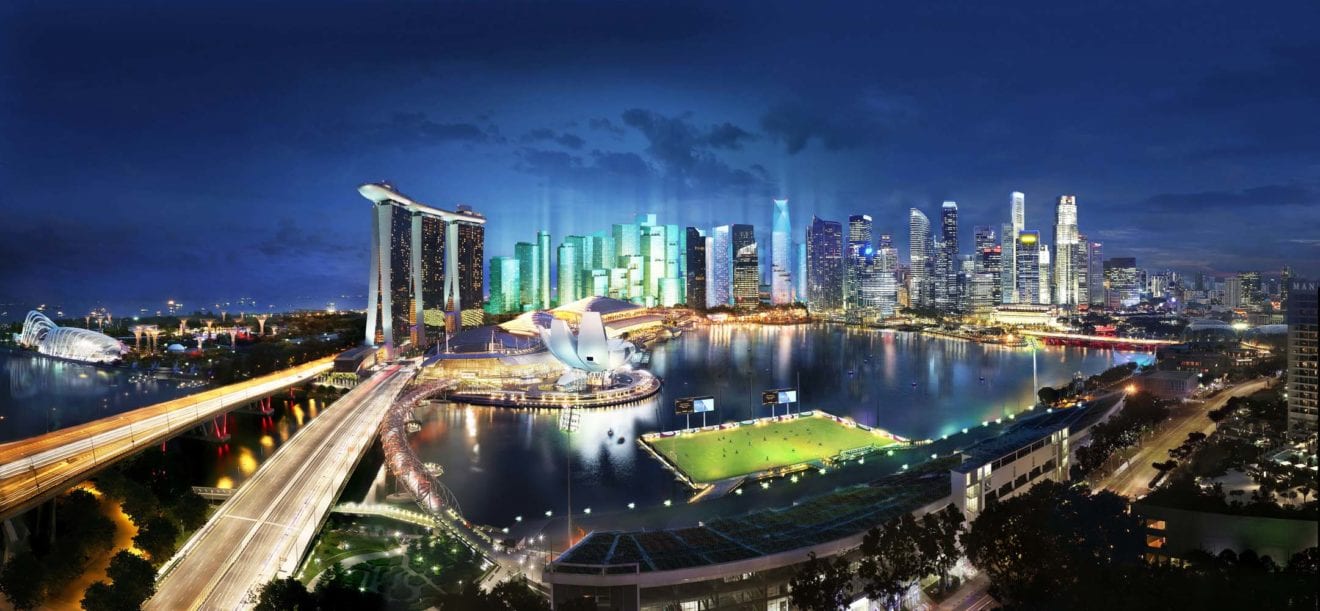
    The Republic’s economy expanded by 2 per cent in 2015, the weakest annual growth since 2009 when the economy was hit by the global financial crisis, according to figures released by the Ministry of Trade and Industry (MTI) on Wednesday (Feb 24).

    The figure was a sharp drop from the 3.3 per cent growth the previous year, and was revised downwards from the 2.1 per cent growth initially projected.

    Growth was mainly supported by the wholesale and retail trade, and finance and insurance sectors, according to MTI.

    For the fourth quarter, the economy expanded by a slower-than-expected 1.8 per cent from a year ago, after industrial production in December suffered its biggest year-on-year slump in eight months. The initial estimate was for a growth of 2 per cent.

    On a quarter-on-quarter seasonally-adjusted annualised basis, the economy expanded by 6.2 per cent in the fourth quarter, MTI said.

    The MTI has maintained its forecast of growth between 1 per cent and 3 per cent this year.

    “Even though global growth is expected to improve, the continued slowdown in China, the services-driven nature of growth in the US, as well as the trends of in-sourcing in China and the US, may mean that external demand for our exporters may not see a significant boost this year,” said MTI’s Permanent Secretary Ow Foong Pheng.

    “Lower oil prices have weakened the prospects for new rig orders for firms in the marine and offshore segment, and heightened the risks of further deterrents and cancellations of existing orders,” she added.

    The economic data also showed that labour productivity, as measured by value added per worker, grew by 0.5 per cent in the fourth quarter – the first improvement since the first quarter of 2014 – driven by the wholesale and retail trade, and construction sectors.

    For 2015 as a whole, overall labour productivity fell by 0.1 per cent, marginally improving from the decline of 0.5 per cent in 2014.

  • China will bounce back and continue to drive global growth for decades

    China will bounce back and continue to drive global growth for decades

    Economists have often said “when America sneezes, the world catches a cold” reflecting the importance of the US to the global economy.  But the past 12 months suggest the world’s immune system is more sensitive to China’s sniffles than was previously thought.

    The country’s economic slowdown and the overdue lancing of the bubble in its stock market have made the world’s central bankers and policymakers realise that China now has a huge influence on global markets.

    I was in Beijing and Shanghai last week in part to attend the G20 summit in my role as a board member of the Institute of International Finance but also to see for myself what is happening in China. There is no substitute for visiting a country if you really want to understand what is going on there. Get there, meet companies and policymakers and listen to what the people you meet have to say.

    This is especially the case with somewhere like China because it can be opaque and a lot of what is written about the country is nonsense. You can only get so much information to form a view from sitting in an office 6,000 miles away.

    One of my most interesting meetings was with Dr Pan Gongsheng, deputy governor of China’s central bank. It is true that the economy is slowing. Never mind the validity of the official figures, the 6.9pc growth achieved last year is a far cry from the double-digit expansion achieved a few years ago.

    But is this slowdown really so bad? The change in the pace of growth is as much by design as by accident. China’s policymakers made a deliberate decision a few years ago, to move the economy away from an investment-led, export-driven model towards one in which domestic consumption plays the dominant role. The country’s leaders want growth that is sustainable.

    For a long time investors have focused on China’s manufacturing data as an indicator to how well or badly the economy is doing. Recent weakness in the manufacturing data has been interpreted as a big negative and has ignored the growth of service industries, especially in the private sector.

    Real estate, finance, hospitality, retail, transport, construction and other services accounted for some 55pc of GDP in 2014, up from 47pc in 2006, according to data compiled by CLSA and Citic Securities.

    As the economy continues to move to a more domestic focus, this share will continue to rise. This is not to say everything is rosy in China. In recent years, western leaders watched with wide-eyed wonder at their Chinese counterparts’ handling of the economy. They looked on in envy at Beijing’s ability to manage the economy at a time when the world seemed to be closing in.

    That reputation has taken a major dent recently. They successfully deflated a bubble in the property market but that meant that China’s army of retail investors piled into the domestic stock markets. The authorities should not have tried to prop this over-leveraged and speculative bubble. They should have let it pop but chose to intervene and then did so in a messy, unclear and unsuccessful way.

    While they were bungling the rescue of the stock market, the authorities made a mess of communicating a loosening in renminbi policy, which fuelled suspicions the country was seeking to devalue its way out of trouble. This is prompting wealthy locals to move their cash offshore and in response the government is making it harder for money to be moved overseas.

    Local government and corporate debt are big problems, the state sector is bloated and inefficient, while the property market remains fragile. Whilst my trip provided comfort on the state of the economy, my views on the stock market remain unchanged. We have always been very cautious about investing in Chinese companies because so many are opaque and many have woeful corporate governance.

    It’s obvious if you spend time in China to see that the Shanghai and Shenzhen stock markets operate like casinos. Trading activity is dominated by retail investors who buy on rumours and flee at the first sign of trouble. It’s much more sensible to expose yourself to China’s growth by investing in companies which aren’t based there but do business there.


    It’s a much easier way of investing in companies with decent growth prospects, that have quality management and adhere to good levels of transparency and accounting standards. From speaking to companies, economists and analysts in China, it’s clear to me that the country is heading for a softer, rather than harder, landing. You need to look beyond the stock market for the clues of why, though. China’s consumer spending is still motoring. Consumers have taken to internet shopping at a startling pace.

    Barely 15pc of the population had shopped on the internet a few years ago. Now over 40pc have. Chinese shoppers spent nearly $8bn (£5.7bn) in the first 10 hours of the country’s equivalent of Cyber Monday or Black Friday. Chinese authorities might have lost some of their reputation for financial competency, but they have $3.4 trillion in foreign exchange reserves to soften the blow of a slowing economy.

    Unlike many policymakers in the West, those in Beijing still have plenty of tools at their disposal to avert economic disaster and to help the country to develop. The announcement last week of the opening up of the bond market to long-term international investors is a prime example and is a step in the right direction.

    Ultimately China will shake off its current sniffles to continue to be a driver of global growth for decades to come.

  • Hong Kong to post surplus even as economy grapples with China slowdown

    Hong Kong to post surplus even as economy grapples with China slowdown

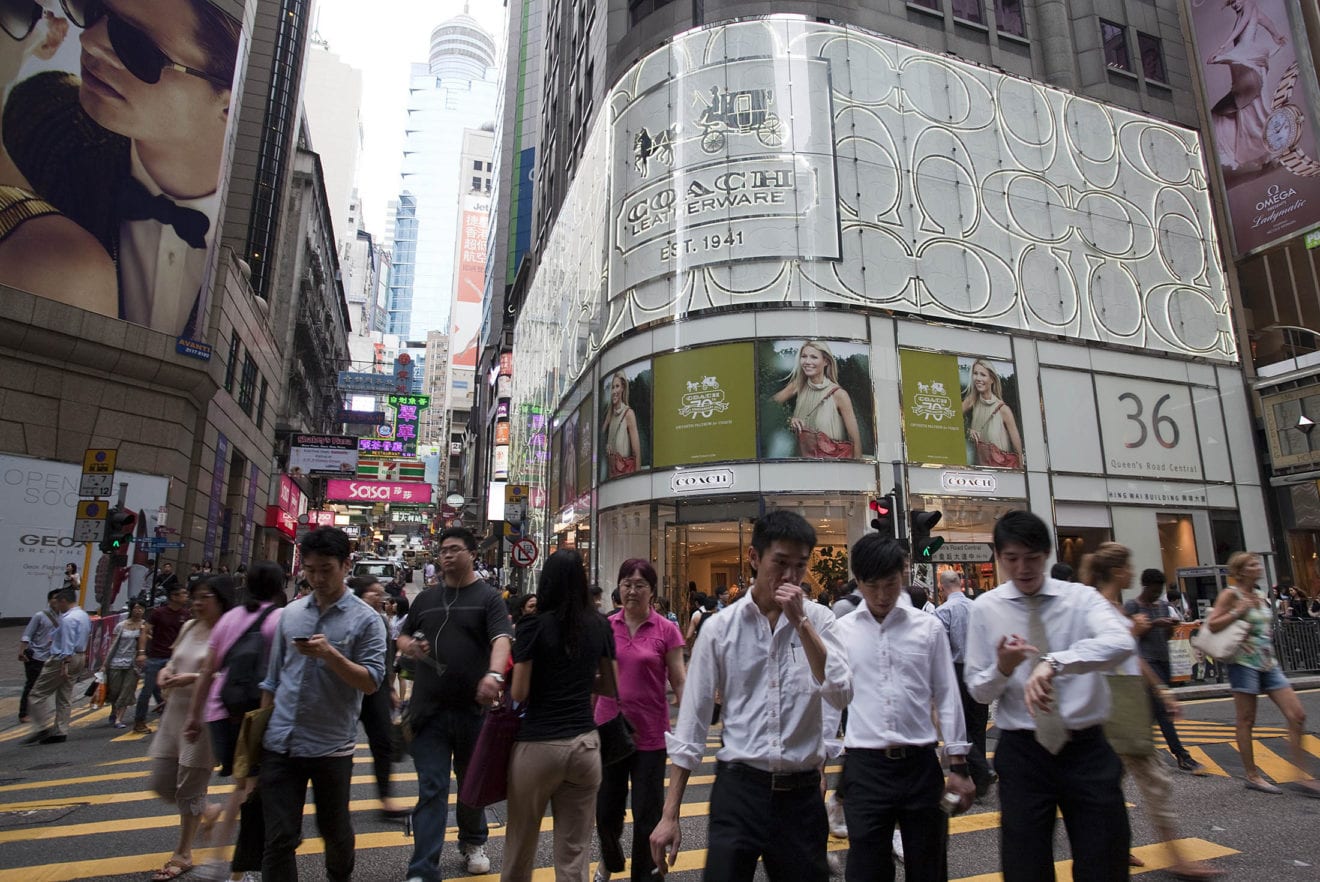
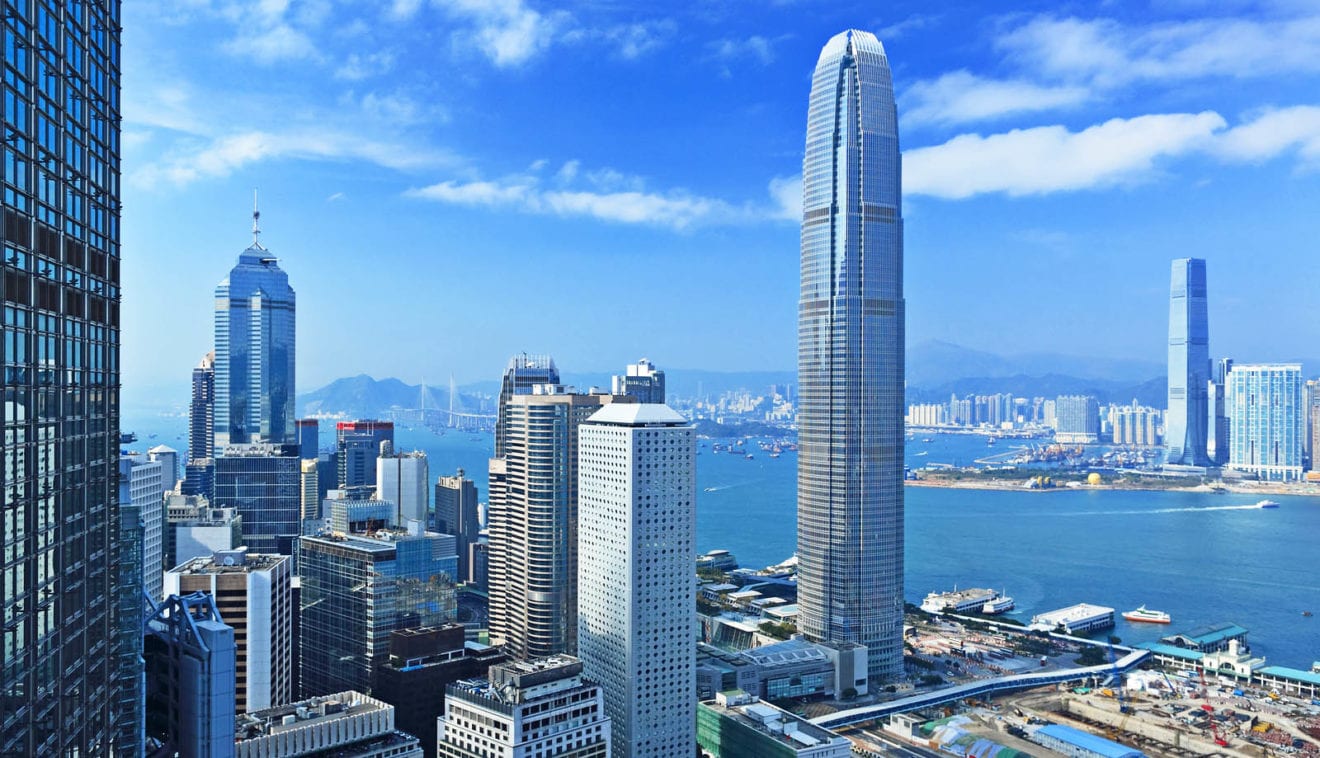
    Hong Kong is forecast to post a healthy fiscal surplus in its annual budget on Wednesday, with a series of one-off sweeteners expected to help businesses hurt by a slowdown in China, including the hard-hit retail and tourism sectors.

    Hong Kong’s longstanding Financial Secretary John Tsang isn’t expected, however, to unveil any sweeping new initiatives amid concerns the government’s reliance on one-off measures are failing to bolster the city’s economic fundamentals as it enters a period of slower growth and heightened political tensions.

    Tsang wrote on his official blog on Sunday that while sweeteners may only account for 1 percent of Hong Kong’s annual budget, they provide an important boost for the local economy and job market, and play an important “stabilising” role.

    A night-long riot shook the city after the authorities tried to remove illegal street stalls during the Lunar New Year, the worst violence since pro-democracy protests in 2014.

    While Hong Kong has tended to post healthy surpluses over the past decade, pressures are mounting on some of the economy’s biggest drivers. Mainland Chinese tourists who power the territory’s all-important retail sector stayed away from the city last year, leading to the worst annual decline in sales since 2002.

    Hong Kong officials have also sought to integrate more closely with China through Beijing’s “One Belt, One Road” blueprint to deepen regional economic co-operation, though the details remain sketchy.

    Four economists surveyed by Reuters expect fourth quarter growth to slow to a seasonally adjusted 0.1 percent from 0.9 percent in the third. From a year earlier, growth was forecast at 2 percent, down from 2.3 percent in the third quarter.

    Six economists estimated the economy would expand 2.3 percent in 2015, slightly less than the official forecast of 2.4 percent.

    The global financial hub’s economy is highly reliant on China which is grappling with its slowest growth in nearly 25 years.

    The government is forecasting a surplus of HK$36.8 billion while professional services firm Deloitte expects HK$80 billion.

    Despite a recent softening in the city’s sky-high property prices, analysts expect cooling measures implemented over the past few years to stay in place. Standard & Poor’s has forecast a 10 to 15 percent drop in property prices in 2016.

    Hong Kong’s economic pressures come on top of an increasingly fraught political environment, including the disappearances and feared abductions by Chinese agents of several Hong Kong booksellers, and lingering tensions towards Beijing’s refusal to allow full democracy in Hong Kong after protesters occupied major roads for 79 days in late 2014.

    The former British colony, with a population of 7.3 million, returned to Chinese rule in 1997 under a “one country, two systems” framework that gave it a large degree of autonomy although its leaders ultimately defer to Beijing.

  • Indonesia’s growth in 2015 slows for fifth consecutive year

    Indonesia’s growth in 2015 slows for fifth consecutive year

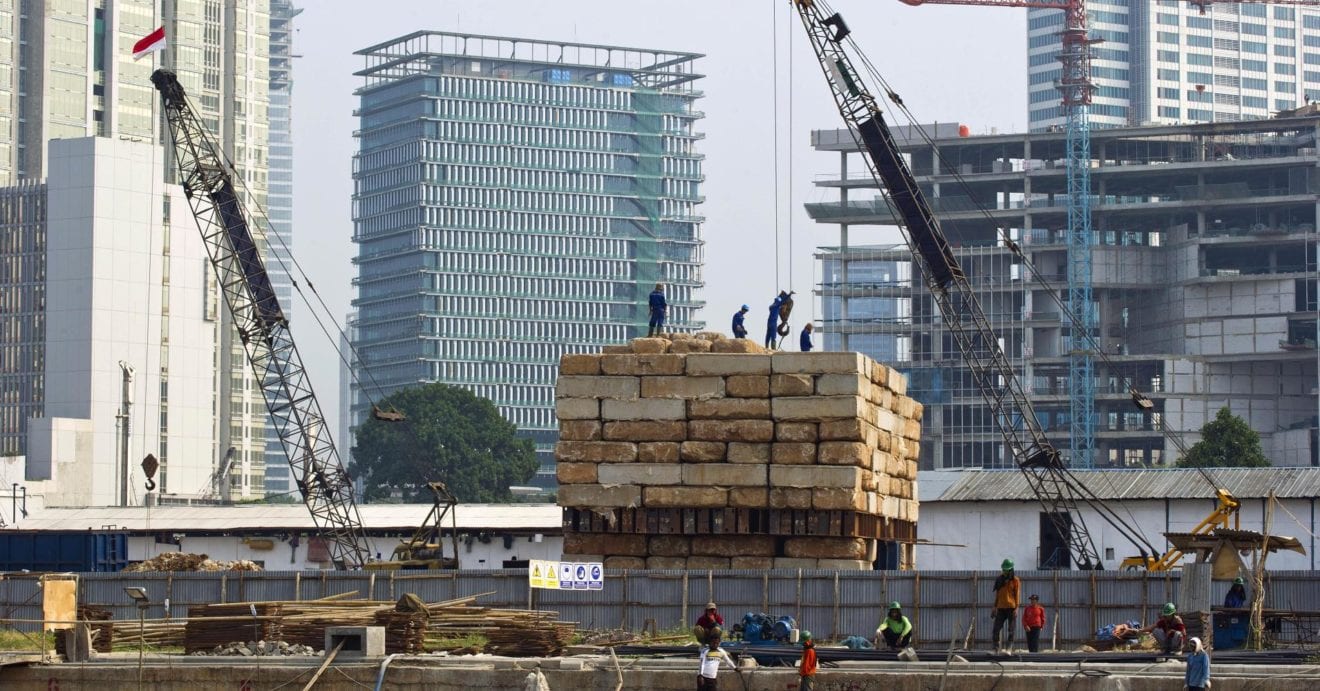
    Growth in South East Asia’s largest economy, Indonesia, has come in at 4.76% for 2015, marking the fifth consecutive yearly decline. Weaker commodity prices and consumer spending, together with a slowdown in its key trading partner, China, has hurt growth. Towards the end of last year, however, the economy expanded by just over 5%, boosted by government spending. President Joko Widodo had promised to lift annual growth to 7% on average.

    However, the country has seen an average of just under 6% growth over the past decade and analysts have said growth is unlikely to improve for some time.

    “The fourth quarter data is a positive surprise,” economist Tony Nash told.

    “But unfortunately the uptick will likely be short lived. We expect deterioration in the first quarter and it’ll be tough to regain growth momentum before 2017,” he added.

    Mr Widodo made his promise to raise growth when his five-year term began in 2014, but he has faced problems boosting government spending and has seen several large infrastructure projects delayed.

    A $5.5bn high-speed railway project, funded by China, was signed last year and is scheduled to be up and running by 2019.

    But the project has faced widespread objections from transport experts and its long-term viability has been questioned.

    Mr Widodo has also faced international condemnation for the country’s man-made forest fires, which have caused serious economic and environmental damage.

    In December, the World Bank said Indonesia’s forest fires last year had likely cost the country more than twice the amount spent on reconstruction efforts after the 2004 Aceh tsunami.

    In its quarterly report, the bank said the fires had cost some 221tn Indonesian rupiah ($15.72bn; £10.5bn).

    It added that regional and global costs would be much higher.

  • Thailand Plans to Boost Northeastern Economy

    Thailand Plans to Boost Northeastern Economy

    Thailand’s northeastern economy, among the poorest in the country, is looking to expand trade with neighboring Laos and business in the Greater Mekong Subregion (GMS) as it recovers from a two-year recession.

    The downturn was triggered by an end of populist programs heralded by the former government of Yingluck Shinawatra. The May 2014 coup ended her almost three year administration and brought an end to programs led by a rice price pledging scheme.

    Under the program, farmers were paid at rates some 50 percent above the global market before the effort collapsed, costing Thai taxpayers more than $14 billion and leaving farmers across the region deeply in debt.

    While the good times lasted, funds triggered a boom in retail and commercial investment and spending. Major department stores sprang up in towns such as Ubon Ratchathani and Udon Thani.

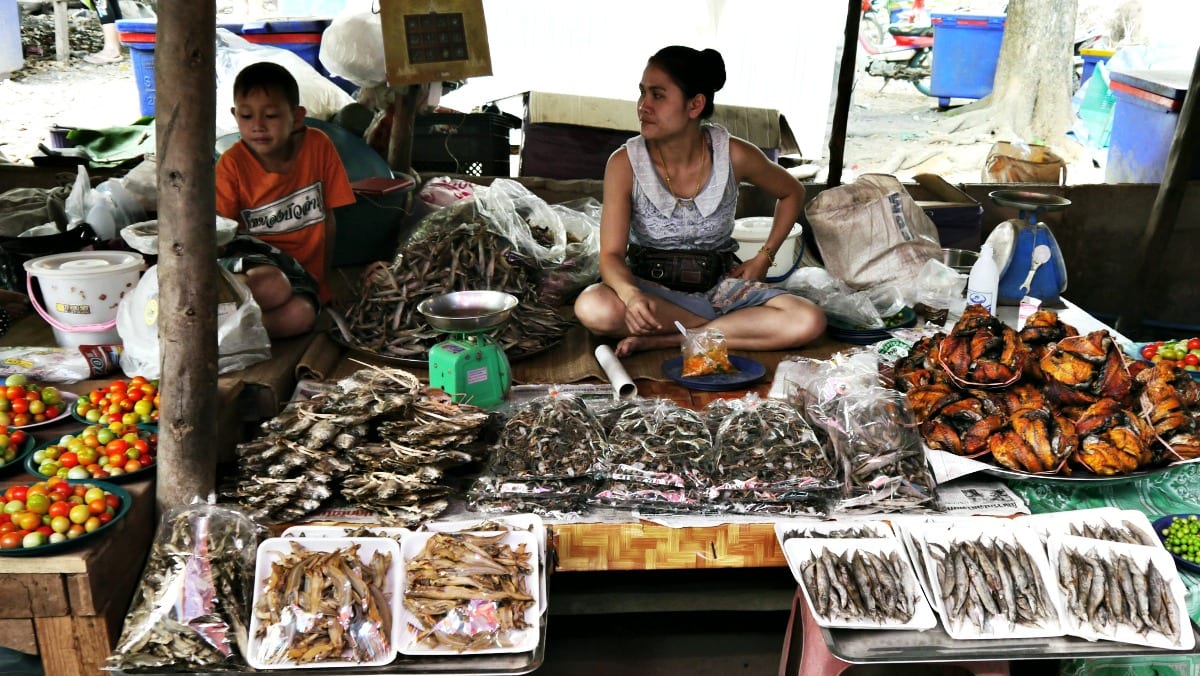
    A rice farmer collects snails and cleans the rice field near Udon Thani, Thailand, Sep. 15, 2015.

    A rice farmer collects snails and cleans the rice field near Udon Thani, Thailand, Sep. 15, 2015.

    But now retailers report sluggish sales and the Thai central bank warns of growing indebtedness among farmers as rice prices fall to their lowest in six years.

    Agriculture accounts for some 20 percent of the region’s economy, followed by trade. Household incomes in the Northeast are the lowest in Thailand, at close to $550 a month, well short of the nearly $1,200 earned per month in the Bangkok region.

    Border trade

    But Athikarn Ringcharoen, president of the Chamber of Commerce in Amnat Charoen province, bordering Laos, said the local economy was starting to pick up although still below levels of two years ago.

    Athikarn said government policy support and increased cross border trade with Laos, was helping the recovery. He added that despite the poor state of the global economy, the provincial outlook was “OK”.

    Infrastructure spending is also set to come to the aid of the region.

    Athikarn said plans to upgrade a Royal Thai Airforce airstrip to a regional airport less than 30 kilometers from Amnat Charoen town were also welcome.

    Long term infrastructure set to benefit the region includes the $10 billion China-Thai 870 kilometer rail-line from Nong Khai, bordering with Laos, to Bangkok. On the horizon is the Japan-Thailand rail-line from Tak province, bordering Myanmar, to Mukdahan, bordering Laos.

    Ubon Ratchathani University political scientist, Titipol Phakdeewanich, said cross border trade ties have helped eased the downturn.

    “Many businesses are now more open to customers from Laos. If you go to different malls – they have signs in Lao [language] and when the market is more connected – to some extent – it helps to provide a cushion to the local economy. So the local economy in the area I don’t think it’s entirely dependent on the global market,” said Phakdeewanich.

    Government spending

    The military government’s economic czar, Deputy Prime Minister Somkid Jatusripitak, has announced spending of over $970 million in projects directed to 70,000 villages nationwide.

    Analysts say the program mirrors similar initiatives under previous governments of so-called “village funds” to boost rural consumption.

    The Federation of Thai Industries, while welcoming the programs, say more measures are needed to ensure growth is sustained.

    The Federation warns the rural sector remains vulnerable to falling commodity prices that may impact some 30 million people in the farm sector – almost half the national population.

  • China on track for a more sustainable economic expansion

    China on track for a more sustainable economic expansion

    Investors world-over fear that China could record another worse-than-expected slowdown this year. Over the past two decades, annual GDP growth in China has averaged around an impressive 10 percent, underpinned mostly by investments, as well as exports. The IMF expects China to account for almost 18 per cent of world economic activity in 2016. Hence a bump in China’s economy can definitely not be ignored. A drop in China’s growth rate from an expansion of more than 10 per cent in 2010 to 6.3 per cent expected this year could directly knock-off about 0.75 percentage points off the global growth rate.

    The recent week’s turmoil in China has hit both stocks and currency markets, sending shock-waves through global financial markets. Stock indexes around the world have seen massive sell-offs, global markets have fallen by 7.1% since January 1st, their worst ever start to a year. The instability brings back to light China’s stock market crash and a surprise Yuan devaluation by Beijing in August 2015 which sparked a global rout, and wiped out trillions of U.S. dollars in value from Chinese equities.

    Some of China’s leading economic indicators, such as its manufacturing index and factory output, are indeed slowing. This is a rational slowdown which would deliver a healthier and more sustainable growth path. The emerging markets and the rest of the world may just have to the deal with the “new normal” of global growth as the Asian giant seeks a slower, but more sustainable, economic expansion.

    Markets will keep focus on China data-deluge, including the GDP, industrial production and retail sales due tomorrow. Expectations are for data to remain weak. Barclays forecasts Q4 GDP growth data to have slowed further to 6.6 % y/y (consensus: 6.9%) from 6.9% in Q3. Industrial production is likely to have moderated, (Barclays: +5.9%y/y; consensus: 6.0%), retail sales (+11%y/y) and fixed asset investment (+10.1%y/y).

    PBoC has strongly signaled a desire for near-term stability by keeping its USD/CNY fixings stable at about 6.56 over the past week. On Monday, the PBoC said they will start implementing RRR to some banks involved in the offshore yuan market, in a move that seemed intended to soak up additional liquidity. The spot market opened at 6.5800 per dollar on Monday and was trading at 6.5792 in early trade, 48 pips below the previous close and 0.31 percent away from the midpoint, which was set at 6.559. The offshore yuan was trading -0.18 percent away from the onshore spot at 6.591 per dollar, firmer than the previous day’s close of 6.6165.


  • What to expect in 2016 as Singapore economy hits slowest growth since 2009

    What to expect in 2016 as Singapore economy hits slowest growth since 2009

    GDP is seen to likely remain stuck in the 2-3% yoy range. The 4Q15 GDP growth flash estimate was a breathtaking +2.0% yoy (+5.7% qoq saar), which beat market consensus forecast marked a sweet end to 2015. OCBC Bank notes that the surprise factor came from construction which doubled to 2.2% yoy (+7.0% qoq saar) in its strongest showing since 2Q15 due to public sector construction activities, and supported by the still resilient services sector which expanded 3.2% yoy (+6.5% qoq saar) in 4Q15 on the back of wholesale & retail trade and finance & insurance sectors. Manufacturing remained the main drag, contracting for the 5th straight quarter and actually deteriorating further from the 5.9% decline in 3Q15 to -6.0% in 4Q15.

    But 2015 GDP growth is still the lowest since 2009’s -0.6% performance.

    The 4Q2015 GDP figure brought the full year growth to 2.1% which is close to the official growth forecast of “close to 2 percent” but is nevertheless a moderation from the 2.9% growth registered in 2014.

    Here’s what analysts had to say:

    Selina Ling, analyst, OCBC Treasury Research

    Notably, this data set reinforced that growth has likely stabilized since 3Q15 after avoiding a technical recession earlier in the year. The 2015 outperformer remained services which accelerated from 3.2% growth in 2014 to 3.6% last year, followed by construction at 1.1% (2014: 3.0%), whereas the 4.8% drop in manufacturing was the worst since 2001 (-11.6%).

    Looking ahead, 2016 growth will likely remain stuck in the 2-3% yoy range.

    Headline GDP growth may not deviate from the 2+% yoy range in the near-term. We expect that manufacturing may continue to be in the doldrums and shrink 0.2% yoy in 1Q16 and constrain overall GDP growth to 2.4% yoy. Note the latest SME business surveys suggest greater caution for the first half of this year. Our full-year 2016 GDP growth forecast remains at 2-3%, which is at the upper end of the official 1-3% forecast. The downside risks remain the ongoing deceleration and policy risks in China, as well as the sustained US monetary policy normalization (given market perception continues to differ significantly from the median dots graph). It is interesting that the two-track growth trajectory in China, with the service PMI outperforming the manufacturing PMI, heralds a trend towards servitization that could be also apparent for the rest of the region.

    Inflation could remain subdued in 2016, with core inflation picking up slightly. Headline CPI prints may stay deflationary in 1H16 but edge back to positive territory before the year is out. That said, headline CPI inflation may remain flat in 2016 as asset price deflation in housing (especially with private residential prices having fallen for nine straight quarters and official rhetoric hinting at no lifting of cooling measures in the near-term) and private road transport sustains, and the pass-through from the tight labour market into the broader cost environment has been fairly limited. Given the benign crude oil price environment, the CPI basket components that would contribute positively to inflation are likely to be food (due to La Nina), healthcare and education costs. At this juncture, we do not see any game-changers that warrant a third monetary policy easing this year as the 4Q15 flash GDP growth estimate is “water under the bridge” so to speak.

    Policy settings will remain within comfort zones for now. The 3-month SIBOR has been relatively stable post-Oct15 MPS, but the SOR have tracked higher as the US FOMC initiated lift-off with a 25bp rate hike to 0.5% in mid-Dec15. The spread between the 3-month SOR-SIBOR has widened to more than 50bps, which is the largest since March 2009, but we anticipate that the gap will narrow to around 30bps as the SIBOR plays catch-up to SOR. Our end-2016 forecasts for 3-month SIBOR and SOR are 2.03% and 2.05% respectively, assuming that the FOMC continues to hike at a benign pace of 100bps next year.

    Francis Tan, analyst, UOB

    The main support in 4Q came from the robust services sector which grew 3.2% y/y, as the wholesale & retail trade and finance & insurance sectors maintained healthy growth paths. The construction sector also expanded 2.2% y/y, compared to the 1.1% y/y growth in 3Q.

    Singapore’s manufacturing engine remained weak as the sector contracted for the fifth consecutive quarter to register a decline of 6.0% y/y due to the decline in output from the electronics, transport engineering and precision engineering clusters.

    Although Singapore’s manufacturing sector is not out of the doldrums yet, we remain optimistic that there could be some pickup in manufacturing growth in2016 and we are projecting the manufacturing sector to grow by a modest 2.5%, compared to the 4.8% decline in 2015.

    The services sector will continue to be a bright spot, although growth for 2016 may slow to 2.7%, from 3.6% in 2015. This is due to the higher base effects for the wholesale & retail trade to hurdle past; While the finance & insurance sector may grow at a slower pace, resulting from the US interest rate normalization that could impact on the overall loans demand in 2016.

    With this, we maintain our forecast for Singapore’s 2016 GDP to grow 2.7%.

    Regarding monetary policy, we hold to our view that the Monetary Authority of Singapore (MAS) will likely leave the current policy of the “modest and gradual appreciation” of the SGD NEER unchanged at our estimated 0.5% pa rate.

    The monetary policy divergence between the US and Singapore will likely see the USD/SGD continue on a weaker path to reach 1.46/USD by the middle of this year. However, the increased trade and investment flows from a stronger US economy will probably see a direction reversal by 2H 2016, where we forecast the USD/SGD to end 2016 at 1.42/USD.
  • HK braces for economic chill ahead of new rate hike cycle

    HK braces for economic chill ahead of new rate hike cycle

    Hong Kong is bracing for greater economic challenges as the prospect of a new cycle of interest rate rises drives fears of capital outflows that could put further pressure on the Asian financial hub.

    Hong Kong’s property market, which has seen prices more than double since 2008, had already slowed in anticipation of a local rate hike, and analysts say a further slowdown will depend on China, which is facing its weakest growth in 25 years.

    The city’s central bank on Thursday raised the base rate it charges through its overnight discount window to a seven-year high of 0.75%, tracking a decision by the US Federal Reserve to raise the range of its main rate by a quarter point, its first move in nearly a decade.

    The Hong Kong dollar’s peg to the US dollar means the city’s monetary policy follows that of the Fed, which said in its statement on Wednesday it expects a gradual tightening cycle.

    Norman Chan, the chief executive of the Hong Kong Monetary Authority (HKMA), warned of gradual capital outflows as hot money that had flowed in due to loose monetary policy exits.

    “I would advise members of the public to make necessary preparations in terms of managing the credit, liquidity and other relevant risks in order to cope with possible shocks and adjustments that may arise from the normalisation of US and Hong Kong interest rates,” Chan said after the policy decision Thursday.

    And although the immediate impact of policy tightening is likely to be limited, it comes at an increasingly uncertain time for Hong Kong, which is grappling with sluggish economic growth on the back of a slump in tourism and retail spending, as well as a slowdown in China.

    About US$130 billion has flowed into Hong Kong dollar assets since 2008, when the Fed adopted its near-zero rate policy, according to the HKMA.

    Hong Kong property sales slid 41.7% in November year-on-year to a record low, while the city’s property stock sub-index has dropped about 20% from multi-year highs hit in June. The index was up 0.8% early on Thursday.

    Financial Secretary John Tsang, who last week flagged a rate hike as the biggest concern for the city’s economy, said Hong Kong had the ability to cope with large capital outflows, echoing a report from the International Monetary Fund this week that said risks were manageable.

    “Whether Hong Kong will experience capital outflows next year depends not only on the pace of rate hikes by the Fed, but also China’s economy,” said Raymond Yeung at ANZ in Hong Kong, adding the property market faces some pressure in the medium term.

    Commercial banks in Hong Kong will decide separately whether to increase their lending or deposit rates.

    Any increase in rates could add to the city’s household debt to gross domestic product (GDP) ratio, which is already at a record high of around 64%, as repayment obligations rise.

    For homeowners, it could also mean leaner times in a city where the average house price is 17 times household income, according to consultancy Demographia.

    While the city has successfully weathered previous US rate hikes, Hong Kong’s economy is now more vulnerable as it struggles with weaker retail sales as fewer cash-rich mainland tourists stream across the border on shopping sprees.

    Though policymakers have faced a growing chorus of criticism on the burden of holding a currency peg to the greenback, the government reiterated on Thursday that a peg is the best policy option for the city’s mercantile economy.

    Expectations are the city’s economy will expand at 2%-3% rates in the current year, far below the heady rates of nearly 8% seen in the first quarter of 2011.

    Some observers said the property market was still a concern.

    “The key problem with Hong Kong right now is that (property) prices are already well ahead of earnings power and the economic situation,” said Nicole Wong, property analyst at CLSA.

  • Singapore economy grows by 1.8% in Q2

    Singapore economy grows by 1.8% in Q2

    Singapore’s Ministry of Trade and Industry (MTI) announced on Tuesday that the Singapore economy grew by 1.8 per cent on a year-on-year basis in the second quarter, slower than the 2.8 per cent growth in the previous quarter.

    On a quarter-on-quarter seasonally-adjusted annualised basis, the economy contracted by 4.0 per cent, a reversal from the 4.1 per cent growth in the preceding quarter.

    The manufacturing sector contracted by 4.9 per cent year-on-year, extending the 2.4 per cent decline in the previous quarter. The sector was primarily weighed down by declines in the output of the biomedical manufacturing and transport engineering clusters.

    The construction sector expanded at a faster pace of 2.5 per cent year-on-year, supported by a pick-up in public sector construction works, compared to the 1.1 per cent in the previous quarter.

    The wholesale & retail trade sector grew by 5.0 per cent year-on-year, slightly slower than the 5.3 per cent expansion in the previous quarter. Growth was driven by both the wholesale trade and retail trade segments, with the latter being supported in turn by robust motor vehicle sales.

    The accommodation & food services sector contracted at a faster pace of 0.6 per cent year-on-year compared to the 0.1 per cent decline in the previous quarter. The slowdown in the sector was largely due to sluggish performance in the food & beverage segment.

    The finance & insurance sector posted growth of 7.1 per cent year-on-year, extending the 7.8 per cent growth in the previous quarter. Growth was largely underpinned by the fund management segment.

    The information & communications sector grew by 4.5 per cent year-on-year, moderating from the 4.9 per cent growth in the previous quarter. Growth was mainly driven by the IT & information services segment.

  • China’s shoppers may take 10 years to step up

    China’s shoppers may take 10 years to step up

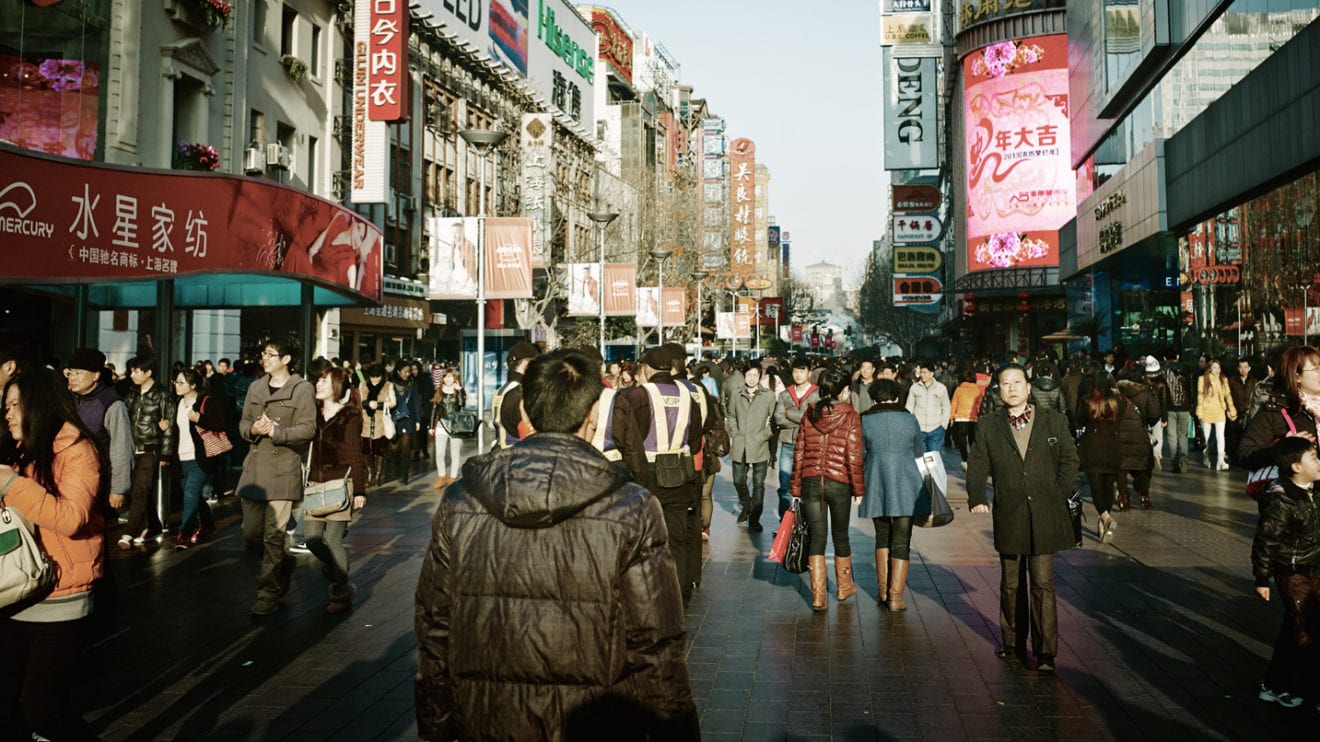
    Chinese policymakers are gung-ho to transition their economy away from investment and toward consumption, but that may not happen for another decade, new data shows.

    “Without a substantial intervention, we believe consumption’s share of China’s economy is unlikely to rise substantially before 2025,” The Demand Institute, a non-profit organization operated by The Conference Board and Nielsen, said in a new report.

    Private consumption as a share of gross domestic product (GDP) will average 28 percent from now until 2025, the think-tank said.

    To be sure, the mainland has long underperformed the global average in this regard as Beijing previously focused on export-led growth.

    Consumption as a share of GDP was 37 percent last year, according to the Brookings Institution, compared with around 70 percent in the U.S. and 60 percent in fellow emerging market, India.

    The indicator has only recently started to stabilize in recent years. Consumption relative to GDP declined 48 percentage points from 1952 to 2011, one of the longest and largest drops of any nation on record.

    Based on an examination of 167 countries between 1950 and 2011, the report found that nations with similar economic characteristics to China saw consumption remain flat relative to GDP for a considerable period following previous declines.

    China’s desire to rebalance its economy stems from the need to avoid the dreaded “middle-income trap,” in which developing countries are unable to graduate into high-income countries after achieving a certain level of per capita GDP.

    While many economists believe the economic transition is already underway, albeit at a gradual pace, they also expect it will take a while before consumption’s share of GDP spikes higher.

    “Only towards the end of decade, when the economy slows further to 5-6 percent, consumption’s share of GDP will become more important,” said Jian Chang, China economist at Barclays. “But we have seen investment slow significantly and I think total consumption as a share of GDP could near 50 percent this year.”

    Beijing’s strategic vision of boosting consumption was first outlined in 2011’s 12th Five-year Plan and since then, the government has unleashed a slew of measures, including raising wages and slashing import tariffs on high-demand goods.

    But The Demand Institute warns that the burden can’t rest on the government alone: “It is up to business to nurture the demand that policy unleashes, aligning goods and services with consumers’ shifting preferences.”

    Ensuring access to products and services via reliable distribution channels, satisfying demand across different income, regional and age groups as well as offering more financial services to support consumption are some of the factors that businesses can embrace, the report said.

  • Singapore Savings Bonds: Good intent, bad timing, say analysts

    Singapore Savings Bonds: Good intent, bad timing, say analysts

    Singapore’s plan to launch a savings bond to encourage long-term retail savings is unsettling domestic banks and economists who fear this bond will push interest rates up and suck cash out from an already anaemic economy.

    The new bond, which will begin selling in October, will have a term of 10 years. It will offer the same yields as government bonds or ten times the returns on bank deposits, and can be redeemed without penalty at any point.

    Such a juicy proposition could cause a flight of cash from bank deposits into these bonds and force interest rates higher as banks compete to attract savers.

    The government says it will issue a maximum of S$4 billion worth of bonds this year, which is still more than a fifth of deposit growth in 2014.

    The timing of these bonds, which are aimed at meeting a long-felt need for long-term investment options in the low-yielding economy, couldn’t be worse, say analysts.

    The economy contracted sharply in the second quarter as manufacturing slumped and is at risk of tipping into technical recession. Price pressures are subdued and expectations are building for the central bank to ease policy once again at a twice-yearly review in October.

    “Launching a retail savings bond now is almost like reverse QE,” said Chua Hak Bin, an economist with BofA Merrill Lynch in Singapore, referring to the unorthodox quantitative easing (QE) policies the United States and other major economies have pursued in the years since the 2007 financial crisis.

    Chua points to the already slowing deposit growth in the Singapore banking system, with just S$3.8 billion ($2.8 billion) of deposits being added in the first five months of 2015, just 20 percent of the total growth last year.

    He suspects the government would invest the savings bond flows overseas. That would further pressure loan growth, by tightening available cash and triggering a rise in deposit rates, he said.

    “So the timing is not ideal. The economy has stagnated in the first half and this will worsen the situation,” Chua said.

    Citibank analysts expect that of a total S$559 billion of deposits in the banking system, 36 percent are savings deposits held by households. If on average the MAS issued about S$6 billion worth of bonds each year, S$30 billion would flow from the deposit base into bonds over five years, they estimate.

    RISK-FREE AND REWARDING

    Singapore’s central bank, the Monetary Authority of Singapore (MAS), has set a cap of S$100,000 on individual investments in the bond.

    MAS Managing Director Ravi Menon played down fears the bond will cannibalise bank deposits.

    “The savings bonds issuance numbers pale in significance compared to the total size of the banking deposits,” he said at a news conference this week.

    Yet there is little doubt the bonds will draw savers from banks. Government bonds yield about 0.95 percent for one-year and 2.6 percent for 10 years. Bank deposits fetch around 0.25 percent for a year and just double that for 24 months.

    “The Singapore Savings Bond is bending the risk-reward paradigm in investors’ favor,” said Zal Devitre, head of investments at Citibank in Singapore.

    Devitre believes retail investors and consumers will be keen to buy the bonds, and yet thinks it is premature to be projecting the impact that will have on rates and banking system liquidity.

    Local banks such as DBS, Oversea-Chinese Banking Corporation and UOB are expected to be impacted if there is a heavy migration of deposits.

    But analysts also expect there will be more pressure on global banks such as Citibank, Standard Chartered, HSBC and Malayan Banking Bhd, which have been deemed systemically important by Singapore and therefore need to maintain higher capital than stipulated under the Basel 3 guidelines.

  • Cities stunt China retail gross sales progress

    Cities stunt China retail gross sales progress

    China retail gross sales progress is strongest in rural areas, with city space progress persevering with to say no.

    China’s Nationwide Bureau of Statistics introduced Wednesday that retail gross sales general grew 10 per cent in April, year-on-year, to 2.24 trillion yuan, or US$366 billion.

    The official determine dissatisfied economists who had been forecasting a 10.5 per cent rise. Progress measured within the first 4 months of the calendar yr was 10.four per cent.

    A lot of the injury seems to be being accomplished in city areas.

    Yr-on-year progress in rural areas was 11.four per cent in April and 11.5 per cent for the 4 months.

    However in city China, April progress was simply 9.eight per cent, and 10.2 per cent for the complete yr up to now.

    Different financial indicators, nevertheless, have been solely barely extra encouraging. Industrial output rose 5.9 per cent in April, in contrast with 5.6 per cent in March. Economists had projected six per cent.

    Fastened asset funding grew 12 per cent over the primary 4 months, under predictions of 13.5 per cent.

  • China’s $1 trillion online future

    China’s $1 trillion online future

    Forrester Research predicts online retail spending in China will exceed US$1 trillion by 2019.

    That’s a massive increase on the $307 billion of 2013.

    In its report The China Online Retail Forecast 2014 – 2019, Forrester estimates spending via mobile will grow at 44.2 per cent compound annual growth rate (CAGR) – twice as fast as online sales, which are estimated to grow at 19.9 per cent CAGR.

    Mobile sales and online retailers’ expansion into new product categories will be the twin drivers for eCommerce growth in China over the next five years.

    “Successful organisations must drive innovation to deliver compelling shopping experience and focus on enhanced customer segmentation, offering seamless customer experience across touchpoints, and leverage mobile to drive overall online retail business,” Forrester advised.

    “To capture the opportunities in the increasingly competitive retail market, organizations must realize the importance of digital capabilities,” says Vanessa Zeng, senior analyst, Forrester Research.

    “Successful organisations must drive innovation to deliver compelling shopping experience and focus on enhanced customer segmentation, offering seamless customer experience across touchpoints, and leverage mobile to drive overall online retail business.”

    Forrester says Chinese consumers are increasingly shifting to mobile for online shopping.

    “The frequency with which online consumers in metropolitan China shop via their mobiles is increasing rapidly, while those in lower-tier cities use smartphones as their primary means of network access and for online shopping.”

    Major web players, Tmall and JD.com, will continue to dominate China’s eCommerce market – with market shares of 57 per cent and 21 per cent, respectively – and will try to seize control of the mCommerce market by enhancing their mobile investments and improving customer experience.

    And Forrester says more categories of products traditionally sold offline, such as pharmaceuticals and furniture, are now being made available online.

    “The growing number of middle-class and affluent Chinese consumers adds to online demand for a wide variety of high-end products, such as fresh food, imported goods, and automobiles.

    “The convenience, variety, and fast delivery associated with online purchase will boost eCommerce in these new categories.”

  • Wumei seals majority stake in B&Q China

    Wumei seals majority stake in B&Q China

    Beijing based supermarket chain Wumei Holdings will pay CNY1.4 billion (USD225 million) for a majority stake in home decorating chain B&Q China whose parent Kingfisher failed to spur growth in the home decoration market in the world’s second-largest economy.

    The all-cash takeover will be subject to approval from China’s Ministry of Commerce, and is set to complete in the first half of 2015, Kingfisher said in a statement yesterday.

    Xu Zhicheng, an analyst with Guotai Junan Securities, said Wumei could leverage its overall data management system and dealers’ network within the country to boost B&Q’s performance.