Tag: Economy

  • Hong Kong’s choice between mainland and despair

    Hong Kong’s choice between mainland and despair

    Hong Kong faces great economic uncertainty and unprecedented market volatility, and given the Brexit chills, analysts expect a contraction. In fact, John Tsang Chun-wah, the Hong Kong Special Administration Region’s financial secretary, has warned that the city’s economy faces its “worst time in 20 years”. Growth has more than halved to about 2.5 percent over the past five years.

    The writing has been on the wall for Hong Kong since the outbreak of the global financial crisis, yet critical decisions have been delayed. The SAR’s old growth drivers are still necessary but not enough to propel growth, because the West can no longer absorb Asian imports, and the Chinese mainland’s economic growth has slowed down.

    Last spring, concerns about Hong Kong’s economy led some rating agencies to downgrade their outlook to negative, after doing the same for the mainland. But while the mainland can still rely on catch-up growth, Hong Kong’s aging economy has to adjust to stagnating growth and income polarization.

    In the past, Hong Kong’s property developers reduced risks by relying on prudent financial policies, funding flexibility and recurring income streams. Today, those positives have been offset by rising supply, slower growth, and the United States Federal Reserve’s future rate hikes.

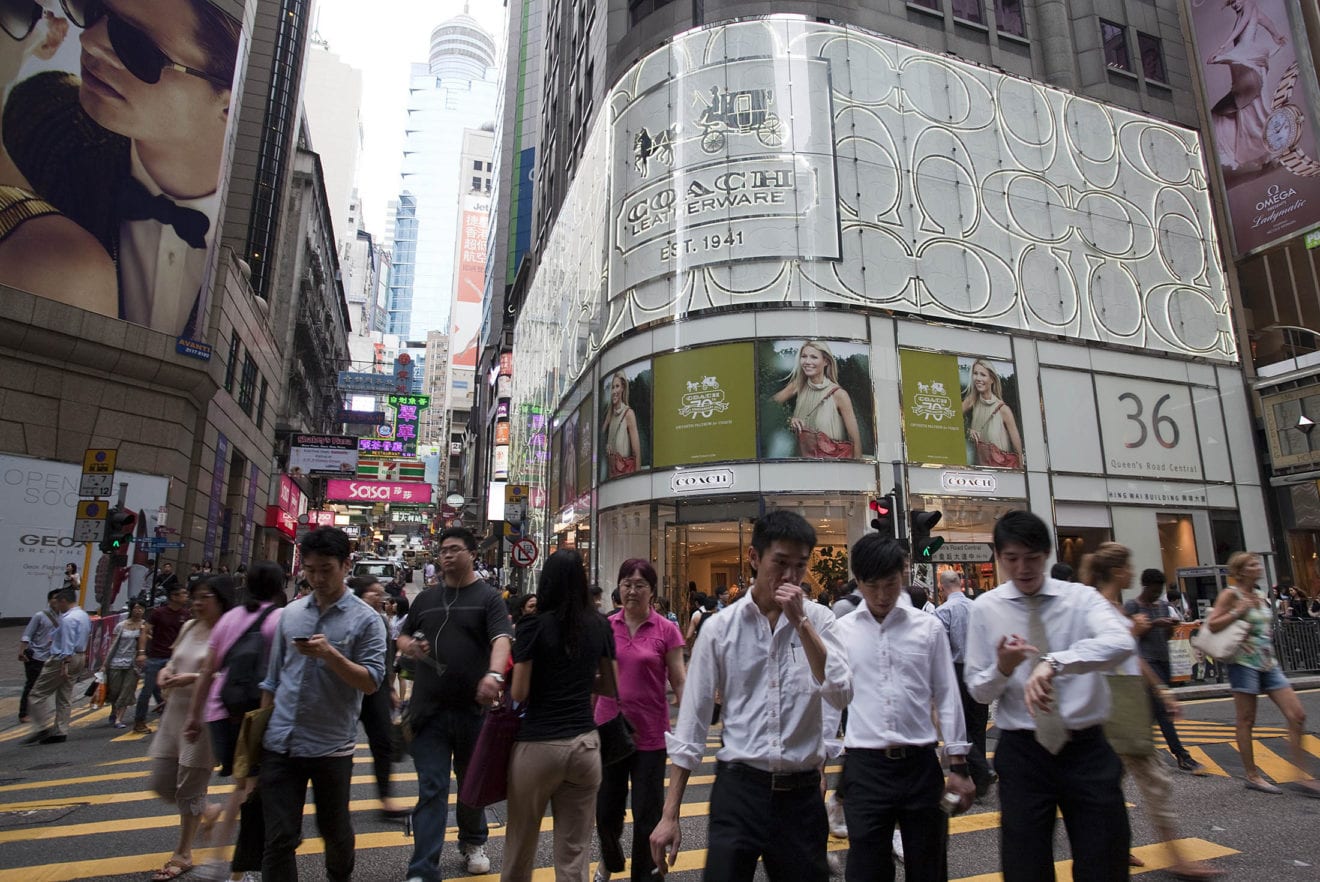
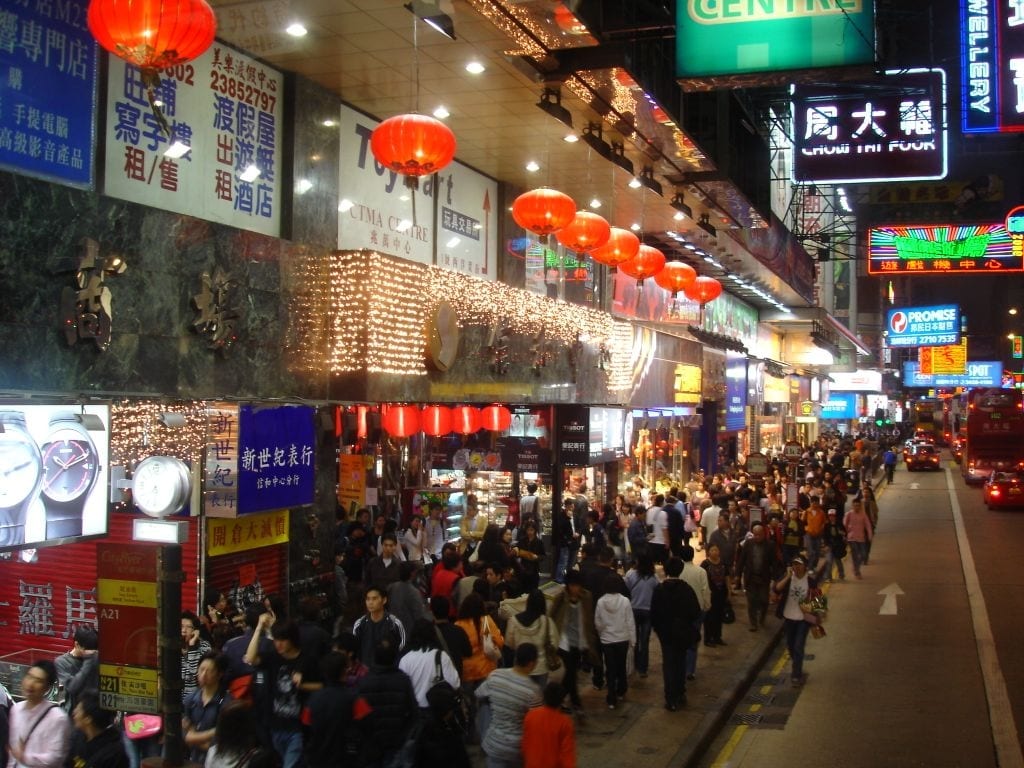
    True, retail sales can still contribute to Hong Kong’s growth, but they cannot do so without mainland residents’ critical role as consumption engines. Also, the SAR’s thriving tourism sector is not viable without mainland residents, who comprise by far the largest group of tourists to Hong Kong. Actually, without the mainland, Hong Kong would be left with only half its trade and a quarter of its foreign investment.

    Hong Kong is highly vulnerable to Brexit spillovers, too. Outside the European Union, it has perhaps the largest trade, investment and financial linkages with the United Kingdom. And because the value of Hong Kong dollar is rising on the back of the US dollar as investors seek safe havens, Hong Kong faces even greater headwinds than Singapore.

    Last year, Hong Kong’s exports to the UK and the rest of the EU comprised 14 percent of the total, relatively the highest in Asia and thus exposed to Brexit and EU risks. In contrast, the mainland’s Belt and Road Initiative will allow Hong Kong to continue to benefit from trade and investment.

    In the past, Hong Kong was the mainland’s financial gateway to the world. But that role has been gradually taken over by Shanghai and other mainland cities, which makes Hong Kong’s attractiveness as a financial hub non-viable without regional economic integration.

    In the coming years, the current trends will become more prominent. During Hong Kong’s reunification with the motherland in 1997, the US economy was almost 10 times bigger than China’s. Europe was still integrating into a regional block. And Hong Kong’s living standards were 11 times higher than those on the mainland.

    Today-almost two decades later-the US economy is only about 40 percent larger than that of China. Europe faces fragmentation threats. Hong Kong’s living standards are on average about 3.7 times higher than those on the mainland, but almost at par in certain districts of Shenzhen in Guangdong province.

    Moreover, income polarization in Hong Kong has soared to alarming levels, according to the Gini coefficient, which some say is worse than those in Brazil or Zimbabwe in international comparisons.

    Worried over the gloomy prospects, Hong Kong tycoon Li Ka-shing recently suggested raising profit tax to boost public spending and narrow the wealth gap. In the absence of hope, the political despair even among a few may undermine the living standards of many in the future.

    But Hong Kong has a choice. By participating in the mainland’s economic growth it can alleviate transitional pains and move to greater equity. To thrive, small and open economies need growth, integration-and hope.

     

  • Further Slowdown for Hong Kong’s Economy in Q1

    Further Slowdown for Hong Kong’s Economy in Q1

    New figures released by Hong Kong’s government suggest the city’s economy has seen a further slowdown through the first quarter. New stats show Hong Kong’s GDP grew by 0.8-percent year-on-year through the first 3-months. This is a 4-year low in term of quarterly growth.

    Hong Kong’s exports dropped 3.6-percent through Q1. Unemployment in the city has jumped by one-percent to sit at 3.4-percent.

    Hong Kong Financial Secretary Tsang Chun-wah admits the outlook for Hong Kong’s economy this year doesn’t appear promising.

    “The global economy is full of risks in 2016. With such an external environment, Hong Kong’s economy will be facing a downward pressure. As we can tell from the latest data, our exports, tourism industry, retail sectors and many other sectors have all been affected.”

    Housing prices in Hong Kong are down some 12-percent after hitting a peak in September.

    A slowdown in exports, coupled with a slowdown in spending from mainland tourists, has been dragging down Hong Kong’s economic fortunes over the past year.

    The city’s retail sector has borne the brunt of the slowdown.

  • E-Commerce to Take Up 20% of the Indonesian Retail Market

    E-Commerce to Take Up 20% of the Indonesian Retail Market

    The Trade Ministry said that the e-commerce business has a chance of capturing 20 percent of the conventional retail market. The scouring of conventional retail markets is likely to happen given the fact that customers are now more familiar and accustomed with online shopping, due to its time and budget efficiencies.

    “This phenomenon must be supported by adequate policies and infrastructure,” Srie Agustina, the ministry’s acting director general of domestic trading, said during the Indonesian E-Commerce Summit and Exhibition in Serpong, Banten, yesterday.

    Srie estimated that the e-commerce industry will take over 20 percent of the conventional retail market share in the next four years. Right now, e-commerce’s share in the conventional retail market is five percent.

    At the E-Commerce Summit opening yesterday, President Joko Widodo warned local e-commerce businesses about the “attack” of foreign players. According to the President, the acquisition of Southeast Asia’s popular online shopping site Lazada by China’s e-commerce giant Alibaba two weeks ago is something that industry players must keep an eye on. “It’s a warning for everyone.”

    Alibaba announced that it has acquired Rocket Internet’s stake in Lazada worth US$1 billion (Rp13 trillion). The takeover strengthens Alibaba’s position in the e-commerce markets of Asia and the world. The acquisition allows Alibaba to reach 560 million online consumers in Southeast Asia, including Indonesia.

    To boost the quality the domestic e-commerce industry, the Trade Ministry will mandate online trade sites to register with the ministry.

    The Indonesia E-Commerce Association (IDEA) is planning for an accreditation of e-commerce sites, in a bid to improve the quality and credibility of local e-commerce players. The accreditation assessment will begin in June carried out on 200 sites online sales-and purchase businesses. The assessment categories include operational sites, clarity payment, and customer service aspects.

    Earlier, Minister of Communications and Informatics Rudiantara expressed his optimism that the retail e-commerce business this year can record a transactions deals total of US$20 billion or around Rp260 trillion.

  • Weaker Economic Environment in Asia Continues to Impact Commercial Markets

    Weaker Economic Environment in Asia Continues to Impact Commercial Markets

    According to CBRE’s Q1 2016 MarketView, total commercial property investment turnover in Asia Pacific in the first quarter of 2016 declined by 36% quarter-on-quarter as investors generally turned more risk-averse, due to stock market volatility and weaker economic environment. Asian capital in particular, however, remained active across the region with the completion of three big-ticket transactions in Greater China by Chinese investors.

    Q1 2016 saw Hong Kong’s second largest-ever transaction for an office property, in which China Everbright Limited acquired the Dah Sing Financial Center for around US$1.3 billion. Regardless of this key deal though, investment activity on the whole remained low in Hong Kong.

    “Despite slower activity in the investment environment overall, international institutional investors are continuing to display strong preferences for core assets in major markets to increase their exposure for strategic diversification,” said Dr. Henry Chin, Head of Research, CBRE Asia Pacific. “In Australia and Japan, however, even though international investors remain active with strong demand for core assets, transaction volume in both markets declined. High prices in Australia discouraged domestic fund managers from purchasing, with some opting to sell non-core assets to recycle capital for future investments. In Japan, despite strong demand from investors, the lack of stock was a limitation as there were fewer institutional quality properties being offered for sale, especially in core markets such as Tokyo.”

    Concerns over the economic climate, along with weaker business and consumer sentiment, have also led to softening occupier markets across the region in Q1 2016.

    “The first quarter of the year is traditionally a quiet period for office leasing,” said Dr. Chin. “The office sector saw a slowdown in leasing momentum overall, however, in China’s tier-one markets such as Shanghai and Shenzhen, office demand remains robust with solid rental growth. Elsewhere, leasing demand is being driven by flight-to-value relocations with firms moving to decentralized areas to reduce costs. Expansionary demand is confined to Shanghai and Mumbai. In light of weakening corporate sentiment, landlords are also becoming more cautious and focusing on tenant retention, especially in markets such as Hong Kong and Tokyo.”

    In the retail sector, Hong Kong suffered its biggest decline in retail sales since 1999, falling by 13.6% year-on-year in January and February combined, due to the sharp drop in tourist arrivals and weaker domestic consumer sentiment. The bulk of Asia Pacific’s leasing demand was driven by fast fashion and F&B retailers. Most Asian markets were quiet but leasing momentum in the Pacific remained healthy.

    “Most Asian retail markets are still negatively impacted by the change in tourist consumption and traveling patterns, especially by Mainland Chinese tourists. The weak Chinese yuan is affecting their spending power. Additionally, in contrast to the last couple of quarters, the strong Japanese yen is beginning to impact visitor spending in Japan, which places pressure on retail sales growth. In Q1 2016, Tokyo saw luxury brands scale back their rate of expansion after a decline in sales, whereas in Pacific, demand from new international retailers remains strong,” said Dr Chin.

    “Many international retailers remain very sensitive to location, driven by flight-to-quality. The coming quarters are likely to see investors re-focus on core properties in major shopping districts. With the current challenging climate, management expertise and knowledge are key issues for retail investors,” he added.

  • China first quarter GDP growth slowest since 2009

    China first quarter GDP growth slowest since 2009

    The pace of China’s economic growth decreased to its lowest since the global financial crisis in the January to March period, official figures show. Gross domestic product expanded 6.7% from the same period a year ago, in line with market expectations but the slowest pace of growth recorded since the first quarter of 2009.

    The world’s second largest economy grew 6.9% last year – its weakest expansion in a quarter century – falling short of Beijing’s target of 7%. But the first quarter number falls within the range of Beijing’s growth target of 6.5% to 7% for 2016.

    Other data for March released by the National Bureau of Statistics suggested that the Chinese economy was stabilising, with industrial output, retail sales and urban fixed-asset investment all beating analyst forecasts.

    Industrial production rose 6.8% from a year earlier following a 5.4% increase in January-February, while retail sales jumped 10.5%. Fixed-asset investment expanded 10.7% in the three months to March period compared to the same period a year ago, beating expectations for a 10.5% rise.

    ‘Robust growth’

    The GDP data comes two days after China’s customs agency said exports increased 11.5% from a year earlier in March, the first positive growth in overseas shipments in nine months. Imports were down a less-than-expected 7.6% following a 13.8% drop in the previous month, while the trade surplus came in at $29.9bn (£21bn; €26.3bn).

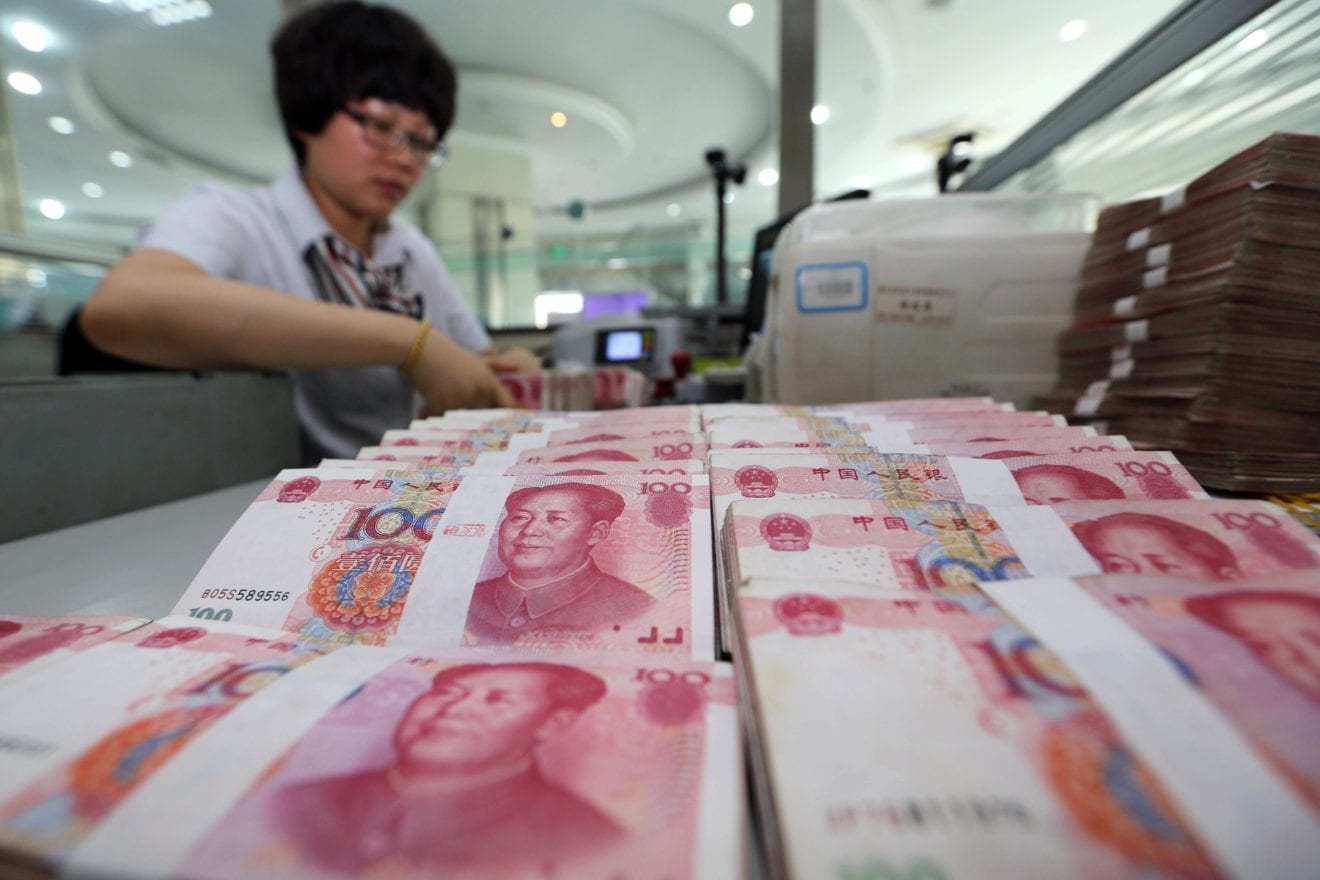
    Yuan Banknotes
    China’s central bank says it will target stability in the yuan exchange rateReuters

    Meanwhile, a Chinese deputy central bank governor said the economy had performed robustly in the first quarter but admitted that it faced several headwinds.

    “I’m pretty confident that we are going to have between 6.5% to 7% growth this year,” Yi Gang said. He reiterated that the central bank would target stability in the yuan and not allow the currency to “overshoot” its exchange rate by too much.

  • Hong Kong faces ghosts of Asian financial crisis

    Hong Kong faces ghosts of Asian financial crisis

    Hong Kong, which for years rode a wave of cheap capital and China’s economic boom, is as vulnerable now as it was before the 1990s Asian financial crisis as those drivers reverse, according to analysis by Daiwa Capital Markets.

    In a bearish take on the financial hub, Daiwa forecasts “enormous stress” ahead as money heads out amid a global US dollar debt deleveraging, China’s economy slows and currency weakens, US interest rates increase, and domestic property prices slump.

    “If the Asian financial crisis was preceded by a classic credit and housing bubble, we see another one now of a bigger scale,” the Daiwa analysts led by Kevin Lai, chief economist for Asia excluding Japan, wrote in a note. “Money inflows have been unprecedented; we expect this money to leave eventually on the back of global dollar debt deleveraging.”

    Daiwa flagged six metrics to gauge Hong Kong’s strength:

    Net money inflows: Inflated in recent years by easy US monetary settings and bullish bets on China’s economy and currency.

    Total credit expansion: Estimated at about 320% of gross domestic product.

    China or regional credit exposure: With an estimated $750bn in loan and bond exposure to China.

    Real estate lending: With more lending exposure and a longer and quicker period of house price inflation this time around than in the late 1990s.

    The direction of US monetary policy as policymakers consider further tightening Hong Kong dollar’s valuation after an estimated 30% appreciation on a broad, real-effective rate over the past four years Of those, the first four are flashing danger, Daiwa says.

    “Measures of macro and financial vulnerability indicate things are no better now than they were just before the Asian financial crisis,” the brokerage said. It isn’t the first time that Lai has warned on Hong Kong. In recent months, the Daiwa economist has highlighted vulnerabilities as the Fed keeps open the option of further rate increases after hiking in December for the first time since 2006.

    Because Hong Kong’s currency is pegged to the dollar, the former British colony effectively imports US monetary policy. Rising US interest rates increase the cost of servicing loans taken out in Hong Kong.

    Hong Kong was hit hard by the Asian financial crisis that started in Thailand in 1997 and spread across the region, forcing the Hong Kong Monetary Authority to spend HK$120bn buying up Hong Kong stocks and to use its foreign-currency reserves to defend the dollar peg. House prices tumbled 70%.

    This time around, Daiwa assumes the HKMA would “defend the peg at all costs,” eroding the monetary base and setting the stage for debt-deflation. In contrast to orthodox thinking, Lai says Hong Kong’s “sizeable reserves” are actually an indication of weakness, and the fact that the currency is pegged prevents a natural currency mechanism.

    Hong Kong’s outlook has dimmed as exports fall and big-spending Chinese tourists stay away, prompting an increasing number of analysts to turn cautious on the $300bn economy because of its exposure to China’s slowdown. Moody’s Investors Service last month lowered Hong Kong’s long-term debt outlook. Retail sales in February plunged the most since 1999 as fewer Chinese tourists visited the city during the Lunar New Year holiday. Chinese visitors are projected to fall 3.2% for the year, according to the Hong Kong Tourism Board, with average spending dropping 4%.

    Lai’s forecast for gross domestic product to slip towards recession territory this year is an outlier. A median forecast of economists surveyed by Bloomberg tips growth of 1.7% this year and 2.1% in 2017.

    And after an initial slump at the start of the year, the Hang Sang Index has rallied, the city’s dollar has rebounded from the weak end of its trading range, and interbank borrowing costs have tumbled after spiking in January.

    But that calm may not last long. According to Daiwa’s analysis, the global deleveraging process “has probably started, or at least could be about to begin,” and the first “real test” for Hong Kong could come in the second half, with pressure set to build next year, according to Lai.

  • Economy Hong Kong’s retail sales drop hardest in 17 years

    Economy Hong Kong’s retail sales drop hardest in 17 years

    Hong Kong’s retail sales plunged in February, as the economic slowdown in China prompted fewer visits from the mainland.

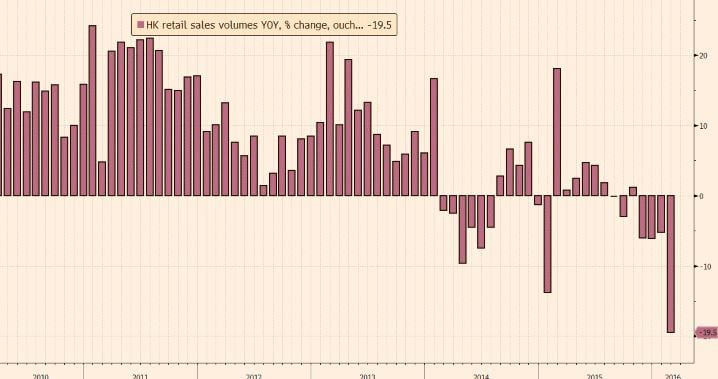
    On an annual basis, the total value of retail sales in February dropped by 20.6 per cent to HK$37bn, from January’s 6.6 per cent drop. The drop in February was the worst since January of 1999.

    After stripping out price changes, the total volume of retail sales decreased by 19.5 per cent, the worst since September of 1998.

    Combining January and February figures, the value of sales of luxury goods like jewellery, watches and clocks, which mainland Chinese tourists often visit Hong Kong to buy, decreased by 24.2 per cent. This was followed by 11.4 per cent decrease in clothes, a 12.3 per cent decline in commodities in department stores, and 7.7 per cent decrease in medicines and cosmetics.

    In a statement, Hong Kong’s Census and Statistics Department said:

    Apart from the severe drag from the protracted slowdown in inbound tourism, the asset market consolidation might also have weighed on local consumption sentiment.

    The near-term outlook for retail sales will still be constrained by the weak inbound tourism performance and uncertain economic prospects. The Government will continue to monitor closely the retail sales performance and its repercussions on the wider economy and job market.

    With Chinese consumers unwilling to spend on luxury goods, Swiss watchmakers, known for their luxury watches, are having a hard time, with UBS cutting earnings forecast.

  • Will Hong Kong retail market, like Jesus, rise from the dead?

    Will Hong Kong retail market, like Jesus, rise from the dead?

    Spring is here, but our struggling retailers have yet to notice its arrival.

    Last week Li Ka-shing said the economy this year is the worst in 20 years, especially in the case of the retail market, which is facing a situation that is worse than SARS in 2003.

    It’s nice to know, though, that while Cheung Kong is grumbling, rival Sun Hung Kai Properties has come up with a way to cope with the situation.

    At its trendy shopping mall APM in Kwun Tong, Hong Kong’s No. 1 landlord is introducing short-term tenancy.

    Six shops of between 100 square feet and 300 square feet will be coming on stream for tenancy of no more than six months, says Maureen Fung Sau-yim, general manager (leasing) of Sun Hung Kai Real Estate Agency.

    Fung says the tenancy will involve a new profit-sharing system, in which 10 to 12 percent of the sales will be taken as rental.

    This new deal is breaking away from the traditional three-year lease where retailers have to pay 20 percent of their sales to the landlord.

    Landlords are adjusting their leasing strategies in the wake of the poor retail sentiment brought about by slowing tourist arrivals.

    Swire Properties, for example, is terminating the leases of underperforming tenants such as Dan Ryan and Grappa’s (and before that, the beloved of the middle class Marks & Spencer) as part of efforts to transform Pacific Place in Admiralty.

    From the tenants’ side, gold, jewelry and luxury watch shops, along with pharmacies or cosmetics outlets, are giving their spaces back to food stalls and other small operators who previously could not afford the high rent.

    Kowloon Watch, for example, has just closed its store at a shopping mall near my residence, its fifth closure in the past 12 months, leaving only seven shops in operation.

    The short-term tenancy seems the most logical strategy in the new business climate. Some trendy retailers, such as Bathing Ape, which used to draw long queues for its limited edition products, will be perfectly suited for this flexible scheme.

    In the first three months, visitors to APM surged over 10 percent to 27 million with sales topping HK$900 million, according to Fung.

    This coming Easter, the mall will be spending an advertising budget of HK$2.3 million, up 10 percent from the previous year, in anticipation of a huge wave of visitors, especially those coming from the Kai Tak Cruise Terminal.

    Hopes are high that the local retail market, like Jesus Christ, can rise from the dead after its extended crucifixion.

  • Eight steps for riding out the economic storm

    Eight steps for riding out the economic storm

    In a few days it will be one year since the implementation of the Goods and Services Tax. Although the GST has been widely unpopular, many economists consider GST as the most efficient way of widening Malaysia’s tax base. Currently, almost everyone pay taxes.

    The Malaysia Consumers Movements commend the Ministry of Domestic Trade, Cooperatives and Consumerism and the Royal Customs Department, who have worked extremely hard in curbing profiteering activity and ensuring that price increases were not excessive. Enforcement officers have acted promptly on complaints lodged against unethical businesses for unfairly increasing prices, while prosecuting a few for related offences.

    The Customs Department has reportedly collected RM51 billion since April last year, as compared to only RM37.2 billion before the GST.

    It is therefore clear that the GST has indeed provided a lifeline to the government but this has come at an expense. Consumers today are grappling with high cost of living issues while business complain of high cost of operating, forcing consumers to tighten their belt and businesses to retrench staff.

    It is important to note that the amount of taxes collected through GST will be highly dependent on the strength of domestic private consumption, which is influenced by consumer confidence in the economy.

    According to industry report compiled by the Retail Group Malaysia, Malaysian retailers are not too optimistic on the growth for the sector in the first quarter of 2016 and expect a negative year-on-year growth of 0.4%. Consumers are fearful of high prices and are increasingly reluctant to spend.

    Bank Negara in its report has projected 4.0-4.5% growth rate in 2016, compared with 5% last year. The Statistics Department indicated that the consumer price index in February rose to a seven-year high at 4.2% from a year earlier. The inflation rate is highest since December 2008 when it hit 4.4%. This rise was attributed to higher costs for food and consumer goods.

    These not very convincing statistics calls for us to review, rethink and refine solutions for riding the projected storm ahead.

    1. Stop the Bickering

    Negative news will have an impact on consumer and investor confidence. What we say and do backfires on us in negatively portraying our country’s image. We must collectively demonstrate political stability, a key factor for investors and consumers. Malaysia practices parliamentary democracy where leaders are elected every 5 years. It therefore ignites sheer concerns when attempts are made to dislodge sitting elected government by force. Street demonstration is not our culture, and it shouldn’t be!

    2. Corruption is Detrimental

    The government must demonstrate political and administrative will when implementing austerity measures and fighting corruption. There is a big time need to plug leakages and tackle corruption. The recent report of misappropriation totalling RM107 million by a senior government official surely sends a wrong message to consumers. Questions surface if there are more of such cases?

    3. Promote Healthy Competition

    It is important for the government to promote competition and speed up further liberalisation of key economic sectors. Monopolies are detrimental and must be dismantled as it harms consumers. There is a need to reassess the approved permit policy. Improve business efficiency by eliminating bureaucratic red tape which significantly increases cost of doing business.

    4. Transparency in Action

    Implementation of policies must be openly deliberated. Stakeholders at all levels must be consulted and their expectations adequately managed. Unilateral decisions must be stopped immediately. The era of government knows best is over. The point being, whenever there is any price revision announcement, it distorts cost elements throughout the supply chain, and more often than not, negatively impacting consumers.

    5. Halt Price Increments

    The government and businesses must pledge not announce any more price increases. Consumers are still grappling to deal with what was announced in 2015 and any new increases will definitely not be of any help.

    6. Ethical Trade Practices

    Businesses must demonstrate integrity in action across the value chain. Profit should not be derived at the expense of consumer suffering. Business leaders must uphold high standards of social responsibility which must go beyond mere CSR or brand-building gimmicks. There is only so much that the government can do to audit. Businesses must own up!

    7. Prudent Consumption Patterns

    Consumers should re-examine our consumption patterns and make adjustments. The era of cheap goods and services is over. Malaysia practices a competitive open market economy and it is therefore unfair to completely shift blame on the government for failing to reduce prices.

    We must avoid wastage and over-consumption, where we purchase things.

    8. Ramp Up Enforcement

    It is commendable that the ministry has done very well in monitoring, tracking and acting against errant businesses which unfairly raise prices. But why only expect the regulators to do the auditing. In the era of social media, we are all empowered to highlight real time issues and ensure they are addressed in a timely manner.

    Name and shame those manipulating the system, why must we keep silent?

    It is time to close ranks and face the storm together as one team. We hold the trump card, in charting the destiny of our nation.

  • Hong Kong keeps close eye on Singapore’s moves

    Hong Kong keeps close eye on Singapore’s moves

    Faced with a cloudy economic outlook, Hong Kong is casting a keen eye on action taken in Singapore, a fellow open economy buffeted by external forces – and an old rival.

    Thursday offered a good look. Finance Minister Heng Swee Keat announced a Budget that includes government spending of $73.4 billion.

    It comes a month after Hong Kong’s Financial Secretary John Tsang announced its Budget with an expenditure of HK$490 billion (S$87 billion). The reaction here is that, at first glance, the two financial czars – both men coincidentally have a Master’s in Public Administration from Harvard – might have been studying the same playbook.

    Given tough times ahead, they announced near-term relief mainly in the form of tax rebates and loan schemes for small and medium- sized enterprises (SMEs), and handouts for people to help boost consumption. Buzzwords such as innovation, robotics, and research and development also liberally litter the duo’s respective long-term visions.

    Ernst and Young’s Hong Kong tax managing partner Tracy Ho puts it thus: “They (Singapore) watch us, and we are watching them too.”

    Hong Kong is facing headwinds from a mix of political tensions and economic trends. Its retail sales recently suffered the worst decline in 13 years. Tourist numbers are down. The economy will grow between 1 and 2 per cent this year, Mr Tsang has said. But a greater anxiety is over the city’s long-term prospects. One nagging worry is the lack of diversity in its economy, in terms of its dependence on China and in its industry mix. Hong Kong is heavily dominated by the financial, hospitality and other services sectors, with a negligible manufacturing presence.

    It is in this broader vision that Singapore’s Budget on Thursday offers takeaways for Hong Kong, say those interviewed. Businessman David Ting, past president of the Chamber of Small and Medium Business, laments that unlike in Singapore, Hong Kong SMEs “do not have a clear direction on where we should go”. In particular, he lauds the Singapore Budget for being “very focused”. The $4.5 billion Industry Transformation Programme offers targeted industries a road map for how they can grow.

    On why Hong Kong businesses, known for their entrepreneurial spirit, will need such guidance now, Mr Ting says the landscape has changed. With China closed off in the past, it was easier for businesses to suss out opportunities, he adds.

    Lawmaker Charles Mok, an IT entrepreneur, says that while there are superficial similarities between both Budgets, given the emphasis on R&D, there was a distinct difference in how it is to be applied. In Singapore, the focus is on how to reinforce the manufacturing industry by introducing automation, he says.

    “In Hong Kong, we talk of developing R&D. But who is it for? Factories in China? What about our domestic industry – how do we help them get restarted?” says Mr Mok.

    On the flip side, Singapore’s Silver Support Scheme to help the elderly does not go far enough, notes social work expert Nelson Chow. “It helps the bottom 20 per cent. But in Hong Kong, this is something we’re already doing. The next step is to introduce a universal pension.”

  • Billionaire Li Ka-shing sounds alarm over Hong Kong’s economy

    Billionaire Li Ka-shing sounds alarm over Hong Kong’s economy

    Hong Kong’s economy is at its worst in 20 years, billionaire Li Ka-shing said on Thursday, warning that the city’s stock market could fall by more than half if the financial hub does not get backing from mainland China.

    Li, who held court and joked with reporters for more than an hour during an earnings news conference, is the latest person to sound the alarm after Moody’s downgraded Hong Kong’s sovereign credit rating at the weekend, citing its links to China’s economic slowdown.

    “Today’s Hong Kong is getting worse, the worst I’ve seen in 20 years,” said Li, 88, referring to the Asia financial crisis in the late 1990s. Our home sales and retail now is worse than the SARS period. During SARS (the effect) was short-lived but now it is long,” he said, in a reference to the Severe Acute Respiratory Syndrome that crippled the city in 2003.

    Hong Kong retail sales, which suffered their worst decline in 13 years in 2015, have been hit by a slump in tourist from the mainland which has been blamed in part on increasing cross-border tensions and political unease on both sides.

    “If we respect tourists, no matter where they’re from, today our retail, hotels would not be this bad. So everyone has to reflect on themselves, there are a lot of issues the politicians need to reflect on how they can do better,” Li said.

    In February, Hong Kong’s Financial Secretary John Tsang said “political volatility” was threatening to undermine the economy and warned disputes would intensify ahead of this year’s elections which pit the city’s democratic opposition against pro-Beijing parties.

    A former British territory, Hong Kong is ruled under a “one country, two systems” formula that allows wide-ranging autonomy and freedoms not enjoyed in mainland China, but many in the city have voiced concern over what they see as increasing interference by Beijing in its affairs.

    Li, known as Superman for his deal-making savvy, said he does not think Hong Kong people want independence and urged residents to allow the city to be stable and prosperous.

    Earlier on Thursday, Li’s ports-to-telecoms conglomerate CK Hutchison reported a net profit of HK$31.17 billion ($4 billion) for 2015, in its first full-year earnings report after a reorganisation last year.

    Li continued to take questions from the packed conference even as company officials tried to usher him out, saying finally with a smile: “You guys are just expecting me to slip out something wrong.”


  • Hong Kong economy in worst shape in 20 years

    Hong Kong economy in worst shape in 20 years

    Billionaire Li Ka Shing said yesterday that Hong Kong’s economy is at its worst in 20 years, and warned that the city’s stock market could fall by more than half if the financial hub does not get backing from mainland China.

    Mr Li, who held court with reporters for over an hour at an earnings news conference, is the latest person to sound the alarm after Moody’s downgraded Hong Kong’s sovereign credit rating at the weekend, citing its links to China’s economic slowdown.

    “Today’s Hong Kong is getting worse… the worst I’ve seen in 20 years,” said Mr Li, 88, referring to the Asian financial crisis in the late 1990s. “Our home sales and retail now is worse than in the Sars period. During Sars, (the effect) was short-lived but now it is long,” he said, in a reference to the severe acute respiratory syndrome that crippled the city in 2003.

    Hong Kong retail sales, which suffered their worst decline in 13 years last year, have been hit by a slump in tourists from the mainland which has been blamed in part on increasing cross-border tensions.

    “If we respect tourists, no matter where they’re from, today our retail, hotels would not be this bad. So everyone has to reflect on themselves, there are a lot of issues the politicians need to reflect on how they can do better,” Mr Li said.

    Last month, Hong Kong’s Financial Secretary John Tsang said”political volatility” was threatening to undermine the economy and warned disputes would intensify ahead of this year’s elections.

    A former British territory, Hong Kong is ruled under a “one country, two systems” formula, but many in the city have voiced concern over what they see as increasing interference by Beijing. Mr Li, known as Superman for his deal-making savvy, said he does not think Hong Kong people want independence and urged residents to allow the city to be stable and prosperous.

    Earlier, Mr Li’s ports-to-telecoms conglomerate CK Hutchison reported a net profit of HK$31.17 billion (S$5.4 billion) for last year, in its first full-year earnings report after a reorganisation last year. The company also announced a full-year dividend of HK$2.55 a share, while analysts estimated HK$2.71.

    CK Hutchison shares dropped 0.3 per cent to close at HK$98.85 before it announced earnings, extending this year’s decline to 5.5 per cent. The benchmark Hang Seng Index fell 6.4 per cent last year.

  • Risk takers and growth makers look to China

    Risk takers and growth makers look to China

    With a theme of risk takers and growth makers it was inevitable that anecdotes about Australian business and China would feature heavily at The Australian Financial Review Business Summit, presented by BHP Billiton.

    China presents risks that are beyond the pale for boards of directors of most S&P ASX 200 companies and for many influential equity fund managers.

    Insurance Australia Group’s decision to pull the plug on a $1 billion investment in China said a lot about risk aversion on major company boards. The Telstra decision to not invest $1 billion in the Philippines suggests that capital will not be deployed in China even though the country wants to open up its telco market to competition.

    Risks in China that are rarely found in Australia include sudden regulatory changes, the blatant stealing of intellectual property and government decisions tied to China’s increasingly aggressive foreign policy.

    But the growth opportunities on offer in the world’s fastest-growing economy are so extraordinary that many smaller companies believe the rewards far outweigh the risks.

    That was the clear message from a range of speakers and panellists on the first day of the Financial Review Business Summit in Melbourne on Tuesday.

    Power of social media

    The most stunning anecdote came from Richard Henfrey, chief operating officer of Blackmores, the vitamins company which has stormed the Chinese market thanks to its “clean and green” image.

    Henfrey says sales of a Blackmores Vitamin E cream were running at about 3000 tubes a month when Chinese film star, Fan Bingbing, was photographed with a tube in her handbag.

    The photo was shared on social media and within weeks sales of the cream soared to 100,000 tubes a month. Today sales are running at about 500,000 tubes a month and still growing.

    Henfrey says the incident highlighted the power of social media in China. Blackmores has not had to pay the film star any money for her public endorsement of the product.

    But when asked by Chanticleer about the expansion of other Australian companies in China, Henfrey expressed surprised that others had not followed in the footsteps of Blackmores.

    He says other Australian vitamins companies had not invested in people and infrastructure inside the country.

    Blackmores has 25 people in its office in Shanghai and Henfrey is confident that staff numbers will grow to more than 100 within a year. He says Australians need to get over their fear of investing on the ground in China.

    In carving out a profitable niche in the Chinese vitamins market, Blackmores has had to navigate through tricky government regulations.

    Its success is partly due to bypassing tough government regulations in relation to medicines. Many of its vitamins are classified as food rather than medicines and this has helped to clear the way to its sales success.

    Its products are sold in about 10 per cent of the 50,000 pharmacies in China.

    Free trade zone a catalyst

    Henfrey says the establishment of the Shanghai Free Trade Zone had delivered a significant increase in sales because Blackmores could now used bonded stores to directly import products not covered by local regulations.

    This carries a strong message for other companies in Australia pondering expansion into China. The Shanghai Free Trade Zone, which was established on a pilot basis in 2013, presents growth opportunities for financial services companies.

    These opportunities were outlined in a recent paper by Jeff Schubert on behalf of the Australian Chamber of Commerce in Shanghai.

    However, the focus of discussion at the summit on Tuesday was in relation to food, tourism, education and property transactions.

    The enormous opportunities for Australian food companies in China were laid out in compelling presentation by Shaun Rein, managing director of China Market Research Group.

    Rein meticulously dissected the major drivers of consumer demand in China ranging from the impact of pollution on shopping habits to the shift in luxury purchasing habits from Louis Vuitton bags to international travel.

    He provided several embarrassing examples of international firms that had attempted to crack the Chinese market with ill-thought through advertising campaigns that showed a total misunderstanding for local consumer culture.

    Rein says CMR research showed that Polo Ralph Lauren totally missed the mark with its ads featuring blonde American models. These turned off Chinese buyers who thought the clothes would not fit.

    GAP made the same mistake by using a male model with tattoos, which are normally associated with Triad gangsters.

    He says one high-profile global manufacturer of fast moving consumer goods had made a grievous error by lowering its production standards in its Chinese factories with the inclusion of carcinogens banned in the United States.

    Pollution huge issue

    Pollution, according to Rein, is the single biggest issue transforming shopping habits in China. The air in Beijing and to a lesser extent Shanghai is often so toxic that it has forced an increasing number of people to shop online.

    Rein says that switch in consumer behaviour has not necessarily been reflected in the retail sales numbers published in China. He says traditional retail sales measures underestimate the strength of demand.

    Rein said research by CMR of people in China with a minimum of $10 million in assets showed that at least 60 per cent were making preparations to leave China, partly because of the fear that the pollution problem would get much worse.

    Pollution, says Rein, is one reason why Chinese do not trust products made in their own country. It is this distrust which is driving the demand for Australian beef, dairy and honey products.

    Raymond Yeung, a senior economist, Greater China Economics with ANZ Banking Group, told the summit that consumers now accounted for more than half of economic growth in China. He agreed with Rein that tourism presented a good opportunity for Australia.

    Australia must welcome Chinese tourists

    About 5 million Chinese visited Japan last year, about 6 million visited Korea but  only 1 million visited Australia.

    Simon Henry, the co-chief executive and founder of the top international real estate website in China, Juwai.com, says he is horrified at the low number of Chinese tourists visiting Australia.

    Juwai.com facilitated an estimated US$4.2 billion ($5.5 billion) in Chinese international real estate purchases in the 2013 calendar year, according to Henry.

    Henry’s contribution to the discussion related mainly to China’s insatiable appetite for foreign real estate. He has not found any lessening in demand despite the gradual decline in China’s economic growth.

    Demand for foreign property, according to Henry, has risen from $US5 billion in 2010 to $US52 billion in 2015. He says demand will reach $US220 billion by 2020.

    He says there are only two assets that are trusted by China’s “mum and dad” investors – gold and property. That is why the recent stock market gyrations had no impact upon demand for property.

    Yeung from ANZ provided a sobering assessment of the likely Chinese response to the possible election of Donald Trump as president of the United States.

    He says it is no surprise that China’s international priority over the past two years has been the One Belt, One Road infrastructure strategy. This policy focuses on Chinese investment in infrastructure in about 65 countries, most of which are to the west of the country.

    In fact that One Belt One Road strategy presents partnership opportunities for Australia’s major construction and engineering companies based on the experience of General Electric.

    John Rice, vice chairman of GE, told Chanticleer that GE did a deal at the end of last year in Pakistan which involved a Chinese electric power company, Chinese financing and a gas turbine from France.

    “The EPC was a Chinese company we have done business with for 20 years – Harbin – so we can bring partnerships we have established over decades in some cases to bear to win deals along the One Belt, One Road,” he said.

    “It was good for GE, good for the customer in Pakistan and good for China.”


  • Indonesia, Belgium agree to enhance economic cooperation

    Indonesia and Belgium have agreed to intensify economic cooperation, particularly in the fields of trade and investment.

    Both nations reached the agreement during a meeting between Indonesian President Joko Widodo (Jokowi) and Princess Astrid of Belgium at the Merdeka Palace here on Tuesday.

    Princess Astrid is in Indonesia to lead a 300-strong Belgian business delegation from March 12 to 19. The business delegates are representing 127 companies.

    The companies are engaged in the fields of construction, infrastructure, energy, clean technology, communication and information technology, food and beverage, financial services, transportation, logistics, marketing, and education.

    Speaking to the press after accompanying President Jokowi at the meeting, Foreign Minister Retno L.P. Marsudi stated that Belgium is Indonesias key partner in terms of trade and investment.

    “For instance, in 2015, Indonesia-Belgium bilateral trade reached US$1.67 billion, while (Belgian) investment (in Indonesia) reached more than US$7 million,” she noted.

    Until now, some two thousand Belgian companies have been operating in Indonesia, she remarked.

    At the meeting, President Jokowi briefed the Belgian business delegation on the governments efforts to make the economy more open and competitive.

    “The president touched on the 10 economic policy packages that the Indonesian government has issued so far. One of the packages deals with the Negative List of Investment,” she added.

  • China aims for +6.5% growth for 2016 to 2020

    China aims for +6.5% growth for 2016 to 2020

    There will be no ‘hard landing’ for the Chinese economy, despite growth forecast cuts, according to Xu Shaoshi, the Head of China’s state planning agency, commenting on the draft outline of the 13th Five-Year Plan on national economy and social development at the 12th National People’s Congress (NPC).

    This message was delivered loud and clear in the Great Hall of the People in Beijing last Saturday, despite Asia’s leading economic powerhouse missing its growth target of around 7% last year. The economy is said to have grown by 6.9% in 2015 – the lowest level in 25 years – according to the Chinese Government’s official news arm, the Xinhua News Agency.

    At the same time, Chinese Premier Li Keqiang pointed to lower growth expectations in his opening speech and more challenging times. He also announced a lowering of the economic growth target for this year to between 6.5% to 7% – a level most nations and economies around the world would obviously welcome, although this range over five years is much slower than the rates seen over the last 25-30 years.

    However, Xinhua reports that the bottom end of this new target figure is understood to represent the ‘minimum growth required’ for China to attain its stated target of doubling its 2010 GDP and per capita income level within four years by 2020.

    RISING TO NEW ECONOMIC CHALLENGE
    Li Keqiang also announced that China’s GDP is now forecast to be in excess of CY92.7 trillion ($14.2 trillion) in 2020, compared with CY67.7 trillion in 2015, according to the draft, submitted to the National People’s Congress (NPC) annual session, which opened Saturday, for review.

    The new five-year plan contains a number of important new policy measures, including the amazing prediction that China will create more than 50m new urban jobs in the next five years.

    Xinhua also points to the Chinese Premier’s promise to try and help improve the quality of life for poverty-stricken rural residents, as well as reduce the number of heavily polluted days in large cities by 25%. However, this last aim will require a cap on industrial factory output that the country has so far been slow to implement.

    Meanwhile, on the transport front, China is expected to complete its target of 30,000km of high-speed railways to link 80% of big cities nationwide. This is expected to take more pressure off the country’s airports where domestic flights are routinely delayed and many airports suffer from severe congestion.

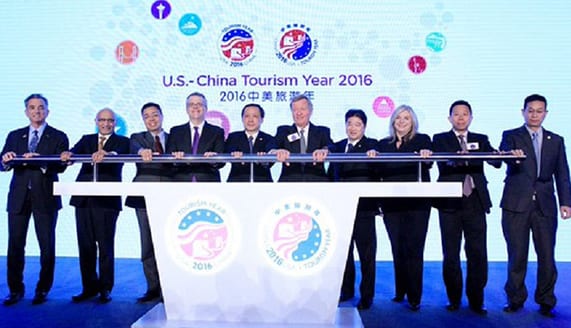
    China-US-Tourism-Year-2016-Opening

    CHINA-US TOURISM YEAR: This year (2016) is China-US Tourism Year, with Chinese President Xi Jinping sending a message of welcome to a high-powered tourism delegation from the US last week. He said: “I hope we’ll take this opportunity to expand personnel exchange, reinforce cultural exchange and foster a more solid social basis for bilateral relations development. American tourists are welcome to China. I wish 2016 China-U.S. Tourism Year a complete success.” US President Barack Obama reciprocated with his message: “Please get ready for more and more Americans are travelling to China. I also look forward to and welcome more Chinese to the United States. I believe that the more we understand each other, the more we can work with each other.”(Photo Credit: China National Tourist Office).

    The recent announcement related to the creation of more duty free arrivals shops in China is also entirely in line with these ‘readjustments’ to the Chinese duty free regulations, as predicted last year and reported last month.

    This follows the Chinese Government’s move to reign in a bigger share of high duty free spending levels by its Chinese nationals abroad, by authorising multiple duty free arrivals shop openings at leading airports and border points.