Huawei has entered a strategic partnership with Singapore’s Infocomm Media Development Authority (IMDA) to accelerate the nation’s digital economy thrust.
The company has likewise entered agreements with Keppel Data Centres, and Ascent Solutions also related to Singapore’s digital economy future for a Smart Nation.
The partnerships aim to enhance industry collaboration, enable local companies to scale globally, empower the workforce with skills relevant for the digital economy as well as equipping companies with the technology and knowledge to build strong digital capabilities in a sustainable manner.
Huawei, IMDA, and Keppel Data Centres will focus on a two-year strategic collaboration to explore the technical feasibility of a first-of-its-kind high-rise green data center building.
Huawei and IMDA will also collaborate to accelerate the growth of local SMEs by leveraging Huawei’s technical expertise and facilities, go-to-market opportunities and global business network.
Further, Huawei will support Ascent Solutions as its technology enabler, allowing the local company to tap Huawei’s global business network and explore overseas opportunities.
In addition, IMDA and Huawei will jointly promote deeper talent and capability building among local ICT students.
This initiative will include 45 overseas training stints and internship opportunities for students to explore new capabilities in technology areas critical to the future such as the IoT, 5G, and cybersecurity.
Increased foreign investment is putting Vietnam on the right track. Swiss investment bank UBS has forecast that Vietnam will marginally outpace China’s economic growth for the first time in 2018.
For the past 30 years, China has been the world’s fastest growing major economy, emerging as the star of Asia.
However, last year China’s economy grew by 6.7 percent compared with 6.9 percent in 2015, according to official data, marking its slowest growth since 1990.
UBS predicts Vietnam’s economic growth will expand by 6.5 percent in 2017, slightly lower than the 6.7 percent target set by the government, but still above 6 percent for the fourth consecutive year, defying the Asian slowdown.
Vietnam’s economy expanded by 5.73 percent on-year in the first half of 2017, official data showed, mainly fueled by foreign direct investment (FDI), according to the UBS report.
Vietnam’s FDI disbursement has grown at a compound annual rate of over 10 percent in the last five years, and actual disbursement reached a record $15.8 billion last year.
During the first half of 2017, the country also welcomed over $19 billion in investment pledges, leaping 55 percent from a year earlier, mostly from North Asia’s technology powerhouses.
The increased FDI flowing into Vietnam has resulted in a hike to the average income. The average monthly salary witnessed an increase of 88 percent from 2010-2015, according to UBS.
By the end of this decade, Vietnamese urbanites are expected to earn an average $714 per month. Vietnam’s emerging consumer class, according to the report, will pave the way for investment growth in the country’s promising retail sector, especially with investment from overseas.
However, UBS warned of the risk of trade protectionism following U.S. President Trump’s decision to ditch the Trans-Pacific Partnership this year.
“Vietnam remains largely dependent on foreign capital and foreign technology. An FDI-led economic model is vulnerable and instable,” said Professor Pietro Masina of the University of Naples, who has spent years studying Vietnam’s economy.
Singapore has shot up by 12 places in a league table that ranks cities on opportunities for property investment. The index, launched last August, looks at factors such as retail sales, household income, adult population size and gross domestic product to determine how economically vibrant a city is.
Singapore was ranked ninth, up from 21st last December, by asset manager Schroders, which compiles the index of 161 cities.
Los Angeles took the top spot, with London second, a move up from eighth place in December.
“One of the key strengths of Los Angeles’ economy is that it is well-diversified across multiple industries, including financial services, media, trade and technology,” said Mr Hugo Machin, co-head of global real estate securities at Schroders.
“The technology sector, in particular, has grown substantially over the past few years, and this has not only boosted demand for office space but also for residential property, much of it due to the increased hiring of millennials.”
On London, he said the firm believes it “has a competitive advantage in location, language, scale, infrastructure and cultural diversity”, adding: “If we add the global strength of its universities, London remains a favoured place to invest.”
Schroders said university rankings, which were taken into account this time for the first time, were the main reason behind changes in cities’ positions.
“Universities are critical in powering city economies. Innovation and education provide a better trained, more productive workforce. Knowledge-based hubs are growing in economic strength with a positive knock-on to real estate markets in those locations,” Mr Machin noted.
The new methodology gave a boost to US cities, which filled 16 of the top 30 slots. Boston, where the greater metropolitan area houses academic institutions such as Harvard University and the Massachusetts Institute of Technology, jumped from 24th to third place.
But Chinese cities were hard hit, after taking four out of the top five spots in December last year.
Beijing fell from pole position to 11th place, with Shanghai dropping from second place to 10th and Shenzhen plummeting from third to 24th. Tianjin, which came in fourth last year, is no longer in the top 30.
South Korea’s economy grew at a faster pace in the first quarter than three months earlier due to increased construction investment and exports, central bank data showed Thursday.
In the January-March period, the country’s gross domestic product increased 0.9 percent from the previous quarter, improving from a 0.5 percent on-quarter expansion three months earlier, according to preliminary data from the Bank of Korea.
The on-quarter growth is the fastest since the second quarter of last year.
The data also showed the services sector expanded 0.1 percent from the previous quarter, compared with a 0.2 percent on-quarter expansion three months earlier.
The central bank data showed construction investment grew 5.3 percent in the first quarter from the previous quarter, and facility investments rose 4.3 percent on-quarter in the first quarter.
Chung Kyu-il, director general of the Economic Statistics Department at the BOK, blamed the slower growth in the services sector on a decline in the number of Chinese tourists, poor consumer sentiment and people putting off buying smartphones ahead of the release of Samsung Electronics Co.’s Galaxy S8.
Samsung started official sales of the Galaxy S8 and the Galaxy S8 Plus smartphones in South Korea last Friday.
The service sector includes wholesale and retail trade, restaurants, and hotels.
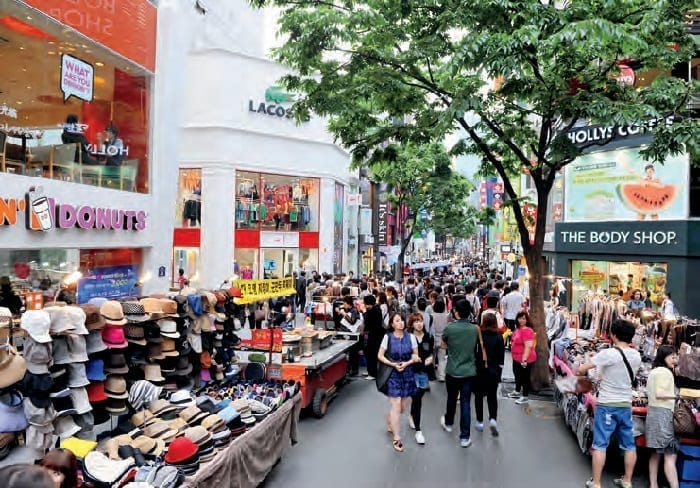
Local tourism-related businesses have taken the brunt of China’s ban on trip sales to South Korea in an apparent retaliation against Seoul over a US missile defense system.
Seoul and Washington began to deploy the US missile shield in South Korea to counter North Korea’s evolving nuclear and missile threats.
Still, China has repeatedly pressed South Korea and the US to cancel the deployment and withdraw the missile defense system, claiming the US missile defense system could hurt China’s security interests.
Exports — one of the major pillars for the South Korean economy — grew 1.9 percent from the previous quarter, while imports increased 4.3 percent.
Gross domestic income rose 2.3 percent in the first quarter from the previous quarter, compared with a 0.8 percent expansion three months earlier, the BOK said.
The industrial sector and trade deficit have been dragging on the country’s economic momentum. Vietnam’s economic growth slowed to an estimated annual rate of 5.1 percent in the first quarter of this year, the slowest in three years, with the industrial sector suffering from its smallest expansion since 2011, the government said on Wednesday.
The Southeast Asian nation has one of the world’s fastest growing economies, expanding at around 6 percent annually from 2011-2015 after jumping 7 percent per year over the previous five years.
Last year, an El Nino-induced drought, an environmental disaster and unfavorable global economic conditions put a brake on Vietnam’s gross domestic product (GDP) growth, holding at 6.21 percent, the first slowdown since 2012, placing it behind India, China and the Philippines in Asia.
GDP growth of 5.1 percent from January-March is the slowest pace to be recorded in the first quarter since 2014, when it rose 5.06 percent, based on government data.
“Pending issues such as quality of growth, productivity and low competitiveness remain the challenges to the growth target,” the government’s General Statistics Office said in its quarterly report.
The Vietnamese government has targeted GDP growth to accelerate by 6.7 percent this year.
The industrial sector grew by 3.85 percent in the first quarter from a year ago, the slowest since 2011, with mining decreasing 10 percent and manufacturing and processing also expanding at a slower pace than in the previous two years, the statistics office said.
From a consumption approach, a deficit in trade balance and services has cut 4.42 percentage points of GDP growth in the first quarter, the office said.
After a $1.15 billion surplus in January, the country’s trade balance swung to a deficit of $2.04 billion in February and an estimated gap of $1.1 billion in March, leaving the first quarter’s trade deficit at $1.9 billion.
Vietnam’s annual inflation in March stood at an estimated 4.65 percent, the slowest pace since last November, the statistics office said.
However, a hike in health service and tuition fees, higher demand for food and fuel prices rising 35 percent in the first three months have triggered the country’s consumer price index to jump on average 4.96 percent from a year ago, a four-year high, the office said.
Vietnam’s economy would expand at an average of 6.3 percent in the next three years, with all categories of demand buoyed by strong foreign direct investment and manufacturing exports, the World Bank has said.
In the long run, the world is going to see significant shifts in economic order over the next few decades, with Vietnam poised to make the biggest improvement of all, consulting firm PricewaterhouseCoopers said in early February.
Việt Nam is ranked fifth in the list of the world’s most optimistic countries on economic prosperity in 2017, according to a survey by WIN/Gallup, the world’s leading association in market research and polling.
WIN/Gallup International published its 40th End of Year Survey exploring outlook, expectations, views and beliefs of 66,541 people from 66 countries across the globe in 2016.
The 2016 edition includes Việt Nam data representing the views of 700 respondents from Hà Nội and HCM City interviewed face-to-face by market research company Indochina Research (Việt Nam) Ltd, a member of WIN/Gallup.
The survey revealed that about 59 per cent of the respondents are optimistic about the economic outlook for 2017, 12 per cent are pessimistic and 26 per cent believe the economy would remain the same.
When it comes to global economic outlook, despite much of the world largely remaining out of recession, economic optimism declined from twelve months ago. The study showed that 42 per cent of the world is optimistic for the economic outlook in 2017, almost double (22 per cent) of those who are pessimistic.
Net optimism (the percentage of those saying next year will be one of economic prosperity minus the percentage who say next year will be one of economic difficulty) has fallen from +23 per cent to +20 per cent.
Việt Nam is also ranked the fourth happiest country in the world, following Fiji, China and the Philippines, the survey said, adding that 79 per cent of the respondents answering they were happy and only 1 per cent said they were unhappy.
Singapore Airlines (SIA) is banking on premium economy services to entice travelers to pay more for extra comfort.
About four in 10 SIA planes now offer the service, slightly more than a year since it rolled out premium economy cabins, which offer perks such as more legroom and better food.
And the carrier said it will continue to retrofit more aircraft with such cabins to meet travelers’ needs.
Demand is especially strong on long-haul routes, said SIA spokesman Nicholas Ionides.
The premium economy cabin includes features such as wider seats with greater recline and more legroom.
First introduced more than two decades ago, such cabins are now found on more than 50 carriers worldwide, including American, European and Asian airlines.
Apart from SIA, airlines that have rolled out such cabins in recent years include Hong Kong’s Cathay Pacific, which introduced them in 2012.
Middle Eastern airlines, which have so far resisted the option, are now considering it as well.
Premium economy services have caught on as they are popular with travelers who do not mind paying more for extra comfort, especially on long-haul flights.
Cost-conscious businesses are also turning to them as an option for their executives on work trips, experts said.
A premium economy ticket can cost up to 1 ½ times more than the economy fare, though this also varies depending on routes and time of travel.
“The difference between the economy and premium economy fares for last-minute bookings can reduce significantly to just around 20 per cent to 30 per cent in some cases,” said Akshay Kapoor, director (Asia-Pacific) at CWT Solutions Group, which manages travel for corporate clients.
While most airlines have taken a keen interest in the premium economy product, most tend to roll this out rather cautiously, he said.
The number of premium economy seats is typically below 10 per cent of the total number of seats on the aircraft, said Kapoor.
One concern that airlines have is that instead of economy travelers upgrading, business travelers could end up downgrading.
Brendan Sobie, a Singapore-based analyst at the Centre for Aviation think-tank, said: “The idea is always to get economy class passengers to upgrade rather than to cannibalise business class.
“However, there is always some cannibalisation – generally not a significant amount but there’s always the risk.”
At Cathay Pacific and SIA, premium economy passengers are a mix of those who have downgraded from business and those who used to fly economy but are increasingly drawn to premium economy, especially on long-haul flights to North America and Europe, for example.
However, given the uncertain global economic outlook, experts expect more business travelers to downgrade.
Kapoor said: “With continued economic uncertainty expected over the next few quarters, we believe that organisations will increasingly be seeking avenues to drive savings in their travel spend without having to cut down on the amount they travel.
“Taking premium economy over business class could save 60 to 70 per cent of the airfare and allow for more trips to a destination for the same dollar amount.”
Rayman Som, 51, a human resource director who travels four to five times a year, has flown twice on SIA’s premium economy class on company expense.
He said he took a short flight to Hong Kong the first time, so it did not make much difference. But he flew to Paris the second time and it proved a different experience.
“The wider seat, more legroom and greater recline were much welcomed on the longer flight,” he said.
He added: “Would I pay out of my own pocket for premium economy? For a short flight, no. For longer journeys, it makes sense if the price is right. I think 30 to 40 per cent more is reasonable.”
Balis economy grew 6.17 percent in the third quarter of this year, exceeding the national average growth of 5.02 percent year-on-year in the third quarter of this year.
“The growth, however, was slowed than 6.54 percent in the previous quarter,” head of the Bali representative office of Bank Indonesia Causa Iman Karana said here on Saturday.
Iman Karana attributed the slower growth in the third quarter of this year to poor performance in government, non profit agency and household consumption, and investment, as well as in construction and in mining sector.
Decline was also recorded in the procurement of electricity, gas and water, in whole sale and retail trade, in information , communication , financial and health services, he said.
Iman Karana predicted that in the fourth quarter of this year Balis economy would grow 6.06-6.46 percent.
The tourism sector is expected to grow in the last quarter of this year especially toward the end of the year.
Winter in Europe would cause more holiday makers from that continent to visit Bali.
When you think of Singapore Airlines, visions appear of cushy premium cabins, bespoke leather seats, and free-flowing Champagne poured by the carrier’s throwback “Singapore girls” flight attendants.
It’s all that, yes. But the luxury carrier is working hard to diversify with budget airlines under its corporate banner. It owns low-cost carrier Scoot; 49 percent of Vistara, a joint venture in India with Tata Sons Ltd.; and NokScoot, a low-cost Thai airline Singapore owns in a joint venture with Nok Airlines. This collection of airlines—plus a new “ultra long range” Airbus A350 variant scheduled to arrive in 2018—enables Singapore to explore a range of expansion plans, many of which are currently focused on North America.
It’s no coincidence that the region continues to be the runaway success story of airline profitability. It will provide roughly two-thirds of the industry’s projected $29 billion net income next year, according to estimates released Dec. 8 by the International Air Transport Association.
Singapore’s portfolio of carriers offers “a lot more nimbleness and flexibility in addressing the needs of the markets,” Chief Executive Officer Goh Choon Phong said during an interview Dec. 6 in New York.
Squeezed on all sides
Last month, Singapore reported a 70 percent drop in net income and warned that 2017 could be challenging as well. The airline has struggled amid the expansion of low-cost carriers in its home region, and moves by a trio of Middle East-based full-service airlines to encroach on its core franchise of premium business travelers.
“It’s not going to be business as usual,” said Goh, an M.I.T.-trained engineer in computer science who chose an airline career over academia. “These are structural changes; these are changes that are not going to go away.”
Into this environment, the CEO has prescribed a diversification of revenue, a renewed focus on cabin comforts for big spenders, and new markets.
A chief pillar of the company’s expansion rests on further long-haul expansion, driven by firm orders for 67 new Airbus A350s and 30 of Boeing Co.’s largest 787 variant, the -10. The newest 787 is scheduled to enter commercial service in 2018. Of its A350s, Singapore will take seven from Airbus in an “ultra long range” configuration, which includes software changes and modest modifications to the landing gear. Other A350-900s can be altered to the ULR version, which is able to fly 8,700 nautical miles.
“We have called it a game changer for us and there’s a reason for that,” Goh said, alluding to the growth opportunities the A350 affords.
With these new, more fuel-efficient planes, Singapore executives have been keen to resume the nonstop flights from the city state to New York and Los Angeles, which operated for nine years before ending in 2013 because of the route’s extreme fuel costs. The airline is also considering the potential for new U.S. destinations, having for years studied traffic flows in places like Boston, Chicago, and Miami, Goh said. Many weren’t feasible, given the mix of large seat counts and the range limits of its existing aircraft. But the new, more fuel-miserly A350 may well change the math for such an expansion. (In March, for example, Singapore is swapping the 777 it flies to Houston with an A350.)
“The U.S. is an important market for us,” Goh said, but technological limitations required a stop between American cities and Singapore. No more.
Gateway to India and Southeast Asia
The airline is envisioning a day when the new fleet allows its hub at Singapore’s Changi Airport to become a connection for U.S. and Canadian corporate travelers bound for places such as India, Malaysia, Indonesia, and Thailand. It sees a precedent in the operations Emirates Airlines and Qatar Airways Ltd. have built at their hubs in the Persian Gulf, particularly for traffic to and from India.
Yet beyond the moneyed travelers who want frills on long flights, Singapore’s Scoot budget airline is also keen to expand. In June, Scoot will commence its longest flight to date, to Athens, a city where Singapore has ended service with its flagship. Scoot is increasing its all-787 fleet to 20 over the next few years, and is likely to look to markets where premium-cabin traffic is insufficient for flights by the flagship Singapore brand, Goh said.
“Scoot might also look to some kind of operation to the U.S,” Goh said. “At some point in time they will look at the U.S. to see if it makes sense.”
On the premium side of their house, Singapore executives have been cagey about the cabin configuration for the A350-ULRs to be deployed on the new U.S. nonstops to Los Angeles and New York. The latter will reclaim its title as the world’s longest route, at 19 hours or more, depending on winds. The airline plans a two-class service, but has declined to reveal the cabin mix or how many seats the planes will carry. They will have fewer than the 253 seats now on the three-cabin aircraft Singapore currently flies, with a stop in Asia, en route to Singapore, Goh said.
“The beauty of it is that this aircraft is not too big,” he said. “We can size it to best fit the traffic number that makes sense.”
Beyond the U.S., Singapore has identified India as a top priority in terms of greater market access. Within a decade, the nation is projected to become the No. 3 international travel market after China and America. Singapore’s Vistara venture will benefit from the Indian government’s recently altered “5-20” regulation that required local carriers to fly at least 20 aircraft for five years before they could offer international service. The change abolished the five-year flight period, and should help Vistara expand internationally sooner. It now has 13 Airbus A320s, with plans to reach 20 by 2018.
Some day, if it makes sense for Vistara, Goh says, the airline may acquire long-haul aircraft and set out for Europe and North America with nonstop routes. That’s a proposition that Emirates, Qatar, and Etihad can’t offer. “Logically speaking,” Goh says, “you can imagine Vistara should have a lot of potential for growth.”
India is currently the largest growing market for smartphones and it is estimated that the number of smartphones sold in the country is very likely to be greater than 100 million in 2017.BEIJING: As India embarked on cashless economy with demonetisation of high value notes, smartphones could help in the country’s de-cashing drive like in China where online payment through phones have become order of the day, Chinese media said today.
“While India is implementing the government-led de-cashing via demonetisation, China is experiencing a rapid market based de-cashing process via the digitalisation of transactions on the online or mobile payment platforms,” an article in the state-run Global Times said today.
In the most recent 11/11 (Singles Day) online shopping day, consumers spent 120.7 billion yuan (USD 18 billion) on Tmall, the largest business-to-customer shopping website in China, with all transactions settled via Alipay, the online payment platform set up by Alibaba Group, the article said.
“Meanwhile, Alipay and WeChat Pay (the online payment platform of WeChat by Tencent) are widely accepted by restaurants, shops and even grocers throughout the country,” it said.
The high ownership rate of smartphones in China may explain this rapid digitalisation in transactions, it said, citing a recent survey by Pew Research Centre, which said smartphone ownership rate is 58 per cent in China, 37 per cent in Japan and 17 per cent in India.
“This high ownership rate plus a relatively slow growth rate in credit card ownership has led to the ‘leapfrog development’ of de-cashing in China,” the article said.
“Compared to traditional bank transfers, online payment systems are usually more convenient and user friendly. Hence, market-based de-cashing faces much less resistance than other types of de-cashing,” it said.
“India is currently the largest growing market for smartphones and it is estimated that the number of smartphones sold in the country is very likely to be greater than 100 million in 2017,” it said, pointing to high sales witnessed by Chinese phone makers like Xiaomi.
“If India would like to try the Chinese style of de-cashing through online/smartphone payment, it is very likely to be beneficial to both countries,” it said.
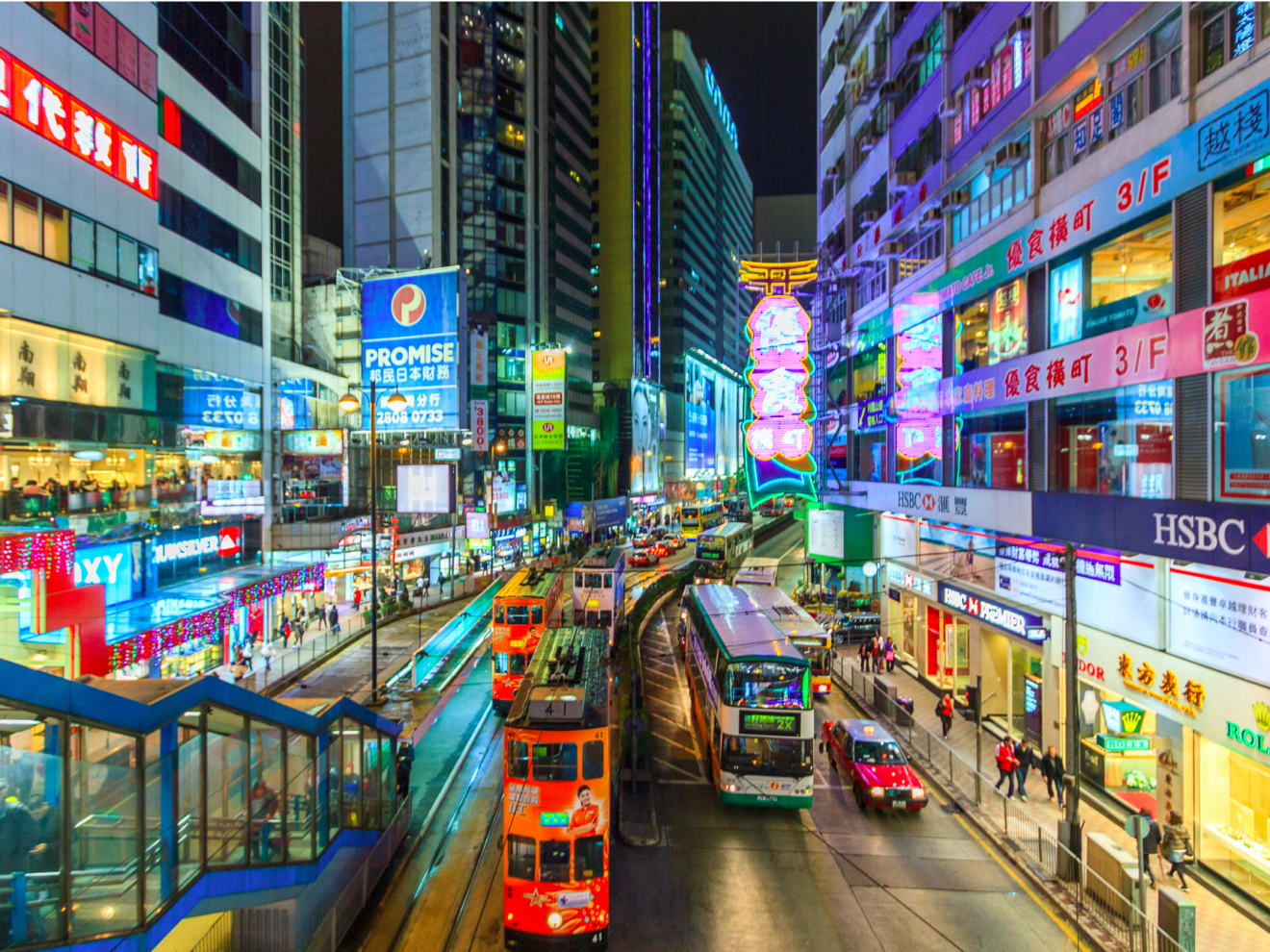
Hong Kong’s economic growth slowed in the third quarter from the second as weak exports, sluggish retail sales and falling tourist arrivals took its toll on the former British colony.
Though the government kept its full-year estimate for 2016 in the middle of its previous forecast range of between 1 and 2 percent, underlying momentum slowed from the June quarter.
Looking ahead, the government expects growth to remain on a modest track in the near term due to a number of concerns, including the likely trend of rising interest rates in the United States and elevated geopolitical risks elsewhere.
“There is a need to stay alert to these risks for their possible repercussions on the global financial and economic situation,” it said in a statement.
The economy grew a seasonally-adjusted 0.6 percent in the third quarter, compared with a downwardly revised 1.5 percent in the June quarter. Economists surveyed by Reuters had predicted growth of 0.3 percent.
From a year earlier, the economy expanded 1.9 percent in the third quarter compared with 1.7 percent in the previous quarter and economists’ expectations of 1.6 percent.
A marked slowdown in exports and weaker growth in private consumption and government spending combined to push down GDP in the third quarter.
Hong Kong’s services sector has also been in a prolonged slump with retail sales falling for the 19th straight month in September as a strong local currency crimped business activity and tourism.
Slower economic growth could pile further pressure on Hong Kong leader Leung Chun-ying ahead of an election next year and amid rising tensions with the central government in China over concerns of increased meddling by Beijing in the city’s affairs.
Hong Kong’s benchmark index closed down 1.4 percent before the data on Friday, capping a turbulent week in financial markets in the wake of Donald Trump’s surprise presidential win at the U.S. elections.
The former British colony’s economy is now more vulnerable as it struggles with weaker retail sales and a slump in cash-rich mainland Chinese streaming across the border on shopping sprees.
Prospects for Hong Kong could be further compounded by new U.S. trade policies and China’s economic performance at a time when exports are weak and economists are waiting to see the impact of property cooling measures imposed this month.
The government said it would raise stamp duties on home purchases to 15 percent, across the board, effective Nov. 5.
Some economists said the once vibrant city would continue to face pressure from global economic uncertainty as well as increasing tensions with Beijing that could threaten stability and impede policymaking.
The seasonally adjusted reading, down from a 0.8 percent gain in the second quarter, compared with a median 0.6 percent rise tipped in a Reuters survey.
It also showed that facility investments fell 0.1 percent on-quarter in the July-September period, compared with a 2.8 percent on-quarter expansion three months earlier. On a sequential basis, the real GDP expanded 0.7 percent, slightly slower than the 0.8 percent growth recorded in the prior quarter.
Despite the beat on both quarterly and year-on-year GDP, the Bank of Korea suggests growth could have been even better, citing troubles atelectronics giant Samsung following the release, then recall, of the Galaxy Note 7, along with industrial action at Hyundai.
Services rose 1.0 percent in the September quarter from the previous three-month period, also better than a 0.6 percent gain in the second quarter, most likely thanks to government efforts to launch nationwide retail sale events to pry open wallets. On the other hand, exports grew 0.8 percent with rises in exports of chemical products and semiconductors. Capital investment slipped 0.1 percent, down from 2.8 percent growth in the previous quarter.
Government consumption grew by 1.4%, in part due to an increase in health insurance benefits.
It left the year-on-year expansion at 2.7%, down on the 3.3% rate reported in the previous quarter.
A BOK official remained hopeful about Korea’s outlook, saying it could achieve 2.7 percent annual growth this year, as long as the economy does not contract any further.
Both Chung and the ministry official agreed that fourth quarter growth would also be affected by Samsung’s decision to discontinue production of its fire-prone Galaxy Note 7 smartphone, although the economic impact from lost manufacturing was almost all reflected in the third quarter.
Construction rose 4.4 percent sequentially, driven by a growth in building construction. LGERI projects 2.2 percent growth next year.
“With China and European Union also likely to slow, Korea faces hard external conditions”, he said.
The 2017 Malaysia Budget announced by Prime Minister Datuk Seri Najib Razak is an incremental step in realizing Malaysia’s vision of a fully connected digital economy, according to IDC.
Although the specific financial breakdown of the budget initiatives is not yet available, IDC Malaysia said the direct and indirect impact on the Malaysian ICT sector is apparent.
Data from IDC suggests that total IT spending that includes infrastructure, software and services will grow by 3.3% to be worth $21.16 billion in 2017.
The research firm noted that it will be interesting to see if the recent budget initiatives will help Malaysia in achieving its vision of a digital economy given that key budget items are directly related to technology, such as improving the speed of fixed line broadband services, tax relief for purchase of select technology products and services, funding for specific MDEC programs focusing on specific initiatives, and launching a digital free zone.
It likewise mentioned that the Malaysian government has placed a high emphasis on high-speed internet connectivity in previous budgets and continues to make it a priority in the 2017 edition, by mandating fixed line internet services to be increased to a baseline of 20Mbps.
Currently, the average fixed line internet speed in Malaysia is at 6.8 Mbps, up 36% compared to the previous year. The proportion of internet users with access speeds greater than 10 Mbps and 4 Mbps has increased to 16% and 66% respectively.
The government has also recognized the importance of further enabling SMEs in increasing macroeconomic indicators. SMEs’ contribution to the overall GDP for Malaysia was estimated to be 36.3% in 2015, whereas it tends to be about 50% and above in high-income nations.
The $17.7 million allocated to promote SMEs development, as well as the funding for MDEC programs such as the e-commerce ecosystem and Digital Maker Movement, is a very positive step in this direction, IDC said.
“The e-commerce ecosystem will continue to evolve in the future with the maturity of services, and the consumption patterns of the citizens. Two key areas worthy of future attention are figuring out how to retain more revenues from e-commerce sector within Malaysia, as well as encouraging global e-commerce platforms to increase investment in the country,” said Vijay Sundararaman, IDC Malaysia Country Manager.
“There is a growing discussion on the creation of e-hubs that can accelerate SMEs output, as well as interconnectivity of these hubs globally to create a worldwide ‘Mega Trading Platform’.”
Provinces in the eastern part of Indonesia are seeing robust economic growth in the third quarter thanks to higher commodity prices, but without diversification away from commodities the regions may not sustain such rapid growth, economists say.
While the nation’s overall economic growth was 5.02 percent in the July to September period yearon-year (yoy), provinces in eastern Indonesia saw higher growth, namely Maluku and Papua with 13.72 percent, Sulawesi with 6.67 percent and Bali and Nusa Tenggara, both with 5.04 percent, according to data from the Central Statistics Agency (BPS).
President Joko “Jokowi” Widodo said he wants to spread economic contributions from the eastern part of Indonesia to the whole archipelago and pledged to boost infrastructure development in the regions.
However, economists said the government’s efforts to build infrastructure on the outskirts of the country had yet to bear fruit as they required more time before affecting the local economies. Instead, the rising prices of mining commodities have become the main reason for the spike in growth in eastern parts.
“Improvements in commodity prices, such as gold in Papua, caused the jumping growth,” University of Indonesia (UI) economist Lana Soelistianingsih said on Monday following the data release.
The BPS data also showed that the overall growth of the nation’s mining sector reversed its minus 0.72 percent yoy contraction in the second quarter to become a 0.13 percent gain in the third quarter, thanks to the higher production of some mining commodities like gold, BPS head Suhariyanto said.
The eastern part of Indonesia still relies heavily on the mining sector so that most provinces, such as Papua, Maluku, Central Sulawesi and several areas in Kalimantan, see their economic growth spike when prices and production increase, said Center for Reform in Economics (CORE) research director Mohammad Faisal.
“Other areas, like South Sulawesi, recorded growth because of their diversified economies,” he said. “Bali, on the other hand, is supported by its tourism sector so that when the overall economy slows down, it is still able to post growth.”
With the projected stable increase in commodity prices going forward, economists expressed optimism that economic growth in the area can be improved, although concerns over its sustainability remain.
“The growth will be sustainable if those provinces can transform and diversify their economies. If they’re still commodity dependent, the growth won’t sustain,” Faisal said.
Apart from the mining sector’s reversal of fortune, the top three sectors that booked the highest growth in the third quarter include information and communications, financial services and transportation and warehousing, according to BPS data.
In quarter-on-quarter, transportation and warehousing, agriculture, forestry and fisheries, as well as the construction sector, were at the top of the list.
In West Nusa Tenggara and Maluku, the regions that posted the most growth in the third quarter, the marine industry is enjoying growth, especially in the shrimp and seaweed aquaculture industries, according to the Indonesian Chamber of Commerce and Industry (Kadin). Bengkulu, Lampung and Java are also seeing growth in the same sector.
Coordinating Economic Minister Darmin Nasution believes that the impact of the US presidential election on Indonesia’s economy is only temporary. Darmin said that the government would anticipate changes in the market after Republican presidential candidate Donald Trump won the election.
“We shouldn’t be worried about the election. There will be an impact on the economy, but it’s only for a short term,” Darmin said at his office on Wednesday.
The election results announced today showed that Donald Trump gained 288 votes, exceeding the minimum winning threshold of 270 votes. His rival from the Democratic Party Hillary Clinton obtain 215 votes.
Industry Minister Airlangga Hartarto echoed Darmin’s comment saying that the US presidential election would not have direct impact on the national industry. Instead, Airlangga suggested that the US presidential election would have a significant impact on the capital market.
However, Airlangga warned that the election results could affect the Fed rate revision in December. In addition, Airlangga said that he would revisit the plan to join the Trans Pacific Partnership.
During his campaign, Trump revealed his plan to cancel all trading agreements that could cause losses to the US. Trump also criticized the TPP as a danger for the US. Trump further called for cancellation of the North America Free Trade, since it would have negative impacts on job opportunities in the country.