Tag: Economy

  • Vietnam set to surpass socio-economic targets

    Vietnam set to surpass socio-economic targets

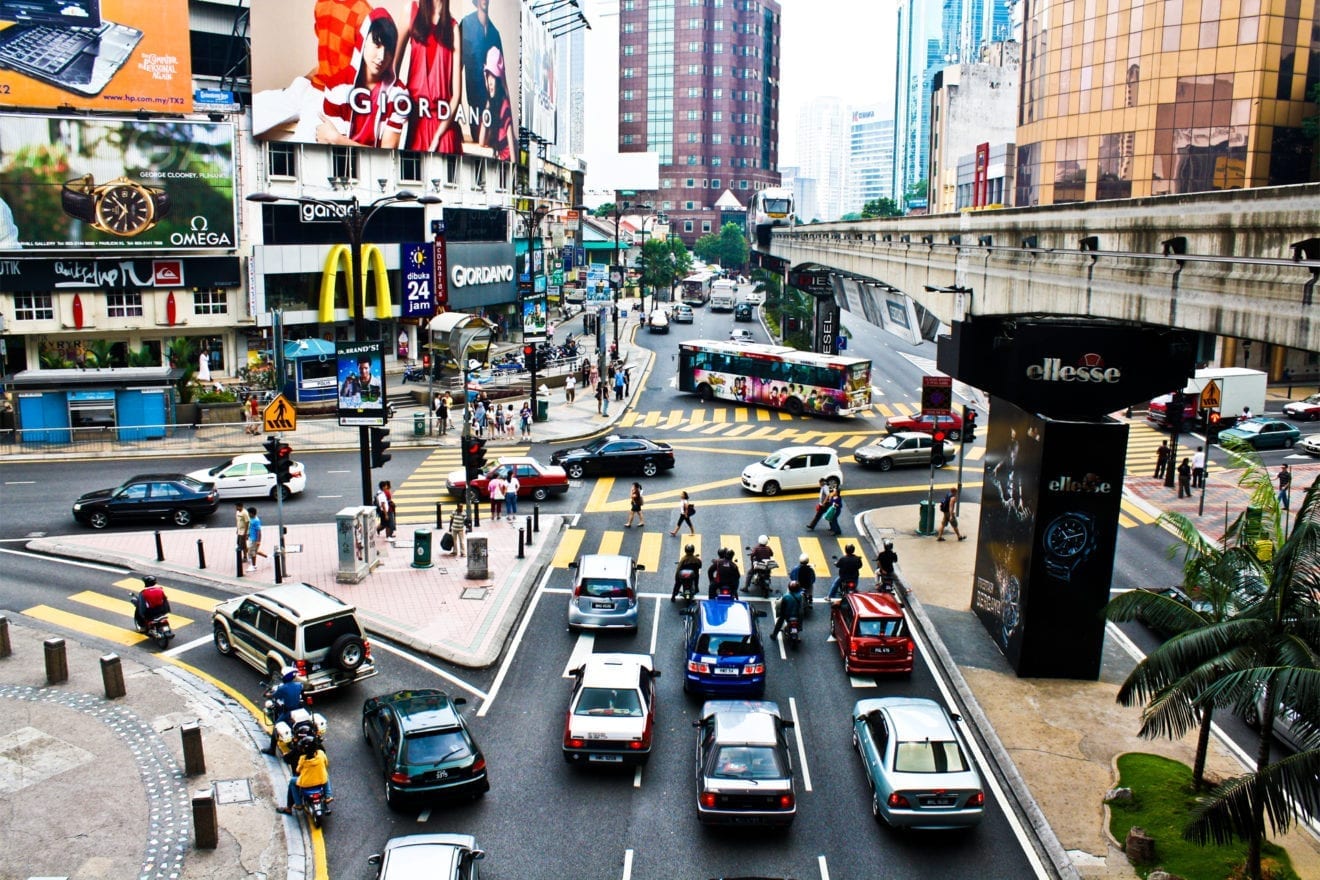
    Vietnam might exceed several annual socio-economic development targets set by the parliament, PM Nguyen Xuan Phuc said Thursday.

    The government’s assessment is that eight of 12 targets assigned by the National Assembly, the national legislature, will be surpassed while the other four are achievable, the Prime Minister said in Hanoi.

    The government projects that the economy will expand by more than the targeted 6.7 percent, state collections will exceed the target by 3-5 percent, inflation will stay under 4 percent and public debt will be lower than last year.

    The country’s public debt will likely reach 63.92 percent of GDP, or VND3,530 trillion ($151 billion) by the end of this year, says a recent report submitted to the PM by the Ministry of Planning and Investment.

    Meanwhile, the Consumer Price Index (CPI) in August is 0.45 percent up against July and 3.98 percent up against August last year, according to the General Statistics Office.

    The average CPI for the first eight months was 3.52 percent higher than the same period last year.

    The country posted a trade surplus of $2.8 billion in the first eight months.

    During this period, the index for industrial production rose 11.2 percent, with the manufacturing-processing sector growing 13.3 percent.

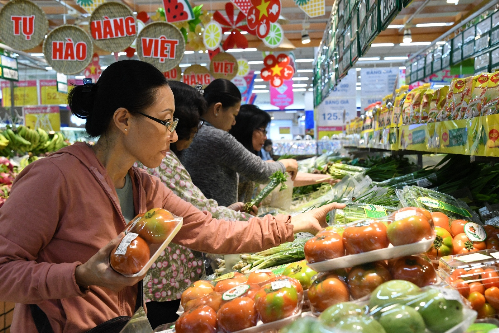
    Retail sales for this period is estimated at VND2.15 trillion ($92.4 million), up 11.7 percent year-on-year.

    Of this total, sales of food and foodstuff increased year-on-year by 12.8 percent, garments by 12.3 percent, home appliances by 11.6 percent, cultural and educational items by 10.8 percent, and vehicles by 10.7 percent.

    In June, the World Bank said Vietnam’s economy might expand by 6.8 percent this year, revising up its previous forecast of 6.5 percent in April.

    The bank explained its upward revision on better prospects for the expansion of agriculture and production for exports and continued inflow of foreign direct investment thanks to bright economic prospects.

    If the actual growth rate matches projections, it will be the same as last year, which was the highest in a decade, it said.

    In the first quarter this year, the economy expanded 7.38 percent, also a 10-year record, thanks to strong growth in agriculture, industry-construction and service sectors.
  • Malaysian businesses expect slower growth in third quarter

    Malaysian businesses expect slower growth in third quarter

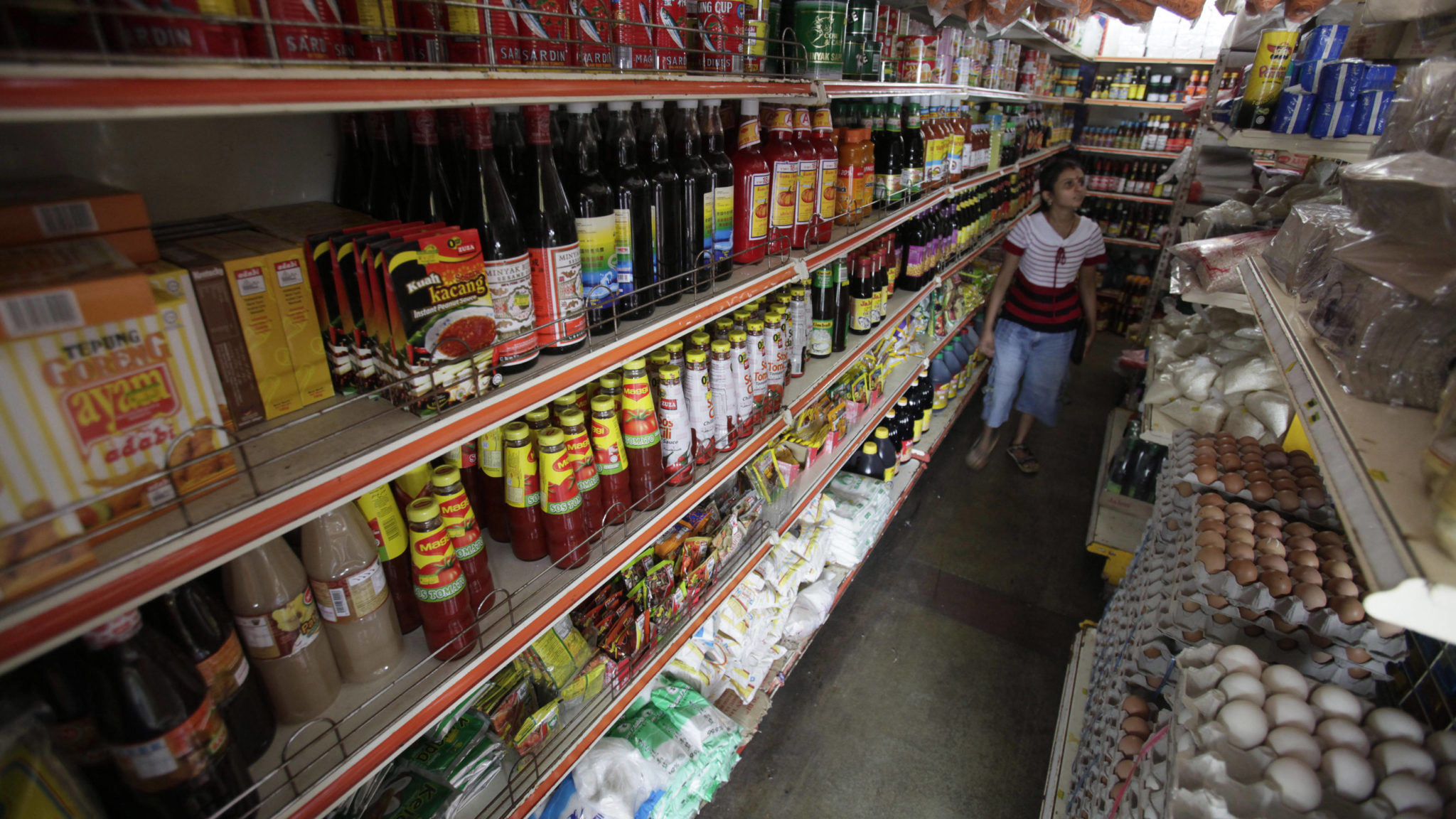
    Businesses expect growth to slow in the third quarter due to lower confidence levels after recording positive business performance in the second quarter of the year, according to the Statistics Department.

    The department’s Business Tendency Statistics for the third quarter 2018 which presents statistics on business performance based on a survey conducted on a quarterly basis – said the second quarter of the 2018 was positive with an overall net balance of +3.6%, mainly contributed by services sector (+22.0%).

    As for the third quarter, overall business performance is expected to grow at a slower pace with confidence indicator of +6.0% compared to the +7.8% in the previous quarter.

    On a sectoral basis, services sector is expecting their business performance to continue to grow in the third quarter of 2018 with confidence indicator of +16.5% as compared to +8.6% in second quarter of 2018.

    Other sectors such as industry and wholesale and retail trade which are also of the expectations of their business situation improving albeit at a moderate rate with smaller confidence indicators at +2.1 % and +3.6% respectively.

    However, the construction sector expects their business situation to be less bullish with a confidence indicator of -7.7%.

    “Majority of the respondents in all surveyed sectors which was 45.1%, anticipated that their gross revenue to increase while 44.4% expected unchanged. In contrast, 10.5% of the respondents foresee a decrease in gross revenue,” said chief statistician of Malaysia Datuk Seri Dr Mohd Uzir Mahidin.

    On another note, business performance is expected to continue to grow for the period of July to December 2018 based on a net balance of +11.6%, supported mainly by services sector that was most optimistic with a net balance of +25.3% as compared to +15.3% for the period of April to September 2018.

  • Jokowi Says Indonesia Committed to Closing Wealth Gap

    Jokowi Says Indonesia Committed to Closing Wealth Gap

    President Joko “Jokowi” Widodo said his government will continue its efforts to reduce income inequality in Indonesia, following encouraging results in overcoming wealth disparity over the past few years.

    “Economic justice is a serious concern for us, especially regarding the poorest 40 percent of our population… efforts to achieve social justice for all Indonesians will never stop,” the president said during his state-of-the-nation address in the national legislature in Jakarta on Thursday (16/08).

    Southeast Asia’s largest economy has managed to reduce its Gini ratio to 0.389 – the lowest in the past six years – thanks to land redistribution and cash transfer programs aimed at the country’s poorest.

  • Philippine economy slows down to 6% in Q2 2018

    Philippine economy slows down to 6% in Q2 2018

    The Philippine economy slowed down to 6% during the 2nd quarter of the year, the Philippine Statistics Authority (PSA) said on Thursday, August 9.

    The gross domestic product (GDP) from April to June 2018 is lower than the revised 1st quarter figure of 6.6%. The growth is also slower than the 6.7% recorded during the same period last year.

    It also fell short of market expectations. Estimates had ranged from 6.6% to as high as 7%.

    Socioeconomic Secretary Ernesto Pernia attributed the slowdown to policy decisions which would “promote sustainable and resilient development.”

    Pernia said the closure of Boracay “partly made a dent on the economy with growth in exports of services slowing to 9.6% in the 2nd quarter from 16.4% in [the] 1st quarter.”

    “We are also referring to regulations in the mining sector – the closure of several mining pits and the excise tax on non-metallic and metallic minerals – so that mining and quarrying sector showed a lackluster performance. It is down by 10.9%,” Pernia said.

    “Moreover, the stricter enforcement of regulations on aquaculture producers at Laguna Lake resulted in the drop of freshwater fish catch,” he added.

    Pernia said the measures will ensure sustainable and long-term growth for the economy. The policy decisions were also “prudent and judicious.”

    The GDP is used by various agencies and experts to track the country’s growth. The figure accounts for all the finished goods and services produced within the country in a specific period.

    Build, Build, Build push

    According to the PSA, the growth in the 2nd quarter of the year was mainly driven by manufacturing, trade, and construction.

    Pernia called for the “timely implementation of the Build, Build, Build program” as it “bodes well [for] the construction industry and is seen to boost not only public construction but private builders as well.”

    He is also pushing for the immediate entry of the 3rd telecommunications player to enhance efficiency of communications and in turn support the growth of small businesses, particularly retail trade.

    The socioeconomic planning chief also sought the “immediate approval of the 11th Regular Foreign Investment Negative List, or FINL… to reduce foreign investment restrictions.”

    “Together with the proper implementation of the Ease of Doing Business Act, this will surely encourage more investments from both foreign and domestic sources,” Pernia added.

    Economic managers are gunning for GDP under President Rodrigo Duterte’s term to hit an average of 7% or above.

    First Metro Investment Corporation is among the most bullish on the economy and expects the Philippines to hit the target this year.

    “[The growth is] not a product of any speculation, but of brisk economic activities related to manufacturing, construction, and retail trade with strong job creation and corporate earning impact,” First Metro vice president and head of research Cristina Ulang said.

    Pernia previously said the GDP would have been better if not for “spoiler” inflation.

    Moody’s Analytics forecast the slowdown of the GDP due to inflation hitting a 5-year high and breaching the target range of 2% to 4%.


  • Indonesia Grows at Best Pace Since 2013 in Q2, Though Headwinds Loom

    Indonesia Grows at Best Pace Since 2013 in Q2, Though Headwinds Loom


    Indonesia’s economy beat forecasts and grew the fastest in 4-1/2 years in April-June, helped by higher consumption during Ramadan, but external headwinds cloud the outlook for lifting growth well above 5 percent.

    Southeast Asia’s largest economy grew 5.27 percent from a year earlier in the second quarter, data from the Central Statistics Agency (BPS) showed on Monday (06/08).

    This topped the first quarter’s 5.06 percent and a Reuters poll projection of 5.16 percent, while giving Indonesia its best quarter since October-December 2013.

    The latest number is the best since Joko “Jokowi” Widodo became president in 2014, and may give him a little boost as he seeks re-election for another five-year term in 2019.

    But there are plenty of factors that make it unlikely Indonesia can keep seeing higher growth rates, starting with higher US interest rates — which have battered the rupiah — and possible collateral damage from the US-China trade war, which can hit Jakarta’s commodity exports.

    While the April-June number was impressive, “the government will still need to embark on a ‘Mission: Impossible’-like stunt” to reach its target of full-year 5.4 percent growth, said Satria Sambijantoro, economist at Bahana Sekuritas.

    Household consumption, which accounts for more than half of Indonesia’s gross domestic product, grew 5.14 in the second quarter from a year earlier. The fasting month of Ramadan and the Idul Fitri celebration, traditionally Indonesia’s peak consumption period, occurred in May-June this year.

    Dampening of Demand 

    However, higher interest rates may dampen demand in the following quarters. Since mid-May, Bank Indonesia raised interest rates by 100 basis points to support the rupiah, and it might not be done hiking.

    Meanwhile, the government is reviewing capital goods imports and infrastructure projects to narrow the current account deficit. Investment is Indonesia’s second growth engine.

    Investment growth slowed to 5.87 percent in the second quarter after posting over 7 percent growth rate in the previous three quarters

    Capital Economics said it doubts Indonesia can maintain the second quarter’s expansion pace.

    “On the plus side, rapid wage growth should help support consumption. But this is likely to be overshadowed by headwinds elsewhere. Weaker global demand and lower prices for its main commodity exports [coal and palm oil] mean export revenues are likely to remain low by past standards,” it said.

    Also, in its view, infrastructure spending has to slow if the government is to keep the budget deficit within the 3 percent of GDP mandatory limit.

  • Vietnam plans to make loans easier for agriculture investors

    Vietnam plans to make loans easier for agriculture investors

    Prime Minister Nguyen Xuan Phuc has called for a drastic reduction in administrative procedures and easier access to agricultural loans.

    He said at a recent conference in the Central Highlands city of Da Lat that relevant departments and ministries should reduce the number of administrative procedures by 50 percent, make it easier for enterprises investing in agriculture to get loans, and create opportunities to expand infrastructure for agriculture production.

    The Ministry of Planning and Investment told the conference that just 8 percent of businesses nationwide, or 49,600, had invested in agriculture sector, as of the second quarter of 2018.

    The ministry also noted that capital investment by foreign investors in agriculture accounted for just two percent of the total.

    Le Van Cuong, president of the hi-tech agricultural company Dalat GAP, said getting a loan from the banks was an investor’s biggest challenge.

    The banks only accept land use right certifcate as collateral, but the land’s value affixed by the bank for the loan is much lower than its market price. Furthermore, no preferential interest rate is offered, which means borrowers would have to pay 8-8.5 percent per year on large sums that are needed to build glasshouses and other equipment, Cuong said.

    an unnamed World Bank representative said Vietnam’s agriculture sector faced three big challenges – fragmented agricultural chain value; low FDI; and modest overall capital investment. The representative suggested that the government issues fresh regulations and offers tax breaks to attract more foreign investors.

    Phuc wanted Vietnam to be listed among Top 10 agricultural production countries and for the nation’s agriculture sector to rank 15th, globally.

    Vietnam currently ranks second in Southeast Asia and 13th in the world in agricultural production, said Minister of Agriculture and Rural Development, Nguyen Xuan Cuong.

    Vietnam exported about $36.37 billion worth of agriculture and fisheries products last year.

  • Jokowi Begs Exporters to Bring Earnings Back Home

    Jokowi Begs Exporters to Bring Earnings Back Home

    President Joko “Jokowi” Widodo has pleaded with exporters to bring home earnings they currently keep offshore to help manage the rupiah from falling further, the country’s finance minister said on Friday (27/07).

    Repatriated earnings could help Southeast Asia’s largest economy refill its declining foreign exchange reserves, which the central bank has been using to keep the rupiah from falling too sharply amid a heavy selloff in emerging market currencies.

    The president on Thursday met with executives from about 40 exporters, including Budi Hartono, the owner of cigarette maker Djarum, chief executive of Indofood Sukses Makmur Anthony Salim and chairman of GarudaFood Group Sudhamek Agung, for two and a half hours to make his case.

    “We hope they keep their export earnings in Indonesia. If they have to use it to buy raw materials and imports, the FX could be used … but we hope the rest can be kept in Indonesia and be converted to rupiah,” Finance Minister Sri Mulyani Indrawati said.

    BI in 2012 ordered exporters to receive their payments through local banks, in the hope that some of the money would stay in the country and be converted into rupiah. However, some still prefer to keep their earnings abroad.

    Indrawati said BI and the government will continue to maintain close communication with the business community, while monitoring whether they need to issue new policies on the matter. She did not elaborate.

    BI governor Perry Warjiyo has repeatedly said he has no plans to implement tougher rules for export earnings.

    Between February to June, forex reserves had declined $12.2 billion or about 9 percent, according to Bank Indonesia (BI) data, yet the rupiah is still down more than 6 percent in 2018. The currency was trading near its weakest level in nearly three years on Friday, at 14,460 a dollar.

    The central bank said that the end-June reserves level of $119.8 billion was equal to 7.2 months of imports, higher than the international adequacy standard of 3 months of imports.

  • Vietnam tops ASEAN in luring Japanese investment

    Vietnam tops ASEAN in luring Japanese investment

    Almost 1,800 Japanese businesses have invested in Vietnam in the first half of the year, the highest among ASEAN countries.

    This number accounts for 24.6 percent of total number of Japanese firms investing in ASEAN countries, said Keiichi Kadowaki, chairman of Japanese Chamber of Commerce and Industry in ASEAN (FJCCIA).

    He was speaking at the 11th Dialogue between the Secretary General of ASEAN and the Federation of the Japanese Chamber of Commerce and Industry in ASEAN (FJCCIA) in Ho Chi Minh City on Monday.

    Japan and Vietnam also signed 36 memorandums of understanding worth $21 billion last month.

    “This shows that Vietnam is becoming more attractive to Japanese firms,” Kadowaki said.

    Vietnam’s open business environment and robust economic growth of 5-6 percent each year has increased its attractiveness in recent years, he added.

    Up to 70 percent of Japanese firms in Vietnam plan to expand their business in the country, as most of them believe that revenue will continue to increase, according to a recent survey by the Japan External Trade Organization (JETRO).

    Over 65 percent of surveyed firms said they have been profitable in Vietnam.

    Japan was the fourth largest trading partner of Vietnam last year, with a total turnover of almost $34 billion, up 13.8 percent from 2016, according to Vietnam Customs.

  • Malaysia’s economy seen expanding at slower rate

    Malaysia’s economy seen expanding at slower rate

    Malaysian economy is anticipated to expand at a slower rate in the next four to six months ahead, based on the findings of Malaysian Economic Indicators: Leading, Coincident & Lagging Indexes for May 2018.

    The Leading Index (LI) indicators are designed to observe the economic performance in the short term.

    The Statistics Department said in a statement that the monthly change of LI showed a negative growth of 1.1% to 117.8 points in May 2018 from 119.1 points in April 2018, mainly due to the 0.5% decrease in the number of new companies registered.

    It said the annual change of LI also registered a decrease of 0.7% in the same month against 1.4% in April 2018.

    However, the Coincident Index (CI), which reflects the current economic activity, improved in May 2018, registering a growth of 0.3% in the reference month.

    “The annual change of CI rose 2.2% in May 2018. The Diffusion Index for CI remained at 66.7% since January 2018. Nevertheless, the level of Diffusion Index for LI was below 50% (14.3%),” it added.

  • Standard Chartered Bank says Vietnam economy to grow faster than expected

    Standard Chartered Bank’s Global Focus report on the economy for the third quarter said manufacturing and construction will be the fastest growing sectors this year.

    FDI inflows will remain strong, with 50 percent coming into manufacturing, the report entitled “Fattening tail risks” said.

    Vietnam received an estimated $16.2 billion in FDI in the first half of this year, down 4.4 percent from the same period last year, according to the General Statistics Office (GSO).

    “We are positive on Vietnam’s growth medium-term on strong manufacturing activity as FDI inflows to manufacturing remain strong. We believe that Vietnam will remain one of the fastest growing economies in Asia in 2018,” Asia Economist for Standard Chartered Bank Chidu Narayanan said.

    The report said Vietnam would have a trade surplus this year due to high export growth and slowing imports.

    The country reaped export earnings of $113.9 billion between January and June, a year-on-year increase of 16 percent. Meanwhile, it spent $111.2 billion importing goods, up 10 percent.

    A World Bank report last month had said Vietnam’s economy might expand by 6.8 percent this year, revising upwards the bank’s previous forecast of 6.5 percent. It estimated growth of 6.6 percent in 2019 and 6.5 percent in 2020.

    Prime Minister Nguyen Xuan Phuc has said the target this year is to keep inflation below four percent and achieve economic growth of 6.7 percent. The consumer price index increased by 0.55 percent and 0.61 in May and June, pushing the inflation rate for the year-to-date to 3.29 percent.

  • Central Bank Claims Indonesia’s Economy Is Not Overheating

    Central Bank Claims Indonesia’s Economy Is Not Overheating

    The central bank said Indonesia’s widening current-account and trade deficits until the middle of the second quarter of this year should not be seen as indications that the country’s economy is overheating or growing beyond its capacity.

    The country’s trade deficit grew to $2.38 billion between January and May, which is expected to raise the current-account deficit to between 2.5 percent and 3 percent of gross domestic product in the second quarter, according to Bank Indonesia Deputy Governor Mirza Adityaswara.

    Indonesia’s current-account deficit rose to 2.15 percent of GDP in the first quarter, compared with 1.7 percent last year.

    “Actually, if we take out infrastructure imports, which are for long-term development, the trade balance in January-May was in surplus,” Mirza said on Tuesday (03/07).

    Indonesia’s imports of infrastructure goods for development amounted to $4 billion, defense equipment to $1.1 billion and rice to $400 million in the period between January and May, Mirza said.

    Separately, Finance Minister Sri Mulyani Indrawati said on Tuesday that the government would review its capital goods imports for infrastructure projects to lower the current-account deficit and support Indonesia’s financial markets.

    The deficit exacerbated the rupiah’s decline, which has fallen by more than 6 percent against the US dollar so far this year, as foreign investors dumped Indonesian stocks and bonds in anticipation of higher interest rates in the United States and the growing prospect of a global trade war.

    Bank Indonesia has risen its benchmark rate by 100 basis points in the past six weeks to stem the rupiah decline, but Enny Sri Hartati, director of the Institute for Development of Economics and Finance (Indef), said the rate hikes would only provide foreign investors with good returns in the short term.

    “It’s not that we’re not supporting the interest rate hikes. Our current-account deficit is big and what helps [to balance it] is the capital account, but it’s very difficult to put our hopes on capital coming in from foreign direct investment,” she said.

    Indef also noted that higher interest rates would curb economic growth, which is already suffering from weak domestic consumption and slow loan demand.

    Domestic credit growth, which only rose 10.2 percent year-on-year and 2.93 percent year-to-date in May, also shows that Indonesia is still recovering from adverse global economic conditions. Credit growth rose to above 20 percent in 2013.

    The central bank projected that Indonesia’s economy would grow at 5.2 percent this year, slower than the government’s projection of 5.4 percent as outlined in the 2018 state budget.

    “If the current economic condition continues, we predict that it will not reach 5.2 percent by the end of the year, even with the Asian Games and the IMF-World Bank meeting the government seems to push as economic growth boosters,” said Rusli Abdulah, a researcher at Indef.

  • S. Korea firms diversify exports to India

    S. Korea firms diversify exports to India

    South Korean companies are pumping up their efforts to diversify export items to India as they seek to tap deeper into Asia’s third-largest economy, industry sources said Friday.

    So far, South Korean companies have focused on such manufacturing sectors as autos, chemicals, electronics, steel and machinery, but their recent push represents a strategy of finding new growth engines in India with great growth potential.

    Leading the pack are South Korean food companies and fruit growers, which are eager to discover new revenue sources in the fast-growing economy with a population of 1.3 billion, the world’s second-largest after China.

    In March, Ottogi Co., South Korea’s second-largest maker of instant noodles called “ramyeon,” started exporting a veggie noodle product to India, targeting Indian vegetarians who make up nearly 30 percent of the country’s population.

    Years earlier, South Korean instant noodle makers tried to make forays into the Indian market, but they fell by the wayside due to strict labeling rules and other regulations.

    Ottogi, however, had carried out a thorough survey of Indians’ tastes and the country’s food laws since 2016, with its latest veggie ramyeon obtaining a certificate from the food safety regulator here.
    The veggie noodle product is currently on sale not only at large stores in New Delhi and Mumbai but also at restaurants frequented by Indians, according to Ottogi.

    “India is expected to grow into an instant noodle market worth 1 trillion won ($890 million) by 2020. Initially, Ottogi aims to export 10 billion won worth of ramyeon to India by that year,” a company official said.

    Instant noodles are not the only product of note. South Korea has also recently succeeded in exporting pears to India.

    According to the local daily Economic Times, the Indian government recently gave the go-ahead to imports of South Korean pears and other fruits. South Korean pears will be sold to consumers after being treated in low temperatures and fumigated.

    “Pears will become the first South Korean fruit imported into India. The move will give more options to Indian consumers,” a local food industry source said.

    India imported $15.2 million worth of pears between April 2017 and February 2018, mainly from the United States, the Commonwealth of Independent States and South Africa.

    In addition, Lotte Confectionery Co., a key food unit of South Korean retail giant Lotte Group, currently operates a factory in Noida, northern India.

    Orion Corp.’s Choco Pie cake and other South Korean food products are also popular among Indian consumers. Choco Pie — an individually-wrapped, chocolate-covered, marshmallow-filled snack cake — sells in other foreign countries, including China and Russia.

    On top of South Korean foodmakers’ push into the subcontinent, companies already operating in India are redoubling efforts to upgrade their businesses by exploring new areas and taking other measures, the New Delhi office of the Korea Trade-Investment Promotion Agency (KOTRA) said.

    “Automakers are shifting their focus to electric cars, while manufacturers of electronics and electric goods are seeking localization of parts production in a departure from complete knock-down (CKD) kits,” a KOTRA official said.

    According to informed sources, shipbuilding and startups have emerged as promising industrial sectors as the Indian government has put forward a set of measures to boost those areas.

    Despite India’s support measures, South Korean companies are still confronted with a poor environment for corporate establishment and living in the country, they added.

  • World Bank Cuts 2018 Growth Forecast for Indonesia

    World Bank Cuts 2018 Growth Forecast for Indonesia

    The World Bank has cut its growth forecast for the Indonesian economy for this year to 5.2 percent from the 5.3 percent projected in March, amid volatile global financial conditions that have forced the central bank to tighten monetary policy.

    The Central Statistics Agency (BPS) said the Indonesian economy grew 5.06 percent year-on-year in the first quarter, far lower than the 5.4 percent target in the 2018 state budget, mainly due to household consumption, which remained stagnant.

    The projection by the Washington-based lender is in line with that by the Asian Development Bank and International Monetary Fund, which predict that the country’s economy will likely expand by 5.2 percent.

    “There is elevation of volatility in the global market starting in February, which put a lot of pressure on emerging markets, including Indonesia. So the first quarter was not as strong as we had expected,” Frederico Gil Sander, World Bank lead country economist for Indonesia, said.

    The rupiah dropped to a low of 14,202 against the US dollar last month – the weakest level since 2015 – amid a massive selloff on the Indonesian Stock Exchange (IDX) as global investors moved their capital into higher-yielding assets in the United States. The 2018 state budget assumes a rupiah exchange rate of 13.400 to the dollar.

    Foreign investors, who largely hold the most liquid assets on the IDX, have sold Rp 38.5 trillion ($2.9 billion) worth of stocks between January and May, which is only Rp 2 trillion short of the total for all of last year.

    In its first since November 2014, Bank Indonesia hiked its benchmark interest rate twice in two weeks last month to support the currency and stem capital outflows.

    However, there are fears that an early rate hike may lower spending by consumers and businesses as it makes lending more expensive. Growth in private consumption, which accounts for half of Indonesia’s economy, remained stuck at 5 percent in the first quarter.

    “We think consumption has stabilized at around 5 percent, and while it is not slow, some efforts are needed by the government to accelerate consumption,” said Sander, who was previously based in India.

    However, Indonesia is benefiting from rising commodity prices, including coal, one of the country’s key exports, which rose 25.6 percent on average in the first quarter. Indonesia’s coal benchmark, or HBA, was set at a six-year high of $101.86 in March.

    Last month, oil prices also hit their highest levels since November 2014, reaching almost $78 a barrel for global benchmark Brent crude.

    The higher commodity prices saw more investment, especially in machinery, equipment and vehicles. According to the Investment Coordinating Board (BKPM), Indonesia attracted Rp 185.3 trillion in investment between January and March, which was 11.8 percent higher than the same period last year. Of this, Rp 108.9 trillion was foreign direct investment, excluding banking and the oil and gas sector.

    The BKPM has set a total investment target of Rp 765 trillion for this year, which represents a 10.4 percent increase from last year. Rp 477.4 of this is foreign direct investment.

    The rise in investment increased import growth to 19.5 percent in the first quarter, compared with exports, which increased by 10.2 percent.

    Total imports reached $44 billion between January and March, with raw materials amounting to $32 billion, followed by capital goods and consumer goods, BPS data shows.

    Indonesia recorded a trade deficit for three months in a row between December and February, which swung to a surplus in March before returning to a deficit in April.

    Government consumption rose 12.9 percent in the first quarter – the fastest pace since 2016 – due to increased spending on social assistance, such as the Family Hope Program (PKH), which is aimed at reducing poverty and inequality. The cash transfer program is targeting 10 million of the country’s poorest families this year.

    According to Sander, the government’s infrastructure push, aimed at closing the gap between urban and rural areas, must continue while it should also work to improve the quality of human capital, including raising skill levels in the labor force to increase productivity.

    President Joko “Jokowi” Widodo’s administration has spent around Rp 905 trillion on infrastructure projects across the archipelago between 2015 and 2017, while the government has allocated a fifth of its budget, or Rp 1,167 trillion, to education in the same period.

    Finance Minister Sri Mulyani Indrawati last month predicted that the Indonesian economy would grow between 5.17 percent and 5.4 percent this year, while, Bank Indonesia predicted a growth rate of between 5.1 percent and 5.5 percent.

  • Indonesia Drops in IMD World Competitiveness Ranking

    Indonesia Drops in IMD World Competitiveness Ranking

    Indonesia’s competitiveness has dropped this year due to external pressures arising from trade, fluctuating exchange rates, and insufficient efforts to eradicate corruption, Switzerland-based International Institute for Management and Development, or IMD, revealed on Thursday (24/05).

    Indonesia now ranks 43rd among 63 countries assessed for the World Competitiveness Yearbook ranking, down one place from the previous year.

    Other countries showing signs of declining performance include Taiwan, Thailand, New Zealand and the Philippines, which fell seven places.

    Singapore remained on the third position, Malaysia on 22nd, while Thailand dropped to the 30th position, three ranking points lower than last year.

    Beside the problems with currency fluctuations, trade and corruption, IMD’s report also mentions other challenges faced by Indonesia, including low contribution of its industries in the global value chain, gaps in infrastructure funding, and stagnant economic growth.

    On the bright side, IMD noted several several improvements: expanded access to higher education, increased health care spending, business expenditure on R&D, value-added knowledge-and-technology intensive industries, lower youth unemployment, and a number of patents in force.

    IMD, one of the world’s top business schools, surveyed 6,371 respondents from 63 countries, based on 258 indicators and statistical data from local and international sources, as well as information from executives and experts.

    The report used four key indicators to determine weaknesses and strengths of a country: its economic performance, infrastructure development, business efficiency and government efficiency.

  • Malaysian economy to continue to grow in Q3

    Malaysian economy to continue to grow in Q3

    Malaysia’s economy is poised to continue to grow in the third quarter of the year, according to the Department of Statistics.

    The Leading Index (LI), which monitors the economic performance in average of four to six months ahead, saw an annual change of 0.3% against 1.8 % in the previous month.

    On a monthly basis, the LI contracted 0.5%, mainly attributable to the deceleration in the number of housing units approved by 0.7%.

    Meanwhile, the Coincident Index (CI), which examines the current economic activity, rose 0.6 % in March 2018 on the back of the increase in real contribution to EPF (0.4%), volume index of retail trade (0.3%), total employment in manufacturing sector (0.2%) and real salaries & wages in manufacturing sector (0.1%).

    The annual change of CI stepped up to 3.4% in the reference month as compared with 3.1% in February 2018.

    Meanwhile, the Diffusion Index for CI remained at 66.7% since January 2018, while the Diffusion Index for LI was below 50% for two consecutive months.