Tag: Economy

  • Bank of Indonesia Signs $10b Financial Stability Deal With Singapore

    Bank of Indonesia Signs $10b Financial Stability Deal With Singapore

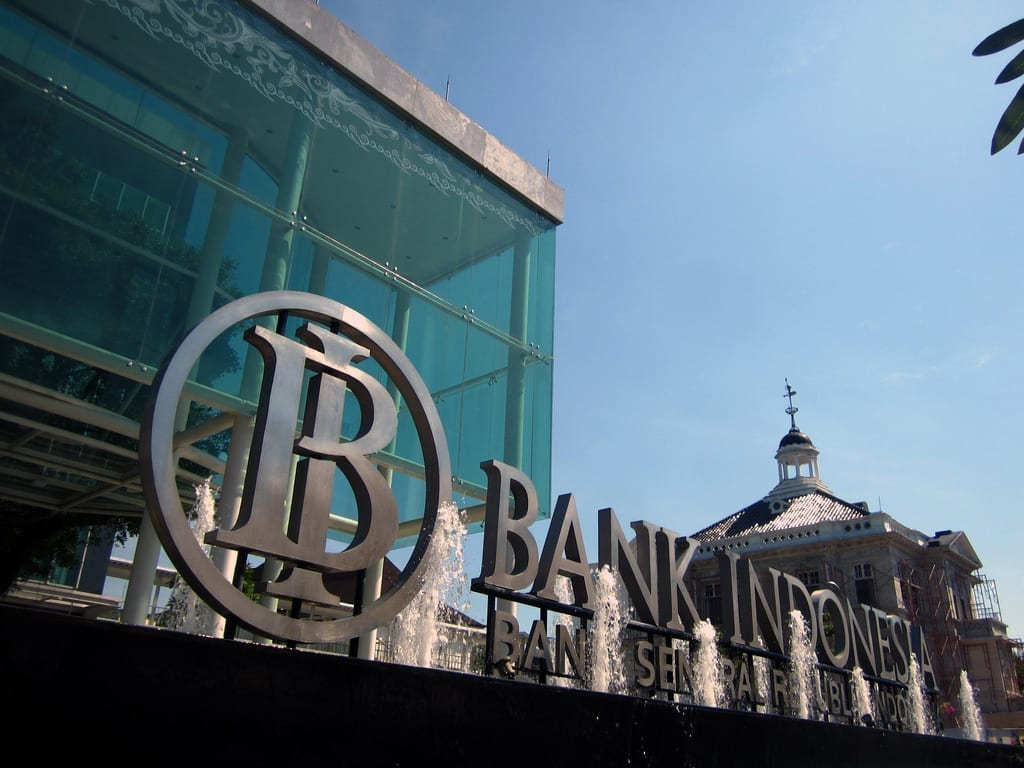
    The central banks of Indonesia and Singapore said last week that they had agreed to a bilateral deal for a $10 billion backstop to help maintain monetary and financial stability after a recent bout of turbulence in markets. The pact, which will be in place for one year, comprises a local currency swap agreement of around $7 billion equivalent and another $3 billion that allows for repurchase transactions between the two central banks to obtain United States dollar cash using government bonds of major countries as collateral.

    Bank Indonesia has been recently intervening to stabilize its rupiah, which fell to 20-year lows against the US dollar amid a global rout in emerging markets.

    “Economic fundamentals in the regional economies remain sound. But markets can sometimes overreact in the face of heightened uncertainty. This bilateral financial arrangement will instill confidence amongst investors,” said Ravi Menon, managing director of the Monetary Authority of Singapore.

  • Robust demand for robusta to boost Vietnam’s coffee exports

    Robust demand for robusta to boost Vietnam’s coffee exports

    Vietnam’s coffee exports can hit a record high this year because of high global demand for the robusta variety. Coffee exports this year could top over 1.8 million tons, said Do Ha Nam, deputy chairman of the Vietnam Coffee and Cocoa Association.

    “The world market has consumed all the coffee shipments from Vietnam. Supply has been insufficient to meet demand,” Nam said.

    The shortage comes as global’s demand for instant coffee is expected to rise this year, especially in developing markets.

    Global consumption of robusta, mainly used by big companies including Nestle SA to make instant coffee, is forecast to climb to a record high this season.

    The worldwide market for instant coffee is set to expand 4.7 percent a year through 2023 to $14 billion from $10.4 billion in 2017, market research firm IMARC said in a recent report.

    Higher demand has boosted domestic coffee prices.

    The price of coffee in the Central Highlands, Vietnam’s major coffee-growing belt, hit VND35,300-36,100 ($1.51-1.54) per kilogram in early October, higher than that VND32,500-33,300 ($1.39-$1.43) per kilogram in early September.

    Coffee exports from Vietnam grew at an estimated 21.5 percent between January and October from a year ago to 1.58 million tons, according to the General Statistics Office.

    Coffee export revenues for Vietnam, the world’s biggest producer of the robusta beans, rose 1.1 percent to $2.98 billion in this year’s 10-month period, the office said.

  • Chinese white goods company Midea announces Rs 1,350 crore new plant in India

    Chinese white goods company Midea announces Rs 1,350 crore new plant in India

    Chinese consumer durables firm Midea aims to manufacture its products locally in the country by next year and is setting up a new facility in Pune at an investment of Rs 1,350 crore. “India is a strategic growth market and we expect our investments in this market to yield good growth. Considering the potential of the market we have committed over Rs 1,350 crore investment for a new facility,” Krishan Sachdev, Managing Director of Carrier Midea India and also Midea Group India region, told PTI.

    “We have a manufacturing facility at Bawal in Haryana and we are strengthening our base here with a second plant in Pune. By next year, 100 percent of our products shall be manufactured locally,” he further told PTI.

    According to a report: He further said that the company is evaluating prospects of exports from India.

    The new facility near Pune, with a technology park, will have three manufacturing units for home appliances, HVAC products and compressors and will also include a manufacturing facility for Carrier Midea India, a 60:40 joint venture between Midea and Carrier.

    The complex is likely to begin commercial operations at the beginning of 2020 and the technology park is expected to generate employment opportunities for over 2,000 people, both directly and indirectly.

    Over a period of five years, the facility will produce refrigerators, room ACs, washing machines, water purifiers, water heaters, commercial ACs and compressors.

    The company, which has been growing at a CAGR of 25 per cent over the last five years, said plans for manufacturing other home appliances categories in a phased manner have been completed.

    Sachdev further said the rupee depreciation has had an impact on their business.

    “Even though we manufacture 70-80 per cent locally, production cost has gone up because some of the components are imported,” he said.

    The company is expecting a good festive season this year with 25 per cent growth and by next year it plans to have IoT enabled product solutions for this market.

    South and East are the leading markets for the company, contributing significantly to the business, while non-metros contribute 30-40 per cent of the overall revenue.

    Midea India plans to double its footprint across the country.

    “For the RAC, which is the refrigeration and air conditioning category, and which contributes 80 per cent of revenues), we are targeting to be in around 5,000 retail outlets before next summer apart from 800 plus sales and service dealers.

    We are constantly looking to expand our reach to consumers. We are already present in more than 400 cities and towns of India,” he further said.

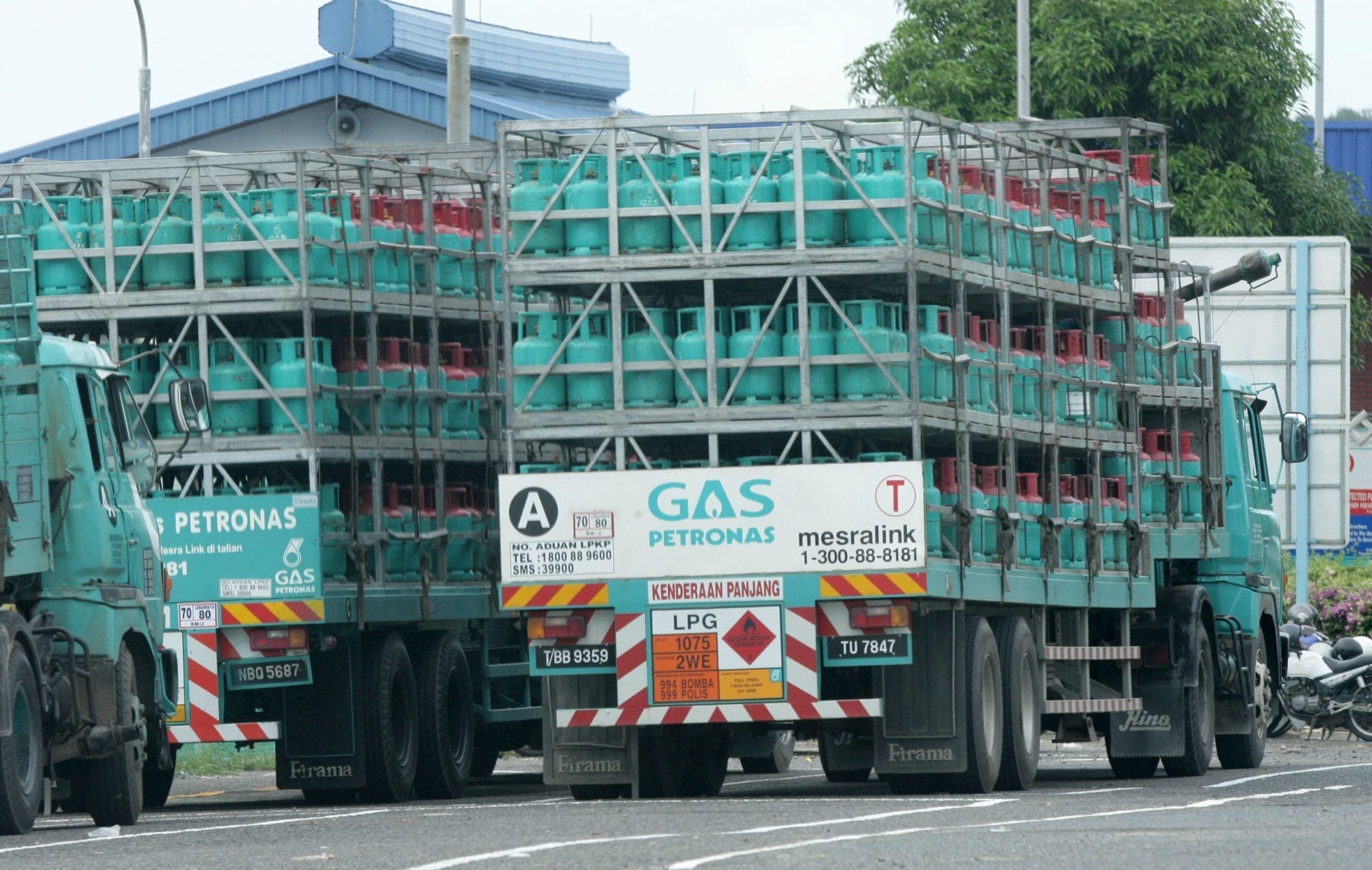
  • Moody’s downgrades Petronas LNG’s ratings outlook to negative

    Moody’s downgrades Petronas LNG’s ratings outlook to negative

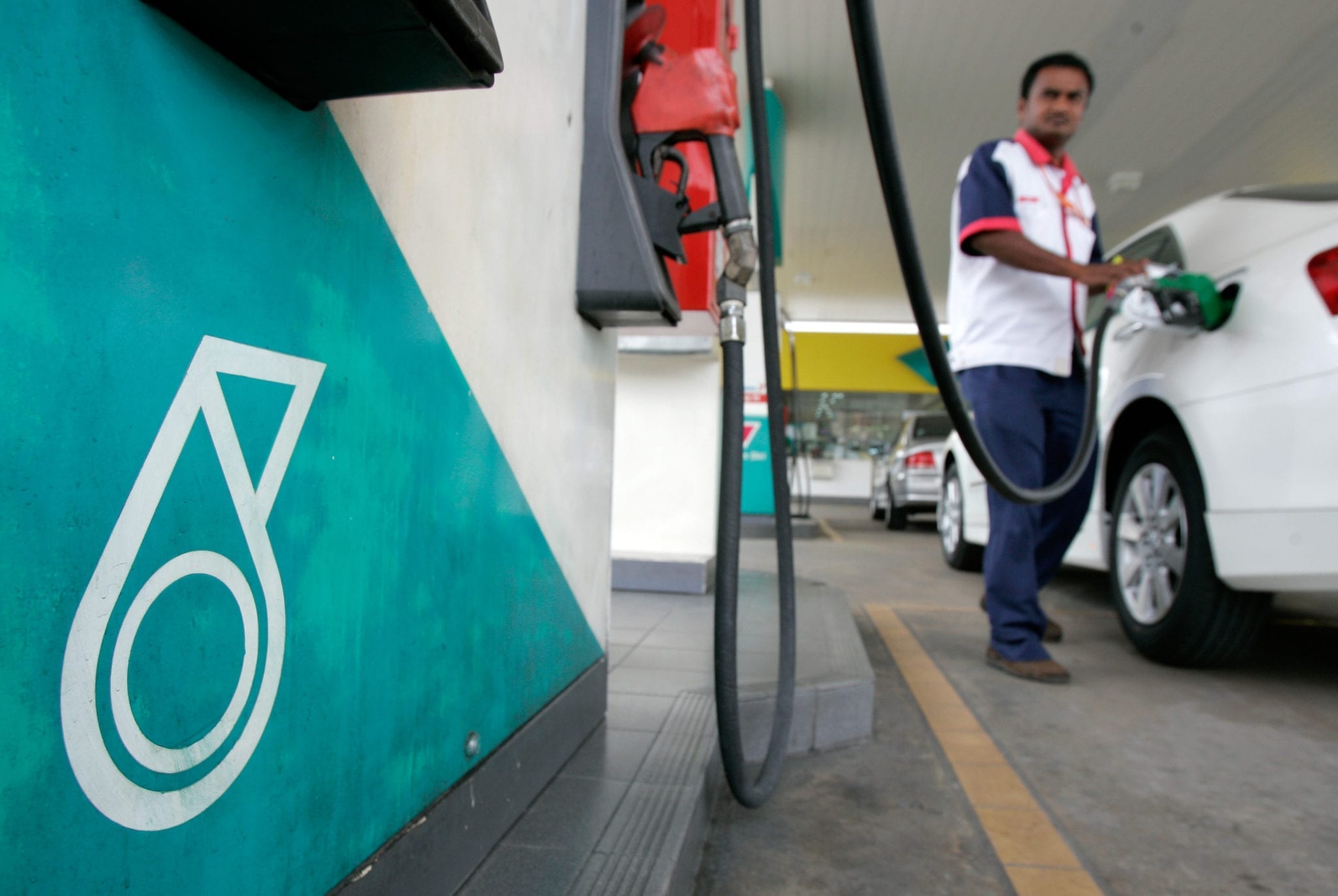
    Moody’s Investors Service has downgraded Petronas LNG Ltd’s (PLL) ratings outlook to “negative” from “stable”, following the same outlook revision for its parent company Petroliam Nasional Bhd’s (Petronas) yesterday. At the same time, the rating agency has affirmed PLL’s A3 foreign and local currency issuer ratings.

    Moody’s said the changes reflects its negative outlook on Petronas’ ratings and its expectation of PLL’s continued strong support from and linkages with its ultimate parent.

    PLL is 100%-owned by Petronas, which is in turn wholly-owned by the government.

    Moody’s said given the negative ratings outlook, a ratings upgrade is unlikely and it will revise PLL’s ratings outlook to stable from negative only if Petronas’ ratings outlook is stabilised.

    It said that PLL’s ratings will be downgraded if: Petronas’ rating is downgraded; there is a decrease in Petronas’ ownership of PLL; there is a reduction in Petronas’ supervision of and operational and financial support to PLL; or there is a material increase in PLL’s risk appetite.

    PLL’s ratings were assigned using a top down approach by evaluating the company’s full ownership by Petronas, its strong operational and financial integration with Petronas, and the willingness and ability of Petronas to extend support to PLL in an event of distress.

    Meanwhile, Moody’s assistant vice president and analyst Rachel Chua said PLL’s A3 ratings are positioned two notches below the A1 ratings of its ultimate parent.

    She noted that PLL enjoys ongoing liquidity support from Petronas and it can draw from Petronas’ umbrella credit facility for liquidity management, adding Petronas has continued to support PLL financially through cash injections of almost $400 million over the past three years.

    “Petronas’ support for PLL extends beyond financial assistance. Petronas also provides PLL with significant management support and oversight, including monthly reporting on risk and governance to a committee chaired by Petronas.

    “PLL also has an integrated treasury function with Petronas, where its cash is held centrally by Petronas and cash flow requirements are shared with its parent,” she added.

  • Businesses in Vietnam close down at increasing rate

    Businesses in Vietnam close down at increasing rate

    The number of enterprises closing down in the year to date hit 67,000, double the number in the same period last year. Chu Tien Dung, chairman of the HCM City Business Association said that this number is unusually high but can be explained by problems that have existed for years.

    The government’s target of having 1 million enterprises by 2020 is to blame in no small measure since it has led to policies that encourage quantity rather than quality, he said.

    Typically, this has seen sole traders registered as one-man limited companies and a big start-up movement in major cities such as HCM City and Hanoi.

    “The procedures for setting up a limited company have been greatly simplified so that anyone can become a boss. If within a few years or even months the owner finds the business line to be unsuitable or does not like the company name, it is not difficult to dissolve and establish a new business.”

    Statistics from the Department of Business Registration show that of the enterprises closing down each month the rate of those with charter capital of below VND10 billion ($426,350) is overwhelming.

    The reason lies primarily in the fact that small and medium- sized enterprises (SMEs) lack resources and also have difficulty accessing credit.

    The liberalization of the law on investment is being used by some to profit illegally, he said. Many enterprises have announced insolvency due to heavy losses.

    According to the World Bank, starting up in Vietnam now involves only eight steps which can be completed in 17 days while it takes 26 days on average in East Asia and the Pacific to complete formalities and enter the market.

    Tran Thi Hong Minh, director of the Department of Business Registration, said: “Dissolution and bankruptcy is the natural, objective law of the economy. The market will eliminate and purge weak businesses to replace them with those of better quality.

    “Vietnam is considered a dynamic economy with rapidly developing science and technology and so the pressure on businesses is of an equivalent magnitude.”

    Pham Chi Lan, former chairwoman of the Vietnam Chamber of Commerce and Industry (VCCI), said business owners had expressed concern the business climate had not improved much.

    Even in the case of single-door administrative procedures, where all documents are meant to be submitted and received at one office, an applicant has to go through many other doors, she said.

    “While we are talking about creating new tools and policies, old, defunct procedures are still not scrapped. As such, Vietnamese businesses are very worried about their future.”

  • Vietnam 19th best country in the world for expats: HSBC survey

    Vietnam 19th best country in the world for expats: HSBC survey

    Vietnam has climbed four places to 19th in the list of best countries for expats to work and live, an HSBC survey found. With an average annual income of $90,408, nine out of 10 expats said in Vietnam they are as happy as or happier than at home, according to the 11th annual Expat Explorer issued by HSBC on Wednesday.

    Foreigners enjoy working in Vietnam for many benefits: 55 percent of respondents said they take more holidays, 41 percent live in a better home and 39 percent have more household staff compared to their home country.

    Fifty-seven percent said their employment contracts include an annual allowance to fly home or to another place, higher than the global average of 17 percent.

    Forty-two percent get an accommodation allowance while the global average is 18 percent, and 73 percent receive health and medical allowances compared to 43 percent elsewhere.

    Vietnam ranks first in the world with 72 percent saying moving to Vietnam helps them save more and 72 percent also saying they have more disposable income than they did in their home country.

    Both are higher than the global average: 52 percent for savings and 56 percent for disposable income.

    There are also some downsides for foreigners living in the country, respondents said. While more than half of expats across the world said they enjoy the better overall quality of life, only four out of ten foreigners in Vietnam said so.

    Organizing finances is difficult for expats, with only 27 percent of foreigners saying it is easy to open a bank account, buy insurance or pay taxes, while the global average is 43 percent.

    Just more than a third had no difficulty in experiencing healthcare services, but this figure is 46 percent globally.

    Raising a child in Vietnam poses challenges, with just 18 percent saying the quality of child care is better than in their home country, compared to the global average of 38 percent.

    Forty-seven said Vietnam is a good place for expats who want to progress their career, while the global average is 56 percent.

    There are financial issues that concern expats in Vietnam, with 37 percent being worried about restrictions on moving money out of the country and 22 percent each concerned about less favorable exchange rates and job security.

    Sabbir Ahmed, head of retail banking and wealth management at HSBC Vietnam, said: “The survey shows Vietnam is a promising host country for expats who are seeking both opportunities and challenges to boost and develop their careers.

    “We expect Vietnam to improve several areas to enhance the experience of expats and their families by developing further the environment, educational programs and financial services.”

    The ranking listed Singapore as the best place in the world for expats for the fourth year in a row, followed by New Zealand, Germany, Canada, and Bahrain.

    The survey polled 22,318 people from 163 countries and territories through an online questionnaire.

  • Indonesia’s Third-Quarter GDP Growth Slows as Consumer, Export Sectors Struggle

    Indonesia’s Third-Quarter GDP Growth Slows as Consumer, Export Sectors Struggle

    Indonesia’s economic growth slowed in the third quarter, losing momentum from the previous three months and pointing to tougher conditions for Southeast Asia’s biggest economy, which has struggled with capital outflows and weaker exports and household spending.

    Gross domestic product expanded 5.17 percent in the July-September quarter from a year earlier, the Central Statistics Agency (BPS) said on Monday, compared with a 5.15 percent expansion expected in a Reuters poll and the second quarter’s 5.27 percent. The April-June quarter pace was the fastest since late 2013.

    The slowdown was largely due to softer household consumption in the third quarter and a negative contribution from foreign trade.

    Although the expansion was a notch faster than expected, economists warn growth may weaken further.

    “We think growth will tend to be slower in the coming future due to the impact of weakening rupiah,” said Fakhrul Fulvian, a Jakarta-based chief economist of Trimegah Securities. He expects GDP to grow 5.13 percent in 2018 and 5 percent in 2019.

    The rupiah is down around 9 percent this year, making it the second-worst performing currency among emerging Asian markets.

    Though a weaker currency has not stoked inflation, the central bank has raised interest rates five times since May to slow capital outflows in a measure analysts say could dampen domestic demand.

    Alex Holmes, Asia analyst at Capital Economics, said growth will probably stay around 5 percent over the next couple of years.

    “A key drag on growth over the next year is likely to be the export sector,” Holmes said in a note, adding that weaker global growth and subdued commodity prices could hold back export revenues.

    Weaker coal and palm oil prices have been a drag on Indonesia’s exports, with the fall in the local currency unable to offset the hit to revenues from the softer commodity prices.

    The export sector’s contribution to GDP in the third quarter was wiped out by imports. BPS chief Suhariyanto blamed this on declining non-oil and gas commodity prices as well as slower growth in main trading partners like China and Singapore.

    Stronger investment and government spending also failed to mitigate slowing household consumption, which accounts for more than half of Indonesia’s GDP.

    While a trade war between the United States and China is expected to hurt economic growth in the region, most analysts say Indonesia, which is less integrated into global production supply chains than its regional peers, will not be among the worst hit.

    However, the trade war could pressure the Indonesian economy through its financial markets.

    In addition to Bank Indonesia’s rate hikes, the government has delayed infrastructure projects and raised tariffs for a wide range of consumer goods, which could further hurt growth.

    Barclays economist Rahul Bajoria said tighter fiscal policy next year also clouds growth outlook.

    While the government’s official GDP growth target this year is 5.4 percent, Finance Minister Sri Mulyani Indrawati last month told the House of Representatives that 2018 growth was more likely to be 5.14 percent.

    The government projects growth at 5.3 percent for next year.

    Bank Mandiri economist Andry Asmoro said the third-quarter growth figures were unlikely to affect the central bank’s monetary stance.

    “The global challenge is still huge and prioritizing stability over growth remains relevant in the current environment,” he said.

  • Exporters fret over weaker yuan

    Exporters fret over weaker yuan

    While the weakening yuan has allowed Vietnamese importers to benefit from cheaper material costs, exporters are feeling the pinch. The yuan declined to 6.9075 per U.S. dollar on Nov. 6. The move has dragged the yuan down by almost 9 percent from the beginning of this year, the steepest drop in the last 10 years.

    A yuan was selling for VND3,327 on Monday, down from VND3,595 in February 5, according to Vietnam Customs. This means that the dong has gained 7.4 percent over the yuan in the last nine months.

    Experts say that this is an opportunity for Vietnamese businesses to import cheaper materials.

    Economist Bui Trinh said that the falling yuan will allow local businesses to gain from importing materials and machines, 90 percent of which are obtained from China.

    A Vietnamese plastic importer said as his firm pays with the weaker yuan, it has become more competitive in the market. Up to 70 percent of this company’s materials are imported from China.

    An importer of Chinese fruits said buying fruits from China is cheaper and prices in Vietnam remain the same. “So I’m making more profit.”

    But the falling yuan has created more difficulties for Vietnamese exporters.

    Bui Thanh Van, director of trade firm Van Phat Ltd., which exports produce to China, said that the falling yuan has lowered the amount of orders they used to get.

    Some Vietnamese produce are being priced higher than other countries in ASEAN, such as Thailand and Malaysia, and countries which are lowering their currency values to increase exports to China, he said.

    “The weakening of the yuan has made it a challenge to export to China.”

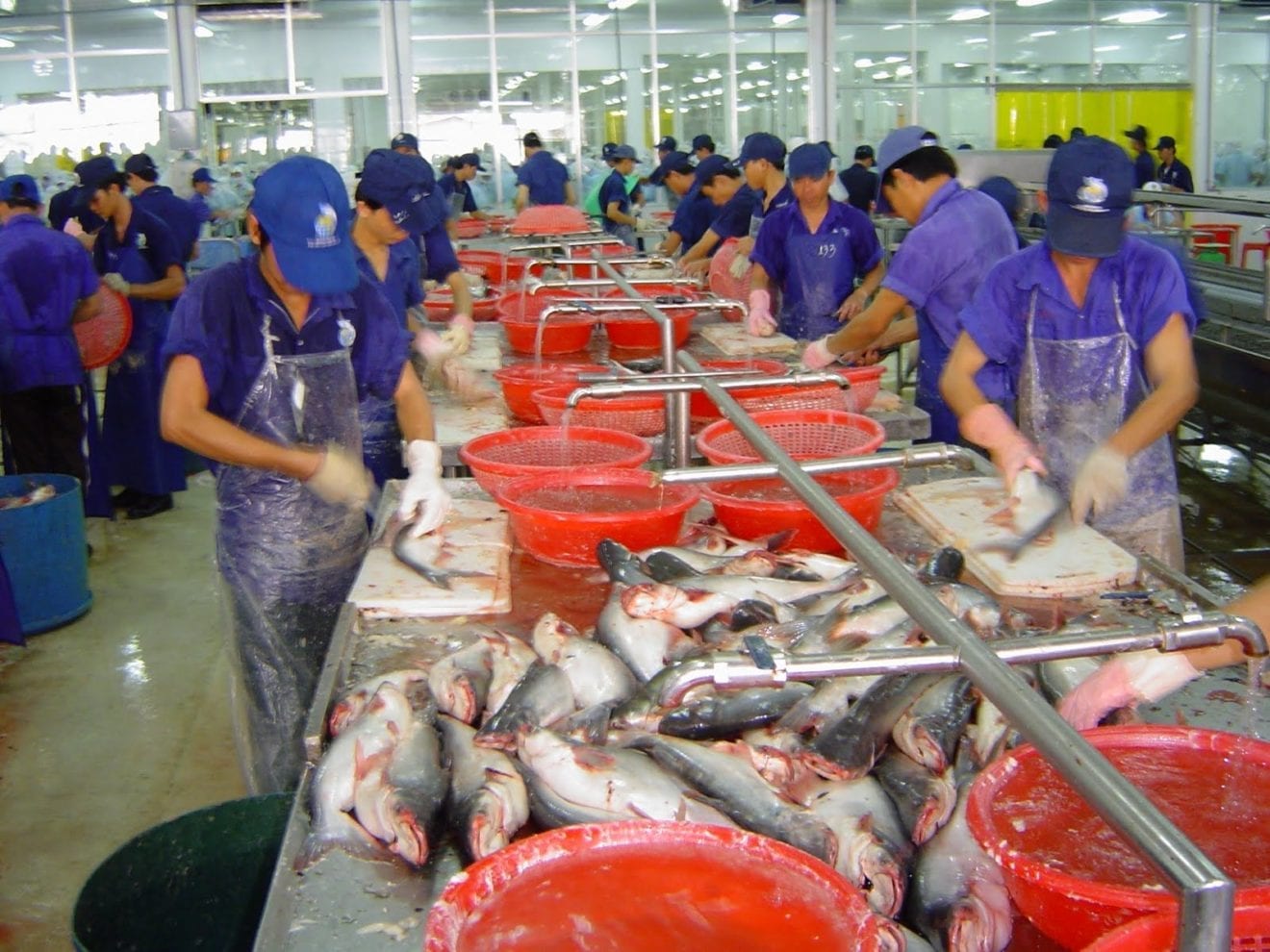
    Truong Dinh Hoe, general secretary of the Vietnam Association of Seafood Exporters and Producers, said that as China has been one of Vietnam’s top export markets in the last two years, the weaker yuan would make it difficult for seafood exporters.

    China was among the top four largest importers of Vietnamese seafood in the first eight months this year, along with Japan, South Korea and the U.S., according to the Ministry of Agriculture and Rural Development. These four markets accounted for over 54.1 percent of Vietnam’s total seafood exports in the same period, it said.

    The falling yuan will likely increase prices and lower orders from China, affecting the local seafood market, Hoe said.

    Experts are also worried that the weaker yuan will lead to an increasing number of Chinese goods entering Vietnam with more competitive prices, making the nation’s trade deficit even higher.

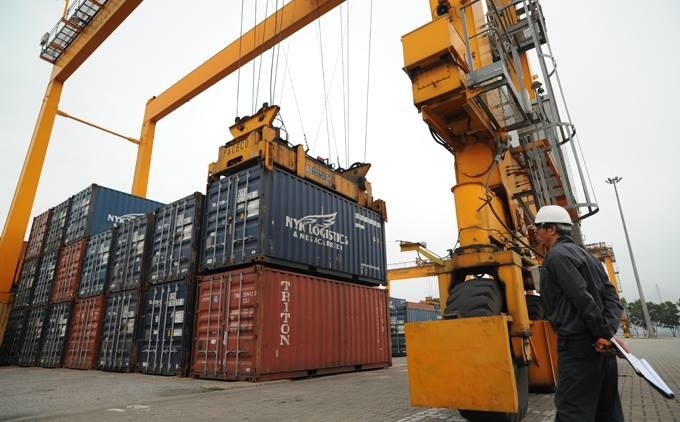
    From January to September this year, Vietnam had a trade deficit of $18.45 billion with China, its largest trade partner among over 200 countries and territories, according to Vietnam Customs.

    Trade turnover between Vietnam and China reached $93.69 billion last year, up 23.2 percent from 2016, accounting for 22 percent of Vietnam’s total trade turnover, Vietnam Customs reported. The figure is estimated to reach 100 billion this year.

  • Malaysia’s September trade surplus climbs to 10-year high

    Malaysia’s September trade surplus climbs to 10-year high

    Malaysia’s exports rebounded by 6.7% year on year (yoy) in September 2018 to RM83 billion after a dip of 0.3% in the previous month, boosting the trade surplus to a 10-year high of RM15.3 billion, the Statistics Department said. The surplus represents an 85.9% jump compared with the same month last year.

    Imports, however, registered a decrease of 2.7% yoy to RM67.8 billion. This was the second lowest import value in 2018.

    Total trade, which was valued at RM150.8 billion, increased RM3.3 billion or 2.3% in September 2018.

    The export growth was contributed by expansion in exports to Hong Kong, Taiwan, Singapore, Australia and South Korea. Lower imports were mainly from India, South Korea, Vietnam, the United Arab Emirates and the European Union.

    The main products which contributed to the expansion in exports were electrical & electronic products (+6.5%); refined petroleum products (+20.5%); crude petroleum (+54.5%) and liquefied natural gas (+1.8%).

    However, declines were recorded for palm oil and palm oil-based products (-11.5%); timber and timber-based products (-0.4%) and natural rubber (-1.9%).

    The lower imports by “end-use” were mainly attributed to intermediate goods, capital goods, and consumption goods.

    MIDF Research said export growth for Q3 averaged 5.3% yoy, moderated from 8.4%yoy in Q2. It was the lowest gain in seven quarters.

    Looking at the final quarter of 2018, it expects exports to perform better than in the earlier three quarters.

    “Amid higher base effects and signs of easing key global indicators, we foresee exports to expand by 7.3% this year (18.9% in 2017). This is supported by lower exports growth for the first nine months which registered at 6.5% compared to double-digit growth of 21.6% in the same period last year.

    “The moderating pace is consistent with gradual rise in global commodity prices, expectation of slight slowdown in overall business performance on top of the heating Sino-US trade conflict.”

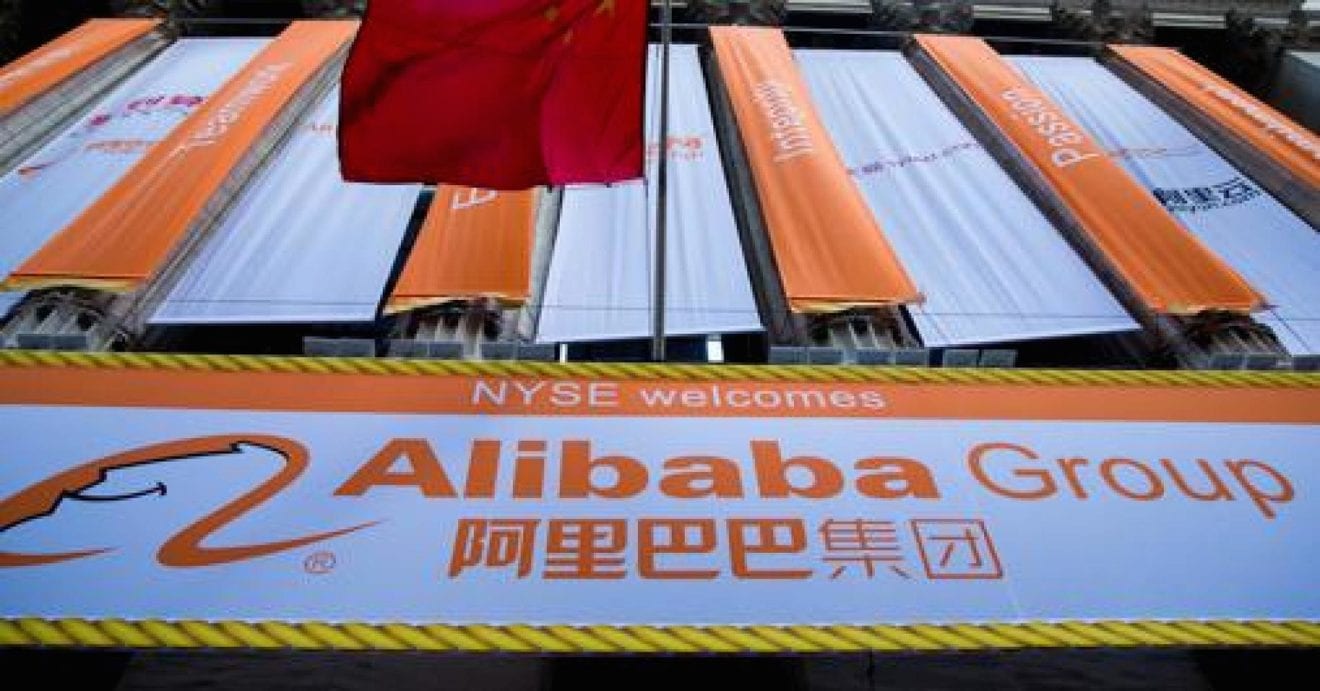
  • Alibaba promises US$200 billion global sourcing plan

    Alibaba promises US$200 billion global sourcing plan

    Alibaba has committed to help import US$200 billion worth of goods from more than 120 countries over the next five years. The company says the move underscores its long-term commitment to globalisation and boosting its efforts to meet the rising demand of Chinese consumers for high-quality international products.

    However, it could also be construed as a move to shore up alternative supply chains in the wake of growing trade tensions between the US Trump administration and China.

    “Globalisation is one of Alibaba’s most critical long-term growth strategies,” said Alibaba CEO Daniel Zhang in a statement. “We are building the future infrastructure of commerce to realize a globalised digital economy where trade is possible for every country around the world.”

    He said using Alibaba’s innovative technology and robust ecosystem, the company is positioned to make global trade more inclusive and fulfil its mission “to make it easy to do business anywhere in the digital era.”

    Zhang outlined Alibaba’s plan at its Global Import Leadership Summit held at the first-ever China International Import Expo in Shanghai. Between 2019 and 2023, Alibaba forecasts it will help import international goods from businesses of all sizes in top countries such as Germany, Japan, Australia, the US, South Korea and Singapore. Several top global brands including P&G, Nestle, JBS, and Refa, have confirmed their holistic partnership with the Alibaba ecosystem.

    By collaborating with various Alibaba businesses units, these brands have been able to effectively engage with China’s massive middle class, a primary engine powering China’s consumption growth.

    Alvin Liu, GM of Tmall import and export, said China’s middle class is booming. “As incomes are rising in China, consumers want faster access to and a wider variety of high-quality products from around the world. Tmall is uniquely positioned to help international brands tap into the growing China market as consumers seek to upgrade their lifestyle.”

    According to a joint report by Deloitte China, the China Chamber of International Commerce, and AliResearch, China’s robust economic growth in recent years has increased the number of middle-to-high income Chinese consumers, who are fuelling the demand for imported, quality goods.

    The report notes that China’s cross-border e-commerce market has grown remarkably, with the proportion of imports to total e-commerce sales growing from 1.6 per cent in 2014 to 10.2 per cent last year. The report also highlights that, between 2014 and 2017, the number of shoppers on Alibaba’s dedicated platform for cross-border shopping, Tmall Global, has grown 10-fold.

  • Petronas has sufficient headroom to absorb one-off exceptional dividend

    Petronas has sufficient headroom to absorb one-off exceptional dividend

    Petroliam Nasional Bhd’s (Petronas) solid balance sheet, sizeable net cash position and ample liquidity provide ample buffer against the payment of one-off dividend to the government that could reach RM30 billion. According to S&P Global Ratings, the financial impact of a one-off dividend of this size is moderate considering Petronas’ cash position and balance sheet quality.

    “The company can finance this dividend, given cash and short-term equivalent of nearly RM180 billion as of June 30, 2018; immaterial reported debt of about RM66.3 billion as of June 30, 2018 and a net cash position of nearly RM114 billion as of June 30, 2018; and solid operating cash flows,” it said in a statement.

    It added that the exceptional dividend of RM30 billion would effectively offset inflows of nearly RM30 billion the company received following the completion of the transaction with Saudi-based oil and gas producer Saudi Aramco in the first quarter of 2018.

    “We project Petronas will remain in a net cash position in 2019 and, depending on the pace of capital spending disbursement, in 2020 as well. This underpins our ‘aa’ stand-alone credit profile on the company.

    “We currently project operating cash flows of at least RM80 billion in 2019 amid higher hydrocarbon prices. These are sufficient to fund capital spending that we forecast at about RM55 billion and regular dividends to the government and minority interest that we estimate at about RM25 billion,” it said.

    The rating agency said the special dividend will not affect Petronas’ solid liquidity as the group’s short-term debt maturities were minimal at about RM11.5 billion as of June 30, 2018, representing less than 10% of its cash balance.

    “We estimate that Petronas’ balance sheet can absorb negative discretionary cash flows of RM40 billion for two years before the headroom under its ‘aa’ stand-alone credit profile starts to reduce. Assuming no change to the company’s investment plan, this implies additional one-off dividends of RM40 billion to RM50 billion, on top of the regular and exceptional dividends in the 2019 budget,” it said.

    It said that the special dividend validates its long-standing credit view that Petronas can be subject to periodic cash calls from the government given its solid financial position, high importance to the national budget and ownership control by the government.

    It added that a sustained period of higher oil prices over the next two to three years will translate into higher dividends from Petronas, and potentially, additional one-off dividends to the state.

    “We cap our issuer credit rating on Petronas (foreign currency A-/Stable/–; local currency A/Stable/–) to that of the sovereign of Malaysia (A-/Stable/A-2; local currency A/Stable/A-1), despite Petronas’ stronger stand-alone credit profile, given this government intervention risk.”

  • Trade war’s bark turns to bite in Asia

    Trade war’s bark turns to bite in Asia

    The U.S.-China tariff slugfest has for months triggered warnings that it could impact global economic growth, and recent data indicates the tension is beginning to bite. Manufacturing gauges in several export-reliant Asian countries, as well as China, weakened in October as gloom deepens over the trade outlook.

    China’s official Purchasing Managers’ Index (PMI), which measures factory activity, came in at 50.2 in October, down from 50.8 the previous month, the latest sign of weakness in the world’s second-largest economy amid the trade war and a domestic debt problem.

    But China’s troubles are bad for the rest of the region, and the world, analysts said.

    Asian exporting countries from South Korea to Malaysia saw PMI decreases in October, according to indices compiled by Nikkei/IHS Markit.

    Taiwan saw its steepest falls in production and new business in just over three years, purchasing activity by companies fell for the first time since May 2016, and firms anticipate lower factory output in the next 12 months, Nikkei/IHS Markit said.

    “Taiwan is feeling the effects of this trade war because China is the factory for many companies in Taiwan. When the estuary is blocked, you feel the effects,” said Sun Ming-te of the Taiwan Institute of Economic Research.

    Paying the price

    South Korea’s PMI slipped to 51.0 in October from 51.3 in September, while a separate Korean business sentiment index for manufacturing sank to its lowest level in two years.

    China is South Korea’s largest trading partner, absorbing a quarter of Korean exports.

    “The situation may get worse next year due to a prolonged trade war between the US and China, growing default risks at debt-plagued Chinese firms and a slowing global economy that reduces demand for our exports,” said c, an analyst at the Korea Institute of Finance.

    Southeast Asian manufacturers were feeling the effects too, with PMI in Malaysia and Thailand slipping below the 50-point level, which indicates contraction in the sector.

    It was Malaysia’s lowest PMI since July and Thailand’s lowest in two years.

    In an interview last week, Malaysian Prime Minister Mahathir Mohamad complained that U.S. President Donald Trump — who has accused various trading partners of “ripping off” America — “seems to be withdrawing from all commitments overseas”.

    Mahathir, 93, said that hurts everyone, including the U.S.

    “We want to remain friendly with the U.S., and we want to continue trading with the US,” Mahathir said.

    “But the trade war that is going on between the U.S. and China is damaging for us. We have to pay a price for that.”

    Vietnam or bust

    The International Monetary Fund warned at its annual meeting last month that the trade friction and other threats would hobble the world economy, lowering its growth forecasts for 2018 and 2019.

    The Eurozone posted disappointing PMI figures in October, though due largely to factors other than trade tension.

    But not everyone feels the shock yet, with Japan’s manufacturing looking solid last month.

    Trump, meanwhile, faces little pressure to tame his trade rhetoric at home, with a rosy U.S. outlook marked by rising wages and low unemployment.

    And even in Asia, there will be some winners as conflict re-aligns trading patterns, economists noted.

    Vietnam, in particular, looks to gain as foreign manufacturers relocate out of China to escape the trade war crossfire and what many say is an increasingly unfair playing field for foreign companies in China.

    Vietnam PMI climbed from a ten-month low of 51.5 in September to 53.9 last month.

    “The hard data on exports and industrial production in recent months haven’t been that great. The latest survey nonetheless shows how Vietnam is weathering the U.S.-China trade war better than its ASEAN peers,” Miguel Chanco, senior economist at Pantheon Macroeconomics asia.

    “If the trade war escalates, Vietnam will be one of the prime destinations for export-oriented firms looking to move out of China.”

  • Vietjet Air targets young aircraft fleet to keep costs low

    Vietjet Air targets young aircraft fleet to keep costs low

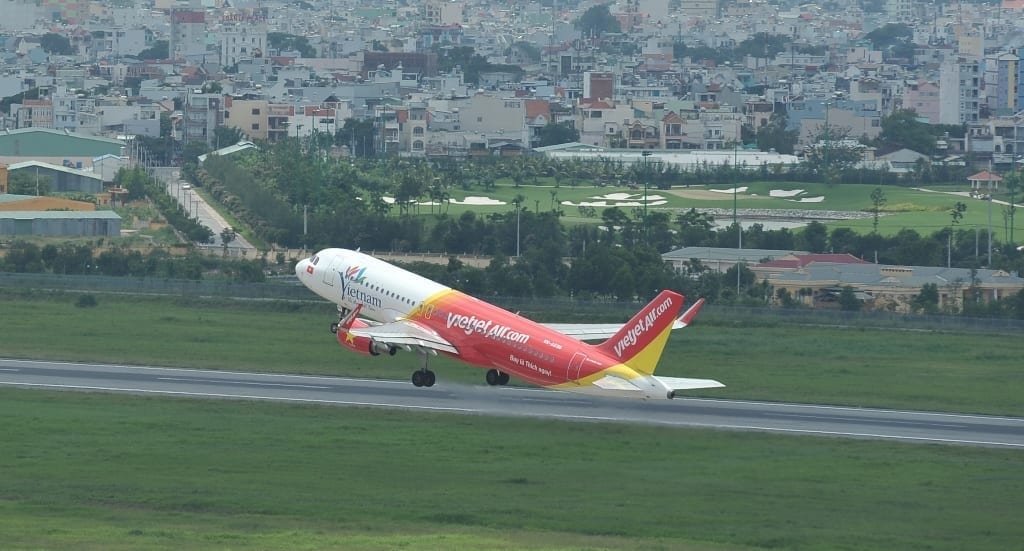
    Budget carrier Vietjet Air plans a fleet age average of three years to keep fuel and maintenance costs low. Vietjet Air is in negotiations to firm up the deal after ordering 100 Boeing 737 MAX aircraft and 50 Airbus A321neo aircraft at the Farnborough International Airshow in the U.K. in July.

    The planes are expected to be delivered between 2020 and 2025, Vietjet CEO Nguyen Thi Phuong Thao said recently.

    But some analysts have questioned whether Vietjet is equipping itself with way too much aircraft, given that it already owns 62 Airbus narrow body jets.

    The carrier, which leads the domestic market with a 45 percent share, expects to receive 30 new aircraft and “retire” 10 each year between 2020 and 2025 to keep its fleet young, Thao said.

    “The average age of Vietjet aircraft is three years now and we want to keep it that way,” she said on the sidelines of a CEO conference in Bangkok.

    The average age of Vietjet’s planes is half that of other low-cost and fast-growing carriers in Asia like Malaysia’s AirAsia, Indonesia’s Lion Air and India’s IndiGo, according to Airfleets.net.

    “The main reason for the young fleet is to keep the maintenance and fuel costs low and to ensure a good service for passengers on fresh, convenient planes,” said Thao.

    Deliveries of those planes are expected to happen from now until early next year.Last month, Vietjet inked a deal to buy 10 Airbus aircraft worth $1.24 billion from Japanese and French companies.

    Thai Vietjet, which operates under a franchise contract in Thailand, is flying with seven jets and expected to add ten more jets each year, the carrier had said this month.

    Vietjet runs 385 flights daily within Vietnam and to Japan, Hong Kong, South Korea, Taiwan, Singapore, mainland China, Thailand, Myanmar and Malaysia.

  • Malaysia’s exports rebound in September

    Malaysia’s exports rebound in September

    Malaysia’s exports rebounded by 6.7% in September 2018 to RM83 billion year-on-year (y-o-y) after a slight decrease in the previous month, according to Statistics Department. Total trade which was valued at RM150.8 billion increased RM3.3 billion or 2.3% in September 2018, chief statistician Malaysia Datuk Seri Dr Mohd Uzir Mahidin said in a statement.

    Mohd Uzir said the trade surplus recorded the highest value since October 2008 at RM15.3 billion, increased RM7.1 billion or 85.9% from a year ago.

    Re-exports was valued at RM16.5 billion registering an increase of 26.2% y-o-y and accounted for 19.9% of total exports, while domestic exports increased 2.7% or RM1.8 billion to RM66.5 billion.

    The export growth was contributed by expansion in exports to Hong Kong, Taiwan, Singapore, Australia and Republic of Korea. Meanwhile, lower imports were mainly from India, Republic of Korea, Vietnam, UAE and EU.

    The main products which contributed to the expansion in exports were electrical & electronic products, refined petroleum products, crude petroleum and liquefied natural gas (LNG).

    However, the department said decline was recorded for palm oil and palm oil-based products, timber and timber-based products and natural rubber.

    For imports, the lower in imports by ‘end use’ was mainly attributed to intermediate goods, capital goods, and consumption goods, it added.

  • Why is the Chinese economy slowing down?

    Why is the Chinese economy slowing down?

    China’s economy appears to be slowing faster than expected at the start of the fourth quarter, a bad omen for growth early next year when the full force of the trade war with the United States comes to bear. This situation is likely to spur Beijing to introduce new measures to support growth, analysts said.

    The government will try to avoid returning to its battle-tested plan of large-scale monetary and fiscal stimulus so as not to exacerbate the country’s already huge stock of debt, but it may have no choice but to move some way in that direction to stabilize growth.

    Business sentiment in both the manufacturing and non-manufacturing sectors was weaker than expected in October, led by sharp declines in export demand, according to the official purchasing managers’ index published on Wednesday by the National Bureau of Statistics and the China Federation of Logistics and Purchasing.

    The figures were the first gauges of the trade war’s impact since the U.S. levied 10 percent tariffs on $200 billion worth of Chinese goods in late September.

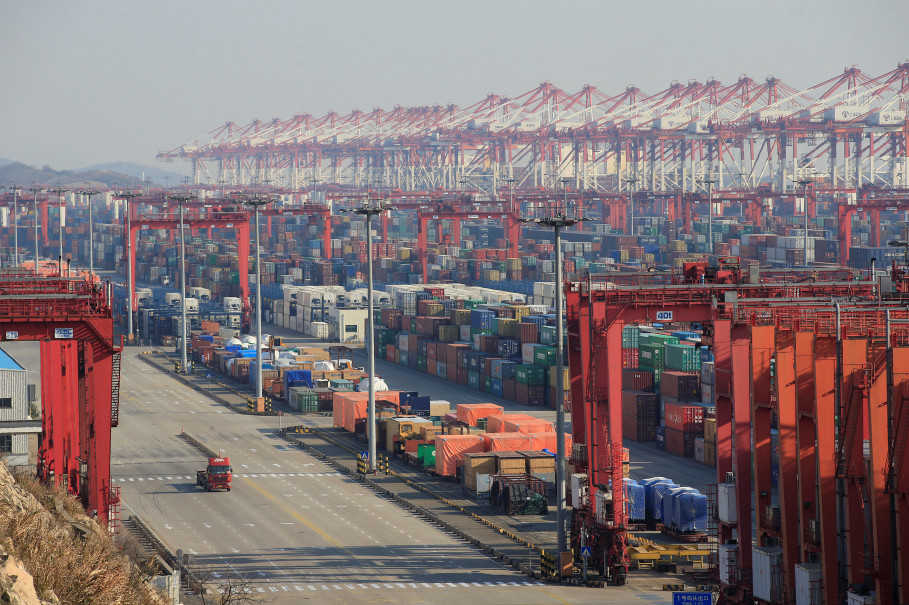
    The manufacturing sentiment index dropped to 50.2 in October, from 50.8 a month earlier.

    The reading, which was its lowest in more than two years and barely above the 50 point line that separates expansion from contraction in the sector, suggests the possibility of contraction in November as the U.S. tariffs take effect.

    That situation could worsen in January, when the tariff on the $200 billion of Chinese imports is set to rise to 25 percent.

    It might also be exacerbated by the “front loading” behavior of many Chinese exporters — boosting production and shipments now to fill orders for early next year before the scheduled tariff rate increase.

    Production and unemployment among export manufacturers are at risk of falling sharply from January due to lack of orders to fill.

    New export orders contracted for the fifth month in a row in October, to 46.9 from 48 in September.

    Imports also contracted for a fourth straight month, indicating weakening demand within China, while the decline in manufacturing employment accelerated.

    Non-manufacturing activity, dominated by the service sector, also slowed in October, with the index dropping a full point to 53.9.

    While the index still indicates a healthy level of activity, the size of the drop could be a sign of a sharp slowdown ahead.

    Indeed, the contraction in service sector export orders seen in September accelerated sharply in October, falling a further two points to 47.8.

    The October data also reinforce the picture that small- and medium-sized companies are struggling, with indices for both groups falling further into contraction.

    In contract, the index for large companies fell but remained in positive territory.

    “The economic conditions facing China’s private sector are much worse than the headline figure suggests, in our view,” analysts at ANZ said in a report. “The October PMIs for mid-sized and smaller sized companies fell to 47.7 and 49.8, respectively.”

    “So we expect the Caixin PMI to have already fallen into the contractionary zone,” the report said.

    The Caixin PMI data better reflects sentiment in smaller, usually private sector firms.

    Analysts said that a faster than expected economic slowdown this year could be compounded early next year by a lack of new orders and higher U.S. tariffs, prompting further action by the government to prop up growth.

    “We expect a worse growth slowdown in spring 2019 for several reasons [especially after export front loading],” said Ting Lu, chief China economist at Nomura Global Market Research.

    “Beijing’s policy focus so far has been on containing a credit freeze. If our more cautious views prove to be valid, growth is likely to slow to such a worrying pace in spring 2019 that Beijing may have to greatly ramp-up its easing/stimulus measures.”

    The economic forecasts do not take into account the possibility of a large escalation of the trade war.

    U.S. President Donald Trump said again on Monday that tariffs on an additional $267 billion worth of Chinese imports — which would equate to sanctions on virtually all Chinese goods — were “ready to go” if there was no trade progress.

    He said he expected the trade war to result in a “great deal” for the U.S., but did not say how and when that would happen.

    Analysts warned that while the direct impact of U.S. tariffs on the Chinese economy is limited, the negative impact on business and consumer sentiment, and so on the economic outlook, could be much larger.

    Steven Cochrane, the chief Asia-Pacific economist with Moody’s Analytics, said in an interview that additional tariffs would have an outsize impact.

    “There would be much more uncertainty that would tend to slow the pace of investment and consumption,” he said.

    “Consumers are [already] feeling uncertain about next year, so they are going to pull back.”

    In retaliation, China might implement qualitative measures, such as more aggressive inspections of imports from the U.S., creating stiffer visa requirements for visiting American workers, slowing regulatory approval for U.S. companies operating in China or targeting service imports from the U.S., including restricting the enrollment of Chinese students at American universities.

    In a research note released last week, Cochrane estimated that if a 25 percent tariff were imposed on all China-U.S. trade and Beijing applied qualitative countermeasures, China’s gross domestic product growth would fall by 1.2 percentage points to 5.2 percent in 2019 and the Chinese stock market would fall by 9.4 percent.

    The U.S. is reportedly preparing to impose the next round of tariffs on the $267 billion in Chinese goods in early December if Trump’s scheduled meeting with Chinese President Xi Jinping at the G-20 summit in late November produces no progress.

    If true, and given the 60-day comments period that would start when the tariffs are announced, this would mean that the new tariffs would be implemented in early to mid-February, during or just after Lunar New Year.

    Like Christmas in the West, the celebration is the largest instance of consumer spending during the year, so any fall in sentiment caused by the introduction of the new tariffs could have a very negative effect on China’s economy.

    Business sentiment in both the manufacturing and non-manufacturing sectors was weaker than expected in October, led by sharp declines in export demand, according to the official purchasing managers’ index.

    The figures were the first gauges of the trade war’s impact since the U.S. levied 10 percent tariffs on $200 billion worth of Chinese goods in late September.