Tag: Economy

  • President hopes economy to grow more than 6 percent in 2018

    President hopes economy to grow more than 6 percent in 2018

    President Joko Widodo (Jokowi) said he hopes the countrys economy could grow more than six percent in 2018 that the 2018 state budget would get healthier.

    “In entering the year 2018, the first thing we want is a growth of more than six percent,” the president said when opening a plenary session of the cabinet at the state palace here on Wednesday.

    Jokowi said he was aware it would not be easy because for that there should be a growth of more than 10 in the investment sector.

    He then asked the head of the Capital Investment Coordinating Board (BKPM) to report estimates including steps that have to be taken to boost investment.

    “The consumption sector needs to grow more than 5 percent, exports are also expected to grow by at least 4 percent and imports by at least two to three percent,” he said.

    He said, however, the figures still leave rooms for corrections or an increase.

    He said he wanted discussion and debate on the 2018 state budget made earlier that implementation would be better.

    Almost all cabinet ministers and head of government agencies attended the cabinet plenary session.

  • Indonesia posts 5% growth in Q3

    Indonesia posts 5% growth in Q3

    Indonesia’s economy grew largely in line with market expectations in the third quarter, though lower government spending and a slowdown among its major trading partners proved a drag on growth.

    Data released by the statistics bureau yesterday showed Indonesia grew 5.02 per cent in the July to September quarter from the same three-month period last year.

    This was close to the median estate of 22 economists surveyed by Bloomberg News of 5.08 per cent though it was below the 5.18 per cent in the second quarter.

    The results are a dampener for South-east Asia’s largest economy – home to more than 250 million people – which has been striving to meet a 7 per cent growth target envisioned by President Joko Widodo when he took office two years ago. Lower commodity prices and weaker global demand have been a consistent roadblock to the target.

    Statistics bureau chief Suhariyanto said a contraction in exports deepened to 6 per cent in the third quarter from the 2.73 per cent slump in the previous one, due to slowing growth in the key markets of China, Singapore and South Korea.

    5.02%

    Indonesia’s growth in the July to September quarter, from the samethree-month period last year. This is below the 5.18 per cent in the second quarter.

    6%

    The contraction in exports in the third quarter, deepening from the 2.73 per cent slump in the previous quarter, owing to slowing growth in key markets China, Singapore and South Korea.

    US$10b

    The budget cut announced in August by Finance Minister Sri Mulyani, for the whole of 2016.

    China grew at a steady 6.7 per cent annually in the third quarter, midway between the government’s goal of 6.5 to 7 per cent.

    Singapore’s growth came in at just 0.6 per cent year on year. South Korea grew 0.7 per cent, marginally ahead of expectations but still a tad below the second quarter.

    Household spending rose 5 per cent in Indonesia, the data showed. But a reversal in government spending was a drag on the economy.

    In August, Finance Minister Sri Mulyani announced a US$10.2 billion (S$14.3 billion) budget cut for the year. “She took the decision to cut government spending, to make sure the aggregate deficit for the year would not exceed 3 per cent of GDP,” OCBC economist Wellian Wiranto wrote in a note. Government spending tumbled 45 trillion rupiah (S$4.75 billion) in the third quarter year on year, data showed.

    Indonesia’s economy has been hobbled by low global commodity prices, tepid foreign investment and infrastructure bottlenecks. Last year’s growth of 4.8 per cent was the weakest since 2009.

    President Joko is seeking billions of dollars to help fund an ambitious agenda to build roads, railways and seaports, Bloomberg reported.

    Reacting to the data yesterday, he said he hoped for a lift in the fourth quarter. “We hope with the trigger of (government) payment realisation and budget disbursement, it can improve slightly.”

    A total of six interest rate cuts by Bank Indonesia this year are helping spur spending as inflation remains inside the 3 per cent to 5 per cent target band.

    Analysts argue that revenue collection from the government’s flagship tax amnesty scheme could help cushion the economy from aggressive state spending cuts.

    “The cuts in spending would continue to weigh on the fourth quarter outlook, but stabilisation of oil and commodity prices should bode well for the overall economy,” UOB economist Ho Woei Chen said.

  • Indonesia optimism despite drop in economic growth

    Indonesia optimism despite drop in economic growth

    Despite economic growth slowing in the third quarter, the government remains optimism that better state budget realization will lead to an economic rebound by year-end.

    Economic growth slowed to 5.02 percent year-on-year (yoy) in the third quarter amid a reduction in government spending and weak international trade, the Central Statistics Agency (BPS) announced on Monday. Growth stood at 5.19 percent yoy in the previous quarter.

    President Joko “Jokowi” Widodo, however, said he was grateful that growth was slightly above the government’s initial forecast of 4.9 percent

    “Our estimate was slightly below 5 percent. It turned out that, Alhamdulillah [Thank God] it is now a bit above 5 percent,” Jokowi told reporters on Monday.

    Jokowi voiced optimism that growth in the final quarter would improve with better state budget realization.

    “We expect the budget realization rate to be slightly better in the fourth quarter, although we should also understand that the global economy continues to decline,” he said.

    BPS chief Suhariyanto said government spending had contracted by 2.97 percent yoy due to recent budget cuts. However, cumulative government spending from January to September increased 1.97 percent from the same period last year.

    Amid a weak global economy, Indonesia saw its gross domestic growth increase only 4.79 percent last year, the lowest rate in six years. The government is targeting economic growth of 5.2 percent this year and 5.1 percent in 2017.

  • Latest results show Indonesian recovery still patchy

    Latest results show Indonesian recovery still patchy

    The earnings of Indonesian companies as of September has revealed a patchy recovery in local firms as they continue along a bumpy road with persistently weak demand. However, efficiency and currency gains are compensating for financial pressures.

    The mixed results of the January to September financial performance of publicly listed firms is reflected in the performance of the benchmark Jakarta Composite Index (JCI), which has hovered around the 5,400 level for the past two weeks during corporate earnings announcement season.

    “The 50:50 result, by which half of the listed companies announced higher-than-expected earnings while the other half were bad, brought the index nowhere,” Recapital Securities analyst Kiswoyo Adi Joe said on Tuesday.

    Indonesia’s economy is expected to recover this year and reach a 5 percent growth rate from a six-year low level of 4.79 percent last year.

    But sluggish global demand and a slump in commodity prices are hampering sectors such as trade, mining and agribusiness, while consumer goods, infrastructure and financial companies are showing resilience, according to the JanuarySeptember financial reports submitted to the Indonesia Stock Exchange (IDX).

    Diversified conglomerate Astra International, whose miningrelated business is being hit by low prices this year, saw net profits contract by 6 percent to Rp 11.28 trillion (US$865.3 million). Revenues were 4 percent lower in the January-September period year-on-year (yoy).

    “Astra’s performance is a reflection of our domestic economy. If it’s good, we can hope the economy will move faster,” Kiswoyo said. The second largest listed Indonesian company by market value has seven business lines from automotives and palm oil to finance and heavy equipment.

    Cigarette maker HM Sampoerna, Indonesia’s largest company by market value, saw net profits surge 20 percent to Rp 9.1 trillion on the back of huge financial revenues and a 7.3 percent rise in sales to Rp 70.3 trillion in the January to September period yoy.

    Another consumer goods giant Unilever saw its net sales and net profits grow by 9.5 percent and 14.3 percent yoy, respectively. The company’s efforts to lower operating costs included lowering advertising and promotions spending in the third quarter of this year from the previous quarter.

    Instant noodle maker Indofood CBP saw its sales increase by 10 percent while its net profit jumped by 19.1 percent.

    Overall, consumer goods stocks on the IDX rose by 0.57 percent during the earnings announcement season in October as the benchmark stock index flat-lined.

    In the telecommunications sector, a stronger rupiah has helped XL Axiata reverse its losses although its revenues dropped by around 5 percent.

    Financial revenues from interest on time deposits and plunging costs have also helped state-owned miner Aneka Tambang (Antam) prop up its earnings. The state-run miner reversed its losses amid sales that contracted by more than 28 percent and costs that dropped by almost 30 percent.

    In the financial sector, banks booked varying results. State-owned lenders mostly recorded positive performances across the board, but private companies recorded gloomier results as their credit growth was still floating around or even below the industry average.

    Going forward, banking remains the overweight sector for First Asia Capital analyst David Sutyanto.

    “Banking will perform well because they’ll get fresh funds from the tax amnesty,” David said. “Second, the mining sector will get a windfall from rising commodity prices.”

    The government’s ongoing tax amnesty runs from July this year to next March and has seen nearly Rp 3.9 quadrillion in assets declared, of which Rp 143 trillion have been repatriated from overseas.

  • Creative Industries Contribute to Economic Growth

    Creative Industries Contribute to Economic Growth

    Indonesia`s creative industry is considered to have the potentials to contribute to national economic growth, according to  Head of Research and Industry Development of Industry Ministry Haris Munandar.

    “Currently, the contribution of t creative industries is still relatively small, which is 7 percent of the national industrial growth of 18-20 per cent, but they have great potentials,” Haris said in Jakarta, Friday, October 14, 2016.

    Haris added that the potential can be seen from the various opportunities to develop creative industries in Indonesia, among them an increasing number of middle class Indonesia as potential consumers of creative products.

    “In recent years, the middle class is growing rapidly. This becomes a great opportunity,” said Haris.

    In addition, socio-cultural diversity and natural resources of Indonesia can inspire creative industries to continue to innovate.

  • Indonesia, Romania strengthen economic ties

    Indonesia, Romania strengthen economic ties

    Indonesia and Romania have agreed to boost economic ties through the signing of a cooperation agreement between the chambers of commerce and industry of the two countries during the visit of Romanian Foreign Minister Lazăr Comănescu to Jakarta.

    “The fact is, last night, upon my arrival to Indonesia, the chambers of commerce and industry from both Indonesia and Romania have signed a memorandum of understanding on their cooperation. The agreement has opened up the path for both chambers to diversify contact between business players from both countries,” Comănescu said following a bilateral meeting with his Indonesian counterpart, Foreign Minister Retno LP Marsudi, in Jakarta on Wednesday.

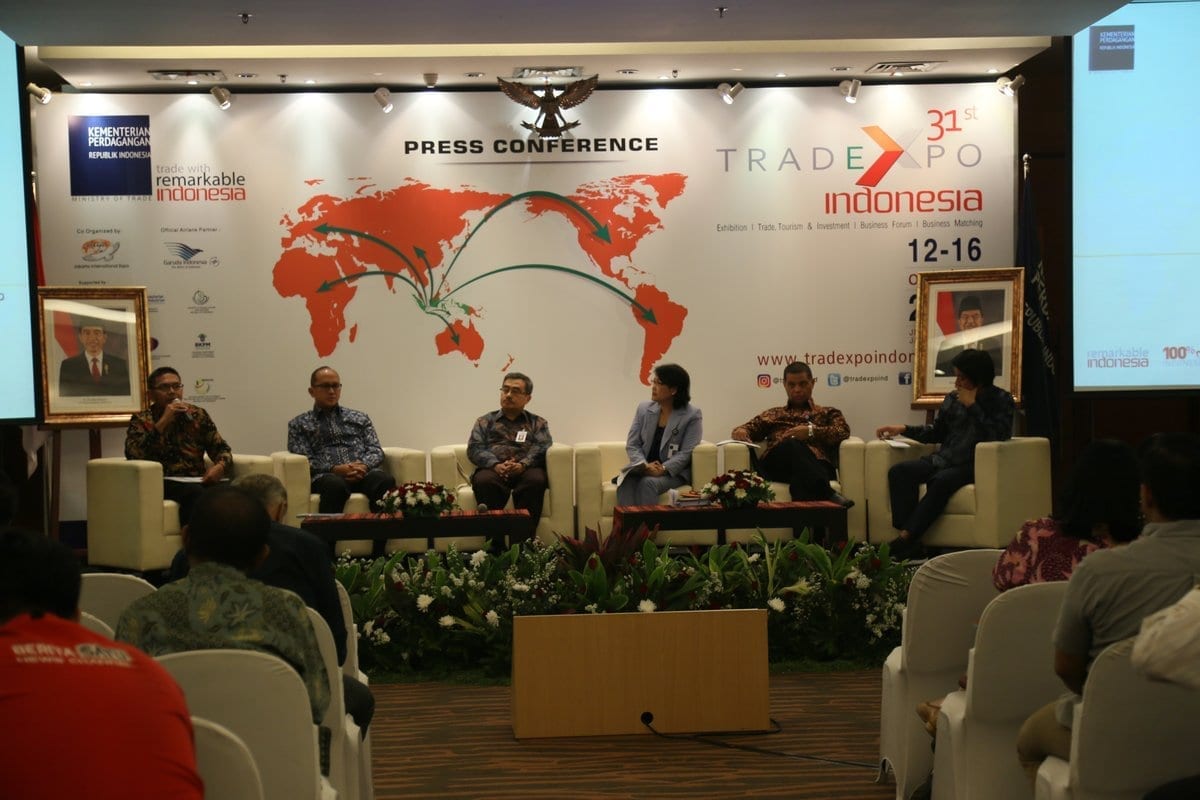
    Comănescu brought a team of business delegates from various industries, including energy, construction, customer goods and agriculture. While in Indonesia he is also participating in the Trade Expo Indonesia 2016. Trade between Indonesia and Romania reached US$117.64 million in 2015.

    Comănescu’s visit to Indonesia is the first from a Romanian foreign minister since relations between the two countries were established 66 years ago.

    Both Retno and Comănescu highlighted the potential for strengthening cooperation in infrastructure development.

    “There is a possibility for our two countries to strengthen bilateral relations in infrastructure because it is one of the priorities of the Indonesian government,” Retno said.

    Comănescu is set to meet with Transportation Minister Budi Karya Sumadi to discuss possible forms of cooperation.

    The two countries have expressed mutual support for a non-permanent seat on the UN Security Council. Indonesia hopes to secure a seat for the 2019-2020 term, while Romania is eyeing a seat for the 2020-2021 term.

  • Hong Kong to be world’s wealthiest by 2020

    Hong Kong to be world’s wealthiest by 2020

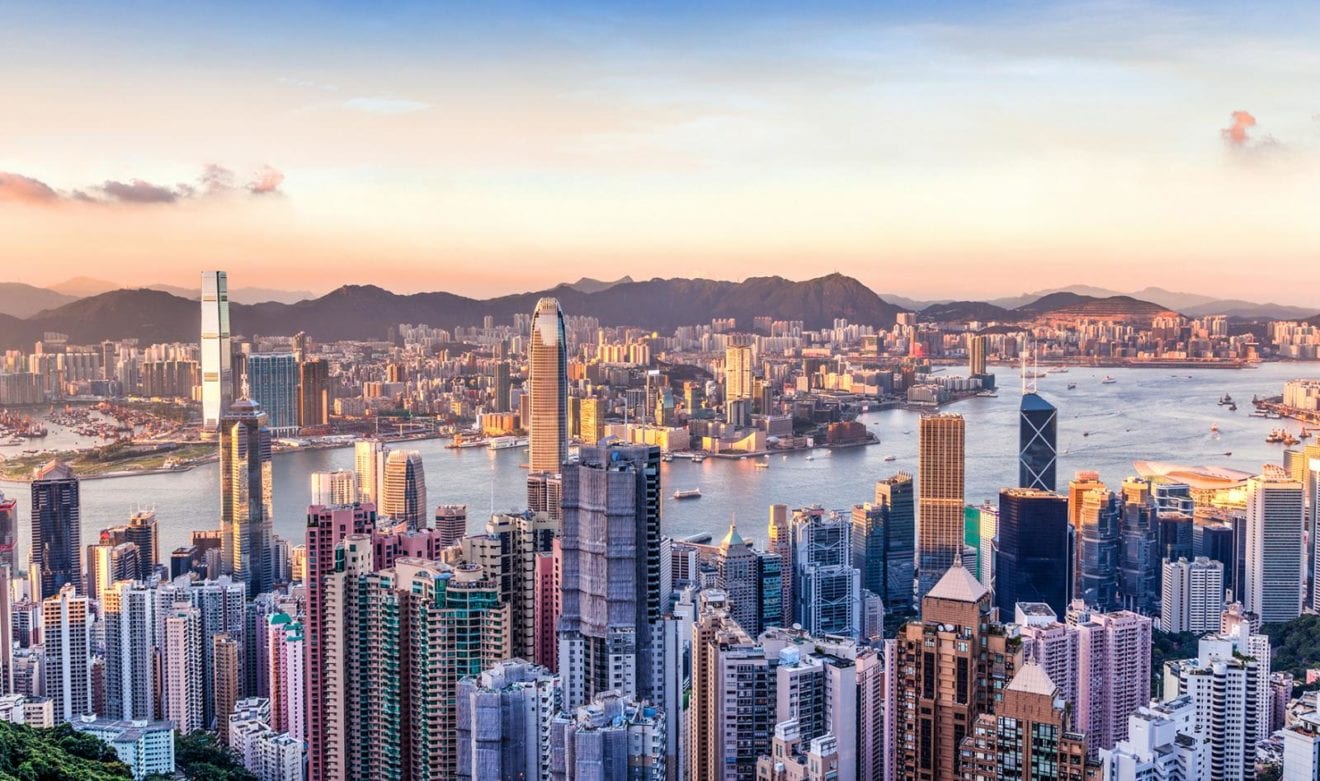
    Hong Kong is set to overtake Switzerland as the world’s wealthiest territory measured by savings per capita by 2020 thanks to its investors’ preference for near-cash products, according to a report.

    Verdict Financial’s latest report found with a forecast compound annual growth rate of seven per cent, Hong Kong would be the third quickest growing developed wealth market over 2016 to 2020.

    Verdict Financial’s senior analyst for wealth management, Bartosz Golba, said Hong Kong’s growing importance was no surprise.

    “The market is exemplary in regard to explaining why the majority of global wealth managers put Asia-Pacific at the centre of their growth strategies. In real terms — taking inflation into account — no other region will see its value of liquid assets grow at a greater pace,” Golba said.

    “What makes Hong Kong unusual is the local investors’ preference for near-cash products. Almost 85 per cent of liquid onshore assets of retail investors in Hong Kong are allocated to bank deposits, while the developed markets’ average stands below 62 per cent.”

    Golba said this strategy protected portfolios from capital markets volatility and provided a significant cross-selling opportunity for wealth managers operating in Hong Kong.

    The report also highlighted the unequal distribution of global wealth as developing countries often had a lower penetration of affluent individuals despite the country possibly holding more wealth than their developed nation counterparts.

    “In the US, almost two thirds of the population can be considered affluent. As a country in which almost two per cent of citizens are millionaires, it remains an attractive market for private banks and wealth manager,” Golba said.

    “While we are in a period characterised by volatile financial markets and wealth managers looking for optimal business strategy, there is one thing that remains constant. In aggregate terms, the US has been, and will remain, by far the world’s largest wealth market.”

  • Indonesia-US economic ties to strongly develop in next five years

    Indonesia-US economic ties to strongly develop in next five years

    The US-Indonesia trade may increase by 46 percent in the next five years, according to the latest report from the US Chamber of Commerce in Indonesia, source from Vietnam News in Jakarta.

    The report appreciates efforts by President Jokowi’s government in carrying out economic reforms and improving the business environment, saying that the reform needs to be stepped up.

    It also urges the Indonesian government to boost the law enforcement and create a more solid and fair legal foundation, especially in respecting commercial contracts, which is very important in creating confidence for businesses who intend to do business in Indonesia.

    The report recommended the Indonesian government continue reforming administrative procedures and investment policy and cut investment licensing time.

    In 2014, two-way trade between the US and Indonesia surpassed 90 billion USD.-

  • App economy driving job growth

    App economy driving job growth

    The application economy has positively impacted job growth, economic competitiveness, and the ability of governments to provide better services to citizens, according to a survey conducted by he Economist Intelligence Unit (EIU) for CA Technologies.

    Moreover, collaboration exists between the public and private sectors across the Asia-Pacific and Japan (APJ) region, the research found.

    More than 74% of government respondents in APJ have indicated that application start-ups are crucial or important in driving growth of the application economy and 79% say the same for large enterprises who have application-based products and services

    More than 95% of government respondents, 90% of enterprises and 81% of start-ups also said they have seen collaboration among the three groups.

    Meanwhile, 85% of government respondents in APJ see the technology sector as an important and often crucial driver of economic growth in their regions.

    “Across Asia Pacific and Japan, we are witnessing digital transformation becoming an integral part of the national agenda for many governments. In the application economy, where every business is a software business, growing digital capabilities has become the key to staying competitive,” CA Technologies president and general manager Kenneth Arredondo said.

    “Governments, startups, and even large enterprises are not only beginning to understand the necessity of this but that partnership, be it technology integration or B2B sales, can be a boon to their growth,” he added.

    All parties, however, agreed that there is still more that can be done. For one, government respondents named a shortage of tech talent stemming from a lack of educational or training programs as the largest barrier to the growth of the application economy (48%). This was followed by one-third of APJ government respondents pointing to a lack of public funding.

  • Asian stocks mostly up despite weak economic news from China

    Asian stocks mostly up despite weak economic news from China

    Asian shares traded in positive territory Tuesday as gains in commodity stocks helped offset weakness overnight in U.S. markets.

    The Nikkei Stock Average NIK, +0.69% rose 0.2% with the S&P/ASX 200 XJO, +0.27% up 0.2% and Korea’s Kospi SEU, +0.62% up 0.3%. Hong Kong’s Hang Seng Index HSI,-0.28% was down 0.1% while the Shanghai Composite SHCOMP, +0.65% was flat.

    Traders sent U.S. oil prices up 2.9% to $43.02 a barrel following news that the Organization of the Petroleum Exporting Countries planned to hold informal talks in September that could lead to production cuts.

  • Exhibition industry contributes $6.8 billion to Hong Kong’s economy

    Exhibition industry contributes $6.8 billion to Hong Kong’s economy

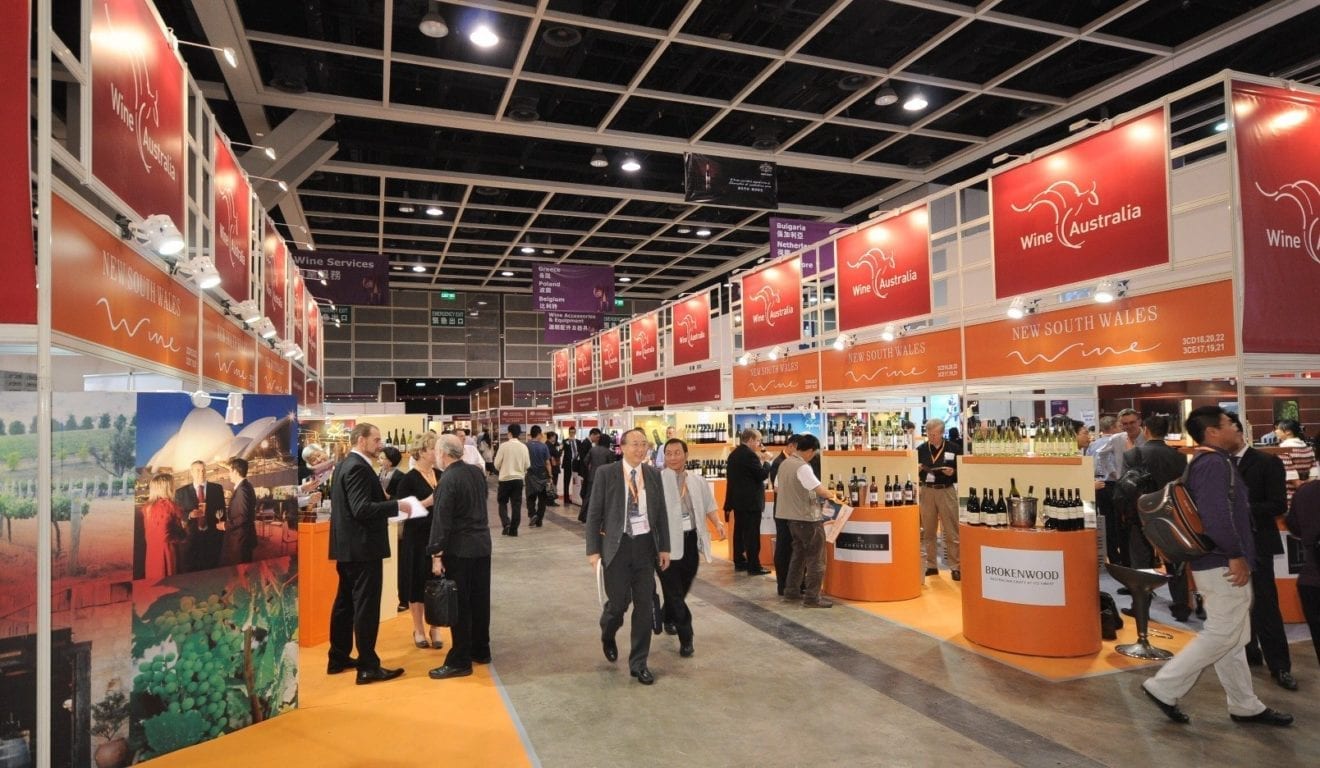
    Findings from the latest Economic Impact Study on the contribution of Hong Kong’s exhibition industry to the economy in 2014, released today, contained encouraging news for the industry and for Hong Kong. Overall, the study reveals that the exhibition industry contributed an impressive HK$52.9 billion (US$6.8 billion) directly and indirectly to Hong Kong’s economy in terms of expenditure, equivalent to 2.3% of the city’s total GDP for the calendar year 2014. This represents strong positive growth by comparison with the figures from the previous Economic Impact Study, covering 2012.

    At HK$52.9 billion (US$6.8 billion), the expenditure effects of the exhibition industry in 2014 were up by 29% from 2012, at a CAGR of 13.9%. A significant part of this was contributed by the direct spending of international exhibitors and exhibition visitors, who according to the study tend to spend 61% more per visit than the average overnight tourist visitor to Hong Kong, with their spending focused in the retail, hotel and F&B sectors.

    The Study, commissioned by the Hong Kong Exhibition & Convention Industry Association (HKECIA), also shows that apart from direct economic benefits in terms of expenditure, the exhibition industry also provided equivalent of around 83,500 full-time jobs in the exhibition industry and other service and supporting sectors including hotel, F&B, retail, stand design and construction, and logistics and freight forwarding.

    In 2014, the fiscal benefits (i.e. benefits arising from various government taxes associated with exhibition activities and participants) contributed by the exhibition industry amounted to HK$2.1 billion (US$269.9 million).

    Commenting on the findings, Chairman of the HKECIA, Mr Stuart Bailey said, “We welcome this Study and the results because, once again, it highlights just how important our industry is for Hong Kong. The study shows in great detail the many ways in which exhibitions fuel Hong Kong’s wider economy – for example by spinning off economic benefits and extensive workforce to supporting industries, and attracting high-spending international business visitors to the city. The Study also reveals that overseas exhibition exhibitors and visitors continue to spend more than international overnight tourists. We should put efforts in making them visit the exhibitions in Hong Kong regularly.”

    Mr Bailey continued, “To continue providing Hong Kong with benefits at this level, our exhibition industry needs to remain attractive, efficient and competitive. We must continually be looking for ways of differentiating ourselves from regional competitors, in terms of things like providing premium exhibition space, ample capacity, and exceptional value-added services. I hope our policymakers will take the findings of this Study into account as they plan for the infrastructure and facilities that Hong Kong needs in the years to come.”

    This is the sixth in a series of Economic Impact Studies, which have been carried out biennially since 2004. It was once again conducted by KPMG Advisory (Hong Kong) Limited, a respected independent research consultancy.

    KEY FINDINGS OF THE ECONOMIC IMPACT STUDY 2014:

    Economic impact of Hong Kong’s exhibition industry in 2014 and 2012

    Area Benefits (2014) Benefits (2012) Compound Annual Growth Rate (CAGR)

    Expenditure effects HK$52.9 billion
    (US$6.8 billion) HK$40.8 billion (US$5.2 billion) 13.9%

    Fiscal impact HK$2.1 billion
    (US$269.9 million) HK$1.4 billion
    (US$179.9 million) 20%

    Employment 83,500 FTE 69,600 FTE 9.6%

    Expenditure effects continue to grow due to growing visitor number and expenditure

    Hong Kong’s exhibition industry contributed expenditure effects of around HK$52.9 billion (US$6.8 billion) to the Hong Kong economy in 2014, up by 29% from 2012, representing a CAGR of 13.9%. This was equivalent to 2.3% of Hong Kong’s GDP, up from 2.0% in 2012.

    – HK$52.9 billion (US$6.8 billion) – up by 29% from 2012, representing a CAGR of 13.9%.

    – Direct expenditure covers expenditure by Visitor Personal (exhibition visitors) and Business Related (exhibition organisers and exhibitors) and amounts to HK$26.5 billion (US$3.4 billion).

    – Visitor expenditure remains the largest expenditure segment at HK$16.1 billion (US$2.1 billion) in 2014, representing a CAGR of 22.0% from 2012. It is because of a significant increase in the number of visitors from outside Hong Kong in 2014 and an increase of the average spending by visitors.

    – Visitor personal expenditure spilt between international and domestic spending is around 93% to 7% (the spilt was 92% to 8% in 2012).

    – Retail, hotel and F&B sectors were the largest recipients of director visitor expenditure, accounting for 67% of the total visitor personal expenditure.

    – Business-related (exhibition organisers and exhibitors) expenditure amounts to HK$10.4 billion (US$1.3 billion) in 2014.

    Fiscal impact grows with increased visitor and business spending
    The tax take enjoyed by the Hong Kong Government in 2014 as a result of exhibition activities is estimated at around HK$2.1 billion (US$269.9 million), based on the total expenditure effects of HK$52.9 billion (US$6.8 billion).

    Derived from three taxes:

    – Profits tax: HK$961 million (US$123.5 million)
    – Salary tax: HK$1.0 billion (US$128.5 million)
    – Airport tax: HK$88 million (US$11.3 million)

    Equivalent of 83,500 full time jobs provided by the exhibition industry

    Full-Time Equivalent (FTE) employment amounted to around 83,500 in 2014, representing a CAGR of 6.5%, up from 69,600 in 2012.

    – Around 3,400 FTEs, or 4%, were directly employed by exhibition organisers and venues.

    – Remaining 96%, or 80,100 FTE jobs was provided across various supporting sectors. Amongst this group, around 57% of the FTE jobs created came from retail, hotel and F&B. Other supporting industries such as international transport, stand contractors, advertising and others accounted for the remaining 43%.

    International exhibition visitors and exhibitors contributed more than overnight tourists

    The report showed that international exhibition visitors and exhibitors spent on average 61% more than overnight tourists.

    – International exhibition visitors spent an average HK$12,776 (US$1,642) per visit; international exhibitors spent an average HK$12,829 (US$1,649) per visit; compared to overnight tourists spent an average of HK$7,960 (US$1,023) per visit.
  • Indonesian growth beats forecasts

    Indonesian growth beats forecasts

    Indonesia’s second-quarter economic growth beat analysts’ expectations amid President Joko Widodo’s efforts to spur an economy struggling in the wake of a slowdown in China and low commodity prices.

    Gross domestic product increased 5.18 per cent from a year earlier, compared with a revised 4.91 per cent in the first three months, the statistics bureau said in Jakarta on Friday. That exceeded the 5 per cent median estimate in a Bloomberg survey of 24 economists.

    Widodo, known as Jokowi, oversaw a 36 per cent surge in government spending from the previous quarter as he seeks to lift growth from the slowest level since 2009. The president has embarked on an ambitious infrastructure program and launched a tax amnesty aimed at luring back billions of dollars of undeclared income back to Indonesia. The central bank has cut its benchmark rate by a percentage point this year in an attempt to revive lending.

    “The outlook for Indonesia’s economy has improved in recent months, raising hopes that the economy could be on the cusp of a sustained recovery,” said Gareth Leather, senior Asia economist at Capital Economics Ltd. in London. “In particular, the passage of a number of reforms including steps to open up more industries to foreign investment as well as tax incentives to encourage more labour-intensive industries to set up in Indonesia has helped boost sentiment.”

    Market reaction

    The Jakarta Composite Index extended gains after the figures were released, rising 1 per cent as of 9:57am in the city. The rupiah strengthened 0.1 per cent to 13,120 a dollar, according to prices from local banks. Indonesian sovereign bonds advanced, pushing the 10-year yield down two basis points to 6.89 per cent, Inter Dealer Market Association prices show.

    While the data exceeded economists’ expectations and the outlook has improved, the result still remained “considerably below” the 5.8 per cent average over the past decade, said Leather.

    On a quarterly basis, the economy grew 4.02 per cent from the previous three months.

    Government spending rose 6.28 per cent from a year earlier, while exports declined 2.73 per cent. Investment was up 5.06 per cent year-on-year while household consumption, which makes up more than half of the economy, rose 5.04 per cent.

    “They can really pause now for a while to see what impact of the fiscal decisions as well as the cuts they’ve announced so far are having,” said Charu Chanana, an economist with Forecast Pte Ltd. in Singapore “I think this buys them some time to hold on for now but easing still remains on the table.”

    The second quarter growth figures come after the central bank left rates on hold in July despite saying there was room for further easing if needed.

  • Indonesia`s economy improves

    Indonesia`s economy improves

    The central Bank of Indonesia has said that Indonesia’s economy will continuously improve, along with the stability of the economy, the continuation of fiscal stimulus, and the implementation of structural reforms.

    “In the medium-term, Indonesias economic growth will be higher, more inclusive, and more sustainable,” the Director of Economic and Monetary Policy at Bank of Indonesia, Solikin M Juhro, said here on Thursday.

    He noted the consistent implementation of structural reforms is a key to the improvement of the domestic economic outlook.

    According to Solikin, amid various external and domestic challenges, Indonesias economic performance during 2015 recorded a positive development.

    The macroeconomic stability becomes better, and the stability of the financial system has been maintained, he added.

    “After being slow, the nation’s economic growth began to increase in the second half of 2015,” Solikin said.

    He explained that such success was supported by the Bank of Indonesias policies, as well as close coordination with the government in safeguarding the economic stability, promoting economic growth, and accelerating structural reforms.

    Further, according to Solikin, the consistent implementation of structural reforms should be continued through the optimization of infrastructure developments, such as roads, electricity, and irrigation, including the development of human resources.

    “The economy of Indonesia keeps growing at a rate of 4.8 to 5.5 percent. We are able to grow above 6 percent, if we apply economy diversifications,” he added.

  • Finance ministry believes 2017 growth will be better

    Finance ministry believes 2017 growth will be better

    The Indonesian economy will grow at a faster pace in 2017 than it did in 2016, the Ministry of Finance believes.

    “I believe the economic growth next year will be higher than that of this year,” chief of the ministrys fiscal policy body, Suahasil Nazara, said at a meeting of the working committee of the House of Representatives (DPR) Budget Body here Wednesday.

    Economic growth in the past five years has tended to slow down as internal upheaval and global pressure had slightly affected the national economic performance, he noted.

    The economic slowdown is expected to reach its peak this year after the government issued a series of fiscal policies, the first since 2015, aimed at boosting the national economy, he said.

    “The fiscal policies are aimed at spurring economic growth. This way we encourage tax receipts and divert expenditures to more productive infrastructure projects from non-productive infrastructure projects and cut fuel subsidies. All of these will lead to higher growth,” he added.

    The country began to see the result of the fiscal policies when economic growth was recorded at 4.8 percent in 2015 and 4.92 percent in the first quarter of 2016, he said.

    “In view of that, the assumed economic growth for 2016 is set at 5.2 percent as compared to 4.8 percent in 2015. Since the first quarter of 2016, the economic growth has reached 4.9 percent. We believe the turning point has been visible but it takes time to increase,” he said.

  • Singapore economy grows 2.2% in Q2, beating expectations

    Singapore economy grows 2.2% in Q2, beating expectations

    The Singapore economy grew 2.2 per cent on a year-on-year basis in the second quarter, marginally higher than the 2.1 per cent expansion in the previous quarter and in line with analysts’ expectations, according to advance estimates from the Ministry of Trade and Industry (MTI) on Thursday (Jul 14).

    On a quarter-on-quarter, seasonally adjusted and annualised basis, the economy expanded 0.8 per cent, an improvement from the 0.2 per cent growth in the first quarter.

    The figures were in line with analysts’ forecasts, with economists in a Reuters poll predicting a 2.2 per cent year-on-year growth and a 0.9 per cent growth on a quarterly basis.

    The manufacturing sector expanded by 0.8 per cent on a year-on-year basis, a reversal from the 0.5 per cent decline in the previous quarter. Growth was supported by an increase in the output of the biomedical manufacturing and electronics clusters, MTI said. On a quarter-on-quarter basis, the sector grew at an annualised rate of 0.3 per cent, following the 18.4 per cent growth in the preceding quarter.

    The construction sector grew by 2.7 per cent, easing from the 4.5 per cent growth recorded in the previous quarter. The moderation in growth was largely due to a slowdown in private sector construction activities, the ministry said. On a quarter-on-quarter basis, the sector expanded at an annualised rate of 0.6 per cent, lower than the 3.5 per cent expansion in the preceding quarter.

    Growth in the services-producing industries came in at 1.7 per cent, the same pace of growth as in the previous quarter. Growth was driven mainly by wholesale and retail trade, and the transportation and storage sector. Within the retail trade sector, growth was supported by strong motor vehicle sales. On a quarterly basis, the industry grew by 0.5 per cent, reversing the 4.8 per cent contraction in the preceding quarter.

    The advance GDP estimates were computed largely from data in the first two months of the quarter – in this case, April and May. They are intended as an early indication of the GDP growth in the quarter, and are subject to revision when more comprehensive data become available, said MTI.

    The preliminary GDP estimates for the second quarter, including performance by sectors, sources of growth, inflation, employment and productivity, will be released next month.

    GROWTH IN LINE WITH EXPECTATIONS, BUT LIKELY TO DETERIORATE: ANALYSTS

    Mizuho senior economist Vishnu Varathan said manufacturing primarily drove the improvement for the second quarter.

    “Manufacturing snapped six consecutive quarters of year-on-year contraction, to come into an expansion. It’s a modest expansion, but nonetheless a poignant one,” he said.

    The improvement of the economy in the second quarter, after the numbers for the first quarter were upwardly revised from 1.8 per cent to 2.1 per cent, probably framed a “stabilisation story” in Singapore’s growth, if not a slight improvement, added Mr Varathan.

    However, economists told us the recovery is likely to be tentative, with the volatile pharmaceuticals unlikely to sustain the lift in industrial production, while sectors like transport engineering and petrochemicals continue to show signs of weakness.

    On the external front, the impact from UK’s vote to leave the European Union is likely to be felt in the coming months, said Mr Brian Tan, Nomura Singapore’s Southeast Asia economist.

    “The Singapore economy is so open, not just to trade, but also from the financial market channels because we’re an international financial centre, so both these channels could have a very negative impact on the Singapore economy once Brexit has happened,” Mr Tan said.

    He added the impact may possibly be apparent in the July and August trade data, saying that “because of this, we worry that the growth outlook for Singapore will deteriorate over the coming quarters, especially when we get into the third quarter when the impact of Brexit might be a bit more visible.” 

    Amid ongoing macroeconomic risks and currency market volatility, observers also said the Monetary Authority of Singapore is likely to actively review the need to weaken the Singapore dollar.

    For the full year, the Government’s forecast is for Singapore’s economy to grow by between 1 and 3 per cent.