Tag: entertainment

  • Zee Entertainment Sues Nykaa for Alleged Copyright Breaches in Instagram Reels, Seeks $210k in Damages

    Zee Entertainment Sues Nykaa for Alleged Copyright Breaches in Instagram Reels, Seeks $210k in Damages

    Zee Entertainment, a major Indian media conglomerate, has taken legal action against Nykaa, a prominent fashion and beauty retailer. The lawsuit accuses Nykaa of utilising Zee’s copyrighted music in Instagram reels as a marketing strategy for their products, a move that allegedly infringes on Zee’s licensing agreement with Meta Platforms. Zee Entertainment is seeking damages of US$210,000 for this alleged copyright violation.

    The Case Background

    The suit, filed in the Delhi High Court on April 3, contends that Zee’s licensing deal with Meta Platforms permits individuals to incorporate Zee’s music into their Instagram posts for non-commercial purposes. However, Zee alleges that Nykaa exploited several of its copyrighted songs in Instagram reels to promote products to its vast follower base.

    According to the lawsuit, Zee identified 12 specific Instagram reels where Nykaa purportedly used Zee’s licensed music in its product promotional posts. The court documents, while not publicly available, reportedly include screenshots from these reels as evidence of the alleged copyright infringement.

    During an initial hearing, Nykaa’s legal team informed the court that the 12 disputed links had been removed. The lawsuit documents, which amount to more than 900 pages, assert that Nykaa utilised Zee’s music “without obtaining any permissions/authorisations.”

    Zee is requesting the court to grant INR 20 million (approximately US$209,742) in damages to compensate for Nykaa’s alleged illicit use of its music.

    The Potential Impact

    Both Zee and Nykaa are major publicly traded entities in India’s entertainment and retail sectors, respectively. Legal observers suggest that the resolution of this case could potentially have broader repercussions.

    Aditya Gupta, a partner at Ira Law, pointed out that marketing departments frequently access content from music libraries without fully understanding the specific terms and conditions laid out by platforms like Instagram. He suggested that this case could offer much-needed clarity on the issue.

    Questions & Answers

    What is the basis of Zee Entertainment’s lawsuit against Nykaa?
    Zee Entertainment alleges that Nykaa used its copyrighted music in Instagram reels as a marketing strategy for their products, in violation of Zee’s licensing agreement with Meta Platforms.

    What is the requested compensation in the lawsuit?
    Zee Entertainment is seeking damages of US$210,000 against Nykaa for the alleged copyright infringement.

    What implications could this lawsuit have?
    Since Zee Entertainment and Nykaa are significant players in their respective sectors, the resolution of this case could set a precedent and offer clarity regarding the use of copyrighted music in social media advertising.

  • Luxury airline plans to give select passengers a Vision Pro to use as in-flight entertainment

    Luxury airline plans to give select passengers a Vision Pro to use as in-flight entertainment

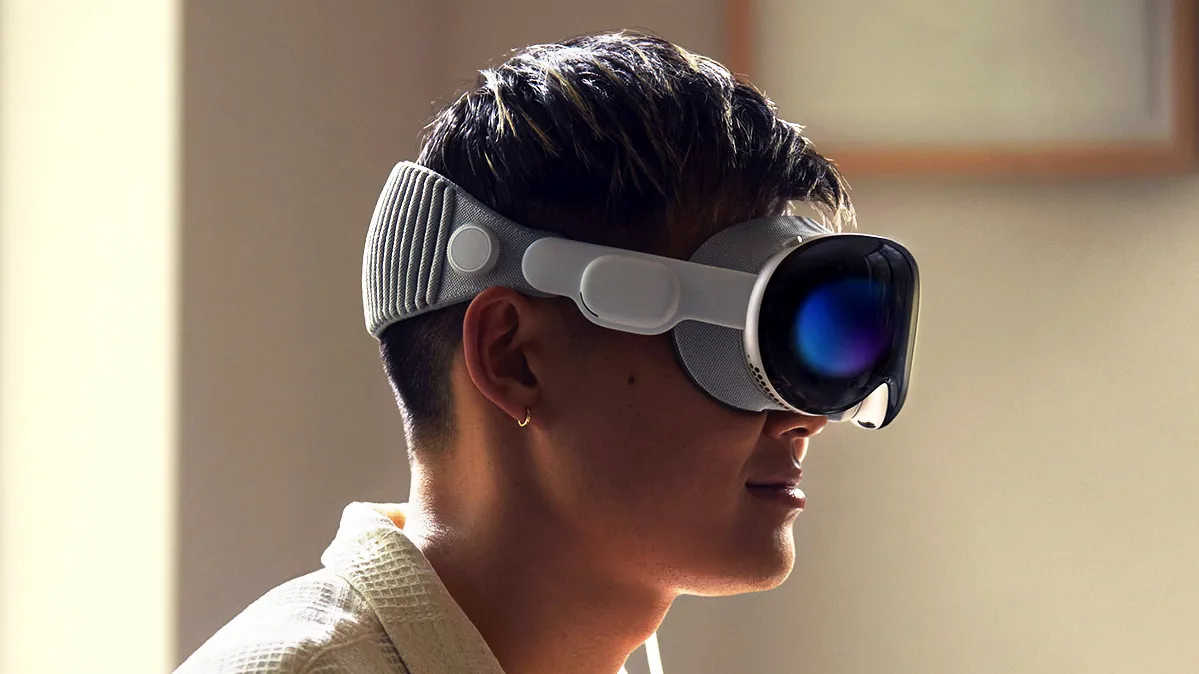
    At least one airline is planning on offering the Apple Vision Pro to some passengers as part of its in-flight entertainment offerings. Beond is a Maldivian airline that flies to five destinations and calls itself the world’s first “premium leisure airline” with business class service that includes gourmet meals, seats that fold down completely allowing passengers to sleep more comfortably during a flight, and soon, in-flight entertainment led by the Apple Vision Pro.

    In a press release dated Thursday, Beond said that it will start  offering the Vision Pro to select customers on its flights to the Maldives. Beond’s fleet has just doubled to two after the airline took possession of its second jet and in the middle of this year, it will start flights from Milan, Dubai, and Bangkok to the Maldives.

    Tero Taskila, Beond’s Chairman and CEO, said, “The Apple Vision Pro will transform the inflight entertainment experience, and we will be first to offer it to select passengers. In addition to our existing and ever-growing library of inflight content such as movies and games, Beond will showcase stunning resort destinations and activities in the Maldives. We are working now with partners in the Maldives to prepare truly amazing footage.”

    The executive continued, “The inflight experience will build anticipation for passengers before they arrive in the Maldives. Offering the Apple Vision Pro is another step in our vision of delivering a premium travel experience to our customers, from the start to finish of their journey. We’re proud to be the first airline to deploy the technology.” The press release didn’t mention how many Vision Pro units would be aboard each flight, nor did it mention how the airline would determine which passenger(s) would get the opportunity to don the headset.

    Now that Beond has become the first airline to announce plans to offer the Vision Pro to passengers, we could see the larger commercial airlines add the Vision Pro to their in-flight entertainment offerings. Considering the number of larger capacity planes that airlines could order the headset for, Apple could get a windfall.

  • Apple brings its streaming service to Comcast devices in the US

    Apple brings its streaming service to Comcast devices in the US

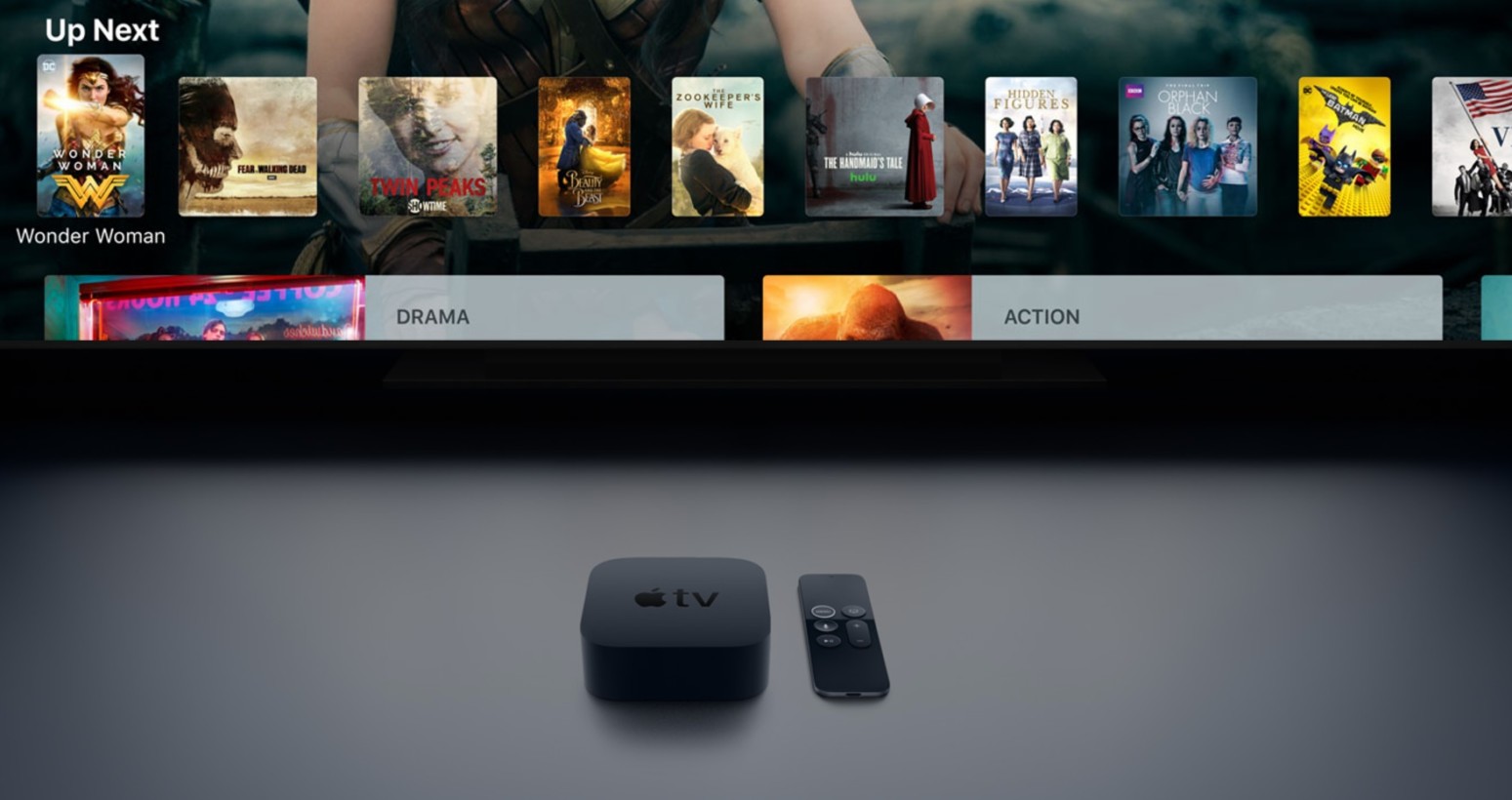
    The partnership between Apple and Comcast enters a new era, as the Cupertino-based giant is bringing its streaming service to Comcast’s customers. In a joint statement earlier this week, the companies revealed that Apple TV+ will be available Comcast’s various platforms in the US.

    Starting this week, Apple TV+ will be available on Xfinity X1, Xfinity Flex, and XClass TV, but all eligible devices will be getting the streaming service in the coming days. The move follows Apple TV+’s launch on Sky devices like Sky Q and Sky Glass in the UK and Europe back in December.

    Furthermore, Comcast announced that between March 15 and March 21, its customers will benefit from a special offer, as Apple will provide Xfinity users with a preview of some of its most popular Apple TV+ original series and films across X1, Flex and Stream, no sign-up or sign-in required.

    Additionally, Xfinity customers will be able to watch the first seasons of many of Apple TV+’s popular shows, as well as the Apple Original film “Greyhound.”

    It’s worth noting that Xfinity customers who aren’t Apple TV+ subscribers are eligible for a three-month free trial of Apple TV+ when they sign-up via their Xfinity device by April 25.

    The newly added Apple TV+ service can be accessed by Xfinity customers by saying “Apple TV+” into the voice remote or by saying the name of a desired title from the streaming service.

  • Volvo And Google Extend Partnership For VolvoCars.OS

    Volvo And Google Extend Partnership For VolvoCars.OS

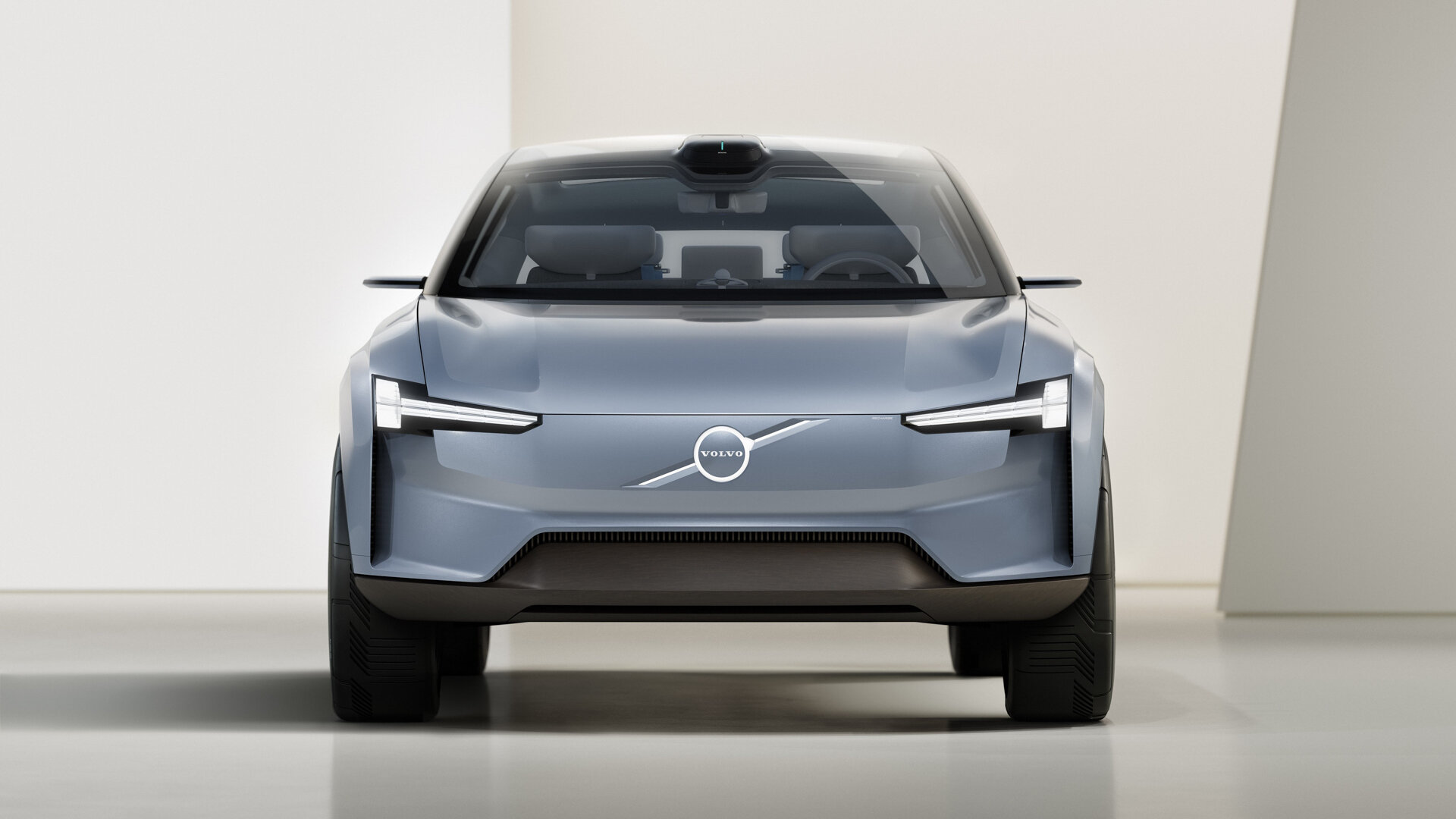
    Volvo and Google have announced that they are extending their partnership for Android Automotive which will not hook into a new user experience that the Swedish brand is developing called VolvoCars.OS. VolvoCars.OS uses an assortment of operating systems be it Android Automotive, QNX, and Linux. But the big deal is that it will hook into the cloud, or Android Automotive in its electric cars, and will also have a new front end for in-car displays.

    This is a more integrated approach mirroring what Google is doing with its other platform – wearOS on the smartwatch platform which is now merging with Samsung’s Tizen OS or even on the phone with its partnership with Reliance Jio in India for the Jio Phone Next. It is integrating more closely with OEMs and creating a more unique and customized experience.

    Of course, on the car, especially on Volvo’s cars, which are known the world over for their safety. This new UI is going to optimize safety. As always, this starts with a high-resolution infotainment screen and even a heads-up display, and everything will be available through voice, embedding the Google Assistant at the heart of the experience. Volvo and Google are already doing this, but what they will probably end up making is something more unique for Volvo than something stock that makes every Android Automotive car feel the same.

    “Our teams have spent a lot of time with Google to further develop and improve our user experience for the next generation of Volvo Cars,” said Henrik Green, chief technology officer, Volvo.

    “Especially in terms of safety, serenity, and simplicity, we have made great strides thanks to a deeper integration of design and technological development. We are convinced that it will allow us to create even better Volvo cars and set a new industry standard,” he added.

    Of course, these cars will also integrate better with mobile phones and the phone will act like a key leveraging a car key feature that Google unveiled at Google IO earlier this year. Volvo will also have an app that will connect you to everything else that comes with owning a modern electric car, the company claims in an official release.

    It is building features for paying for charging and connecting the with home devices and also pre-cooling and preheating the vehicle remotely. All these cars will also support OTA updates, but that’s something that has become a standard-issue these days with connected cars.

  • Vietnam tops world in growth of entertainment apps

    Vietnam tops world in growth of entertainment apps

    Vietnam was the world’s fastest-growing market for entertainment-based mobile apps last year, fueled by demand for video streaming services.

    Its growth score was 44.96, significantly higher than the global average of 24.27, according to a report by German mobile measurement firm Adjust. The report assessed data from nearly 3,500 apps released in 2018 and 31 countries based on four industry verticals, e-commerce, entertainment, gaming, and utilities.

    Adjust’s Mobile Growth Map uses the growth score, a new metric it developed, to chart the rise of apps in global markets. It is calculated by dividing the total app installs per month by the number of monthly active users for each vertical and country to reveal the rate of growth.

    The growth of entertainment apps in Vietnam was fueled by the demand for video streaming services, the report said. The country was seeing a trend of people switching from traditional TV to over-the-top media services which allowed them to watch movies and other shows online. Video streaming services, karaoke and music apps engaged users for long stretches of time, and presented an opportunity for diverse, relevant advertising, the report said. Russia was second behind Vietnam with a growth score of 44.21, followed by Thailand (36.61) and Colombia (34.87).

    Vietnam had also experienced robust growth in gaming apps with a growth score of 51.40 against the global average of 42.85 to place sixth in a list topped by Colombia.

    “The Asia Pacific is a perfect place to soft-launch a new app without the heavy lifting of full localization. Indonesia, Singapore and India, as well as Vietnam, Myanmar and Thailand represent great opportunities.”

    Vietnamese spend an average of four hours a day on their smartphones, 65 percent of that time on apps, according to a survey done last July by HCMC market research firm Q&Me. Around 64 million people, or over half of the country’s population, are online.

  • Porsche To Use Holoride’s Virtual Reality Tech To Keep Rear Passengers Entertained

    Porsche To Use Holoride’s Virtual Reality Tech To Keep Rear Passengers Entertained

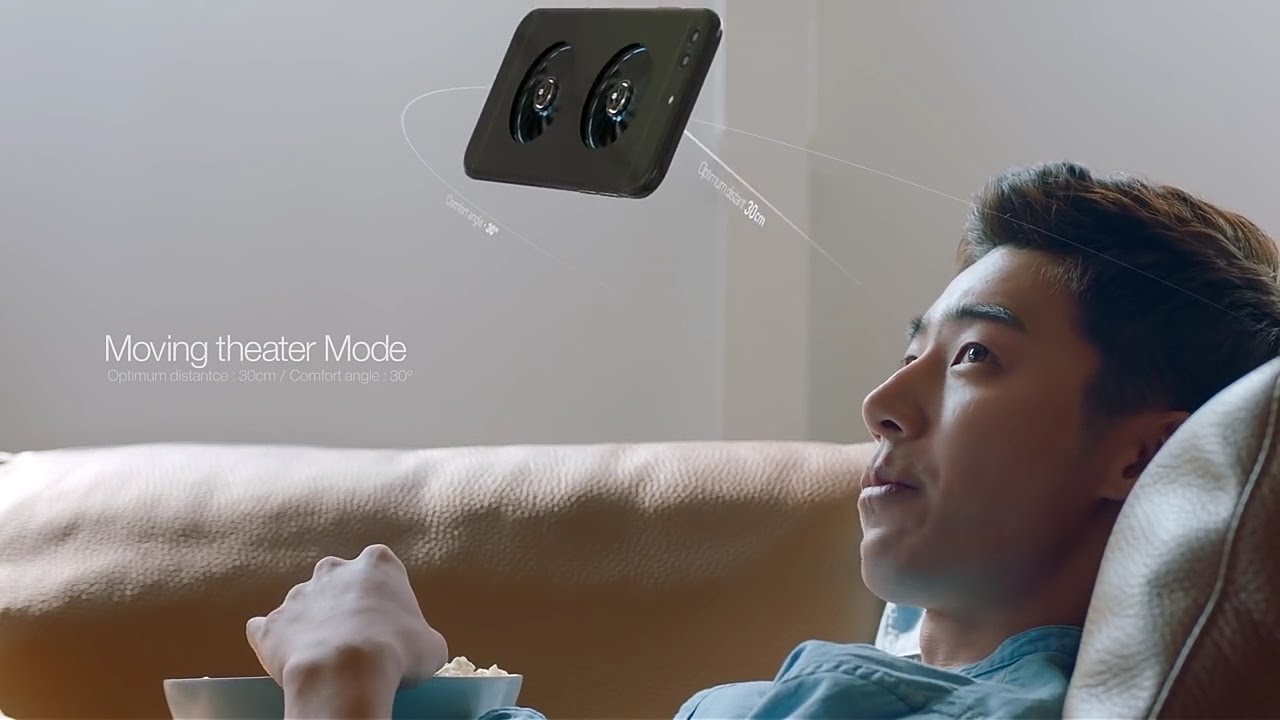
    Porsche has collaborated with Munich-based entertainment firm Holoride to come out with a special Virtual Reality (VR) based entertainment device for rear passengers. Recently unveiled at the Start-up Autobahn Expo Day, the immersive virtual entertainment tech uses a VR headset with sensors, which is paired to the vehicle so that its content can be adapted to the car’s driving movements in real-time. With this new tech, the German luxury and sports carmaker is trying to show what entertainment could be like in the future for the backseat passenger in a Porsche.

    How this device essentially works is, suppose the car is being driven around the curve, the virtual vehicle that the passenger is traveling in, let’s say, for example, a space shuttle, will also change direction. The company says that this results in a highly immersive experience, which significantly reduces the symptoms of motion sickness. Although still in prototype stage, Porsche says In future, the system will also, for example, be able to evaluate navigation data to adapt the length of a VR game to the calculated duration of the journey. This technology can be used to integrate other entertainment services such as watching a film or even virtual conferences, the applications are many. Also, as Holoroid has an open platform approach, car manufacturers and content producers can customize the content to adapt to driving time, motion, and context.

    Nils Wollny, CEO of Holoride founded the entertainment tech start-up at the end of 2018 with his partners, Marcus Kuhne and Daniel Profendiner. Using the Start-up Autobahn platform, the up-and-coming company has now shown that their “holoride” software works seamlessly with manufacturers’ vehicle data for motion-synchronized, real-time generation of virtual reality (VR) and cross-reality (XR) content.

    Porsche will have the new VR technology on display and to experience at the upcoming Frankfurt Motor Show, from September 20, 2019. Under the motto “Next Visions. Change the Game – Create tomorrow”, Porsche is inviting innovators and partners to the motor show to discuss the future of mobility.

  • Nintendo makes comeback in Korea with Switch

    Nintendo makes comeback in Korea with Switch

    Nintendo, the Kyoto-based game company, returned to Korea. After almost disappearing over the past decade in the storm of mobile and online games, it is returning to the market with Switch, a retro console that marries the latest technology with old favorites, like Pokemon. A 41-year-old surnamed Kim, a father of three, recently found his new favorite hobby: playing Switch. His two favorite games are Diablo 3 and Legend of Zelda: Breath of the Wild, both of which he used to enjoy years ago at attending university.

    He now plays the latest versions.

    “To advance to a higher level on smartphone games, I have to spend a lot of time and money, so I lost interest,” said Kim. “As for Switch, it’s like the games I played when I was younger. Just like arcade games, I can save the game and can continue playing it where it ended whenever I want. Also, the game itself is not too difficult.”

    Plenty of people seem to agree with Kim.

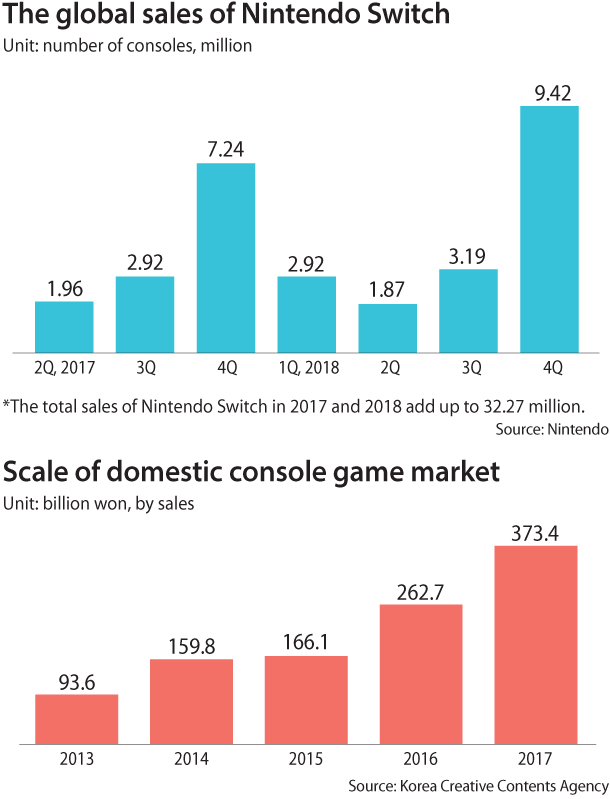
    Global sales of Switch from its introduction in March 2017 through late 2018 totaled 32.27 million units, according to a report from Nintendo. On average, 33.5 Switch consoles have been sold per minute. A total of 163.61 million Switch titles were bought during the same period.

    The Switch ended 2018 as the year’s best-selling hardware platform both in unit and in dollar sales terms, according to a report from NPD Group, a U.S.-based market-research company. Both in units and dollars, the Switch was the best-selling game since Sony PlayStation 4 in 2015.

    The Switch boom is evident in Korea, where consoles are not generally very popular. The product has been generating 51 percent of game sales at Emart, the main marketing channel for Switch.

    According to a report from Korea Creative Content Agency (Kocca), the size of the console game market in Korea grew by 42.2 percent from 2016 to 2017. Sales of Switch – which totaled more than 110,000 units in the first month of its release in Korea in December 2017 – and the rise of the related software sales were major contributors to the game market expansion, the report argues.
    Revival of Retro

    Nintendo, which was founded in 1889 as a playing-card company, most recently became an icon of innovation around year 2000 when it introduced Nintendo DS and Wii. Each sold more than 100 million units, and the strong sales in Korea led to the development of similar games locally.

    The success was short lived. The market began to change around 2010 as smartphone games started to develop and lead the market. In 2011, Nintendo experienced its first annual earnings loss since it was listed on the stock exchange in 1983.

    The company sought a rebound the following year with the Wii U, but only 13 million units were sold.

    Nintendo suffered losses for three years, and its presence in the console game market gradually waned with the dominance of the Sony PlayStation 4 and Microsoft’s Xbox. Nintendo’s share price dipped to as low as 8,060 yen ($73) from its November 2007 peak of 70,500 yen. The company’s weak performance continued until 2016, when Nintendo shook the game world with Pokemon Go, its wildly popular augmented-reality smartphone game.

    The comeback was confirmed with the release of Switch the following year.

    Popular with young and old

    Nintendo’s timing couldn’t have been better. It released Switch just as the newtro trend was gaining ground. Newtro, a portmanteau of new and retro, is reviving many long-dormant styles and products.

    The most popular titles in the early days of Switch – Super Mario Odyssey, Legend of Zelda and Pokemon: Let’s Go, Pikachu! – are the latest versions of classic games that people now in 30s and 40s used to enjoy when younger.

    “Switch looks very similar to the portable arcade games that people now in 30s and 40s first used in their childhood,” said researcher Jang Min-ji from Kocca. “As the generation that grew up with these games now has purchasing power, similar games are bought by people in that generation.”

    “Even younger people – those in their teens and 20s – who have never experienced these games, are finding Switch refreshing in that unlike smartphone and traditional console games, users can carry it around and play it while in bed, not to mention connect the games to television. Such charms of Switch have captivated people across age groups,” Jang said.

    The global newtro trend was evident at Consumer Electronics Show (CES), held in Las Vegas in early January. Though many people gathered to experience Sony’s state-of-the-art games with virtual reality and augmented reality, bigger crowds gathered at booths for classic games, like Street Fighter II and Double Dragon.

    “It has become a new trend for people in their 30s and 40s to reminisce about their past, while the younger generation fulfills their fascination for the newtro style,” said Kim Gyeong-geun, a merchandiser at a local toy seller, Toy Friends.

    Growing tired of mobile games

    Another key contributor to the growing demand for classic games is the gradual loss of interest in mobile games, which dominated the local market over the past several years. Players are growing tired of the free-to-play model, which is employed by the majority of mobile massively multiplayer online role-playing games (Mmorpg).

    With free-to-play mobile games, players can download the game either for free or at a low price, but they are compelled to spend more to improve the gaming experience.

    In a report on the success of Switch, Lee Taek-su from KB Research wrote, “In the past, most people did not agree with the idea of spending money on console game software that costs between 50,000 won [$44.40] and 60,000 won, since they could easily play mobile games for free or for around 1,000 won to 2,000 won. But as a growing number of players start to have the experience of spending much more cash on mobile games, their perceptions have started to change.”

    The diversity of games that could be interesting to people of different ages and gender, and the fact that these games can be enjoyed by multiple people at once through the connection of hardware, are few reasons Switch is gaining popularity.


  • LG U+ expected to acquire CJ Hello this week

    LG U+ expected to acquire CJ Hello this week

    LG U+’s plan to acquire cable TV company CJ Hello could be finalized as early as this week. Progress with the deal has been slow since Korea’s smallest mobile carrier first began considering the acquisition early last year. Industry sources said Monday that the deal is mostly finalized and, with a board meeting scheduled on Thursday, is likely to be concluded this week.

    With the acquisition, LG U+ will become the second-largest player in the domestic paid TV market. KT, with both an internet protocol TV (IPTV) service and satellite subsidiary KT Skylife, is currently the market leader.

    Paid TV services in Korea include cable TV, satellite TV and IPTV.

    LG U+ will likely acquire a 53.92 percent stake in CJ Hello from CJ’s entertainment arm CJ ENM. The cost is expected to be around a trillion won ($888.6 million).

    The acquisition would give the mobile carrier more negotiating power when acquiring or producing content. The carrier could also be in a strong position to lure CJ Hello’s 4.16 million subscribers, as of the first half of 2018, to its mobile service by offering favorable rates.

    LG U+ is already using its partnership with Netflix to attract more customers to its mobile and IPTV service.

    Once the mobile carrier decides to go ahead with the deal, it then needs to be approved by the Fair Trade Commission (FTC), the Ministry of Science and ICT and the Korea Communications Commission. In 2016 when SK Telecom tried to acquire CJ Hello, then CJ HelloVision, the deal fell through as the antitrust body disapproved on the grounds that the acquisition could hurt fair market competition.

    This time, though, FTC head Kim Sang-jo hinted during a recent interview that the commission would take a more positive stance regarding the deal considering the rapid changes in the media market. Kim questioned whether broadcasting and telecommunications can be considered completely separate in a quickly changing market.

    It is still to be seen whether LG U+ will more explicitly announce its intent to acquire CJ Hello and expand its paid TV services. The carrier is holding a press briefing for the launch of a new IPTV service targeting senior citizens in Seoul. Many questions are expected to focus on the acquisition deal and future IPTV strategy.

    Competitors KT and SK Telecom are also considering acquiring cable broadcasting companies to counter LG U+’s move. KT is reportedly interested in acquiring cable broadcasting company D’Live, which has a 6.45 percent share of the Korean paid TV market as of the first half of 2018. KT and KT Skylife control more than 30 percent of the market while CJ Hello owns 13 percent and LG U+ has 11.41 percent.

  • HMV saved by Sunrise Records, but some stores will close

    HMV saved by Sunrise Records, but some stores will close

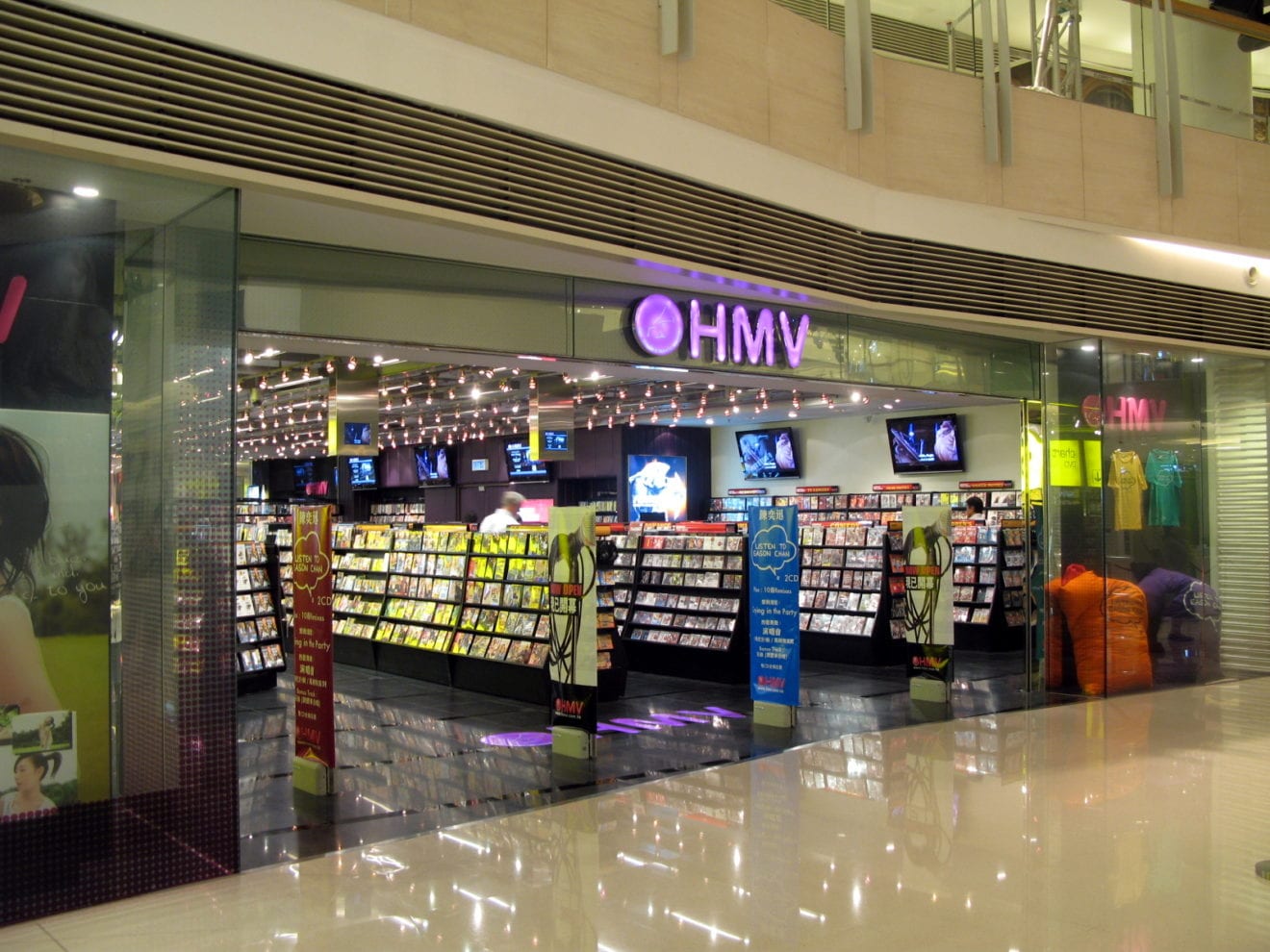
    Canadian firm Sunrise Records has emerged as the buyer of collapsed music chain HMV, beating competition including Sports Direct owner Mike Ashley. The firm will buy 100 stores out of administration, securing 1,487 jobs. But 27 stores will close, resulting in 455 redundancies. Sunrise Records chief executive Doug Putman said he was “delighted to acquire the most iconic music and entertainment business in the UK.”

    No price was given.

    Canadian entrepreneur Mr Putman, 34, bought the retail chain Sunrise Records in 2014. He previously bought HMV’s Canadian business in 2017, expanding his small chain into a national operation with 80 outlets.

    Mr Putman is also President of Everest Toys, the largest toys and games distribution company in North America. He said that HMV was a “fantastic, heritage brand”. He also said the chain would be looking to stock more vinyl records, in response to customer demand.

    HMV owner Hilco, which took the company out of its first administration in 2013, has blamed a “tsunami” of retail challenges for the latest collapse.

    These include business rate levels and the increasing use of streaming services to deliver music and movies.

    HMV sold 31% of all physical music in the UK in 2018 and 23% of all DVDs, with its market share growing month by month throughout the year.

    However, the music industry expects physical entertainment sales to shrink by another 17% this year.

    Will Wright, partner at KPMG and joint administrator said: “We are pleased to confirm this sale which, after a complex process, secures the continued trading of the majority of the business.

    “Our immediate concern is now to support those employees that have unfortunately been made redundant.”

  • Nintendo launches flagship store in Tokyo

    Nintendo launches flagship store in Tokyo

    Nintendo is opening a Tokyo flagship store, marking the iconic Japanese company’s first-ever domestic retail outlet. During Nintendo’s latest Corporate Management Briefing, the president of the Nintendo, Shuntaro Furukawa, announced the game company would be opening a store in the Japanese capital in 2019.

    The executive said that plans are set for Nintendo Toyko to be located in the tentatively named ‘Parco’, which is yet to be opened and will bow in the Shibuya district. The Nintendo store in Japan will have its own floor in a new department store and is targeted at teens and commuters.

    “We are hoping [the store] will be a new point of contact between consumers and Nintendo that a wide range of people, regardless of age, gender, or experience with games can enjoy,” explained Furukawa.

    The new store also hopes to attract shoppers to Nintendo Switch, which is struggling to draw a wider swath of users, according to Bloomberg. Last month, Nintendo cut its shipments forecast for the console, which can be used at home or on the go.

    “In addition to selling products such as video game systems, software and character-based merchandise, we plan to host events and offer opportunities to play games, and are preparing to make this shop a new base for communicating Nintendo information in Japan. We will announce further details on each of these initiatives at a later date.”

    Looking forward, Nintendo is also planning to open exhibits at Universal theme parks in Osaka, Orlando and Hollywood.

    Additionally, the company is looking to participate in more e-sports tournaments, where gamers get together and compete in stadiums

    Nintendo opened its first store in New York as Pokemon shop in 2005 in the city’s Rockefeller Centre, and has since rebranded as Nintendo New York.

    Nintendo Tokyo is scheduled to open in the fall of 2019.

  • The exhibition of Polaroid at National Museum of Singapore

    The exhibition of Polaroid at National Museum of Singapore

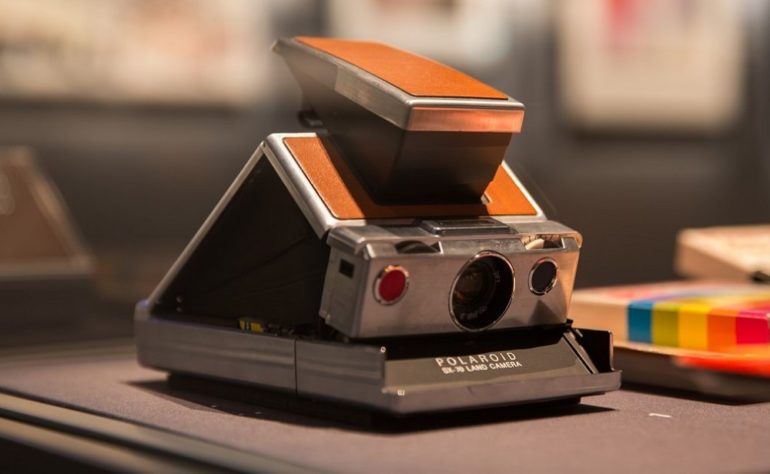
    Singapore mentions “Polaroid” and most people will think of the retro, palm-sized instant prints often stuck on refrigerators or posted in scrapbooks. Not many will associate it with artwork – much less the sort of art you might hang in a gallery. The exhibition of Polaroid in National Museum of Singapore features 10 large Polaroids which are each 20 by 24 inches (50cm by 60cm) – bigger than a sheet of A2-sized paper – and is on display at the National Museum of Singapore as part of an exhibition on the history of Polaroid photography and art using Polaroid, “In An Instant: Polaroid At The Intersection Of Art And Technology”.

    Also on display are about 160 other photographic artworks – in various sizes and styles – by artists such as Andy Warhol, Ansel Adams, David Hockney and others.

    This is the Asian debut of the exhibition, which has traveled in the United States and Europe and will return to North America next year.

    “In An Instant”, which is on until the end of March, starts off by charting the history of the Polaroid camera, the brainchild of American scientist Edwin H. Land.

    The exhibition also features a short film demonstrating the effect of polarised lenses. All the museumgoer can see is a white glare until he puts on a pair of Polaroid sunglasses.

    The Polaroid artefacts and artworks are on loan from the MIT Museum at the Massachusetts Institute of Technology, the WestLicht centre for photography in Vienna, The Polaroid Collection and various artists, as part of a collaboration between the National Museum of Singapore and the Foundation for the Exhibition of Photography.

    The Singapore edition of the exhibition ends with a series of video projections of “influencers” talking about what “in an instant” means to them.

    Among them are comedy site SGAG’s co-founder Karl Mak, YouTube star Jianhao Tan, YouTuber and comedienne Preetipls, socialite Jamie Chua, Instagram twins Yafiq and Yais Yusman, and Angie and David Sim from the lifestyle and travel blog Life’s Tiny Miracles.

    Visitors who want to take home a memento can head to the photo-booth and selfie station outside the exhibition space.

    The exhibition has also a ‘Silent Cinema’ section where visitors can watch a movie wearing Polaroid sunglasses.

  • Netflix streams its way into Korean hearts

    Netflix streams its way into Korean hearts

    Netflix viewership is growing faster than ever in Korea. According to mobile app tracker WiseApp on Tuesday, 1.27 million Android users in Korea used the Netflix app in December last year. That’s nearly four times, or 274 percent, more than the beginning of the year, when just 340,000 Android users had used the app in January 2018. Nearly half, or 41 percent, of Netflix users were in their 20s.

    WiseApp estimated that there are around 900,000 paying Netflix users across all devices in Korea who spend a monthly 11.7 billion won ($10.5 million) combined on the platform.

    Netflix users are allowed to share their account with family members and friends, so the number of paying customers is always lower than the number of users. Netflix also offers a one-month free trial, giving first-time users unlimited access to the platform for a limited time.

    Onlookers have suggested a variety of possible explanations for Netflix’s growing success in Korea and the rest of the world.

    Park Yong-hu, an IT expert who has previously worked for Kakao and Baedal Minjok operator Woowa Brothers, believes the absence of advertisements allows Netflix original content creators greater freedom to come up with fresh and innovative material.

    “Platforms that host advertisements often run into the problem of whether to prioritize users or advertisers first,” said Park. “For companies like Netflix, however, where the client and user are the same, they have the advantage of being able to clarify their vision.”

    Netflix confirmed that it doesn’t try to limit creators.

    “Netflix never requests creators change their stories,” added a spokesperson from Netflix in Korea. “Creators are guaranteed that they will create the content they want and Netflix just helps to realize their dream.”

    Convenience is another feature winning over users.

    From smart TVs to tablets, there are over 1,500 different types of smart devices that Netflix currently supports. The 14,500 won premium subscription option in Korea allows up to four people to use the platform at the same time, even in 4K ultra-high definition.

    With Netflix’s Smart Downloads, users don’t even have to bother downloading shows themselves. The smart feature automatically deletes an episode a user has finished watching and downloads the next one.

    Netflix’s recommendation system also attempts to offer users enough content that fits their preference so that they keep using the service.

    “Netflix does not gather user data by categorizing them into groups like ‘a male bachelor in his thirties living in Seoul,’ but we instead [suggest shows] by looking at the types of content that they have watched and the reviews they have left,” said a Netflix spokesperson.

    Netflix’s vast potential was most recently demonstrated by the tremendous success of its original film “Bird Box” starring Sandra Bullock. In a move untypical for the company, Netflix took to Twitter to reveal that 45 million users worldwide had streamed the post-apocalyptic hit within its first week of release last month.

    This year, the streaming platform is ambitiously trying to make its debut in the Korean drama scene. It has already confirmed the launch of several original Korean drama series with genres ranging from teen-romance to zombie-thriller, and started strong with the release of “Kingdom” last week, starring famous actors including Bae Doo-na of “Cloud Atlas.”

    Some believe it will be just a matter of time before Netflix becomes a force to be reckoned with in the domestic drama industry.

    “The threat Netflix is posing to Hollywood means that even production and distribution of video content cannot escape the currents of the fourth industrial revolution,” said Park.

  • Naver to open up TV service, take on YouTube

    Naver to open up TV service, take on YouTube

    Local IT giant Naver announced plans Thursday to make its Naver TV service an open platform where anybody can freely upload videos, pitting it in direct competition with YouTube. The company said it would apply the change during this year’s first half. Originally, only people with more than 300 subscribers on other video platforms were permitted to create a channel on Naver TV.

    Unlike YouTube, considered the playground of individual creators, most traffic at Naver TV is to come from short videos from TV shows uploaded by broadcasting or cable channels, like TvN or JTBC. Lowering the bar is intended to draw in the legions of individual creators who have begun to emerge in Korea over the last two years.

    “Naver TV was originally focused on offering video from TV for users that flow in via our search engine,” said a company spokesperson.

    “We gradually had small- or mid-sized studios upload web dramas or famous beauty creators joining our platform and by that experience we learned the patterns of how original content is consumed. Now we want to make it accessible to more creators.”

    Last week, Naver lowered the bar to 100 subscribers and simplified the process required to set up a channel, as a first step to earn feedback and find areas that need improvement before fully opening the door to everyone.

    As a strategy to boost users, Naver is devising a compensation system to reward creators according to their performance. Channels with more than 300 subscribers and whose videos were played for more than 300 hours will be offered the choice to roll advertisements.

    Naver CEO Han Seong-sook publicly stressed the importance of online videos multiple times last year, expressing a will to develop that sector.

    “The internet market is rapidly restructuring to be centered on videos – Naver will also invest more in line with this change,” she said in a conference call in July, pointing out how the younger generation no longer spends time on portal sites or social networks, but on video platforms.

    Naver’s traditional strengths are not in video but other services, such as its search engine, blogs and online communities. Regardless, the company has invested in its video services. Apart from Naver TV, its other main video service is V LIVE – a platform via which K-pop idols can host live streamed videos with fans. Around 70 to 80 percent of users at V LIVE are based overseas.

    “Instead of running a single platform like YouTube, our direction at the moment is to divide platforms according to usage and optimize the service that fits their respective purposes – V LIVE for fans and Naver TV for general creators,” said the Naver spokesman.

  • Korean Netflix shows target a global audience

    Korean Netflix shows target a global audience

    Ahead of the launch of Netflix’s first original Korean drama series today, executives from the streaming giant expressed confidence in the global popularity of Korean content at a press briefing in Seoul, Thursday. Kim Min-young, the director of content at Netflix in Korea, said that she expected to win over fans with the company’s first-ever original Korean drama series “Kingdom,” a highly-anticipated zombie series that launches on the streaming platform.

    “‘Kingdom’ will launch in 190 countries in 27 languages at the same time, with dubbing provided in 12 different languages,” Kim said.

    “We expect many users will want to watch it, as it can appeal to both people who like zombie thrillers or just Korean content … I believe in our creators and [the popularity] of Korean media, which is also the reason why Netflix launched Korea’s own content team in the country last year.”

    Before last May, the team that produced and licensed content to Netflix for the Korean market worked from Singapore at the company’s Asia-Pacific headquarters. Following the relocation, the Korean content team has been pursuing licensing and production activities more actively, working with domestic content producers like JTBC and Studio Dragon.

    Regarding original production in Korea, Kim said she benchmarks successful foreign Netflix original dramas like Spanish title “Elite” and Turkey’s “The Protector” that became huge hits with users across the world.

    “Our ultimate goal is to present entertainment to consumers, and from our experience, we found it necessary to give creators the freedom to tell the story they want to share,” said Kim.

    “As you can see with ‘Black Mirror: Bandersnatch,’ we will help producers to not be hindered from doing what they want because of technological limits.”

    “Black Mirror: Bandersnatch” is a choose-your-own-adventure film by Netflix that allows users to choose one of many action courses for the characters throughout the movie to determine how the plot progresses. Kim hinted that the impressive technological feats as shown via the interactive video could also be made possible in Netflix’s Korean programs.

    “We were also satisfied with the performance of our original entertainment program ‘Busted!,’ as reflected by our decision to produce a second season,” she said.

    The Netflix team also addressed concerns that Netflix provided limited service offerings and imposed unfair deals on its Korean partners.

    “Although we can’t provide all content available out there, we conduct analyses to discover what content users want,” Kim said. “But we have contents like ‘Friends,’ ‘Walking Dead’ and ‘Kim’s Convenience’ which users can’t access elsewhere.”

    In response to a rumored nine-to-one profit division between Netflix and Korean distributors like IPTV operator LG U+, Nigel Baptiste, director of partner engagement at Netflix, said that he could not “go into the specifics of what the deals are with our partners,” but the goal was to help “everyone in the ecosystem benefit.”

    The team did reassure users that subscription fees will not rise anytime soon in Korea.

    “We did increase prices in the U.S. … but we don’t have plans to do so right now [in Korea],” said the vice president of Asia-Pacific communications, Jessica Lee.

    Netflix is planning to release several new series in Korea this year – the first seasons of “Love Alarm,” “My First First Love,” “School Nurse Ahn Eun Young” and the second season of “Busted!”

    Mobile app research company WiseApp reported that some 900,000 Koreans used the Netflix mobile app on Android phones alone last September.

  • Xiqu Centre finally opens in Hong Kong

    Xiqu Centre finally opens in Hong Kong

    Hong Kong’s new performing arts venue dedicated to Xiqu (Chinese Opera), has just opened. Located on the Eastern edge of the West Kowloon Cultural District, at the junction of Canton Road and Austin Road, the Xiqu Centre is directly accessible from the Hong Kong West Kowloon Station and Austin MTR station, and easy to reach by public transport from all parts of Hong Kong.

    The building’s striking design, created by Revery Architecture (formerly Bing Thom Architects) and Ronald Lu & Partners, was inspired by traditional Chinese lanterns and blends traditional and contemporary elements to reflect the evolving nature of the art form.

    Stepping through the main entrance, shaped to resemble parted stage curtains, visitors are led directly into a lively atrium with a raised podium and space for presenting the rich and ancient culture of Chinese traditional theatre.

    The eight-storey building has a total area of 28,164 sq m and houses a Grand Theatre, accommodating 1,073 seats, a Tea House Theatre, with a capacity of up to 200 seats, eight professional studios and a seminar hall, all specially designed for different types of xiqu-related functions and activities.

    The design details of each of the facilities have also been created in response to the practical requirements and aesthetic features of the art form. A unique feature of the venue is the location of the Grand Theatre at the top of the building, which allows for a large open atrium below with space for exhibitions, stalls, and xiqu demonstrations and workshops.

    Carrie Lam Cheng Yuet-ngo, the Chief Executive of Hong Kong, gave a speech at the opening ceremony of Xiqu Centre. “The launch of Xiqu Centre is not only a significant international cultural event, but Hong Kong also takes it as a great honor and we all are very proud of it.”

    In fact, Chinese opera has been inscribed in the UNESCO Intangible Cultural Heritage Lists for a decade, Carrie Lam hopes the Xiqu Centres would help promote Hong Kong as an international arts hub and consolidate the city’s position in the development of Cantonese opera.