Retail News CRM

Tag: entertainment

  • Remodeled M&M’S World Shanghai reopened

    Remodeled M&M’S World Shanghai reopened

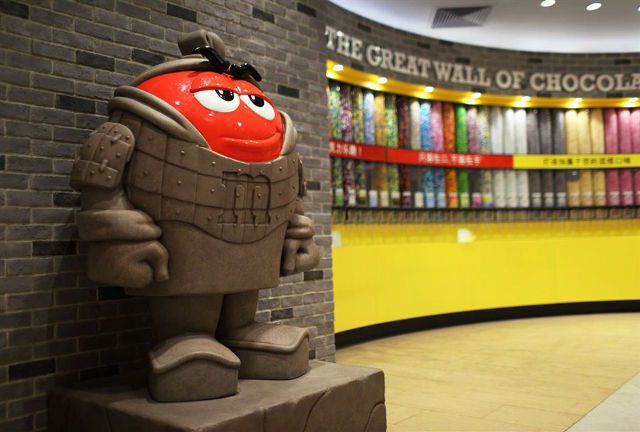
    M&Ms World Shanghai reopened yesterday in Shanghai Shimao International Plaza. The newly remodeled 1600sqm interactive store, which offers an immersive, personalised experience with the M&M brand to residents and tourists, remains the only one based in Asia.

    The store is part of the global M&Ms retail business, which includes My M&Ms’ e-commerce sites and a B2B channel in the US and Europe.

    The M&Ms World Shanghai experience store features a “Great Wall of Chocolate” made out of more than 1 million M&Ms, a personalised printer, and a device that scans customers to create a personalised M&Ms avatar. It also features an improved checkout experience that allows mobile payment options from Alipay, WeChat and Apple Pay.

  • Hamleys Japan in talk for theme park JV

    Hamleys Japan in talk for theme park JV

    Chinese-owned, British headquartered toy store chain Hamleys has entered the Japanese retail market, opening two theme-park styled outlets. Hamleys Japan is targeting 4 million visitors to each store within the first year, with a view to opening 30 stores in the territory over the next five years.

    The new stores have opened in Yokohama (at 32,300sqft) and Fukuoka (at 58,100sqft) in partnership with local video games firm Bandai Namco in a £300 million (US$381.7 million) venture. Each store features around 6000 products on sale and entertainment facilities such as merry-go-rounds, games corners and infant play spaces.

    Hamleys CEO Ralph Cunningham said Japan represents “an exciting and important market” and is key to Hamleys’ continued international growth strategy.

    “We look forward to bringing smiles to the faces of children and families all over Japan and delivering the unique Hamleys in-store experience to this fantastic market.”

  • First Sony Lounge opens in Malaysia

    First Sony Lounge opens in Malaysia

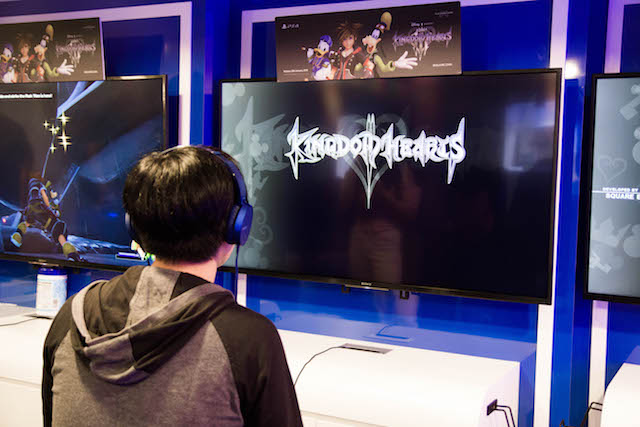
    Sony has opened its first Play Everything Lounge by PlayStation in Southeast Asia at Sunway Pyramid. The lounge, operated by Sony Interactive Entertainment’s local office, will be open until February 17. Sunway Malls and Theme Parks CEO HC Chan said he was honoured the mall has remained a mall-of-choice for experiences. “The partnership with Sony Interactive Entertainment signifies a true collaborative curation by two of the leading names of the industry. It is our privilege to work with a world-renowned gaming giant to bring another dimension of experiences for our shoppers. It is important for malls to go beyond conventions to stay relevant.”

    Sony’s regional head Hidetoshi Takigawa noted the strong performance of the PlayStation business in Malaysia, and said the Sunway Pyramid store is a means for the brand to engage with its local fans.

    Southeast Asia’s first PlayStation Experience was held in Kuala Lumpur last year.

    Gaming tournaments, community engagement activities and unreleased game trials are expected to be held in the space. A virtual reality area allows visitors to try Sony’s PlayStation VR gaming system for PlayStation 4.

    View the image of the lounge below (6 pictures) :

  • Genting sues The Walt Disney Co for cancelled theme park contract

    Genting sues The Walt Disney Co for cancelled theme park contract

    Genting Malaysia Bhd’s share price fell as much as 18.6% today on news that it is suing Twenty-First Century Fox Inc and The Walt Disney Co for more than US$1 billion (RM4.19 billion) for terminating their contract to develop a Fox-branded theme park at Resorts World Genting in Malaysia. The Fox theme park is a key selling point of the Malaysian casino resort group’s multi-billion ringgit Genting Integrated Tourism Plan.

    Genting Malaysia told Bursa Malaysia today it is suing Fox Entertainment Group, LLC, Twentieth-Century Fox Film Corp, FoxNext, LLC (collectively known as FOX), Twenty-First Century Fox, Inc (21CF) and The Walt Disney Co for the termination of a memorandum of agreement (MoA) relating to the theme park project.

    The Walt Disney Co is in the process of acquring Twenty-First Century Fox.

    Genting Malaysia was the most actively traded counter on the local stock market today, closing 16.7% lower at RM3.00 with some 276.3 million shares traded. It opened lower at RM3 and fell as much as 67 sen from its last adjusted closing price of RM3.60, to trade at a low of RM2.93.

    In a filing with Bursa Malaysia, Genting Malaysia said it has filed legal proceedings in the US against FOX, 21CF and Walt Disney, in response to a notice issued by FOX in which it terminated the MoA and claimed about US$46.2 million (about RM193.6 million) in accelerated payments.

    “Genting Malaysia denies that FOX had grounds to terminate the MoA, denies any liability resulting therefrom, and has pursued cause of action against FOX for breach of contract, and breach of the implied covenant of good faith and fair dealing, among others,” it said.

    The group has also pursued cause of action against Disney and 21CF for inducing breach of contract and for interference with contract.

    The group said it intends to fully enforce its rights under the MoA, claim for the cost of its investments and consequential and punitive damages that in total will exceed US$1 billion, and such other reliefs to be determined by the court.

    Genting Malaysia said the litigation is not expected to impact its current business operations. It said the validity of the causes of action as well as the availability and extent of Genting Malaysia’s damages cannot be ascertained at this juncture.

    To recap, Genting Malaysia entered into the MoA dated June 1, 2013 with Twentieth-Century Fox Licensing & Merchandising, a division of Fox Entertainment Group, Inc. Genting Malaysia was granted a licence to use certain intellectual property rights associated with Fox theatrical motion pictures in connection with the design, development, construction and operation of what was to be called the Twentieth-Century Fox World Theme Park. The MoA was subsequently amended on June 10, 2014 and June 9, 2017.

  • The Walt Disney Company appoints new Head of Consumer Products Commercialization

    The Walt Disney Company appoints new Head of Consumer Products Commercialization

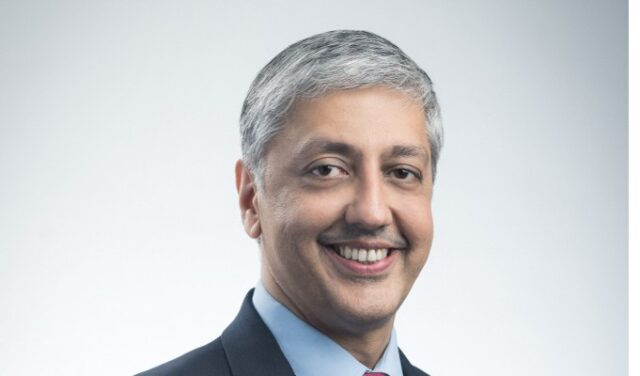
    The Walt Disney Company has announced the appointment of Mahesh Samat, Executive Vice President, Disney Consumer Products Commercialization for the Asia Pacific region. Reporting into Ken Potrock, President, Disney Consumer Products Commercialization, he takes on responsibility for the commercialization of Disney franchises across merchandise, publishing and licensed games throughout India, Southeast Asia, Greater China, Korea, Japan, Australia and New Zealand.

    Samat rejoined The Walt Disney Company in India in November 2016 and went on to integrate the Southeast Asia and India businesses to form The Walt Disney Company’s South Asia regional hub in September 2017. He led most of Disney’s integrated business units driving new strategies that are providing tremendous growth for global franchises and unilaterally creating new business opportunities for all Disney businesses. He previously led The Walt Disney Company’s India operations from 2008-2012.

    “The Asia Pacific region continues to provide immense opportunity for Disney products and experiences,” said Potrock. “I am confident that Mahesh’s proven leadership and steadfast focus on innovation and entrepreneurship will deliver dynamic growth across our brands and product categories.”

    “Disney products and experiences bring our stories and characters closer to fans every day. I am pleased to have the opportunity to lead this exceptional team to delight kids and families across these high growth Asian markets,” said Samat.

    With more than twenty-five years of experience in FMCG, Media and Healthcare across India, Asia-Pacific and Europe, Samat previously worked with Johnson & Johnson, Kellogg’s, Warner-Lambert/Parke-Davis and Boots India Limited. Between 2012 and 2016, he established the Epic Television Networks and its popular Hindi-language, The Epic Channel in India.

  • Vingroup to open casino in Pho Quoc Island

    Vingroup to open casino in Pho Quoc Island

    A Vingroup-invested firm has been allowed to include a casino in a hotel-amusement complex on Vietnam’s largest island Phu Quoc. The People’s Committee of Kien Giang Province announced that the Prime Minister has approved in principle the casino’s inclusion in a hotel-amusement being built on the southern province’s island. With the casino business, total investment in the complex will increase to VND50 trillion ($2.14 billion).

    The complex, which is under construction, is scheduled to start operating in 2021. Its main investor is the Phu Quoc Tourism Investment and Development Jsc, a company in which Vingroup, Vietnam’s largest private conglomerate, holds a 50 percent stake.

    The casino project is part of a pilot program that would allow Vietnamese citizens to gamble in casinos in the country for the first time.

    For decades, Vietnam has banned gambling as a social evil. Vietnamese were also prohibited from gambling in the few casinos that have been built in the country.

    Shifting its stance, the government has allowed citizens over 21 years old with a monthly income of at least VND10 million ($445) to gamble in local casinos from last March under a three-year pilot program. However, the casinos have to obtain approval from the government on a case-by-case basis to allow Vietnamese citizens to use their services.

    Vietnam’s average annual income was around $2,200 last year.

    There are fewer than 10 casinos in Vietnam, mostly smaller ones outside major cities. Their services are reserved exclusively for foreign passport holders.

  • LG U+ IPTVs get Netflix in Korea

    LG U+ IPTVs get Netflix in Korea

    Netflix content will be available on LG U+ internet protocol TVs (IPTV) today. Under an exclusive IPTV deal inked with LG U+, Netflix content, including Netflix Originals, will be aired through LG’s platform, the carrier said Wednesday.

    LG subscribers won’t have to replace their existing set-top boxes as they will be automatically upgraded, though services will be first offered to the 1.07 million users of LG’s latest set-top box, dubbed UHD2, and gradually rolled out to other set-top boxes.

    Considering Netflix offers over 22,000 movies and television shows, including its big-name original content like “House of Cards,” “Stranger Things” and “Orange Is the New Black,” this is a good chance for the smallest carrier in Korea to steal some subscribers.

    By next month, the carrier will also reform the user interface of its IPTV so users have easier access to Netflix content as well as its own kids’ content platform, dubbed “Kid’s World,” that is gaining popularity among customers in their 30s and 40s with children. LG is banking on both services for the further growth of its IPTV business, according to Song Gu-young, senior vice president and head of home and media business at LG U+.

    The revamped interface could look similar to the Netflix app. When a user selects a video, an image related to the video will fill up the whole screen and a preview will run automatically, which is similar to how video previews are played on the Netflix app.

    The partnership between LG U+ and Netflix is no surprise as the market has long been expecting the announcement, but what’s still not clear is whether the carrier will offer a phone plan centered on Netflix. Without a useful plan, existing users of Netflix might not feel the urge to migrate to LG just for the IPTV service because it would only mean they get better access to Netflix content on the LG platform, but for the same monthly fee.

    LG is reportedly planning to roll out phone plans with a Netflix discount, according to an industry source, but it might take some time as new plans need government approval.

    For the time being, LG U+ is giving out free three-month Netflix trials to new subscribers of its IPTV plans worth at least 15,400 won ($13.50) per month until the end of this year.

    Korea’s mobile carriers have shifted their focus to the IPTV business as sales from traditional mobile phone subscriptions faltered after the government pressured them to make monthly phone bills cheaper last year.

  • Hanoi revives $500 million horse racing, entertainment complex

    Hanoi revives $500 million horse racing, entertainment complex

    A $500 million complex including horse racing in Soc Son District is off the shelf after 10 years. Hanoi authorities have approved the addition of the long-delayed Soc Son multi-purpose entertainment complex and horse racecourse project to the city’s master plan on socio-economic development to 2020 with orientation until 2030.

    The total investment for this project is currently estimated at about $500 million. The project is expected to go into operation after 2021.

    The planned site is mostly agricultural land. Once put into operation, the project will employ an estimated 5,000 direct laborers and 20,000-25,000 indirect laborers, generating a relatively large, regular revenue for the city’ budget.

    The project, which will be built in a planned tourist area about 40 kilometers north of Hanoi, will add a high-quality tourism product to Soc Son District in particular and the capital in general, the city stated.

    According to Hanoi authorities’ data, the capital has received over 26 million visitors this year, including 5.7 million foreign visitors, which are a 9 percent and 16 percent increase compared to last year respectively.

    The project to build a horse racecourse in Hanoi was first researched in 1999, with the racecourse’s proposed location in the southern districts of Hoang Mai and Thanh Tri.

    However, as Vietnam’s legal framework for sports betting and horse racing was incomplete at the time, the city’s foreign partner eventually withdrew from the project.

    The project was then revived in 2007 when the travel company Hanoi Tourist and South Korea’s Global Consultant Network asked for the city’s permission to research it, and was told by the government that it would be approved once the legal framework for sports betting is completed.

    Vietnam’s legislative body, the National Assembly, approved a bill legalizing sports betting last year and the government earlier this year promulgated a decree regulating the sports-betting business, throwing open opportunities for foreign investors to build racecourses in the country.

    In addition to the racecourse in Hanoi, foreign firms are also said to be pursuing plans to build horse racecourses in the northern provinces of Bac Ninh, Vinh Phuc and in Ho Chi Minh City.

  • Number of Cinema Screens in Indonesia Expected to Double Over Next 3 Years

    Number of Cinema Screens in Indonesia Expected to Double Over Next 3 Years

    The head of the Creative Economy Agency, or Bekraf, said he expects the number of cinema screens in Indonesia to double over the next few years, amid growing interest in the national film industry.

    “We expect to see at least 3,000 screens – twice what we have today. This is because local films thrive in small towns, but that’s also where we face a lack of theaters,” Bekraf chairman Triawan Munaf said on the sidelines of the World Conference on Creative Economy in Nusa Dua, Bali, last week.

    According to the agency’s 2019 Creative Economy Outlook, there are currently nearly 1,700 screens across the country. Triawan expressed hope that this could be nearly doubled over the next three years.

    The report further states that film is currently the fastest-growing subsector of Indonesia’s creative economy.

    However, as imported films still drive demand among moviegoers, the industry must figure out how to get local films to compete with those from abroad in terms of screening and scheduling.

    Triawan said the national film industry is growing rapidly, as illustrated by the fact that 40 percent of films screened in the country are local.

    This year, teen drama “Dilan 1990” attracted more than 6.3 million viewers nationwide, making it the second best-selling Indonesian film of all time after the 2016 reboot of the popular 1980s comedy franchise, “Warkop DKI Reborn: Jangkrik Boss! Part 1,” which boasted more than 6.8 million viewers.

    The number of moviegoers in the country has meanwhile also increased to more than 42 million by 2017 from around 16 million in 2015.

    More screens in other parts of the country can therefore facilitate this growth, as 183 of Indonesia’s 488 theater complexes are located on Java Island, Bekraf said.

    Cineplex 21, CGV Cinemas and Cinemaxx currently dominate the movie theater industry in Indonesia with 1,003, 275 and 203 screens, respectively.

    In her speech at last week’s conference in Bali, Finance Minister Sri Mulyani Indrawati also highlighted the importance of more vocational training to support the creative economy, of which the film industry is part.

    Despite the large number of moviegoers, many of them are less enthusiastic about local films because there are limited choices in terms of storyline and variety, which shows that there is a need for more quality screenwriters.

    “Indonesia has huge potential when it comes to writers and screenwriters, and this is an area we must explore further,” the minister said.

    Sri Mulyani also said that she was keen to learn more about the creative economy and how she could assist in its development.

  • Fung Retailing boosts stake in reborn Toys R Us Asia

    Fung Retailing boosts stake in reborn Toys R Us Asia

    Fung Retailing has finally secured a deal to continue to operate the profitable Toys R Us Asia business. The privately owned Hong Kong business, which is separate to the listed Li & Fung, will boost its stake in Toys R Us Asia from 15 per cent to about 21 per cent, making it the retailer’s largest shareholder.

    The balance will be owned by Taj Noteholders representing a mixture of investment funds and financial institutions who have a stake in the collapsed parent company Toys R Us US.

    Toys R Us Asia has never been affected by the liquidation of the US business – it has been trading profitably under Fung Retailing direction and has even been expanding its store network while shops bearing the iconic banner have been closing in post part of the world. Last week it relaunched its store in Brunei.

    The new partnership between Fung Retailing and Taj Noteholders values the company at US$900 million.

    “This transaction is a significant step in separating the valuable and growing Toys “R” Us Asia operation from the rest of the business,” said an unidentified spokesman for Taj Noteholders in a statement.

    “The company’s growth prospects in Greater China, Japan and Southeast Asia are bright and we are excited about investing in and owning the company in partnership with Fung Retailing”.

    Pieter Schats, executive director of Fung Retailing, said that since introducing Toys R Us to Hong Kong in 1986, Fung Retailing has played an integral role in the successful growth and development of the business across Asia.

    “As a sign of the confidence we have in the management team and future success of Toys R Us in the region, we are pleased to increase our shareholding in the company, reflecting our commitment to support Toys R Us Asia in reaching new heights.”

    The company will continue to be led by its current president & CEO Andre Javes and his management team.

    Technology boost

    The new owners of Toys R Us Asia plan a “significant investment in technology” to boost the company’s infrastructure.

    “We are committed to remaining the leading specialty retailer of toy, education and baby products in Asia by driving innovation and quality through our products and services,” said Javes. “The conclusion of the sale process brings clarity to the company’s ownership and we look forward to strengthening and leveraging our partnerships with our vendors and commercial stakeholders. Our shareholders’ investment is a huge vote of confidence in our vision, our team and our winning model.”

    Toys R Us Asia operates more than 450 stores in Japan, Greater China and Southeast Asia, including Brunei, China, Hong Kong, Malaysia, Singapore, Taiwan and Thailand. It also licenses more than 85 stores in the Philippines and Macau.

  • Hyundai investing in U.S. drone company

    Hyundai investing in U.S. drone company

    Hyundai Motor, Korea’s largest carmaker by sales, said Thursday it has invested in a U.S. unmanned aerial vehicle (UAV) company to jointly develop new products. In the investment, Hyundai Motor and Top Flight Technologies will jointly seek business opportunities in the global high-end aerial drone market, the company said in a statement.

    “In addition to solving the challenges of longer-duration flight for quadcopters, Top Flight is developing the technologies needed to enable new solutions in aerial logistics and mapping which could be useful in Hyundai’s future business,” John Suh, vice president of Hyundai CRADLE in Silicon Valley, said in the statement.

    Hyundai CRADLE is Hyundai Motor’s corporate venture and open innovation business in the United States.

    “Hyundai’s investment in Top Flight confirms its commitment to autonomous vehicles and mobility solutions, whether on the road or in the air. We fully believe that Hyundai’s world-class assembly and automation capabilities will help spur the production and deployment of aerospace-grade UAVs, more efficiently than ever,” Top Flight Chief Executive Long Phan said in the statement.

    The U.S. start-up is unrivaled in the fields of cutting-edge unmanned aerial vehicles equipped with small-sized gasoline engines that can extend flight range by charging a battery, it said. Hyundai didn’t provide how much it has invested in the U.S. start-up.

    The global UAV market is expected to grow from $5.6 billion in 2016 to $12.2 billion in 2019 and to $22.1 billion in 2026, the statement said. As UAVs are mainly used for military purposes, there is big growth potential for the commercial drone market. At present, the drone delivery services market is in the early stages of development. The concept of drone delivery services began with Amazon in December 2013. The U.S. retailer said its drone service is designed to deliver packages to customers as quickly as possible using UAVs.

  • Toys R Us reopened in Brunei

    Toys R Us reopened in Brunei

    Toys R Us Brunei has relaunched its Mabohai Shopping Complex store. The reopening, after extensive redesign and renovation works, attracted long queues of shoppers hoping to pick up special deals promoting the event. Along with the reopening, the store has expanded its product range by 70 per cent.

    Toys R Us (Singapore) group country director Raymond Burt reassured customers the brand is “here to stay”.

    “We have been in Brunei for around six years and we have re-signed our lease here at Mabohai Shopping Complex. We have also reinvested in the store and spent quite a bit of money to bring the latest design of the market to the store. We have renovated the store with a layout that is segmented by age for children, to make it easier for customers to shop.

    “We have updated the design and signage as well as added elements of interactive play that we didn’t have before.”

    Toys R Us operates 67 stores in Asia and has 18 new stores planned for launch by the end of the year, the majority in China. It is part-owned by Fung Retailing and not affected – as yet – by the collapse of the company in the US.

  • Genting Malaysia will act to mitigate impact of higher casino licence fee, duties

    Genting Malaysia will act to mitigate impact of higher casino licence fee, duties

    Genting Malaysia Bhd is assessing the full implications of additional taxes announced in Budget 2019 and will take appropriate action to mitigate their impact. The action includes a review of its marketing expenditure as well as cost structure, it told the stock exchange.

    Genting Malaysia said it has been advised by the Finance Ministry that the annual casino licence fee will be revised from RM120 million to RM150 million and casino duties will be revised to up to 35% of gross collection.

    “The increase in casino duties represents a 10 percentage point increase over existing duty rates. The amendments will take effect from Jan 1, 2019,” it added.

    On Bursa Malaysia today, Genting Malaysia closed 3 sen or 0.83% higher at RM3.64 after hitting limit down on Monday.

  • Vietnam’s gaming firm profits fall 52 pct in 9 months

    Vietnam’s gaming firm profits fall 52 pct in 9 months

    Vietnamese online gaming giant VNG has reported Jan-Sept 2018 profits of VND152 billion ($6.5 million), a 52 percent year-on-year slump. The company has said in its third-quarter financial statement that higher expenditures have eaten into its profits.

    Selling and administrative expenses of VND853 billion ($36.7 million) and VND382 billion ($16.44 million) respectively in the nine-month period marked a 72 percent and 27 percent year-on-year surge.

    At its recent annual meeting, the company’s management board had predicted a sharp drop in profits compared to previous year as the company wanted to focus resources on investment in strategic products and diversify operations.

    The company focuses in four main areas: e-wallet, mobile product development, ecosystem building, and e-commerce.

    VNG has set a revenue target of over VND5 trillion (more than $215 million) for this year, 17 percent higher than in 2017.

    However, after-tax profit is expected to only reach VND549 billion ($23.62 million) compared to VND938 billion ($40.36 million) in 2017.

    VNG, which used to be known as VinaGame, also owns major news site Zing, popular music site Zing MP3, instant messaging app Zalo, and e-commerce site Tiki.

    Tiki, VNG’s largest investment in e-commerce, continues to suffer increasing losses. In the first half of this year, Tiki’s losses of VND102 billion (nearly $4.39 million) were more than double the same period last year.

    The cumulative loss of this e-commerce site has reached nearly VND600 billion (about $25.82 million) after seven years of operation, beginning in 2010.

  • CGV to boost its presence in Vietnamese cinema market

    CGV to boost its presence in Vietnamese cinema market

    CJ CGV Vietnam Holdings said Friday it will further expand its presence in Vietnam by maximizing funds from its planned listing in Korea this month. The cinema chain based in Vietnam is scheduled to go public on Seoul’s main Kospi bourse on Nov. 16. It plans to issue 5.71 million shares, with the share price to be set between 18,900 won ($16.80) and 23,100 won, according to the firm and the bourse operator, Korea Exchange.

    “We find great potential in the Vietnamese market, as its population is approaching 100 million and its income and domestic demand have been on a rise, but the entertainment market has not been developed,” chief Shim Jun-beom told reporters.

    Wholly owned by CJ CGV, Korea’s largest multiplex cinema chain, CJ CGV Vietnam Holdings has operated the Vietnamese chain through its subsidiary CJ CGV Vietnam since 2011.

    It now leads the market there with 347 screens at 57 cinemas. In terms of film distribution and advertisement, CJ CGV also occupies the top spot.

    “We expect our market share to grow from the current level of 41 percent to around 60 percent in five years,” he added.

    Last year, sales of the holding firm came to 128.3 billion won, up 22.6 percent from the previous year, and its operating profit rose 4.8 percent on-year to 11.4 billion won.

    It has selected Hanwha Investment & Securities and Shinhan Investment Corporation as its lead managers for the IPO.

    In July, CJ CGV CEO Seo Jung said that the company aims to increase the number of its screens around the world to 10,000 in 11 countries by 2020.

    Currently, the multiplex chain, owned by the food and entertainment conglomerate CJ, is the world’s fifth-largest cinema chain with 3,459 screens around the world.