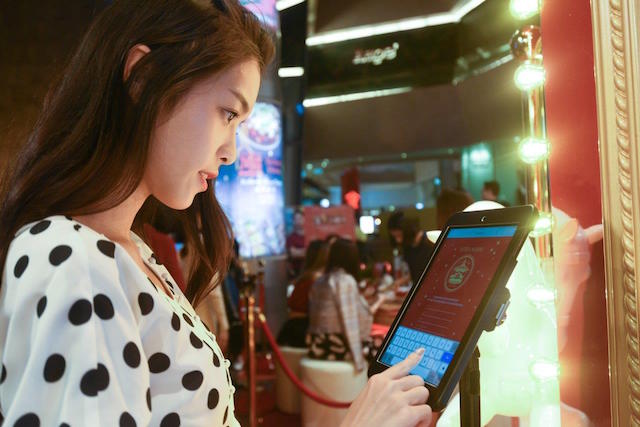
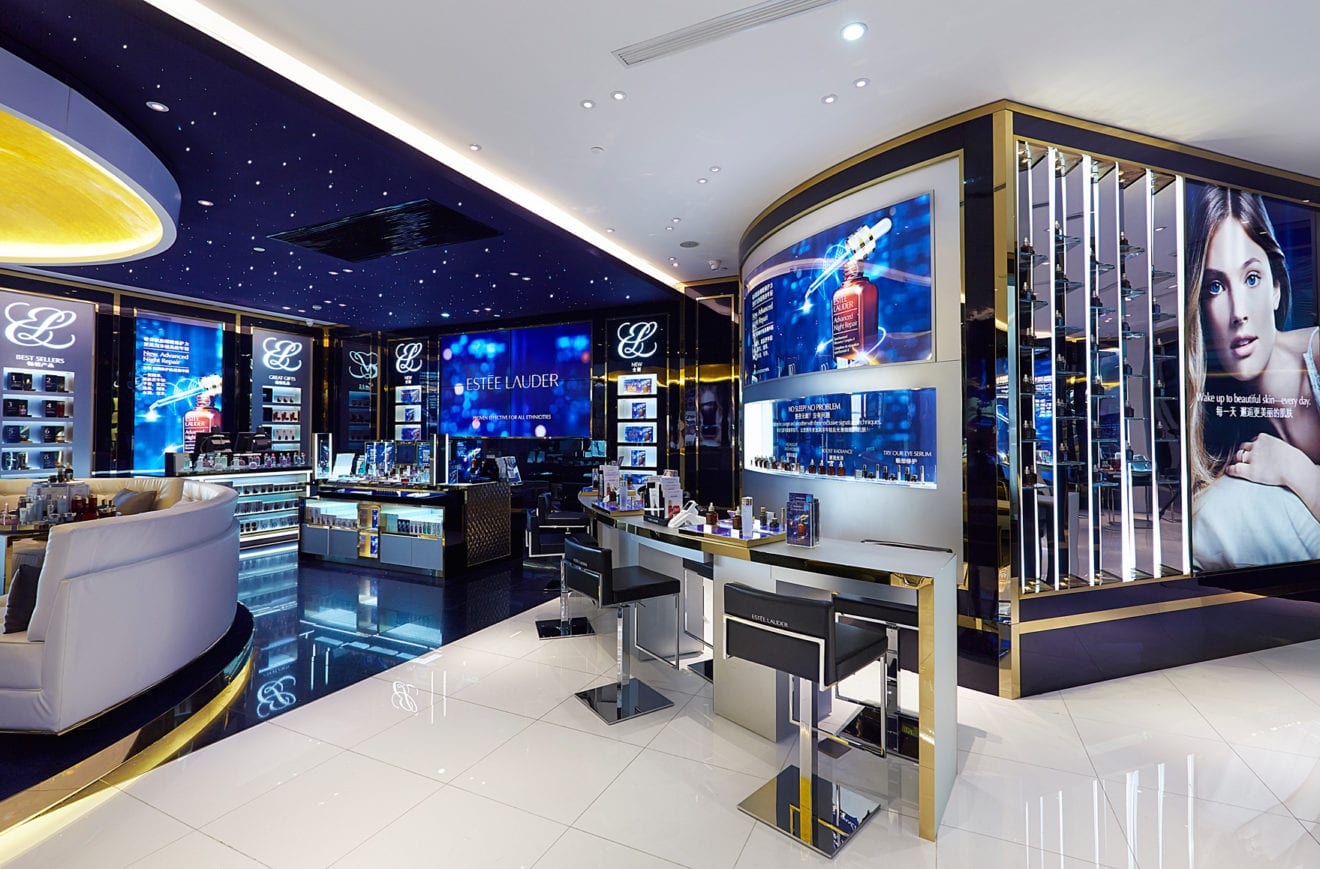
International skincare and beauty firm Estee Lauder has featured AI technology in its Estee Wonderland Christmas campaign in Hong Kong.
The Quantum Human technology is an automated AI scan-to-avatar system that makes the customer the hero or heroine in their own virtual fairy tale.
The carousel-themed Estee Wonderland promotion also features pop-up counters, where visitors can take a “magical carousel ride” into a favourite childhood fairytale as their avatars travel through time in a 22-second virtual reality movie.
The technology is the brainchild of eight years of research and development. It uses expertise previously reserved for Hollywood productions to create virtual characters. The avatar automation process takes only a second.
Unlike 3D scanning, where data cannot be used in media other than 3D printing, the Quantum Human technology enables true automation of the virtual identity creation en masse in full detail. As opposed to the month-long manual process, Quantum Human brings 3D avatars to life in minutes – 10,000 times faster than the manual process – making it viable for a broad spectrum of uses.
The promotion has finished at Estee’s Langham Place store before moving to New Town Plaza, Sha Tin from November 10-18 and Ocean Terminal at Harbour City from November 26 to December 4.
Cosmetics giant Estee Lauder says it achieved sales growth in every global market last financial year, led by strong double-digit increases in China and Hong Kong.
Every single category posted growth as well.
Globally, Estee Lauder sales reached $13.68 billion, a 16 per cent increase on last year.
Operating income of $2.05 billion, was up 21 per cent from the prior year, while net earnings of $1.11 billion, was down 11 per cent.
President and CEO Fabrizio Freda said the results reflect, in part, the company’s strategy to drive growth by targeting its investments to shifts in consumer and market dynamics across product categories, geographic regions, brands and distribution channels. That strategy positioned the company well for the resurgence in global prestige skin care growth as well as the strong increase in demand among Chinese consumers.
“Sales climbed in virtually all our brands and we hit milestones along the way. Among the top four brands, our flagship Estee Lauder brand achieved record global sales and grew 22 per cent in constant currency, demonstrating the amazing equity of the brand. La Mer became the fourth brand in our portfolio to contribute well over $1 billion in net sales, and we increased sales at Mac and Clinique globally.”
He said product innovation and creativity were strong across brands and boosting investment in digital advertising helped accelerate sales growth.
Freda concluded: “In fiscal 2019, we will continue to create products that appeal to a more diverse and growing middle class around the world.”
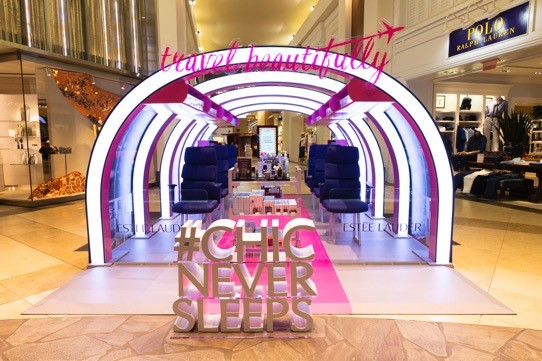
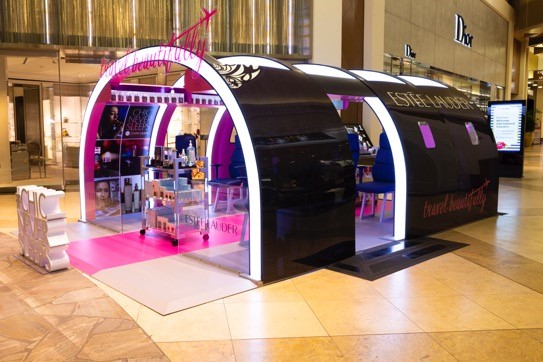
DFS Group, the world’s leading luxury travel retailer, and Estée Lauder are inviting fans to travel beautifully this May with the launch of the exclusive Chic Never Sleeps campaign.
Inspired by travelers’ desire to look their best while enjoying the best in life, the Chic Never Sleeps campaign tells the story of two young friends, Natalie and Elise, who share a love of travel and use the Estée Lauder “Beautiful Skin Travel Collection” to stay rehydrated and refreshed. Available exclusively at DFS stores until May 31, the “Beautiful Skin Travel Collection” features Estée Lauder’s beauty essentials created especially for traveling millennials.
The new collection of Estée Lauder’s best sellers includes Advanced Night Repair Synchronized Recovery Complex II, the Advanced Night Repair Eye Synchronized Complex II and the Revitalizing Supreme + Global Anti-Aging Cell Power Soft Crème, all now available as a DFS travel set.
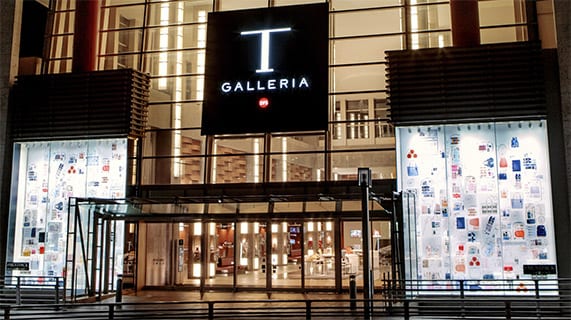
Customers can share their own Chic Never Sleeps look at exclusive pop-ups when visiting T Galleria by DFS, Hong Kong, Canton Road, T Galleria by DFS, Macau, City of Dreams and T Galleria by DFS, Hawaii. Designed to mirror a luxury in-flight experience, the Chic Never Sleeps pop-ups feature a suite of beauty essential services to supercharge your skincare and makeup looks when you fly. Shoppers can also immerse themselves in the campaign with a 360-degree localized photo booth so they can share their Chic Never Sleeps look on social media from each destination.
For added digital fun in store, at T Galleria by DFS, Hawaii, T Galleria by DFS, Hong Kong, Canton Road, T Galleria Beauty by DFS Hong Kong, Causeway Bay, T Galleria by DFS, Singapore, and DFS, Los Angeles International Airport, fans can virtually try-on their favorite Pure Color Love lipstick or discover the best shade for that destination using Estée Lauder’s augmented reality program, YouCam Makeup X Estée Lauder.
Discover the Chic Never Sleeps campaign and the DFS exclusive “Beautiful Skin Travel Collection” at the following DFS stores until May 31:
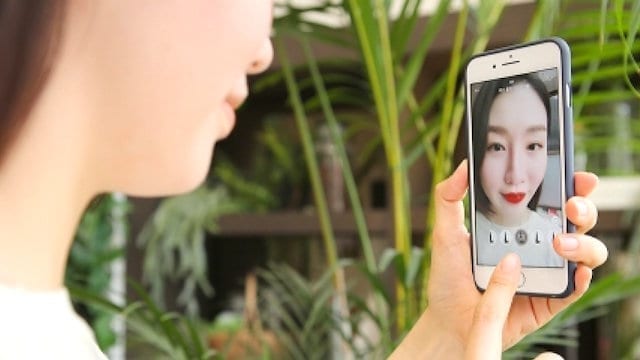
Hyundai Department Store’s online mall has launched an augmented reality (AR) service so its customers can virtually try on make-up products.
It covers more than 20 products from eight beauty brands, including Benefit, Estee Lauder and Shu Uemura. Using an AR image of their face, customers can try on different colour variations. Hyundai says it plans to expand the number of brands to 20.
“With the virtual make-up service, customers can simply choose items through our app,” says the retailer.
On its website or app, cosmetics products offering the virtual service appear with a camera sticker on the product page. One click leads the user to the Makeup Plus app, which uses a live video feed to enable customers to see how the product would look on their face from different angles.
The Makeup Plus virtual make-up app has been downloaded more than 200 million times since its launch in 2015. In Korea alone, the app is used by 500,000 people each month. It was developed by Chinese tech company Meitu.
“Customers of online shopping malls want fun services and products rather than making a purchase 100 to 200 won cheaper,” says Hyundai Department Store’s e-commerce executive Lee Hee-jun. “We plan to use thehyundai.com to create new shopping experiences that combine offline retail and IT.”
Cosmetics giant Estee Lauder says strong sales in Asia underpinned a solid 18 per cent increase in sales in the latest quarter, from US$2.86 billion to $3.37 billion.
Net earnings surged 25 per cent to $372 million as Asian consumers gravitated towards more expensive brands in the company’s portfolio, especially Tom Ford and La Mer.
The company said all of its brands showed sales growth in Asia, with China, Hong Kong, Taiwan and the Philippines the strongest-performing markets.
Fabrizio Freda, president and CEO said the company expects “an outstanding fiscal year”.
“Many areas of our business that contributed to our strong first-half results continued to thrive in our third quarter. Among our multiple engines of growth, travel retail, online and Asia again were standouts, and we experienced strong momentum in other high growth channels and markets.”
Solid growth in Asia Pacific, including in Australia, has helped cosmetics giant Estee Lauder deliver an 18 per cent increase in third quarter sales, ahead of Wall Street estimates.
Delivering its financials for the quarter ended 31 March in the US on Wednesday, Estee Lauder said “solid sales increases” in Australia, Japan and Thailand, alongside double-digit sales growth in China, drove a 30 per cent increase in net sales from Asia Pacific to US$773 million.
Asia Pacific operating income was up 57 per cent to US$179 million, offsetting a 62 per cent fall in American earnings to deliver the company a total 16 per cent increase in operating income to US$497 million for the period.
Declining retail traffic weighed on Estee Lauder’s US-based bricks-and-mortar stores, but momentum in Asia Pacific has buoyed the business, which expects full year revenue to increase by 15 – 16 per cent, slightly higher than market consensus forecasts.
President and chief executive Fabrizio Freda said it was an “excellent” quarter for the business in what he expects will be an “outstanding fiscal year”.
“Among our multiple engines of growth, travel retail, online and Asia again were standouts, and we experienced strong momentum in other high growth channels and markets,” he said.
“Our performance this quarter reflected robust global demand across our portfolio, with virtually all our brands posting sales growth.”
Asian skincare sales and fragrance were standouts for the business, offsetting operating losses in make-up and relatively flat growth in haircare products during the quarter.
The company’s MAC makeup brand performed particularly well in Asia Pacific during the quarter, while La Mer and Estee Lauder drove growth in skincare.
A shift by brands to a New Retail model is imperative to remain relevant and competitive in China, according to a joint report from AliResearch and Bain & Co.
The report, the most complete to date, offers a look at the blueprint for how companies and brands can seamlessly meld their online and offline channels, providing a better customer experience and making their own operations more efficient.
It notes the challenge laid out by Alibaba Group CEO Daniel Zhang in a letter to investors, whereby companies need to tap big data analytics to redefine the core of retail – consumers, merchandise and stores – as well as the ties among them, to upgrade formats and create new retail occasions. And it cites a list of brands, including Mondelez, Friso, Estee Lauder and Bestseller, as “leading the charge to shape tomorrow’s retailing.”
A fundamental change in thinking by companies and brands needs to happen with respect to the customer, viewing them “in the role of co-producers,” the report said. More than just identifying target consumers and their needs, more-comprehensive and dynamic profiles allow brands to find “ways to stimulate consumer needs, identifying look-alike consumers and turning consumers into brand ambassadors who effectively co-create the brand.”
At the same time, products morph from mere commodities to becoming part of the consumption process and consumer experience. In the world of New Retail, products and delivery are inspired by consumer data and they’re highly personalized. Moreover, with a fully integrated, omnichannel experience, it’s no longer about simply spending time in an online or offline store. It’s about consumers shopping while enjoying content or spending time on social networks, the report said.
“The best brands are determining how to integrate products with the overall experience of not only shopping, but learning about a product, using it and recommending it,” the report said.
In all, the report highlights six steps “winning brands” are taking “to reshape the future and make the most of New Retail.” They are:
Identifying new governance principals for a customer-centric model
Developing new flexibility and efficiency in R&D and supply chains
Reimagining marketing and consumer management
Modernising route-to-market and retail formats
Transforming the organisation and operating model for digital
Investing in new technology development.
The 24-page report covers each step in detail and offers case studies of the above-mentioned and other brands in their quest to reimagine and redefine their business through New Retail.
While the report’s focus is on China, it telescopes outward and concludes that the changes Jack Ma predicted when he coined the “New Retail” term in 2016 “are arriving so swiftly and dramatically that each month seems to bring with it a big, new preview of what retailing will look like everywhere, as China sets a pace for the rest of the world.”
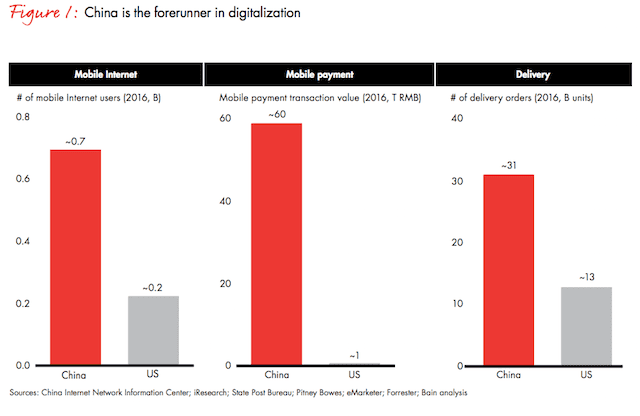
New Retail in China has already taken hold in numerous sectors, transforming small, disparate shops and businesses into “order-and-delivery stations for e-commerce.” Food-delivery platform Meituan, for example, fulfills more than 18 million orders a day. And China is well ahead of other countries, such as the US, with 60 times more mobile payments.
“Wherever retailing is headed, China is already there,” the report said. “For brands hoping to sell in China, survival means moving equally fast to capture this future ahead of competitors, both incumbents and digitally savvy upstarts. It will not be enough merely to keep up. Brands will be required to get ahead and help shape the vast changes, even as they completely overhaul the rules of engagement.”
That means adopting a big-data-based approach to business, along with a new type of customer-centric experience that involves much-higher levels of engagement and personalisation than ever before. Businesses, themselves, need to erase any existing cross-unit barriers, investing in the technology and process redesign to make that happen, as well as changing their mindset.
The results for brands that get it right are both clear and gratifying. Citing a case study from Mondelez, the report delves into what happened when the cookie company focused on customisation for Tmall’s Super Brand Day 2017. Its goal was to make Oreos more popular among teenagers.
To do so, Mondelez partnered with third-party vendors and Tmall to create, launch and market a music box that played tunes when an Oreo cookie was placed on a turntable-like device. Taking a bite of the cookie and putting it back on the turntable changed the tune. Consumers could record their own voices on the music box and decorate it, customising it by scanning a QR code. Relying on a flexible supply chain, Mondelez brought the music box to market in just seven days, rather than a more-traditional two to three months.
“It has been a New Retail success story,” the report said. “The singing biscuits generated 80 times more sales on Mondelez’s site than normal, with 90 per cent of the purchases made by new consumers.”
Brands need to act now to adapt to a New Retail reality, though the changes they make to their operating models and the introduction of new capabilities won’t necessarily bear fruit right away.
“New Retail is a work in progress that will require brands to constantly refine and reinvent themselves for new occasions, new formats and the steady flow of new ideas that will define retailing tomorrow,” the report concluded.
You can read the full AliResearch/Bain report here.
Tmall will this year work with top beauty brands such as Estee Lauder and Lancome to help them surpass RMB 1 billion (US$157.9 million) in annual sales on the platform.
The increased focus on the beauty sector will also see Tmall deliver an updated suite of New Retail solutions so that all merchants can better serve Chinese consumers, the Alibaba Group-owned B2C shopping site says.
Tmall plans to partner closely with about 10 beauty brands in particular, also including SK-II and Olay, to help them break that sales threshold. New Retail initiatives include a new “try-before-you-buy” feature, where users pay a 10 per cent deposit to test a product with the promise of a simpler and faster refund process.
“Our partnership with brands will cover every corner from online to offline,” Tmall president Jet Jing said. “We will be consistently involved in daily operations ranging from product innovation, brand building, channel management, supply chain to customer operations.”
Tmall Supermarket would also expand its one-hour delivery service to more customers, as faster service is also a part of New Retail, Jing said. However, the biggest changes won’t come until the 11.11 Global Shopping Festival, which is typically when Alibaba rolls out its New Retail initiatives.
The initiatives were announced during the Tmall Beauty Awards in Shanghai, where more than 1000 beauty professionals, from both international and home-grown brands, gathered for the annual event. This year, Estee Lauder, SK-II, Giorgio Armani Beauty and Givenchy each took away a “Super Brands Award,” for their outstanding performance in brand influence, marketing creativity and consumer engagement. Newcomer Givenchy on March 1 broke the single-day sales record, selling more than 58,000 lipsticks and generating over RMB 16 million – all in the first 12 hours of the day.
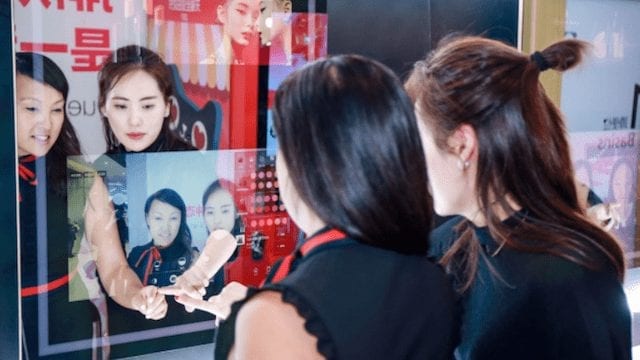
Since launching in 2015, the awards largely have spotlighted New Retail-driven innovations. Featured technology at this year’s awards included the “Cloud Shelf” and the latest iteration of the augmented reality-powered “Magic Mirror,” which allows users to virtually try on new hairstyles, lipstick, eyeshadow and blush. Tmall said it would partner with with French cosmetics company L’Oreal to install Magic Mirrors in 50 of the beauty giant’s physical stores in China.
Tmall hosts more than 3000 beauty brands on its platform, according to a report released by Tmall and Chinese research firm CBNData last year. Some of the newest entrants include LVMH-owned Givenchy, L’Oreal’s Giorgio Armani Beauty and Estee Lauder’s Darphin.
“After two years of very successful acceleration in China, we felt this is the right timing to join Tmall to push artistry and premium-ness of the brand,” said Andrea Yann, GM of the China market at Giorgio Armani Beauty. “Our plan is really to understand from [Alibaba’s] database what are the main beauty concerns of Chinese women to solve their beauty issues, be very personalised still being [seen as] very artistry and premium.”
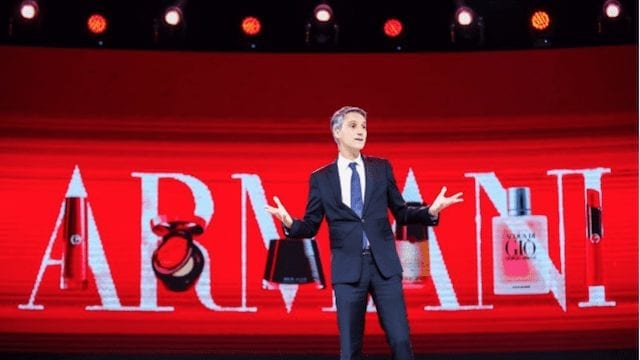
Andrea Yann, GM of the China market at Giorgio Armani Beauty, speaks on stage.
Younger more focused on beauty
According to a report released by Tmall and market research consultancy Kantar, what they want is a more elaborate skincare regimen. Thirty-five per cent of respondents said they have added more steps to their beauty routines, and therefore are spending more on skincare products and cosmetics. Tmall attributed 53 per cent of the sales of beauty products on Tmall to consumers making more purchases per person.
Beauty consumers in China – the world’s largest and fastest-growing beauty market at $22 billion – are also becoming younger than ever, the report noted. In 2017, users born after 1990 made up over 40 per cent of shoppers on Tmall Global, the site’s cross-border e-commerce channel, overtaking those born in the 1980s as the main consumption force on Tmall Global, the site’s cross-border e-commerce channel.
Consumers born after 1990 like to try new products from new brands and less familiar origin countries, the report said.
Embracing the new
“In China, there’s more willingness to try new products at a faster rate than what you would see in different markets,” said Danielle Bailey, head of Asia Pacific research at digital agency L2.
“It’s not that [Chinese beauty consumers] are less loyal, but their desire to explore is much higher,” she said. “This makes it more challenging for brands to sell to the market, but also creates new opportunities.”
Tmall’s latest report also showed momentum for homegrown brands, particularly for skincare, where they accounted for 56 per cent of sales last year – up from 54 per cent in 2016. However, foreign brands still dominate the cosmetics category with 56 per cent of total makeup sales.
Chinese brands are trying to boost their profiles by launching new prestige product lines or creating new products within an existing line, said Bailey. “It will be interesting to see if local brands can successfully transition to that space. It’s still a bit unclear because Western brands tend to be associated with better quality,” she added.
From a product development standpoint, the pace of innovation in Asia has forced brands in the West to shrink development timelines to stay relevant, said Bailey. Where Western companies may take two years to release a product,” he said, “in Korea, some brands are launching new product every three months.”
Time-to-market is indeed very important for beauty brands, said Ye Guohui, GM of Tmall’s new retail division.
“Conducting market research alone can be very time-consuming, taking up to over a year,” he said. “But brands in China can leverage Alibaba’s data capacities to really shorten that timeline, and accelerate product development.”
To celebrate Lunar New Year and the arrival of the Year of the Dog, luxury travel retailer DFS Group will offer special promotions and interactive activities at certain T Galleria and DFS stores worldwide next month.
There will also be exclusive offers from the group’s Give Joy Together gift guide.
In-store activities will include a Pokemon Go-inspired game featuring the DFS Lunar New Year dog character Lolo. This will be available at T Galleria by DFS, Hong Kong, Canton Road; T Galleria Beauty by DFS, Hong Kong, Causeway Bay; and T Galleria by DFS, Angkor. It will also be at outlets in Hawaii and Sydney.
Other activities include a Fortune Tree and Wishing Tree with lucky prize envelopes, and a personalised charm giveaway set for customers taking advantage of Give Joy Together promotions.
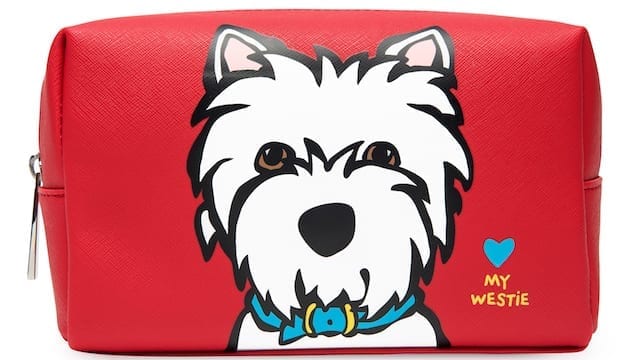
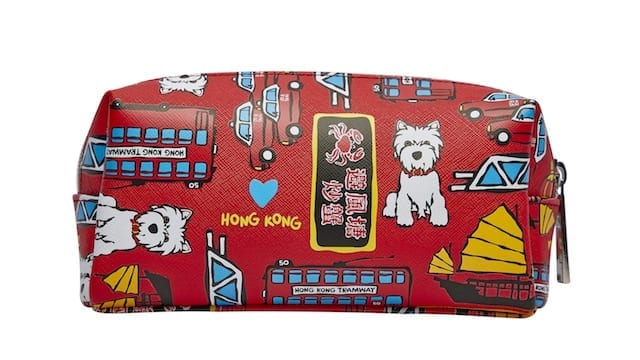
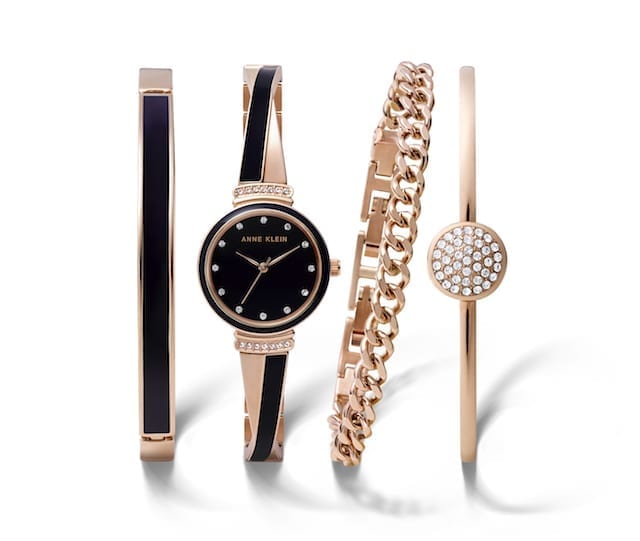
Exclusive products for the month include: Anne Klein Blush women’s ceramic watch with Swarovski crystals; Bulgari Serpenti Twist Your Time, with either mother-of-pearl or red dial; Emporio Armani Connected touchscreen smartwatch; Estee Lauder limited-edition Pure Color Envy Sculpting Eye Shadow & Lipstick; Hamilton’s Ventura Elvis 80 automatic men’s watch with a complimentary exclusive Elvis Presley tote bag; Marc Jacobs exclusive tote bag; Marc Tetro Hong Kong Pug cosmetic bag and Westie tote bag; Swarovski Haves bracelet, pendant and earrings; and Tiffany & Co Keys Fleur de Lis Key and Keys Petals pendants.
Using Perfect Corp’s YouCam, Estee Lauder has introduced mobile-based AR training for its beauty advisers internationally.
Its ART (augmented reality training) is the world’s first such education program. Using interactive live streaming, it allows the company’s more than 17,000 beauty advisers to engage in real-time training and product briefings via their mobile devices.
Beauty advisers will be able to interact with instructors, virtually try featured looks, watch presentations and ask questions.
Estee Lauder will also be able to track attendance, engagement and overall performance of its trainers and participants.
“We believe this is a turning point in beauty education,” says Estee Lauder global brand president Stephane de La Faverie.
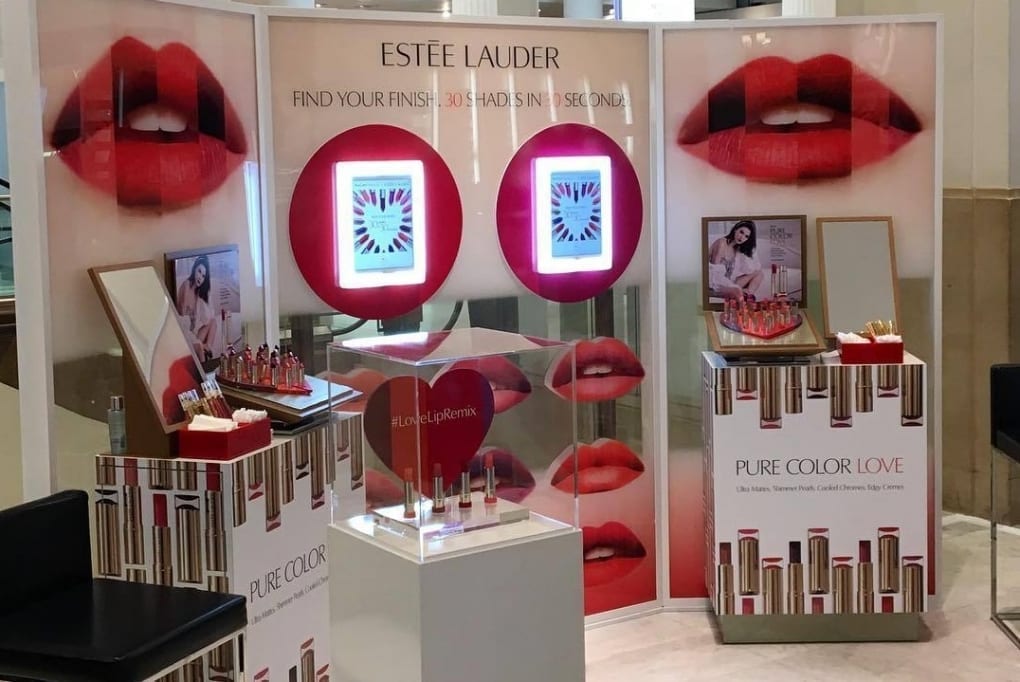
The training initiative builds on two other technology projects launched as a result of the Estee Lauder-YouCam partnership. In April, Estee Lauder used YouCam for the launch of Pure Color Love lipstick, allowing customers to virtually try all 30 shades in 30 seconds. It has since rolled out Virtual Try On on more than 800 devices in stores and on the YouCam app for its global makeup franchises.
This month, Estee Lauder introduced YouCam “Look Transfer” technology as part of an influencer launch event for Pure Color Envy Paint-On Liquid Lip Color. The technology recognises the makeup shades used on models in an advertising campaign, allowing consumers to recreate the model’s look via Virtual Try-On. This will debut in stores and through the app next year.
The YouCam Makeup app can be downloaded free from the App Store and Google Play.
Led by double-digit growth in China and Hong Kong, Asia/Pacific sales increased sharply for Estee Lauder Companies for its first quarter to the end of September.
It says the higher sales in China reflected strong gains for every brand except designer fragrances. Estee Lauder, Mac, La Mer, Tom Ford and Jo Malone led the sales growth.
Sales benefitted, in part, from continued demand for makeup products, an acceleration in skincare sales and targeted expansion of consumer reach.
Hong Kong’s increased sales reflected solid domestic growth and a rise in tourism. Growth was primarily driven by Estée Lauder, La Mer and Mac.
Operating performance was lower in Japan.
Overall, the company achieved net sales of $3.27 billion, up 14 per cent on the same period last year.
Incremental sales from the company’s acquisitions of Becca and Too Faced contributed about four points of reported sales growth. Net earnings rose 45 per cent to $427 million.
“Building on the global momentum of the past fiscal year, we benefitted from continued acceleration in China, Hong Kong, travel retail and global online, strength in several developed and emerging markets in Europe, and incremental sales from Becca and Too Faced,” says president/CEO Fabrizio Freda.
“Our online and travel-retail channels and most luxury and mid-sized brands posted double-digit sales gains.”
Momentum in China helped boost fourth-quarter performance for beauty products giant Estée Lauder.
Overall net sales for the three months to the end of June were up 9 per cent year on year (11 per cent in constant currency) to US$2.89 billion for the group, while rising 5 per cent for the full year (7 per cent) to $11.82 billion.
Sales benefitted from new products and double-digit growth in several markets, particularly China. The company also had double-digit gains in its travel retail, online and specialty multi-channels.
Net earnings for the quarter were $229 million, compared with $94 million last year..
For the year, the company’s net sales reached $11.82 billion, up 5 per cent (7 per cent excluding currency exchange impact). Incremental sales from the acquisitions of Becca and Too Faced contributed about two points of sales growth.
In the Asia/Pacific, all markets recorded growth except Hong Kong. Higher sales in China reflected strong double-digit gains in most brands, with sharp contributions from Estée Lauder, La Mer and Mac.
Sales benefitted, in part, from targeted expanded consumer reach and reflected double-digit online sales growth in every brand, including the launch of Mac on Tmall in China. Sales in department stores posted strong gains, while freestanding stores generated double-digit growth.
Strong sales growth was generated in Japan, Korea and Taiwan. In Hong Kong, the company’s business continues to stabilise with a return to growth in the fourth quarter.
There was strong growth in the region for sales of the Tom Ford, Jo Malone, La Mer and Mac brands.
Operating income increased for Asia/Pacific, primarily because of increased sales in China, Japan, Korea and Taiwan. Results were more modest in Hong Kong and Indonesia.
President/CEO Fabrizio Freda describes the quarter’s performance as “outstanding”, rounding out another year of strong net sales and earnings growth.
“Our business accelerated in our online direct-to-consumer and retailer e-commerce sites, as well as in the travel retail and specialty multi-channels, and we built momentum in key geographies like China, aided by enhanced digital and social-media communications.
“Additionally, we began to further improve our organisational efficiency and effectiveness through our Leading Beauty Forward initiative. Importantly, we delivered this performance in the face of external global volatility and one of the biggest moments of change in our industry.”
Estée Lauder’s acquisitions of Becca and Too Faced performed ahead of plan, with incremental sales contributing about 3.5 points to sales growth.
Sales growth was posted in most brands, and there were across-the-board sales gains in all geographic regions and product categories, except hair care.
Both beauty and luxury fashion brands in China have been utilizing WeChat—Chinese consumers’ all-in-one mobile app—to promote brand awareness and interact with their audiences. A new finding on audience engagement with beauty brands on WeChat in 2016 challenges the traditional role of the app as a content-producing platform. The emerging trend seems to suggest that content is no longer as important as it used to be, leading beauty brands to use a number of alternative methods to drive engagement. From a one-sided, brand-directed conversation to a more interactive, one-on-one communication tool, the change of users’ preference along with the evolving platform itself has shaped the app’s new identity—a central hub that encompasses customer relationship management (CRM), commerce, online-to-offline (O2O), content, and more.
In the latest “Beauty China 2017” report that studies the Digital IQ Index of 98 beauty brands in China, digital intelligence firm L2 found there was a dramatic drop in viewership of WeChat posts by these brands. Statistics show 84 percent of all posts accumulated less than 25,000 views. In previous years, posts by well-known brands, including Shiseido and Lancôme, could easily generate more than 50,000 views. These brands accordingly decreased the frequency of their posts from 2.78 times per week in Q4 2015 to 1.73 in Q3 2016. In spite of the dramatic drop in post viewership, the overall level of engagement between brands and customers on the app was still able to increase slightly from the year before.
A basic interpretation of the figures suggests that followers of these beauty brands on WeChat seemed to lose interest in reading posts in 2016. Indexed brands thus recognized the lackluster response early on and pushed out a number of alternative ways to interact with their audience so that the overall level of engagement was not largely affected. According to the report, brands that have performed well digitally have used diverse ways to prevent a sharp drop in audience engagement due to decreasing interest in blog posts last year. The methods range from sampling campaigns and live-streaming events, to daily check-ins, loyalty programs, and gamification.
Ever since WeChat became one of the most powerful communication platforms in China, blog posting has been frequently used by brands to interact with their audience. This one-sided, content-dominated method of communication helps many brands grow their number of followers and raise brand awareness among Chinese consumers when they’re starting out.
However, late last year, digital marketing agency Curiosity China noted that the value of WeChat had shifted away from “pushing as many messages as we can to an underdetermined audience.”
In a content-saturated media world, Chinese WeChat followers expect to receive more value-added services and experiences from brands. A close look at the digital strategy of premium cosmetic brand Estée Lauder, the “sole genius” brand in L2’s 2016 Digital IQ Index, can provide insights into what Chinese customers like. On WeChat, the brand offers a wide range of customer-centered services. For example, followers can easily enroll in its loyalty program simply by providing their phone number.
In 2017, if beauty and luxury brands hope to continue to benefit from WeChat, it is time for them to recognize “(the app) is not a mass communication platform, but instead ideal for one-on-one communication,”. “Instead of being a content-driven platform, for brands it is ideal for CRM and commerce.”
Aveda Malaysia has opened a store in Kuala Lumpur, its second outlet in Asia Pacific.
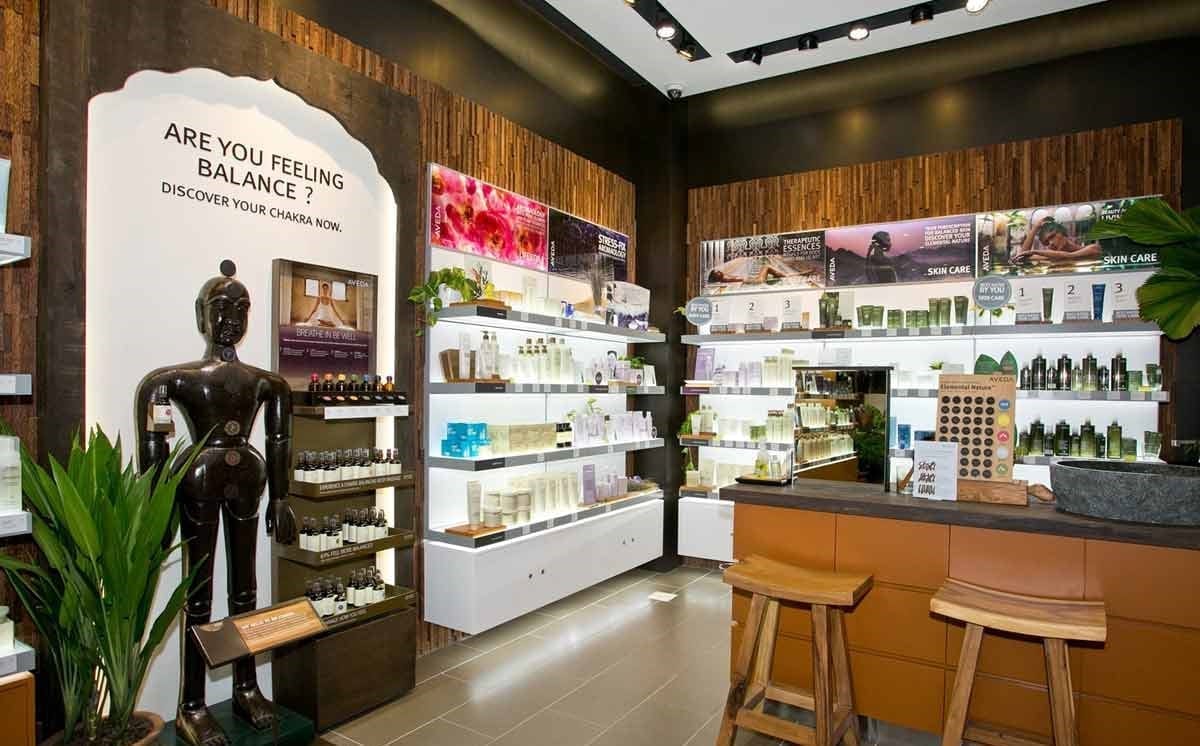
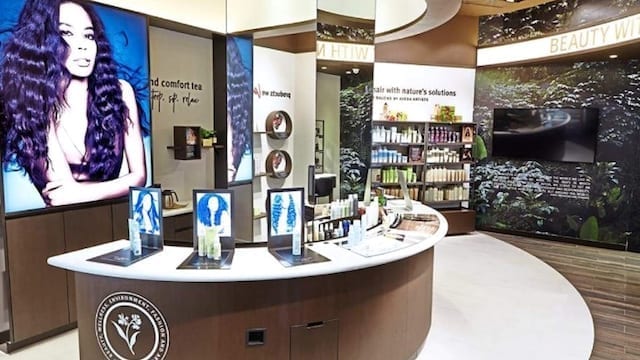
At Pavilion Kuala Lumpur, the store has a new retail concept and is described by the US beauty product company as an “experience centre”.
Instead of run-on shelving and glass store front, the outlet features six “experience zones” where consumers can explore products such as hair care for either men and women, skincare and bodycare.
Founded by Horst Rechelbacher in 1978, Aveda is now owned by Estee Lauder Companies with its headquarters in Minneapolis, Minnesota.