Tag: Estée Lauder

  • Estee Lauder Targets Mid-Single-Digit Growth Through 2030 as China Sales Rebound

    Estee Lauder Targets Mid-Single-Digit Growth Through 2030 as China Sales Rebound

    Estee Lauder targets mid-single-digit organic net sales growth through fiscal 2030 as it revamps operations in mainland China, following four consecutive quarters of positive organic revenue expansion there.

    Chief executive Stéphane de La Faverie, who took leadership in 2025, also aims to lift adjusted operating margin to between 16.5 per cent and 18.5 per cent by the end of that period, backed by double-digit annual gains in adjusted earnings per share.

    The company laid out the targets during its Capital Markets Experience event in Shanghai on Wednesday. Mainland China accounted for US$3.1 billion in net sales during the group’s most recent fiscal year, delivering roughly 20 per cent of worldwide revenue. In the latest quarter, China generated US$614 million, beating consensus analyst forecasts of US$579 million, while group fragrance sales led overall demand.

    Exporting the Mac Playbook to Aveda

    Management plans to apply the commercial turnaround strategy tested at Mac Cosmetics across slower brands in its stable, specifically identifying haircare label Aveda for the overhaul. That shift relies on faster product cycles, increased store-level marketing, and expanded merchant shelf space inside Sephora retail shops and on the TikTok Shop platform.

    Product formulations will lean heavily on the company’s dedicated innovation centre in Shanghai, which crafts formulations and commercial campaigns tailored directly to East Asian consumer preferences.

    “When you understand the local consumers and you put yourself into their culture and you give them their product, the experience, the claims that they want to hear that matters to them, then that’s how you build brand love,” he said.

    Chief technology and transformation officer Brian Franz told investors in Shanghai that the company is rewiring its distribution and inventory planning to match domestic Chinese platforms, including Tmall, Douyin, JD.com and WeChat.

    The Gray Market Bottleneck

    Global beauty conglomerates operating in Asia face structural changes in Chinese retail that standard marketing budgets cannot fix alone. Domestic Chinese brands have taken market share across mid-tier skincare, while multinational groups have faced intensifying competition. Accelerating research through local hubs in Shanghai is now mandatory for any international group seeking to protect its gross margins.

    A steeper operational hurdle sits in regional clearance channels. Unauthorised resellers accumulated genuine imported stock during pandemic border controls, subsequently discounting products on third-party marketplaces. That shadow trade eroded official retail price floors across tier-one Chinese department stores and damaged brand equity for prestige skincare labels such as La Mer. Estee Lauder must tighten wholesale supply discipline across duty-free operators if it wants to sustain price points inside mainland boutiques.

    Correcting Pandemic Inventory Overhang

    The current operational reset follows years of sluggish financial metrics across North Asia. Pandemic travel restrictions left Estee Lauder with excessive inventory piled inside airport concessions, while international passenger traffic recovered far more slowly than corporate planners anticipated.

    De La Faverie responded by launching the Beauty Reimagined restructuring program upon taking the top job in 2025, cutting excess stock and decentralising commercial decisions to regional operating units. Estee Lauder shares traded up 0.6 per cent through Tuesday’s close following the revised corporate guidance.

    Department store buyers and platform operators will test that pricing discipline during the upcoming fiscal quarters, as the company rolls out initial product lines formulated specifically by its Shanghai laboratory for Aveda and Mac across Asia-Pacific storefronts.

  • Estée Lauder Hits 98 Percent Regional Sourcing for Core Lines as R&D Speeds up

    Estée Lauder Hits 98 Percent Regional Sourcing for Core Lines as R&D Speeds up

    The Estée Lauder Cos. Has shifted 98 per cent of production and sourcing for its core foundation franchise to local regional hubs. The change cuts product development cycles by half.

    That setup covers high-volume lines including the Double Wear franchise. Following a reformulation, it ranked as the top makeup launch in the United States during the first half of 2026.

    Supply chain and research teams now operate across five innovation centers in Shanghai, Long Island, Toronto, Paris and Blaine, Minnesota. They work alongside nine manufacturing plants in the United States, Switzerland, England, Belgium and other markets. By shifting from a sequential stage-gate model to parallel workflows, development time for premium skincare lines like the Re-Nutriv Ultimate Diamond face oil essence fell from 30 months to 15 months. Factory floors now run on a proprietary generative artificial intelligence assistant called ELLA. The system provides historical data so line operators can reconfigure machinery without halting production runs.

    Parallel Development Across Global Hubs

    This overhaul links early ingredient discovery directly to plant-level tooling trials. Traditional cosmetics manufacturing separated research, packaging design and factory scaling into discrete stages. Estée Lauder now runs formulation and industrial scaling concurrently across its research centers and production facilities.

    In hybrid skincare and makeup categories, the group transferred oil-control technology from its skincare laboratories into foundation lines, extending wear time to 36 hours. Brand teams at MAC and The Ordinary used similar acceleration methods. Both rolled out stick formats and high-concentration serums within months of emerging ingredient trends.

    Regionalising Supply to Shield Margins

    Trade barriers and cross-border transport costs forced the group to abandon centralized production for mass-volume product lines. Sourcing and manufacturing now sit directly within the consumer markets where inventory is sold.

    For retailers and department store operators across Asia and the West, localized manufacturing reduces out-of-stock risks during demand spikes. It also cushions wholesale margins against currency swings. However, localized sourcing concentrates inventory risk in individual regional hubs, requiring precision forecasting to prevent gluts.

    Independent beauty labels in South Korea and China continue to cycle new formulations to store shelves in under six months. Established prestige operators moving research hubs closer to regional factories are attempting to match that speed without sacrificing clinical testing standards.

    Expanding Fragrance and Cross-Category Formulations

    To support higher-margin categories, the company added dedicated infrastructure, opening a fragrance atelier called La Maison des Parfums in Paris in 2025. The site develops exclusive scents for Jo Malone London, Le Labo and Kilian Paris. Formulation teams pair proprietary botanical extractions with synthetic molecules to prevent direct imitation by fast-beauty competitors.

    Brand extensions have also branched into adjacent premium consumer categories. These include pet care grooming products developed through third-party specialist partnerships.

    Parallel working means we’re going faster in identifying ingredients, in having the right lead times; in [conducting] line trials at the factories…we’re accelerating these activities by doing them in parallel.

    Tracking Output Across Nine Manufacturing Plants

    Years of tariff disputes and logistical bottlenecks triggered this operational pivot. Earlier distribution networks relied heavily on centralized production facilities in Europe and North America before shipping finished goods overseas.

    Plant managers now face the task of maintaining factory uptime as ELLA and algorithmic formulation tools expand into all nine manufacturing sites ahead of the next financial reporting cycle.

  • Airport Retail Revenue per Passenger Drops 20 Percent Below Pre-Pandemic Levels

    Airport Retail Revenue per Passenger Drops 20 Percent Below Pre-Pandemic Levels

    Global airport retail spending per passenger has dropped more than 20 percent from pre-pandemic levels. That slide comes even as worldwide passenger traffic climbed to 9.8 billion travelers in 2025.

    The travel retail channel generated 76 billion dollars last year. Yet its cornerstone fragrance and cosmetics category slipped 3.2 percent to 24.5 billion dollars, according to Generation Research figures presented at the TFWA World Exhibition in Cannes.

    Commercial income from car parking, food, and beverage outlets is rising across international terminals. Traditional retail counters face stiff competition from domestic e-commerce platforms like Tmall, Rakuten, and Amazon. Operators are adjusting footprints to halt falling basket sizes. Gen Z and millennial travelers make up 39 percent of airport footfall. Their conversion rates track well below older cohorts.

    Shifting Assortments for Younger Demographics

    Beauty conglomerates are adding lower price tiers and indie brands to airport duty-free zones. They want younger passengers who bypass legacy luxury counters. The Estee Lauder Companies expanded Deciem’s entry-priced skincare brand The Ordinary into key travel retail doors, moving away from sole reliance on high-ticket lines like La Mer. In Australia, Gebr. Heinemann brought domestic specialty retailer Mecca into Sydney Airport during September. The partnership targets shoppers who want specialized subcategories over department store formats.

    Brand collaborations are targeting regional pop culture properties to engage Asian passengers. Groupe Clarins partnered with Chinese toy maker Pop Mart on character packaging featuring Molly in Paris across regional hubs, with a second line arriving next year. Heinemann deployed a Korean beauty pop-up at Istanbul Airport. It plans to export that layout across its network, alongside Becon AI-powered skin diagnostics at Copenhagen Airport.

    Asian Traveler Flows Reshape Duty-Free Hubs

    Across the Asia-Pacific region, the spending slump exposes the limits of relying strictly on passenger volume. Chinese travelers have resumed cross-border trips at pre-pandemic levels. Their spending has shifted away from group shopping tours toward experiential travel and domestic platforms. Puig expanded on China’s duty-free island of Hainan in 2021. The group reported niche fragrances are gaining traction among mainland shoppers, even as mass-market beauty slows.

    Indian outbound travelers represent the next volume driver for Asian duty-free concessions. Outbound Indian passengers will reach an estimated 155 million by 2029, up 38 percent from current levels. Concessionaires in Southeast Asia and the Gulf are reallocating retail space for these travelers instead of sticking to standard regional assortments.

    Capital Spending and Terminal Redesigns

    Major transport hubs are overhauling terminals despite the spending slump. Riyadh’s King Salman International Airport is absorbing 30 billion dollars in development funding. Jeddah’s King Abdulaziz International Airport is executing a 31 billion dollar expansion, and New York’s John F. Kennedy International Airport is undergoing a 19 billion dollar overhaul. These projects shrink long-row concessions in favor of rotating pop-ups, lifestyle zones, and hybrid formats mixing eyewear with cosmetics.

    Airport authorities are rewriting concession contracts to demand higher experiential engagement from brand tenants. Avolta rolled out cross-category merchandising that combines beauty and luxury sunglasses with brands like Chanel and Tom Ford. The retailer is also testing digital loyalty tracking across its 22 million Club Avolta members, tailoring product displays to flight origins and destinations.

    Pressure on duty-free operators will intensify through the fourth quarter as retailers test redesigned holiday formats across primary Asian gateways. Operators must prove new pricing tiers and interactive spaces can lift spend per passenger as international volume climbs toward an estimated five billion travelers by 2030.

  • Esteé Lauder’s Visionary Leader Leonard A. Lauder Dies At 92: A Legacy Of Transformation And Philanthropy

    Esteé Lauder’s Visionary Leader Leonard A. Lauder Dies At 92: A Legacy Of Transformation And Philanthropy

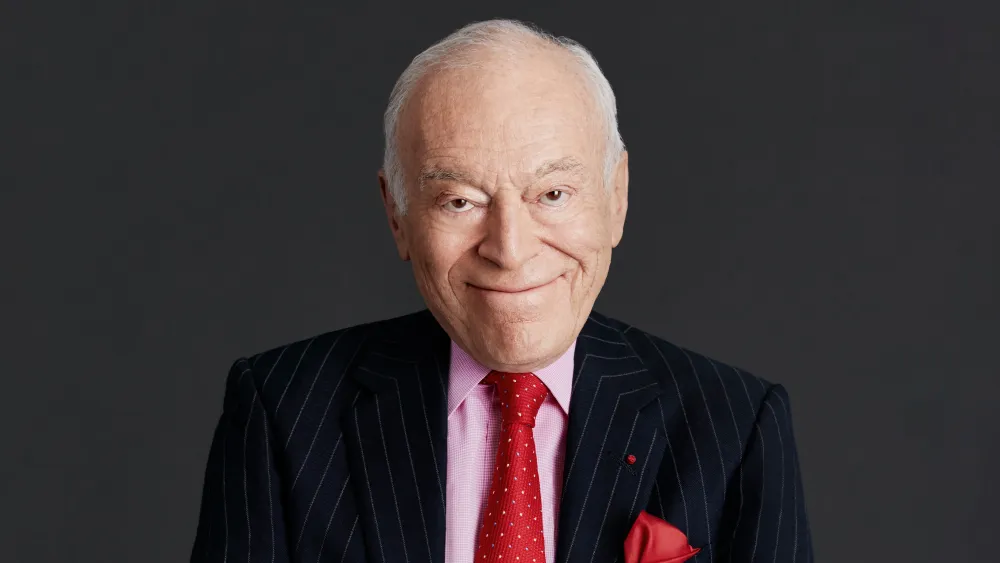
    The former chairman of Esteé Lauder, Leonard A Lauder, has sadly passed away at the age of 92.

    Loss of a Visionary

    Lauder’s death leaves a significant void in the company and the wider industry. His son, Gary M Lauder, who is also a member of the Esteé Lauder board of directors, expressed his sorrow at the loss. He emphasized the immeasurable impact of Lauder’s life, the significant contributions he made to the company, and the values of integrity, curiosity, and philanthropy that he instilled in the Esteé Lauder family. His presence will be sorely missed.

    A Tenacious Leader

    Lauder, the elder son of Esteé and Joseph H Lauder, joined the family business more than six decades ago. Armed with vision and tenacity, he played an instrumental role in the company’s transformation. Under his leadership, Esteé Lauder evolved from a single brand in the U.S. market to a global cosmetics giant boasting multiple illustrious brands.

    Before his tenure as chairman, Lauder held several leadership positions within the company, including serving as the president and CEO of Esteé Lauder from 1972 to 1999.

    Brand Expansion and Acquisitions

    Lauder was also instrumental in initiating the launch of various brands such as Aramis, Clinique, and Lab Series. His strategic vision extended to the company’s acquisition strategy, leading to the inclusion of prestigious brands like Aveda, Bobbi Brown, Jo Malone London, La Mer, and Mac under the Esteé Lauder umbrella.

    Stephane de La Faverie, current president and CEO of Esteé Lauder, recognized Lauder as an industry icon and pioneer who inspired employees and garnered respect worldwide for his visionary leadership.

    Philanthropy and Beyond

    Beyond his business ventures, Lauder dedicated his efforts to various fields, including medical research, particularly in the areas of cancer and Alzheimer’s, public education, art, foreign policy, and philanthropy. His varied contributions earned him several prestigious awards and accolades.

    Questions & Answers

    What role did Leonard A Lauder play in Esteé Lauder’s growth?
    Leonard A Lauder was instrumental in transforming Esteé Lauder from a single-brand company into a multi-brand cosmetics powerhouse with a global presence.

    What were some of the brands that Leonard A Lauder introduced?
    He initiated the launch of several brands, including Aramis, Clinique, and Lab Series, and contributed to the company’s acquisition of Aveda, Bobbi Brown, Jo Malone London, La Mer, and Mac.

    What contributions did Leonard A Lauder make outside of his business ventures?
    Lauder was heavily involved in various philanthropic activities, including cancer and Alzheimer’s research, public education, art, foreign policy, and philanthropy, earning him several prestigious awards.

  • Estee Lauder sinks after dour 2023 outlook due to slow recovery in Asia

    Estee Lauder sinks after dour 2023 outlook due to slow recovery in Asia

    Estee Lauder Cos’s shares plunged on Wednesday after the cosmetics maker forecast weaker sales and profit for the year than previously estimated, blaming slow recovery at duty-free and travel destinations, especially in Asia.

    Global retailers have banked on improved demand out of Asia after China eased Covid restrictions last year, but Estee’s travel retail division, one of its highest-growth sectors, did not rebound as expected.

    Shares of the company hit a six-month low of US$190.30 during trading hours after Estee Lauder slashed its fiscal-year forecasts for a third time. They closed down 17 percent at $202.70.

    Estee expects full-year 2023 net sales to fall between 10 percent and 12 percent, compared with its prior forecast of a 5 percent to 7 percent decrease.

    It said while major shopping districts such as Hainan, an island in the southernmost province of China, and Korea saw more traffic, the conversion of travelers to consumers in luxury beauty lagged.

    Even though China relaxed pandemic-related restrictions, the company saw January 2023 pressured by retailers destocking due to an increase in Covid-19 cases.

    Meanwhile, European luxury companies LVMH and L’Oreal saw a rise in first-quarter sales, boosted by a rebound in Asia as China eased Covid restrictions last year.

    Barclays analyst Lauren Lieberman said in a note that Estee’s forecast was the “last thing” expected even by the Street and the company’s comments on its travel retail division in Asia raise doubt on how much “control or visibility” Estee has in sales through this channel.

    CFO Tracey Travis said in a post-earnings call Estee has seen improvement in travel retail, which includes duty-free sales at airports and shopping districts in China and Korea, through the third quarter, and the company also expects sales from the segment to rise in double digits.

    However, Travis said it’s “difficult to know” when travel in China and Korea will normalize.

    Estee’s sales also remain challenged in the US, another major market. The company’s organic sales in the Americas grew in double digits last fiscal year, but began to decline in the first quarter of 2023.

    Bernstein analyst Callum Elliott said the company’s brands skew toward older customers even as millennials and Gen-Z increase their share of beauty spending.

    According to Travis, Estee has also been challenged by the growth of smaller competitors in the beauty space.

    “We’re seeing an awful lot of indie activity in the US that has taken share gains away from the largest companies,” she said.

    Estee reported mid-single-digit growth in North America in the third quarter, while prestige beauty as a category grew more than 16 percent, according to data from Circana.

    LVMH said its US spending declined in the April earnings call, though the company noted its performance there was strengthened by brisk business at its Sephora beauty chain.

    A stronger dollar has also hurt Estee, which has sprawling global operations and convert foreign currencies into the greenback.

    Estee forecast adjusted per-share profit to fall by 50 percent to 51 percent, compared with a 27 percent to 29 percent decrease it expected earlier.

    The company beat third-quarter sales expectations, but missed profit estimates.

  • Estee Lauder to buy Tom Ford in US$2.8 billion deal

    Estee Lauder to buy Tom Ford in US$2.8 billion deal

    Estee Lauder Cos. Inc. said on Tuesday it agreed to buy U.S. fashion label Tom Ford for US$2.8 billion, its biggest deal yet, adding a line of beauty products and apparel to the Clinique brand owner’s portfolio.

    Luxury companies have so far enjoyed steady demand for their products, but cracks are starting to show as decades-high inflation forces some customers to tighten their purses.

    Estee said this month U.S. retailers were cutting stocks of its products amid worries of a demand slowdown and lowered its full-year forecasts, hurt by lockdowns in China.

    While Estee Lauder already sells Tom Ford beauty products and fragrances, the deal has raised some eyebrows on Wall Street.

    “Given the strength of Tom Ford Beauty, especially in EL’s most significant long-term growth market of China, we understand the appeal of the deal, but handling the fashion businesses leaves some questions,” Raymond James analyst Olivia Tong wrote in a note dated Nov. 14.

    The deal is the latest in a series of acquisitions by Estee Lauder, including taking control of Ordinary skincare brand owner Deciem last year for about US$1 billion.

    As of Tuesday’s close, Estee’s stock fell 17% since the deal talks with Tom Ford were reported by the media in August.

    Last week, Tom Ford entered into exclusive negotiations with Estee Lauder, beating competing bids from companies including Gucci owner Kering SA, the Financial Times reported on Friday.

    Estee expects to fund the transaction through a combination of cash, debt and US$300 million in deferred payments to sellers that become due beginning in July 2025, the company said.

    Chief executive officer Tom Ford will continue to serve as the brand’s creative visionary.

    Perella Weinberg Partners LP served as financial adviser to Estee, while Paul, Weiss, Rifkind, Wharton & Garrison LLP was its legal counsel. Goldman Sachs & Co. LLC was Tom Ford’s financial adviser and Skadden, Arps, Slate, Meagher & Flom LLP its legal counsel.

  • Estée Lauder names Kōki as new Global Brand Ambassador

    Estée Lauder names Kōki as new Global Brand Ambassador

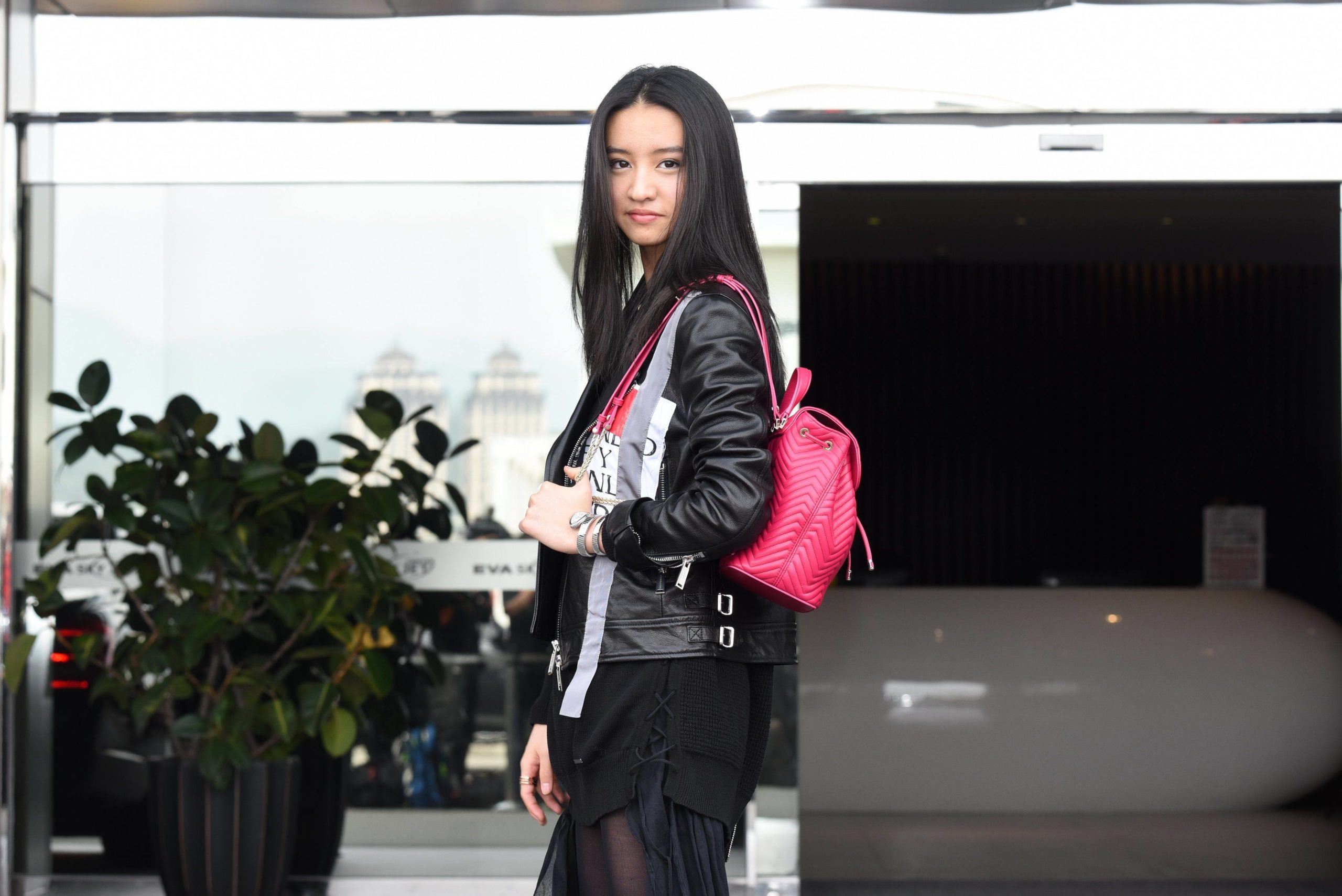
    The Estée Lauder Companies has named Japanese model Kōki as the newest global brand ambassador for its flagship Estée Lauder brand.

    She will feature across the brand’s digital, television, in-store, and print media, in domestic and travel retail markets, beginning with a makeup campaign in April. Kōki will also appear in all of Estée Lauder’s digital campaigns beginning in the Autumn.

    Kōki — real name Mitsuki Kimura — was born and raised in Tokyo. She began her modeling career in 2018 and appeared on the covers of several high-profile fashion magazines in Japan and in the wider Asia Pacific region. This includes Harper’s Bazaar Hong Kong, ELLE Japan, ELLE Hong Kong, Marie Claire Japan and InStyle China among others.

    In 2018, Kōki won the Elle Cinema Rising Star Award. The following year, she made her runway debut at the Chanel Cruise Collection fashion show. She is also currently serving as a brand ambassador for other leading luxury brands such as Bvlgari, Coach, and Louis Vuitton.

    Kōki joins a stellar roster of Estée Lauder brand ambassadors which include South Sudanese Model Anok Yai, Italian model/actress/socialite Bianca Brandolini D’Adda, American model Carolyn Murphy, Indian model Diana Penty, American models Grace Elizabeth and Karlie Kloss, Chinese Actress Yang Mi and recently-appointed Cuban actress Ana de Armas.

    “Kōki brings a fresh energy to the Estée Lauder brand,” commented The Estée Lauder Companies Group President and Estée Lauder and AERIN Global Brand President Stéphane de La Faverie. “We are excited to amplify her rising star power to connect our brand with a new generation of consumers in Japan and around the world while continuing the brand’s legacy of celebrating women across all backgrounds, ages, and ethnicities.”

    Commenting on her role, Kōki said: “It is a dream come true to join the Estée Lauder brand. It is such an iconic brand that is loved by so many women around the world. I am honored and grateful to be a part of it.”

  • Asia underpins stable and strong Estee Lauder result

    Asia underpins stable and strong Estee Lauder result

    Estee Lauder Cos reported better-than-expected quarterly results on Monday, as people confined to their homes bought more of its skincare products online and sales improved in its Asian markets. The M.A.C brand owner has ramped up investments in its online business and seen growth in demand for its skincare products as customers opted for serums and moisturizers instead of make-up items during the Covid-19 pandemic.

    “Before, online was mainly the destination of younger people. Now it’s for everyone. Everyone is online,” CEO Fabrizio Freda told analysts on a call.

    The company’s shares rose as much as 8.3 percent to a record high on Monday as online sales soared 40 percent in the first quarter.

    Its sales in the Asia-Pacific market rose 9 percent on the back of strong growth in South Korea, with demand at the company’s duty-free shops in China getting a boost from the government’s move to raise the annual tax-free shopping limit for tourists in the southern province of Hainan.

    Total sales at the company’s duty-free shops were flat year over year, after dropping roughly 30 percent in the previous quarter due to widespread restrictions on air travel.

    Total net sales fell 9 percent to $3.56 billion but exceeded analysts’ expectations of $3.46 billion, Refinitiv data showed.

    Estee forecast net sales to decline between 3 and 5 percent in the second quarter, compared with estimates of a near 5 percent decline.

  • Estee Lauder Singapore unveils new Ion Orchard store

    Estee Lauder Singapore unveils new Ion Orchard store

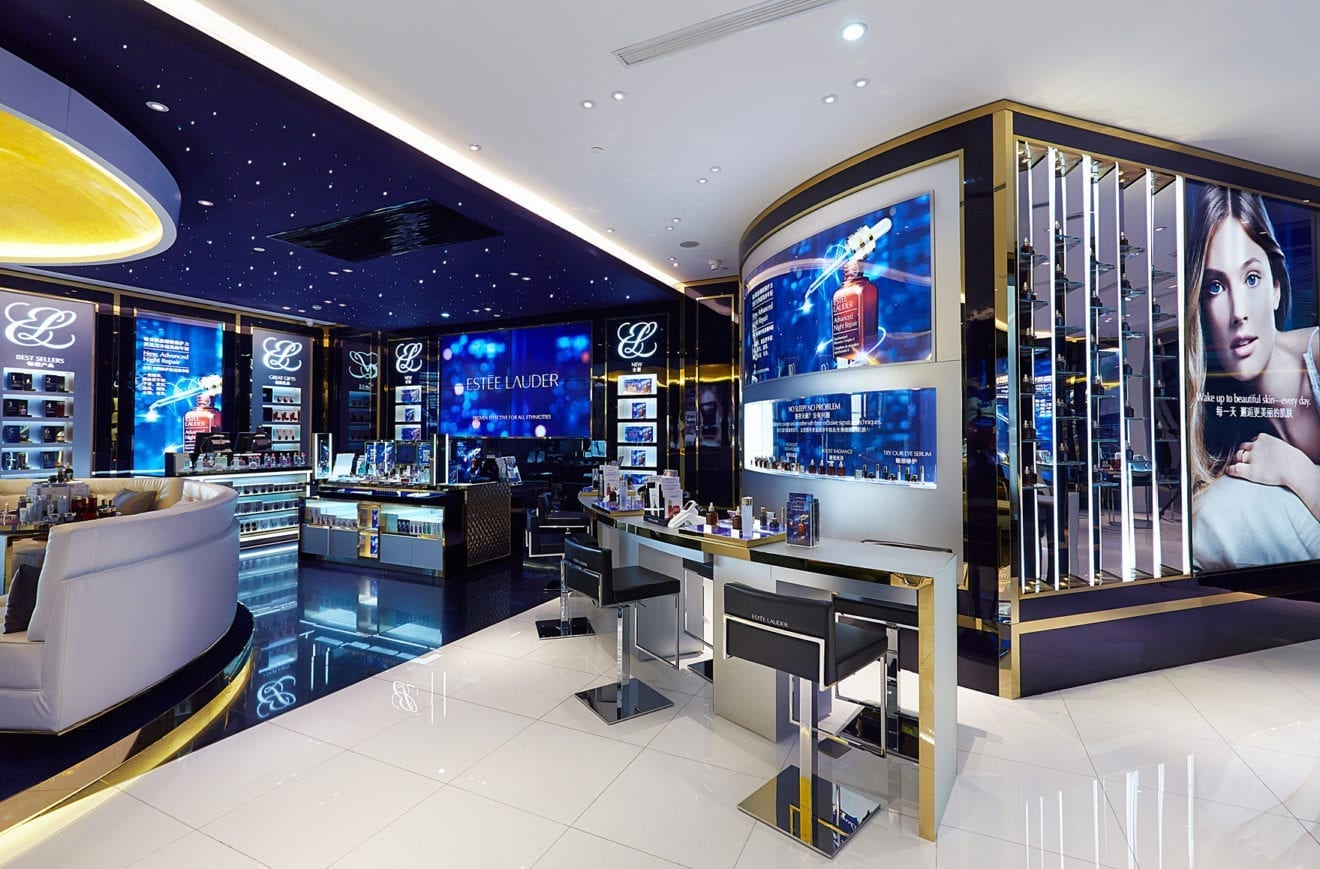
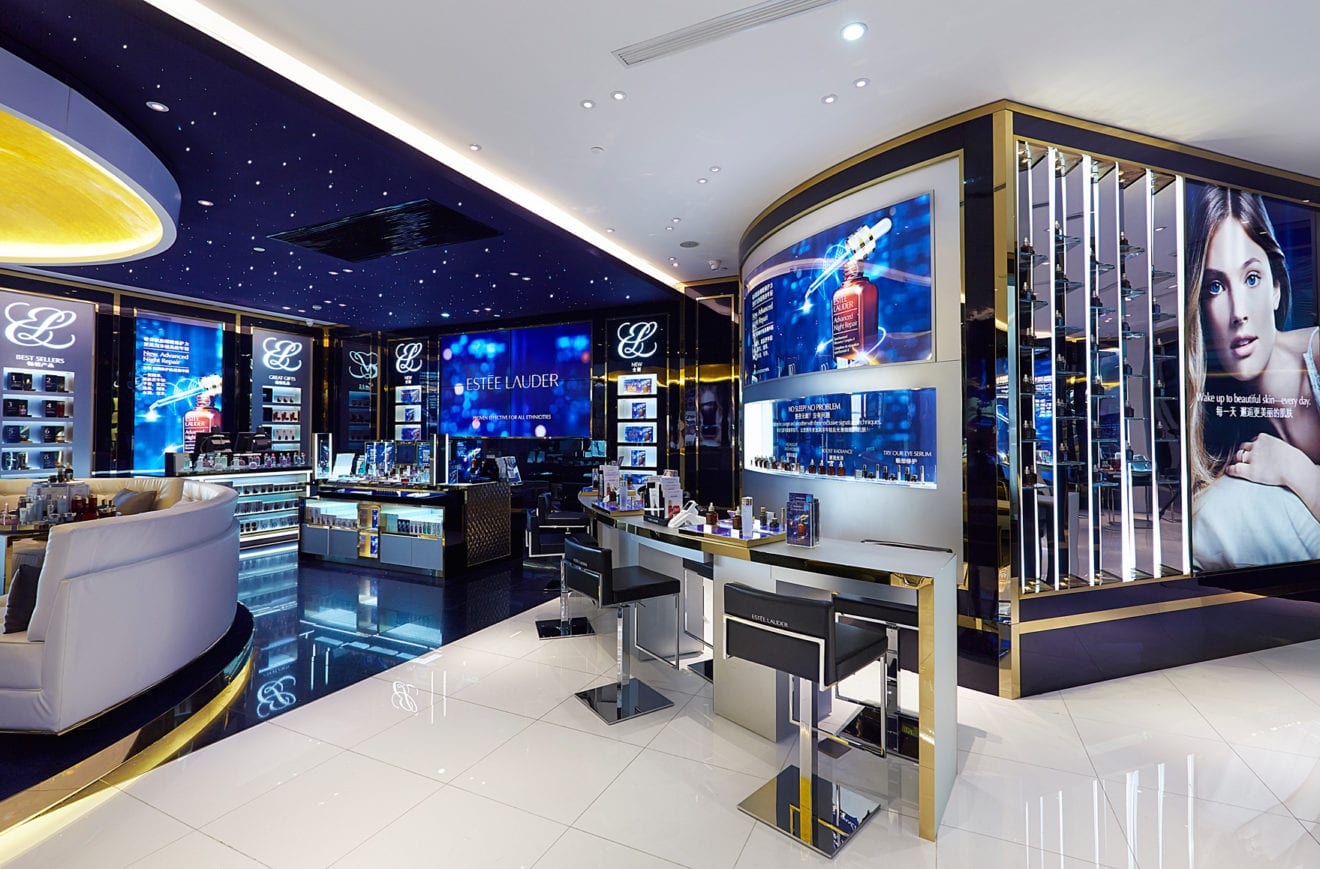
    Estee Lauder Singapore has reopened its store in the Ion Orchard shopping center with a completely new design. Located in the mall’s Basement Level 1, the Estee Lauder Ion Orchard store features a contemporary look, with blue navy wall and platinum elements.

    A digital screen is installed in front of the store, featuring images of the brand’s bestsellers, such as Advanced Night Repair or Pure Color Envy and Double Wear.

    “This new home offers a unique and elevated high-touch approach that has been paired with the latest innovations to meet our customers’ changing needs, to deliver the ultimate Estee Lauder experience,” said Christine Goh, brand GM of Estee Lauder Singapore.

    Storehouse’s interactive makeup ‘play tables’ for customers to engage while shopping.

    Customers can learn about Estee Lauder’s products by scanning QR codes or having exclusive one-on-one consultations. Personalized and gifting services are also available at the store.

  • Estee Lauder declares strong growth across Asia

    Estee Lauder declares strong growth across Asia

    Estee Lauder has reported “strong double-digit sales growth” in nearly every Asia-Pacific market in the latest quarter.

    Globally, the company achieved sales of US4.62 billion in the three months to December 31, up by 15 percent year on year, but in Asia especially the cosmetics giant thrived.

    “Greater China delivered strong double-digit net sales growth,” the company said in a statement.

    “Growth accelerated on the mainland, reflecting, in part, an outstanding performance related to Singles Day and other events. Net sales in Hong Kong declined as a result of the ongoing events impacting key shopping areas.”

    The company said emerging markets in Southeast Asia also delivered strong growth.

    “Among developed markets, South Korea rose in double digits and both Japan and Australia grew solidly in constant currency.”

    Online sales more than doubled in the region.

    Estee Lauder reported net earnings of $557 million, down from $573 million last year.

    “We delivered superb results in our second quarter, leading to an excellent first half,” said Fabrizio Freda, president and CEO. “Our multiple engines of growth generated broad-based gains across all our regions and major categories, as our prestige brand portfolio was well received by global consumers during the Singles Day event and holiday season.

    “Our sales growth came from all facets of our business, including the Asia/Pacific region, the skincare and fragrance categories, the online and travel retail channels, and the Estee Lauder, La Mer and luxury fragrance brands. Our emerging markets continued to be vibrant and we made progress towards the stabilization of our North American business despite continued softness in the makeup category. Additionally, we completed the acquisition of the Korean-based Dr Jart+ brand at the end of the quarter, which strengthens our position in global skincare.”

  • Estee Lauder bought South Korean Dr Jart+ Brand

    Estee Lauder bought South Korean Dr Jart+ Brand

    Estee Lauder has acquired the remaining two-thirds it does not already own of Have & Be, the Seoul-based company behind skincare brand Dr Jart+.

    The global cosmetics company bought a minority stake in Have & Be in December 2015 and expects to close on the balance next month.

    With Dr Jart+, Estee Lauder hopes to strengthen its leadership position in Asia Pacific and be able to expand further there and in North America and the UK.

    “The Estee Lauder Companies is the ideal home for our brands,” said Chin Wook Lee, founder and CEO of Have & Be. “Since the beginning of our partnership four years ago, the company has shared its mission to provide the very best skin-care and beauty products to consumers around the world. We are excited for the opportunity to continue this partnership as we continue to innovate and grow our brands globally.”

    Since the partnership with Estee Lauder in 2015, Dr Jart+ has witnessed significant growth and is expected to achieve more than US$500 million in net sales this calendar year. Have & Be’s total enterprise is valued at approximately US$1.7 billion.

    President and CEO of The Estee Lauder Companies, Fabrizio Freda, says Dr Jart+’s focus on creating high-quality skin care products that fuse dermatological science, innovation capabilities and artistic expression make it a terrific, strategic addition to Estee Lauder’s diverse portfolio of prestige beauty brands.

    “We look forward to continued global growth in the years to come.”

    Founded in 2005, Dr Jart+ is now one of the fastest-growing skincare brands in the world. Its products are currently available in 36 markets internationally, through 5524 retail outlets.

  • Estee Lauder Asia sales rose 24 per cent in latest quarter

    Estee Lauder Asia sales rose 24 per cent in latest quarter

    Estee Lauder Asia Pacific sales rose 24 per cent in the latest quarter – a stark contrast to the cosmetics giant’s US performance, where revenue fell 6 per cent.

    Global net sales increased 11 per cent to US$3.9 billion, or by 12 per cent on a constant-currency basis. Net earnings rose 19 per cent to $595 million

    But the company has cautioned that the ongoing Hong Kong protests and the stronger US dollar will impact on the current quarter.

    Estee Lauder said sales in Hong Kong fell 20 per cent in the first quarter, but given they account for just 4 per cent of global sales, the impact so far is muted.

    CEO Fabrizio Freda told analysts on an earnings call that Hong Kong “has been difficult” and as yet no improvement is evident.

    The economic gloom in Greater China, fuelled by trade tensions and the appreciating Renminbi, is also worrying Estee Lauder.

    “Given the fact that there are global macro slowdowns, even though we haven’t, in fact, seen it in China and haven’t seen it affect our Asia business in general … it certainly could happen,” said CFO Tracey Travis, quoted by Reuters.

    Freda said in a statement that sales growth was led by excellent results from international markets – particularly China – and other emerging markets. The skin-care category, travel retail and online channels globally, the flagship Estee Lauder brand and several luxury brands, all grew by double-digit rates.

    “In addition, all four of our biggest brands, each with annual sales well over $1 billion, grew globally. This demonstrates the enduring consumer interest in established brands and their proven, desirable products.”

  • Estee Lauder Asia sales uphill

    Estee Lauder Asia sales uphill

    Estee Lauder Asia sales soared 25 percent in the year to June, with China, Hong Kong, and the emerging markets in Southeast Asia the main performers.

    The more mature Japanese and South Korean markets were also “strong contributors” to the company’s result in the region.

    “The company delivered strong double-digit net sales increases, both on a reported basis and in constant currency,” Estee Lauder reported in a statement. “The growth was broad-based, with all markets in the region growing and more than half up double-digits in constant currency. The Company generated double-digit net sales growth in every product category and major channel.”

    Estee Lauder Asia was a standout in the company’s results, with global net sales up 9 percent to US$14.86 billion, or 12 percent on a currency-neutral basis. Net earnings rose from $1.11 billion last year to $1.79 billion.

    “This was an outstanding year for our company,” said president and CEO Fabrizio Freda.

    “We achieved strong net sales gains across our business, fuelled by investments in our strategic priorities, including improved data analytics that helped power our innovation and digital marketing. Our winning strategy led to continued share gains in global prestige beauty.

    “With savings from our Leading Beauty Forward initiative and cost discipline throughout the organization, we grew profit far ahead of our net sales growth, while also investing in our strategic priorities,” he said.

    “Many engines drove our growth. They included: nearly every market in the Asia/Pacific region and many other important emerging markets around the world; our skincare category in every region; the travel retail and online channels globally; and compelling innovations and high-quality products, which drove strong repeat purchases. Globally, three of our four largest brands grew strongly as did many of our small and mid-sized brands. Our results were particularly impressive given macro volatility and challenges in several key markets demonstrating our successful strategy of multiple engines of growth and our agility to reallocate resources to the best opportunities.”

    Freda said the results capped a remarkable decade of strategic and operating achievements.

    “Since launching our current strategy in 2009, we have diversified and strengthened our company, creating a solid foundation to continue our growth.”

    He said the prestige beauty category continues to be one of the most desirable consumer sectors.

    “As the best diversified pure-play in the industry, we are uniquely positioned to capture global share. In fiscal 2020, we plan to continue to invest in the most compelling opportunities, including those in emerging markets beyond China. We expect another year of strong net sales growth, margin improvement and a double-digit increase in earnings per share.”

  • Estée Lauder Wants to Maximise Every Second of your Beauty Sleep

    Estée Lauder Wants to Maximise Every Second of your Beauty Sleep

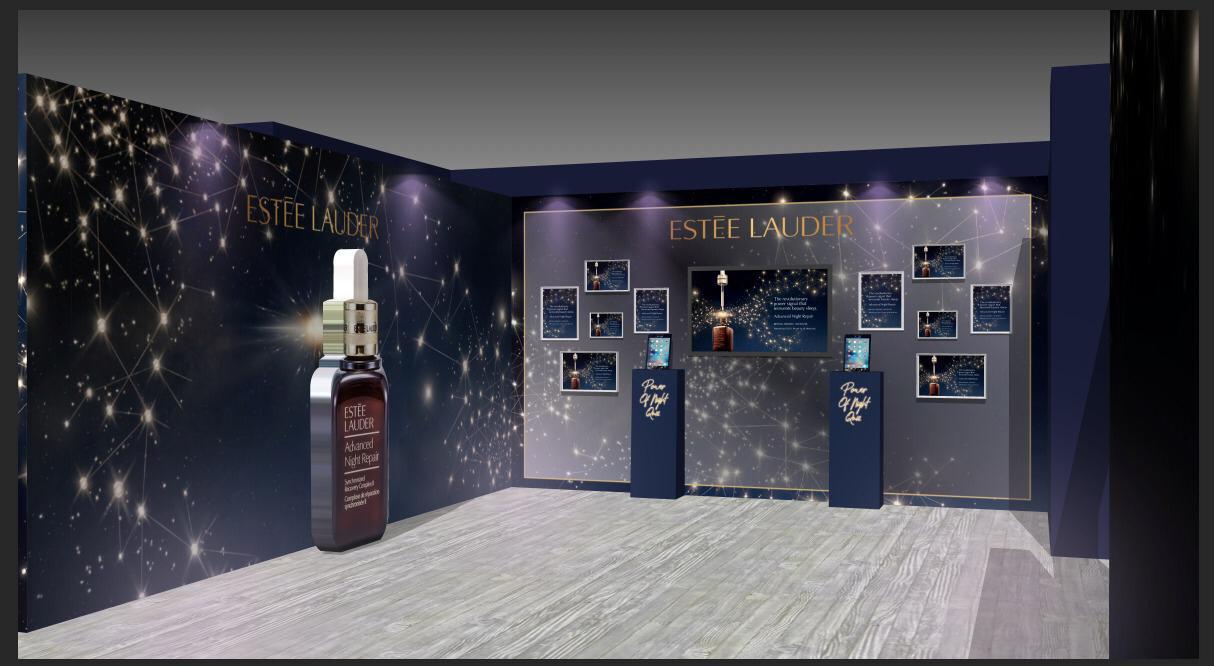
    Join us as Estée Lauder celebrates its first ever Power of Night exclusive pop-up. Visit us from 23th to 24th March (11am to 8pm) to understand how modern life affects our skin and discover our iconic Advanced Night Repair serum maximises skin repair with every second of beauty sleep. Learn how a lack of sleep* and constant exposure to blue light** accelerates skin ageing, causes fine lines and a loss of firmness and pigmentation.

    As a leader in skin repair for over 35 years, Estée Lauder continuously studies the key factors behind visible skin ageing. Research shows that a lack of sleep not only affects our skin’s natural reparative process but also accelerates premature signs of skin ageing.

    Sleeping less than five hours every night increases the impact of stress on the body, resulting in a breakdown of collagen and elastin, causing it to be more susceptible to damage caused by environmental aggressors*.

    Modern life equals multiple skin assaults and the constant exposure to blue light, especially at night, disrupts the skin’s natural repair process and causes accelerated skin ageing**.

    It is no surprise then that a good night’s sleep is not only important to recharge the body but also helps keep skin youthful and healthy.

    Beauty Sleep In Progress

    During our exclusive pop-up, learn about Estée Lauder’s iconic Advanced Night Repair in the Living Room. Through an interactive night discovery quiz, discover how our patented ChronoluxCB™ Technology works with the body’s natural circadian rhythm to boost skin repair and renewal functions for a radiant and youthful look when you wake.

    In the bedroom, explore different ways of using Advanced Night Repair serum with our Power Of Night film series muses Joanne Peh, Nurul Aini and Oon Shu An and journey with them through our Insta-worthy beauty stations. Learn beauty hacks with Estée Lauder’s breakthrough repair serum for all your beauty occasions by strengthening the skin, improving hydration and enhancing your skin’s glow.

    Take our discovery quiz and bring home your very own Advanced Night Repair serum sample to kick start your Advanced Night Repair beauty regimen.

    Create your customised bedtime renewal routine and steal the spotlight with our Pro Artists using our best-selling Double Wear Stay-in-Place Foundation and our new luxury lipstick collection Pure Color Desire.

    Scribe your sleep resolutions on the Sleeping Beauties Wall and join us in spreading the love for Advanced Night Repair by posting your favourite sleeping beauty images on the ‘gram. Tag your photos with the event hashtags to enter the Estée Lauder #PowerOfNightSG Instagram contest, and stand a chance to win a full-size bottle of Advanced Night Repair.

    Unleash the power of night with Singapore’s #1 serum — Estée Lauder Advanced Night Repair.

  • Asia-Pacific boosts Estee Lauder revenue

    Asia-Pacific boosts Estee Lauder revenue

    Estee Lauder Asia-Pacific sales achieved double-digit growth in the December quarter. The beauty giant says the growth was broadbased, with nearly half of the markets in the region growing by double digits. “China, Hong Kong and Japan continued to deliver strong growth, and Korea net sales accelerated. Prestige beauty in China accelerated and the company continued to build share,” the company said in a statement.

    “[We] generated double-digit net sales growth in virtually every major product category and channel. Operating income increased, primarily due to higher net sales.”

    Globally, Estee Lauder sales exceeded US$4 billion for the first time, up 7 per cent from the same time a year earlier. Net earnings rose to $573 million compared with $123 million last year.

    “We delivered an excellent performance in our fiscal second quarter,” said president and CEO Fabrizio Freda. “Importantly, this was our eighth consecutive quarter of impressive net sales growth that met or exceeded our long-term goal, all while navigating many global macro issues.

    “Our sustained progress is the result of our multiple engines of growth strategy, and demonstrates our agility in moving resources to the best global opportunities,” he said.

    The strongest growth engines during the quarter included the skin care category globally, the Estee Lauder Asia-Pacific business, online and travel retail channels, and most brands, including Estee Lauder, La Mer, Mac and the company’s artisanal fragrance brands.

    “Despite a volatile and challenging backdrop, we are optimistic about our company’s long-term outlook. We are very well-positioned to build share in global prestige beauty,” Freda said.

    “We plan to increase our investments during the next six months behind our successful innovations, high-quality products, compelling digital advertising and effective commercial execution, while also enhancing our capabilities to strengthen our industry leadership and deliver long-term profitable growth.”