Retail News CRM

Tag: Estée Lauder

  • Boss puts positive spin on Estee Lauder results

    Boss puts positive spin on Estee Lauder results

    Cosmetics maker Estee Lauder has forecast a lower-than-expected profit for the full year, hurt by fewer customer visits to department stores and uncertainties in some markets.

    “We believe the risk of other economic and political disruptions will remain high as we start our new fiscal year,” says CFO Tracey Travis of the latest estee Lauder results.
    Weak sales in some Asia-Pacific countries, mainly Hong Kong, helped dent its sales figures.

    The company also says it expects to incur charges of about US$80 million to $100 million in fiscal 2017, related to restructuring initiatives, quitting businesses in certain markets and cutting its global workforce.
    However, president/CEO Fabrizio Freda has a positive spin, saying the company’s performance “gives us much to celebrate”.

    He says the company capitalised on shifting consumer preferences by leveraging its strength in makeup and positioning the company to win in luxury fragrances.

    “We nimbly allocated resources and made strategic investments in areas that gave us terrific results, including emerging markets, our makeup category, and the online and specialty-multi retail channels. Importantly, we achieved these results against a backdrop of social and political instability, currency volatility and economic challenges.”
    For the quarter ended June 30, the company had net sales of $2.65 billion, a 5 per cent increase on the prior-year period. It posted across-the-board sales gains in all geographic regions and product categories, except fragrance.

    Sales benefitted from new products and double-digit growth in several emerging and developed markets. The company also generated double-digit gains in its travel retail and online channels. Net earnings for the quarter were $93.5 million, compared with $153 million last year.
    For the year, the company achieved net sales of $11.26 billion, a 4 per cent increase over the previous year. Net earnings were $1.11 billion, up 2 per cent.
    Freda says the company will continue to seek geographic and channel opportunities to reach more consumers “while keeping a sharp focus on like-door growth”.

    During the fourth quarter, the company recorded restructuring and other charges of $101 million ($69.6 million after tax).

  • Estee Lauder’s quarterly sales miss on lower retail traffic

    Cosmetics maker Estee Lauder Cos. reported a smaller-than-expected rise in quarterly sales, hurt by a slowdown in sales in the Americas as fewer customers visited department stores and tourist spending declined.

    Shares of the company were down about 4 percent at $91.34 before the bell on Friday. Up to Thursday’s close, the stock had risen 13.5 percent in the past year.

    Sales in the Americas, its biggest market, rose 1.4 pct to $1.1 billion on a reported basis, its slowest growth in four quarters.

    Lower retail traffic mainly affected the company’s “heritage” brands Estee Lauder and Clinique, and a few M.A.C freestanding stores.

    Demand for its skin care products continued to weaken, as the company cited overall global slowdown in the category. Sales from its namesake brand and Clinique were also hurt by lower sales in some Asia-Pacific countries, mainly Hong Kong.

    “Social and political issues, currency volatility and economic challenges are affecting consumer behavior in certain countries, such as Hong Kong, France and some emerging markets,” the company said.

    Rival L’Oreal SA earlier reported second-quarter sales growth marginally below forecast as the company said Western Europe was being held back due to a “very difficult market in France.”

    Net income attributable to the company fell to $93.5 million, or 25 cents per share, in the quarter, from $153 million, or 40 cents per share, a year earlier.

    Net income was hurt by restructuring and other charges. Excluding items, the company earned 43 cents per share. Net sales rose to $2.65 billion from $2.52 billion. Analysts on average had expected a profit of 40 cents per share and revenue of $2.66 billion.

    New York City-based Estee Lauder said its expects fiscal 2017 adjusted profit to be between $3.38-$3.44 per share, missing analysts’ estimates of $3.53.

    The company also said it expects to incur restructuring charges of about $80 million-$100 million in fiscal 2017, related to its Leading Beauty Forward strategy.

    As part of its Leading Beauty Forward strategy, the company had earlier approved restructuring initiatives to exit businesses in certain markets and channels of distribution while also reducing its workforce globally.


  • CDFG opened 3000sqm Duty Free in Phnom Penh

    CDFG opened 3000sqm Duty Free in Phnom Penh

    Phnom Penh Duty Free is located inside the integrated entertainment destination of Naga City at Naga City Walk which connects Naga World to ‘Naga 2’. It offers approximately 4,000sq m of retail space with all the main DF&TR and luxury categories available: cosmetics, perfume, jewellery, sunglasses, watches, fashion, beverages, tobacco, travel goods and confectionery as well as “famous local products”.

    The end of September will see the arrival of a slew of further brands: Estée Lauder, Kiehl’s, La Mer, SK-II, Lancôme, MK, Rimowa, and Tumi.

    CDFG Phnom Penh beauty cambodia

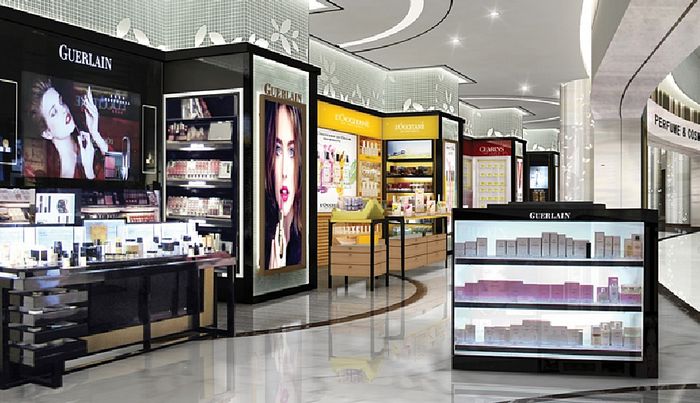
    The beauty area in the new store.

    State-owned CDFG, which operates a brand company in Cambodia, comments: “We are the top luxury retail store in Phnom Penh providing a high-end shopping destination to tourists and business travellers. Customers can choose from more than 200 brands from around the world.”

    On opening, branded boutiques will include Longines, Tissot, Swarovski, Samsonite and Prada, with further boutiques from Armani, Coach and Furla to be unveiled at the end of this year.

    SILK ROAD TARGET

    The Phnom Penh development is part of an international expansion policy targeting the so-called ‘Silk Road Economic Belt’ to which CDFG parent, China Travel Group, is committed.

    Cambodia is a key market within the plan: CDFG has already opened its Angkor duty free store in December 2014 (where it competes with DFS), followed a year later by the Shihanoukville duty free store in December 2015. CDFG says it has “the full support at all levels of government in Cambodia”.

    CDFG – which claims to be China’s largest retailer of luxury merchandise – says that with its three stores in place it “will write a new chapter in the tourism industry in Cambodia”.

    To celebrate today’s soft opening, promotions are in place with a 15% discount on all shopping; a chance to experiencing the VIP shopping service; and a gift on purchases over $100. Scanning the company’s official WeChat account, or clicking ‘like’ on the company’s official Facebook, also qualifies for a surprise gift.

  • New post at Luxasia Group for SingPost’s ex-boss

    New post at Luxasia Group for SingPost’s ex-boss

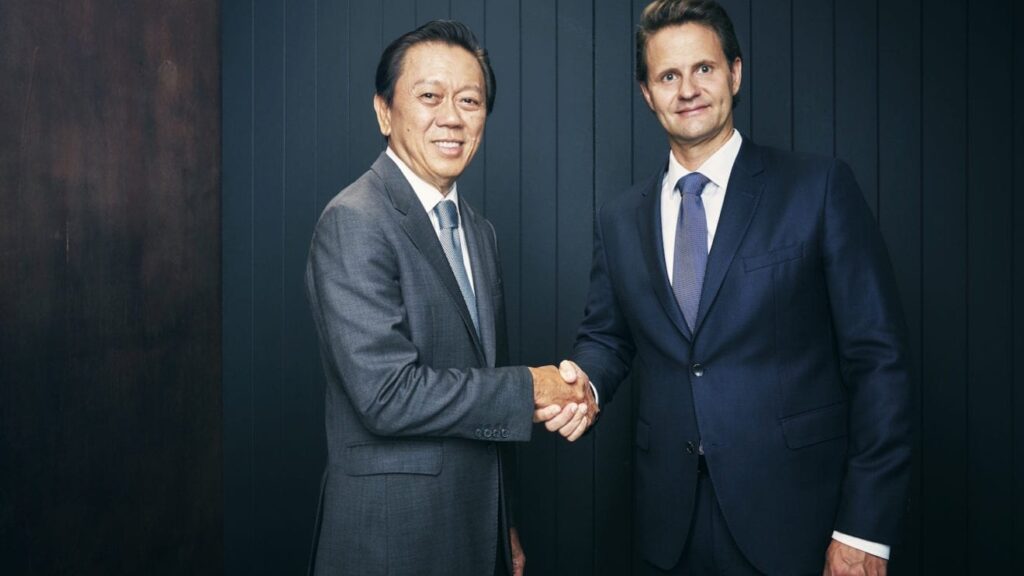
    Beauty retailer The Luxasia Group has appointed former SingPost CEO Dr Wolfgang Baier as group CEO, while founder/owner Patrick Chong has become chairman.

    “Luxasia is now at an important crossroads,” says Chong. “We intend to grow with our international partners and strengthen our core competencies to become the leading Asia consumer-centric omnichannel go-to-market partner of the beauty industry.”

    Patrick-Chong-Wolfgang-Baier

    He says Baier has proven leadership capabilities, vast knowledge and skills in areas such as CRM and omnichannel retail. “His track record in the logistics sector will also help strengthen Luxasia’s partnerships.”

    “Transformation is relevant in every sector and particularly for retail, where the digital and physical space is converging,” says Baier. “This makes developing an omni-channel ecosystem critical. We want to revolutionise how we serve consumers and brand partners in the beauty industry across Asia.”

    Chong says the search for a CEO took more than a year, as it was important Luxasia found the right leader.

    “Not only does Wolfgang understand our operations and share the same aspirations, in some ways he is even more ambitious for Luxasia with regard to developing new areas.”

    Established in 1986, The Luxasia Group has developed retail and distribution networks across Asia for some of the world’s biggest beauty companies. Based in Singapore, the privately held company has 11 offices and more than 2000 full-time employees in Singapore, China, Hong Kong, India, Indonesia, Malaysia, Myanmar, Taiwan, Thailand, the Philippines and Vietnam.

    It manages a portfolio of more than 120 international fragrance, cosmetics, skincare and
    professional salon brands including Beiersdorf, Burberry, Clarins, Estee Lauder, Ferragamo, Hermes, P&G and Shiseido.

  • LVMH affiliate invests $50m in Clio

    LVMH affiliate invests $50m in Clio

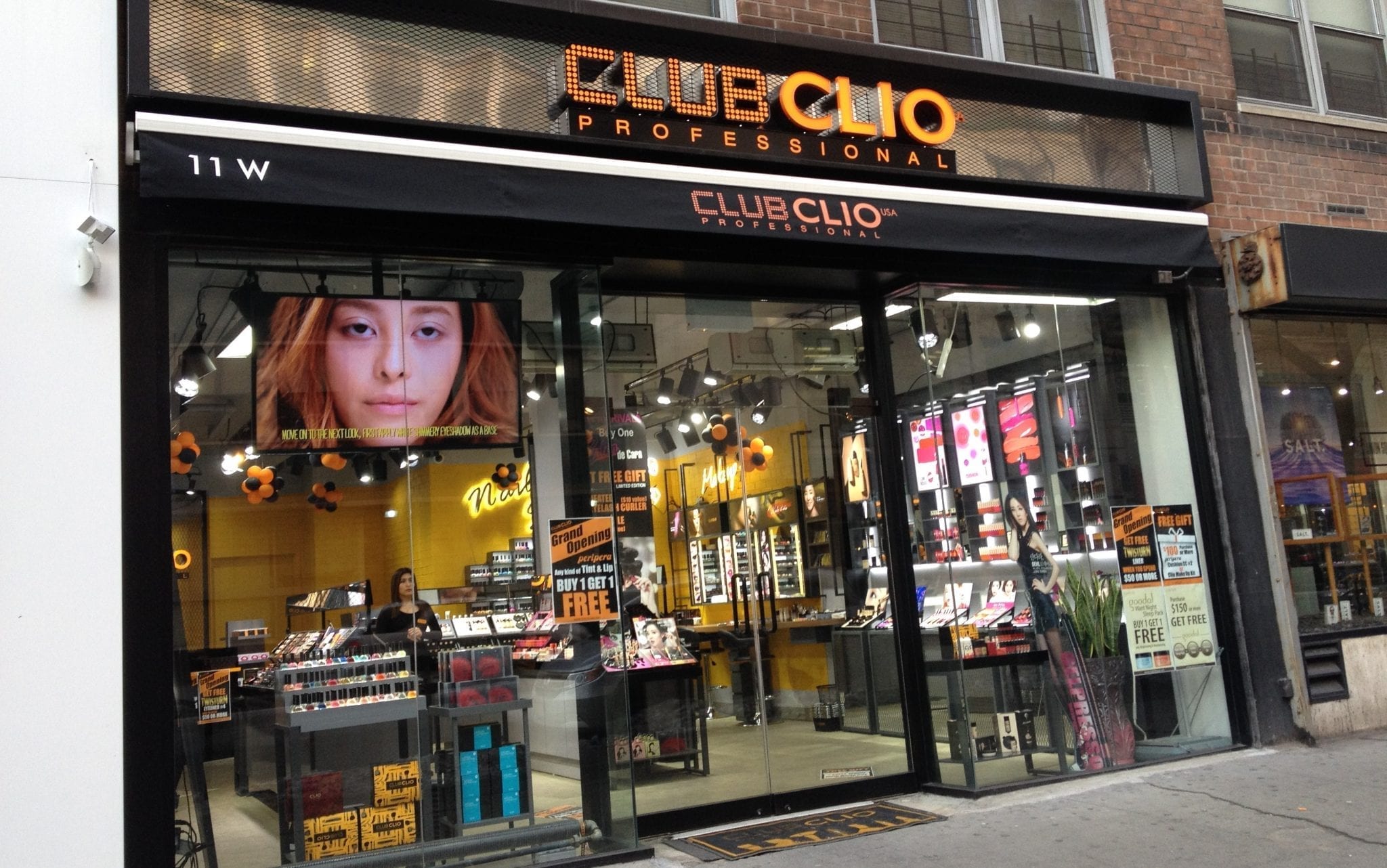
    L Capital, an affiliate of luxury brand group LVMH, will invest US$50 million in Korean cosmetics company Clio, which aims to go public by the end of this year.

    Clio will issue redeemable convertible preference shares to be taken over by the investment company, and an official agreement for this pre-IPO investment will be signed next week.

    After almost two decades of mediocre turnover since its establishment in 1997, Clio’s sales surged to 107 billion won ($93.07 million) last year with an operating profit of 22.5 billion won, boosted by an appearance on a popular TV show. Its total market value after IPO is expected to be more than 1 trillion won.

    L Capital ventured into the Korean corporate world two years ago by investing 60 billion won in YG Entertainment, becoming the second-largest shareholder of one of the top three entertainment companies in Korea.

    Its second choice of Clio reflects the growing demand in Asia, particularly China, for K-beauty products.

    Korean cosmetics exports to China alone last year were worth $1.09 billion, double the value of the previous year and coming in second to French cosmetics.

    US cosmetics company Estee Lauder last year became a major shareholder of Have and Be, the parent company of Dr Jart, while Goldman Sachs’ private equity fund took over Carver Korea, which owns AHC, for 520 billion won this year.

  • DFS Group Cambodia gala opening

    DFS Group Cambodia gala opening

    Luxury travel retailer DFS Group Cambodia has marked the opening of its first store, T Galleria by DFS, Angkor, with a gala event for more than 300 guests.

    DFS T-Galleria Angkor Cambodia

    In the resort town and provincial capital of Siem Reap, near the ancient temple of Angkor Wat, T Galleria by DFS, Angkor is the largest duty-free luxury department store in Cambodia. It offers travelers an integrated retail, hospitality and leisure experience with 170 brands across 86,000 sqft (7989 sqm).

    The opening celebration began with a ribbon-cutting ceremony, after which traditional Cambodian Apsara hostesses led guests through the two-storey store for traditional cultural performances and demonstrations by Cambodian craftsmen.

    DFS T-Galleria Angkor Cambodia 3

    From DFS Group were chairman/CEO Philippe Schaus and co-founder Robert Miller, while special guests included Cambodia’s Senior Minister of Economy and Finance Aun Pornmoniroth and Minister of Tourism Thong Khon.

    DFS Cambodia

    The store features a curated collection of Cambodian artisanal products designed and produced by more than 30 Cambodian artist workshops. At the event, Angkor Artwork, a Siem Reap design studio, demonstrated the art of lacquer work, while Golden Silk, one of the last fully integrated silk producers in the world, wove silk spun from Cambodian silk worms.

    DFS T-Galleria Angkor Cambodia 2

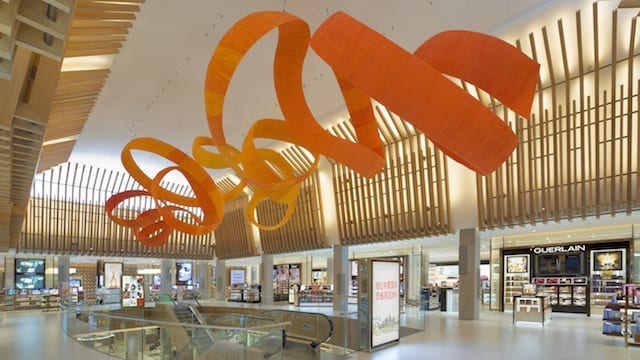
    Traditional Khmer motifs and carvings feature throughout the store, including a nearly 20m art installation suspended above the vaulted atrium.

    DFS T-Galleria Angkor Cambodia 1

    T Galleria by DFS Angkor also ranges more than 130 international brands including watches and jewellery from Bulgari, Cartier and Tiffany & Co and fashion from Bottega Veneta, Burberry, Fendi, Gucci and Saint Laurent. There are also more than 30 beauty and fragrance brands such as Cle de Peau Beaute, Dior, Estee Lauder and Giorgio Armani.

    DFS T-Galleria Angkor Cambodia 5

    The gala event also marked the official opening of the onsite restaurant, the first Crystal Jade outlet in Cambodia, serving traditional Chinese cuisine in a setting overlooking the gardens and reflecting pools outside.

    DFS T-Galleria Angkor Cambodia 6

    DFS T-Galleria Angkor Cambodia 8

    The event also provided a platform to officially announce the company’s sponsorship of several non-profit organisations focussed on helping underserved populations in Cambodia. Schaus presented a donation to Kuma Cambodia, which aims to reduce poverty through providing education, healthcare and nutrition to vulnerable youngsters, English and computer courses for teenagers, and workshops and guidance for parents and guardians.

  • Here’s How Estee Lauder Plans To Grow In China

    Here’s How Estee Lauder Plans To Grow In China

    In Q3 2016, Estee Lauder registered an 8% growth in retail sales in China, lower than its all the time high of 20%, but still strong according to the company. The growth in China was primarily due to a 70% growth in e- and mobile commerce sales and 10% of the company’s business in China is now online. Estee Lauder now plans to diversify its brand portfolio in the region along with a geographically diversification by penetrating into more cities in China. It also plans to increase the number of freestanding stores, particularly in cities where there are no alternative distribution solutions such as departmental stores. While the Asia Pacific region (including China) accounts for less than 20% of the company’s net sales, it holds strong potential. Most of the company’s brands expect Estee Lauder registered double digit growth in China for Q3 2016. We believe that its investment in e-commerce, its diversification and increasing focus on distribution channels will drive revenues for the company from this region in future.

    Focus On E-Commerce Initiatives

    Estee Lauder reported that 70% of its growth in China for Q3 2016 came from online sales which now account for 10% of total sales in the region, slightly lower than the 12% figure for the U.S. The company plans to explore the omni channel opportunity in the region, where its freestanding stores will be connected to the online brand and be more efficient. The company also has a store in Alibaba’s Tmall which aims to bring luxury brands to Chinese consumers. Mainland China’s overall luxury market is estimated at $ 17.2 billion. According to a report by KPMG, 50% of China’s domestic luxury consumption will be generated online by 2020. Estee Lauder’s investment in e-commerce initiatives in China is aimed at tapping this market and the company is already witnessing results.

    Diversification – Portfolio and Geographic

    Estee Lauder is looking to spread its geographical reach in China by expanding into more cities through a distribution channel of free standing stores. This model will work well in smaller Chinese cities where there are no departmental stores, but consumers are keen to buy the company’s products. Currently it operates free standing stores of its M.A.C and Jo Malone brands in the region, but expects to add other brands in future. The company believes that over time its speciality channel will also develop in China. Most of its brands, with the exception of Estee Lauder, registered double digit growth in the region for Q3 2016. The company can improve the its visibility in the region by broadening its distribution channel, increasing availability in stores and fostering e-commerce initiatives.

    While Estee Lauder’s sales in China are witnessing growth currently, the company is focused on the region and plans to invest on online and distribution initiatives to generate additional sales. As the Chinese economy shifts towards consumption with an increasing demand for foreign luxury products, Estee Lauder has strong growth prospects in the region.

  • Hong Kong mars Estee Lauder Asia result

    Hong Kong mars Estee Lauder Asia result

    Beauty giant Estee Lauder says its Asian sales rose in every country except Hong Kong in the last quarter.

    Estee Lauder Asia achieved double-digit growth in Korea, Japan, Australia and Taiwan and achieved “solid” constant currency sales gains in China and Thailand.

    “The higher sales in China reflected sales gains in most brands due to continued distribution expansion and increased online activity,” the company said in an earnings statement.

    “In Hong Kong, the reduction in tourism from China continues to negatively impact business, particularly for the Estee Lauder, Clinique and La Mer brands. The company remains cautious of the near-term slower growth there.”

    Foreign currency translation unfavorably impacted reported sales by 5 per cent with the largest impact affecting China, Korea and Australia.

    In Asia-Pacific, operating income decreased, with lower results reported primarily in Hong Kong and China.

    “The lower results in Hong Kong were primarily due to the lower sales, and in China were attributable to increased marketing, selling and store operations costs. These lower results were partially offset by higher operating income in Japan and Singapore,” the company said.

    In its outlook for the full 2016 year, now nine months complete, Estee Lauder said it expects the global prestige beauty market  to continue to generate solid growth.

    “However, volatility and economic challenges are expected to continue to negatively impact Hong Kong and some emerging markets challenged by weak currencies. The company’s growth has outpaced global prestige beauty and is expected to continue growing faster than the industry, demonstrating the company’s ability to successfully navigate volatility. The company expects to increase targeted investment spending in the fiscal 2016 fourth quarter compared with the prior year, behind areas with good momentum or with opportunities for share gains, as well as in capabilities to sustain future growth.”

    Globally, net sales for the company’s third quarter to March 31 totalled US$2.66 billion, a 3 per cent increase compared over the $2.58 billion in the prior-year quarter. Net earnings were $265.6 million, down on the $272.1 million of last year.

    Meanwhile, Estee Lauder has revealed plans to save between $200 million and $300 million a year through a series of job cuts, retraining and restructuring initiatives.

  • Estee Lauder to axe up to 1200  jobs

    Estee Lauder to axe up to 1200 jobs

    Beauty giant Estee Lauder has announced a multi-year initiative named Leading Beauty Forward to build on its strengths and better leverage its cost structure to free resources for investment to continue its growth momentum.

    The plan involves the reduction of between 900 and 1200 jobs – about 2.5 per cent of its workforce – and restructuring on a number of fronts aimed at saving US$250 million to $300 million in overheads.

    “Leading Beauty Forward is designed to enhance the company’s go-to-market capabilities, reinforce its leadership in global prestige beauty and continue creating sustainable value,” the company said in an announcement coinciding with its latest quarterly financial results.

    Globally, net sales for the company’s third quarter to March 31 totalled US$2.66 billion, a 3 per cent increase compared over the $2.58 billion in the prior-year quarter. Net earnings were $265.6 million, down on the $272.1 million of last year.

    Fabrizio Freda, president and CEO of Estee Lauder, said: “We are launching this initiative from a position of exceptional strength. With the aid of our 10-year compass, we are proactively anticipating long-term industry trends and positioning our brands in more promising and faster growing areas. Leading Beauty Forward should further position us better to continue winning on a complex global stage and generate savings to help sustain our long-term sales growth and margin progress.

    “This initiative is expected to provide further resources to invest in brand growth, increase speed-to-market and flexibility in resource allocation, and better leverage growth for continued profitability improvement,” he concluded

    Leading Beauty Forward will begin during the company’s current quarter. Specific initiatives are expected to be approved through to the end of the 2019 fiscal year and be complete by 2021. Key actions include:

    • Better leveraging growth through cost savings, more scalable processes and organisational design;
    • Redesigning select areas of the company’s go-to-market brand, region and affiliate organisations to strengthen capabilities in areas such as digital and retail;
    • Redesigning and restructuring select corporate functions that support the company’s brands, channels and geographies through the development of scalable global and regional shared services with a more efficient cost base;
    • Investing in brand growth, such as new products, social media, communications, in-store merchandising, point-of-sale activities and advertising.

    The company expects to take restructuring and other charges of between $600 million and $700 million, before taxes, consisting of employee-related costs, asset write-offs and other costs associated with implementing these initiatives.

    Estee Lauder said the job cuts will take into account the elimination of some positions, retraining and redeployment of certain employees and investment in new positions in key areas.

  • Tmall driving more than sales for top beauty brands

    Tmall driving more than sales for top beauty brands

    Scores of high-end cosmetics companies are setting up shop on Alibaba Group’s Tmall.com online marketplace as eCommerce continues to gain ground as a critical marketing and sales channel for reaching China’s increasingly sophisticated consumers.

    At the recent Tmall Beauty Awards ceremony in Shanghai, which celebrated the top cosmetics brands operating on the eCommerce platform, Alibaba announced that 29 well-known Western brands and 37 from Japan and Korea had storefronts on Tmall at the end of 2015, including more than 10 joining the platform last year alone such as Lancôme, Bobbi Brown, La Mer, Anessa and Avene. Another 20 cosmetics companies are planning to launch their own presence on Tmall this year.

    Alibaba also announced a cooperation agreement with Korean cosmetics maker AmorePacific Group to expand the latter’s Tmall presence. AmorePacific will add two more storefronts exclusively on Tmall for the Sulwhasoo and IOPE beauty brands in the following months. AmorePacific already operates the Laneige, Innisfree, Mamonde and Etude House e-shops on Tmall, and about 800,000 Chinese consumers have purchased goods from Laneige’s shop over the past three years, according to Alibaba. The brand also sold about 45,000 BB creams, or blemish balms, during Alibaba’s 11.11 Shopping Festival, bringing in US$1.4 million from that product alone.

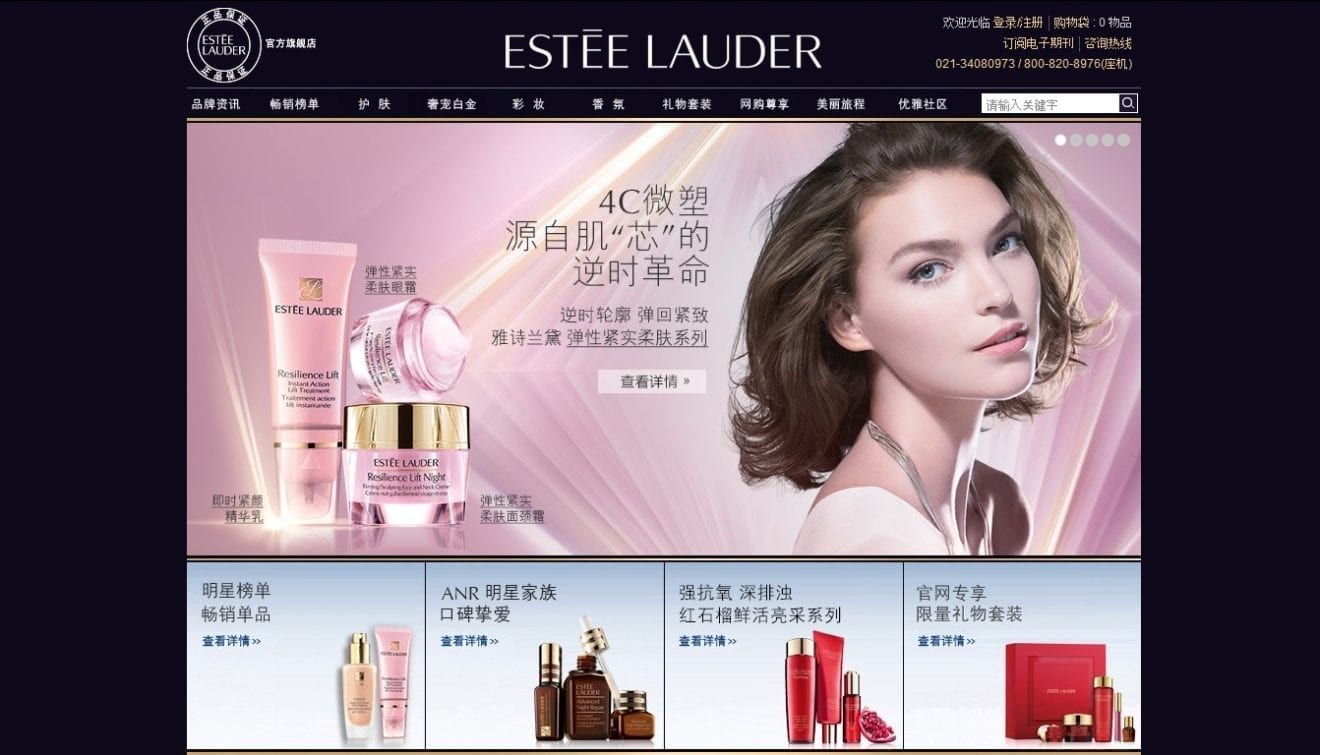
    Alibaba has similar cooperation agreements with Procter & Gamble, Estée Lauder, L’Oréal and domestic retailer Shanghai Jahwa Corp.

    The eCommerce push by cosmetics companies comes amid strong growth in high-end cosmetics purchases by Chinese consumers. A report from Chinese research firm CBNData, released in conjunction with the awards, noted that total sales of cosmetics products in China climbed nearly 20 per cent to $74.1 billion last year from 2014. Citing independent researchers, CBNData’s report also said that online channels accounted for 36 per cent of that, or $27 billion, with Tmall controlling about a 70 per cent share of the B2C market. Alibaba Group is an investor in CBNData parent China Business Network.

    Tmall Cosmetics GM Mike Hu said total sales generated on all business-to-consumer retail websites in China currently account for 12 to 15 per cent of the entire cosmetics market, and he predicts those channels will grow by another 30 per cent to 50 per cent over the next two to three years.

    Hu stressed that Tmall offers more than just another sales channel to brands. It’s also a platform to promote new products, build a connection with customers and increase business both online and off. According to Hu, over 20 brands have introduced about 160 versions of products that were exclusive to Tmall shoppers, and the brands have launched more than 100 new products via the website in 2015.

    “Two or three years ago, eCommerce played as a sales channel since its significance grew and it helped enhance business,” said Gary Chu, online general manager at Estée Lauder China, said at the awards ceremony. “Now what we are thinking about is how to integrate brand property, content and products into our presence in Alibaba’s ecosystem to meet the needs and demands of the brand.”

    To that end, Estée Lauder has been engaging customers via its so-called Fans communities within the Tmall mobile app. One brand, Bobbi Brown, opened its Fans page last November and now has more than 640,000 followers. It offers make-up tips and sample trials, among other initiatives, to tackle customers’ most common inquiries in order to educate and interact with shoppers, while serving as a bridge to the Bobbi Brown storefront. In addition to the Fans page, the company also used Instagram-like photo sharing on Tmall to generate buzz about Bobbi Brown lipstick ahead of Chinese New Year earlier this month, and Estée Lauder regularly uses the Tmall mobile app to help launch new products.

    Alibaba Group CEO Daniel Zhang said Estée Lauder’s efforts are prime examples of ways brands can engage shoppers with content and convert interactions into business opportunities.

    “All the brands and merchants are the best content producers, and merchants should incorporate products into content that consumers are willing to read and eager to buy,” he said.

    Brands are also using their Tmall storefronts to boost their online-to-offline (O2O) business. So far 54 of them, including Estée Lauder, La Mer and Laneige, have integrated their online and offline membership programs and now allow users to make appointments for skin care treatments in brick-and-mortar stores online.

    Tmall will continue to promote O2O retail to “achieve the goal of same product, same service and same membership” online and offline, Hu said.

    Here are the winners from some of the biggest award categories from last Friday’s ceremony. The winners were chosen based on search popularity, interaction with shoppers, customer reviews, trial reports, sales and services among millions of customers and thousands of brands on Tmall in 2015.

    Most popular brands online: Laneige, Lancôme, Innisfree, Maybelline

    Hot search brands: Bobbi Brown, Avene, Sulwhasoo (which launched on March 1)

    Favorite brands among customers born in the 1990s:Sekkisei, The Face Shop, Hanhoo (Chinese domestic brand)

    Favorite brands among customers holding Alibaba Passport (shoppers spending more than RMB 100,000 ($15,270) annually on Alibaba’s platforms): Shiseido, Whoo, L’Oréal, Clarins, Innisfree

    Favorite brands among male shoppers: JVR (Chinese domestic brand), L’Oréal, NIVEA

    Best-selling brand: Pechoin (Chinese domestic brand)

    Outstanding and popular group: Estée Lauder Group

  • DFS launches new Spring Galleria campaign

    DFS launches new Spring Galleria campaign

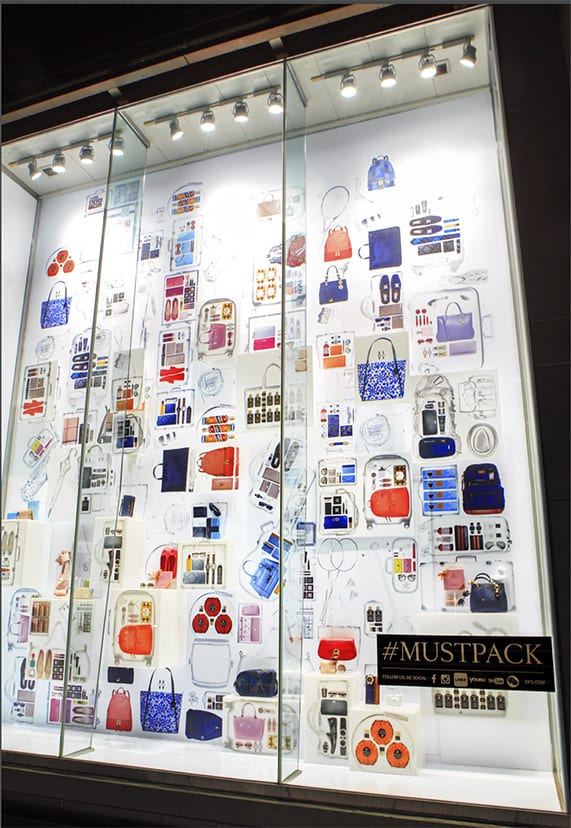
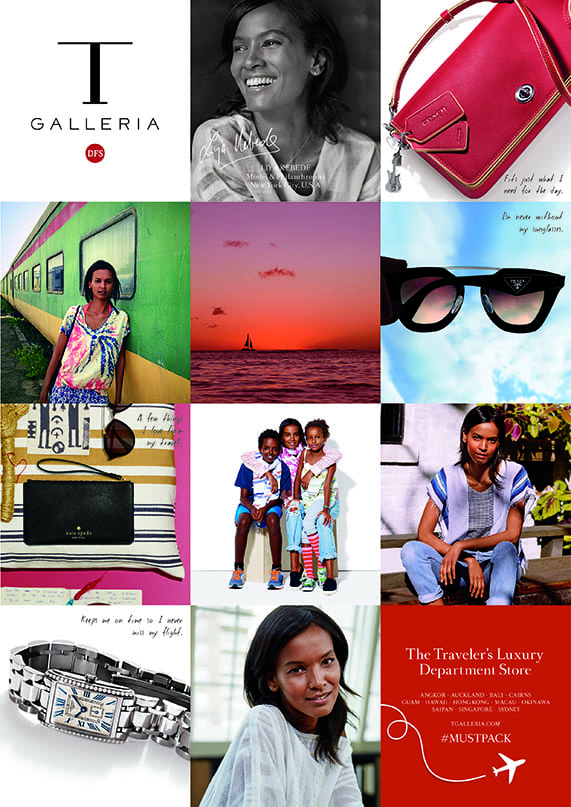
    DFS Group has announced its new Spring 2016 campaign tie up with three international influencers and global travellers to support and celebrate the launch of its new travel #mustpack concept – aimed at equipping travellers with the essentials ‘for wherever your journey takes you’.

    The new campaign features Ethiopian philanthropist and model Liya Kebede, Chinese model Zhao Lei and Chinese actress Chen Ran and is designed to provide DFS’ customers with a photographic inside track on these celebrities’ #mustpack journey choices, using photos and stories from their personal travels.

    DFS says that the campaign will run between March, April and May, allowing its customer to interact with the campaign in-store, online and through its social media channels.

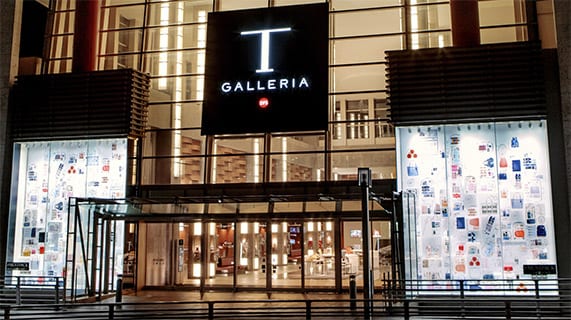
    T Galleria

    How the new T Galleria front window displays look in Hong Kong.

    Mustpack window close up

    A close up of the #mustpack store window display.

    Customers will also be able to connect with each influencer, as well as their travel destinations, plus the selected #mustpack products that will be available for sale at T Galleria by DFS stores

    Commenting on the campaign, John Gerhardt, Senior Vice President, Creative Branding Direction, DFS Group said: “This season we were particularly inspired by those #mustpack items you have to have with you throughout your journey.

    “We wanted to bring that story to life by showcasing Liya, Zhao and Chen’s love of travel through their own personal travel photos, as well their true travel #mustpacks.”

    ‘IMMERSIVE’ DIGITAL EXPERIENCE…

    The retailer says that the new campaign is being shown utilising three videos featuring Liya, Zhao and Chen, plus ‘an immersive digital experience’ at TGalleria.com where customers can discover the videos and travel guides as well as the season’s #mustpack products.

    DFS’ customers in Hong Kong will also be able to meet the influencers, with Zhao Lei set to host a shopping night at T Galleria by DFS, Hong Kong, Canton Road on March 17 and Chen Ren attending the T Galleria Beauty by DFS, Hong Kong at Causeway Bay on April 14.

    The campaign brands feature #mustpack products from 15 of DFS’ most popular brands, including Estée Lauder, Givenchy, Prada, Bulgari, Rémy Martin and others and DFS says this is ‘just a sample’ of the from the 700 brands across its ‘five pillars of luxury’.

    Adding her comments, Sibylle Scherer, DFS Group President Merchandising and Consumer Marketing said: “Our Spring 2016 campaign’s celebration of travel as well those essential items you have to bring with you along the way, truly brings to life everything our customers love about DFS.

    Big 2 T Galleria by DFS Spring 2016 Campaign Featuring Liya Kebede_verticalSTORES ‘PACKED’ WITH #MUSTPACK PRODUCTS

    “From fashion and beauty to watches and wines, our stores are packed with the #mustpack products that complete your journey and we’re thrilled that Liya, Zhao and Chen have joined with us to share that story this season.”

    DFS adds that its store windows now show “x-ray” views into the various suitcases displaying this season’s collection, while in-store customers encounter highlighted #mustpack products at multi-category display tables.

    These are designed to simulate the experience of unveiling products through an airport security x-ray machine.

    DFS concludes that this campaign will also run on social media, with T Galleria by DFS teaming up with various influencers in key DFS locations, such as Gaile Lok in Hong Kong, Halley Elefante in Hawaii and Andrea Chong in Singapore. They will also be giving away the season’s best #mustpack products for dedicated followers of @DFSOfficial.


  • Global duty free retailing to hit US$98 billion

    Global duty free retailing to hit US$98 billion

    Global duty-free retailing is expected to reach nearly US$98 billion in revenue by 2019, according to a new study by global technology research and advisory company Technavio.

    With the expansion of low-cost airlines, many middle-class travellers are taking inexpensive holidays, a trend that has helped the Asia Pacific and Middle East emerge as the fastest-growing regions for duty-free retail marketing, says Technavio analyst Vijay Sarathi.

    He says China, India, Indonesia, South Korea and Sri Lanka were among some of the most-desired inexpensive destinations in 2014.

    “During the same period, it is estimated that international tourist inflow in APAC increased to almost 263 million travellers, and it has largely helped the market grow until 2019.”

    Just released in London, Technavio’s report, Global Duty-Free Retailing Market 2015-2019, provides an in-depth analysis of market growth in terms of revenue and emerging market trends.

    By products, the global duty-free retailing market for 2014 comprised fashion accessories and hard luxury (32.1 per cent), perfume and cosmetics (29.21 per cent), wines and spirits (16.02 per cent), tobacco (12.43 cent), and confectionery and fine food (10.25 per cent), says the report.
    It says the fashion, accessories and hard luxury segment was valued at close to $20.81 billion, with the most in-demand products including precious jewellery, briefcases, handbags and shoes. The more popular brands include Armani, Burberry, Fossil, Gucci and Michael Kors.
    Technavio researchers say Chinese travellers emerged as the largest consumers of luxury brands last year, contributing nearly 25 per cent of global revenue.
    The perfumes and cosmetics segment is one of the fastest-growing categories in the global duty-free retailing market. APAC and the Middle East are the key regions for this category, with some of the top-selling brands including Chanel, Christian Dior, Estee Lauder and Guerlain.

    With close to 21.5 per cent of revenue share in the category, L’Oreal created a division especially for duty-free stores in 2013, describing the division as “the sixth continent”. In 2014, L’Oréal launched theVichy and Kerastase brands in the duty-free retail segment in Asia, and also launched the Three-Minute Beauty program to engage with potential luxury product buyers at airports.
    The liquor category is expected to grow to $13.47 billion in 2019. In 2014, Diageo opened two Johnnie Walker Houses in duty-free shops in India and Taiwan.

  • Estee Lauder settles Have & Be Korea deal

    Estee Lauder settles Have & Be Korea deal

    Estee Lauder has completed the acquisition of Have & Be Korea, the parent of skin care brands Dr Jart+ and Do The Right Thing.

    The New York-listed global beauty powerhouse has not revealed terms of the deal, which gives it an important brand in the fast-growing Korean beauty industry.

    Launched online in 2005 by ChinWook Lee, Dr Jart+ is a Seoul-based, global high-growth skin care brand featuring quality and innovative products designed to address specific skin care needs. The brand’s unique fusion of dermatological science and art – as reflected in the

    brand name, which is inspired by the phrase “Doctor Joins Art” – appeals to a broad range of consumers, especially millennials. Dr Jart+ is sold in many countries around the world, primarily in Asia and the US, through various department stores, specialty-multi and eCommerce channels including Sephora.

    The Estee Lauder Companies’ investment also includes an interest in Do The Right Thing (DTRT), a men’s-focused skin care brand that fuses Korean innovation with a bold New York style. Founded by Mr Lee in 2012, DTRT’s line of cleansers, lotions, moisturisers and serums are sold in Korea through various channels and in the US through Sephora and Birchbox Man.

    Estee Lauder is one of the world’s leading manufacturers and marketers of quality skin care, makeup, fragrance and hair care products. The company’s products are sold in over 150

    countries and territories under brand names including: Estee Lauder, Aramis, Clinique, Prescriptives, Lab Series, Origins, Tommy Hilfiger, Mac, Kiton, La Mer, Bobbi Brown, Donna Karan New York, DKNY, Aveda, Jo Malone London, Bumble and bumble, Michael Kors, Darphin, Tom Ford, Smashbox, Ermenegildo Zegna, Aerin, Marni, Tory Burch, Le Labo, Editions de Parfums Frederic Malle and Glamglow.

  • What Are The Key Drivers Of Growth For Estee Lauder?

    What Are The Key Drivers Of Growth For Estee Lauder?

    Focus on the online sales channel, digital initiatives, and revival of its travel retail channel, will be the key drivers for Estee Lauder‘s (NYSE:EL)  growth in the future.  While travel retail showed tremendous growth in 2014, the slowdown in China and natural calamities had a negative impact in 2015.  Estee Lauder feels this setback is temporary and we believe new product launches and initiatives in this segment will boost its revival, and will be a key driver of growth for the company. With booming e-commerce and mobile internet penetration, we believe focus on online sales will be another driver of growth for the company, especially in emerging economies such as China.

    Revival Of The Travel Retail Channel

    In the fiscal year 2014, Travel Retail was one of the highest growth channels for Estee Lauder contributing to 13% of its product distribution. Global Airport retailing information reveals that by 2016, airport retail spending will be $23.2 billion for Asia Pacific, whereas for the Americas and Europe the figures will be $10.1 billion and $12.4 billion. Estee Lauder is leveraging this trend primarily to capture the Asian market. In May 2014, the company launched a flagship boutique at the Detroit Metro Airport, a primary gateway to Asia, via Delta Airlines. This boutique offers a collection of all its luxury brands, High-Touch services, along with other facilities such as a first-class lounge area, free Wi-Fi, and updated information on the flights. Growth in the travel retail channel slowed down in Q4 2015 due to the macroeconomic slowdown in China and spread of MERS virus in Korea, but the company believes this setback is temporary. It is continuing to emphasize  skincare, its most profitable product category, to boost travel retail sales. Estee Lauder recently launched a vast array of products under several brands including Clinique, Bobbi Brown, Jo Malone, Tom Ford, and M.A.C., at the Tax-Free World Association (TFWA) Exhibition, held at Cannes in October. The products include face contouring, eye makeup, lipstick, serums, treatment creams, and fragrances. These new products will be available across Estee Lauder’s travel retail channel. [].We believe revival of the travel retail channel will be a key driver of Estee Lauder’s revenues in the future.

    Focus on Online Channels And Digital Initiatives

    The shift towards online shopping is evident from the tremendous growth in e-commerce.  New York based research agency, L2 ThinkTank.com found that while the global beauty industry grew at 6% in 2013, sales through the e-commerce channel witnessed a 29.1% growth during the same period. To leverage this trend, Estee Lauder is selling 14 of its brands directly to consumers online through approximately 120 of its own e-commerce and mobile commerce sites.  The company also launched  “Forecast,” a mobile application under its Clinique brand, which provides weather information and skin care tips based on weather conditions.  To expand in the Chinese market, Clinique opened its  flagship store on Alibaba’s Tmall. According to the National Bureau of Statistics cited in Statista, the online transaction value of cosmetics retailing in China is forecast to grow by 123% in 2015. Given the market potential, we believe Estee Lauder’s focus on online sales and digital initiatives, around the use of social media and mobile apps for promotion, will be key drivers of its revenue in the future.


  • Estée Lauder Q1 2016 fiscal sales +8% to $2.83bn

    Estée Lauder Q1 2016 fiscal sales +8% to $2.83bn

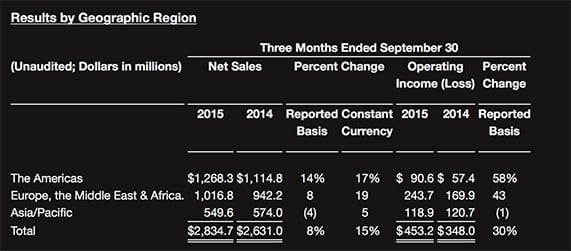
    The Estée Lauder Companies reported strong financial results today for Q1 ended September 30, 2015/16, achieving net sales of $2.83bn – up +8% against $2.63bn achieved in the prior-year quarter.

    Net earnings rose +36% to $309.3m compared with $228.1m in the comparative periods, while diluted net earnings per common share increased by +39% to $0.82, compared with the $0.59 reported in the prior year. For the quarter, the negative impact of foreign currency translation on diluted net earnings per common share was $0.11.

    Excluding the impact of foreign currency translation, net sales increased 15% and diluted net earnings per common share rose 58%.

    Within the huge beauty organisation, travel retail benefited from new launch initiatives, the rise in global airline passenger traffic and expanded distribution, as net sales rose due to favourable comparison of accelerated orders. Otherwise, travel retail net sales declined, reflecting weaknesses in some key foreign currencies, which in turn impacted upon the mix of travellers and their consumption patterns.

    Accelerated retailer order effects

    Back with the beauty company globally, Lauder’s fiscal first quarter 2015 included the effect of accelerated retailer orders, creating a favourable comparison with the fiscal 2016 first-quarter results. The company says that adjusting for the impact of the aforementioned accelerated orders, net sales and diluted earnings per common share in constant currency for the quarter ended September 30, 2015 would have increased by 8% and 16%, respectively.

    Fabrizio Freda, President and CEO, said: “We began the fiscal year delivering 8% adjusted constant currency sales growth. We achieved this strong performance by leveraging our multiple engines of growth, driven by our broad portfolio of prestige brands, which is diversified by category, geography and channel.

    “Our results this quarter were led by our luxury and makeup brands, Europe, where every country posted gains, emerging markets, and online, specialty-multi and freestanding store channels. Our strong earnings per share reflected the strong sales gains and our ability to leverage those sales through cost saving initiatives and continued financial discipline.

    “These results demonstrate the balance we have achieved, as well as our success in navigating significant currency headwinds and slower growth in certain markets, like Greater China, by focusing on opportunities within our control and strategically investing to further build our brands to drive future growth.

    “As we look toward the upcoming holiday shopping period, we are well-positioned with a strong array of new products and gift offerings across our brands and categories. We will continue to execute our long-term plan with strategic investments in high potential, high return areas of our business.

    “This focus on supporting those areas of proven growth is expected to drive sales momentum throughout the fiscal year to achieve strong bottom line results. With the strong start to the year and the opportunities we see ahead, we are raising our forecasted adjusted constant currency earnings per share growth to 10% to 12% for the full 2016 fiscal year.”

    Looking at the various product sectors, Skin Care net sales increased, due to the favourable comparison related to earlier accelerated orders. Contributing to the category’s sales were higher sales from La Mer and Origins, plus incremental sales from recent acquisitions.

    Unfavourable currency translation

    Lauder added that partially offsetting these increases were the unfavourable impact of foreign currency translation and lower sales from Estée Lauder reflecting softness in China and Hong Kong, due to difficult retail environments, as well as from Clinique, due to a difficult comparison with greater launch activity in the prior-year period.

    Sales declines from these two brands were partially offset by recent launches, such as New Dimension products from Estée Lauder and Clinique Smart moisturisers. Operating income also increased, driven by earlier accelerated orders. Excluding this impact, skin care operating income declined, primarily reflecting lower results from Estée Lauder, partially offset by higher results from La Mer.

    In the Makeup sector higher sales were recorded thanks to ‘excellent growth’ from the company’s makeup artist brands and strong double-digit growth from Smashbox and Tom Ford. Better sales resulted from new product offerings, as well as expanded distribution in a number of channels, including freestanding retail stores, travel retail and specialty multi-brand retailers.
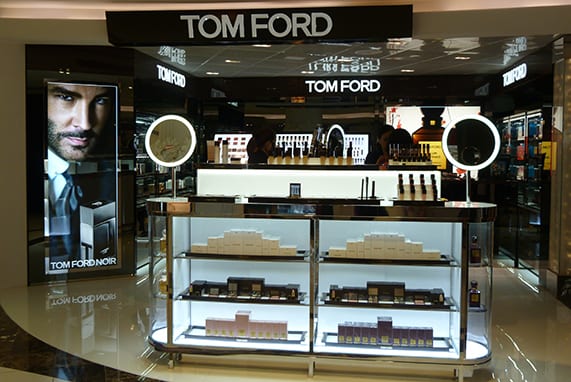
    Tom Ford DFS T Galleria Waikiki

    A Tom Ford store execution at DFS Group’s T Galleria Waikiki in Honolulu.

    Estée Lauder and Clinique posted higher makeup sales, with the Lauder increases primarily due to new launches such as Pure Color Envy liquid lip potion and Double Wear Makeup to Go liquid compact. New product offerings from Clinique – such as Beyond Perfecting foundation and concealer – contributed sales gains, with higher sales from Clinique driven by earlier accelerated orders. Excluding this impact, Clinique makeup sales fell due to unfavourable foreign currency translation.

    Lauder says that the beauty company’s overall makeup category is experiencing strong growth in product areas such as lipsticks and foundations, as well as increased prestige makeup usage in Asia, with increased makeup operating income due to the Estée Lauder and other brands.
    Lauder Q1 fiscal results

    Turning to Fragrance, ELC’s sales increase primarily reflected strong double-digit gains from its luxury brands, including Jo Malone London and Tom Ford, plus higher sales recorded from the Aramis and Designer Fragrances division, and incremental improvements from recent acquisitions. Sales growth was attributable to new product launches and expanded distribution.

    In the Hair Care sector, the category’s growth benefited from expanded global distribution, primarily in salons, freestanding stores and travel retail for Aveda and from specialty-multi brand retailers for Bumble and bumble. However, Hair care operating income decreased, due to higher investment spending to support new and existing products and expanded distribution.

    Turning to sales in The Americas, business in North America was very healthy reflecting sales growth from virtually every brand, led by double-digit growth from some of ELC’s makeup, luxury and designer fragrance brands, plus solid growth from hair care brands.

    Double-digit online business increase

    The beauty company adds that this was driven in part by new product introductions and expanded distribution, as well as the favourable impact of earlier accelerated orders. ELC’s online business also grew in double digits.

    Meanwhile, in constant currency, sales in Canada and Latin America rose in double-digits, with the strong growth in Latin America headed up by Brazil and Mexico, although both were significantly impacted by adverse foreign currency translation and reflected overall net sales growth primarily due to the expanded distribution of M•A•C.

    In addition, operating income in the Americas increased due to earlier accelerated orders. Operating results in the region reflected higher selling, advertising, merchandising, sampling and store operating costs. These were related to expanded distribution, product launches and in-store promotional activities, plus an increase in product development and research and development expenses. The operating results also reflect the negative impact of foreign currency translation.

    By contrast, countries in Europe, the Middle East & Africa all recorded constant currency sales growth, with most posting double-digit increases, led by the UK, France, Germany and Italy, and a number of emerging markets, including the Middle East, Russia and Turkey.
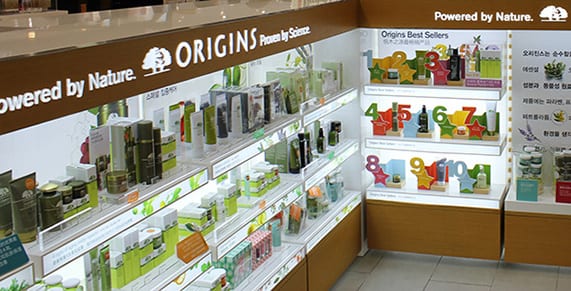
    001 aa origins lotte dwt seoul

    Origins seen here at the Lotte Duty Free flagship store in downtown Seoul, South Korea.

    As mentioned in the introduction, travel retail continues to benefit from new launch initiatives, an increase in global airline passenger traffic and expanded distribution. Net sales increased, due to the favourable comparison of the accelerated orders. Excluding this impact, travel retail net sales declined reflecting softness of some key foreign currencies affecting the mix of travellers and their consumption.

    In its analysis ELC estimates that it continued to outperform prestige beauty in most markets in the region, although foreign currency translation unfavourably impacted reported sales by 11%, due to the strength of the US dollar in relation to virtually all currencies in the region, with the largest impact affecting the UK, Russia, Germany and France.

    Operating income also increased, with higher operating results posted in travel retail, due to the accelerated orders, the Middle East, France, Benelux and Spain. Lower operating results were recorded primarily in South Africa and Central Europe.

    Meanwhile in the increasingly important Asia/Pacific region, sales increased in constant currency, with double-digit growth in Japan, Australia and the Philippines. The higher sales in Japan reflected, in part, the impact of earlier accelerated orders. Higher constant currency sales were also recorded in Korea and Taiwan.

    Growth stalled in Hong Kong, China and Singapore

    The beauty giant added that lower sales were reported in a few countries, including Hong Kong, China and Singapore, with previously reported social instability continuing to hit Hong Kong’s tourism and negatively impact business, particularly the Estée Lauder, Clinique and La Mer brands. As a result ELC says it remains ‘cautious of the near-term slower growth’ in this market.

    By contrast, lower sales in China were primarily seen in the Estée Lauder brand, as a result of a difficult retail environment, while most other brands posted solid sales growth in this market. Meanwhile, foreign currency translation unfavourably impacted upon reported sales by 9%, due to the strength of the US dollar in relation to most currencies in the region, with the largest impact affecting Japan, Australia and Korea.

    ELC said that in Asia/Pacific operating income fell slightly, led by lower results in China and Hong Kong, primarily due to the lower sales, and in China, also attributable to increased advertising, merchandising and sampling costs to support existing products. These results were partially offset by higher operating income in Japan and Taiwan.

    Looking forward, ELC is forecasting a net sales increase in the second fiscal quarter 2016 of between 6% and 7% in constant currency. Reflecting the strength of the US dollar, foreign currency translation is expected to negatively impact sales by approximately 5% to 6% versus the prior-year period.

    For the full fiscal year 2016 it is currently forecasting a ne sales rise of between 8% and 10% in constant currency and considering the strength of the US dollar, the foreign currency translation is expected to negatively impact sales by approximately 4% to 5% versus the prior-year period.