Tag: etail

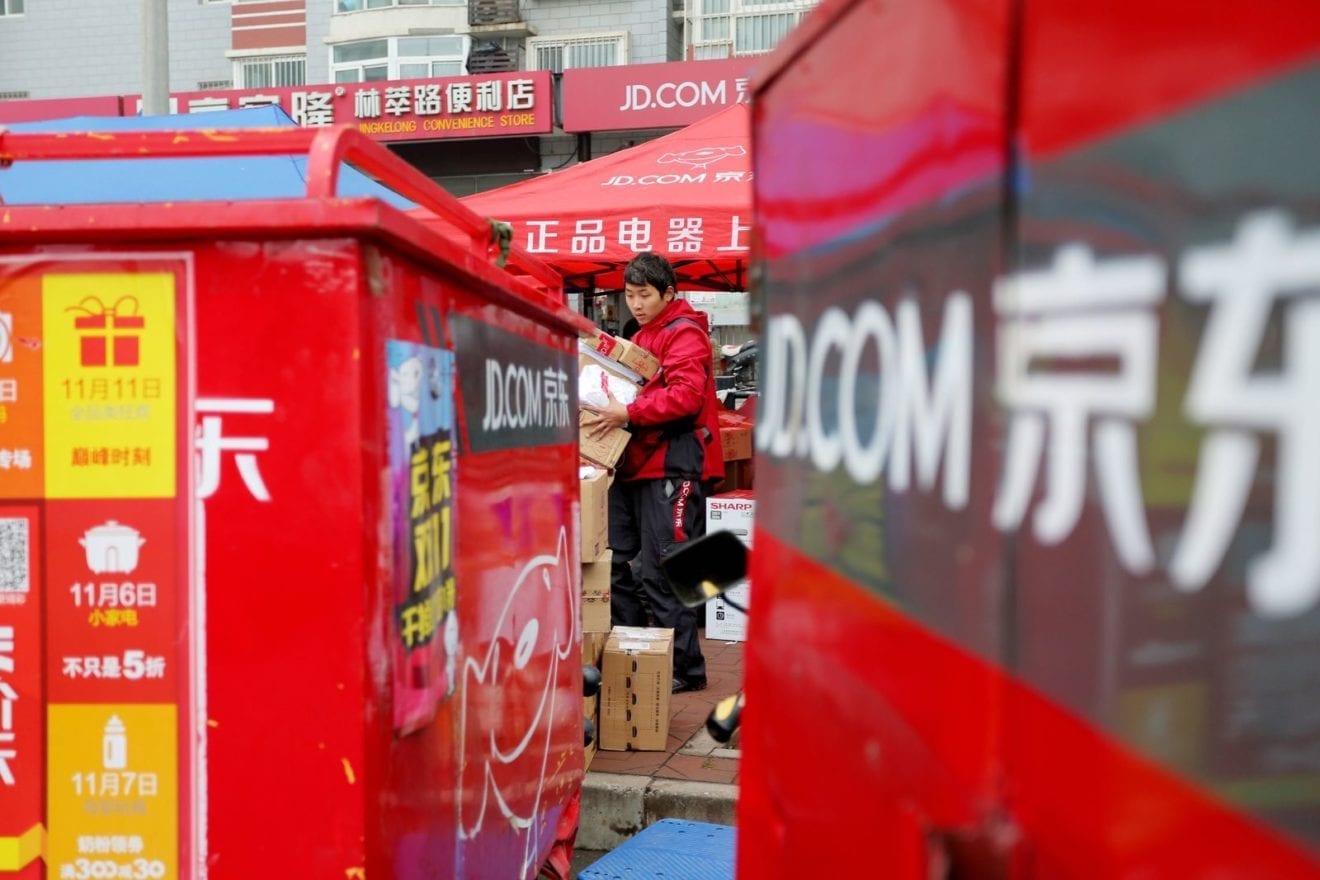
  • China’s JD.com is keen to link with Saudis

    China’s JD.com is keen to link with Saudis

    With the Middle East in its sights, China’s JD.com is keen to team up with the Saudi government.

    “We want to have a partnership with the Saudi government,” says the e-commerce company’s international business president Winston Cheng.

    He describes Vision 2030, Saudi Arabia’s economic reform plan aimed at boosting private-sector growth and developing non-oil industries, as an incredible opportunity.

    “This region is the next new frontier,” says Cheng. “We’re looking to move very fast.”

  • Lazada Online Revolution offering 210 million items

    Lazada Online Revolution offering 210 million items

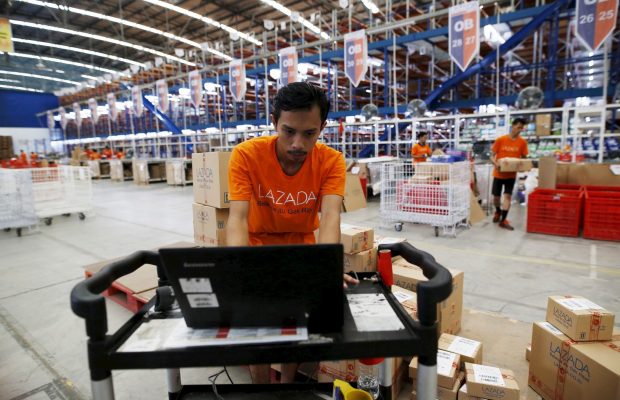
    In its sixth year, the Lazada Online Revolution mega-sale will be the biggest yet when it takes off on November 11 across six countries – Indonesia, Malaysia, the Philippines, Singapore, Thailand and Vietnam.

    Themed “Shop the Universe”, the sale will offer 210 million products, up sevenfold from last year, and has expanded its product categories to include fashion, luxury cosmetics, groceries, pet supplies and digital goods such as e-vouchers and prepaid mobile-phone top-ups. International brands include Huawei, Laneige, Levi’s, Mac, Ray-Ban, Shiseido and Triumph.

    There will be about 26 million deals offering discounts of up to 90 per cent, including items from the Taobao Collection, which offers kitchenware, furnishings, fashion apparel and accessories.

    Shoppers in Southeast Asia ordered about two million items within the first 24 hours of last year’s Online Revolution 2016. Among the top sellers were VR glasses, smartphones, shower gels and mascaras.

    As well as its own 130 delivery centres across the six countries, Lazada will work with more than 80 delivery companies to handle demand during the sale.

  • EU mulls digital firms’ global profits tax

    EU mulls digital firms’ global profits tax

    The European Union is asking its citizens to help decide on a fairer tax regime for large digital corporations that may include a tax on their global profits.

    Firms such as Amazon, Google and Facebook have often been accused of paying too little tax within the bloc by establishing their regional headquarters in low-tax countries such as Luxembourg and Ireland.

    The executive European Commission wants binding legislative proposals for a fair taxation of the digital economy by March.

    In a public consultation published on Thursday, it listed new ideas on what such a blueprint might contain.

    It is seeking responses on a “unitary tax” that would be levied on a share of digital companies’ global profits, divided up between the EU countries where they operate.

    This option has never appeared in EU documents before.

    It would be a long-term solution, as would a proposed tax using the corporate rate of the countries where the firms’ consumers are, rather than where the firms are based.

    That would eliminate the incentive for multinationals to set their EU headquarters in low-tax states.

    The commission also sought reactions to the idea of changing the principle of corporate establishment, so that companies could be taxed when they have a “digital” presence in a country. That was an option listed in a document published in September .

    In the short term, EU states could impose a tax on revenues from “digital activities” or services, like the sale of online ads.

    They could also consider a withholding tax on digital payments or a “digital transaction tax” levied on companies selling consumers’ personal data.

    The move is set to gauge public support for an initiative that is backed by the EU’s big states but opposed by smaller, low-tax countries who fear losing revenues.

  • Inside the new Amazon stores-in-stores at Kohl’s

    Inside the new Amazon stores-in-stores at Kohl’s

    Ten Amazon stores-in-stores have opened inside discount apparel chain Kohl’s across the US, the first stage in a broader commercial partnership between the two retailers.

    Announced in early September, the deal sees Amazon smart home experience mini-stores opening in prominent locations at the front of the Kohl’s stores across the Chicago and Los Angeles areas from this month.

    Amazon has since released these accompanying images showing how the concept looks.

    The stores are staffed by Amazon employees and provide a hands-on experience where customers can interact with a variety of Amazon devices, including Amazon Echo, Echo Dot, Amazon Fire TV, and Fire tablets. They can buy them on-site.

    Amazon says the stores will demonstrate how its devices can “modernise and simplify home management, entertainment and security”.

    Returns service

    Shortly after the Amazon stores-in-stores concept was revealed, the company also announced an arrangement allowing 82 branches (initially) in the two cities to accept returns of goods bought by Amazon shoppers online. From next month, they will be able to take their goods to a Kohl’s store where the merchandise will be packed and shipped for free back to an Amazon warehouse.

    Kohl’s believes partnering with Amazon represents a competitive advantage. “The Kohl’s and Amazon collaboration leverages the strengths of both brands – the Kohl’s store portfolio and omnichannel capabilities combined with the power of Amazon’s reach and loyal customer base,” Kohl’s said.

  • Foodpanda brand overhaul follows acquisition

    Foodpanda brand overhaul follows acquisition

    A Foodpanda brand overhaul has been launched following its acquisition by tech giant Delivery Hero last December.

    While the iconic panda is still part of the food delivery company’s logo, it has been tweaked to have a round face, while the brand colour has been changed from orange to pink with a slimmer more contemporary font.

    According to the company, the new logo aims to be more memorable.

    “Pink will be a strong differentiator for Foodpanda to stand out in markets in which orange is used extensively throughout the city,” says head of marketing Laura Kantor. Also, pink is the signature colour of its sister company Foodora.

    The rebranding will roll out in 190 cities across 12 countries, including Hong Kong, Malaysia, Singapore, Taiwan, Thailand and the Philippines.

    Along with the change in brand identity, Foodpanda has introduced an upgraded app and front end that introduces live tracking for orders.

    While declining to reveal the cost of the rebrand, Kantor says it has been a “mammoth task” to convert all its brand assets. It had to work on its app, website and other digital platforms, before moving on to more than 1500 restaurant partners in Singapore alone to replace all its collateral.

    Foodpanda also had to change out uniforms and delivery bags for its 3000-strong rider fleet, and also changed everything from orange to pink, including the walls, at its Singapore headquarters.

    Meanwhile, the company is working with restaurants to create celebratory dishes that will be available exclusively on Foodpanda for two weeks.

  • Singapore m-commerce set for 33 per cent growth

    Singapore m-commerce set for 33 per cent growth

    Singapore m-commerce is set for 33 per cent growth in the next five years, according to a new report.

    However, while it leads Southeast Asia in smartphone and mobile broadband use, Singapore is nearing saturation point for its e-commerce market, says Worldpay’s Global Payments Report.

    Despite its modest population numbers, the city/state is the region’s third-largest e-commerce market with 73 per cent of internet users already shopping online. But this growth is set to slow with a modest 9 per cent expansion to reach US$6.5 billion by 2021 predicts Worldpay, which analysed e-commerce spending patterns across 36 markets on five continents.

    In comparison, China’s e-commerce market is expected to grow by 11 per cent, South Korea should see 19 per cent growth and India is set for 24 per cent expansion.

    Despite Singapore’s decelerating growth, there will be plentiful opportunities for capturing a new wave of mobile shoppers in Singapore, says the report.

    Cross-border shopping is also increasingly popular, with more than half of Singapore’s online consumers buying from international merchants.

    ‘New set of demands’

    “Retailers looking for a foothold to the future must prepare to deliver on a new set of demands in Singapore,” says Worldpay Asia Pacific GM Phil Pomford. “Online shoppers are moving beyond the desktop, and beyond country borders. Savvy and well-connected across multiple devices, they increasingly prefer to shop via mobile and want more opportunities to buy from merchants around Asia and the globe.

    “To deliver on the demands of Singaporean shoppers who expect a convenient, seamless experience no matter how they shop, merchants need to create mobile-friendly payments.”

    Pomford says merchants will be able to capture more cross-border trade by accepting a variety of currencies and payment options.

    Worldpay also found that shoppers in Singapore still overwhelming prefer to pay with credit cards (66 per cent), but alternative payment methods are gaining a foothold. Bank transfers and e-wallets are both set to nearly double in share by 2021, increasing from 11 to 21 per cent and 13 to 21 per cent respectively.

    “Our report also uncovered that 70 per cent of Singaporean internet users would shop online more if offered loyalty benefits – a great tip for e-commerce businesses looking to gain a competitive edge,” says Pomford.

    Worldpay offers three main guidelines for merchants seeking to capitalise on the e-commerce and m-commerce opportunity in Singapore and the wider Asia-Pacific region:

    1. One-click ordering: Consumers are more likely to shop more often with companies that save their payment details for one-click ordering. This makes online checkout as seamless as possible, especially via mobile apps.

    2. Payment options: Merchants should look at the most popular payments methods in each territory, and prioritise those that complement their business model. There is no one size fits all in the Asia-Pacific region, so they need to understand their best options.

    3. Cross-border trade: Merchants should ensure they have local acquiring capabilities wherever they have a legal entity. They should also offer a range of currencies at checkout, and consider local-language customer support.
    Worldpay offers technology-led payment products and services to about 400,000 clients across 146 countries and 126 currencies.
  • eBay tests the world’s first ‘subconscious shopping experience’

    eBay tests the world’s first ‘subconscious shopping experience’

    Online shopping giant eBay and specialist retailer Saatchi Art have created and tested an experimental retail experience they claim is the world’s first subconscious shopping experience.

    It merges art and technology to reveal shoppers’ subconscious desires.

    For just 48 hours, the two retailers invited select guests to their personalised shopping event, The Art of Shopping. Guests were first hooked up to headsets incorporating EEG technology to monitor electrical activity in the brain. They then entered a special art gallery where the “mind-tracking” technology, supplied by MyndPlay, was able to detect when they were inspired by particular works. This information was used to create personalised shopping carts.

    An algorithm to match customers with artworks was developed by behavioural psychologists and designed to be used with the billion items being sold on eBay’s virtual marketplace.

    The eBay team launched the project after commissioning a report on the neuroscience of what motivates buyers. The report investigated the difference between two types of buyers – “shop-y-cats” who impulse buy to fit in with trends, and “inspired shoppers” who prefer to discover non-mainstream  items. It found that inspired shoppers could browse longer and had a prolonged emotional high at checkout.

  • Chope funding round secures $18 million

    Chope funding round secures $18 million

    Restaurant-booking app Chope has secured S$18 million from multiple investors.

    Led by venture capital firm Square Peg Capital, the investors in the funding round include Moelis Australia, NSI Ventures and SPH Ventures.

    Chope CEO Arrif Ziaudeen says the funds will be used to improve product, increase staff numbers and enhance customer support. The Singapore-based company will also “invest heavily in further innovations” while deepening its reach into its markets across Asia.

    “Chope offers a compelling service to both restaurants and diners,” says Square Peg partner Tushar Roy.

  • Over 500 already signed up as Amazon hosts first Aussie summit

    Over 500 already signed up as Amazon hosts first Aussie summit

    Amazon will host a marketplace seller summit in Sydney with hundreds of Australian businesses set to attend to receive advice on selling through the e-commerce giant’s platform.

    Over 500 Australian sellers already registered to sell on Amazon Marketplace in Australia.

    In a recent webinar with potential sellers, key account manager, Brittany Rinker, said the company aims to launch Marketplace by late 2017 or early 2018, though she emphasised that this is not an official launch date.

    She said Amazon is currently focused on getting businesses signed up and creating listings on Marketplace, which represents over 50 per cent of all items sold on Amazon websites globally.

    The free half-day event will provide practical guidance on setting up and growing a business online, and is being run in partnership with the Australian Retailers Association (ARA) and small business network, the SME Association of Australia (SMEA).

    “The internet and technology have the power to level the playing field between big and small businesses, empowering Australian companies, large and small, to grow their sales and their business online,” said Rocco Braeuniger, Australian country manager, Amazon.

    “We look forward to enabling local businesses to make their products available to a wide audience, not only in Australia, but also worldwide.”

    The event at Jones Bay Wharf in Sydney will feature keynote presentations from Braeuniger, and head of Amazon Marketplace in Australia, Fabio Bertola, as well as insight from experts and entrepreneurs.

    “Amazon launching in Australia marks an exciting time for Australian entrepreneurs,” said Adam Mills, CTO and founder of Australian business KoalaSafe, which has seen incremental year on year growth in sales, with Amazon Marketplace being its biggest channel. Mills will be presenting at the Seller Summit, sharing his experience and best practice.

    “For those who are selling physical products, Amazon provides a great opportunity to get these products in front of customers and we encourage businesses to take full advantage.”

    Russell Zimmerman, executive director of the Australian Retailers Association said Amazon’s arrival brings new possibilities to Australian retailers, small and large.

    Mark Flack, board member, SMEA added that the “reality is that there’s a lot of education that needs to happen amongst the small business community when it comes to being digitally savvy and using the right tools to take their business to the next level.”

  • South Korean shoppers set new mobile spending record

    South Korean shoppers set new mobile spending record

    South Korean shoppers set a new record for the volume of purchases made through mobile devices during September.

    Government data says mobile transactions through smartphones and tablets reached a new high of 4.04 trillion won (US$3.5 billion) in August, up 29.5 per cent from a year earlier.  Statistics Korea says the trend is being fuelled by the growing amount of time consumers are spending on their handsets.

    Mobile transactions accounted for 61.9 per cent of all online purchases made during the month.

    Shopping by mobile phone in South Korea has been on a steep rise for years as smart devices are widening their presence in the world’s most-wired country. They are rapidly replacing computers as a means of conducting online transactions.

    Mobile bookings for travel and movie tickets surged 35.5 per cent in August from a year earlier to a record 755.8 billion won in the summer vacation season, while South Korean shoppers spent 344.8 billion won on cosmetics during the month, up 20.7 per cent.

    Food delivery services increased 38.2 per cent year-on-year to 610.3 billion won last month, while 381 billion won worth of electronic goods was sold through smartphones, up 18.3 per cent from a year earlier.

  • EU cracks tax whip, demands Amazon pay up

    EU cracks tax whip, demands Amazon pay up

    Amazon has been told to pay about €250 million (A$374 million) in back taxes to Luxembourg, the latest US tech company to be caught up in a European Union crackdown on unfair tax deals.

    The fine was much lower than some sources close to the case had expected and is only a fraction of the €13 billion that Apple Inc was ordered to pay to Ireland last year.

    EU Competition Commissioner Margrethe Vestager, who has other big US tech companies in her sights, has taken a tough line on multinational companies’ approach to tax.

    Amazon said it was considering an appeal.

    Amazon shares were little changed in early Wednesday trading.

    While the exact amount Amazon needs to repay is yet to be calculated, the €250 million is significantly less than the 400 million euros which sources close to the matter told Reuters a year ago was under consideration by Vestager.

    The bill suggests the Commission believes Amazon shielded around 900 million euros in EU profits from tax, calculations by Reuters show.

    For most of its existence, Amazon has worked on razor thin profit margins to fuel its global expansion, making only US$2.4 billion (A$3.1 billion) profit on global revenues of US$136 billion in 2016.

    The Commission said Luxembourg allowed Amazon to channel a significant portion of its profits to a holding company without paying tax.

    Amazon’s corporate set up with subsidies in Luxembourg was also subject of a US$1.5 billion court case with US tax authorities, which Amazon won in March.

    Amazon, which employs 1500 in the grand duchy, is one of the biggest employers in the country of half a million people. It has a Europe-wide staff of some 50,000.

    Luxembourg, whose tiny economy has benefited from providing a European base for multinational companies, rejected the finding and said it was looking at its legal options.

  • Global e-commerce expected to double in next five years

    Global e-commerce expected to double in next five years

    Global e-commerce continues to revolutionise the air cargo industry, and is forecast to increase 19 per cent a year over the next five years, from US$1.9 trillion in 2016 to US$4.5 trillion in 2021, according to the annual E-Commerce Revolution Report released recently by Air Cargo Management Group (ACMG). The 2017 E-Commerce Revolution Report provides an in-depth look at the explosive growth of global e-commerce air logistics.

    The report features fresh and insightful analysis of the major marketplaces, sellers, and logistics providers that are fuelling this revolution. It is not just the best-known participants, such as Amazon and Alibaba, driving this revolution, but also global express airlines, along with players lesser known outside their home countries, such as JD.com in China and Otto in Germany. The report tracks the companies using and providing e-commerce air logistics, and offers insights on global trends in the industry.

    “E-commerce has disrupted retail and is now revolutionising logistics,” said Alan Hedge, senior director of Air Cargo Management Group. “This, our second annual report, builds on the strengths of the first and covers new territory by offering descriptions of additional e-commerce companies and additional discussion of fulfilment networks in China, the largest e-commerce market on the planet.”

    New for the E-Commerce Revolution Report this year is a web-based companion database tool for exploring relationships between major e-commerce players and logistics providers. The tool allows users to search particular logistics providers and users to isolate logistics transactions worldwide. Additionally, the tool can be used to quantify e-commerce air logistics transactions on a global basis.

  • Amazon Global Selling to take Korean products everywhere

    Amazon Global Selling to take Korean products everywhere

    Amazon has revealed plans to help South Korean sellers make international sales via its Amazon Global Selling program.

    Amazon laid out its plans during its first press conference in South Korea dubbed the ‘Global Selling Conference’, which was held at COEX this week. The international shopping giant discussed its global selling service, ‘Amazon Global Selling,’ which allows sellers to sell items to other countries without the help of a customer service center or local distribution centre.

    According to the company, using its global selling platform can enable South Korean sellers to reach up to 300 million people in 185 countries across the world. Amazon Global Selling not only provides sellers with access to the international market but also provides help in dealing with common problems such as refunds, returns, and issues surrounding international delivery.

    Using Fulfillment by Amazon, a one-stop order processing service, sellers can use the distribution center owned by the shopping giant from which the rest of the selling process will be handled by Amazon.

    “Though domestic online sales are common, international online sales are still at an early stage in South Korea. We plan to actively help South Korean companies maximise their sales during the most eventful days of the year such as Black Friday, Cyber Monday and the Christmas season,” a company spokesperson said.

    Amazon Global Selling was first launched in 2015, and now the international company is set to begin the Korean language service of its portal ‘Seller Central’, as well as providing education programs for South Korean sellers.

    During the press conference, which was held in the presence of more than 1000 officials ranging from business partners and government officials to people interested in working with Amazon, Cindy Tai, the head of Amazon Global Selling-Asia, explained the conference was held two years after the global selling service was launched in the country, as an active community has been built only recently.

    Amazon’s move to help South Korean online sellers is set to see competition intensify in the online sales market, as similar services are already being operated by the likes of GMarket and 11street.

    With the growing number of people who wish to sell their products online in the international market in South Korea, some industry sources believe Amazon’s decision to introduce localised support programs for online sales is part of their effort to boost their competitiveness by training online businesses with potential and encouraging them to use their platform.

  • John Gokongwei turning focus to e-commerce

    John Gokongwei turning focus to e-commerce

    Billionaire John Gokongwei, whose empire includes airlines, malls and property, is expanding the family business into online shopping.

    His Robinsons Retail Holdings is moving more of its $2.7 billion empire online with plans to triple by next year the number of supermarkets handling web orders. Other retail chains in the empire will follow.

    Rivals SM Investments Corp and Ayala Corp are already expanding their e-commerce reach, all three launching online shops or investing in services over the past year.

    The Gokongwei family is speeding up its efforts as Alibaba and Amazon move into Southeast Asia.

    But supermarkets are the main driver of revenue. Robinsons launched online sales in May and is already showing exponential growth, says president Robina Gokongwei-Pe, the tycoon’s daughter.

    “This is the way to go given the horrible traffic in urban areas like Manila and a growing market of millennials.”

  • E-commerce wars: fashion exodus from JD.com

    E-commerce wars are in the news again in China, with reports of a mass exodus of fashion brands from the JD.com platform.

    44 fashion brands closed their flagship stores on JD last month while launching or keeping their shops on Alibaba’s Tmall. The main brands involved included millennial niche brand JNBY, billion-yuan brand Peacebird, menswear brand GXG and fast-fashion label Heilan Home.

    Following up, state-run Xinhua News Agency has published a more detailed breakdown of the brands that left: 27 womenswear brands, seven menswear brands, seven childrenswear brands and three lingerie labels.

    JD has confirmed the exodus with a statement containing a thinly veiled reference to Alibaba as “another industry player”.

    “We believe strongly in open, fair and legal competition, but not everyone in the industry agrees,” says the JD statement. “Numerous brands have told us that another industry player is inappropriately using threats to attempt to force them to sell on only one site in China.

    “We believe brands and consumers should be able to sell and shop where they want without interference, and will continue to support the ability of brands to choose to sell on however many sites they want.”

    Alibaba denies it is pressuring brands to leave any other e-commerce platform. “Brands have full autonomy to maximise their ROI in choosing their distribution platforms,” it says in a statement.

    Meanwhile, the two e-commerce giants are going head to head in preparation for Singles’ Day, the November shopping festival introduced by Alibaba. JD has its own shopping festival in June, but both platforms offer discounts during the promotions.