Retail News CRM

Tag: etailing

  • South Koreans spending more on Chinese online stores

    South Koreans spending more on Chinese online stores

    South Koreans are spending more at Chinese online stores, according to credit-card spending data. Purchase records from November 1-26, compiled by the big data centre at Shinhan Card, showed a 9.8 per cent increase from last year in the value of goods bought from overseas internet sites. The number of transactions was up 16.6 per cent year on year.

    Chinese online stores outperformed rivals from other countries. AliExpress took 9.5 per cent of the purchases, up from 6 per cent in 2016 and 6.1 per cent last year. It ranked second after Amazon’s 16.3 per cent.

    Taobao, another Chinese Internet shopping site, grew from 2.3 per cent in 2016 to 3.3 per cent last year and to 4.4 per cent this year, raising it to the third most-used overseas online marketplace. Alibaba made it to the top 10 for the first time this year with 1 per cent.

    The shift is stark when comparing the purchases during Black Friday in the US and Singles Day in China. This year, overseas shopping during Singles Day rose 35 per cent. Black Friday purchases stopped at a 9 per cent gain.

    Data showed 70.8 per cent of purchases during Singles’ Day were for goods priced up to 50,000 won (US$44.32). Shoppers in their 30s and 40s remained the biggest clients, but the number of those in their 20s increased 1.9 percentage points from last year.

  • Tmall, Swire Properties launch New Retail initiative

    Tmall, Swire Properties launch New Retail initiative

    Alibaba Group’s Tmall and Swire Properties are launching a New Retail initiative creating tailored retail experiences at Swire Properties’ five shopping malls in Mainland China. The partnership will bring benefits to customers in time for Alibaba’s 11.11 Global Shopping Festival on Sunday with Taikoo Li Sanlitun in Beijing the first brick-and-mortar shopping mall in Mainland China to experience this year’s 11.11 “red packet rain” this week.

    Swire Properties will introduce Tmall’s New Retail technologies at five of its developments: Taikoo Li Sanlitun and Indigo in Beijing; HKRI Taikoo Hui in Shanghai; Taikoo Hui in Guangzhou and Sino-Ocean Taikoo Li in Chengdu. The five New Retail initiatives include Tmall Smart Stores, a Tmall Pop-Up Store, Interactive Idol Engagement Photo Booths, Smart Nursery Rooms and a Smart Parking Service.

    Tmall Smart Stores: Shoppers will enjoy a seamless online and offline shopping experience from order to delivery (for participating physical stores). By signing up as members of selected brands, customers can instantly receive details on the latest promotions, and enjoy a return service by simply using their digital devices.

    Tmall Pop-Up Store: Tmall will open an interactive pop-up store featuring cutting-edge technology at Taikoo Li Sanlitun. This nine-day promotion during the Festival will offer shoppers in-depth and enhanced experiences.

    Interactive Idol Engagement Photo Booth: Fans will have a chance to ‘virtually interact with’ and snap a photo with their idol. This is the first-of-its-kind check-in hot spot in Mainland China.

    Smart Nursery Rooms: These offer mothers a relaxing and private space where they can nurse their babies at shopping malls. Vending machines will also offer essential nursing necessities.

    Smart Parking Service: By linking Alipay with their car license plates, drivers can pay parking fees with ease. This service will save drivers 80 per cent of the time usually spent on paying the parking charge and exiting the car park.

    “At Swire Properties, we are always looking for new ways to innovate and integrate the latest technologies into our business, so that we can bring unique experiences to our customers,” said Han Zhi, director, retail at Swire Properties. “Our collaboration with Tmall is a powerful example of digitisation. By harnessing rapidly developing online technologies and big data, our goal is to define the New Retail shopping experience.

    “This year marks the 10th anniversary of Taikoo Li Sanlitun and Alibaba’s 11.11 Global Shopping Festival, both of which have grown in leaps and bounds the past decade. We’re confident that our partnership, which also celebrates this milestone, will set a new benchmark in our respective industries and in the digital space.”

  • Alibaba’s second-quarter revenue jumps high

    Alibaba’s second-quarter revenue jumps high

    Alibaba’s second-quarter revenue grew 54 per cent year on year, reaching RMB 85.1 billion ($US12.3 billion). Net income attributable to shareholders was RMB 20 billion ($2.9 billion), a 13 per cent year-on-year increase. “Alibaba had another strong quarter of rapid growth,” said Alibaba Group CEO Daniel Zhang.

    “Annual active customers increased by 25 million to reach 601 million in the year ended September 30.”

    “Annual active customers increased by 25 million to reach 601 million in the year ended September 30.”

    Alibaba’s cloud-computing arm saw 90 per cent year-on-year growth to RMB 5.6 billion, launching more than 600 products and features during the quarter ranging from big data analytics, AI application innovation, security and internet-of-things enhancements.

    The business’s online Tmall operations saw a 30 per cent increase in gross merchandise value, driven by improved conversion rates and increased traffic in the fast-moving consumer goods, home furnishings and apparel categories.

    Alibaba’s New Retail strategy has continued to pay off across its Hema supermarkets network, with stores that have been in operation for at least 1.5 years seeing online sales account for 60 per cent of turnover for the September quarter. By the end of the quarter, 77 Hema stores had been opened in China.

    The group has dropped its forecast revenue guidance for the full year by 4 to 6 per cent to between RMB 375 billion and RMB 383 billion. As it stands, the group expects revenue to grow by 54 to 56 per cent.

  • Ebay tops list for local marketplace e-commerce

    Ebay tops list for local marketplace e-commerce

    More Australians visit Ebay in an average four week period than do Amazon and Kogan combined, new Roy Morgan research has revealed.

    New data put together from a sample of 50,000 Australians aged 14-plus has shown that Ebay is by far the most popular local online marketplace, with 9.4 million visitors in an average month.

    Next is Gumtree, with 5.6 million visitors, followed by Amazon, which entered last December, at 4.6 million.

    “The gap between these figures shows there is a large cohort of well over 4 million Australians who visit online shopping websites led by eBay, Gumtree, Amazon, Kogan.com, Groupon, Catch, OzBargain and others who don’t follow through and make the purchase,” Roy Morgan CEO Michele Levine said.

    “These online ‘window-shoppers’ represent a huge audience of Australians who are already living in the online world but haven’t taken the final plunge to purchase through the online shopping channels they know exist.”

  • JD.com promises to add ‘1000 stores a day’

    JD.com promises to add ‘1000 stores a day’

    As 50,000 people apply each day to be franchisees, JD.com promises to open more than 1000 stores a day this year.

    It started the journey last month, with founder/CEO Liu Qiangdong saying almost every store will be a franchise, according to local media reports.

    The ambitious aim is a part of a plan the e-commerce announced 12 months ago, when Liu said it would open a million convenience stores in the next five years, half of them in rural areas. JD.com’s convenience stores are run by independent investors, and the company offers loans for potential franchisees.

    “We receive 50,000 applications every day,” says Liu. “The applicants are mostly migrant workers who have returned to their villages or small towns. Jingdong Finance can provide them with loans to open stores. They can earn more than RMB8000 [US$1275] a month.”

    The first batch of shops, 1111 of them, opened their doors on the same day in November.

    Liu’s latest announcement comes a month after JD.com signed an agreement with convenience store group FamilyMart. This enables JD users to have food delivered to their homes from FamilyMart’s core locations in Beijing, Shanghai, Shenzhen and Chengdu within 30 minutes at any time.

    Smart carts

    And in January, JD.com launched offline fresh-food supermarket 7Fresh, a 4000sqm store in Beijing that features “smart carts” that guide customers to the items they seek to buy.

    JD’s first high-profile deal in the emerging O2O retail sector was its investment of RMB4.3 billion for a 10 per cent stake in Shanghai-listed supermarket chain Yonghui Superstores three years ago.

    Meanwhile, JD.com is partnering with mainland retail conglomerate China Resources Vanguard in a deal to take Vanguard’s shops in Hangzhou and Nanjing to its O2O platform. Customers will be able to buy from Vanguard’s offline stores via JD Daojia, and the partnership will later extend to the brand’s 2000 retail stores in more than 30 major cities in China.

    China Resources Vanguard, formerly China Vanguard Super Department, has more than 3000 retail stores in 200-plus cities and has revenues of RMB103.6 billion last year.

    JD Daojia is a one-hour delivery service that partners with 100,000 local merchants and provides on-demand groceries, fresh produce, snacks, flowers and pharmacy needs in more than 30 cities. It has more than 50 million registered users and 20 million monthly active clients.

  • China online spending is already 50 per cent of retail sales

    China online spending is already 50 per cent of retail sales

    China online spending is set to account for almost 50 per cent of the country’s total retail market this year.

    According to fresh data from Mintel, this year’s figure will be 45.7 per cent of “total per capita retail spend”. In many categories, already more is spent on goods online than in physical stores in the world’s largest digital economy.

    “China is experiencing a fundamental shift in the way consumers shop, and in how the shopping experience fits into the wider environment of customer service, delivered both online and in-store,” said Matthew Crabbe, research director, APAC, with Mintel.

    The research shows China’s online retail market has reached a critical mass. Business-to-consumer (B2C) online retail is expected to reach more than 60 per cent of total e-commerce sales this year, with mobile online retail expected to make up more than 80 per cent of the B2C retail category.

    However, while Mintel estimates per capita online retail spend will reach 45.7 per cent of total per capita retail spend by the end of this year it predicts that share will hold steady between until the end of 2019.

    Crabbe said there are several reasons for the projected peak.

    “One issue is that consumers are increasingly buying experiences and services online, rather than products. The other issue is that consumers are already adapting to ‘new retail’; they are embracing greater integration between online and in-store shopping. This will mean much tougher competition between retailers. It will also likely mean more pressure for further consolidation in the market, resulting in more mergers, acquisitions and strategic partnerships,” he said.

    China’s ‘new retail’ experience has consumers purchasing different products from different channels. Mintel research shows that 72 per cent of in-home food shoppers prefer to shop in-store, compared with 60 per cent of consumers who prefer to shop online for toys, games, clothing, and accessories. Apart from alcoholic drinks (61 per cent shop in-store) and pharmaceuticals and healthcare products (57 per cent shop in-store), in all other sectors the combined total of those who shop online via a mobile device or lap/desktop is greater than the proportion who shop in-store.

    While in-store grocery shopping still dominates, 66 per cent of consumers buy in-home food and drinks in-store, the average number of consumers who shop online (mobile or desk/laptop) for in-home food and drinks grew three percentage points since 2016, with 49 per cent buying in-home food online using a mobile device.

    “The growth in mobile online shopping across all sectors this year illustrates how mobile is driving the convergence of online and offline shopping into ‘new retail’,” said Crabbe. “Meanwhile, online shopping penetration is high across most sectors. There may be room to expand fresh and luxury food product sales online, thus increasing the number of high-income consumers who shop online, but the room for expansion of share of pocket among China’s consumers is running out.”

    Arise the ‘grocernauts’

    In fact, urban Chinese consumers are keen to get the immediate experience that only shopping in-store can offer. Mintel research reveals that 62 per cent of urban Chinese consumers say the ability to try, see, and experience products in-person before buying encourages them to shop in-store; the same proportion (62 per cent) shop in-store to ensure the freshness of produce, and 55 per cent say in-store shopping means they can get what they want faster.

    “Supermarkets and hypermarkets are moving away from just selling in-home foods towards  providing catering services (so called ‘groceraunts’), as well as offering online food ordering and in-store pick up services. And convenience stores are morphing into unmanned, checkout-free, cashless, elaborate vending machines. We’ve also seen shopping malls evolve away from retail spots into theme park-like leisure developments. This is all leading to a very diverse potential retail environment that includes retail as part of a wider range of consumer services. Store functions will increasingly incorporate online-enabled, front-of-store consumer touch points for selling goods and providing other customer services – even ones not related to the retailer’s core business,” Crabbe added.

    Probably the main driver of online retail’s success, 65 per cent of urban Chinese consumers say they find products cheaper online, while 63 per cent say that online offers more choice. More than half (52 per cent) of consumers say they find what they were looking for faster when shopping online.

    “Despite the instant sensual and entertainment experiences that consumers enjoy when shopping in-store, low cost, high convenience and more choices are the key ingredients that drive consumers to do more of their shopping online. As online retail platforms invest in and collaborate with physical retailers, who in turn look to increase their online exposure, these new business models will create the ideal ‘new retail’ experience for shoppers. However, companies and brands will be challenged to find their own, unique combination of online and in-store features in order to create their own bespoke experience,” concluded Crabbe.

    Total B2C and consumer-to-consumer (C2C) online retail sales in China are expected to reach RMB 6.4 trillion by year-end, having grown at a compound annual growth rate of 37.9 per cent since 2012 – that represents nearly fivefold value growth in just five years.


  • ShopBack unveils close to USD40M in funding

    ShopBack unveils close to USD40M in funding

    ShopBack the one-stop lifestyle portal that powers smarter purchase decisions, raised USD25M in its latest funding round, bringing the company’s total funding raised to date close to USD40M. The round was led by Credit Saison, the largest credit card and retail finance company in Japan. More than 10 institutional investors participated in the round, including new investors Blue Sky and Intouch Holdings PLC, as well as existing investors SoftBank Ventures Korea, Singtel Innov8, Qualgro and East Ventures.

    “Cashback served as the cornerstone for ShopBack’s establishment in Malaysia and laid the foundation for us to build smarter shopping solutions,” said Alvin Gill, ShopBack Malaysia’s Country General Manager, “Living up to our value proposition as ‘The Smarter Way’, we have recently added service aggregation features for the rides to simplify purchase decisions for our users. We strive to become the one-stop shopping and lifestyle portal for every Malaysian.”

    Today, ShopBack powers close to 1,000 orders per hour, with an annualised sales figure of over USD300M for more than 1,300 partner merchants across the online retail, travel and lifestyle verticals. Over three and half million consumers across six countries in the Asia Pacific have signed up with ShopBack since the company’s inception in 2014.

    “ShopBack’s business model builds on the explosive growth of ecommerce in the Asia Pacific to drive tangible value for its users and cost-efficient sales generation for its partner merchants,” said Sean Lee, Partner of SoftBank Ventures Korea, “The model enables ShopBack to leverage user insights across shopping categories and develop smarter shopping solutions such as cross-category recommendations.”

    “The ShopBack team has demonstrated the ability to build a pool of loyal users in a sustainable and scalable manner, which is the backbone of all successful businesses. We have high confidence that the team is able to deliver on their vision in the region, hence the follow-on 18 months after our initial investment,” said Sean

    The three-year-old start-up previously disclosed two seed funding rounds totaling to over USD1M. This latest round of funding will be used to drive three key areas of development – acquiring world-class talent, launching new product features and establishing market leadership.

    Talent is key to long term success

     According to Heang Chhor, Managing Partner of Qualgro, “ShopBack consistently meets our high bar for delivering very strong growth. It has demonstrated exceptional ability to adapt and execute fast in very different markets across Southeast Asia. This rests on an innovative and fast-moving talent pool, that ShopBack has been able to attract, grow and motivate.”

    “Speed and results-orientation are key in the region, and ShopBack’s mantra of “Fail fast, learn fast and iterate faster”, has seen them rapidly become a regional platform for ‘The Smarter Way’ to shop online.”

    ShopBack’s presence in six countries is driven by a team of more than 130 people. The management team hails from ecommerce and technology background with experience in scaling companies across the region, including Alvin Gill who was previously the Chief of Staff to the CEO at ZEAL Network, a publicly-listed online lottery company with revenues in excess of EUR100M per annum.

    Prior to ZEAL Network, Alvin was in the investment banking industry before joining ZALORA Malaysia. He led the Buying Division and contributed, for the categories he controlled, a significant revenue growth towards the business. His experience and knowledge in Business Intelligence helped the company solve and streamline multiple operational challenges during his tenure.

    Proven product-market fit laid foundation for ShopBack’s regional growth

    ShopBack’s core business model is built on a strong foundation of multiple experimentations and iterations. It transformed from a one-day flash sale site to a perennial Cashback platform which enables it to deliver value to customers and partner merchants all year round.

    “We have witnessed ShopBack’s growth journey and the founders’ dedication to the business from the early days,” said Edgar Hardless, Chief Executive Officer of Singtel Innov8. “With the flourishing e-commerce market in the region, we believe ShopBack is strongly positioned to realise their regional growth aspirations.”

    ShopBack believes rapid and effective localisation is critical for players operating in a fragmented region like the Asia Pacific. While its core service offering remains the same across geographies, different marketing and product strategies are adopted to better address the needs of customers in each market.

     “This new round of funding leads to the start of the year-end shopping festival, with the nearest being Alibaba’s 11.11 Singles’ Day. Our customised marketing approach has efficiently lifted the awareness level for Taobao, Tmall, and AliExpress in Malaysia, which resulted in a 400% increase in orders during 2016’s 11.11 Singles Day compared to 2015. We look forward to upscale the performance this year with an impactful campaign including up to 50% cash rewards and special rebates for our users,” added Alvin.

  • Ensogo Philippines to shut down

    Ensogo Philippines to shut down

    Ensogo Philippines will be closed down along with the online retailers’ other sites across Southeast Asia.

    Following the resignation of its co-founder Kris Marszalek, the Singapore-based tech company said it will cut its financial support to its sales and marketplace business units in Indonesia, Thailand, Hong Kong and the Philippines.

    “These business units will be shut down. All staff have been informed and communications will be made to customers in the coming days,” the company said in a statement.

    Australian internet entrepreneur Patrick Grove founded Ensogo, formerly iBuy. Grove also established the online businesses iProperty and iCar under Catcha Group.

    Recently the company reported growth averaging more than 100 per cent in the first quarter, after the launch of a cross-border marketplace business in January. It said the number of suppliers had skyrocketed from 3141 in the fourth quarter of 2015 to 13,599 in the first quarter of 2016. The first three months saw US$8.2 million in gross merchandise value.

    As of the end of March 2016, however, Ensogo reported A$22.6 million (about US$17 million) in receipts from customers, while total cash was only A$17.6 million, a 64 per cent decline from A$29 million by the end of last year. Earlier this year the company, which is headquartered in Singapore and listed in Australia, laid off employees.

  • Ho Chi Minh City to crack down on tax-evading Facebook retailers

    Ho Chi Minh City to crack down on tax-evading Facebook retailers

    The tax man is threatening to shut down social media accounts, but savvy retailers know that it’s an empty threat. Ho Chi Minh City sent out tax demands to nearly 13,500 Facebook retailers over a month ago, but a representative from the city’s Tax Department told that so far only around 1,000 of them have responded.

    As a result, the city’s tax authorities have decided to work on tougher solutions to crack down on potential tax-evading online retailers, and have asked the Ministry of Finance to finalize regulations regarding tax declarations and deductions at source, as well as the supervision of online business activities.

    The city’s tax department also said it is considering a name-and-shame approach to individuals and organizations that refuse to pay tax.

    To combat retailers that open multiple Facebook accounts to avoid detection, the department claimed it had come up with multiple solutions, such as closing down accounts or sending officials posing as customers to confront them in person.

    It also said it would ask the State Bank of Vietnam for copies of retailers’ bank statements to determine their incomes, and courier companies would be asked to provide information on the quantity and value of the goods they transport for them.

    However, many online retailers say that the tax man has no authority over Facebook.

    Nguyen Thi Cuc, who chairs the Vietnam Tax Consultants’ Association, also told that Vietnam does not have a comprehensive tax policy for online businesses, and that collecting taxes is difficult because most transactions are conducted in cash.

    Many retailers claim they already have business licenses and have declared tax, and only use Facebook to advertise their products, while others say they earn less than VND100 million ($4,400) annually so they are not required to declare tax by law.

  • Gucci launches China e-tail site

    Gucci launches China e-tail site

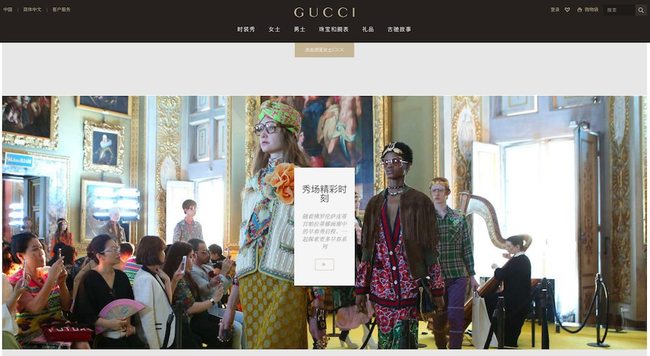
    Gucci has launched gucci.cn, its e-tail site for the Chinese market. In the words of the Italian luxury label, it will be Gucci’s only official Chinese website, created to “allow consumers a better access to Gucci products, without the limitations imposed by store location or opening hours. To optimise service speed, goods are shipped from local warehouses, and each transaction is assisted by a China-based customer service team, via live chat or phone.” In addition, payments on gucci.cn can be made using popular providers such as Alipay and WeChat.

    Content-wise, the site offers a wealth of images and a narrative with a strong visual impact, culminating in the ‘Stories’ section, which takes an in-depth look at  the sources of inspiration which influenced Creative Director Alessandro Michele’s collections, offering an exclusive glimpse of the designer’s own world.

    “Combining editorial content with commercial features – said Gucci – is an approach which has already proved effective in North America, Europe, the UAEs and Australia, where the new website was launched back in 2015.”

    As of today, Gucci’s e-tail sites are active in the USA, Japan, South Korea, Australia, Canada, the UK, Italy, Ireland, France, Germany, Spain, Portugal, Switzerland, the Netherlands, Austria, Belgium, Sweden, Norway, Denmark, Finland, the Czech Republic, Poland, Hungary, Romania, Bulgaria, Slovenia, Turkey and the UAEs.



  • e-retail brands out of the social media loop in SE Asia

    e-retail brands out of the social media loop in SE Asia

    Over 85% of consumers in Singapore, Malaysia and Indonesia, who mention e-retailer brand names in their social media posts don’t tag brand handles, according to Digimind.

    This means brands need to be vigilant in monitoring their brand reputation in the wider social media space to ensure they aren’t missing out on key conversations and trends, and are able to act upon any customer service concerns quickly.

    With the rise of empowered consumers and an increasing adoption of online shopping, e-retailers need to adopt customer-centric strategies in order to thrive. With so much of our daily conversations happening online, data from social media can provide key insights for e-retailers wishing to optimize customer experiences.

    Digimind’s study, Social Shopping in 2017, assessed the state of the e-retail industry in the three countries by monitoring 15 local and regional e-retailers, including Lazada, Zalora, and Berrybenka.

    “It’s no secret that brands who implement customer-centric strategies are excelling. With 2.8 billion active social media users in Southeast Asia, it is crucial for e-retailers to listen to what is being said about their brand, competitors and the industry online,” said Stephen Dale, general manager of APAC at Digimind.

    “Understanding what consumers are saying on social media can provide companies with an arsenal of insights that can be used to develop content strategies, improve customer service, build brand advocacy, and increase sales,” said Dale.

    He added that when analyzed in conjunction with other data such as web page visits and browsing behavior, this can further inform marketing plans and Voice of the Customer programs.

    The study also revealed that while the majority of e-retailer’s followers in the countries studied were on Facebook, consumers were most actively publicly posting their opinions and experiences on e-retailers on Instagram and Twitter.

    This means while Facebook is the ideal channel for brands to communicate with followers, Instagram and Twitter are key channels for community engagement.

  • Can Alibaba realize its global ambitions?

    Can Alibaba realize its global ambitions?

    Jack Ma, the man who turned Alibaba into China’s dominant e-commerce platform, now has his sights set on global domination.

    Over the past year, Ma met business leaders and head of states in many countries to introduce his grand vision: small businesses from all corners of the world trading freely and securely on Alibaba’s platform. His goals are equally ambitious: Ma wants Alibaba to hit $1 trillion in gross merchandise value by 2020. By 2036, the company sees itself serving two billion customers, effectively becoming the world’s fifth largest economy, with sales eclipsed only by the GDP of the U.S., China, Japan and the EU.

    But to sustain the near continuous 40% growth rate of Ma’s $300 billion empire, which centers on a marketplace connecting brands with buyers, globalization is seen as key. At home it faces heightened competition with the country’s second-largest shopping site, JD.com, which just posted record sales of $17.6 billion for its 6.18 shopping festival. Alibaba’s e-commerce dominance isn’t under threat but it nonetheless sees a “growth bottleneck” and feels “globalization is better done now than later,” said Teng Bingsheng, a professor of strategic management at the Cheung Kong Graduate School of Business in Beijing.

    Alibaba’s global footprint has grown through investments in local partners. As part of a $21 billion-acquisition spree over the past two years, the company has stakes in India-based marketplaces Paytm and Snapdeal, as well as Southeast Asia’s top shopping site, Lazada, which it now holds a 83% stake after investing another $1 billion. Its financial affiliate Ant Financial has investments in payment platforms in Thailand, South Korea and the Philippines, and is expanding in further afield in South Africa.

    Some analysts however question whether Ma might be painting an overly rosy picture for small business owners. While it is true that China has a growing appetite for niche brands from cosmetics to baby food, competition on Alibaba’s shopping sites is cutthroat.

    Already thousands of brands are selling on Tmall and the number of foreign brands on Tmall Global grew 169% last year — while total sales only grew 30%, according to Mark Tanner, founder of Shanghai-based consultancy China Skinny.

    This means another part of Alibaba’s strategy has brighter prospects. Outside the U.S., through the likes of Lazada, and its own cross-border commerce platform AliExpress, Alibaba wants to find fresh customers for Chinese manufacturers. On Lazada, for example, Taobao has opened a shop, offering a curated selection of Chinese-made clothes, gadgets and toys to tap Southeast Asia’s $22 billion e-commerce market.

    Compared with facilitating exports to China, this strategy may ultimately take on more importance. Southeast Asia, for example, is an ideal market for Chinese products, whose price advantages can win over more customers, CKGSB’s Teng said.

    What’s more, Alibaba will not only create more revenue streams by selling globally but fit itself nicely into Beijing’s vision. Through grandiose projects such as the One Belt, One Road initiative, Beijing wants to restore demand for Chinese goods along the ancient Silk Road trading route, which stretches all the way from its middle west provinces to Europe.

    But it isn’t a smooth ride either. The Electronic World Trade Platform (eWTP), Ma’s version of the World Trade Organization and a web-based approach to lowering trade barriers for small businesses in the region, is moving slowly. One year after its announcement, only Malaysiajoined the initiative, establishing in March a trading hub near Kuala Lumpur International Airport— a reflection of how stalling trade talks worldwide might be affecting Alibaba.

    That means, for now, international business remains a small part of Alibaba — contributing less than 10% of the group’s revenues in the last year. Evans said the company is on track to reaching its goal, eventually generating 40% of its revenues from international businesses over the next decade.

    The company has identified its chance of success. Aside from e-commerce, Alibaba’s payment, entertainment and cloud computing units are also expanding globally. AliCloud, for example, is wooing international customers with a price 85% cheaper than Amazon Web Services, according to CSLA analyst Elinor Leung. And Ant Financial, despite recent hurdles such as opposition to its acquisition of U.S. payment company Moneygram, has installed its service at millions of retailers in the U.S. through a partnership with payment processor First Data.

  • Cross-border e-commerce to hit $900b by 2020

    Cross-border e-commerce to hit $900b by 2020

    Cross-border e-commerce is now the fastest growing segment in the retail market, according to a report published by DHL Express.

    Cross-border sales volumes are predicted to increase at an annual average rate of 25% – from $300 billion to $900 billion – between 2015 and 2020. This is twice the pace of domestic e-commerce growth, DHL Express said.

    The study found that online retailers are boosting sales by 10-15% on average simply by extending their offering to international customers.

    By including premium service offering such as faster shipping options, retailers and manufacturers also grew 1.6 times their online stores faster on average than other players.

    “Shipping cross-border is much, much easier than many retailers believe, and we see every day the positive impact that selling to international markets can have on our customers’ business growth,” DHL Express CEO Ken Allen said.

    In Asia (Singapore, Hong Kong, and India) and Europe (Italy, Spain, France, Germany), key markets for high-value purchases are being expanded — with growth rates up to two or three times higher than the global average driven by rising consumer education and e-tailer awareness of opportunity.

    The report also noted that the $30 billion market of high-basket value transactions is evenly divided between Asia, Europe, and North America.

    Allen added that DHL Express sees that virtually every product category has the potential to upgrade to premium, both by developing higher quality luxury editions and by offering superior levels of service quality to meet the demands of less price-sensitive customers.

    “The opportunity to ‘go global’ and ‘go premium’ is there for many retailers in all markets,” he said.

    The main challenges highlighted by consumers to cross-border purchases relate to logistics, trust, price, and customer experience.

  • FedEx to bolster its e-commerce business in Asia

    FedEx to bolster its e-commerce business in Asia

    FedEx will expand its global e-commerce business in an effort to compete for the growing number of packages shipped to consumers from China and Japan, executives said Monday.

    The company, which in 2014 acquired Bongo International, a company that helps shoppers purchase goods from foreign retailers by automatically adjusting currencies, and customs and shipping costs, by location, is rebranding the business as FedEx CrossBorder. The company plans to expand its services to merchants in China and Japan by next June, said Chip Hull, vice president of the newly named division. The company already consolidates shipments for global e-commerce retailers in the U.S., Europe and Peru.

    Asia “is the second-largest region from an export perspective in the cross-border space, on par with Europe, and is growing at a faster rate,” Hull said. As global e-commerce grows at double-digit rates around the world, “Asia is certainly the 800-pound gorilla in the room.”

    FedEx’s international e-commerce efforts have come as other companies are investing in helping retailers with international online-shopping services. United Parcel Service acquired i-Parcel around the same time that FedEx bought Bongo, and Pitney Bowes acquired Borderfree last year. Deutsche Post AG’s DHL also offers international e-commerce services.

  • Chinese E-commerce Giant Suning Makes Debut Appearance at CES

    Chinese E-commerce Giant Suning Makes Debut Appearance at CES

    Suning Commerce (Suning), one of China’s largest e-commerce retailers, is present for the first time when the International Consumer Electronics Show (CES), the world’s largest annual consumer technology tradeshow, throws open its doors in Las Vegas on the morning of January 5, local time.

    In line with the avalanche of “smart retail” and “smart home” products that are sweeping into the marketplace, this year’s CES highlights the technologies that have made the advent of the smart era possible and the conveniences that these newest technologies create for users. Suning showcases zc.suning.com, IT smart home products and other novel solutions in its exhibition zone. An app created by Suning enables interconnection between the Hisense intelligent air purifier, the UCON intelligent remote controller, the Blomberg intelligent refrigerator, the Whirlpool intelligent air conditioner and PPTV televisions. Joshua Xiang, executive vice president of IT at Suning Commerce and the top executive from Suning in attendance at the show, said that the firm is in the process of creating a smart home ecosystem for users by leveraging its online retail platform and bringing together brands.

    CES, the world’s largest and most influential consumer electronics tradeshow, attracts many of world’s top companies who attend annually. As a pioneer in China’s home appliance 3C retail sector, Suning, in collaboration with several of China’s home appliance manufacturers, hosts the “China Innovation” summit forum.

    The company also teams up with AVC and CHEARI to present awards to the many excellent companies and products that have contributed to the “China Innovation” transformation of the country’s economy, as the economic giant exits its earlier “Made in China” role and executes on the “Made in China 2025” initiative. Suning attends CES for the first time, with the aim of not only showcasing its “China Innovation” line of products and solutions, but also providing a model for other Chinese brands who are preparing to enter global markets.

    China Information Technology Industry Federation executive secretary-general Gao Sumei said that several Chinese manufacturers attend the tradeshow where they introduce innovative Chinese consumer electronic products to the world, giving retailers and consumers worldwide an opportunity to learn more about products created in China and paving the way for other excellent Chinese home appliance manufacturers to take their rightful place on the international stage.