Tag: etailing

  • MatahariMall.com, Pos Indonesia in Tandem to Boost E-Commerce

    MatahariMall.com, Pos Indonesia in Tandem to Boost E-Commerce

    Pos Indonesia will also install MatahariMall.com “eLockers,” allowing customers to physically pick up their items purchased online from lockers located in ten post offices in the Greater Jakarta area and Bandung.

    Using these services, online shoppers can also arrange delivery of their reserved items to these pickup points, instead of their home or office address, to avoid missing goods upon arrival.

    Pos Indonesia also agreed to provide logistic and delivery services to Mataharimall.com for domestic shipments.

    Like MatahariMall.com, the Jakarta Globe is affiliated with the Lippo Group.

  • Beauty e-tailer JD.com plows ahead with strengthening its Asia reach

    Beauty e-tailer JD.com plows ahead with strengthening its Asia reach

    The Hong Kong office is intended to help JD.com expand its local market presence and warehousing capabilities, enabling it to better engage with brands and retailers across Singapore and major Southeast Asian markets, who are looking to tap the online retailer’s 118 million active users in Mainland China.

    The company plans to employ a team there to focus on targeting and attracting new retail partners from around the region.

    “We have seen rapid growth in demand from our customers for Asian brands and products, and from leading brands and retailers across the region who want to reach our huge base of upwardly mobile customers,” says JD.com’s chief human resources officer, Rain Long. 

    “This new office will expand our ability to attract and service brands from around the region, and ultimately to ensure that we continue to bring our customers the most exciting and diverse selection of international products.”

    To help with warehousing, customs clearance and shipping services from Hong Kong to Mainland China, JD.com has teamed up with logistics provider, Cosco Logistics.

    “This partnership gives our customers easy access to more of the best Asian and international products, and allows more regional and global retailers to target our unrivaled base of Chinese consumers directly from Hong Kong,” said Carol Fung, Vice President of JD.com.

    Sa Sa also jumps on board..

    As part of its efforts in Hong Kong, JD.com also announced that Asian cosmetics retailer Sa Sa will launch a flagship store on its platform offering a range of international cosmetics brands and products available online in China.

    It will be synchronized with the company’s global ecommerce portal, Sasa.com, to ensure that JD.com’s customers have easy and immediate access to the full range of products available on Sa Sa’s global site.

    “We’re excited to partner with JD.com and to give Chinese consumers more extensive access than ever before to Sa Sa’s huge selection of globally renowned cosmetics brands. JD.com has an unmatched reputation for guaranteeing quality, convenience, and service, and we’re looking forward to working with them to deliver a premium online shopping experience to consumers throughout China,” said Sa Sa Chief Financial Officer, Dr. Guy Look.

  • China online shopping sales soar

    China online shopping sales grew a staggering 48.7 per cent during the first six months of this year, according to data from the China e-Business Research Center (CECRC).

    Online retail sales hit 1.6 trillion yuan (US$250 billion) and accounted for 11.4 per cent of total retail sales in China in the period.

    The number of online shoppers rose 19.1 per cent to 417 million, said the Hangzhou-based eCommerce trend tracker.

    Cross-border eCommerce has become a new driver of retail sales as online retailers connect domestic consumers with an increasing number of overseas brands, according to CECRC analyst Mo Daiqing

    Alibaba’s online marketplace Tmall continues to dominate China’s online business-to-consumer market, with 57.7 per cent of the market. Its rival JD.com comes in second, at 25.1 per cent, followed by a distant third by Suning.com, at 3.4 per cent.

    CECRC also said that more transactions are being made on mobile Internet as online retailers move to encourage consumers to shop with their mobile apps on smartphones and tablets.

    Robust online sales also boosted the revenue of China’s courier services by 33.2 per cent during the same period, to 120 billion yuan. CECRC estimates revenue will top 290 billion yuan for the whole year.

    China’s rural areas, Mo said, have emerged as the next source of growth for retail sales and online retailers are seeking deeper integration with offline retailers, reported Chinese press agency Xinhua.

  • Alibaba feels China pain as it trims sales forecasts

    Alibaba feels China pain as it trims sales forecasts

    E-commerce giant Alibaba has succumbed to the crisis gripping the Chinese economy a year after the company became the world’s biggest float.

    Founder and former English teacher Jack Ma became an overnight billionaire when Alibaba launched on the New York Stock Exchange in September 2014, as the firm raised a record-breaking $25 billion (£16.3 billion) in a float valuing the company at $186 billion.

    Alibaba is the biggest player in the Chinese e-commerce market — where spending is set to hit $1 trillion by 2019 — accounting for 80% of online sales in China.

    The firm is also among the top picks of UK retail investors, according to fund manager Hargreaves Lansdown.

    But the company admitted today that a weakening Chinese economy has taken its toll on business, as it slashed forecasts for the total value of transactions it expects to take place in the current quarter.

    This will now be “mid-single digits lower” than the giant’s initial estimates for the quarter.

    Alibaba’s head of investor relations, Jane Penner, said consumers were still willing and able to spend but that the company had been seeing a “negative impact of the magnitude of the spending”. Average order values are also lower, Penner added.

    What is Alibaba?

    The latest fears over the e-commerce giant come a month after it reported its slowest growth in transactions for more than three years.

    Shares in the company are now below their $68 float price after a near-5% slump overnight to $60.91. The stock has halved since the end of May, when Alibaba’s shares hit $119 — valuing the company at a staggering $300 billion.

    The latest bad news out of China comes hard on the heels of a dramatic slump in imports — fuelling fears of a hard landing for the world’s second biggest economy — and a month of turmoil in global stock markets following Beijing’s sudden devaluation of the yuan.

    China also cut its official growth estimates for 2015 this week. China has also cut interest rates five times since November and intervened directly to stem plunging stock markets.

    Rathbones investment director Jane Sydenham said: “Investors are beginning to adjust to what was initially quite a shock in terms of the renminbi devaluation, share repurchases — normally those kind of activities on the part of central banks signal something really quite serious.

    “It’s taken some time for investors to adjust to the fact that clearly, growth is slowing, perhaps more than we’d thought.”

    Despite the gloom from Alibaba, shares rallied in China for the second day running on hopes of more government stimulus.

    Asian markets rose on Wednesday

    Shanghai’s main market gained 2.3% after the finance ministry set out plans to boost infrastructure spending and speed up reform of its tax system to support the economy.

    Japan’s Nikkei also saw its biggest single gain in seven years — rising 7.7% — as markers rallied on comments from prime minister Shinzo Abe raising hopes of a corporate tax cut and a new trans-Pacific trade deal.

  • New Alibaba financial institution targets SMEs

    New Alibaba financial institution targets SMEs

    Chinese language e-commerce behemoth Alibaba has launched an web financial institution aimed toward serving small companies, which frequently wrestle to acquire credit score from giant banks.

    MYbank, 30 per cent owned by Alibaba linked Ant Monetary Providers Group, stated in a microblog publish on Thursday it will supply loans of as much as 5 million yuan ($A1.04 million).

    The financial institution, based mostly within the metropolis of Hangzhou the place Alibaba has its headquarters, stated it might serve small companies, particular person shoppers and rural customers.

    Alibaba accomplished the world’s largest IPO final September with an inventory on the New York Inventory Change that raked in $US25 billion and made founder Jack Ma considered one of China’s richest males.

    The corporate’s ambitions prolong past e-commerce and it has already sought to shake up state banks with a monetary product referred to as Yuebao, an funding fund that gives higher returns than conventional deposits.

    The IPO was priced at $US68 and the shares rocketed to $US120 in November. However since then they’ve been hammered by poor third-quarter outcomes and a row with Chinese language authorities, who’ve accused Alibaba of permitting imitation items to be bought on its platform.

    Alibaba stated final month it might exchange its chief government regardless of a 45 per cent achieve in income within the January-March quarter. Income plunged by almost half within the interval.

    Final yr, China accredited a number of personal banks together with one invested in by web big Tencent, a key rival of Alibaba.

    China beforehand had solely two personal banks, Minsheng and Ping An. Its state-run banks have been seen as reluctant to lend to small and medium-sized enterprises.

    Different main shareholders in MYbank embrace models of privately owned conglomerate Fosun with 25 per cent, auto elements maker Wanxiang Group with 18 per cent and funding agency Yintai with 16 per cent.

  • Jumei gross sales soar

    Jumei gross sales soar

    Jumei Worldwide, the Chinese language on-line retailer of magnificence merchandise, has revealed a 61.eight per cent improve in first quarter gross sales to US$250.6 million.

    Gross merchandise quantity lept 20.three per cent because of a 14.three per cent improve within the variety of lively clients to five.6 million, and an 18.four per cent improve in complete orders.

    Gross revenue was US$78.7 million, a rise of 15.2 per cent from the primary quarter of 2014. However expressed as a proportion of gross sales it decreased from 44.1 per cent to 31.four per cent, largely because of the firm’s shift in technique from pure play magnificence market to a broader merchandise supply.

    Founder and CEO Leo Chen stated the expansion price was stronger than anticipated for the primary quarter.

    “We efficiently accomplished our transition for magnificence merchandise from market gross sales to merchandise gross sales on the finish of 2014, and our new enterprise initiative – Jumei International, took off early this yr and skilled excessive progress when it comes to gross sales quantity. Jumei is at present one of many main gamers in cross-border eCommerce in China.

    “We expanded into cross-border child and maternity class in mid-April, 2015 and shortly achieved market main place on this new class in China. Our goal for 2015 is concentrated on prime line progress and enlargement into different cross-border classes as we glance to broaden our buyer base and considerably develop our order numbers. We’re assured that we will obtain our quarterly and yearly gross sales goal for 2015,” he concluded.

    For the second quarter of 2015, the corporate tasks complete internet revenues to be between US$270.1 million and US$277.eight million, representing a year-over-year progress fee of between 75 per cent and 80 per cent.

  • BBQ Chicken Vietnam gets Foodpanda boost

    BBQ Chicken Vietnam gets Foodpanda boost

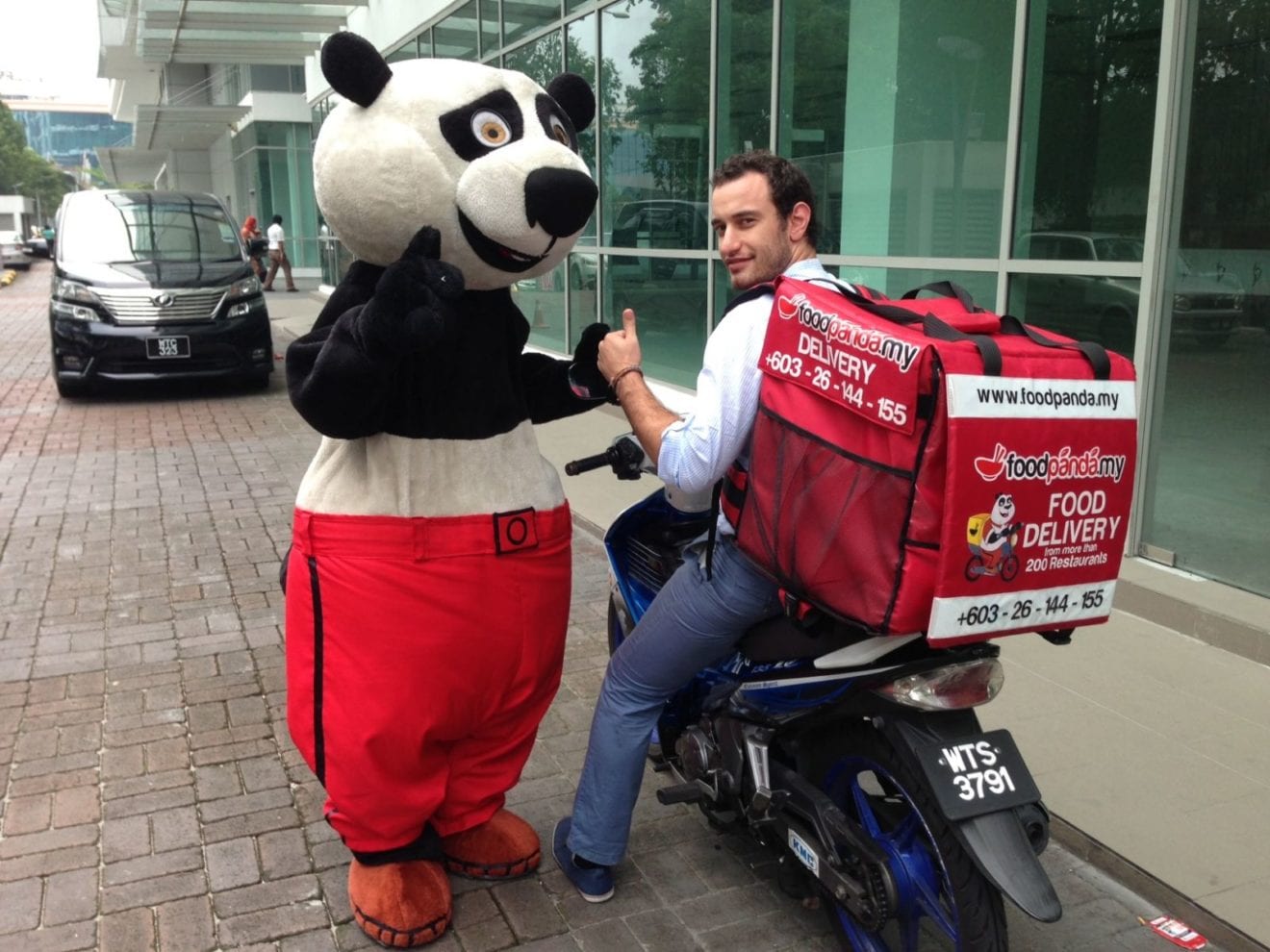
    Online food delivery service Foodpanda has given Korean QSR BBQ Chicken Vietnam a major marketing boost.

    While BBQ Chicken is “better known than KFC, Jollibee or Subway” in Vietnam’s capital city Hanoi, down south it still has some work to do on its brand awareness.

    So Foodpanda and BBQ Chicken have signed an exclusive delivery service partnership nationwide.

    Foodpanda had previously made deliveries on behalf of some individual stores.

    The Rocket Internet subsidiary, in which Goldman Sachs has just invested US$100 million, now has delivery partnerships in Vietnam with 20 franchised chains and some 800 restaurants Vietnam-wide, after only three years in the market.

    Foodpanda has services in six Vietnamese cities: Hanoi, Ho Chi Minh City, Da Nang, Can Tho, Nha Trang and Hai Phong

  • Kingold Jewelry opens on Tmall

    Kingold Jewelry opens on Tmall

    Kingold Jewelry, one of China’s leading manufacturers and designers of gold jewellery, ornaments and investment-oriented products, has launched an online retail flagship store on Tmall.com.

    Nasdaq-listed Kingold expects to leverage the Chinese eCommerce platform to sell the Company’s 24-karat gold jewelry and products, including rings, necklaces, bracelets and pendants.

    Additional categories may be added in the future.

    Zhihong Jia, chairman and CEO of the company, said having a presence on Tmall allows Kingold to interact directly with consumers and builds brand awareness in China.

    “We will continue to introduce new products and designs in our online flagship store on a regular basis.”

    Tmall.com provides an online shopping experience for increasingly sophisticated Chinese consumers in search of quality branded merchandise. It was launched in April 2008 as part of Taobao Marketplace and became an independent platform in June 2011.

    Thousands of international and Chinese brands and retail merchants have established storefronts on Tmall.com, part of the Alibaba Group. According to iResearch, Tmall.com was the largest B2C online retail platform in China based on the value of goods transacted as of September 2013.

    Kingold Jewelry, located in Wuhan City, was founded in 2002 and is now one of China’s leading designers and manufacturers of 24-karat gold jewelry, ornaments, and investment-oriented products. The Company sells both directly to retailers as well as through major distributors across China.

  • Middle-aged Koreans embrace mobile shopping

    Middle-aged Koreans embrace mobile shopping

    As grocery shopping through major retailers’ mobile shopping platforms is becoming a normal practice among Koreans, women in their forties are increasingly using mobile devices to buy their groceries.

    According to the Ticket Monster social commerce site, 73 per cent of the company’s female customers made purchases through the company’s mobile platform in the first quarter of the year.

    The figure represents a three per cent increase over the average for 2013 as a whole. Women in their thirties were the largest group of purchasers at 52.7 per cent, while women in their twenties and forties stood at 27.4 per cent and 16.1 per cent respectively.

    However, purchases among women in their forties increased the most, with growth of 3.5 per cent, while sales among those in their twenties actually declined by 4.8 per cent.

    These groups purchased groceries the most, including fresh food.

    Customers of both sexes in their thirties were the most frequent buyers of fresh food through the Ticket Monster mobile platform with a 51 per cent share, compared to 23 per cent and 21 per cent for those in their forties and twenties respectively.

    Ticket Monster saw its mobile platform fresh food sales grow threefold in the first quarter compared to the same period last year.

  • Mining data with mannequins

    Mining data with mannequins

    Italian mannequin maker Almax caused a stir two years ago with its Eye See mannequins, which use facial recognition technology. In one store, Almax’s mannequins alerted managers to a regular spike in Asian customers coming through a particular entrance after 5pm. When management moved two Asian shop assistants to that location at that time, sales rose 12 percent. This is not just a one-off example.