Tag: export

  • Why Ramadan is a special economic season in Indonesia

    Why Ramadan is a special economic season in Indonesia

    The Islamic calendar has entered the second week of Ramadan. During this month, Muslims refrain from eating, drinking and sexual activities from dawn to dusk.

    But, in countries where Muslims are the majority, consumption increases during this month of restraint. This happens not only in high-income countries, such as Qatar and United Arab Emirates, but also in developing countries such as Indonesia. Traditions that spur consumerism during Ramadan and preparations for Eid Fitr, the end of Ramadan, drive this trend.

    Spending patterns

    People spend more during Ramadan – mainly on food and beverages, but also on clothing. In Indonesia, the retail sales index on these categories showed a 30% increase during the Ramadan month in 2013.

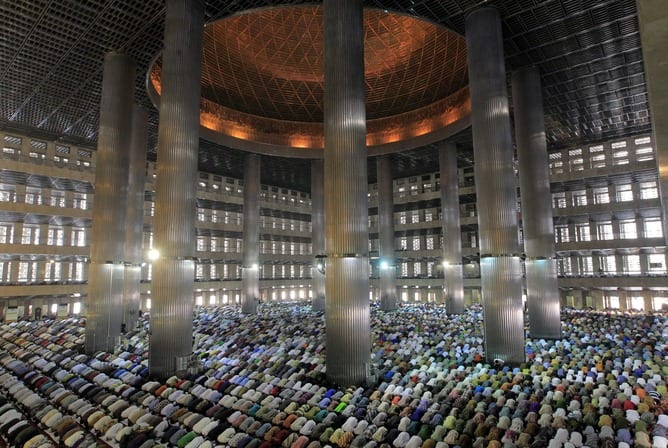
    Meals taken during Ramadan help tighten family ties and increase social interactions. In the fasting month, Muslim families usually have sahur – the pre-dawn meal – and iftar – the fast breaking meal – together, with more elaborate menus than in other months. People also have more social gatherings by breaking the fast together in restaurants at malls or in mosques.

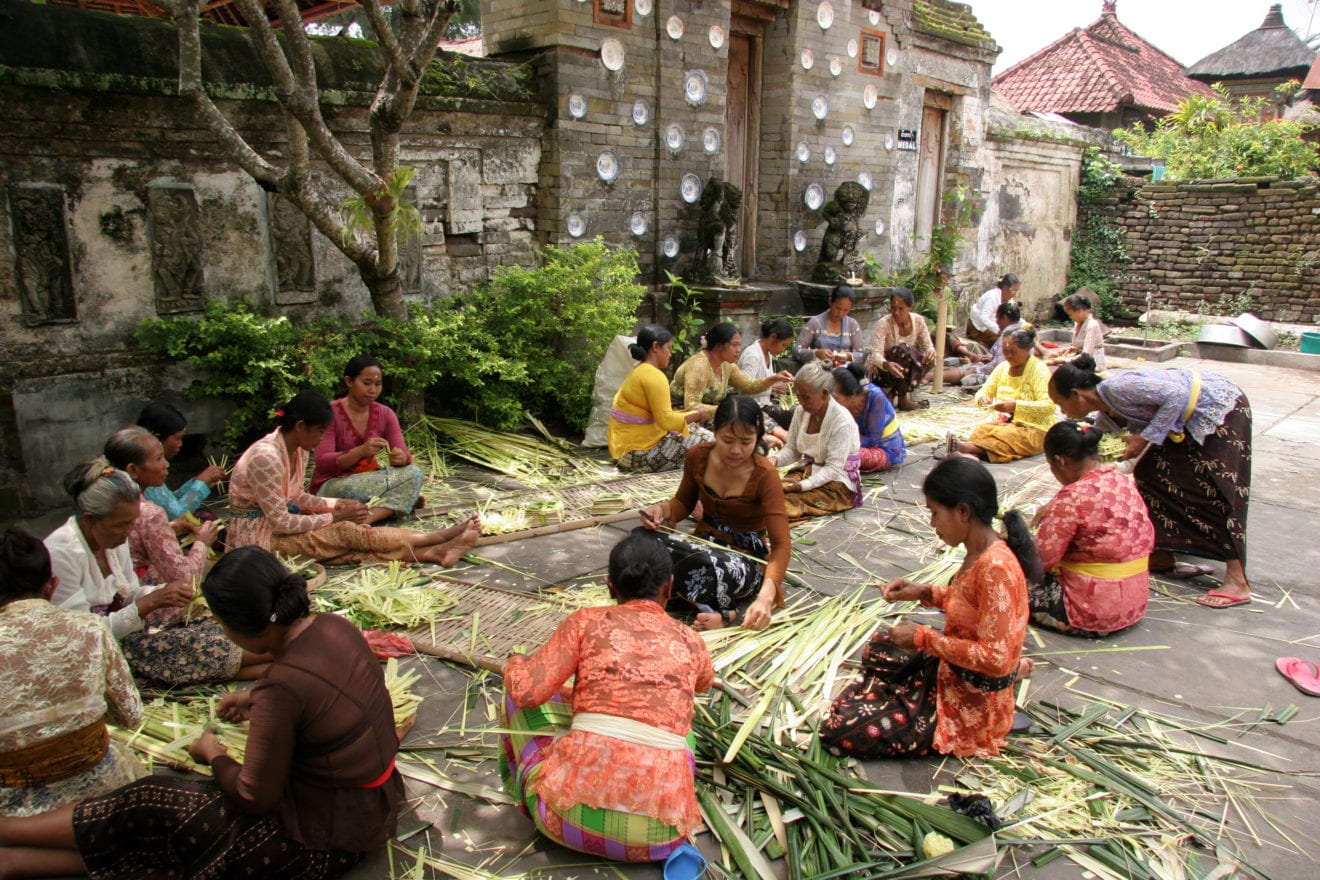
    Just after Ramadan ends, Muslims celebrate Eid Fitr. They start preparing for this holy day weeks before. People wear new clothes during Eid. They make or buy an assortment of cookies and sweets. They also prepare special menus to be enjoyed and served to guests.

    The main ingredients for the festive meals are mostly beef or chicken. The Indonesian government has to ensure that beef is stocked for Ramadan and Eid holidays. Australia, as the biggest exporter of live cattle to Indonesia, benefits much from the Ramadan season.

    People take the time to visit family and friends during Eid Fitr. In Muslim majority countries, the time around Eid is a long holiday. In Indonesia, the government obliges employers to pay a religious holy day bonus. This one-month salary bonus helps increase the public’s spending power during Ramadan and Eid.

    Clothing sales increase in Ramadan and ahead of Eid Fitr.

    Paying alms

    During Ramadan, Muslims pay alms (zakat). The increase in alms can quadruple from regular months.

    The compulsory alms in Ramadan, the zakat fitrah, is actually not much – around 3.5 litres of rice per person. But many Muslims pay other types of compulsory alms that are actually payable in other months.

    Aside from zakat, spending on charities that are not compulsory also increase during Ramadan. The channelling of zakat and charity for the poor also factors in the increase in purchasing power.

    Inflation

    Indonesians often complain about high inflation during Ramadan. Prices for food, transportation and recreation usually rise during the fasting month.

    But the holiday bonus plays a role as a safety net for people’s spending power. Zakat also helps the poor cope with rising prices of food. Last year, food prices increased 2% during Ramadan.

    Prices for flights, and train and bus rides, also increase as the end of Ramadan marks the start of a long holiday in Indonesia. A lot of people go to their hometowns or where their parents or grandparents live. Even though formally the Eid Fitr holiday is two days, in reality people take a week off. Many workers take their annual leave. Plane ticket prices can increase twofold. Some are fully booked long before the day of travel.

    Productivity during Ramadan

    Reduced working hours is common during Ramadan. A two-hour workday reduction, as occurs in Pakistan and Egypt, brings an estimated7.7% decrease in the country’s monthly GDP. For countries that only cut an hour of its workday – such as Indonesia and Malaysia – the decrease is around 3.8%.

    Workers’ productivity tends to decline during Ramadan. A rough figureof decrease in productivity in Muslim majority countries is between 35% and 50%. However, the slowing down of productivity in Ramadan is predictable, meaning the economy can anticipate it.

    The decrease in productivity happens as people choose subjective well-being from religious and Ramadan-related activities over the benefit people might get from working. During Ramadan, Muslims tend to do more religious activities and take time for activities related to Ramadan, such as breaking the fast with family, sprucing up their house and making cakes.

    When people feel they get more positive benefits from non-work activities, the opportunity cost – the value that people sacrifice to gain something – from work increases.

    In his study on Ramadan, Harvard economist Filipe Campante finds that, in the fasting month, people tend to choose self-employment (with flexible working hours) over formal employment. Campante says Ramadan makes people poorer but happier.

    Being social

    Many economic activities related to Ramadan and Eid are not just for private consumption – they are also collective ones.

    Networking activities happen during Ramadan and Eid. Fast-breaking gatherings, religious activities in mosques, social bazaars and the Eid holiday exodus facilitate information exchanges. On the journey to their hometowns, people bring souvenirs for family and friends. There, people catch up and exchange information about activities in cities.

    These social gatherings can increase further economic activities.

    Ramadan has the potential to improve Indonesia’s current economic slowdown with its increase in consumption and trade. However, economic activity on this year’s Ramadan is predicted to be lower than previous years. The lunar calendar has brought Ramadan to coincide with school holidays in Indonesia in 2015. This means less holiday travel for Indonesians.

  • Bubble-burst in China to benefit Indian mart

    Bubble-burst in China to benefit Indian mart

    The crash in the Chinese stock market is likely to benefit India in terms of higher capital inflows in coming days.

    On Friday, Chinese shares plunged more than seven per cent amidst concerns of overvaluation after registering a 13.3 per cent loss last week.

    According to market experts, global investors are likely to allocate more funds to Indian equities, as the country is now one of the fastest growing economies in the emerging market universe.

    “India is now the best bet in the entire emerging market universe. India’s current account deficit (CAD) has come down, retail and wholesale price inflation is under control, monsoon is progressing well and interest rates are expected to come down in the medium term. So a combination of improving macro-economic factors coupled with the government’s effort to revive the investment cycle would help India attract higher capital inflows,” observed Ajay Bodke, chief executive officer (CEO), PMS, Prabhudas Lilladher.

    According to him, the rally in the Chinese equity markets was driven by an excessive exuberance on the part of retail investors.

    About four million retail investors in China had opened trading accounts in just the last one month, he said.

    Even after such a steep fall in the Chinese equities, analysts are still not convinced about the valuations.

    While asking its clients to refrain from buying Chinese shares, analysts at Morgan Stanley said, “Our stance on China ‘A’ shares is that this is probably not a dip to buy. In fact, we think the balance of probabilities is that the top for the cycle on Shanghai, Shenzhen and Chinext has now taken place”.

    According to them, increased equity supply, continued weak earnings growth in the context of economic deceleration, high valuations and high margin debt to free float market capitalisation are some of the major concerns for the Chinese equities.

    “During the last two months, global investors had pulled out money from the Indian markets to invest in Chinese equities. Some portion of that money will now come back to India,” said Ambareesh Baliga, a senior stock market analyst.

  • Brunei-Indonesia trade hit $812 million in 2014

    Brunei-Indonesia trade hit $812 million in 2014

    Trade value between Brunei and Indonesia increased by 4.10 per cent to to $812 million in 2014, a senior Indonesian diplomat said yesterday.

    Out of the $812 million, over 90 per cent of the business transaction was in oil and gas, according to Rudhito Widagdo, Minister Counsellor of Economy at the Indonesian Embassy.

    Indonesian exports to Brunei was valued at $135 million in 2014.

    “Some of the transactions also came from the SMEs(small and medium enterprises) but there is no doubt that oil and gas played a big part in the trade value,” he told The Brunei Times following a business briefing held for Bruneian businesses and stakeholders.

    This, Rudhito said, is an improvement from the trade value of $780 million recorded in 2013.

    Indonesia is also on a mission to reduce its trade deficit with Brunei. He said that trade value between the two countries had fluctuated in the past five years.

    In 2009, trade between Brunei and Indonesia reached $1.2 billion but decreased in 2010 to $948.2 million.

    In 2011, trade went up again to $1.15 billion before dropping to $675.6 million in 2012. Trade improved by 27.8 per cent in 2013 to $863.5 million.

    During these periods, Indonesia had always recorded deficit due to its huge import of crude oil, Rudhito said.

    He said Indonesia is inviting more Bruneians to invest in several “high-potential” provinces in the country. This will boost capital flow from the Sultanate.

    He hoped that yesterday’s briefing will inform Bruneian entrepreneurs about the business environment and investment opportunities in Indonesia.

    “We always strive to do our best to improve the economic relations of the two countries. In shaa Allah, in time, it will bear fruit. I’m very positive,” he said.

    Following a successful trade mission to Jakarta and Yogyakarta in October last year, the Indonesian Embassy will be organising another trade mission to Jakarta and Bandung from October 19 to 25.

    Bruneian businessmen who will join the trade mission will have an opportunity to do business matching with Indonesian companies, district officers and trade associations. They will also meet up with governors and district heads.

    The delegation will visit the Indonesian Trade Expo 2015.

  • Bali ‘s exports to Spain increased 38.93%

    Bali ‘s exports to Spain increased 38.93%

    The exports of unique Balinese crafts and antiques to Spain increased by 38.93 percent, from US$5.4 million recorded in January-April 2014 to US$7.4 million in the same period in 2015.

    “Spain imports various woven products in the form of sandals, cloth bags, non-knitted items, confectionery, and furniture,” Balinese entrepreneur Made Parwata stated here on Thursday.

    According to Parwata, Balis growth in foreign trade, particularly with Spain, seems positive, especially after the government increased the frequency of flights to European countries.

    He remarked that Spanish consumers are consistent in buying various Balinese art products.

    Spanish importers always order items via email every month.

    In addition to Spain, the Netherlands, Greece, England, France, and the United States are the top ten buyers of Balinese handicrafts.

    According to records provided by the Central Statistics Agency (BPS) of Bali, Spain ranks seventh in the list of largest buyers of Balinese non-oil products in early 2015, after the United States, which is the biggest consumer, with exports amounting to US$38.8 million followed by Japan at US$16.5 million, Singapore US$14 million, and Australia US$13.3 million.

    The increasing number of foreign tourists travelling to Bali is expected to significantly affect foreign trading, especially the sale of souvenirs and agricultural products, including Balinese coffee.

  • Korean cosmetics exports boom

    Korean cosmetics exports boom

    Riding “Hallyu”, or the Korean Wave, cosmetics products have developed into strong moneymaking export items as they set records for exports and trade surplus last month.

    According to the Korea Customs Service, the value of Korean cosmetics exports in March was US$277.5 million, the largest amount since the office began tracking monthly statistics by product in January 2000.

    Imports of cosmetics products were US$158.9 million in March, resulting in a US$126.5 million trade surplus – also the largest in history.

    The trade balance for cosmetics products moved into the black last May for the first time and has maintained a surplus for 11 consecutive months.

    Exports of cosmetics products are skyrocketing thanks to Hallyu, with China and Southeast Asian countries increasing their imports of Korean cosmetics.

    By country, Korea sold US$119 million worth of cosmetics products to China, followed by Hong Kong (US$66 million), the US (US$20 million), Taiwan (US$12 million), Japan (US$15.6 million) and Thailand (US$8.4 million).

    If sales to foreign tourists in Korea are included, exports of cosmetics would be much larger than the customs office statistics.

    An industry official said: “As Korean dramas and K-pop gain popularity, Korea’s status is rising and Korean products are popular among foreign customers. Of particular note, Korean cosmetics sales in China are increasing up to 30 per cent annually.”