Tag: facebook

  • Facebook’s Opens Lawsuit against an app developer

    Facebook’s Opens Lawsuit against an app developer

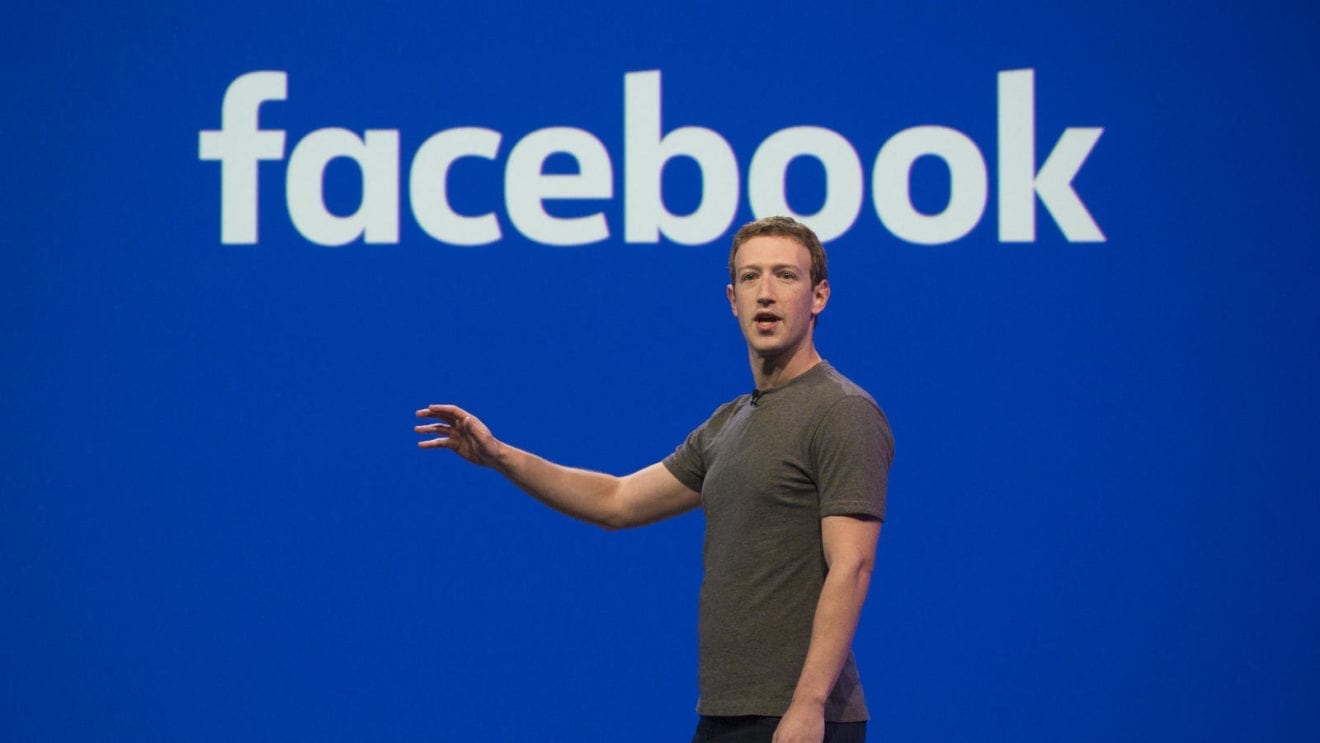
    Kettle, meet pot. Or perhaps we should say, man bites dog. Either way, it symbolizes news announced on Friday by Facebook. The company, which faces an FTC fine of $3 billion to $5 billion for allegedly using members’ personal data without consent, filed a lawsuit against a company for doing the same thing. The suit was filed this past Friday in California Superior Court for the County of San Mateo against a South Korean company called Rankware.

    Rankware is an app developer; the company and its apps have been suspended from Facebook. Despite the suspension, it appears that the company still has in its possession some Facebook user data. In the suit, Facebook asks the court to demand that Rankware delete the user data it obtained and hints that the defendant might have sold this information to other firms. The social networking company says that Rankware refuses to say who it turned over the user data to, and would not “[p]rovide a full accounting of Facebook user data in its possession.”  The filing adds that while Rankware had agreed contractually to follow Facebook’s rules, it “failed to comply with Facebook’s requests for proof of Rankwave’s compliance with Facebook policies, including an audit.”

    The filing goes on to note that since 2014, Rankware has been “us[ing] Facebook Pages data associated with its apps for its own business purposes, which include providing consulting services to advertisers and marketing companies.” The filing claims that the defendant has generated $9.8 million by selling Facebook members’ user data to advertisers. The social networking firm sent a cease and desist letter to Rankware earlier this year, and while the developer said it did not violate Facebook’s terms of service and policies, it would not provide any proof of this.

    “By filing the lawsuit, we are sending a message to developers that Facebook is serious about enforcing our policies, including requiring developers to cooperate with us during an investigation.”

    The suit says that Rankware’s actions harmed the reputation, public trust and goodwill of Facebook. It seeks an injunction that would prevent Rankware from accessing Facebook’s platform, force the South Korean developer to show proof of its compliance, and delete any user data that it obtained in violation of Facebook’s rules. Despite asking the court to award it financial damages and any money that Rankware received “unjustly,” Facebook says that money isn’t enough to make up for the harm caused by Rankware’s actions.
  • Instagram test designed to make users more trusting of content

    Instagram test designed to make users more trusting of content

    When Instagram first launched, it was known for the filters that users could apply to their photos, which would then be shared among members. The company was acquired by Facebook in 2012 for a reported $1 billion. Instagram is not as well known as Facebook is for inflaming the passions of subscribers by spreading fake news and political propaganda. Still, a report published says that steps are being taken to prevent the dissemination of false posts over the platform. Instagram is currently running tests with fact checkers.

    Facebook currently employs 52 firms that it has partnered with to conduct fact checks. If content found on a particular Facebook post is proven to be false by one of the fact checkers, the post’s distribution through users’ news feed is reduced. And not surprisingly, Instagram’s policy is basically the same. Stephanie Otway, a spokesperson for the app says, “Our approach to misinformation is the same as Facebook’s — when we find misinfo, rather than remove it, we’ll reduce its distribution.” That means flagged posts will be removed from the Explore tab and the hashtag result page, but it will stay up on the author’s page. That limits the readership of these polarizing posts to those who have made a decision to subscribe to authors who disseminate such information.

    But there is a big difference between the two sites. The content on Instagram is not nearly as news-oriented as it is on Facebook, especially since the platform doesn’t have hyperlinks inside captions or member comments. Thus, the hysteria is more subdued than on Facebook where a single lie could turn millions of members into a foaming at the mouth crazy. So unlike Facebook, photos that are fake won’t be labeled and there will be no warning shown to Instagram members who want to share these images.

    “We all know any kind of images and pictures are a main driver of misinformation in any platform. Alerting those who share (false posts) like they do on Facebook would be best. But perhaps it is only the beginning of their actions there, I suppose. Even though there are plenty of problems regarding misinformation inside Facebook’s many platforms, they are still the ones who are taking the combat of misinformation more seriously.”-Tai Nalon, Director Aos Fatos

    Lees ook:

  • Senators want FTC to send a Massive Fine to Facebook

    Senators want FTC to send a Massive Fine to Facebook

    A couple of days ago we told you that the Federal Trade Commission (FTC) could be days away from announcing a fine against Facebook in the amount of $3 billion to $5 billion. The FTC is trying to decide how much to punish Facebook and is negotiating a settlement with the company. While there have been a number of privacy issues involving the social media app/site over the last few years, back in 2016 it violated a previous FTC consent decree it had signed five years earlier. Under the terms of that deal, Facebook agreed not to use subscribers’ personal data without obtaining consent; however, during the 2016 presidential campaign, 87 million members had their profiles used without permission by political consultancy Cambridge Analytica.

    Two U.S. senators want the FTC to fine Facebook more than $5 billion and force the company to make “sweeping changes.” Senator Richard Blumenthal (D-CT) and Senator Josh Hawley (R-MO), both members of a sub-committee that oversees the FTC, wrote a letter to the regulatory agency today. In the letter, the senators said that Facebook should receive a large enough fine that it would act as a deterrent to prevent future violations. They also want to put limits on Facebook’s use of consumer data, force the deletion of tracking data, stop the practice of collecting certain consumer information and revise its advertising policies. In addition, Blumenthal and Hawley want Facebook to put up a firewall blocking its other apps (like Instagram and WhatsApp) from sharing consumer data with each other.

    “The Commission should pursue deterrent monetary penalties and impose forceful accountability measures on Facebook, including limits on the use of consumer data, managerial responsibility for violations, and other structural remedies to stop further breaches of consumer trust.”-Letter to FTC from Senators Blumenthal and Hawley.

    Considering that the company took in more than $56 billion last year, a $5 billion fine might not be high enough to deter Facebook from committing future privacy violations. In addition, the senators say that Facebook co-founder and CEO Mark Zuckerberg must be held accountable for failing to keep Facebook members’ profiles private. The FTC is also considering taking action against the executive.

    In anticipation of the fine, Facebook took a $3 billion charge against its first-quarter earnings. Even with this adjustment, Facebook reported $2.4 billion in net profits during the three month period running from January through March.

  • Facebook is making changes to the App

    Facebook is making changes to the App

    Besides unveiling a new quicker and lighter Messenger app with end-to-end encryption, and new features for Instagram and WhatsApp, Facebook announced today some changes that are being made to its flagship app. The new focus of the Facebook app will be on groups, and FB5 will feature new ways to bring together people offline. With 400 million users subscribed to over ten million active groups, the redesigned app will make it easier for users to access the groups they belong to and find new ones to join. The groups tab will show a feed from all of the groups a member has joined, with recommendations for new groups to sign up with. Starting today Facebook users will see in their News Feed more content from the groups they belong to, and content from the feeds can be sent to these groups.

    Facebook will add new features for certain groups. HealthSupport Group members will be able to make anonymous posts about their medical conditions. Job groups will have a template to allow employers to post job openings; those interested in a particular job can message the employer and apply for the job through Facebook. Gaming groups will have a new chat feature, and Facebook is looking at ways to allow buyers on Facebook Live to find out more information about a product and make a purchase without leaving the live stream. Opting into the Meet New Friends feature will allow Facebook users to meet others that they share a community with like a school, office or city. Facebook has been testing Meet New Friends and a wider rollout is coming soon. Facebook Groups will be integrated so that users can meet people they share similar opinions with.

    The company also announced the expansion of Facebook Dating to 14 new countries. Facebook Dating is available in Colombia, Thailand, Canada, Argentina, Mexico, Philippines, Vietnam, Singapore, Malaysia, Laos, Brazil, Peru, Chile, Bolivia, Ecuador, Paraguay, Uruguay, Guyana, and Suriname. This feature allows you to find potential matches from your Facebook groups, friends of friends and more. Facebook also is launching a Secret Crush feature that allows you to designate up to nine friends as Secret Crushes. If any one of the nine has opted into Facebook Dating, they will receive a notification alerting them that someone has a crush on them. If one of your crushes then adds you to their Secret Crush list, a match is made. If a crush isn’t on Facebook Dating or doesn’t add your name to his/her Secret Crush list, your interest is never revealed.

    Those using Marketplace to sell items will be happy to hear that they will soon be able to ship their wares anywhere in the continental U.S. and get paid on Facebook using a secure platform. And lastly, a new Events tab will show you things taking place around you and even recommend places to go and things to see. The tab will help you make plans with friends to meet up at an event. Some of the new features will be available right away, while others will be found on the app in a few months.

    Last week, we told you that 2.1 billion people use Facebook, WhatsApp, Messenger or Instagram on a daily basis. 2.7 billion use one of these Facebook properties on a monthly basis. The company does expect to be fined $3 billion to $5 billion for failing to comply with an FTC Consent Decree it signed back in 2011. With the latter, Facebook promised not to use member profiles without users’ approval. But during the Cambridge Analytica scandal, 87 million Facebook members had their profiles sold without permission to Cambridge Analytica and the data used to create psychological profiles.

  • Facebook expects to be hit hard by the FTC

    Facebook expects to be hit hard by the FTC

    After word got out last year that 87 million Facebook members had their profiles sold to political consultant Cambridge Analytica without permission, the Federal Trade Commission started an investigation. After all, this action violated an FTC consent decree that Facebook signed off on back in 2011, promising not to use subscribers’ personal data without consent.

    Facebook announced its first-quarter results today and took a charge of $3 billion to cover an anticipated fine from the Federal Trade Commission (FTC). Neither side has reached an agreement, but clearly, Facebook expects to be spanked pretty hard by the FTC. The company noted in its report that it faces a fine as high as $5 billion from the FTC. The 87 million profiles received by Cambridge Analytica were reportedly used to created profiles of voters used by the 2016 Trump campaign to determine the areas of the country where more money needed to be spent for advertising.

    Facebook also announced today that 2.1 billion people use Facebook, WhatsApp, Messenger or Instagram on a daily basis, and 2.7 billion use one of these members of the Facebook family at least once a month. At the end of the three months that included January through March of this year, Facebook had $45.42 billion in the vault. That’s after the company spent $3.96 billion on capital expenditures during the quarter.

    For the first quarter of 2019, Facebook had $15.1 billion in revenue. That was up 26% from the $12 billion it raked in during the same quarter a year earlier. Net came to $2.4 billion (or 85 cents a share) against $5 billion earned during the first quarter of 2018. But those results include the $3 billion charge. Without the charge, Facebook would have earned $1.89 per share vs. the $1.69 it reported for the first three months last year.

  • Facebook is building a Voice Assistant

    Facebook is building a Voice Assistant

    Sometimes it feels like Facebook has no awareness of its public perception at all. There are already proven stories about how Facebook has been gathering more data than they claim and using that data in ways you might not expect. There are conspiracy theories that Facebook is spying on users and listening to conversations.

    Even so, Facebook built the Portal – a camera that follows you around your room for video chats – and now there are reports that Facebook is building its own voice assistant to compete with Google, Alexa, Siri, and Cortana (and Bixby, if you want to be a completionist about it). The Facebook Portal actually uses Alexa for voice commands, but it seems Facebook has been working on its own voice assistant. Ex-employees from Facebook told that a team in Facebook’s augmented reality and virtual reality group has been quietly working on the project since early 2018.

    There’s no indication of how Facebook would position the assistant, whether in the Facebook app itself or more as a replacement for Alexa in Portal hardware (assuming that hardware line continues.) It’s also unclear how far along Facebook is in building the assistant or even where it’s getting the voice data it would need to build the voice recognition piece.

    Also unclear is whether or not anyone actually wants a Facebook voice assistant. The Portal cameras have been failures by all accounts. Facebook’s last attempt to make a human-powered assistant (M) failed as well. Add to that the general erosion of trust in Facebook, it’s hard to imagine how the company could sell a product that actually does listen to you at all times.

  • Change your Instagram password Immidiatly

    Change your Instagram password Immidiatly

    An updated entry made yesterday to a post on the Facebook blog reveals that the company left millions of Instagram passwords in a “readable format.” Originally, Facebook said that “tens of thousands” of Instagram customers were involved. Facebook says that normally its login systems are designed to “mask passwords using techniques that make them unreadable.”

    The good news is, if you believe Facebook, its investigation has shown that no one from inside or outside the company accessed these passwords. Of course, since Facebook updated its original blog post after one month increasing the number of passwords affected, who knows what they might say in another month?

    “In line with security best practices, Facebook masks people’s passwords when they create an account so that no one at the company can see them. In security terms, we ‘hash’ and ‘salt’ the passwords, including using a function called “scrypt” as well as a cryptographic key that lets us irreversibly replace your actual password with a random set of characters. With this technique, we can validate that a person is logging in with the correct password without actually having to store the password in plain text.”-Facebook

    Last month, Facebook admitted that it stored hundreds of millions of passwords in plain text dating back to 2012. At the time, it was estimated that 200 million to 600 million accounts had their passwords exposed to as many as 20,000 Facebook employees.

    Facebook purchased Instagram for approximately $1 billion back in 2012. The company suggests that subscribers to Facebook, Instagram or WhatsApp use two-factor authentication when signing in. Besides entering a password, a code is sent to the subscriber’s smartphone that is also required for a successful login. To set this up, go to the settings menu from your Facebook app and click on “Security and Login.”

  • Facebook could combine two important parts

    Facebook could combine two important parts

    Facebook is split into so many products these days that it’s hard to keep track to everything the social app has to offer if you’re not a hardcore user. News Feed, Stories, Messenger are just some of the features that Facebook has made available to users throughout the years.

    The reason Facebook split its app into so many pieces is quite simple: monetization. Well, it appears that the social giant has found a way to make even more money by combining, rather than dividing, two of these features: News Feed and Stories.

    The changes spotted by software engineer Jane Manchun Wong indicates that Facebook is testing a new format that will combine News Feed and Stories into a one swipeable, hybrid carousel.

    It will allow standard feed posts and ads to be placed inside Stories in the same carousel so that users would be tempted to swipe through them more often than not, which translates in more views and better monetization of content.

    The GIF posted by Jane shows how a user seamlessly switches between a News Feed story and a Stories video, inside the hybrid carousel. The feature has been discovered in the Android version of Facebook, but if the company does indeed plan to make it available, it will be present on all supported platforms.

  • Facebook Messenger dark mode now Available

    Facebook Messenger dark mode now Available

    Facebook has been widely testing Messenger’s dark mode for about a month now, and while the feature might have been available for everyone, you couldn’t enable it from the settings menu.

    The only way to enable dark mode in Messenger was to send a crescent moon emoji in any chat, an Easter Egg activation available on both Android and iOS platforms.

    Starting today, Facebook is making it easier for everyone to enable and disable the dark mode in Messenger by adding a toggle in the Settings menu. To activate the feature, simply tap your profile photo in Messenger to access settings and toggle dark mode to switch the chat from white to dark.

    According to Facebook, the new dark mode for Messenger should provide lower brightness while maintaining the same contrast and vibrancy. The new feature should also remove the glare from the phone for use in low light situations, which should allow users to take advantage of Messenger regardless of where they are.

    Facebook mentions that the dark mode is already available globally in Messenger settings, although some users may have to wait a few more days for the new feature to arrive.

  • Subscribers to Facebook, Instagram and WhatsApp faced over 2 hours Downtime

    Subscribers to Facebook, Instagram and WhatsApp faced over 2 hours Downtime

    If you mosey on over to DownDetector.com you’ll notice something interesting. The graphs that measure the number of complaints received by Facebook, Instagram, and WhatsApp users all look the same. That’s because the trio was down world-wide for over two hours today. And of course, all three apps are owned by Facebook.

    Starting at about 6:30 am EST, complaints about all three started to roll in, peaking about 90 minutes later. Some Facebook users could not access the app at all, and others could not refresh their news feeds. Instagram users had the same issues, and WhatsApp members could not send or receive messages. Almost a month ago to the day, all three were down in North America, Europe, and Latin America for as long as 24 hours. Facebook blamed the problem on a “server configuration change.”

    After the issue was resolved today, Facebook released a statement apologizing for the inconvenience. So far though, the company has not revealed the reason for Sunday’s outages.

    “Earlier today, some people may have experienced trouble connecting to the family of apps. The issue has since been resolved; we’re sorry for any inconvenience.”-Facebook

    Facebook purchased Instagram for $1 billion back in April 2012. It closed on the purchase of WhatsApp in October 2014. The final purchase price amounted to more than $21 billion.

  • Lush UK to closing down most social media accounts

    Lush UK to closing down most social media accounts

    Beauty and well-being retailer Lush UK will close its social media accounts this week, citing disillusionment with the algorithms and pay-to-display policies determining how they appear in their customers’ feeds.

    The firm will shut down Lush UK, Lush Kitchen, Lush Times, Lush Life, Soapbox and Gorilla across Facebook, Twitter and Instagram. US accounts will remain active for the time being.

    Lush will instead attempt to connect with followers via its website chat feature or through more traditional means of communication, although it may still work with social media opinion leaders to provide “an opportunity for our customers to connect one-on-one with people within Lush”.

    The shutdown will silence Twitter, Facebook and Instagram channels followed by hundreds of thousands of fans.

    “We don’t want to limit ourselves to holding conversations in one place, we want social to be placed back in the hands of our communities – from our founders to our friends,” the firm announced.

  • How to open links in external browser with Facebook Messenger

    How to open links in external browser with Facebook Messenger

    For a while now, both the Facebook and Messenger app have been opening links in their own, internal browser — a simple webview window, which doesn’t support multiple tabs and is there to allow you to quickly interact with something on the web, and even allow said item to communicate back to your Facebook app instantly.

    That said, a lot of people find the internal browser annoying. Why? Well, sometimes you just tap on a YouTube video only to be greeted by a webview window, which opens a desktop version of the YouTube site that you are not even logged into. Lame. Sometimes, you want to open a web page in your Chrome or Safari browser so that it can stay there as an open tab. Other times, you get so into the information you are reading about that you want to quickly open a few more tabs on it and do a deeper research… oops, you can’t — you are not in your browser of choice, you are in Facebook’s webview.

    Needless to say, many users out there would prefer it if their links simply open in a default app of choice — if it’s a YouTube link, just have it open the video in the YouTube app; if it’s a web link, just launch it in Chrome or Safari.

    Well, there’s a solution for that problem… if you are on Android. That’s right, for some odd reason, Facebook does not allow iPhone users to opt out of using its internal browser. If you are on iOS, you are forced to manually swap apps, though it’s not as slow or painful as it may sound.

  • WhatsApp building a New Feature Allowing Users to detect spam and fake news

    WhatsApp building a New Feature Allowing Users to detect spam and fake news

    Facebook owned WhatsApp is testing a new feature that will allow a user to see how many times a message has been forwarded. The beta update to version 2.19.80 includes a new functionality allowing a user to view how many times a message he or she received has been forwarded. To obtain this information, the user needs to forward a received message, open up the Message info section, and the data will be there. A message that has been forwarded five or more times will receive a bubble that says “Frequently Forwarded.”
    The number of times that a message you sent via WhatsApp has been forwarded is something that can already be found in the Message info section. If you install the beta version of the messaging app on your Android or iOS phone (via TestFlight) you will be able to see the number of times both a sent and received message has been forwarded. WhatsApp is adding this feature to help a user see whether a message is spam. Some messages that have been forwarded a number of times are spam, or might be “fake news.”
    Facebook acquired WhatsApp in a blockbuster deal that closed in October, 2014. Originally valued at what was considered an outrageous amount of money at the time the deal was announced ($16 billion), by the time the transaction closed eight months later the purchase was valued at $21 billion.
  • Why you need to change your Facebook and Instagram password

    Why you need to change your Facebook and Instagram password

    If you didn’t think that Facebook could go lower than sharing personal information from 87 million users with third party sites, violating a signed FTC consent decree in the process, maybe you’re not giving the social media company enough credit. Hundreds of millions of Facebook users could have had their passwords discovered by Facebook employees. These passwords were stored by the company in plain text dating back as far as 2012. Facebook engineers noticed the mistake when reviewing new code back in January of this year.

    While 2018 was not a great year for Facebook, 2019 has started just as poorly for the company. Earlier this month, the company was accused of using data provided by subscribers for two-factor authentication, like phone numbers, for advertising and marketing purposes. And The New York Times revealed last week that Facebook is the subject of an investigation for deals it made with other tech firms for data.

    We don’t know if this is going to make you feel better, but an internal investigation by Facebook reveals that there is no sign that employees took advantage of this oversight. Still, if you are a Facebook or Instagram user, or even if you were a Facebook or Instagram user and still have an active account, it might be a good idea to change your password now.  Facebook does not feel that such a move is required and company engineer Scott Renfro said, “We’ve not found any cases so far in our investigations where someone was looking intentionally for passwords, nor have we found signs of misuse of this data.” Still, the number of accounts that are involved could number somewhere between 200 million and 600 million, and the number of Facebook employees with access to them was approximately 20,000. We’d suggest that you ignore Facebook’s recommendation and change your password.

    “We’ve not found any cases so far in our investigations where someone was looking intentionally for passwords, nor have we found signs of misuse of this data,” Renfro said. “In this situation what we’ve found is these passwords were inadvertently logged but that there was no actual risk that’s come from this. We want to make sure we’re reserving those steps and only force a password change in cases where there’s definitely been signs of abuse.”-Scott Renfro, engineer, Facebook

    A statement made by Facebook says that it plans on notifying “hundreds of millions of Facebook Lite users, tens of millions of other Facebook users, and tens of thousands of Instagram users.” But when it comes to Facebook and its associated apps and sites, your best bet is to get out in front of whatever privacy issue the next shoe to drop will expose.

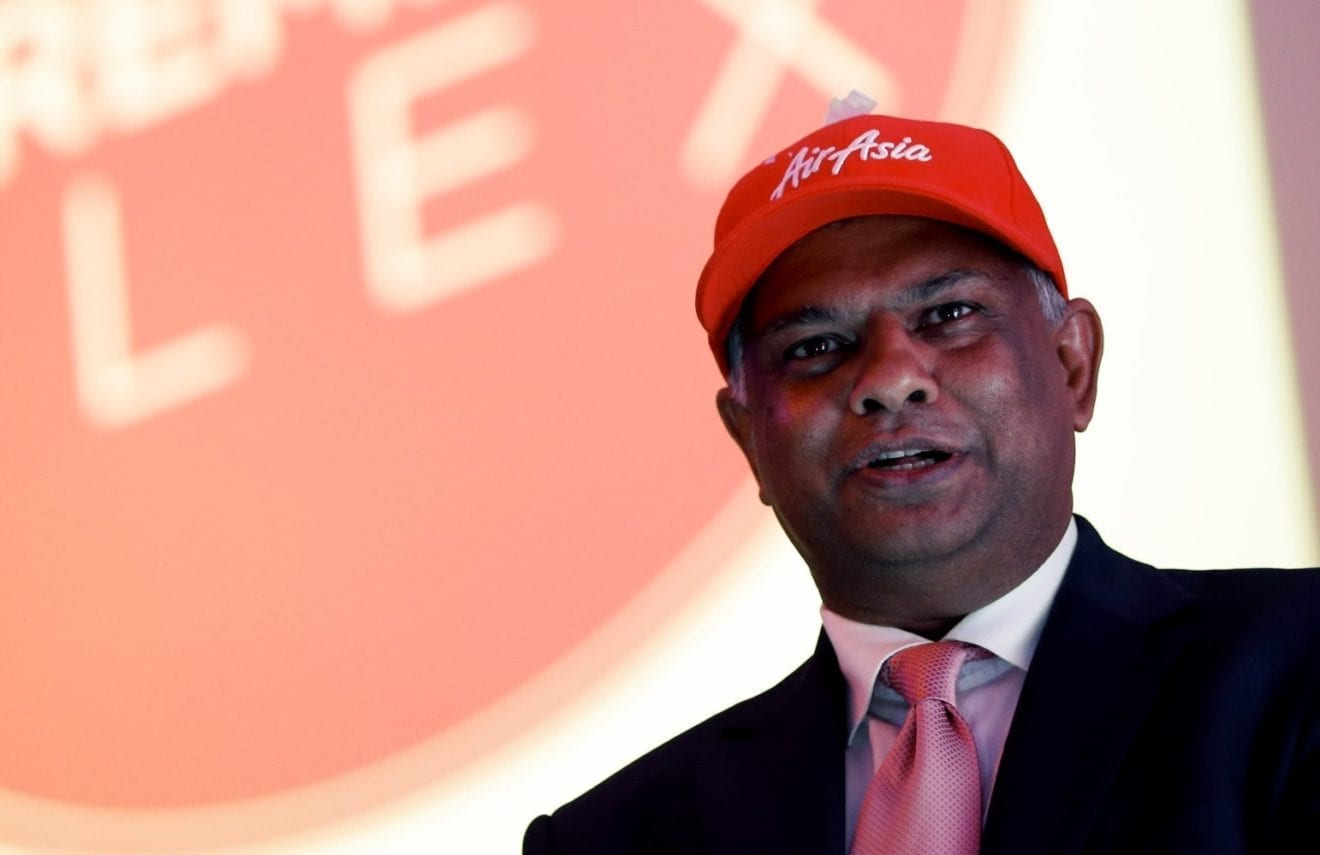
  • AirAsia’s Tony Fernandes quits Facebook, citing social media ‘hate’

    AirAsia’s Tony Fernandes quits Facebook, citing social media ‘hate’

    AirAsia Group chief executive officer Tony Fernandes closed his Facebook account and said he may shut his Twitter page, citing “hate” being transmitted on the networks after the live-streaming of the terror attack on two mosques in New Zealand.

    “The amount of hate that goes on in social media sometimes outweighs the good,” Mr Fernandes said in a Twitter post on Sunday (March 17).

    “But on Twitter, I think the battle for me goes on.”

    Mr Fernandes said his Facebook account had 670,000 followers. He said in a Twitter post on Saturday that while he is “a big fan” of social media, he had to think hard about whether to remain on Facebook after Friday’s mass shooting that claimed 50 lives in New Zealand’s second-largest city of Christchurch.

    Mr Fernandes has about 1.29 million followers on Twitter and has tweeted more than 20,200 times since joining in 2008, commenting often on the performance of his companies and sports teams.

    He is the co-owner of English football club Queens Park Rangers. AirAsia is one of the region’s biggest discount carriers.