Tag: facebook

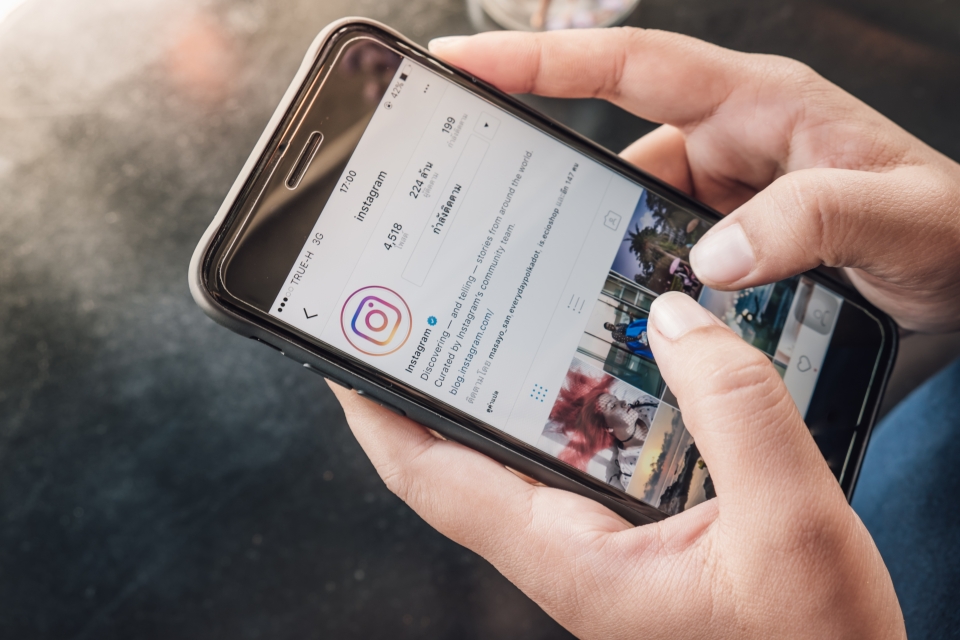
  • How to maximise instagram as sales channel

    How to maximise instagram as sales channel

    Retailers who want to sell on Instagram might be surprised how easy and effective it is – for businesses both big and small.

    According to one research study, 75 per cent of Instagram users who follow businesses take some form of action, whether it be visiting a site or making a purchase, after seeing a promotional post.

    Of course, to leverage this platform to its full potential, it helps to keep certain points in mind. Just like when advertising on Facebook, you must follow best practices to successfully sell on Instagram. The following tips will help you maximise your profit when you sell on Instagram, by developing marketing campaigns that work.

    Treat your Instagram page like your website

    The rise of social media platforms has fuelled growth of digital marketplaces, where many customers don’t actually visit a company’s website when they first encounter a brand online. Instead, they view its social media page as a substitute for the site.

    So it makes sense to optimise your Instagram account by including a thorough summary of your business and all it offers. You should also select a profile picture that represents your brand. Furthermore, be sure to post any relevant visual content featuring information that your customers might find out about via your website. This may be something simple like information about an upcoming sale or promotion, but it’s still important to promote via Instagram.

    Create ads

    Instagram, like Facebook, allows users to create business accounts and advertisements.

    Once you sign up, the platform will seamlessly guide you through the process of creating and publishing an ad.

    Luckily, you don’t need to create unique content for your ad if you’ve already shared a post that highlights the same key information. A major bonus of the platform is that Instagram lets users turn regular posts into ads if they choose. Experiment with different types of ads to determine which are most effective for your business.

    You may also want to consider creating an ad using the new Instagram Stories format. This provides a more immersive visual experience, as it takes up a device’s entire screen by playing vertically. Since Instagram users view 60 per cent of stories with the sound on, it also gives you an opportunity to incorporate engaging audio content.

    Let users make purchases via the app

    Instagram posts can be an effective way to direct users to your online store to make a purchase. That said, one valid concern is that users will get distracted before completing the transaction. It would be easier if they could simply purchase an item directly via the app.

    Thanks to features like Shopify’s Shoppable Instagram Galleries, they can. This tool lets you tag items in posts that are for sale, meaning users no longer have to leave the app to make a purchase. Instagram has also begun working on a similar feature for business accounts.

    As always, it’s important to ensure your posts look appealing and accurately represent your products. Fortunately, social media marketing makes A/B testing very easy. As you experiment with different strategies, you’ll learn exactly what works best for your future Instagram campaigns.
  • Facebook scandal creates opportunity for cellcos

    Facebook scandal creates opportunity for cellcos

    The Facebook and Cambridge Analytica data harvesting scandal has eroded trust in digital service companies, which has opened a window of opportunity for mobile operators, according to new research from Openet.

    A survey of consumers in the Philippines, the UK, US and Brazil found that more than 50% of consumers are now less likely to share personal data with digital services companies.

    Consumers now see their mobile operator as more trustworthy than both social media platforms and digital services companies such as Netflix, Spotify and Skype.

    More than nine in ten (92%) consumers would be happy to consider mobile operator delivered digital services as an alternative.

    In addition, 66% would now prefer to pay for services if it means more control over their data, which could even signal the beginning of the end of the Freemium era, Openet said.

    Openet CEO Niall Norton noted that despite having an abundance of subscriber data, mobile operators have traditionally had a much more conservative approach to making use of this data compared to digital service providers.

    “For a long time, this conservative approach to data use has been used as an unfavorable measure for operators’ digital efforts, especially in comparison to other digital-first companies. But times are changing and it’s clear that consumers expect more if they are to hand over personal data in exchange for services,” he said.

    “Mobile operators have earned the right to answer this call. But to be successful, they must learn from the mistakes made by social media and digital service companies alike. Transparency around data collection and opt-in processes are now top priorities for consumers. Operators must bear this in mind when seizing new digital opportunities.”

  • Facebook, Google okay with Vietnam’s cybersecurity law

    Facebook, Google okay with Vietnam’s cybersecurity law

    Representatives of tech giants raised no objections and said they would modify their strategies according to the new law, claims senior official.

    Facebook and Google found Vietnam’s cybersecurity law “appropriate” and did not object to it, a senior Public Security Ministry official said Friday.

    Vietnam’s cybersecurity law, which was approved by a majority vote in the National Assembly on Tuesday, requires foreign businesses like Facebook and Google to store Vietnamese users’ data within the nation’s territory and provide it authorities upon receipt of written requests.

    As the law was being drafted, lawmakers had reached out to Google and Facebook to discuss its provisions, said Lieutenant-general Hoang Phuoc Thuan, director of the ministry’s Cybersecurity Department.

    “They said that this law was appropriate and that they will research to modify their companies’ strategies accordingly,” Thuan told.

    Authorities will only ask businesses to provide users’ data when there are signs of violations of the law, Thuan said.

    “Providing customers’ data to security authorities is not a violation of privacy,” he added.

    Facebook Vietnam and Google were not immediately available for comment.

    The cybersecurity law, which has been discussed by Vietnamese legislators since October last year, had raised concerns of MPs and experts that the country would end up violating its international commitments.

    Thuan dismissed these concerns. “I have met with and listened to diplomats and they all affirmed that there are exceptions in every country.”

    He affirmed that the law doesn’t affect freedom of speech; it actually protects the rightful benefits of individuals and organizations on networks.

    The new cybersecurity law, which will take effect in 2019, bans internet users from organizing, encouraging or training other people for anti-state purposes.

    They are not allowed to distort history, negate the nation’s revolutionary achievements, undermine national solidarity, offend religions and discriminate on the basis of gender and race.

    The law also prohibits the spreading of incorrect information which causes confusion among people, hurts socio-economic activity, creates difficulties for authorities and those performing their duty, and violates the legal rights and benefits of other organizations and individuals.

  • These Chinese giants make Facebook and Google look tame

    These Chinese giants make Facebook and Google look tame

    The technology world’s most bruising battle for supremacy is taking place in China. And it could point to Big Tech’s future everywhere else, too.

    Tencent Holdings and the Alibaba Group are ratcheting up their no-holds-barred contest to dominate the ways 770 million internet users communicate, shop, get around, entertain themselves and even invest their savings and visit the doctor.

    The two titans long ago branched out from their core businesses — games and social media for Tencent, e-commerce for Alibaba — to duke it out in ever more realms of Chinese life. They have competed in messaging, microblogging and delivering takeaway food. They go head-to-head in video streaming and cloud computing.

    Today, their fiercest fight is over digital money kept on smartphones. Mobile payments have transformed the Chinese economy. Both giants, plus Ant Financial, an Alibaba sister firm, are spending big to gobble up pieces of the action.

    China’s internet powerhouses stand at the forefront of the nation’s galloping high-tech progress — a surge that has been brought into sharp focus by the Trump administration’s efforts to counter it. On one hand, the standoff over the Chinese telecom equipment-maker ZTE has exposed, to many in China, the degree to which the country still lags in core technologies such as microchips.

    But in the internet realm, China still offers a spooky potential vision of the future, one in which online behemoths like Tencent and Alibaba become the gatekeepers to the entire economy, wielding immense power over traditional industries and becoming very, very rich in the process.

    At a conference in December in the Chinese city of Guangzhou, Tencent’s chief executive Pony Ma said he felt the two companies were competing in “too many” areas.

    “Sometimes I think, ‘Ah, we’re competing in this now, too? All right then,’” Ma said, chuckling. “It’s a little frustrating.”

    A duopoly this broad could not be easily replicated in other countries,  for example the United States. Entrenched competitors and the threat of government intervention generally keep the likes of Apple, Amazon, Google and Facebook from expanding pell-mell into adjacent businesses. All of them have sprawled and overlapped mightily, but Amazon, with its forays into groceries, pharmacies, health care and more, might be the furthest along towards creating an inescapable commercial universe.

    Still, with the European Union enacting tough new privacy laws, and some in the United States eager to follow, Google and Facebook could soon be forced to find ways to make money beyond selling users’ personal information to advertisers, said Raj Rajgopal, president of digital business strategy at Virtusa Corp, a consulting firm.

    “As profitability reduces, they’ll say, ‘Now I need to monetise my customer base,’” Rajgopal said. “The innovation we’re seeing in China could be seen in the US in the next three to five years,” he added. “Customers are demanding that.”

    China’s internet titans have a powerful ally found nowhere else, though: the Chinese government. Tencent and Alibaba have avoided anti-monopoly clampdowns by staying in Beijing’s good graces, said Hu Wenyou, a partner at the Beijing law firm Yingke. Their sheer size also makes them easier for authorities to control. They simply have too much to lose.

    “If you can become so big, and so successful in so many areas, this in itself shows that you must have maintained very good, very friendly relations with the government,” Hu said.

    Neither giant is done getting bigger.

    Each has a market capitalisation of close to $US500 billion ($663 billion), making them among the most highly valued technology firms on the planet. Google and Facebook still claim more users, but the Chinese heavyweights arguably do more — and more, and more — for theirs.

    The latest battleground? Brick-and-mortar stores. Alibaba has spent great sums — $US2.9 billion on a supermarket chain, $US2.6 billion on a department store and mall operator — to conquer the real world. Tencent has followed suit with its own retail partnerships and investments.

    Once the companies have locked people into their payment systems, they can become the enablers of commerce and financial services of even more kinds. In a sign of investors’ excitement about the possibilities, Ant Financial is making plans to go public, in a blockbuster stock offering that could give the company a market value larger than Goldman Sachs.

    China has become a model for tech’s world-swallowing tendencies partly out of circumstance.

    With the country’s high-speed churn of well-funded startups, planting flags on new turf is often the only way for large players not to be constantly losing ground.

    Also, both Alibaba and Tencent have struggled to make much money outside their home market. That means their surest way to keep growing is to get more deeply involved in more areas of their Chinese users’ lives.

    Those lives are riper for tech disruption than lives in the West. In China, small stores dominate retail. Hospitals are crowded and doctors overworked. Most people do not have credit cards. These are easier business opportunities for Alibaba and Tencent than they would be for Amazon or Facebook.

    In a report this week, Morgan Stanley predicted that by 2027, the total market in China in which Alibaba could be making money will be worth $US19 trillion — more than Amazon’s potential market worldwide.

  • Facebook fighting a war against clickbaiting posts

    Facebook fighting a war against clickbaiting posts

    Facebook will this week begin demoting news feed posts from people and pages that use clickbaiting to get greater reach.

    In what it describes as an effort to promote more meaningful and authentic conversations on the platform, Facebook staff have detected different types of clickbaiting – or in social media lingo, “engagement baiting” – to show spammy and sensational content less on the news feed. But the clampdown will exclude posts that ask people for help, advice, or recommendations.

    Facebook warns that business pages and publishers that use engagement baiting will get less engagement, and more significant drops in reach if they repeatedly use the tactic.

    As a result, pages should continue to focus on posting relevant and meaningful stories that do not use engagement bait tactics.

    To learn more about clickbaiting and how to avoid using it on Facebook guidelines.

  • How does the Facebook inquiry relate to retail?

    How does the Facebook inquiry relate to retail?

    In the latest example of the United States Democratic political machine’s inability to accept losing the ‘un-losable election’, Facebook has become the next scapegoat for failure.

    The spectacle of one small geeky guy being bullied by 20 senators and the might of the ‘political inquisition’ is absurd theatre that may provide some people with an avenue to exorcise their frustration but will change little.

    Why? For three very good reasons.

    Firstly, the very foundations of e-commerce rely on monetising data collection. Without it the model does not work and the world leader in e-commerce technology and its monetisation is the United States.

    Secondly the intelligence community is so intertwined in this web that it will defend it at all costs.

    And thirdly, while when confronted with direct questions about personal data consumers may offer negative opinions, their behaviour betrays that they care more about what they can get than they do about what information is collected as a result of their actions.

    If there are any traditional retailers expecting e-commerce to be derailed as a result of the Facebook inquiry they will be sadly disappointed. The media angle taken on e-commerce data portrays the lemming-like thinking that sees e-commerce (which produces less than 10 per cent of retail sales dollars and a fraction of the gross margin) given a halo of power that magnifies its influence beyond its natural impact.

    Data collection and its manipulative use online creates the virtual equivalent of a product stalker following a shopper around a centre and shouting in their ear every five minutes that they should buy their product for a discounted price until the customer either capitulates or runs away.

    Most shoppers (read more than 90 per cent by dollar value) would prefer to buy at physical stores for a multitude of reasons. However what data allows online outlets to do is destroy competitors by starving their profitability – not by providing a better alternative.

    E-commerce outlets do not build brands. They generate transactions. They do not build experiences. They provide transactional convenience. And they use data to do it. Make no mistake, they can decimate traditional retailers who either put their head in the sand and ignore them or react the wrong way.

    Unless the retail industry starts to think strategically, rather than tactically, e-commerce may end up with the majority share of retail purely by outlasting bricks and mortar retailers economically by starving them of profitability.

    So regardless of any meaningful legislative changes that are unlikely to emerge from the Facebook inquiry, the e-commerce game will roll on and the technologically enabled, globally connected marketplace will continue to evolve beyond the ability of legislator’s attempts to curb it.

    It is not new (we’ve been collecting data on consumers in one form or another since commerce began) but it is technologically turbo-charged.

    However, as any true merchant will tell you, there is a big difference between data points and really knowing what turns on a customer and how to charm them. That is where the real opportunity will always live for real retailers and brands as distinct from product and price catalogue sellers.

  • We need to look beyond the dollars and assets to value Amazon, Facebook correct

    We need to look beyond the dollars and assets to value Amazon, Facebook correct

    Investors and business people usually value companies based on the balance of assets and debts at the end of a financial year. But our research found they should be valuing their employees’ ability to innovate while using their existing physical assets.

    This is what actually creates value for our economy. For example manufacturing, an example of using assets to create value, is on the decline in Australia. Contrast this to services, using the skills of employees, which are increasing.

    We came up with a modified way to predict the value of companies, removing the emphasis on assets and instead using measures of spending on research and development and copyrights.

    We tested this revised model with accounting data from companies in countries like China, Malaysia, Russia, South Africa and Turkey. We also tested it with companies in more developed countries like Australia, Austria, Netherlands, Singapore and Sweden.

    Research and development was positively associated with return on assets in Australia, Austria, the Netherlands, Singapore, Sweden, China, South Africa and Turkey, according to the model. This means that companies in these developed and emerging economies use their resources more efficiently because of their investments in research and development and copyrights.

    For some of the biggest technology companies like Amazon and Facebook, the unique combination of their people, their invented systems and processes, and their physical presence creates value for the company and their investors.

    If we can improve how we predict potential economic value, we can help companies and our economy to grow and become more efficient.

    Traditional accounting methods

    Today, the traditional accounting system has lost its relevance, because many of the resources companies use to do business cannot be owned and become an asset.

    Traditionally companies calculate how much they own (assets) and subtract how much they owe (liabilities). The remaining amount, or book value, is what the company is worth.

    But people are a key resource in any company, yet companies do not own people. The wages paid to them are an expense, but their value cannot be recorded in the company’s accounts.

    Similarly, accounting rules state that most research and development is expensed when it occurs, meaning it is counted as a cost immediately. The problem is that investments in people and research and development may not pay off until the future.

    What this means for long-term investments

    Amazon, for example, is spending billions of dollars on research and development. This would involve spending money on intangible resources such as copyrights, market research, branding and designing systems and processes. It will also invest in marketing to potential customers, training staff and hiring managers.

    According to current accounting rules, most of these costs are treated as expenses now. It is only physical assets such as buildings, computers, furniture and equipment that are counted as a cost over time.

    However, Amazon’s investment in its new distribution network is likely to reap significant returns in the future. The fact that accounting reports analyse the past year, six months or quarter, shows how accounting is too focused on the short term. In the long term, Amazon is actually worth about 25 times more than accounting suggests.

    Because investors are interested in the future returns from their investments, not what was spent in the past, the stock market values most modern companies at several times their book value. This makes modern accounting even less relevant in explaining economic value.

    A new approach

    Our research found that to understand how economic value is created, you need to look at what businesses are spending on long term resources such as research and development and copyright and treat it as an investment, rather than a cost.

    Even if a company is not making a profit because it is investing in research and development in the short term, this does not mean it is not capable of making money in the long term.

    Many companies like Amazon never made a profit in their early years as they burned cash to create their foothold in the market. But their investors were convinced these companies would create economic value by way of profits and increased share prices in the future.

    If we look beyond the book value of companies, we can truly understand how they create economic value.

  • Facebook Vietnam appoints new general director

    Facebook Vietnam appoints new general director

    Social networking site Facebook has confirmed the appointment of Lê Diệp Kiều Trang (Christy Lê) as director of Facebook Việt Nam. She will work at the company’s headquarters in Singapore.

    According to Kenneth Bishop, Facebook’s managing director for Southeast Asia, with over 60 million Facebook users in Việt Nam every month, the company is investing heavily in resources and workforce to better support the community, including local businesses, partners and marketers. He said with her extensive experience, Christy Lê would help businesses in Việt Nam to develop and succeed.

    Born in 1980, Trang won a scholarship to the UK’s University of Oxford and Massachusetts Institute of Technology (MIT) in the United States.

    After leaving MIT, Trang worked for strategic consulting firm McKinsey. Later, she and her husband, Sonny Vu, founded Misfit Wearables, a start-up specialising in healthwear and body-measuring equipment.

    In 2015, Misfit Wearables was acquired by Fossil Group for US$260 million, but Trang continued as the CEO of Fossil Việt Nam. She unexpectedly resigned on March 9 this year, following which she was offered the position of director of Facebook Việt Nam.


  • Stock mostly higher but Facebook sinks again; Oracle plunges

    Stock mostly higher but Facebook sinks again; Oracle plunges

    Stock indexes finished mostly higher after a day of bouncing around Tuesday as retailers, energy companies and banks recovered some of their losses from the day before, but technology companies struggled as Facebook dropped again.

    Amazon led a rally among retailers, and it passed Alphabet, Google’s parent, as the second most-valuable U.S.-listed company, while energy companies rose with oil prices. Banks rose along with interest rates as the leaders of the Federal Reserve met. They are expected to raise interest rates on Wednesday.

    Facebook sank following reports that the Federal Trade Commission will investigate its handling of user data while authorities in the U.S. and U.K. demanded answers from the company. That came after reports that Cambridge Analytica, a data mining firm working for President Donald Trump’s campaign, improperly obtained data on 50 million Facebook users without their permission.

    While Facebook stock regained a portion of its losses at the end of the day, it has fallen more than 9 percent this week. Social media companies Twitter and Snap also fell as investors considered the possibility that the government will pass new laws affecting their businesses.

    “We don’t know what’s in store for an industry that isn’t really regulated,” said Samantha Azzarello, global market strategist at JPMorgan Exchange Traded Funds.

    The gainers Tuesday were mostly larger companies, which suffered the biggest losses Monday. Smaller companies struggled and more stocks fell than rose on the New York Stock Exchange.

    After a drop of 1.4 percent Monday, the S&P 500 index rose 4.02 points, or 0.1 percent, to 2,716.94. The Dow Jones industrial average gained 116.36 points, or 0.5 percent, to 24,727.27. The Nasdaq composite rose 20.06 points, or 0.3 percent, to 7,364.30. The Russell 2000 index of smaller-company stocks dipped 0.16 points to 1,570.41.

    Amazon jumped $41.58, or 2.7 percent, to $1,586.51 and Best Buy picked up $1.51, or 2.2 percent, to $70.04. Industrial companies including Caterpillar recovered much of their losses as well. Some major technology companies including Apple, Microsoft and Nvidia moved higher after significant drops a day ago.

    Facebook lost $4.41, or 2.6 percent, to $168.15. The drop in the last two days is the worst for Facebook in two years, and it knocked Facebook from its perch as the fifth most valuable publicly traded company in the U.S. Warren Buffett’s Berkshire Hathaway conglomerate, which owns insurance companies and railroads among many others, moved ahead of Facebook.

    Other social media companies also sank: after sharp losses Monday, Twitter plunged $3.63, or 10.4 percent, to $31.35 and Snap lost 42 cents, or 2.6 percent, to $16. Alphabet, which fell 3 percent Monday, lost another $427 to $1,095.80.

    Investors were disappointed with Oracle’s third-quarter report. While the company announced a bigger profit than analysts expected, they were less impressed once items like lower tax rates and stock repurchases were excluded, and its sales were lower than Wall Street had forecast. The company’s forecast for the fourth quarter also came up short of estimates. The stock dropped $4.90, or 9.4 percent, to $47.05.

    The Federal Reserve’s leaders began a two-day policy meeting that is expected to result in another interest rate increase on Wednesday. The Fed has said it expects to raise interest rates a total of three times this year, and one of the key debates on Wall Street is whether it will wind up increasing rates three times or four. The current meeting is the Fed’s first since Jerome Powell became chairman, and investors will be watching his comments at a press conference Wednesday afternoon.

    “Markets right now are hypersensitive to the Fed,” said Azzarello of JPMorgan. She said the Fed is trying to communicate clearly with investors and it won’t rush to raise interest rates.

    Bond prices fell. The yield on the 10-year Treasury note rose to 2.89 percent from 2.85 percent. When yields rise, it allows banks to charge higher interest rates on loans including mortgages.

    Banks and other financial companies rose, while companies that pay large dividends, including phone and utility companies, moved lower. Those stocks tend to fall out of favor with income-seeking investors when bond yields rise.

    Benchmark U.S. crude rose $1.34, or 2.2 percent, to $63.40 a barrel in New York. Brent crude, used to price international oils, gained $1.37, or 2.1 percent, to $67.42 per barrel in London.

    Wholesale gasoline gained 4 cents to $1.97 a gallon. Heating oil added 4 cents to $1.95 a gallon. Natural gas picked up 2 cents to $2.68 per 1,000 cubic feet.

    Gold fell $5.90 to $1,311.90 an ounce. Silver fell 14 cents to $16.19 an ounce. Copper lost 4 cents to $3.04 a pound.

    The dollar rose to 106.46 yen from 105.97 yen. The euro fell to $1.2253 from $1.2357.

    Germany’s DAX added 0.7 percent and the CAC 40 in France gained 0.6 percent. Britain’s FTSE 100 closed 0.3 percent higher. Japan’s benchmark Nikkei 225 lost 0.5 percent while South Korea’s Kospi edged up 0.4 percent. Hong Kong’s Hang Seng inched up 0.1 percent.

  • Citi rolls out Facebook Messenger bot in Singapore

    Citi rolls out Facebook Messenger bot in Singapore

    Citi has launched its first natural language chatbot for Facebook Messenger in Singapore ahead of a wider roll out around the world.

    The bot uses natural language processing to communicate with customers in an intuitive way, addressing their everyday questions about things like real-time account and transaction information.

    Citi says that it has been piloting the bot with 600 customers and employees to refine the service, which also covers credit card bill summaries, rewards and points balances and frequently asked questions.

    The bank has previously said that it plans a second phase to introduce more features such as card activation, ability to lock and unlock credit cards and transaction alerts for cards among others.

    “Facebook Messenger is an exciting new way to access Citi and will greatly enhance our overall customer experience’” says Anand Selva, head, Asia Pacific consumer banking, Citi.

  • Asian markets tumble with Wall St as Facebook breach hits tech

    Asian markets tumble with Wall St as Facebook breach hits tech

    Asian markets sank on Tuesday following sharp losses in New York as a massive data breach at Facebook fuelled fears of a regulatory crackdown on the technology sector.

    The scandal at the social media giant come as investors fret over a possible increase in the rate of US interest rate hikes and Donald Trump steps up his protectionist rhetoric that has sparked talk of a global trade war.

    Reports said Cambridge Analytica, the analysis firm hired by Donald Trump’s 2016 presidential campaign, stole data from 50 million Facebook user profiles to help design software to predict and influence voters’ choices.

    Stephen Innes, head of Asia-Pacific trading at OANDA, warned: “This security breach could end up being a significant turning point for the social media and network portal.”

    The news hammered tech giants with Facebook plunging 6.8 percent, while other household names were also hit — including Apple, Google-parent Alphabet and Netflix — by regulatory concerns.

    “The adults are starting to realise that the altruistic kids who started some of these tech behemoths are either unwilling or unable to deal with the fact that the companies they wrought and thought were a force for good can be manipulated by those who seek to do ill,” said Greg McKenna, chief market strategist at AxiTrader.

    The US losses filtered through to Asia, with Hong Kong-listed internet giant Tencent and AAC Technologies sharply lower. Samsung retreated in Seoul, while Sony was one percent lower in Tokyo.

    On broader markets Japan’s Nikkei went into the break more than one percent lower, while Hong Kong shed 0.6 percent and Sydney was off 0.5 percent.

    Shanghai dropped 0.3 percent, Singapore gave up 0.2 percent and Seoul retreated 0.4 percent, with Wellington, Manila, Taipei and Jakarta all sharply down.

    Investors are keeping a close watch on the Federal Reserve’s policy meeting this week looking for clues about its timetable for tightening monetary policy. Opinion is split on the number of rate hikes it will likely announce this year, with some forecasting three and others saying four.

    Market-watchers warn a G20 meeting of finance ministers in Argentina could also revive tensions on international trade after Trump unveiled his controversial tariffs this month.

    On currency markets the pound extended gains against the dollar after Britain and European Union leaders agreed a post-Brexit transition deal that will buy businesses and citizens time to adjust to life after the divorce.

  • Facebook launches Hong Kong Marketplace

    Facebook launches Hong Kong Marketplace

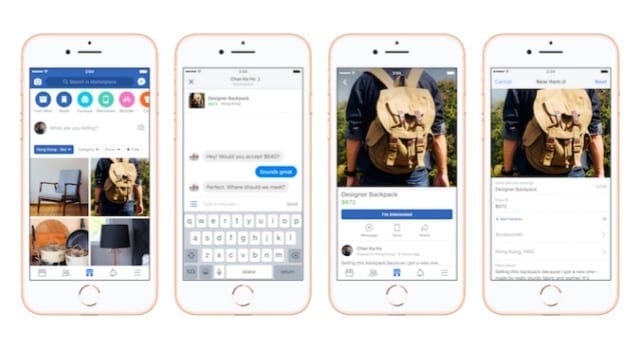
    Facebook Marketplace has launched in Hong Kong, allowing users to easily find, buy and sell goods locally.

    Already 550 million people buy and sell in groups on Facebook each month. With Marketplace, it is easier to both sell and buy. Users can view the public profiles of buyers and sellers, their mutual friends, and how long they have been on Facebook.

    FeedMarketplace shows items relevant to users’ interests and available in their community. Similarly, by tapping on the Marketplace icon, users can post products for sale directly or cross-post from a buy-and-sell group.

    Users can search for specific items and filter results by location, category or price. Images can be tapped to show more details, and items can be saved for later perusal.

    Interested buyers can directly contact the seller by message and make an offer. Facebook does not handle payments or deliveries.

    To sell an item, users simply take a photo, describe the item and set their.

    Hong Kong joins 64 countries where Marketplace is available.

  • Facebook updates News Feed to make friends a priority

    Facebook updates News Feed to make friends a priority

    Facebook on Thursday announced a major update that will put friends and family above pages or celebrities in a user’s news feed — and likely result in people spending less time on the leading social network.

    The change to the way Facebook ranks posts will put more weight on social interactions and relationships, according to News Feed product manager John Hegeman.

    “This is a big change,” Hegeman told.

    “People will actually spend less time on Facebook, but we feel good about that because it will make the time they do spend more valuable, and be good for our business in the end.”

    For example, a family video clip posted by a spouse will be deemed more worthy of attention than a snippet from a star or favorite restaurant.

    “We think people interaction is more important than passively consuming content,” Hegeman said.

    “This will be one of the more important updates that we have made.”

    Facebook co-founder and chief Mark Zuckerberg has said that bringing people together and strengthening communities in the real world are priorities.

    The news feed ranking update, which is set to roll out globally in the coming weeks, is expected to support that goal.

    “As we roll this out, you’ll see less public content like posts from businesses, brands, and media,” Zuckerberg said in a post at his Facebook page.

    “And the public content you see more will be held to the same standard — it should encourage meaningful interactions between people.”

    Google, Twitter and Facebook have come under fire for allowing the spread of bogus news — some of which was directed by Russia — ahead of the 2016 U.S. election and in other countries.

    Facebook has introduced a series of changes intended to address the problem.

    “We are doing a ton of work to reduce the frequency of bad content on Facebook,” Hegeman said.

    “This update is more about amplifying the things people value.”

    He cited academic research indicating that interacting with loved ones is crucial to a person’s wellbeing, while reading news articles or watching shared videos may not be.

    “There is really no silver bullet here to determine what is most meaningful, but we are trying to mine the signals to get the best representation that we can,” Hegeman said.

    Known for setting annual personal goals ranging from killing his own food to learning Mandarin, Zuckerberg’s stated mission for this year is to ‘fix’ the social network, including by targeting abuse and hate, and making sure visiting Facebook is time well spent.

    “I’m changing the goal I give our product teams from focusing on helping you find relevant content to helping you have more meaningful social interactions,” Zuckerberg said Thursday.

  • Facebook defends itself against critics of social media

    Facebook defends itself against critics of social media

    Facebook Inc on Friday struck back against scientific researchers and tech industry insiders who have criticized the world’s biggest social media network and its competitors for transforming how people behave and express emotion.

    Facebook, in a corporate blog post, said that social media can be good for people’s well-being if they use the technology in a way that is active, such as messaging with friends, rather than passive, such as scrolling through a feed of other people’s posts.

    It was the second time this week that Facebook had published such a rebuttal, signaling a new willingness to defend a business model that translates users’ attention into advertising revenue.

    On Tuesday, the company released a statement saying that former executive Chamath Palihapitiya, who at a conference publicly blamed Facebook for “destroying how society works,” had been gone for six years and was unfamiliar with the company’s recent efforts to improve.

    Palihapitiya on Thursday revised his view, writing in a Facebook post that the service “is a force for good in the world.”

    Online services such as Facebook and its Instagram unit, Twitter Inc, Snap Inc’s Snapchat and Alphabet Inc’s YouTube are under attack for their seemingly addictive nature and perceived promotion of anti-social behaviors.

    A study in March by U.S. researchers found that using such services at least two hours daily was correlated with reporting feelings of social isolation.

    A nonprofit organization called Time Well Spent, led by a former Google design ethicist, is pressuring tech companies to move away from products that try to hook people’s attention.

    In its blog post, Facebook acknowledged what it called “compelling research” on the negative effects of social media and cited two such academic studies.

    The company said, though, that those studies are “not the whole story.” It went on to cite other studies suggesting that the dangers of social media may be exaggerated, and that it has potential benefits if used correctly.

    “We employ social psychologists, social scientists and sociologists, and we collaborate with top scholars to better understand well-being and work to make Facebook a place that contributes in a positive way,” said the blog post, written by Facebook Research Director David Ginsberg and Research Scientist Moira Burke.

    Fundamental change would require turning away from “where the money is,” said Roger McNamee, a venture capitalist and early Facebook investor who recently has criticized the social network.

    “Facebook’s business model depends on monopolizing consumer attention, and content that appeals to fear and anger is the most profitable way to do that,” McNamee said in an email on Friday.

    A Facebook representative declined to comment beyond the blog post.

    Facebook is spending $1 million on research into the relationship among technology, youth development and well-being, the blog post said.

  • Net giants ‘must pay for news’ from which they make billions

    Net giants ‘must pay for news’ from which they make billions

    Nine European press agencies, including AFP, called Wednesday on internet giants to be forced to pay copyright for using news content on which they make vast profits.

    The call comes as the EU is debating a directive to make Facebook, Google, Twitter and other major players pay for the millions of news articles they use or link to.

    “Facebook has become the biggest media in the world,” the agencies said in a plea published in the French daily Le Monde.

    “Yet neither Facebook nor Google have a newsroom… They do not have journalists in Syria risking their lives, nor a bureau in Zimbabwe investigating Mugabe’s departure, nor editors to check and verify information sent in by reporters on the ground.”

    “Access to free information is supposedly one of the great victories of the internet. But it is a myth,” the agencies argued.

    “At the end of the chain, informing the public costs a lot of money.”

    News, the declaration added, is the second reason after catching up on family and friends for people to log onto Facebook, which tripled its profits to $10 billion (8.5 billion) last year.

    Yet it is the giants of the net who are reaping vast profits “from other people’s work” by soaking up between 60 and 70 percent of advertising revenue, with Google’s jumping by a fifth in a year.

    Meanwhile, ad revenue for news media fell nine percent in France alone last year, “a disaster for the industry”.

    ‘Pillar of democracy at risk’ 

    “Years have passed (without anything being done) and free and reliable newsgathering is now threatened because the media will simply no longer be able to pay for it,” the news agencies added.

    “Diverse and reliable news sources, a pillar of democracy, risk being undermined.”

    Attempts by news outlets in France, Germany and Spain to force internet giants to pay have only resulted in them coughing up a “few symbolic crumbs”, they added.

    The press agencies insisted that some of the vast imbalance could be rectified if the EU gives them and other media “related rights” copyright to their work.

    However, some European Parliament members were worried that the proposed directive would threaten free access to news for internet users.

    But that would not be the case, the agencies insisted.

    “Internet users would not be touched… simply those who now pocket a disproportionate part of advertising revenue would have to share a significant part of it with those who actually produce the information” on which the money is made.

    The appeal was signed by AFP; the German agency DPA; Britain’s Press Association; the Spanish agency EFE; Italy’s Ansa; the Swedish agency TT; Belga of Belgium, Austria’s APA, and the Dutch agency ANP.