Tag: facebook

  • Facebook’s unannounced mobile payment service shows up

    Facebook’s unannounced mobile payment service shows up

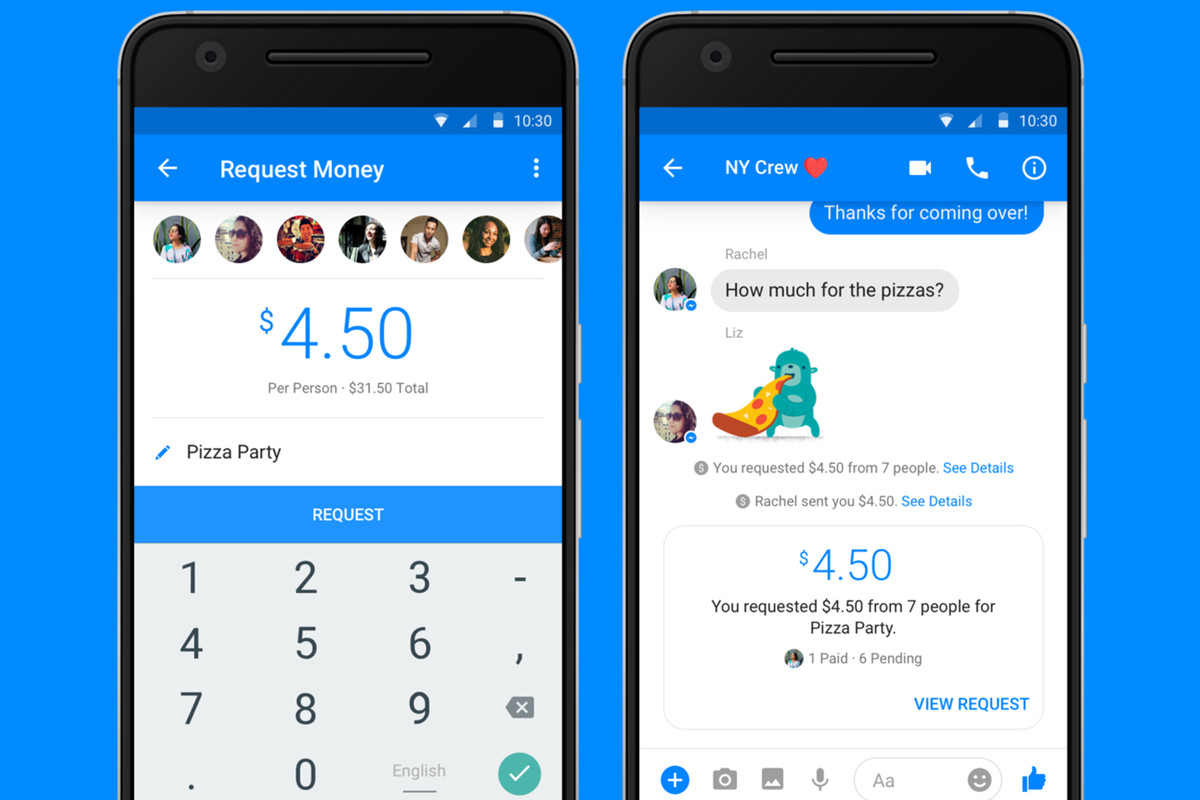
    Facebook’s Marketplace seems to be one of the few successful features launched by the social network giant in the last couple of years. Now, Facebook plans to add an important tool that will make the entire Marketplace experience smoother and easier, at least this is how we’re seeing things at first glance. A mobile payment service that will allow Facebook users to pay for goods they buy through Marketplace is already showing in the Android and iOS app. A new Pay with Facebook option is now available on some Facebook pages that sell various products (i.e. Marshmello Music).

    The new option supports various payment methods that use Visa and Mastercard, as well as cryptocurrency, though the latter seems just a placeholder for now since we don’t recognize the symbol.

    At the moment, the whole process seems a bit convoluted because the buyer must first send a request to the seller, who will then have to accept or refuse the offer and send another payment request to the buyer.

    Although it sure doesn’t sound like a seamless process, Pay with Facebook may at least offer Marketplace users a more secure (and free) method of payment. We’re still waiting for Facebook’s official announcement to learn more about the new mobile payment service, but we can’t guarantee it will ever come.

  • Facebook’s massive outage helped a rival app gaining millions of new users

    Facebook’s massive outage helped a rival app gaining millions of new users

    If you’re bothered by Facebook’s notoriously shady data harvesting methods and various other controversies surrounding the privacy and security of the social networking titan’s user base, it’s probably not a good idea to switch to Instagram. But there are actually many competing services and platforms on the market that Mark Zuckerberg does not own.

    One instant messaging app that has been growing at a pretty impressive pace for the past few years noticed a particularly large boost to its user numbers yesterday. According to its founder, Pavel Durov, a whopping 3 million people signed up for new Telegram accounts “within the last 24 hours.” It’s safe to assume that doesn’t happen every day for an IM and VoIP service that boasted a grand total of 200 million monthly active users around a year ago.

    While Durov doesn’t spell it out for us on his personal Telegram channel, the surge in sign-ups is naturally believed to be connected with Facebook’s most recent worldwide outage. A massive number of Facebook, Instagram, and WhatsApp users reported problems logging in to their accounts yesterday, and incredibly enough, the main social networking platform is still down for some people.

    Even though that seemed to boost the action (and jokes) on Twitter, where Facebook itself confirmed the issues, Pavel Durov suggests his app may have had more to gain thanks to its “true privacy and unlimited space for everyone.” Then again, Telegram had its fair share of scandals and controversies back in the day as well, disappearing from the iOS App Store at one point due to suspicions of rampant child pornography content spreading.

    The app is also banned in countries like Russia and China, although the reason for that might actually convince more people in the Western Hemisphere to switch from Facebook or WhatsApp to Telegram. Namely, a strict policy on sharing user information with government authorities.

  • Regulating Facebook could hinder small businesses

    Regulating Facebook could hinder small businesses

    Digital platforms provide a host of challenges for governments. Questions about how to best protect privacy, democracy, and speech online become more pressing every year.

    But policies that affect online platforms also affect international trade. Many Australian small businesses rely on digital platforms to stay on par with their international competitors.

    As Australia starts tackling the challenges wrought by digital platforms, policymakers should be careful not to undo the good things that stem from an evermore connected world. That includes the critical role of these platforms in helping retailers sell their products to overseas customers.

    Platforms facilitate exports

    As my new research with colleague Danielle Parks shows, digital platforms appear to significantly reduce the economic distance and trade costs between buyers and sellers.

    Take Facebook, for example. Facebook is both a social networking platform and digital market platform, where Facebook’s Marketplace helps business owners connect with potential customers.

    The social networking interface allows buyers and sellers to message each other and exchange information about what the seller has, and what the buyer wants. Meanwhile, Marketplace features like identity verification and buyer ratings help to facilitate connections more quickly, and with more trust, than might otherwise be possible.

    There isn’t a lot of large-scale data on cross-border e-commerce, so researchers must get creative to study digital platforms and trade. The findings are extraordinary.

    One study found that 97% of US-based eBay sellers export product to overseas buyers. Another found the “economic effect of distance” to be 65% smaller on eBay. In other words, the digital platform reduces the challenges of selling to people in other countries.

    Research conducted by PayPal showed that 79% of US small businesses on its platform sell to foreign markets. And PayPal merchants that exported, outperformed businesses in general. Interestingly, that finding held for coastal and non-coastal businesses, and for rural and urban businesses alike.

    In our new study, we surveyed Australian businesses on Facebook. We found that those with a Facebook presence were 63% more likely to export their products internationally than other businesses. The propensity to export was higher across all business sectors and nearly all company sizes.

    This emerging pattern shows how world markets are opening up to smaller businesses that might not otherwise be able to compete with their larger, multinational rivals. These findings can partly be attributed to export-prone firms being more likely than others to use digital platforms. But there is no question that the platforms can also enable trade.

    Most governments recognise the need to dismantle barriers to foreign market access, and any new policies regarding digital platforms should not make it harder for small and medium sized businesses to engage in trade.

    How regulation could hurt small businesses

    The Australian Competition and Consumer Commission (ACCC) is currently conducting an inquiry into digital platforms at the request of the treasurer.

    The ACCC’s preliminary report recognises how digital platforms have revolutionised the ways consumers and businesses communicate with one another. The report also highlights concerns over data privacy and the influence of bad actors producing and spreading misinformation.

    The final report, expected in June, will make policy recommendations that aim to address these concerns. But these policies could also inadvertently threaten the revenue streams of businesses that advertise on these platforms or that use them to facilitate online sales.

    Restrictions on the cross border flow of consumer information could interfere with everyday business practices. For example, a key advantage of e-commerce, especially for small businesses, is using search engine techniques to reach larger audiences, and target potential customers. So, search engine restrictions could limit the way businesses target customers with advertising, therefore limiting a business owner’s ability to reach customers abroad.

    Other regulations could restrict business owners from storing the personal information of customers – such as credit card information, consumer preferences and purchase history. That would then limit businesses in how they interact with customers at home and abroad.

    What’s happening at the moment

    Australia is not alone in considering these tough issues. The landscape of digital data flows, data privacy, and e-commerce is a work in progress for governments across the globe.

    The EU recently enacted data privacy regulation called the General Data Protection Regulation (GDPR), which is designed to:

    […] fundamentally reshape the way in which data is handled across every sector, from health care to banking and beyond.

    Meanwhile, the United States Congress will likely consider new internet privacy legislation this year.

    Provisions on digital data flows have been included in major recent international trade agreements. Both the United States-Mexico-Canada Agreement (USMCA) and the Trans Pacific Partnership (TPP) bar data localisation requirements. That means foreign companies would only be allowed to work in a country if they built out or leased separate data infrastructures in that country – a costly endeavour, especially for smaller businesses.

    On the other hand, USMCA and TPP do not allow participating countries to require that platforms disclose their source code or algorithms. These provisions do not necessarily preclude countries from adopting privacy protections, but they do make it easier for platforms like Facebook to operate without fear that they will be asked to handover important intellectual property.

    As the government considers the Australian Competition and Consumer Commission report, one thing should be clear: any policy changes should not overlook the role of these platforms in helping Australian small businesses sell goods to customers in the global marketplace.
  • 5 Tips for Digital Transformation

    5 Tips for Digital Transformation

    Retailers know they need to evolve, even though they cannot do it overnight. But while there’s no silver bullet for transforming culture, collaboration, and workflows inside a large organization, there are steps you can take to make sure your business is receptive to the change it’s about to undergo.

    Understand performance goals

    Before you start, you need to understand the business problem and the role that technology is going to play. Solving complex organizational issues needs the relentless management of changes in behavior, process, and technology all working together to support your performance goals and objectives.

    Collaboration is not a KPI

    Decide how you’re going to measure your KPIs. And remember that collaboration is not a KPI – it’s a means to an end. KPIs could include customer satisfaction, getting products to store faster, selling more products per visit, or retention. You need to get down to that granular detail.

    Shut things off

    If you have an existing tool which people did not like and you invest in something new to overcome those challenges and frustrations, you need to have a path to turning that tool off or at least turning off the elements that are now conflicting. This will impact adoption of new tools and ways of working.

    Educate, educate, educate

    Launching a tool is the easy part, the real work begins when people use it. People need to be educated on what they should be using it for. Show some examples of what ‘good’ looks like, and also what the tool should not be used for. Design an internal marketing campaign and treat it exactly the same as an external campaign. A product-driven approach could help here. Think about how companies try to refresh products in the market over time to improve adoption.

    Put somebody in charge

    For any system, and especially for a collaborative experience, you need someone who can get employees to use the tool in the right way at different times. That might be a community manager who understands the business cycle. Putting up content is the single most important driver of getting people to use the platform and to entice them to contribute their own.

  • Facebook strikes deal with SK to pay data fees

    Facebook strikes deal with SK to pay data fees

    Facebook reportedly finally agreed to pay data traffic fees to SK Broadband after two years of negotiations. According to local media reports Sunday, the social media giant and internet provider agreed to a two-year network usage deal to set up a cache server for temporary data storage and provide fast Facebook access to SK Broadband users. While the two companies did not confirm the exact sum, Facebook will reportedly pay more than what it previously proposed during negotiations.

    SK Broadband is not the first internet provider that Facebook will be paying in the country. In 2015, it signed a contract with KT to open a cache server. The two companies are currently working on renewing the contract after it expired last July.

    The new deal with SK Broadband comes after Facebook faced negative press for inconveniencing users while trying to avoid paying network fees to SK Broadband and LG U+.

    In late 2016 and early 2017, the social media giant re-routed non-KT users to its server in Hong Kong when they tried to connect to the platform, slowing down access considerably. The Korea Communications Commission charged the company 396 million won ($353,900) in fines and ordered it to change its practices.

    Following the agreement with SK Broadband, the social media giant is expected to open up a cache server with the internet provider.

    The company is also reported to be working with LG U+ on a similar deal.

    The recent deal highlights the question of whether other foreign IT giants will follow suit and pay data traffic fees to Korea’s network providers.

    Many Korean businesses have complained that current laws and practices hurt domestic firms. Naver and Kakao, for example, pay around 70 billion won and 30 billion won every year to Korea’s three network providers to compensate for their high traffic volume, while Google and Netflix – which are thought to be responsible for half of Korea’s data traffic together with Facebook – pay none.

  • Vietnam says Facebook violated cybersecurity law

    Vietnam says Facebook violated cybersecurity law

    Vietnam says Facebook has violated its new cybersecurity law by allowing users to post anti-government comments on the platform. “Facebook had reportedly not responded to a request to remove fanpages provoking activities against the state,” the official said, citing the Ministry of Information and Communication. In a statement, a Facebook spokeswoman said: “We have a clear process for governments to report illegal content to us, and we review all these requests against our terms of service and local law.”

    She did not elaborate. The ministry said Facebook also allowed personal accounts to upload posts containing “slanderous” content, anti-government sentiment and defamation of individuals and organizations, the agency added.

    “This content had been found to seriously violate Vietnam’s Law on cybersecurity” and government regulations on the management, provision and use of internet services, it quoted the ministry as saying.

    Facebook had refused to provide information on “fraudulent accounts” to Vietnamese security agencies, the agency said in Wednesday’s report.

    The information ministry is also considering taxing Facebook for advertising revenue from the platform.

    The report cited a market research company as saying $235 million was spent on advertising on Facebook in Vietnam in 2018, but that Facebook was ignoring its tax obligations there.

    In November, Vietnam said it wanted half of social media users on domestic social networks by 2020 and plans to prevent “toxic information” on Facebook and Google.

  • Nestlé launches Workplace by Facebook

    Nestlé launches Workplace by Facebook

    Nestlé has adopted Workplace by Facebook as its global internal communication tool, to connect its workforce and better serve consumers.  The announcement comes as the latest and largest wave of staff join the platform, part of a process that began only nine months ago. Today, around 210,000 of its employees worldwide use the platform to connect and collaborate. Nestlé has pledged to move quicker to turn good ideas into great products to meet fast-changing consumer demand. With the majority of its employees active on the platform, Workplace is already making a difference. Internal engagement is higher and responses faster. People are experimenting and collaborating more, as well as sharing information and ideas.

    Workplace offers familiar Facebook features such as News Feed, Groups, Chat, events and live streams, as well as seamless mobile integration.  Because Workplace is easy to use, it can connect everyone and reach employees where they are.

    The first wave of market adoption including Mexico, Brazil, the Middle East and South Africa saw 25 times higher engagement per post and very high rate of use on mobile devices. Amongst other advantages, managers can use Live video to connect directly with employees at different locations. Sales teams can also use Workplace for daily check-ins and to share information and best practice.

    Commenting on the move to Workplace, Nestlé Executive Vice President Chris Johnson, said: “Nestlé is a people-first environment. We really rely on our talented teams to manage more than 2,000 Nestlé brands worldwide. We help our employees develop and we give them the right tools, so Workplace is a perfect fit.”

    The move to Workplace is part of Nestlé’s commitment to empower people and sustain a high-performance culture. The company is moving more and more to offer open office configurations and more flexible working environments.

    Workplace is also a great example of Nestlé constantly embracing the best technology and systems. Filippo Catalano, Chief Information Officer at Nestlé: “Today, using Workplace by Facebook we are able to give our employees across the globe a platform to build connections, enabling faster and more engaging sharing of information.”

    Julien Codorniou, vice president of Workplace by Facebook said, “As the global work landscape continues to change and the demand for better collaboration, best-of-breed IT and mobile-first work increases, we are honored to partner with a company like Nestlé to help employees work together to allow for limitless innovation.”

    While a large majority of users has now joined the Workplace platform, the rollout will continue throughout 2019.

  • Prada ‘racist’ incident ended up with apology

    Prada ‘racist’ incident ended up with apology

    Prada has apologised for selling a US$550 monkey figurine after a social media backlash from US consumers alleging the character is racist. The monkeys, with oversized red lips and dark skin have been likened to “racist caricatures historically used to dehumanise black people” according to a commentary in The Business of Fashion.  Some social media users pointed out a resemblance to golliwogs, the fictional children’s book character created by Kate Upton in the late 19th Century, which brands worldwide have avoided using in marketing for reasons Prada executives could have easily found with a quick Google search.

    The ‘racist’ monkey character was part of the Pradamalia range of small accessories like keychains and toys featuring cartoon characters.

    Prada said in a statement that the creatures were “not intended to have any reference to the real world and certainly not blackface”.

    “Prada Group never had the intention of offending anyone and we abhor all forms of racism and racist imagery. In this interest, we will withdraw all of the characters in question from display and circulation.”

    The Business of Fashion described the company’s design as “at best tone-deaf, at worst racist and exploitative”.

    Some people in the retail industry may well ask how Prada released such a product after the high-profile case of H&M having to apologise after releasing marketing images of a black child wearing a hoodie with the text “Coolest monkey in the jungle” in January, which prompted a similar chorus of disapproval. H&M immediately withdrew the hoodies from sale globally and recycled them, but not before some stores in South Africa had to be closed temporarily after protests and vandalism.

    And just last month, Dolce & Gabbana was forced to apologise to Asians customers around the world for a video campaign mocking a Chinese model trying to eat pasta with chopsticks, followed by an extraordinarily racist rant on Twitter by one of the label’s founders (which he later claimed – to widespread skepticism – was the result of his account being hacked).

    Facebook user Chinyere Ezie (who took the photo of the Prada monkey used with this story) was one black American woman outraged by the product. Her post had been shared more than 10,000 times by Monday morning and received some 4300 comments.

    “Today after returning to NYC after a very emotional visit to the Smithsonian National Museum of African American History and Culture, including an exhibit on blackface, I walked past Prada’s Soho storefront only to be confronted with the very same racist and denigrating #blackface imagery,” she wrote.

    “I entered the store with a coworker, only to be assaulted with more and more bewildering examples of their Sambo-like imagery. When I asked a Prada employee whether they knew they had plastered blackface imagery throughout their store, in a moment of surprising candor I was told that *a black employee had previously complained about blackface at Prada, but he didn’t work there anymore.*

    “History cannot continue to repeat itself. Black America deserves better. And we demand better.”

    The products were withdrawn from window displays – and sales – within hours of Ezie’s post on Friday.

  • India’s Shop101 in talks for funding boost

    India’s Shop101 in talks for funding boost

    Indian online marketplace Shop101 is seeking to raise $11-12 million in a Series B funding round. Talks concerning the investment are being led by Kalaari Capital and Unilever Ventures, with participation expected by current backer Stellaris Venture Partners, which invested $5 million several months ago. Investment capital is likely to assist the firm in technological development and expansion into new business categories.

    Shop101 uses Whatsapp, Facebook and Instagram functionality to support online entrepreneurs. WhatsApp and Facebook each have more than 200 million users in India. The Shop101 app has been downloaded about 1 million times and has experienced growth of 50 per cent month on month since its launch.

    A joint report by Google and KPMG last year indicated online SMEs could boost Indian economic growth by 10 per cent by 2020.

  • DBS makes foray into chat commerce with “Foodster”

    DBS makes foray into chat commerce with “Foodster”

    DBS Bank has launched Southeast Asia’s first bank-led retail chatbot, Foodster.

    The chat-commerce service allows customers to order and pay for their meals via Facebook Messenger and DBS payment channels, including DBS PayLah! and DBS/POSB cards. It has been test-bedded with seven food and beverage merchants around DBS’ Marina Bay headquarters with positive results.

    Kopi Ong, which sells quick-serve beverages, was the first merchant to test the Foodster solution. Since then, the business has seen daily sales grow by 20 per cent without additional manpower or space required.

    Chat commerce – e-commerce using chat or messaging platforms – allows businesses to transact within platforms that already have a large pool of captive users. With 77 per cent of Singapore’s population on mobile messaging platforms, chat commerce solutions such as Foodster allow businesses to literally become a part of the conversation by embedding DBS’ payments capabilities within chat platforms.

    The Foodster solution was developed with Artificial Intelligence/Machine Learning algorithms which allow it to become ‘smarter’ with every transaction. In addition, it allows merchants to implement targeted and personalised customer loyalty programmes on the platform with its rich data tools and analytics.


    DBS head of consumer banking group Jeremy Soo said: “If instant messaging is the way forward for people to communicate, then we need to help businesses find a way to engage their customers on such platforms simply, seamlessly and invisibly. We are aware that consumers today are more likely to have ‘app fatigue’ and have become resistant to downloading new mobile apps. And so as Singapore’s leader in payments with more than 4 million cards in circulation and the nation’s most popular mobile wallet – DBS PayLah! with more than 1 million users – we saw an opportunity to combine our strengths with Singapore’s most widely used social media platform.”

    In Asia Pacific, the chatbot market is forecast to generate revenues of around US$350 million by 2024, more than eight times last year’s figures.

  • Keeping Up with the Centennials:  Buy Social, Pay Offline

    Keeping Up with the Centennials: Buy Social, Pay Offline

    Dentsu Aegis Network, in collaboration with Econsultancy, today launched Here Comes the Centennial: Southeast Asia’s New Generation of Shoppers, a white paper investigating the online buying behaviour of centennials – consumers of the future – in the region. Launched on the sidelines of FUTR Asia 2018 Summit, the study finds that, despite the surge in online shopping, cash is still king for centennials in the digital age, and shopping on social media platforms is the new norm.

    Despite being digital natives, the concept of a cashless society has yet to fully take off for centennials in six countries surveyed, as 56% of survey respondents still prefer paying cash on delivery for their purchases. The next generation of online shoppers also enjoy having a variety of payment methods, as 43% of centennials will readily abandon their purchases because their preferred payment option is not available.

    Having grown up in the smartphone era, centennials are also using social media platforms differently compared to previous generations in their buying journey. Social media applications (47%) such as Facebook and Instagram are the second most popular place for centennials to shop in. Close to half of the survey respondents (49%) also turn to social media when they are researching for more information on their future purchases, rather than asking friends (45%) and family (27%).

    Nick Waters, CEO of Dentsu Aegis Network Asia Pacific, said: “All eyes are on Southeast Asia as the world’s next consumer powerhouse, with its young population and increasing purchasing power. Close to 280 million centennials – tomorrow’s consumers – call this region home. Enabled more than ever before by technology and data, we are seeing incredible potential for growth in the region and our latest research ‘Here Comes the Centennial: Southeast Asia’s New Generation of Shoppers’, helps us understand what is important for these consumers of the future and how businesses can adapt and position effectively for Southeast Asia’s future retail landscape.”

    Brand name and image is no longer a priority of centennials, making end-to-end brand experience more important than ever for retailers. Only 11% cite having a prestigious or famous brand as one of their top three attributes when choosing where to shop. This means retailers need to work harder to get their brand experience perfect in order to capture the attention of tomorrow’s consumers.

    Who are the Centennials? Why are they important?

    Centennials – also known as Generation Z – are those who are born between now and 1995. Accounting for about 277 million of Southeast Asia’s population, 50% of centennials spend more than USD30 a month on online shopping, while 9% spend over USD100 monthly. The size of this new generation alone makes them attractive for retailers, but the behaviours of this group make them lucrative in terms of its online shopping and ecommerce potential.

    This new generation will also soon be one of the world’s most demanding consumers who have high standards and expectations of the online shopping experience. Technology should be an integral part of this experience, as 82% of centennials are excited about futuristic shopping technology such as virtual reality. Personalisation is key as well, as 76% of respondents are happy to share data with websites, if it makes more relevant recommendations.

    Jefrey Gomez, Managing Director, Econsultancy Asia Pacific, said: “Centennials are coming of age in an era when high speed internet is always available, and they expect technology and brand experiences that are fast, responsive, and seamless. The survey showed that 86% of centennials will not use an app or website that takes too long to load and 82% will not use an app or website that is difficult to navigate. This means that retailers can therefore no longer just provide well-designed stores or rely solely on brand campaigns to drive sales. Instead they need to focus on the utility of their online offering to make the purchasing journey easy to complete.”

  • Facebook just lost two top executives

    Facebook just lost two top executives

    Facebook just lost two of its top executives, with Instagram co-founders Kevin Systrom and Mike Krieger announcing their departures.

    They join at least seven senior Facebook executives who have announced their departures this year.

    “Kevin and Mike are extraordinary product leaders and Instagram reflects their combined creative talents,” Facebook CEO Mark Zuckerberg said in a statement. “I’ve learned a lot working with them for the past six years and have really enjoyed it. I wish them all the best and I’m looking forward to seeing what they build next.”

    The departures come at a tumultuous time for Facebook, as it continues to lose senior executives. The company — which calls its top ranks a family and prides itself on keeping executives around — has been battling privacy scandals and declining community support.

    Instagram had become something of Facebook’s shining star, so the simultaneous exits of its two founders leave some big shoes to fill.

    Here are some other Facebook executives who have said they’re leaving so far in 2018:
    Jan Koum, co-founder of Facebook-owned WhatsApp, announced his exit in April in a Facebook post saying it was time to “move on.”

    “I’ve been blessed to work with such an incredibly small team,” Koum said in a statement at the time. “The team is stronger than ever and it’ll continue to do amazing things. I’m taking some time off to do things I enjoy outside of technology, such as collecting rare air-cooled Porsches, working on my cars and playing ultimate frisbee.”

    Koum led WhatsApp for nearly a decade and joined Facebook’s leadership team in 2014 when the social media giant bought WhatsApp for $19 billion.

    Elliot Schrage, head of communications and public policy, said in June he was leaving Facebook after more than 10 years.

    “I’ve decided it’s time to start a new chapter in my life,” Schrage said in a post to his Facebook page. “Leading policy and communications for hyper growth technology companies is a joy — but it’s also intense and leaves little room for much else.”

    Schrage didn’t address his next steps, but did include lengthy praise and words of gratitude for Facebook, Zuckerbergand COO Sheryl Sandberg.

    In July, Colin Stretch, Facebook’s top lawyer, announced he’d be leaving the company after more than eight years.

    “When my wife Alyse and I made the decision a few years ago to move back to DC from California, we knew it would be difficult for me to remain in this role indefinitely,” he said in a Facebook post. “As Facebook embraces the broader responsibility Mark has discussed in recent months, I’ve concluded that the company and the Legal team need sustained leadership in Menlo Park.”

    As general counsel, Stretch represented Facebook before Congress to address Russian interference in the 2016 presidential election.

    “I often stop myself and ask how I got so lucky to be a part of this,” Stretch said in the post announcing his exit.

  • Google, Facebook executives meet Vietnam PM, offer to help digitize economy

    Google, Facebook executives meet Vietnam PM, offer to help digitize economy

    Google and Facebook have been among the tech giants discussing cooperation with Vietnam on the sidelines of the WEF on ASEAN 2018 in Hanoi.

    At a meeting Wednesday with Google’s Asia-Pacific president Karim Temsamani, Prime Minister Nguyen Xuan Phuc stressed that Vietnam, with a population of nearly 100 million, has great potential in information technology, which is also spearheading the country’s industrialization and modernization.

    He urged Google, which has a very large user base in Vietnam, to pay more attention to helping maintain and promote Vietnam’s cultural identity.

    The PM expressed hope that the tech giant would collaborate with his country to foster the development of start-ups, train human resources and invest in research and development for growing its technology ecosystem.

    Temsamani emphasized the importance of digitizing the economy, a key global trend, saying Google is willing to help Vietnam achieve it.

    Through its Vietnam Digital 4.0 program, Google aims to provide free training in digital skills to 500,000 owners of small and medium businesses in the country by 2020 to help them improve their competitiveness, he said.

    Temsamani also promised it would help Vietnam build a technology ecosystem and come up with initiatives to help farmers digitize agriculture and promote their products more effectively through YouTube.

    Facebook’s vice-president of public policy for the Asia-Pacific, Simon Milner, also met with Phuc Wednesday. He said his company is committed to maintaining a long-term presence in Vietnam and expressed interest in joining the government’s effort to create a digital nation.

    It would take part in the programs of digital citizen, digital economy, digital government and digital connectivity, and assist and collaborate with small and medium businesses and start-ups, he said.

    Phuc also received Cees’t Hart, CEO of beer company Carlsberg Group, and Alex Dimitrief, president and CEO of General Electric Company’s (GE) Global Growth Organization.

    He told them Vietnam is speeding up equitization and divestment of the government’s stakes in enterprises based on the principles of transparency and openness, which offers opportunities to foreign investors like Carlsberg.

    Speaking about plans to divest stakes in Hanoi Beer, Alcohol and Beverage JSC (Habeco), he said Carlsberg and Habeco should soon resolve any remaining issues so that they can go ahead with purchase of stakes and strategic cooperation.

    Hart said Carlsberg, which has been Habeco’s strategic investor since 2008, is looking to buy a bigger stake in the Vietnamese brewer and has been working with the Ministry of Industry and Trade and other agencies to speed up the process.

    Dimitrief of GE said his firm plans to expand its investment in the power sector in Vietnam.

    Phuc told him his government attaches great importance to investors and is working to improve the business environment so that investors can do business effectively.

  • Facebook’s first time decline in monthly active user growth

    Facebook’s first time decline in monthly active user growth

    Facebook has long been set for growth.

    Its monthly active users have always been rising over time but the company’s second quarter earnings announcement last Wednesday has changed the tone.

    If Asia-Pacific stayed on track jumping from 873 to 894 million users while the US remained at a stable 241 million monthly active users, Europe seems to have lost its way.

    For the first time in history, monthly active users dropped by 1 million between the first and second quarters, falling to 376 millions.

    Facebook has recently been facing many challenges from its latest setback in setting up an innovation hub in China to tanking share price and scandals over user data. The latter is how the company justified its decline.

    Indeed, Europe has recently passed the GDPR, The General Data Protection Regulation, which strengthen numerous personal data rights. The regulation affects every company, but it is of paramount importance to those processing large amounts of consumer data. Facebook therefore could not escape it. The company’s CEO, Mark Zuckerberg, confirms the hit the regulation brought on the industry and defines it as an “important moment” which led to “a decline in monthly actives in Europe, down by about 1 million people as a result.”

    The GDPR was instated on May 25, that is, two-thirds of the way through Facebook’s second quarter. Thus, it is expected to still see some knock-on effects in the third quarter.

    Moreover, Facebook’s compliance with the regulation is under question as the platform has blocked the use of certain of its features to those refusing to share certain types of data. This very policy goes against the spirit of the GDPR which states companies are not to penalize users for not sharing information.

    The social media giant has developed its platform and turned it into one of the biggest advertising online space. However, a significant share of that advertisement comes from the use of consumer data and Europe is a market Facebook cannot overlook as it brings more revenues than Asia-Pacific, in spite of its smaller user’s numbers, with $3.3 and $2.3 billion respectively.

    Facebook acknowledges the weight of users’ engagement in retaining their advertising business. As Sheryl Sandberg, COO, notes, “as we look further out, we recognize that there’s still risk we’re going to watch closely”.

  • Facebook blocked by China’s Great Firewall

    Facebook blocked by China’s Great Firewall

    Earlier last week, the rumor of Facebook’s comeback to China was spreading fast.

    Banned since 2009, the technology giant was apparently trying to gain a foothold into the country with the establishment of an innovation hub. The word spread as screenshots of the subsidiary’s registration in Hangzhou were released on the Internet.

    By Thursday, the filing had vanished from the website of China’s National Enterprise Credit Information Publicity System. According to the New York Times approval was withdrawn after the national internet regulator, the Cyberspace Administration of China, disagreed with the provincial government’s approval of the subsidiary.

    Moreover, all terms related to the operation were censored on Chinese social media.

    The country has the media and Internet on a very short leash. Foreign companies strive every day to operate in the region as they face legions of ministries, regulators and local and central authorities. But the Chinese market is a very attractive one as it is the world’s biggest Internet market with over 710 million users as of 2017 (Forbes).

    The numerous bans and difficulties foreign companies are experiencing have favored the emergence of a monopolist in the market: WeChat. Indeed, along with Facebook, Twitter is also banned in China while messaging apps such as WhatsApp work intermittently. Apple and Google services are also very restricted.

    The legal status of Facebook’s expansion remains uncertain. Nevertheless, we are a long way from fully removing the ban of the platform even should the innovation hub manage to go through. Speaking of the company’s efforts in China, Mark Zuckerberg said they are “a long time from doing anything”.

    2018 has so far been a hard year for the social media giant as the company is facing many other challenges from slower user growth and tanking share price to scandals over user data.